London Day 3: Tomorrow and tomorrow and tomorrow…

A brisk mile and a half hike along the River Thames is exactly what we needed after another delicious full English breakfast. The sun shown brightly and the gentle breeze was enough to keep us ever grateful for our scarves. We walked along the Queen’s Walk all the way to Tower Bridge. The Queen’s Walk took us past Black Friars Bridge, Southwark Church and Bridge, and London Bridge, which isn’t much to write home about. Smells from the river and local food markets filled the cool morning air.
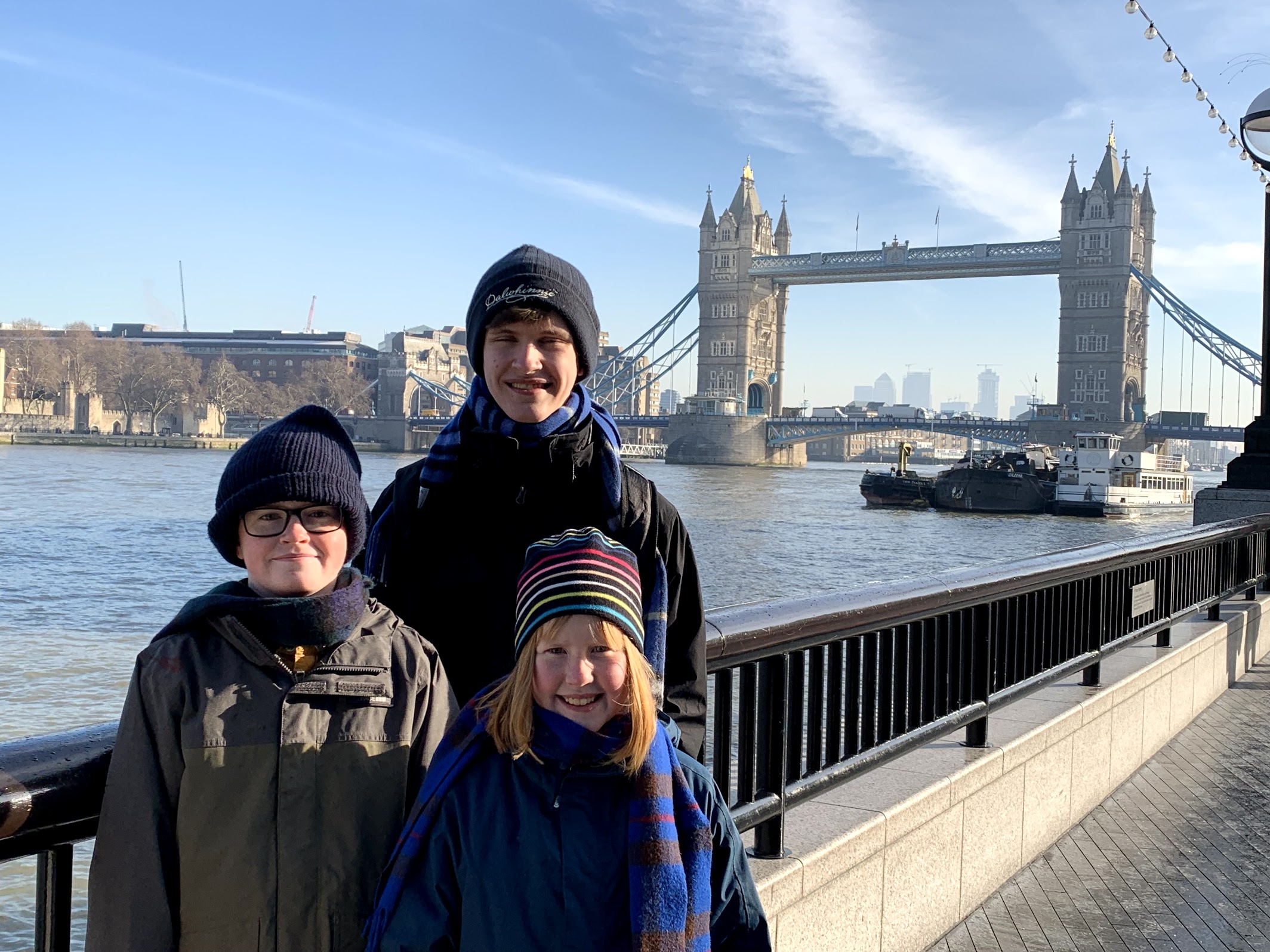
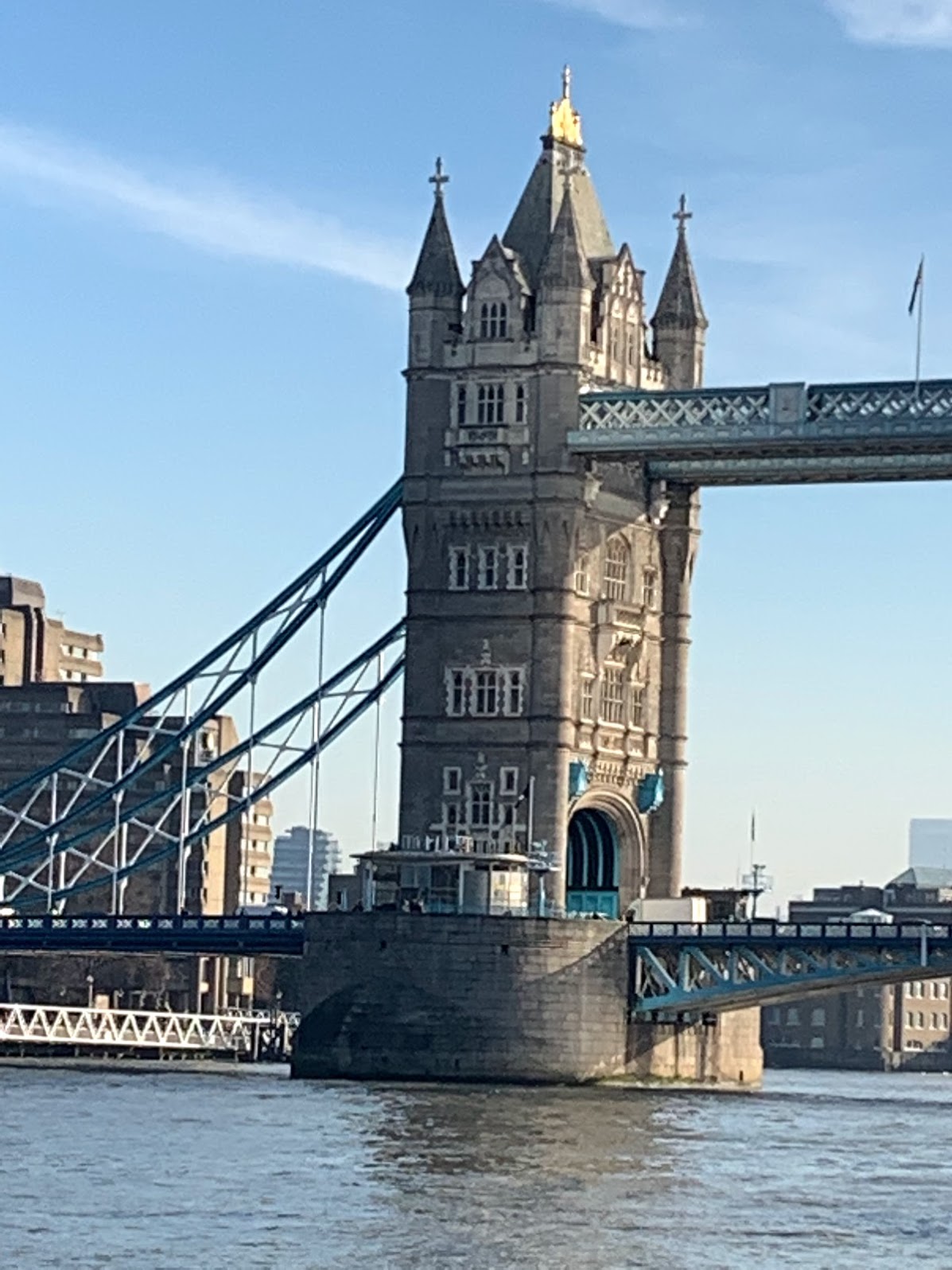
Tower Bridge, London, England
A close up of one of the towers in sunlight

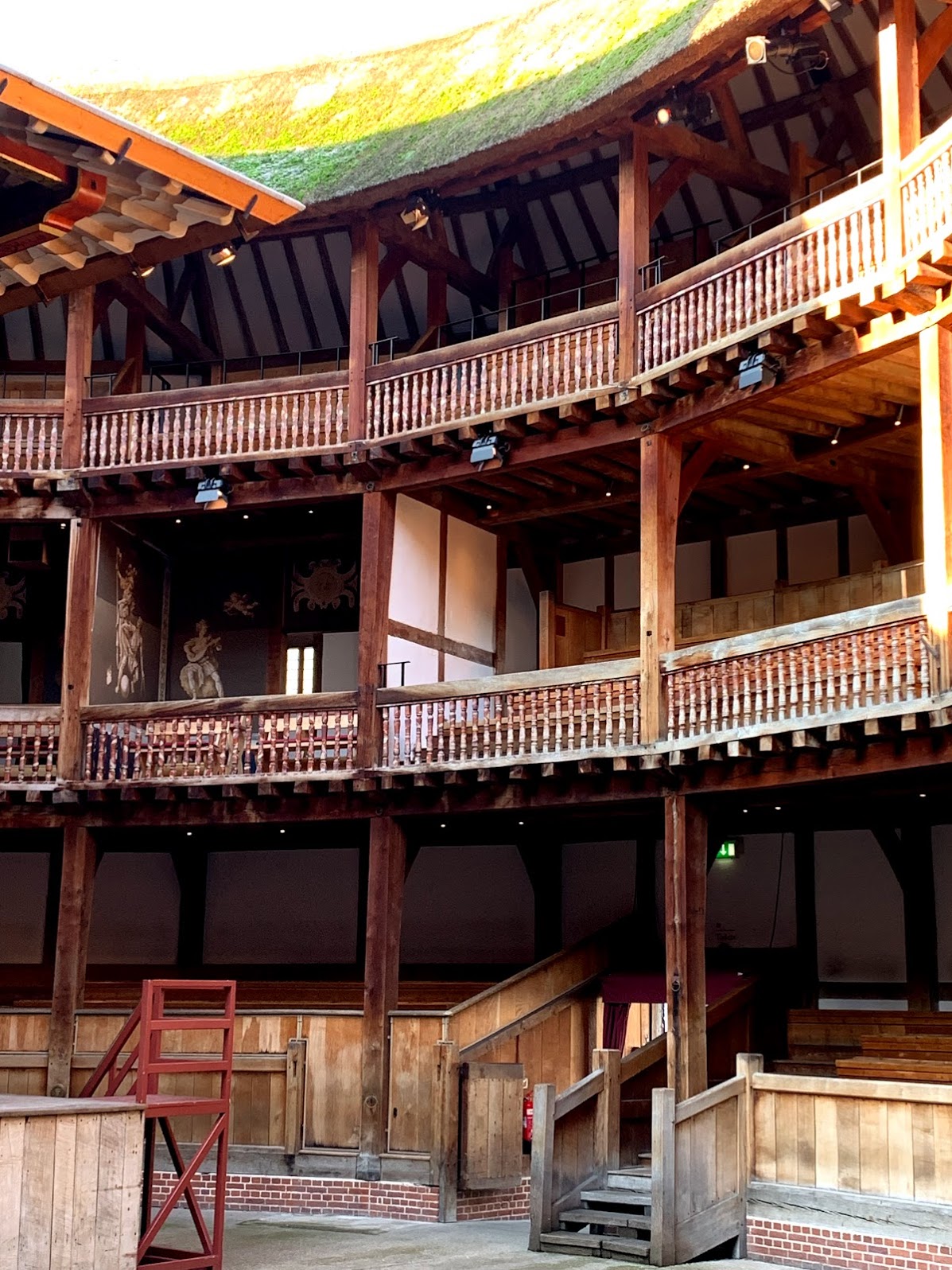
Once at Tower Bridge we took a few photos and then headed back down the Queen’s Walk to The Globe Theatre, which we passed on our way to see the bridge. Faywen was very excited to go inside. We took the 11:00 tour and our guide Jonathan was very informative.
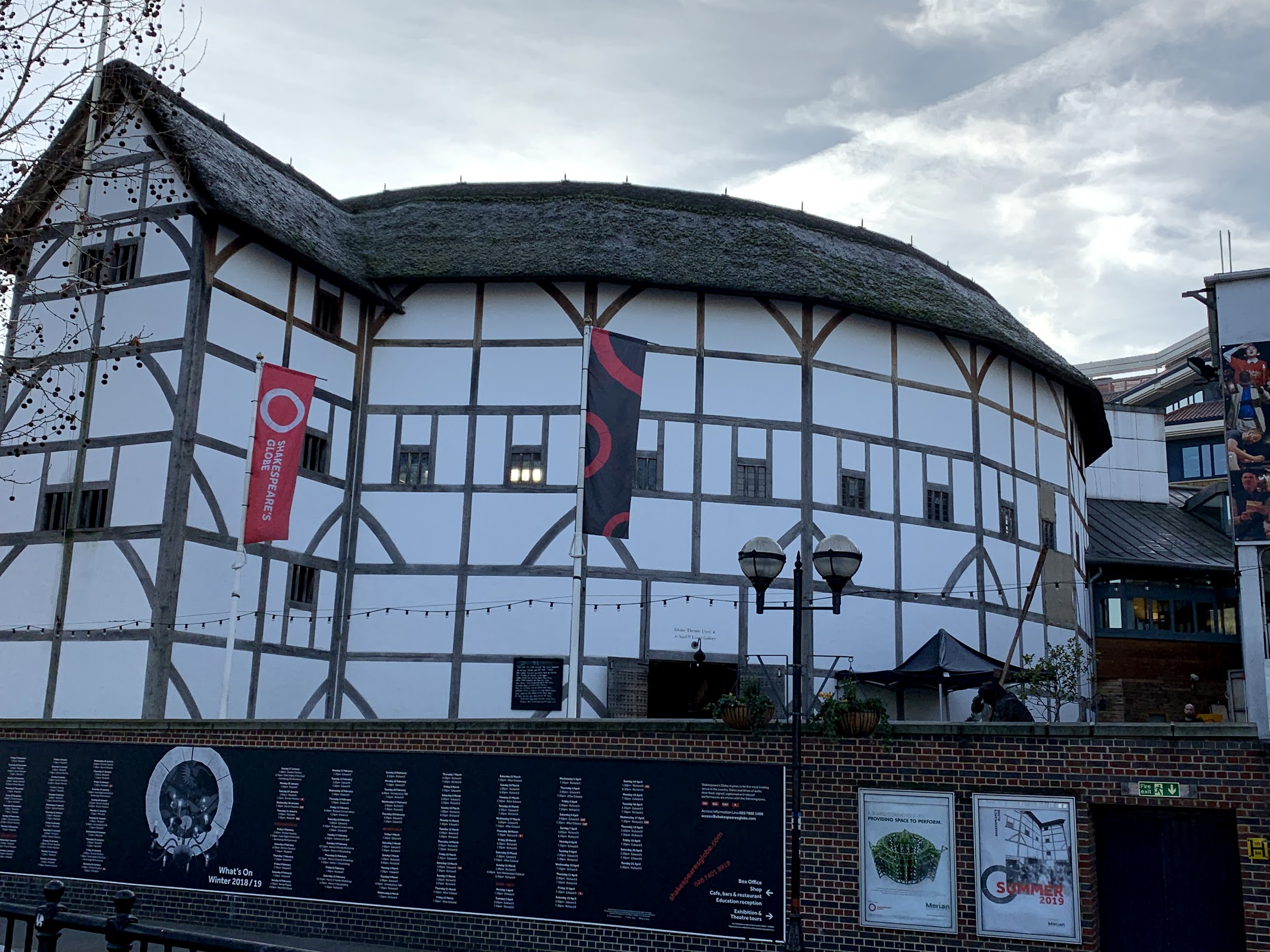
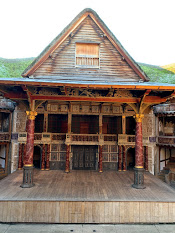
The Globe Theatre, London
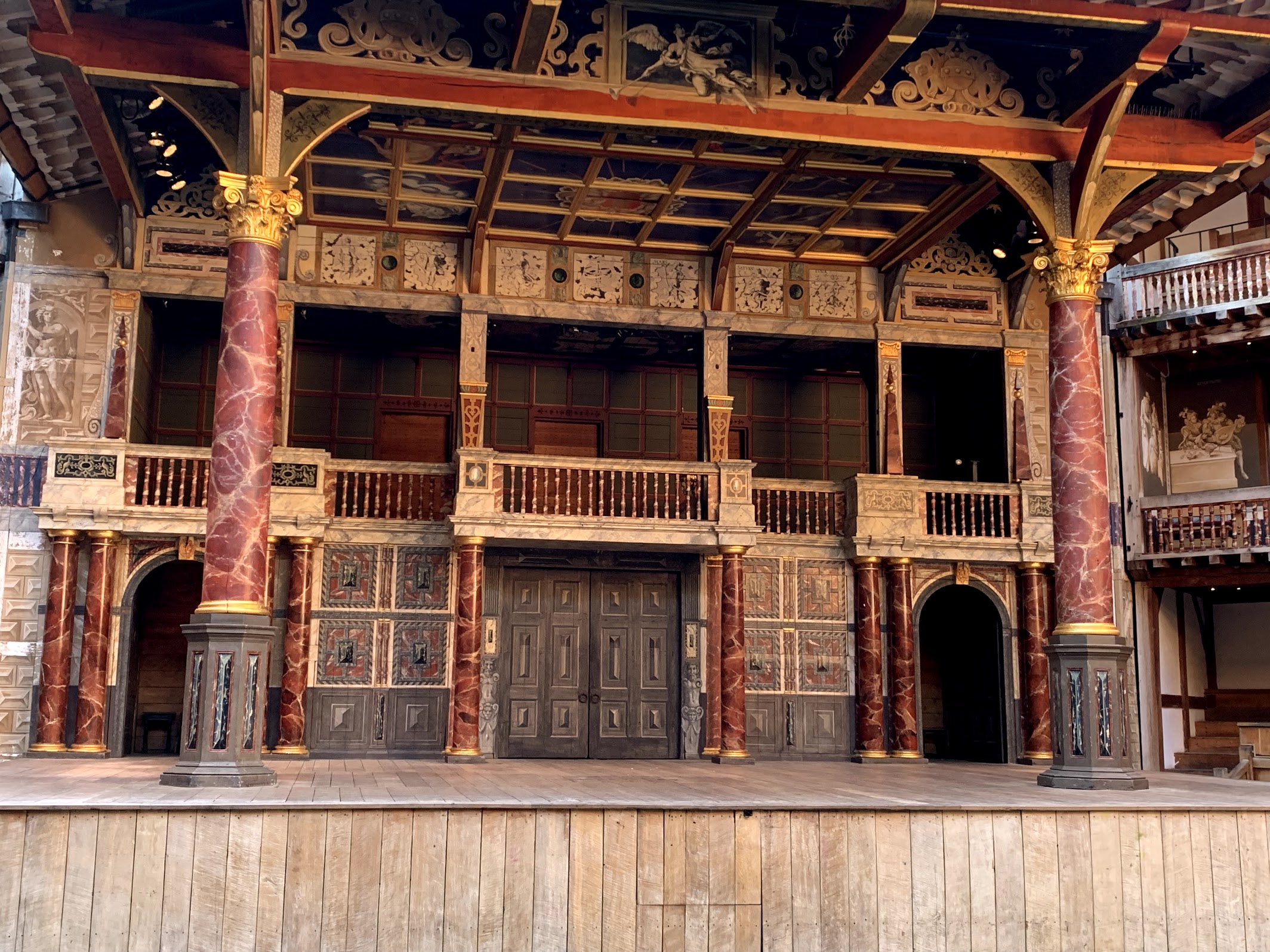
Main stage at The Globe
The audience seating: The Globe can hold up to 1600 people standing and sitting.

It seems that archeological digs had been done over the centuries, but nothing definitive was every unearthed until… 1949. In this year an American by the name of Sam Wannamaker came to London and wanted to know where the original Globe Theatre had stood. The local historians and authorities kind of had an idea, but weren’t really sure. Sam wanted to rebuild the theatre. The politicians were leery at first saying to themselves “this upstart of an American wants to make a theme park in the middle of London.” Sam went and gathered support from British history and literature professors. Eventually they were able to convince the authorities that this was truly an archeological and historical undertaking. By the 1970’s the bass of The Rose, an older playhouse, and artifacts and written descriptions of the Globe Theatre had been found and thoroughly researched. It was time to rebuild Shakespeare’s iconic theatre.
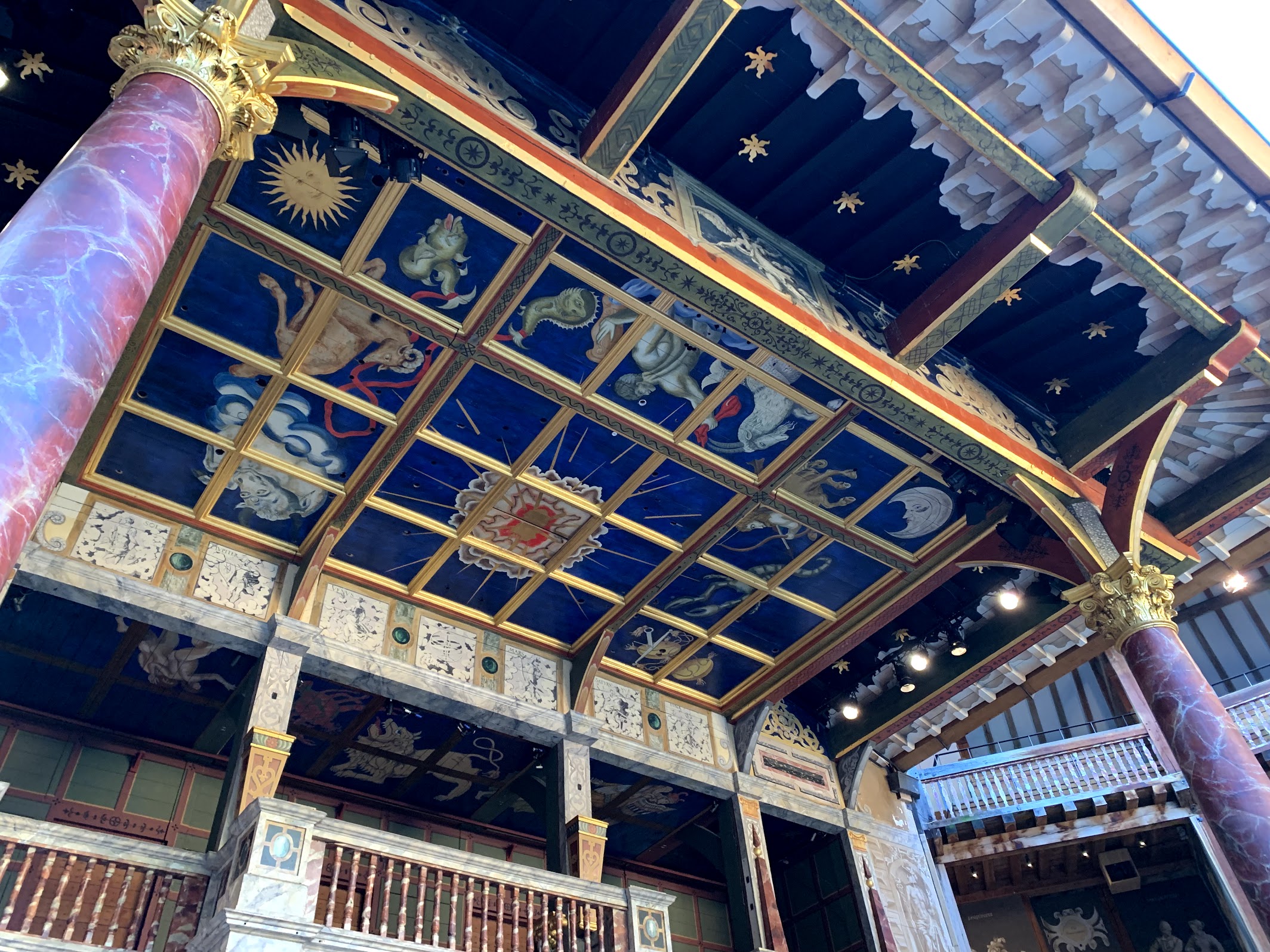
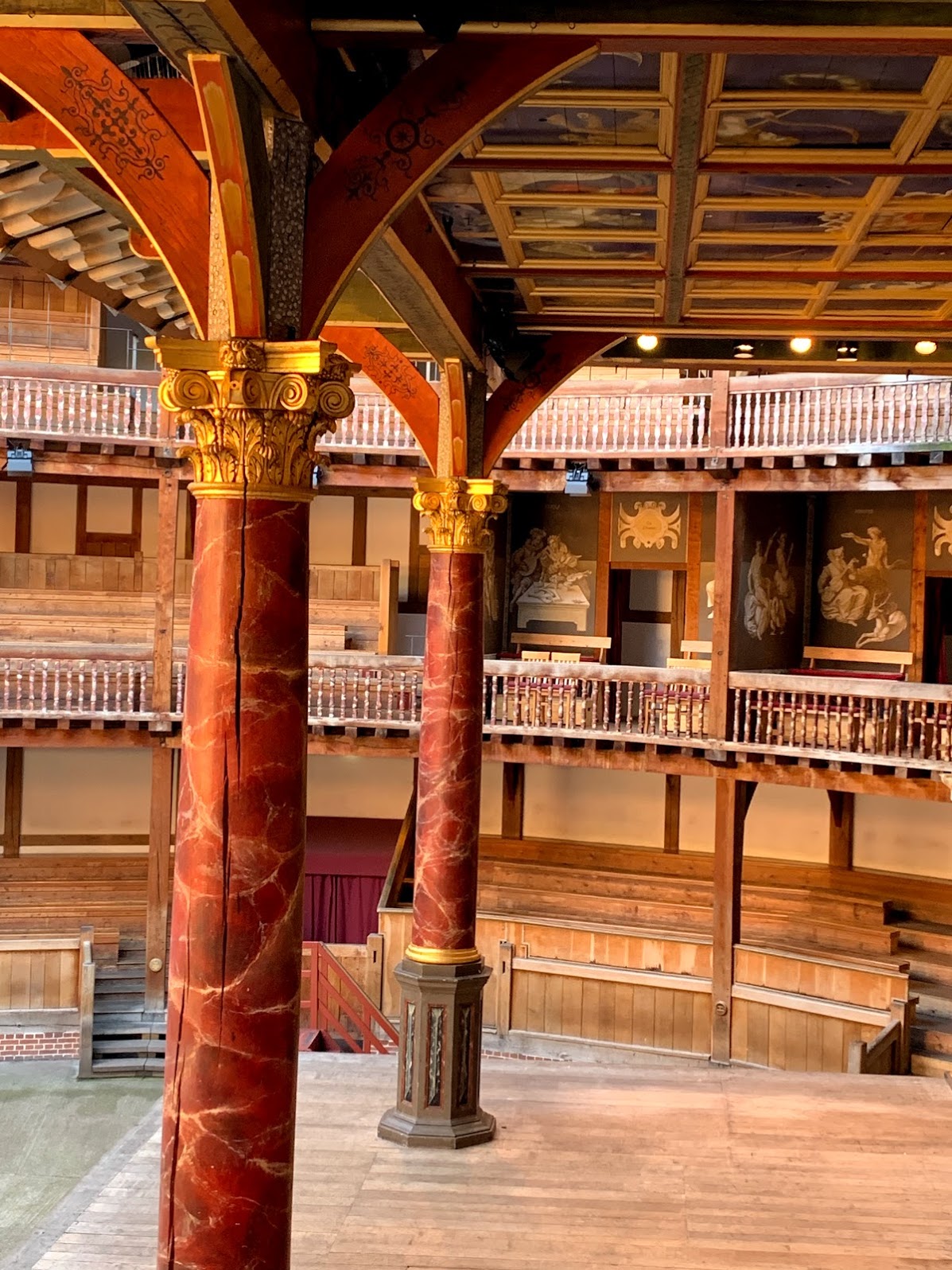
Ceiling on stage depicts the heavens with a secret trap door to let down actors from above. There’s also a trap door onstage for access below stage.
View from a posh side box:
The columns are not marble, but painted oak beams!
View from center upper balcony: From these seats you are only 50ft from the stage.

Built with the same materials and techniques as would have been available in the late 16th century, the new Globe Theatre was officially opened to the public in 1997. It is now a centre of theatrical education as well as a real working theatre putting on not only Shakespeare’s plays, but also other plays by his contemporaries. The Globe is an outdoor theatre and seats nearly 1600 people. They do not hold plays in the man theatre during the winter.

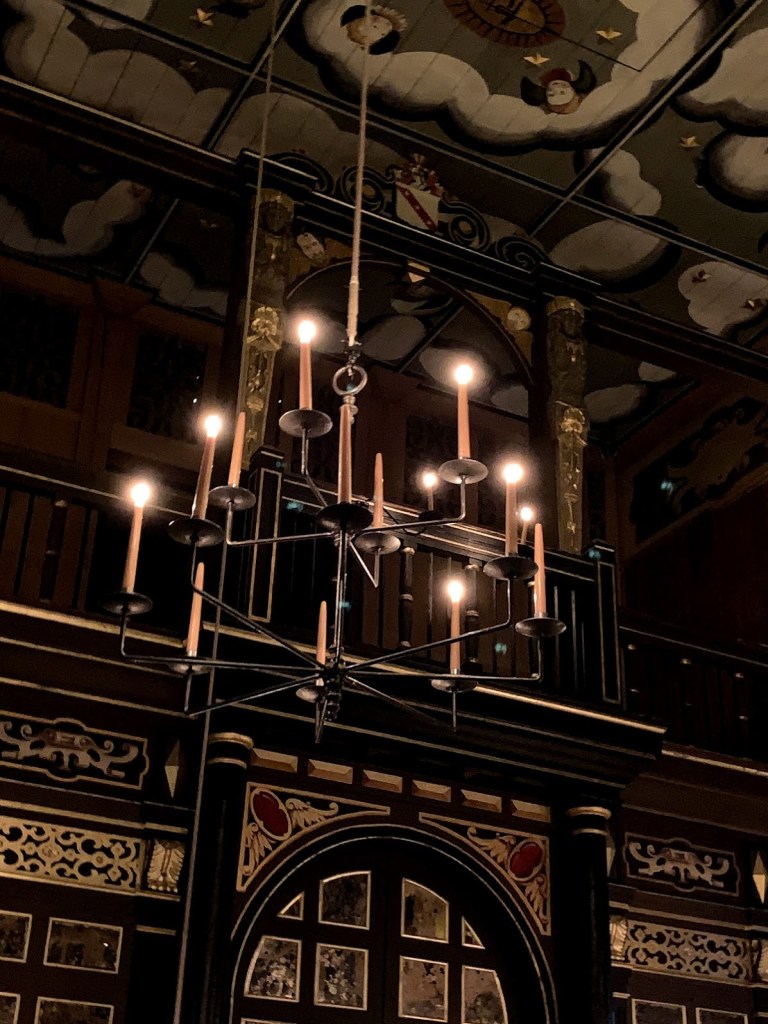
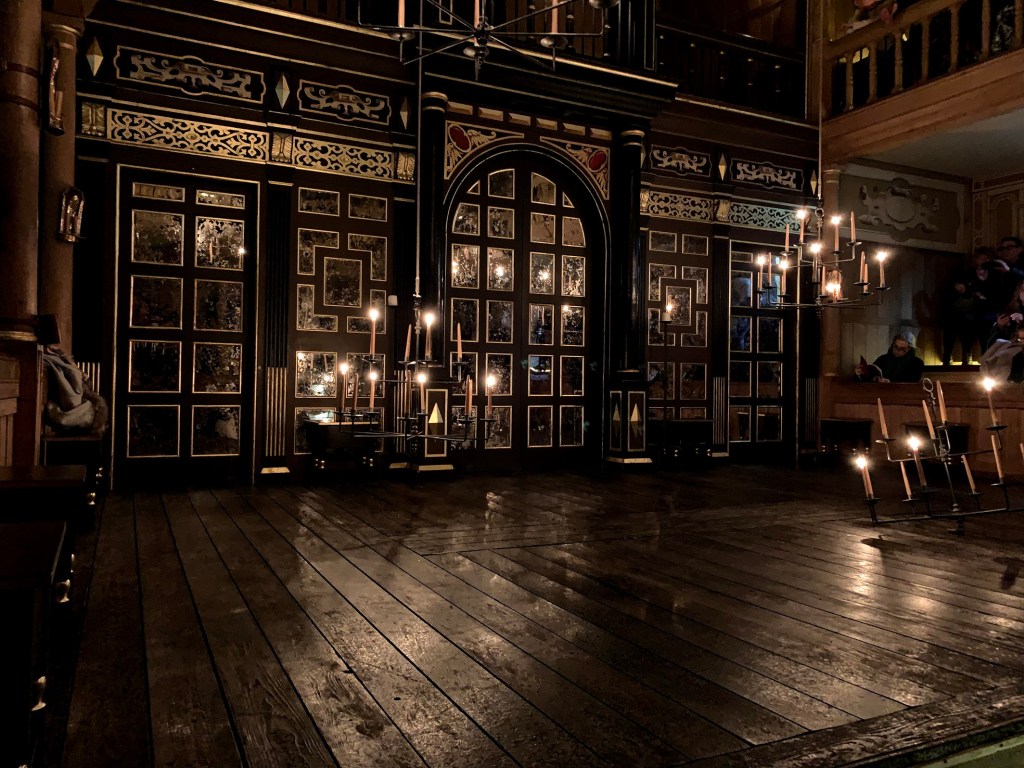
At 2:00 pm we walked into a candlelit room inside the Globe Theatre Exhibition Hall. It was a small 300 seat Jacobean (late 1600’s) period theatre. It was completed in 2013 and is named the Sam Wanamaker Theatre after the American who had a dream to bring Shakespeare’s Globe back to life! Inside we sat in the pit, a small area just in front of the stage at ground level, on red cushioned benches. Seamus and I were on the end seats and could literally reach out and touch the stage. The actors often used the small staircase in the pit area. The play we say was MacBeth!
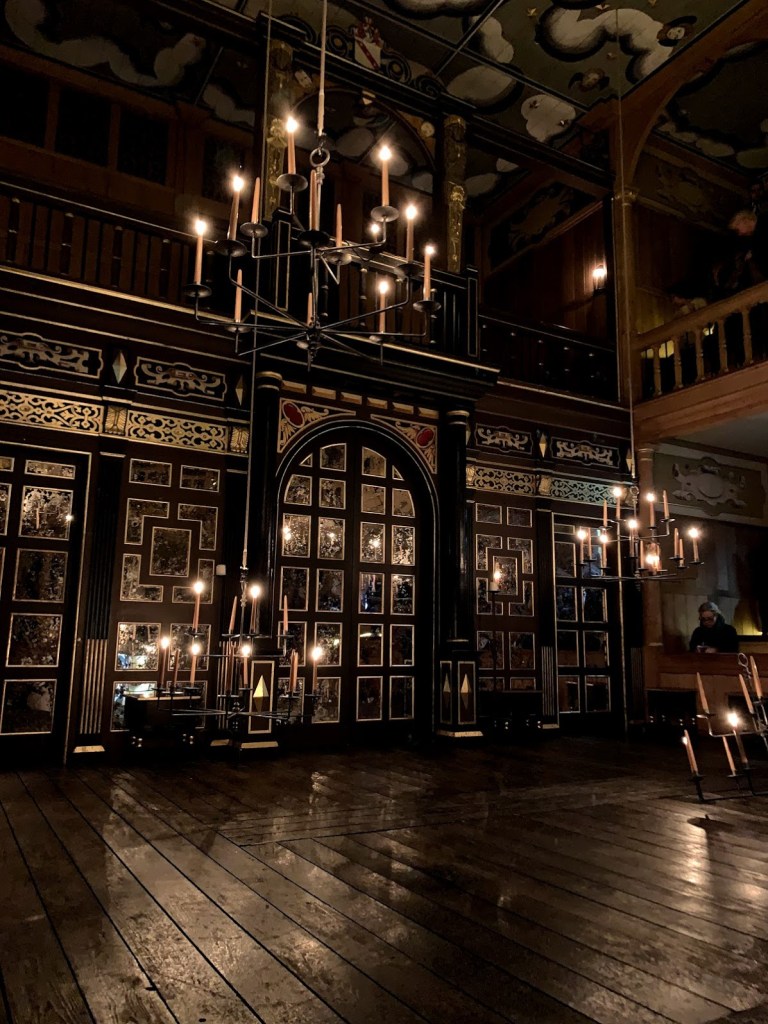
Sam Wanamaker Theatre
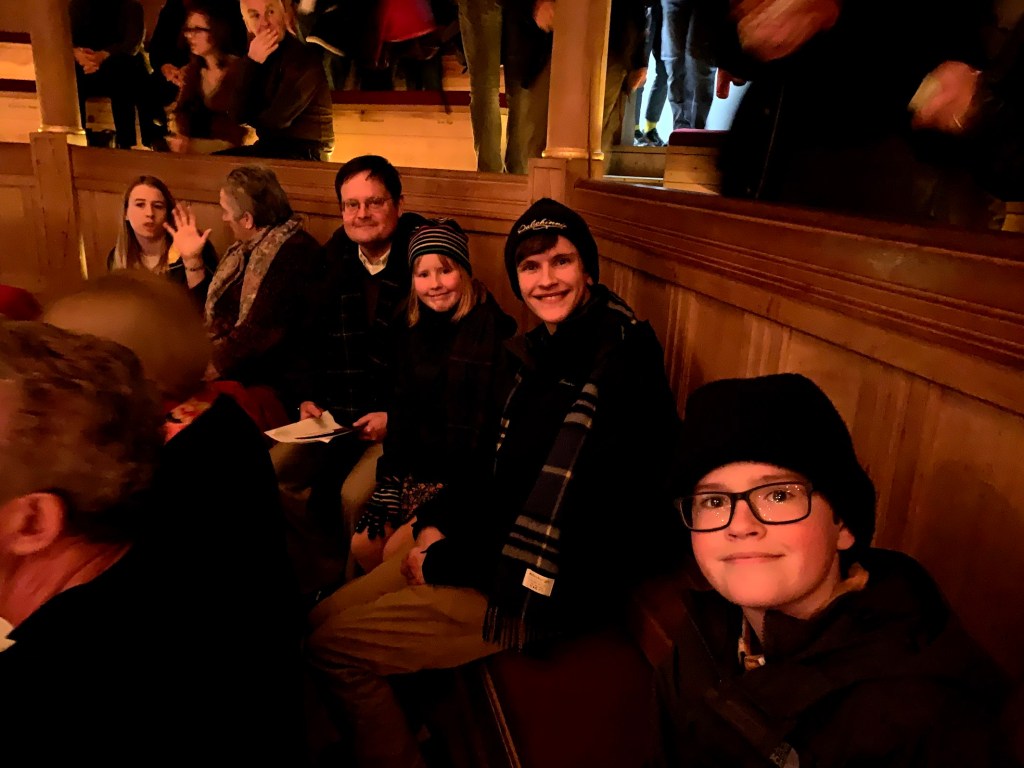
Ready for MacBeth! I took this picture standing on the steps used by the actors. It was a very intimate theatre.
The whole theatre was lit with beeswax candles. Many scenes were done with only one or two candles held by the actors lighting the entire theatre!
From our seats Seamus and I could reach out and touch the stage!

During the famous Porter scene, he actually came over and sat down next to Seamus and I and delivered his lines directly to us. After the show many folks told Seamus he did a great job “acting” with the Porter! Even MacBeth interacted with Faywen. At one point in the play MacBeth delivered an intense speech. He delivered it while looking directly at Faywen. When the audience’s attention was directed to another character he winked and gently waved to Faywen. A few members of the audience caught this and remarked to us how they enjoyed seeing it. I didn’t see it, but I thought it was wonderful of him to make Faywen feel a little more at ease after speaking an intense dialogue right at her!

The only words to describe this powerful adaptation of MacBeth are psychological thriller and eerie. The three musicians in the music balcony added to the mysticism with bells, vocals in Latin, and percussion. Seeing MacBeth in that intimate, candlelit space is an experience no one in our family will ever forget!
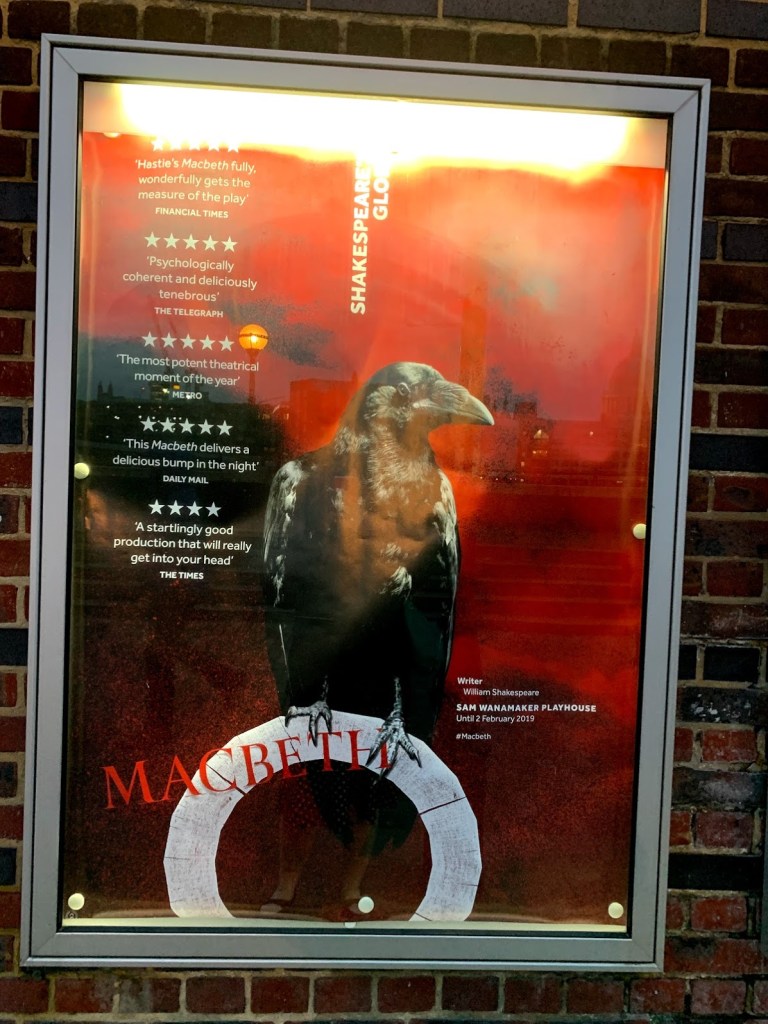
Publicity poster for the play

Our walk back down the Thames was full of conversation about the play. What were our favorite characters and scenes etc? Once back at the hotel, the kids wanted Robert and I to go out and have a special quiet dinner. We picked up some subs for them and they ate in the hotel room. Robert and I went across the street to a lovely Italian restaurant. Today is our 21st wedding anniversary and I dare say it won’t be one we will ever forger. How many folks can say they had an anniversary in London and went to see a play put on by the actors of the Globe Theatre!
London Day 2: Royalty and Leaders

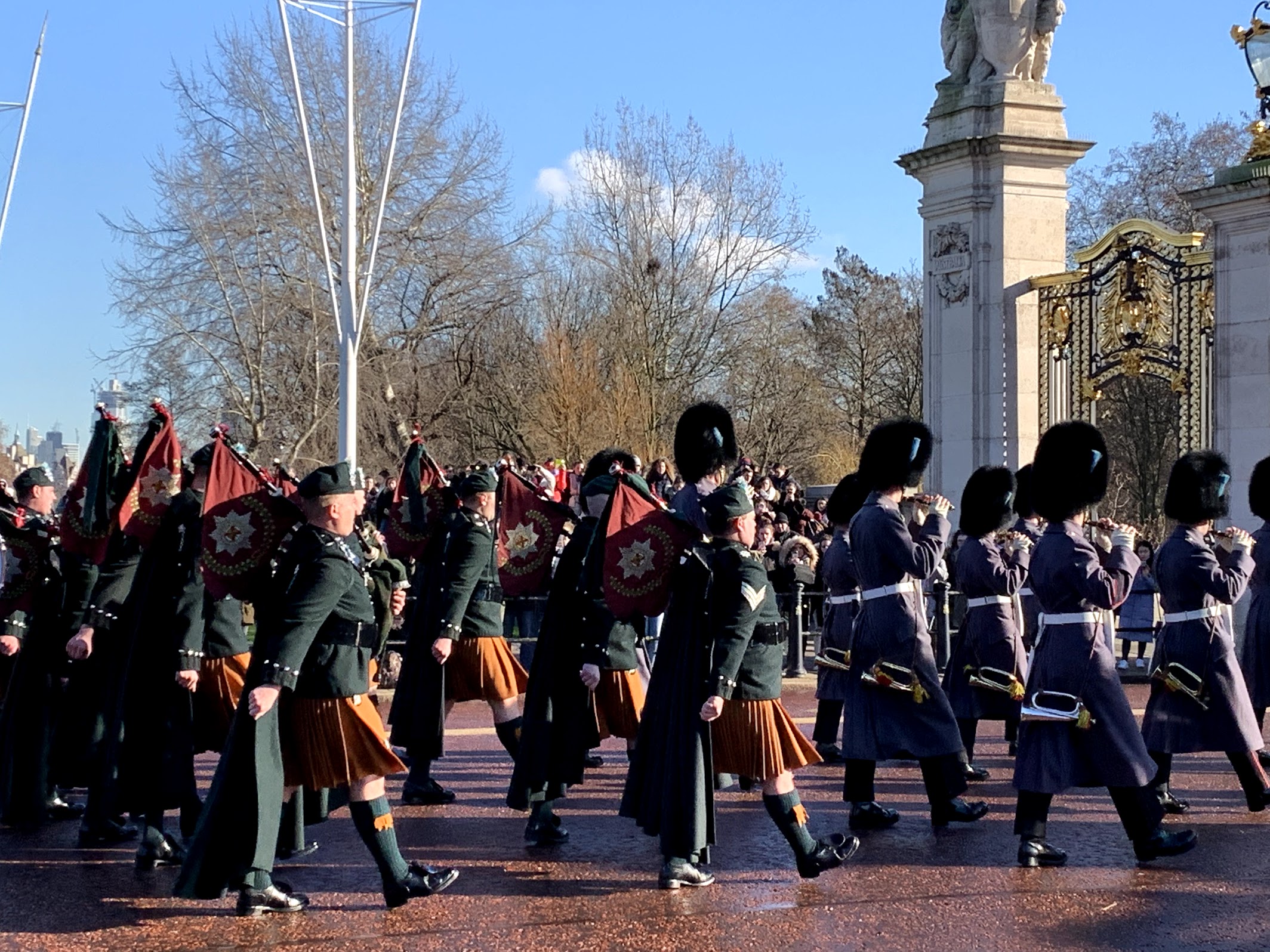
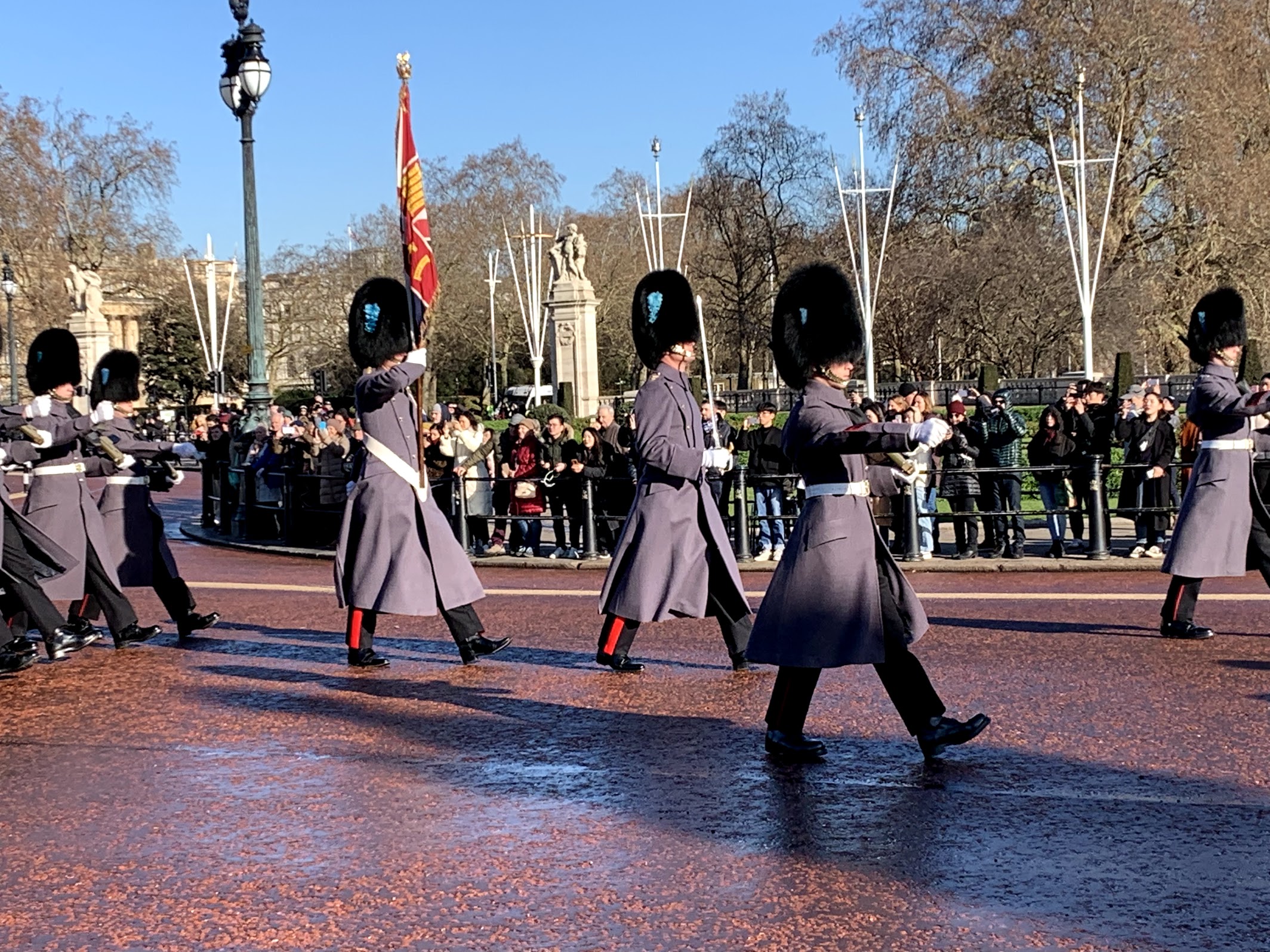
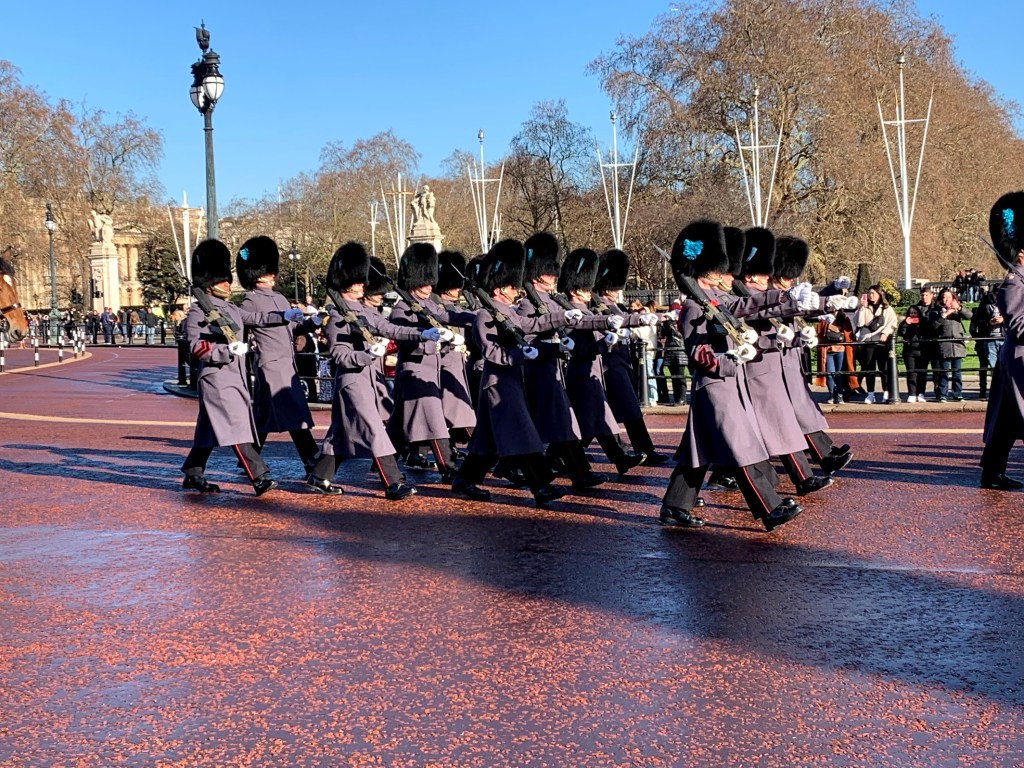
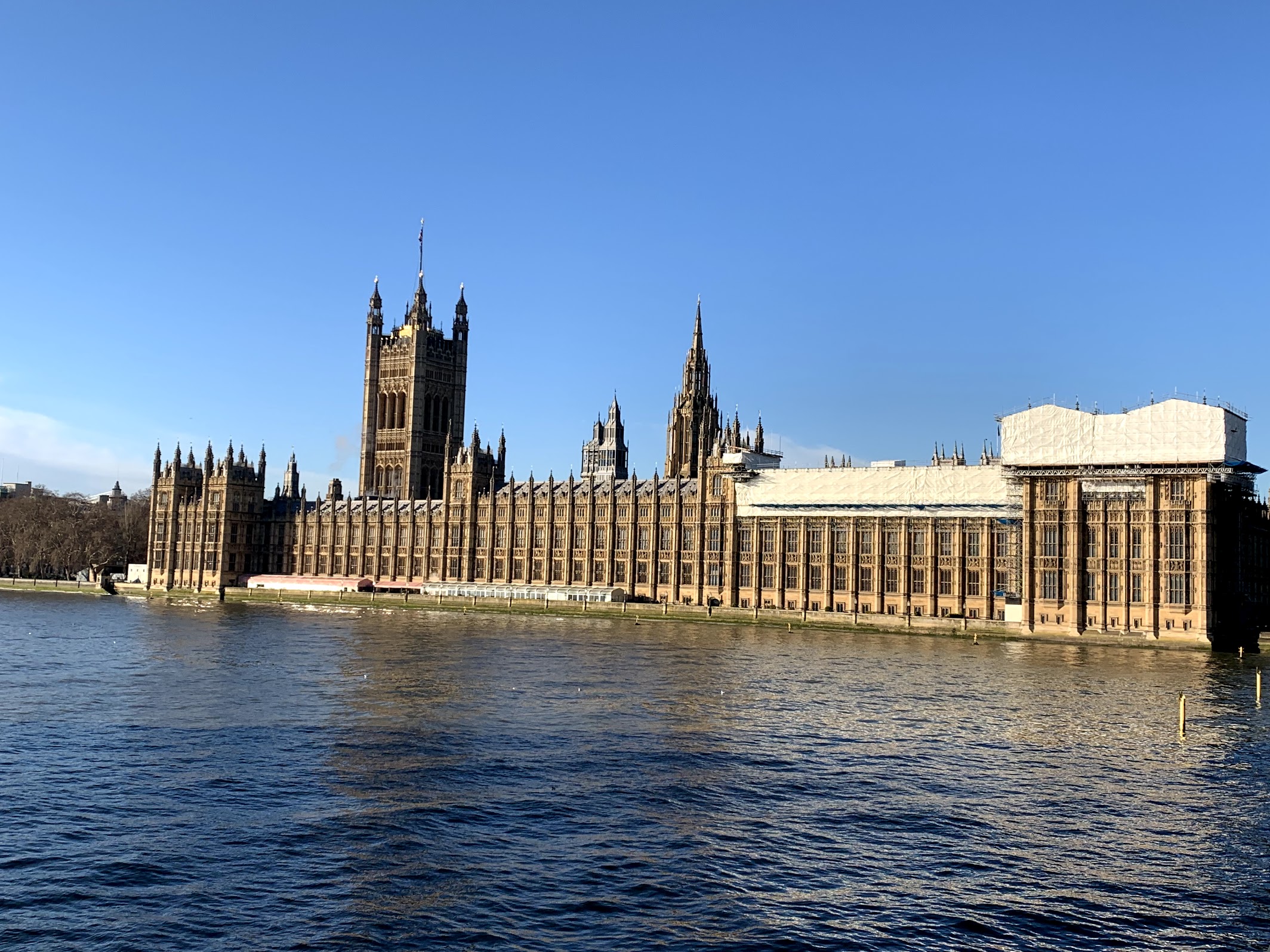
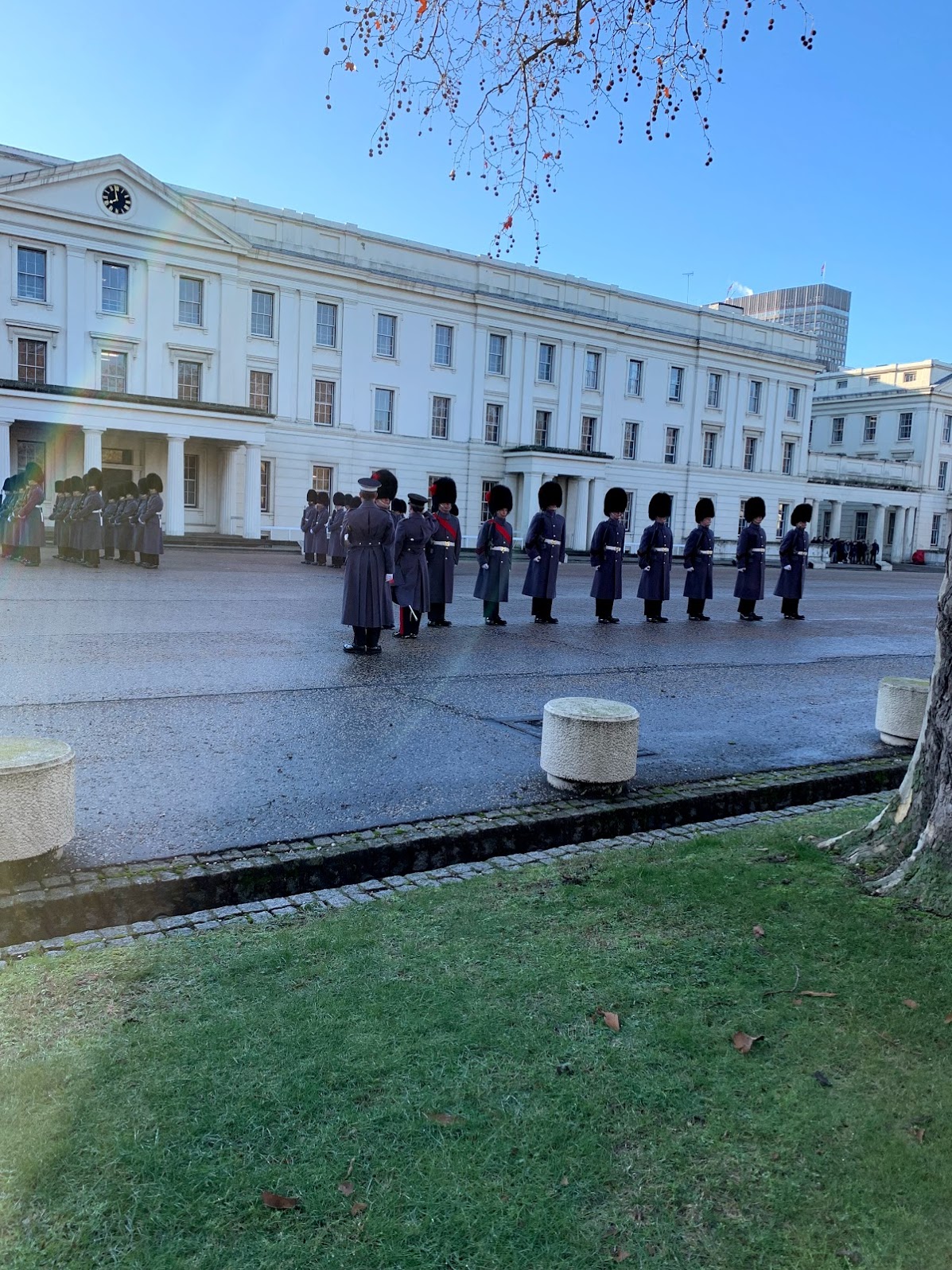
Crystal blue skies shown overhead making all the grey and white buildings of old London crisply outlined by contrast. Today we walked one block south and then west across Westminster Bridge. The Parliament buildings at Westminster sparkled in the sunlit reflection off the water. Unfortunately Big Ben is under restoration and was covered in scaffolding, but you could still see the clock face. Parliamentary buildings are only open on Saturdays to the public so we kept on our path west until reaching Wellington Barracks. We arrived just as the1st Battalion of the Queen’s Coldstream Guard was under inspection. Within a half hour they would go on duty protecting the Queen at Buckingham Palace. The Band of the Scots Guard accompanied them during the inspection.

Houses of Parliament at Westminster
1st Battalion Coldstream Guard: Faywen spotted a women in the ranks. She is the guard wearing the red sash on the right.
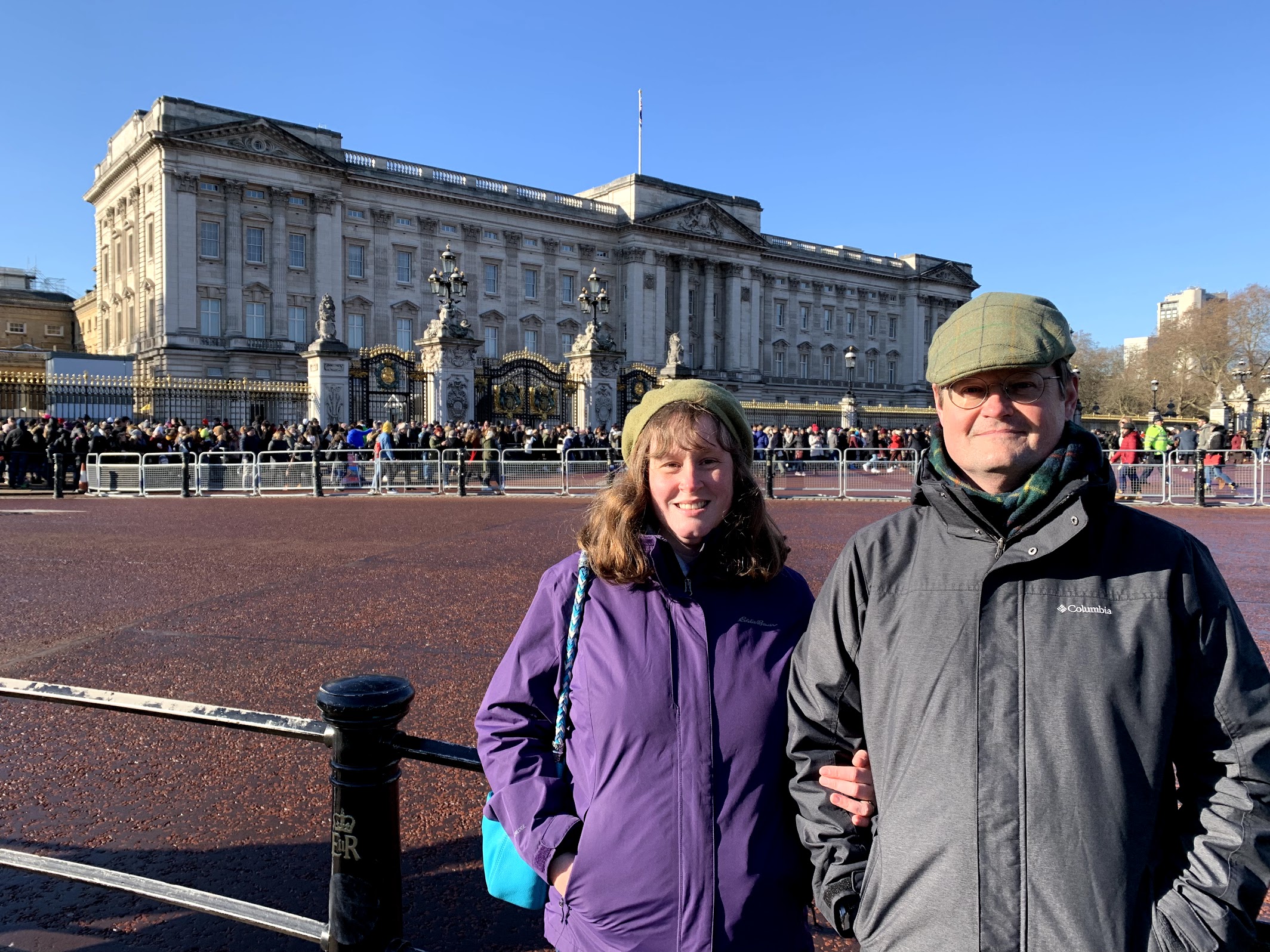
Buckingham Palace

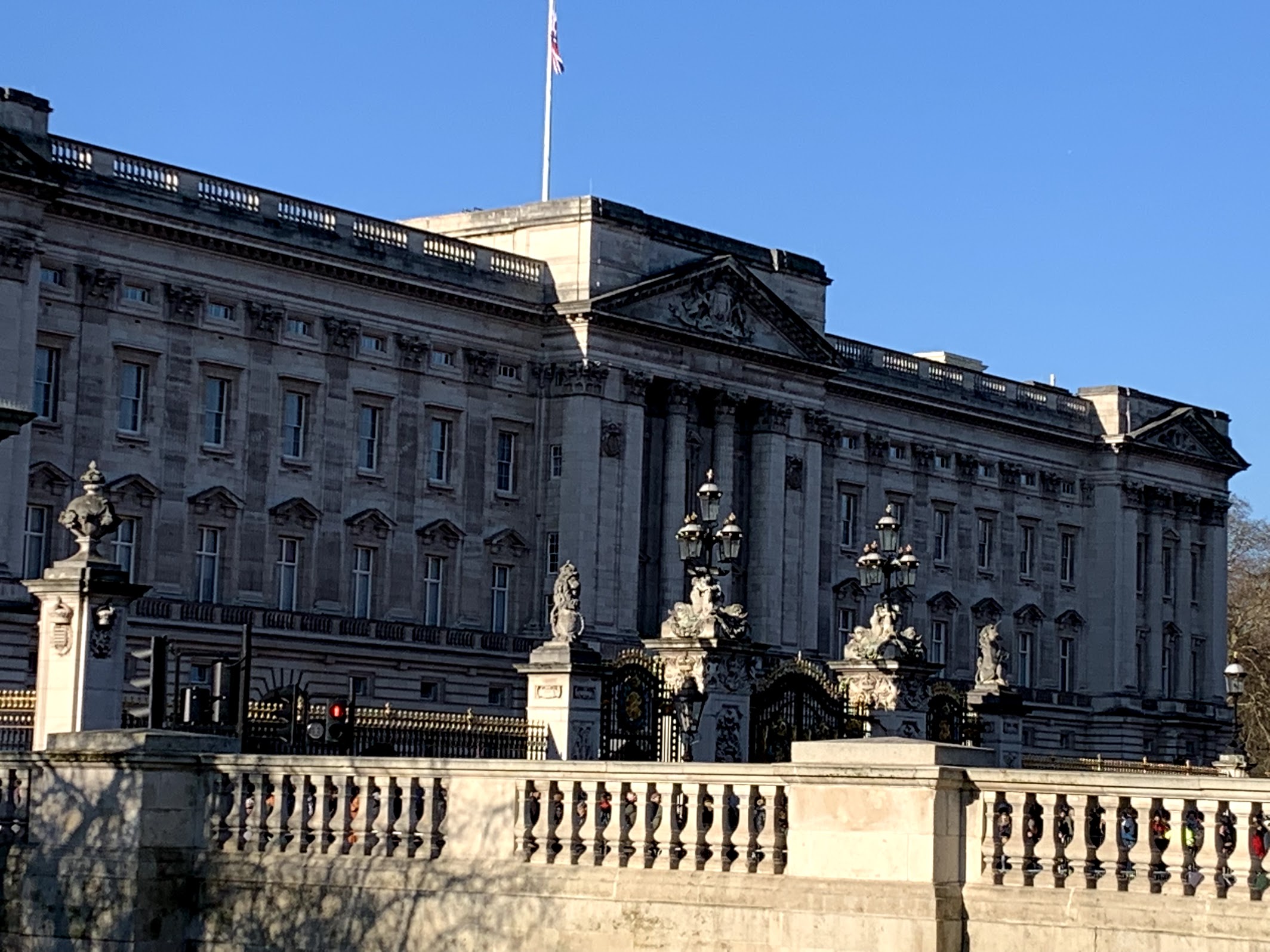
About two blocks further down St. James Park and we could see Buckingham Palace, the official residence of Queen Elizabeth II. However she was not in residence, because the royal standard was not being flown. The Changing of the Guard was about to begin. First to come down the street were the Queen’s Horse Guard followed by the 1st Battalion Irish Pipes and Drums. The 1st Battalion Irish Guards were the “old guard” being relieved of duty. Next to enter was the 1st Battalion of the Coldstream Guard followed by the Band of the Scots Guard who were the “new guard” coming on duty for the next 48 hours. It was truly British military pomp at the grandest level! The soldiers marched in perfection as the bands played, sergeants yelled out orders, and the pipes and traditional bands played beautifully!

1st Battalion Irish Guard Pipes and Drums
1st Battalion Irish Guard
1st Battalion Coldstream Guard
Robert and I in front of Buckingham Palace

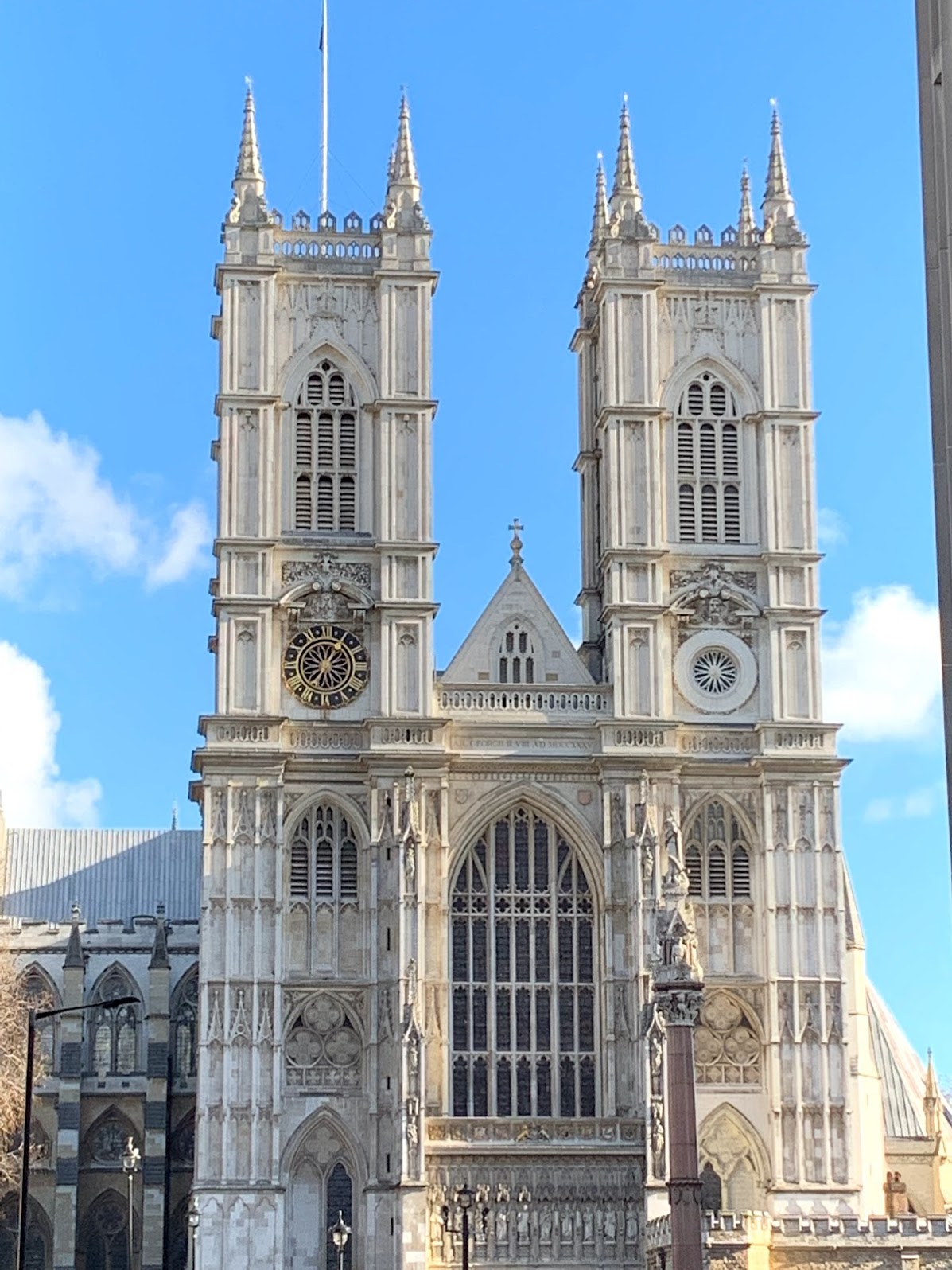
From the pomp of royal British military might to the humble religious grandeur of where great kings and queens have been crowed, married, and buried, we entered one of the world’s most famous churches…Westminster Abbey. The audio tour was very helpful as we meandered through burials of kings and queens, the Choir, the High Altar, Lady’s Chapel, and Poet’s corner. The Lady’s Chapel was built in the late 1400’s by Henry VII and is a very ornate late medieval structure. Called Lady’s Chapel in honor of the Virgin Mary, it is also the resting place of Henry VII and his wife Elizabeth of York, Queen Mary, Queen Elizabeth I, and Mary Queen of Scots.

Westminster Abbey: western front of the Abbey
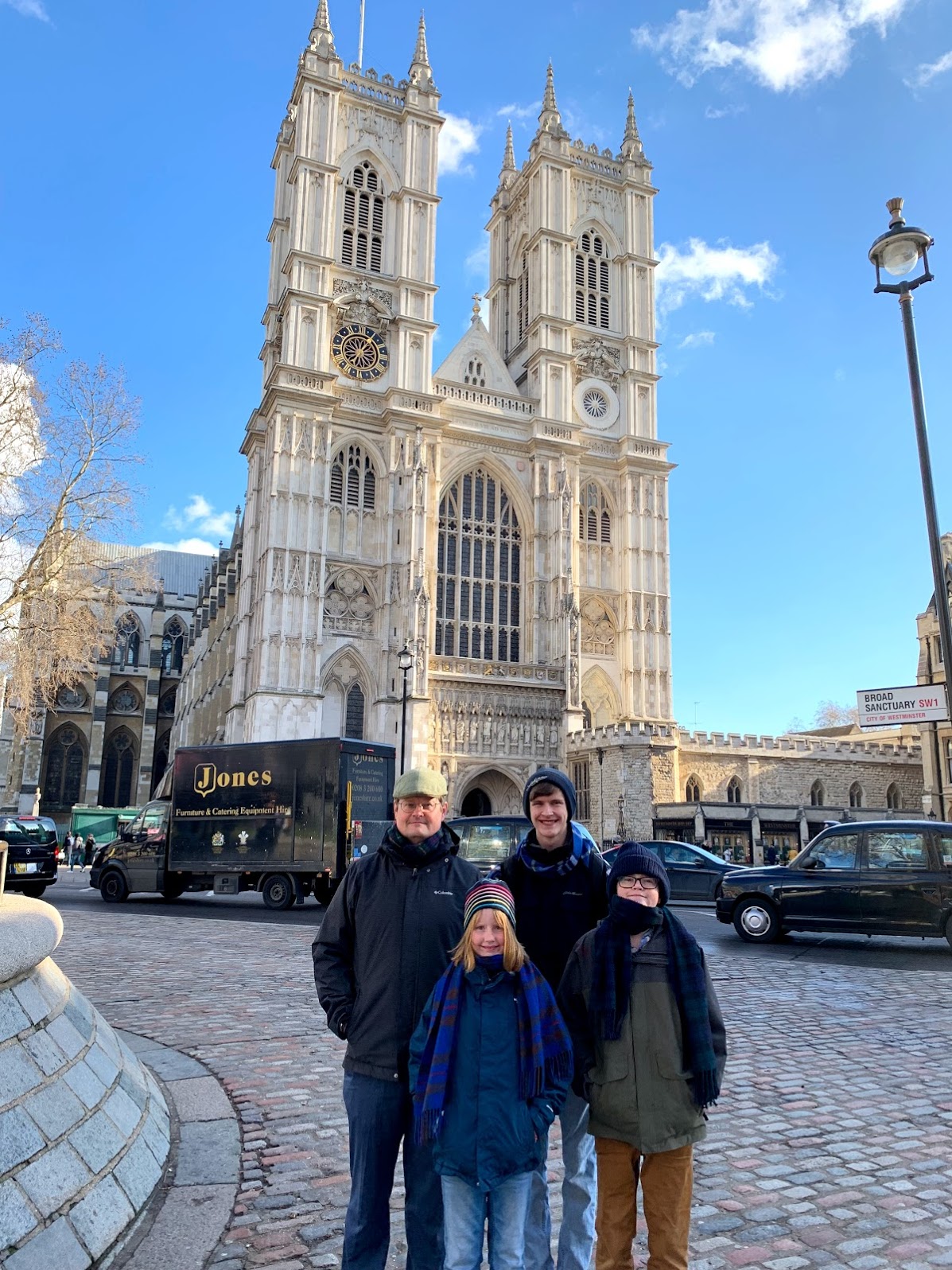
Another view of the Abbey

Westminster Abbey was founded in the 11th century by monks and blessed by Edward the Confessor who later became a Saint. His tomb lies behind the high altar. The current gothic cathedral took over 500 years to build and went through various phases until reaching it’s current outward appearance in the 18th century. One corner of the eastern end contains graves of famous poets, writers, and musicians in British history; C.S. Lewis, Charles Dickens, Rudyard Kipling, and the earliest grave belonged to Geoffrey Chaucer. Handel and Purcell are also buried in Westminster Abbey.

Many of the graves lie on the floor or are in the walls of the building and therefore are walked or leaned upon. There is one simple grave that is held in the highest regard even above that of kings and queens…the Tomb of the Unknown Warrior. This tomb lies in front of the main western doors and is always surrounded by flowers. No one it allowed to walk on it. The tomb contains the remains of an unknown soldier for WWI. The highest honor is given to a commoner. The tomb is extremely symbolic, because in the eyes of Christ we are all equal!

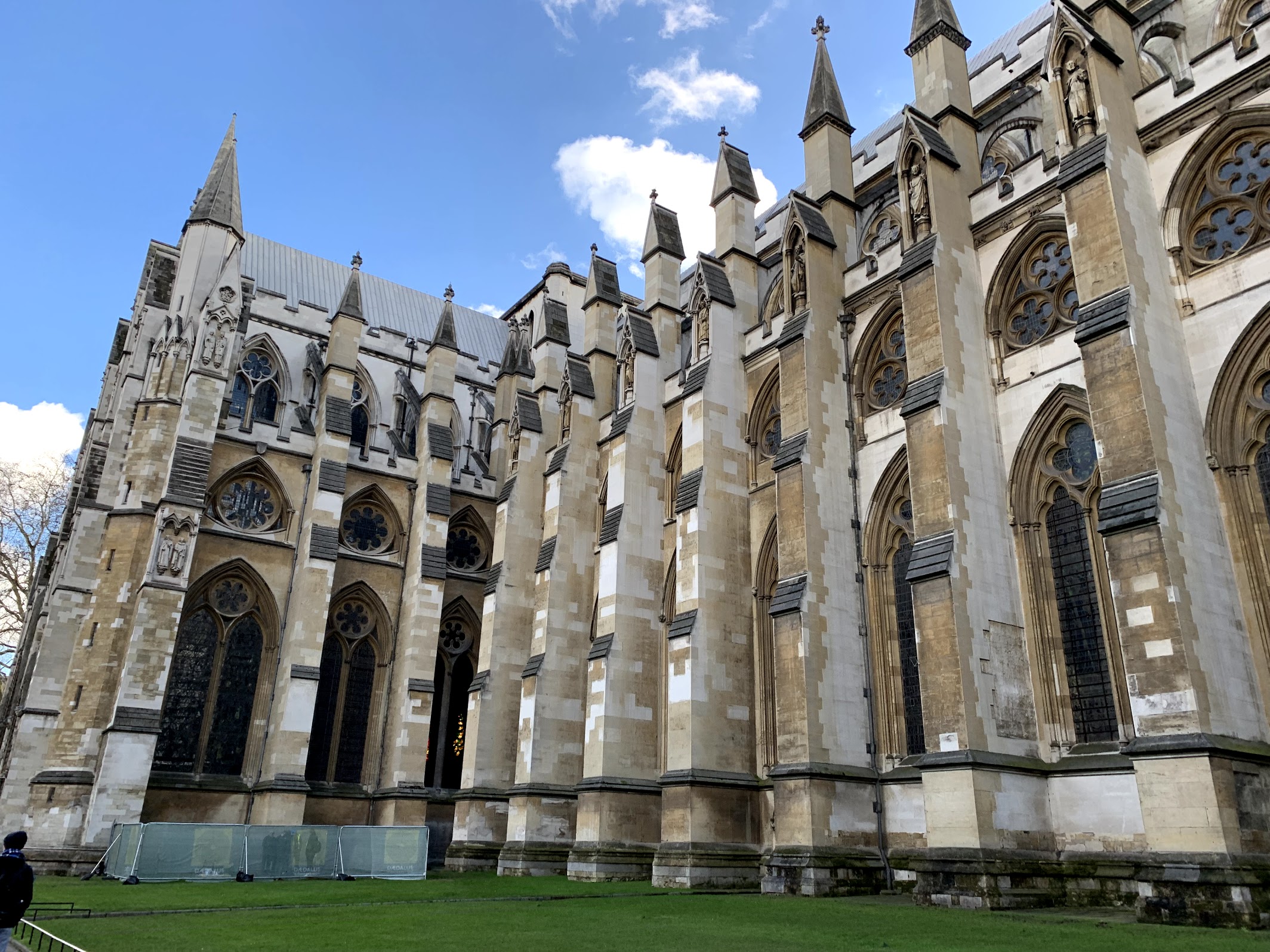
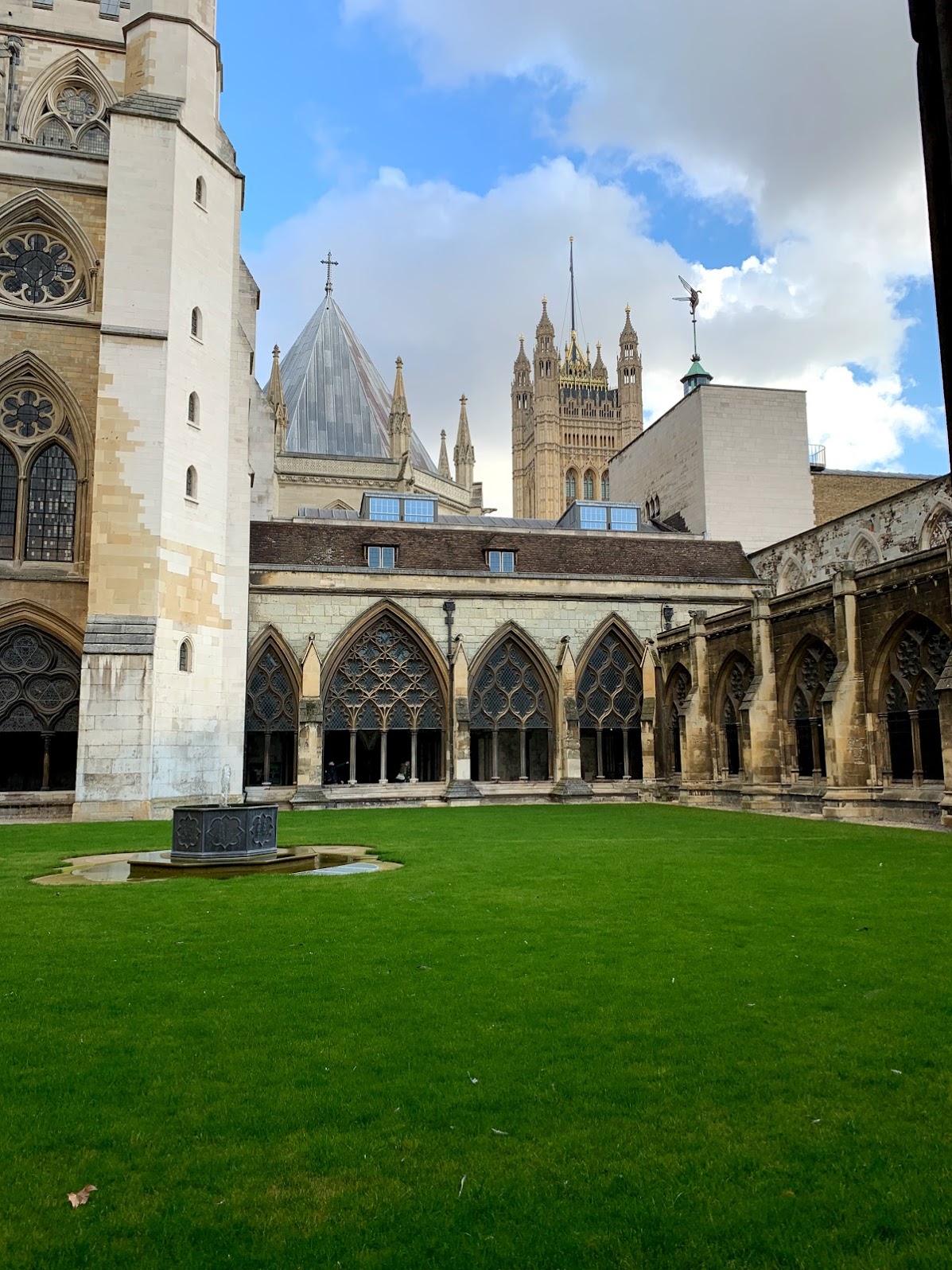
The last item you see in Westminster before exiting is the Chapel of St. Edward the Confessor and the wooden coronation throne upon which the kings and queens of the British Isles and Commonwealth have been crowned. The chair known as Edward the Confessor’s throne, dates to 1309. Sadly, there was no photography allowed in the sanctuary so I only have photos from outside.

Side view of Westminster Abbey
Old cloister inside the Abbey
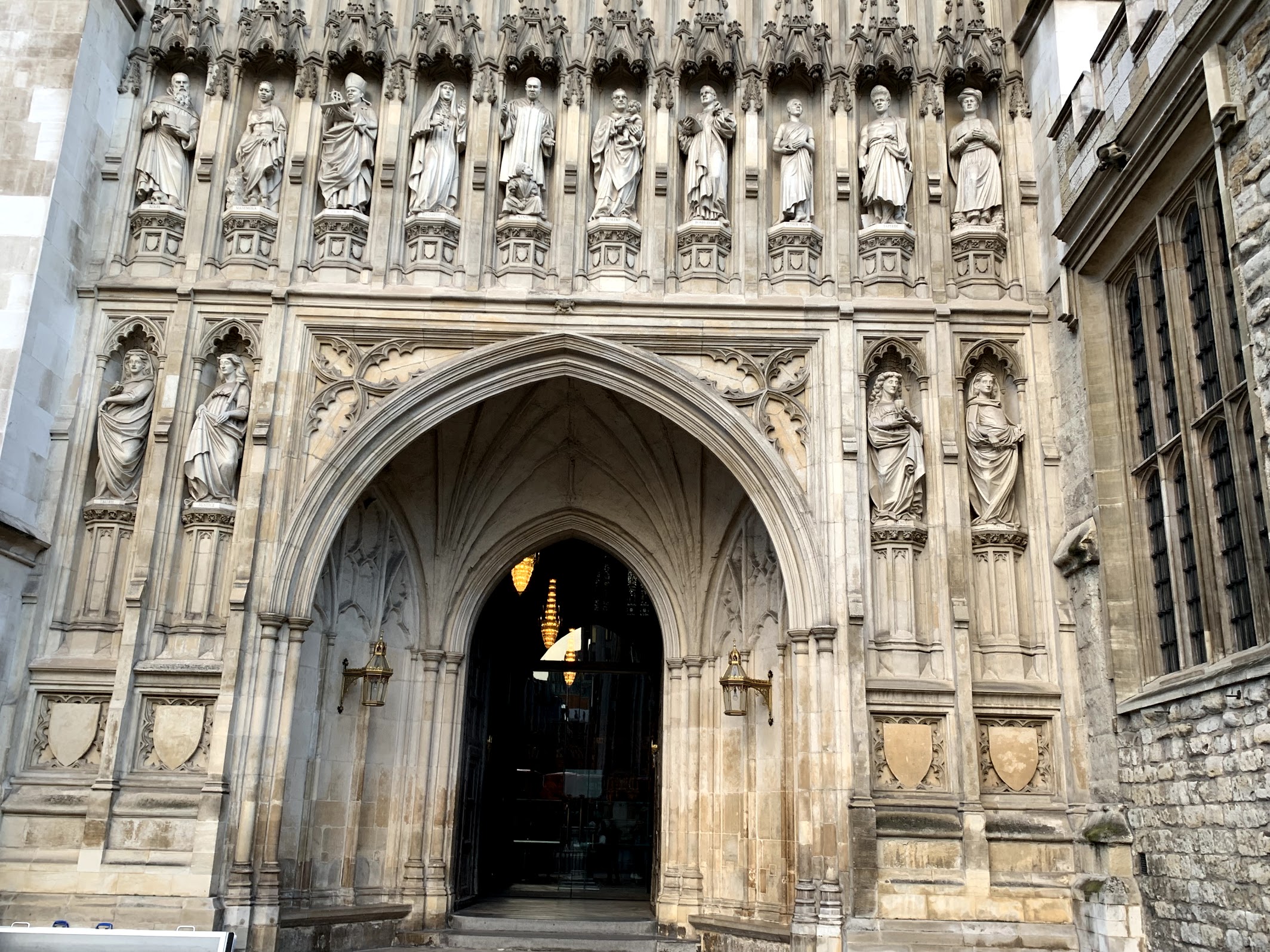
Famous Western Doors of the Abbey

It was tea time when we left the Abbey so we meandered a couple of blocks until we found this cute little café called Pickles and had a nice tea with cakes and sandwiches. Kati-cornered from Pickles was the Royal Treasury, which holds a secret in it’s basement, The Churchill War Rooms. During WWII Winston Churchill and his government ran military operations and correspondence from this underground bunker that was original the vaults to the Treasury. The War Rooms were turned into a museum and opened in 2005.

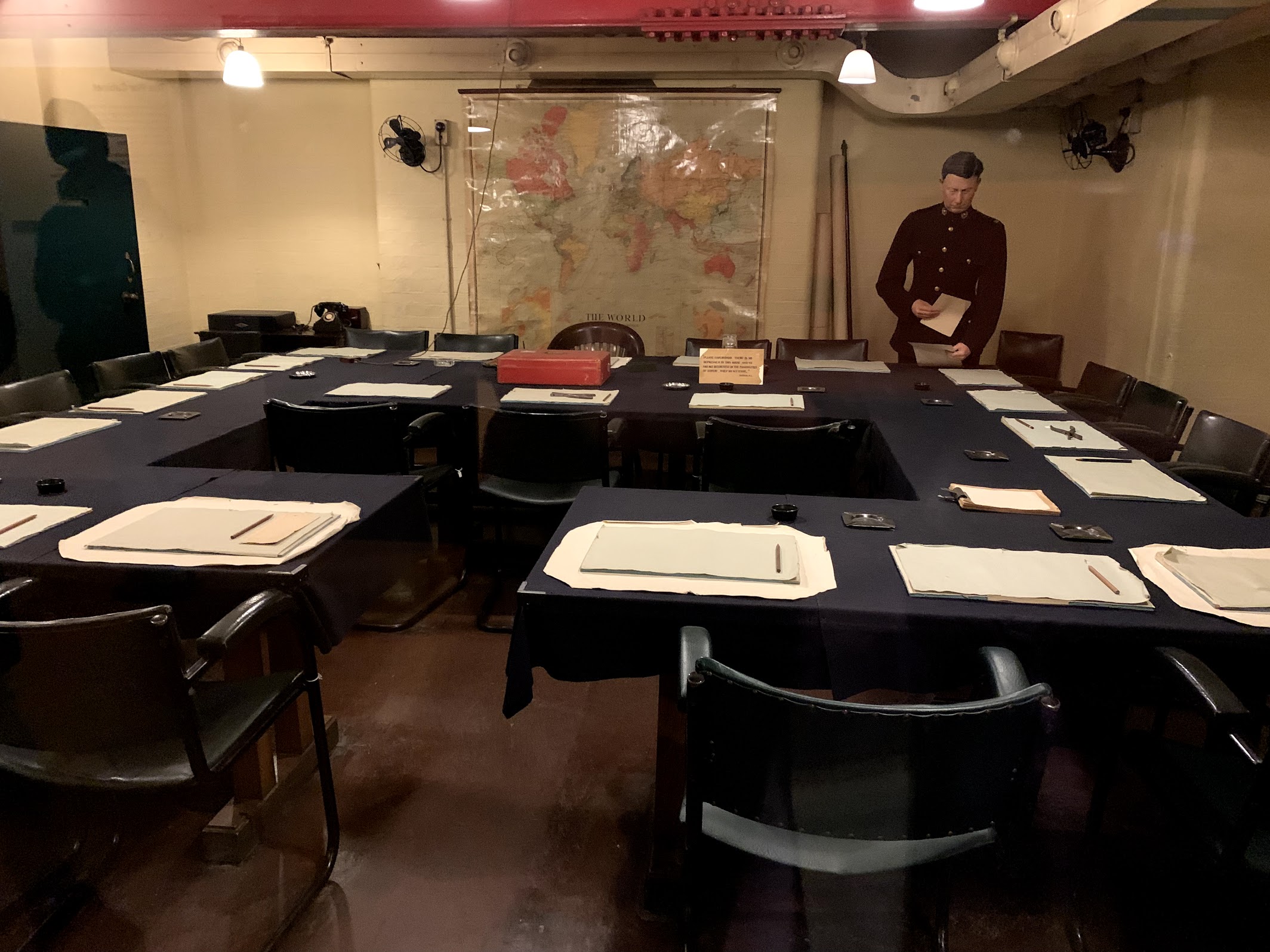
Churchill’s War Cabinet Room

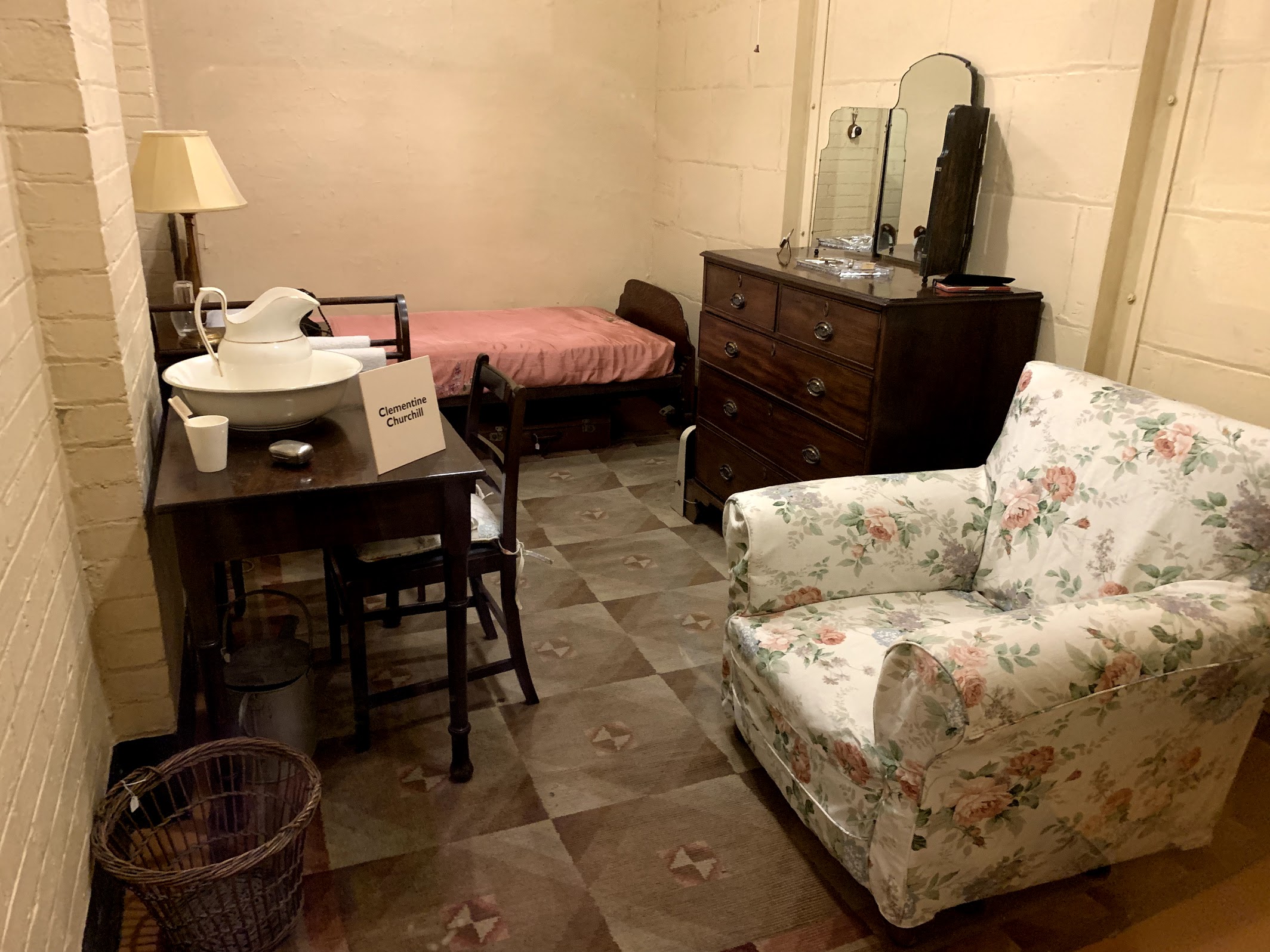
The labyrinth of rooms contained original artifacts and furniture from the time period of its operation, May 1940-Aug. 1945. There was also a Winston Churchill Museum within the bunker. I really enjoyed listening to the audio tour that gave vital information about each room and personal accounts from the men and women who worked in the bunker and with Prime Minister Churchill. The boys were engrossed and even Faywen really enjoyed the displays. She particularly liked Mrs. Churchill’s bunker room and seeing the room where the typists worked. Churchill even had his favorite cook Ms. Georgina come and prepare his meals while he was in the bunker.

Mrs. Churchill’s quarters
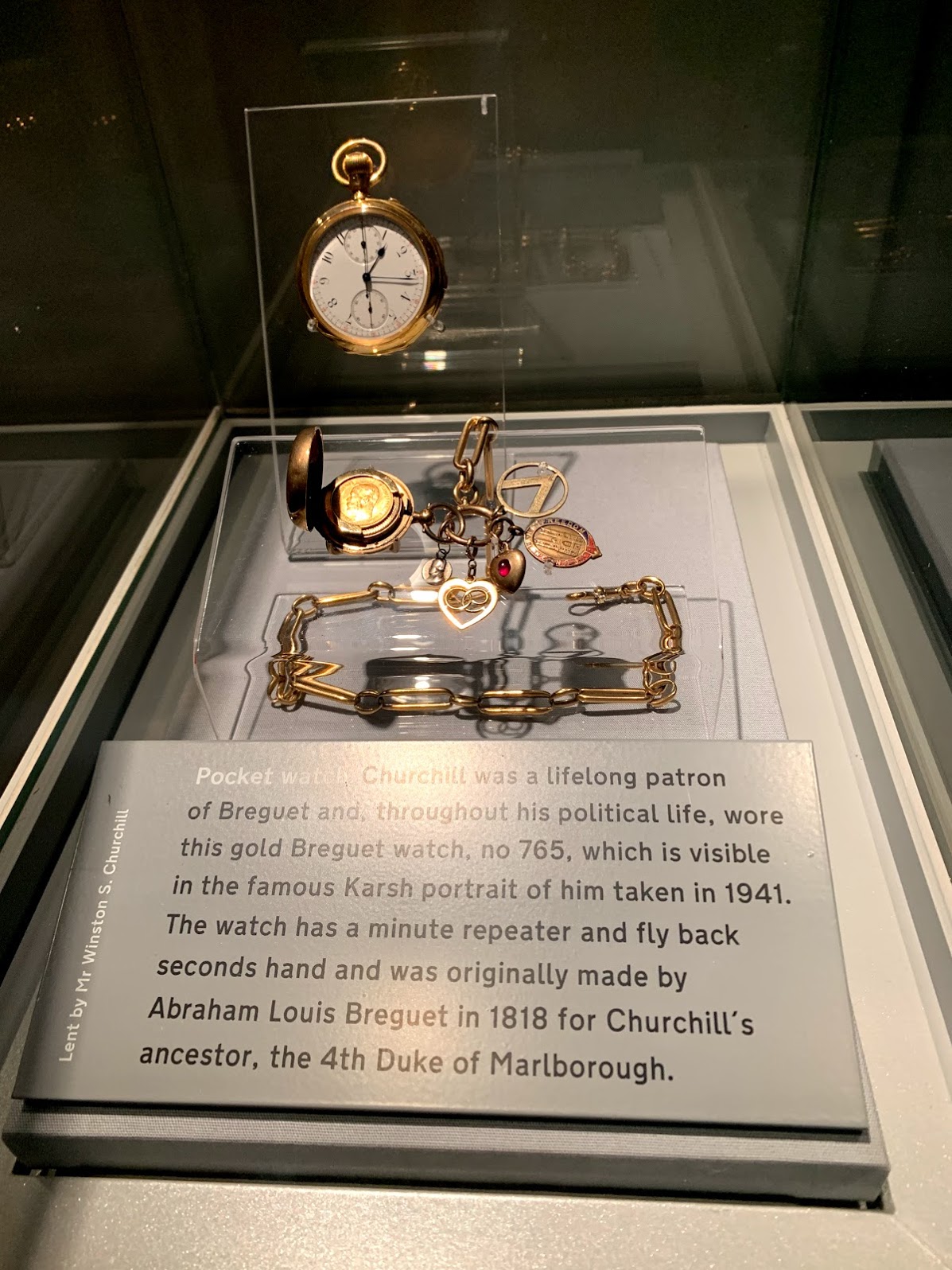
Winston Churchill’s famous pocket watch
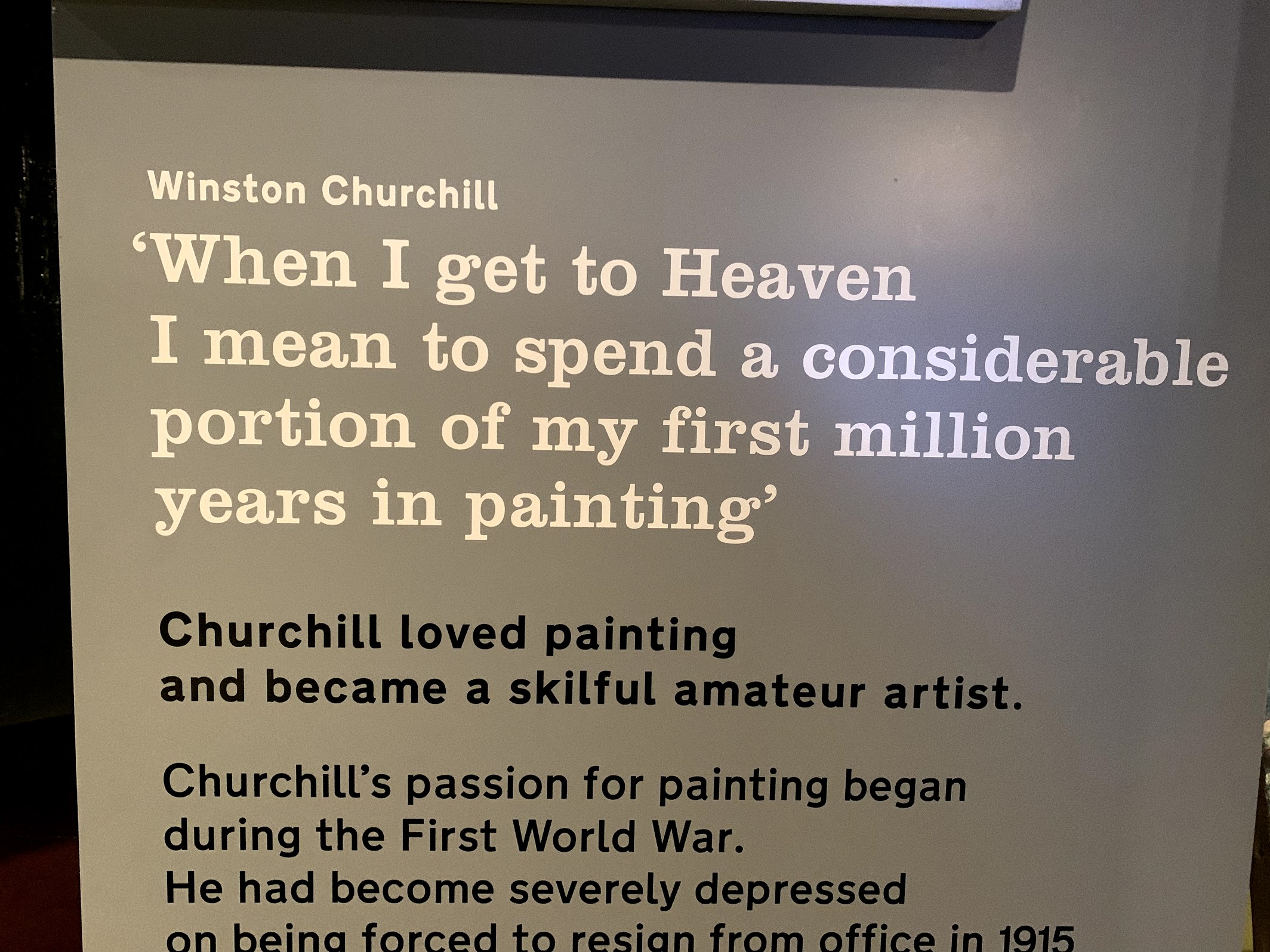
I just love this quote: He was a devout Christian and faithful husband and father.
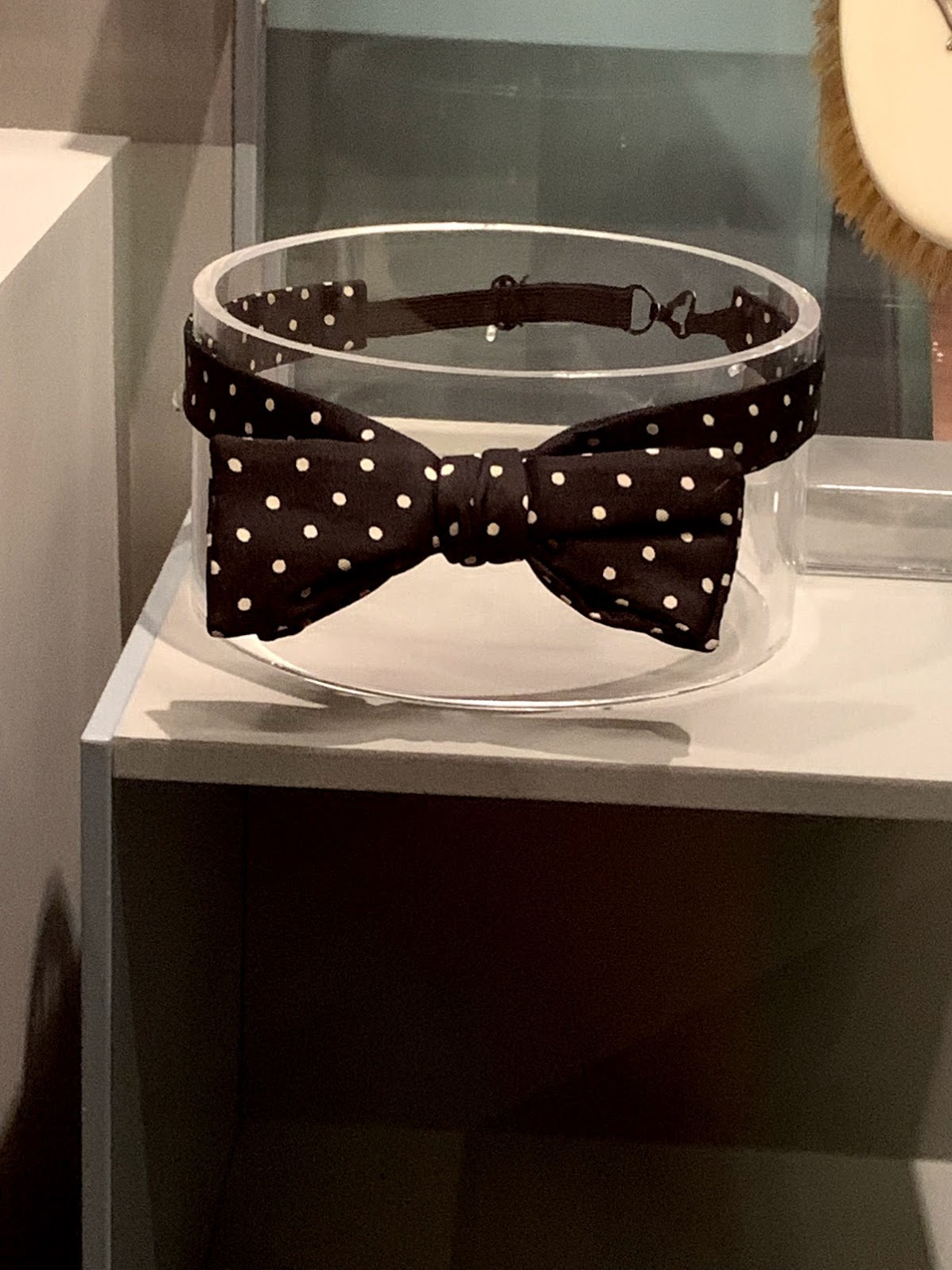
Churchill’s famous bowtie
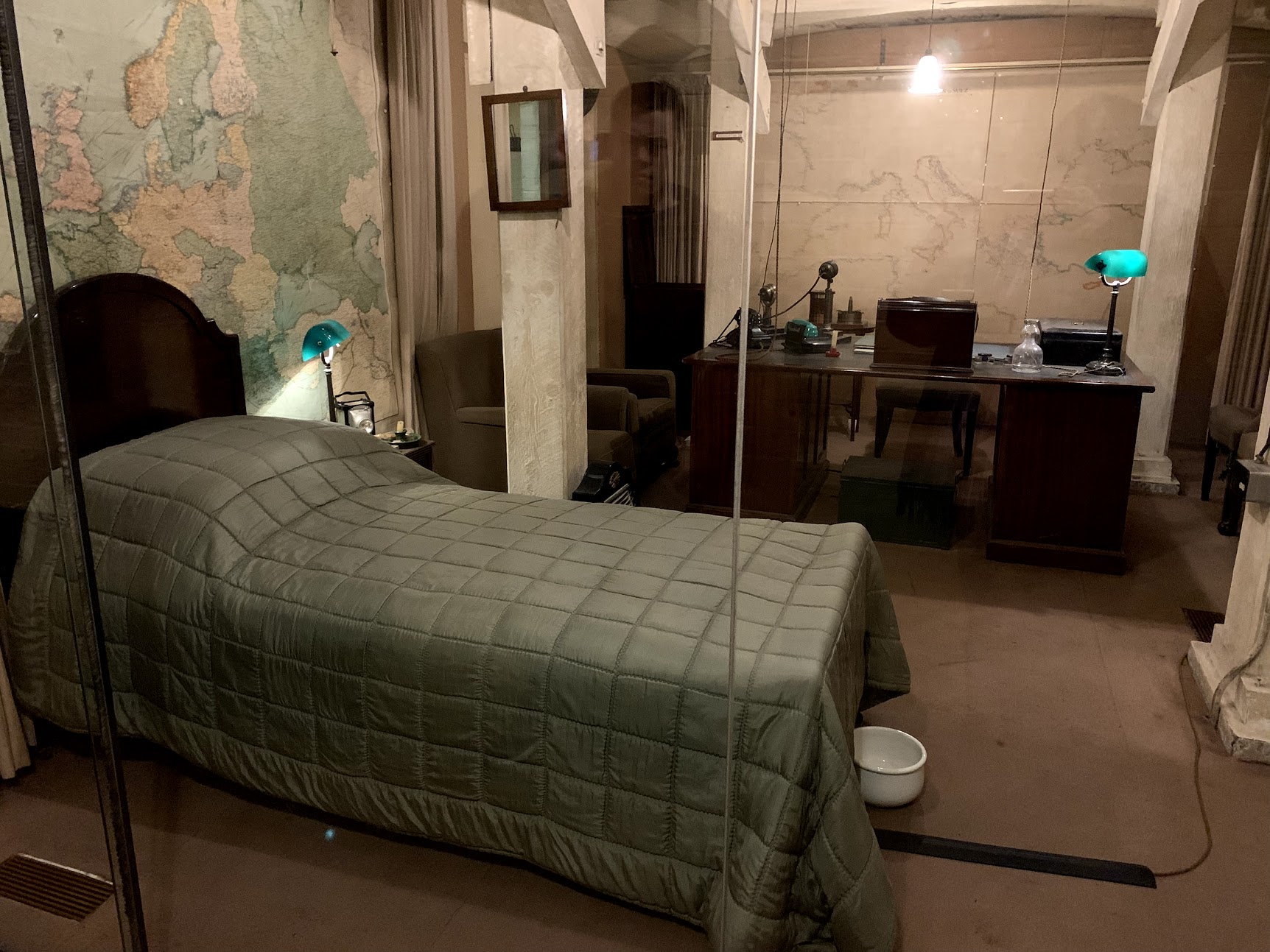
His private quarters: He gave several of his famous BBC radio speeches from that desk.

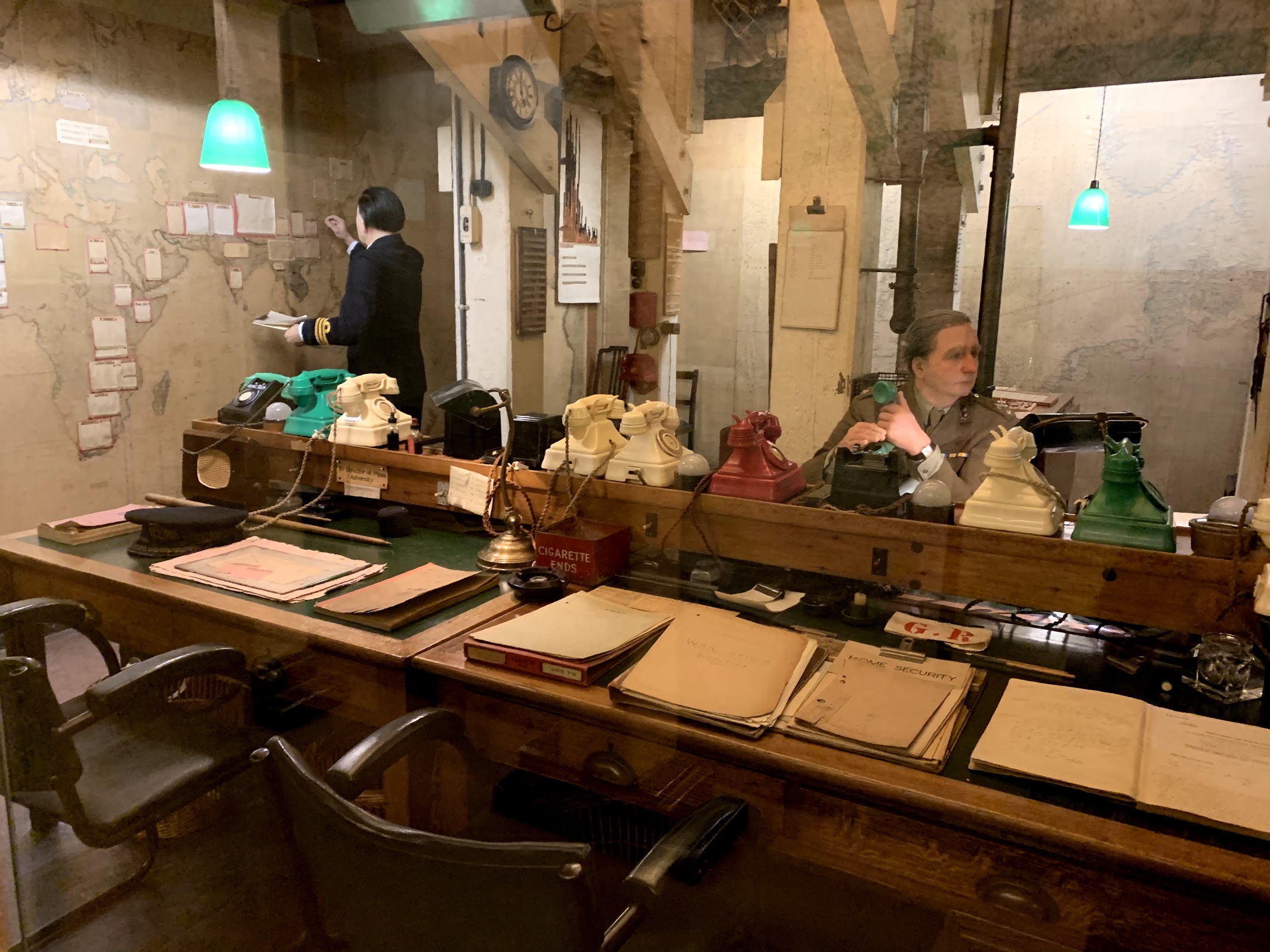
Robert and I liked the Glamour Boys room with the row of specialized colored telephones. The Glamour Boys were the intelligence officers who had access to every political ally, commander, and could find out what was going on in the war by choosing a phone that was color matched to a certain intelligence office around the world. All phone calls were scrambled before being sent out over the wire.

Glamour Boys Room with the iconic “Beauty-line” colorful phones

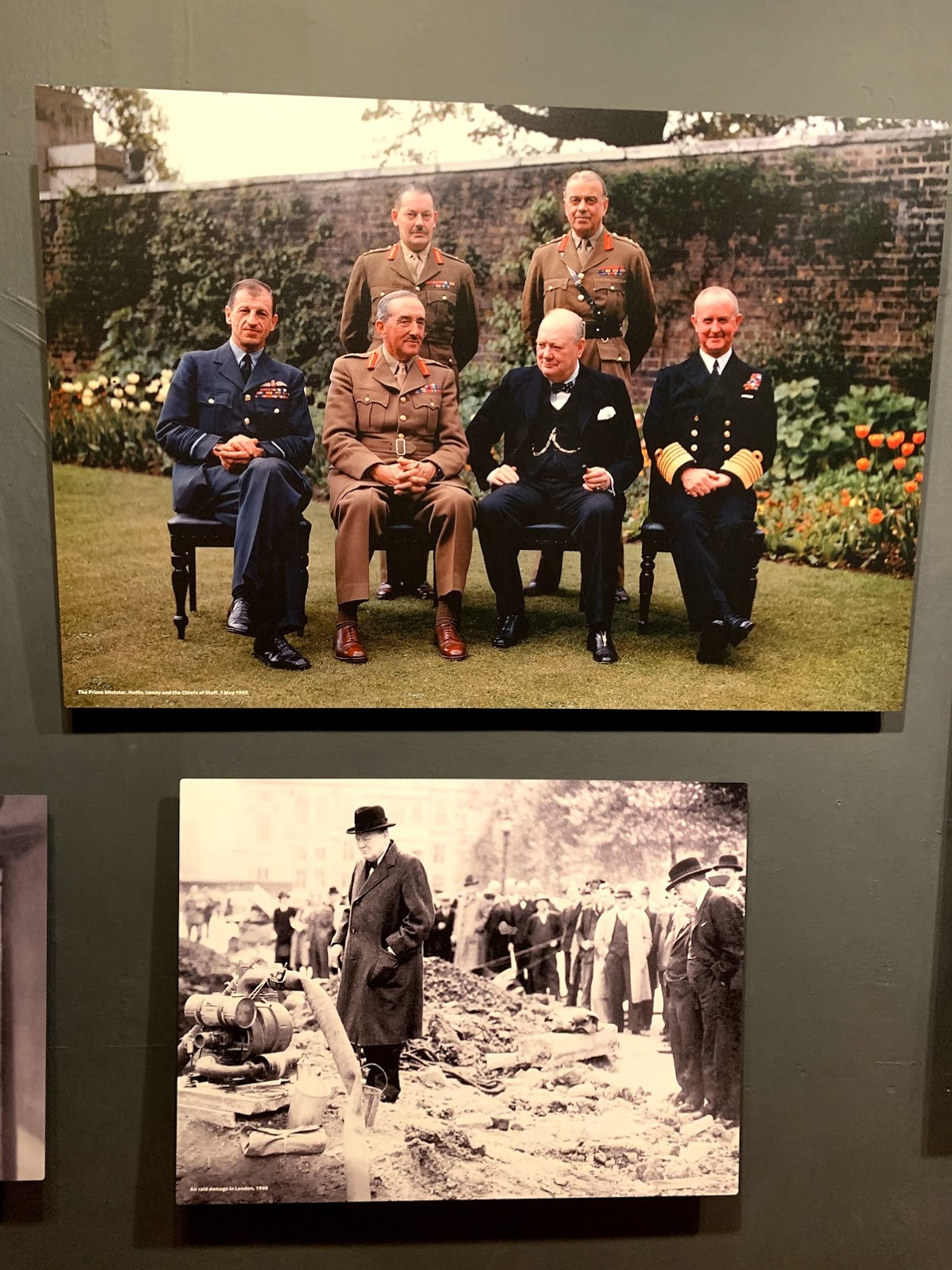
A set of photos hung in the main hall that really hit home the affect of the war on Britain. One photo shows Churchill inspecting rubble literally at the doorstep of the Treasury after a blitz bombing of London. The bomb landed meters away from the building and the bunker entrance. The other photo is Prime Minister Churchill sitting with 5 of his top war cabinet on 7 May 1945, V.E. Day (Victory in Europe).

Top photo is VE day
Bottom photo was taken in 1940 only meters away from the secret bunker. In the photo only he and his bodyguard know where the bunker was located.

The entire museum was laid out nicely and was very informative. In the quiet moments when the audio tour wasn’t playing you could almost hear the voices of the men and women who worked in the bunker, sometimes not emerging for weeks. It was a chilling yet calming reminder of the commitment of those behind the lines who made sure “Victory” was obtainable.

On our way home we had dinner at a local classic British fish and chips shop. A befitting end to a day learning about Britain’s history!

London Day 1: Exploring the City

We are staying in a Premier Inn right on the River Thames! Literally you can see the London Eye (a giant Ferris wheel) right outside our window! After a delicious breakfast we bundled up and headed out to explore London. It was partly to mostly cloudy all day and not too cold.

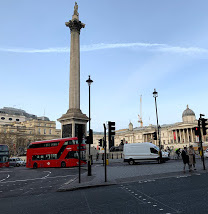
Trafalgar Square, London
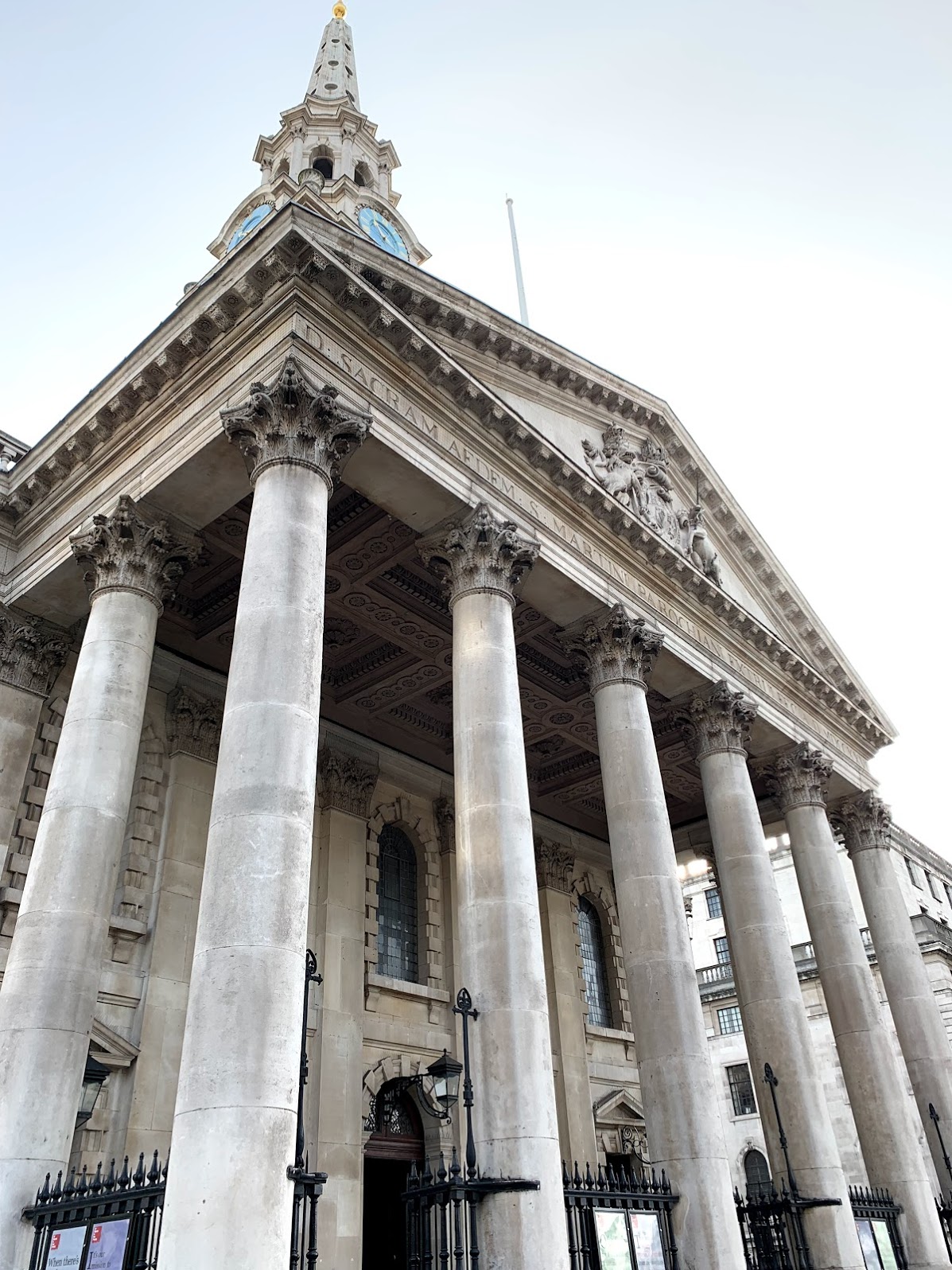
St. Martin in the Fields inTrafalgar Square
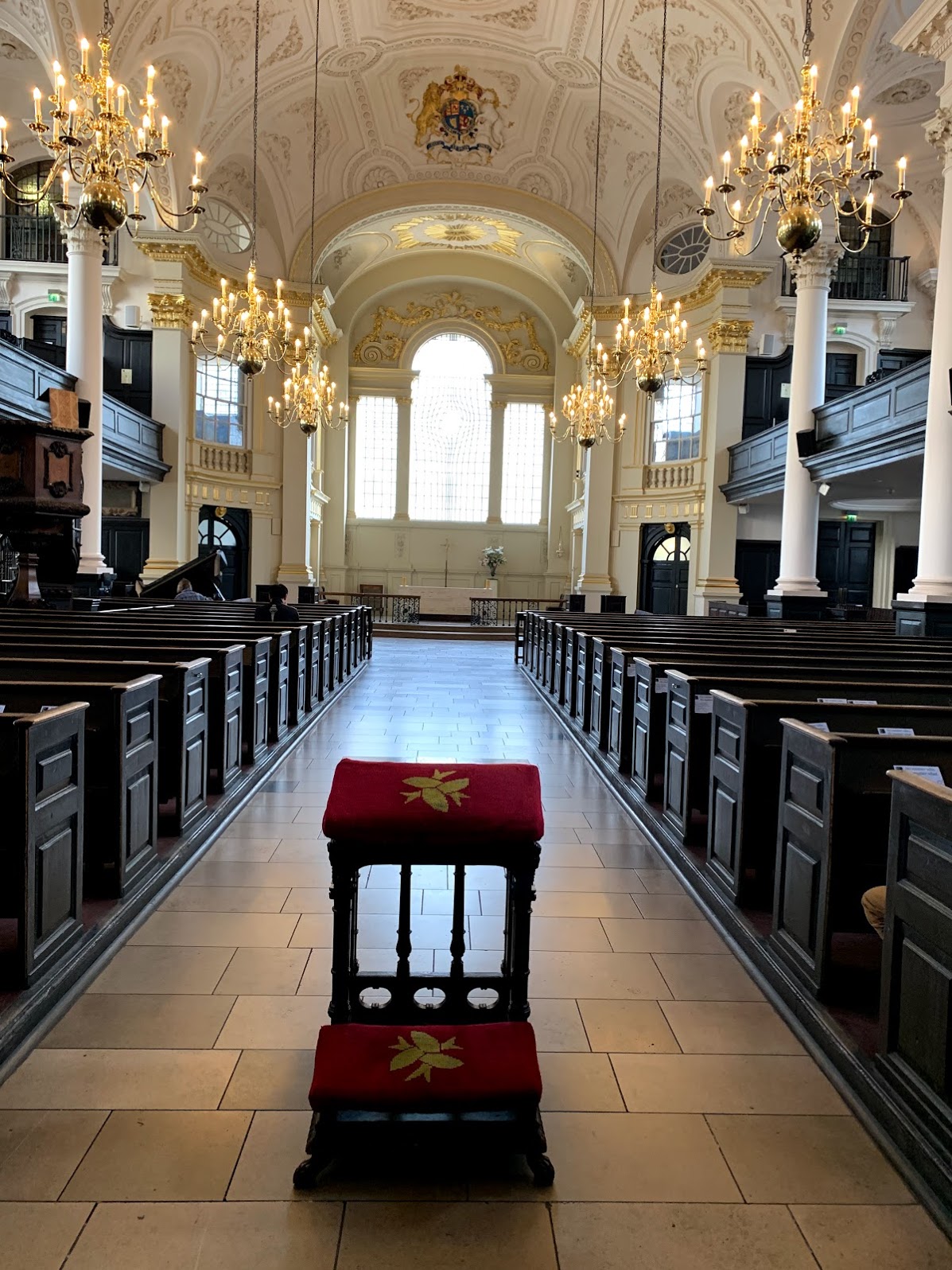
Inside St. Martin in the Fields

We walked along the Queen’s Walk and then across the Waterloo footbridge into the heart of London. A few blocks down the street we were in Trafalgar Square. The statue of Vice Admiral Lord Nelson was directly in front of us. Funny to think that just yesterday we were on his ship the HMS Victory! We briefly popped into Waterstones, which is the largest bookstore in Europe. It’s also a bookstore chain found throughout the UK. Across Trafalgar Square was the beautiful church, St. Martin in the Fields. There has been a church on the site since the Middle Ages, but the current building was completed in 1726. The church building is used not only for religious services, but also for classical music concerts. Many famous classical recordings have been made in the sanctuary. In fact, as we sat in the pews admiring the architecture, the grand piano was being tuned for a concert that evening.

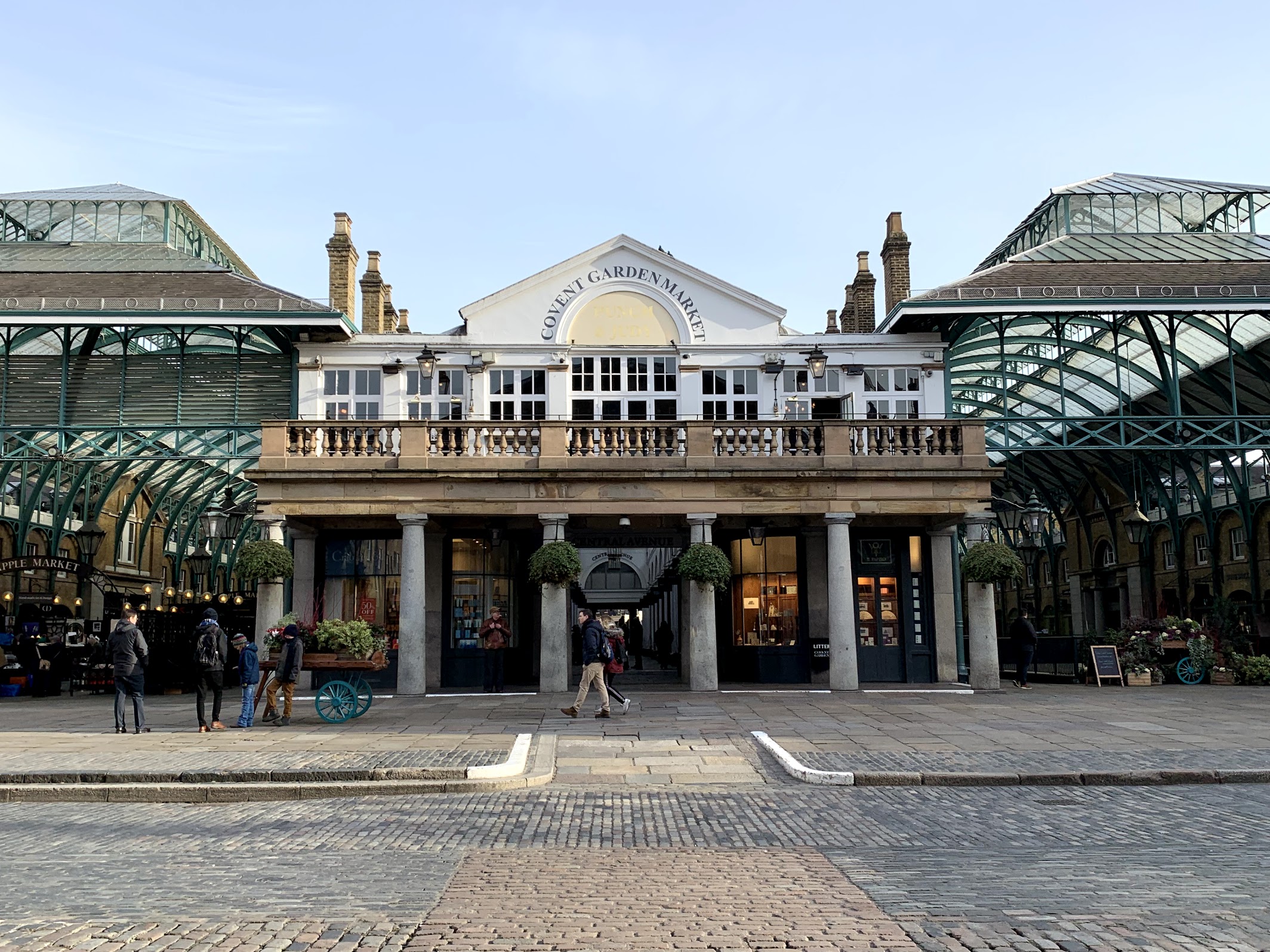
Rounding the corner we walked a further three blocks until coming upon a little engraving in the side of a building. The engraving said that in 1662 the first Punch and Judy Show took place on the spot. Across from the sign a pedestrian walkway took us to the entrance to Covent Garden. There were not only established stores in the old Victorian shopping arcade, but several shop stalls… however we didn’t see any ill-speaking flower girls or professors of speech!  😉

Covent Garden
The first Punch and Judy Show happened behind where I stood to take this photo.

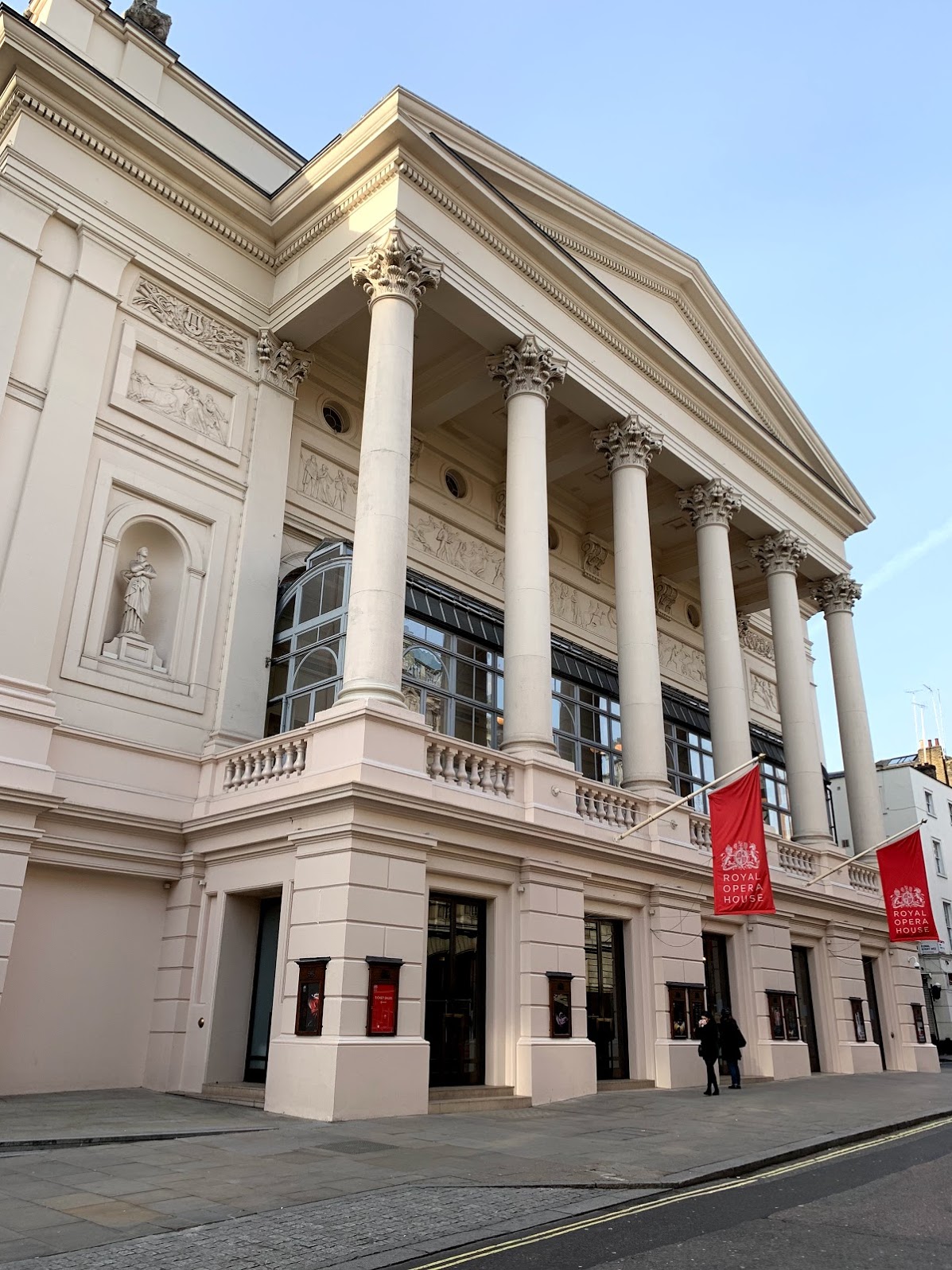
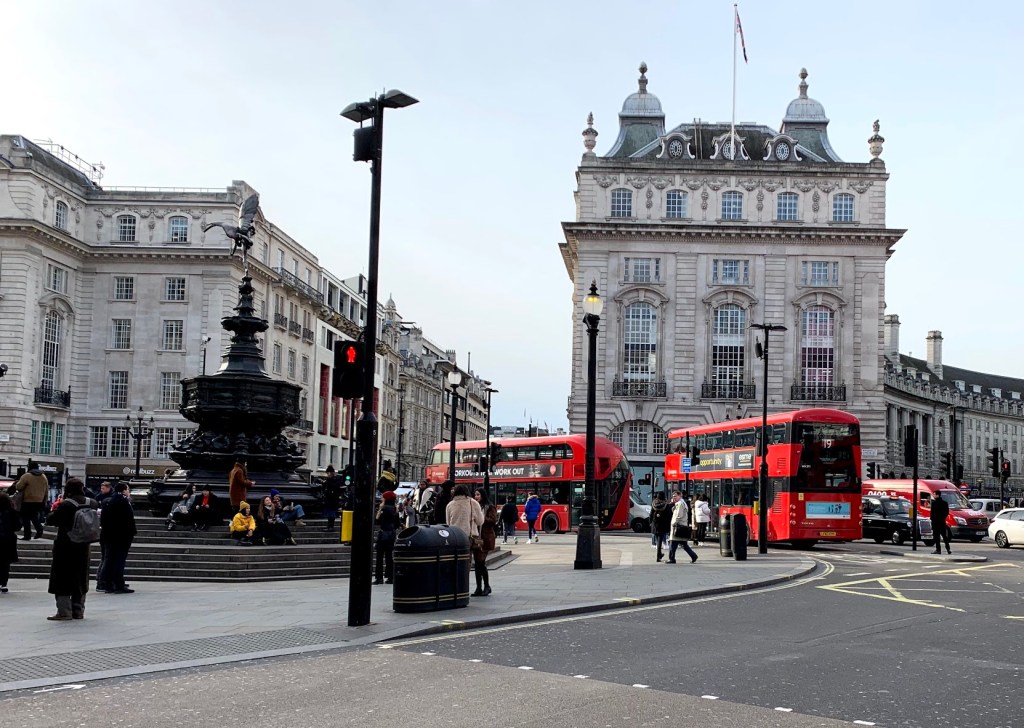
Not too far from Covent Gardens is the Royal Opera House. We were able to step into the lavish red carpeted, mahogany trimmed foyer and have a quick look around. Since I’m a trained opera singer, it was a delight to visit one of the world’s most famous opera houses. Unfortunately we weren’t allowed into the main performance hall. We left the opera house and walked past the Royal Ballet and right out into Leister Square and then a few blocks onto Piccadilly Circus, London’s Times Square!
Royal Opera House
Piccadilly Circus, London

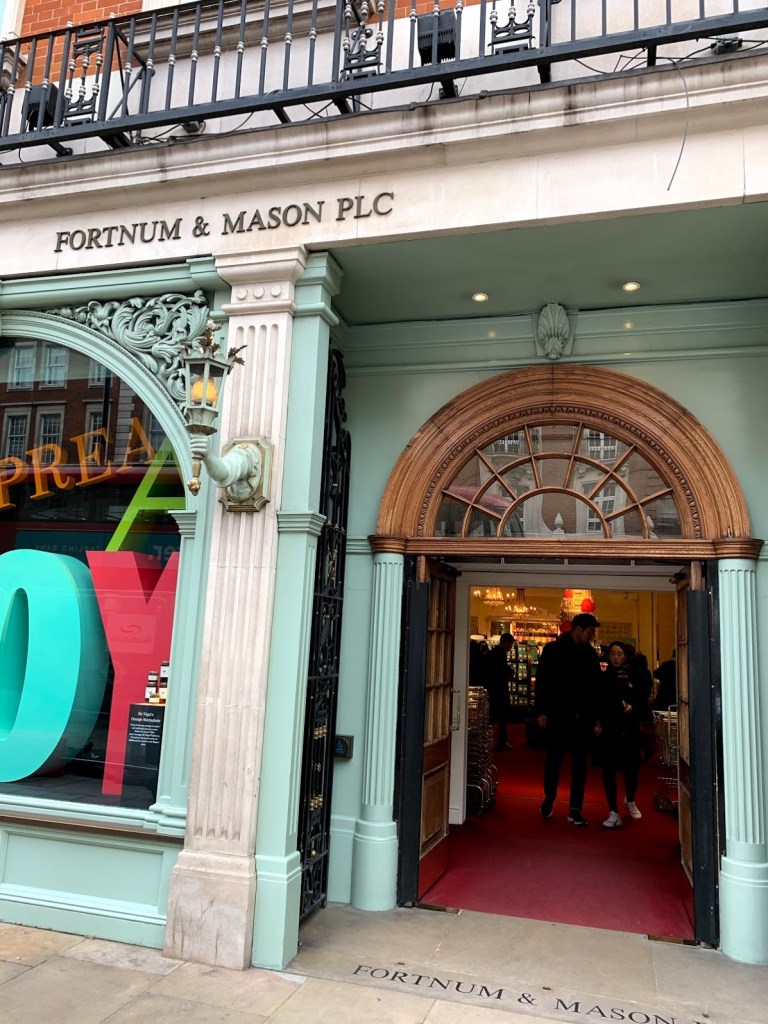
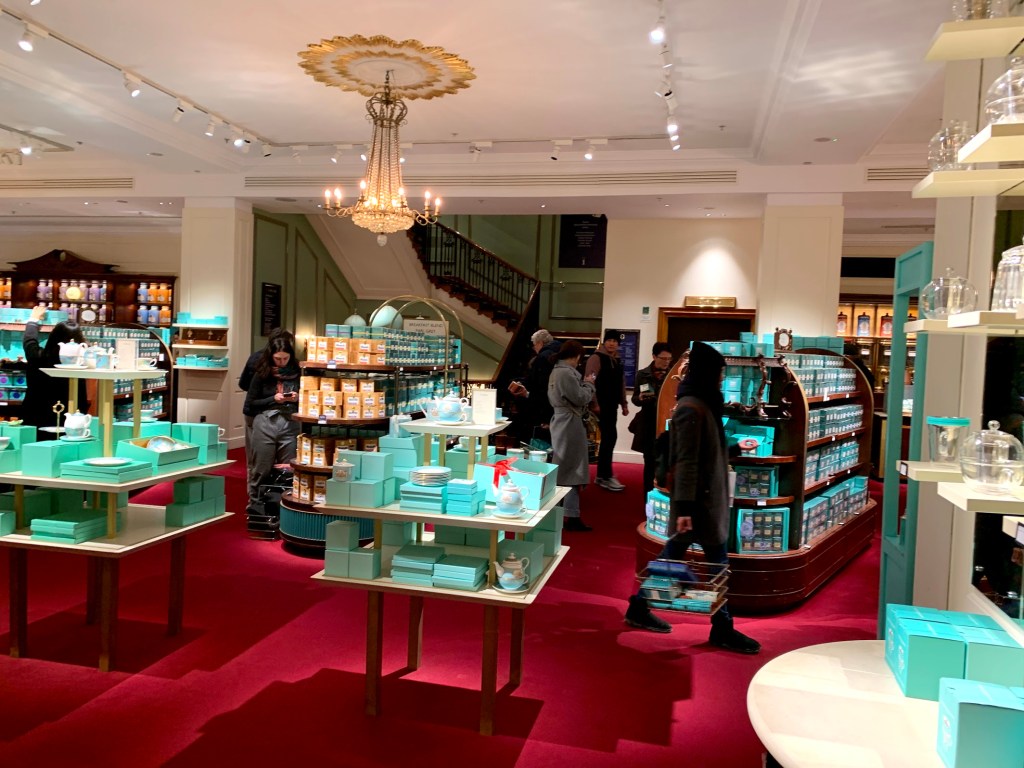
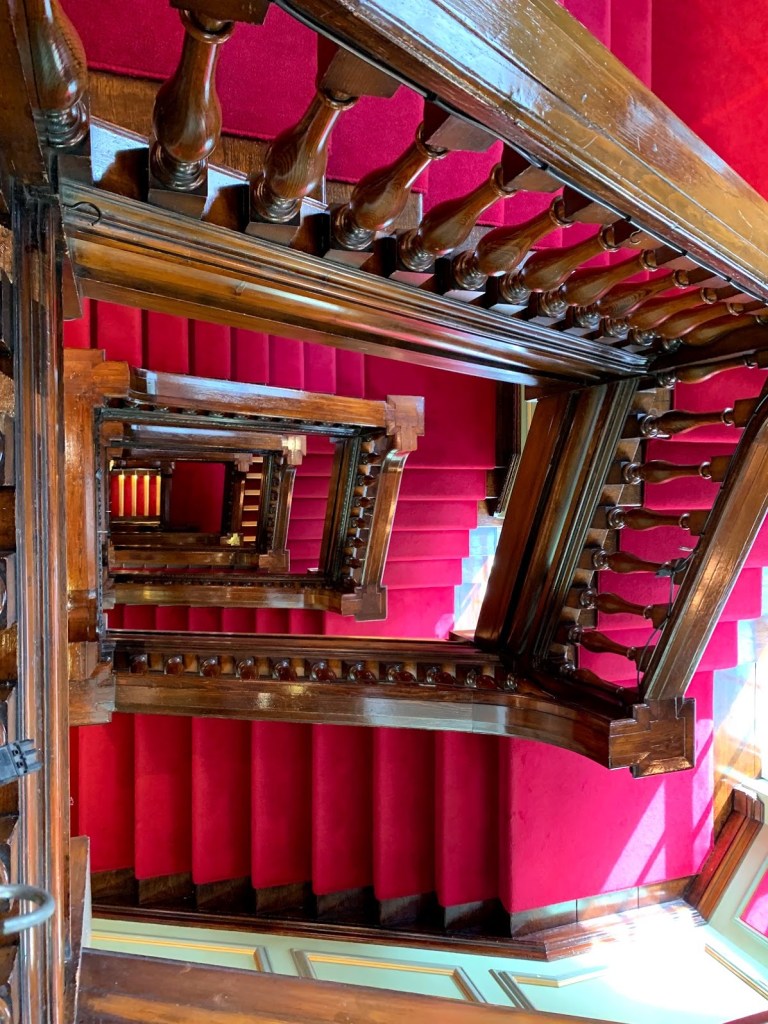
Along Piccadilly Road we came to Fortnum and Mason. This high-end grocery and shop has been in existence since 1707. It was a lovely 4-story shop beautifully decorated with white marble, chandeliers, and staircases with mahogany trim and red velvet carpets.

Fortnum and Masonin London
Tea floor
Main staircase built in 1707 at Fortnum and Mason

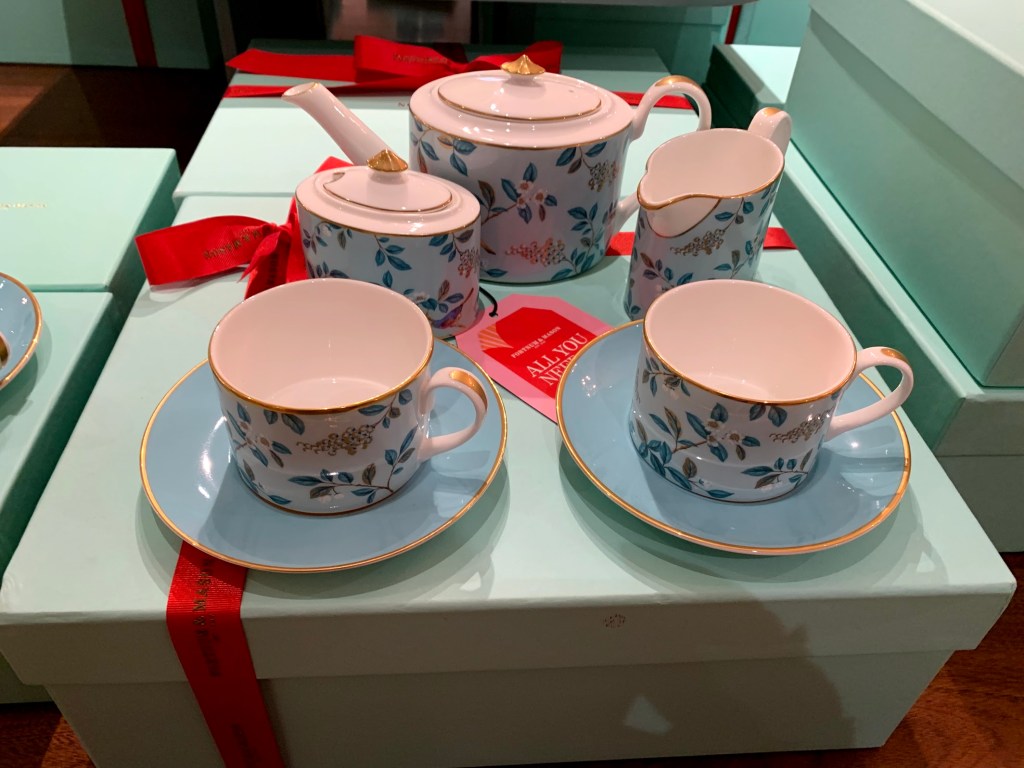
I was looking around at the tea accessories when Robert took me by the hand and said I needed to come see something that he WOULD be buying for me. Of course, I was quite intrigued at this point. We rounded the corner and he showed me the most beautiful turquoise tea set with little blue jays, delicate green twigs, and little white flowers. I gasped to see that the flowers were Camellias! It was a tea set designed especially for Fortnum and Mason that had little delicate Camellia Sinensis plants on the tea service. The Camellia Sinensis is the tea plant itself. The little delicate white Camellia flowers bloom just as the leaves begin to sprout. I’ve known about the plant and it’s connection to my name for years, but never have been able to find an actual tea service with a Camellia pattern. David, the clerk, was just as excited to meet someone by the name of Camellia and actually introduced me to some of his colleagues in the china department. Robert kept true to his word and purchased a box set of two cups/saucers, the teapot, creamer, and the sugar bowl in the pattern. I grabbed a couple of coordinating tea towels and a tea cozy. We had the lot shipped to America. I’ll have to wait 6 months, but that’s okay, I’m patient!!!

Fortnum and Mason’s signature tea service, Camellia Pattern

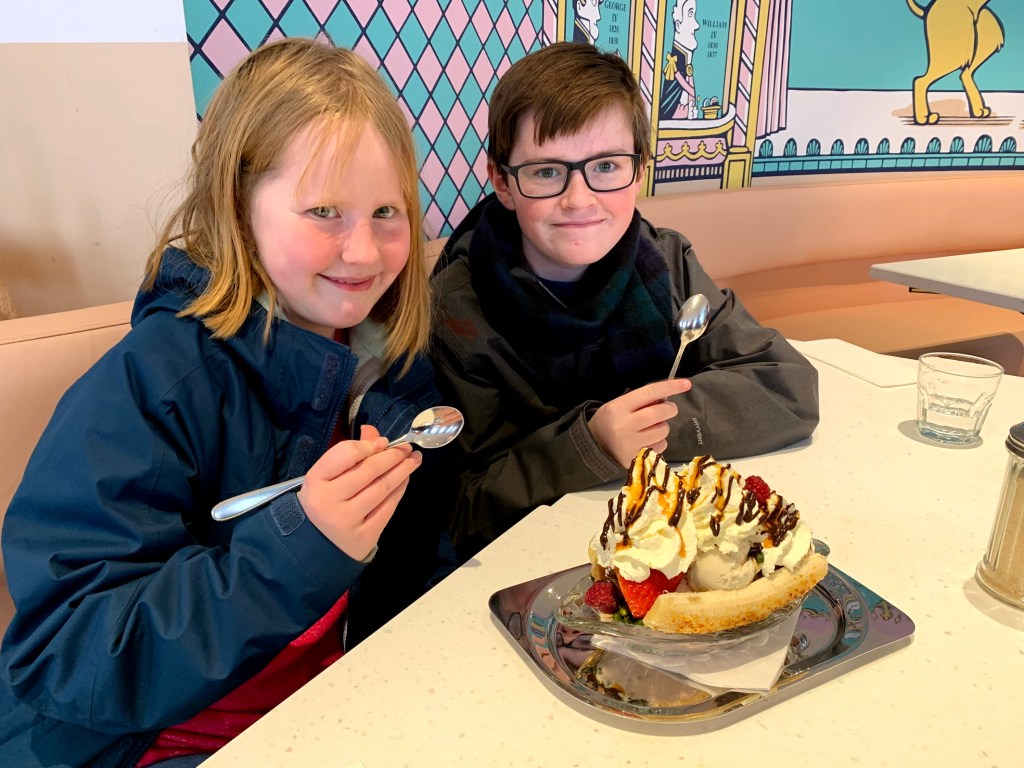
While at Fortnum and Mason Liam had a traditional shoeshine on his leather boots and we all had a light refreshment. Liam and Robert had coffee and scones, Seamus and Faywen shared a gigantic banana split, and once again Robert surprised me. This time he secretly told the waitress to bring me a real London Coronation Chicken on toast! I LOVE Coronation Chicken! He’s such a sweetie!
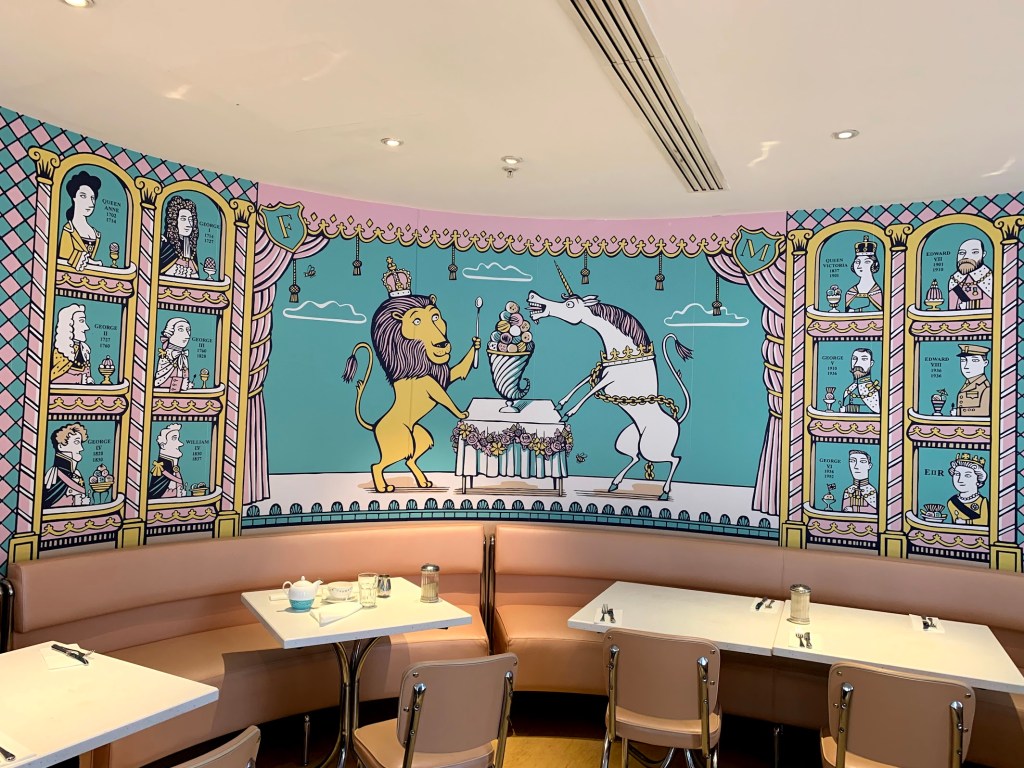
We all loved this whimsical painting in the tearoom at Fortnum and Mason. It shows the kings and queens that have ruled since the shop opened in the early 1700’s.
Eating ice cream at Fortnum and Mason

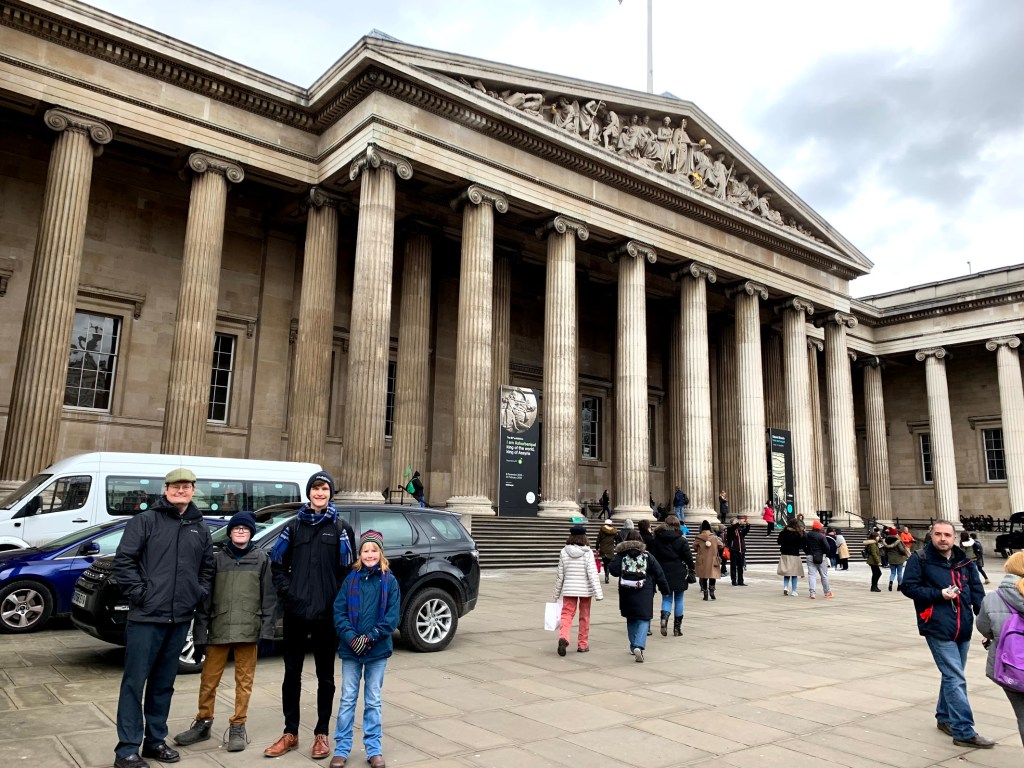
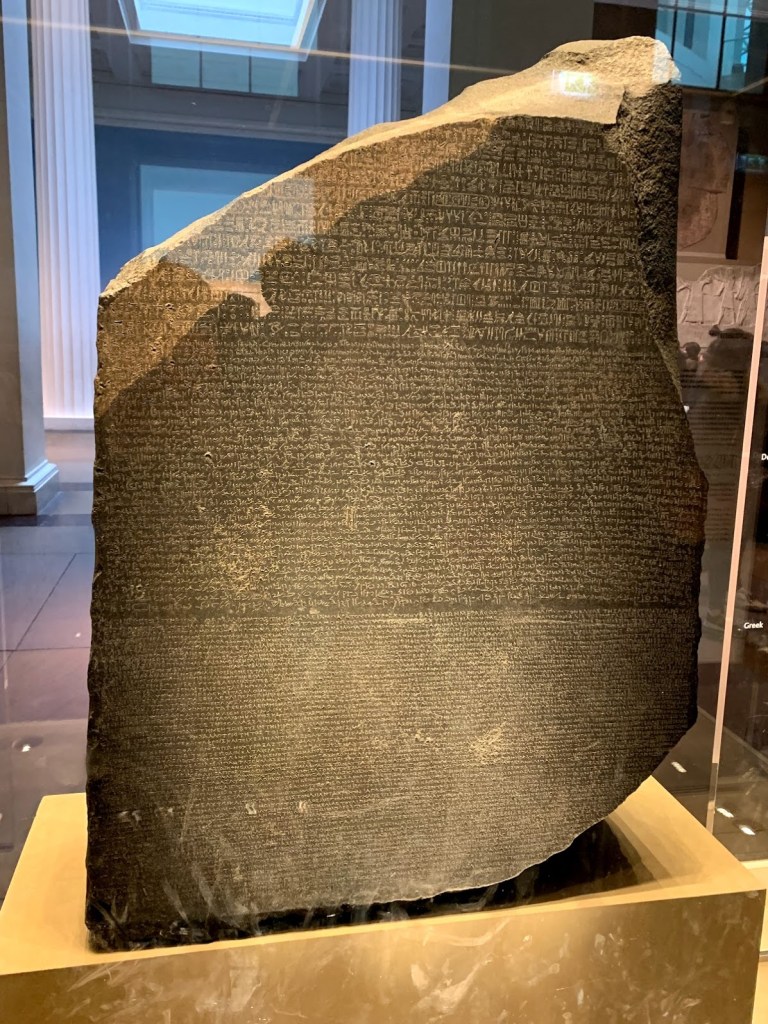
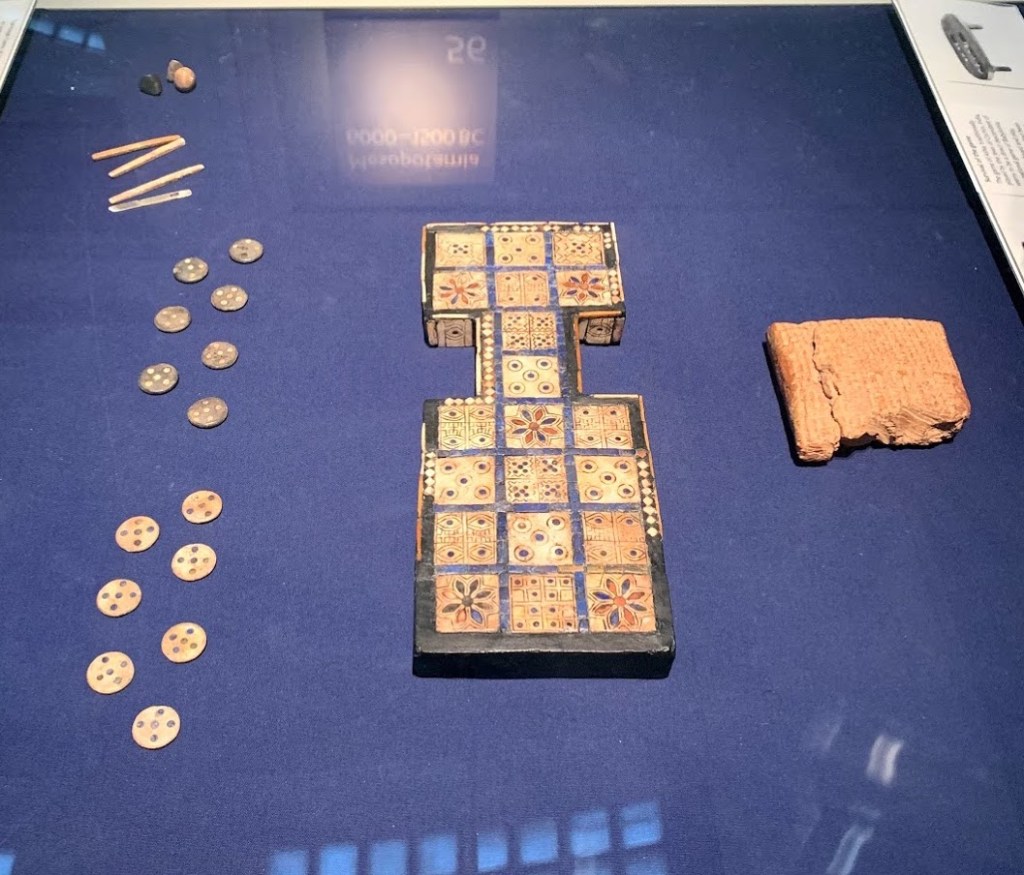
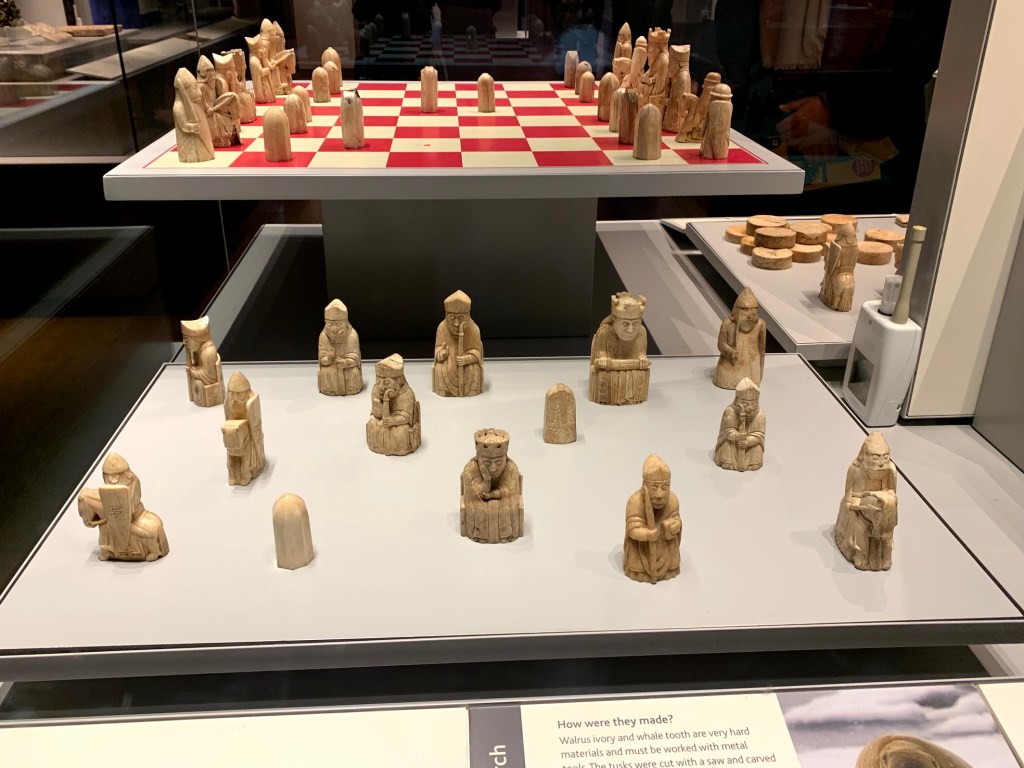
Meandering through the West End, London’s Broadway district, we came to the famous British Museum. Free to the public the museum houses some of the world’s greatest antiquities. These include artifacts from ancient Mesopotamia, Egypt, India, Rome, Japan, Greece, Babylon, and Europe. Some family favorites were Egyptian cats and mummies, temple stone statues from the Parthenon, the ancient Mesopotamian Royal Game of Ur (which we play at home on a version Robert made by hand, so seeing the original was a family treat), the Lewis Chessmen, the clock room, Easter Island Head, and the Rosetta Stone.

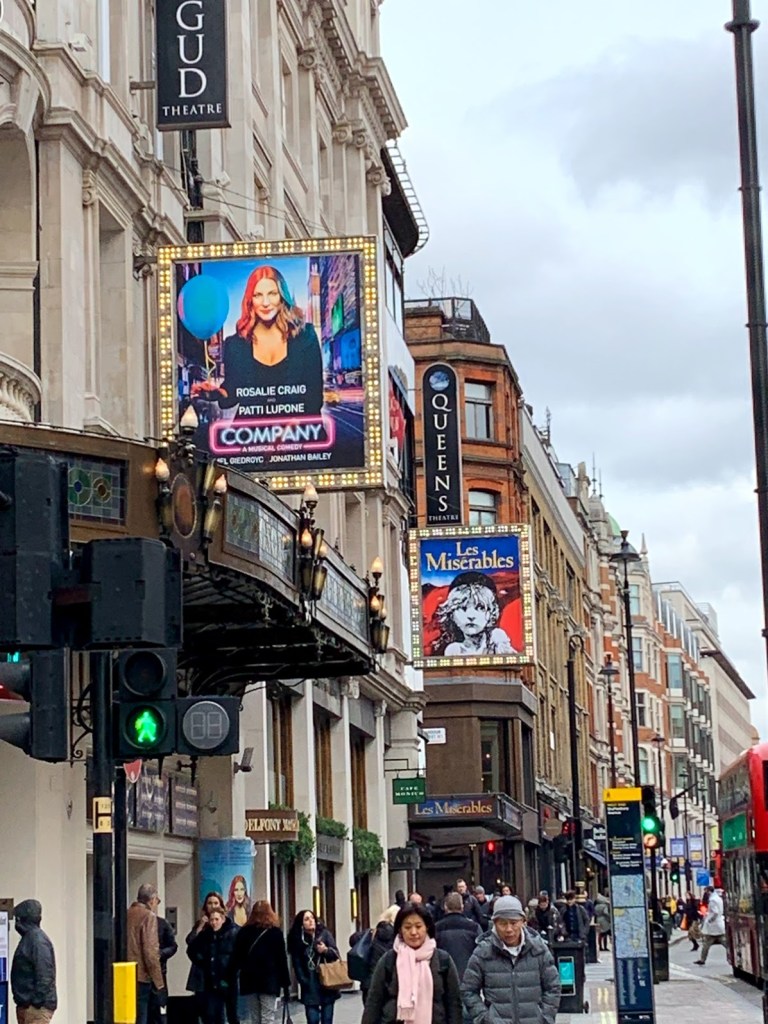
West End: London’s Broadway
British Museum:
It is free to the public.
Rosetta Stone
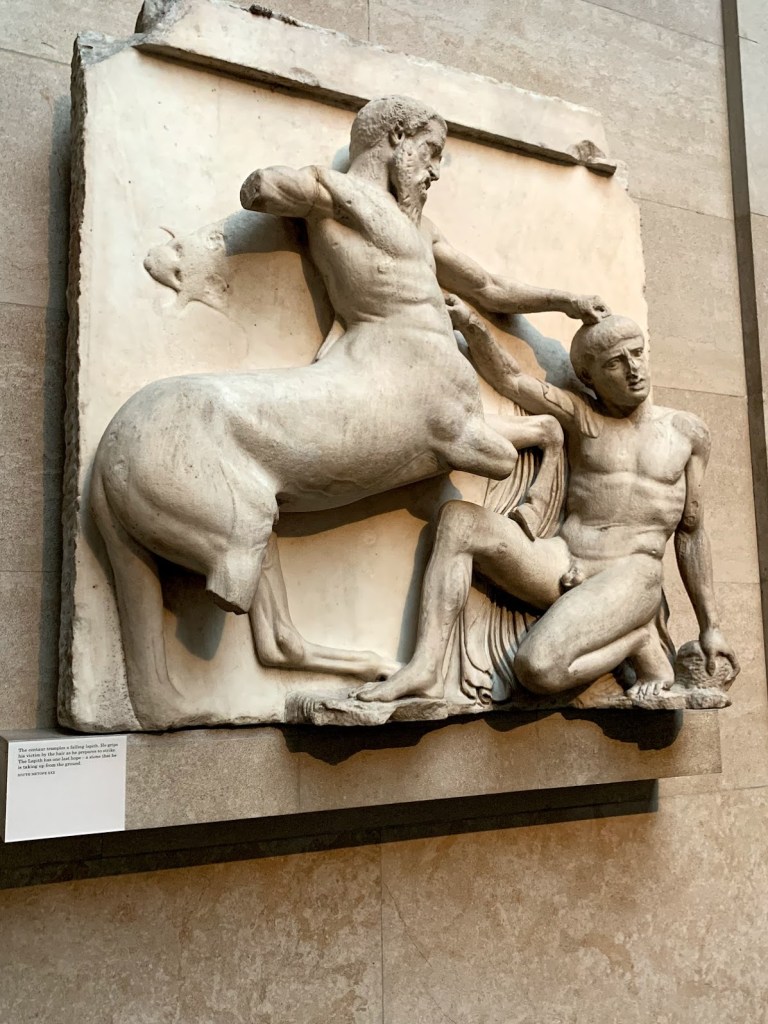
A Lapith fighting a Centaur: The Lapith were Greek Centaur hunters
From the Parthenon
Royal Game of Ur from Mesopotamia 2500 years old
Lewis Chessmen 13th century

After a long day of walking we had dinner and returned to the hotel for a nice cup of warming tea and some yummy local cookies and candies we bought along the way.

A Sailor’s Life for Me

It was a bit hard saying goodbye to Graham, Kathleen and their friend Jane at the B&B. They were all very kind and friendly. The night before Kathleen gave us free “year round tickets” to see two ships in Portsmouth Harbor, The Mary Rose and HMS Victory (we came to Portsmouth to see the HMS Victory). She only asked that we mail them back to her in the self-addressed envelope she gave us. This way she could give them to the next family that might come and stay at her B&B.

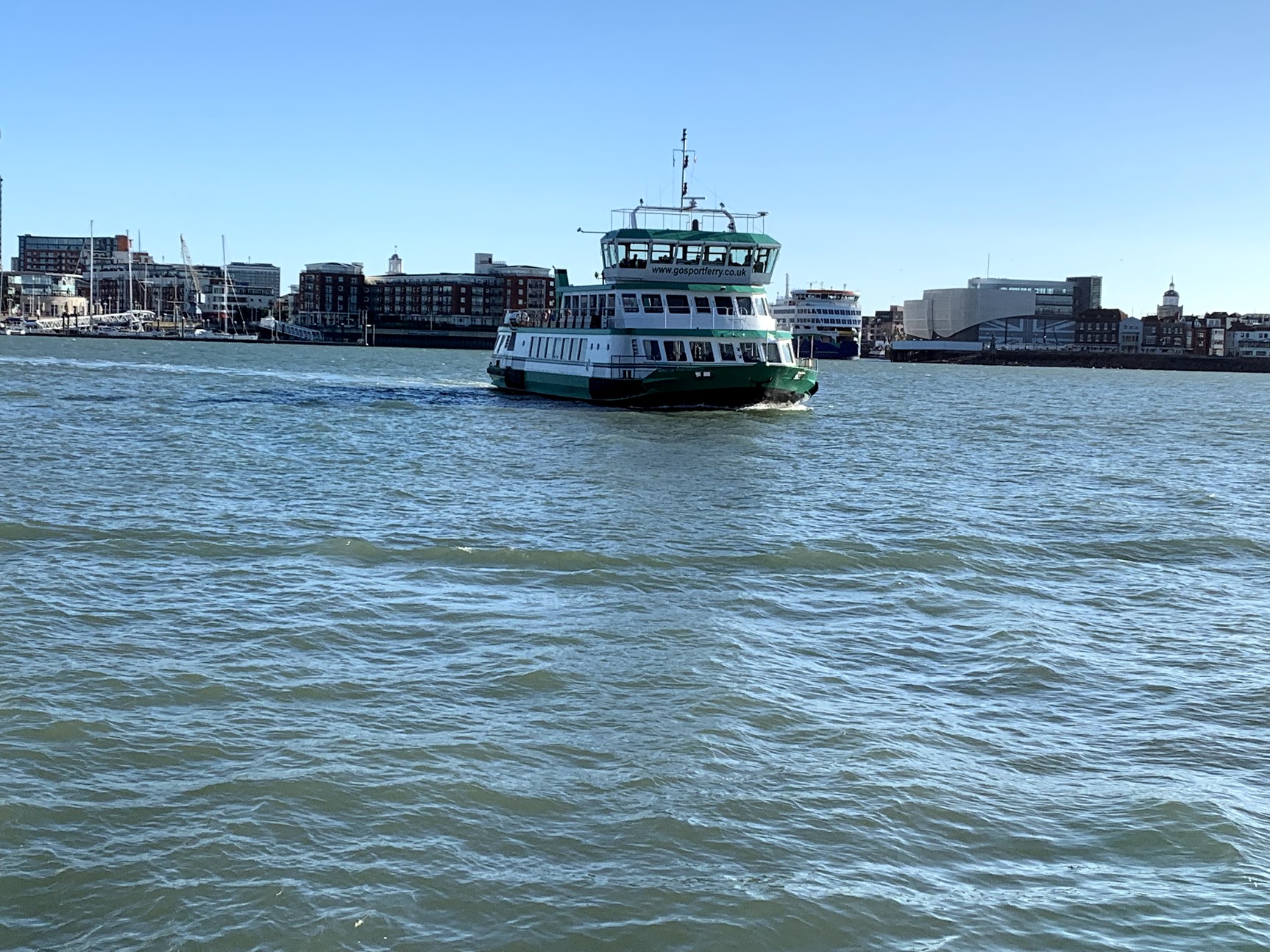
We said goodbye with warm hugs and drove 5 minutes down to the Gosport docks where we parked and rode the ferry across the harbor to the Portsmouth Royal Dockyard. Located in the dockyard were several historical Royal Navy ships ranging in age from The Mary Rose, flagship of Henry VIII, to HMS Queen Elizabeth II, a modern aircraft carrier. Our first stop was The Mary Rose.

The ferry we took across the harbor
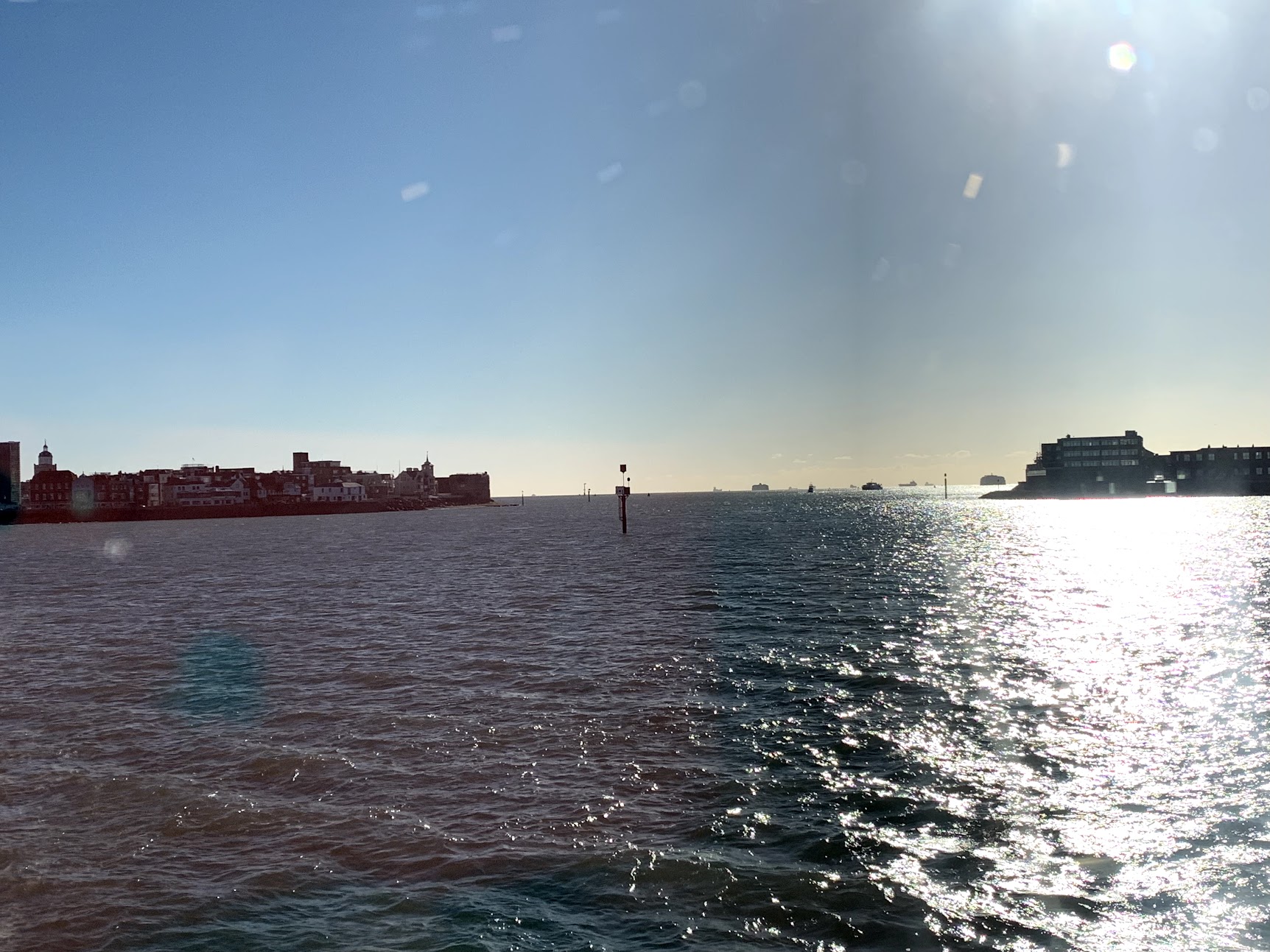
Portsmouth Harbor

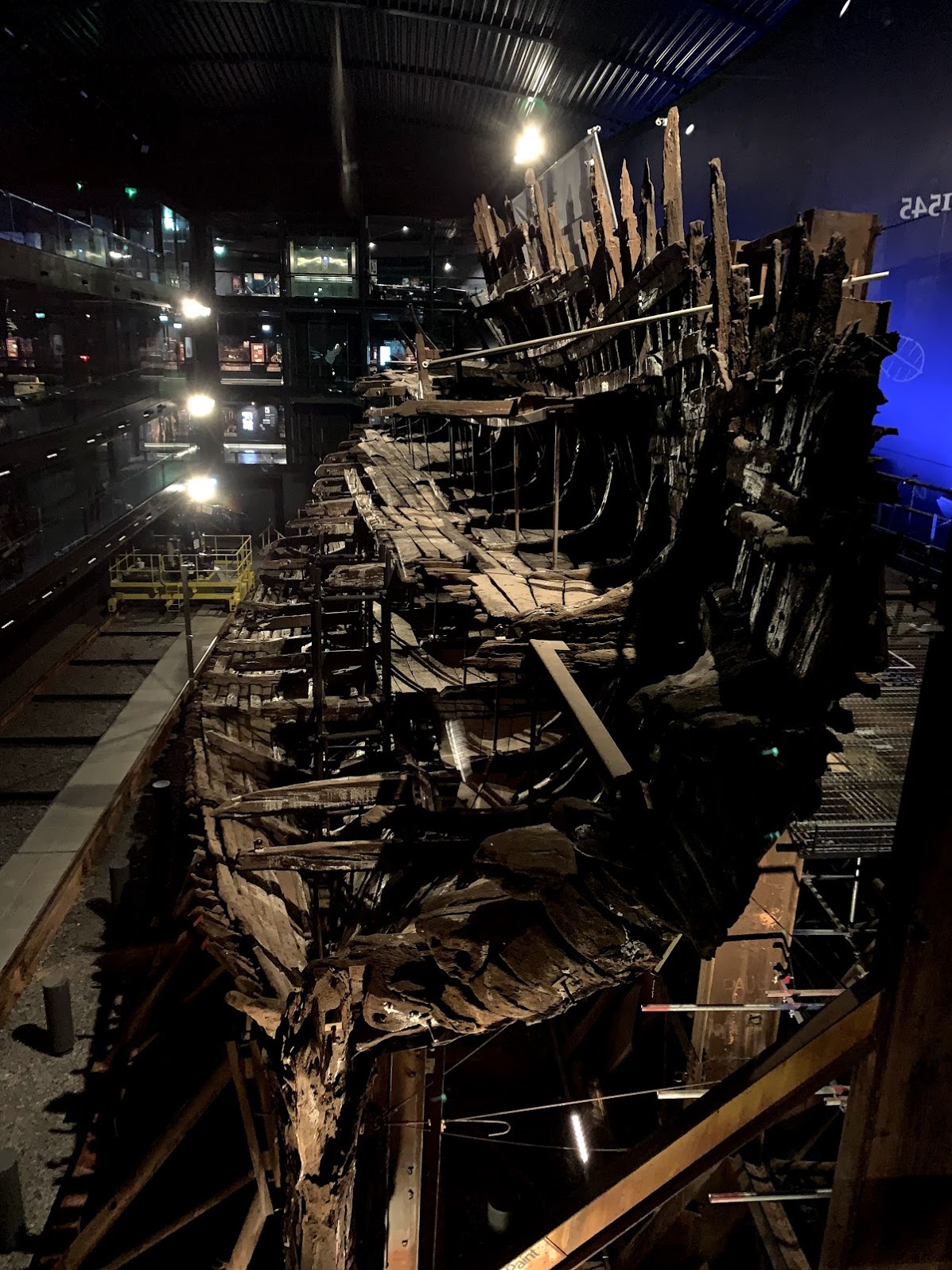
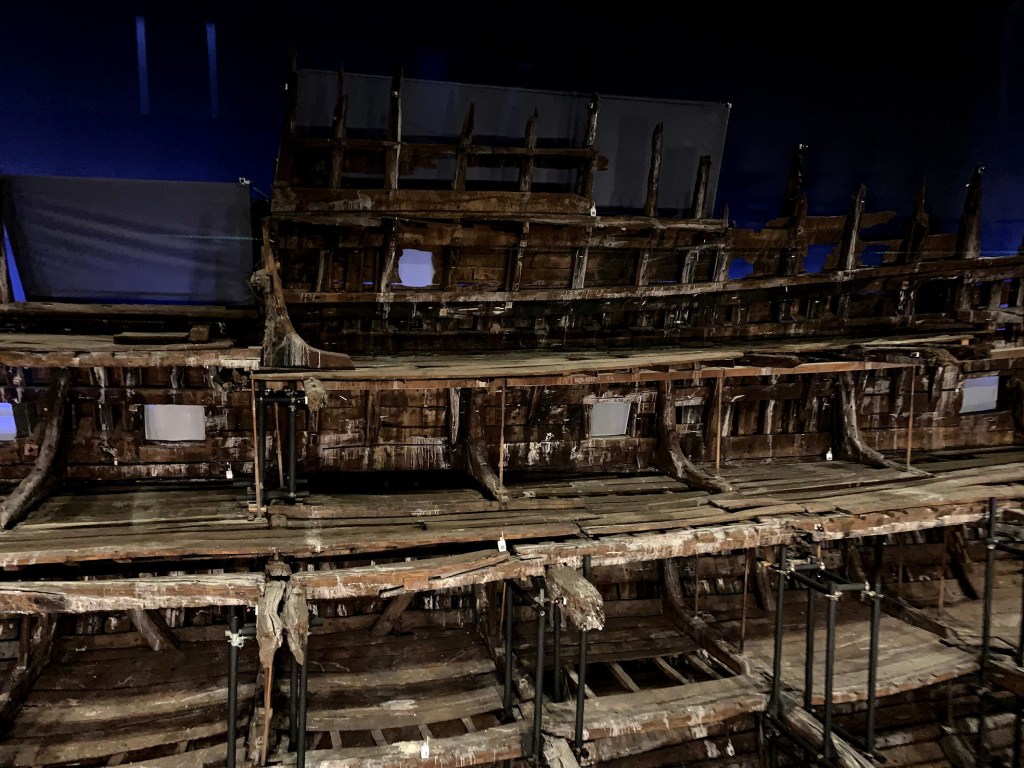
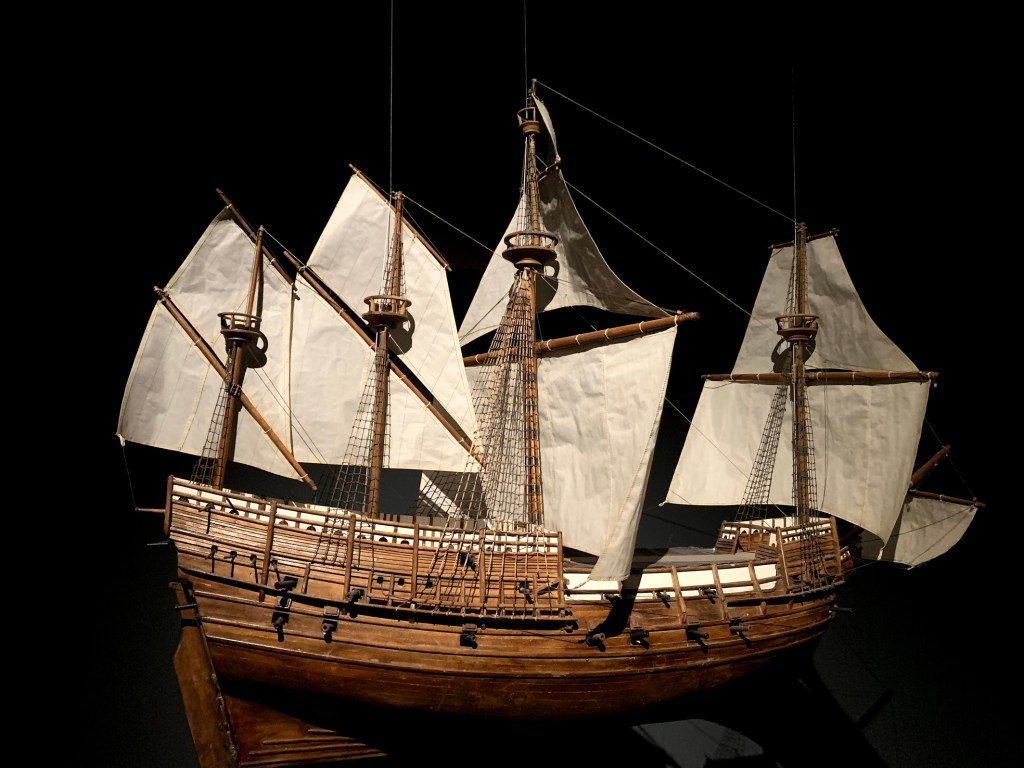
Built in 1510 when Henry VIII was a new king, The Mary Rose was his flagship and in service until it sank in the Battle of the Solent in Portsmouth Harbor, July 1545. The ship was named after Henry’s sister Mary and the Virgin Mary. Rose refers to the Tudor Rose. It could carry around 500 men and crew. Sadly the ship sank when they fired cannons on one side then went to fire on the other side, opened the hatches, and the wind caught the sails tipping the boat. Water rushed into the open gun hatches and she sank quickly…that combined with a few holes the French warship had made in The Mary Roses side. All hands, but 35 were lost at sea.

From the bow of the Mary Rose
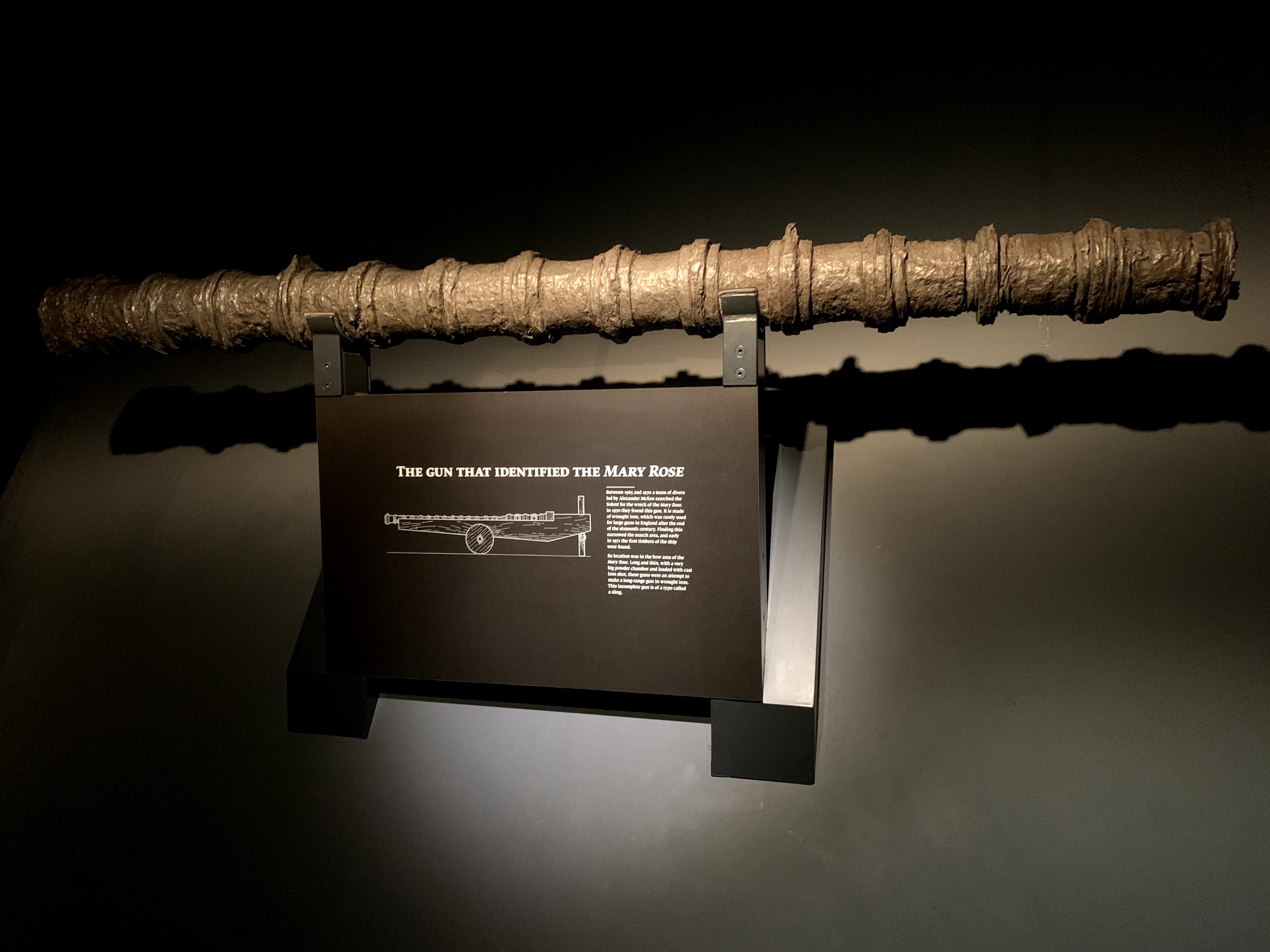
The caption reads that this gun was what divers first found helping them locate the ship
The Mary Rose

They tried to salvage her in 1545, but to no avail. In the 1800’s a few relics were un-watered, but it wasn’t until 1970 that divers un-watered a cannon that fit the description of the ship and recovery operations were begun. It has taken 40 years to salvage and preserve the ship and it’s 16,000+ artifacts. In 2016 the museum containing the preserved ship and relics was opened to the public.

Model of what The Mary Rose looked like
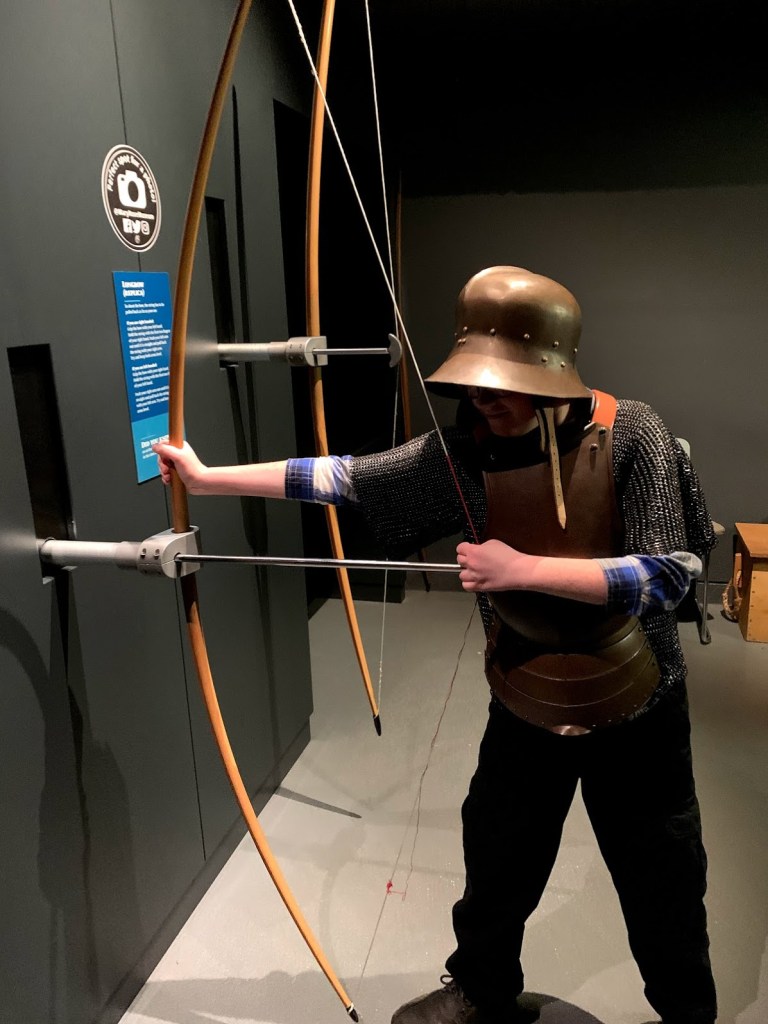
Practicing shooting a longbow

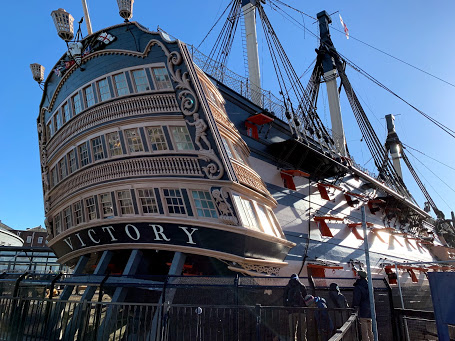
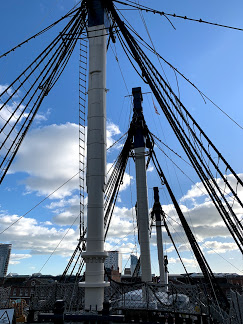
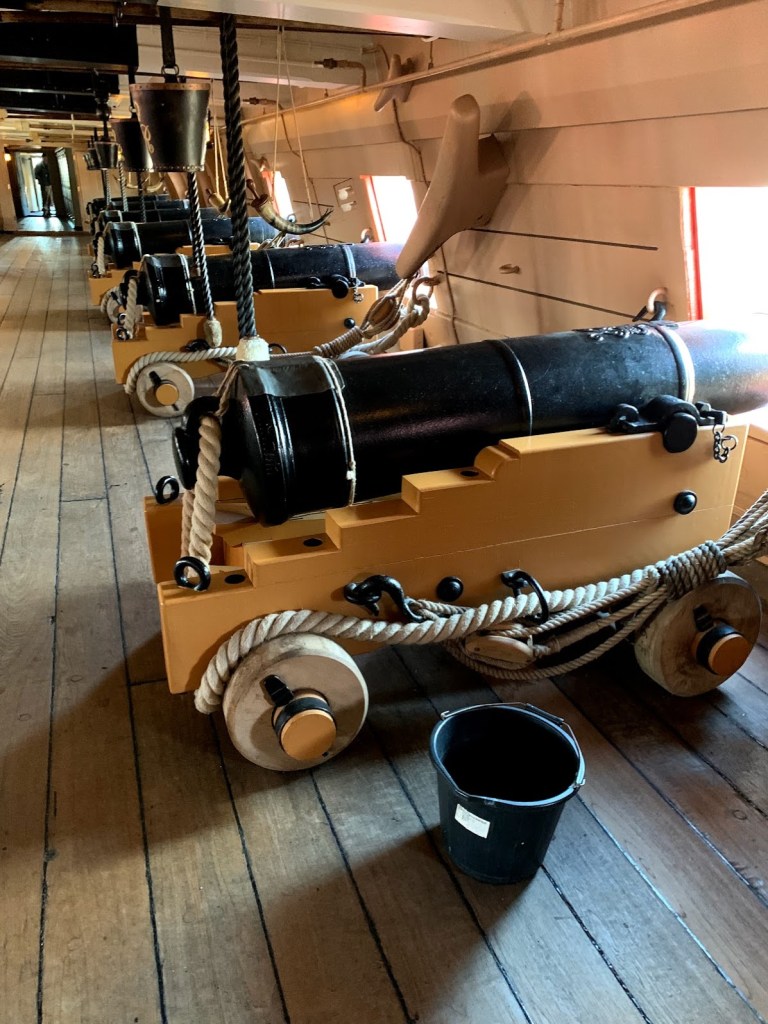
The HMS Victory was in the dry dock next to The Mary Rose Museum. This was the famous ship of Vice Admiral Horatio Nelson who won the Battle of Trafalgar in 1805, but sadly died aboard the ship of a gunshot. The 250+ year old ship still contains about ¼ of the original timbers from when the ship was refurbished in 1805 before setting out upon the seas. The HMS Victory was originally commissioned in 1765 by King George III and only 1/8 of those original parts remain. Most of the ship dates to it’s last refurbishment in 1814. It was amazing meandering through the various living quarters and gun decks. The further down you went into the belly of the ship the lower the ceilings. By the time we reached the hull Liam, Robert, and I could barely stand up! The Victory could carry upwards of 800 men and crew on a single voyage. It was truly a floating village.
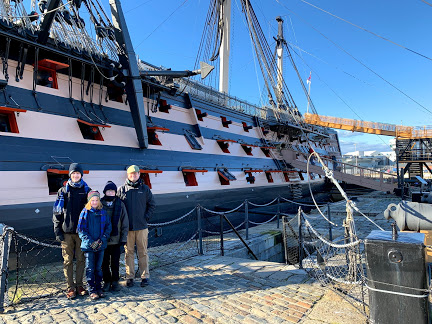
HMS Victory
Masts and rigging
Gun decks
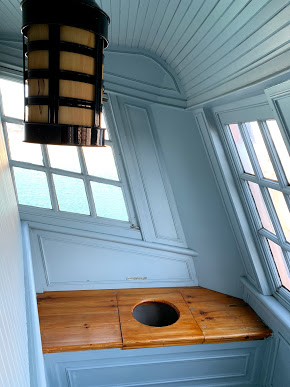
Vice Admiral Lord Nelson’s privy
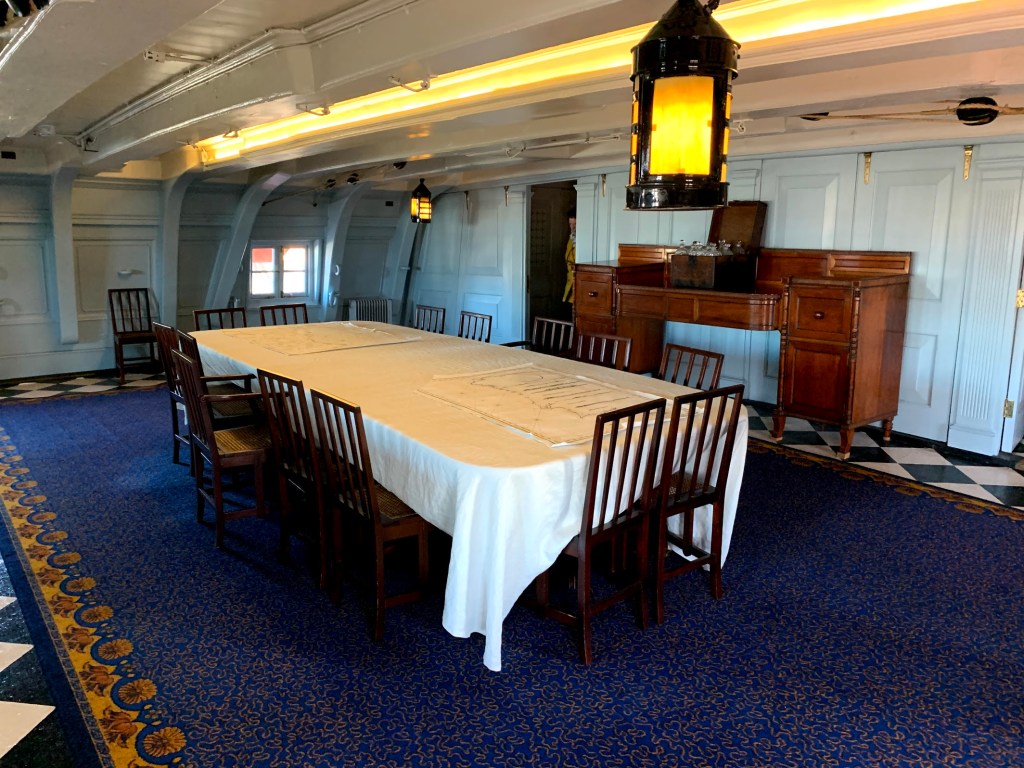
Vice Admiral’s quarters: The current Vice Admiral of the Royal Navy still holds dinner parties at this table!
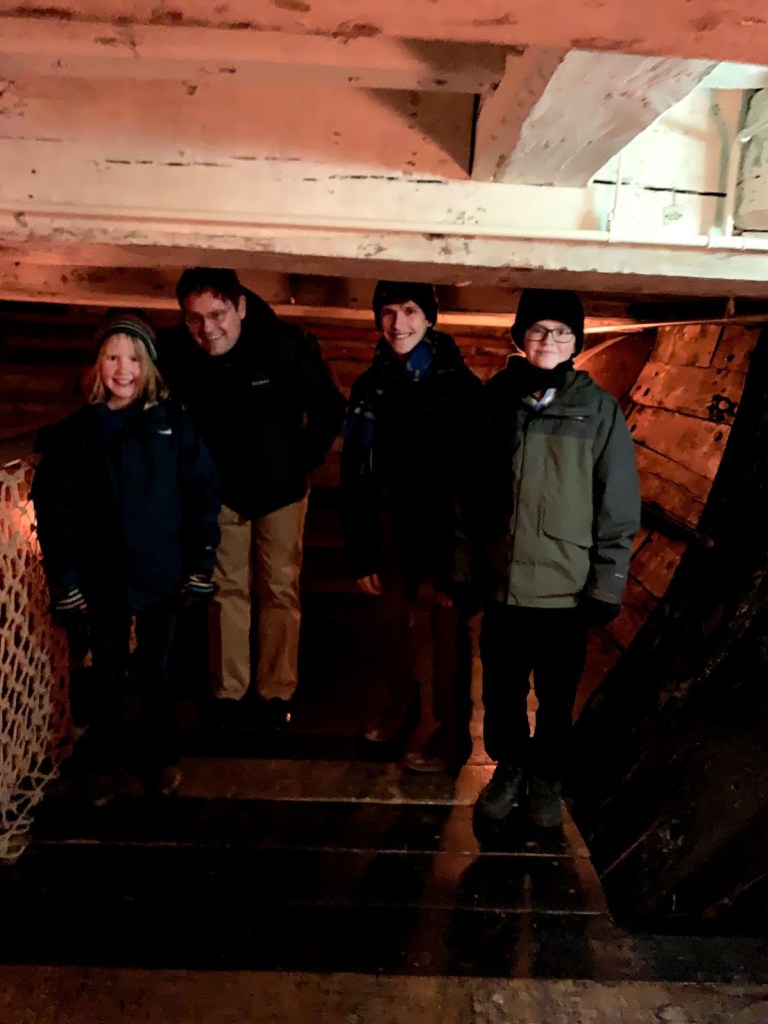
Lower decks and low ceilings
HMS Victory

We made our way back across Portsmouth Harbor and began the 2 hour drive into central London. I have to say I am quite proud of Robert. It’s no easy task driving into the centre of one of the busiest cities in the world, but that is where the Enterprise carpark drop off was located! We unloaded our car listening to the rumble of trains leaving Waterloo Station just above our heads and walked about 10 minutes to our hotel. The Premier Inn London is located directly on the River Thames. The room even has a partial view of the river and the London Eye.
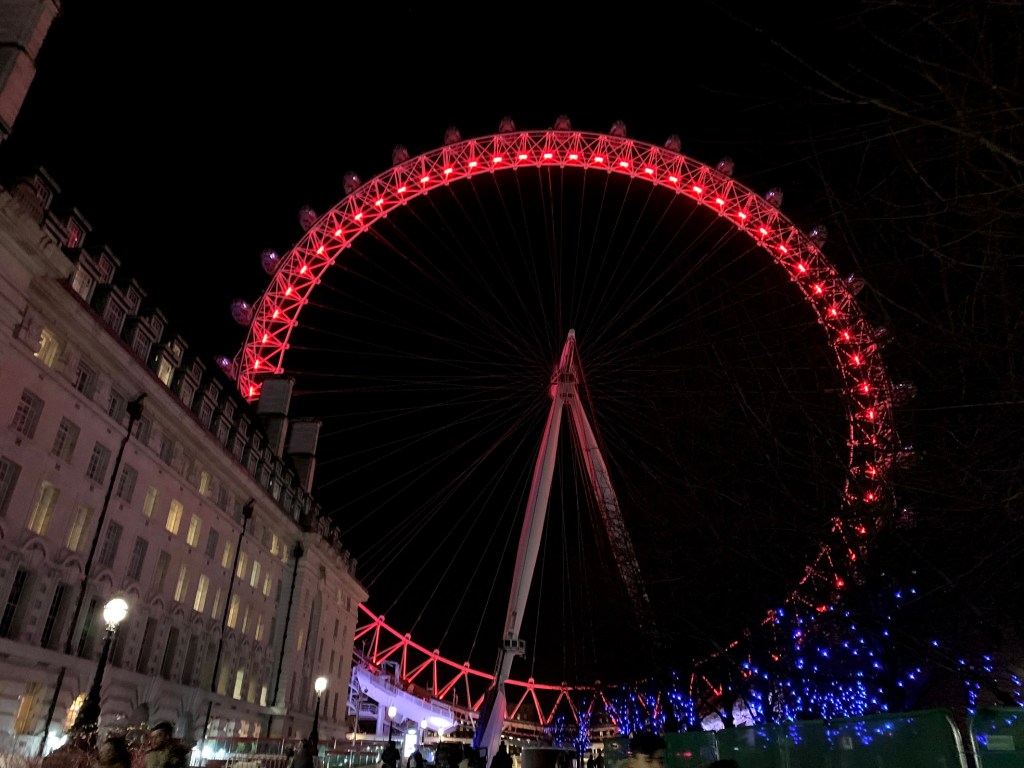
London Eye

Blow, Blow Thou Winter Wind

Yesterday we didn’t quite get to see all the sites associated with William Shakespeare so we drove about 5 minutes out of town to Shotterly Village where Anne Hathaway’s Cottage resides. She was Shakespeare’s wife. Anne was actually 8 yrs. older than William when they married. He was 18 and she 26. She was the daughter of a respectable local farmer and the two probably met at church or when their fathers’ gathered for town council meetings.

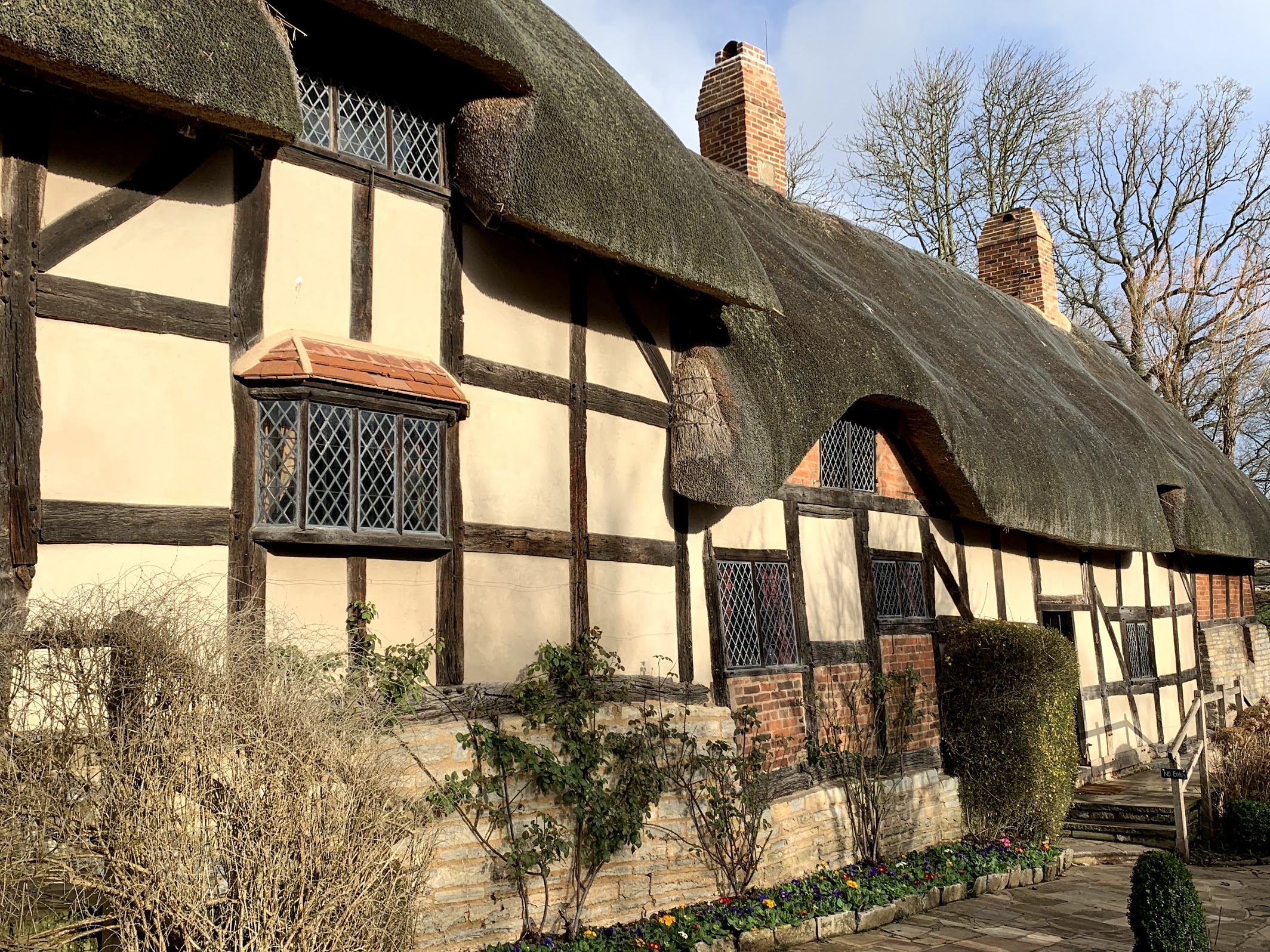
Anne Hathaway’s Cottage
Typical architecture of the era

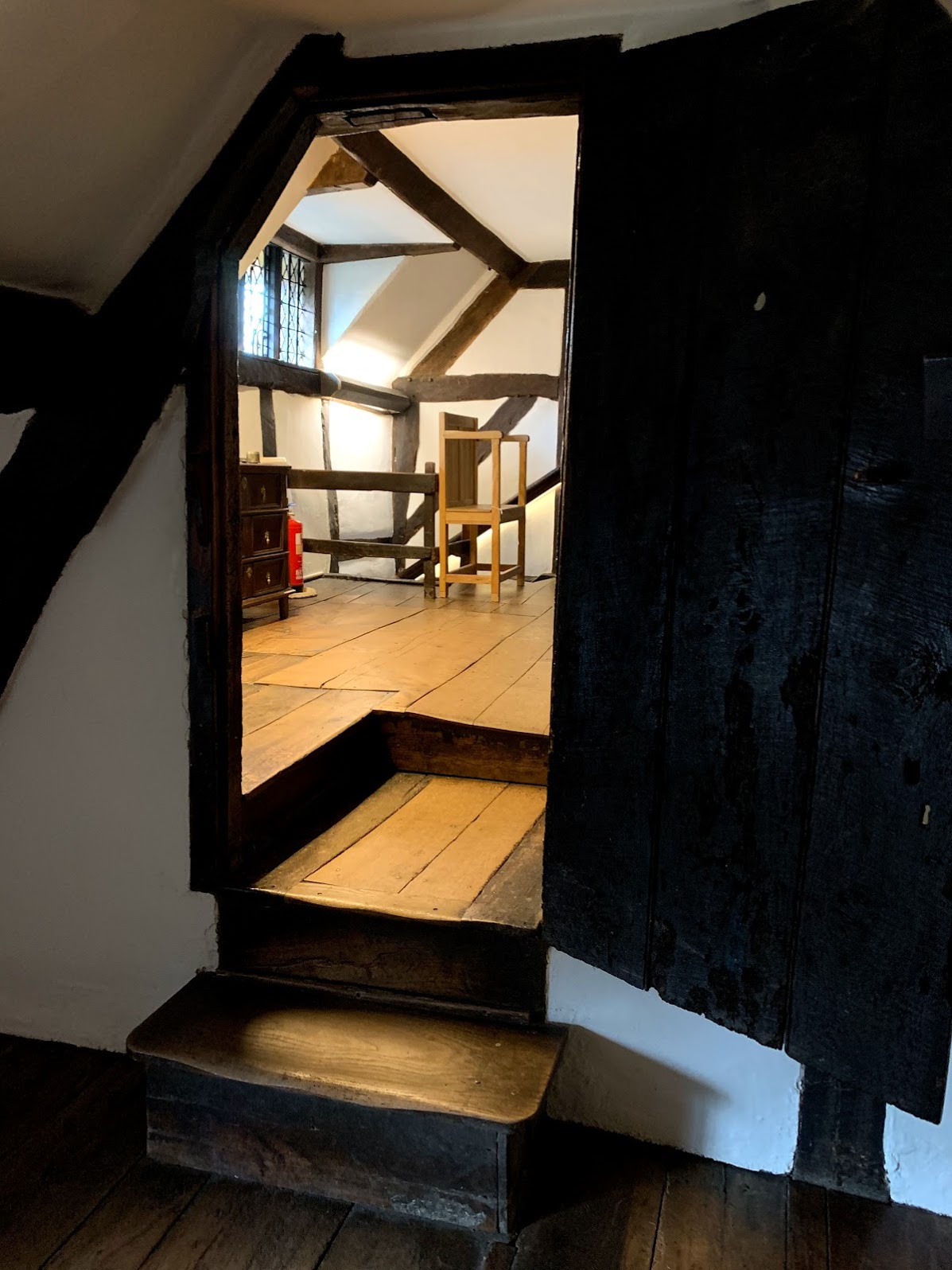
The Hathaway’s Cottage stayed in the family until 1892 when Miss Baker, a spinster and the last remaining Hathaway heir, left the home to the Shakespeare Trust. The cottage was first built in 1463 and had major renovations in the mid 1500 to early 1600’s. Anne’s brother, Bartholomew tended and added rooms onto the property. He also legally bought the 90 acres the family had rented up until then, making him one of a few select freeman landowners in the area. Even though it is winter the gardens surrounding the house were still lovely to walk through, when one wasn’t being blown sideways by the powerful wind.

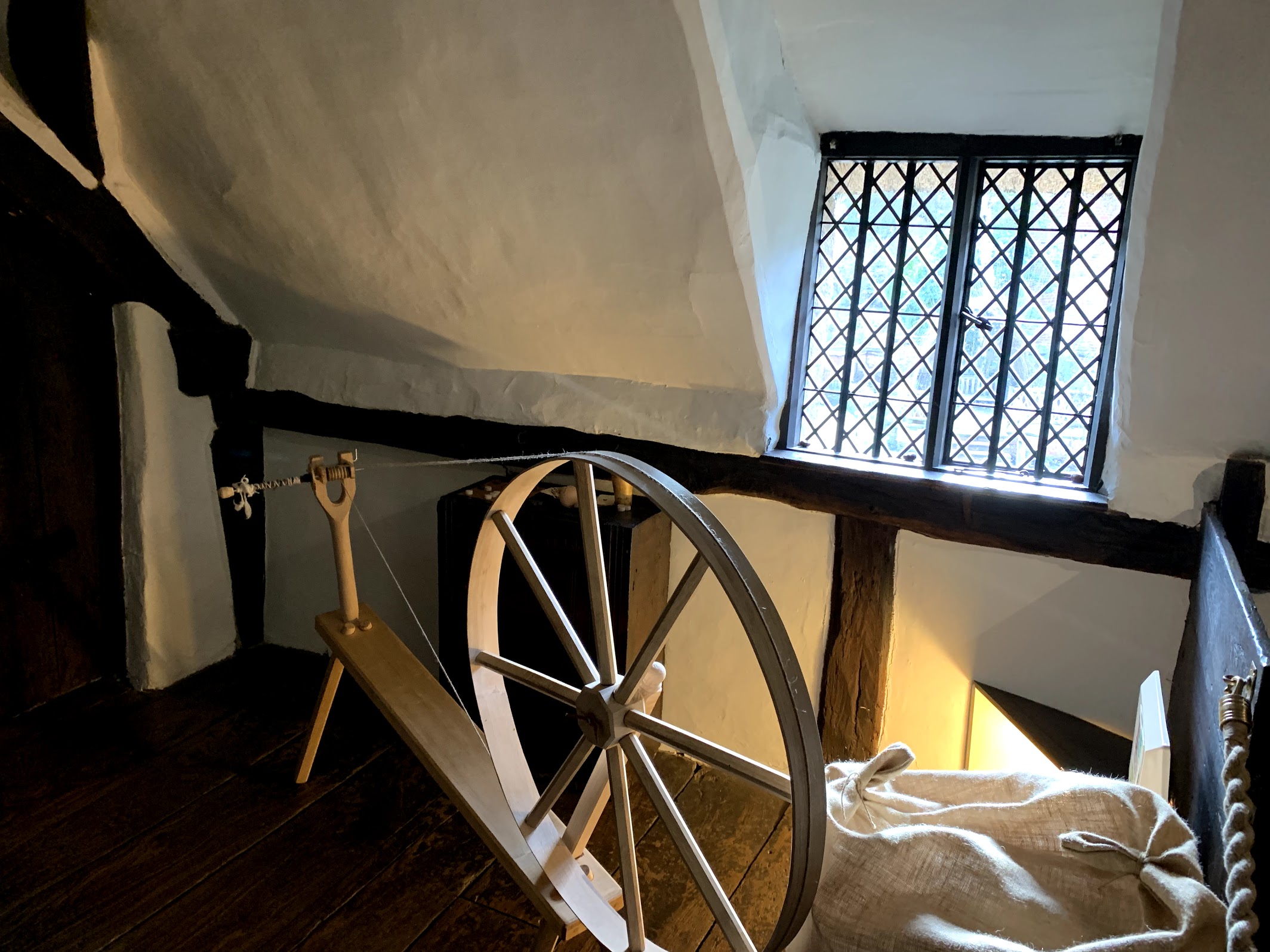
A lovely view by the window while spinning wool
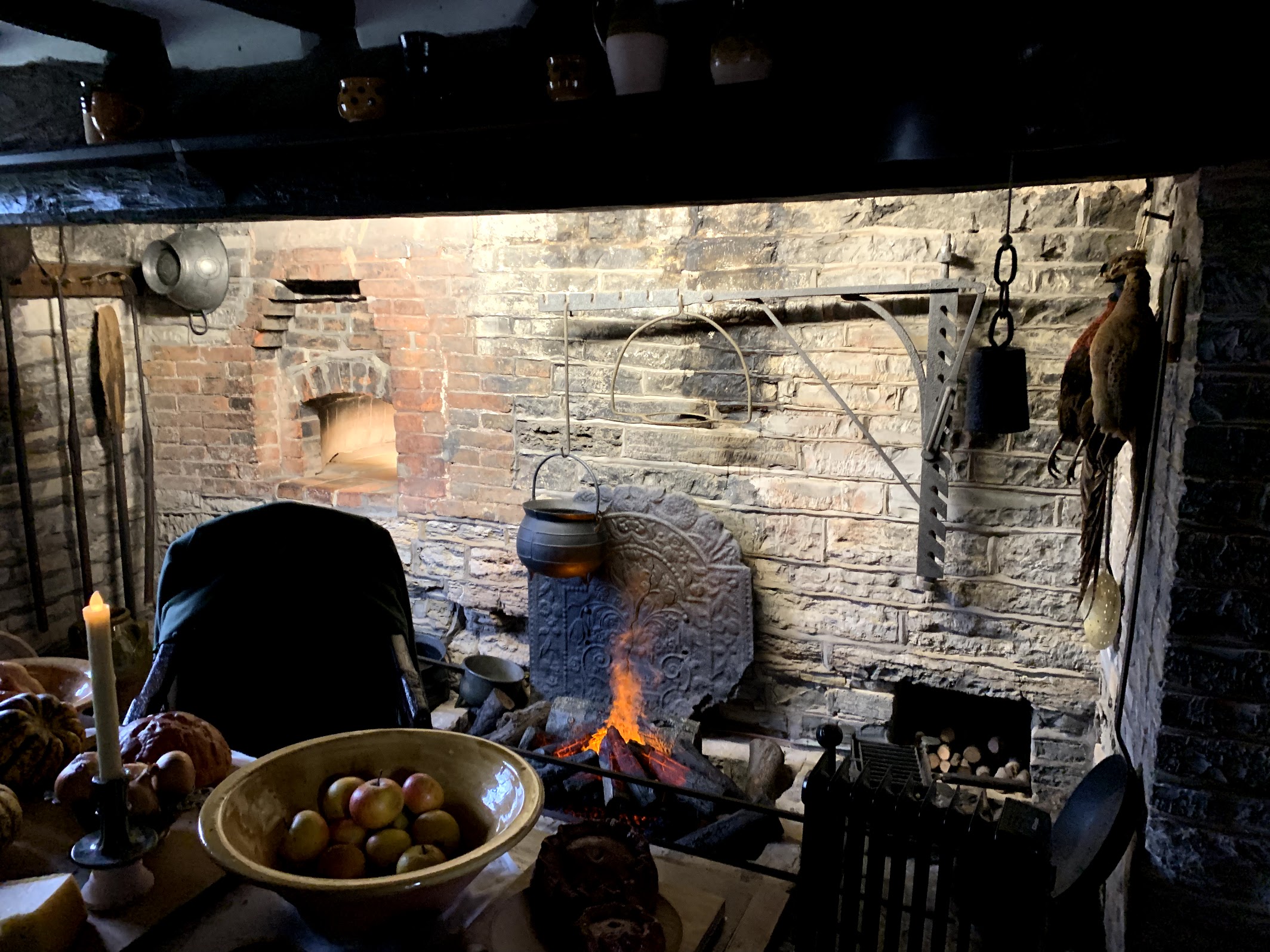
This fireplace was added in the late 1500’s. Originally the ceiling opened all the way to the thatch roof and there was a central ring pit fire. After the two chimneys were built they directed the fire smoke to one small center hall where the meat would be hung. You could still smell the smoke in the hallway!
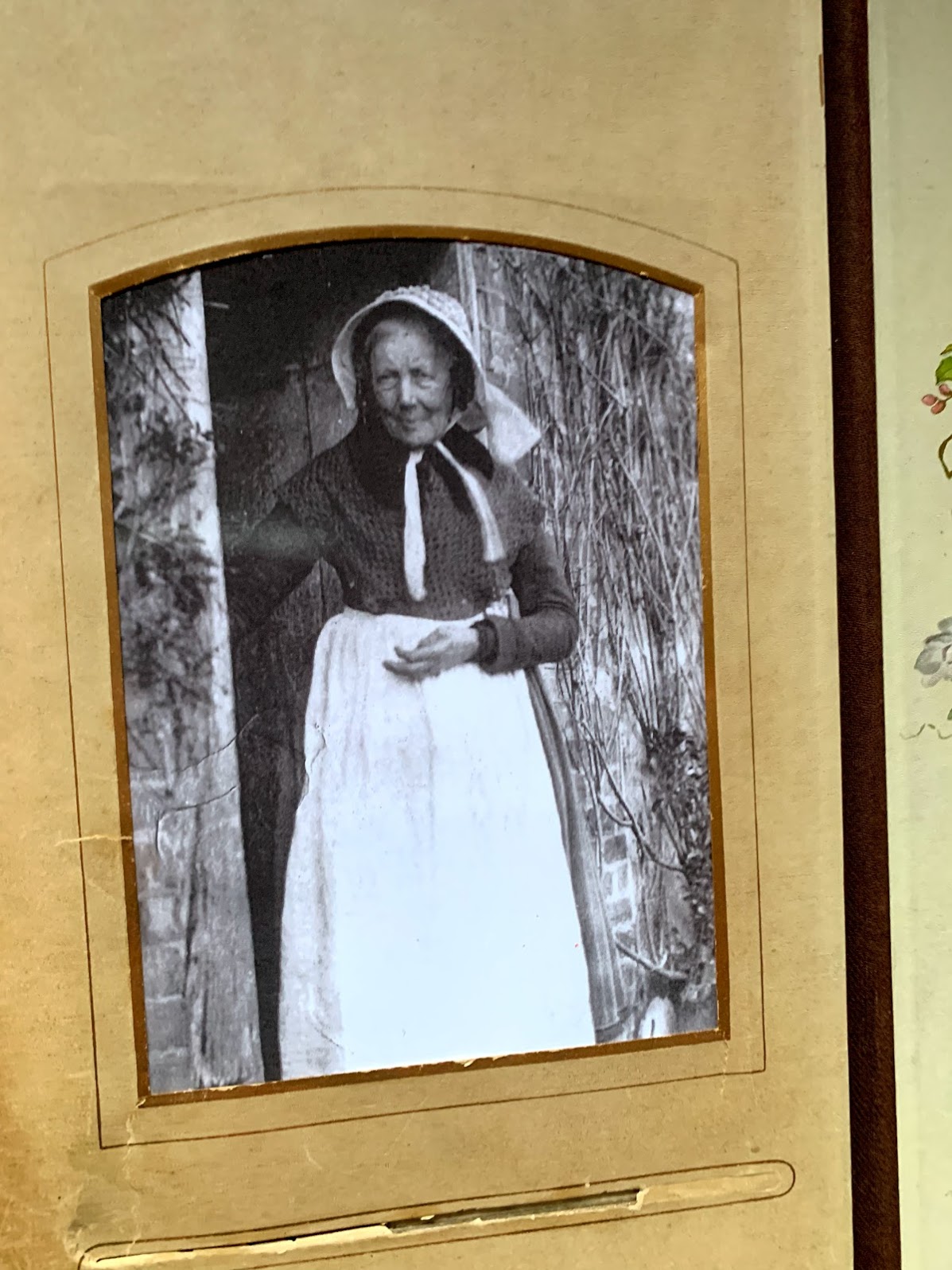
Miss Baker was the last Hathaway heir and lived in the cottage all her life

All day the wind blew fiercely! As we drove south through Oxford all the tree limbs and flags stood at attention. We expected to see Pooh Bear and Piglet fly by with a kite at any moment!

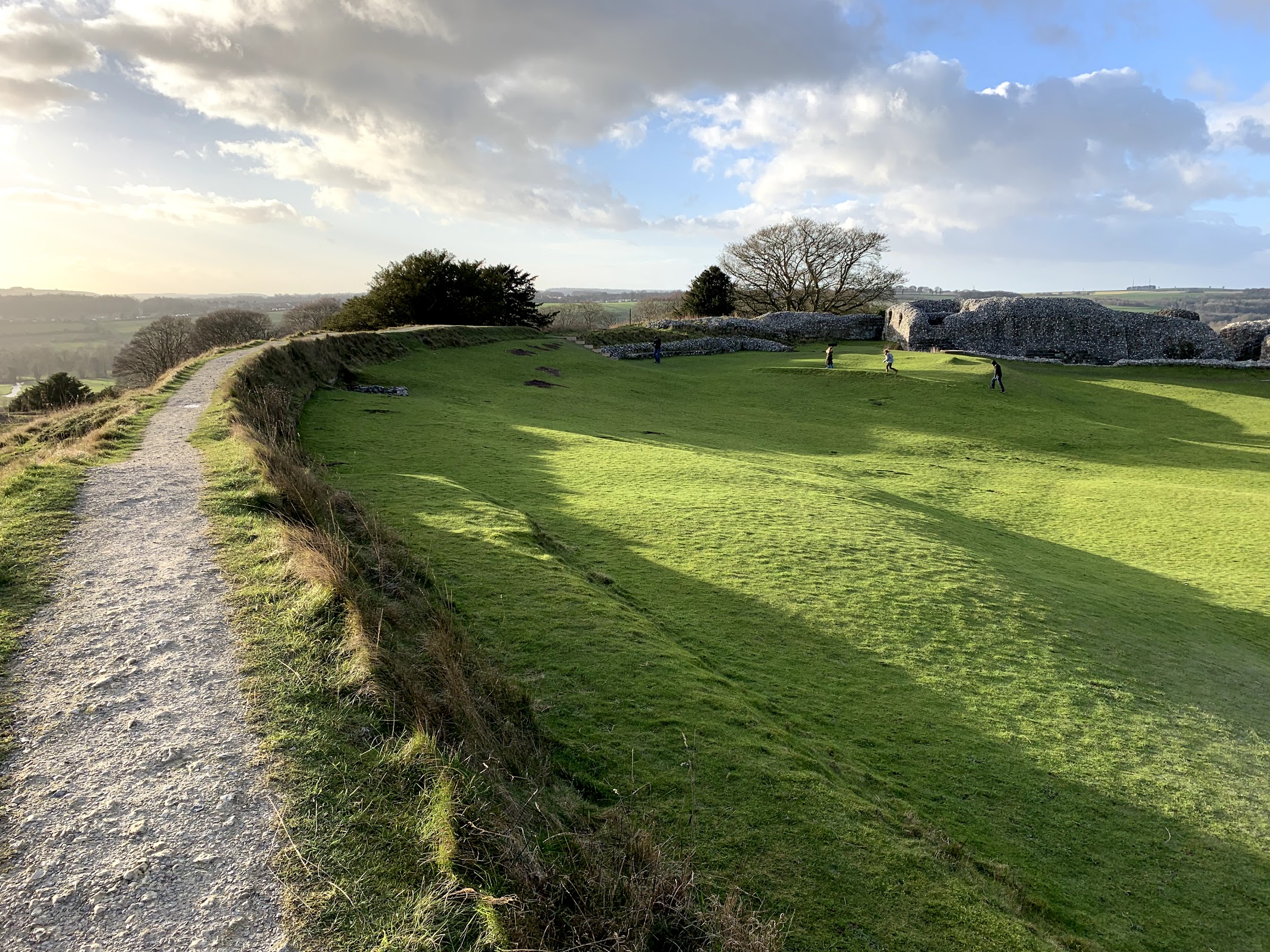
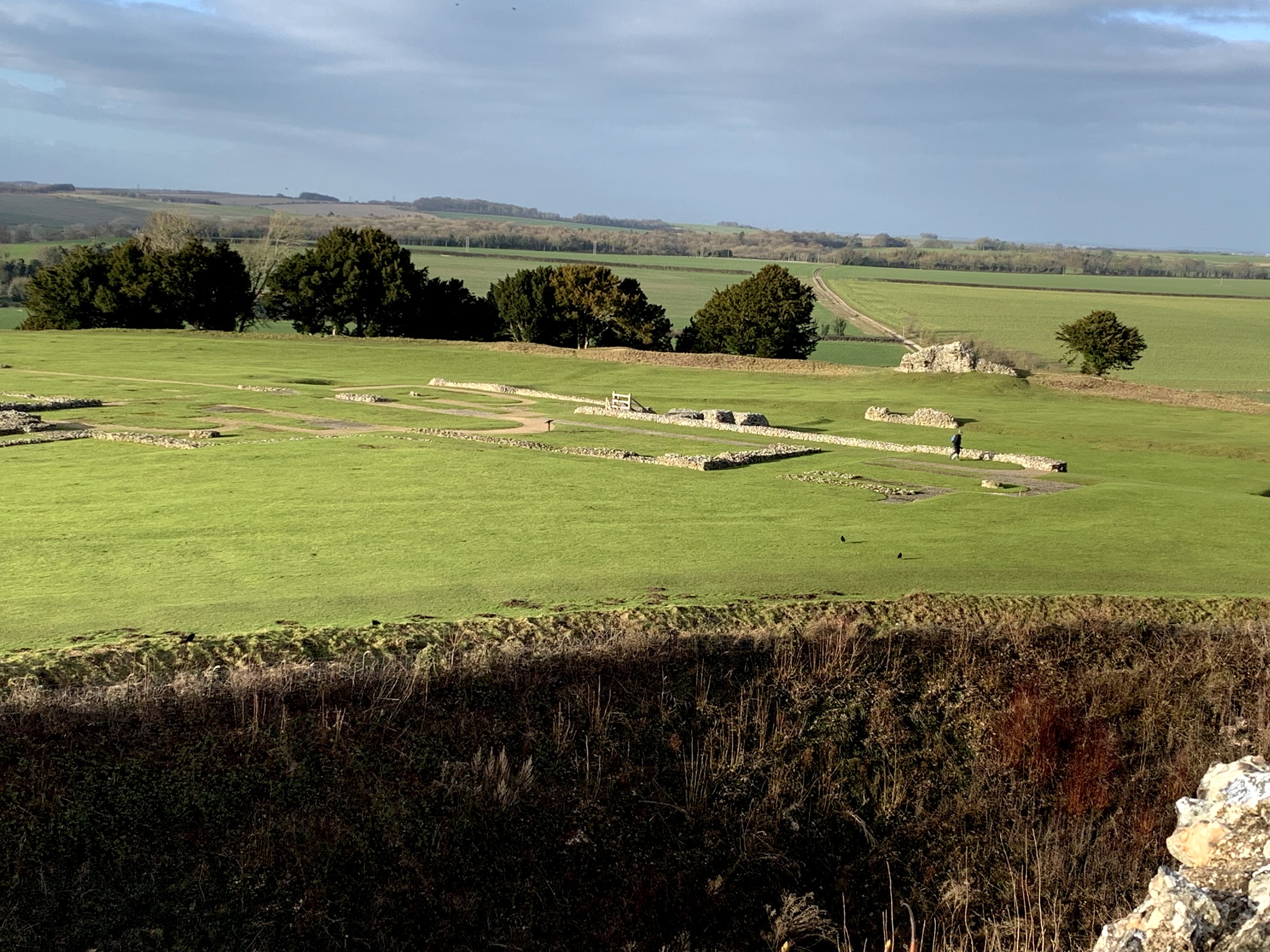
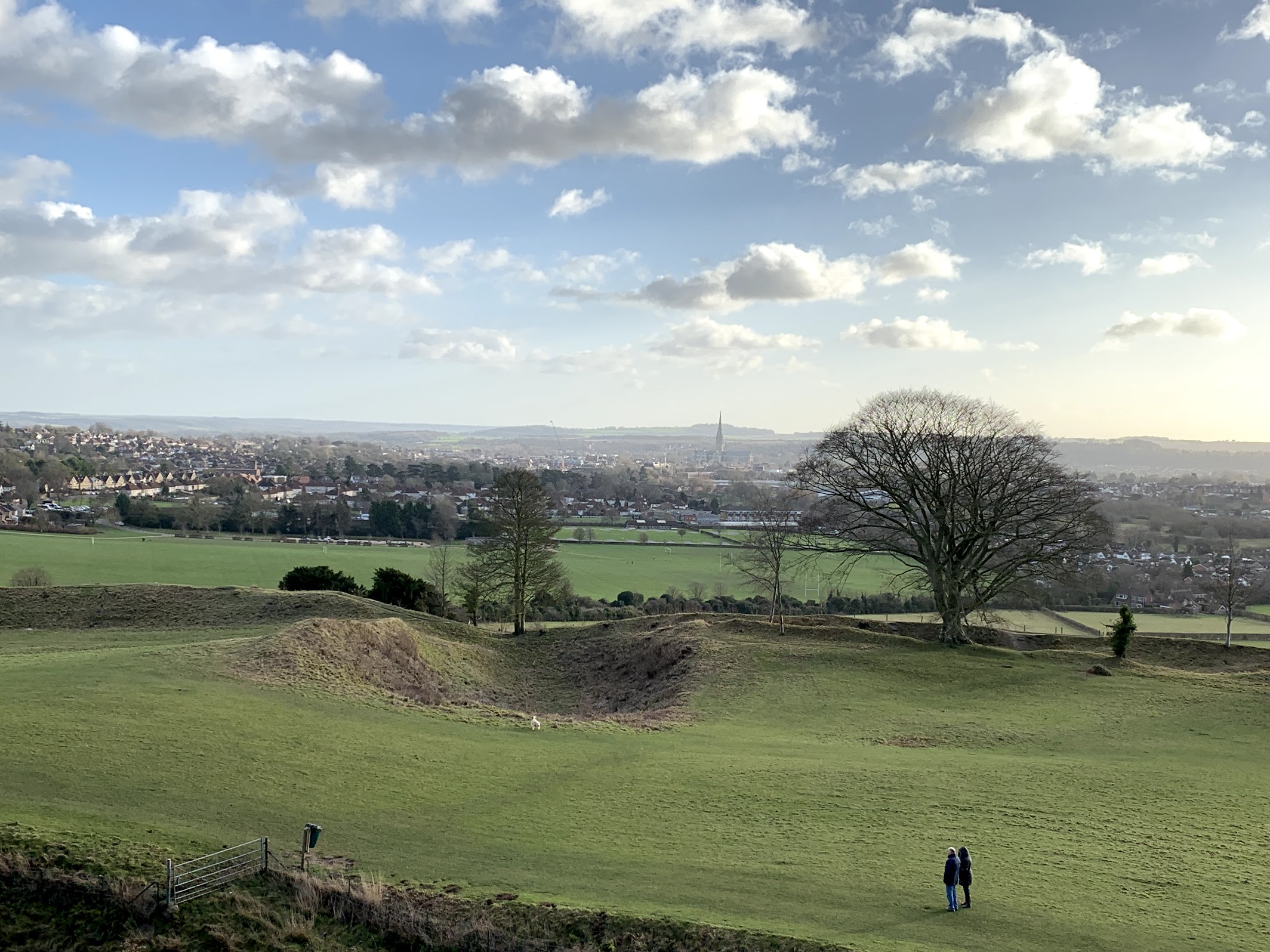
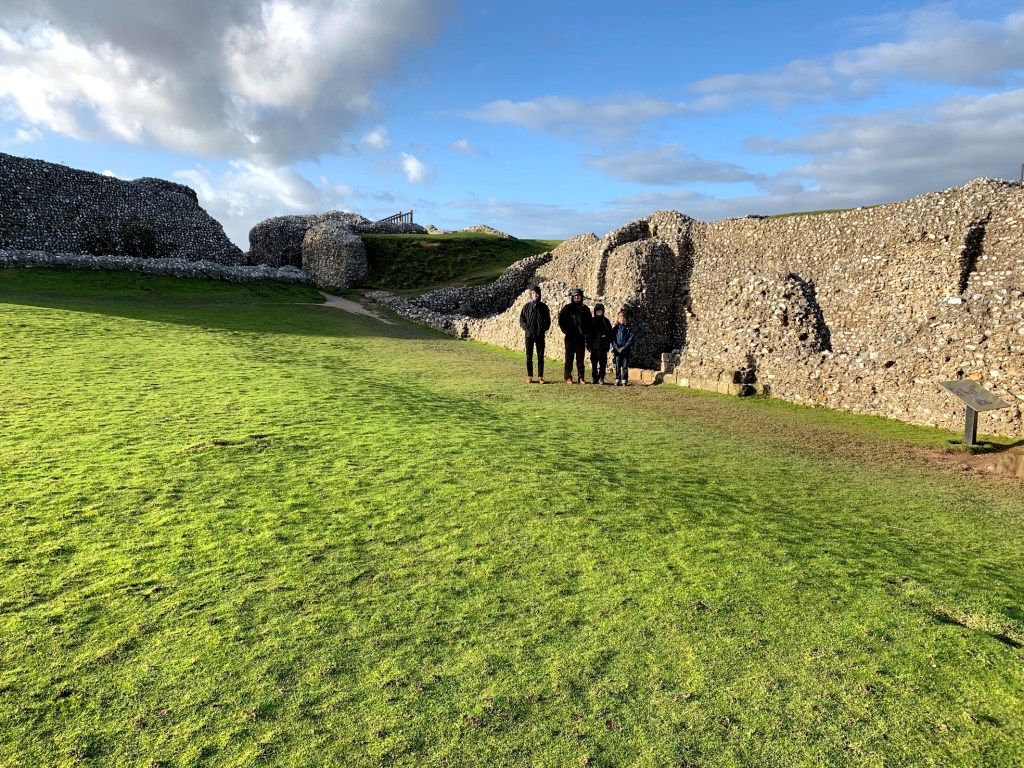
The wind pushed the clouds away and the intense brilliant winter sun shown forth in glory as we drove up to Old Sarum. A majestic ring of mounded earth rose up in front of us as we climbed the steep hill to the summit of this Iron Age Ring Fort. Of course Aeolus was still in a mood and about blew us from atop the earthen walls as we walked around. Old Srum was originally an Iron Age Ring Fort and then became a medieval fortress founded by William the Conqueror. It was a favorite southern castle and fortress for several English kings including Henry II. The original Salisbury Cathedral footprint can be seen in the fortress as well as the newer 16th century rebuild way off in the distance! Unfortunately Old Sarum fell into disrepair and ruin by the late 14th century.

Along the top earthen wall at Old Sarum. There were three such rings around the iron age fort.
Footprint of the 12th cent. Salisbury Cathedral
View of Salisbury and the Cathedral spire from the top of the fort
Inside the old castle at Old Sarum

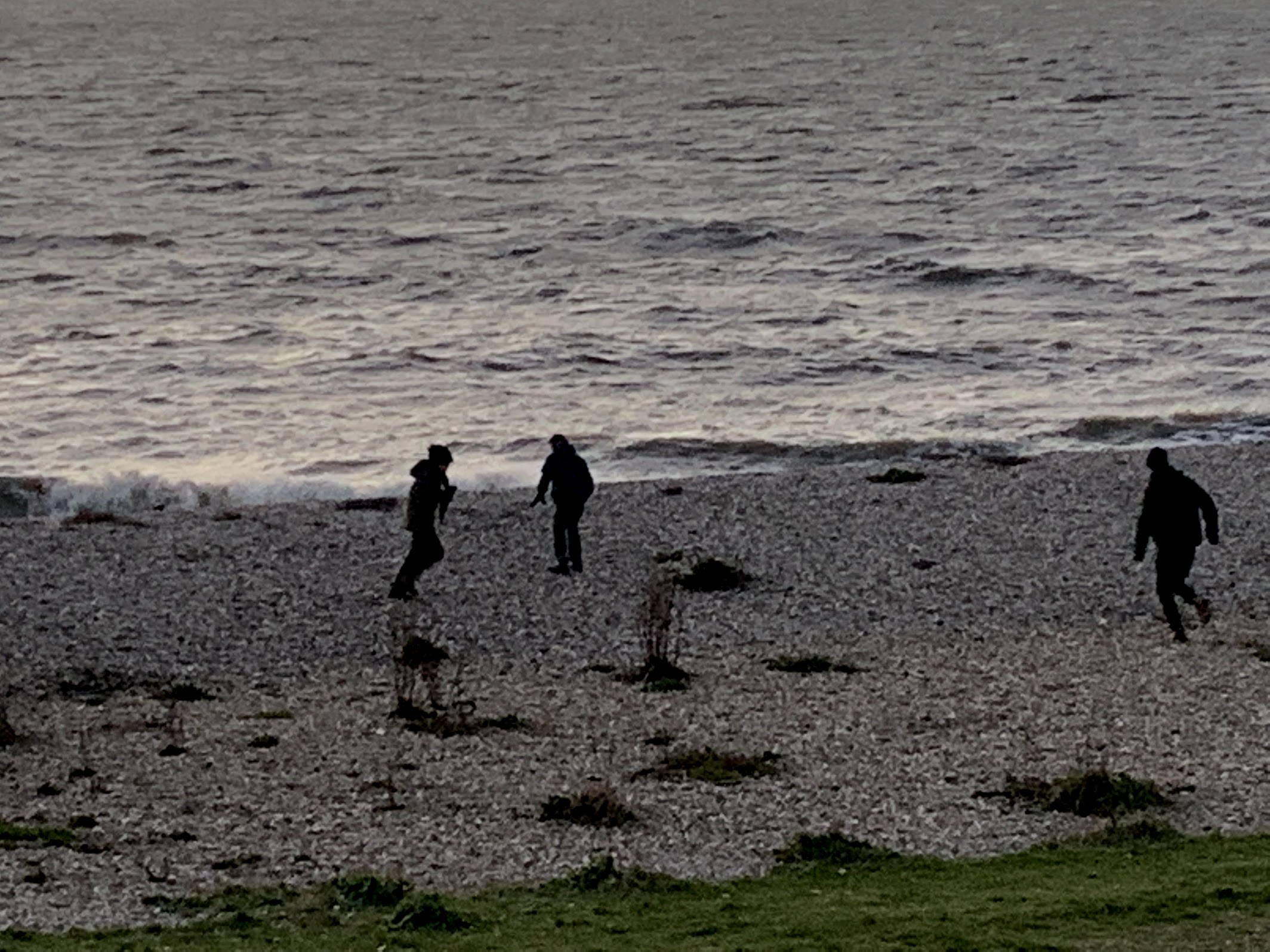
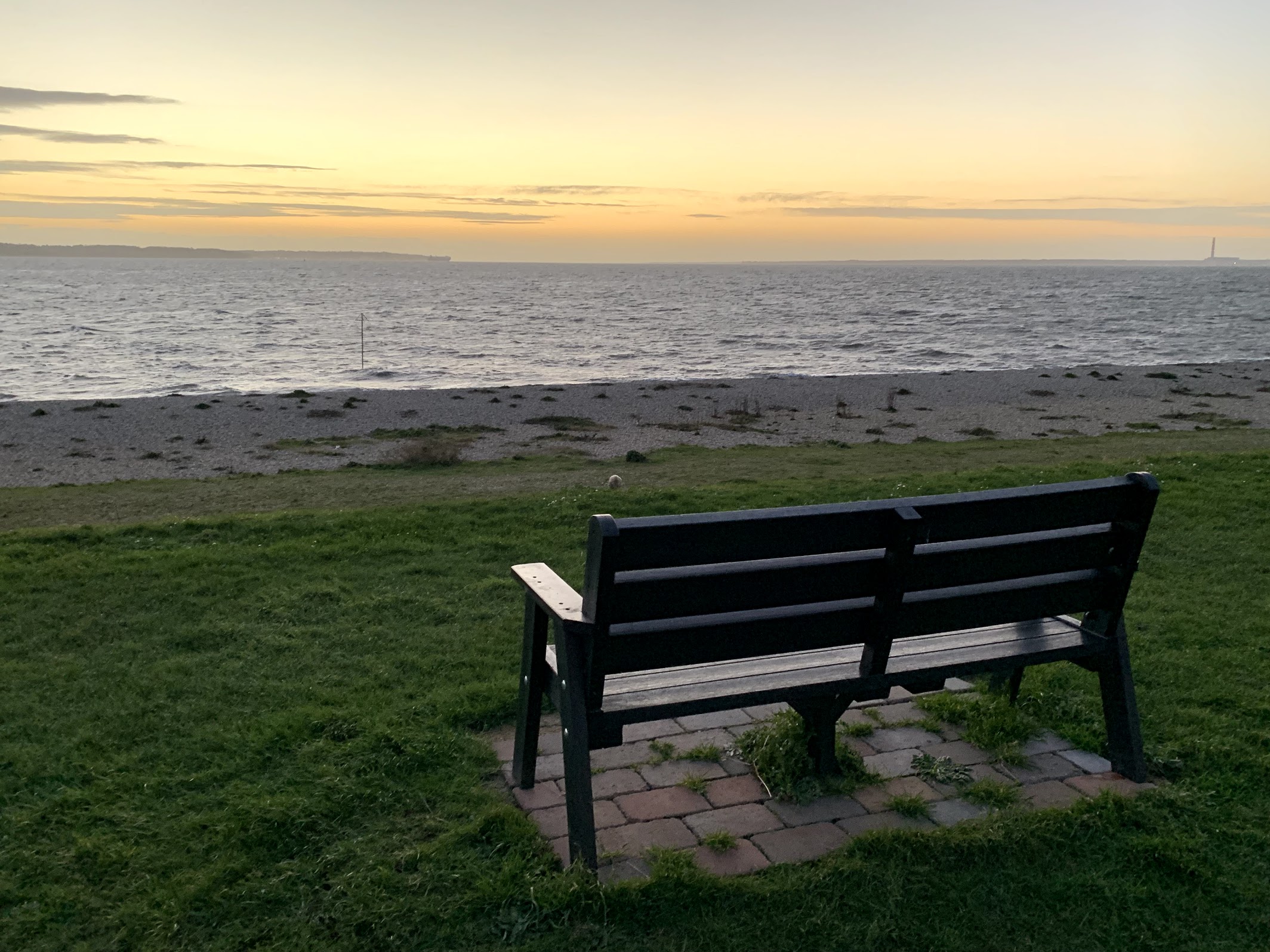
Our final encounter with the relentless winter winds was down along the seashore in Portsmouth. Our B&B is only about 3 blocks from the seashore. Before checking in, we took a few minutes to see the sun set over the Isle of Wight and the English Channel. The children explored the beach and found a few rocks and seashells. As the sun dipped below the horizon we found a nice warm pub/restaurant called “The Old Ship” and had a delicious WARM meal. As I write this, the wind is still whipping around the corners of the Leeward House B&B where we are spending the night.

Looking for seashells by the seashore
You can just see the Isle of Wight behind Seamus
Sunset on the English Channel in Gosport a village near Portsmouth, England

All the World’s a Stage…

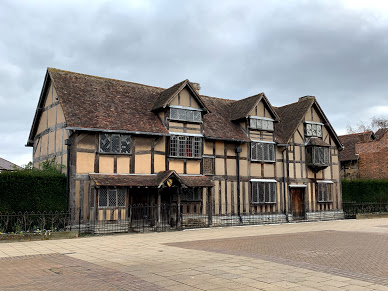
Stratford upon Avon is truly one of the oldest towns in England. Many of the town’s central buildings are at least 400+ years old! We walked from our B&B into the town centre. This is where the birthplace of William Shakespeare is located. Faywen was the most excited of us all! She LOVES Shakespeare and today was a very momentous occasion for her.

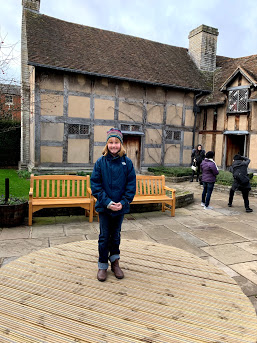
Birthplace of William Shakespeare
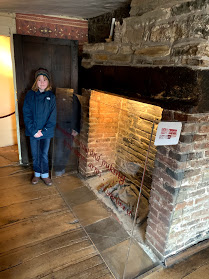
It was common practice for women to give birth in their private bedrooms in front of the fire. This was most likely the spot where Shakespeare was born!

His birthplace isn’t much to look at, but it is of great importance in the world of English literature. William Shakespeare was born on 23 April 1564 and died the same date in 1616. He was the third child and eldest son of a wealthy glove maker John Shakespeare and his wife Mary Arden Shakespeare. William married Anne Hathaway in 1582.They had three children Susanna, and twins Hammet and Judith. Hammet died at age 11, but the two daughters lived into adulthood and married. He had 4 grandchildren, but only one lived to be an adult, Elizabeth. Sadly she had no children and the only descendants of the Shakespeare’s are through William’s sister.

There were three actors at the Birth-house quoting Shakespeare’s plays: Faywen presented the speech “All the World’s a stage…” from As You Like It to visitors. The actors were quite impressed with her ability to memorize Shakespeare at such a young age.
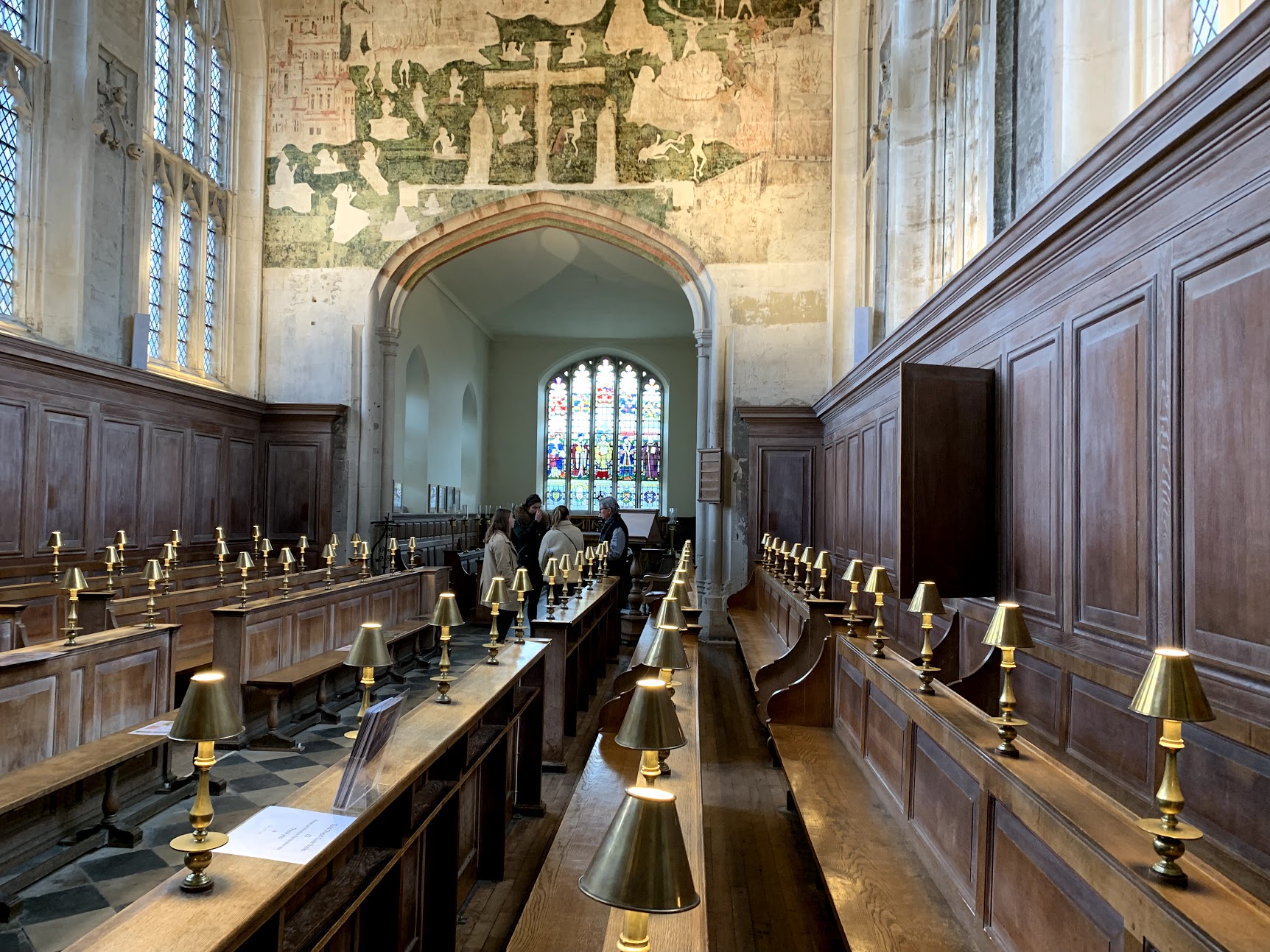
Guild Chapel: front section built in 1483, back section built in 1246

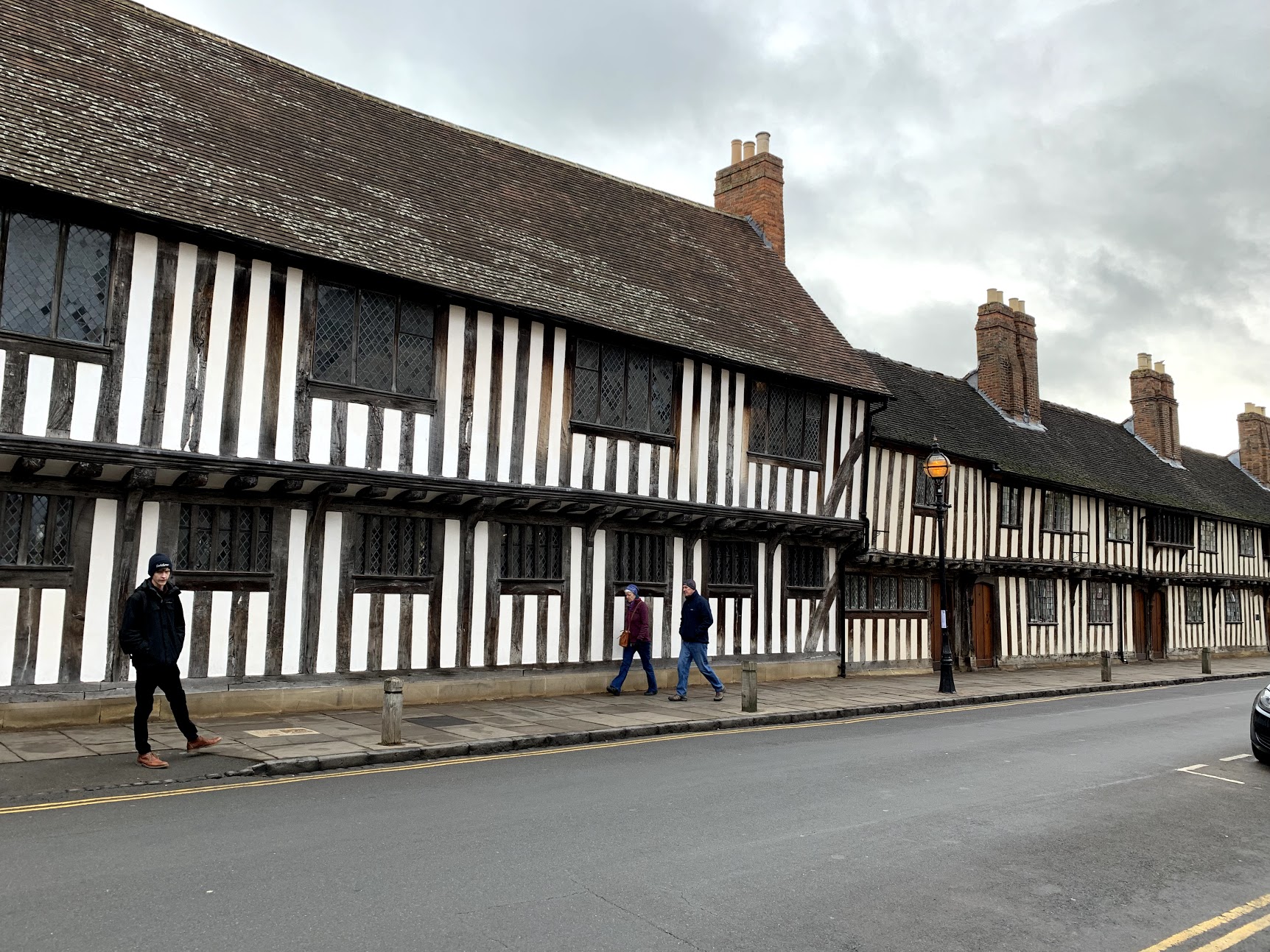
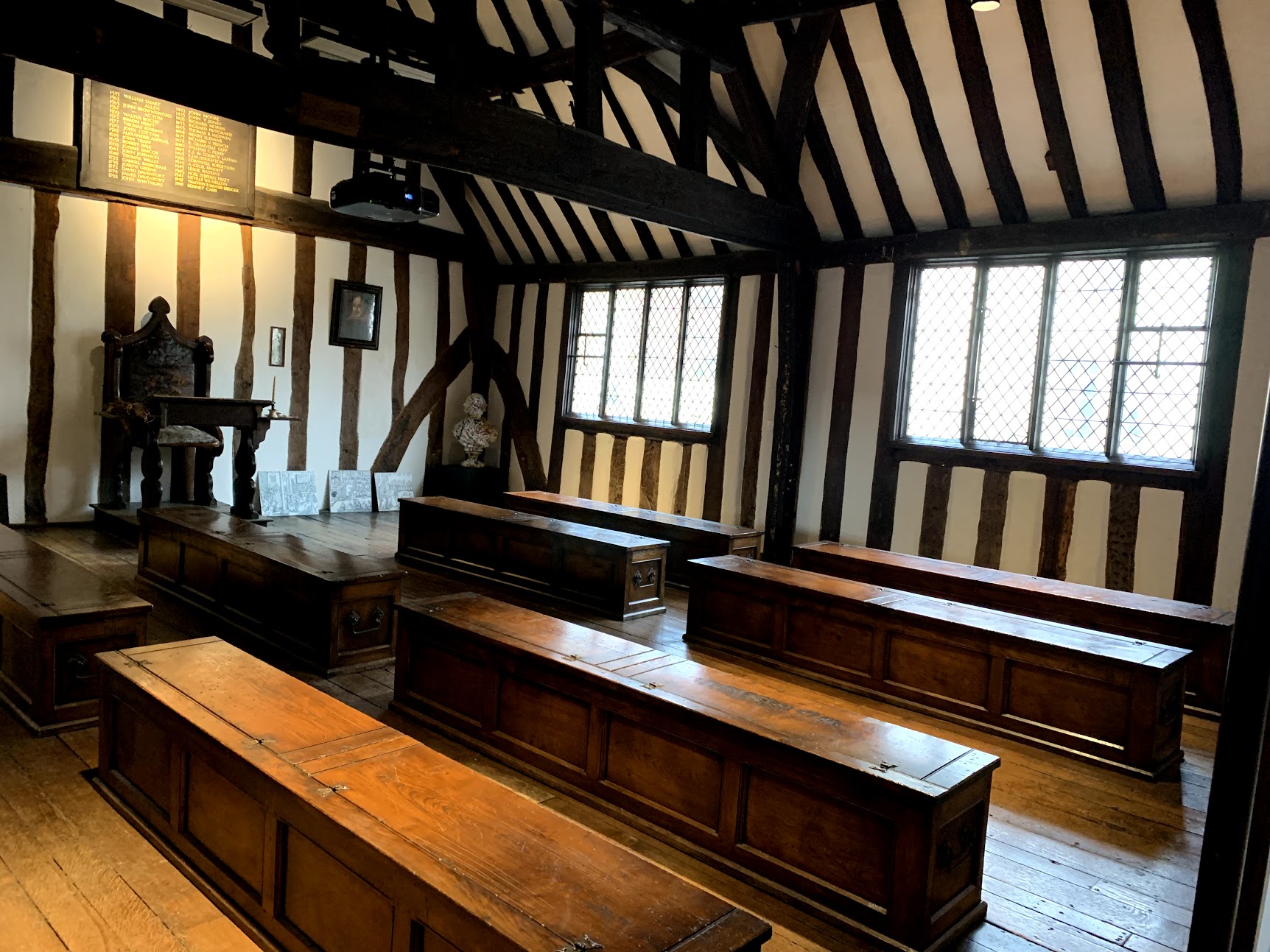
He attended the Guild Chapel Boys School for free from age 7-14. It was primarily a Latin school where pupils attended 5 ½ days a week for 11 hours a day with only a 2 hour lunch. It wasn’t all hard learning. They did enjoy having theatrical groups perform and often the students put on plays for the community. This is the first theatrical influence on William and would serve to make a lasting impression on him for the rest of his life.

Guild Hall and Boys School
Shakespeare’s old classroom in the Guild Hall Boys School

He lived in his parent’s house with Anne until become financially stable. It was in 1597 he purchased, a few blocks down the street, a well-known manner house owned by the Clopton family. It was called New House. Anne and his two daughters lived most of their lives in New House. Shakespeare traveled to London quite a lot in order to oversee play productions, He wanted a nice place for his wife and children to reside while he was gone. Shakespeare is said to have loved New House and probably wrote most of his plays in his small office. Sadly, the home no longer exists having been torn down in the early 1700’s. A memorial garden is there today.

Shakespeare was well versed in the Scriptures as well as in leather working, especially glove making since it was his father’s profession. He references the Scriptures and glove making repeatedly in many of his plays. He also believed in the sanctity of marriage, which is evident in his plays too.

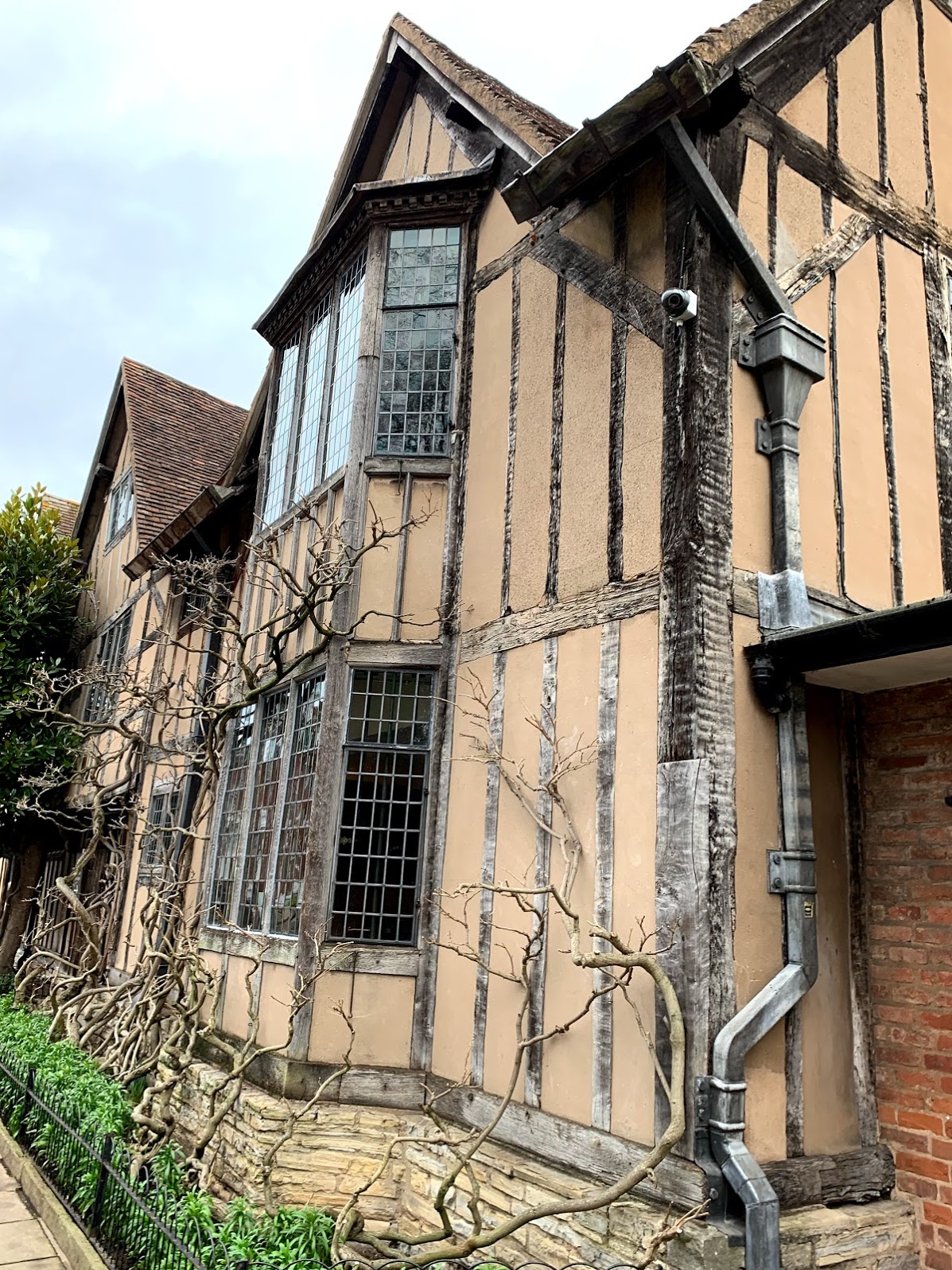
Hall House

Susanna married Physician John Hall, whom Shakespeare approved of and grew to value as a son. Many of the estates, manuscripts, and artifacts we have today are because of Susanna and John Hall. Hall House was purchased for the newlyweds by William and they lived there for several years. John practiced medicine from the home. However all the medicine in the world couldn’t help his father-in-law. Shakespeare died of the New Fever (Typhus) in 1616.

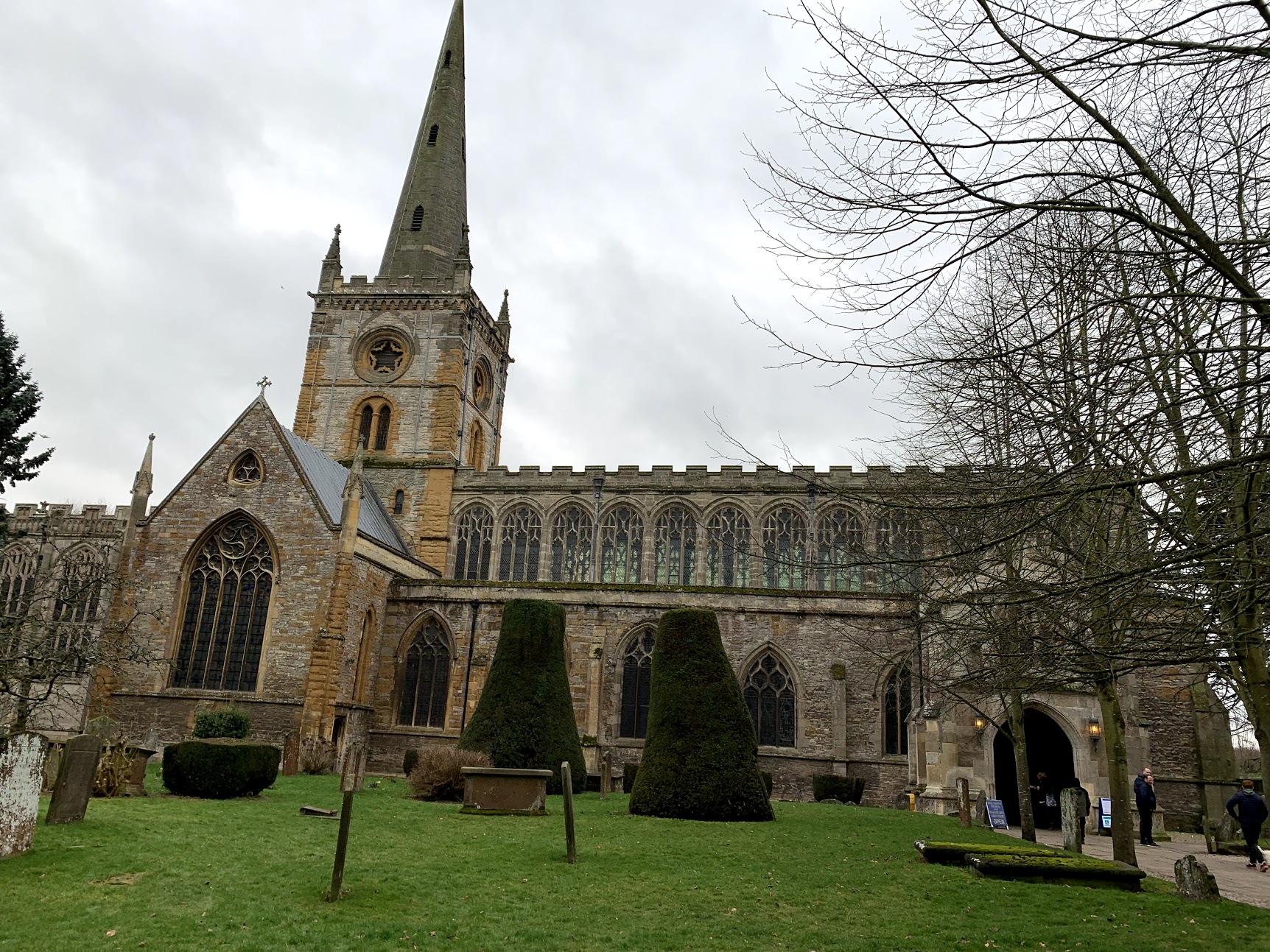
Holy Trinity Church

He left the world a treasure trove of plays and poems, of which many phrases have become part of the English speaking world: Break the ice, All’s well that ends well, It’s Greek to me, Brave new world, Jealousy is a green-eyed monster, Melted into thin air and Not slept one wink…to name a few. He wrote 37 plays, 154 sonnets, and 4 narrative poems.

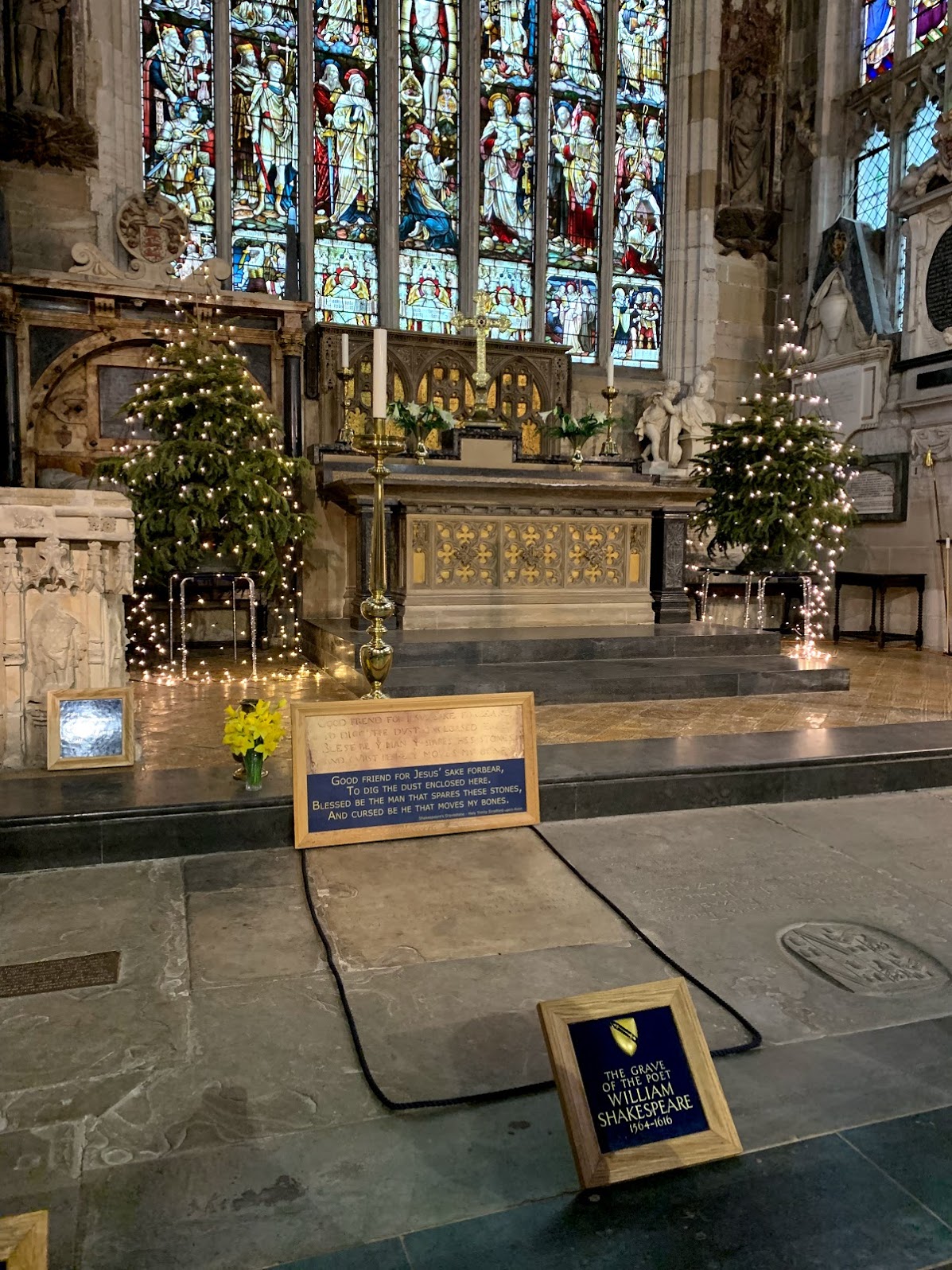
Grave of William Shakespeare in Holy Trinity Church, Stratford-upon-Avon, England

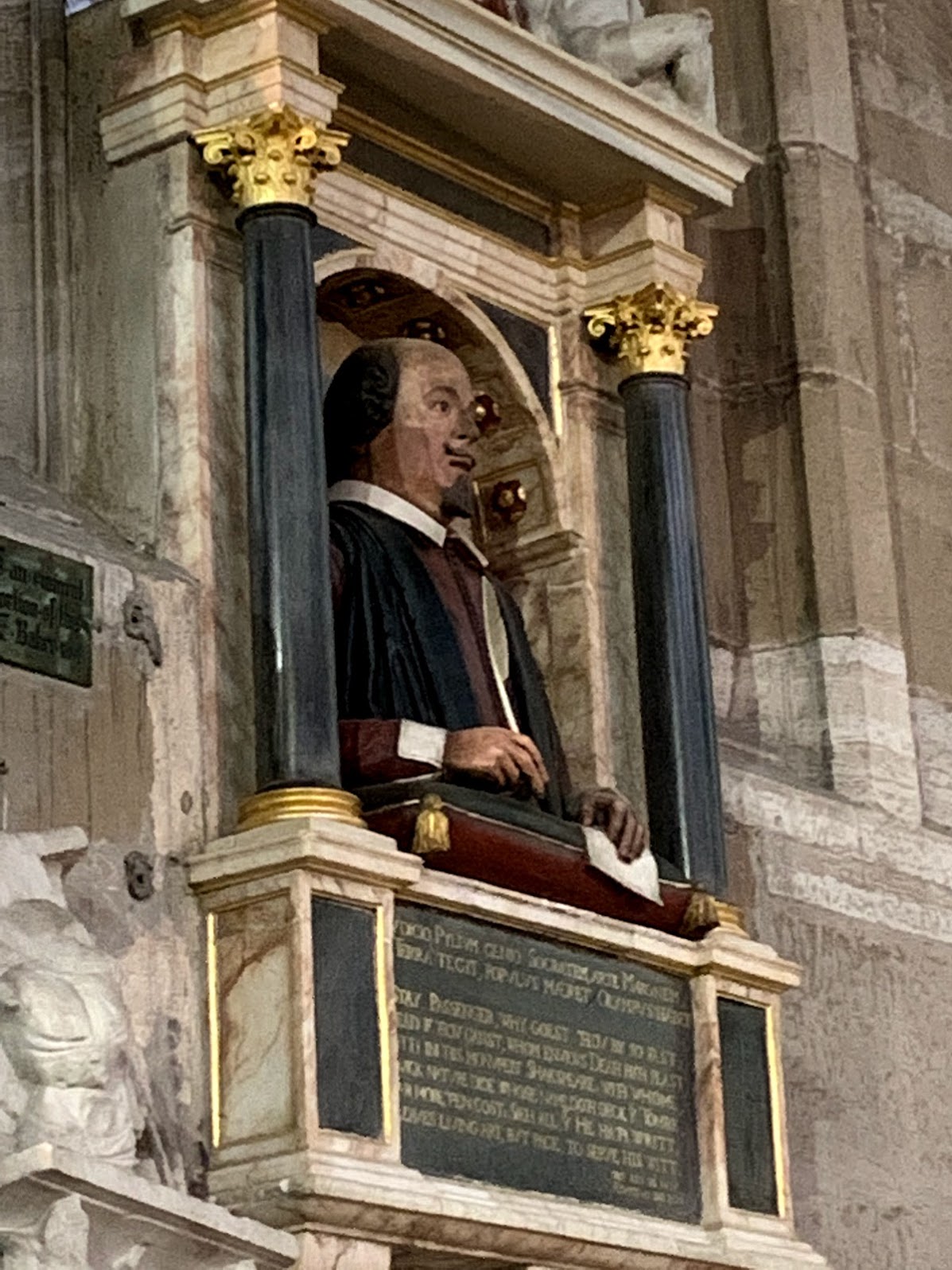
We finished our Shakespeare pilgrimage at Holy Trinity Church where he is buried along with his wife Anne. They are buried in front of the Altar. After his death his wife and daughters had a statue made to sit in the church. It is said to be the closest in resemblance to what William Shakespeare really looked like in life.

statue in Holy Trinity Church
Waiting for our tea and cakes to be served: We are sitting in a local Stratford-upon-Avon tearoom built in 1610.

Living Literature

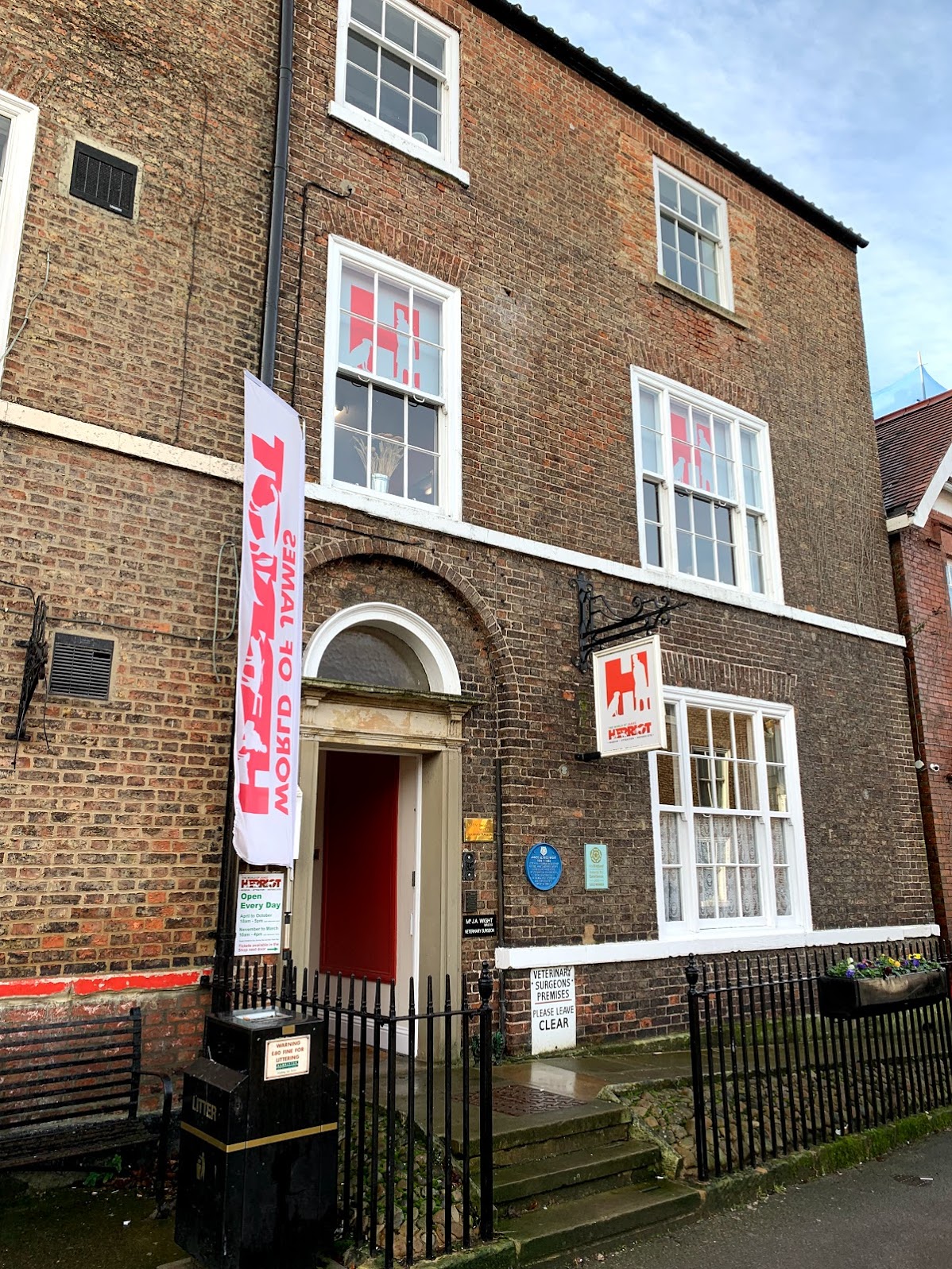
The sun shone brightly through the windows of the 1840’s Yorkshire brick cottage as we said goodbye to your hosts Kay and Andrew at the Oower House B&B. Driving a bit north again we came to the village of Thirsk. Why you might ask would we go to such an obscure little Yorkshire village? Well, perhaps the following book title might help solve the mystery: All Creatures Great and Small. Thirsk is the real Darrowby mentioned in the famous books by James Herriot. Actually Herriot is the pen name for the real veterinary surgeon Alfred Wight.

Kirkgate House, Thirsk, Yorkshire
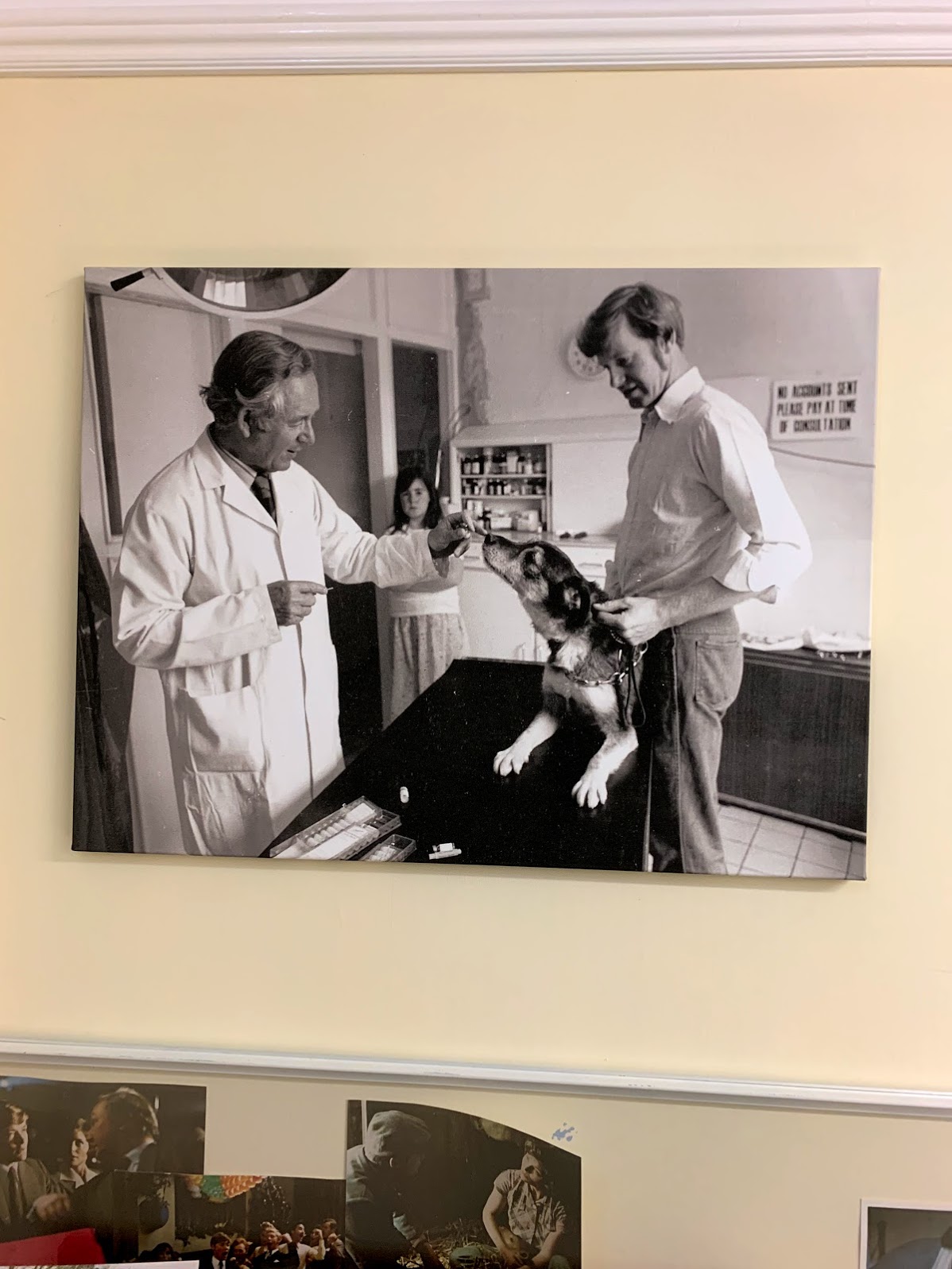
Rare photo of Alfred Wight in his veterinary surgery

Wight was born in 1916, studied animal veterinary medicine in Edinburgh, and settled in practice with Donald Sinclair (Siegfried Farnon in the books) in Thirsk in the late 1930’s. Wight married a local girl Joan (Helen in the books) and had two children. It wasn’t until he was in his 50’s that Joan suggested to Alfred that he should write down stories about veterinary life in the rural Yorkshire Dales. His first book was a success. Since then Wight has written several more books and children’s books. Though a millionaire, Wight remained a humble rural vet until his retirement. The local farmers in the Yorkshire Dales continued to value Wight’s abilities to understand them and their way of life.

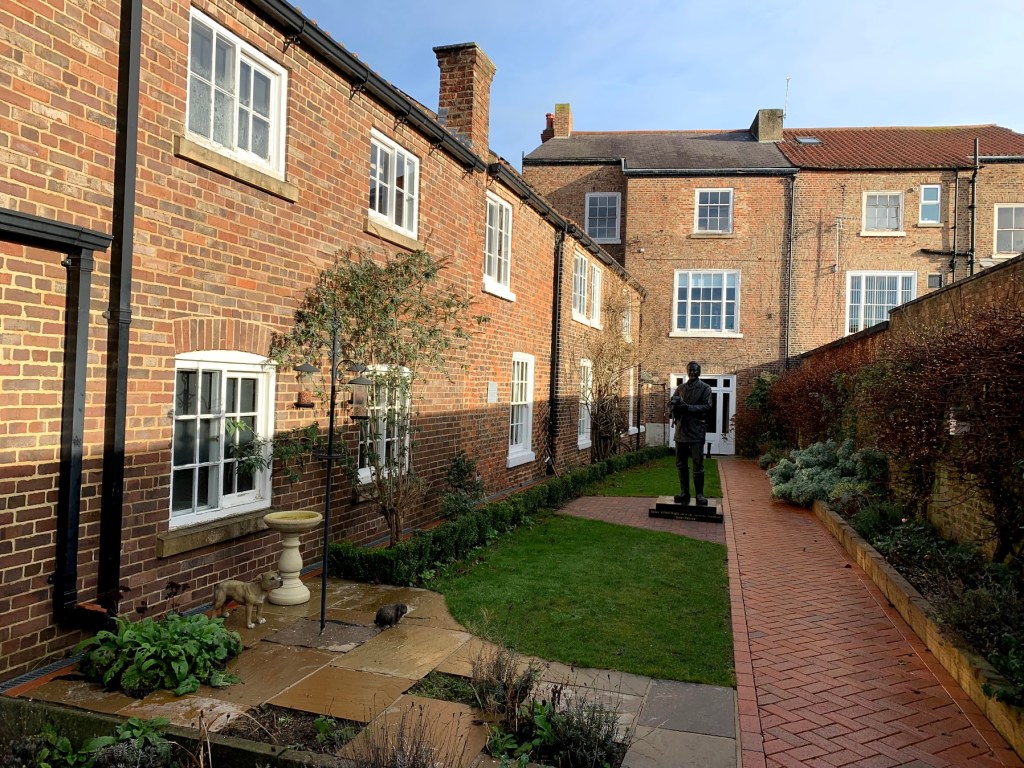
Gardens at Kirkgate House

For those who love the books, the characters of Siegfried Farnon and his younger brother Tristan Farnon are based directly on Donald and Brian Sinclair. Donald owned the veterinary surgery in Thirsk and had posted in the newspaper an advertisement for an assistant. Brian also became a vet and the three men remained lifelong friends.

Robert has read the first book in the series, but for me in particular it was lovely to see Kirkgate House (Skeldale House in the books) come alive! I have read all of Herriot’s (Wight’s) books and the All Creatures Great and Small series remains my favorite literary works. I even have seen all of the BBC television shows based on the books. They were filmed back in the late 1980’s to early 1990’s.

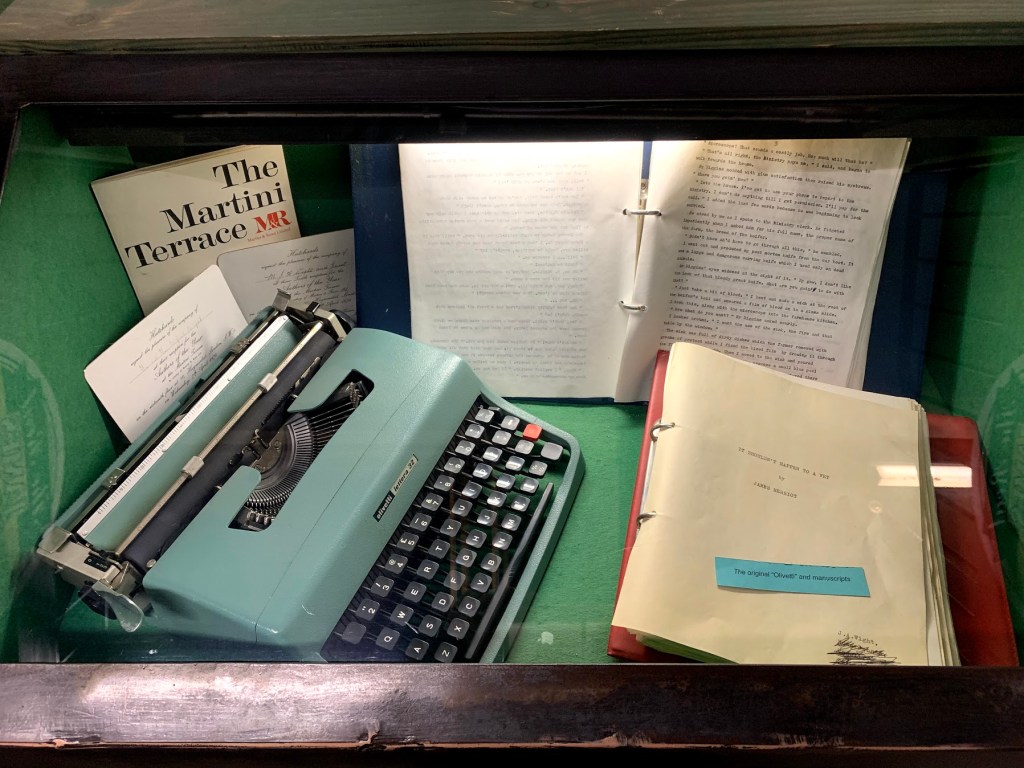
Alfred Wight’s (pen name James Herriot) typewriter

The home not only featured items from Alfred, Donald, and Brian’s time there, but also was a museum about rural veterinary techniques and developments over the past century up until modern times. It was fascinating learning about the development of veterinary studies and practice.

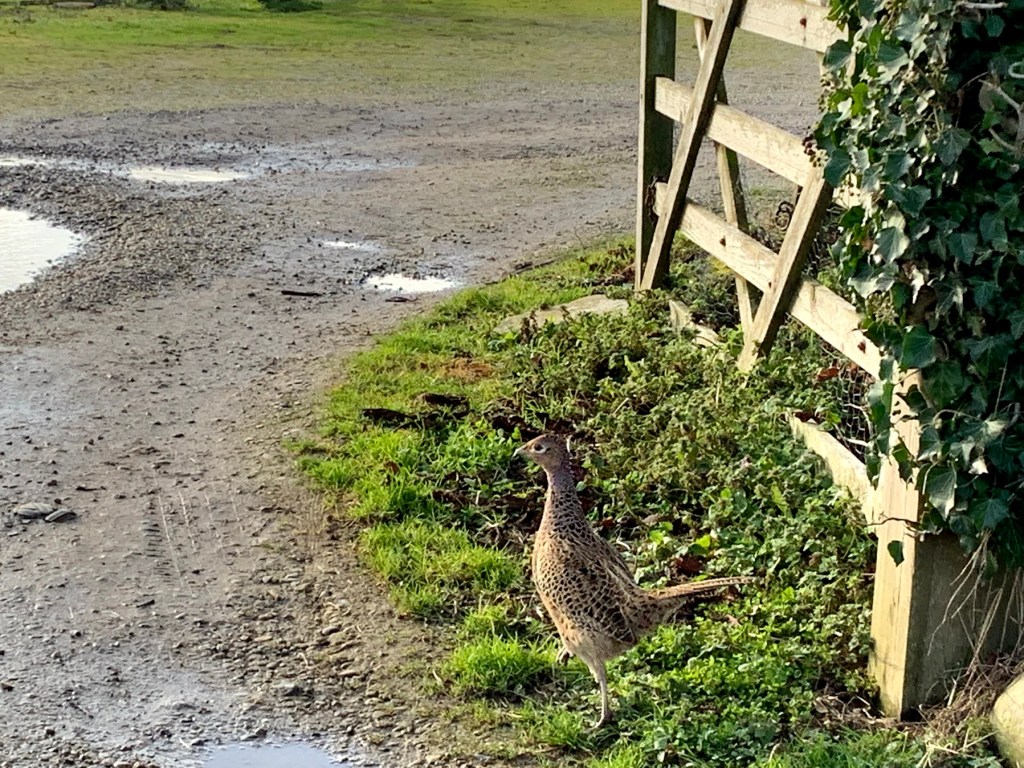
Spotted this female pheasant by a farm gate
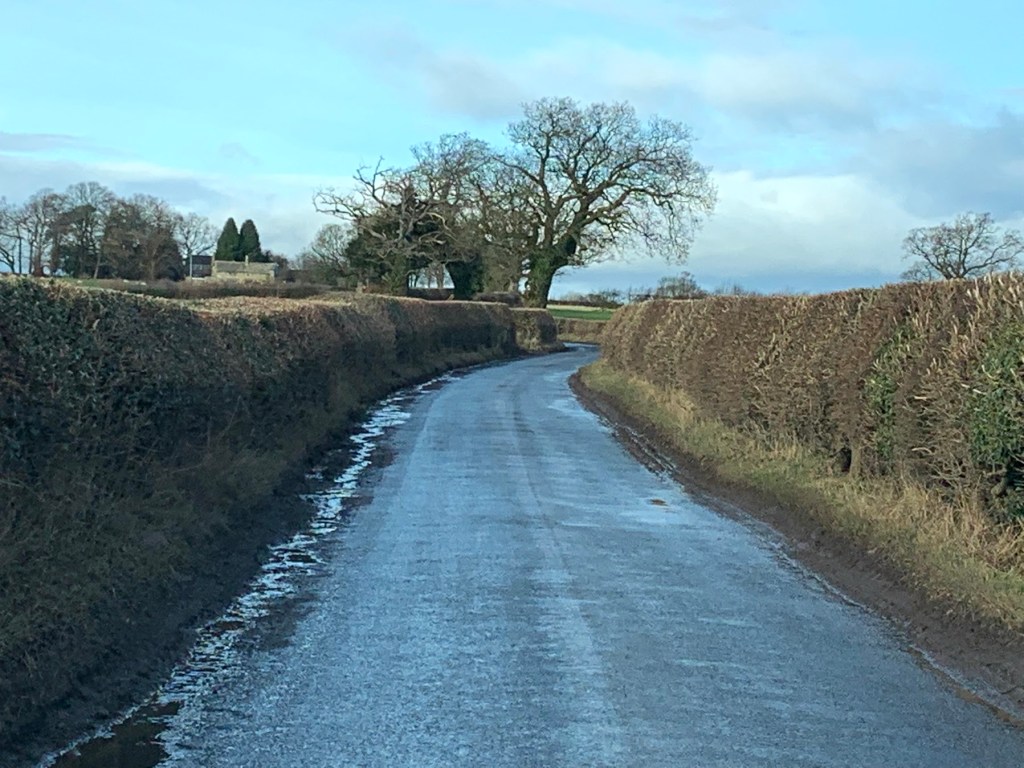
Rural road edged with classic hedges in the Yorkshire Dales

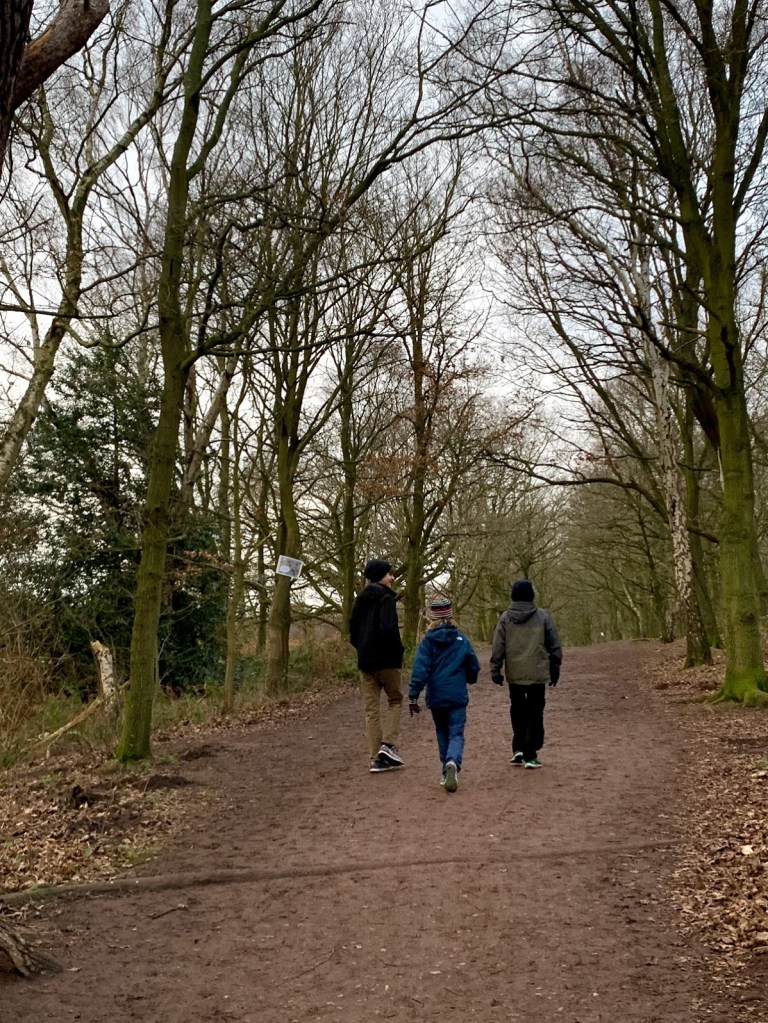
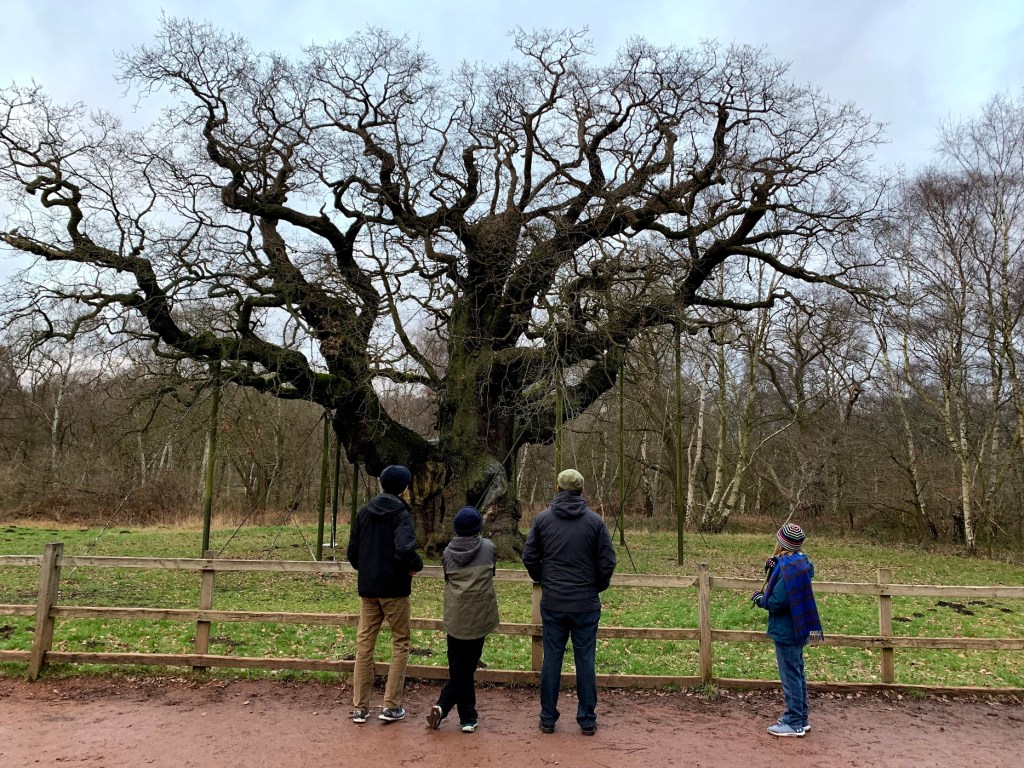
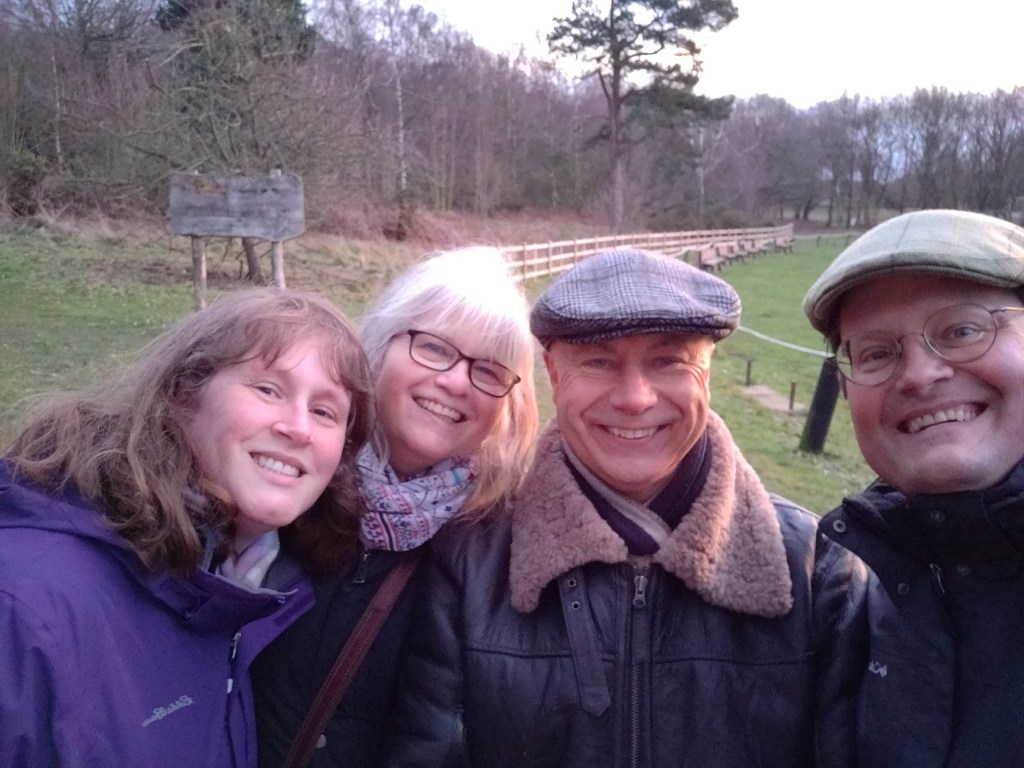
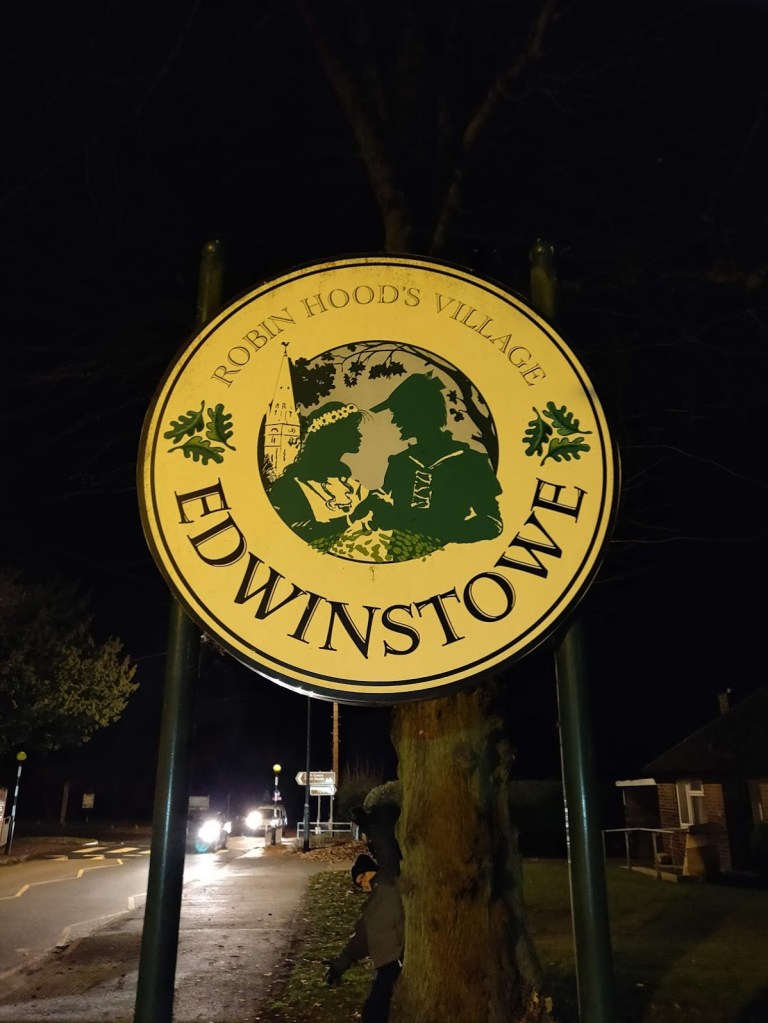
After a nice drive through the winding hedge rowed roads of the Yorkshire Dales we headed south and found ourselves in another legendary literary spot…Sherwood Forest! Just east of Mansfield, England is the town of Edwinstowe, home to the Sherwood Forest Nature Preserve. We grabbed a hiking trail map and took off on the 1.5 mile long hike to the Major Oak, an 800 yr. old oak tree said to be the spot where Robin of Locksley (Robin Hood) gathered with his Merry Men. The kids had a grand time hiking with large sticks they found on the ground. We met a lovely older couple at the Major Oak, Gloria and David Bowdler. Their daughter, Jemma, was the head forester for the centre. The Bowdlers were very friendly and we all enjoyed chatting as we continued the hike through Sherwood Forest. Mrs. Bowdler was quite impressed with our children and complimented them on their interest in nature, literature, and overall manners. She also loved seeing photos of our front porch and swing. She loves the American ideal of the “Southern wooden porch and swing”!

Sherwood Forest
Major Oak: 800 yr. old oak in Sherwood Forest

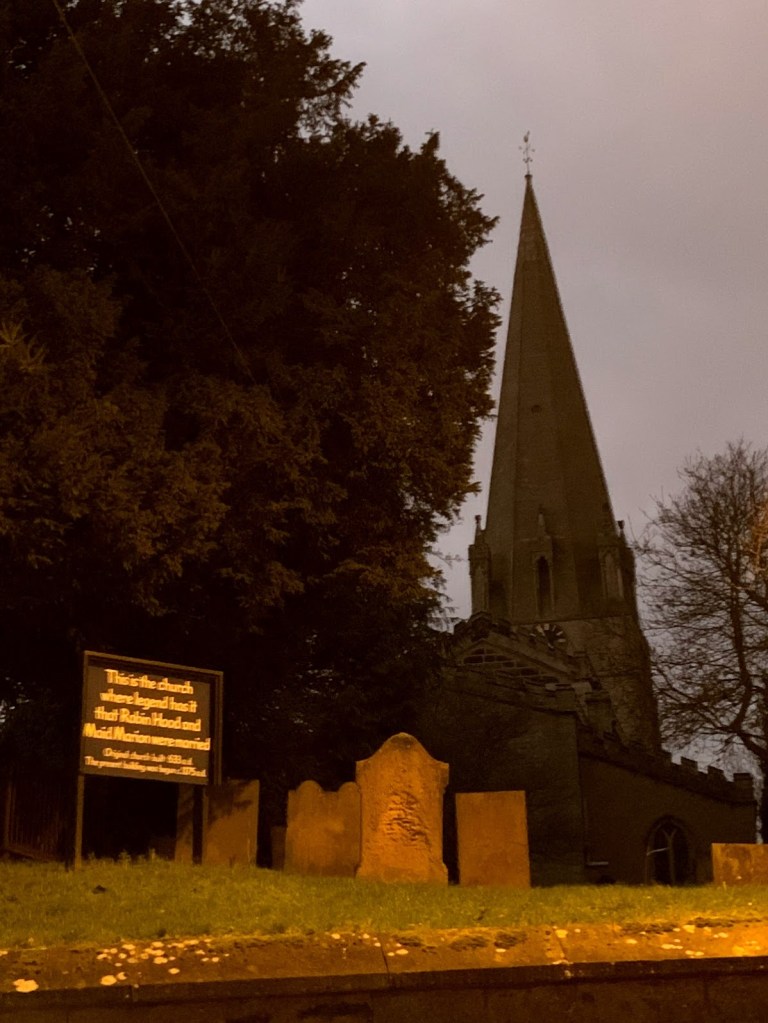
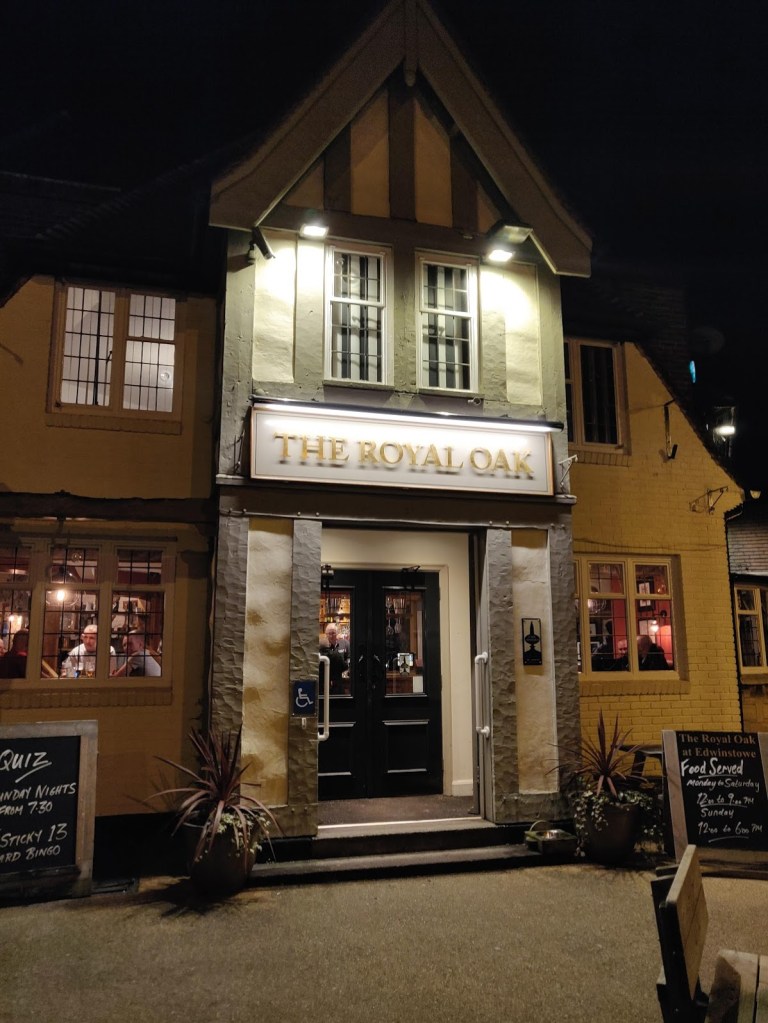
Once back to the centre we said our goodbyes with hugs and walked about a quarter mile into town and had dinner at an authentic English Pub called “The Royal Oak”. As we walked down the street up on the hill was a sign stating that legend held that Robin Hood and Maid Marion got married at the old St. Mary’s Church sitting on the hilltop.

David and Gloria Bowdler with us at the Sherwood Forest Nature Preserve
St. Mary’s Church where according to legend Robin Hood and Maid Marion go married.
Edwinstowe, England

As the sun set we drove another 2 hours south and checked into the Hathaways B&B in Stratford-upon-Avon.

Kings of Rail and Land

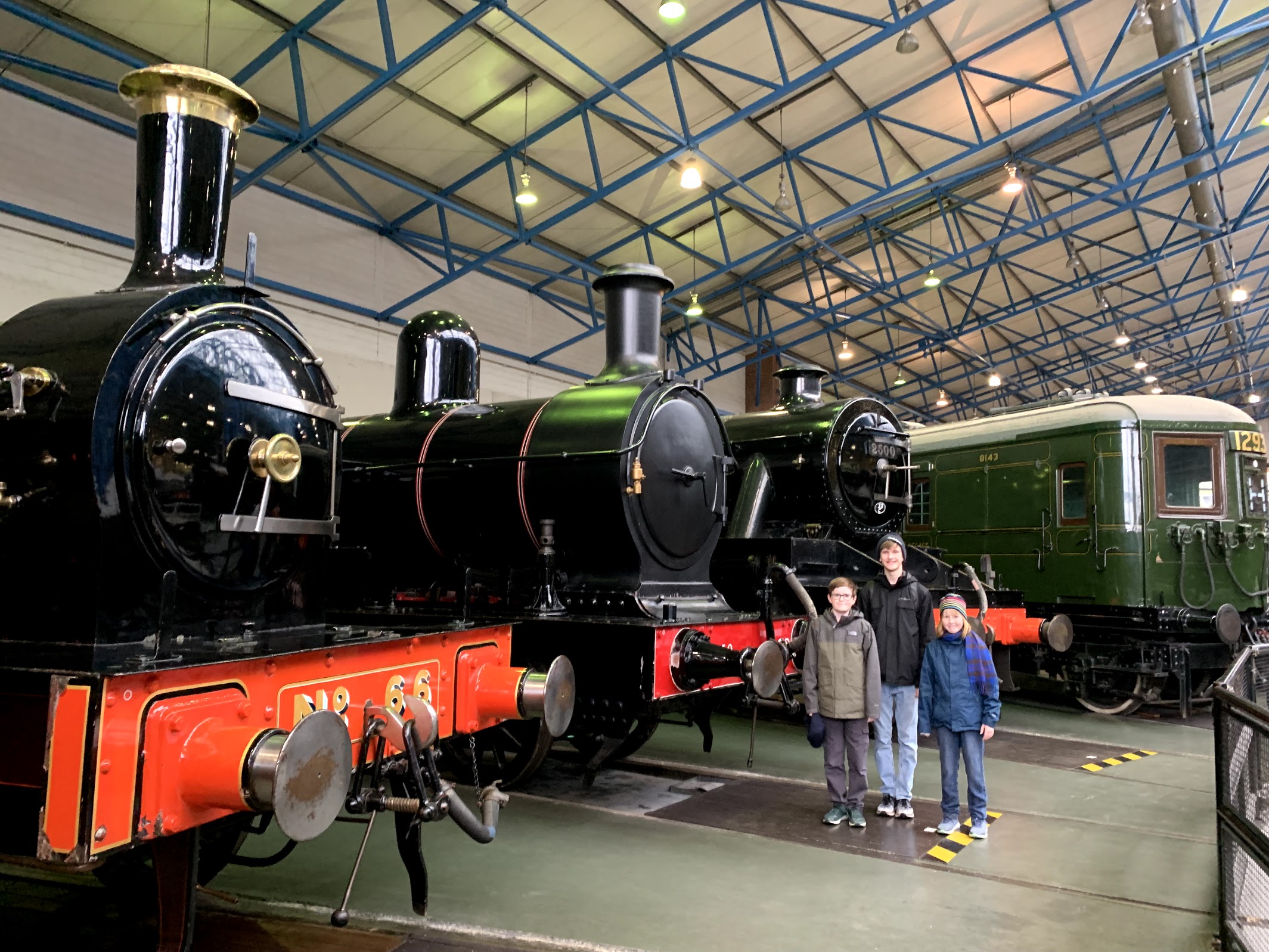
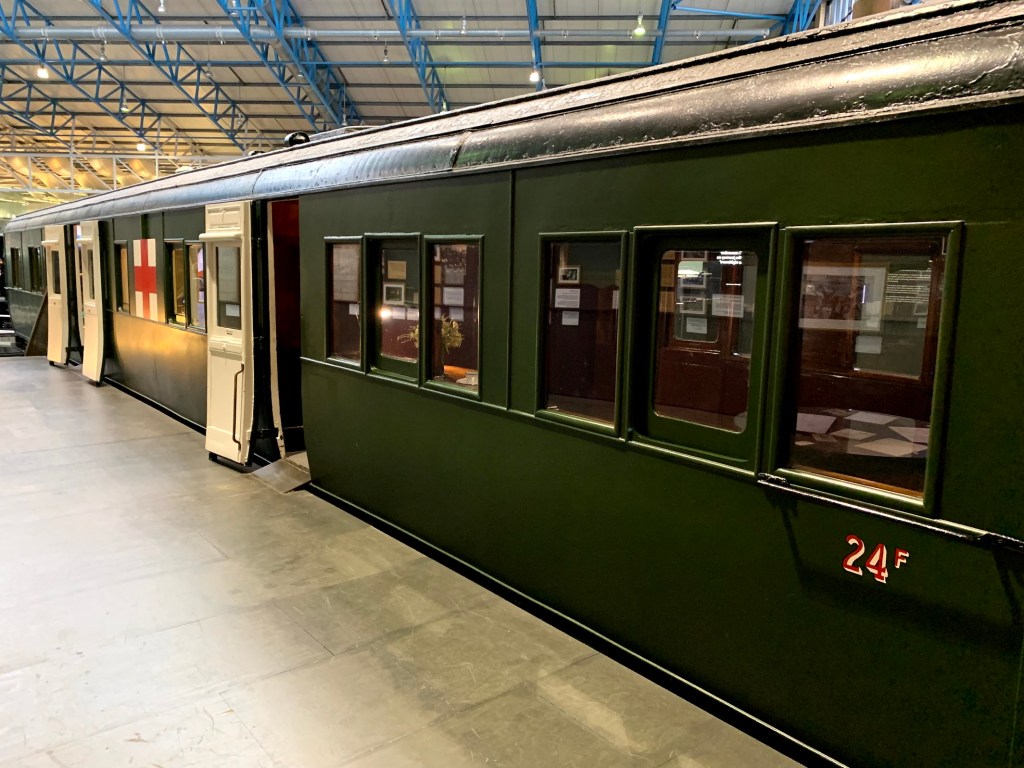
Our host Ms. Kay mentioned that we might want to take the bus into the city center. We drove to a local carpark and boarded the bus for a minimal fee. In about 15 minutes or so we got off at the National Railway Museum located in York proper. The museum was very interesting and contained a lot of examples of trains used throughout Britain’s history. There was a very old Rocket Train from 1846 all the way through a sample of the current Eurostar that passes through the Chunnel everyday. There was the Chunnel Funnel train, which was used to haul all the debris out of the underground tunnel. The famous Flying Scotsman, which ran direct from London to Edinburgh for decades, royal train cars, old steam locomotives, and my favorite was a wonderful display about the WWI hospital trains. Seamus, in particular, was very happy with the time we spent at the museum. He loves trains!

National Railway Museum in York
WWI Hospital Train
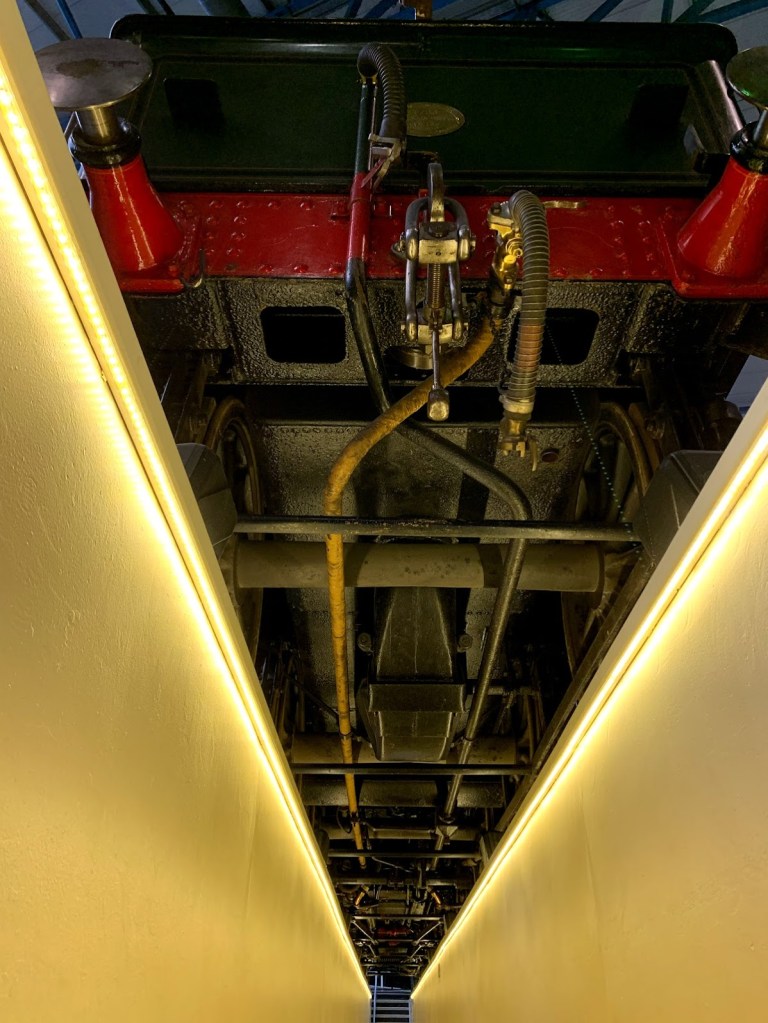
Underside of a train

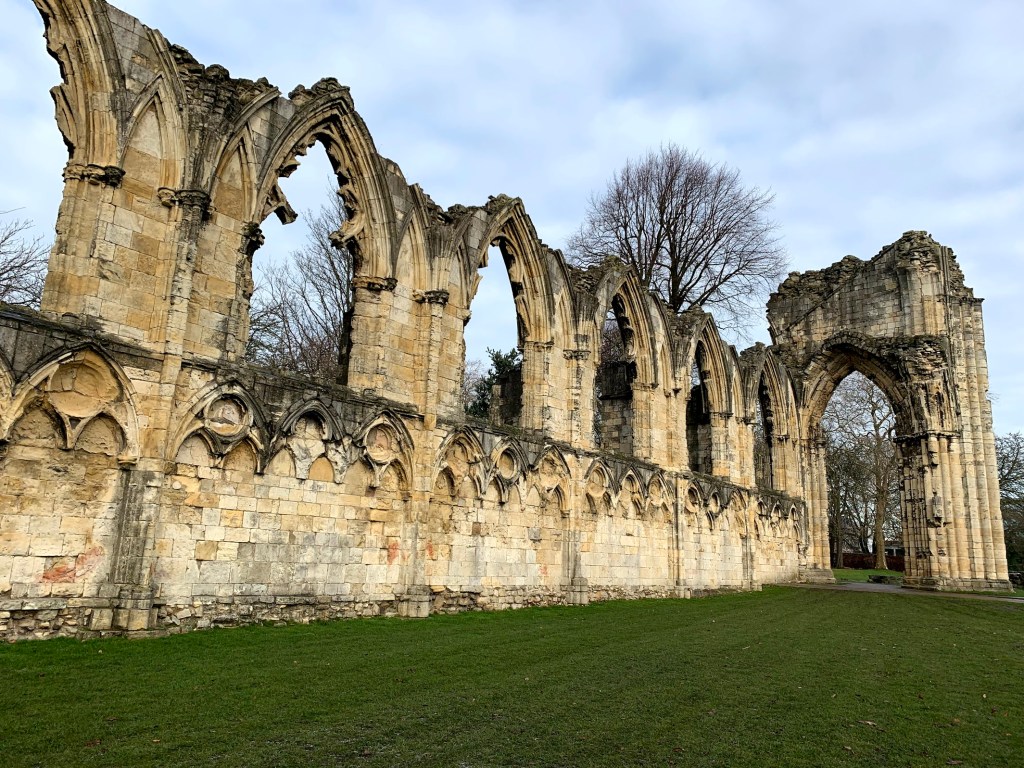
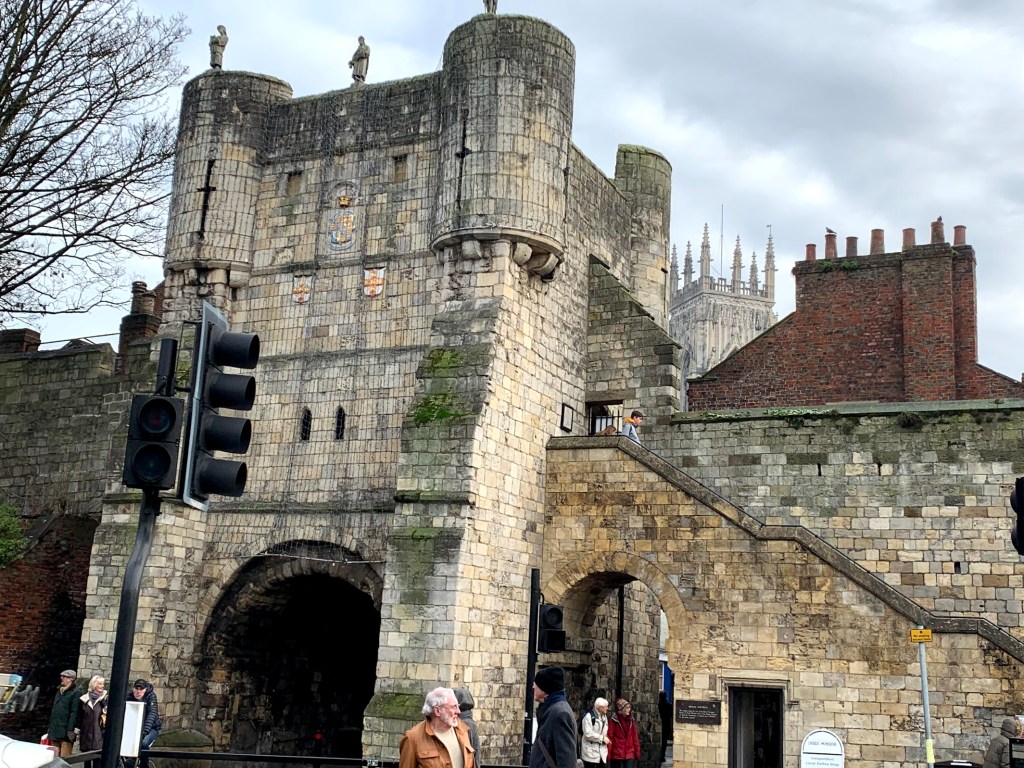
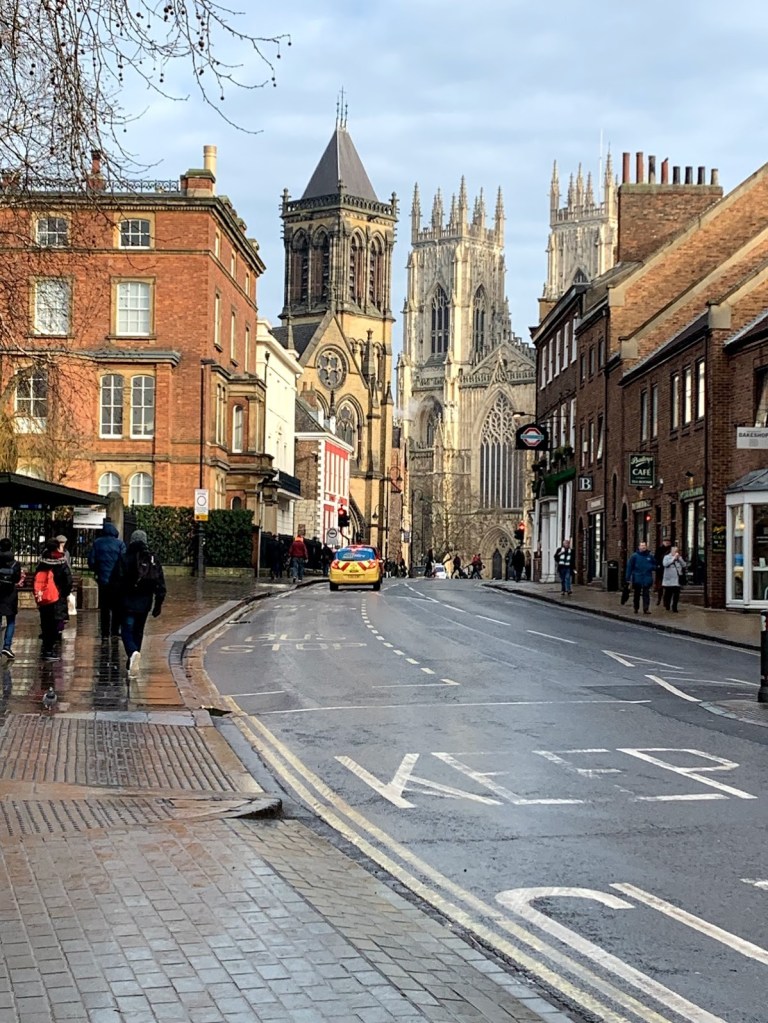
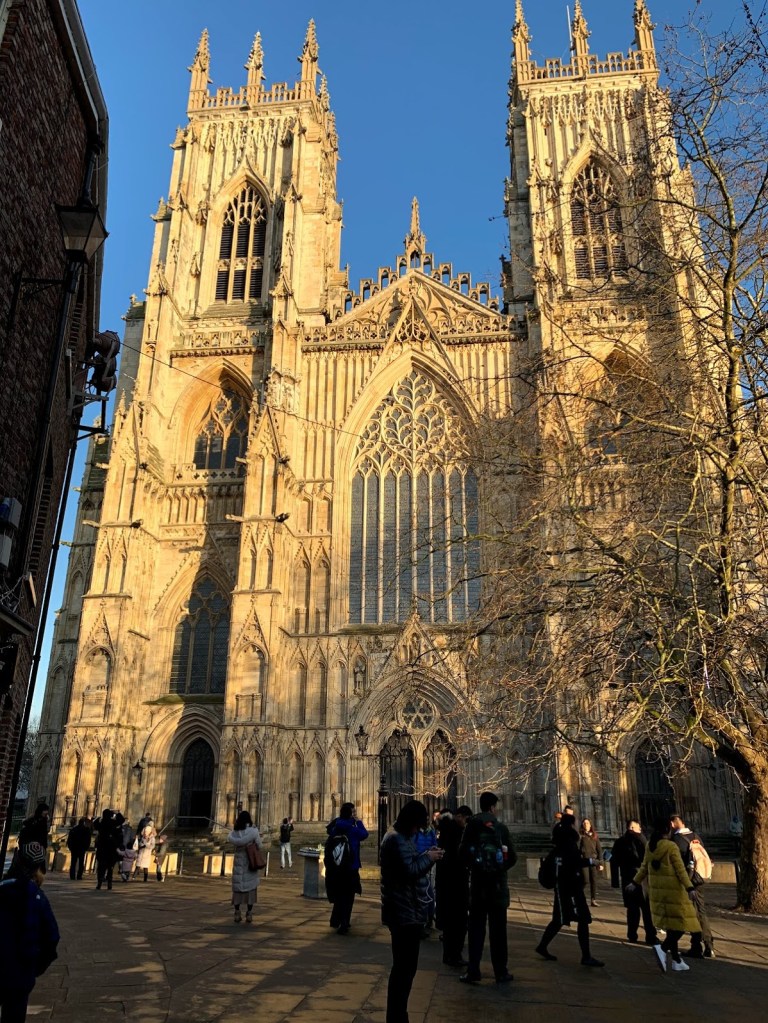
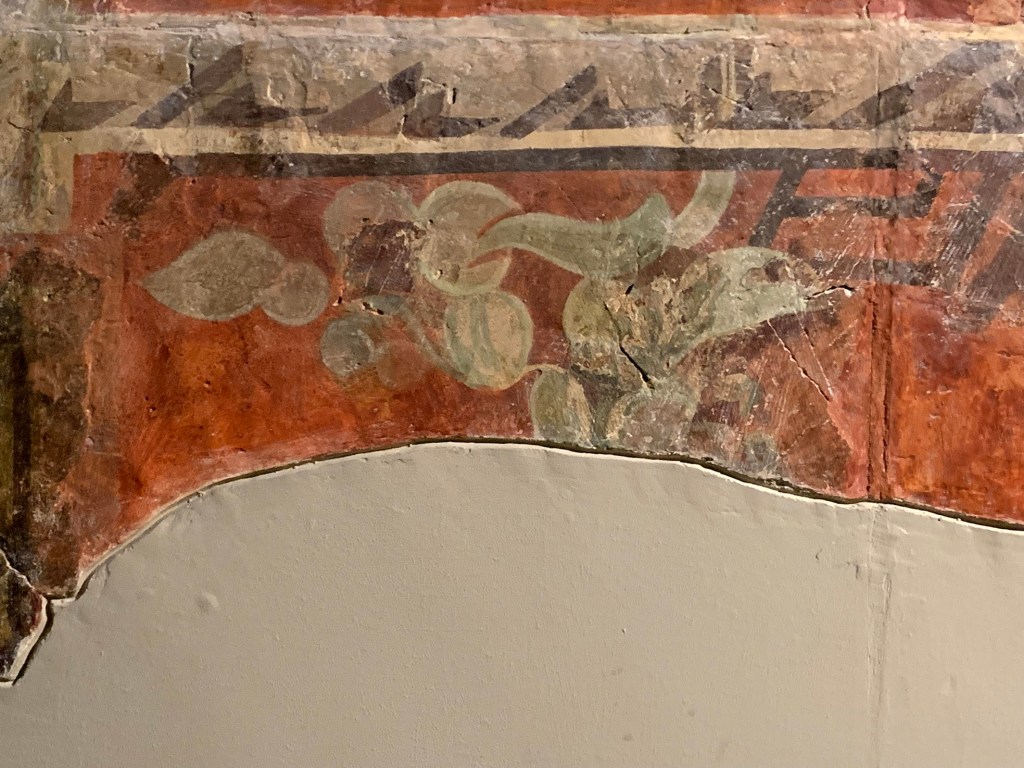
We left around noon and walked about 10 minutes into central York. We passed by the York Museum, Memorial Gardens, crossed the River Oose and then explored St. Mary’s Abbey ruins and the old walls of York. We finally arrived at the impressive front doors and awe-inspiring towers of York Minster. York is the ancient seat of English Kings. There has been a church on this site since the 7th cent. Before that the Romans had one of the largest garrisons stationed here in York. Many of the garrison’s main ruins are found in the undercroft of the Minster. The famous Roman Emperor Constantine was in York when his father died and he was made Emperor. Constantine was the first Christian Holy Roman Emperor.

Ruins of St.Mary’s Abbey ca. 11th cent.
Roman Tower: This tower which is part of the York City walls stand on top of the ruins of the old Roman tower.
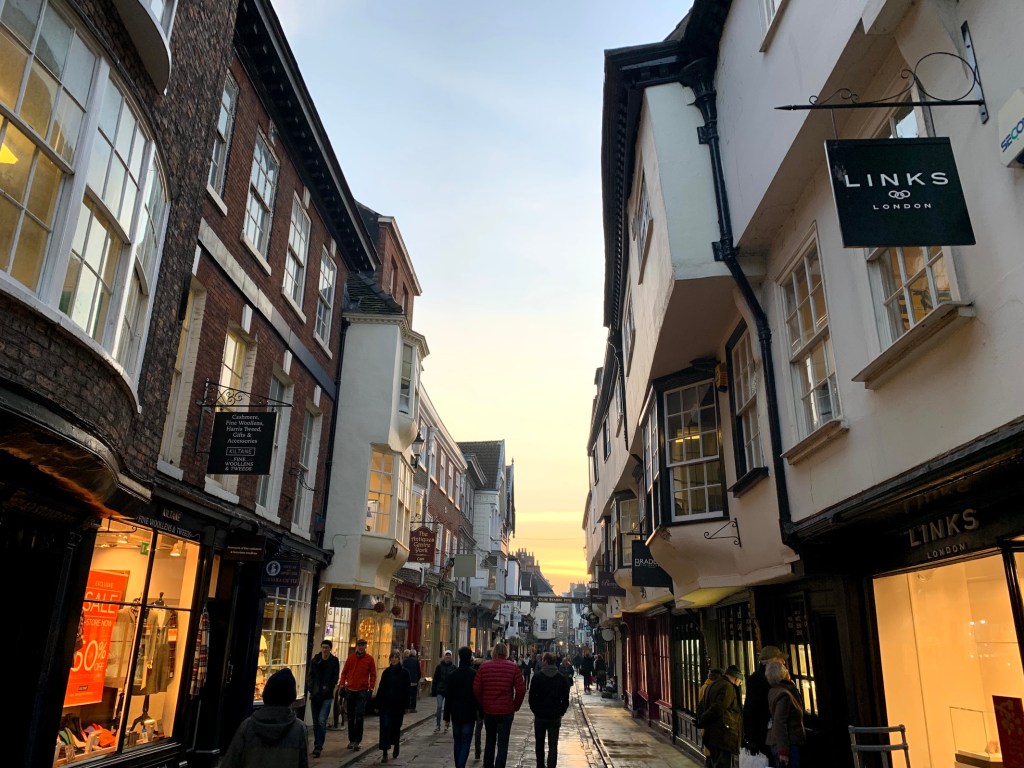
Streets of York
York Minster

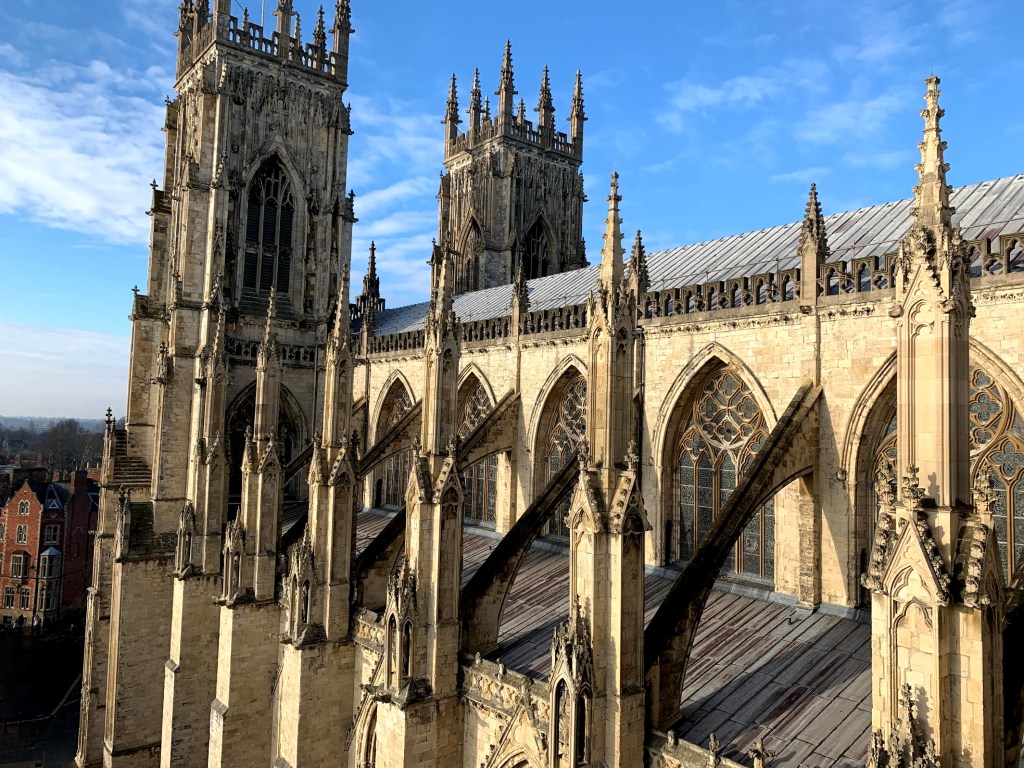
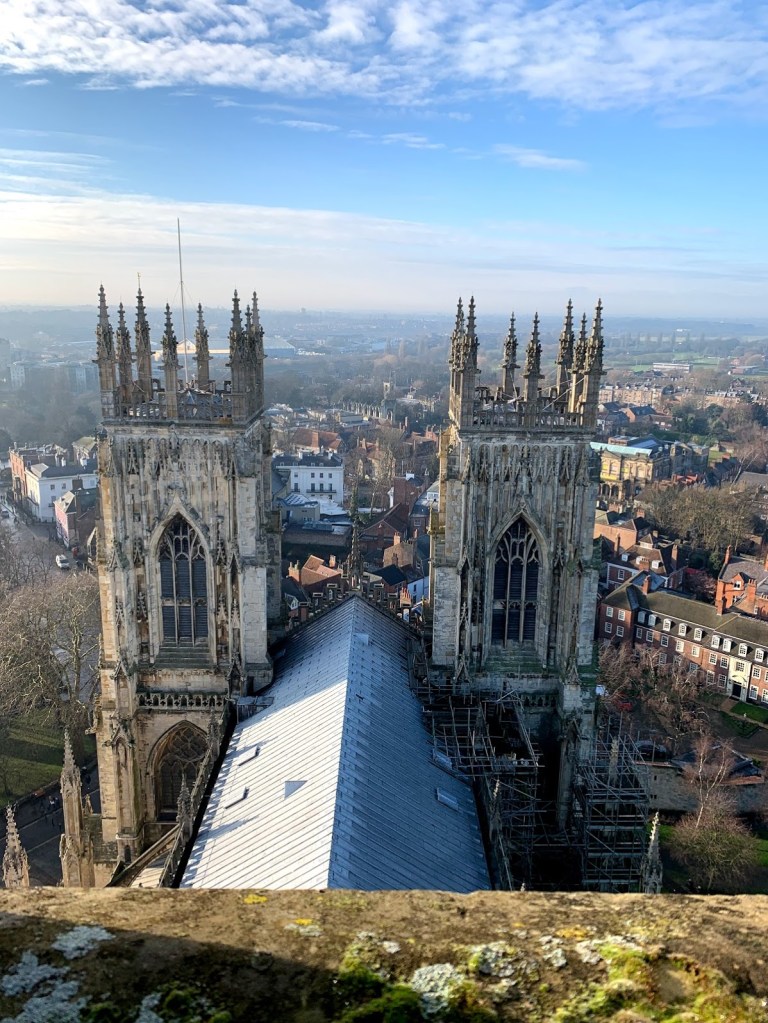
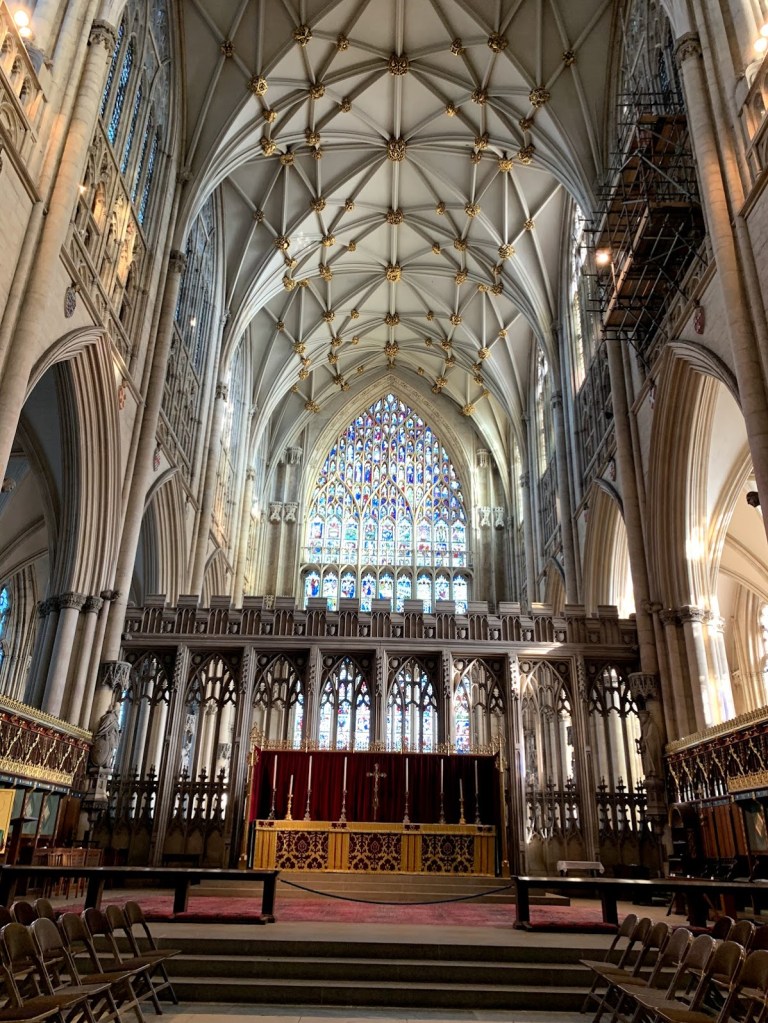
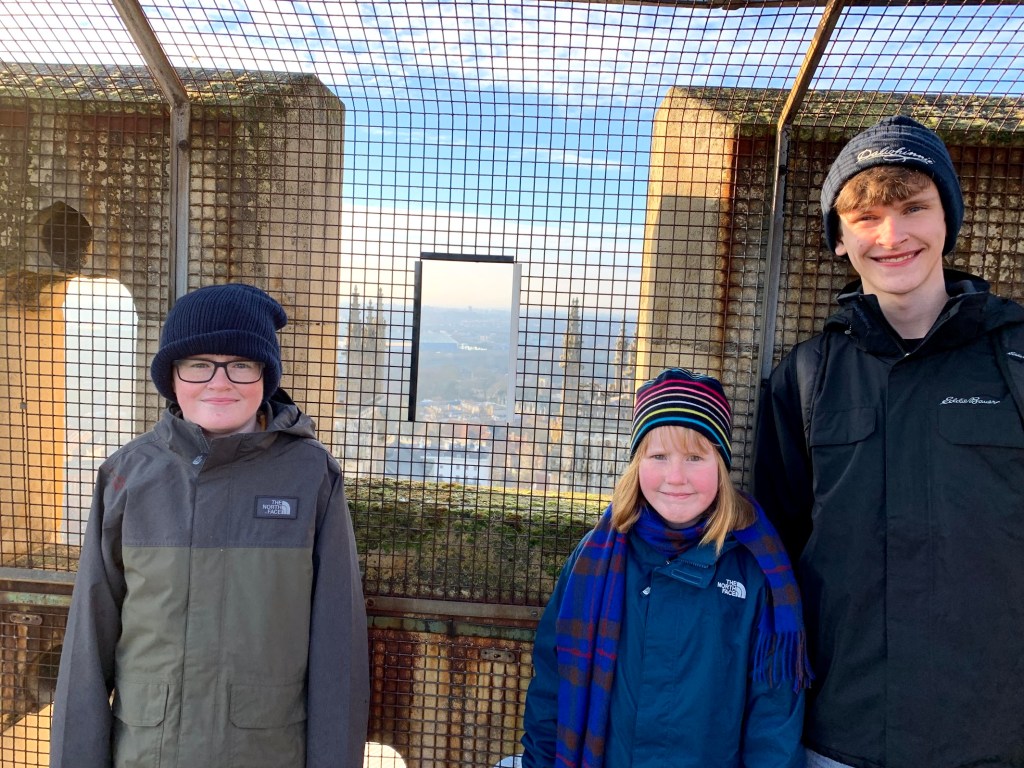
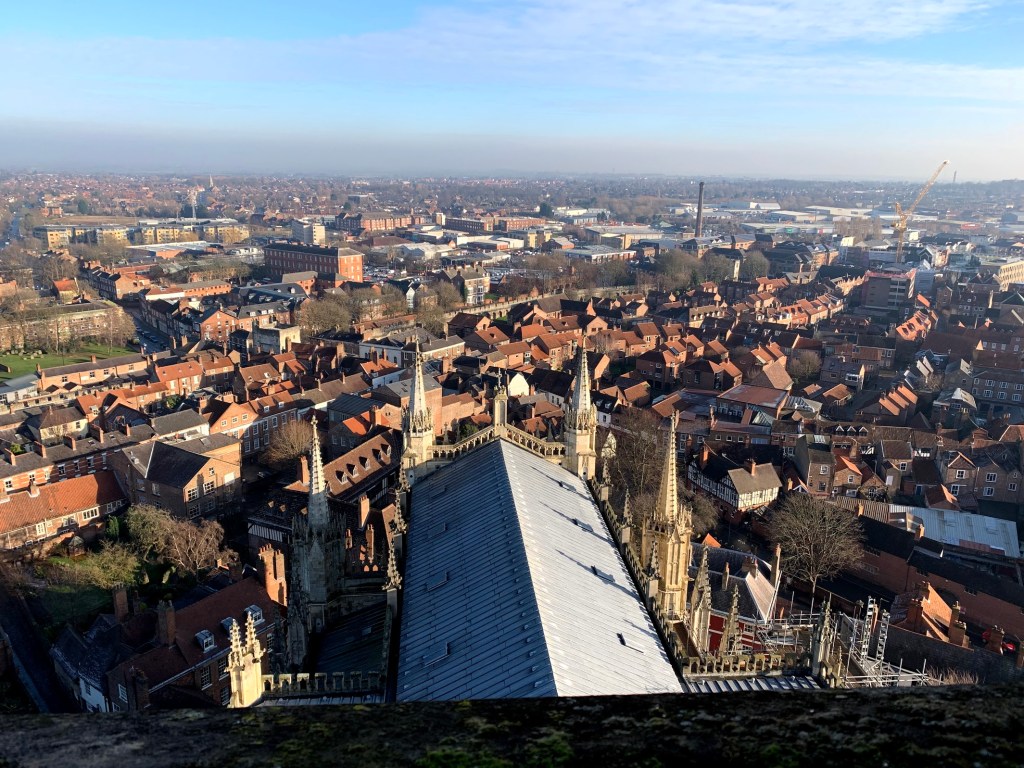
Over 14 yrs. ago, when I was pregnant with Seamus, Robert and I attended Mass at York Minster and got to sit in the choir up near the High Altar. It was great getting to show the kids where we sat all those years ago. Everyone enjoyed seeing the Chapter Room where all the Bishops of the Anglican Church meet, seeing the 12th cent., tomb of Saint William of York, and our best adventure was climbing to the top of the Central Tower. Yes, we climbed up 275 small stone spiral stairs to the topmost roof of the Minster. It was worth the climb! The city views were impressive! It was definitely much easier going down than up and we felt we all earned a nice cup of Yorkshire Tea, cakes, and scones with clotted cream and jam.

Flying Buttresses: I took this photo about half way up to the Central Tower roof. We are walking along a narrow platform on the roof of the South Transept.
The two Front Towers as seen from the taller Central Tower
Standing on top of York Minster: You can just see the tops of the two front towers behind the kids.
View of York from the Central Tower
High Altar of York Minster as seen from the choir
4th cent. Roman Fresco
Medieval streets of York

The rest of the day was spent meandering in and out of the old cobblestone streets and all the quaint little shops. There are 23 cat statues in the old town above doors or in windows. They are called the Cats of York.

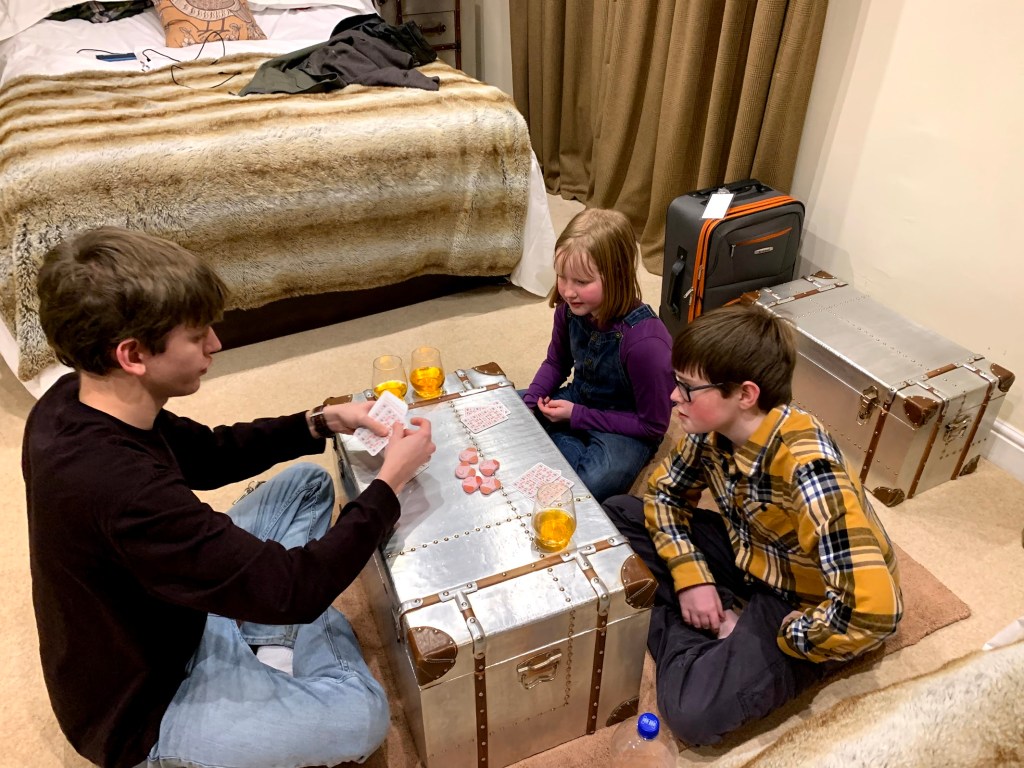
We found a few as we walked around. Once back in Easingwold we had a nice dinner at the New Inn across the street from our B&B. After dinner the kids decided to play Go Pig (Fish) with the new “Trains of Britain” deck of cards we got at the museum. The drank Irn Bru, UK’s favorite soft drink, and whoever won the round got to eat a beloved Percy Pig Gummy candy!

Percy Pigs and Irn Bru


To the Bard!

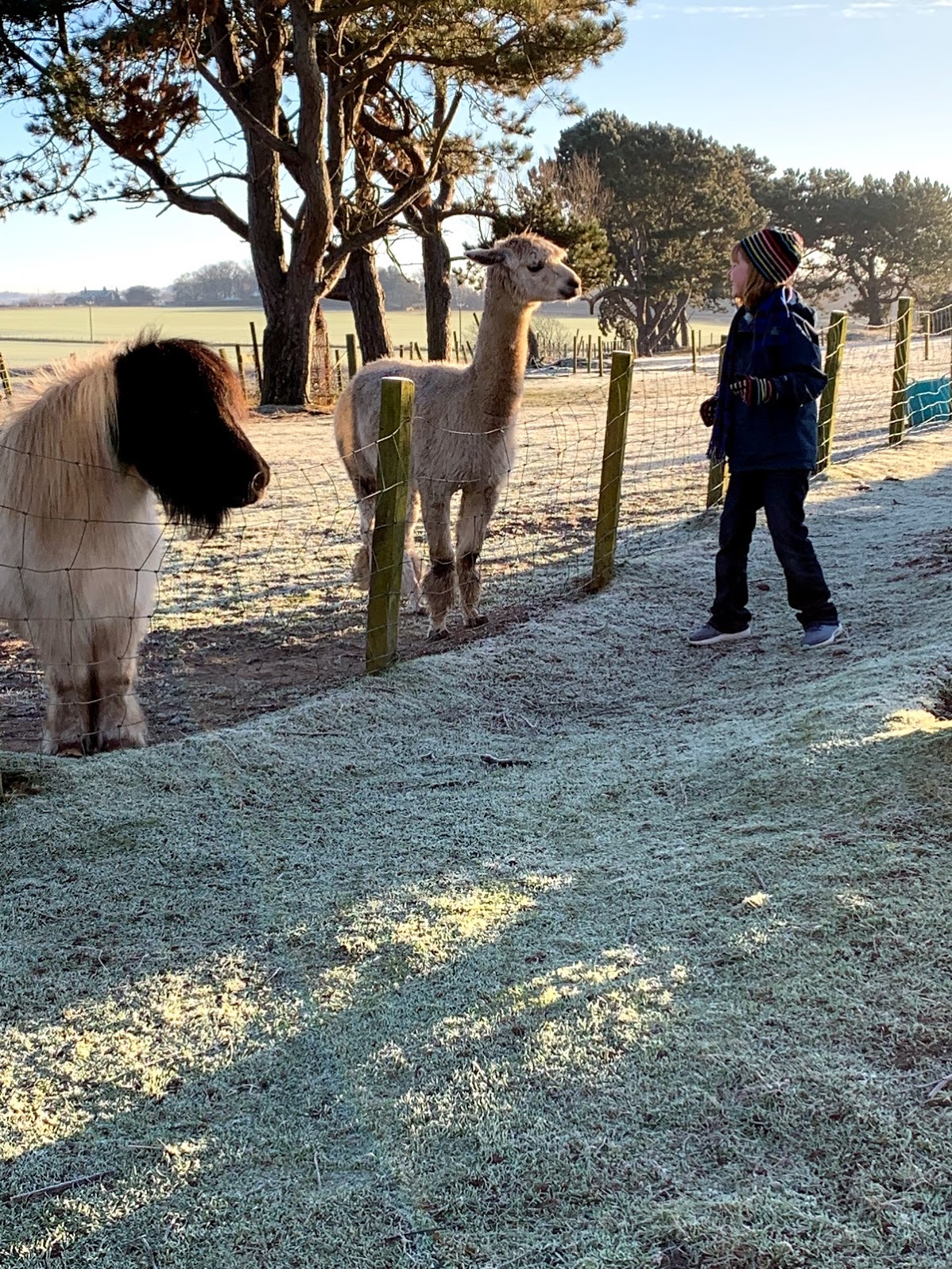
Faywen with Duke the Alpaca and Muppet the Shetland Pony

It was hard to say goodbye to Tosh the kitty, but we did so after a lovely breakfast at Sandhill House B&B. Faywen also got to feed their alpaca, Duke, an apple after breakfast! The sky was a brilliant blue and the sun shown on the crisp morning frost as we drove the 20 miles south to Alloway, Ayrshire. Alloway is the birthplace of the world famous poet Robert Burns. For those who may not know Burns, I bet you know at least one of his poetic songs…Auld Lang Syne! You can thank the Bard of Scotland for you New Years Eve tradition! He was born there on 25 January 1759 in a small farmer’s cottage. As young as 6 yrs. old he showed ability to write. He had a private tutor, Mr. Murdoch, who instilled a love of language and literature into the gifted lad. Robert Burns is one of the most influential poets in the world. In fact, President Abraham Lincoln could quote Burns and carried a small book of his verses along with a Bible in his pocket at all times.

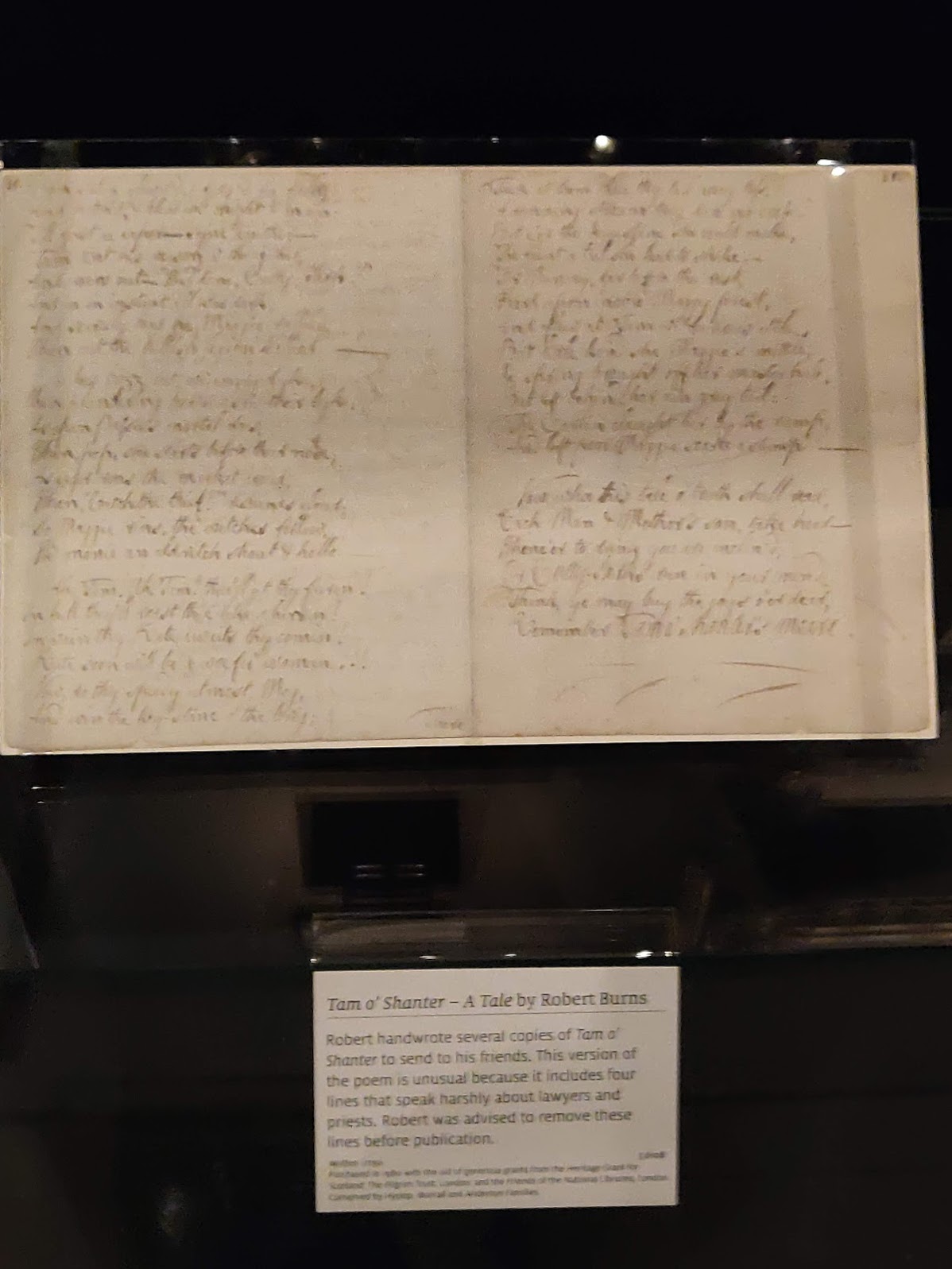
Burns’ original manuscript for Tam O’Shanter

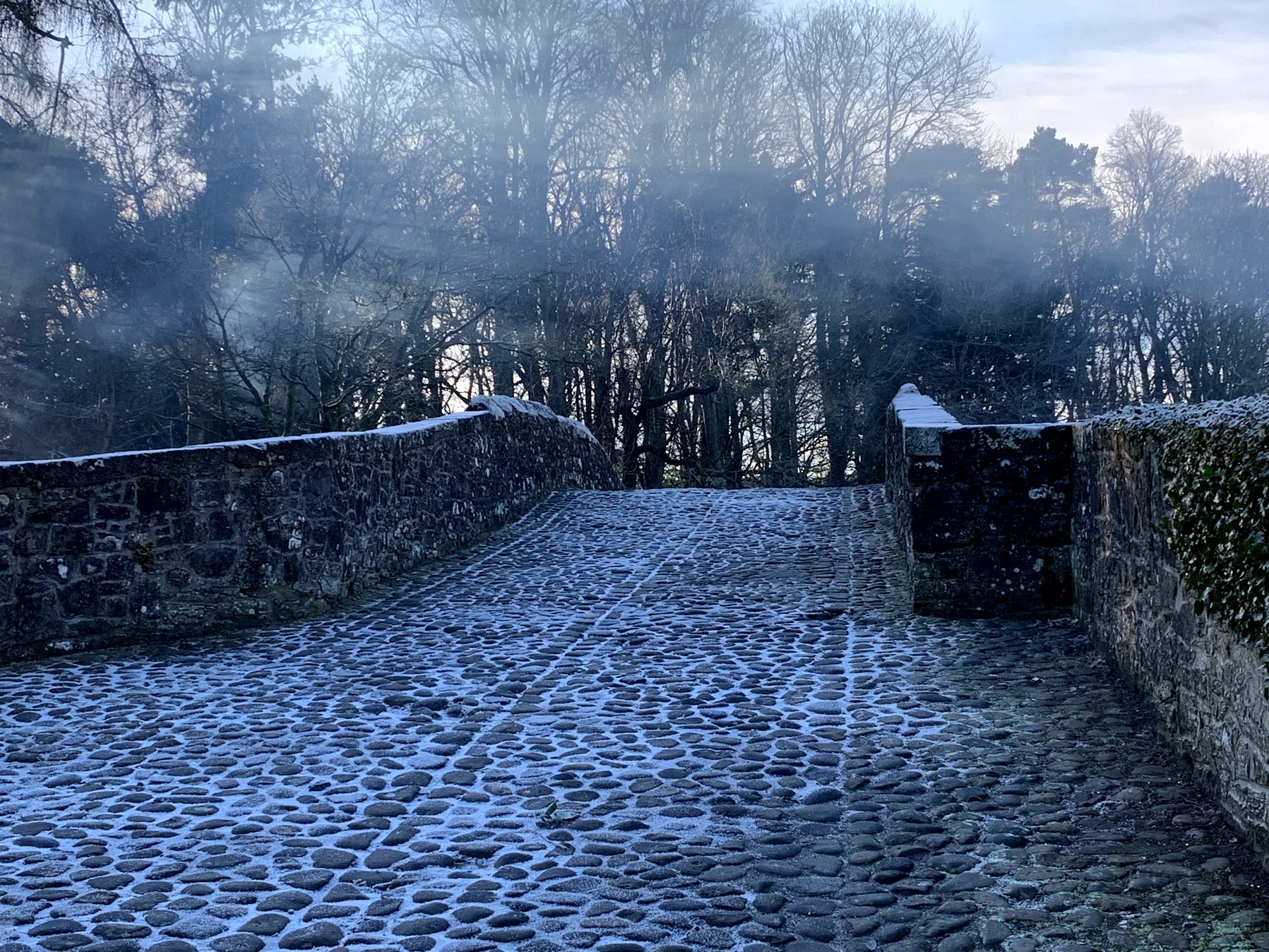
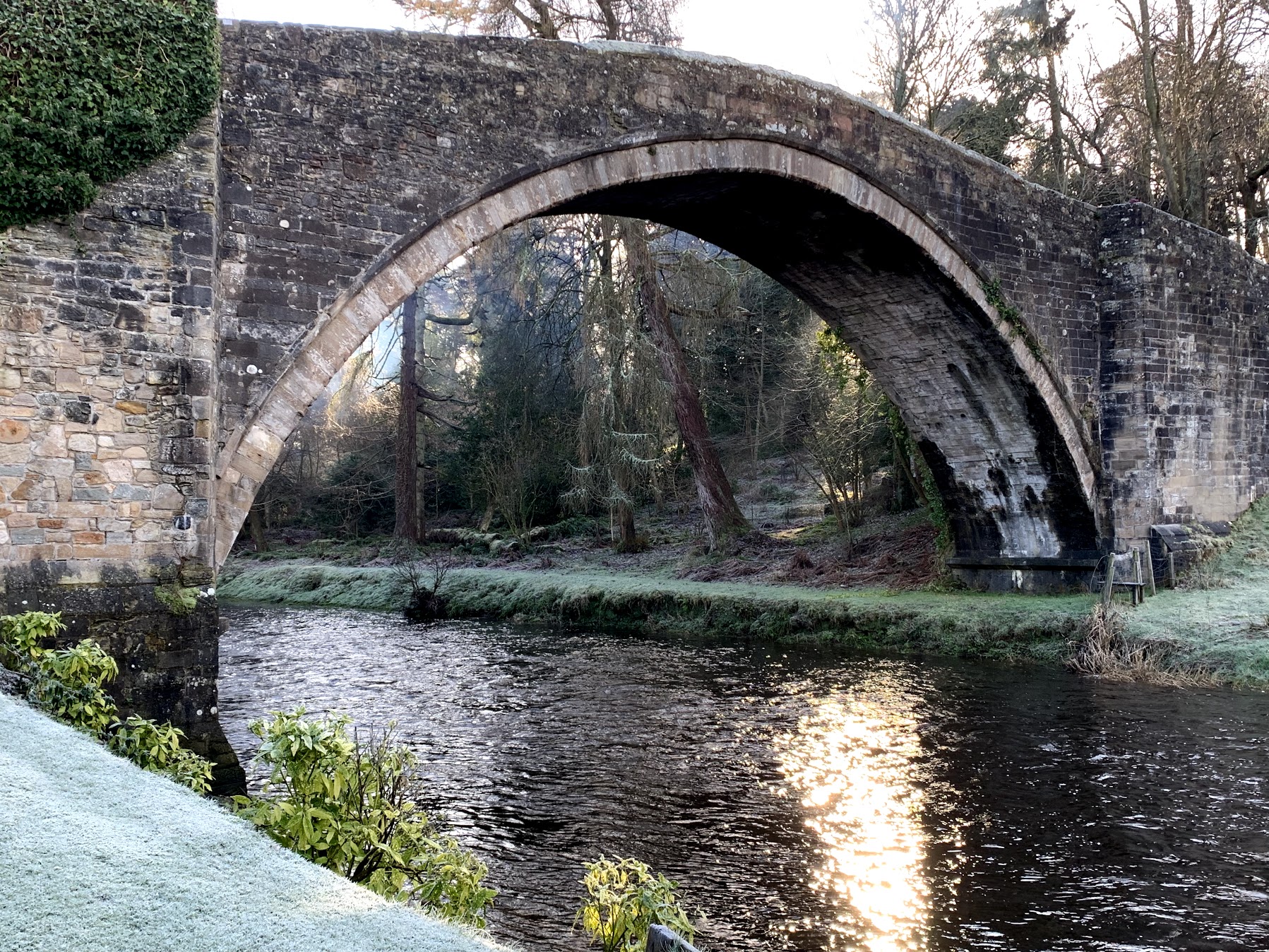
We went into the Burns museum, which had artifacts from his family, correspondents, love interests, and his own personal items as well. It was a treat to see some of Burns’ original manuscripts, letters, and first edition publications. We left the museum and headed through the monument gardens to view a large Victorian Monument erected in his honor, then down a path and onto the Brig O’ Doon. This 18th century stone bridge over the River Doon was made famous in Burns’ narrative poem Tam O’Shanter. In the poem, a drunk farmer named Tam meanders late one night down into the haunted Old Alloway Kirk graveyard where he sees a bunch of warlocks and witches dancing. He makes noises and the witch’s chase after Tam swiftly riding his horse Meg. He just crests the Brig O’ Doon when a witch grabs Meg’s tail and pulls in out! Witches cannot cross water and Tam makes it over the Brig just in the nick of time! The Brig was a bit icy, but we managed to cross it and then walk down the scenic river walk. There was a bit of fog illuminated by the sun over the old Brig.

Top of the Brig O’ Doon
Brig O’ Doon

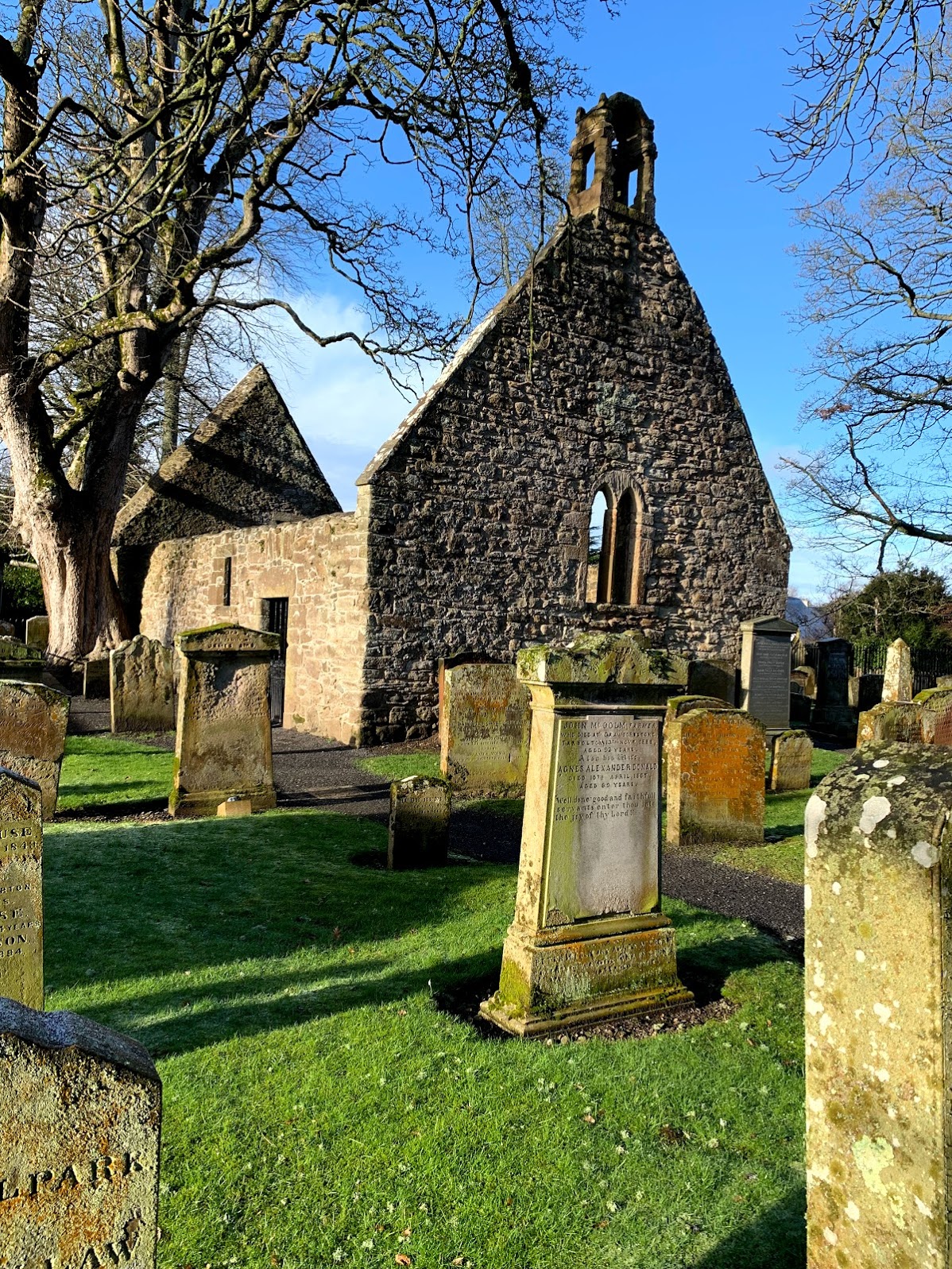
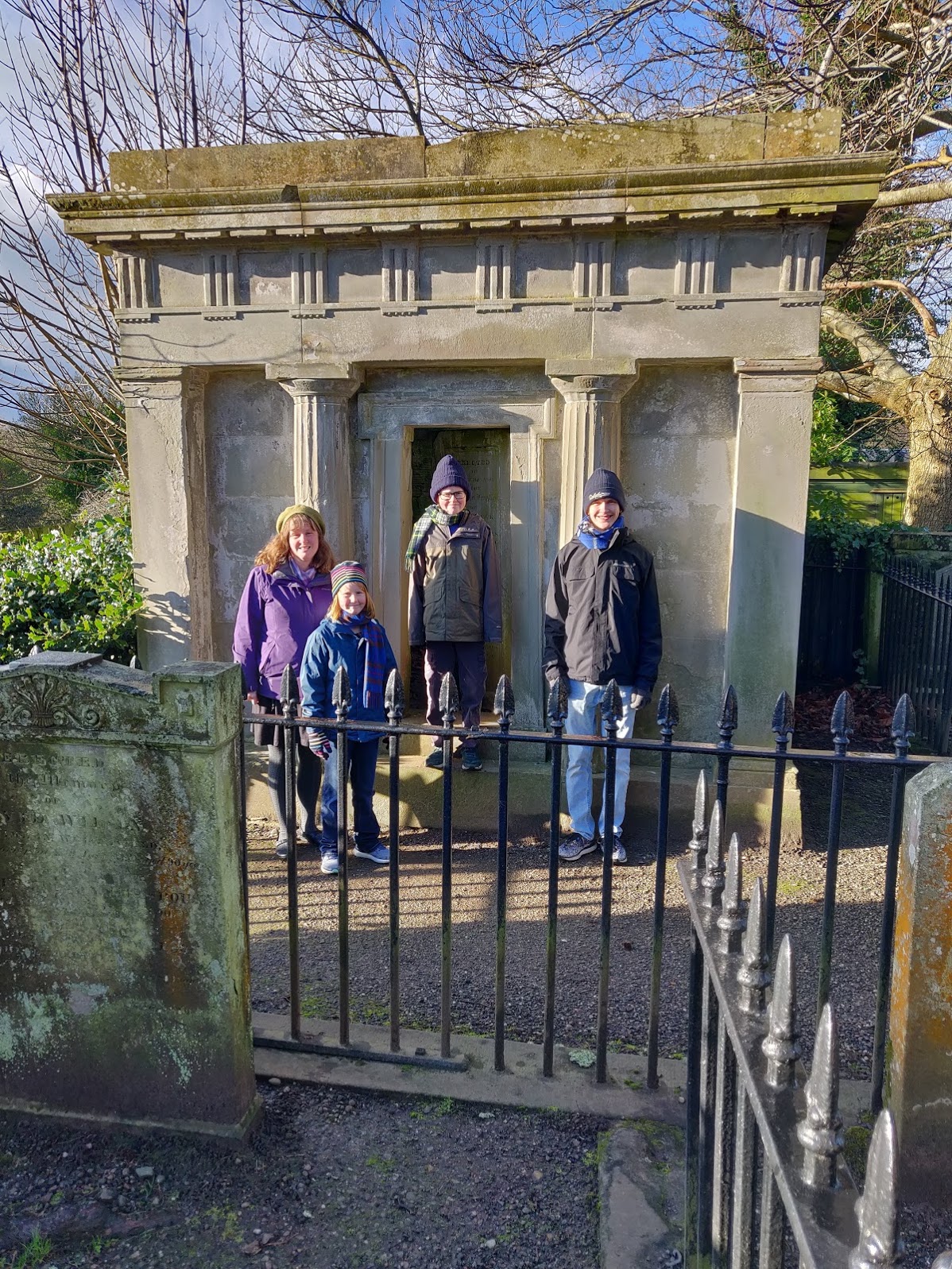
Crossing the street and walking a block or so we found ourselves in the Old Alloway Kirk graveyard. The sun shown brilliantly and shadows danced on the old gravestones giving the old cemetery an otherworldly feel. We were the only people on the grounds and the kids dared each other to step inside an open mausoleum. No one would do it except me. I opened the door stepped inside crossed myself and walked in further. The roof had collapsed and the 10ft. x 10ft. mausoleum opened to the blue sky above. I guess the kids were impressed by their mother’s bravery and followed me inside, crossing themselves as they stepped over the threshold. As we peered into the old Kirk itself you could see the moss covered altar stone. I told the kids on the way out that they had just walked around in what is considered the most haunted graveyard in all of Scotland!

Old Alloway Kirk and graveyard
Mausoleum in the Old Alloway Kirk Graveyard

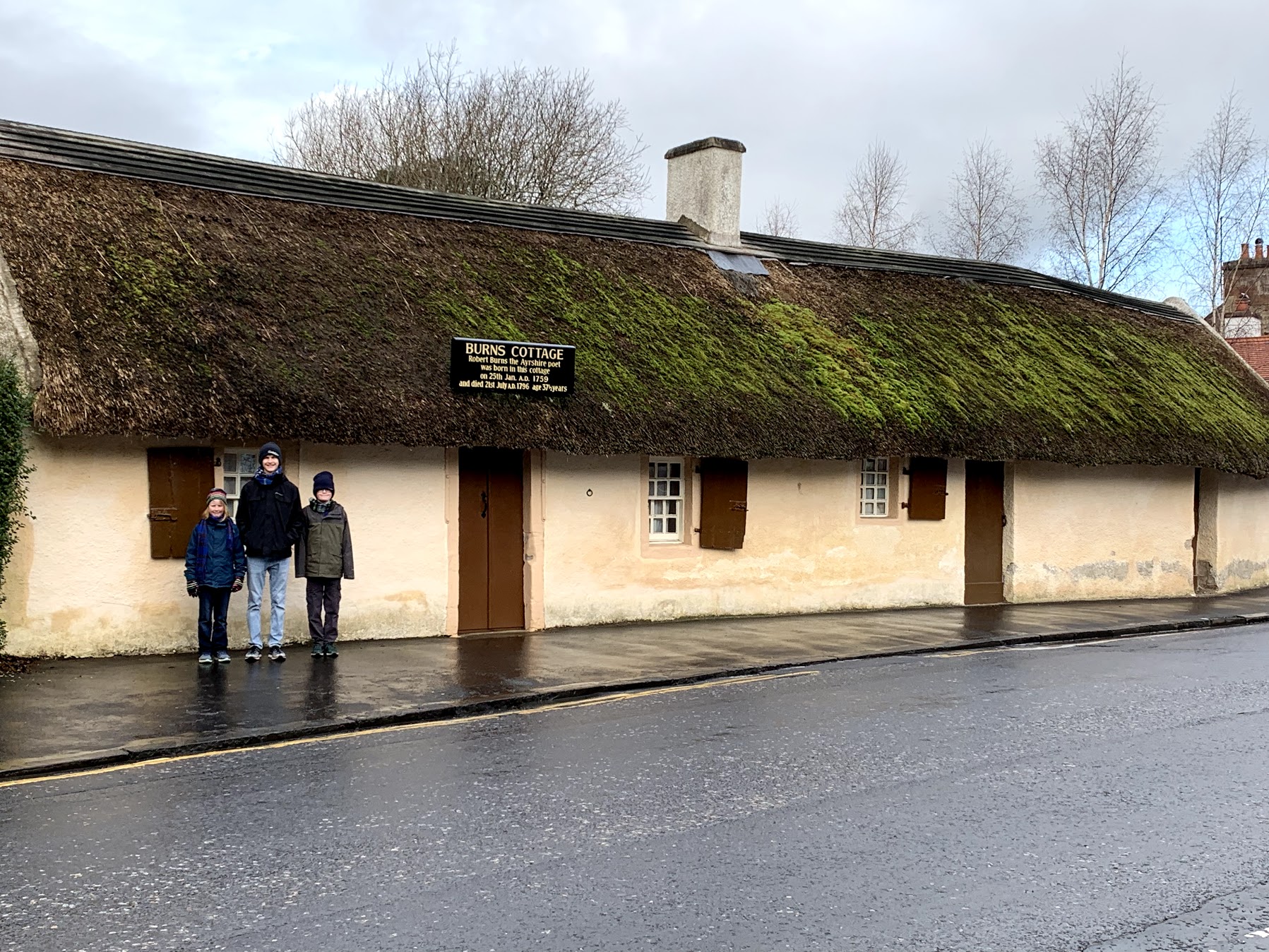
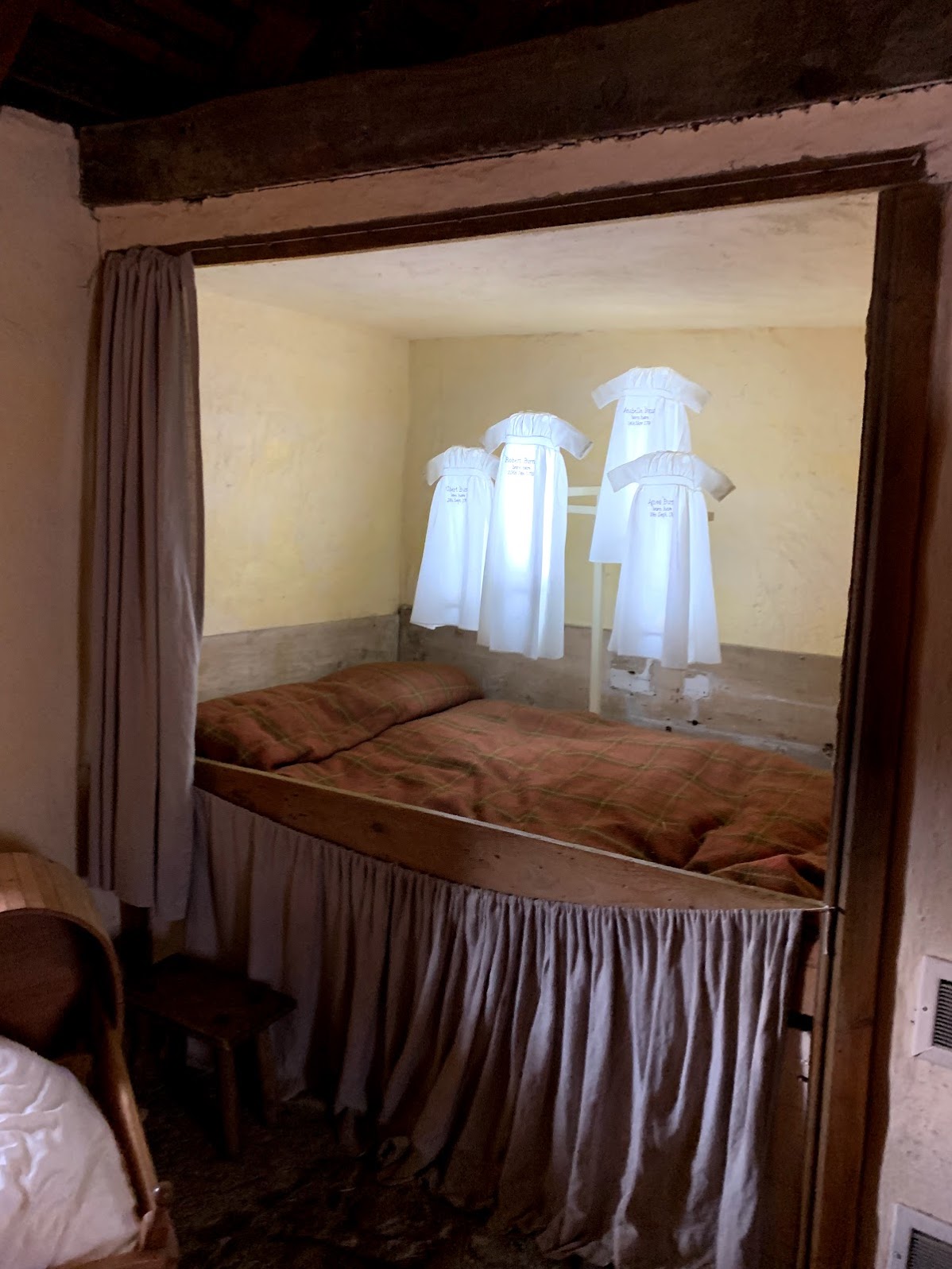
Our final stop on the Alloway Robert Burns tour was the cottage in which he was born. I’ve been there twice before, but it’s always humbling to see the two-room stone cottage with attached stables. The kids enjoyed seeing the bed where he was born and his first report card from age 6yrs. old. After walking round the town we crossed the street from the cottage and had a tea and various cakes and scones at the Poet’s Corner, a tiny teashop. The owner was a lovely lady from the area. Once warmed up with hot beverages we headed back to the car and drove through the rolling hills of the Lowlands driving towards Gretna Green. The fog set in about 20 miles north of Gretna Green.

Burns Cottage Alloway, Ayrshire, Scotland
The bed where Robert Burns and three of his younger siblings were born. There names and birthdates are on the baby gowns.
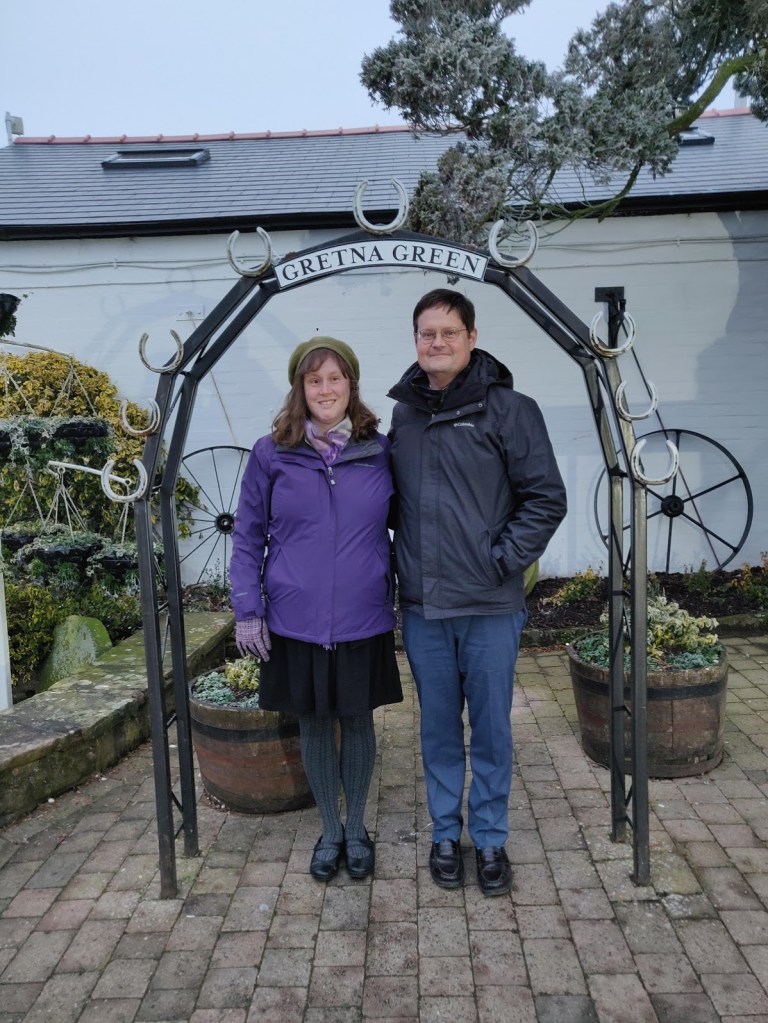
A horseshoe made by the blacksmith is traditionally given as a good luck token to the newlyweds

Gretna Green is a little town right on the border between Scotland and England. Starting in 1754 young couples who wished to marry, but couldn’t due to various reasons would hop over the border and wed. Scotland had much more lax marriage laws than England. Today Gretna Green is still a destination for lovebirds or those wishing to renew their vows. By Scottish lay a blacksmith can marry folks. The marriage is considered binding, if a document is signed by the couple and witnesses.

Late in the evening we arrived in Easingwold, Yorkshire, England and the Oower House B&B.

Ruined Castle and Snowy Mountains

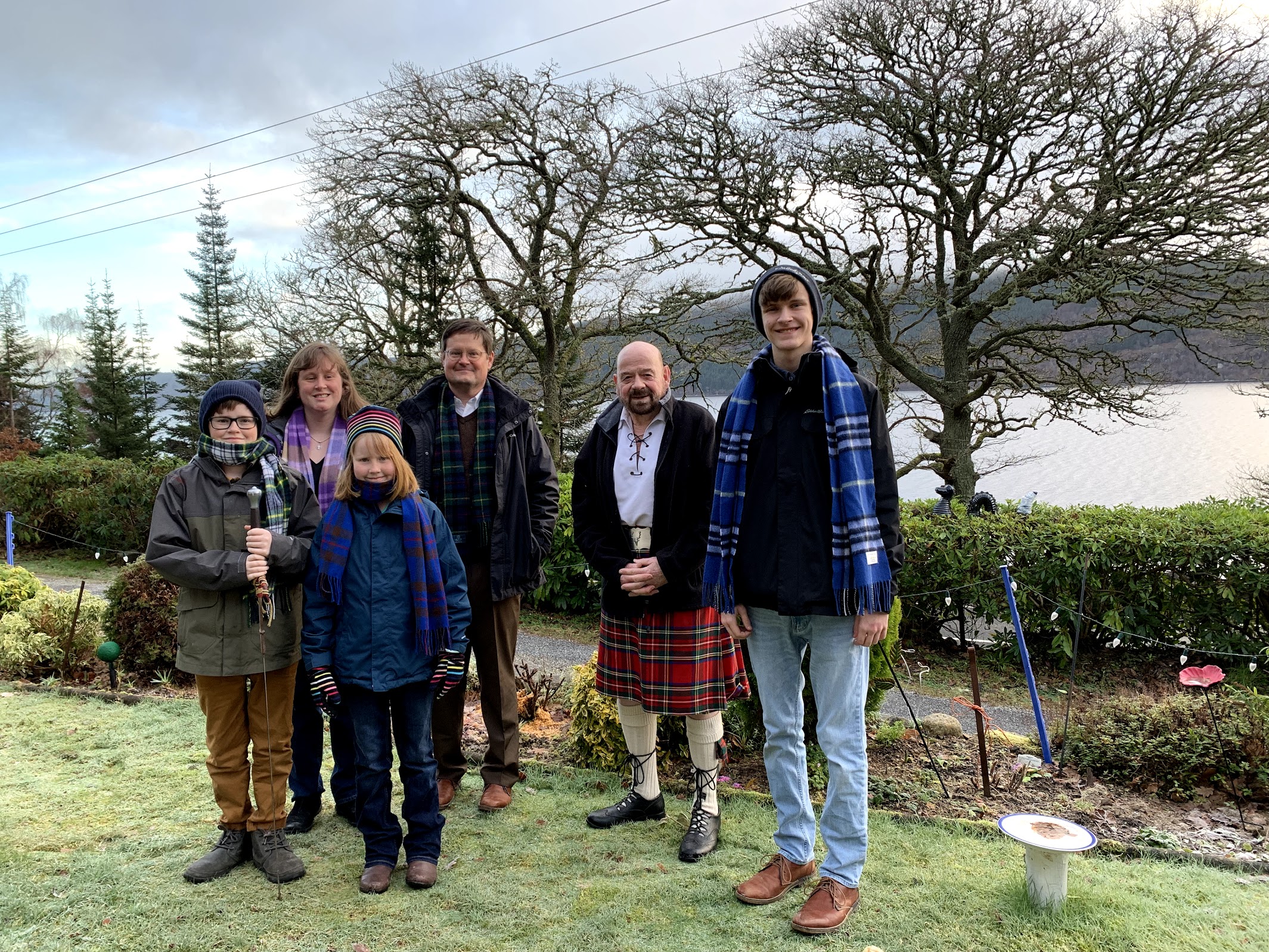
It was hard saying goodbye to the McIntosh’s after another warm hearty Scottish breakfast, but we did. May took a lovely photo of us with Duncan standing in their front yard overlooking Loch Ness. A final note about their home…for those who know the famous picture of “Nessie” (the Loch Ness Monster) from 1922, it was taken within about 100ft. from their property!

Photo with Duncan McIntosh

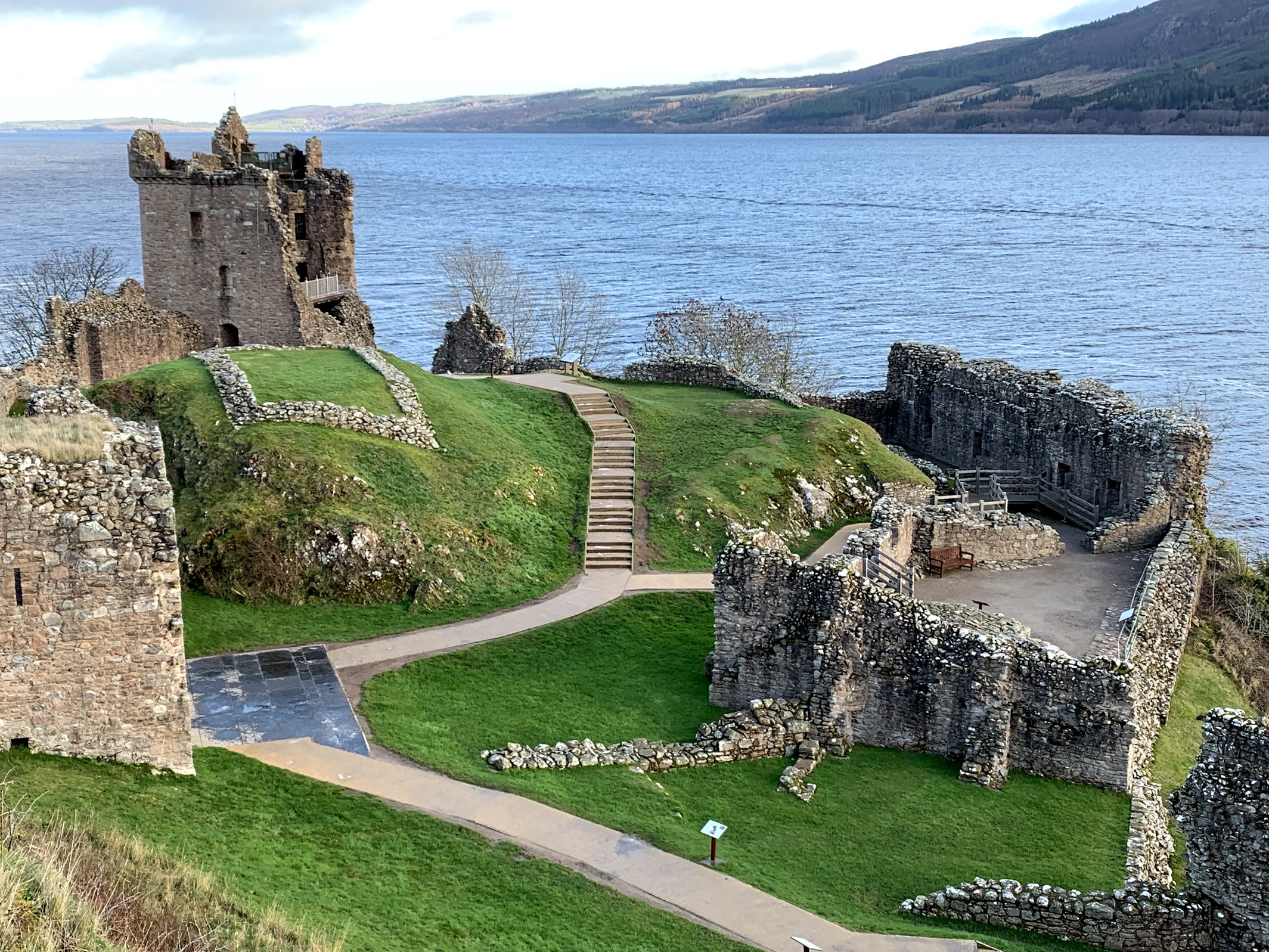
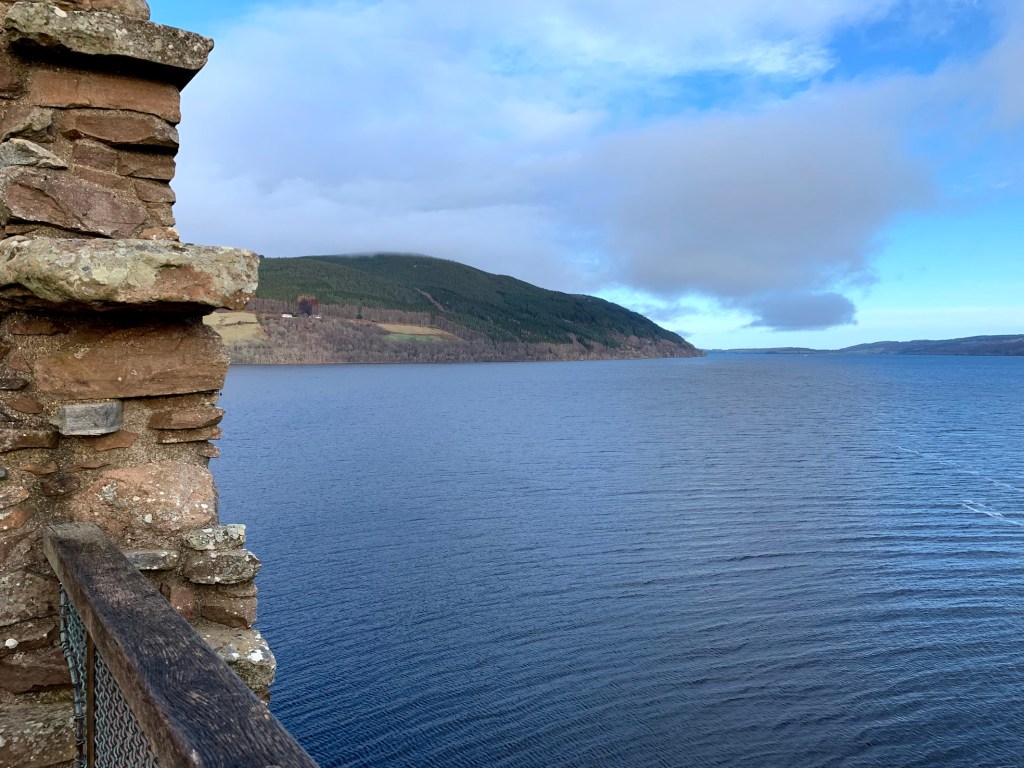
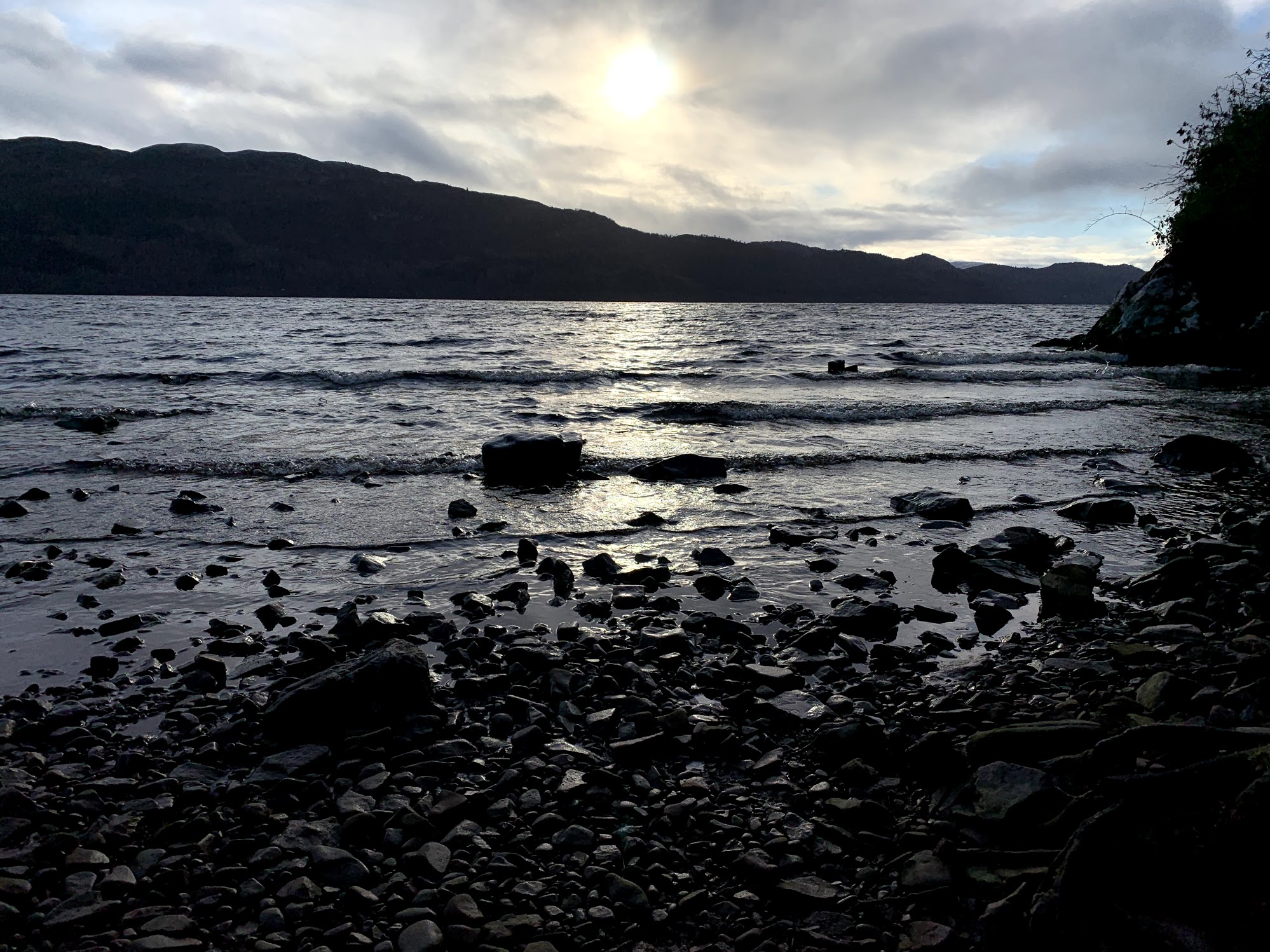
After a few tears and big warm hugs we started down the road toward Castle Urquhart, which was about 15 miles from the B&B. Urquhart is the largest castle ruins in the Highlands. There has been a fort on the rocky perch overlooking Loch Ness since around 300AD.  St. Columba visited the Pictish Lord of Urquhart in 570AD preaching Christianity. The Lord and his family were converted. The castle went through several reconstructions over the next 1100 yrs. It reached its height of power between 13th-17th centuries. Lord Grant, Chief of Clan Grant, was given ownership in the mid 1500’s. In 1689 the current Grants were loyalists to the Crown and did not want to join in the first Jacobite uprising of 1689. Knowing they couldn’t hold the castle, the Chief decided to blow up the tower and gate before the Jacobites arrived. He set his own castle on fire to keep it from being used as a stronghold by his enemy! It has lain in ruins ever since. The sun came out while we were there and you could see for miles up and down the Loch. Alas no Loch Ness Monster spotting!

Urquhart Castle
View of Loch Ness from the main tower at Urquhart Castle
Loch Ness
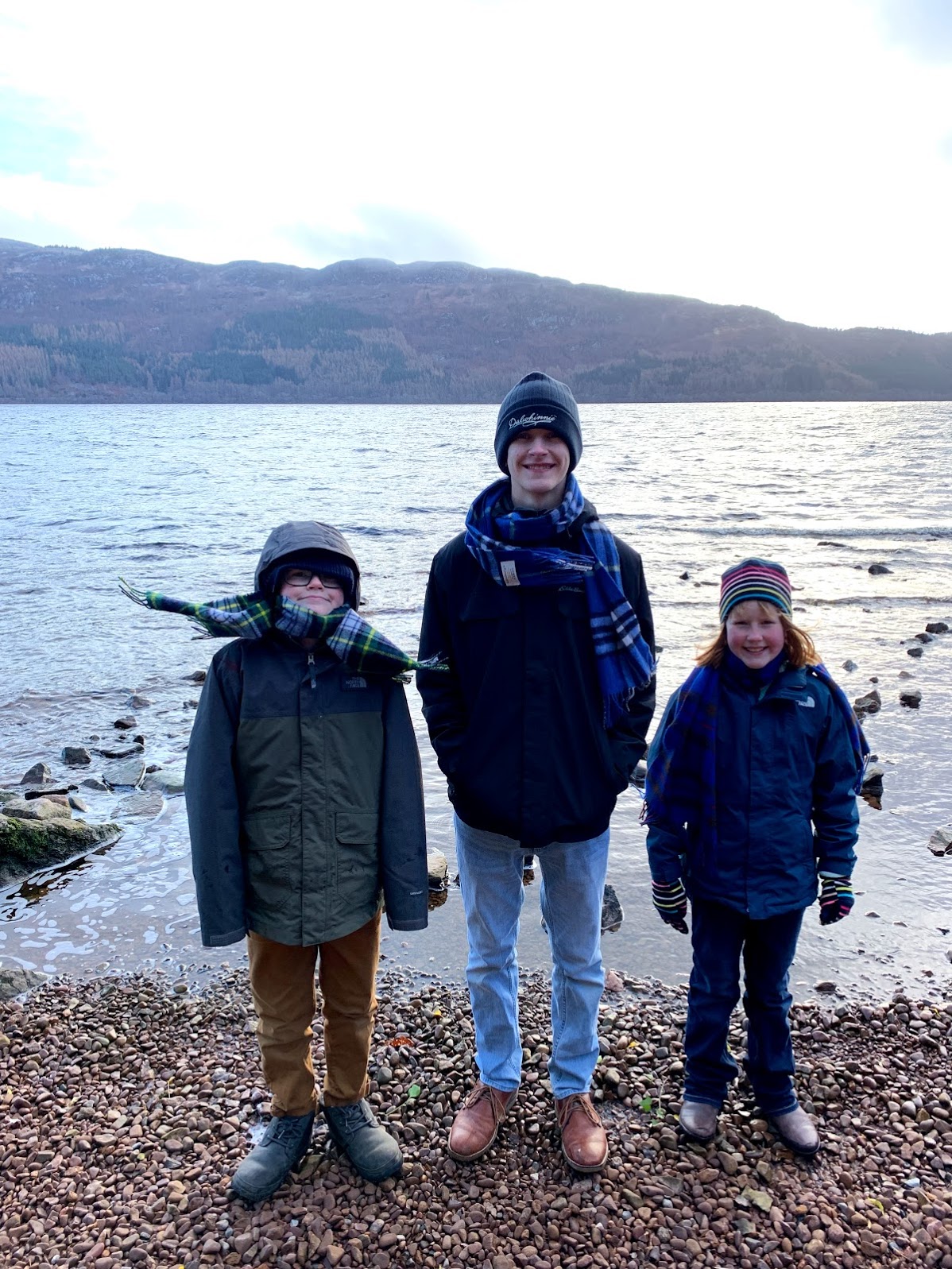
Kids standing on the shore of Loch Ness at Castle Urquhart

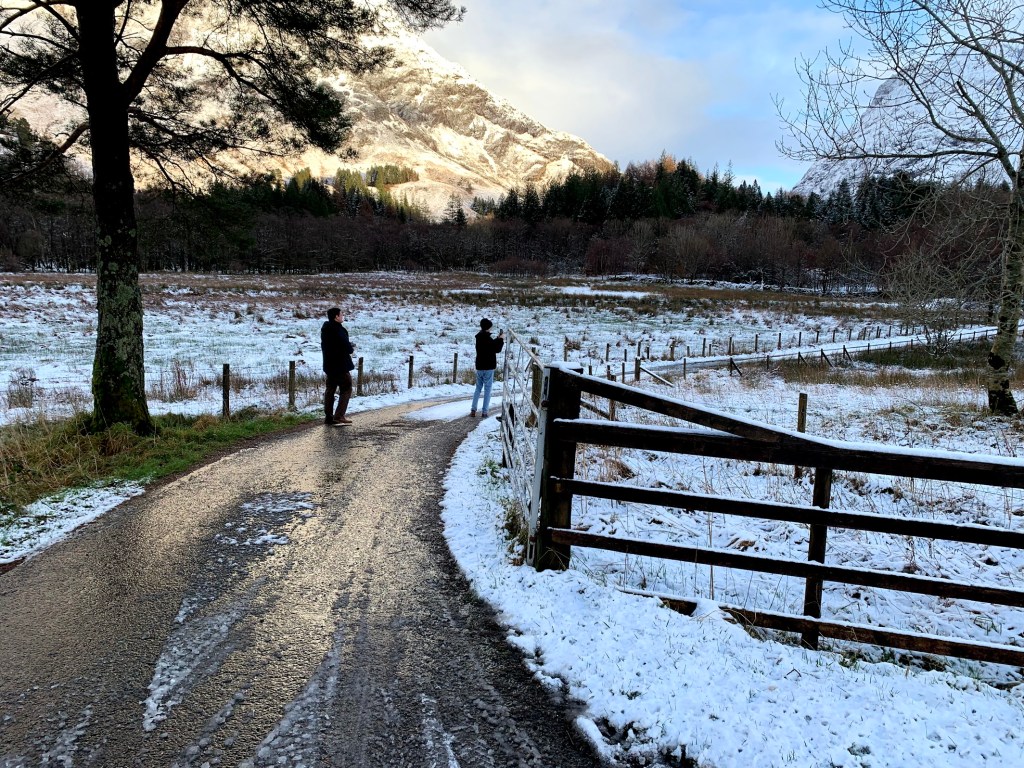
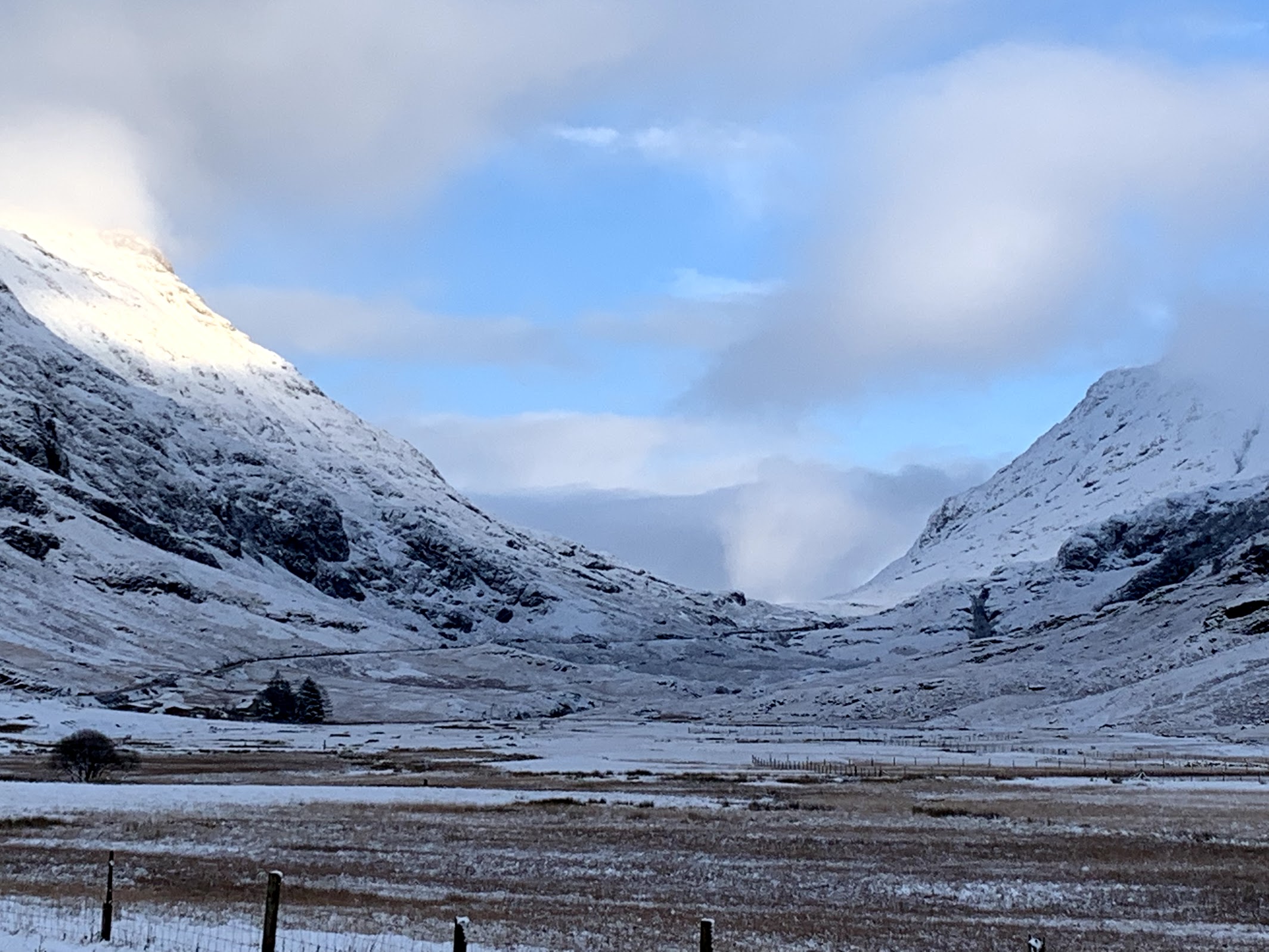
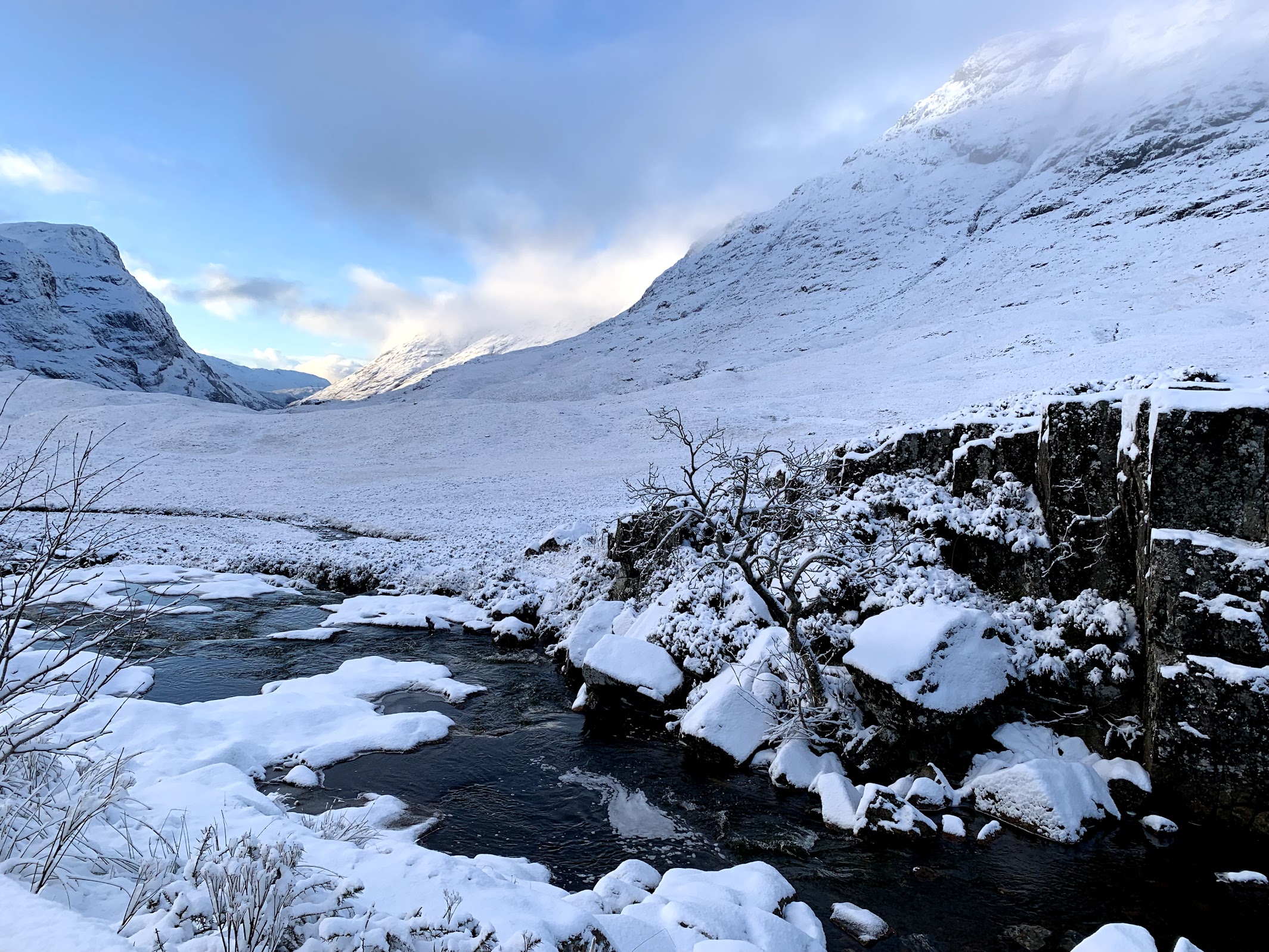
Once again we warmed up with tea and coffee and then drove south down the A82. This is the main road through this section of the Highlands. The windy two-lane road took us through quaint villages, pass sparkling lochs, and majestic snow covered mountains. After an hour we were in Glen Coe. Words cannot truly capture the beauty of this picturesque Glen (valley in English). The mountains tower over the narrow River Coe, which flows gently through the snow covered glen floor.  The mountainsides shimmered as the intense late afternoon sunlight streamed down the peaks. There were very few cars on the road and at every turnoff another grand view met our eyes.

Took a little walk just outside the town of Glencoe at the mouth of the Glen itself
Glencoe
River Coe in the glen

The Glen is known also for a horrific massacre that took place on 13 February 1692 when the Chief of the MacDonald’s failed to make it in time to a signing of allegiance to King William III. In return the king decided to make an example of disloyalty and ordered a troop of Campbell’s from Fort William to go down and befriend the MacDonald’s. Two days later the Campbell’s slaughtered the 38 men, burned their homes, and 40 women and children were left to freeze to death in the winter snows. It is said that if you listen carefully you can hear the moaning cries of the women and children on the winds that blow through the glen. As I stood looking down the glen and listening to the little river Coe run gently a chill ran up my spine. I looked over at Liam and he back at me. He too felt an otherworldly presence within the grandeur of Glencoe.

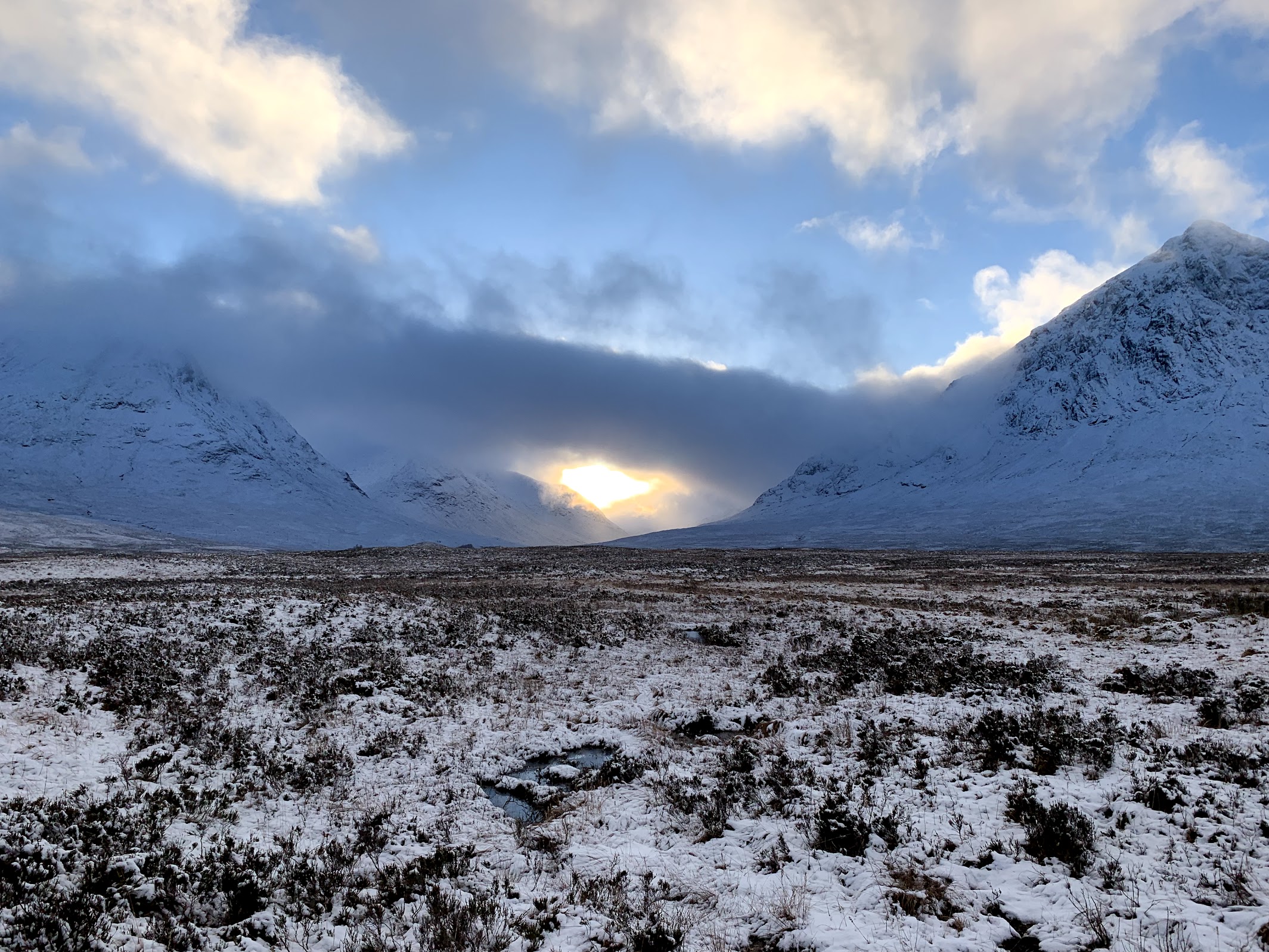
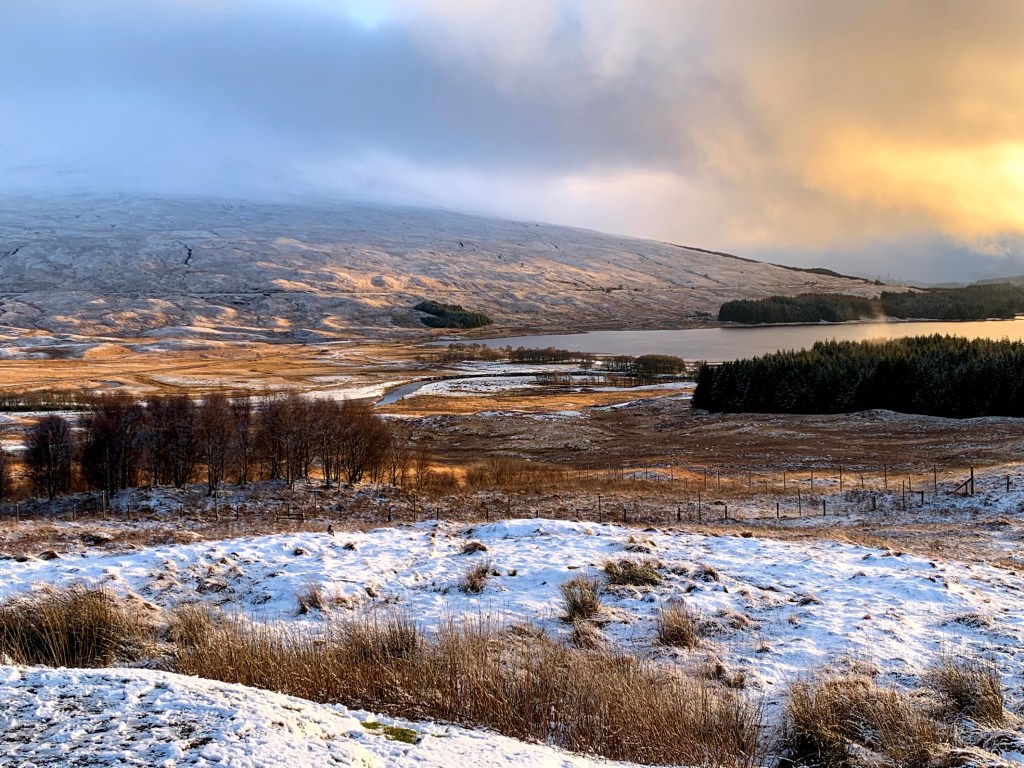
Where Glencoe opens out onto Rannoch Moor
Sun-kissed edge of Rannoch Moor and the distant Highland mountains:
I don’t know which Loch that is on the right side of the photo.
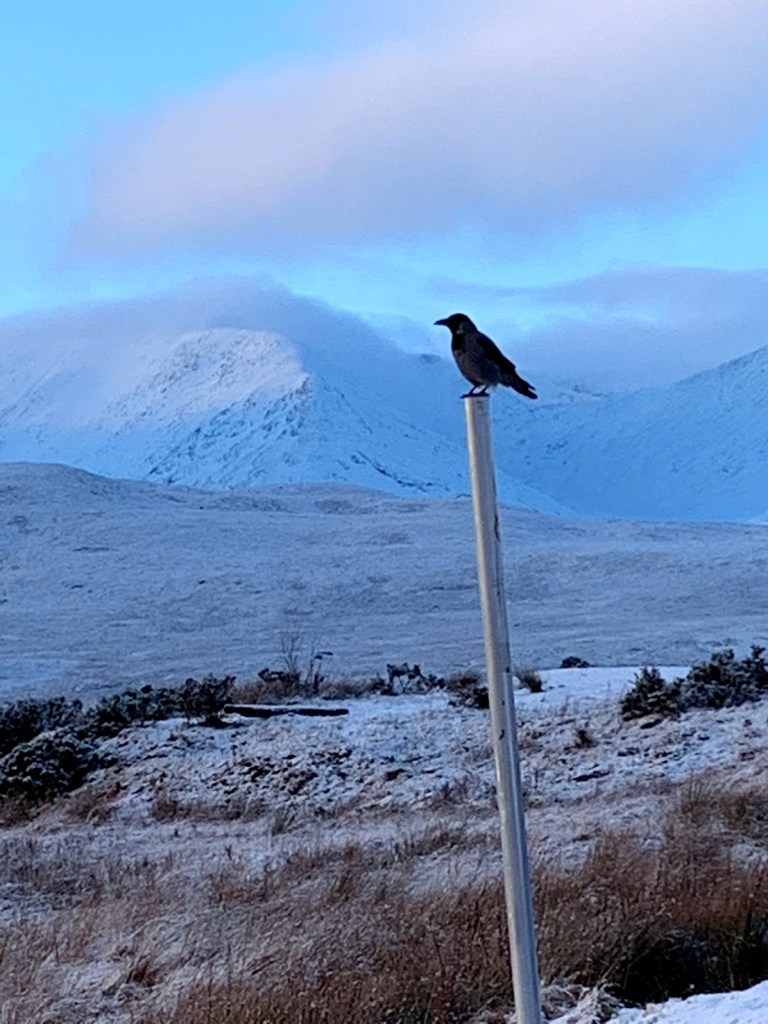
This photo was taken at the same spot as the “sun-kissed” photo above. I turned around and the crow was sitting on the pole. The mountains behind the crow are part of Glencoe.
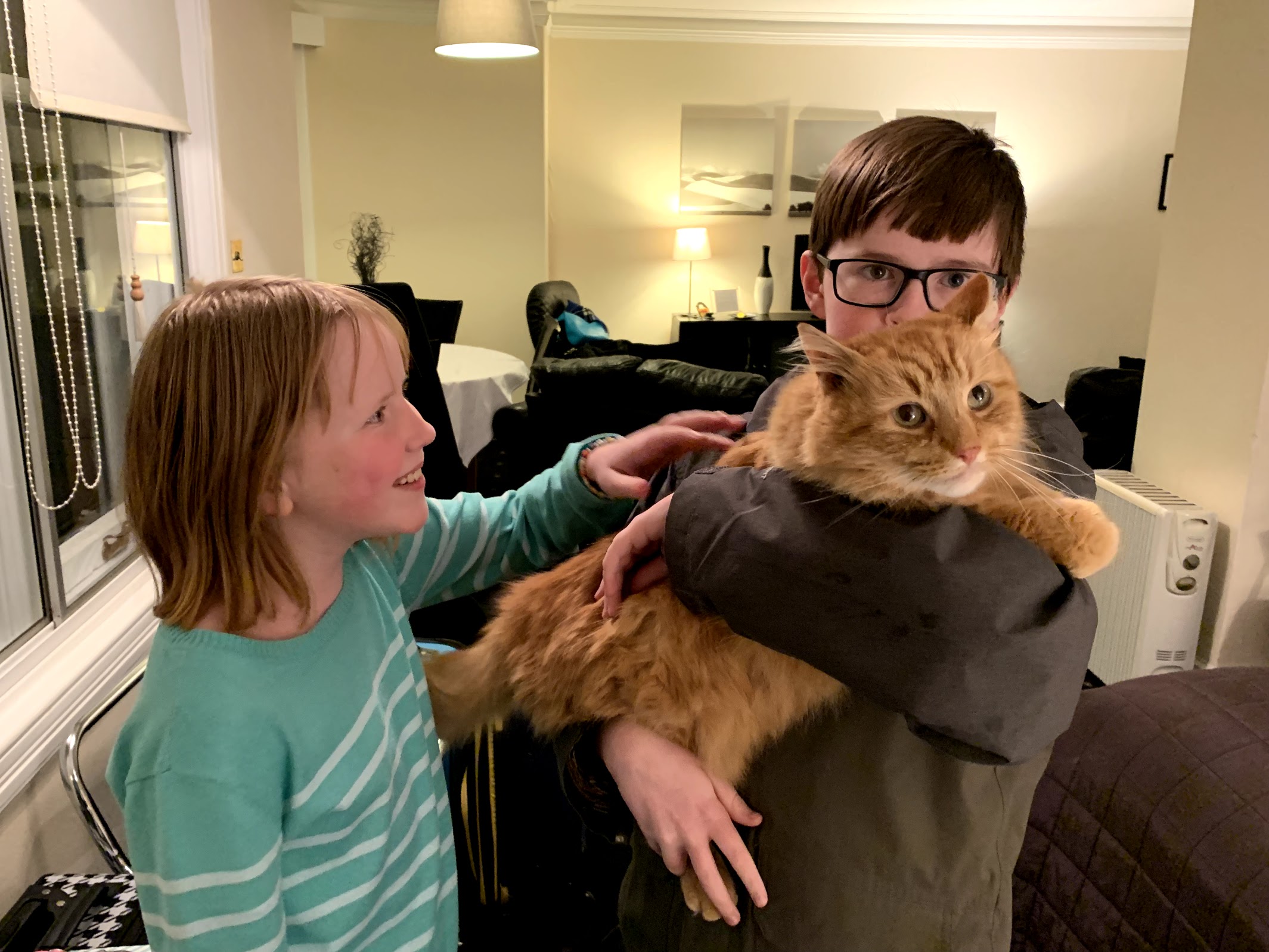
Seamus, Faywen, and Tosh

Our day ended driving further south out of the Highlands, through Glasgow, and down to Troon, a lowland town along the western coast in Ayrshire. Our host Mr. Peter had a sweet orange tabby named Tosh who received a lot of love and petting from us!