
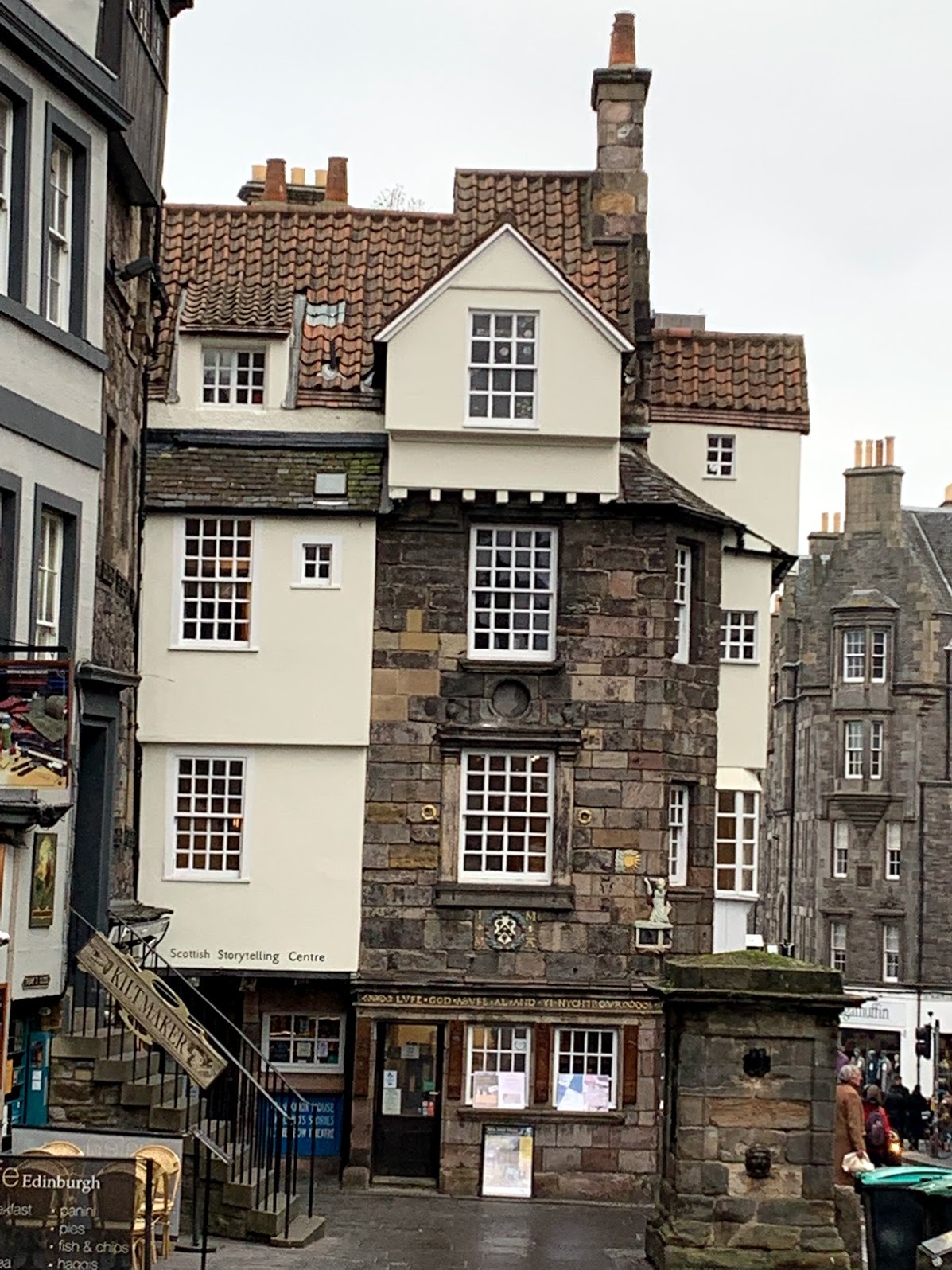
This morning we had a light breakfast in our room and talked about the plans for the day. Robert snuck away for about an hour early on in order to go and fetch our car. The rental place is closed on Sundays so we had to pick up the car today. He parked it in a nearby lot and we headed out on foot to explore the lower half of the Royal Mile. This road runs from Edinburgh Castle down to Holyrood Palace and is a mile long. It also divides the “old town” (buildings before ca.1750) from the “new town”(buildings after ca.1750). We walked up Princes St. half way before taking Coburn St. up the hill to the middle of The Royal Mile. Once up the hill, we headed west until reaching the Mossman/Knox House.
James Mossman was the goldsmith to Mary Queen of Scots. He and his company actually helped to fashion the Crown Jewels of Scotland. He was also a devout Catholic. During the time of the Protestant Reformation John Knox supposedly took over the house which was built in the late 1400’s. The first floor contained several trade shops and the subsequent three floors were the residences. Knox was said to have resided on the top floor and supposedly wrote his History of the Reformation in Scotland from his small study. Mossman was accused of “treason” by the Protestant rebels and hung because he continued to make jewels and coins of the deposed Catholic Queen Mary of Scots.
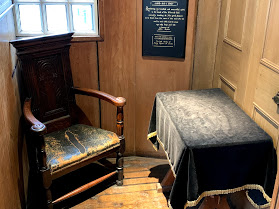
The house is the oldest and only surviving specimen of late medieval and early renaissance architecture in the city. The old floors slanted, remnants of the painted ceilings could still be seen, and the wood carved panels were stunning. Liam in particular had to mind his head through every doorway due to the low lintels. It was a lovely place to spend an hour. We then had a nice little luncheon in the cafe next door.
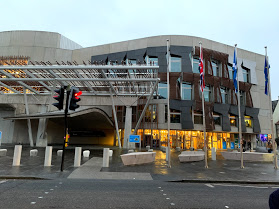
After lunch we headed down The Royal Mile passing by old stone buildings, a primary school, and then to the new Scottish Parliament Building. Scotland reconvened it’s own Parliament in 1999. It had not been allowed to gather since the Act of Union in 1707, which combined Scotland and England. The unique modern design of the buildings stood out in contrast to the old brownish-gray stone building surrounding Parliament. However, it had a nice ergonomic design and seemed to fit in organically into the space.
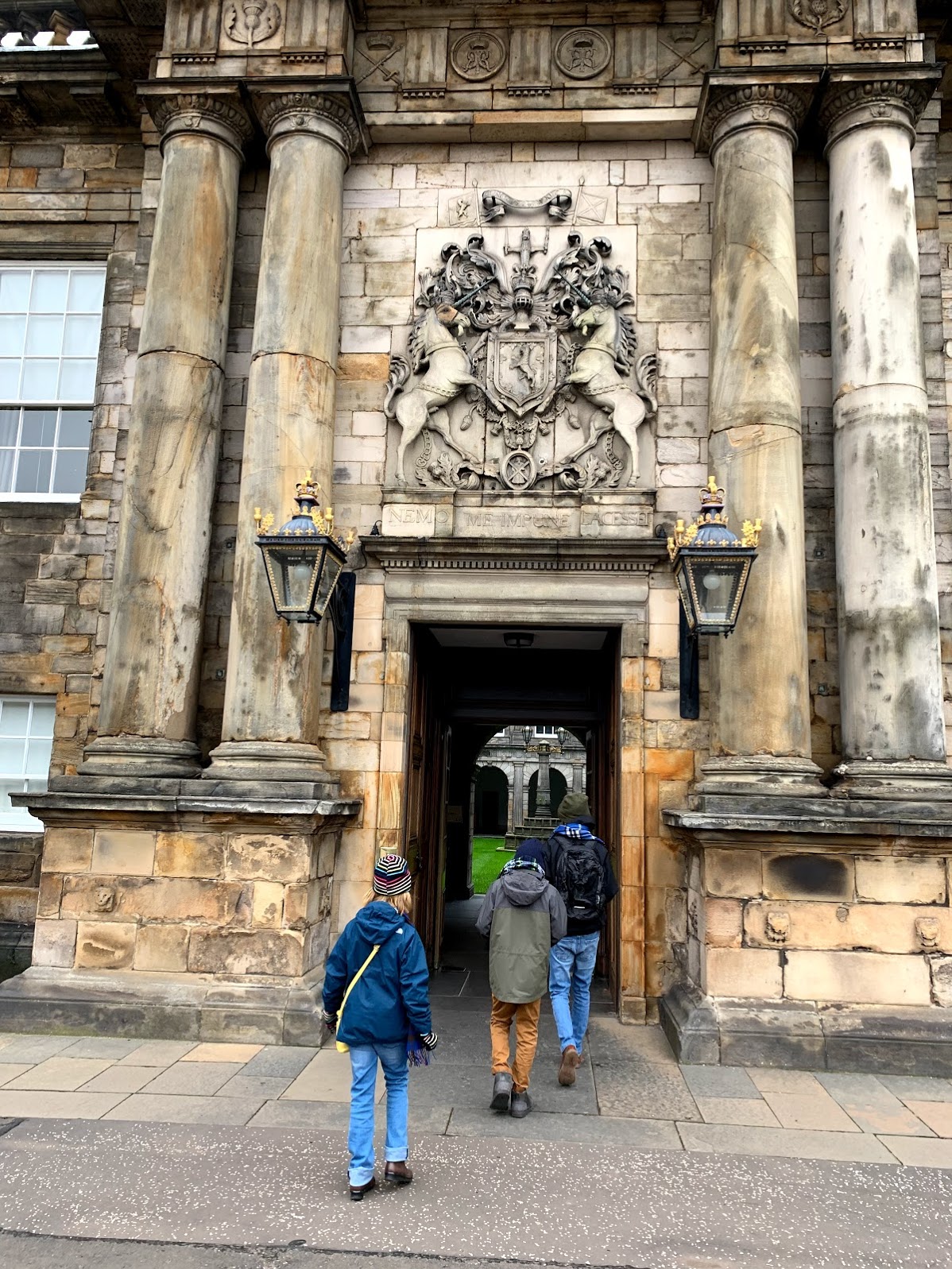
Across the street we entered the Holyrood Palace and Abbey grounds. The staff were lovely and fitted us with very nice audio tour gear that was informative and easy to use. Unfortunately, indoor photography was not allowed. The archway led into a grand four-sided courtyard. Once we entered the palace a stunning blue carpeted staircase with luscious old 17th cent. tapestries hung on the walls. We ascended the stairs and visited many rooms on the first floor which included the state dinning room, royal throne room, private ante-chambers, bedrooms, and the grand gallery. The gallery was decorated with rich red carpet, a white plastered carved ceiling, and 96 portraits of the supposed line of kings and queens of Scotland. The portraits were commissioned by King Charles II to show his divine lineage to the throne. If you looked closely you could see that the artist painted every person with King Charles’ nose, thus confirming the “lineage” visually to visitors!
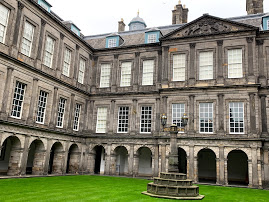
An ante-chamber just off the gallery housed artifacts owned by the famous Bonnie Prince Charlie, or Charles Edward Stewart, who tried to reclaim the crown during the Jacobite uprisings of 1745-46. The uprising ultimately failed, but Bonnie Prince Charlie has since been immortalized in song and Scottish legend. He spent only 6 weeks in his ancestral palace at Holyrood. A winding narrow staircase led us into the oldest part of the palace and the private chambers of Mary Queen of Scots. A grisly murder took place in her ante-chamber when her husband Lord Darnley believed Mary to be unfaithful with a courtier. Darnley secretly had the man killed and his ghost is said to haunt the chamber. It was amazing to see artifacts belonging to the famous 16th cent. queen. Including her own embroidery, jewels, and private Bible.
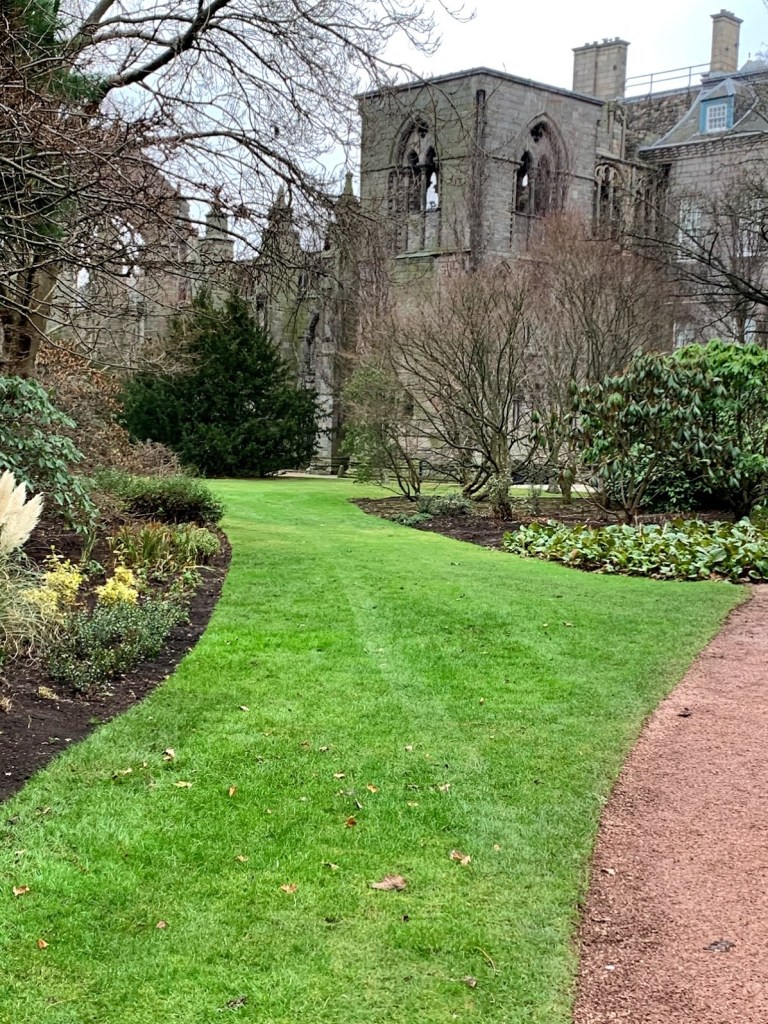
We left the inside of the palace and meandered over to the ruins of the Abbey adjacent to the palace. The stunning ruins were the sight where several kings of Scotland were crowned and weddings held. It fell into disrepair in the 1700’s. The old monastic building footprints and stunning gardens ended our tour. I even saw a few roses still blooming amongst the velvety green grass. All of the gardens are set against the Pentland Hills and the famous Arthur’s Seat, an ancient site said to have been one of King Arthur’s favorites.
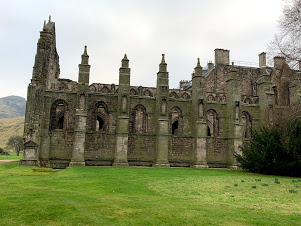
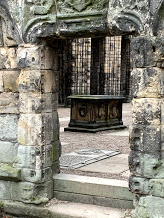
The Queen and Royal Family still use Holyrood as a private residence. They come to the palace in the month of July and hold state dinners, visitors, and the Duke of Edinburgh’s Awards are presented in the gardens every year to outstanding school children.
The Queen’s Gallery was next door and had a lovely display of artwork and artifacts collected by Charles II, the last Scottish Stewart king. I was really impressed that the gallery offered a booklet in large print of all the signs next to the artwork. I was also able to get up really close to examine the priceless pieces of art!
We started our trek up the Royal Mile and had a nice dinner at a local Italian restaurant. The city was alive with locals going out on a Saturday night!
 Camellia's Travel Blog