A Sailor’s Life for Me

It was a bit hard saying goodbye to Graham, Kathleen and their friend Jane at the B&B. They were all very kind and friendly. The night before Kathleen gave us free “year round tickets” to see two ships in Portsmouth Harbor, The Mary Rose and HMS Victory (we came to Portsmouth to see the HMS Victory). She only asked that we mail them back to her in the self-addressed envelope she gave us. This way she could give them to the next family that might come and stay at her B&B.

We said goodbye with warm hugs and drove 5 minutes down to the Gosport docks where we parked and rode the ferry across the harbor to the Portsmouth Royal Dockyard. Located in the dockyard were several historical Royal Navy ships ranging in age from The Mary Rose, flagship of Henry VIII, to HMS Queen Elizabeth II, a modern aircraft carrier. Our first stop was The Mary Rose.
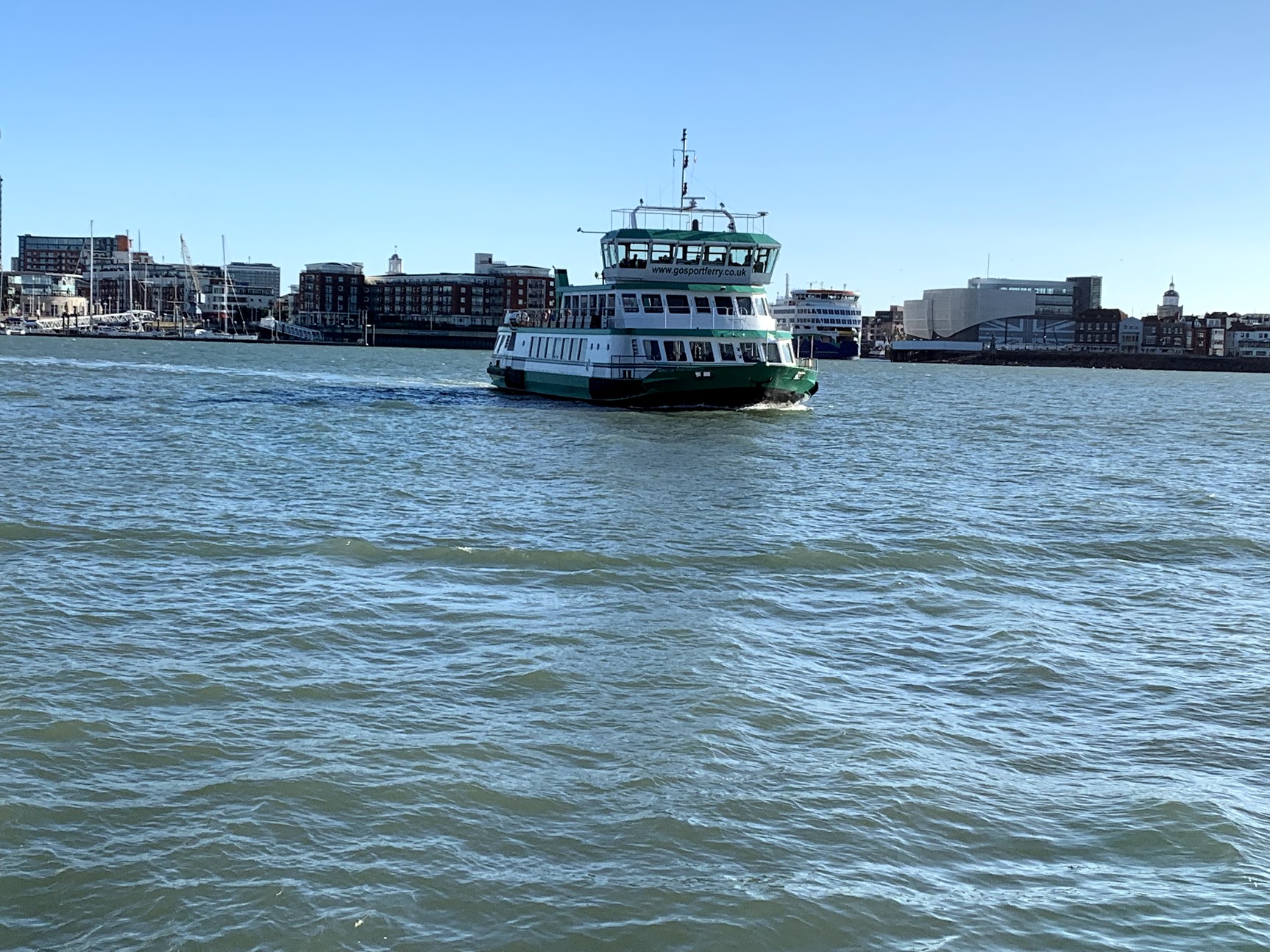
The ferry we took across the harbor
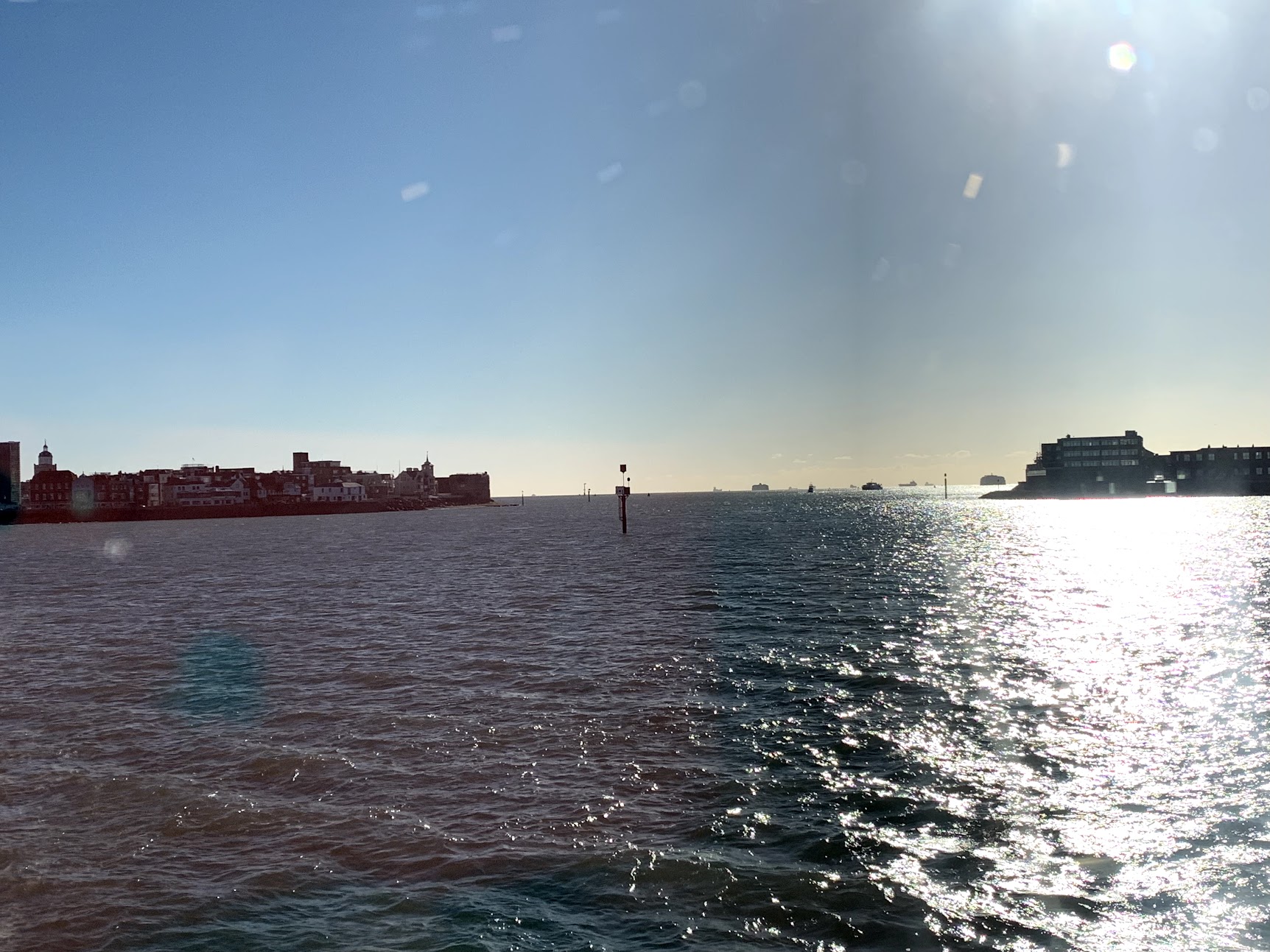
Portsmouth Harbor

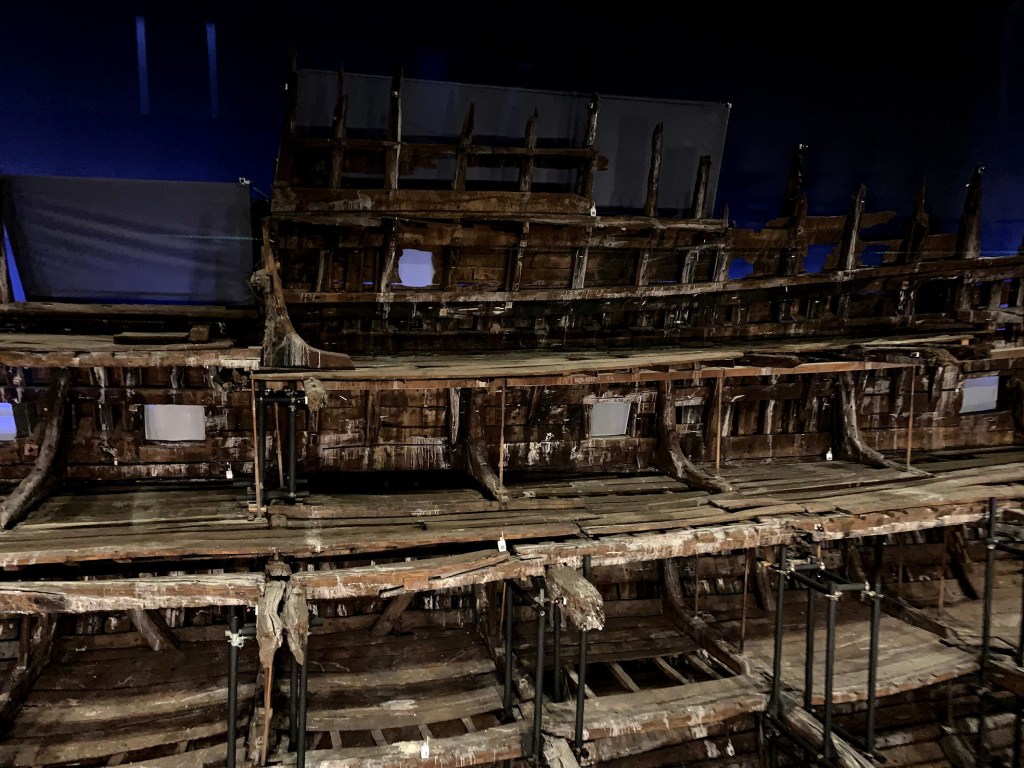
Built in 1510 when Henry VIII was a new king, The Mary Rose was his flagship and in service until it sank in the Battle of the Solent in Portsmouth Harbor, July 1545. The ship was named after Henry’s sister Mary and the Virgin Mary. Rose refers to the Tudor Rose. It could carry around 500 men and crew. Sadly the ship sank when they fired cannons on one side then went to fire on the other side, opened the hatches, and the wind caught the sails tipping the boat. Water rushed into the open gun hatches and she sank quickly…that combined with a few holes the French warship had made in The Mary Roses side. All hands, but 35 were lost at sea.
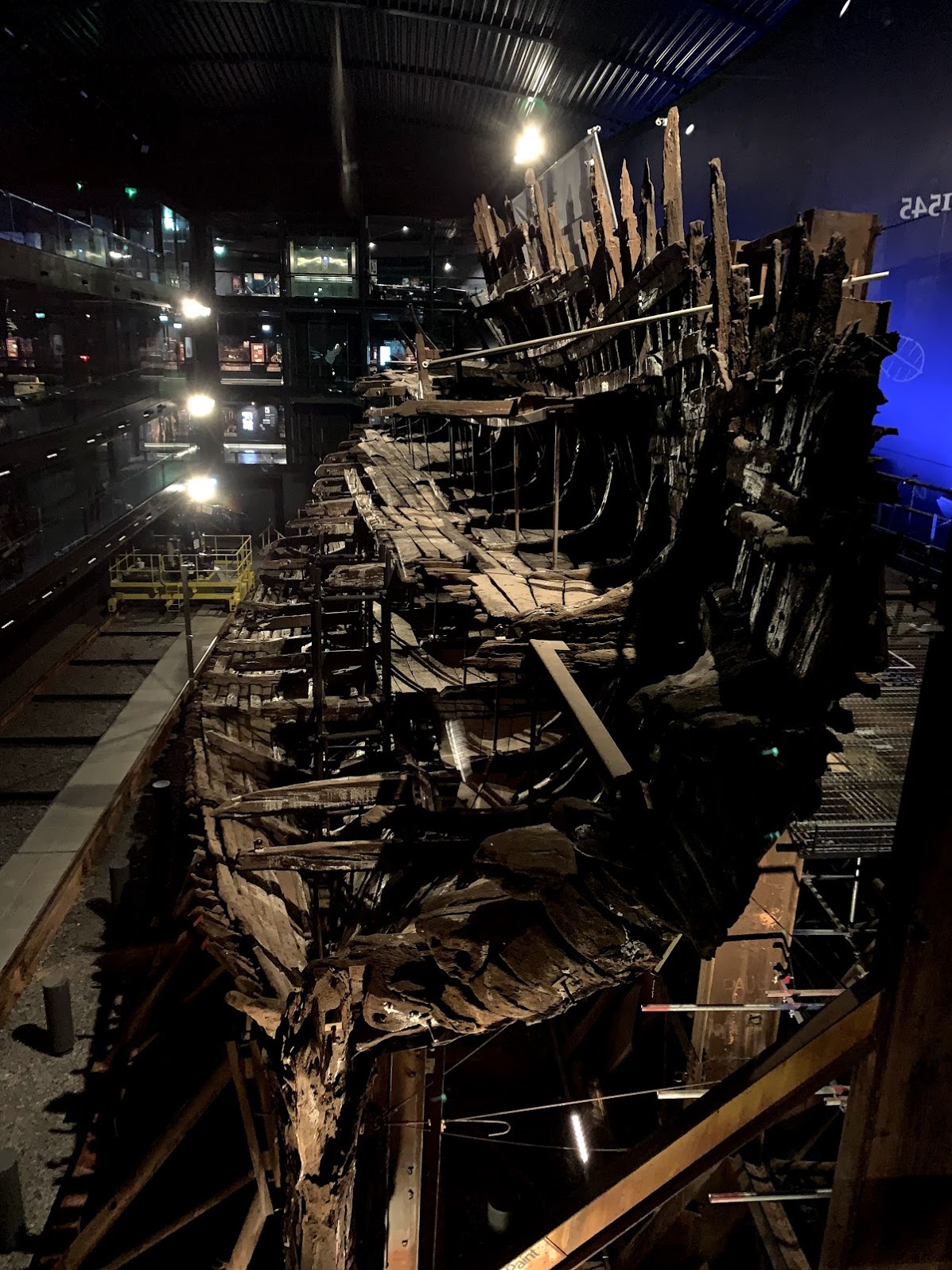
From the bow of the Mary Rose
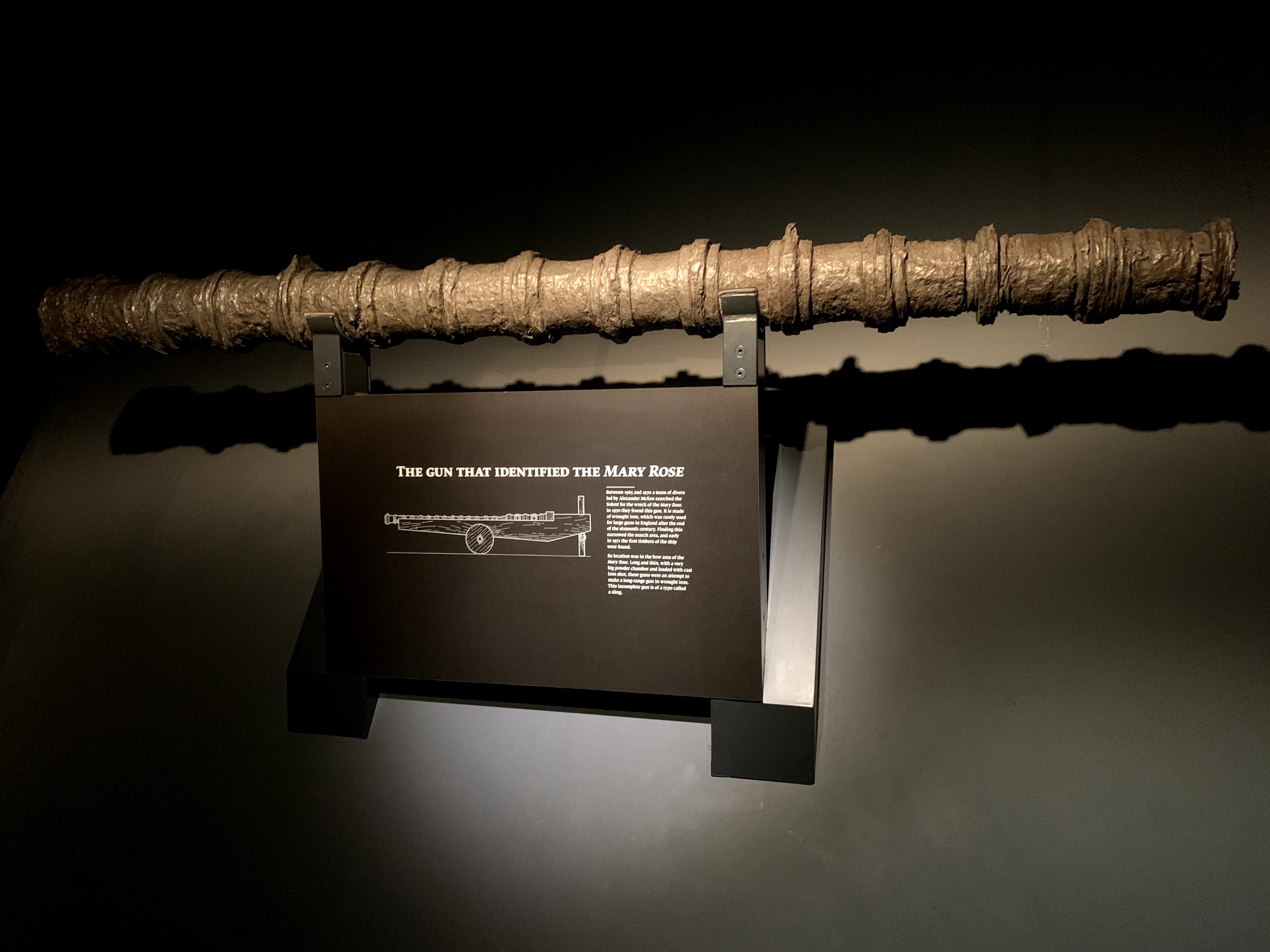
The caption reads that this gun was what divers first found helping them locate the ship
The Mary Rose

They tried to salvage her in 1545, but to no avail. In the 1800’s a few relics were un-watered, but it wasn’t until 1970 that divers un-watered a cannon that fit the description of the ship and recovery operations were begun. It has taken 40 years to salvage and preserve the ship and it’s 16,000+ artifacts. In 2016 the museum containing the preserved ship and relics was opened to the public.
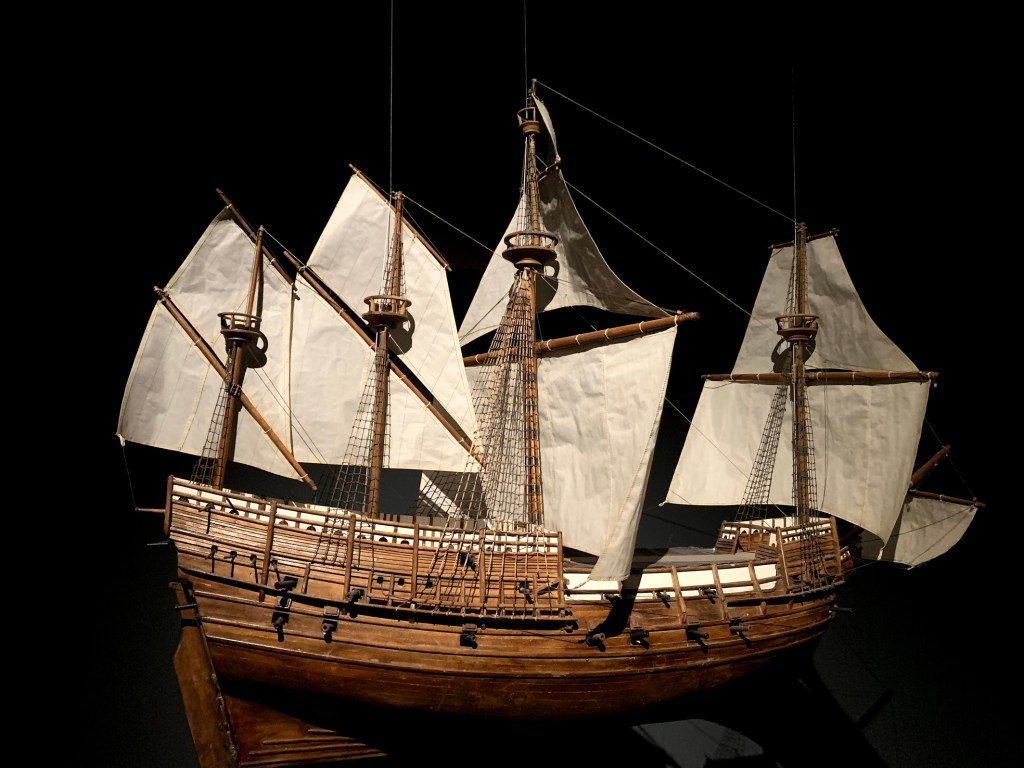
Model of what The Mary Rose looked like
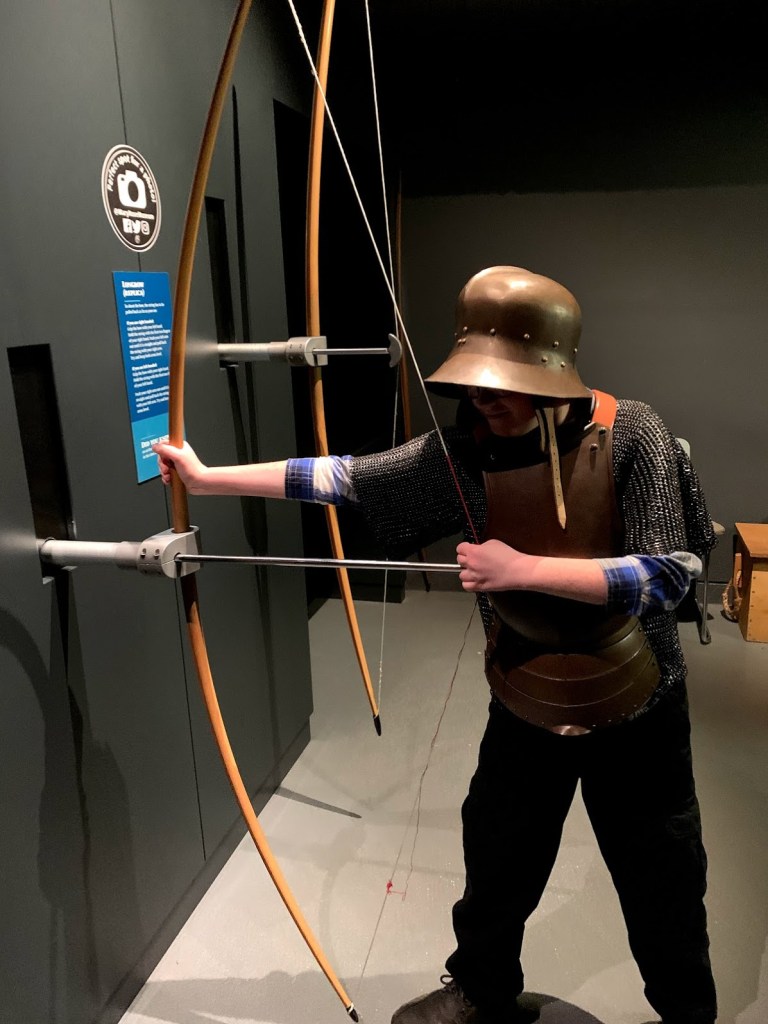
Practicing shooting a longbow

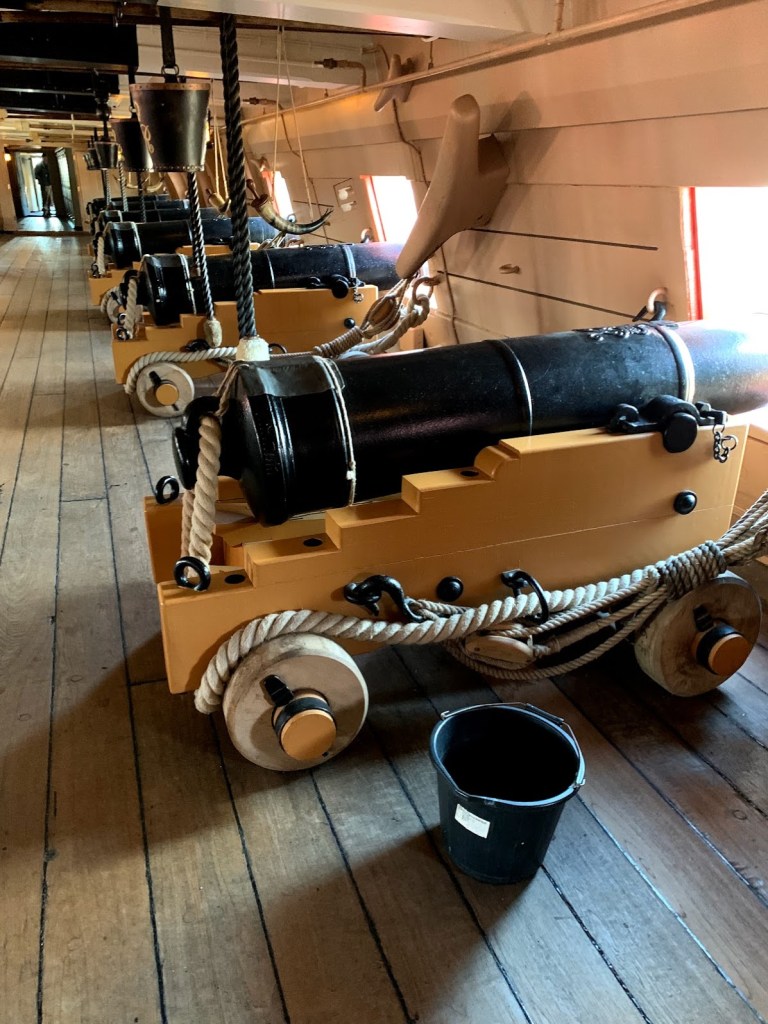
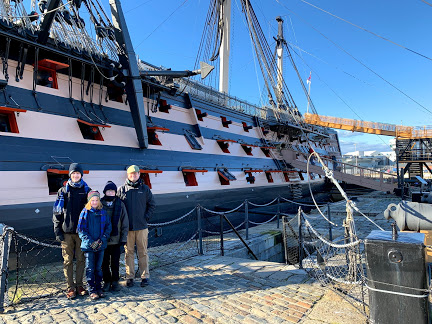
The HMS Victory was in the dry dock next to The Mary Rose Museum. This was the famous ship of Vice Admiral Horatio Nelson who won the Battle of Trafalgar in 1805, but sadly died aboard the ship of a gunshot. The 250+ year old ship still contains about ¼ of the original timbers from when the ship was refurbished in 1805 before setting out upon the seas. The HMS Victory was originally commissioned in 1765 by King George III and only 1/8 of those original parts remain. Most of the ship dates to it’s last refurbishment in 1814. It was amazing meandering through the various living quarters and gun decks. The further down you went into the belly of the ship the lower the ceilings. By the time we reached the hull Liam, Robert, and I could barely stand up! The Victory could carry upwards of 800 men and crew on a single voyage. It was truly a floating village.
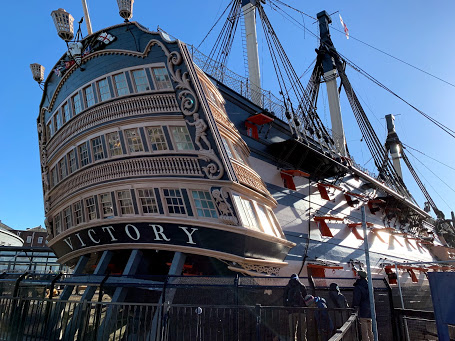
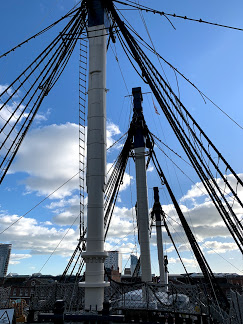
HMS Victory
Masts and rigging
Gun decks
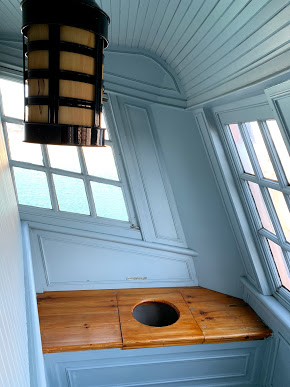
Vice Admiral Lord Nelson’s privy
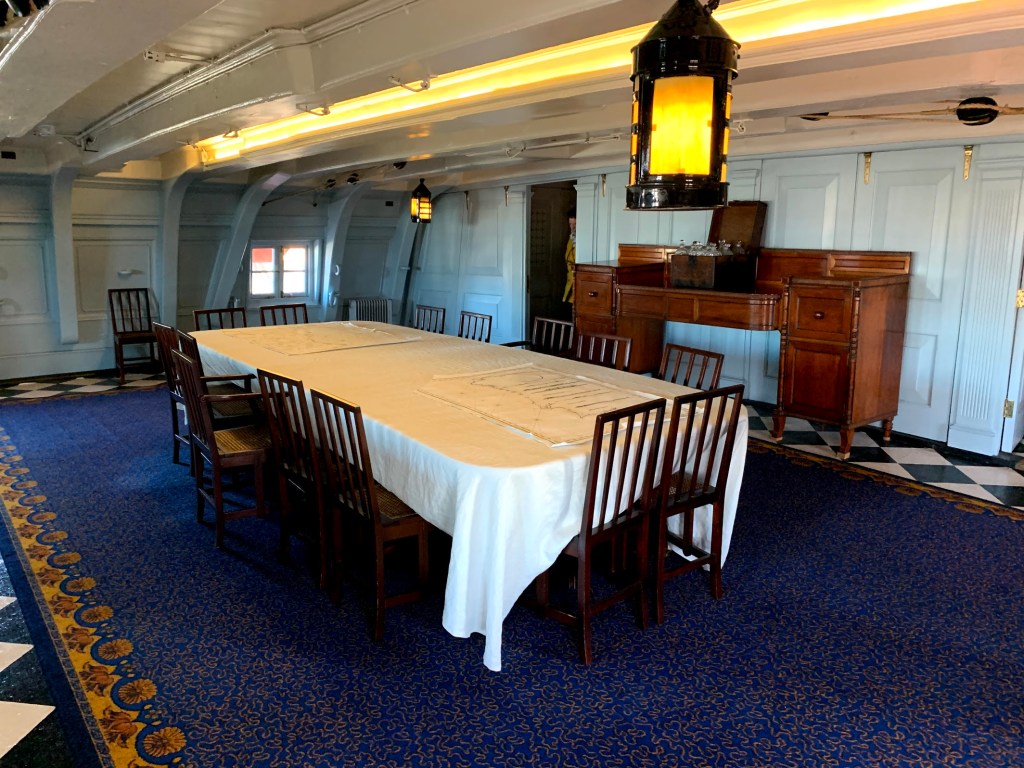
Vice Admiral’s quarters: The current Vice Admiral of the Royal Navy still holds dinner parties at this table!
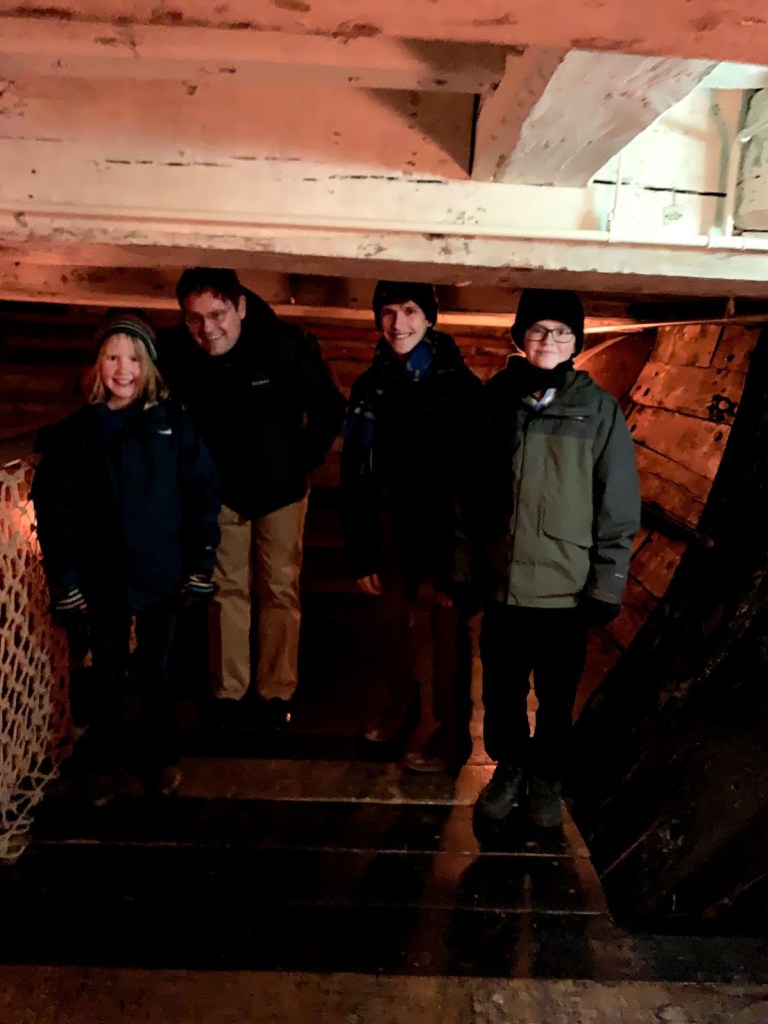
Lower decks and low ceilings
HMS Victory

We made our way back across Portsmouth Harbor and began the 2 hour drive into central London. I have to say I am quite proud of Robert. It’s no easy task driving into the centre of one of the busiest cities in the world, but that is where the Enterprise carpark drop off was located! We unloaded our car listening to the rumble of trains leaving Waterloo Station just above our heads and walked about 10 minutes to our hotel. The Premier Inn London is located directly on the River Thames. The room even has a partial view of the river and the London Eye.
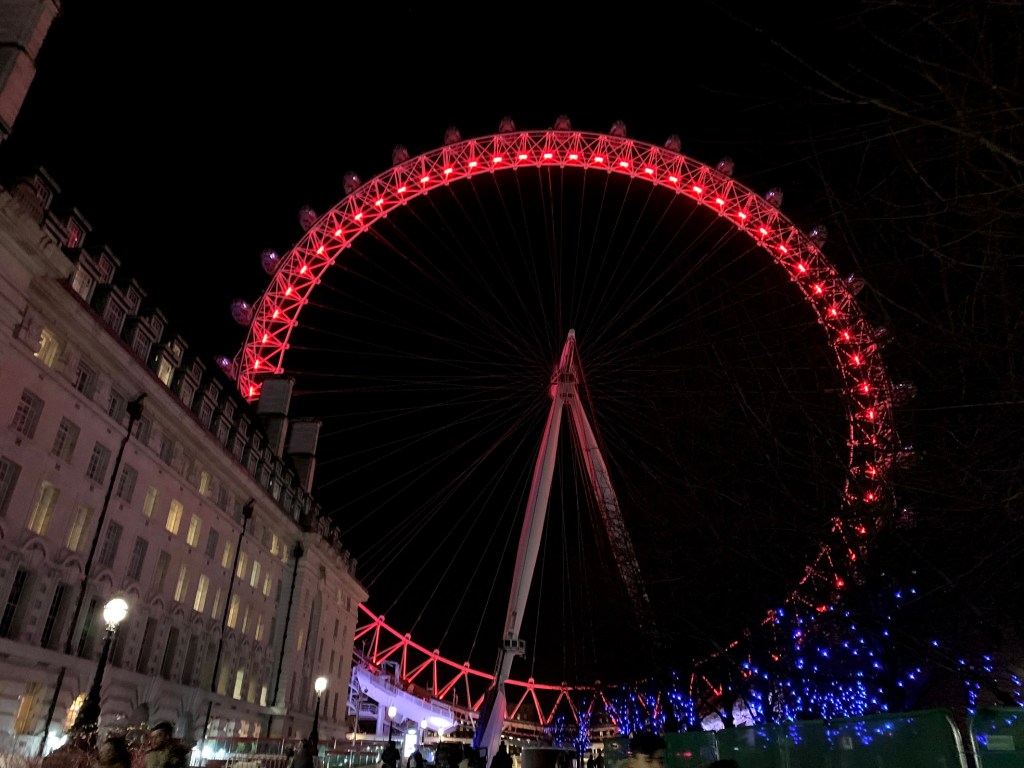
London Eye

Blow, Blow Thou Winter Wind

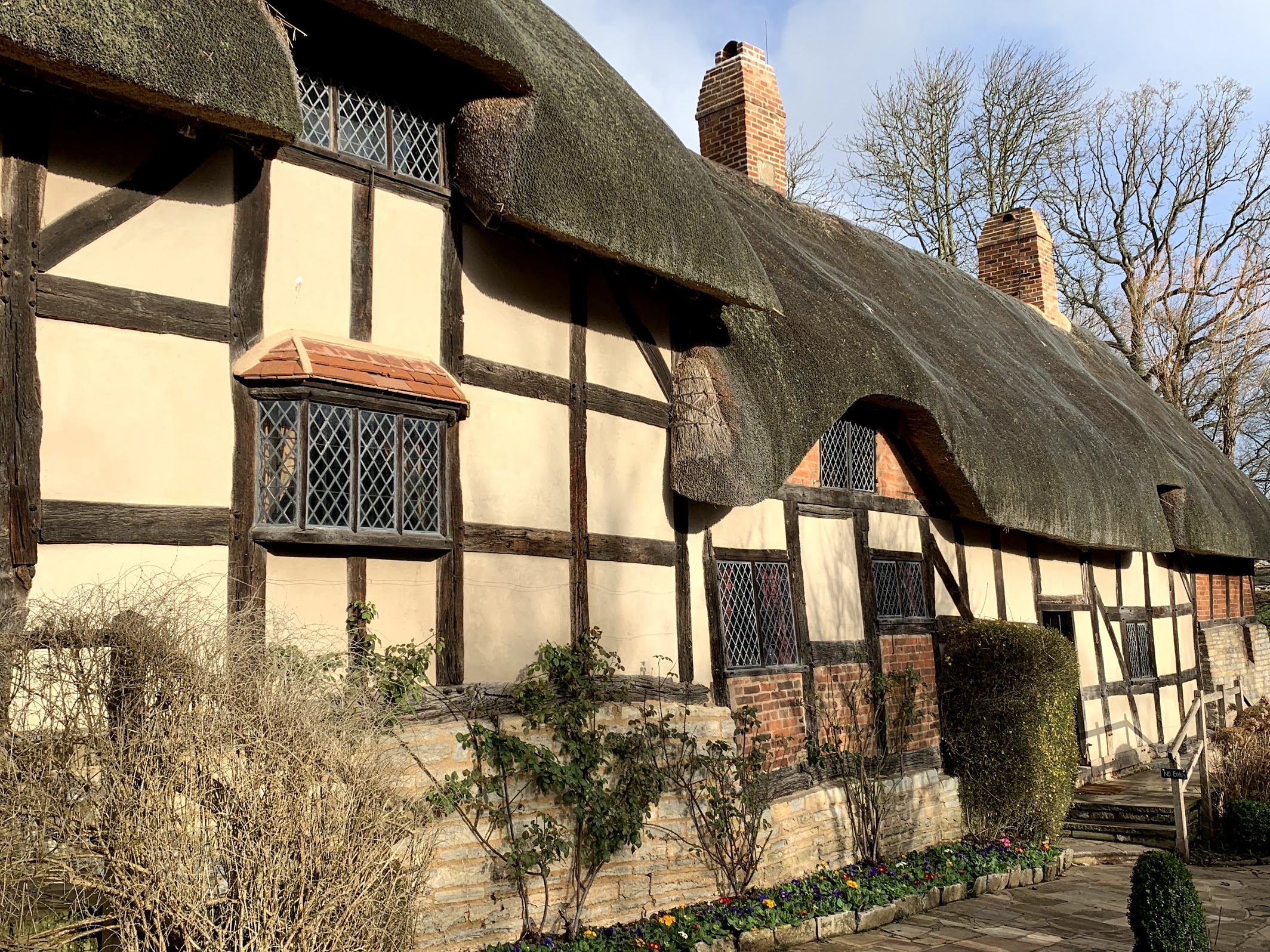
Yesterday we didn’t quite get to see all the sites associated with William Shakespeare so we drove about 5 minutes out of town to Shotterly Village where Anne Hathaway’s Cottage resides. She was Shakespeare’s wife. Anne was actually 8 yrs. older than William when they married. He was 18 and she 26. She was the daughter of a respectable local farmer and the two probably met at church or when their fathers’ gathered for town council meetings.

Anne Hathaway’s Cottage
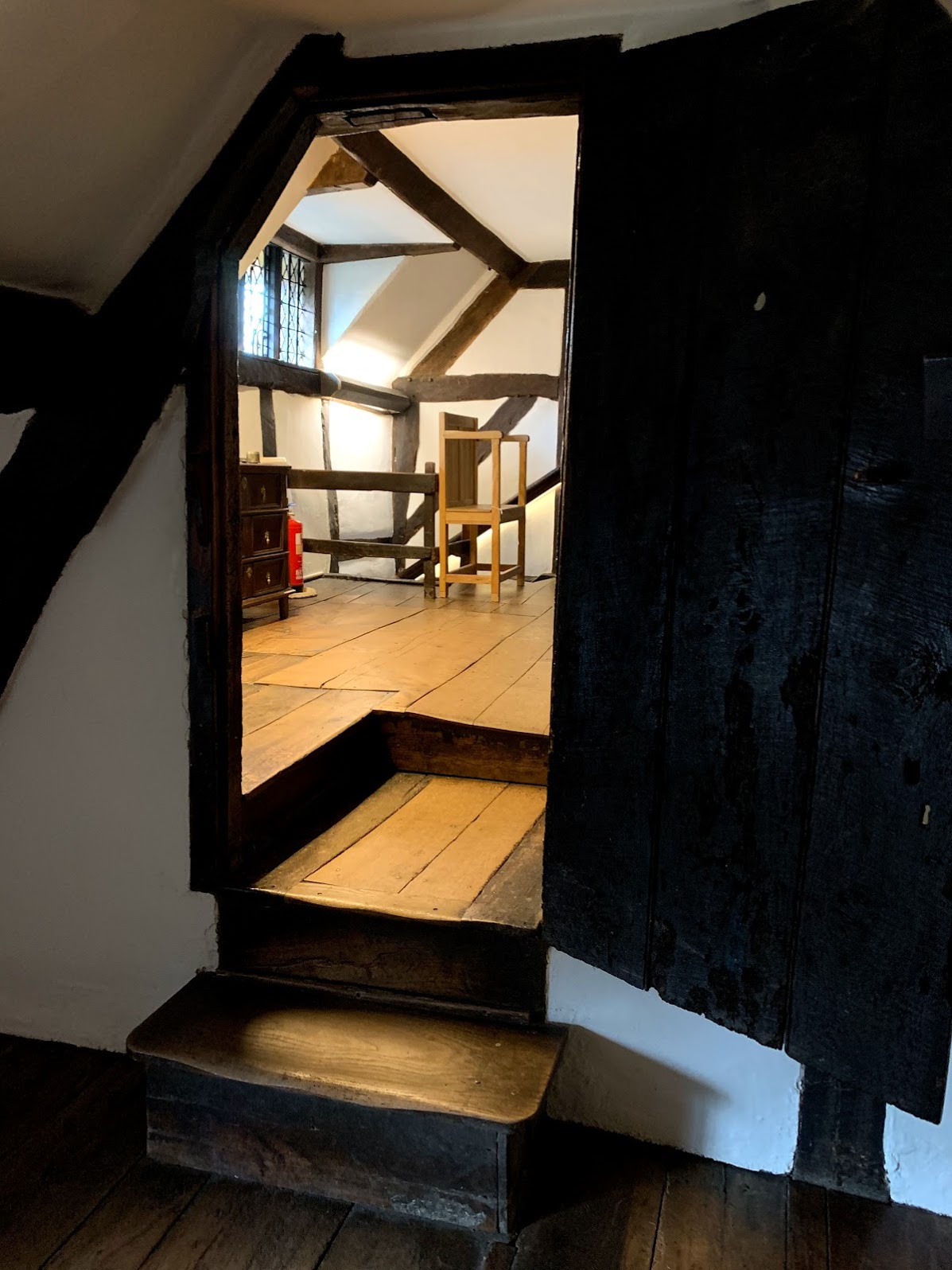
Typical architecture of the era

The Hathaway’s Cottage stayed in the family until 1892 when Miss Baker, a spinster and the last remaining Hathaway heir, left the home to the Shakespeare Trust. The cottage was first built in 1463 and had major renovations in the mid 1500 to early 1600’s. Anne’s brother, Bartholomew tended and added rooms onto the property. He also legally bought the 90 acres the family had rented up until then, making him one of a few select freeman landowners in the area. Even though it is winter the gardens surrounding the house were still lovely to walk through, when one wasn’t being blown sideways by the powerful wind.

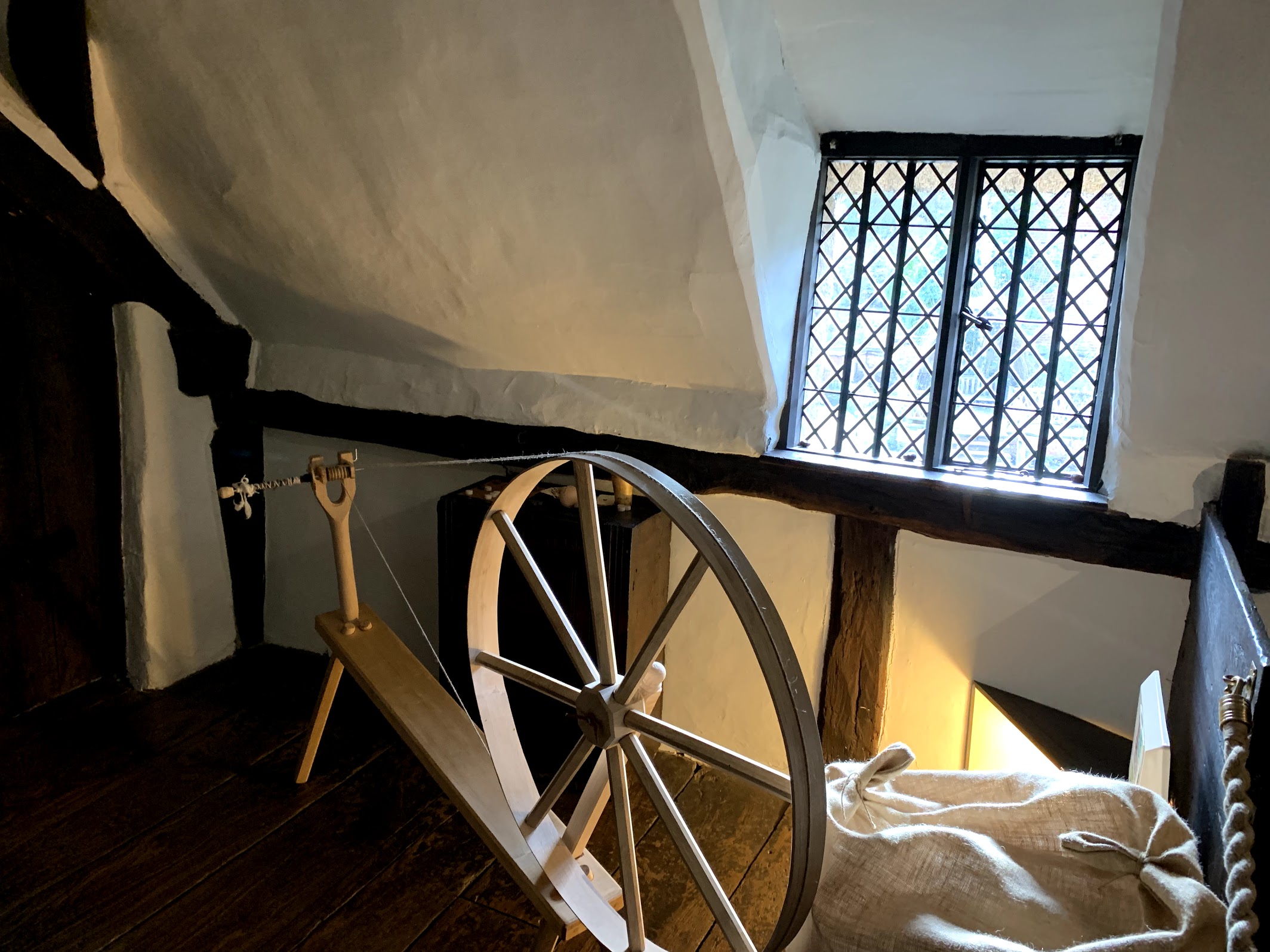
A lovely view by the window while spinning wool
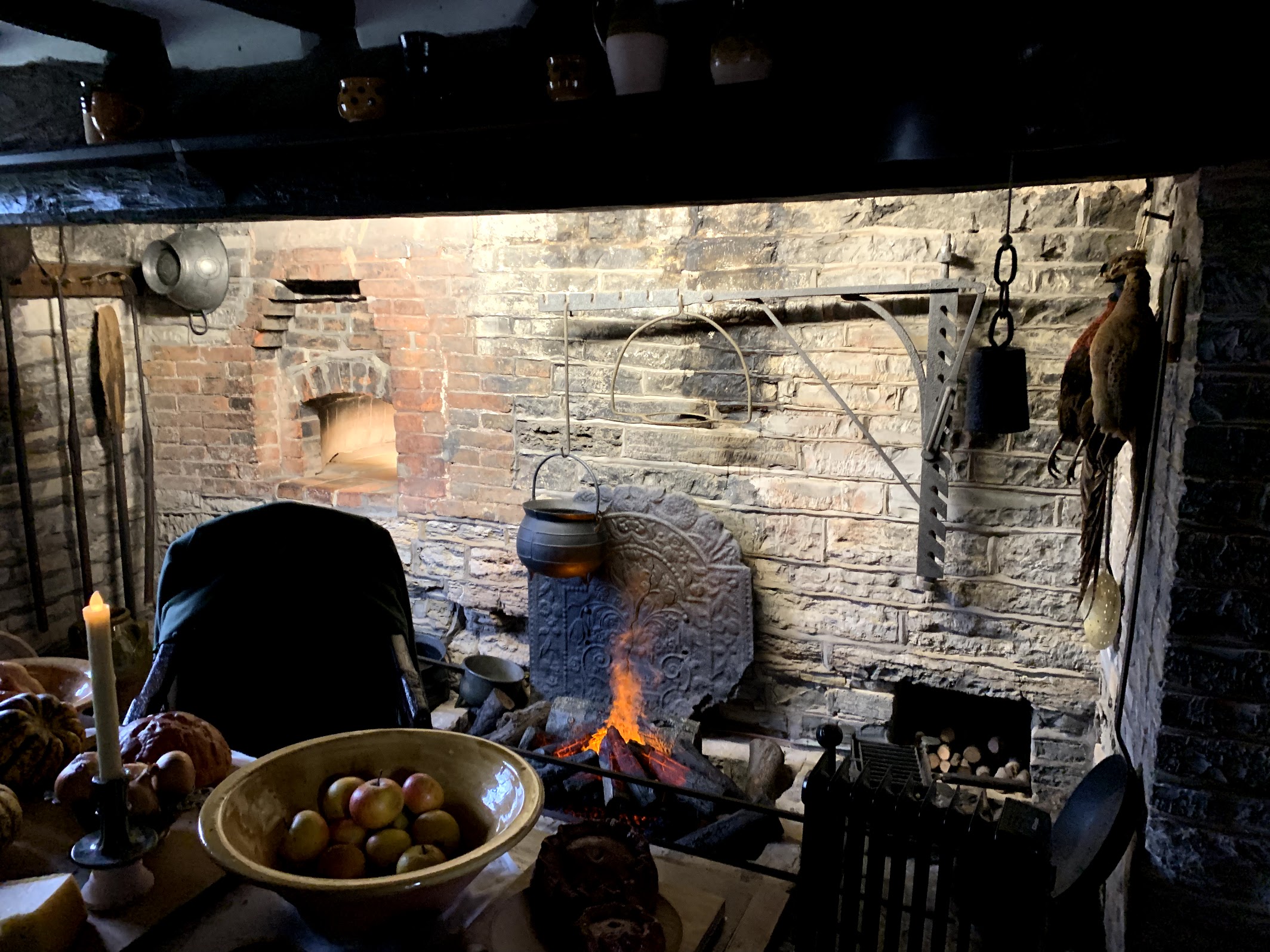
This fireplace was added in the late 1500’s. Originally the ceiling opened all the way to the thatch roof and there was a central ring pit fire. After the two chimneys were built they directed the fire smoke to one small center hall where the meat would be hung. You could still smell the smoke in the hallway!
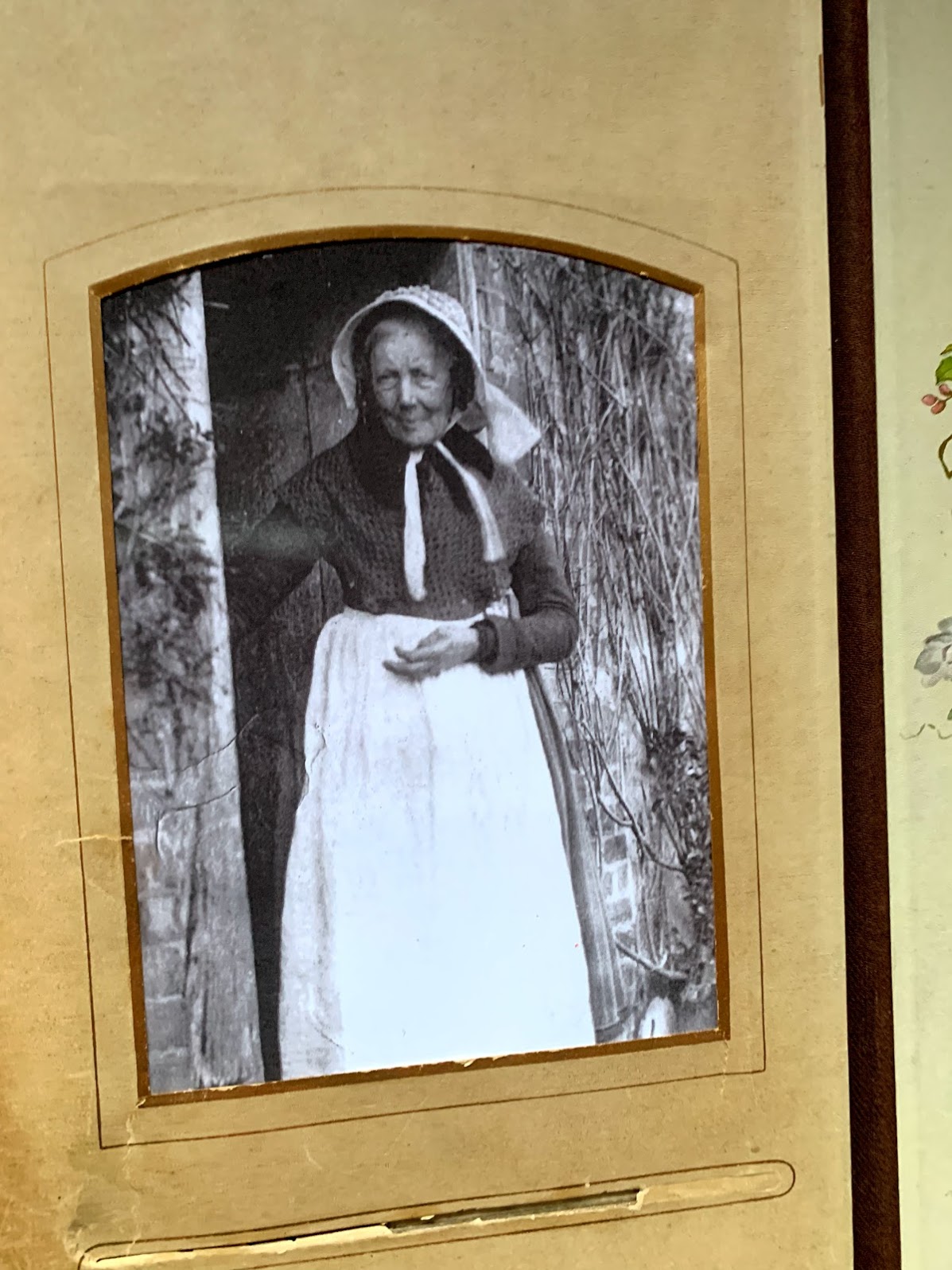
Miss Baker was the last Hathaway heir and lived in the cottage all her life

All day the wind blew fiercely! As we drove south through Oxford all the tree limbs and flags stood at attention. We expected to see Pooh Bear and Piglet fly by with a kite at any moment!

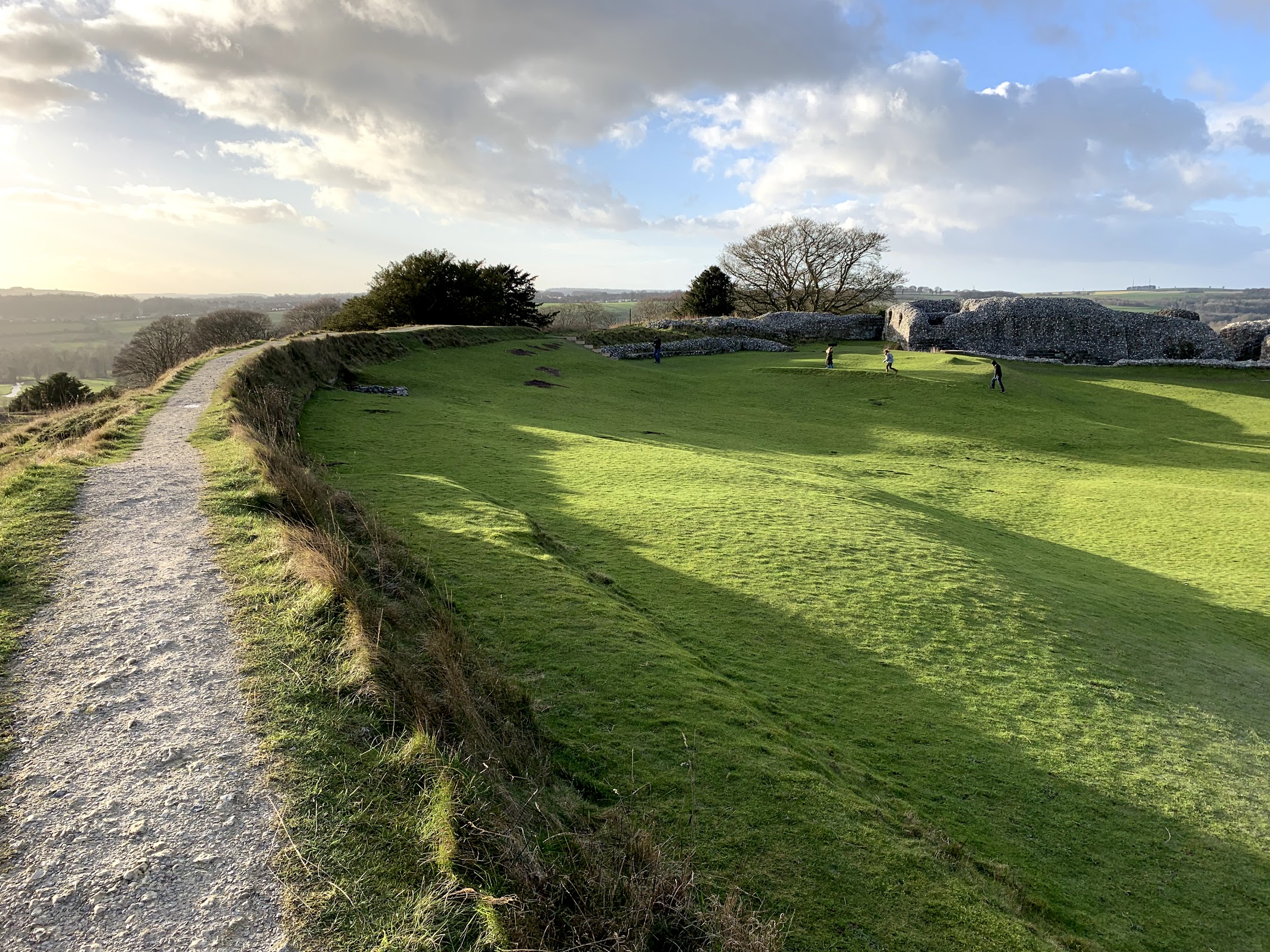
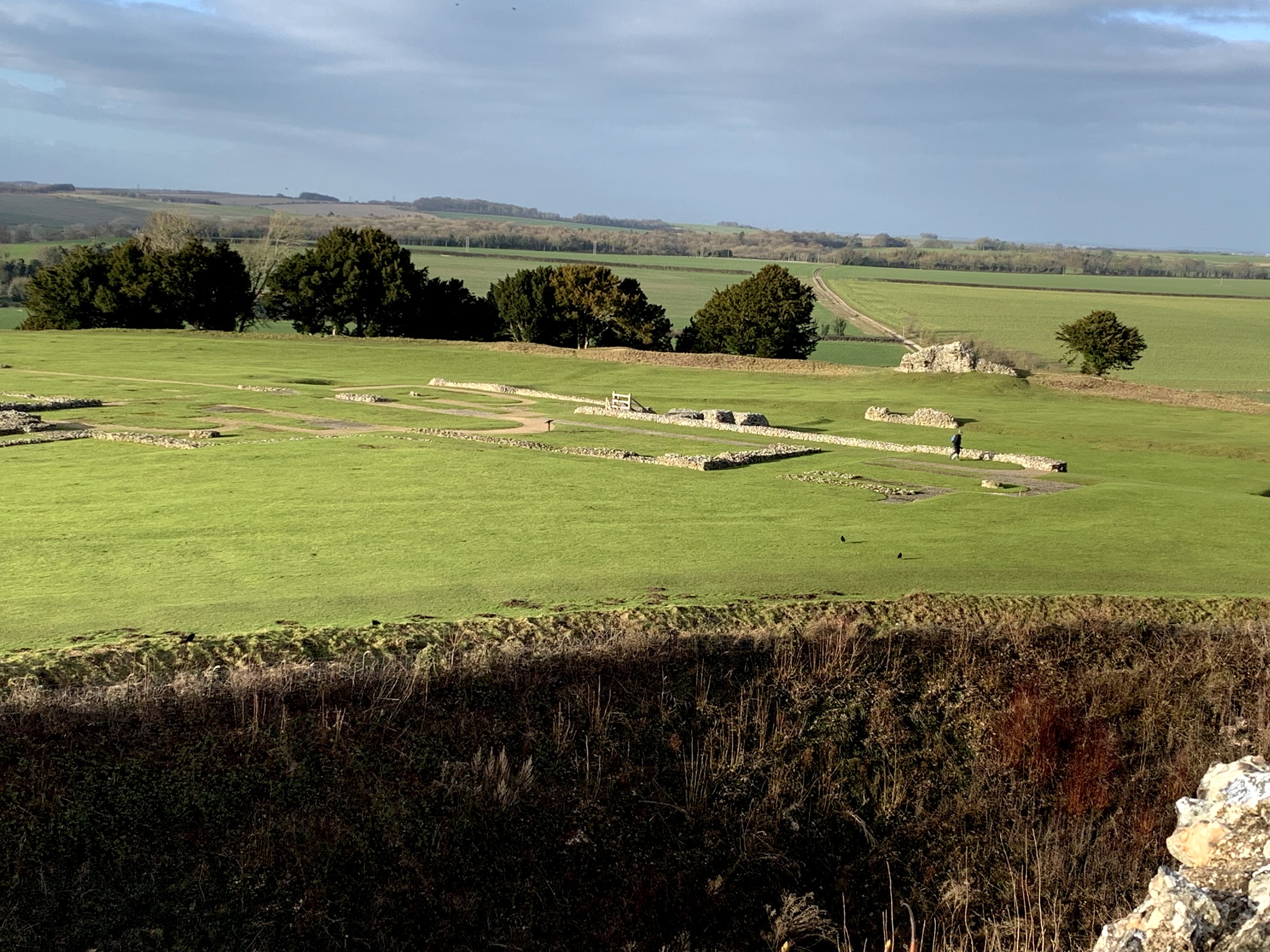
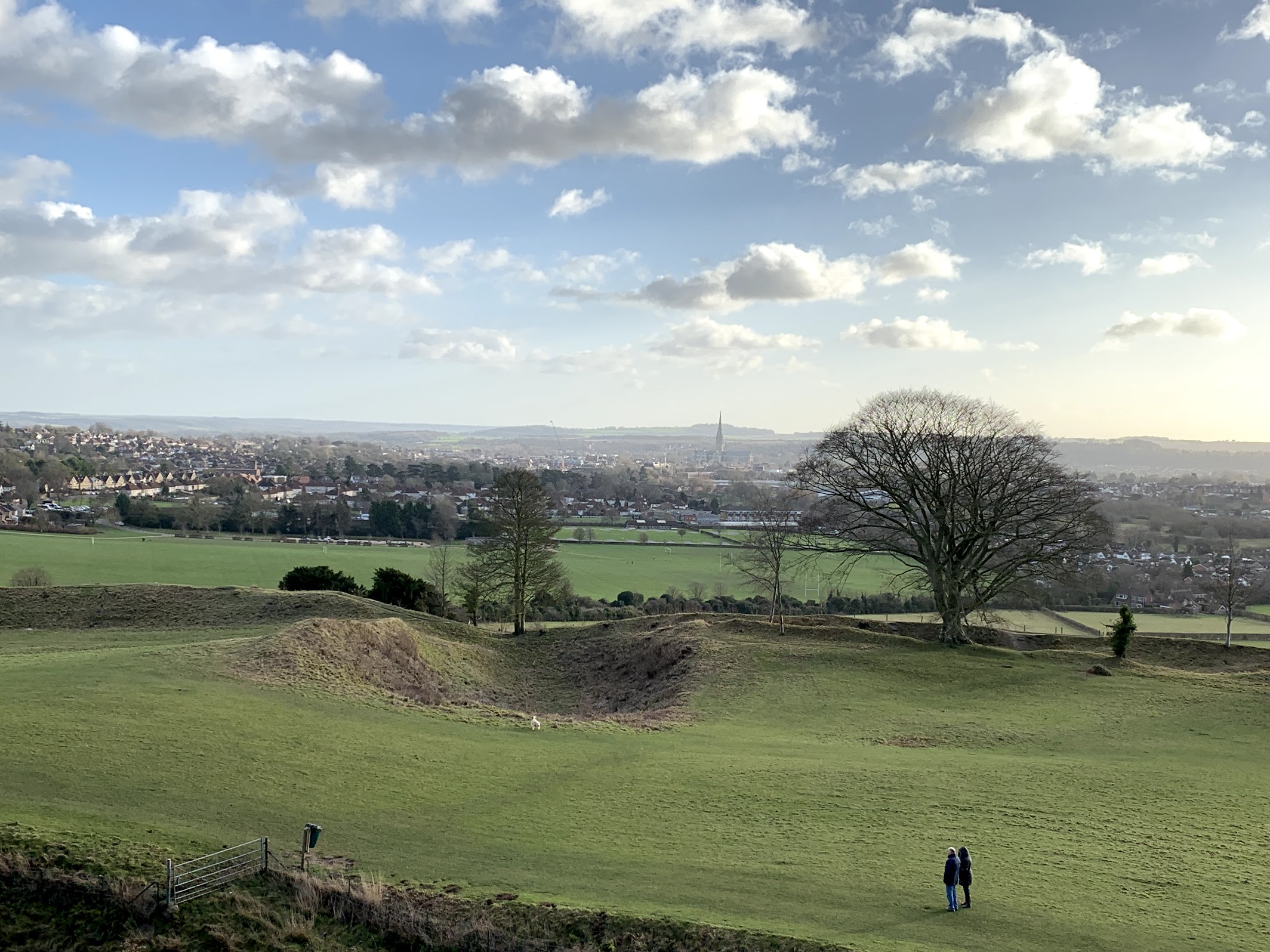
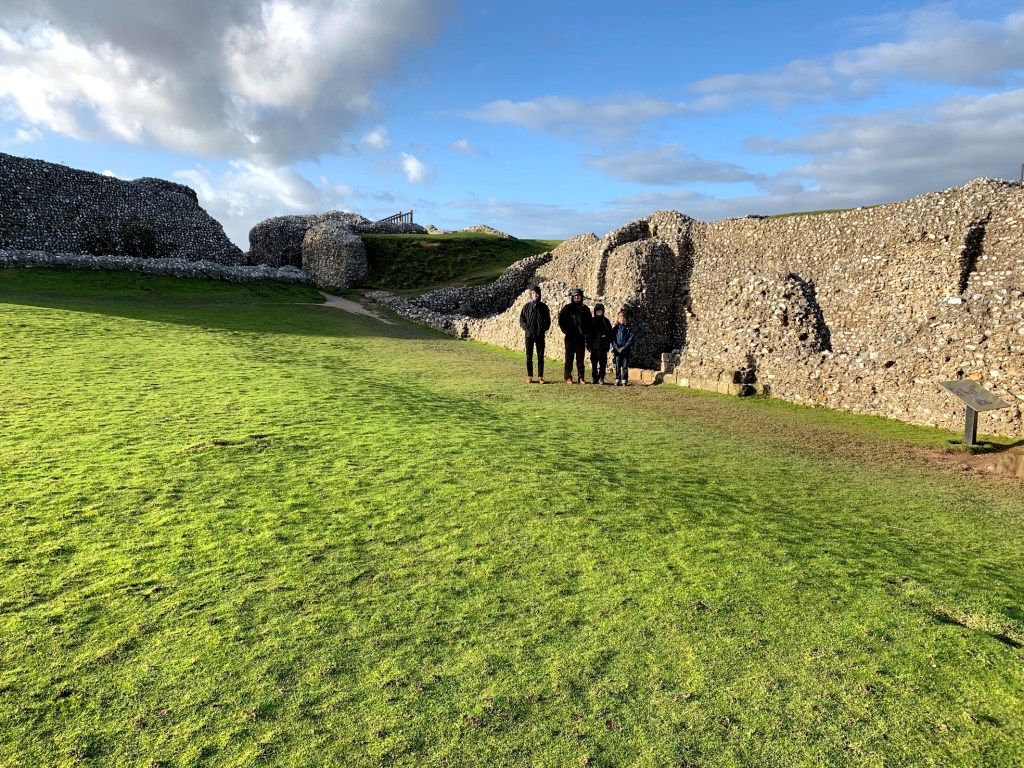
The wind pushed the clouds away and the intense brilliant winter sun shown forth in glory as we drove up to Old Sarum. A majestic ring of mounded earth rose up in front of us as we climbed the steep hill to the summit of this Iron Age Ring Fort. Of course Aeolus was still in a mood and about blew us from atop the earthen walls as we walked around. Old Srum was originally an Iron Age Ring Fort and then became a medieval fortress founded by William the Conqueror. It was a favorite southern castle and fortress for several English kings including Henry II. The original Salisbury Cathedral footprint can be seen in the fortress as well as the newer 16th century rebuild way off in the distance! Unfortunately Old Sarum fell into disrepair and ruin by the late 14th century.

Along the top earthen wall at Old Sarum. There were three such rings around the iron age fort.
Footprint of the 12th cent. Salisbury Cathedral
View of Salisbury and the Cathedral spire from the top of the fort
Inside the old castle at Old Sarum

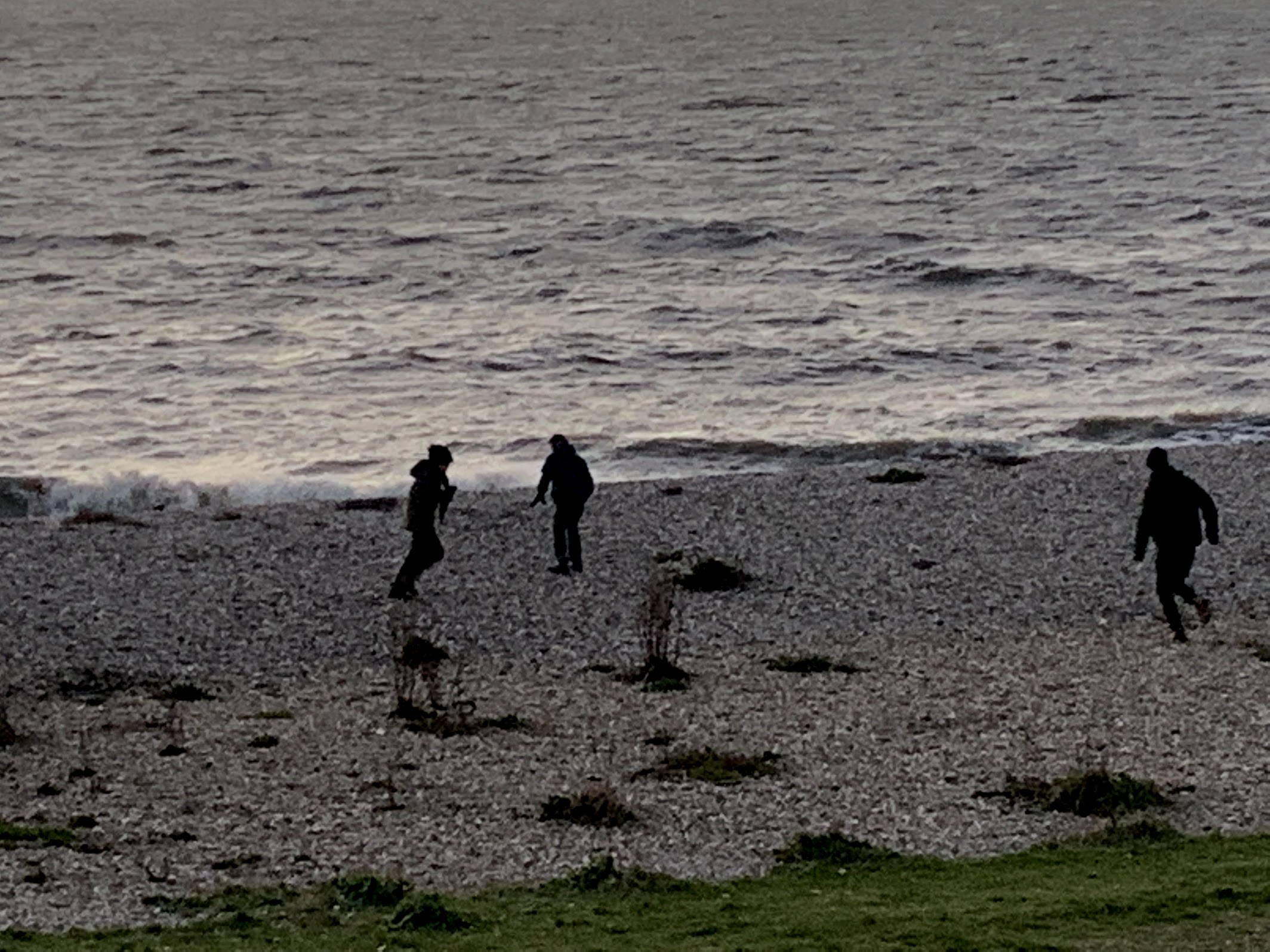
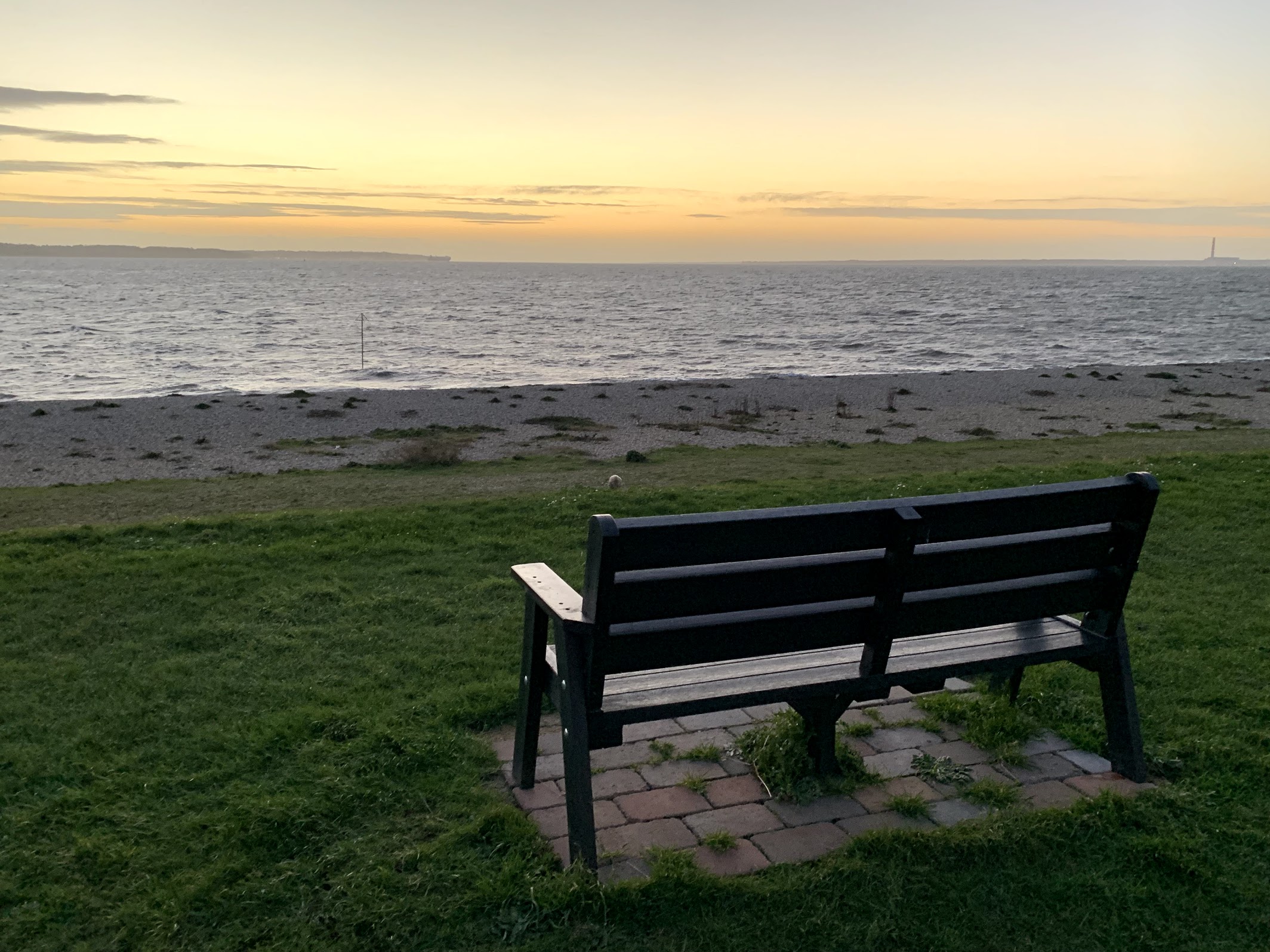
Our final encounter with the relentless winter winds was down along the seashore in Portsmouth. Our B&B is only about 3 blocks from the seashore. Before checking in, we took a few minutes to see the sun set over the Isle of Wight and the English Channel. The children explored the beach and found a few rocks and seashells. As the sun dipped below the horizon we found a nice warm pub/restaurant called “The Old Ship” and had a delicious WARM meal. As I write this, the wind is still whipping around the corners of the Leeward House B&B where we are spending the night.

Looking for seashells by the seashore
You can just see the Isle of Wight behind Seamus
Sunset on the English Channel in Gosport a village near Portsmouth, England