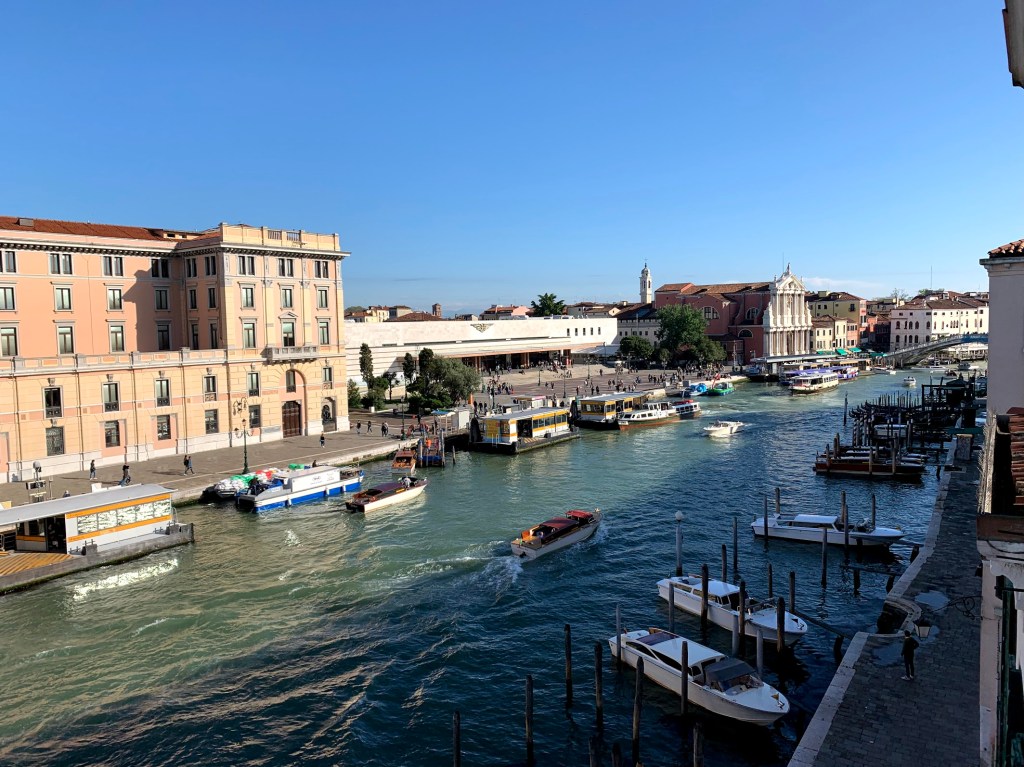
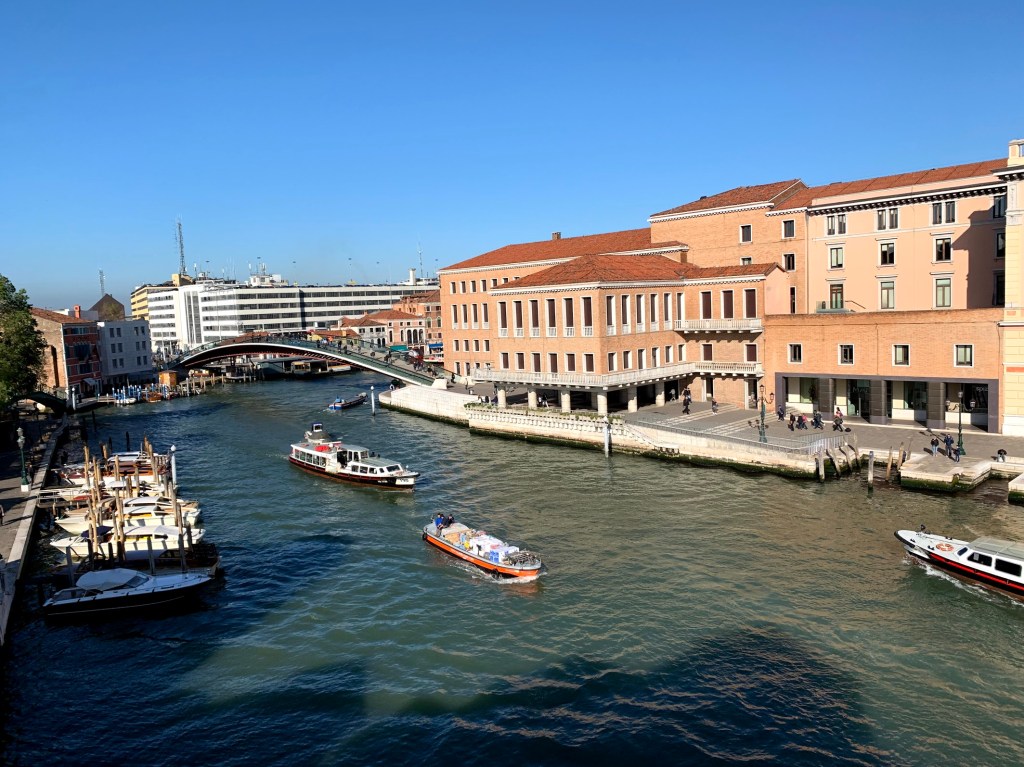
Saturday morning the 27th of April, we left Venice there wasn’t a cloud in the sky! I took a couple more photos out of our apartment windows before we bid goodbye to Venice.
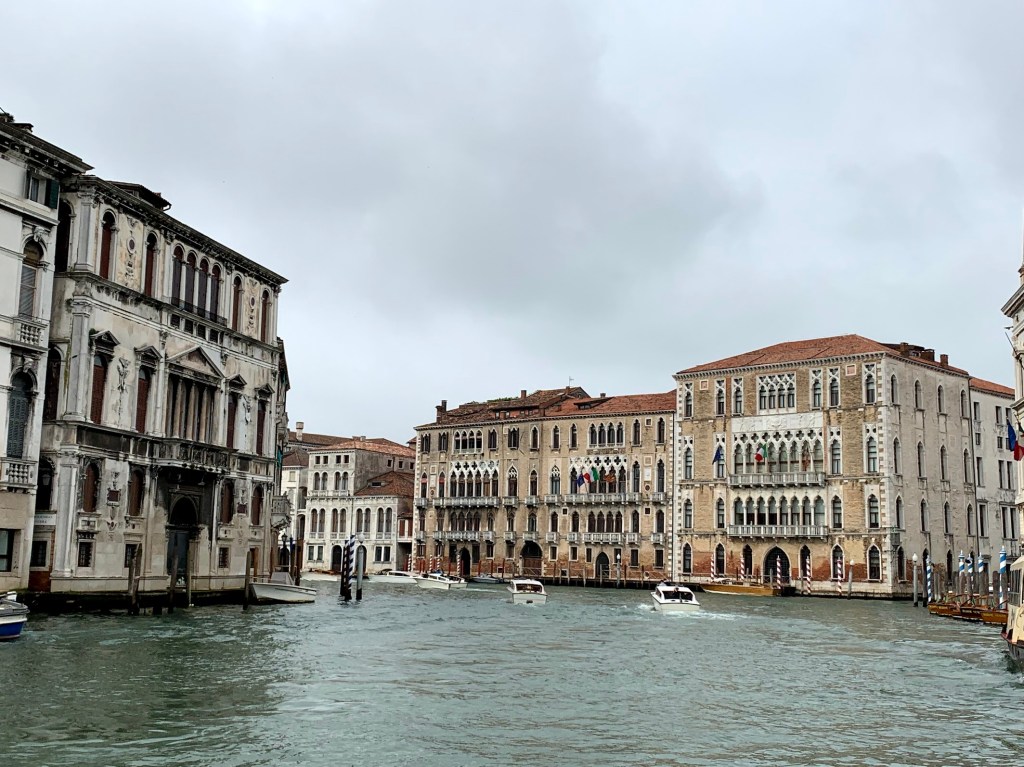
Shimmering waters of the Grand Canal
Crystal blue skies in Venice
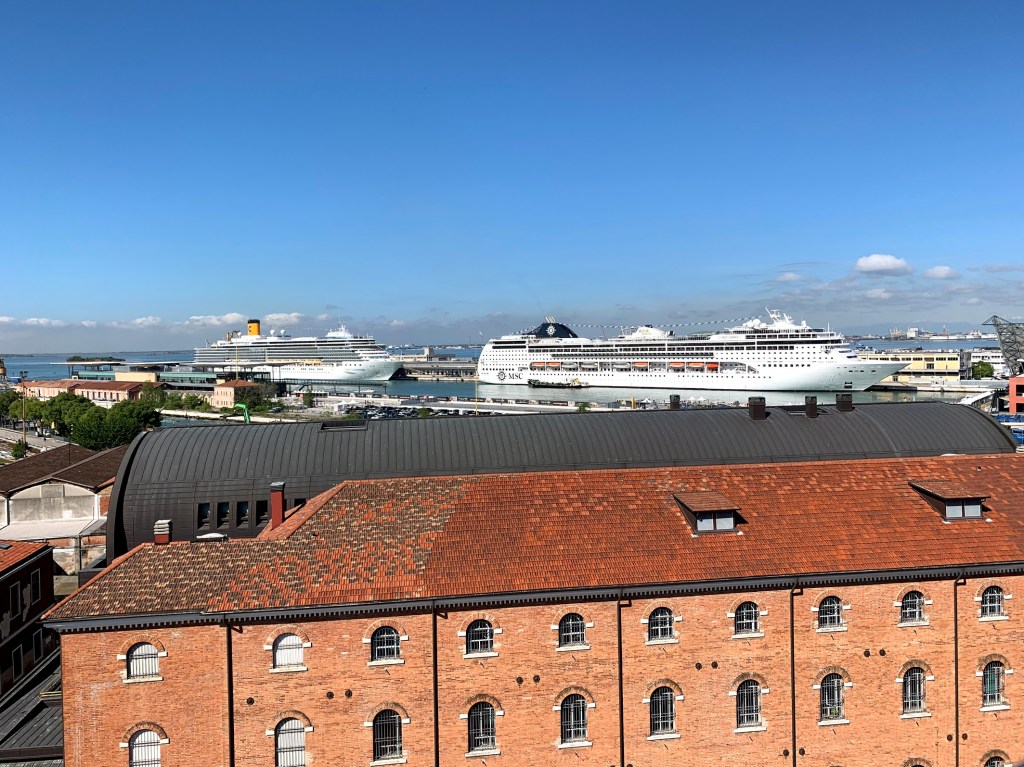
Seamus took a fun photo
of the cruise ships from the 8th floor of the parking garage. We had
a bit of a conundrum leaving the parking structure. Our parking voucher had
gone missing and the only way to prove it was our car was to show the rental receipt,
which also was missing! Now Robert and I are very methodical about placing such
items in safe places, but for some reason we couldn’t find either. It was a
Saturday, which made it hard to call the rental agency in Graz. Well after
tearing through the car Liam happened to look amongst our Passports and lo and
behold the rental receipt was tucked inside a passport. Robert had placed it in
a very safe spot that we couldn’t even find!
Cruise boats docked in Venice
Once the ordeal with the
parking voucher was done, we said a prayer of thanksgiving and headed out
across the 3km bridge to the Italian mainland. As we drove north towards the
mountains a sudden thunderstorm hit and the skies opened producing torrential
downpours and pea to grape sized hail! Robert quickly found a gas station
overhang for us to sit and wait out the hailstorm. It seems everyone had the
same idea and before long this little rural station had cars tightly packed
under the pump awnings and in the nearby fields under trees!
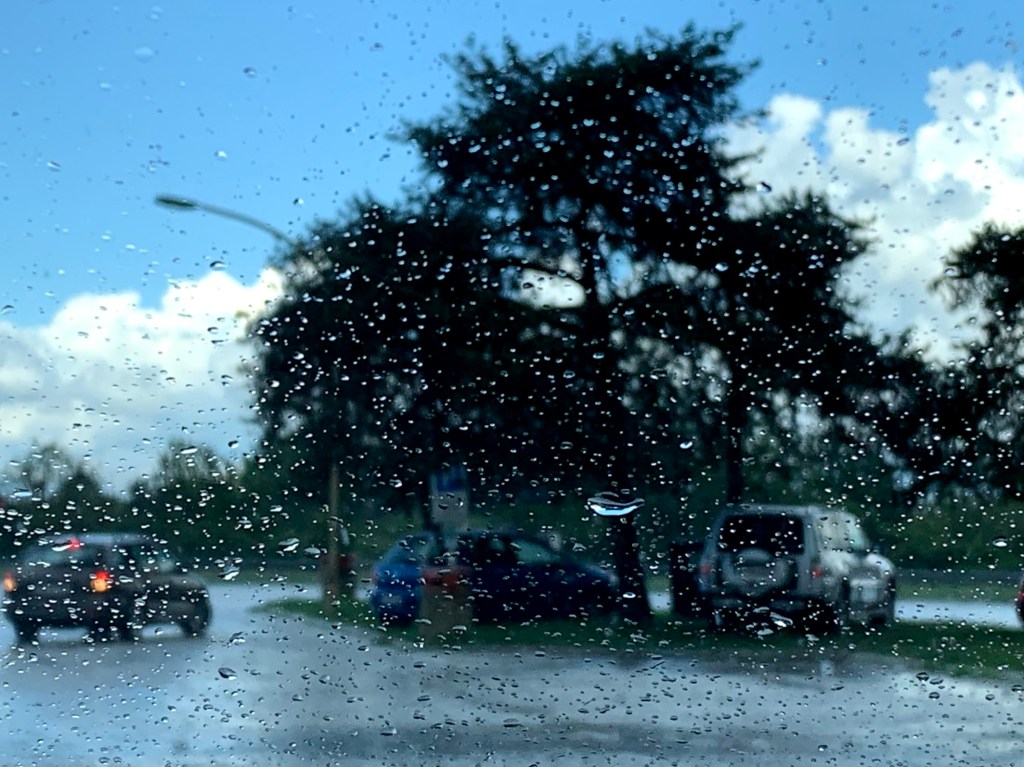
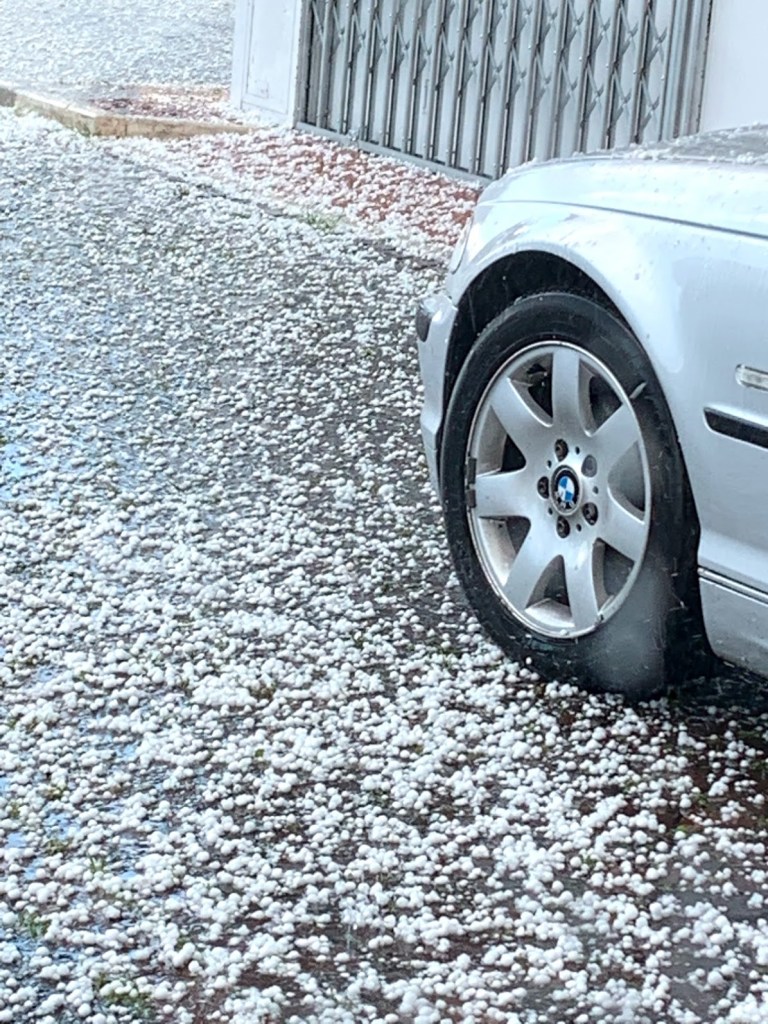
People parked under trees in rural northern Italy during a hailstormI took this photo of the car next to us to show how much hail actually fell from the sky! They were parked under a little overhang from the building. We were fortunate enough to be under a pump awning.
After 20 minutes the
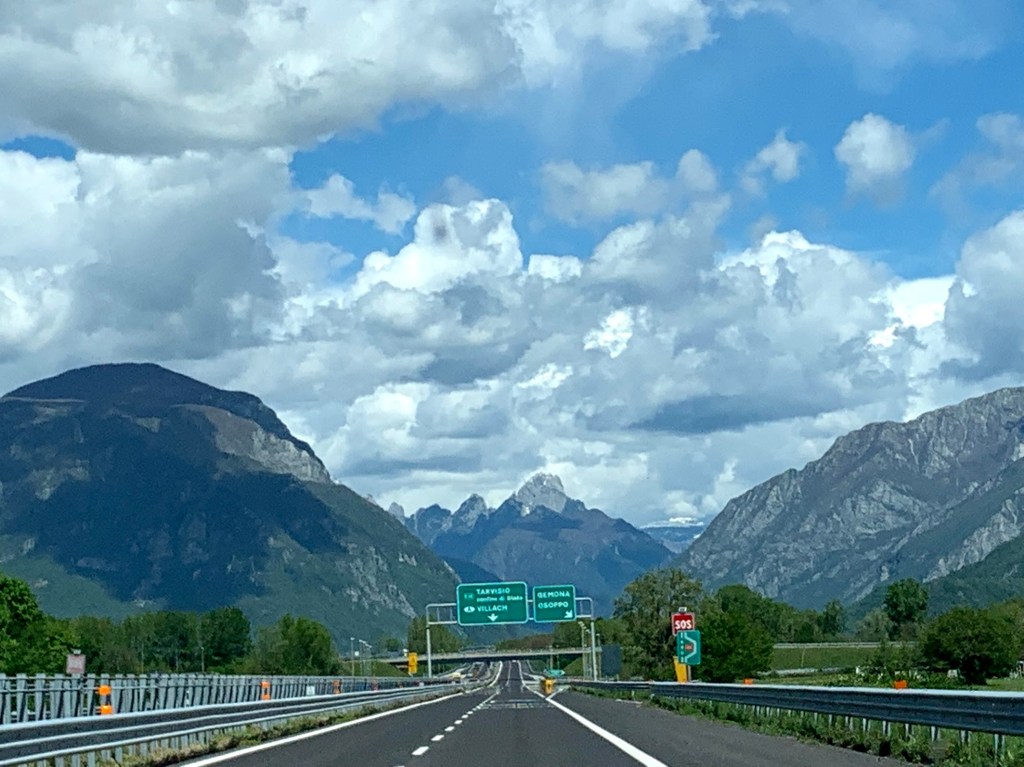
storm passed and blue skies met us as we drove into the Italian Alps. It wasn’t
long before we were back in Graz, unloading the car and reminiscing about our
two week Easter Holiday trip!
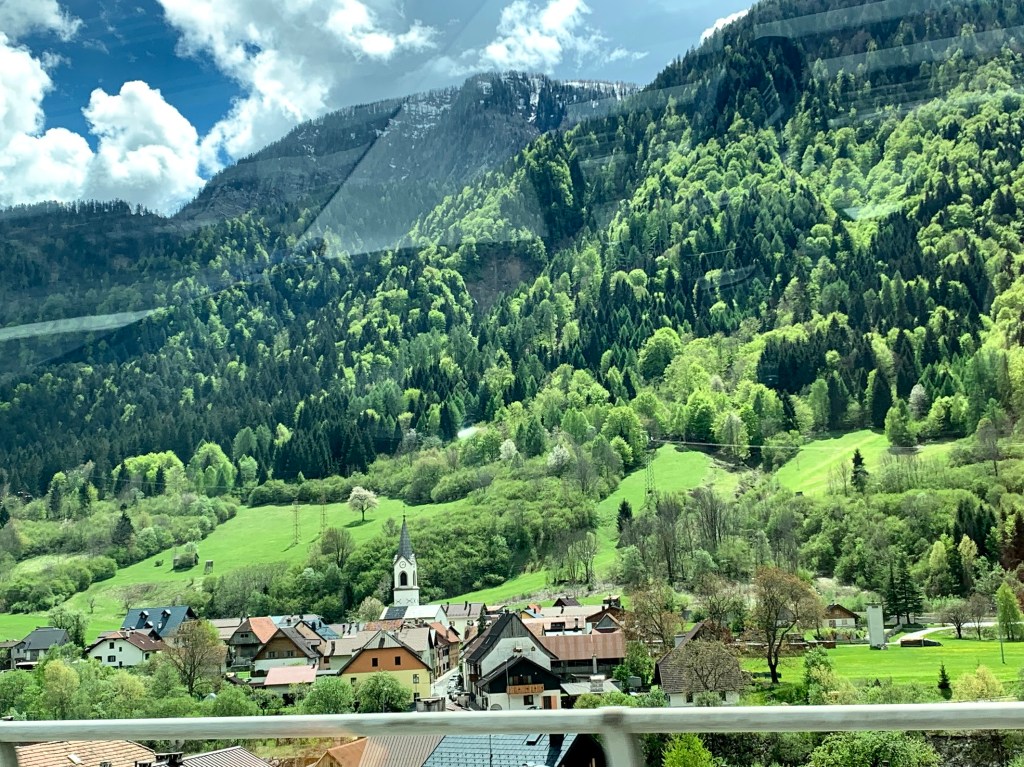
Italian AlpsItalian Alpine village near the Austrian border
“Pizza e Pasta, Pizza e
Pasta!” called the animated watiers/waitress’ from the doorways of various
restaurants!
This is now the kids’
new favorite phrase complete with the pinched fingertips and the classic
Italian flicking of the wrist and hands! Yes, it’s true that Italians are very
animated and “talk” with their hands. We saw this motion in every city and town
we visited, including Venice.
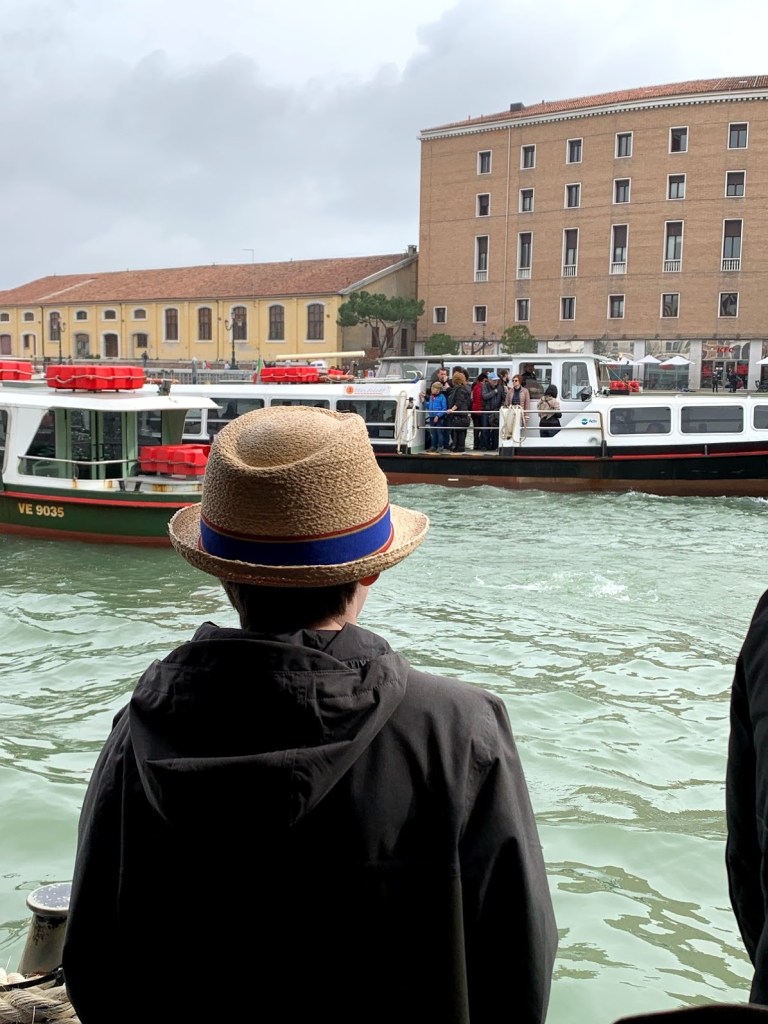
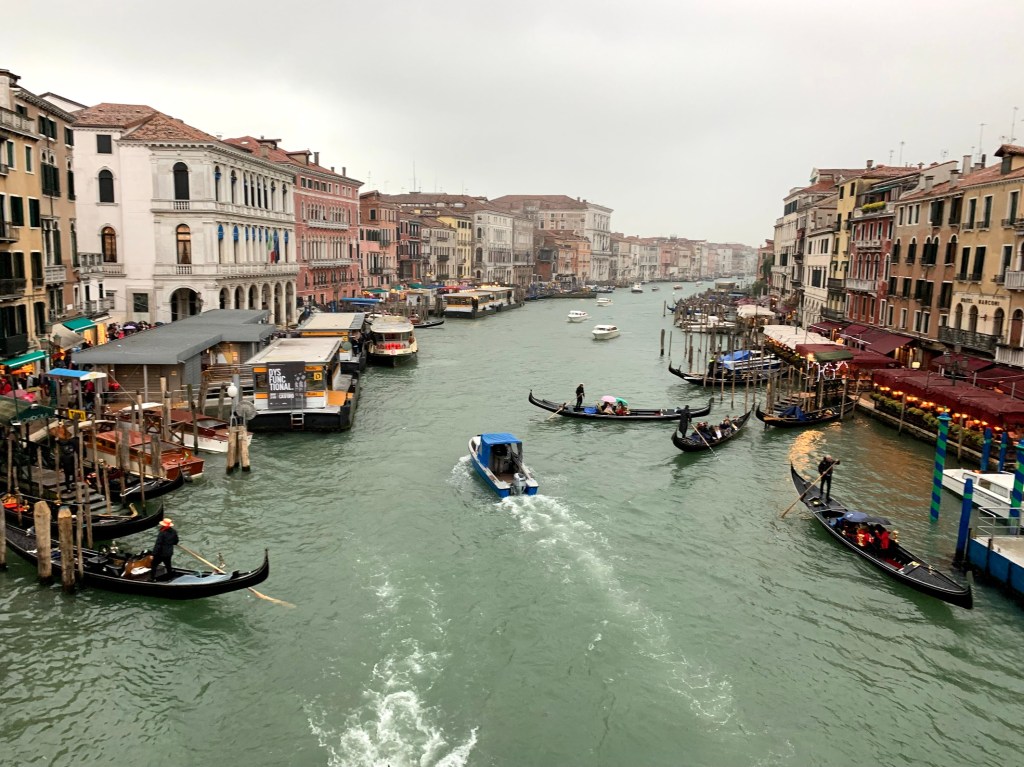
We were blessed with a beautiful spring day in Venice. It was pleasantly warm, yet the cool breezes wafted through the tiny back streets and canals straight from the Mediterranean Sea! Faywen was a little nervous when we boarded a Vaporetto (traditional public boat taxi…the trams of Venice) and rode it almost the full length of the Grand Canal to San Marco.
View of the Grand Canal from the VaporettoSeamus watching the other Vaporettos passing bySeamus and I happened to be next to the attendant whose job it was to tether the boat at each dock.
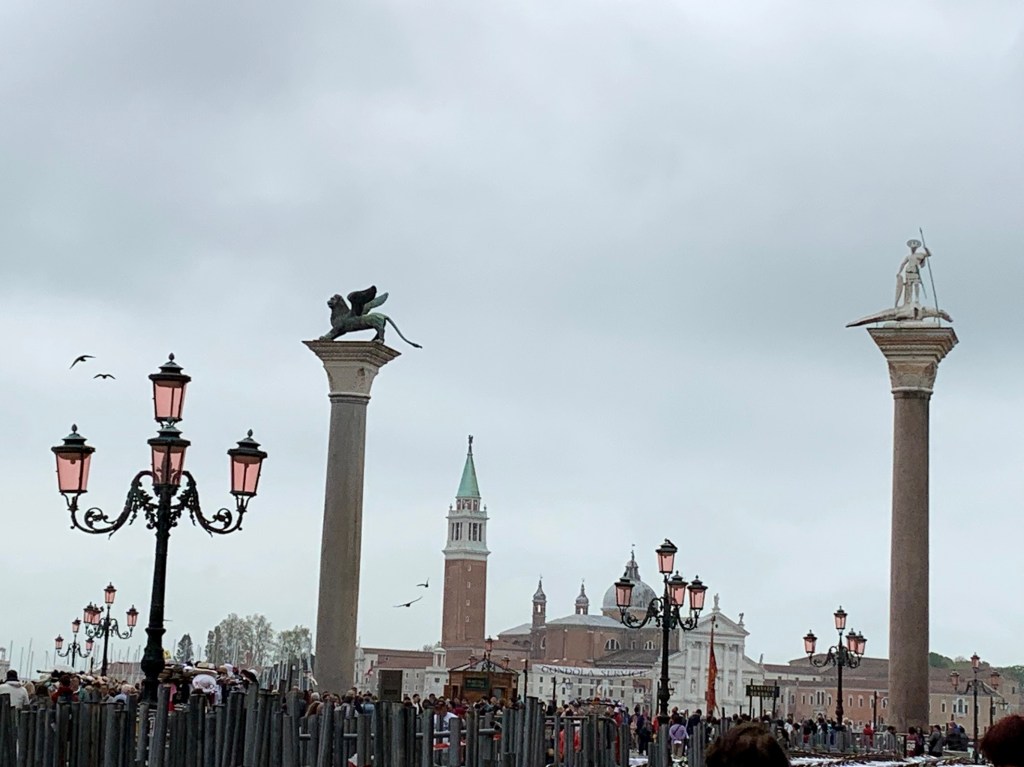
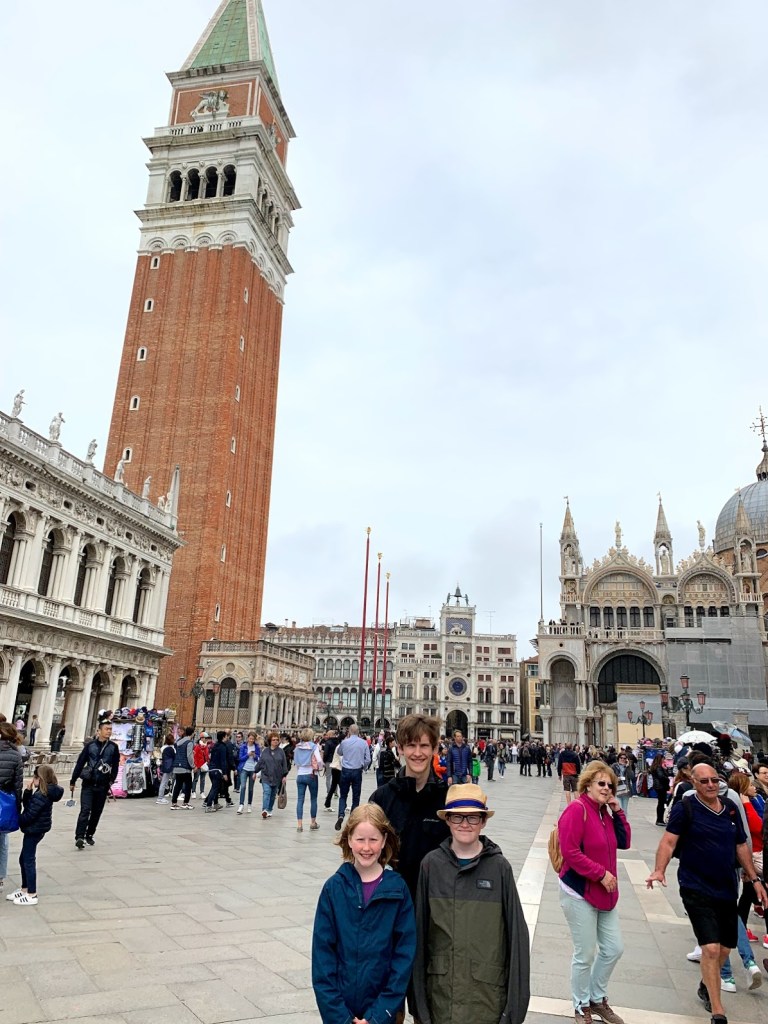
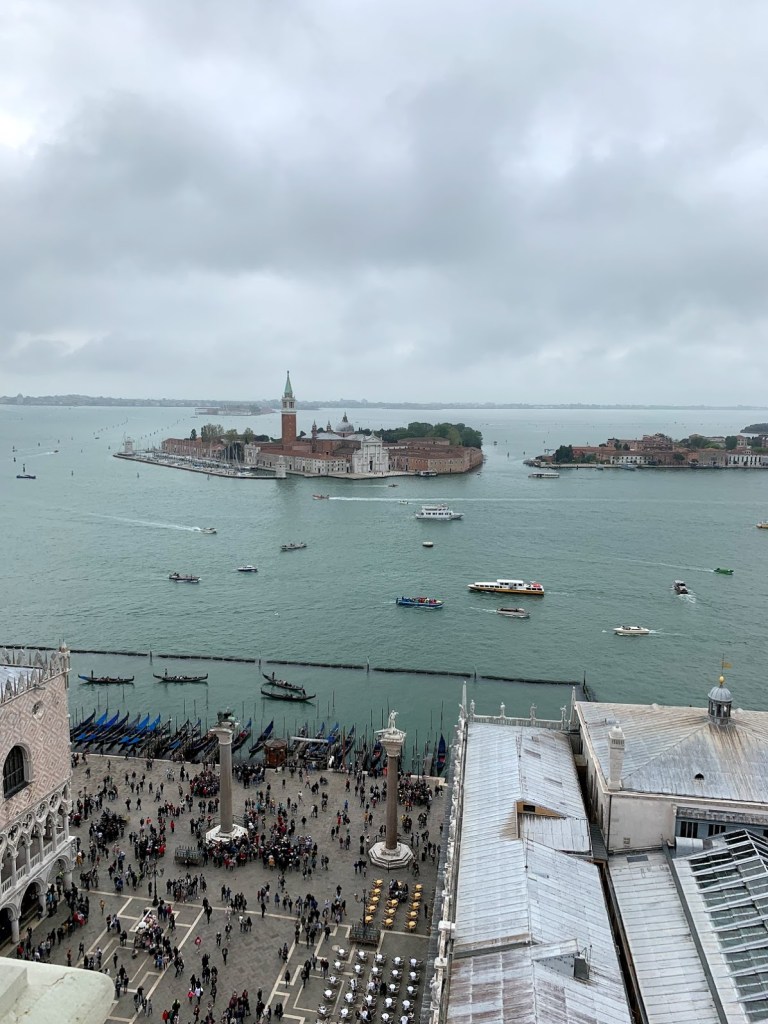
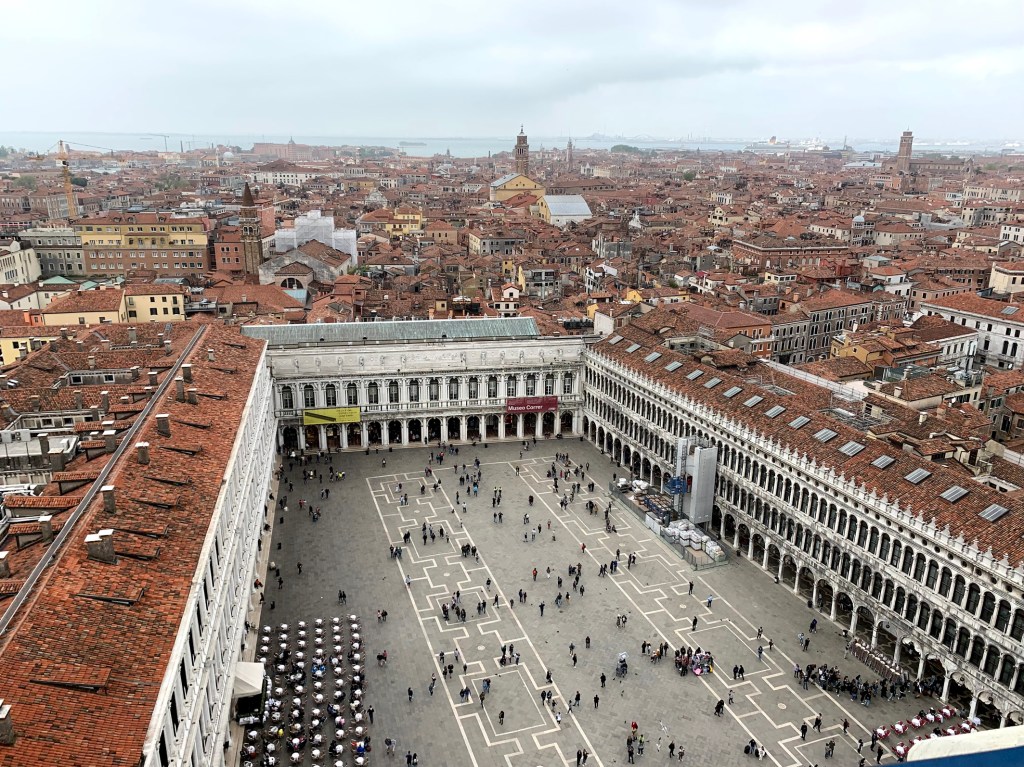
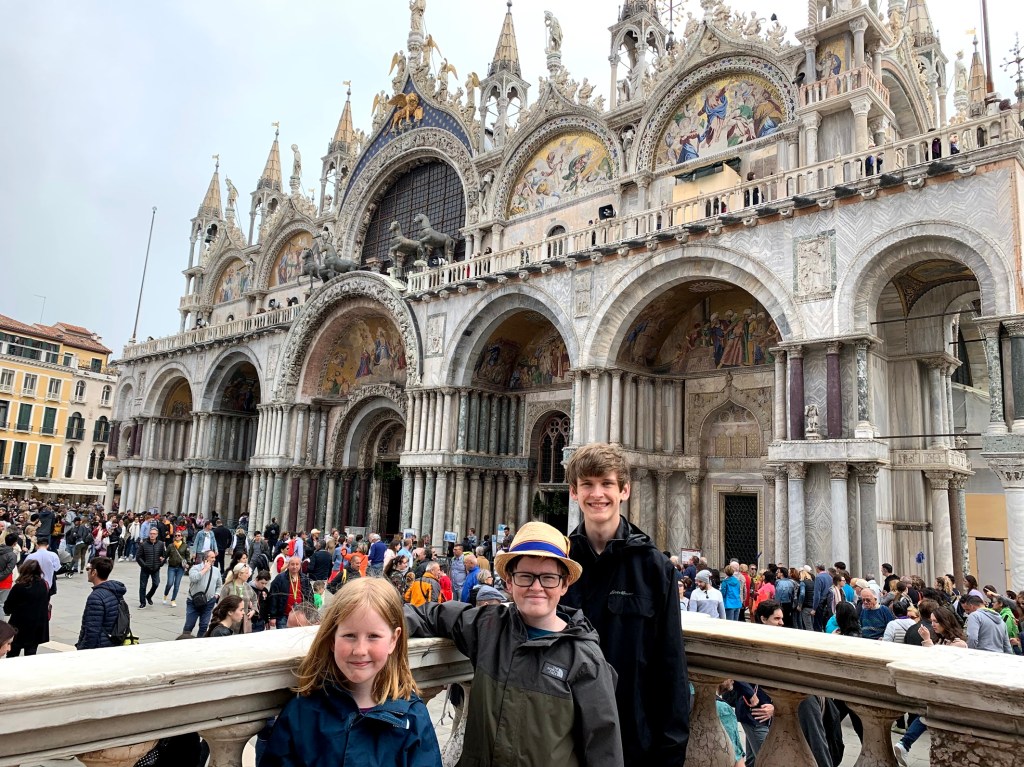
For me it was a flashback stepping off the Vaporetto and entering San Marco (St. Mark’s) Piazza. I had visited Venice 27 years ago and it was just as I recalled. The large four sided piazza with it’s Baroque buildings, the Lion of Venice statue on the pole, the Doge’s Palace, the Campanile rising above the city, and the majestic St. Mark’s Basilica. We decided to visit the Campanile, however we couldn’t climb to the top only take an elevator. Atop the bell tower we had stunning vies of all of Venice and the Mediterranean Sea! You could even see the canals dividing the 117 islands.
Lantern, Lion of Venice, and Gondolier in San Marco Piazza
San Marco Piazza: R-Campanile, L-Basilica
View out to sea
San Marco Piazza (St. Mark’s Square) 26 April 2019St. Mark’s Basilica
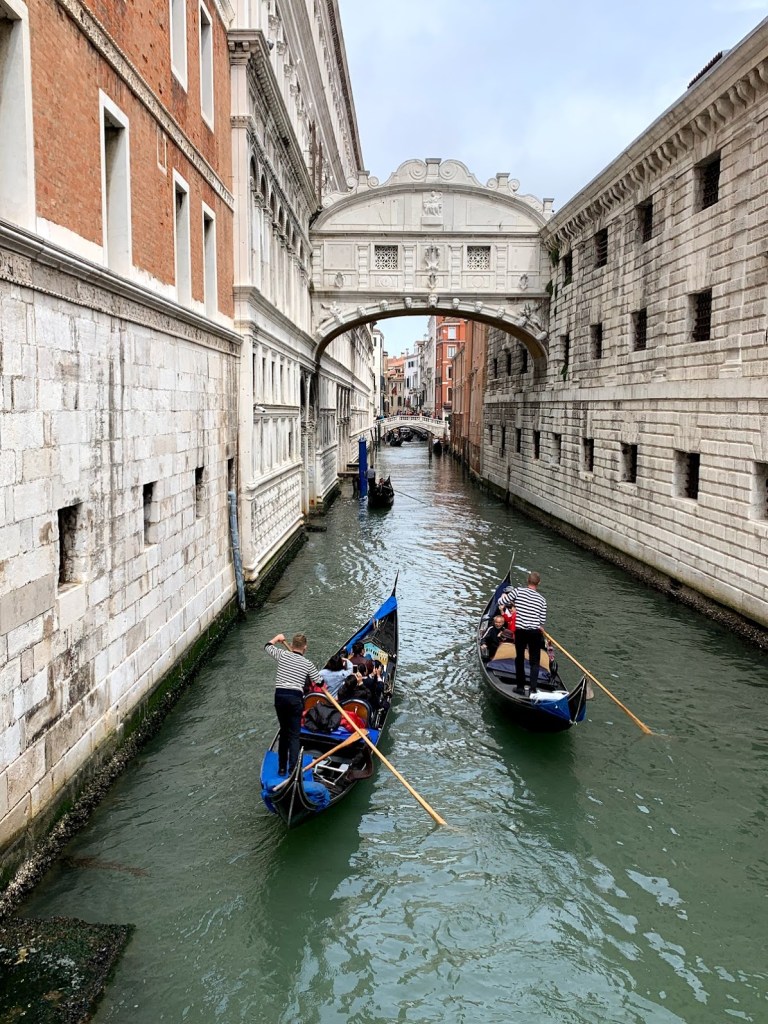
Once back down the tower
we walked around the corner of the Doge’s Palace to find hte famous iconic
Bridge of Sighs The bridge connects the palace with the prison and it is said
that as prisoners passed over they looked out the tiny windows and sighted.
Another legend holds that when the great lover Casanova was caught with one of
the Doge’s daughters he was sent to prison. Many of the town’s women came to
the adjoining bridge and “sighed” wishing for the release of the great lover.
He was eventually released much to the pleasure of the women of Venice!
Bridge of Sighs
From there we meandered
through the narrow streets of Venice and over it’s many small bridges
connecting the islands. Everywhere there were little shops and cafes. One could
hear the call of Gondoliers as they rounded corners and the charming old
streets gave us vignettes into what everyday life is like for the locals… from
garbage gondolas to hanging laundry outside the buildings.
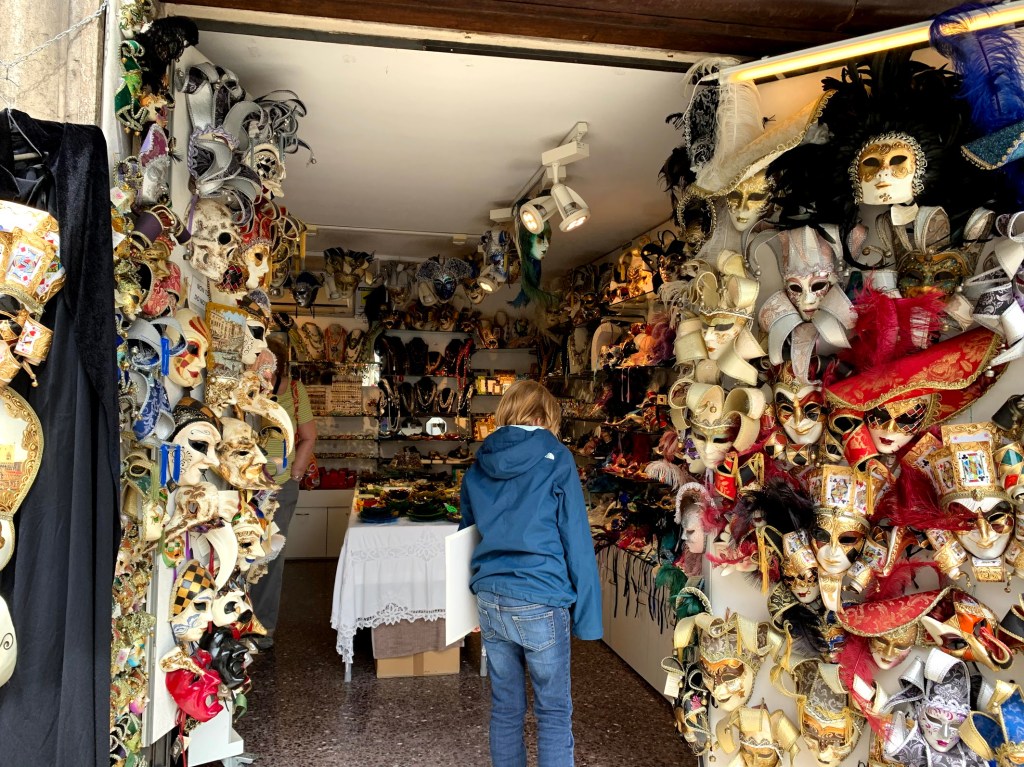
Venice is known for it’s masquerade masks
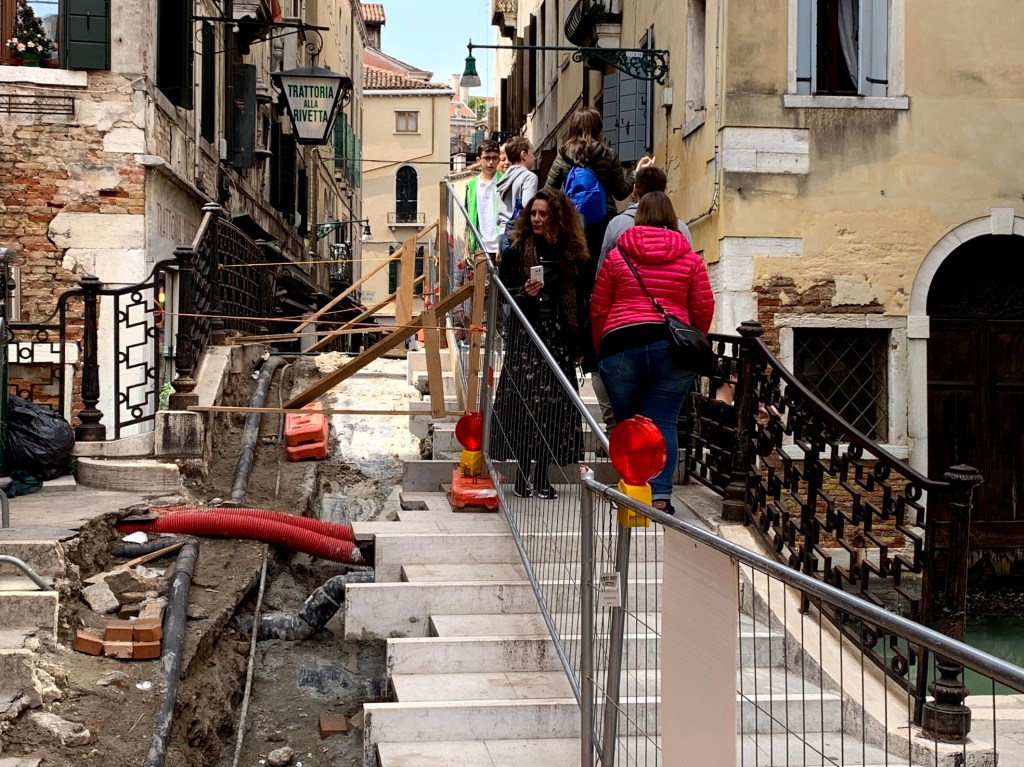
Unique glimpse in how the Venetians connect the pipes and sewers from island to island.
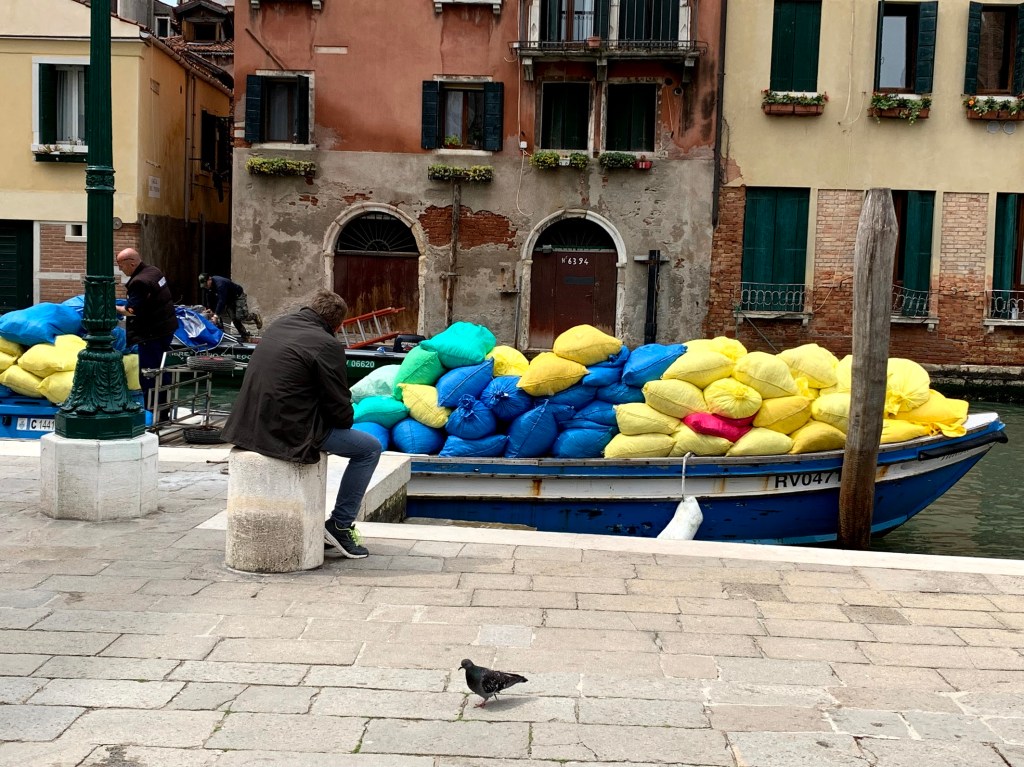
Garbage gondola
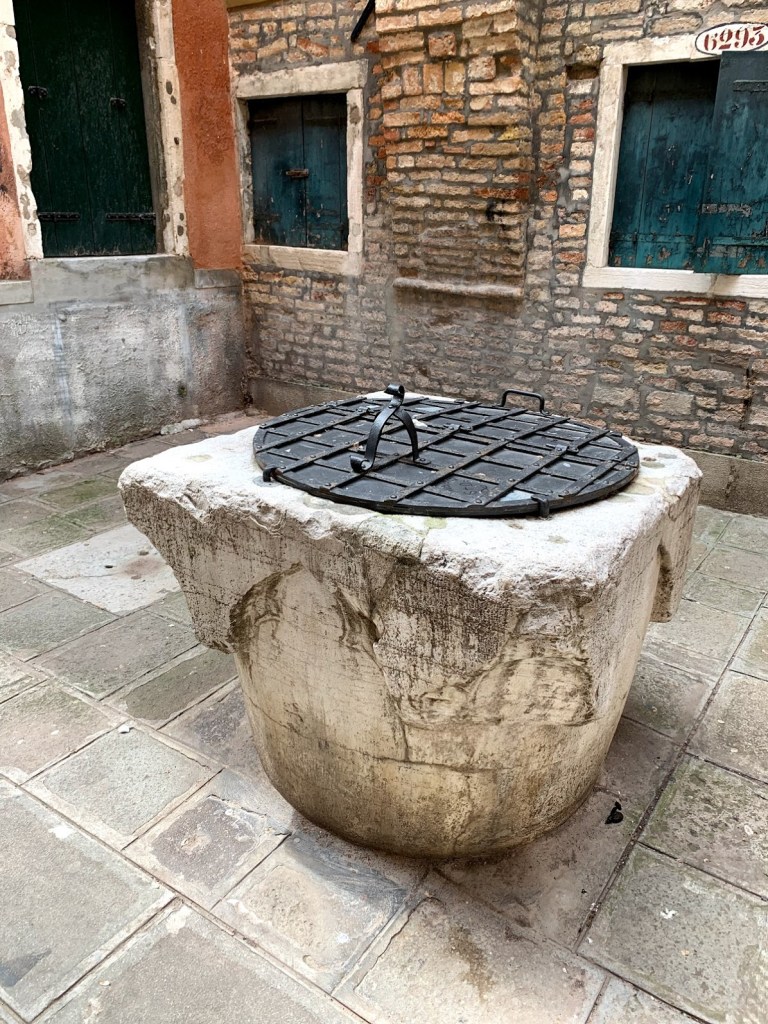
Fresh water well
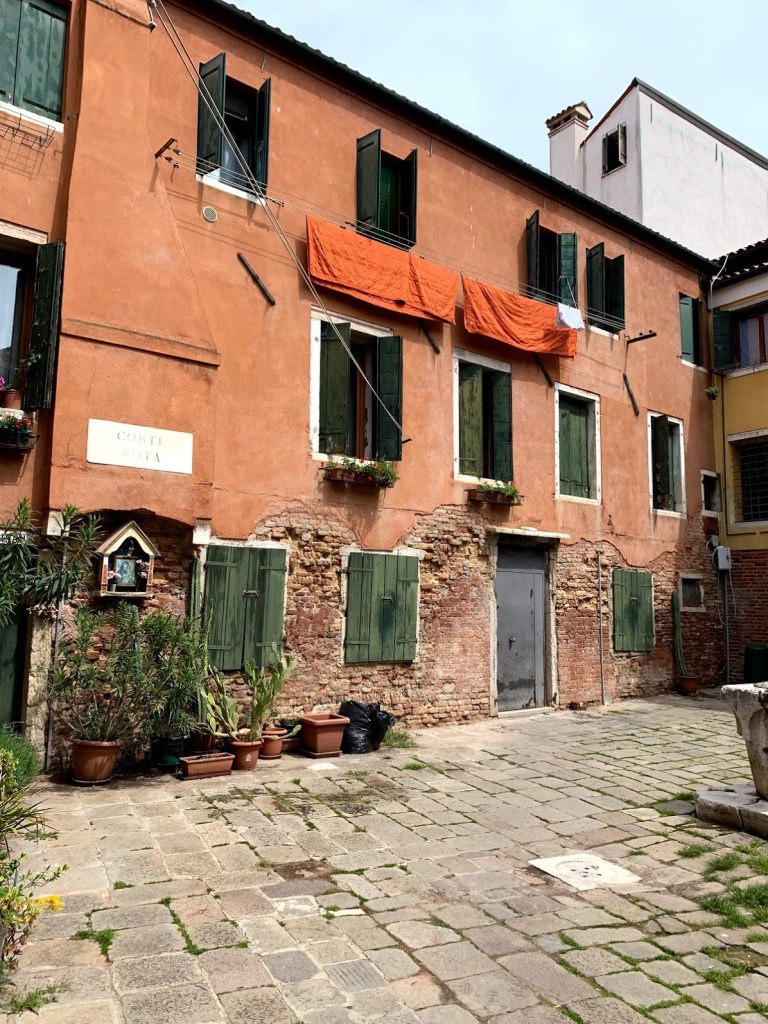
Laundry
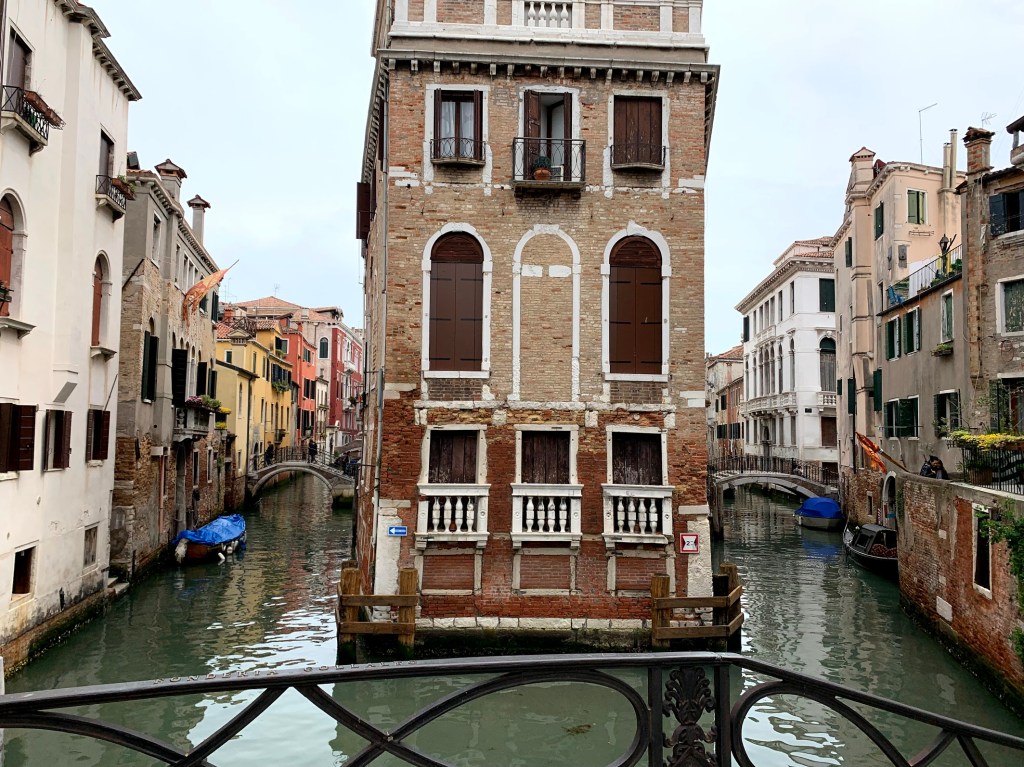
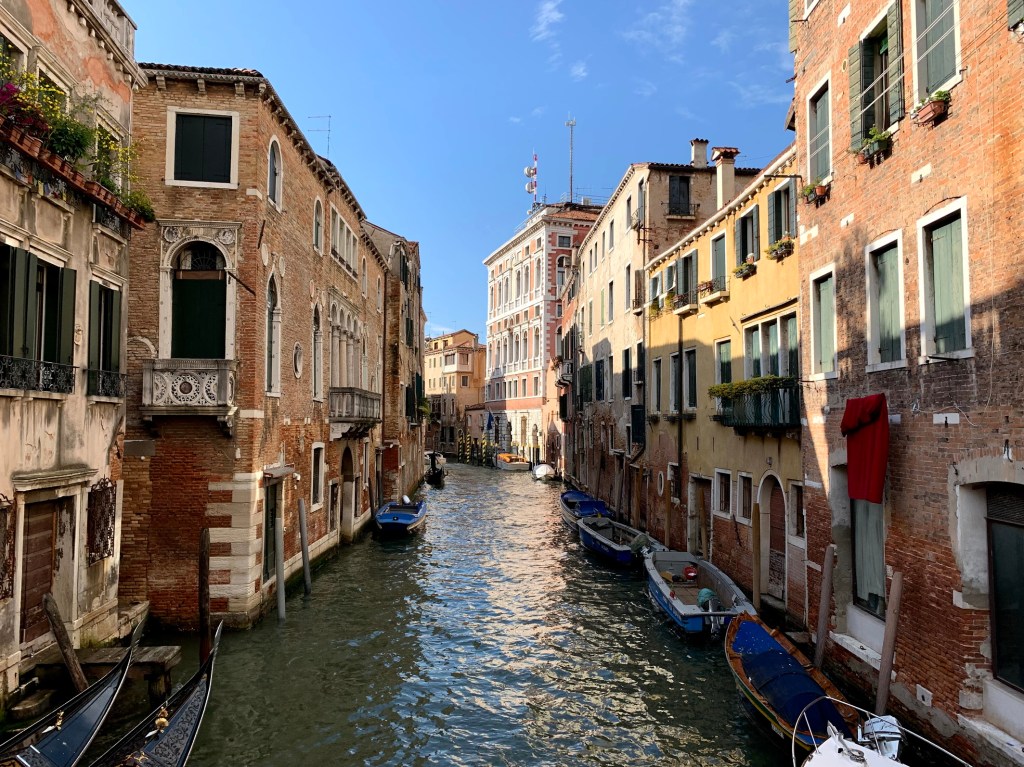
A double canal: We learned that the water is only about 2 meters deep and the water level can fluctuate up to .5 meter with the tides.
As we crossed the Rialto
Bridge that spans the Grand Canal, a pop up thunderstorm forced us into one of
the little shops that line the bridge. It was a nice place to be caught,
because it was full of Venetian blown glass. Venice is known for its mouth
blown glass and leather products. Faywen and I purchased leather purses and
Robert bought me a beautiful Venetian glass bead necklace.
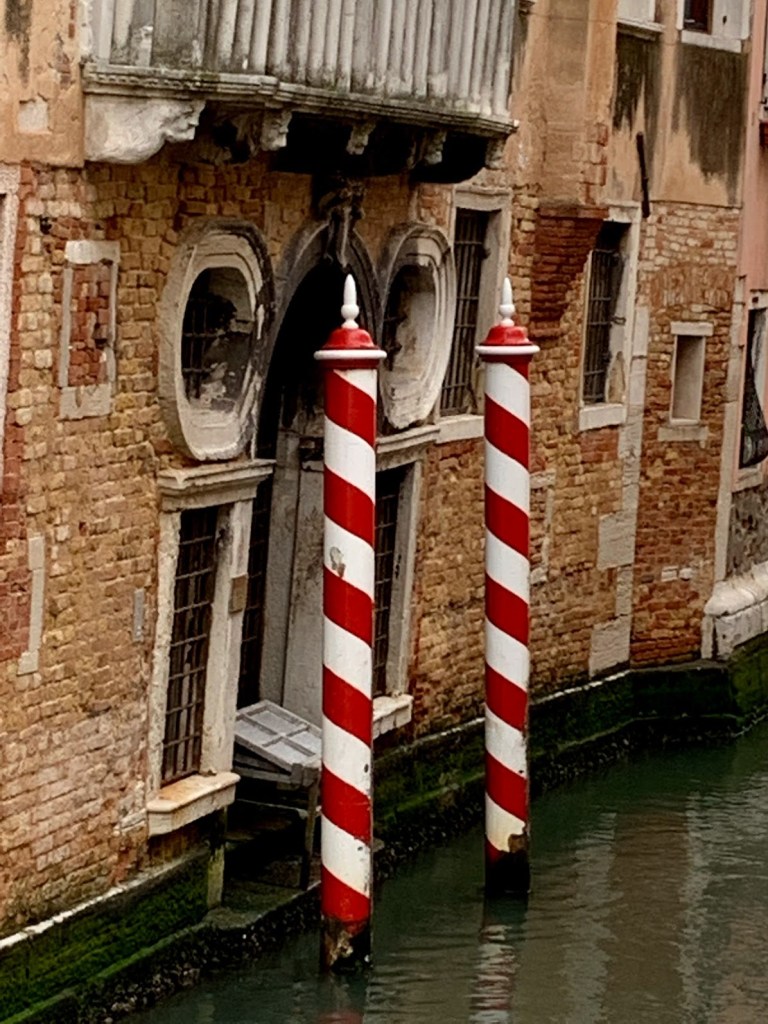
Iconic boat poles
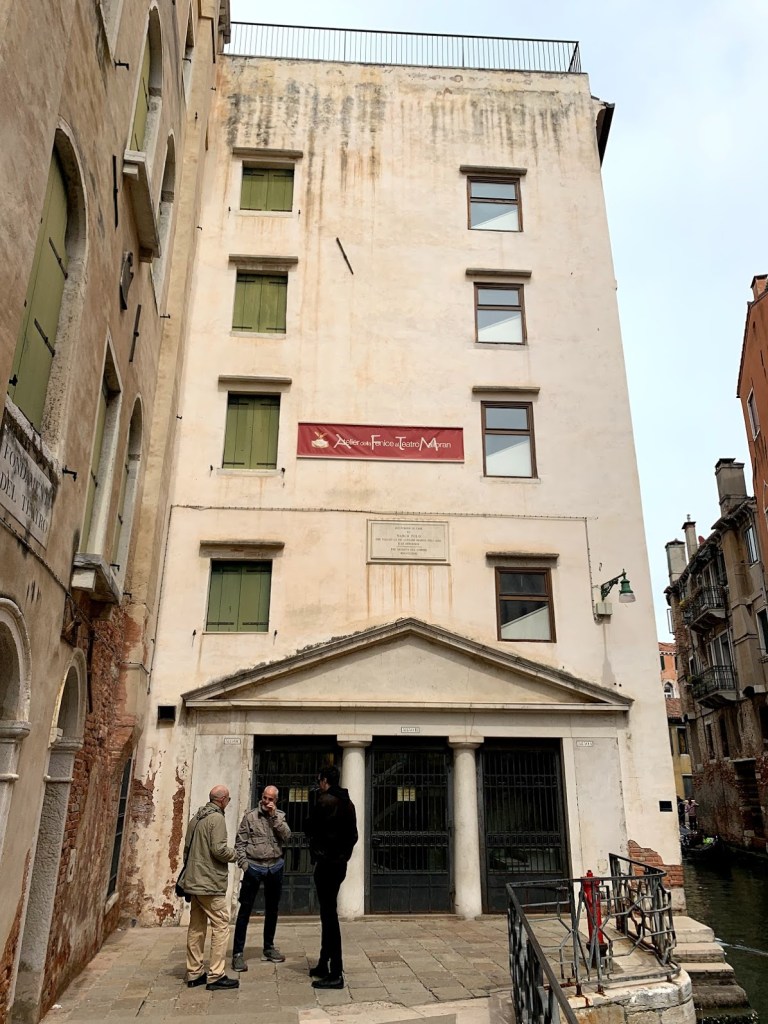
Marco Polo’s birth house
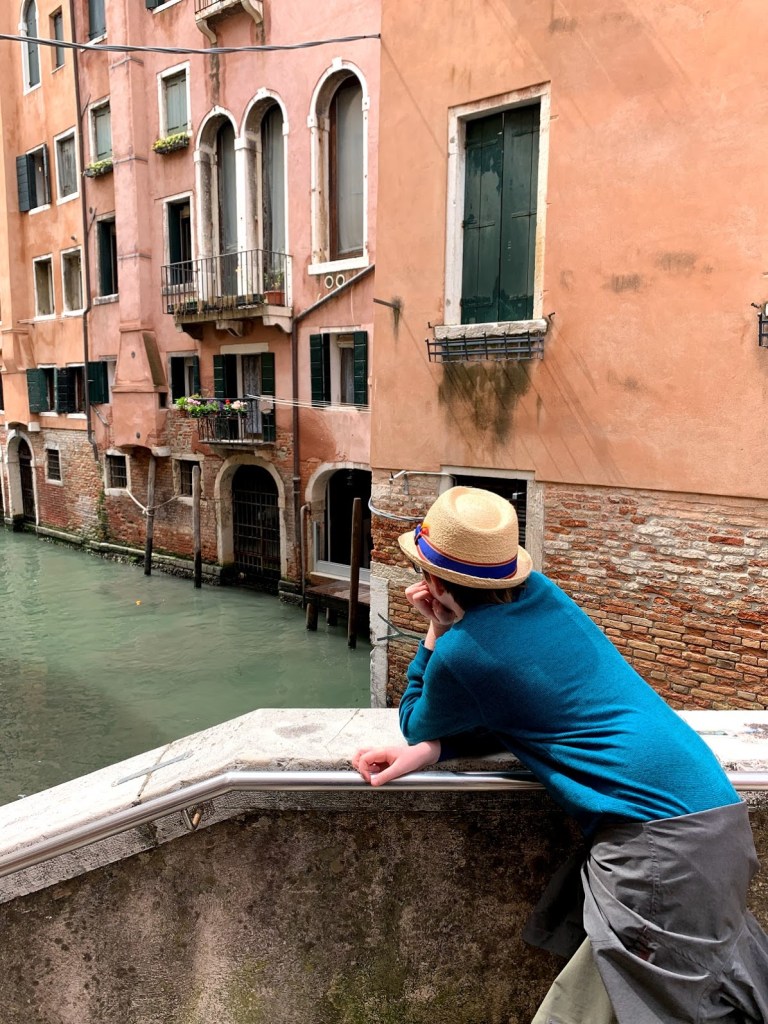
Daydreaming
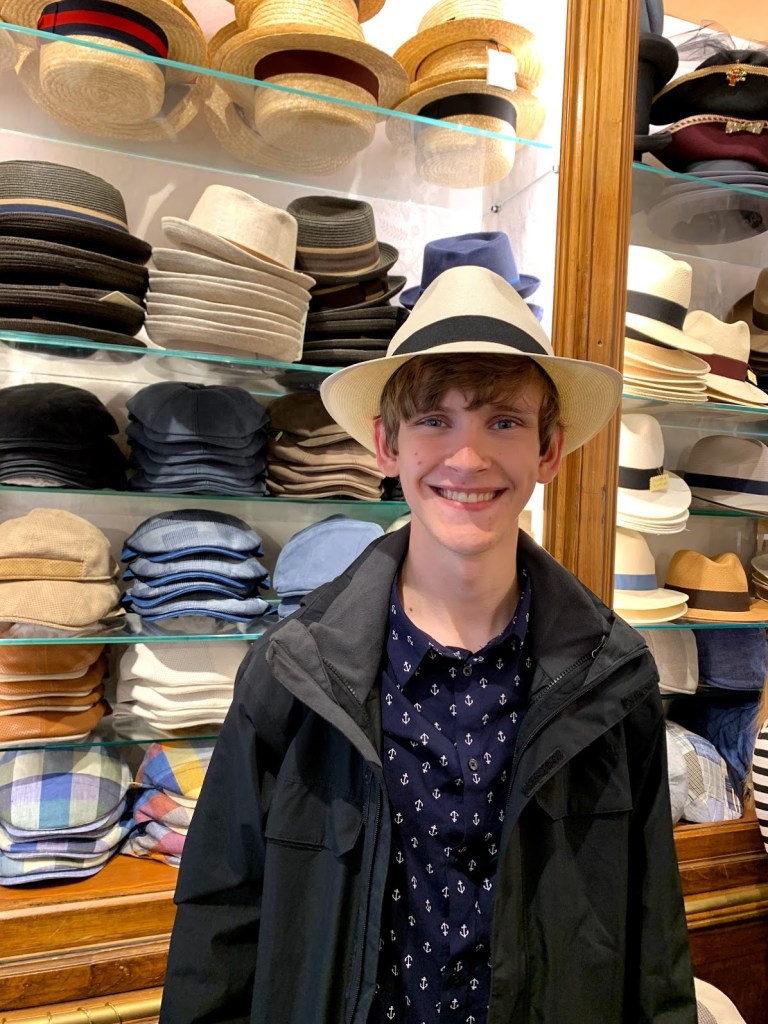
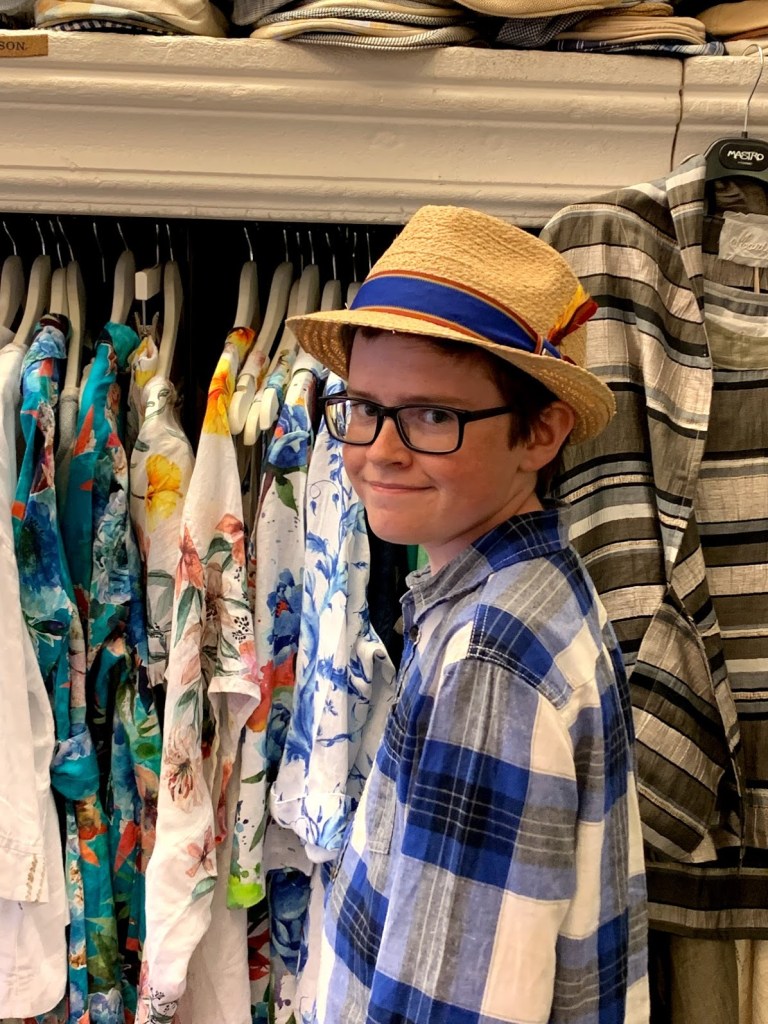
Liam found his hat in Venice!
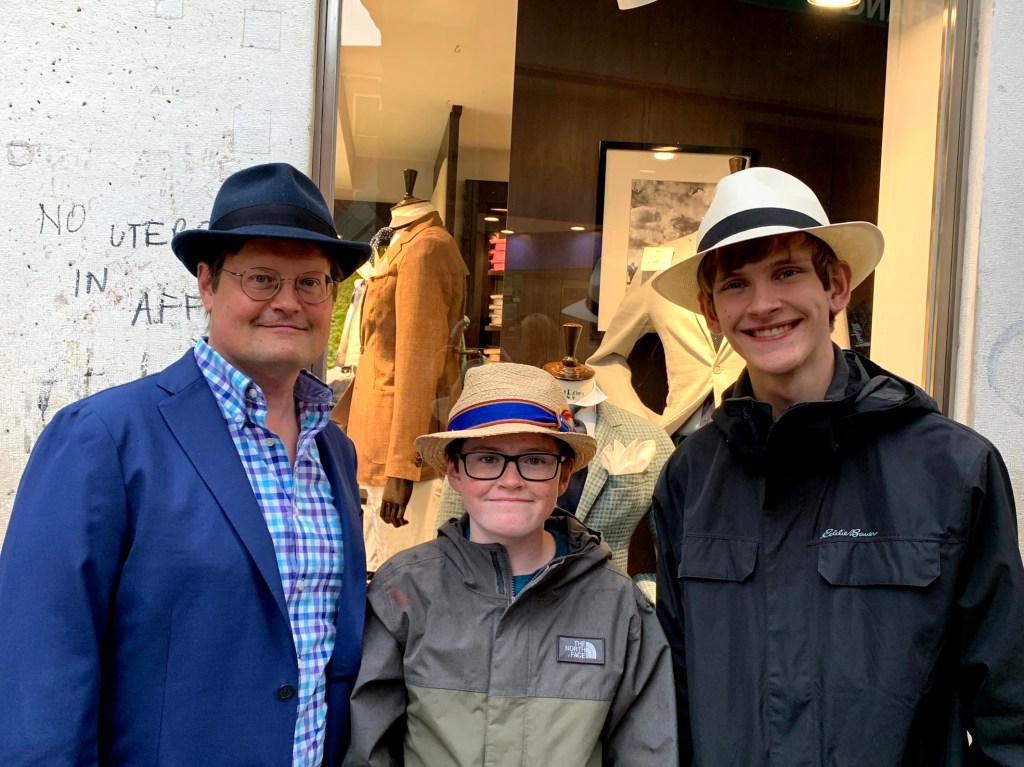
Three handsome fellows!
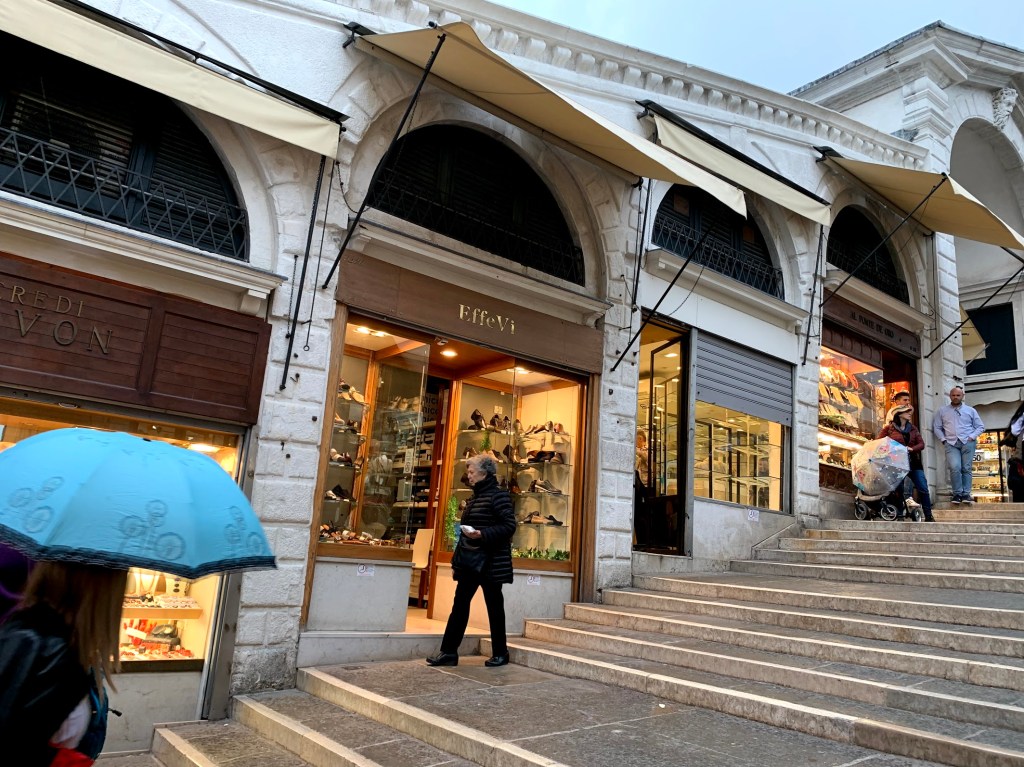
Rialto Bridge
View from the top of Rialto Bridge
After the 20-minute
thunderstorm subsided, the skies cleared and the sun came out. The afternoon
sunshine made the canals sparkle. It was the perfect time to hire a gondola!
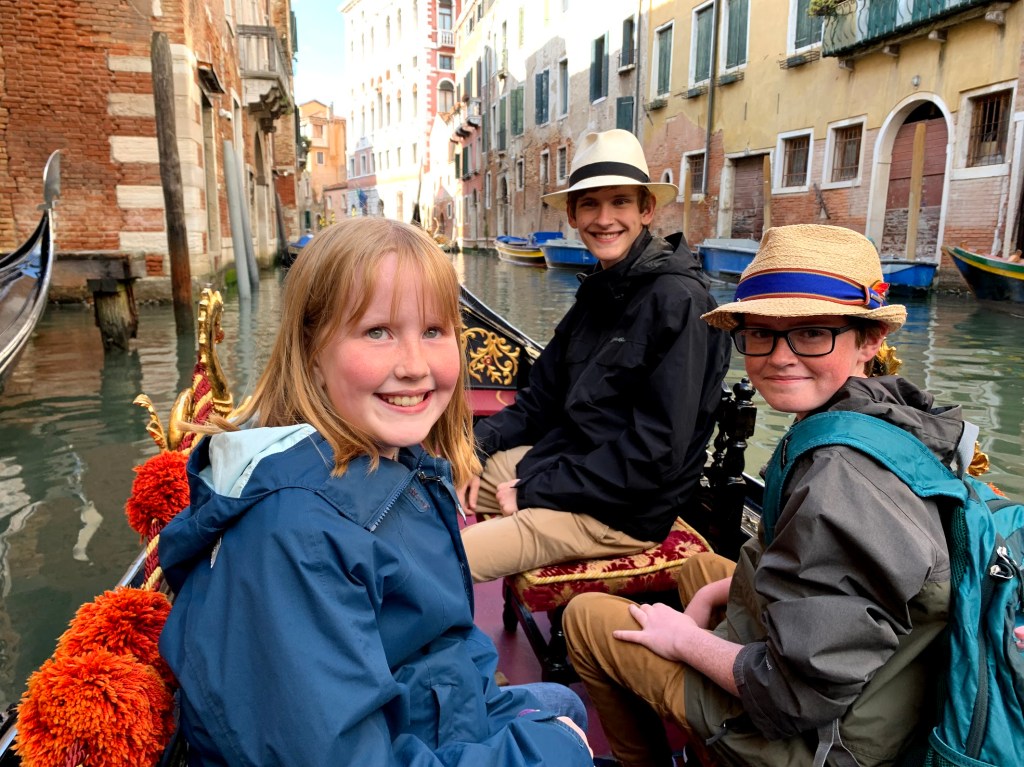
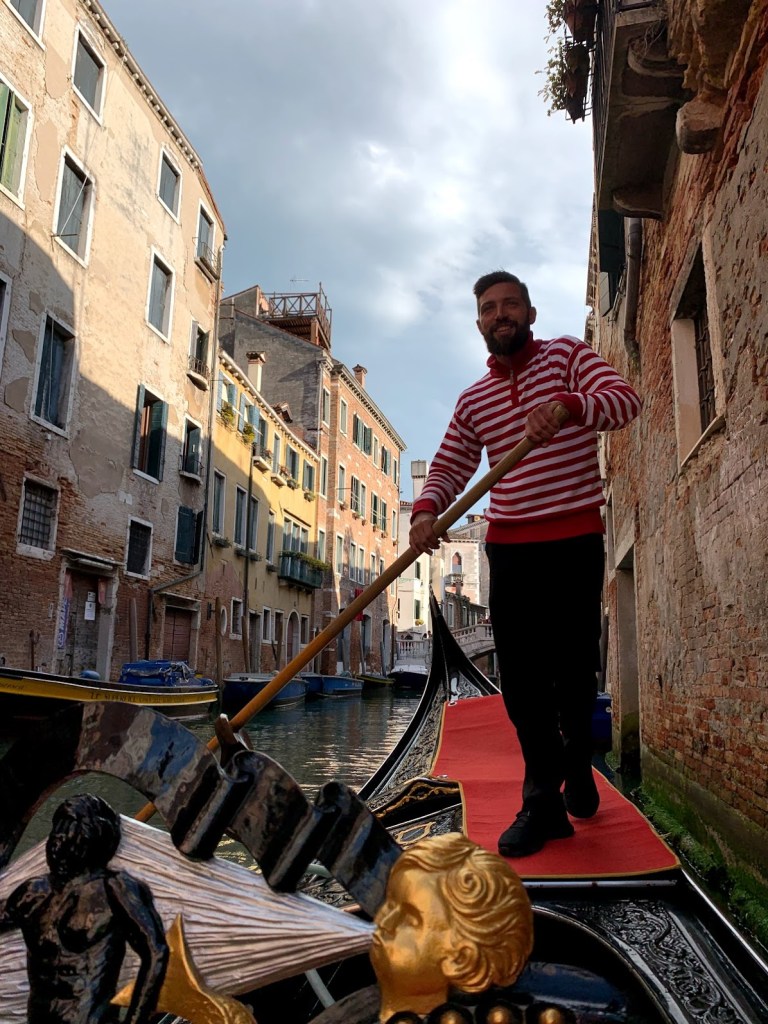
Our Gondolier, Marco, was amazing. We asked him questions about the process of
becoming a Gondolier as well as the other traditions associated with the job. I
think he was a bit surprised to be asked such questions. He spoke enthusiastically
about the tradition. Most people ask him questions about Venice and it’s
history (he did tell us some of that too). It seems very few people inquire
about the history of the Gondolier’s themselves!
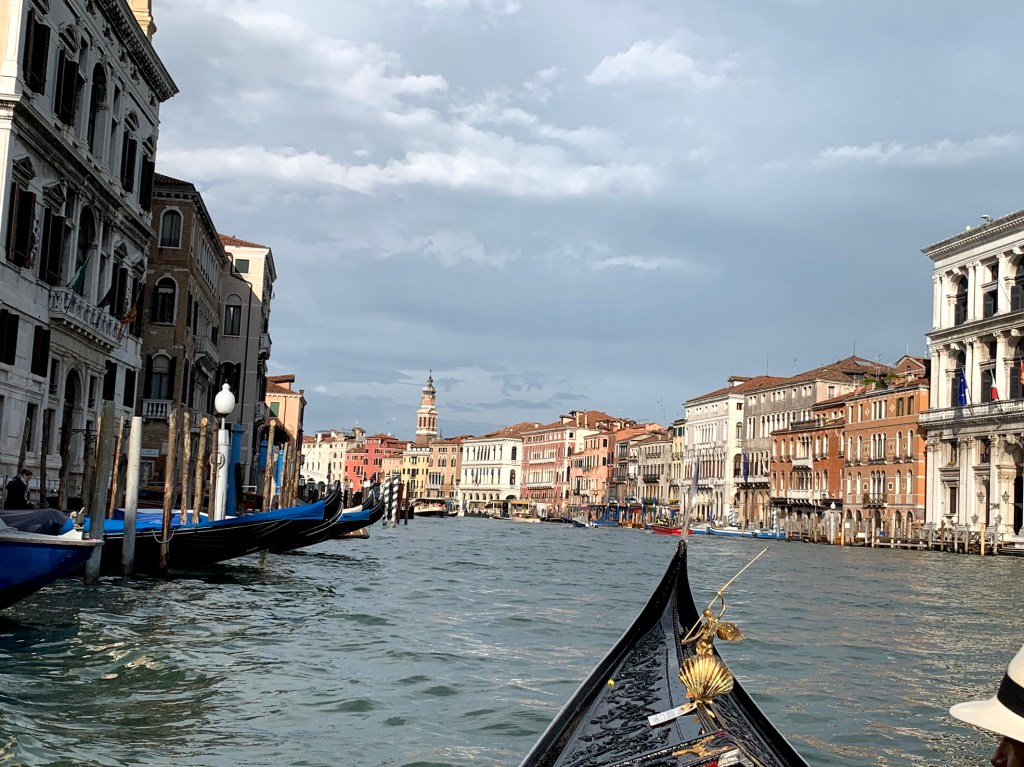
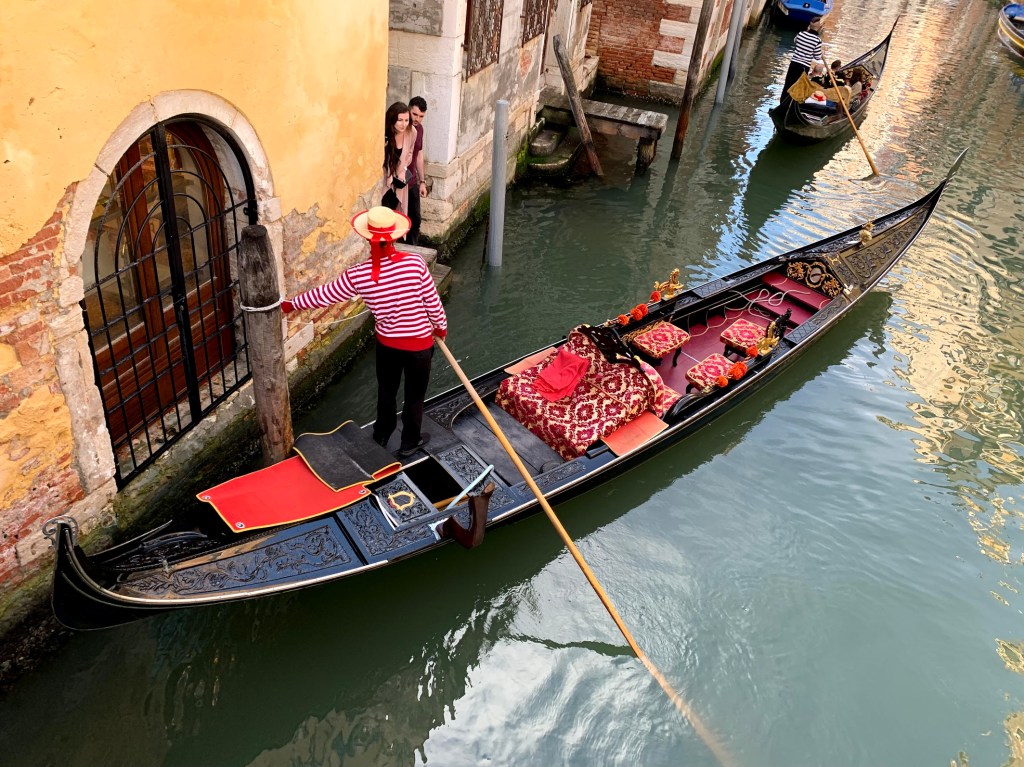
Gondola: Sr. Marco learned from his grandfather and all gondoliers must past an intensive one year course before acquiring their license.This was one of the larger canals we floated down during our gondola rideOut onto the Grand Canal
Faywen was a bit nervous
at first to get on the gondola, but Mr. Marco had her at ease as we gently
glided through the old neighborhood canals. There are over 340 Gondoliers and
10 areas where they work in rotation. We chose a less populated area of town
for our ride. It really gave us a feel for what life is like in Venice. We did
go out onto the Grand Canal for a bit too. The gondola ride is something our
family will never forget.
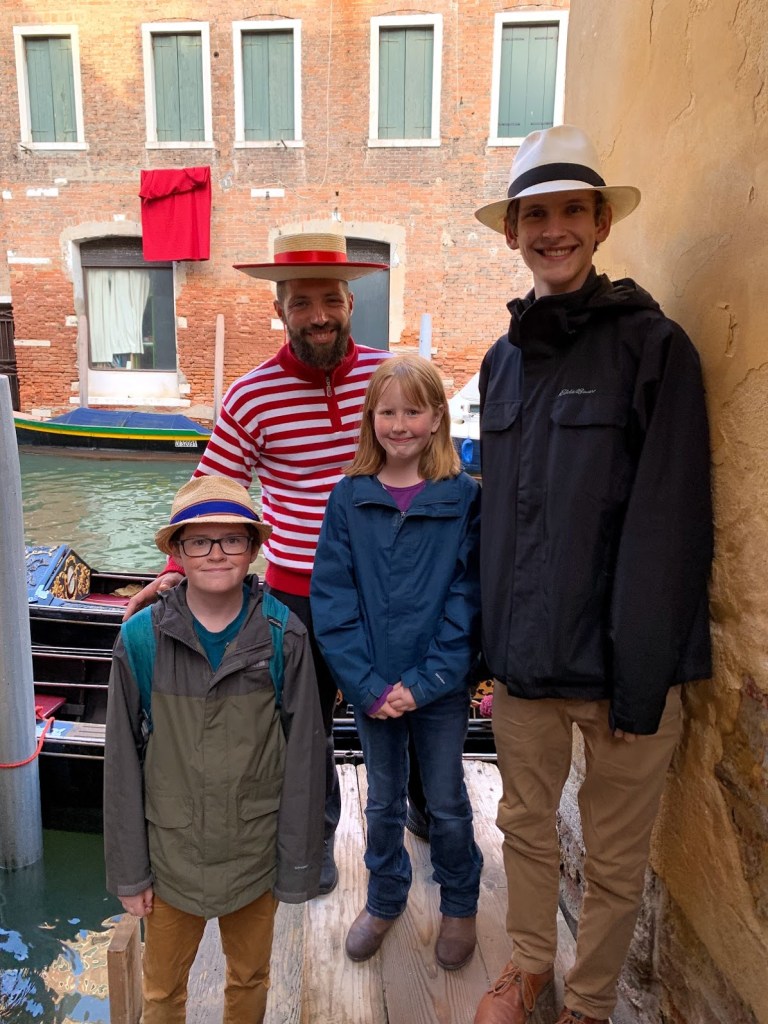
Senior Marco
Sr. Marco was quite taken with our kids and vice versa!
I took this photo of our gondola boat and Sr. Marco from a nearby bridge.
The kids wanted Robert
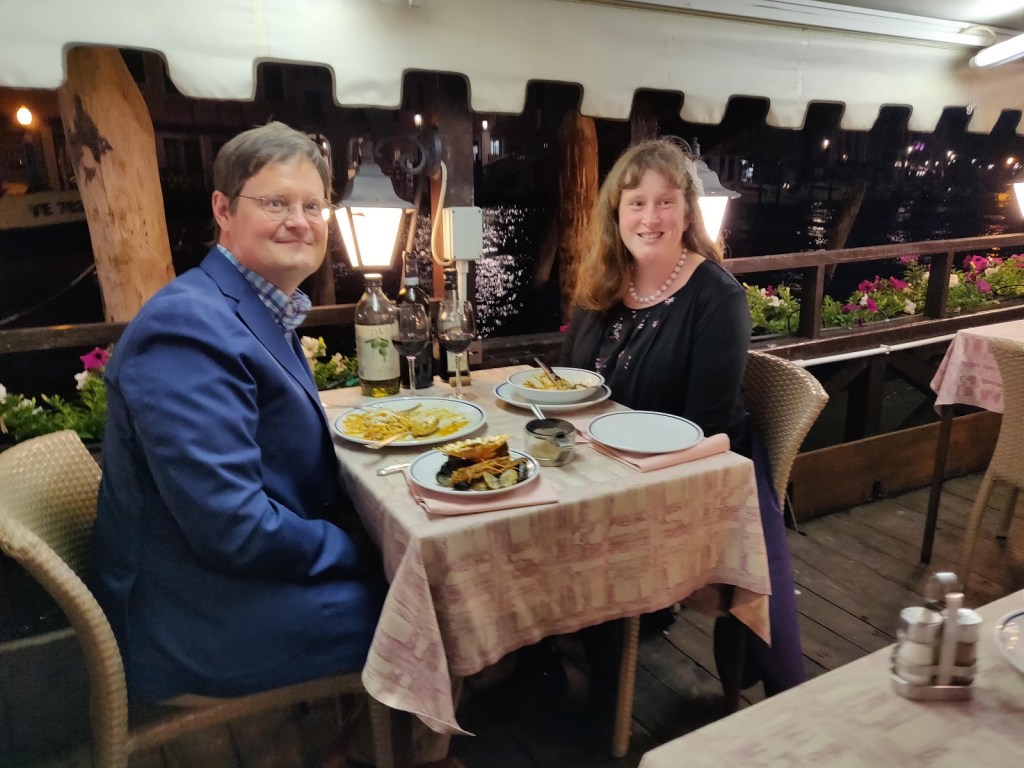
and I to have a “romantic” dinner in Venice so they ate dinner at the pizza café
near our apartment. Robert and I crossed the Grand Canal to a beautiful Roman
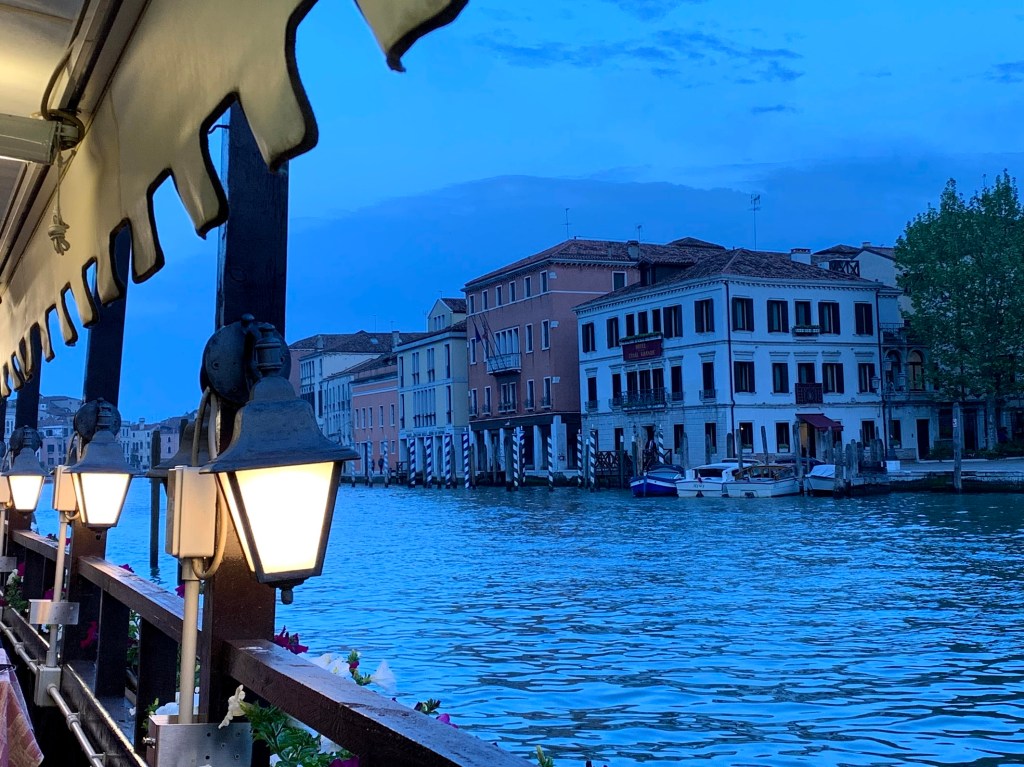
Restaurant. We sat right on the edge of the Canal as the sun sank over the
waters. We had a lovely meal and our waiter, Alex, was actually half Italian
and half English. We thoroughly enjoyed the service, food, and of course the
ambiance!
Dinner on the Canal
View of the Grand Canal from our table
Venice might be old with
it’s crumbling buildings, salty and slimy canals, and touristy areas. But if
you get into the back streets and talk with the locals it’s one of the most
charming cities in the world!
Robert and I had a
surprise in store for the kids. We packed up and headed in the car to a nearby
neighborhood. A long stone wall with greenery blocked the view until we rounded
the corner and the kids were surprised to see something familiar, something out
of place in Europe, something that made them question why they were seeing
double! It was a bronze statue of a giant horse!
Faywen exclaimed, “What
is the Meijer Gardens horse doing in Milan?”
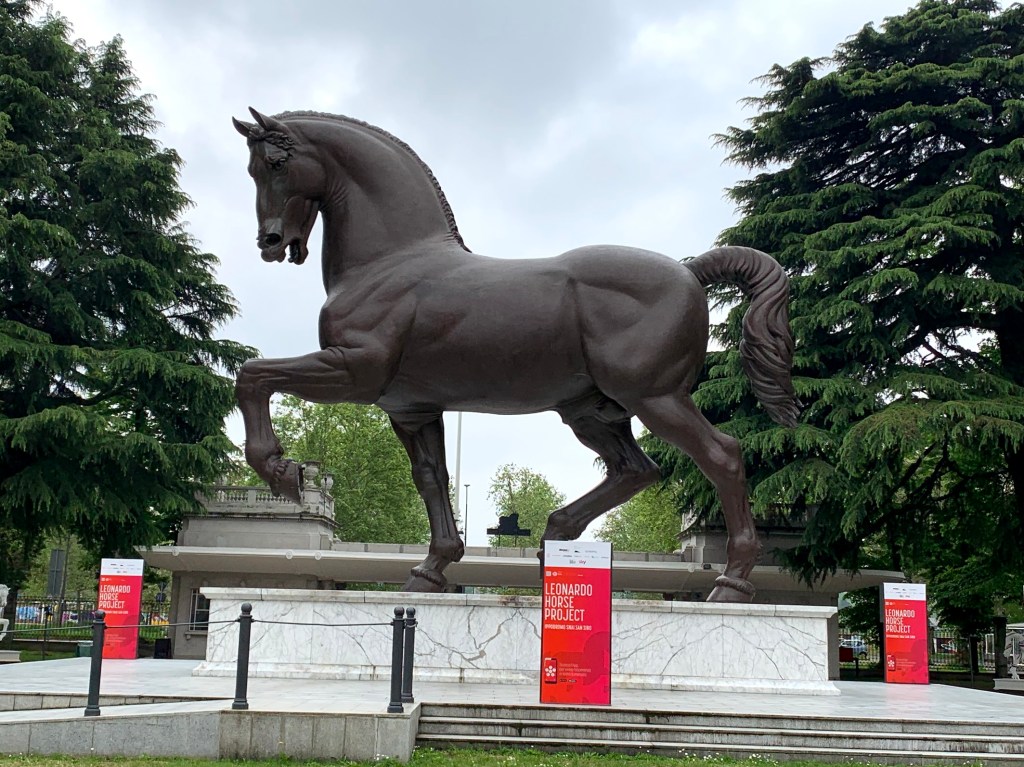
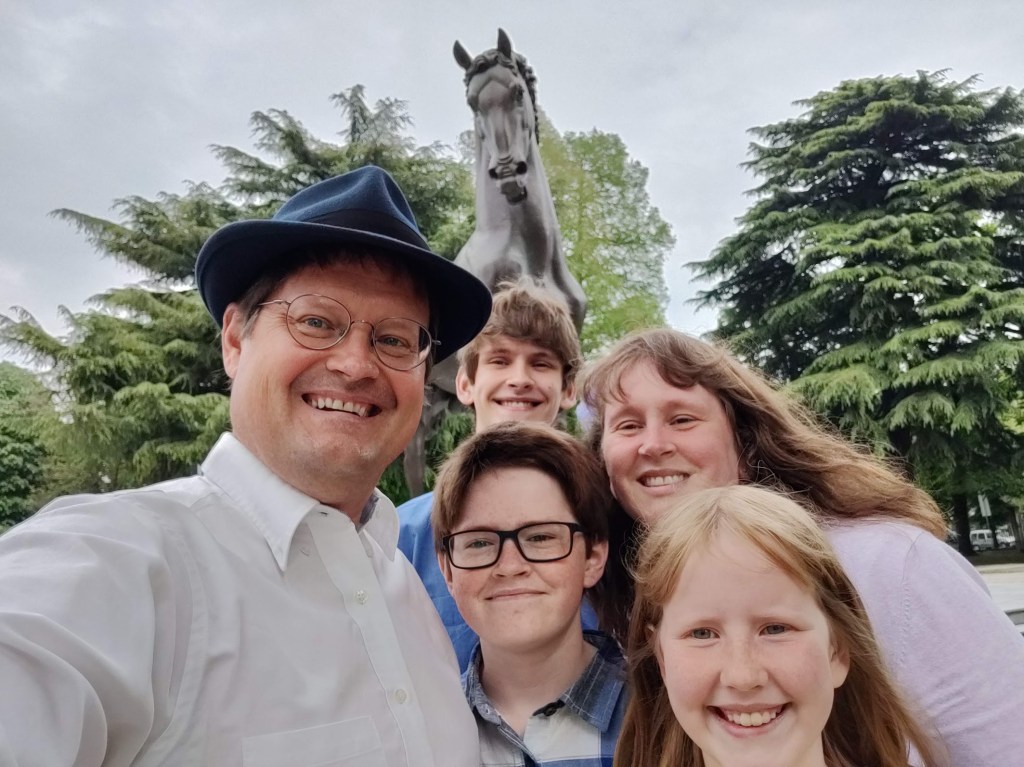
DaVinci’s Horse in Milan, ItalyGroup photo!
Yes, the brother horse
of the Fredrick Meijer Gardens statue is in Milan, Italy. Charles Dent, a
wealthy archeology and history enthusiast, took up the challenge of casting
Leonardo DaVinci’s Horse. Sadly before it could be done he passed away and
leading donor, Fred Meijer, continued the cause and completed the project. He
had two horses cast, one for the Gardens and the other as a gift to the city of
Milan where DaVinci had resided most of his life. The horse statue stands in a
lovely garden at the gate to the Milan Race Track and is surrounded by smaller
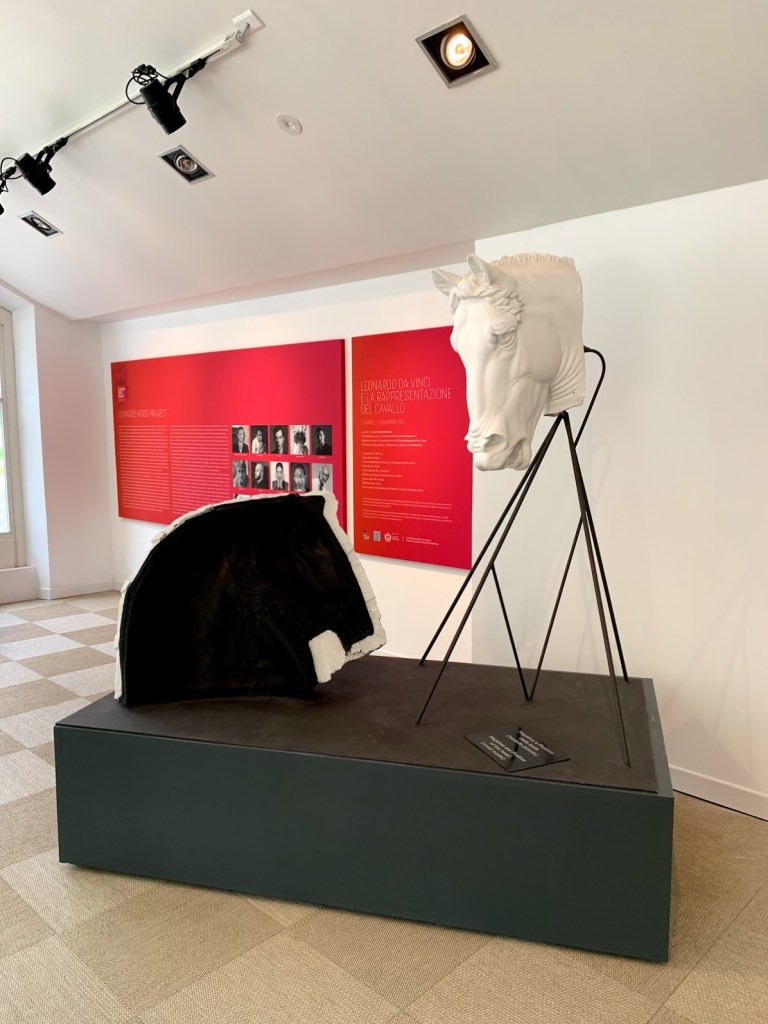
“themed” horses by Italian artists. There is also a lovely little museum with
the original casts and photos showing the history of the Horse Project.
Moulds used in the original casting
From Milan we drove an
hour to the ancient city of Verona, which is commonly known from uses in
Shakespearean plays including “Two Gentlemen of Verona:. However besides its
connection to Shakespeare, the city offers a hidden gem that many tourists are
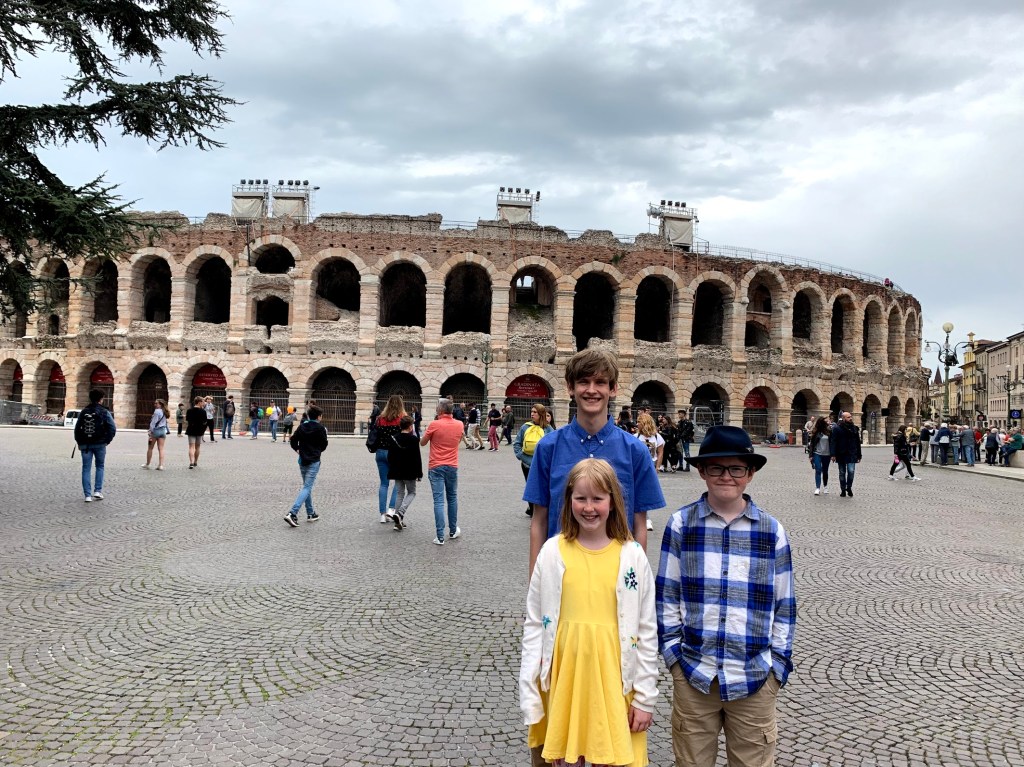
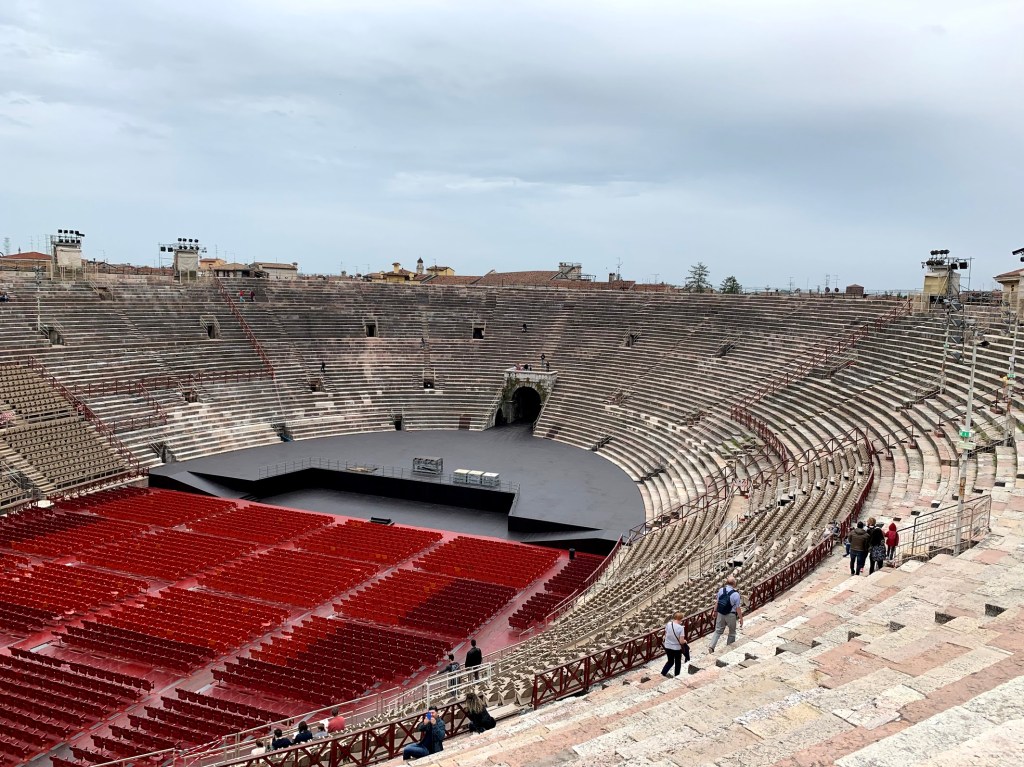
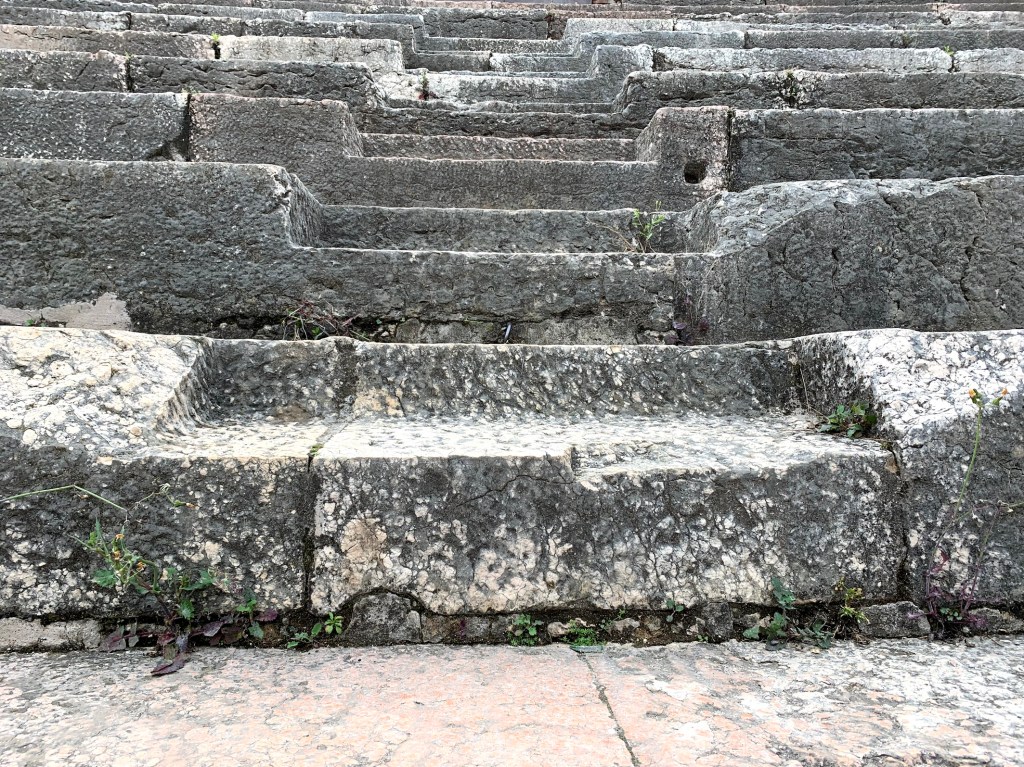
unaware even exists. Verona is home to the only complete Roman Coliseum that is
still in use today. Built in 30AD the coliseum was used by Caesar and local
magistrates for battle and theatrical displays. The latter still occurs within
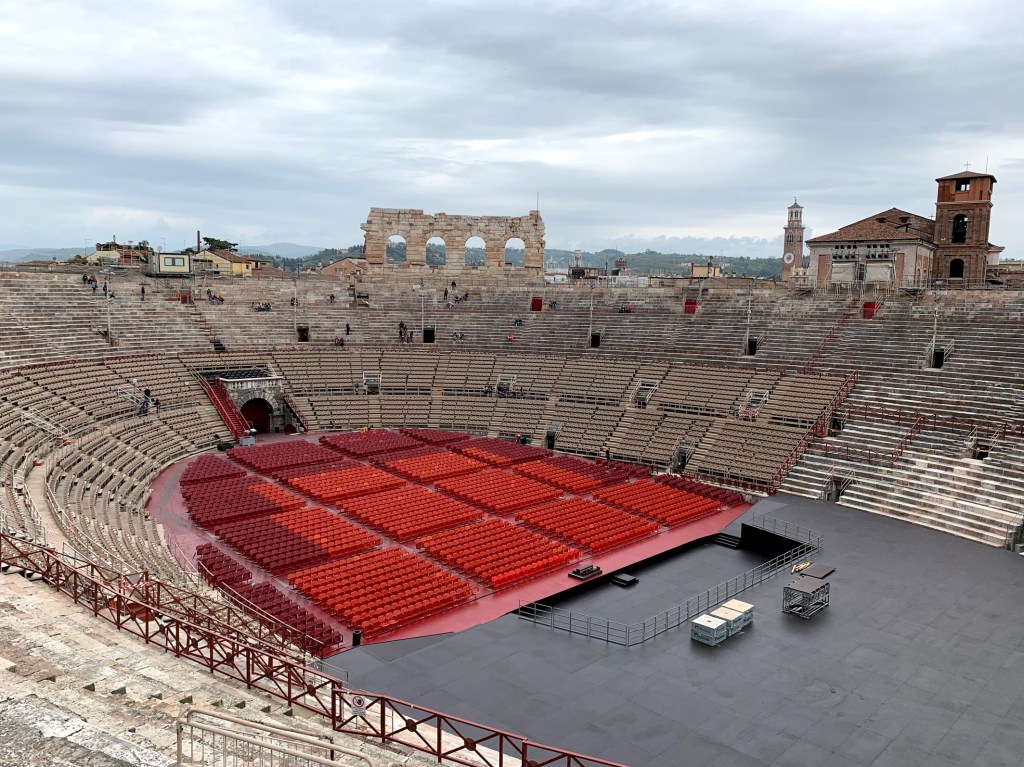
the coliseum, which hosts various concerts and operas year round. The original coliseum
could hold up to 30,000 spectators and today comfortably seats 15.000. We were
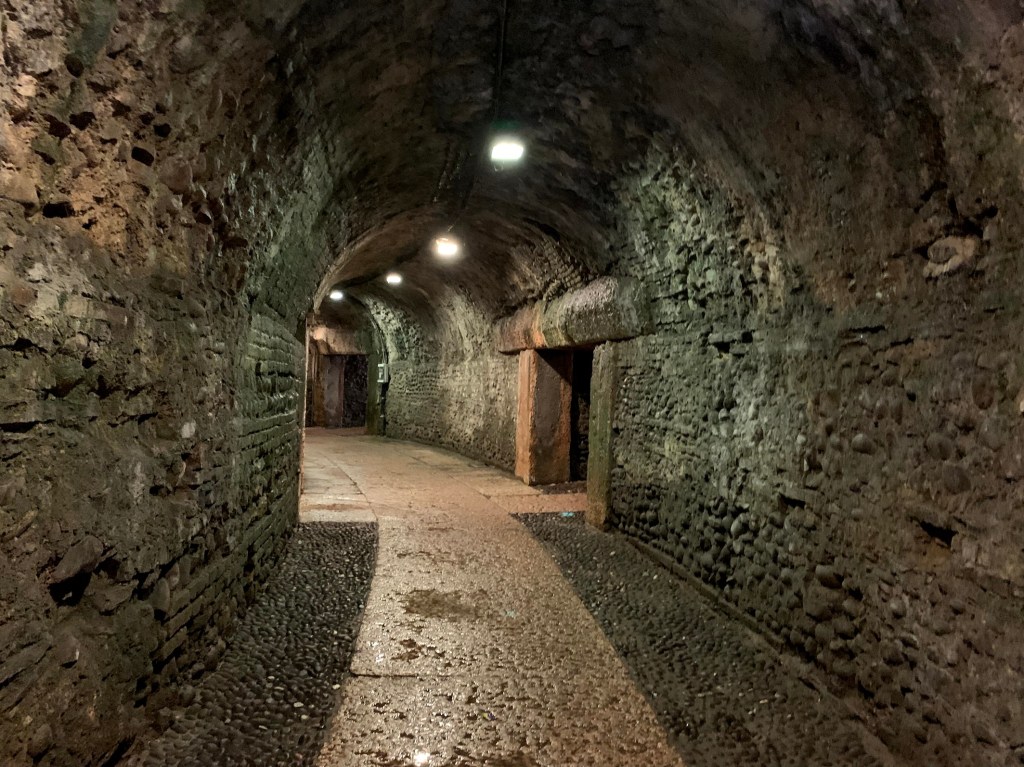
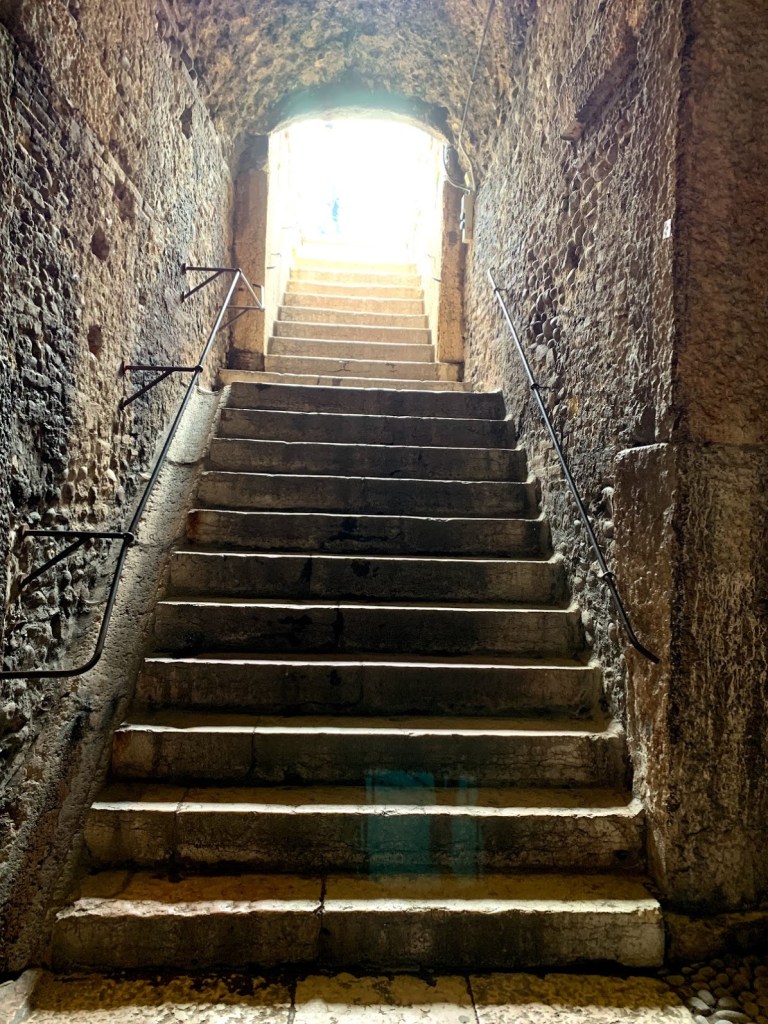
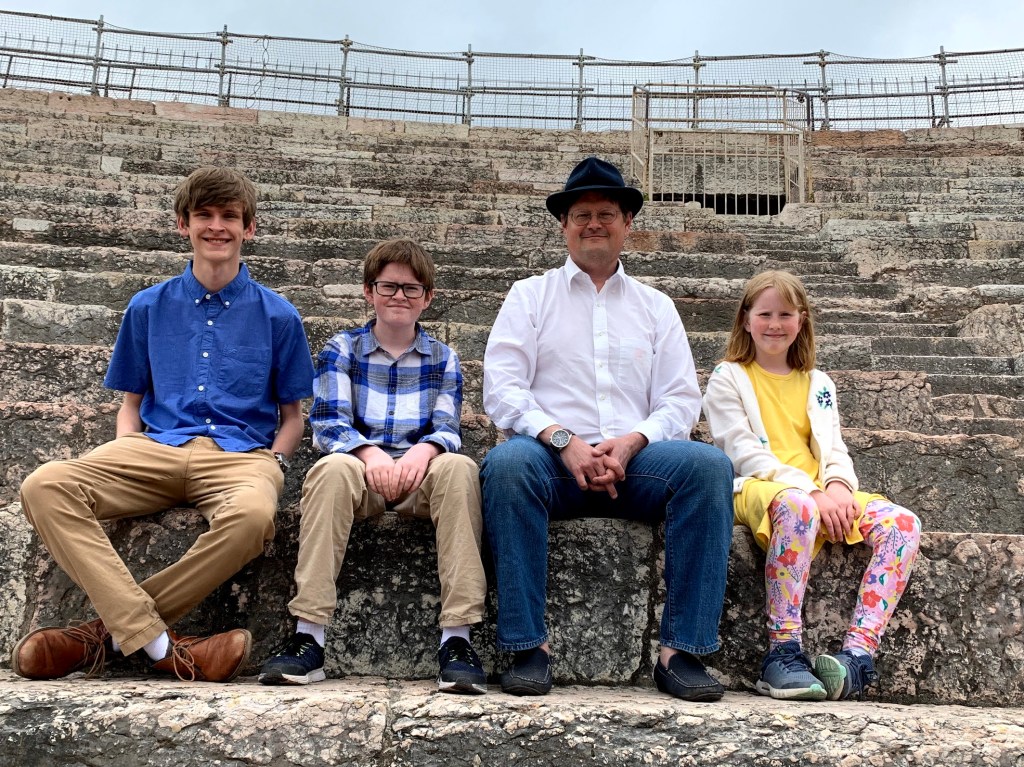
able to walk through the old outer promenade and then climb up to the very top
of the coliseum. It was humbling to think that when the Verona Coliseum opened
Christ had just begun his ministry!
Roman Coliseum in Verona, ItalyPromenade around the outside of the coliseumStairs from the promenade to the inner coliseum
View from the left
View from the right: Caesar’s box is above the door.
Sitting on the upper level
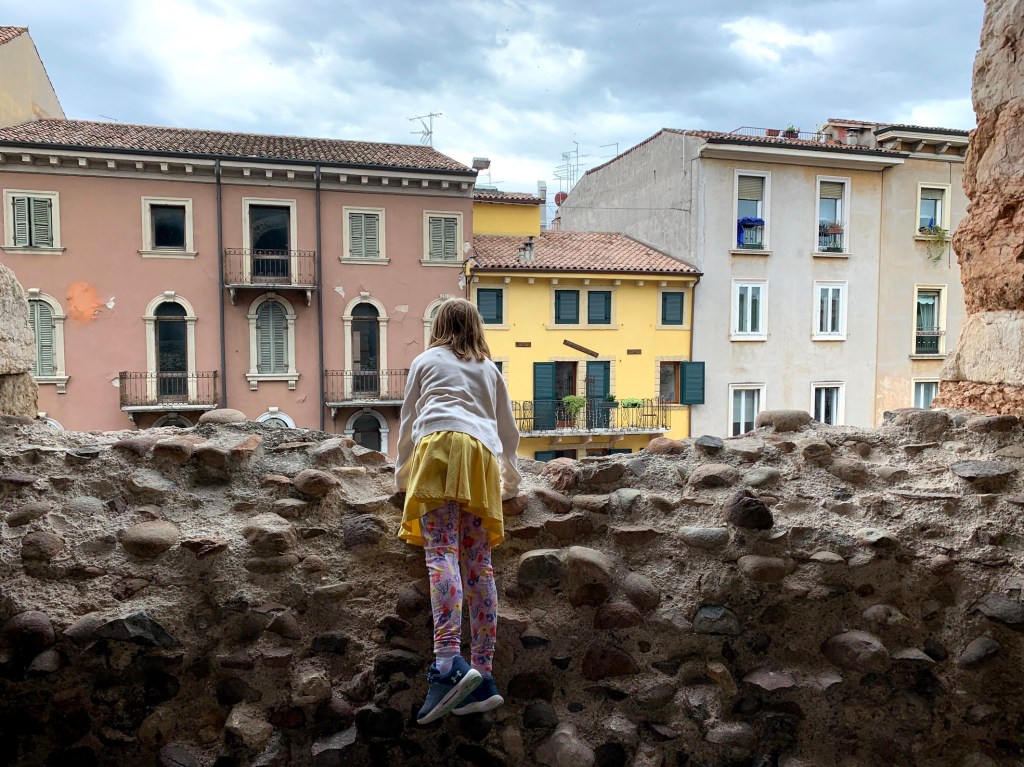
Looking out of one of the outer windows
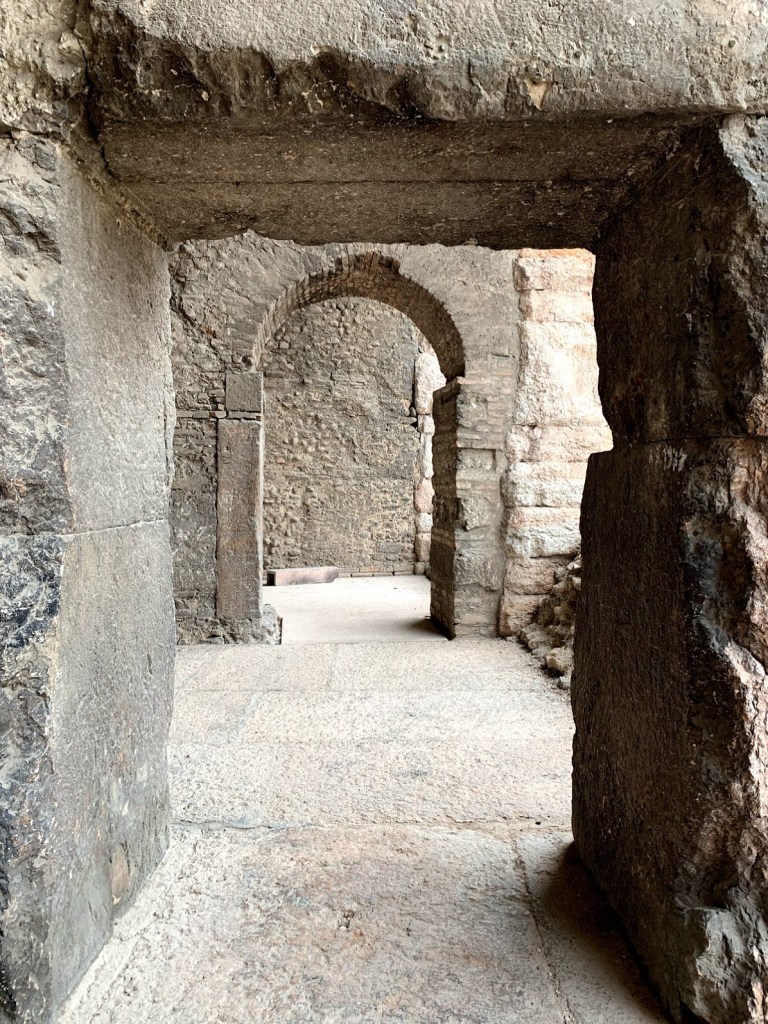
Small hallway that connects the upper windows: Note one door mantel is arched and the other is squared off.
Stairs in the upper level
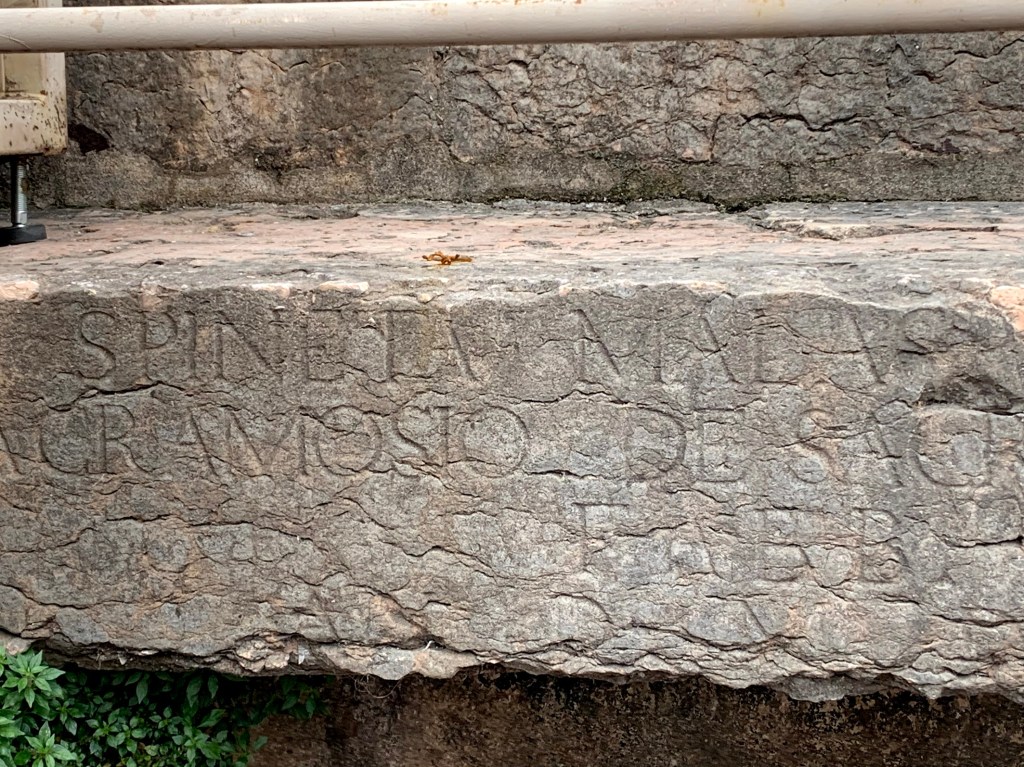
Latin inscription over a door mantel in the coliseum leading back to the promenade
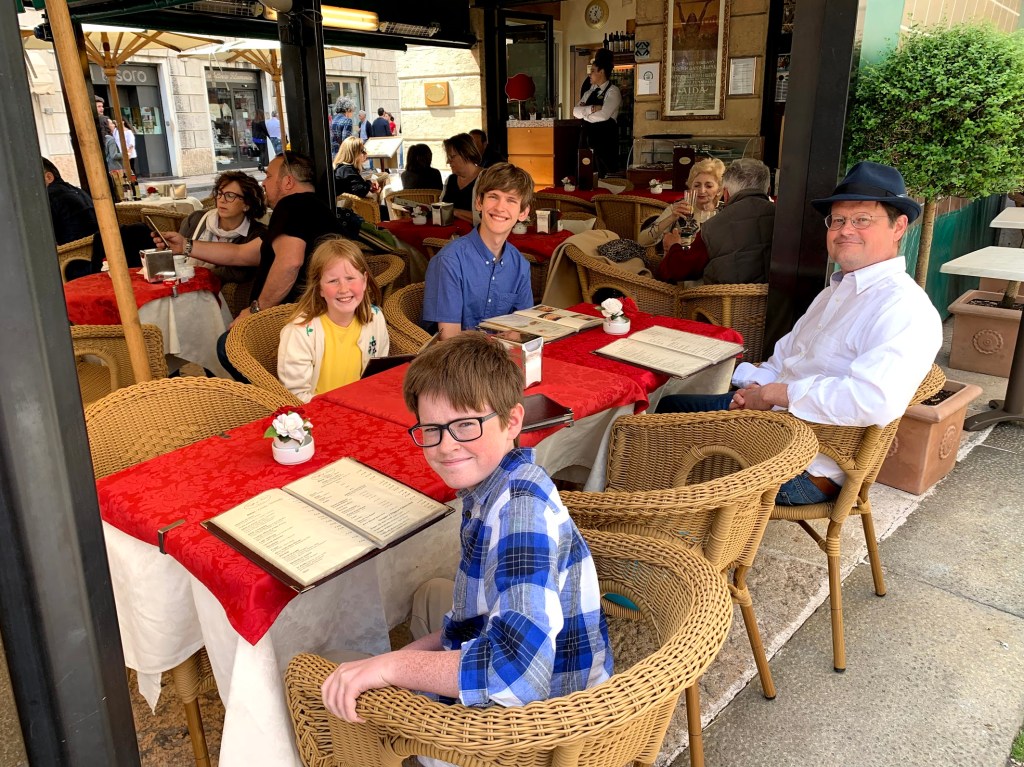
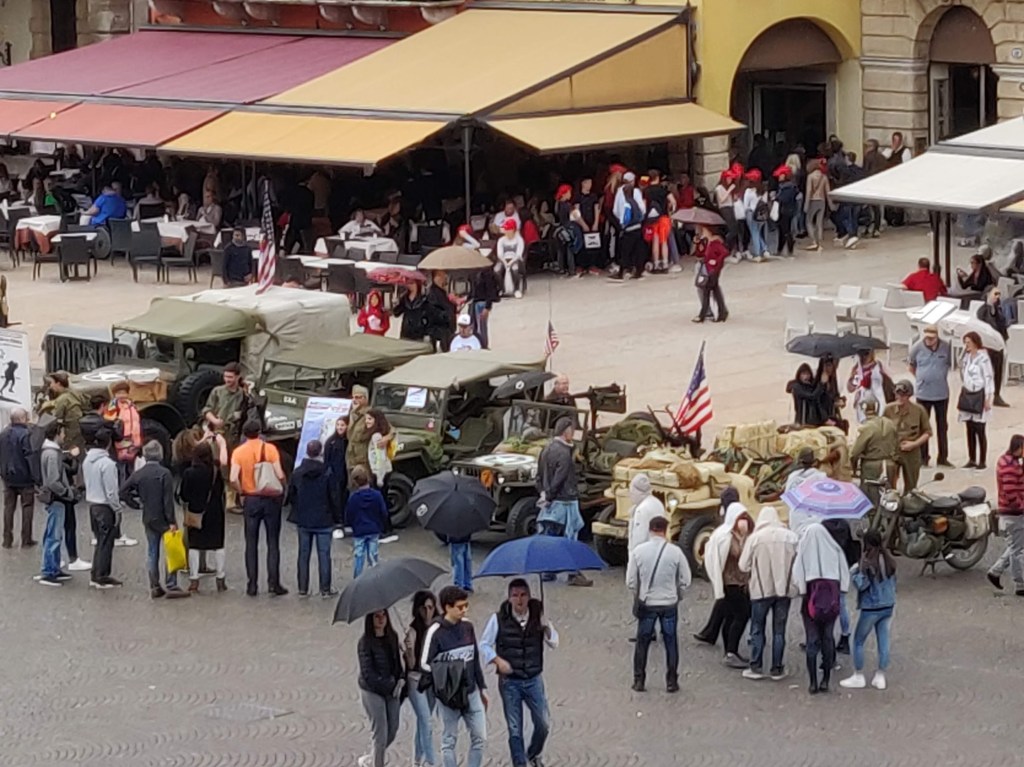
As we ate lunch at a lovely outdoor café we noticed several Italians dressed in USA and UK, WWII military regalia. Liam and Seamus inquired of the gentleman what it was all about and it seems that April 25 is celebrated in Italy as Liberation Day. Many towns have re-enactors who dress in Allied Uniforms, and have WWII military jeeps etc. on display in the town squares as a way of teaching the young about their freedoms and a way on honoring the men who liberated Italy from the Nazi regime.
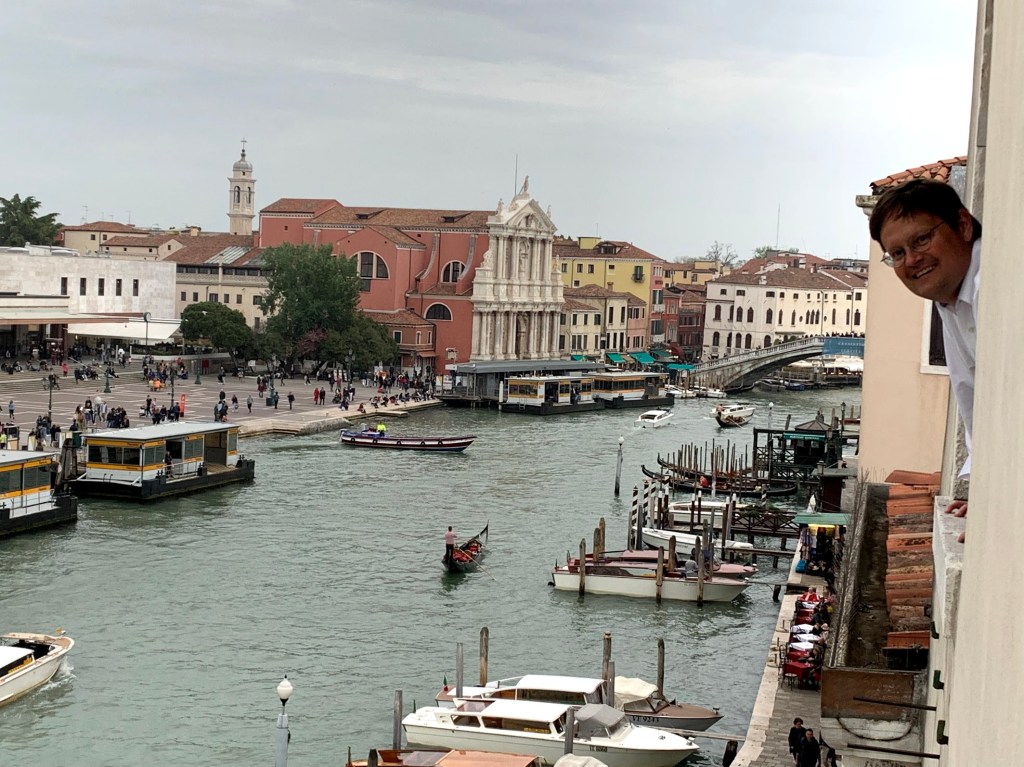
It was a nice day to sit outside and have authentic Italian food.WWII soldiers re-enacting Liberation DaySeamus liked Robert’s hat from Milan, so he found his own in Verona!Robert looking out over the Grand Canal from one of our apartment windows in Venice
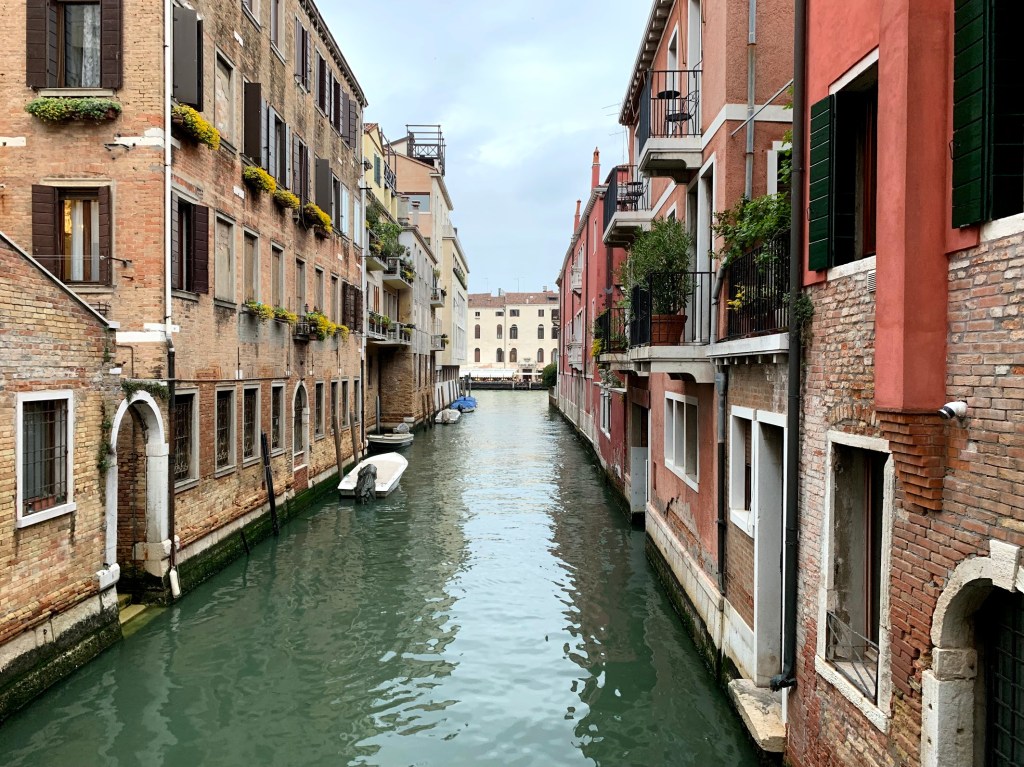
Canal near our apartment
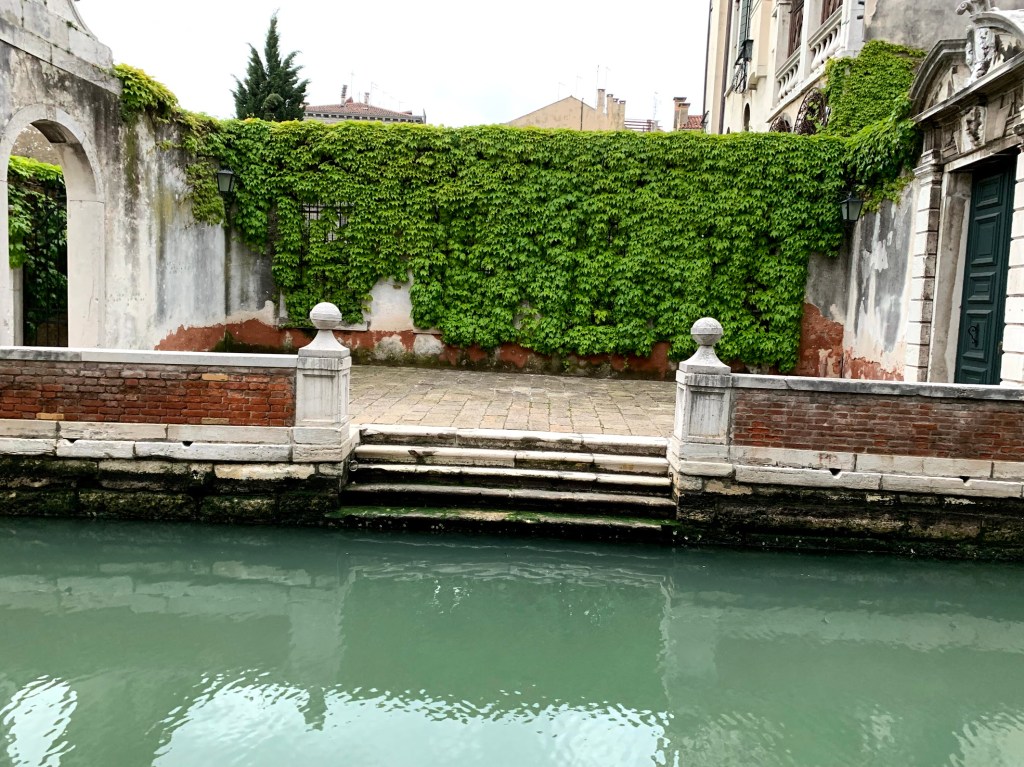
Old boat dock
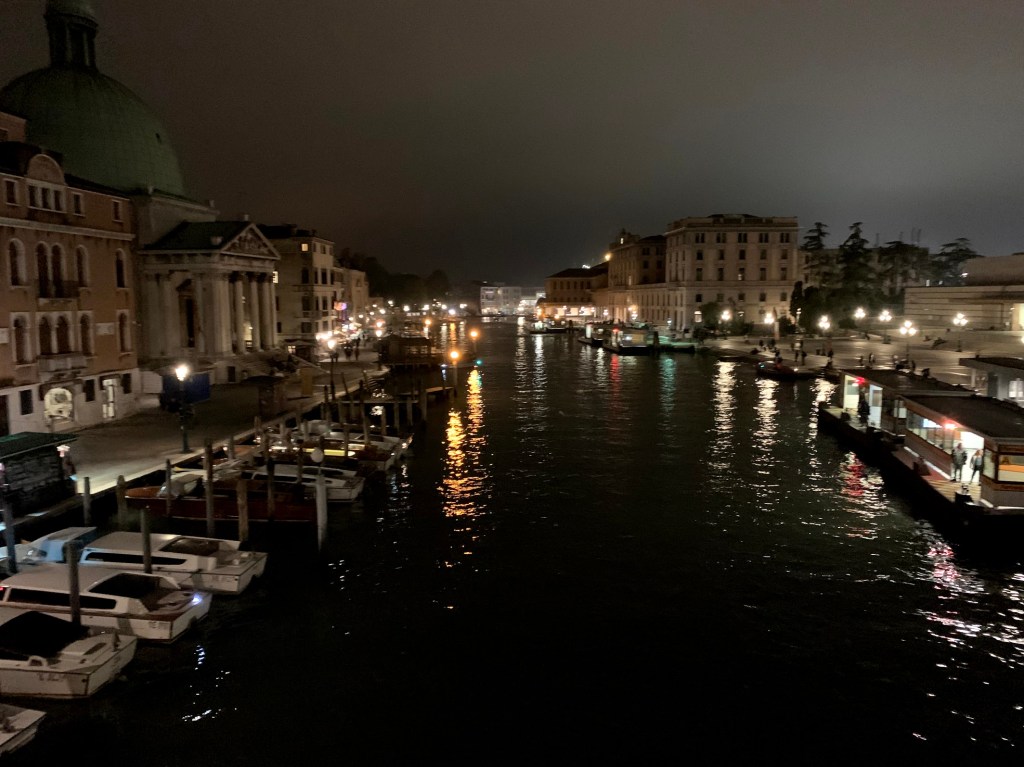
Grand Canal at night
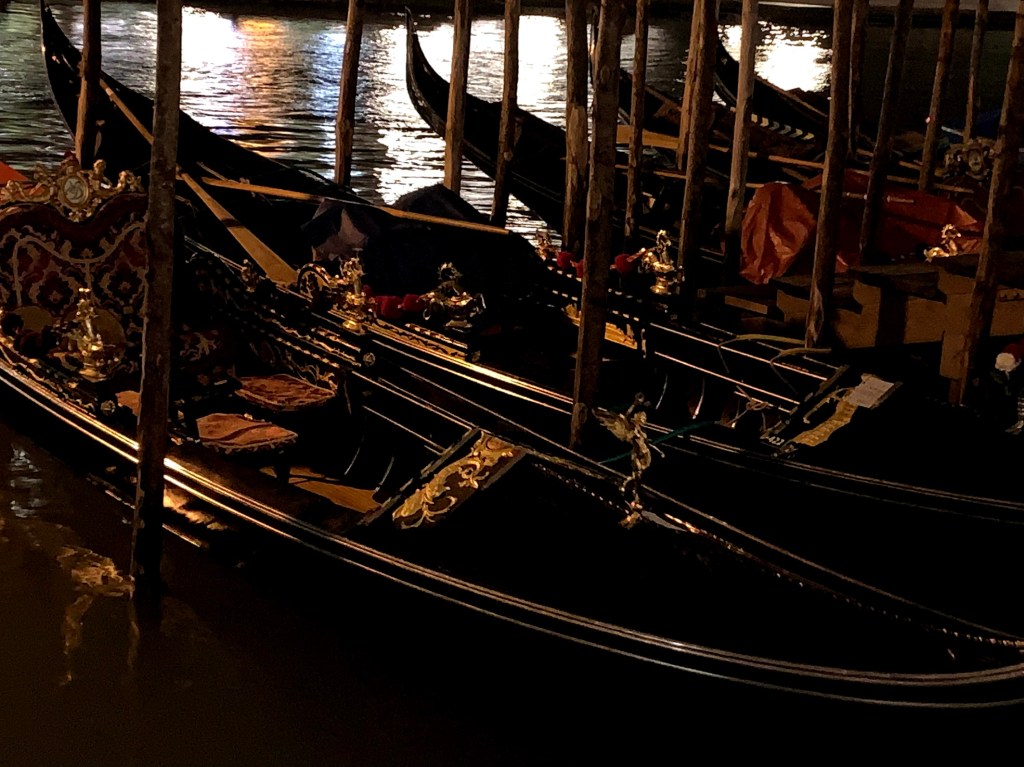
Gondolas tied up near our apartment
As the sun lowered in the sky we drove across the 3km bridge into Venice. Parking is only allowed on one of the 117 islands that make up the city of Venice. We parked our car on the 8th floor of the parking garage, gathered our luggage, and walked up and over a few bridges to reach our apartment. It was a charming place with beamed ceilings, slanted wooden floors, and several windows that looked out onto the Grand Canal. It was fun watching all the Vaporettos (public transport boats) and private boats glide by on the canal. We also heard the bells from the Convent next door calling the Sisters to Vespers. Meandering through the canal lined streets we found a local grocery to purchase breakfast items and
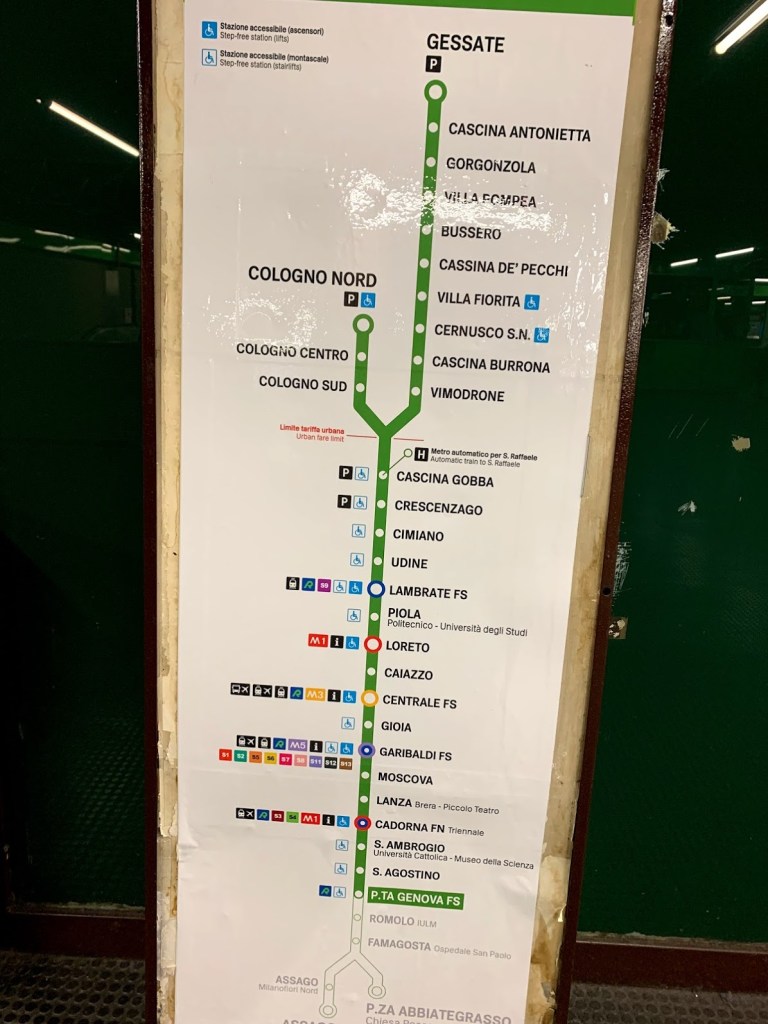
Instead of taking the
tram we walked to the nearest subway and boarded a train bound for Sforzesco (Sforza)
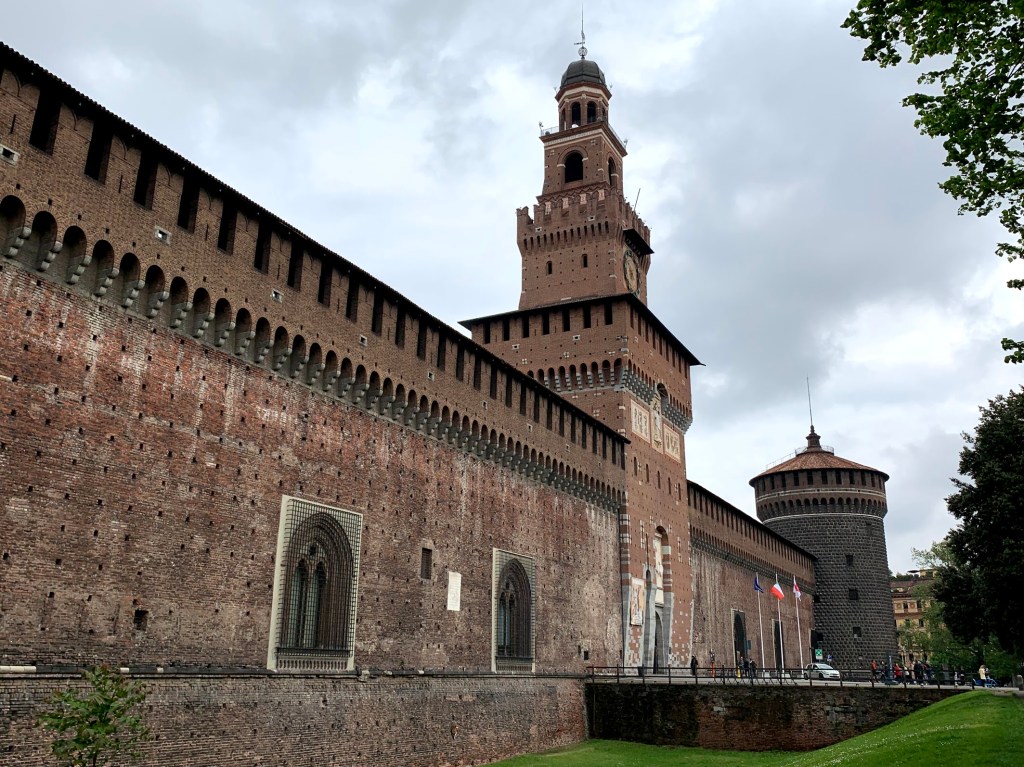
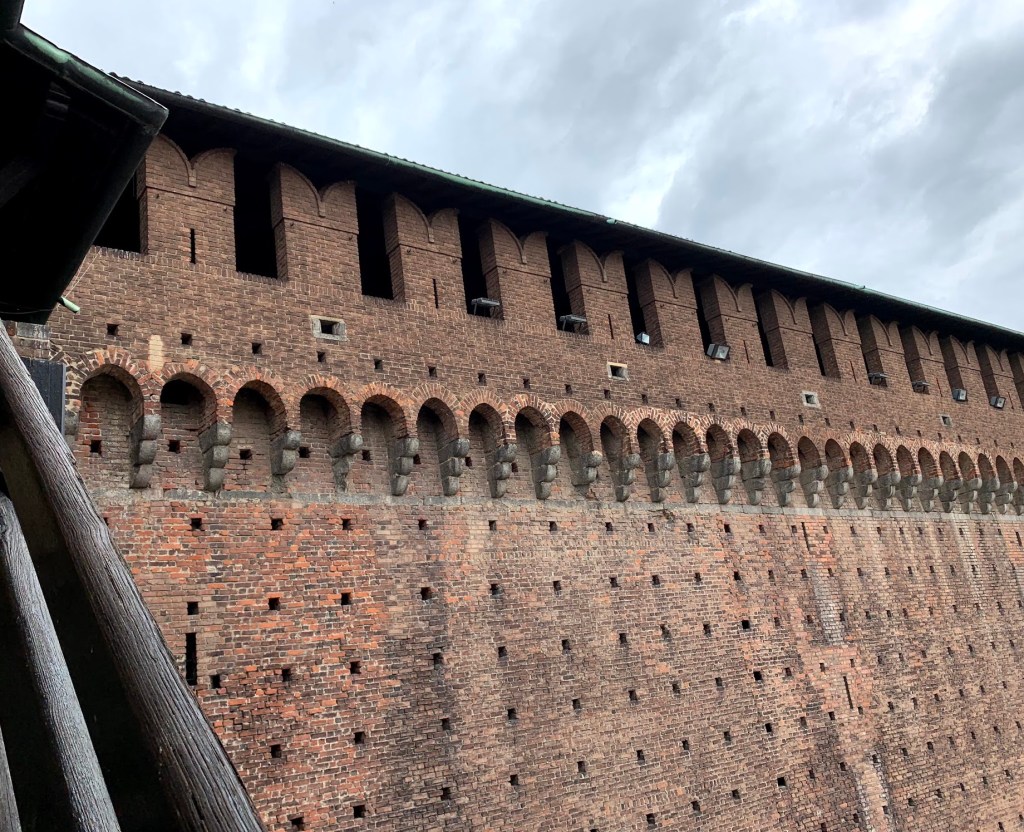
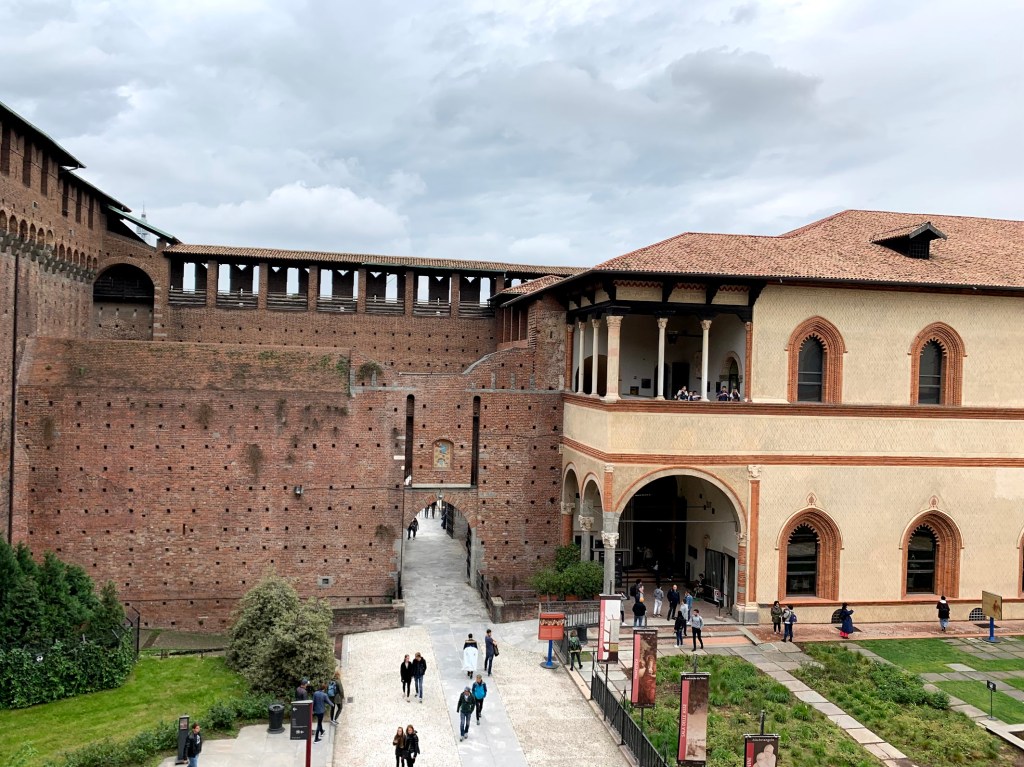
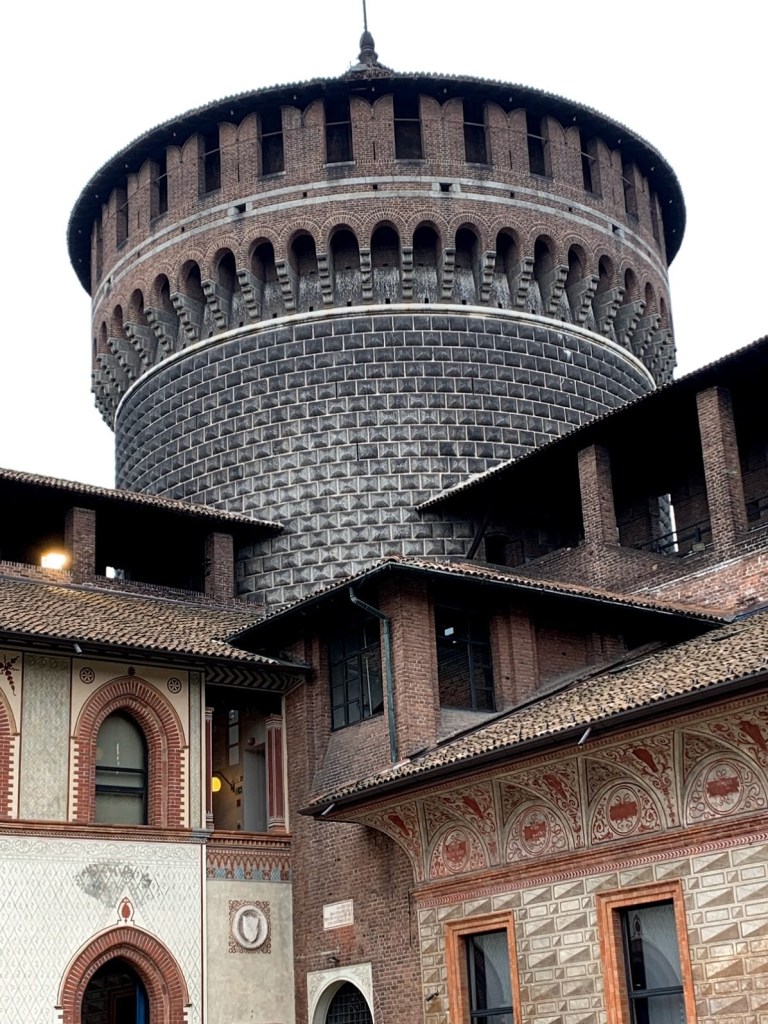
Castle. Built between 1360-1499 Sforza Castle is an impressive Italian-Spanish
style fortress with various courtyards and ramparts. The red walls stand out
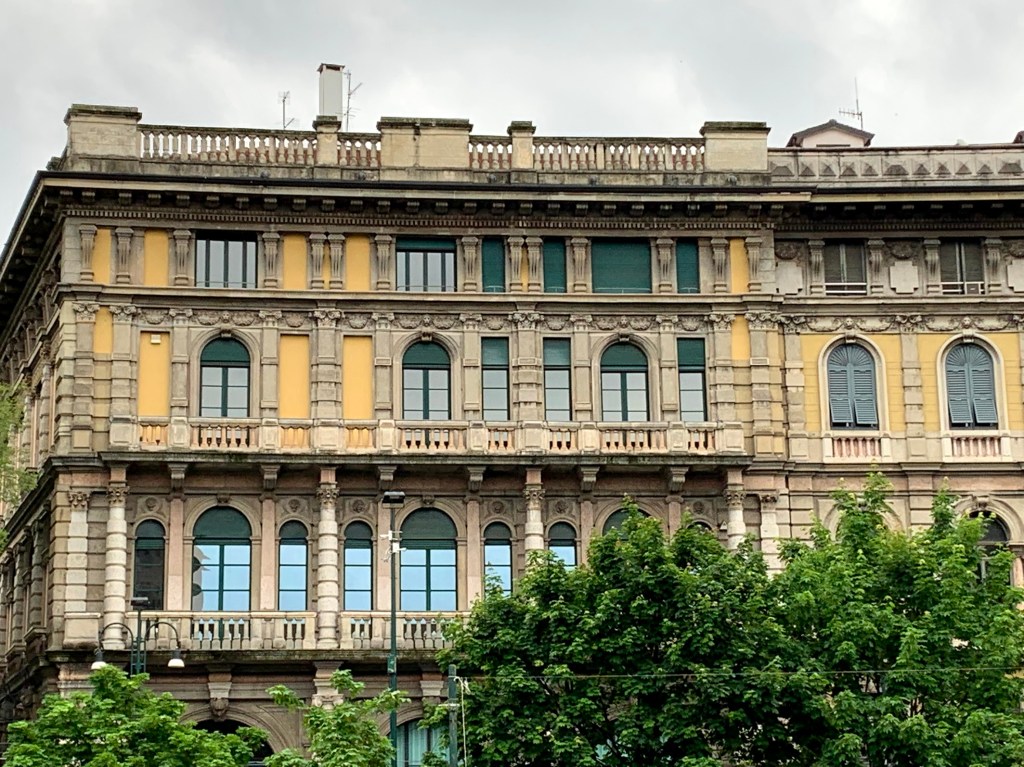
against the surrounding elegant baroque cream and grey structures. Sforza
Castle was the seat of the Dukes of Milan. Today it is a huge complex of
various “theme” museums.
Milan subway route
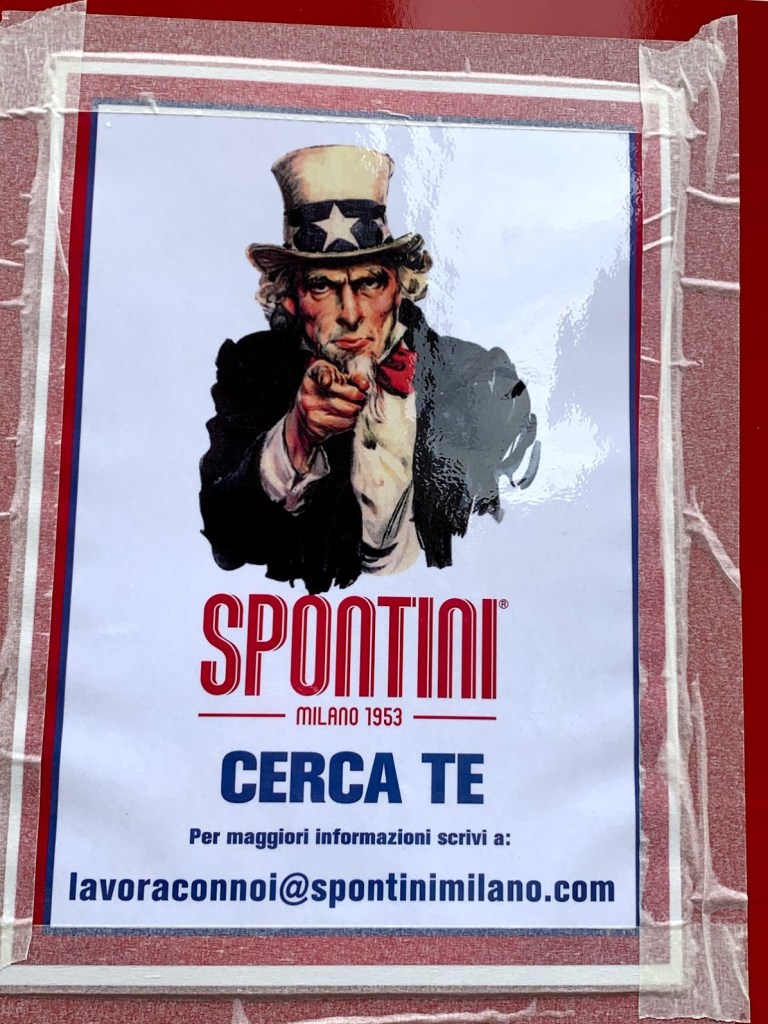
Saw this on the side of a building. It’s an advertisement to come work for a local pizza chain.
Front entrance to Castle Sforzesca in Milan, Italy 24 April 2019
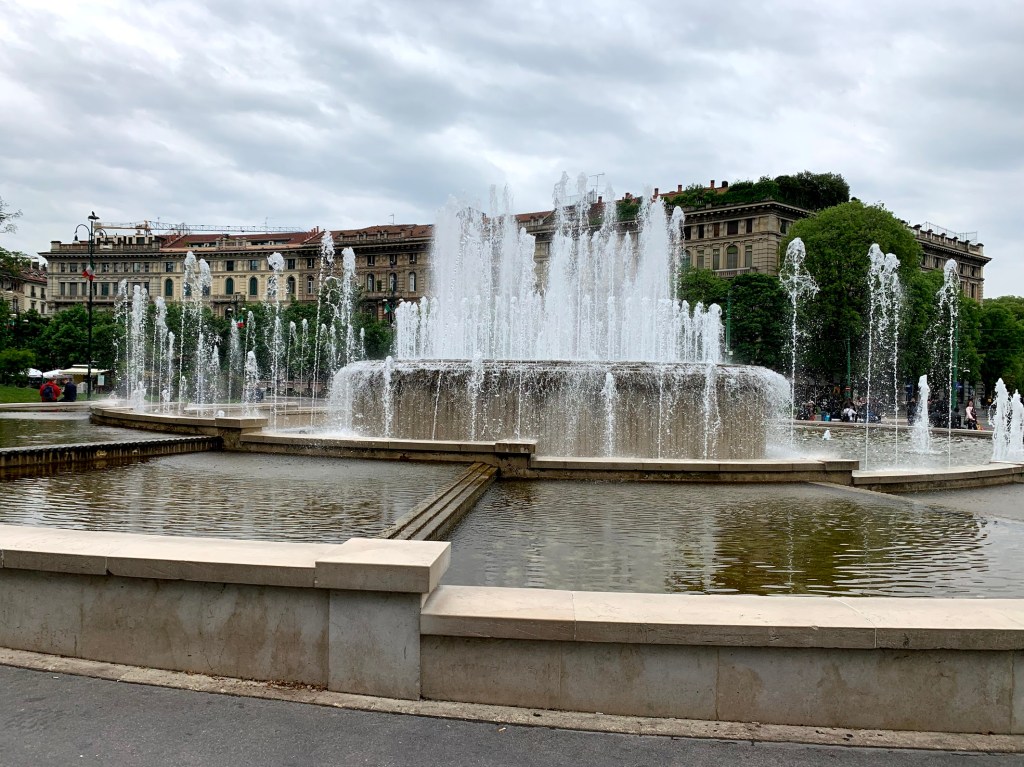
Lovely fountain outside the castle
Baroque apartments
Looking down to the backside of the entrance to Castle Sforza
Ramparts
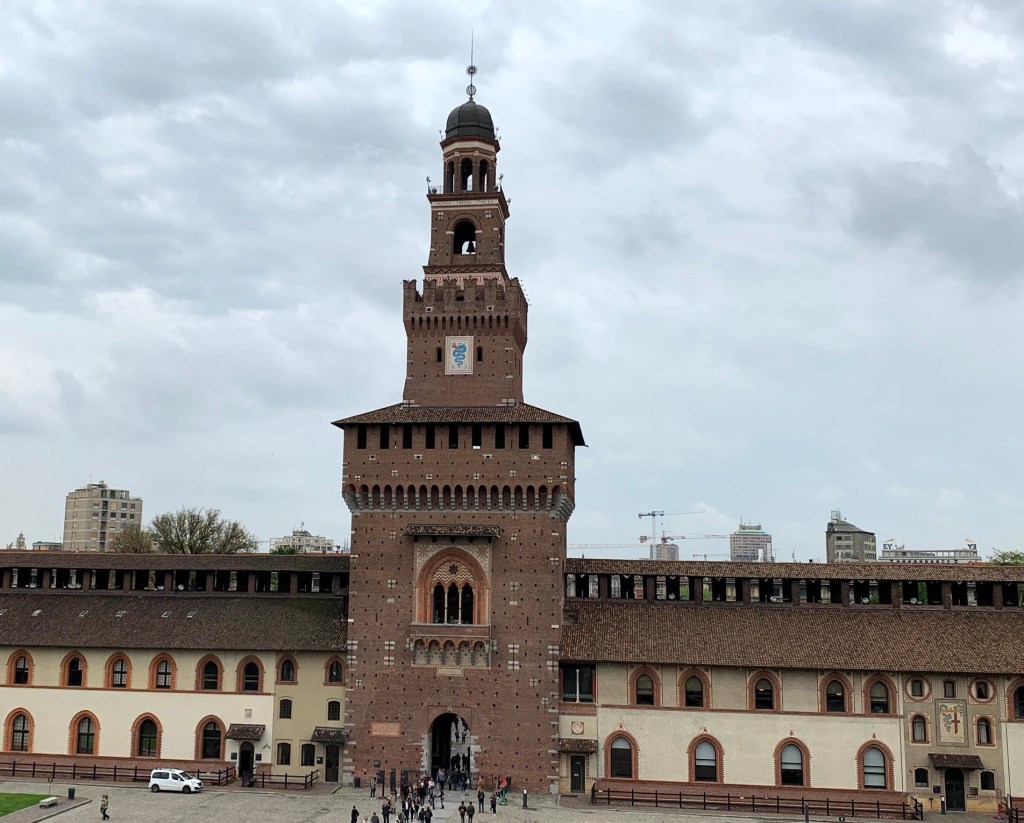
Courtyard
Tower in the castle
Some of our favorite
museums within the castle included the Portrait Gallery, the Early-Medieval
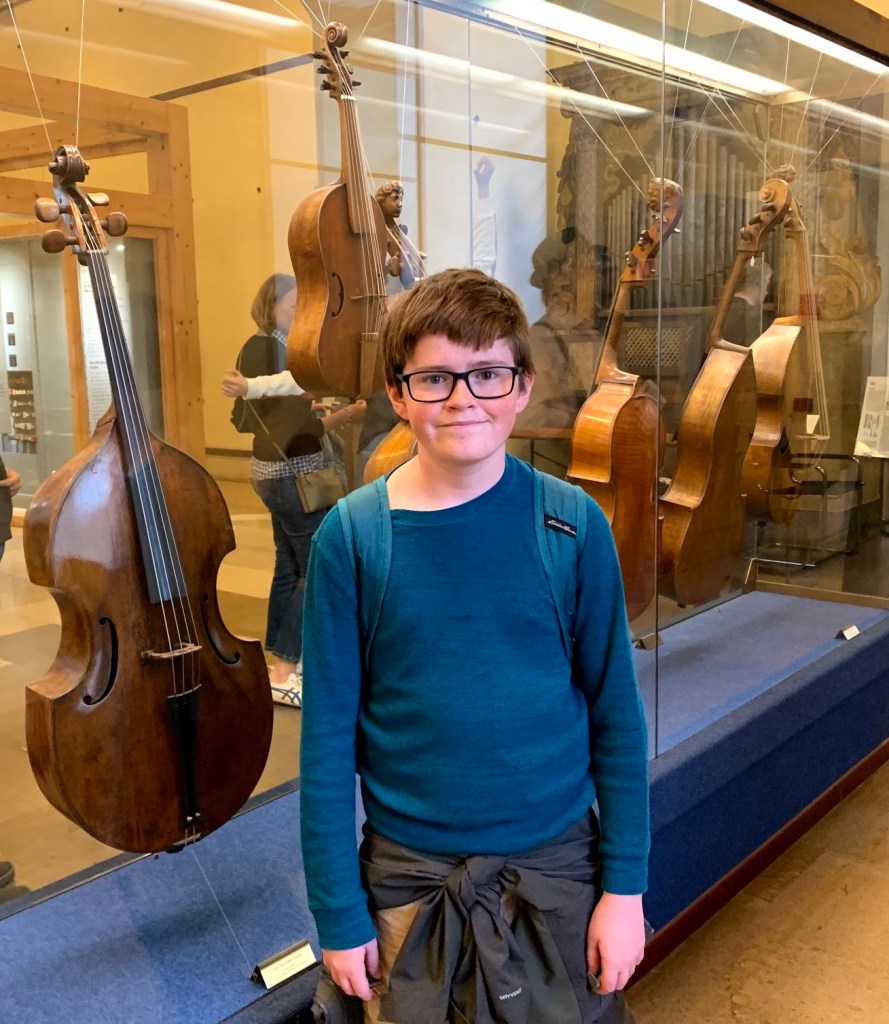
Artifacts Museum, and we all loved the Musical Instruments Gallery! Seamus even
found a case full of different kinds of cellos from over the centuries. I also
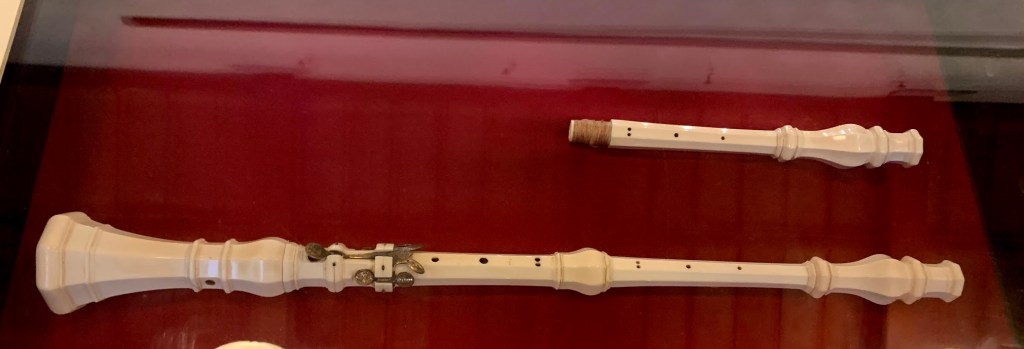
loved the case full of different oboes throughout the ages. However, we did get
tired of seeing case after case of various “pots and pans” as Seamus called
them!
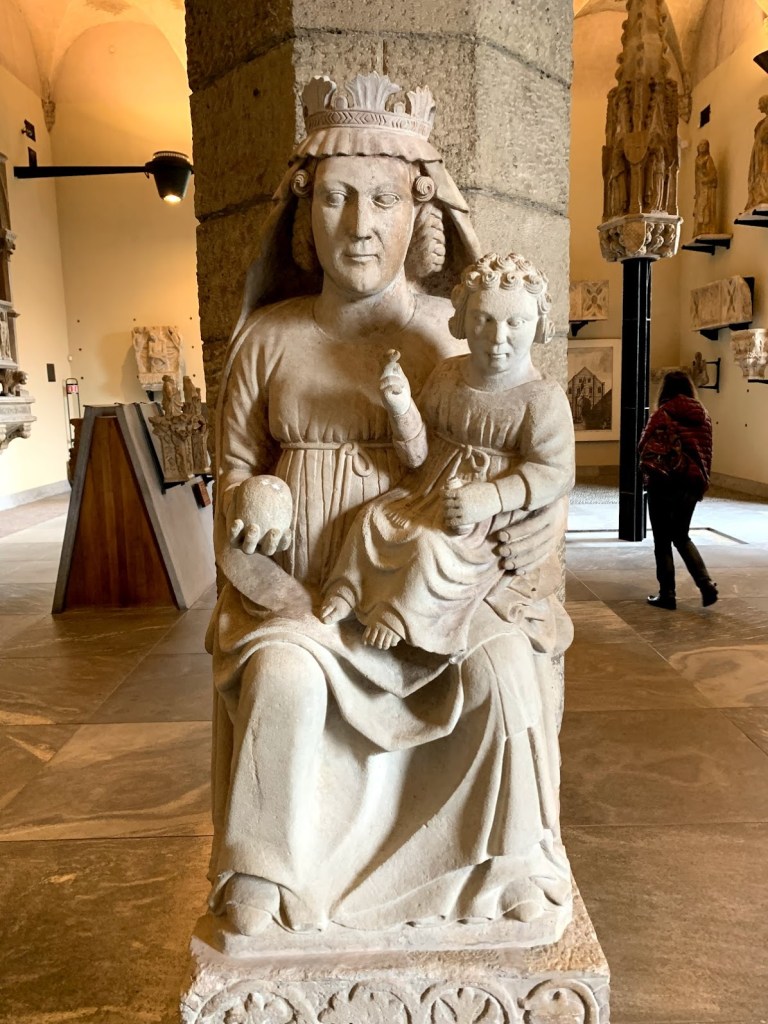
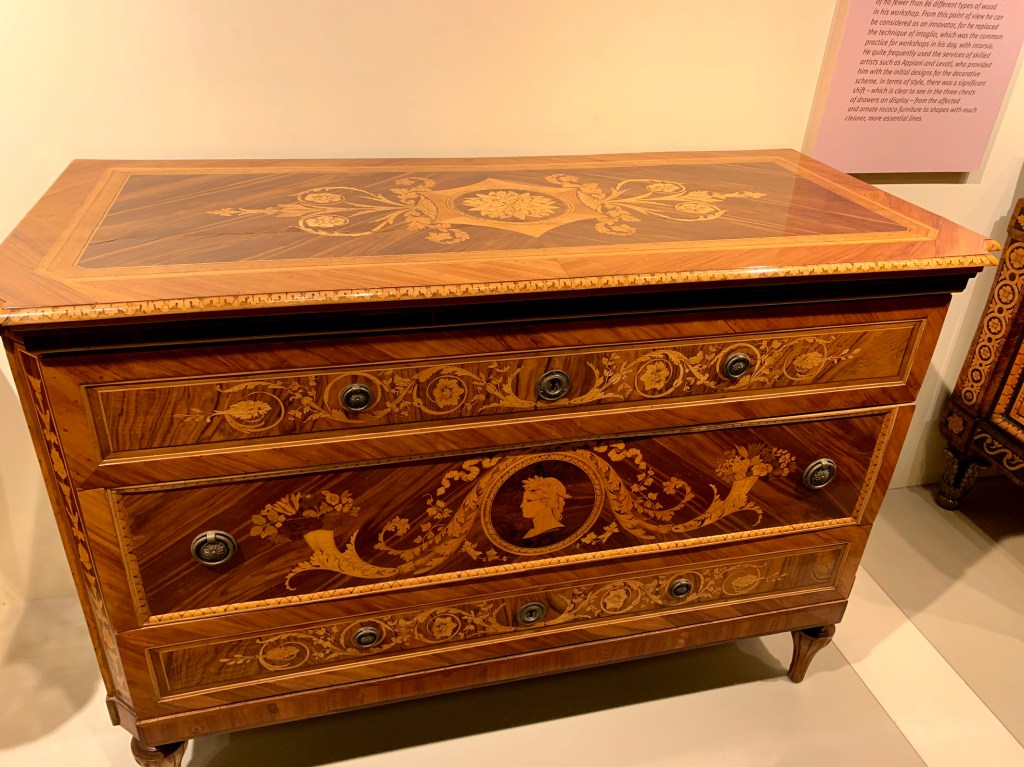
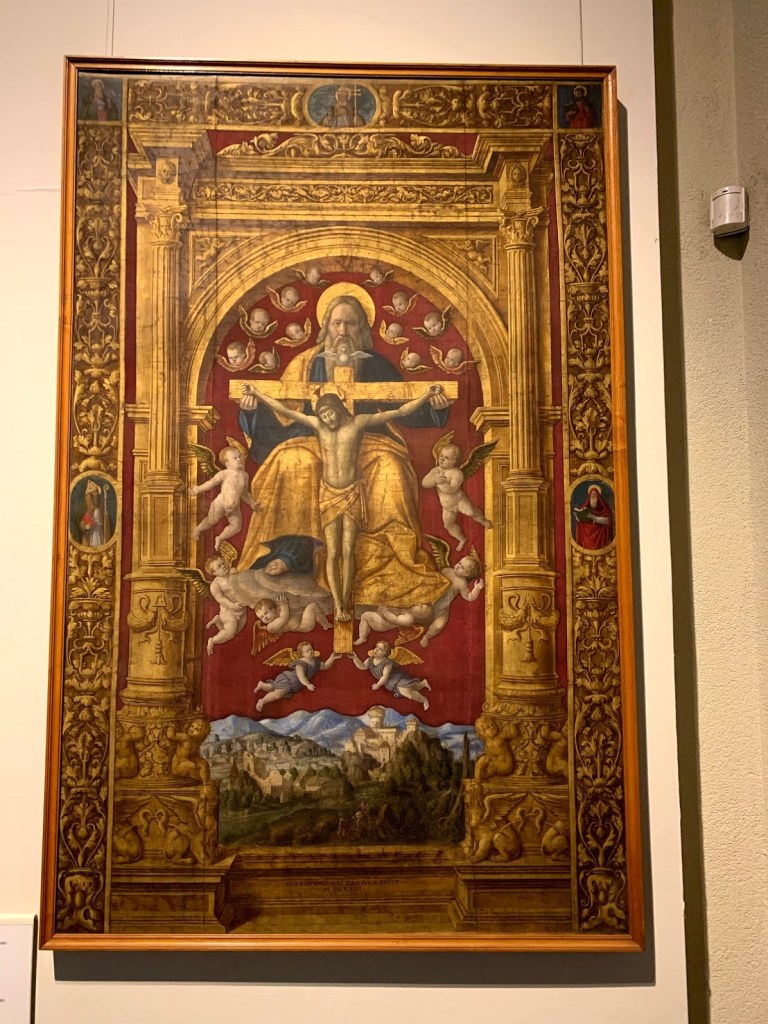
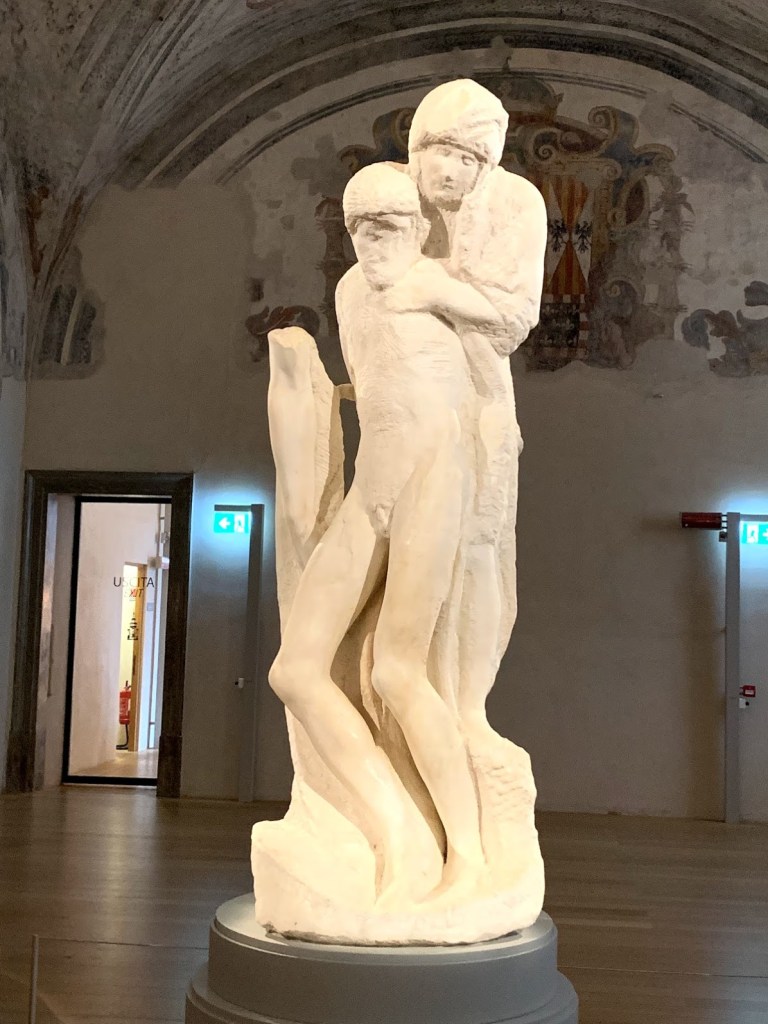
13th century Madonna and Child: I liked this portrayal of Mary because she’s plain looking, more full figured, and looks like she just gave birth.This baroque chest has 82 kinds of wood inlaid to make the pattern.“The Trinity” 1533: It’s not often you see the Trinity depicted in one painting.“Pieta”: This is Michelangelo’s last piece. He died before completing it. It depicts Mary holding Christ’s body after the crucifixion.This ivory baroque oboe was my favorite.Hmmmm….Which cello should I choose?
After a fascinating and
long morning exploring the castle and all the wonderful art and history of
Milan, we walked around the streets of Milan until we came upon the Church of
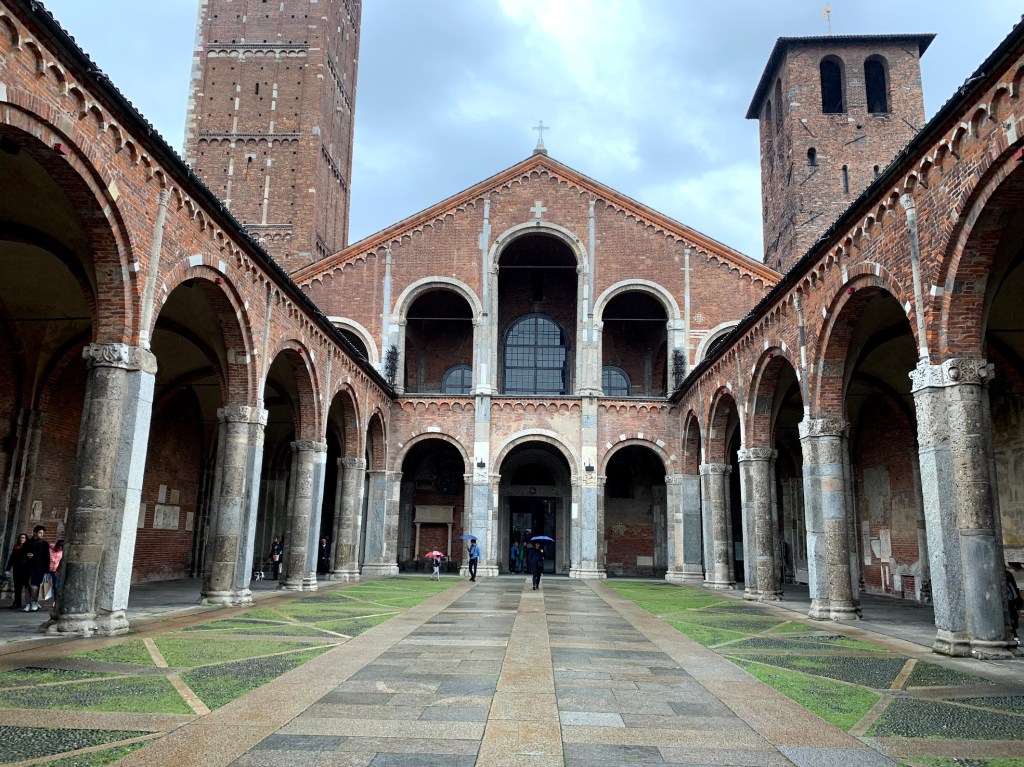
St. Ambrose. Before entering the 11th century structure we checked
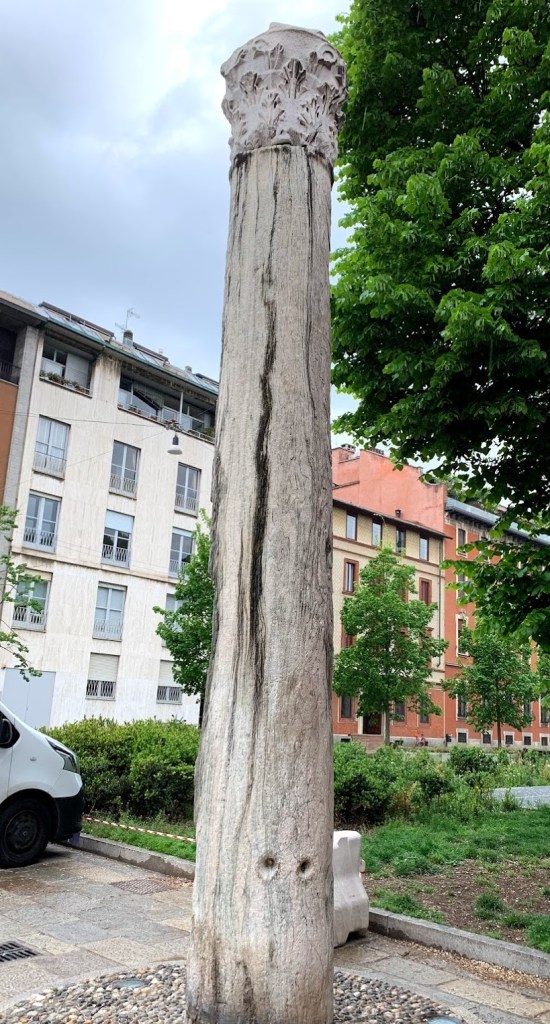
out the famous column where St. Ambrose fought the Devil! In the mid 4th
century there were still many Roman columns in Milan. Ambrose was at the time
the Archbishop of Milan. Legend says that the Devil challenged him and Ambrose
was pinned against the column. He ducked out of the way just as the Devil
charged, whereby the Devil’s horns got stuck in the column. Ambrose then was
able to use a crucifix to banish the Devil back to hell. The holes are still
present in the column and if you get close enough you can smell sulfur and hear
the cries of the damned in hell!
The Devil’s horn holes!11th century Church of St. Ambrose in Milan, Italy
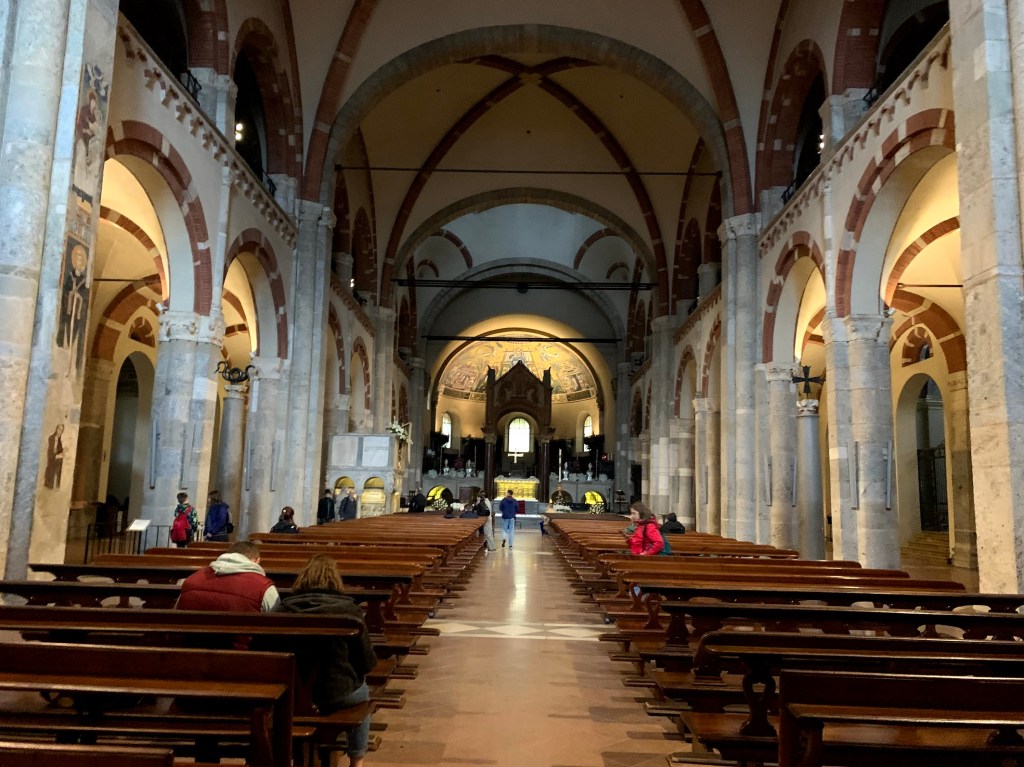
Ambrose decided to build
a church near the spot where he wrestled with the Devil. The current church
structure dates from the 11th century, but there are remnants of the
original 4th century structure inside. The sanctuary was beautiful
and the little side museum with ancient artifacts was fascinating. The relics
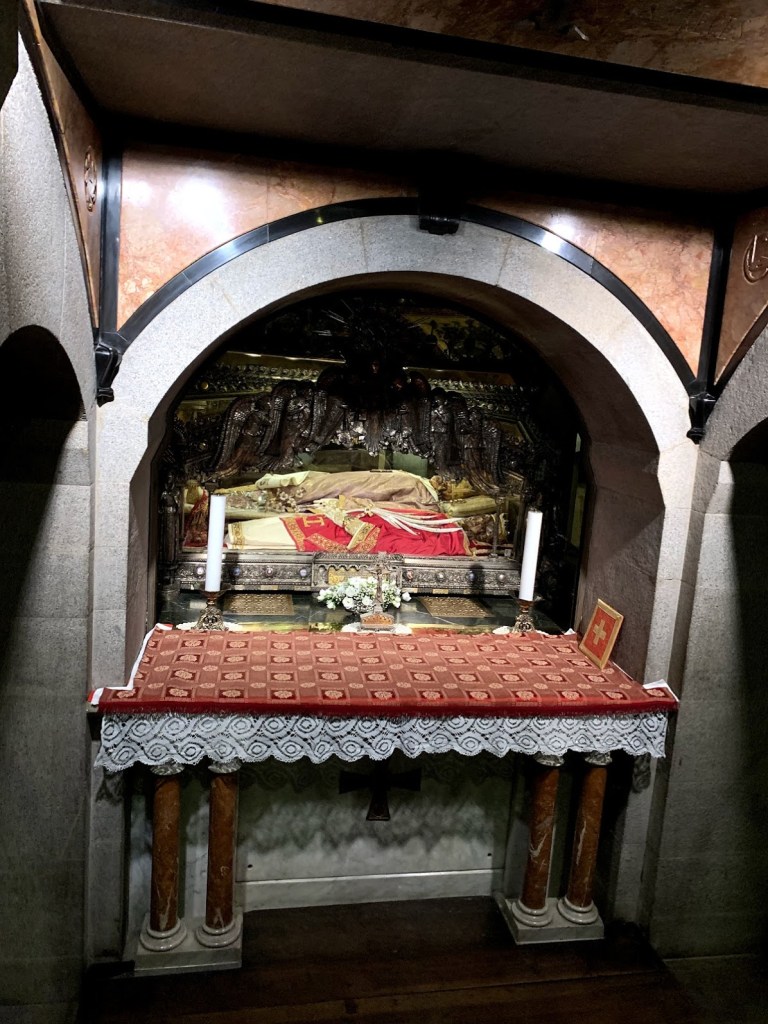
of St. Ambrose are kept in a crypt under the altar. He is considered one of the
four founding fathers of the Christian Faith. He is laid to rest with two later
martyrs.
Relics of a martyr and St. Ambrose: He is raised higher in the golden cloth.
Inside Church of St. Ambrose
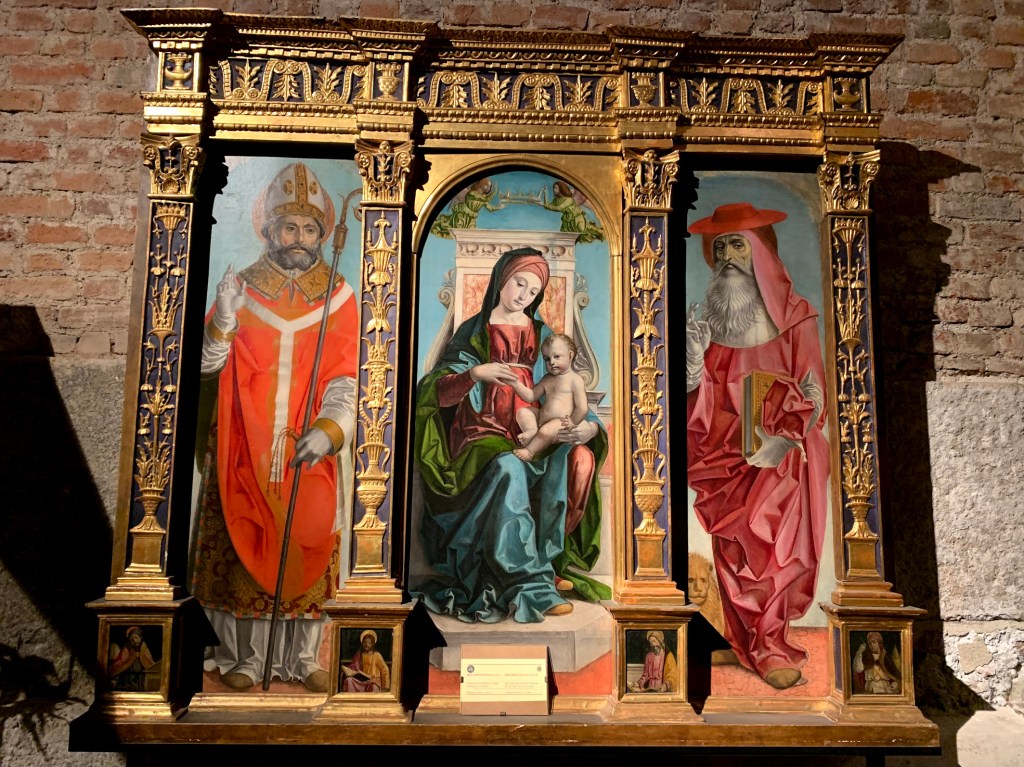
L-R St. Ambrose, Madonna and Child, St. Jerome: St. Ambrose is always depicted with a whip because he is said to have purged the early church of heresy.
Robert had a surprise stop
along our walking tour. After we left the church we walked for about 15 minutes
through the backstreets observing everyday life in Milan. We popped out in the
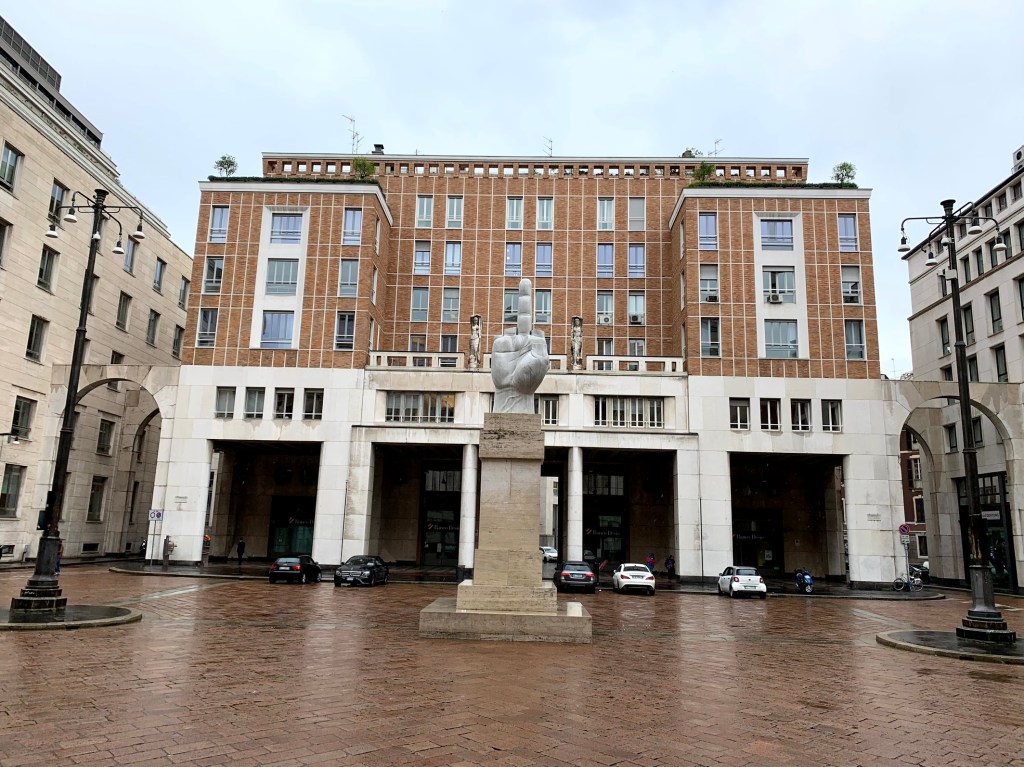
banking district and saw a very unique statue sitting in the piazza between the
Stock Exchange and the Bank of Milan. It was a giant middle finger! Yep, it
seems that Milan had a recession in the 1990’s and the people commissioned a
local artist to sculpt a “in your face, we are living life to the fullest”
statement to remind the bankers of the people’s power.
Middle Finger Modern Art
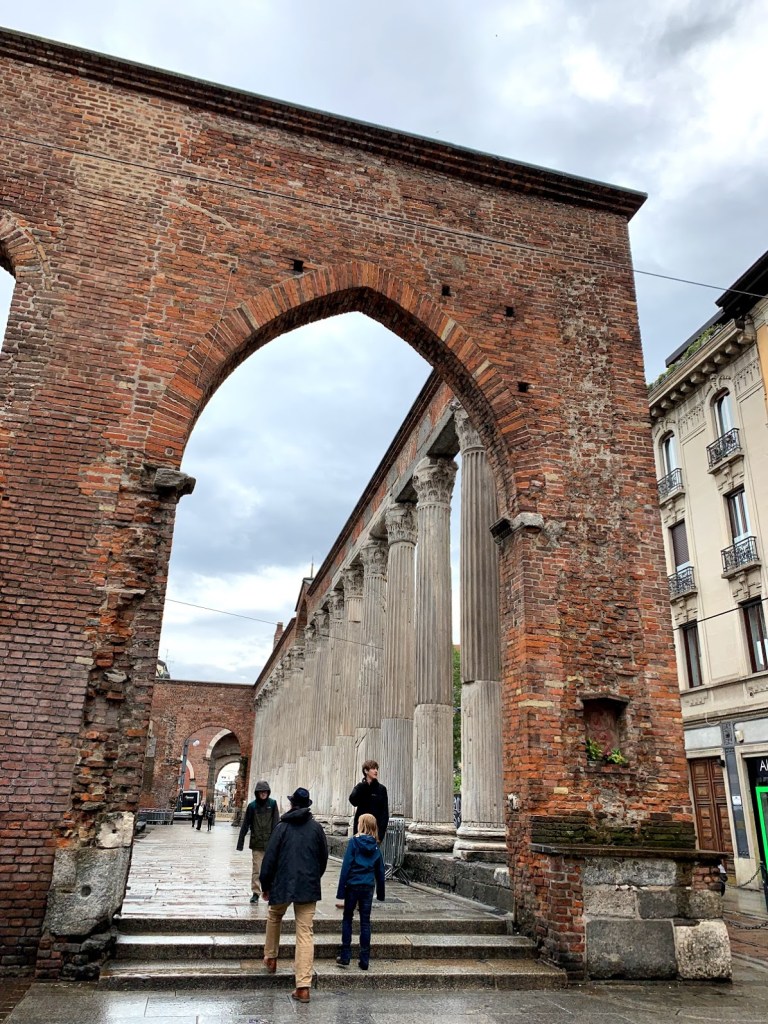
Our final stop was to
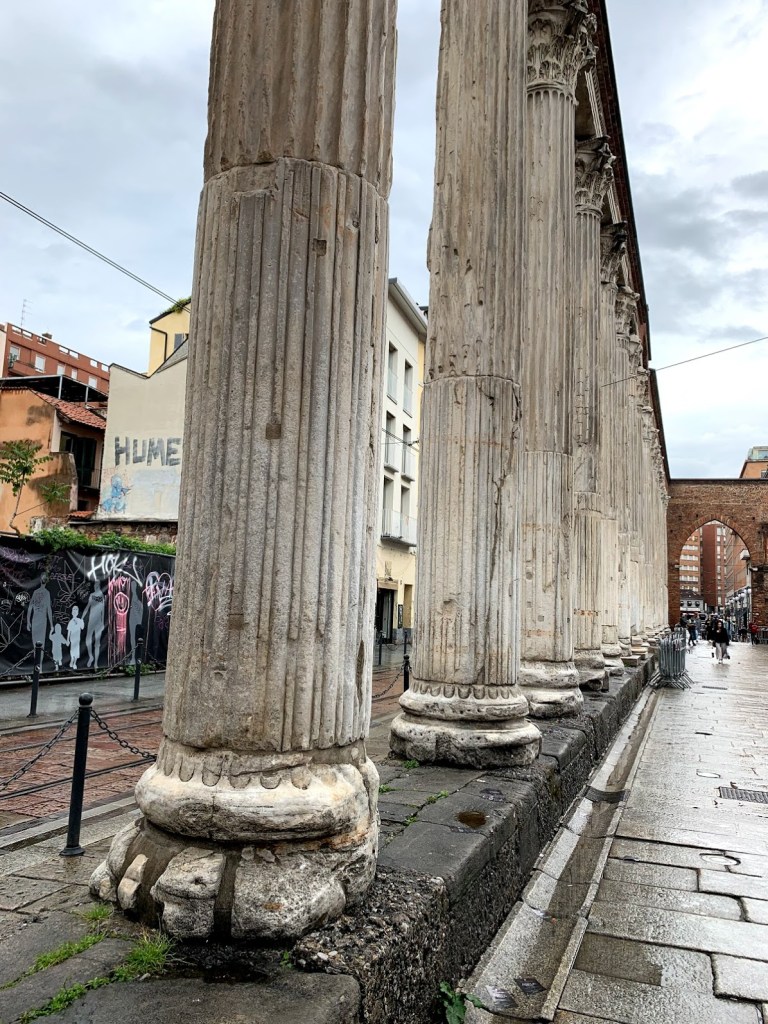
walk another 15 minutes or so and see the complete 2,000 yr. old Roman Colonnade.
In the same piazza was a statue of the first Holy Roman Emperor, Constantine.
The columns were stunning. Milan is a city with contrasts. There is 2000 yr.
old architecture nestled in amongst newer buildings. After a long day of
walking we ended up at a local pizzeria!
It was a bit drizzly and
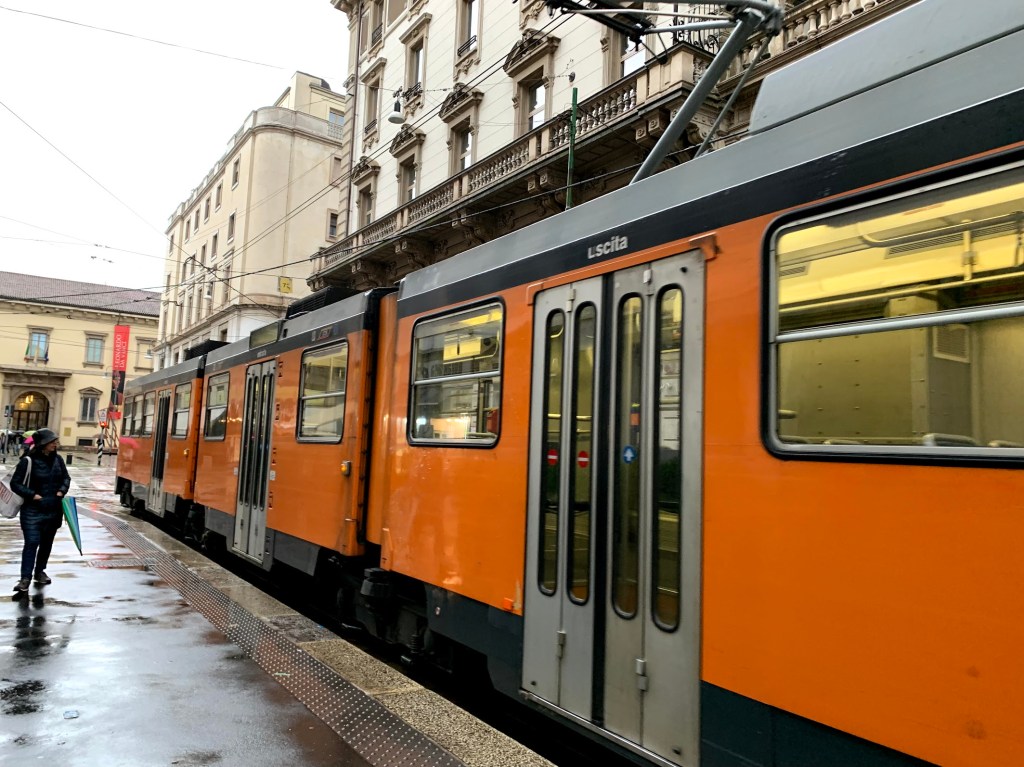
rainy our first day in Italy, but not a washout. Milan has the oldest tram
system in the world. We boarded an older orange tram and headed downtown to the
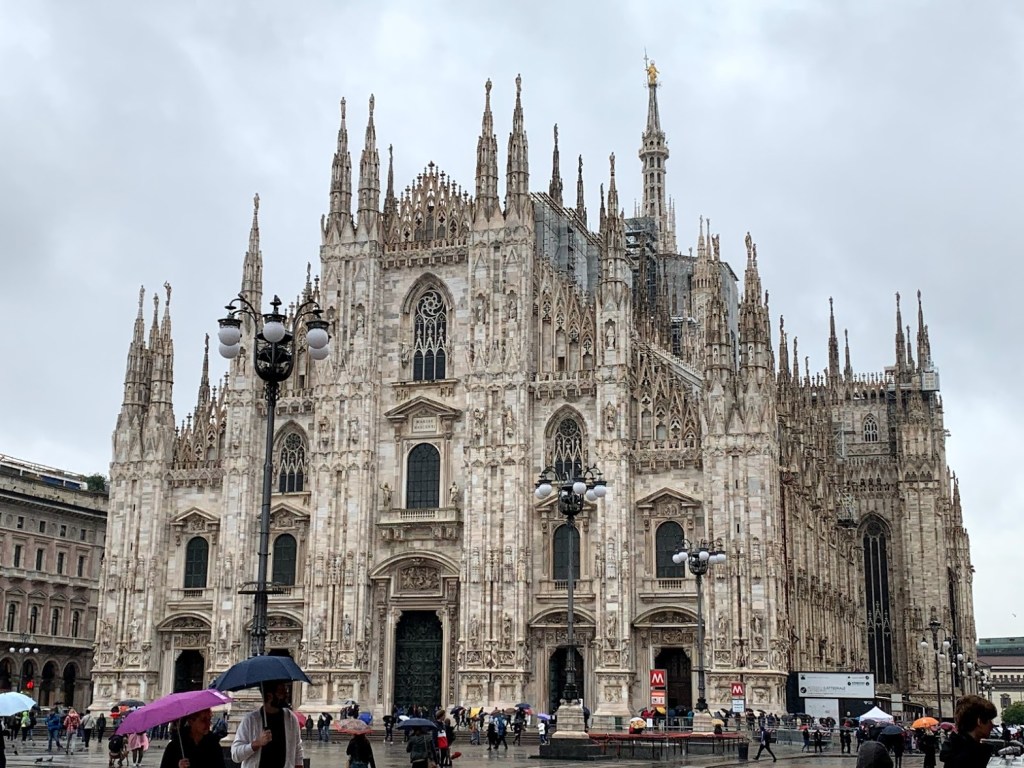
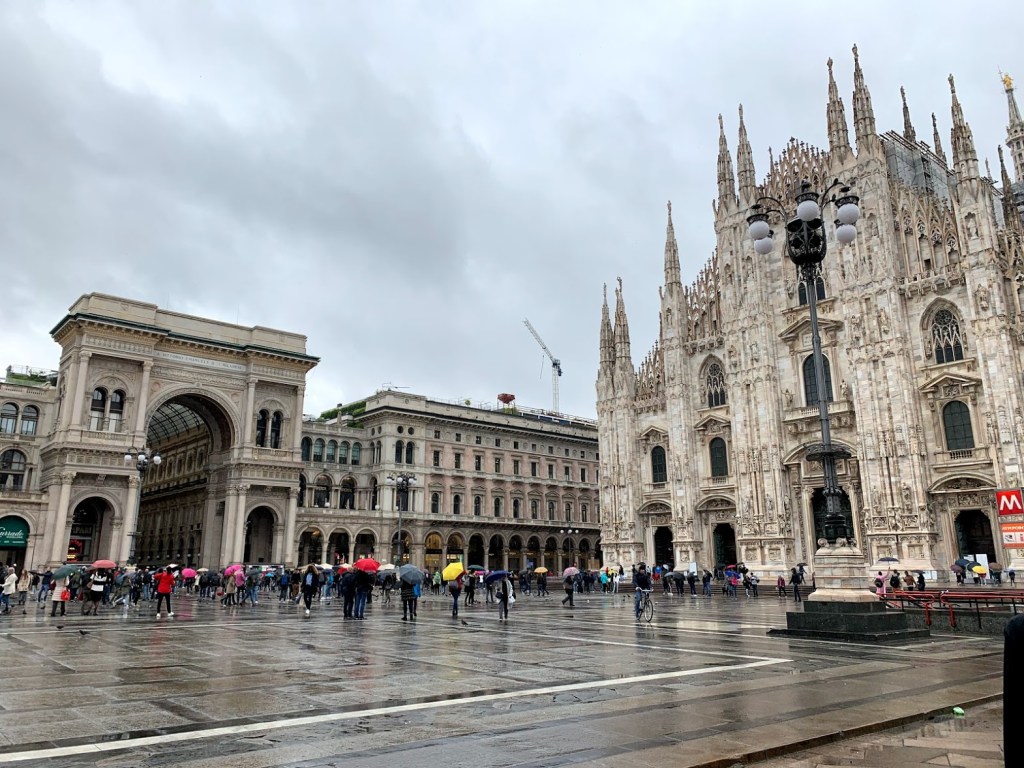
Duomo Piazza. The main square in Milan was beautiful. The gothic Duomo
Cathedral sprawled across the one side of the piazza. The oldest shopping
mall/arcade in the world was just to the left. Milan is considered the fashion
capital of the world followed closely by Paris.
Old orange tram
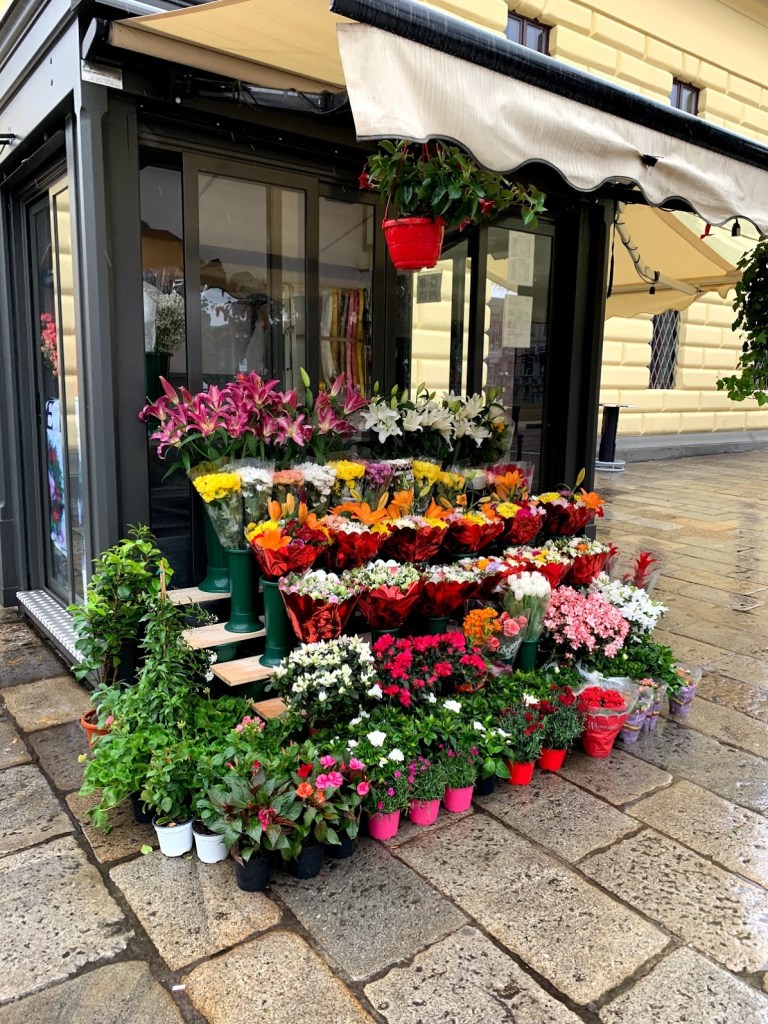
Flower stand in Milan
Duomo Cathedral in Milan, ItalyView of the Duomo Cathedral and the Galleria Vittorio
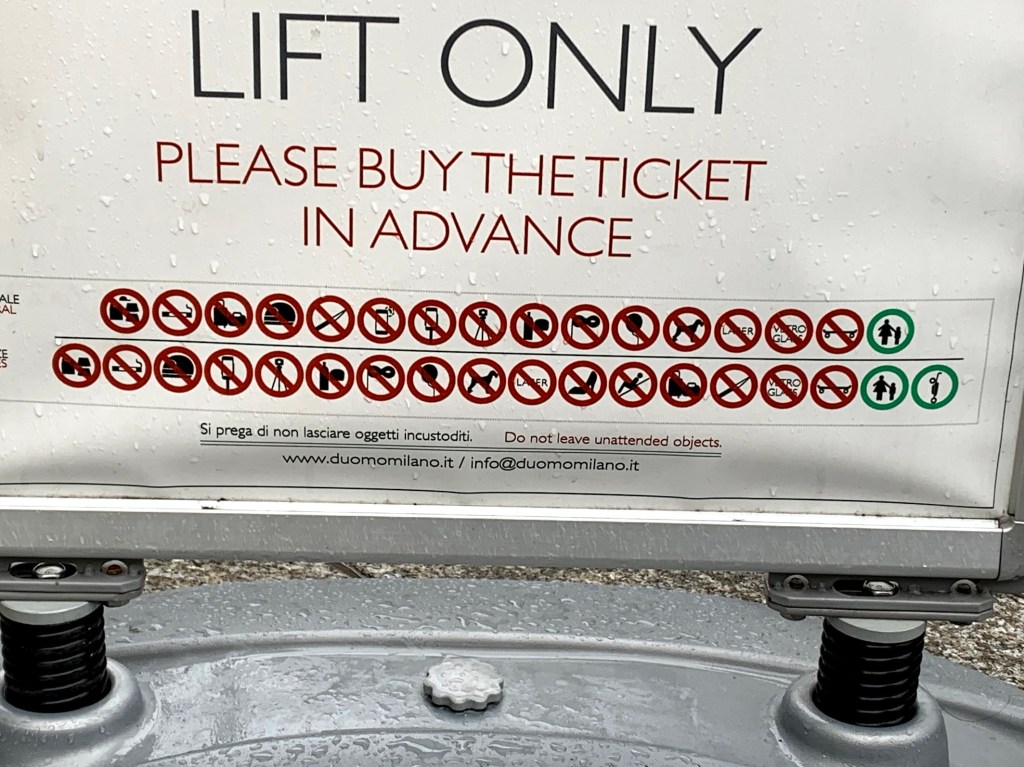
Unfortunately the Duomo
had a waiting line of over 2 hours and several rules to go inside, so we opted
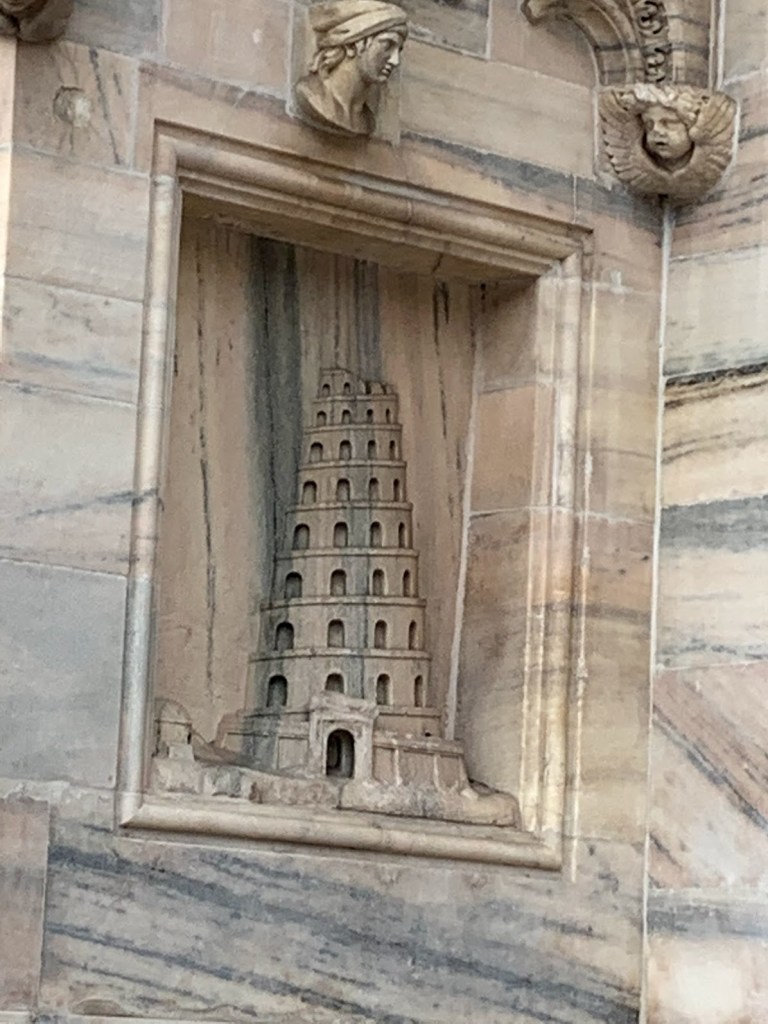
to stroll around the outside and take in the architecture of the cathedral. I
particularly liked the stone alcoves that portrayed various Bible stories and
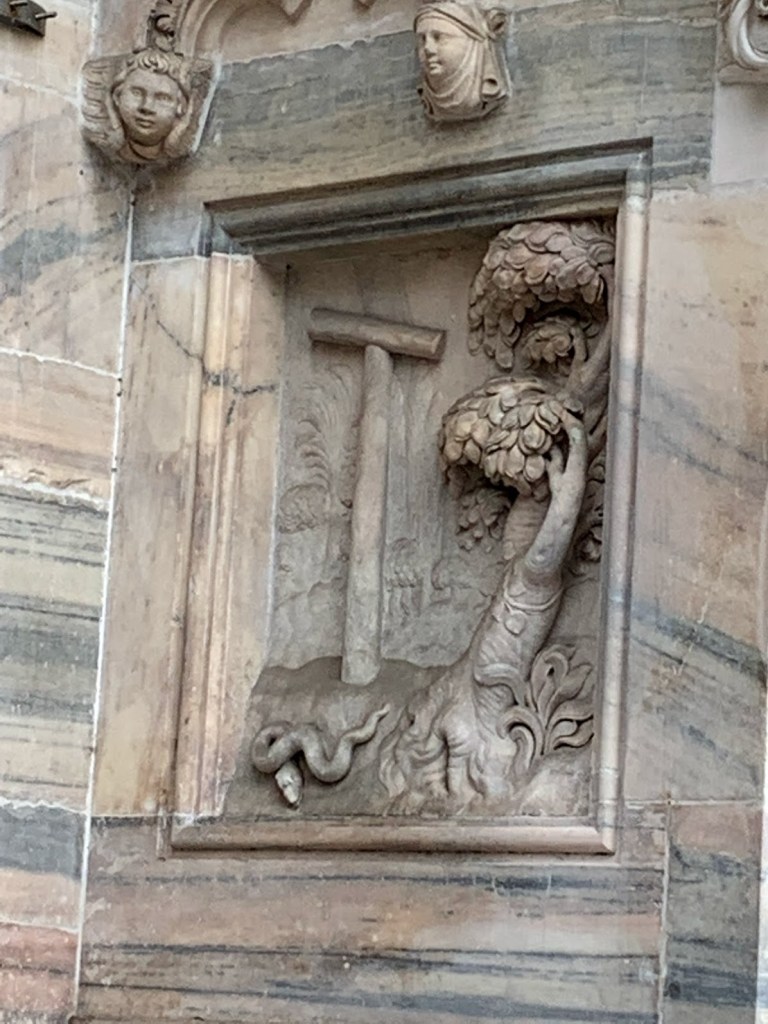
we found the evil serpent on the front façade as well!
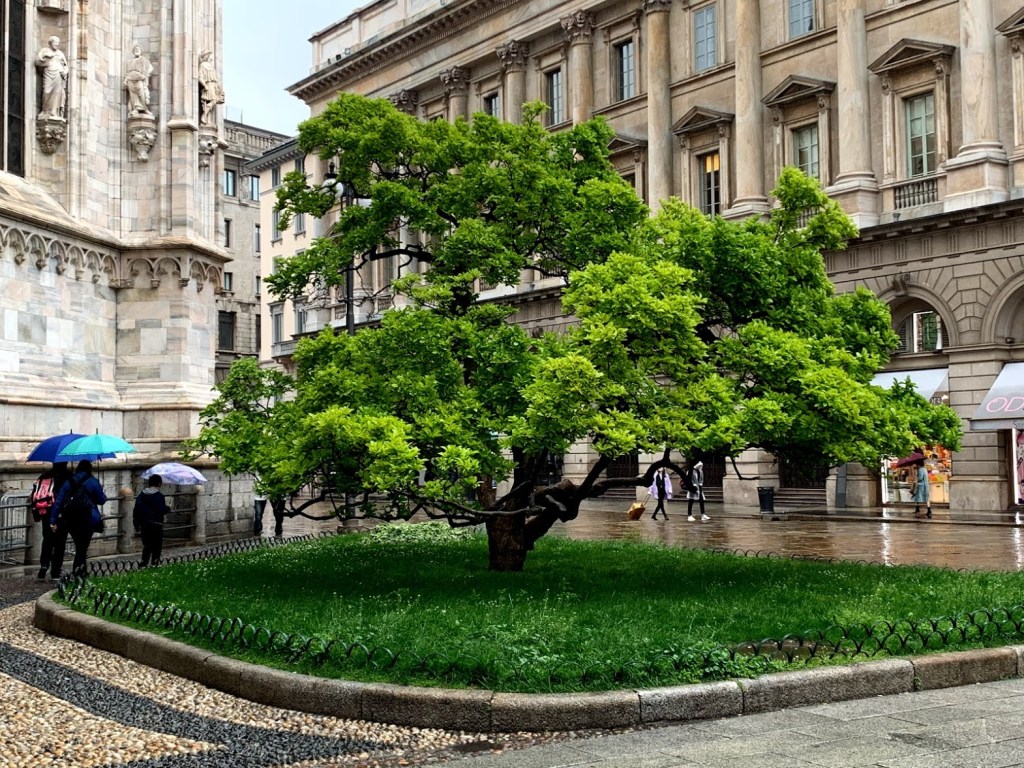
Lovely green tree
Crazy list of items not allowed in the Duomo
Tower of Babel
Serpent in the Garden of Eden
After meandering around
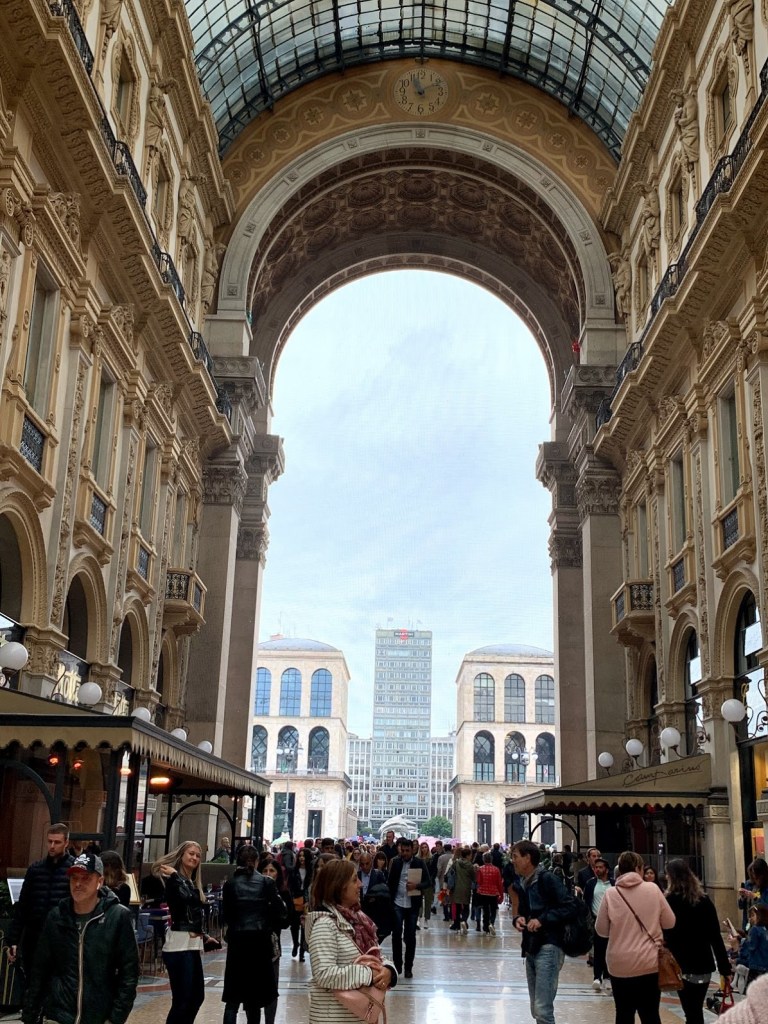
the piazza we headed through the large four-story open-air arch into the
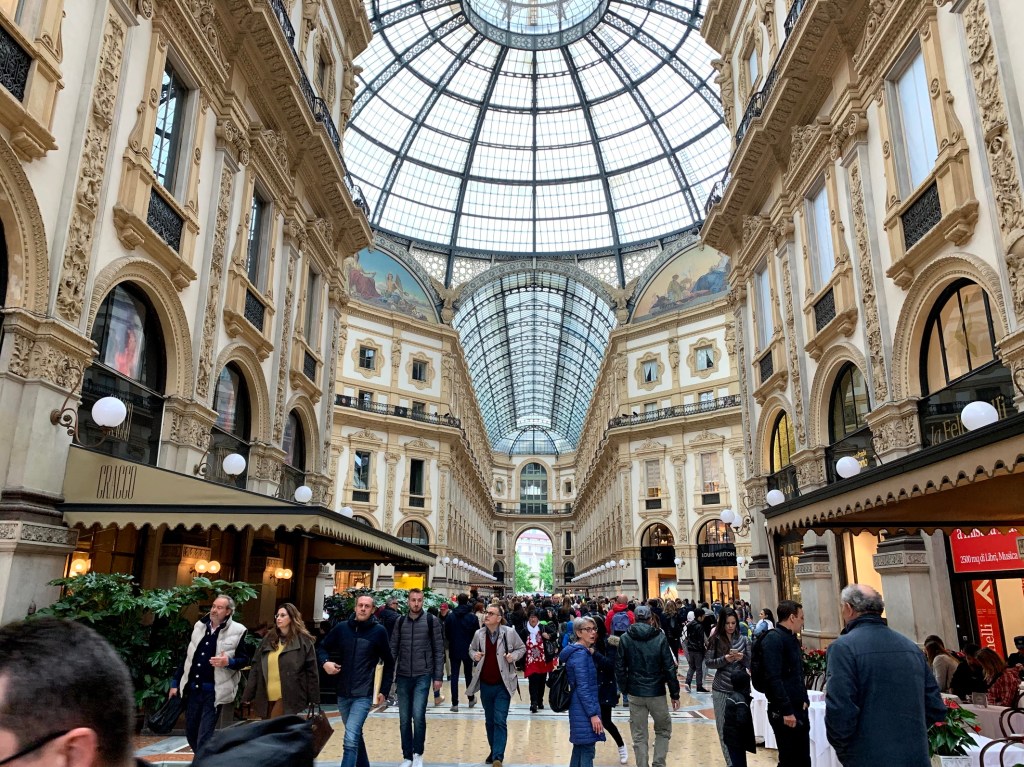
Galleria Vittorio Emanuele II. It was shaped like a cross with a large circle
in the middle, a typical design for 1861. There were only shops on the main
floor some of which were two stories tall. The third/fourth floors were private
businesses or apartments. It was fun playing the rich and famous as we explored
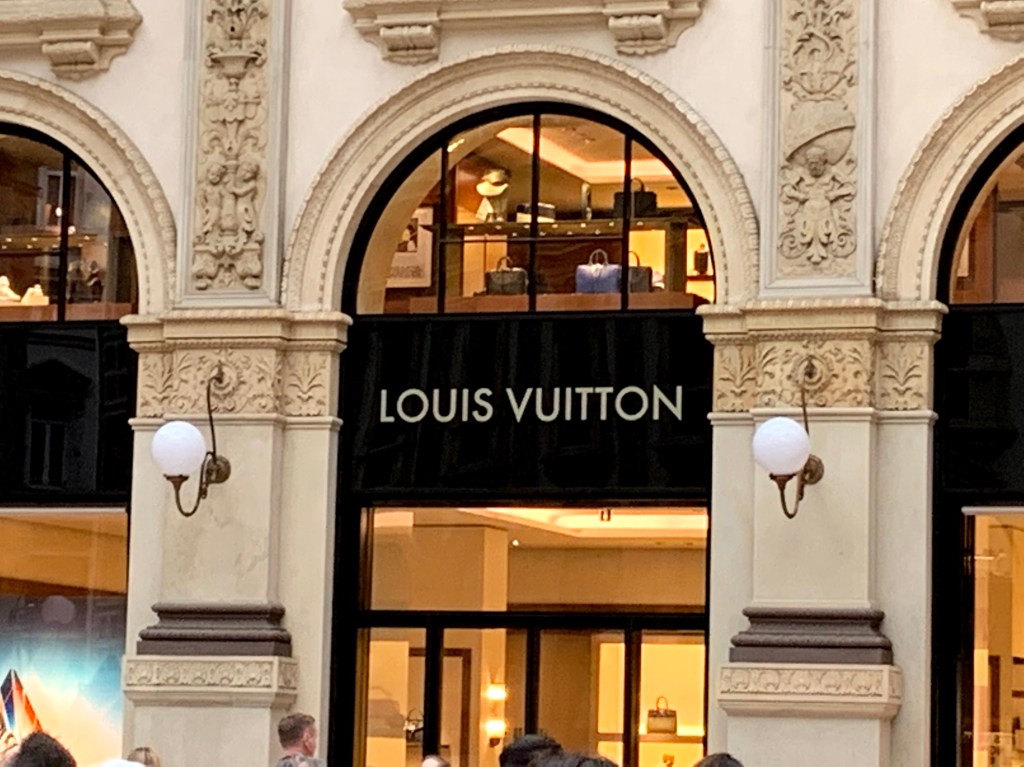
the various shops, which included Louis Vuitton, Prada, and Gucchi. There was
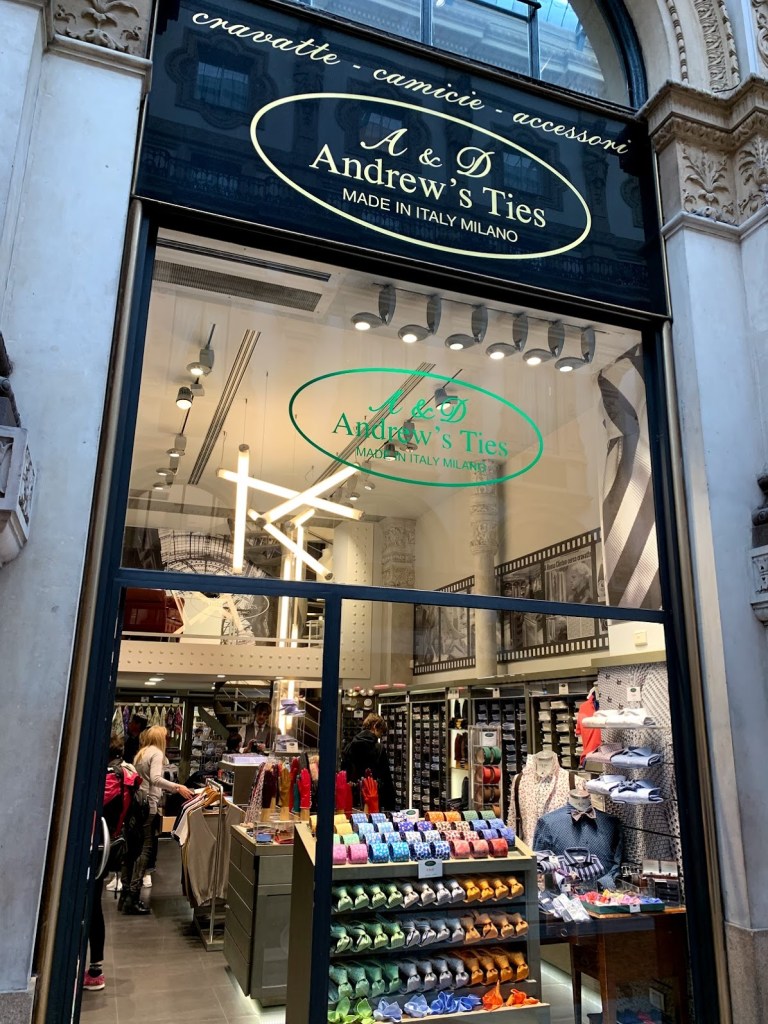
one shop that actually had items that a normal person could afford called A&D
Andrew’s Ties Robert and the boys bought ties, silk handkerchiefs, and Liam
even got a nice shirt there!
One of the four arched entrances to the Galleria Vittorio Emanuele II Inside the world’s oldest shopping mall
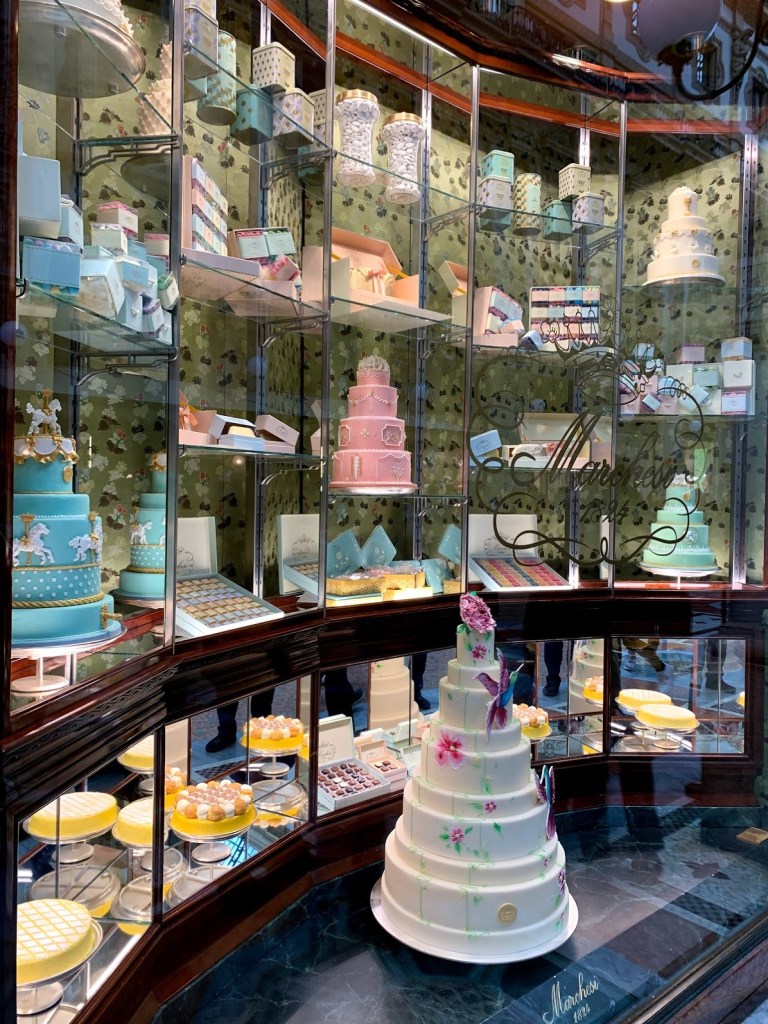
Amazing pastries!
Store where the menfolk shopped.
Can I have a purse in the window?
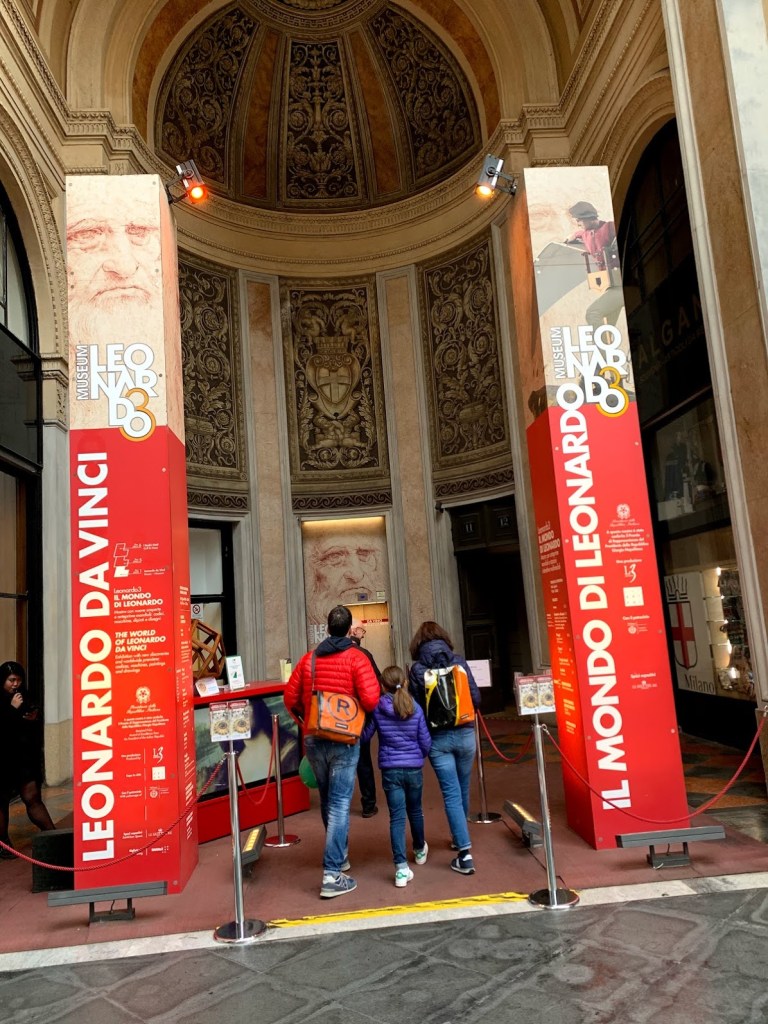
At the far end of the
mall there was a museum dedicated to the great painter and inventor Leonardo
DaVinci. He lived most of his life in Milan. Inside the museum engineers and
artists had recreated many of his inventions including many of his famous
flying machines! They were all life sized and the interactive computer displays
were fun for the kids.
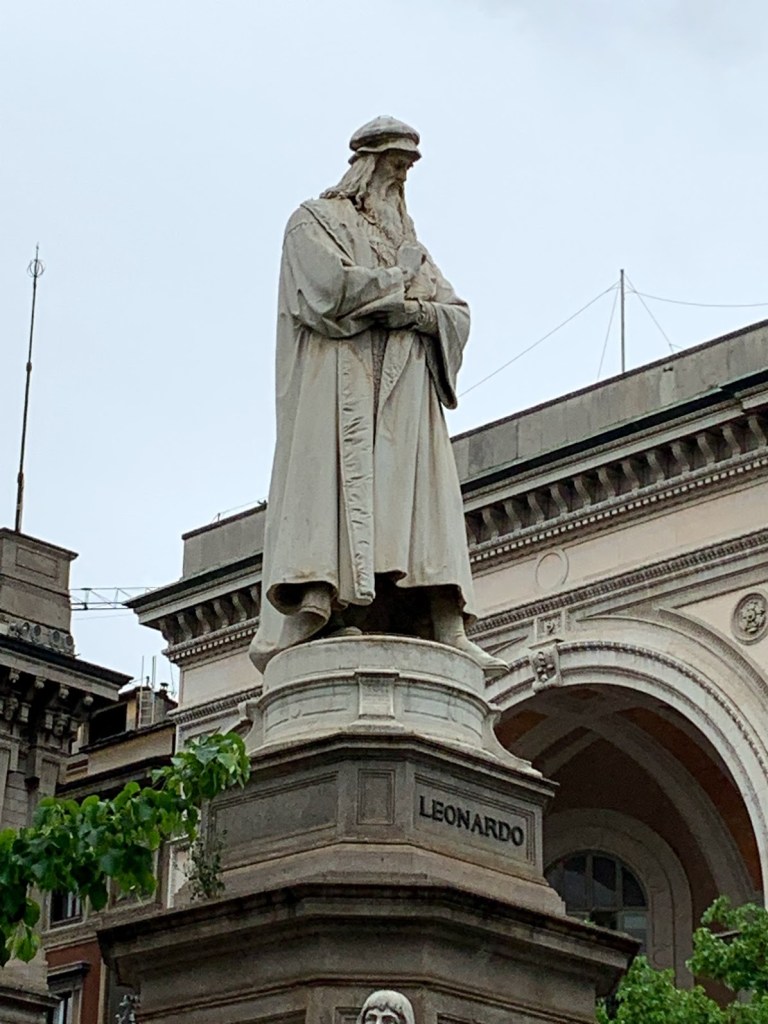
Leonardo DaVinci ExhibitLeonardo DaVinci lived in Milan, Italy
Outside the museum and
at the opposite entrance to the mall was a little square with a statue of
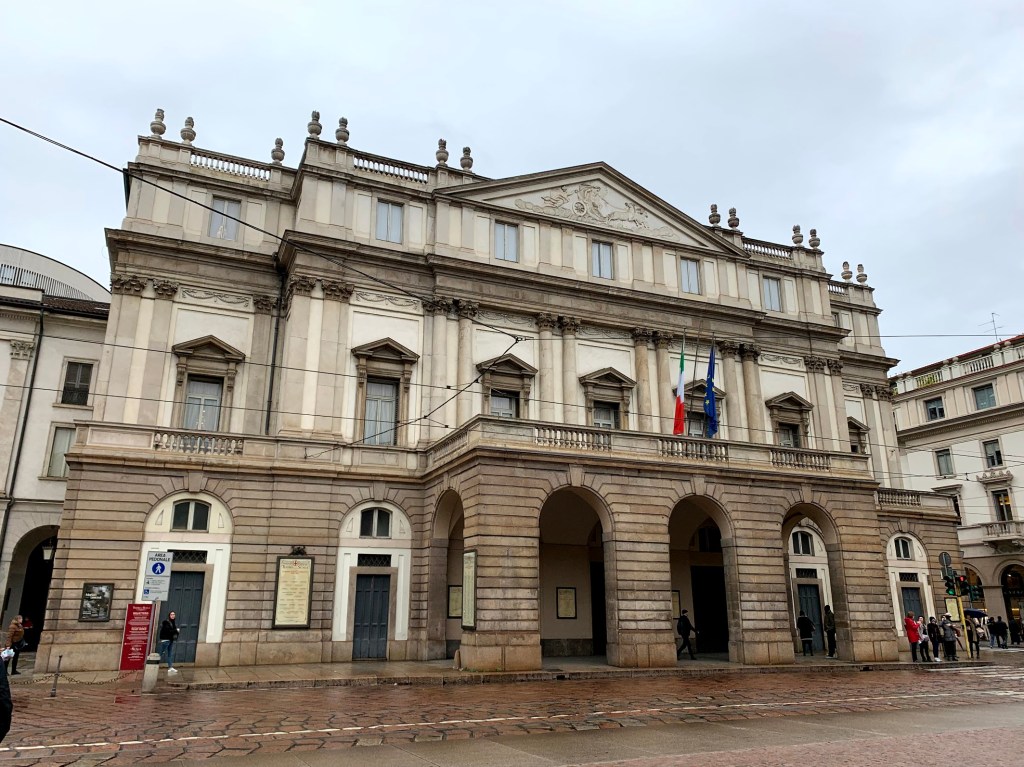
Leonardo DaVinci! Across from the mini park was La Scala. Built in 1778 it is
known in Italian as the Teatro alla Scala named after an old ruined church that
used to reside on the spot, Santa Maria alla Scala. So what is La Scala? It is
the premier opera house in the world. If you get cast in an opera at La Scala
you have made it to the top as an opera singer! Unfortunately we couldn’t go
inside due to rehearsals, but the outside was a beautiful example of
neoclassical design.
Teatro alla Scala
Just behind the opera
house was the golden triangle. This area is the other important shopping
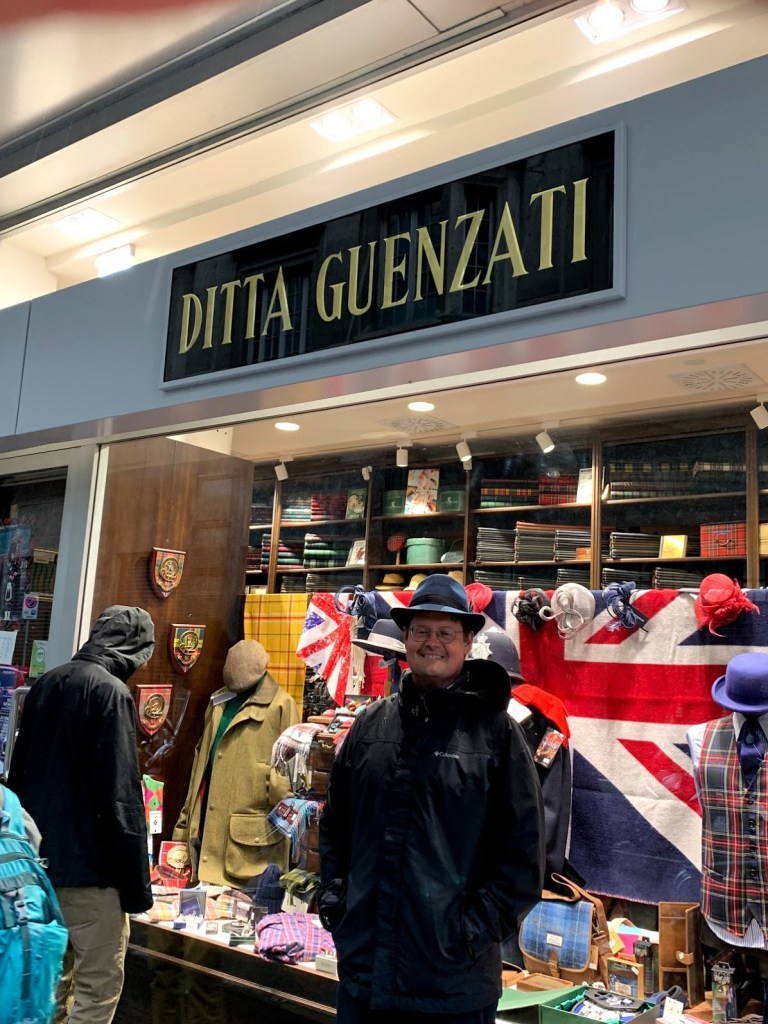
district in Milan. Oddly enough we came across a British woolen shop and went
inside to explore. The clerks were very friendly and they carried traditional clothing
items from Italy as well. Robert even found a traditional Milanese fedora hat.
Mr. Handsome!
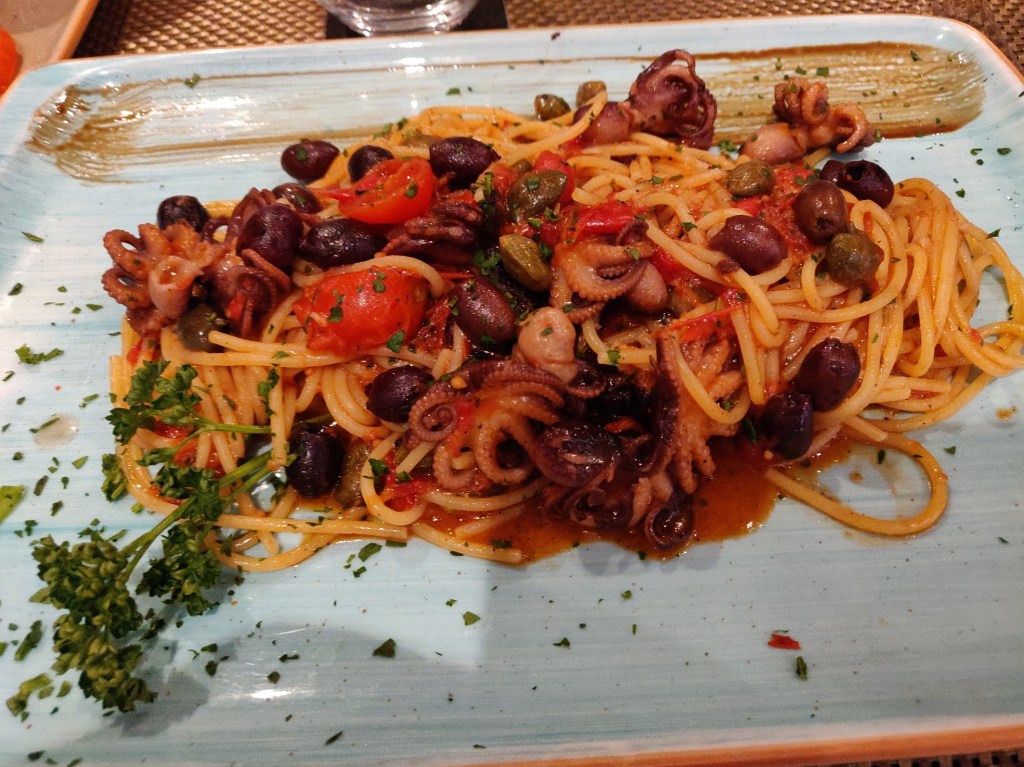
Authentic Italian Food, Yum!
Robert had spaghetti with baby octopus
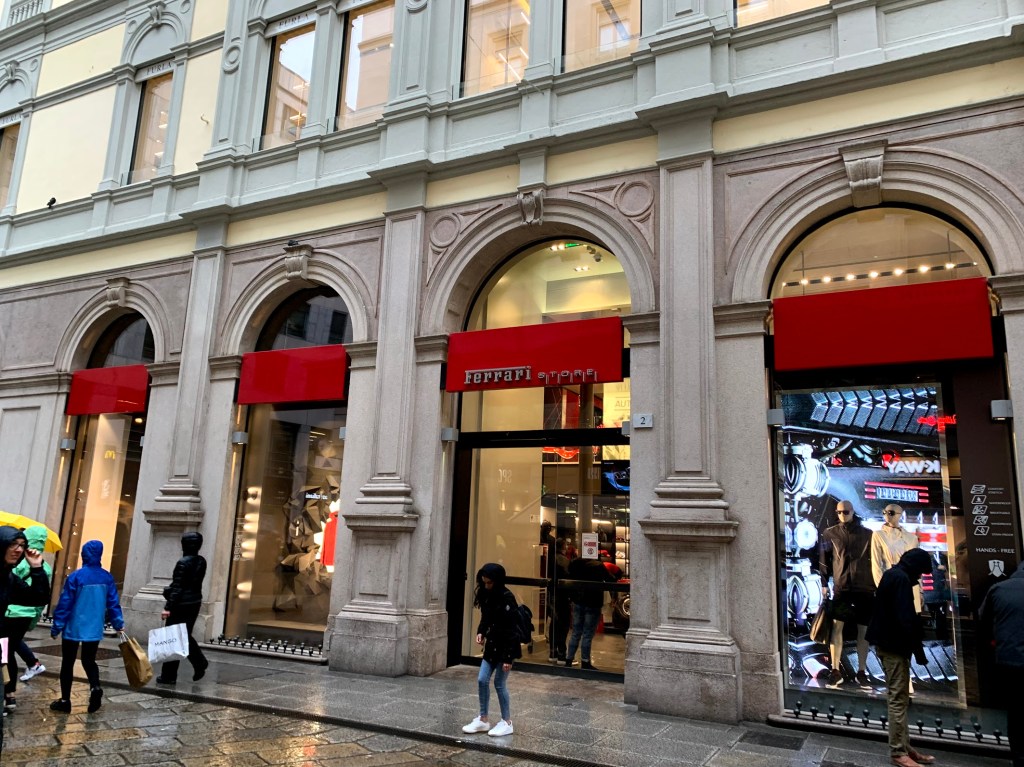
The Ferrari Store was really cool!
Grabbing some more food
at the local market we headed back to our little apartment and Robert whipped
up another delicious meal. Milan is a big city, but the food and people were
very nice. We chatted about our favorite things that day and we all agreed that
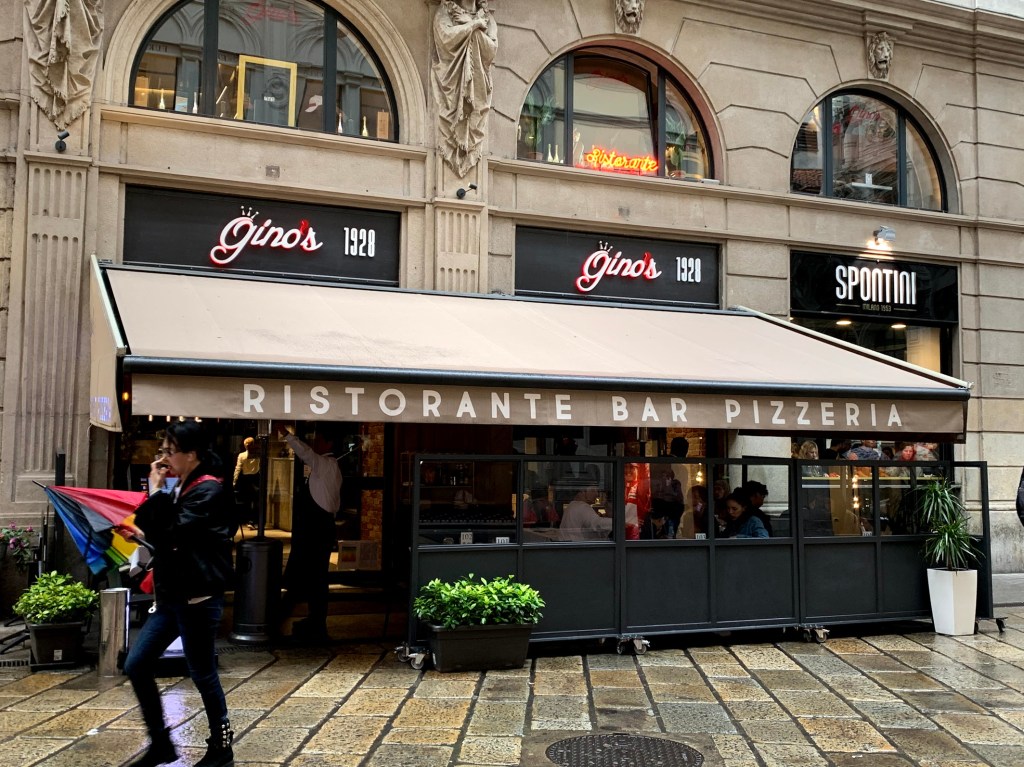
eating an incredible authentic Italian meal at Gino’s and then shopping at the
Ferrari Store across the way was lots of fun!
When the Lord made the
Swiss Alps He must have been in a fine mood!
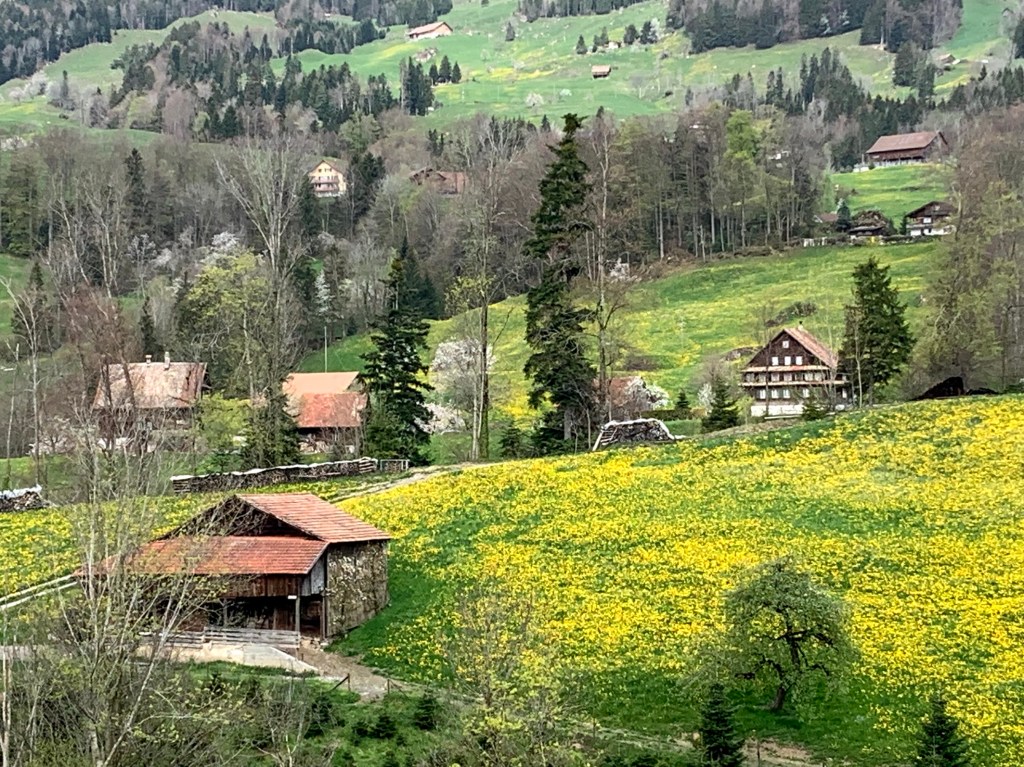
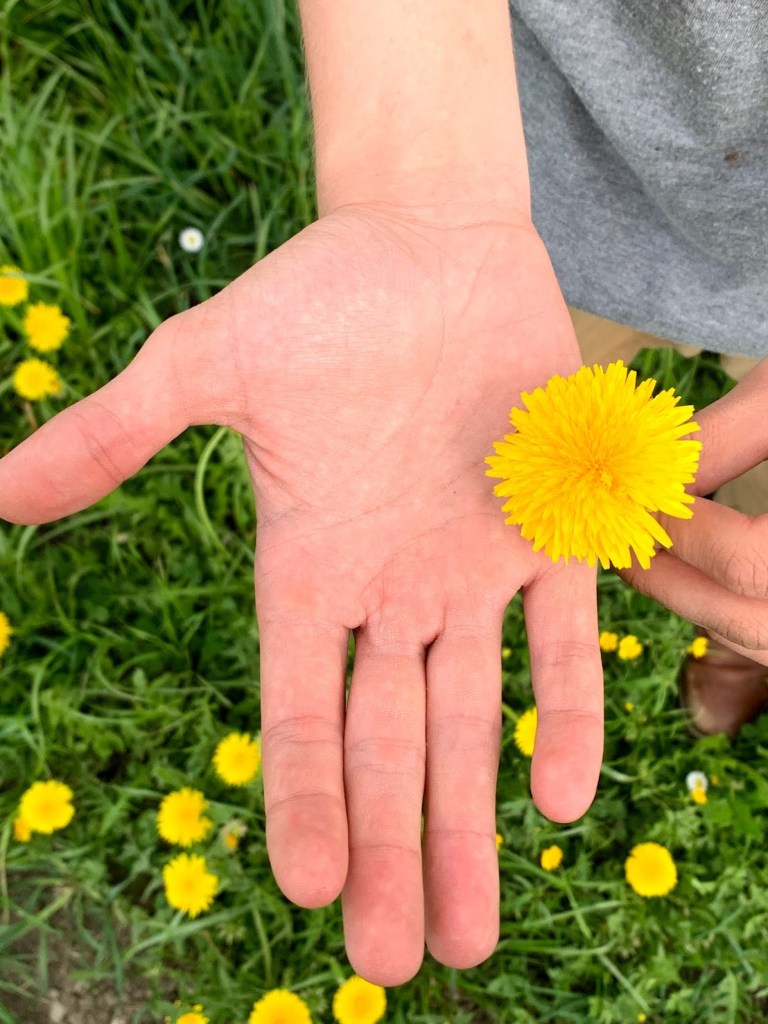
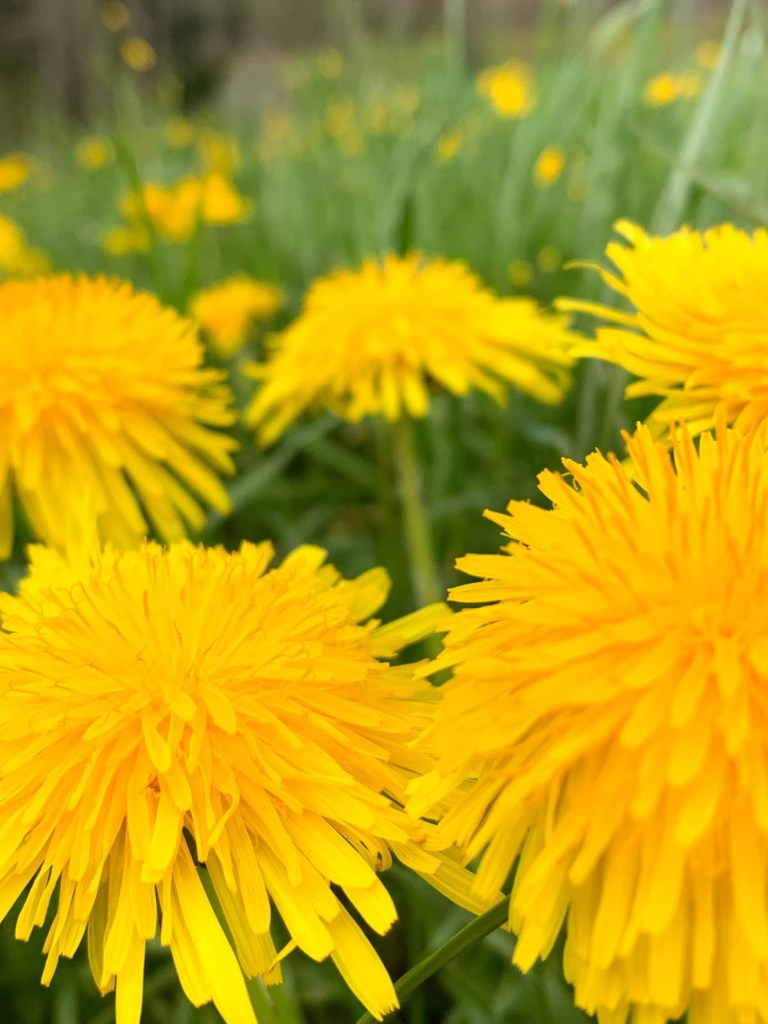
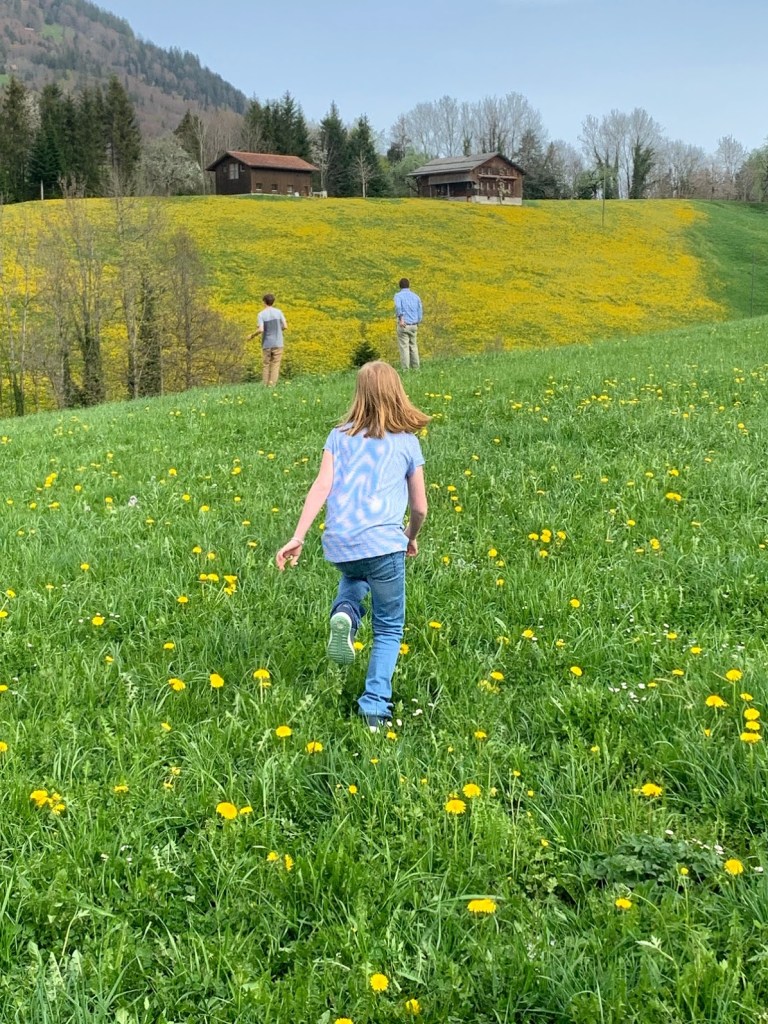
We left Zürich the morning of the 22nd and drove south towards the Italian border. Little did we know what awaited us? Pristine mountain lakes, chiseled mountains with snow topped peaks, and rolling hillsides covered in the largest dandelions I’ve ever seen!
Swiss Village
Liam holding a massive dandelion
Dandelions!
We stopped often at roadside
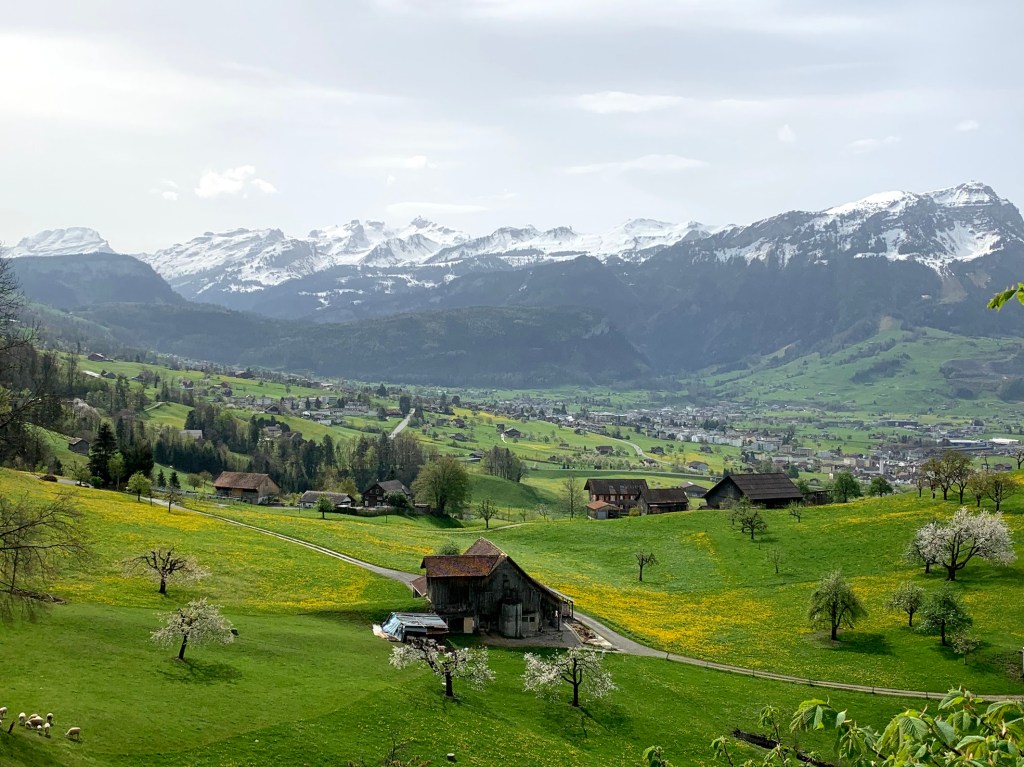
overlooks that gave us stunning views into green valleys, where little villages
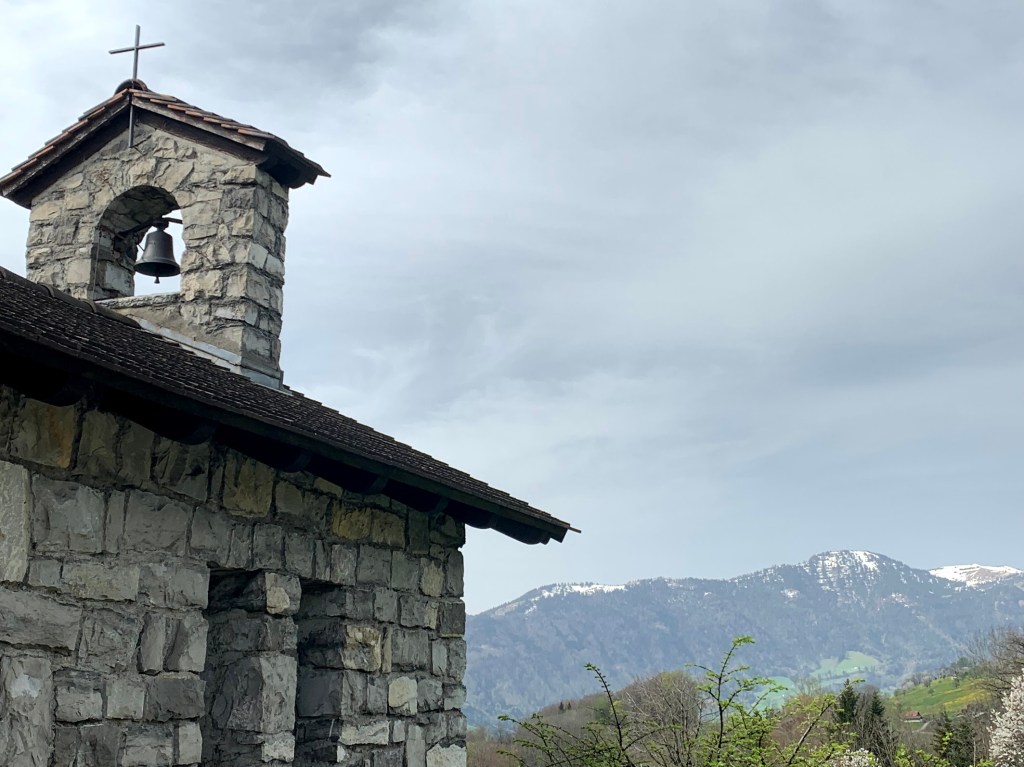
or farms nestled into the hillsides. Sometimes charming little chapels were
built at the overlooks and we were able to meander in the yellow flower covered
fields.
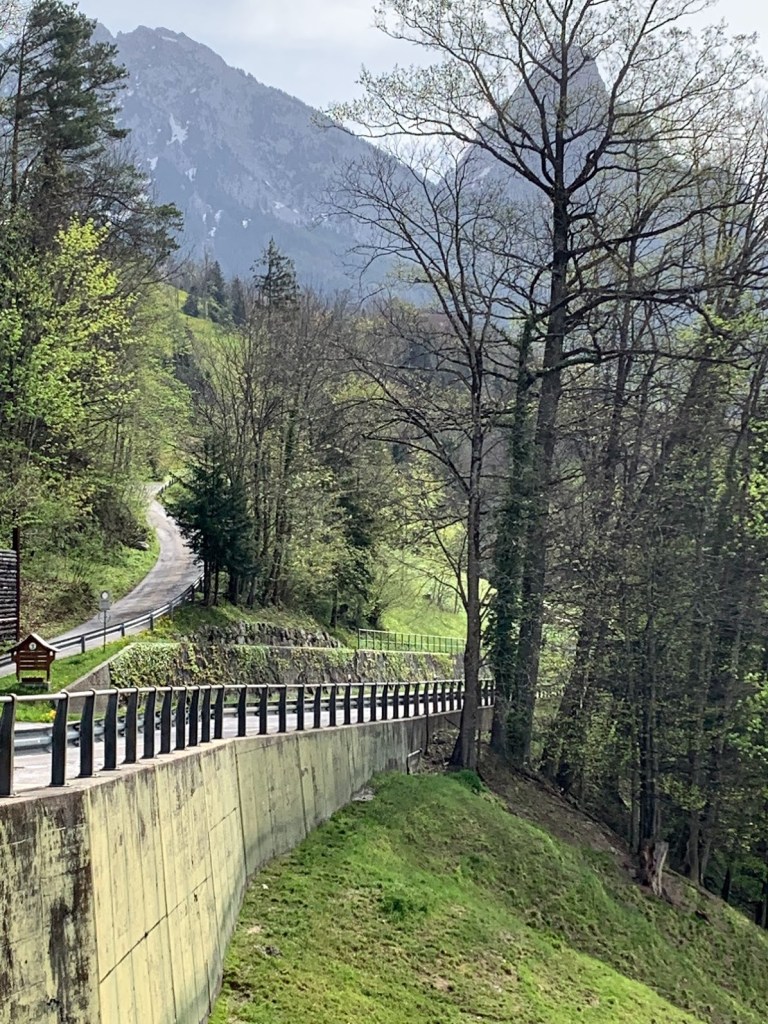
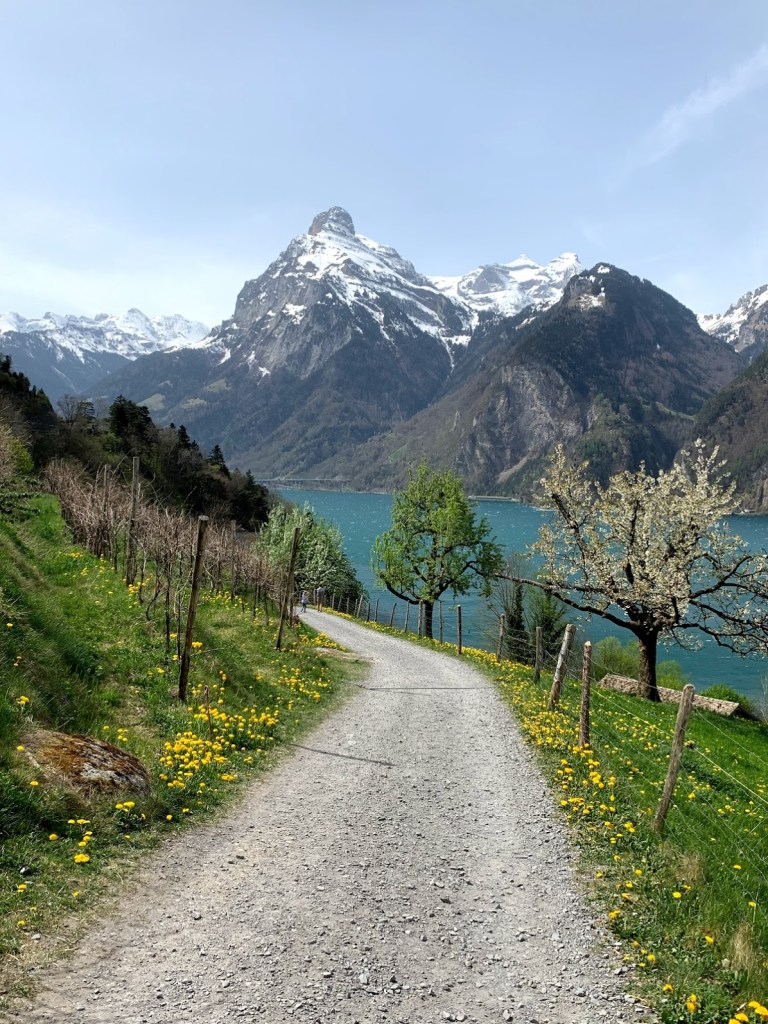
Frolicking in the fields!Mountain ChapelGorgeous Swiss ValleyFrequently there were little roads that meandered off into the mountains.
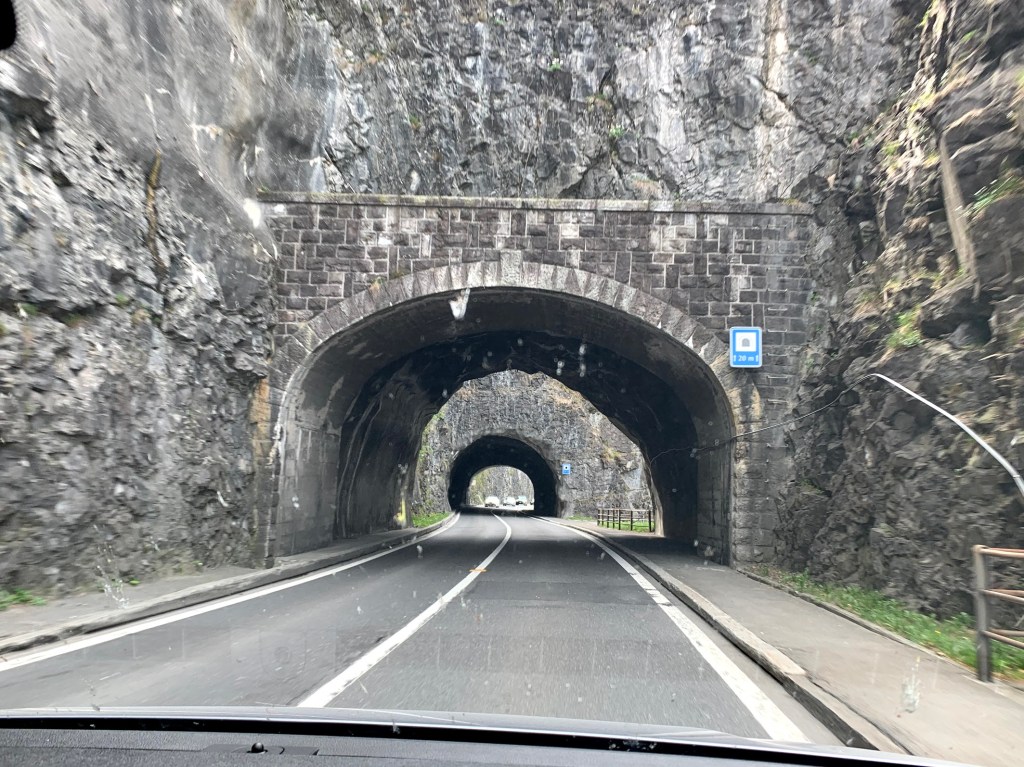
Double tunnels
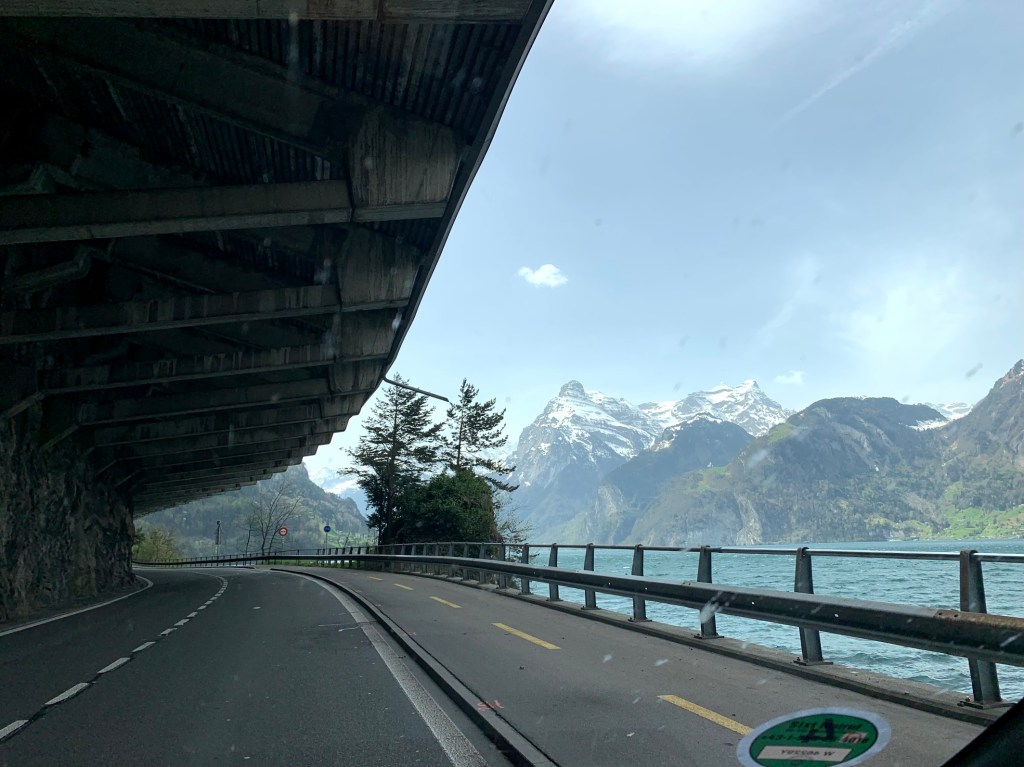
There were many half tunnels which took advantage of the views!
At one of these unbelievable
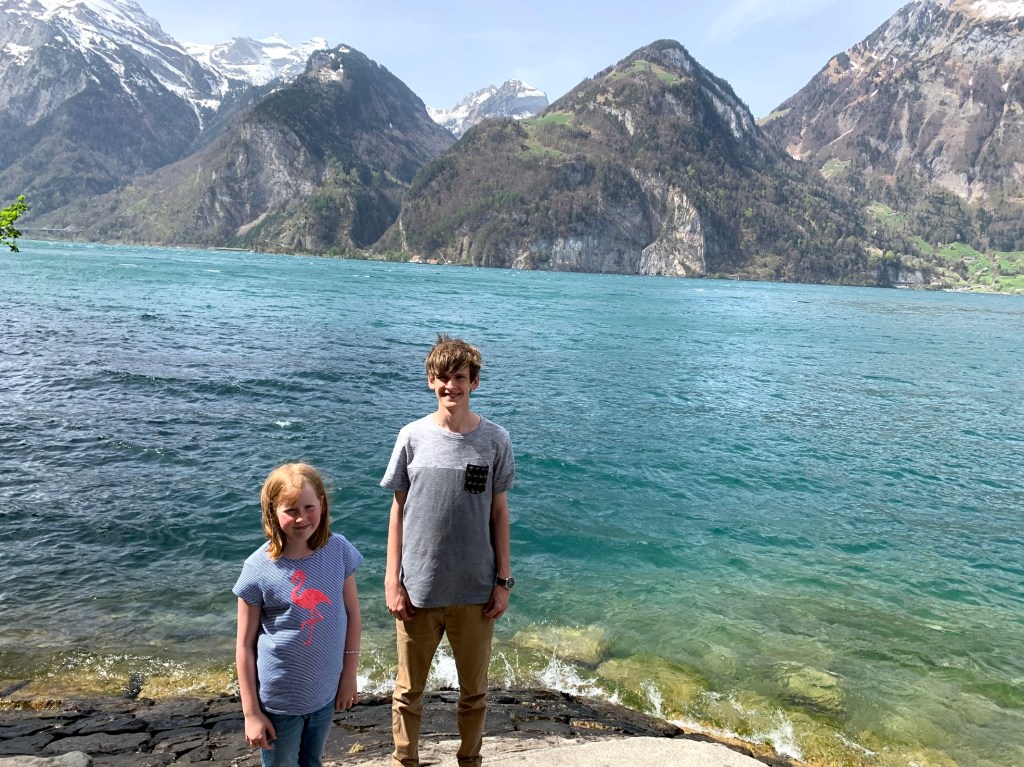
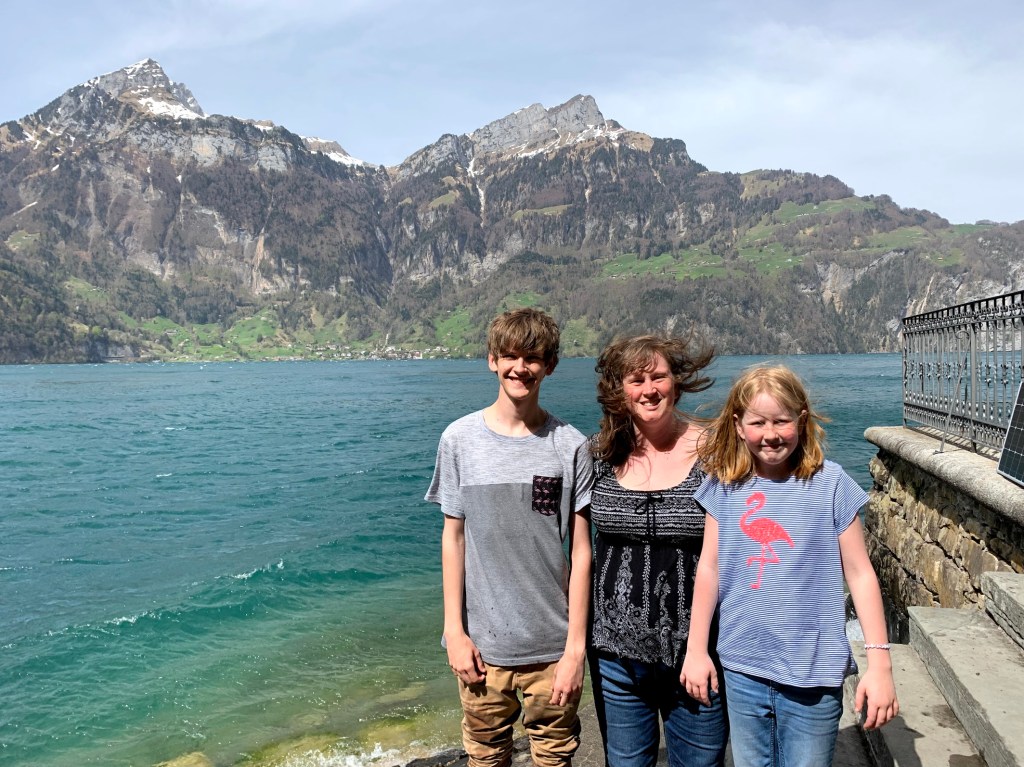
stops Liam, Faywen, and I hiked 15 minutes down to the lakeshore. Robert’s
stomach wasn’t feeling well and Seamus was a bit tired. They stayed up top and
enjoyed the views before taking a nap in the car. I thoroughly enjoyed this
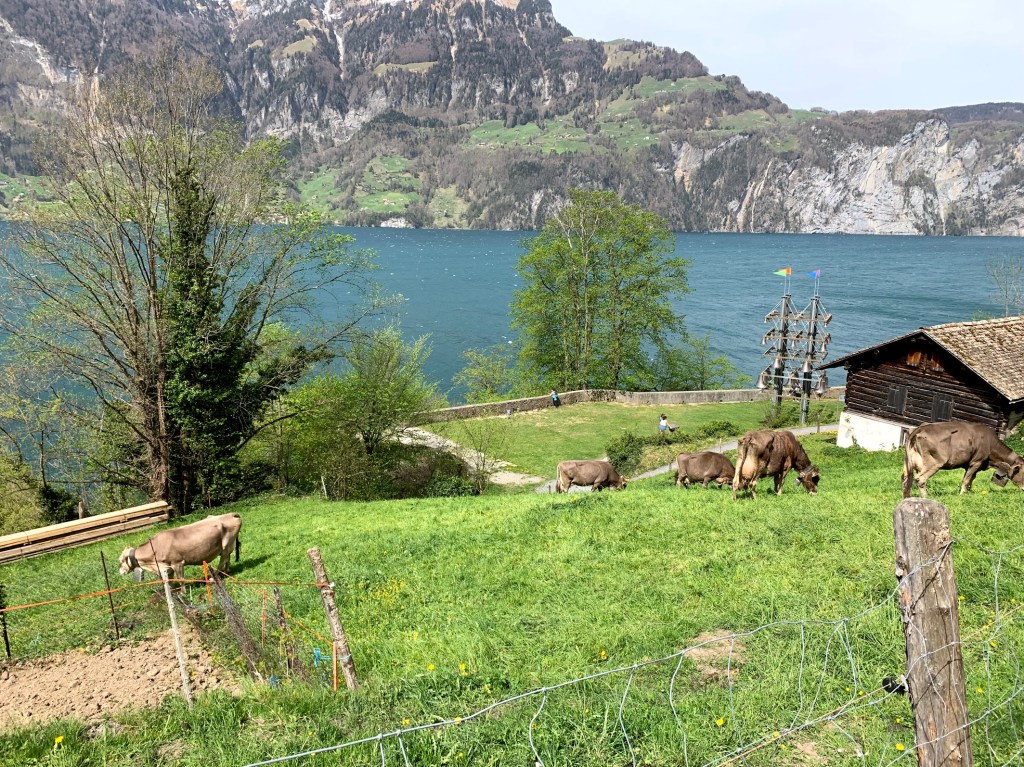
alone time with Liam and Faywen. We meandered down a country path past cow
farms and eventually made it to the lakeshore where there was a lovely outdoor
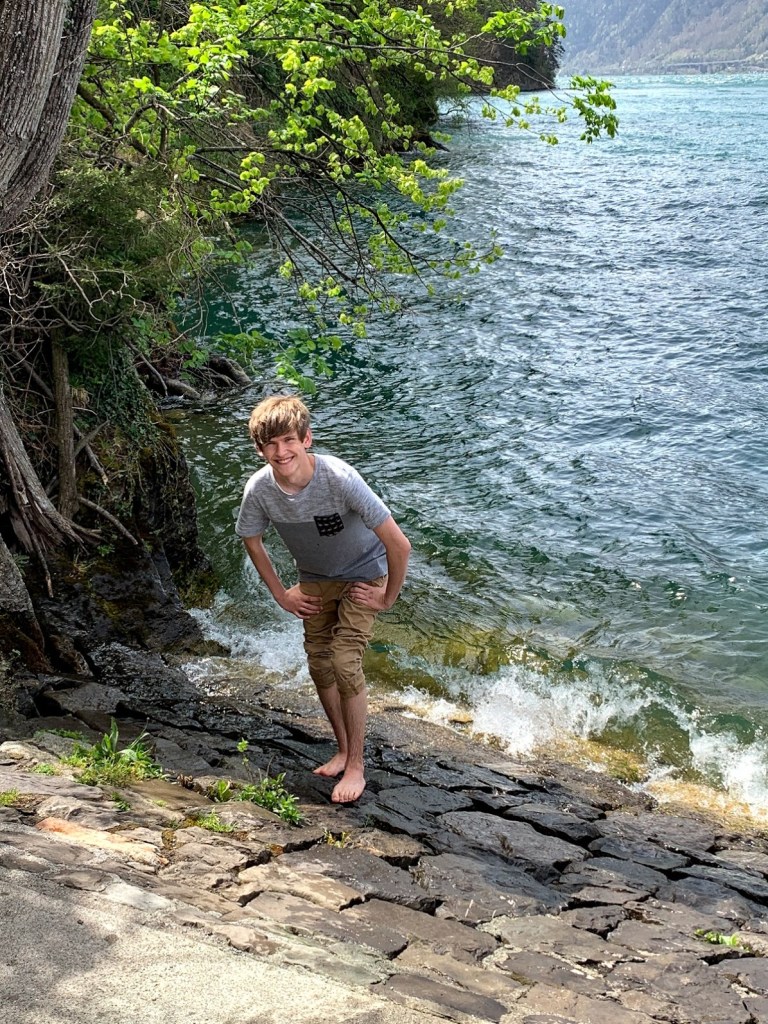
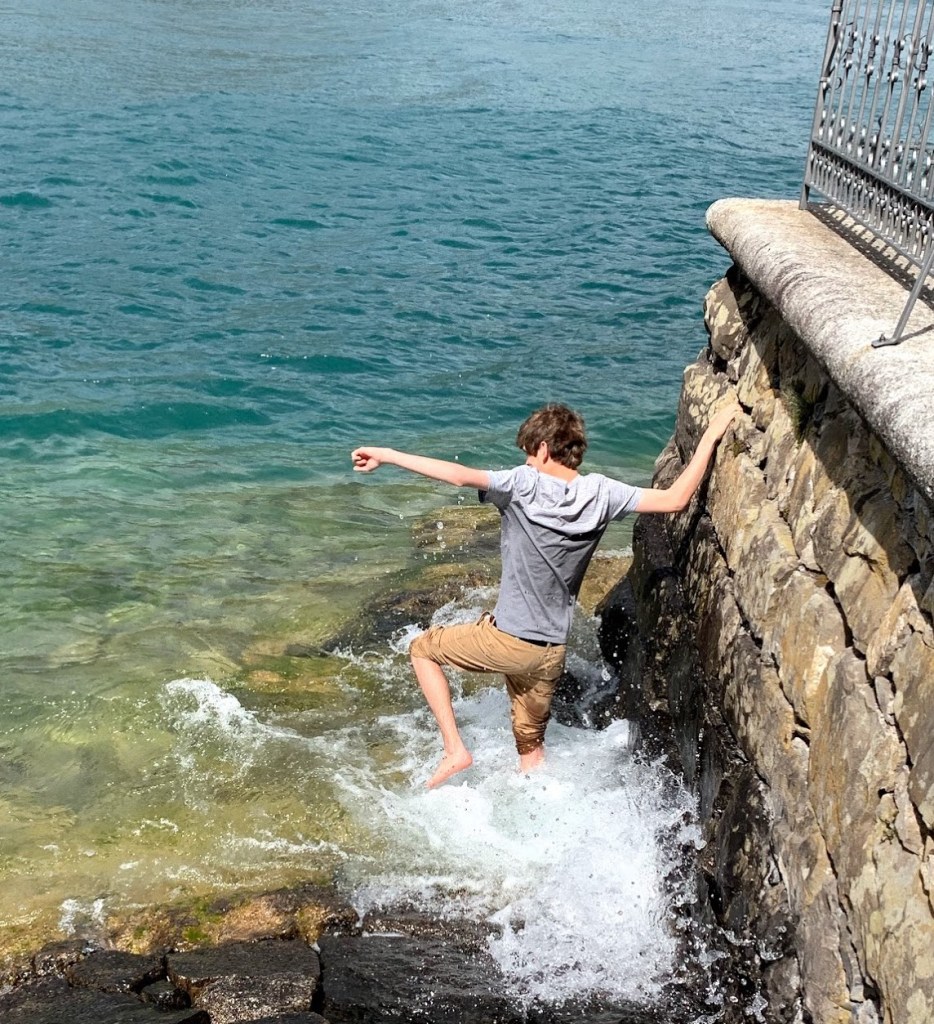
chapel. There were little steps down into the lake and Liam took off his shoes,
rolled up his pants, and stuck his feet in the cold mountain lake water. The
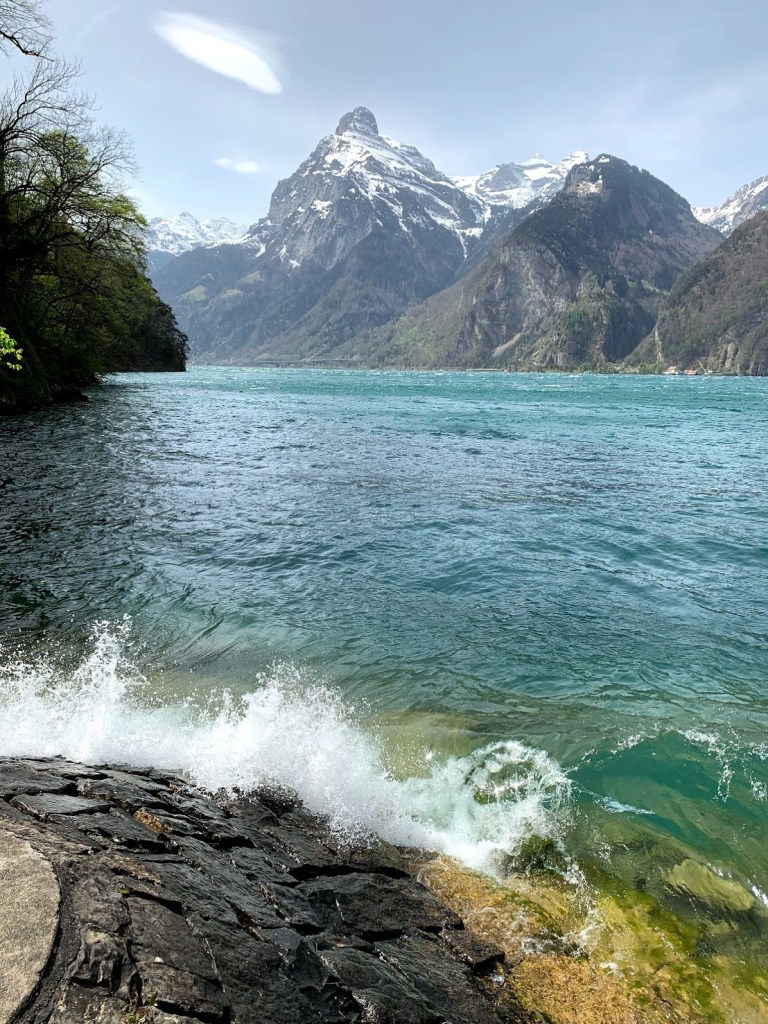
wind was blowing and so waves lapped against the shoreline. Liam did get his
britches a bit wet, but he dried out quickly.
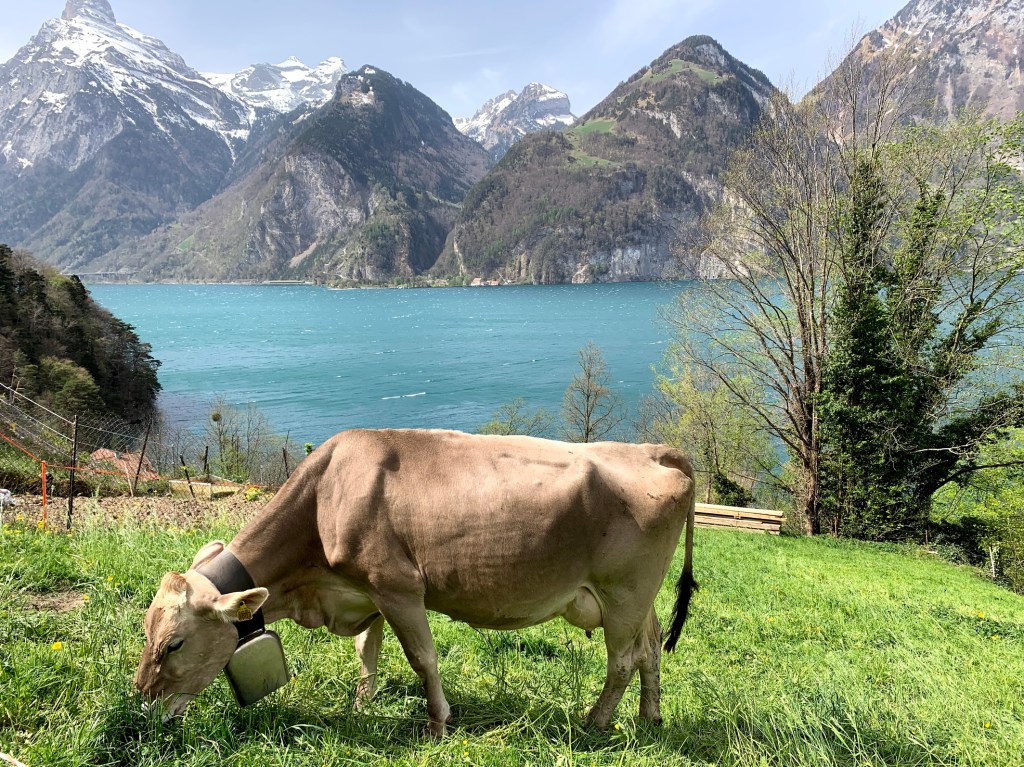
Perfect mountain path down to the shores of Lake ViewaldstätterseeBessie and her bell!
On the lakeshore
I took a family’s photo and they took one of us!
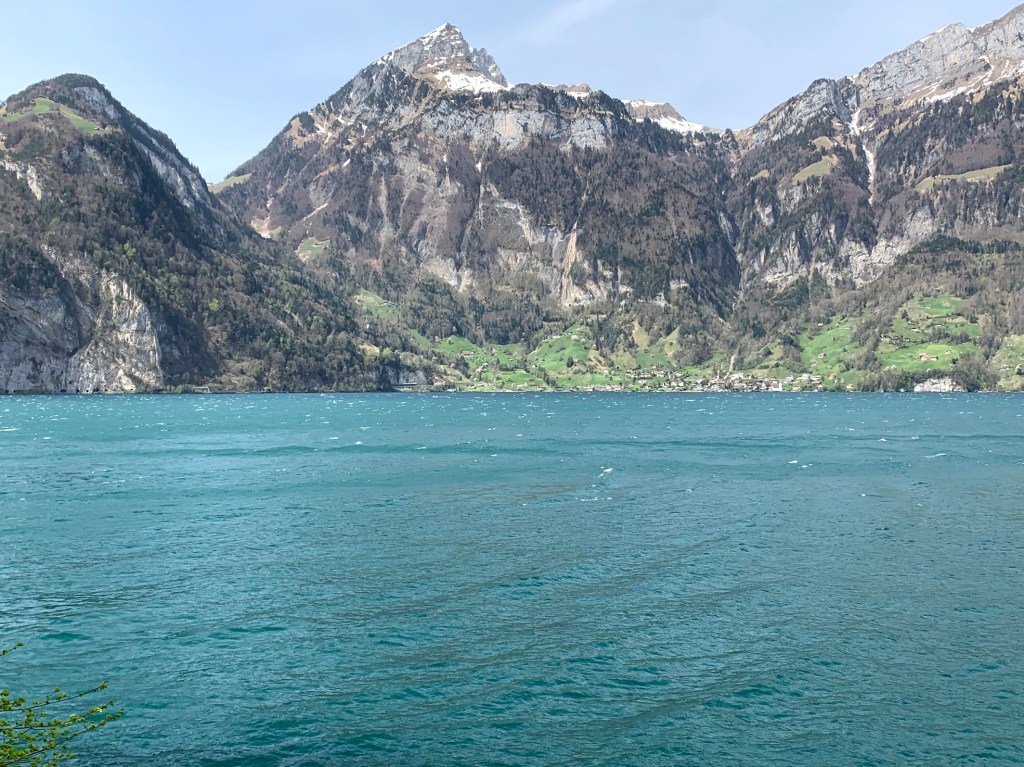
The wind was brisk, but it made lovely waves in the lake!
Time for a dip in the lake!
Whoa that was a big cold wave!
The sun came out while we down by the lakeshore and it changed the color of the water from blue-grey to a stunning turquoise.
On the way back up we
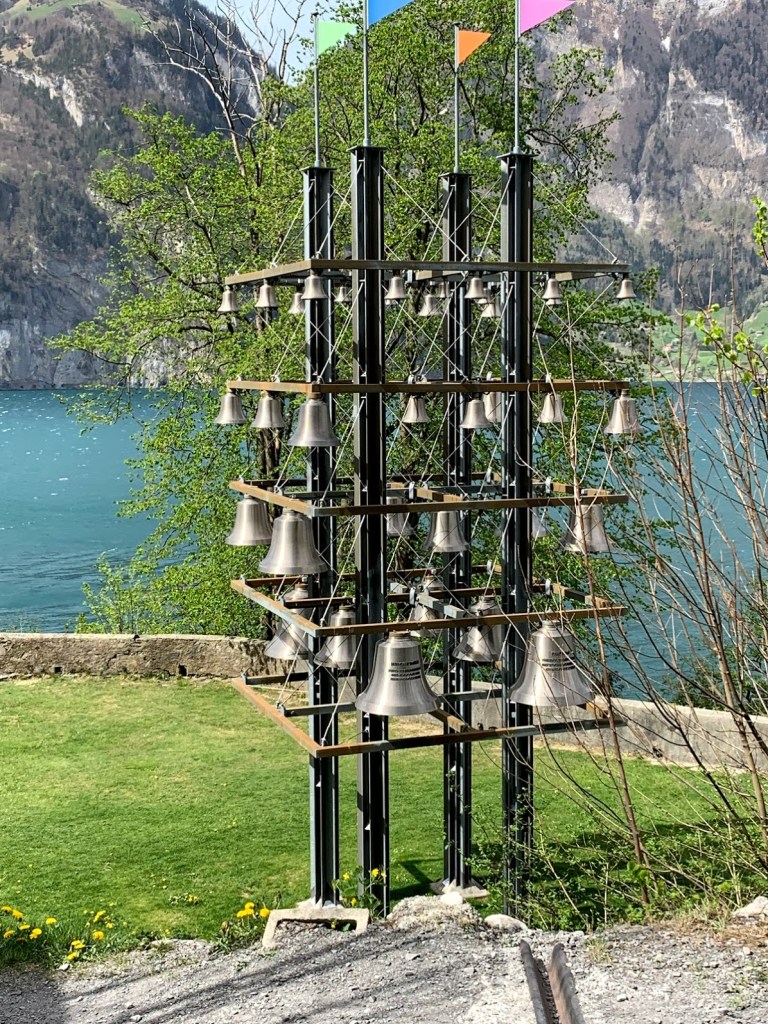
saw a bell tower with over 40 bells. They began chiming the William Tell Overture. However, it was a
bit hard to hear over the clanging of the cowbells! Each cow had a massive bell
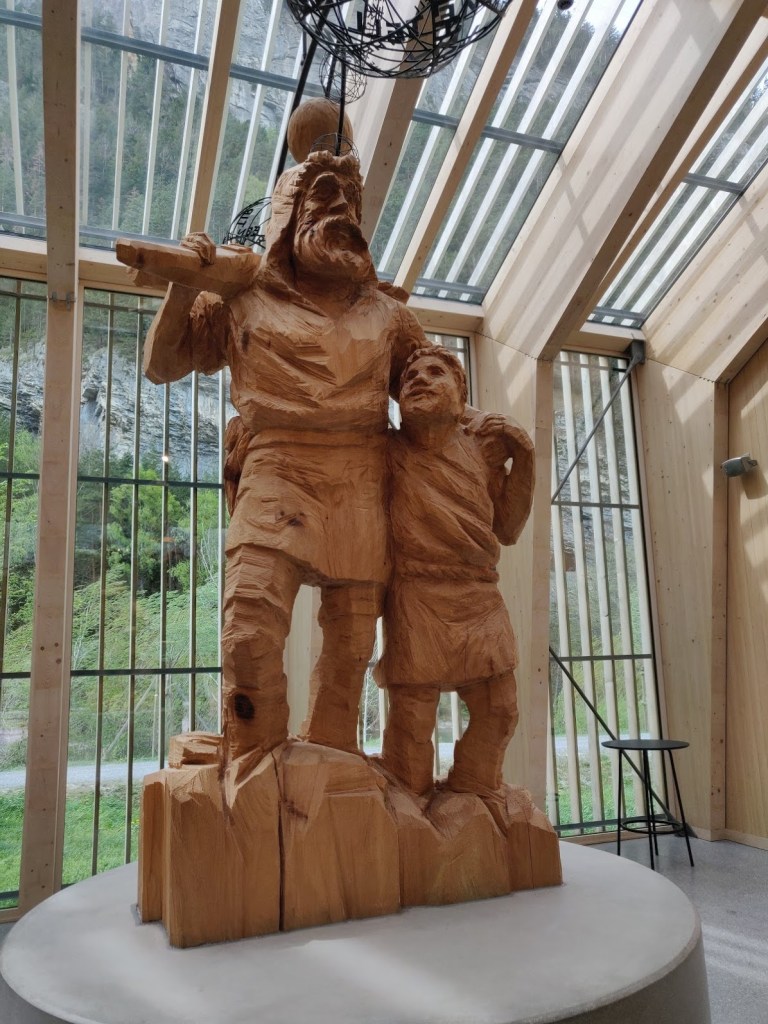
around her neck. We would find out later at a nearby rest stop that William
Tell was from Uri, Switzerland! We also picked up our own cowbell in the rest
stop gift shop.
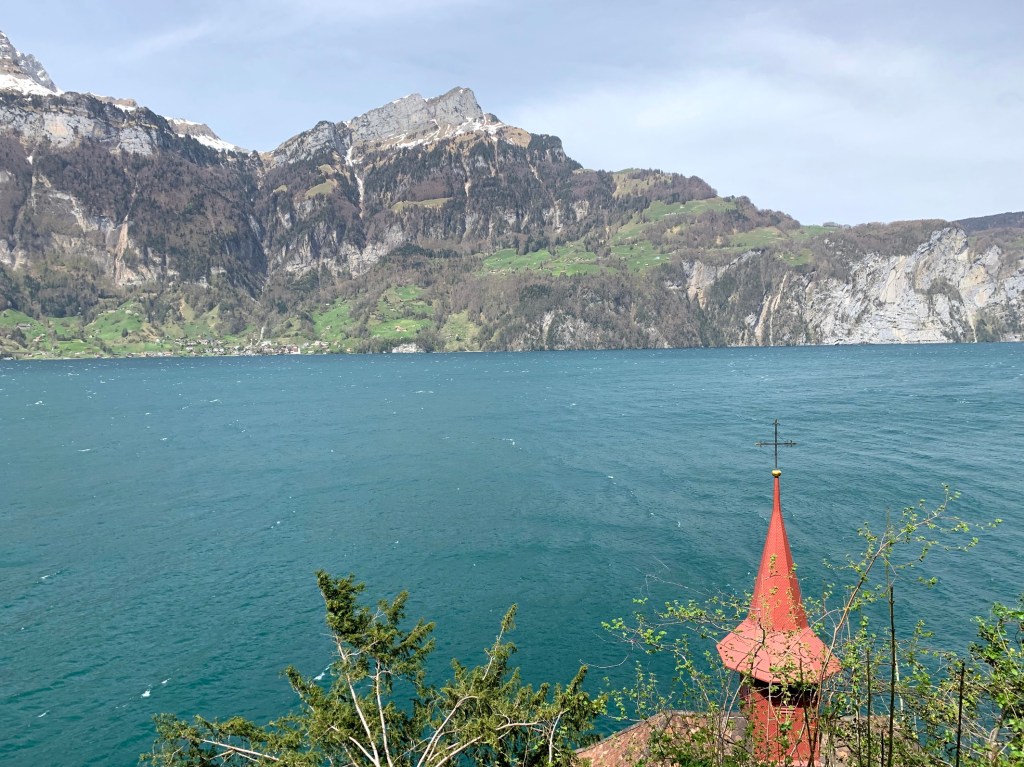
Up the hill a bit: You can see the steeple to the chapel.The bell towerOn our way back up, Bessie had more friends in the field.
William Tell and his son
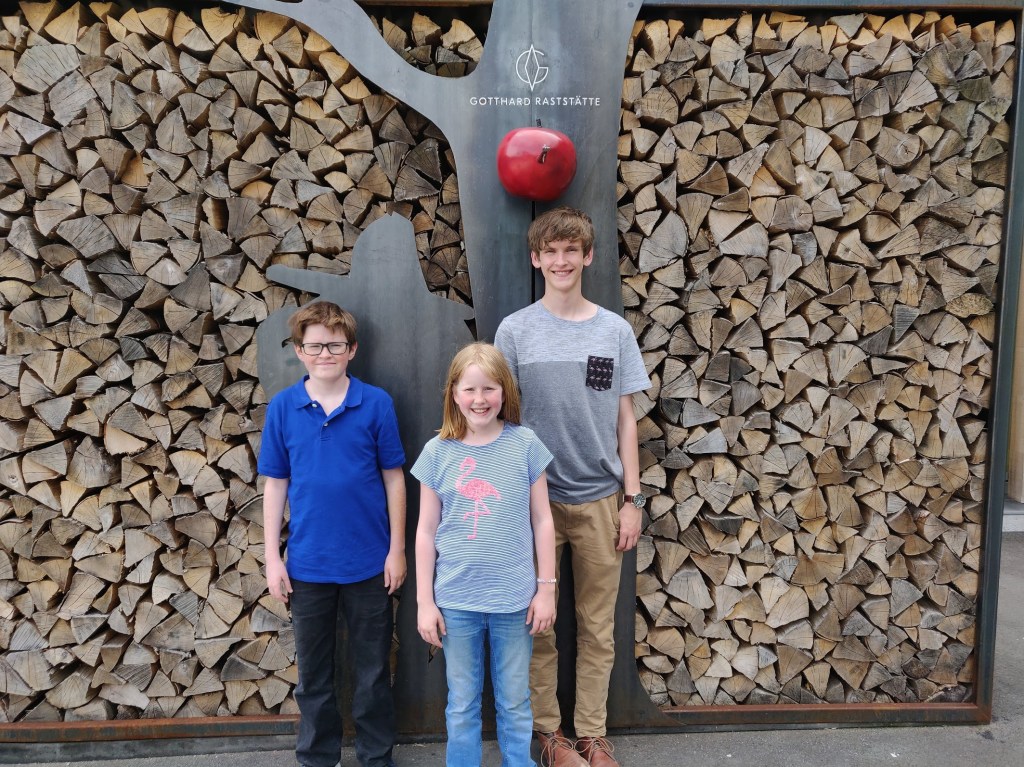
The rest stop they had where you could play William Tell.
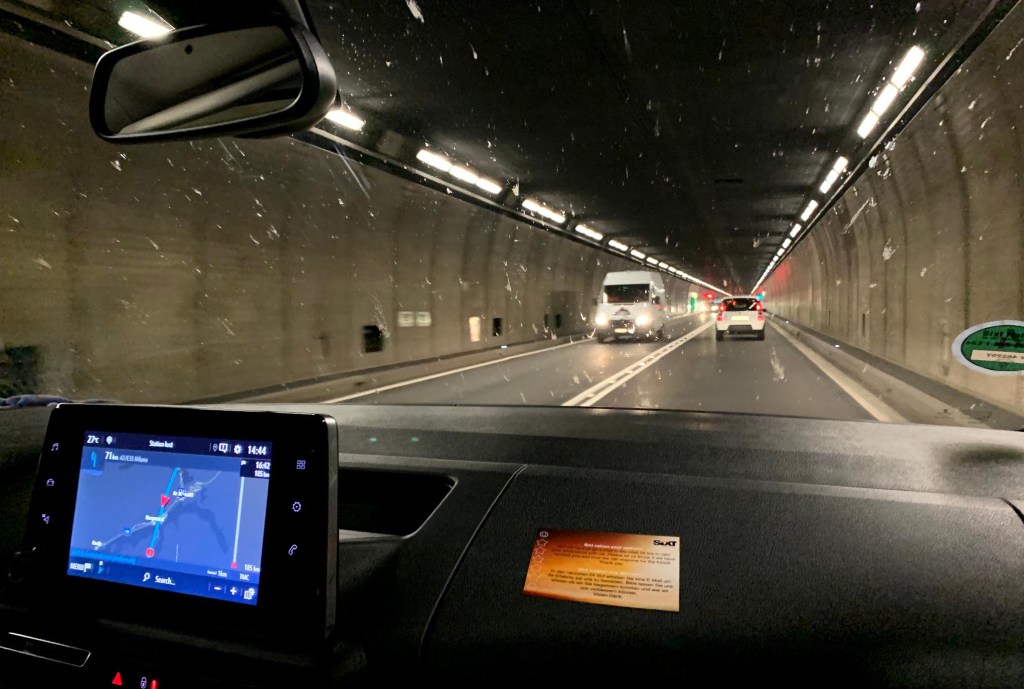
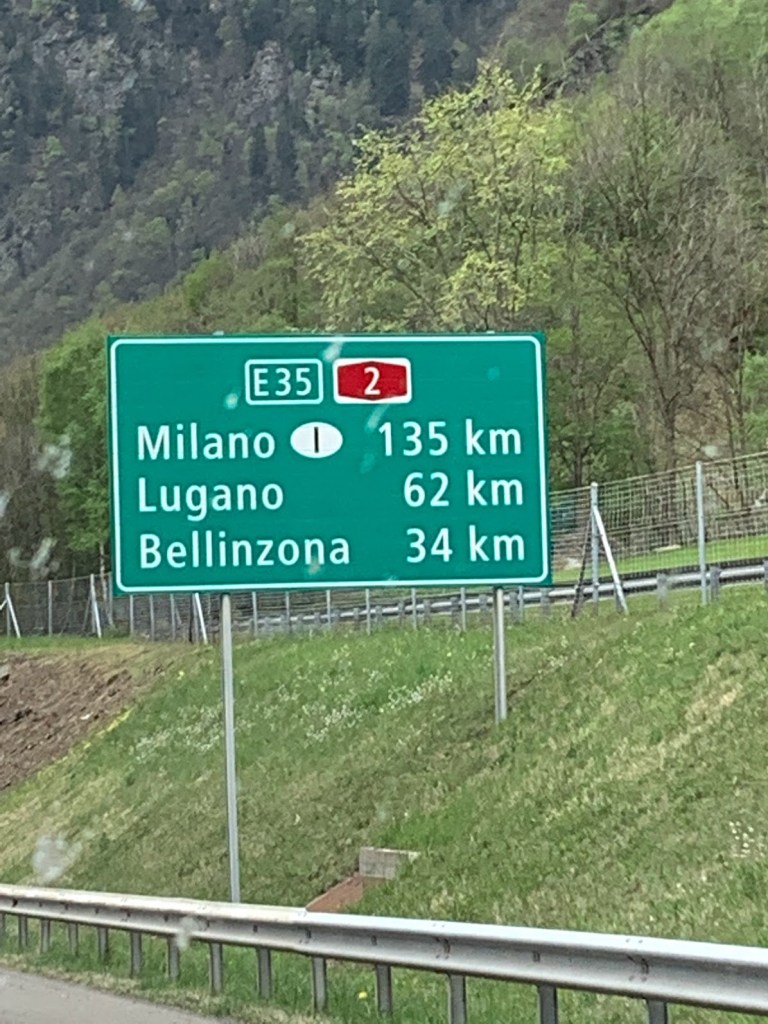
Gotthard Tunnel was up
until recently the longest tunnel in the world at 17km. A tunnel in Norway now
holds the record. We drove through this iconic tunnel and thought we had popped
out in Italy on the other side because all the signs were in Italian. Little
did we know that it would be another 50+ kilometers before we reached the border.
The very southern tip of Switzerland is an Italian-speaking region.
Gotthard Tunnel: The temp on the dashboard eventually rose to 33 degrees celsius. It was 16 outside when we entered the tunnel.
First Italian sign
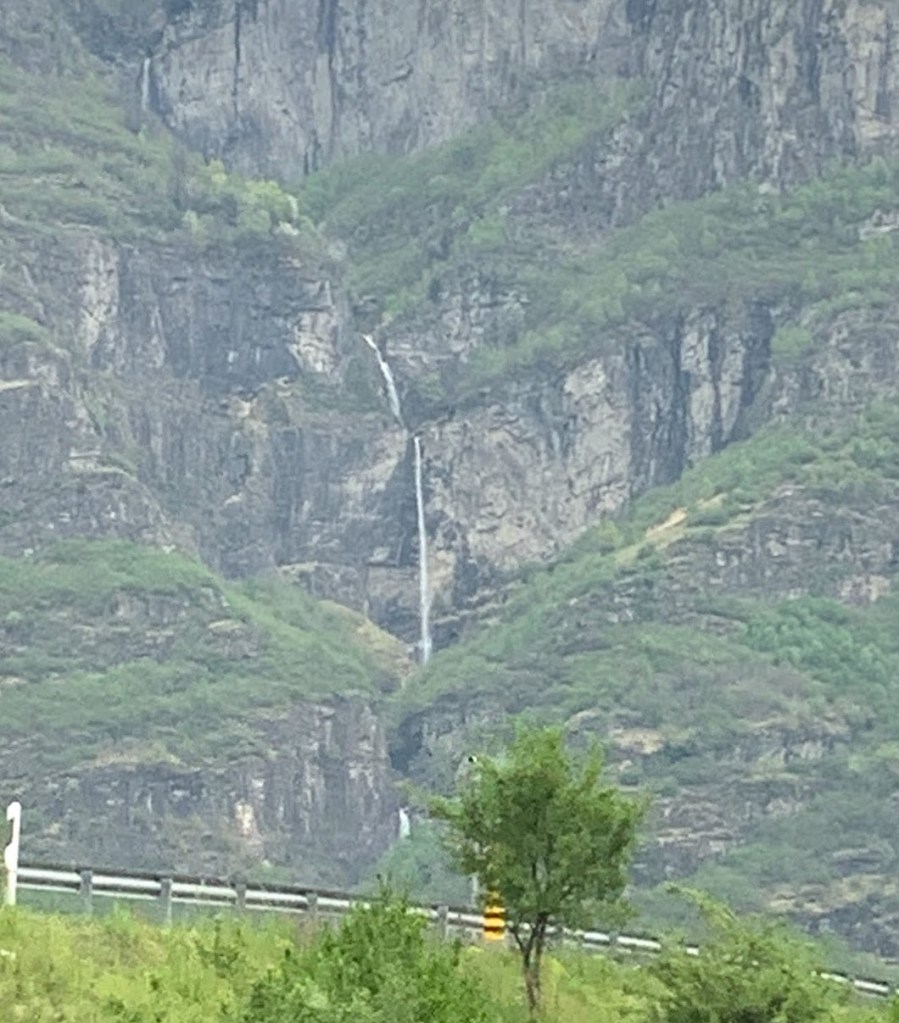
Waterfall
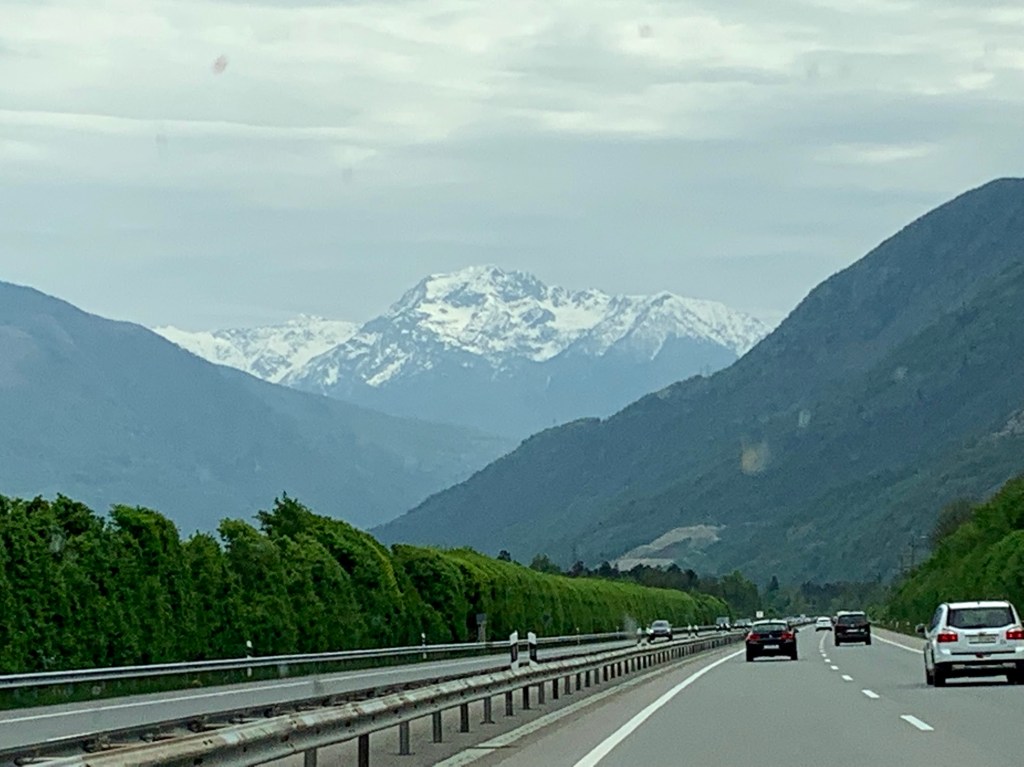
View of the Swiss-Italian Alps: We are still officially in Switzerland.
Milan, Italy isn’t too
far from the Swiss border. We entered Italy and paid to get on the Italian toll
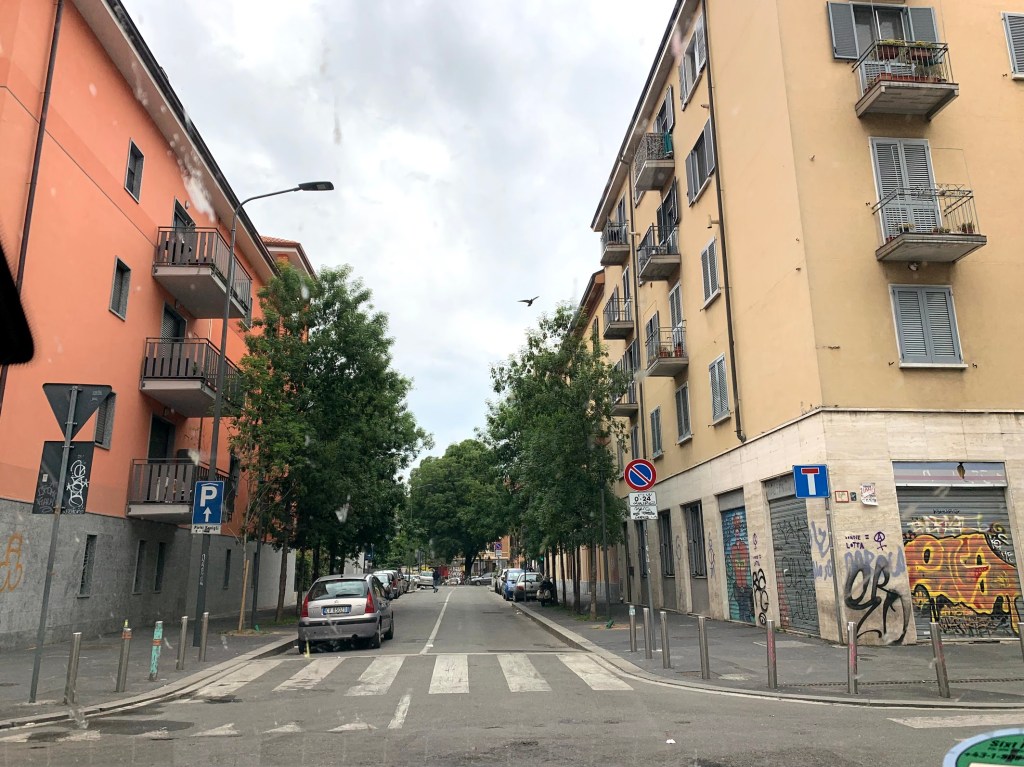
road that took us straight into Milan. Our fist impressions of Milan were that
it was a huge, kind of dirty city. Though as we got closer to our apartment we
discovered that it was old, had graffiti, but still had charm. We parked in an
underground neighborhood-parking garage and then walked by a neighborhood block
party. Everyone was eating, drinking, and playing football in the streets. Some
of the locals even waved at us as we passed by and offered up a bottle of wine
as if to say “come over have a drink” to which we waved back “no thanks” and
pointed to our luggage as if we needed to check into a hotel somewhere.
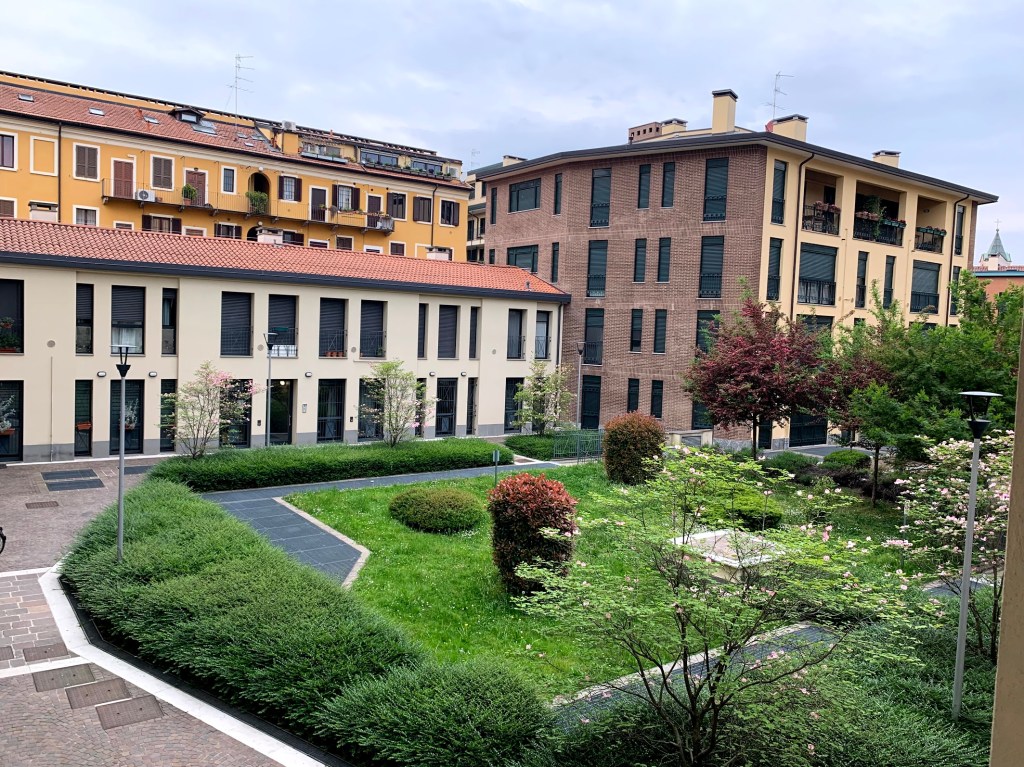
Our apartment was in a
gated community with a lovely balcony overlooking a large piazza garden. The boys
and Robert went out to the nearest grocery and bought some food. Robert made
spaghetti with pesto in the tiny kitchen. Our first Italian meal actually made
in Italy!
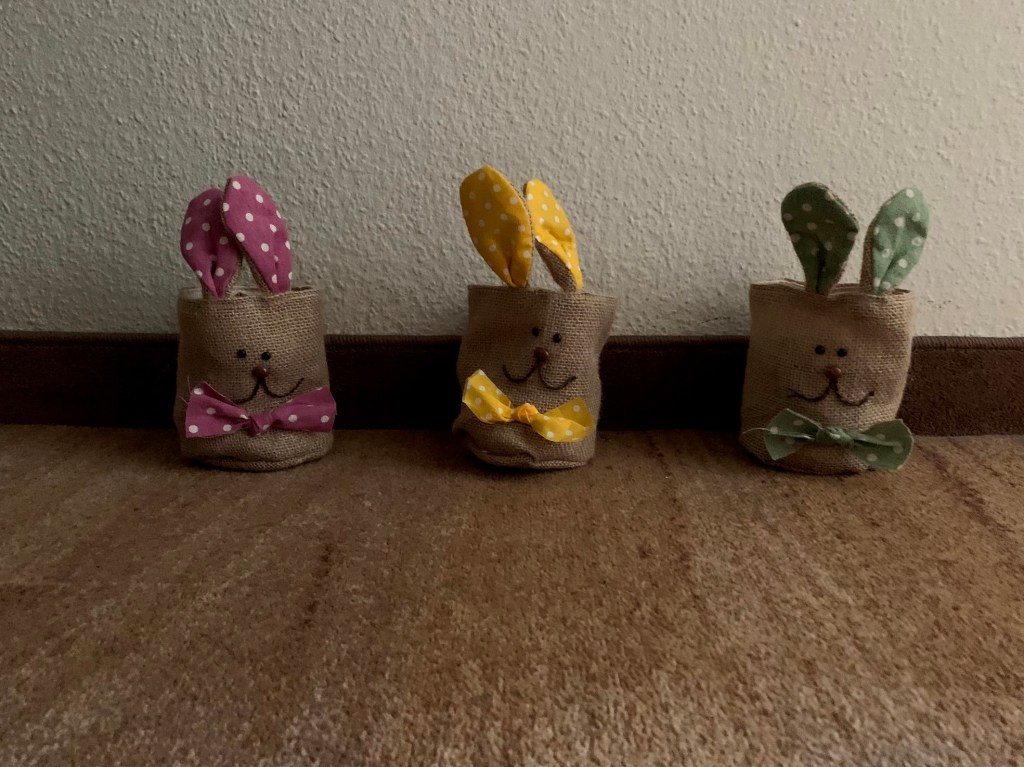
The Schweitzer Osterhase
found us in our hotel in Zürich, Switzerland. The Swiss Easter bunny left us
all little bags of chocolaty treats! After a quick sweet breakfast we put on
our Sunday clothes and headed into Zürich proper.
Der Schweitzer Osterhase hat uns besucht! (The Swiss Easter bunny visited us!)
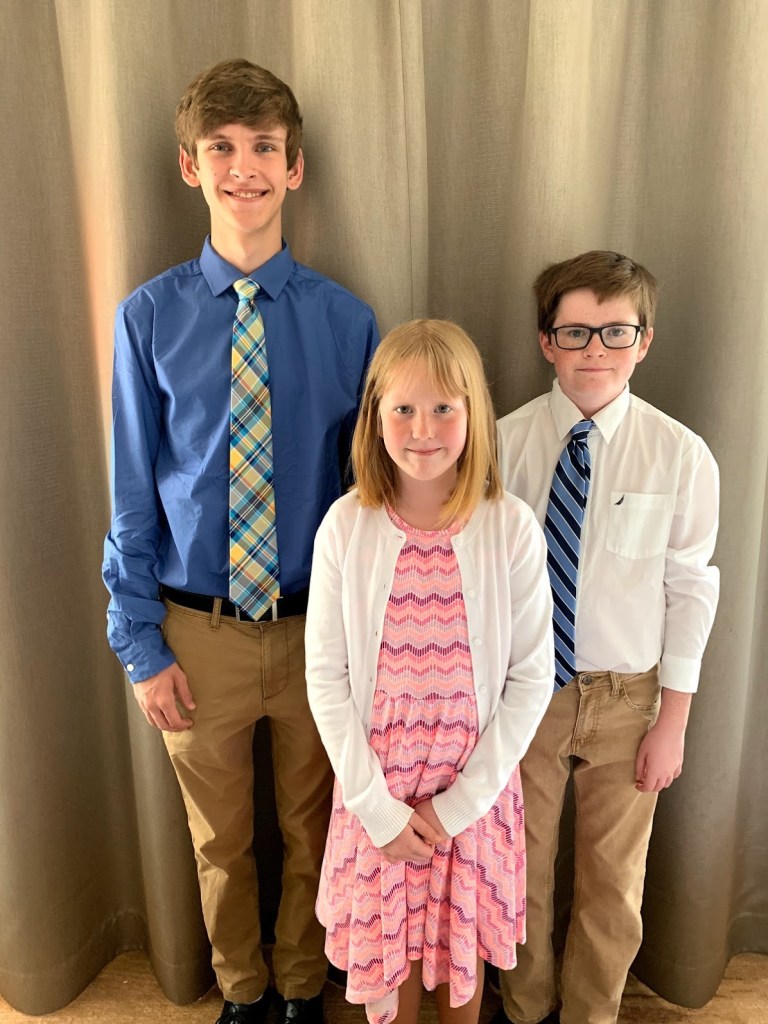
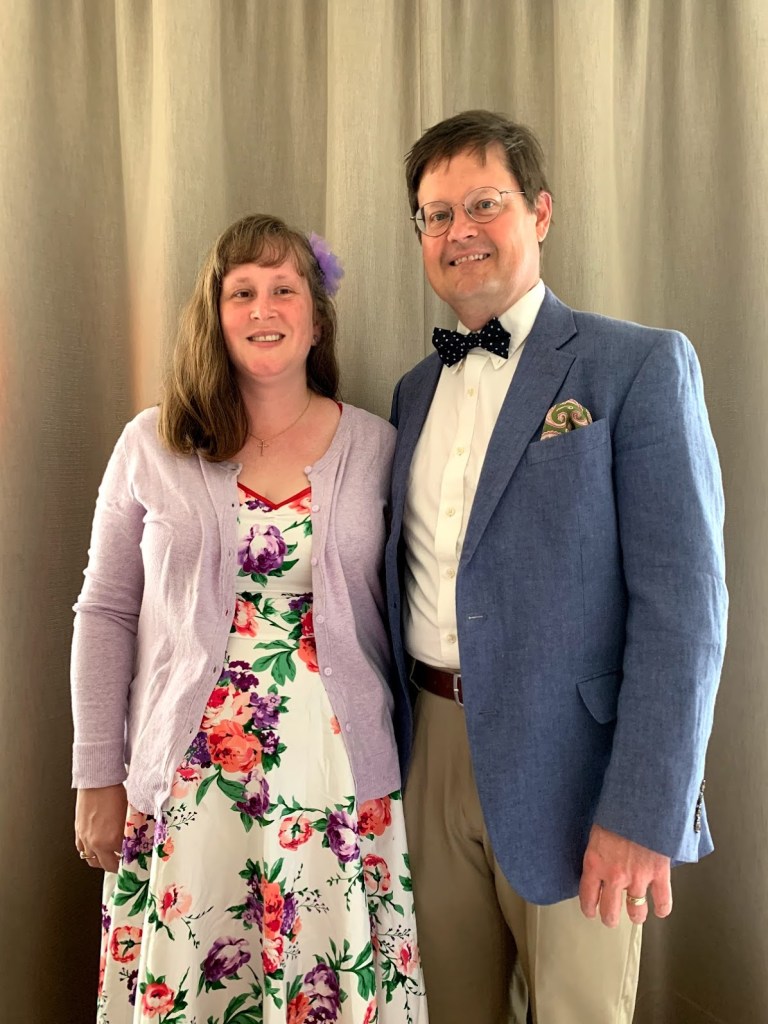
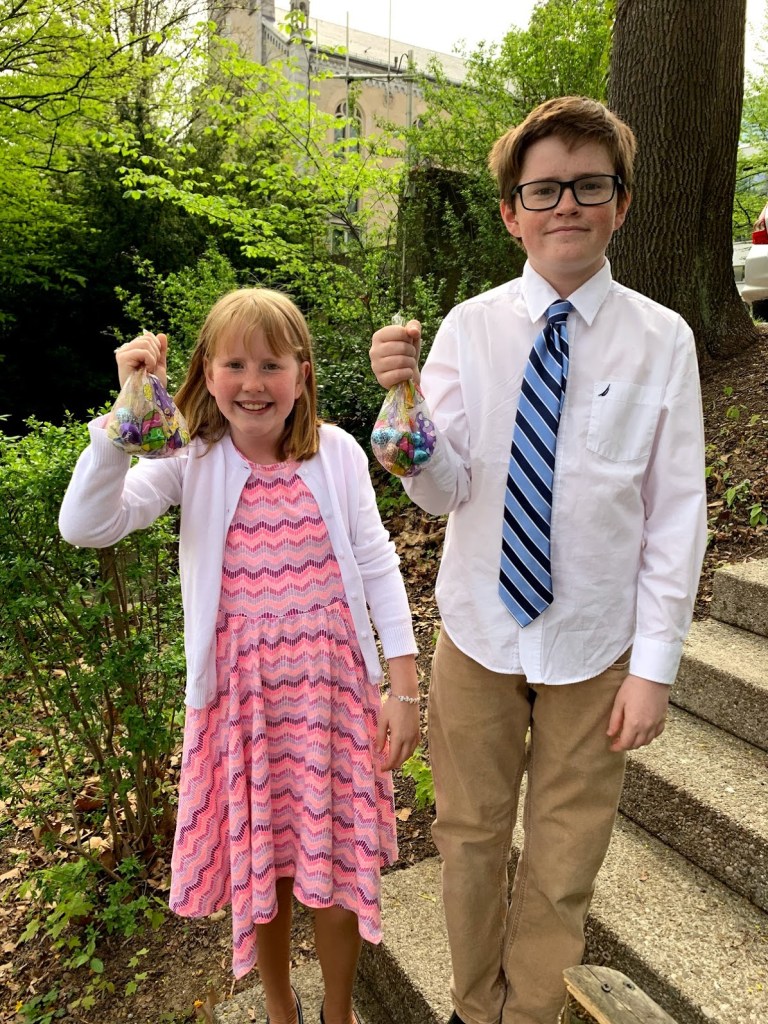
Took our annual Easter photos in the hotel!
Faywen took a nice photo of Robert and I.
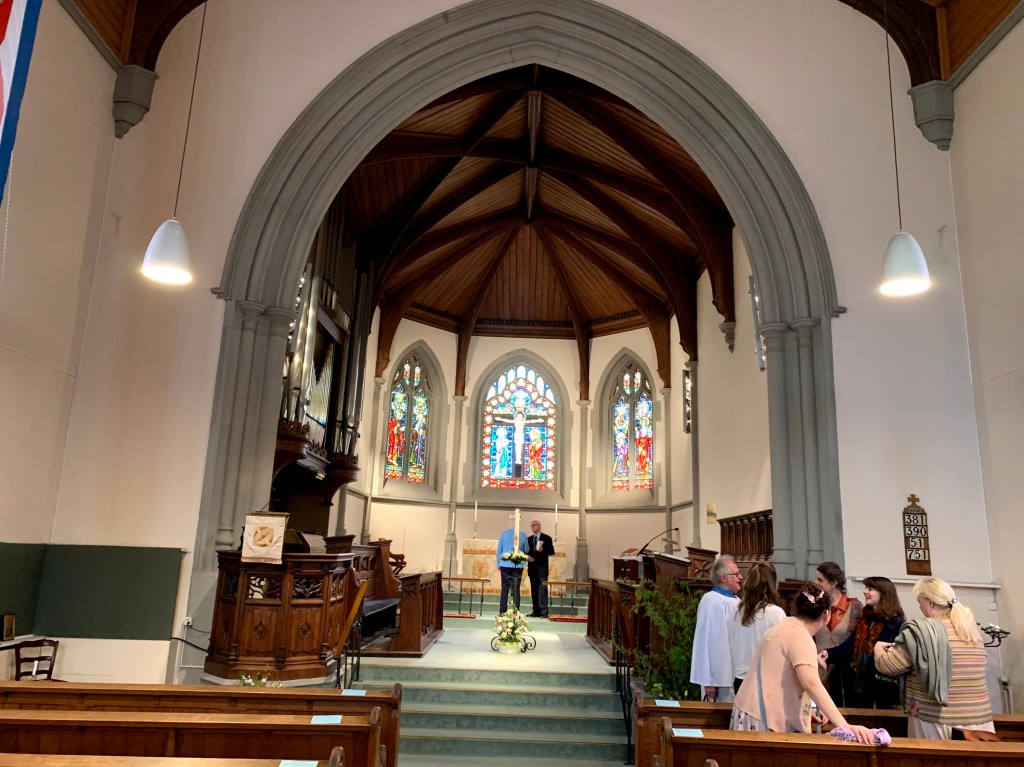
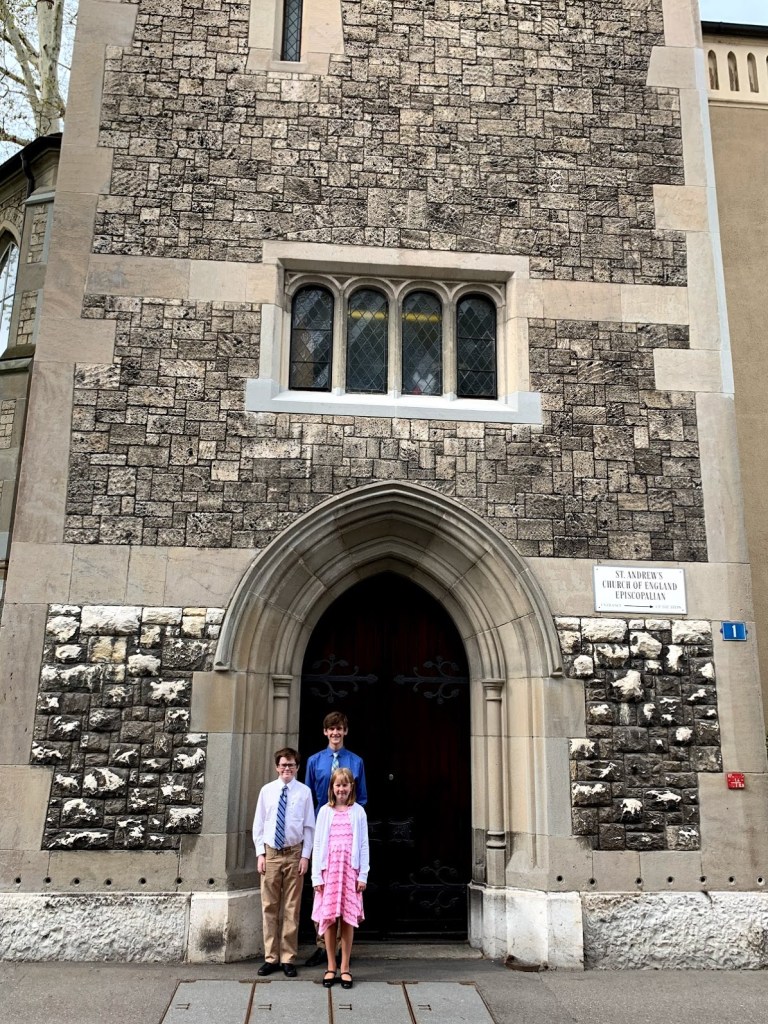
St. Andrew’s Anglican Church
of England is located near central Zürich. It was wonderful being able to
attend Easter services in English. There are no English speaking Churches in
Graz, so we have been having home church. The folks at St. Andrew’s were very
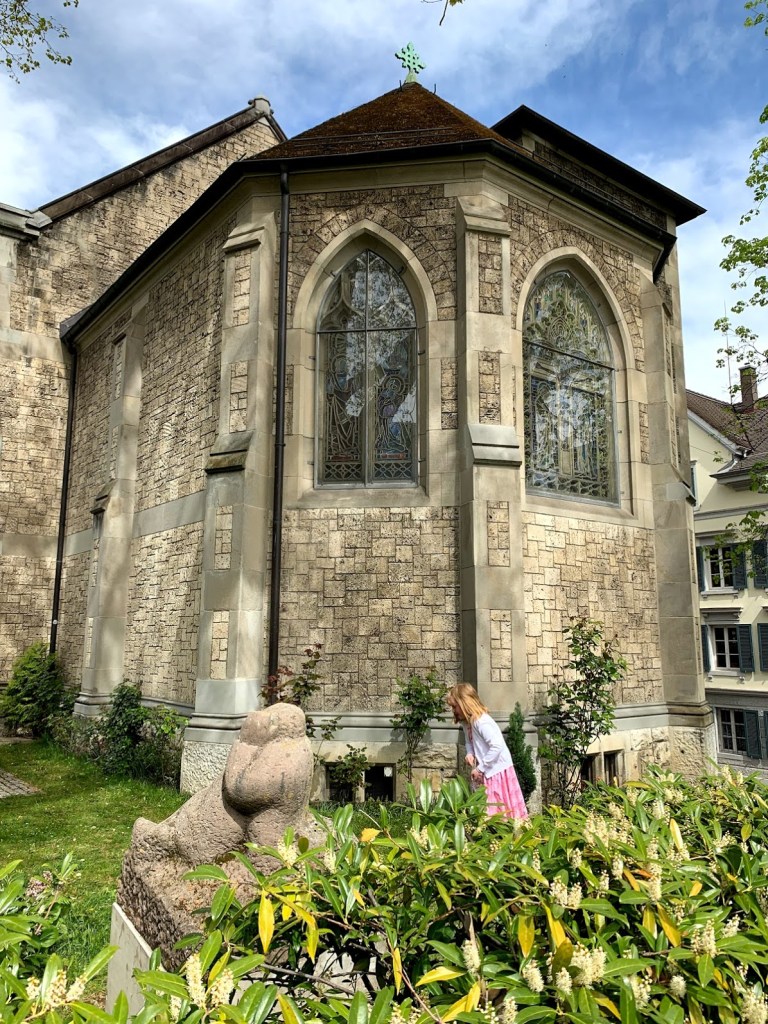
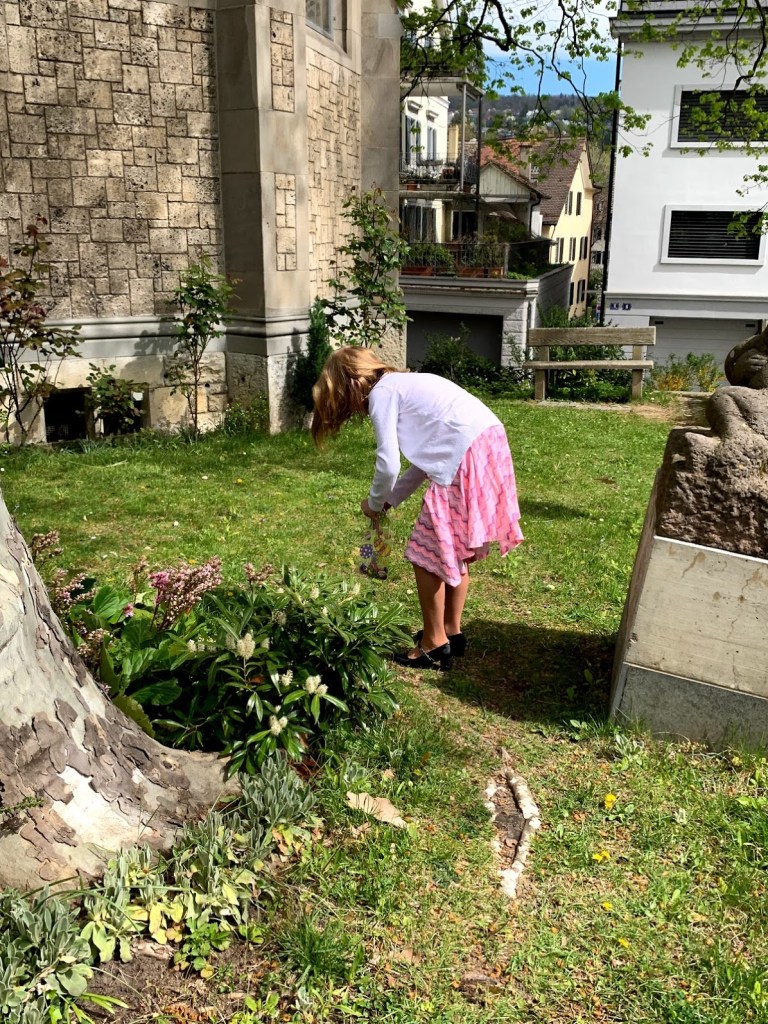
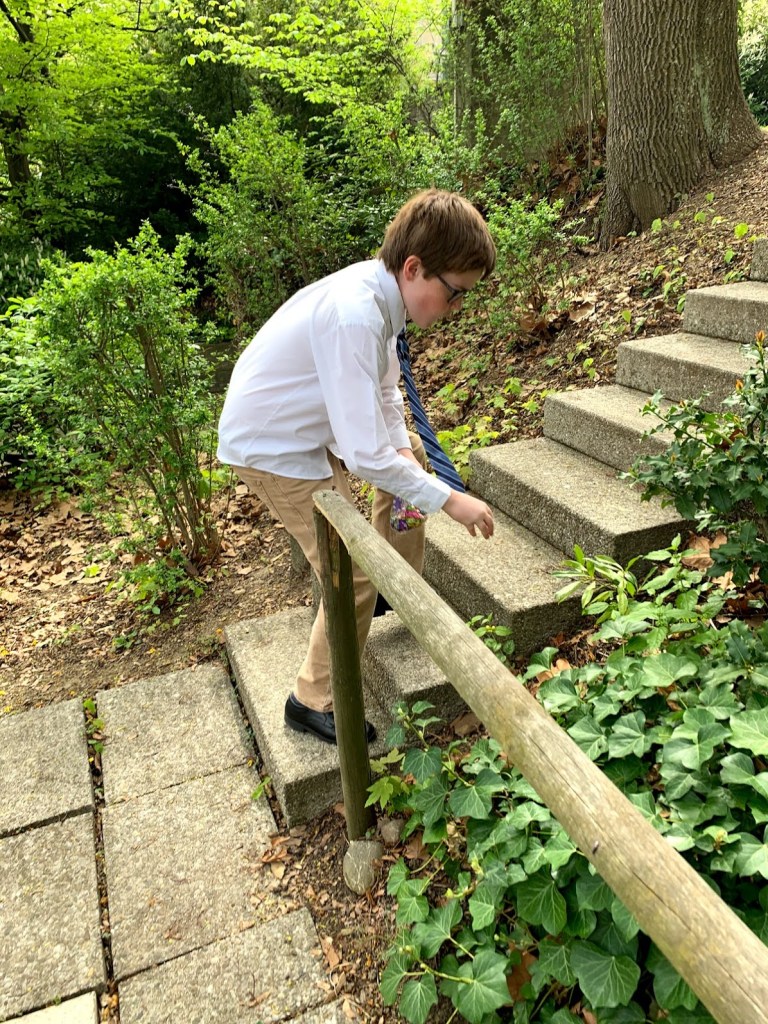
kind and even invited the kids to participate in a little egg hunt after
services. Of course, they had hidden good Swiss chocolate eggs all over the little
churchyard.
Inside St. Andrew’s Anglican Church in Zürich, Switzerland Easter Sunday, 21 April 2019
St. Andrew’s was founded in 1897.
Time to hunt for eggs!
Found one
Me too!
Mmm Swiss chocolate!
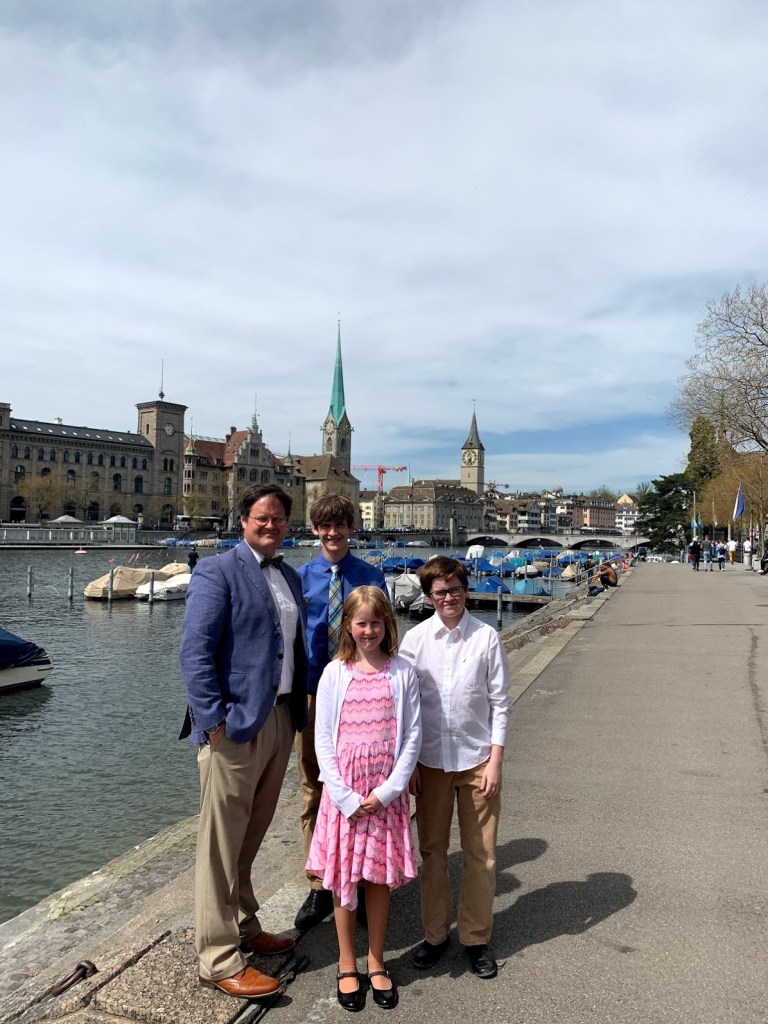
After church we meandered
a few blocks down to the center of town and took a lovely Sunday Stroll along
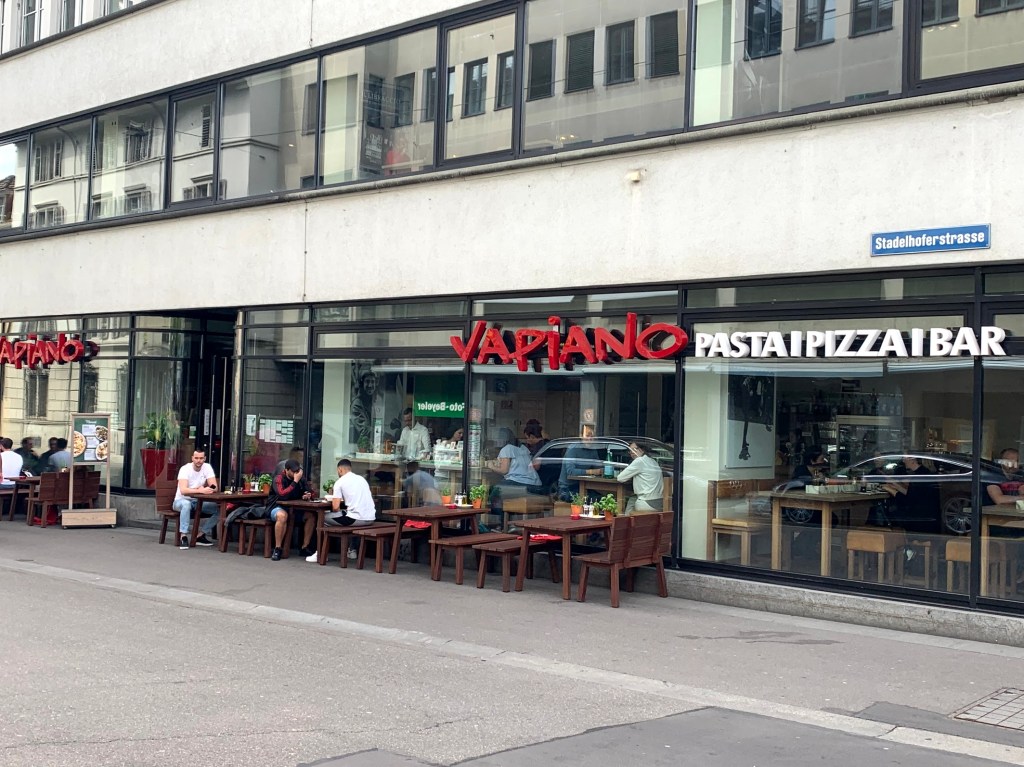
the Limmet River. Everyone was out enjoying the afternoon sunshine. We ate a
nice meal at Vapiano’s Italian restaurant and then took a scenic drive around
the entire Zürichsee. Once back at the hotel we freshened up and headed back out
to enjoy another stroll along the lakeshore.
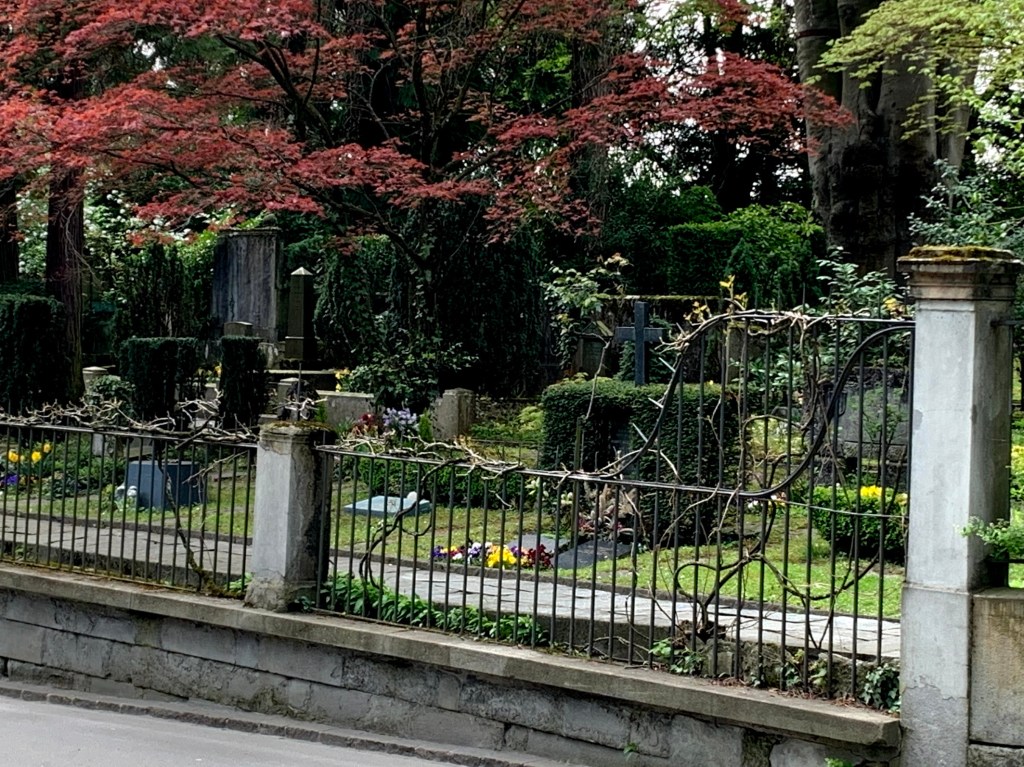
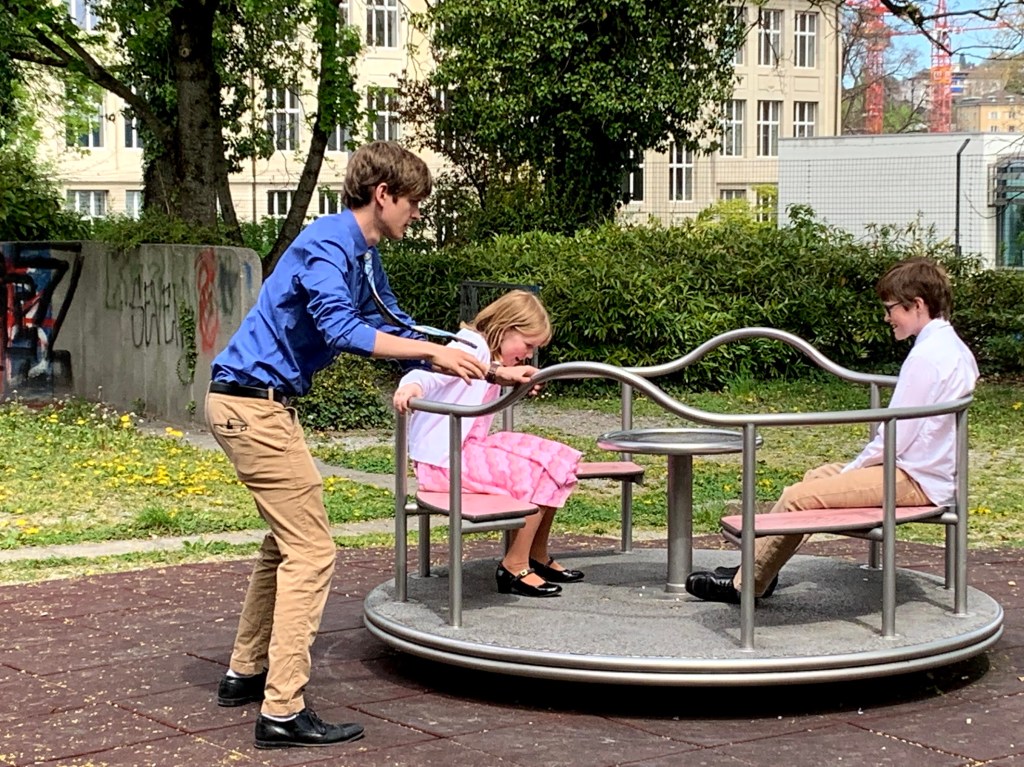
Beautiful neighborhood cemeteryWe strolled through some lovely neighborhoods once we left St. Andrews and lo and behold the kids found…dangerous European playground equipment!
On the banks of the Limmet River
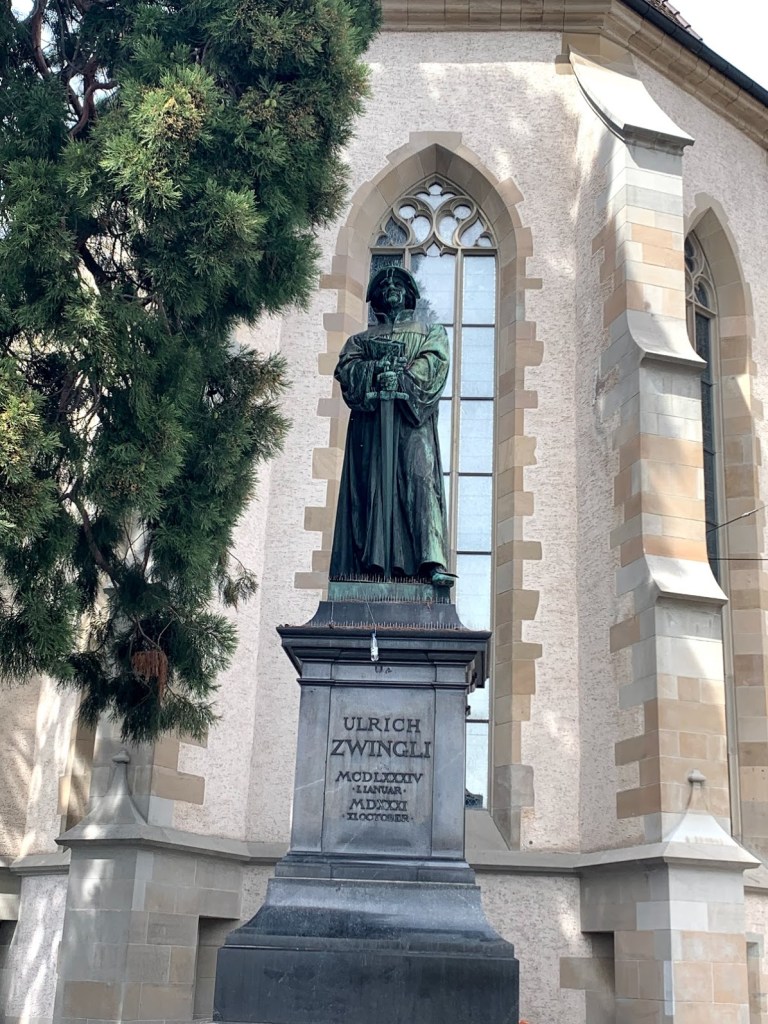
Zwingli was the Swiss Protestant Reformer
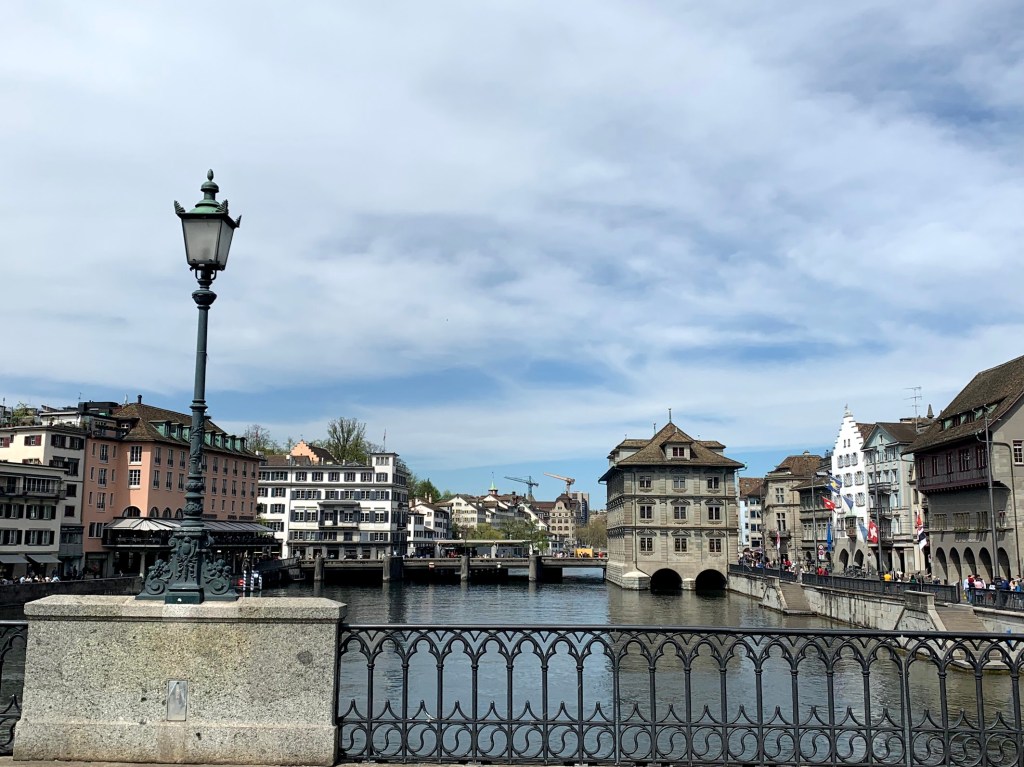
Old Zürich city centre along the Limmet River
Where we had Easter Dinner.
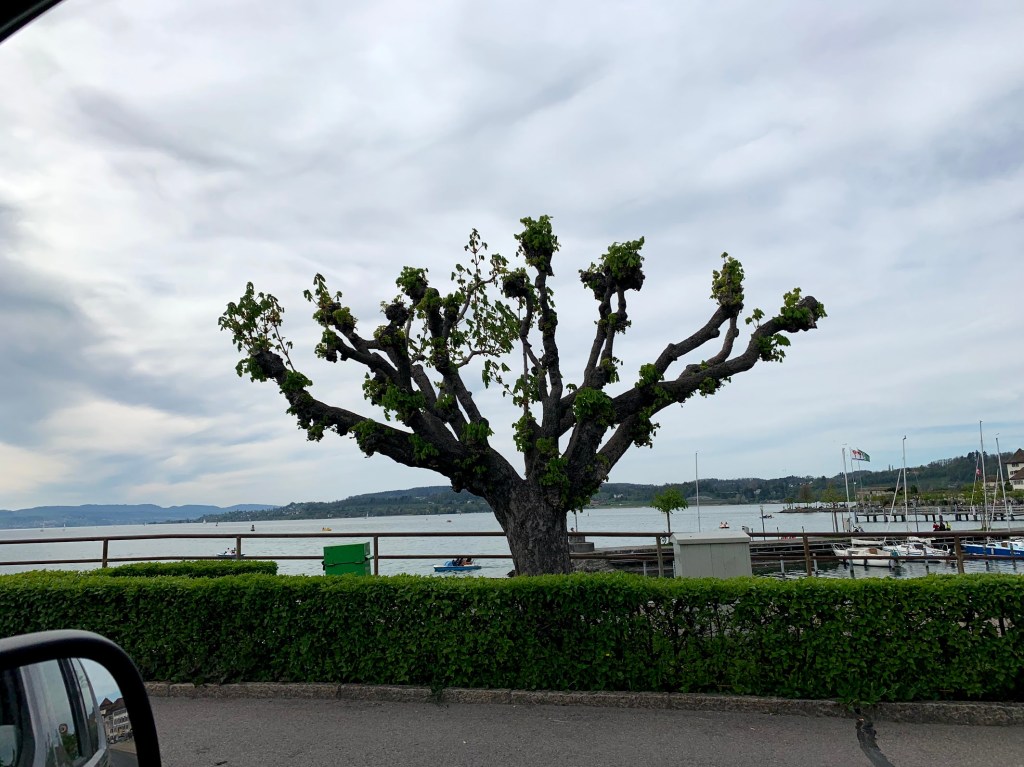
These quirky trees were all around the lake.
It was a peaceful and
relaxing day. He Has Risen, Alleluia!
We were blessed with
another beautiful day to explore Liechtenstein and then travel onto Zurich,
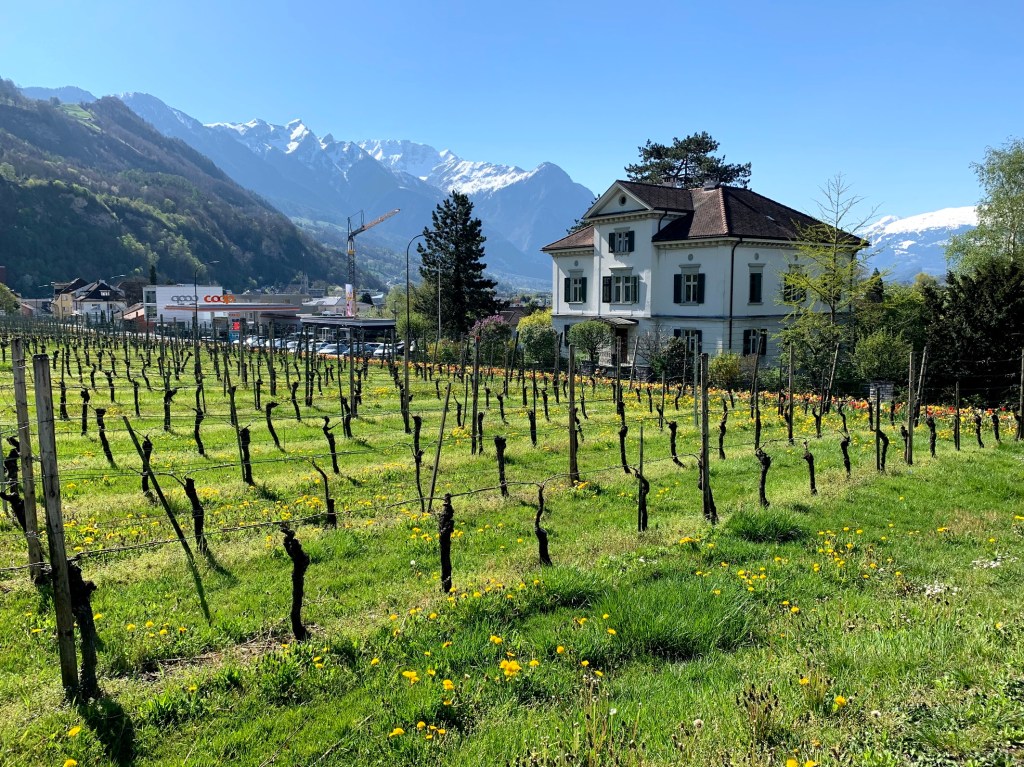
Switzerland. How does one start off a day in Liechtenstein? Drinking wine from
the Prince’s own personal vineyards of course! That is exactly what we did at
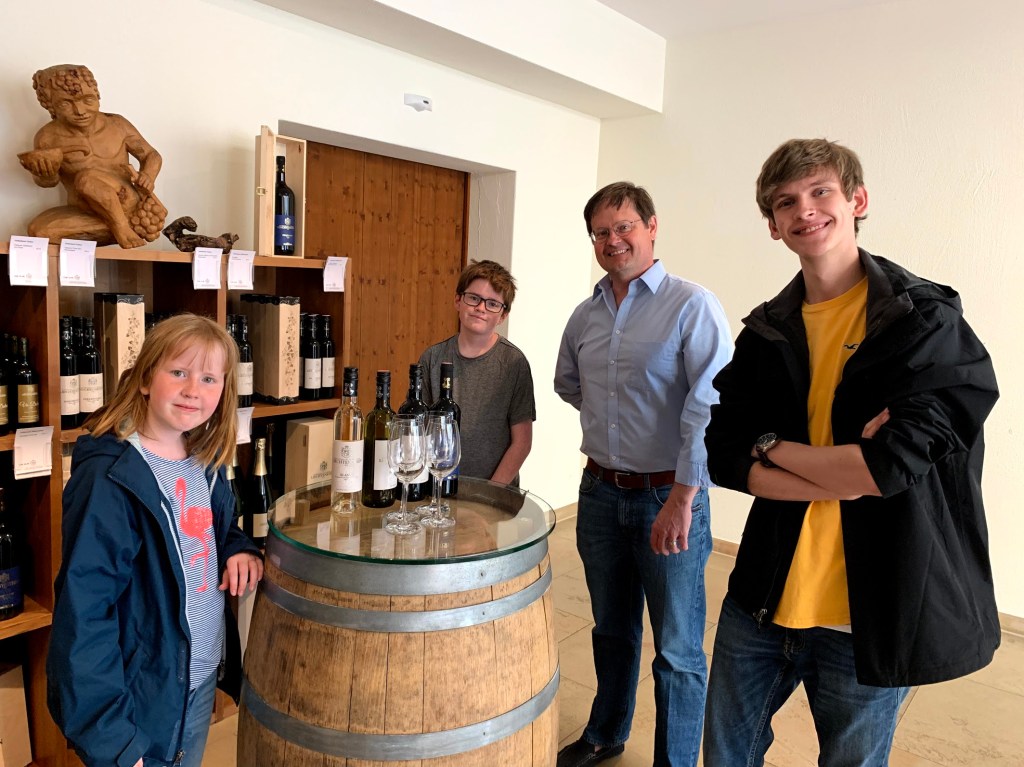
the Prince of Liechtenstein Royal Vineyard outside of Vaduz. Our host, Ella,
was very nice as we sampled four different wines, 2 white and 2 red. Our favorites were the Profundo Red and the
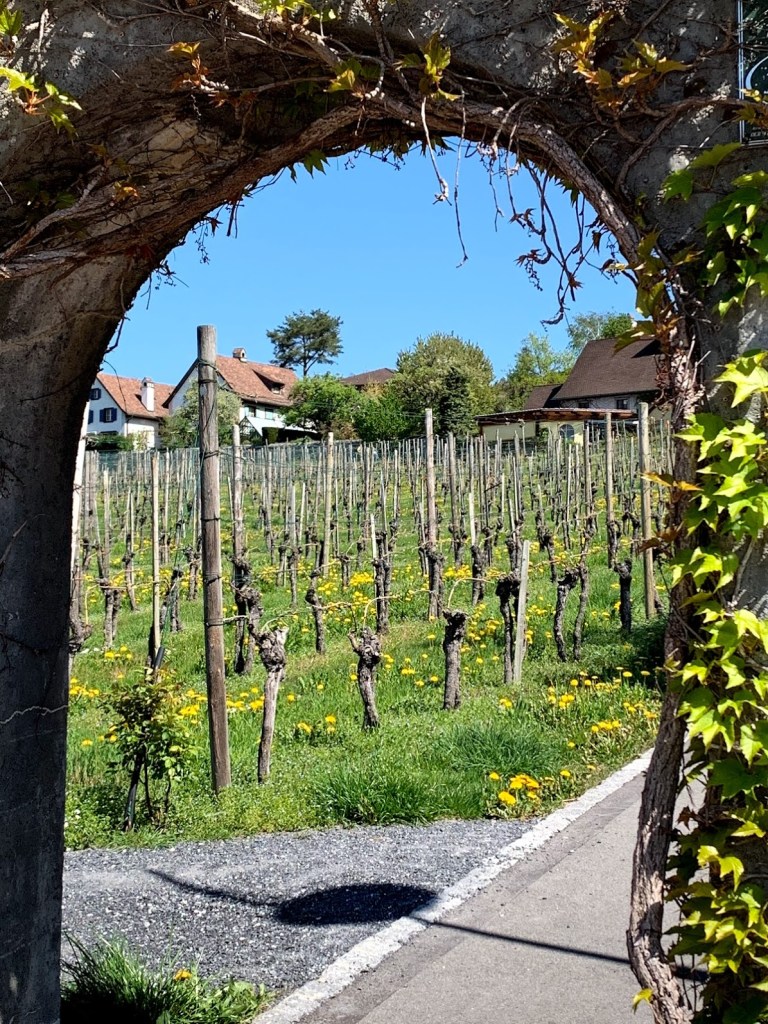
Pinot White. Strolling around the vineyards we took in the simple beauty of the
mountains and surrounding village.
Royal Vineyards
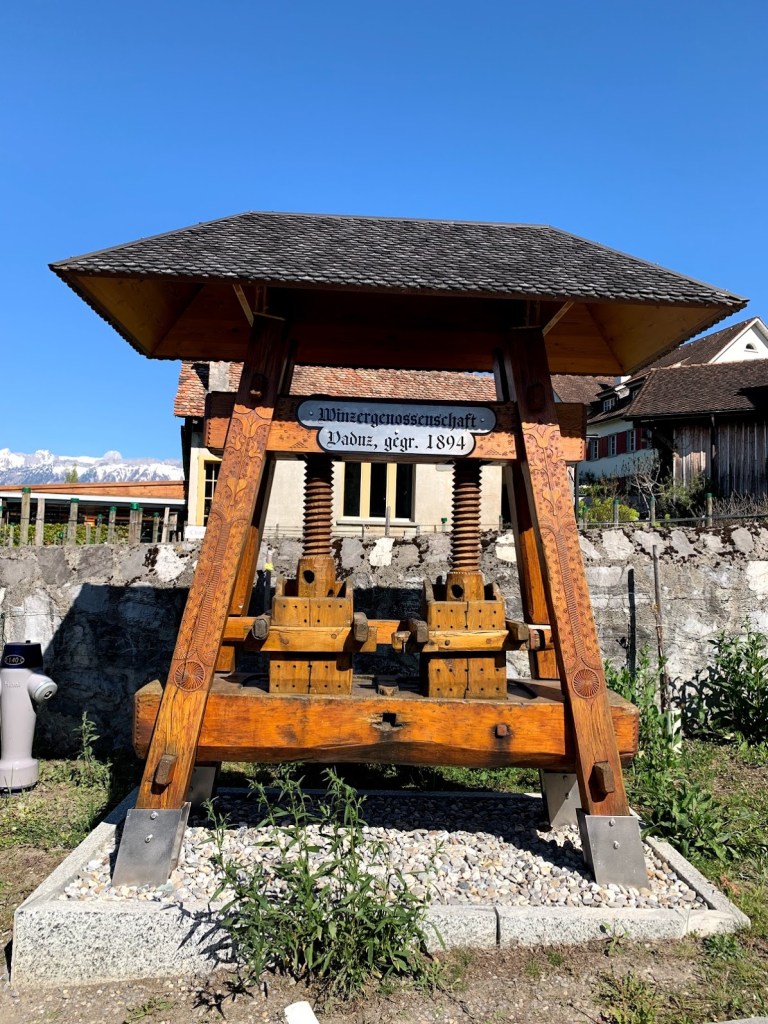
1894 Wine Press
Wine tastingPrince of Liechtenstein Royal Vineyards
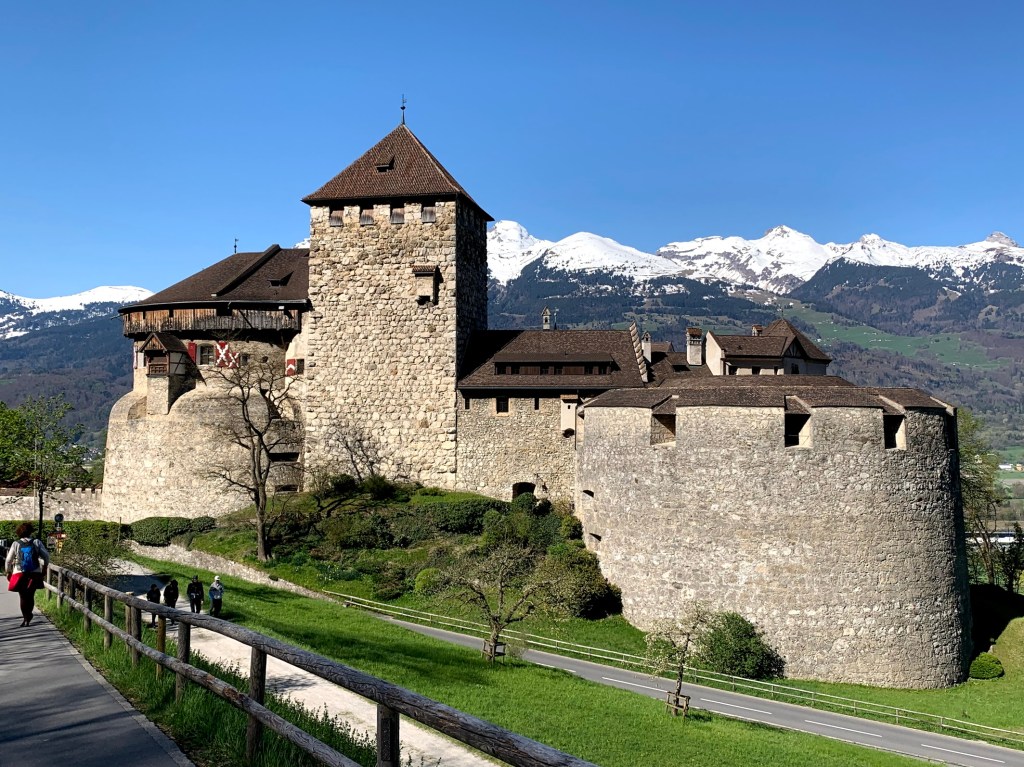
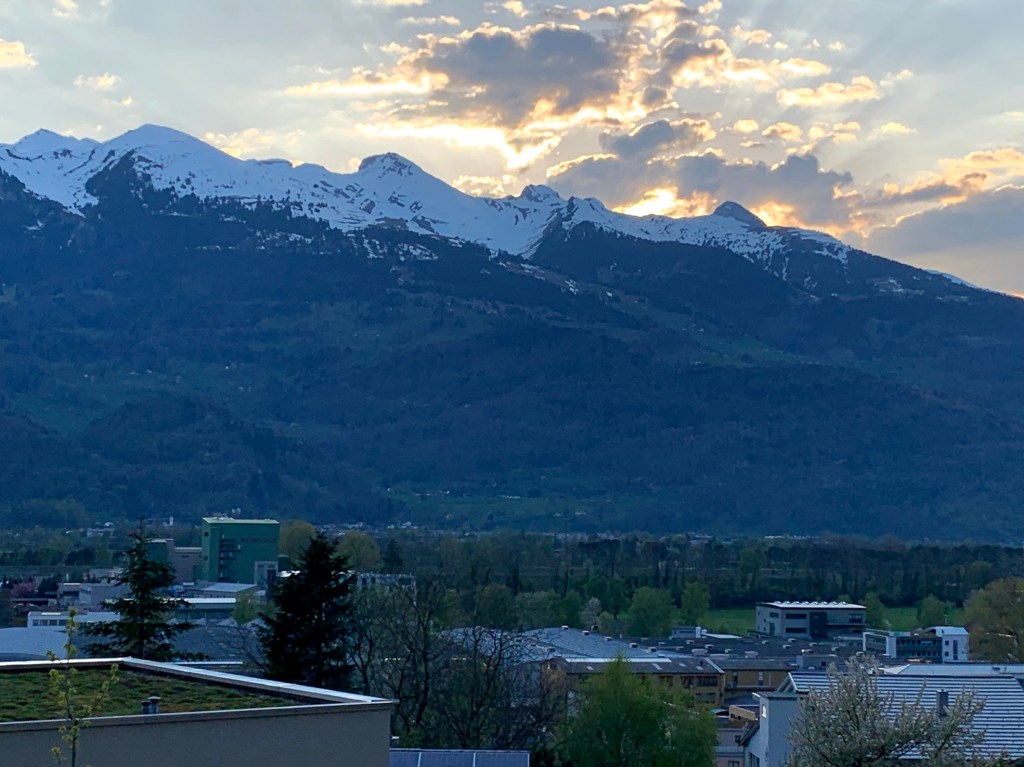
From the vineyard you
could see Schloss Vaduz up on the hill. The road wound through quaint
neighborhoods before reaching this personal residence of the Prince. Unfortunately
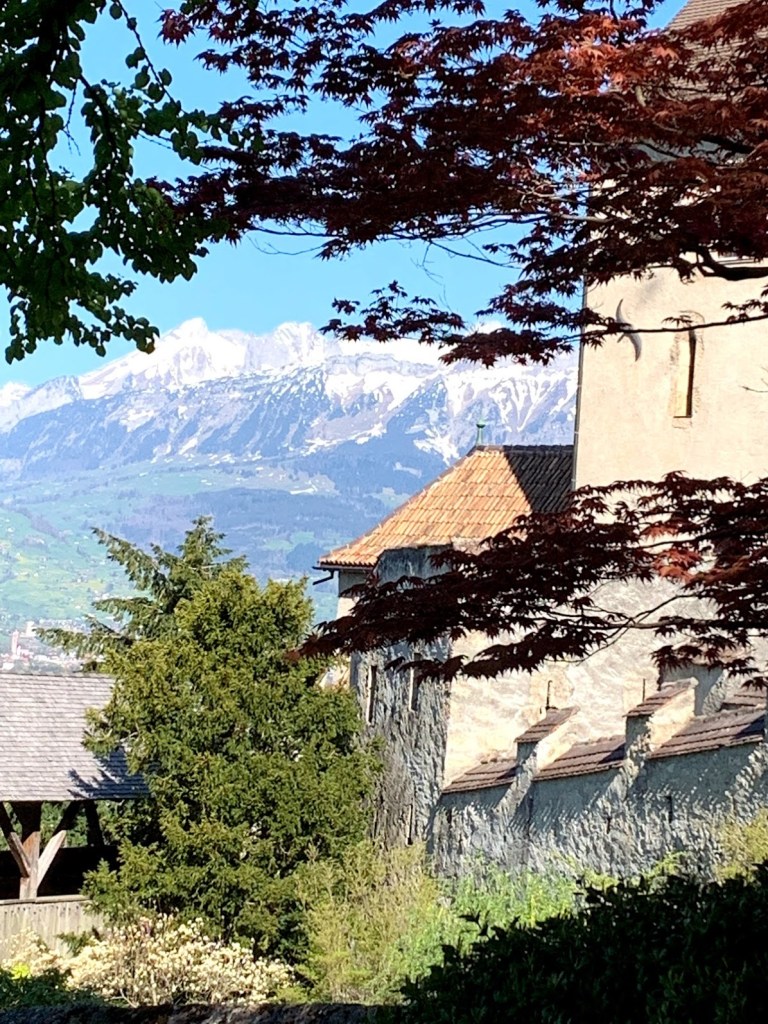
we couldn’t go inside, but were able to take photos of the gardens and the
surrounding mountains.
Schloss Vaduz
Vaduz, Liechtenstein
View through the garden at Schloss Vaduz
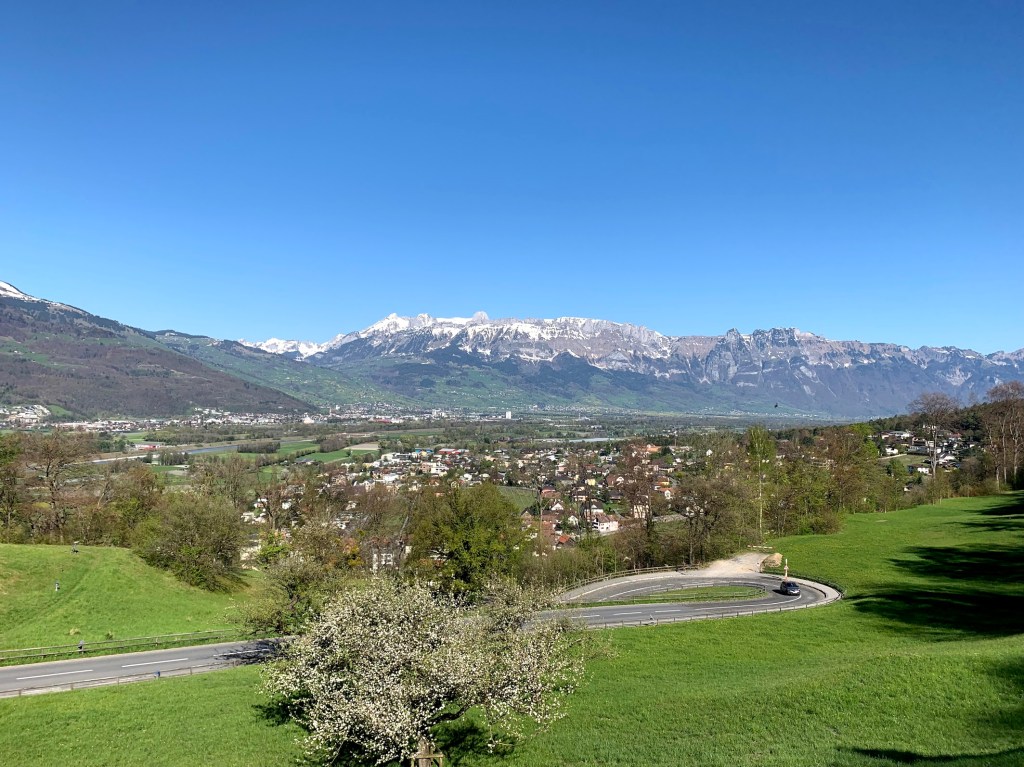
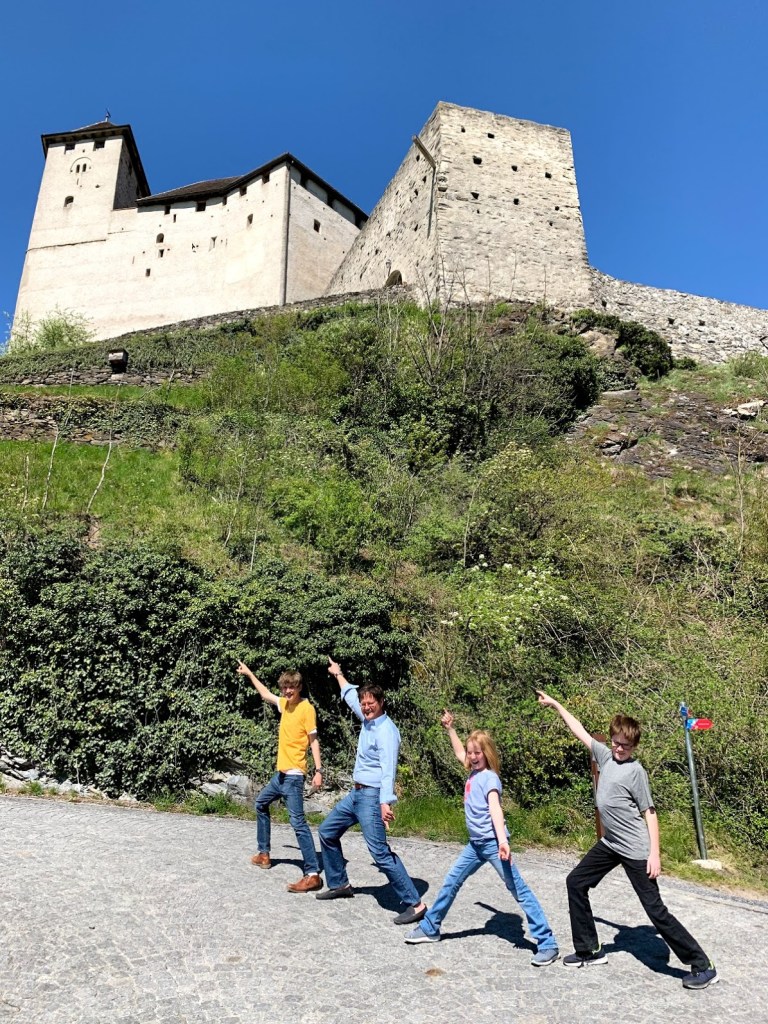
Haus Gutenburg is
another personal castle belonging to the Prince that is situated atop a
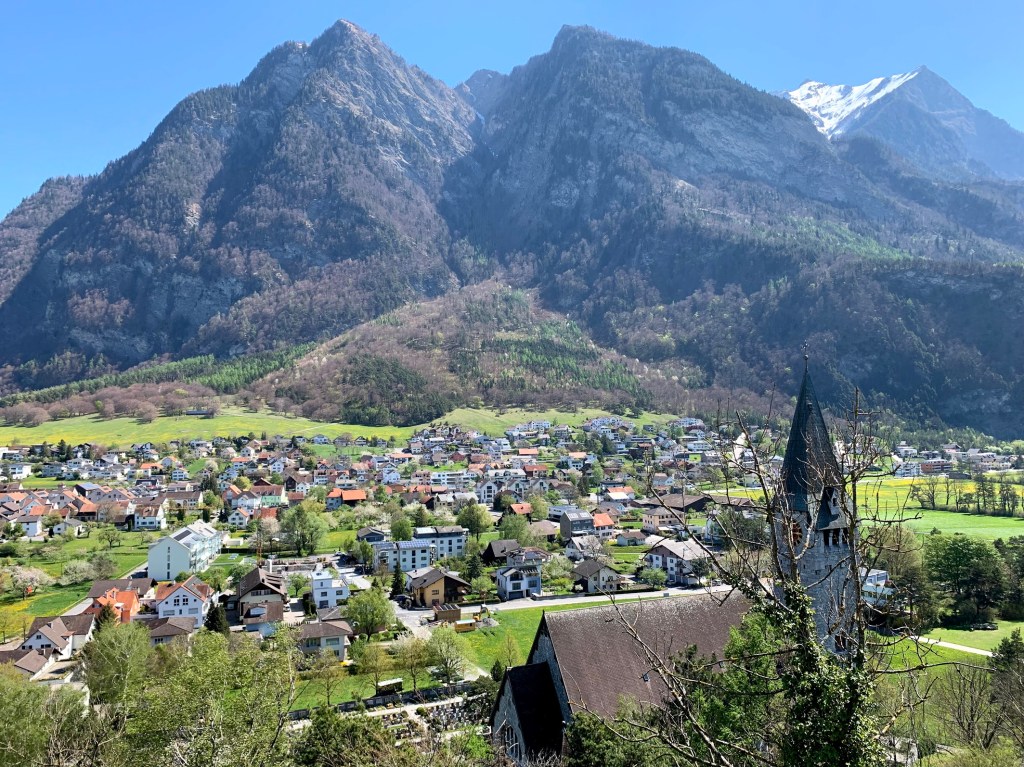
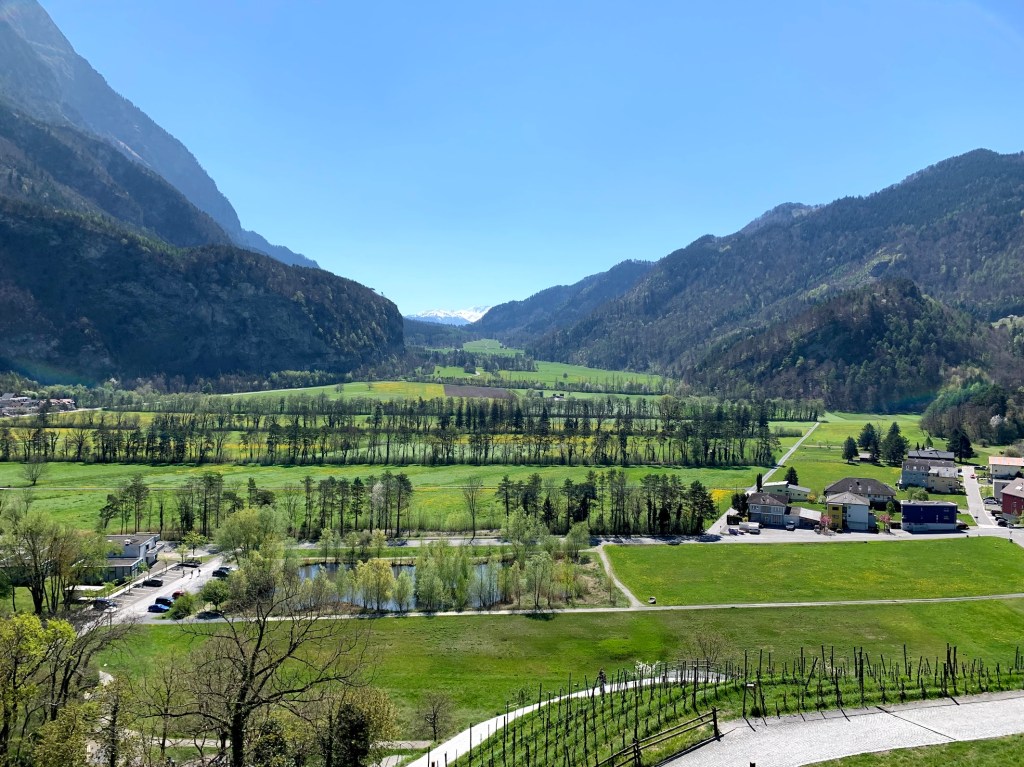
beautiful hill with fantastic views of the sprawling valley and vineyards
below. Nestled against the northern side of the hill is the town of Balzers, which
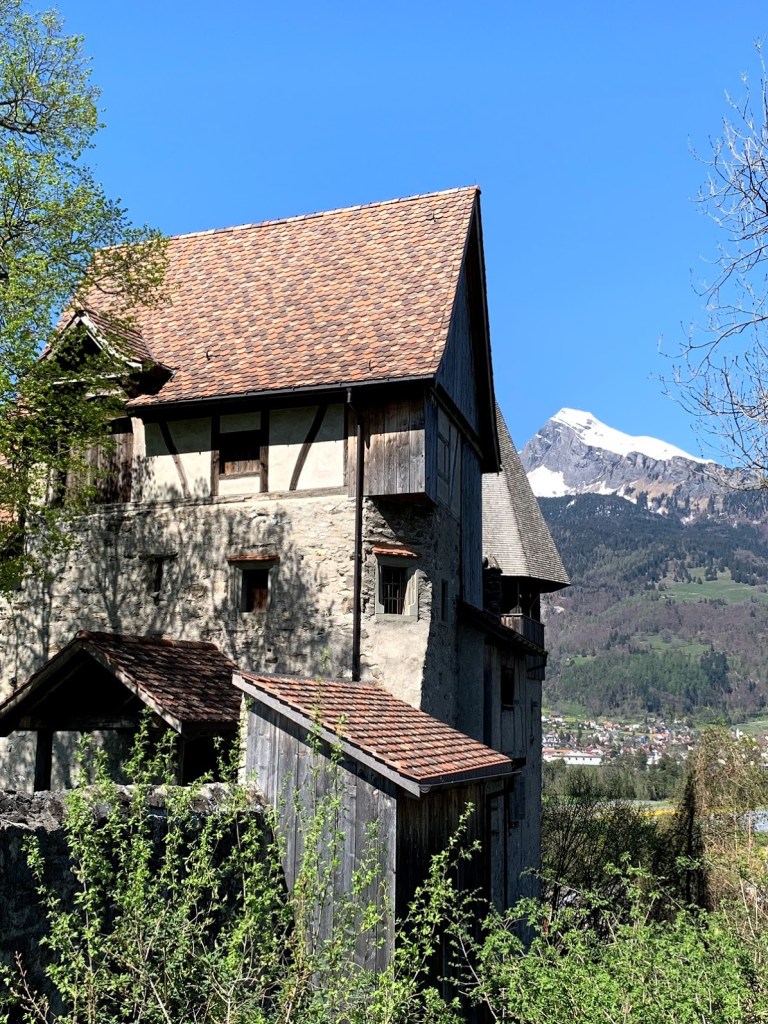
could be seen from Haus Gutenburg. This small castle was begun in the 1200’s
and has the original 13th century chapel and gatehouse. The part the
Prince resides in was built in the 1700’s.
Look it’s Haus Gutenburg!
13th cent. Chapel
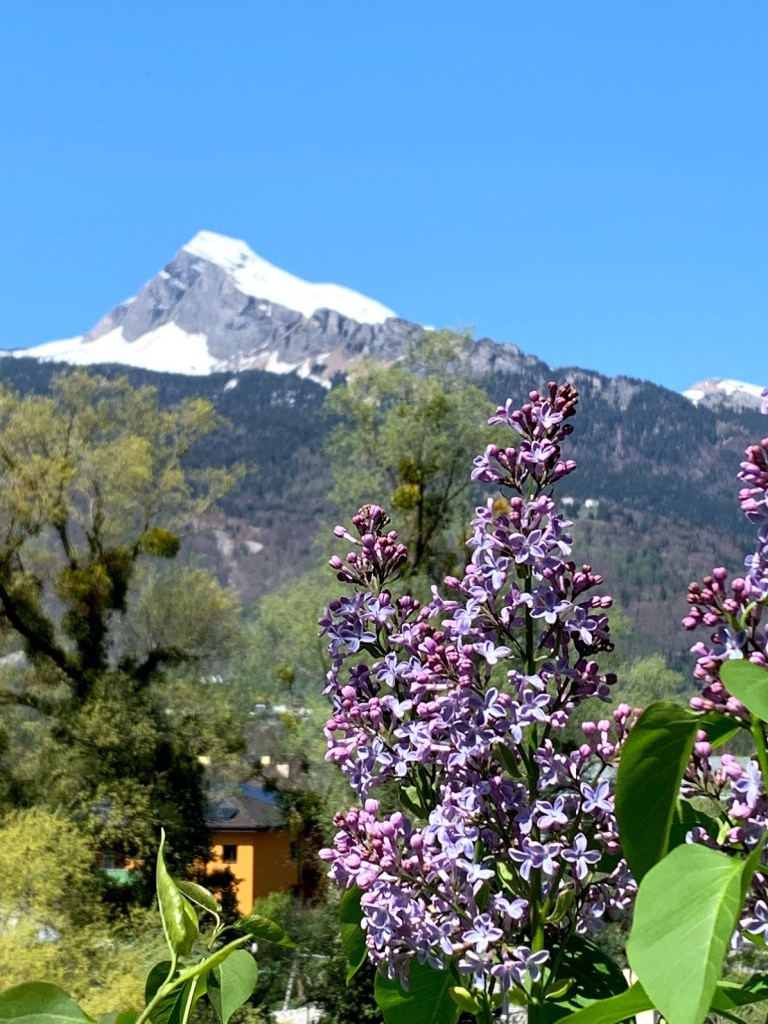
Balzers, LiechtensteinView of the valley from Haus GutenburgLIla Blume und Berg (purple flower and mountain)
It was hard saying
goodbye to Liechtenstein. We all really enjoyed this little country, but it was
time to cross the Rhein River back into Switzerland and drive on another hour
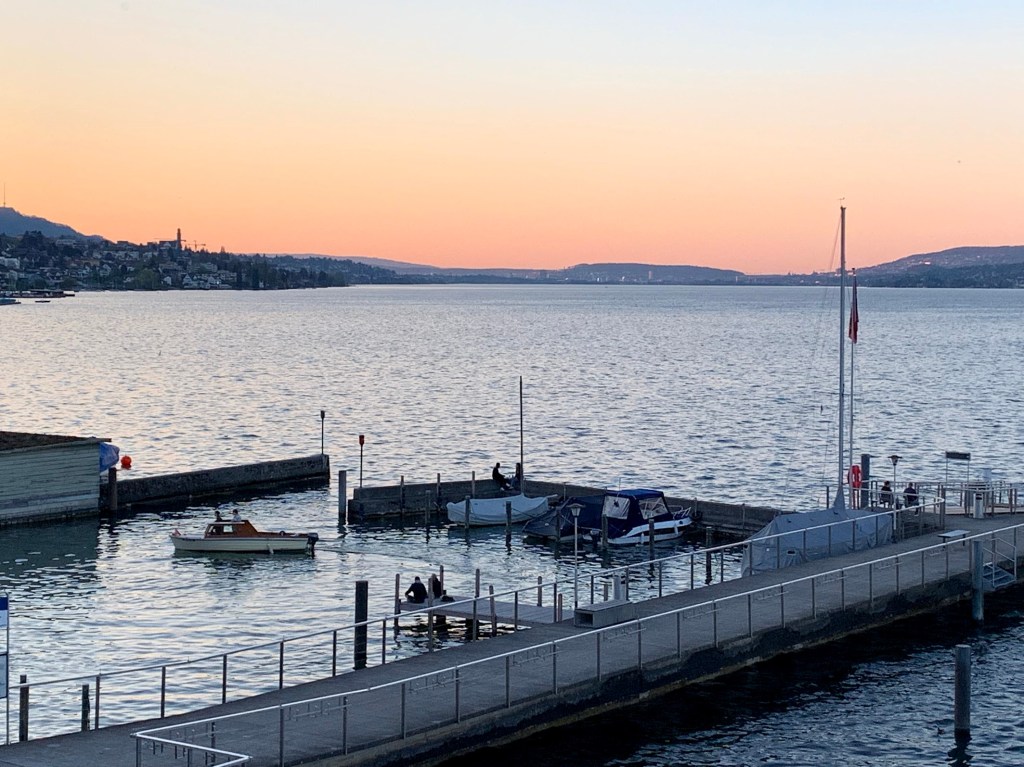
to Zurich. We arrived mid afternoon and checked into our hotel in Horgen, a suburb
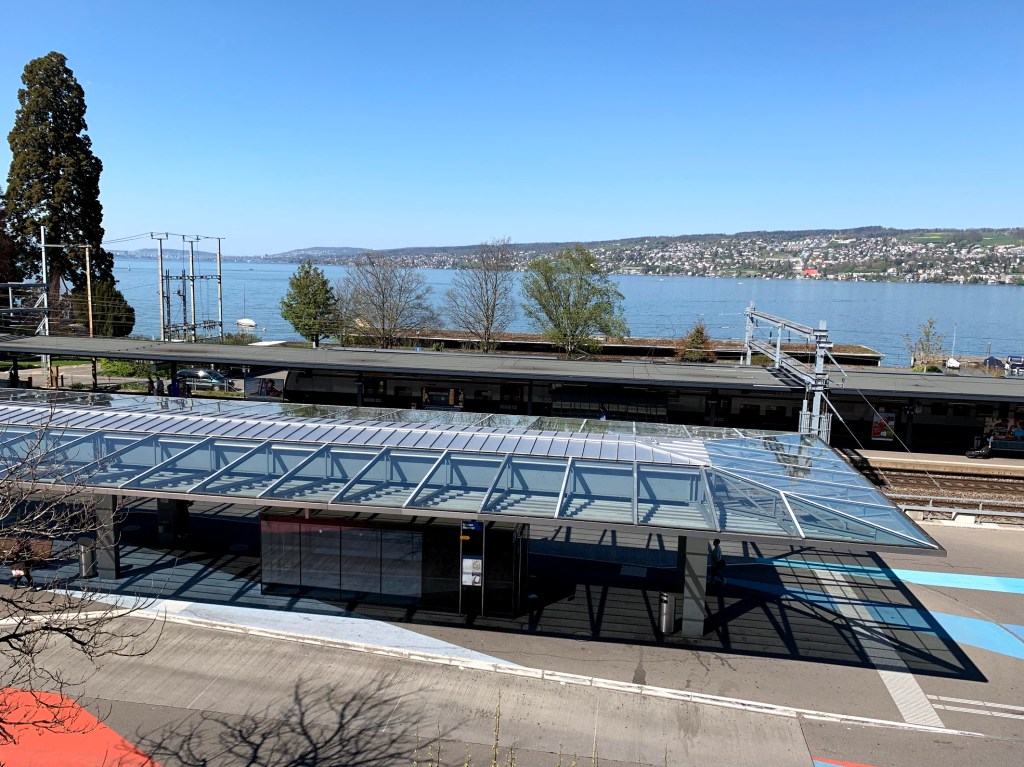
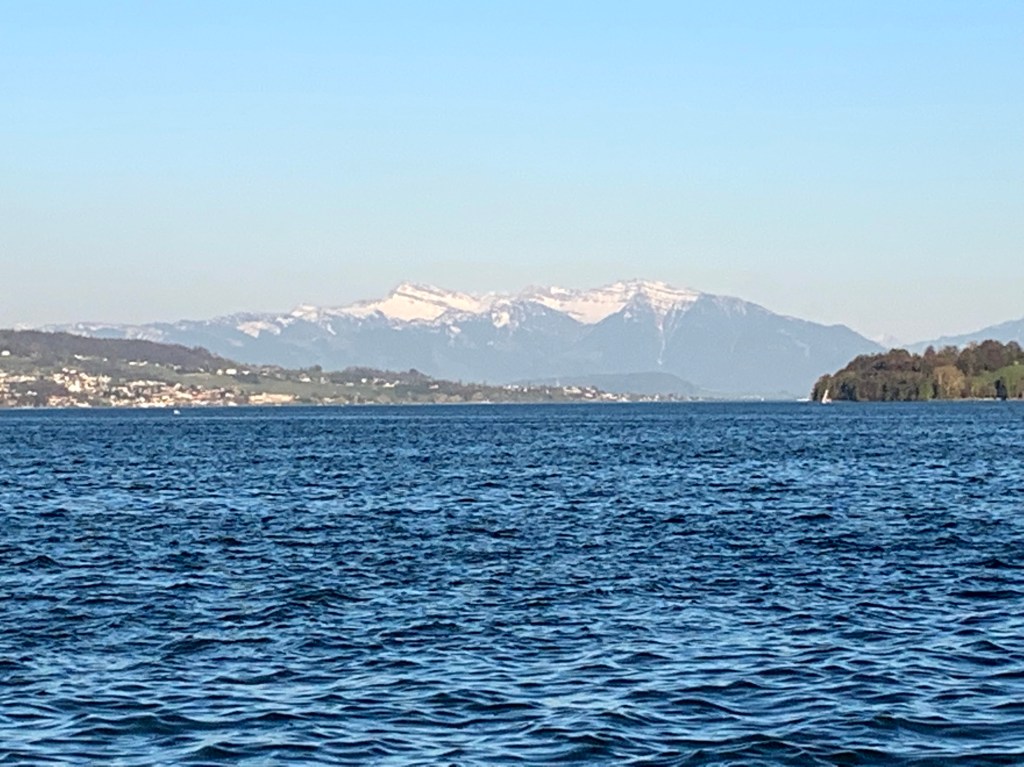
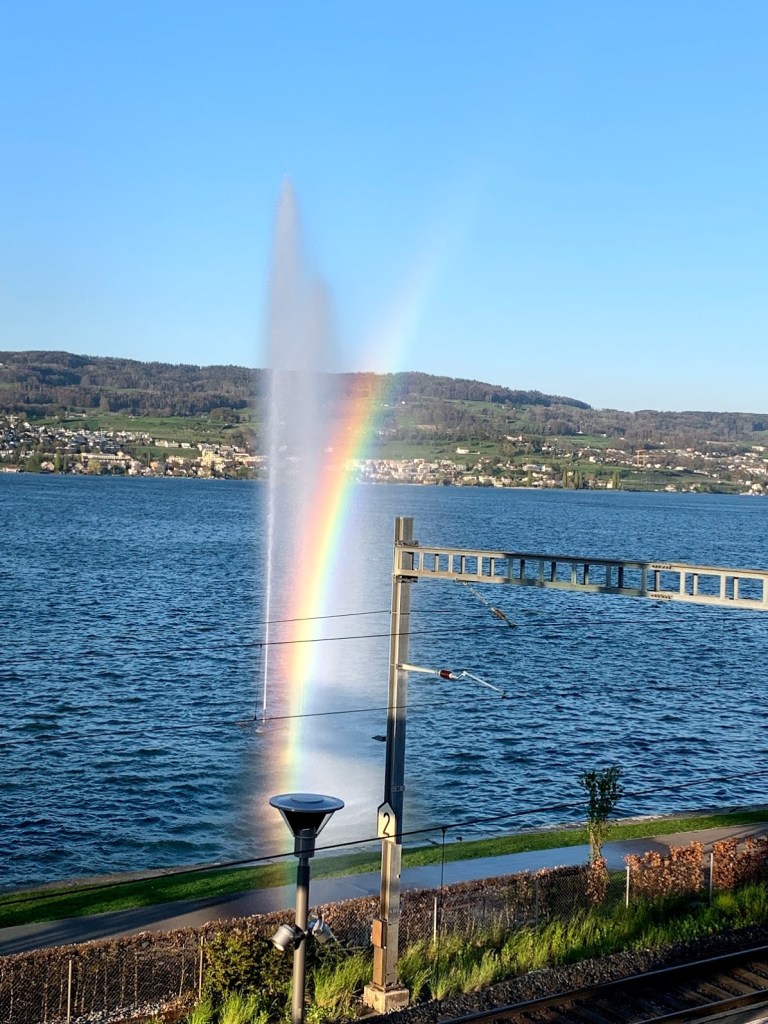
of Zurich. Our hotel had stunning views of Zurichsee as well as the local train
stop. It was fun watching all the trains pass through! We went to a local
grocery and purchased dinner. After eating in our hotel room, we headed out for
an evening walk. The church bells were calling people to Holy Saturday Mass and
the sun was making the waters shimmer on the lake.
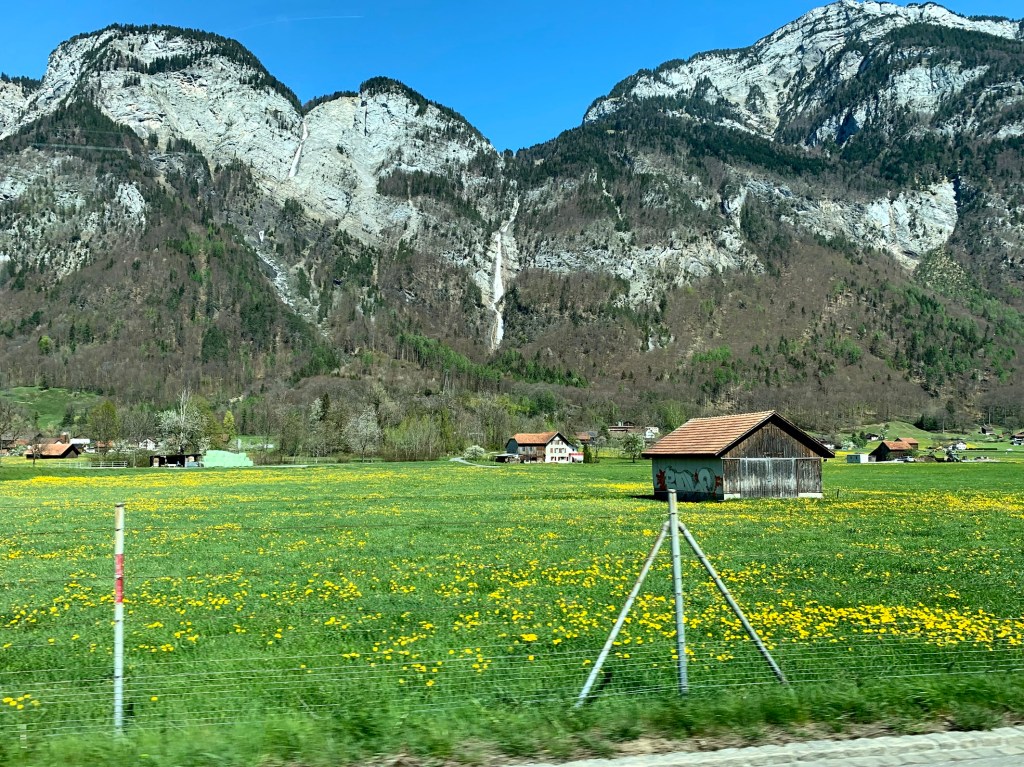
Swiss Countryside
Bahnhof outside our hotel window
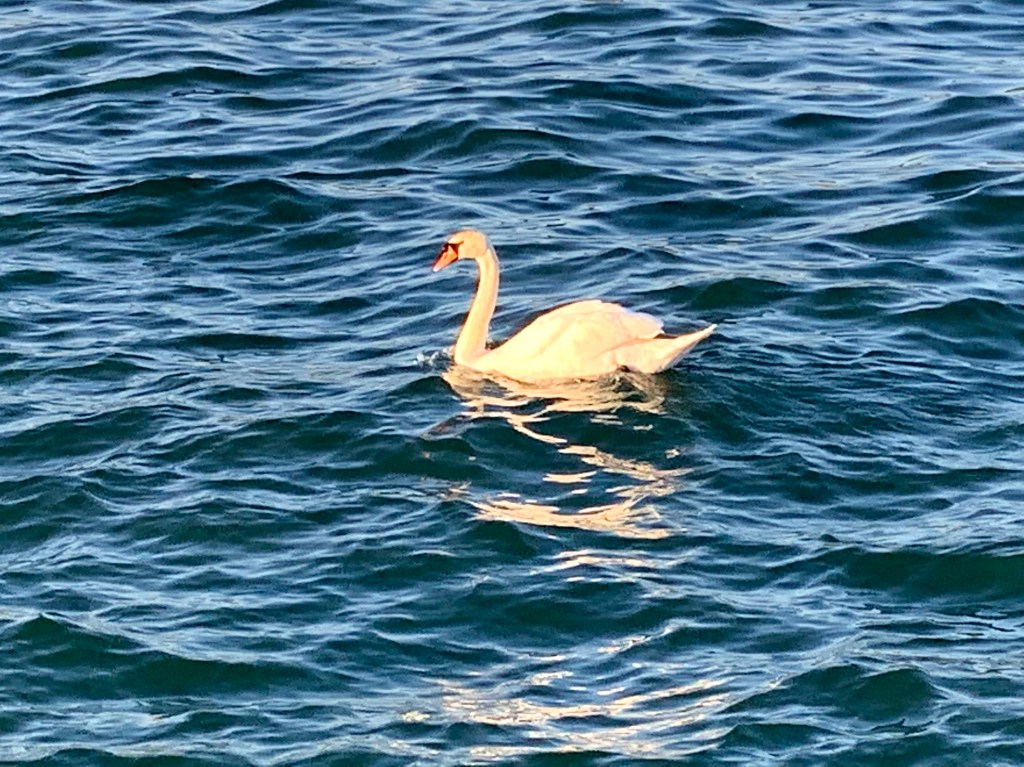
Beautiful swan swimming in Zürichsee
Lake Zürichsee in Switzerland
There was a lovely boardwalk
out to a marina, a rather large spray fountain in the lake itself, and of
course several little parks along the banks of the lake. Our favorite was an
old turn of the century estate that had been turned into a local park and music
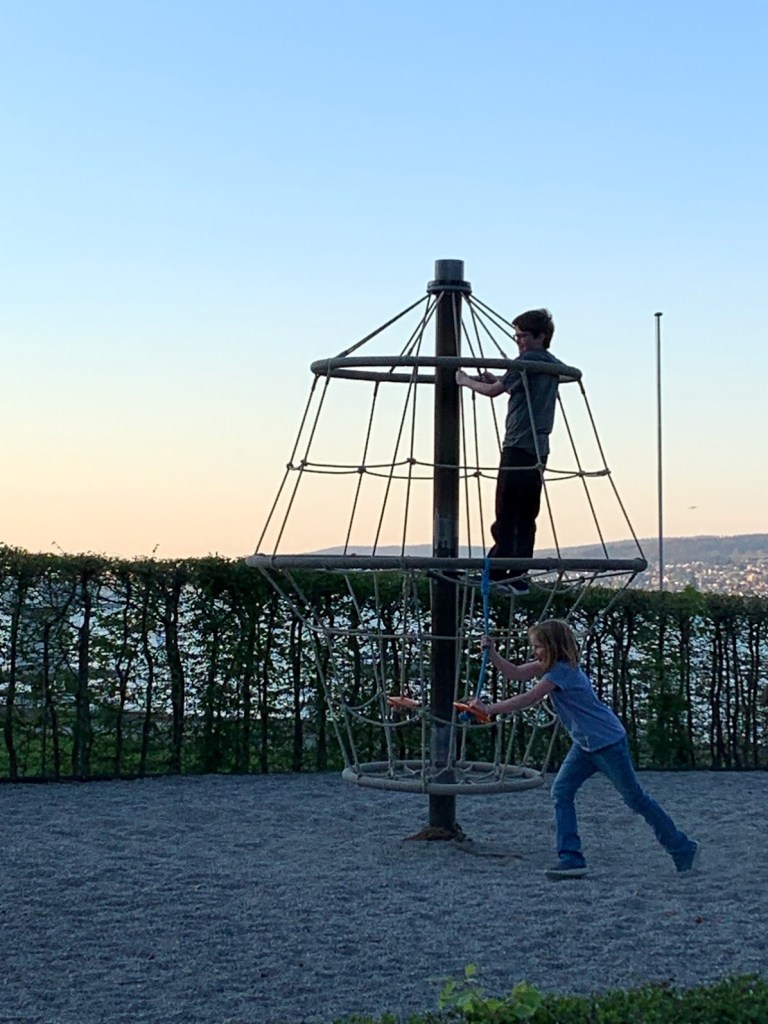
school. The kids once again had fun playing on the dangerous playground
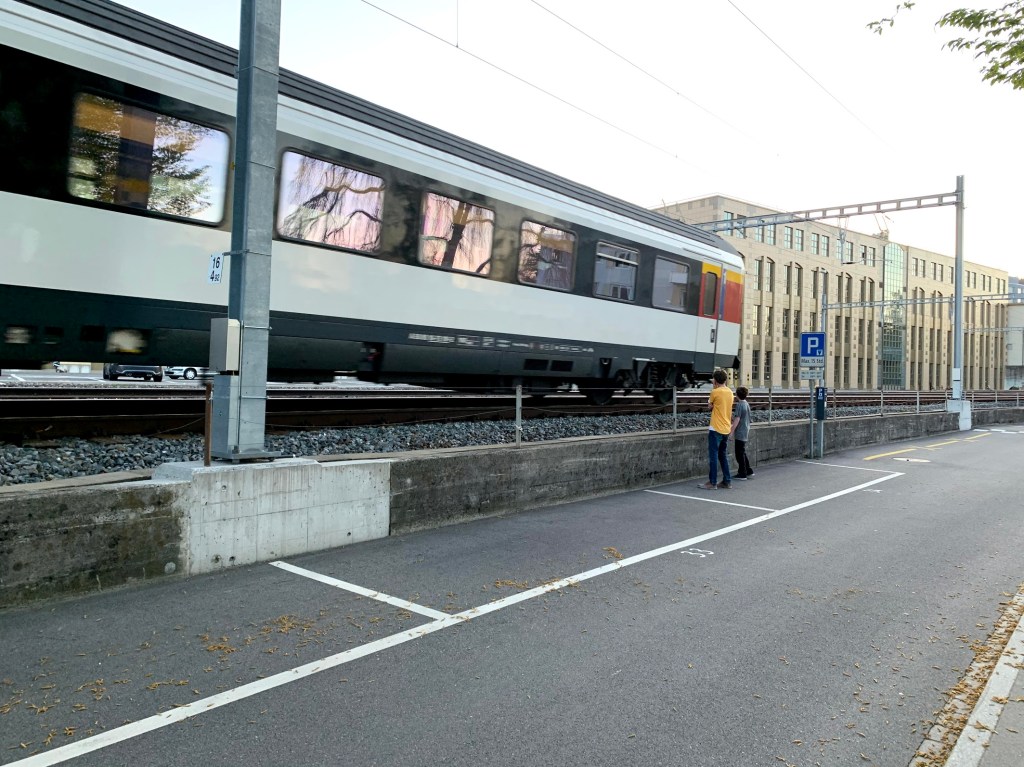
equipment! We love finding old playgrounds to enjoy! Another fun thing we did
was to stand right up against the fence as the commuter trains whizzed by. It’s
quite thrilling to hear the tracks pop and hiss, then see the train coming, and
feel the breezes made by the cars as they whiz by you within 8 feet!
Where, do you say is
Liechtenstein? Well, it’s a tiny little country of 62 square kilometers nested
between Austria and Switzerland. It is the most charming, prettiest, and
friendliest little country I’ve ever visited! We said goodbye to the Bavarian
Alps and drove 2 hours crossing back into Austria and then into Switzerland
briefly before arriving at the Rhein (Rhine) River. This mighty river is in its
infancy at the border between Switzerland and Liechtenstein.
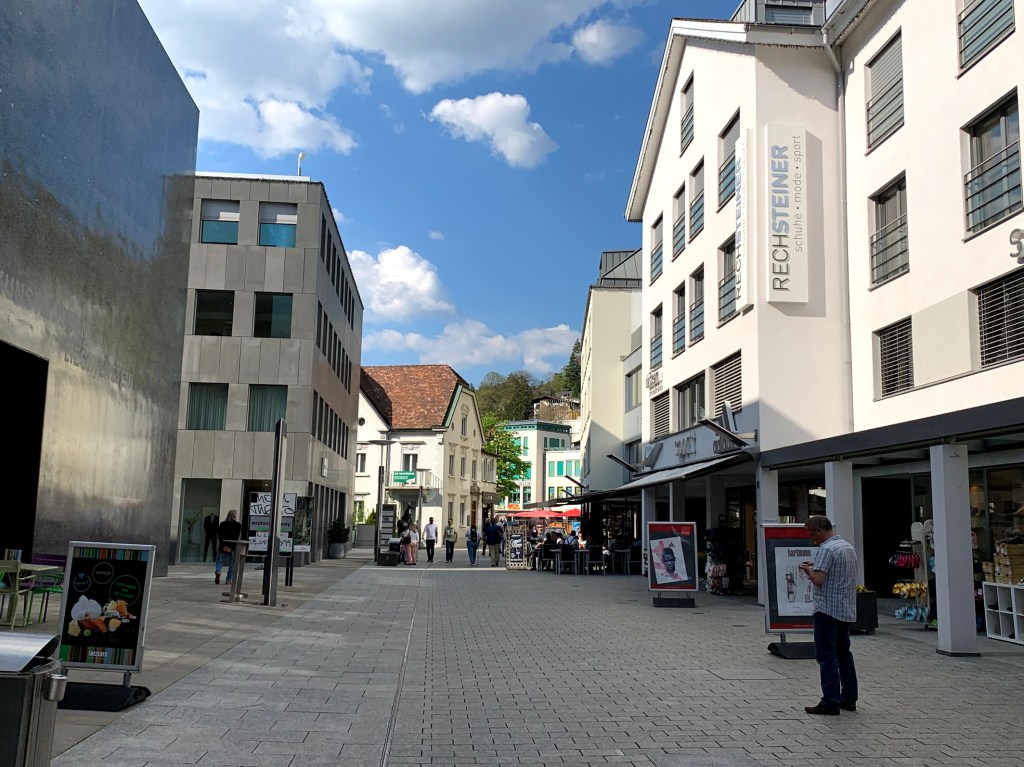
Pedestrian way in Vaduz, Liechtenstein 19 April 2019
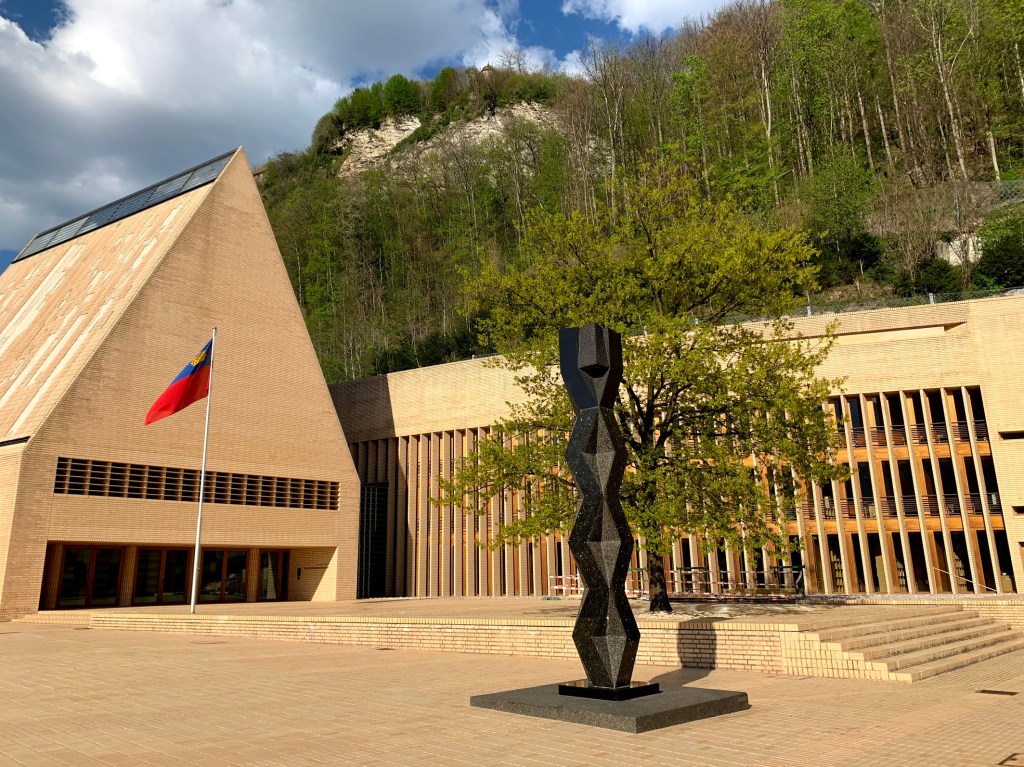
Over the river we found
ourselves in Vaduz, the capital city. Truthfully it’s more like a town than a
city. The entire population of Liechtenstein is only about 40,000 people spread
over 9 villages. Liechtensteiners are very proud of their independence and
culture. They are also very devoted to their Prince. Henri Adam is the 75 yr.
old prince of Liechtenstein and his son Alois is 50. Prince Henri has several
other children and grandchildren. He is the wealthiest European monarch with a total
worth of about 11 billion dollars. Most of the family fortune is in banking,
but his state wealth is near 3 billion. He shares much of his personal wealth
with the people. Liechtenstein has a 25-person parliament who recently granted
Prince Henri the ability to veto, kind of like the US President. He is the only
constitutional monarch that has been given power back to him by his own people!
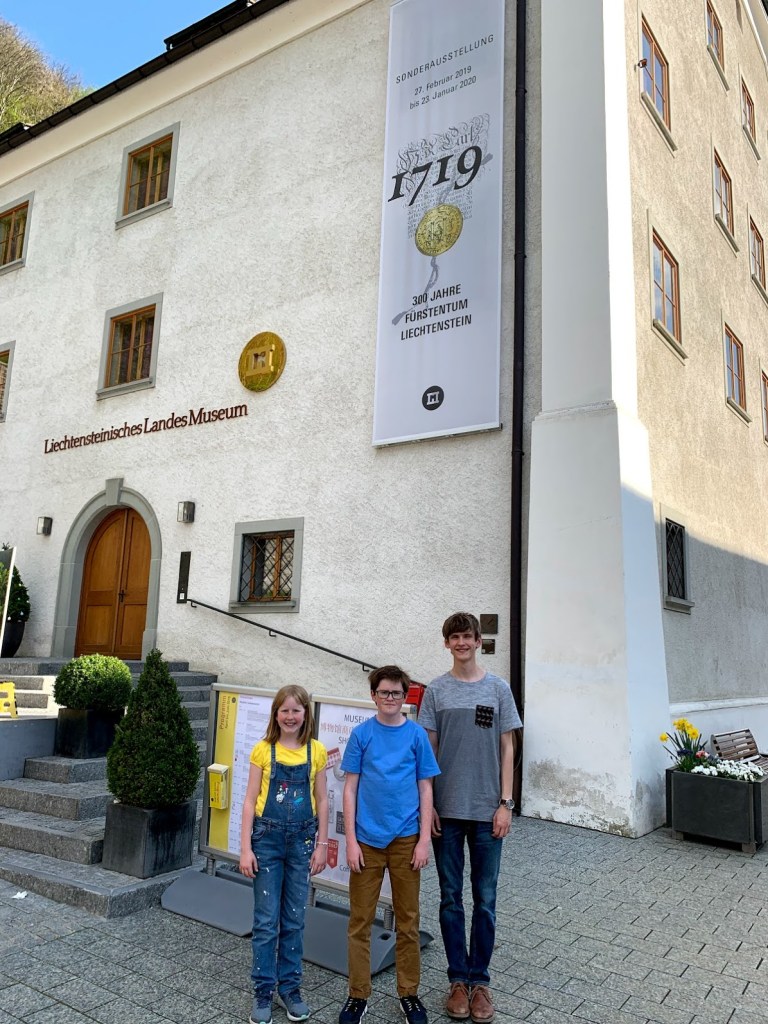
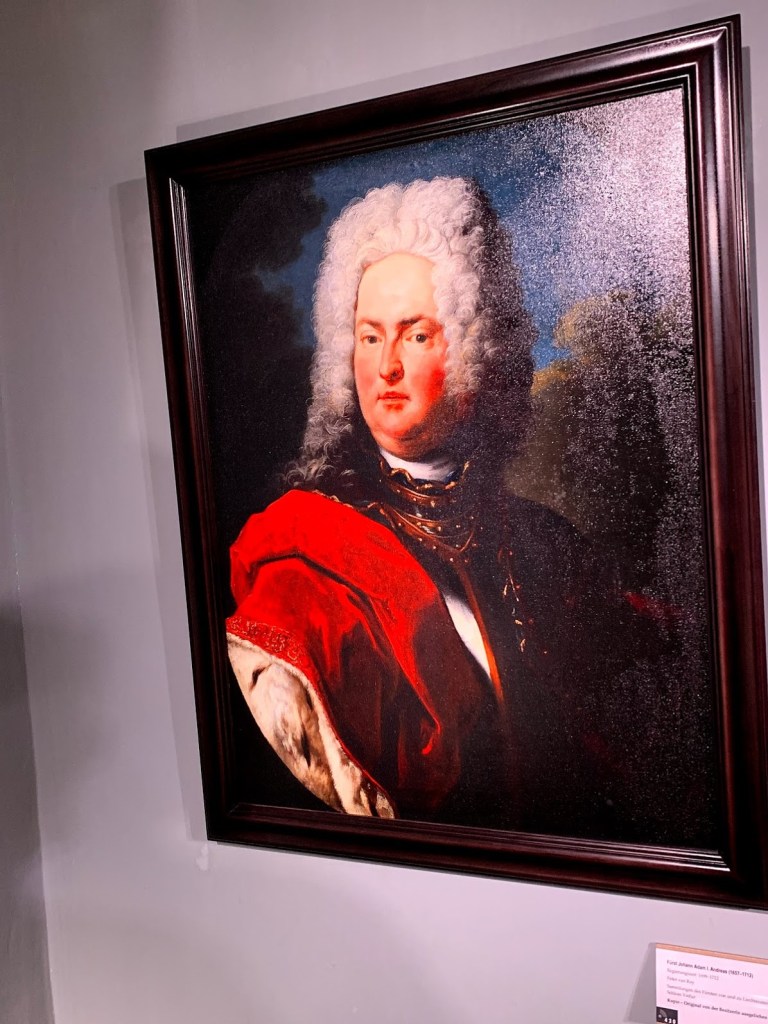
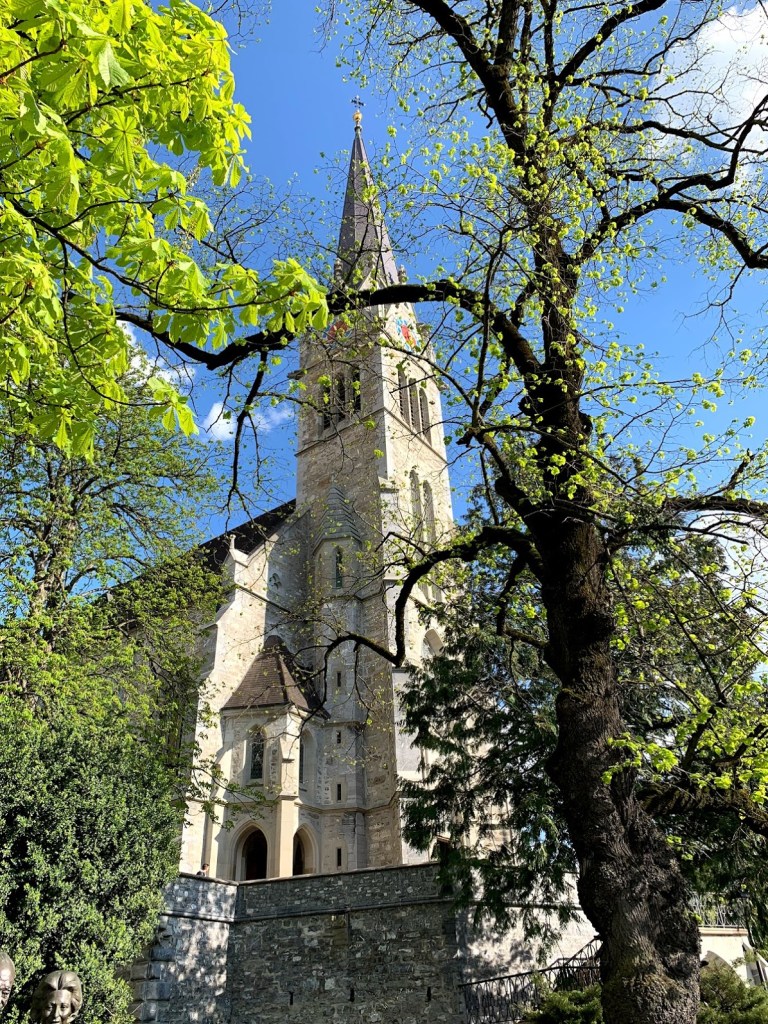
We explored central Vaduz, went to the Landes Museum of Liechtenstein, and visited the Vaduz Cathedral and Parliament building. The Landes Museum was very informative and we learned about the founding of Liechtenstein. In the early 1700’s Henri von Liechtenstein asked the Hapsburg King for a land grant within the Austro-Hungarian Empire. Within a few years he had established himself as the prince, but would always pay homage to the Emperor. Since the fall of the Austro-Hungarian Empire the Prince of Liechtenstein has been a royal ruler in his own right. 2019 marks the 300 yr. anniversary of the founding of Liechtenstein!
Landes Museum of Liechtenstein
First Prince of Liechtenstein
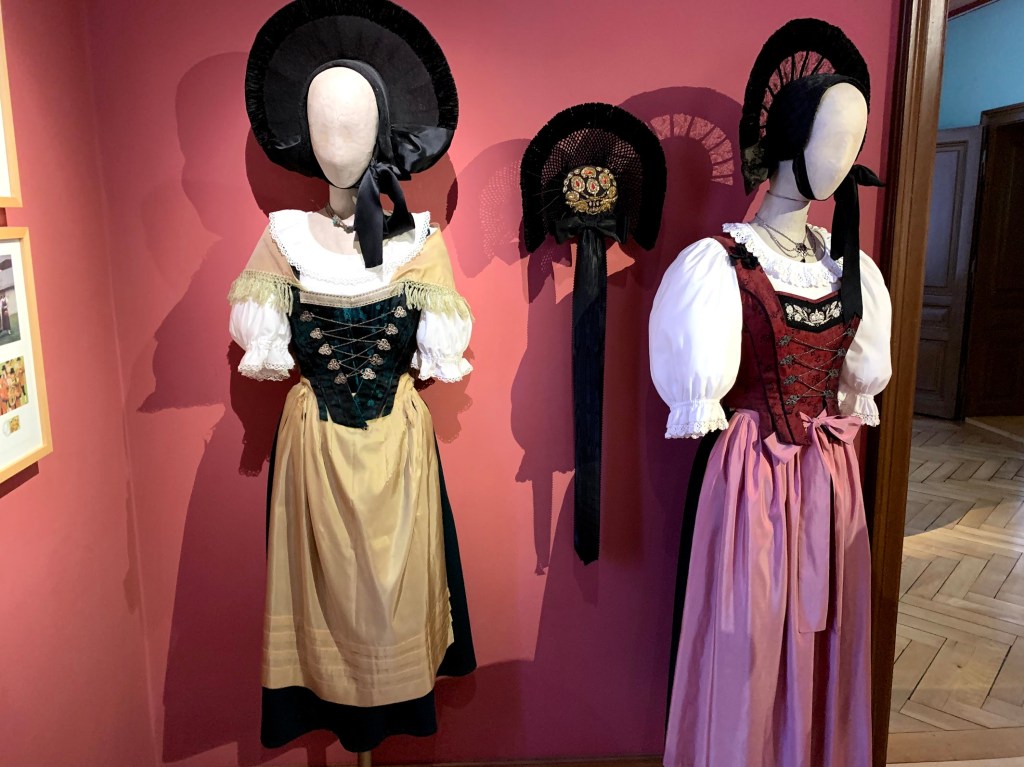
Traditional Costumes
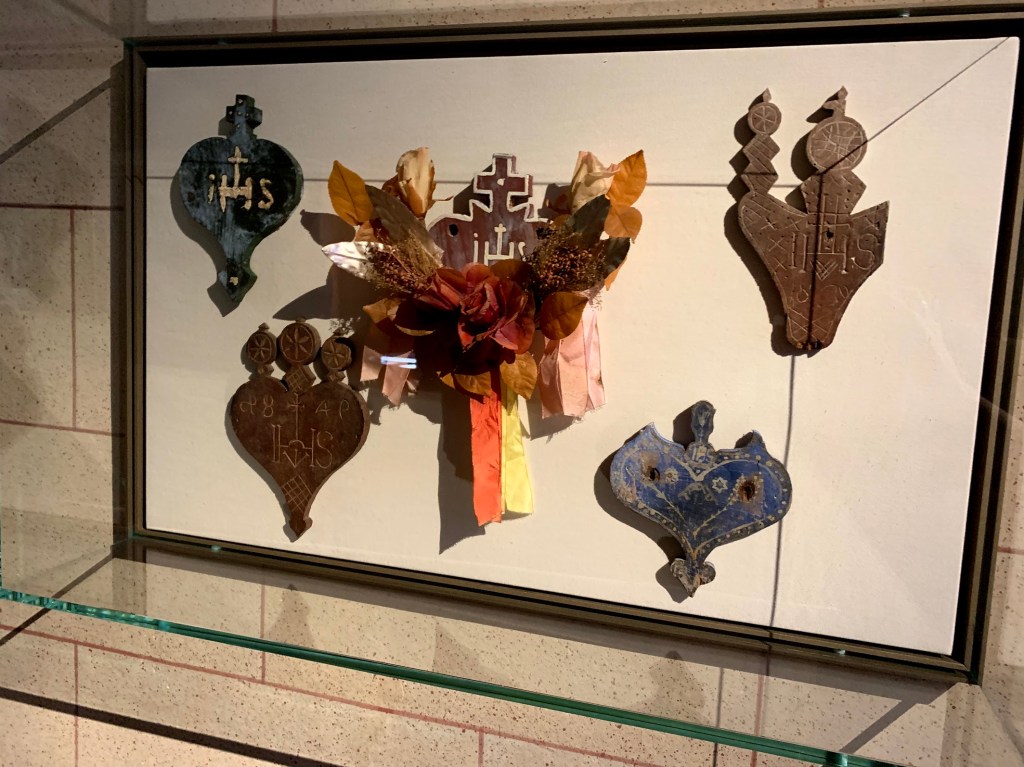
In the early Fall the cowherds drive the cows down from the mountain summer pastures into the lower winter pastures. The cows pass through the village main streets. The cowherds carve hearts to place between the horns. The more ornate the heart is indicates which cows are better milkers!
Some of our favorite
items in the museum were the native costumes, the wooden cow horn decorations,
and the Princes own private Faberge egg collection in the national treasury.
They are known as “people’s eggs”. They
also seem to really like stamps in Liechtenstein!
However our favorite
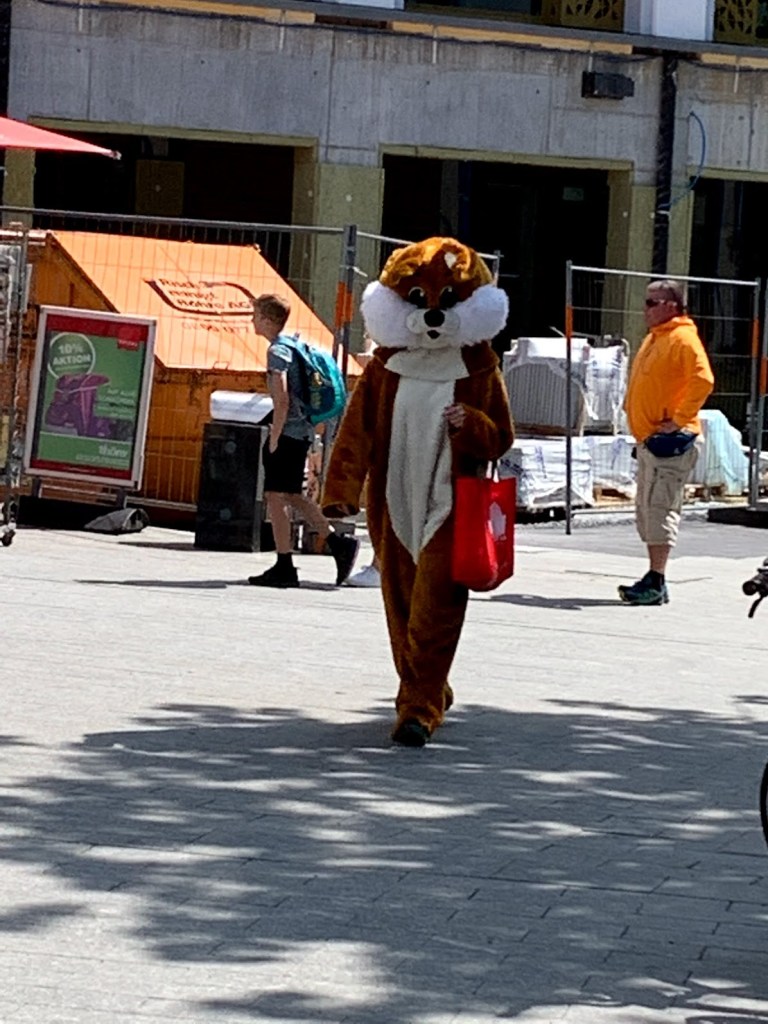
memory of Vaduz has to be the “Terrifying Osterhase of Liechtenstein!” We found
out from a museum clerk that a young lady was dressed as an Easter bunny
handing out candy to little kids. Seamus had gone to the bathroom and came
upstairs to warn Faywen that the mascot was in the museum. Remember she is
terrified of mascots! We had seen it earlier in the streets and had played “dodge
the bunny”, but now it was in the museum! I must say the docent who helped us
was quite sympathetic and actually went downstairs and asked the bunny to leave.
The young lady understood and even gave the docent a sucker to give to Faywen!
By the late afternoon the bunny had moved on and Faywen could once again enjoy
strolling the streets of Vaduz!
Terrifying Osterhase of Liechtenstein!Vaduz CathedralVaduz was a striking example of old and new architecture. This is the Parliament Building.
As the sun began to set
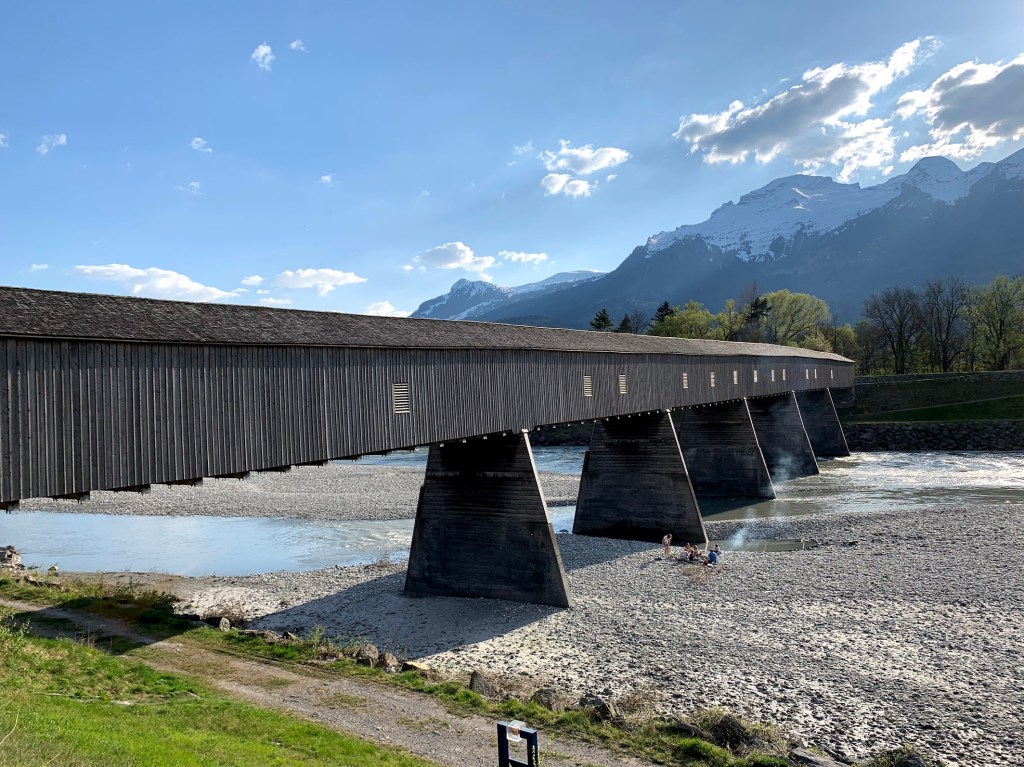
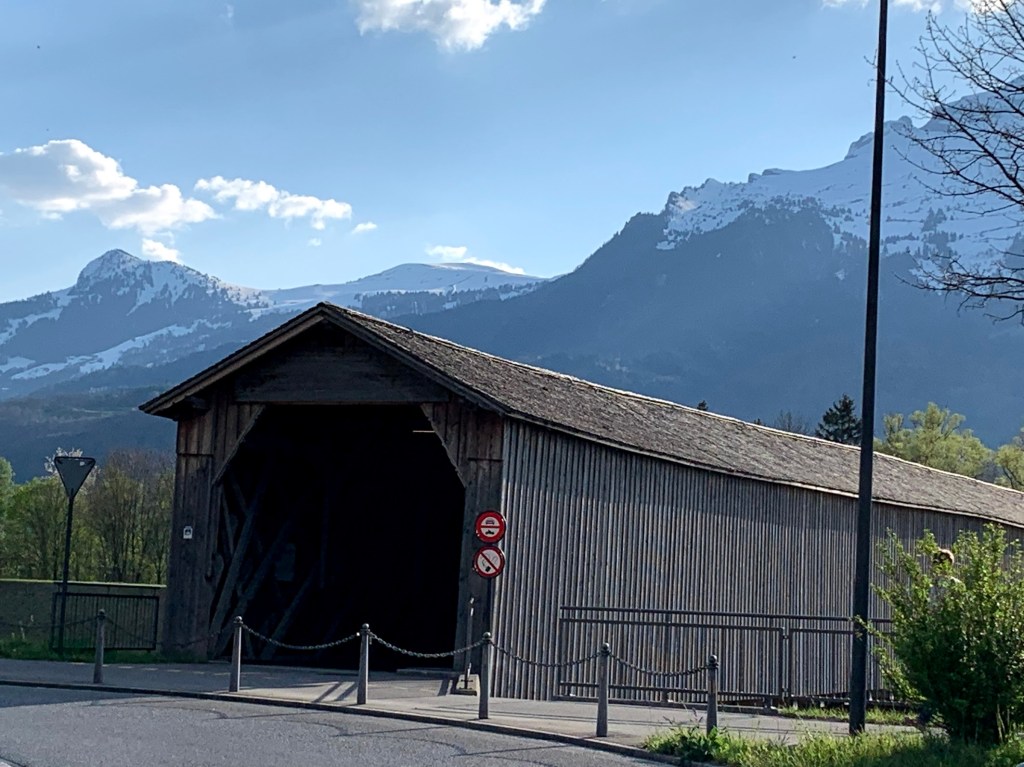
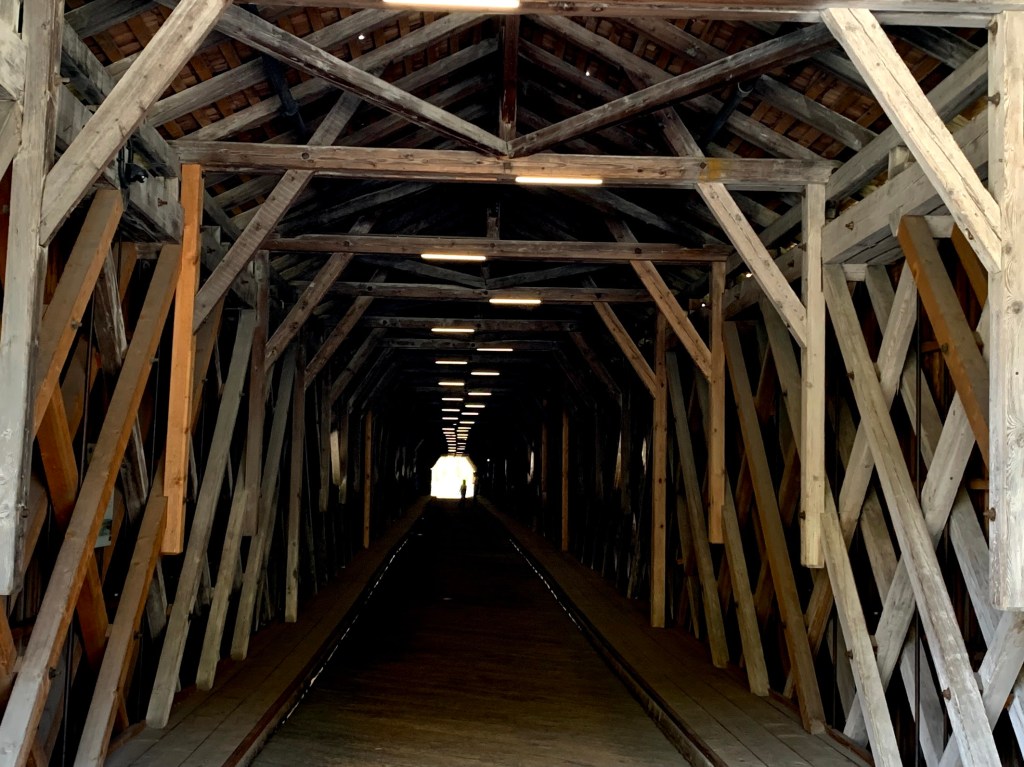
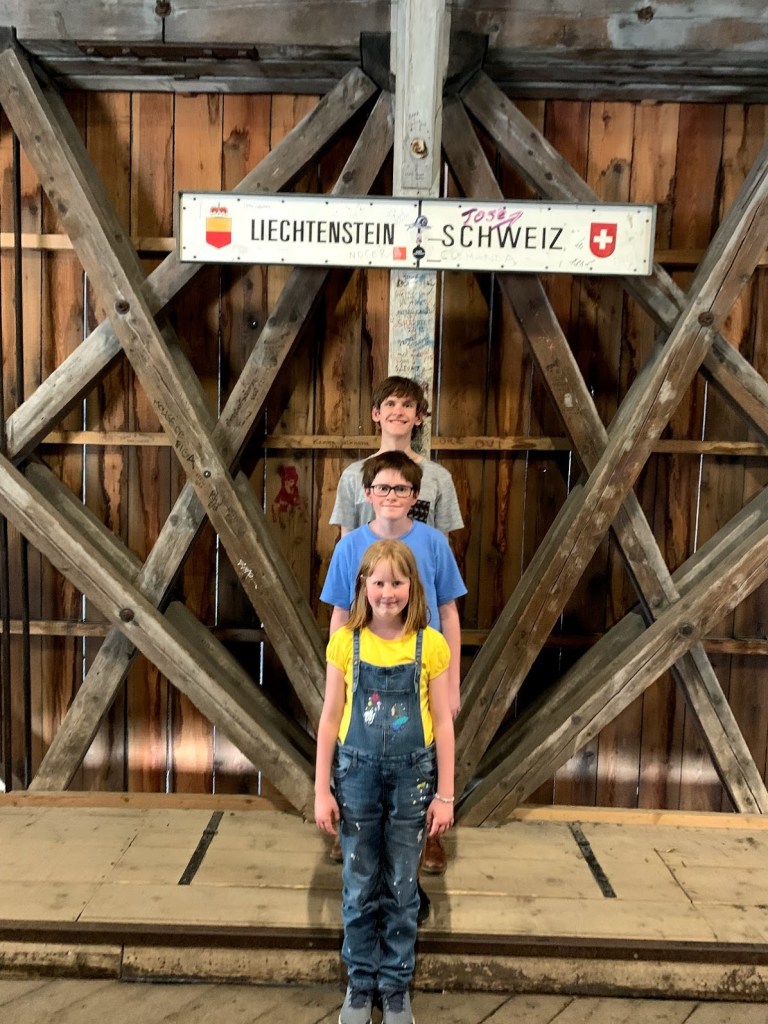
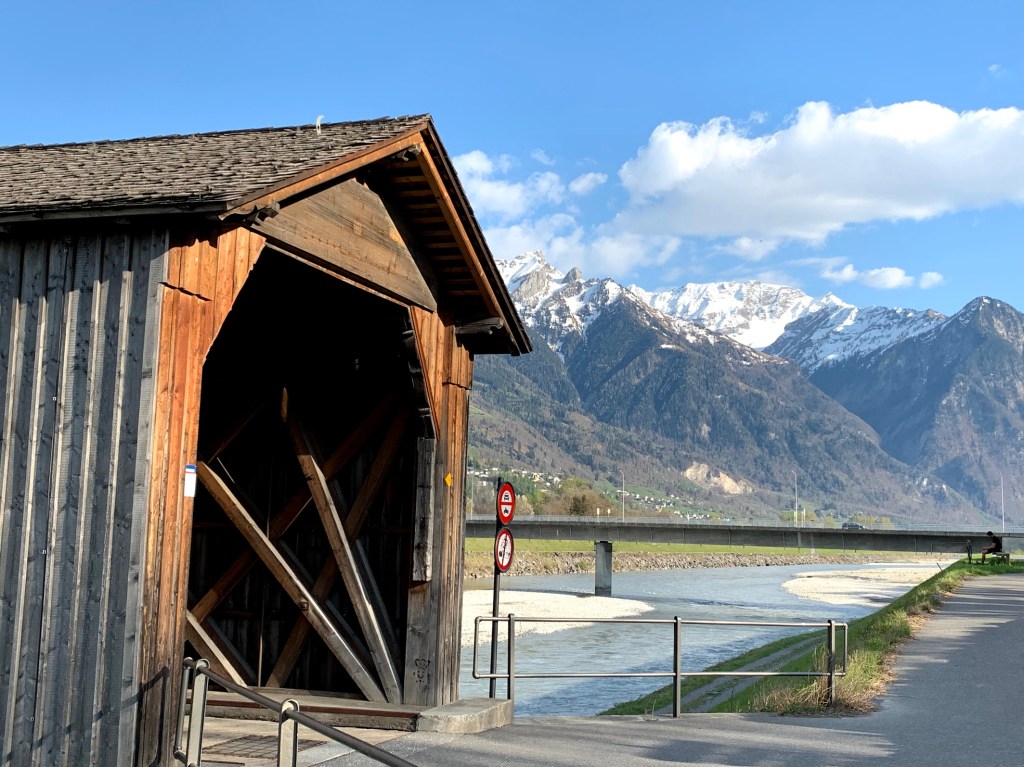
we walked across the only surviving wooden bridge to cross the Rhein River. In
the center of the bridge is a sign marking the border between Switzerland and
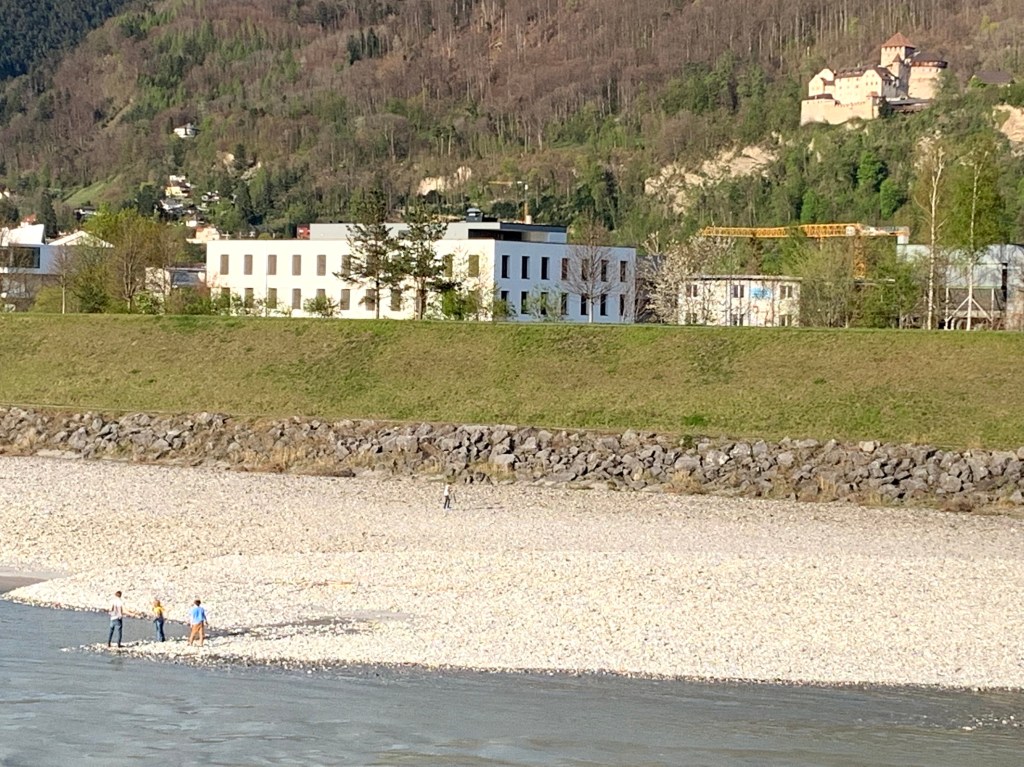
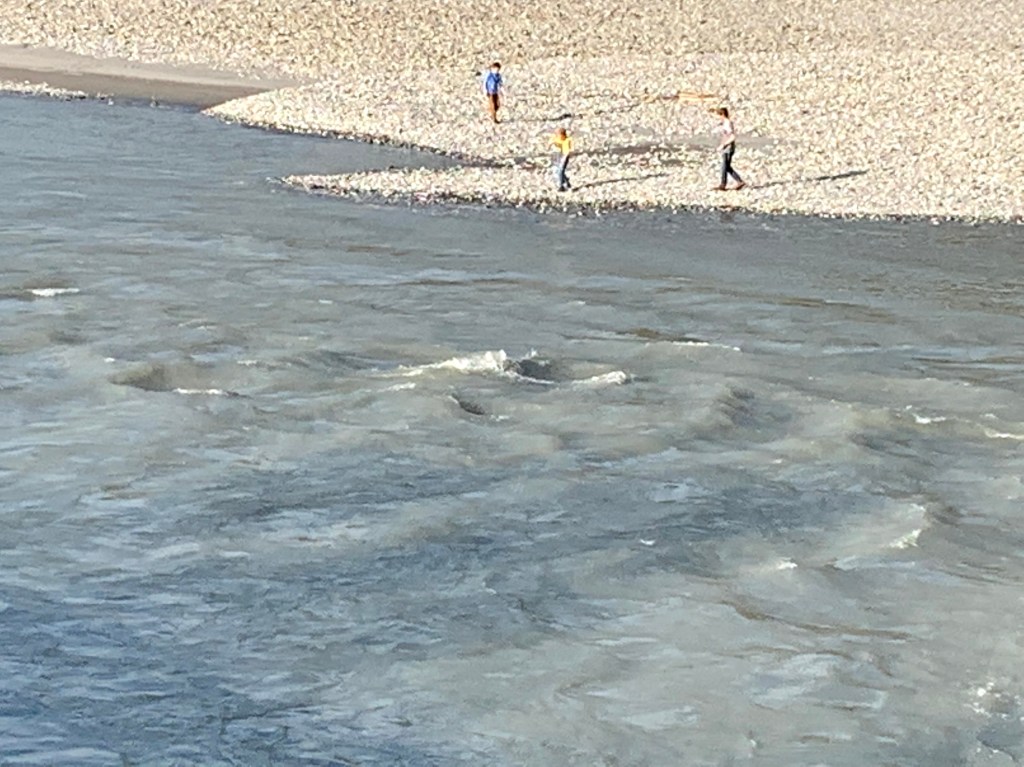
Liechtenstein. I took some lovely photos of the kids playing down at the edge
of the Rhein River on the Liechtenstein side. I was standing in Switzerland! We
ate supper then checked into our hotel pension in Vaduz. The kids had an amazing
little apartment that had stunning views of the mountains. Robert and I also
had a nice little balcony to enjoy the sunset over the mountains and Rhein
River.
Only surviving wooden bridge across the Rhein River
Liechtenstein Entrance
It is a pedestrian and bike path only.
On the border!Swiss Entrance: The mountains are in Liechtenstein.
View from Switzerland: The kids are in Liechtenstein!
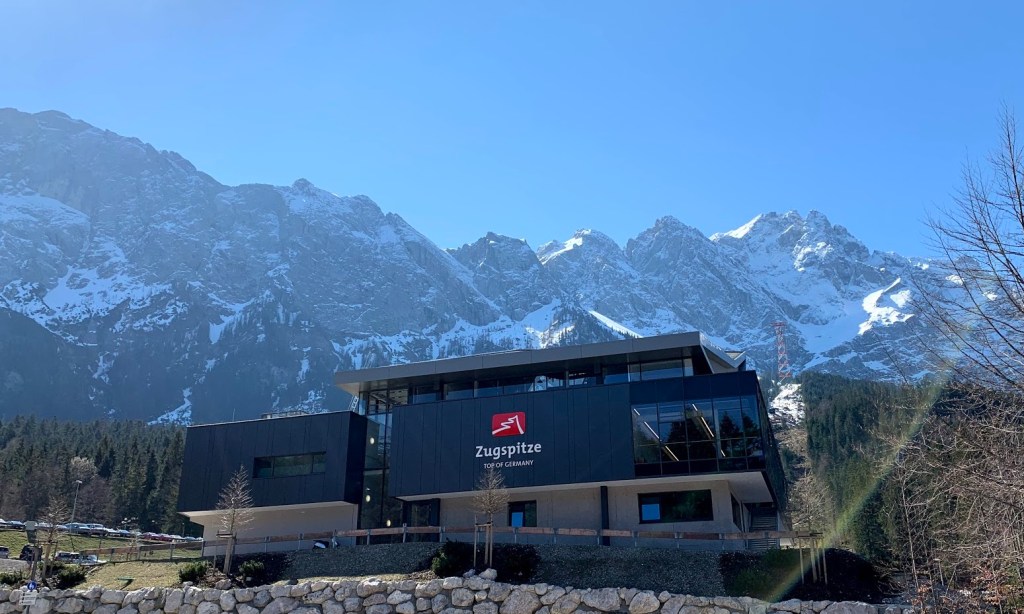
Another lovely day in
the Bavarian Alps found us driving through the mountains in search of Germany’s
tallest mountain, the Zugspitze. I remembered riding a cable car to the top of
the snow-covered mountain when I was a teenager, unfortunately when we arrived
at the station it was ridiculously expensive to ride up the mountainside. So we
took a few photos and headed towards Garmisch-Partenkirchen. This is the home
of a US Army Base and also where our next adventure was to take place! It
actually ended up being more enjoyable than if we had gone to the top of the
Zugspitze.
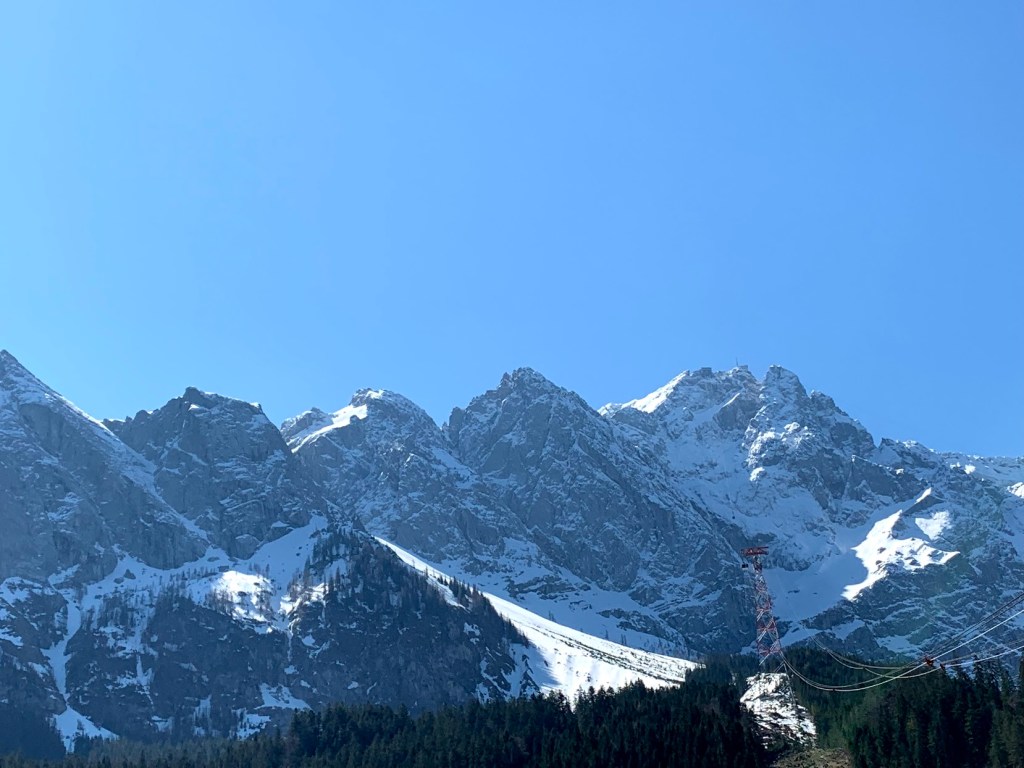
Zugspitze Bahnhof
Zugspitze is the tallest mountain in Germany
We parked our car and
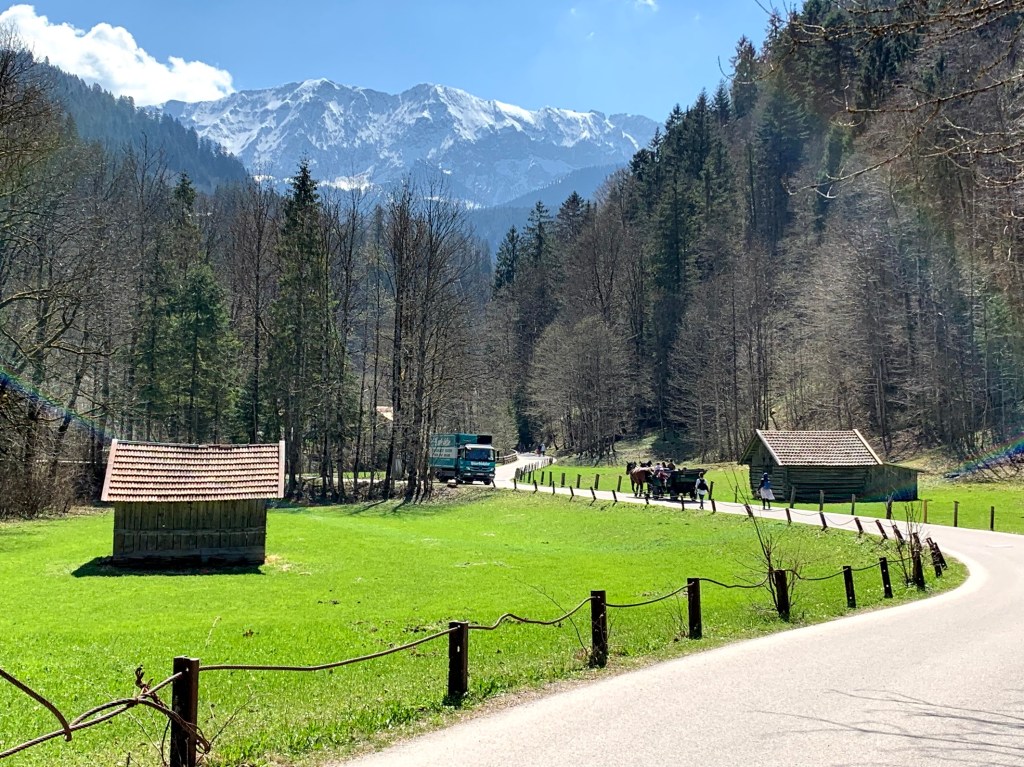
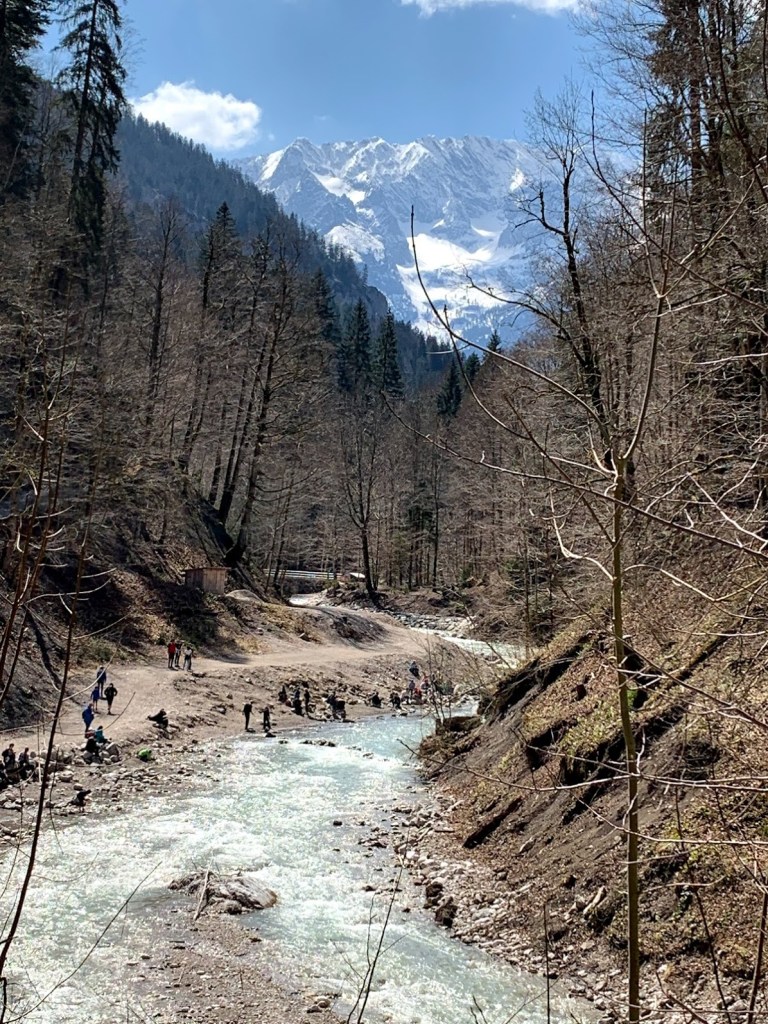
then walked a little over a kilometer through an enchanting valley following a
lovely little mountain stream. Eventually we came to a tiny little outpost and
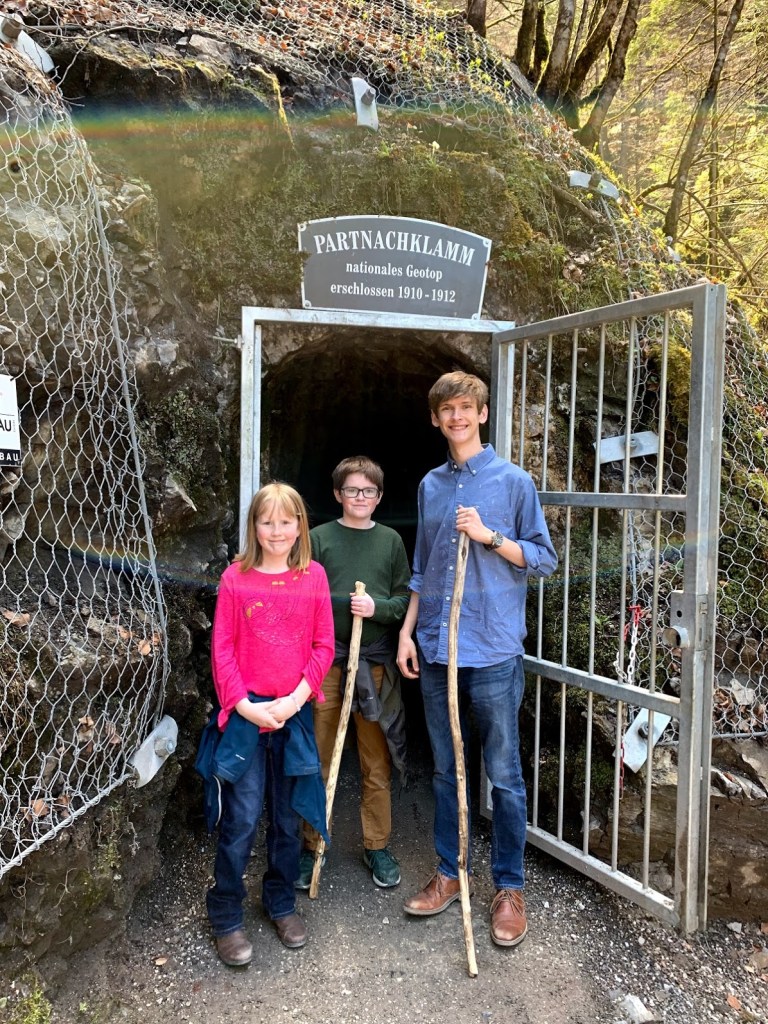
the entrance to the Partnachklamm Gorge. We had no idea what to expect from the
website, but were delighted to discover that the gorge was amazing!
The beautiful valley path we walked down to get to the gorge.
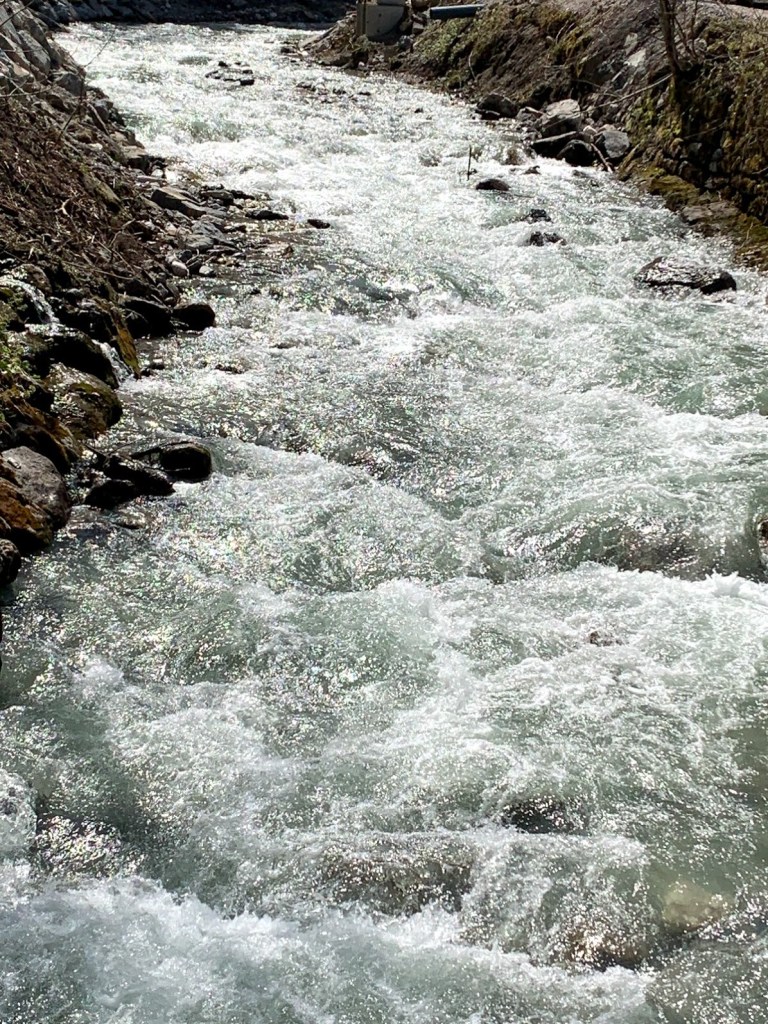
Stream in the valley
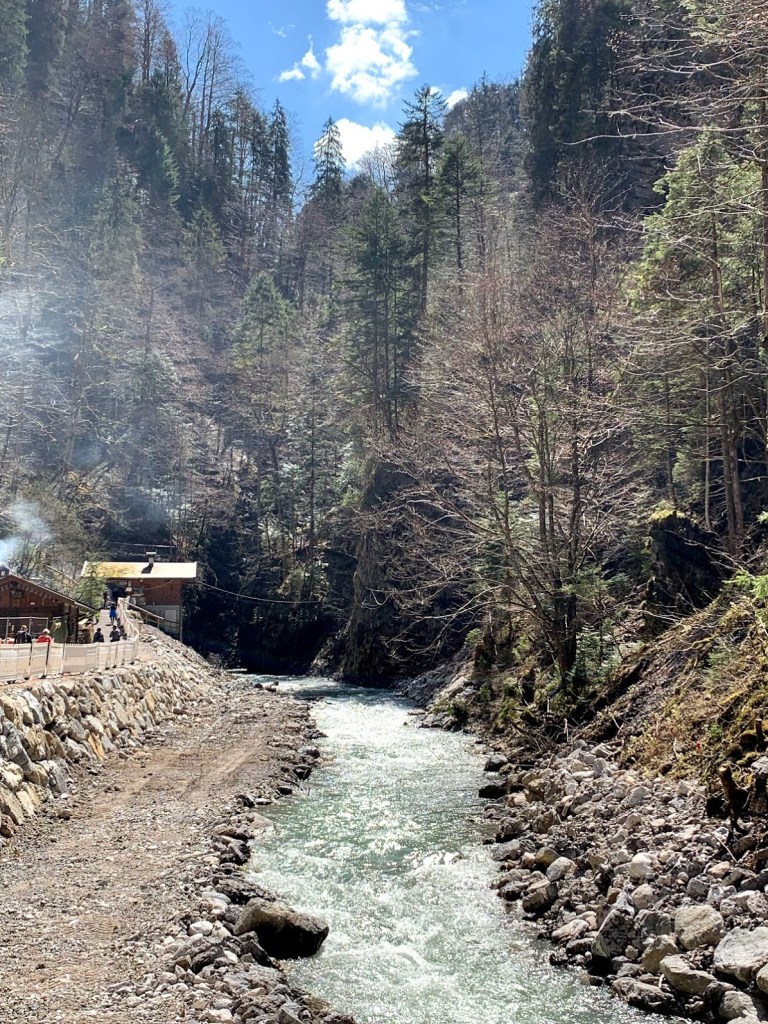
Stream winding up to the gorge entrance
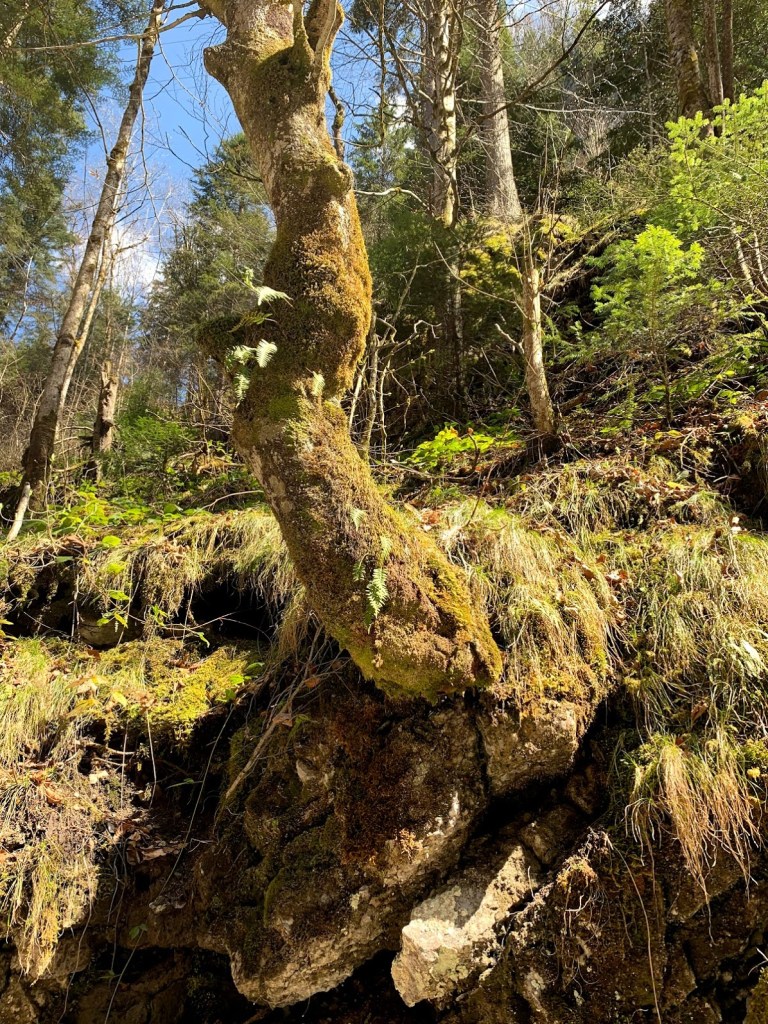
Thought this tree looked like an elephant’s trunk!
Entrance to Partnachklamm Gorge in Garmisch-Partenkirchen, Germany
Looking back at the ticket booth
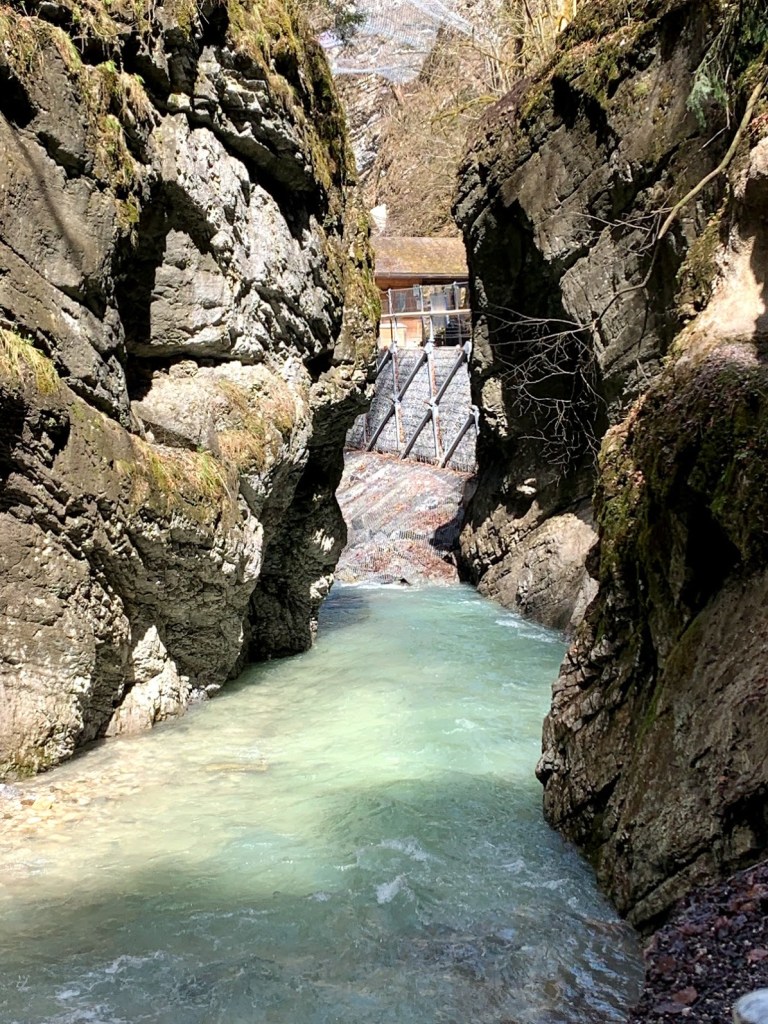
First view of the gorge
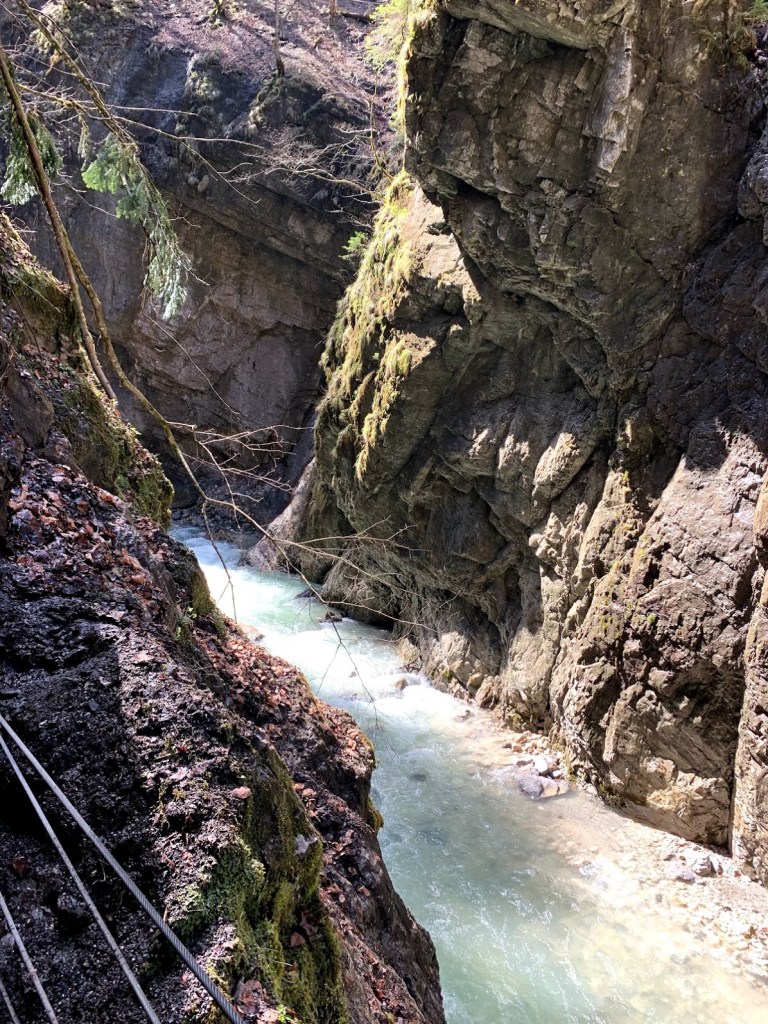
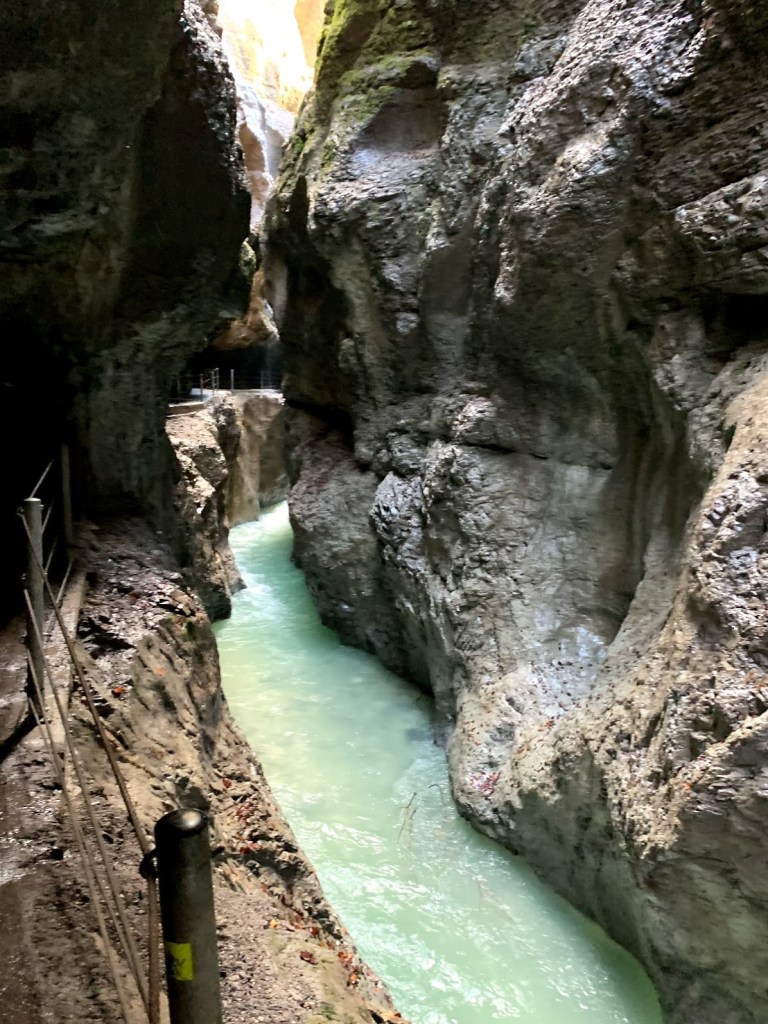
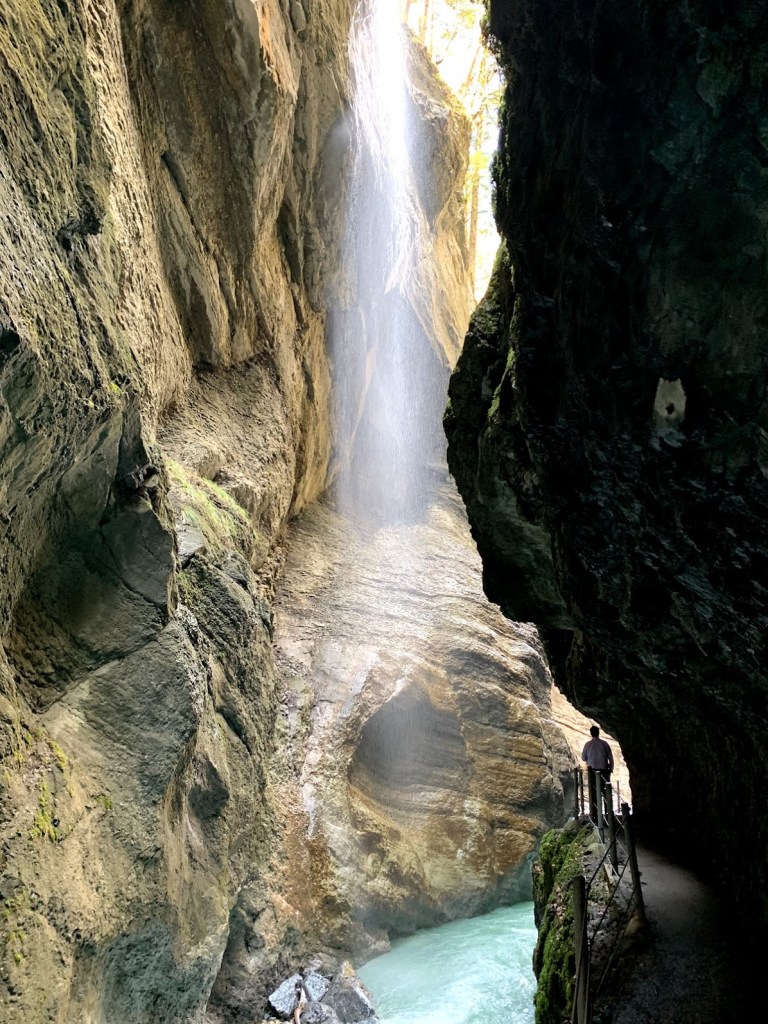
The gorge was very narrow in places and the water was always a beautiful turquoise color.
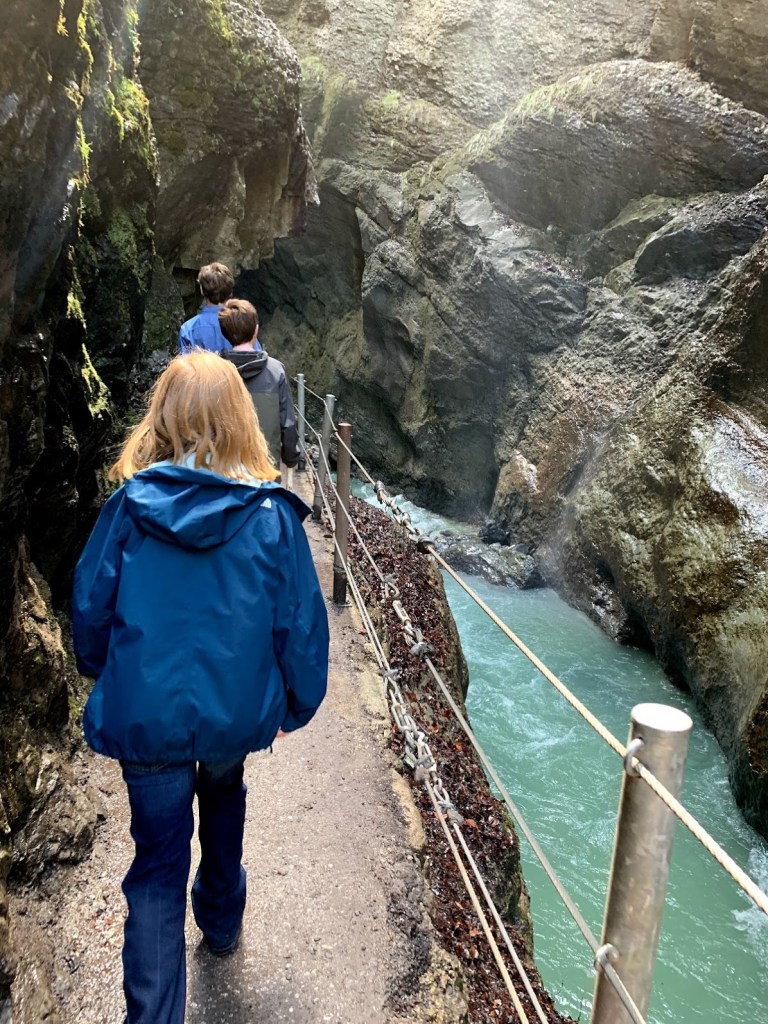
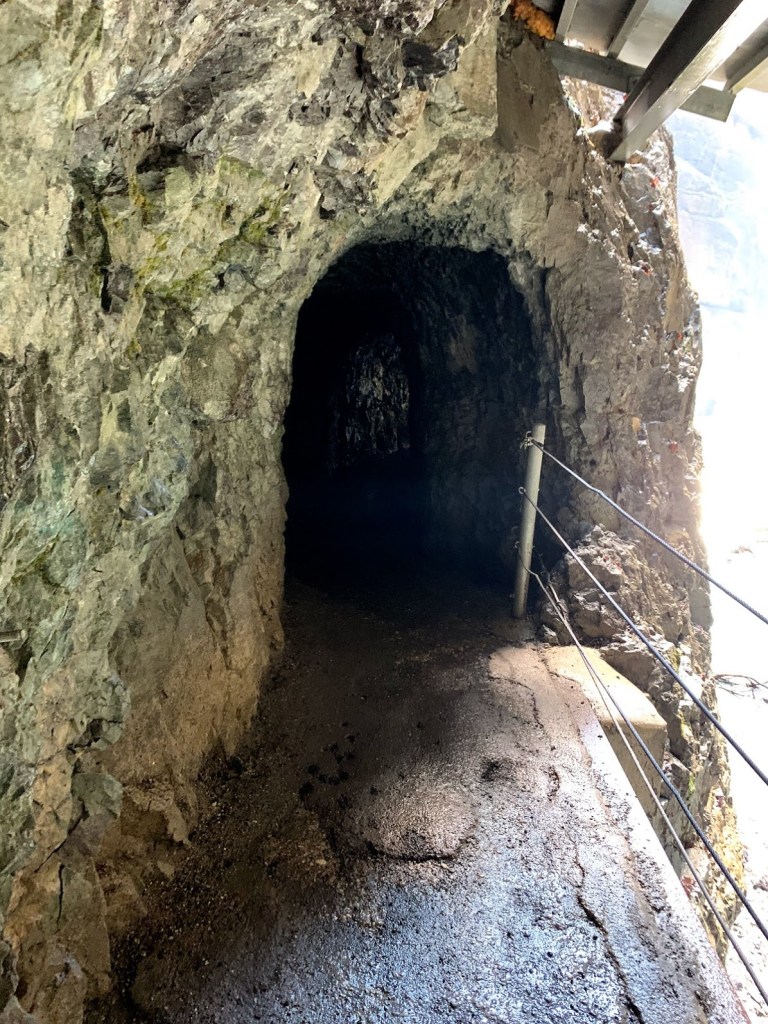
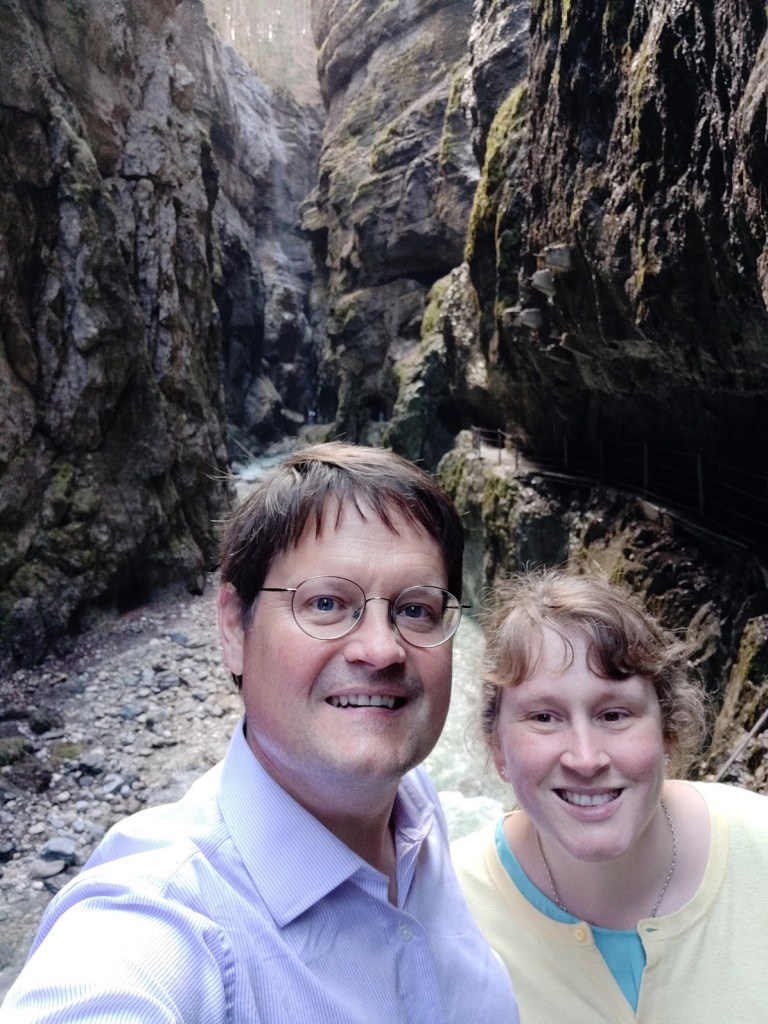
We paid a small fee and entered into a cave that opened up onto a small stone and wooden walkway that hugged the side of the gorge. The mountain stream we had been following, rushed and swirled below us as the water flowed over rocks and through the narrow gorge floor. It was exhilarating to listen to the rushing water only a few feet below. Sometimes the path even extended out a little over the river. The walls of the gorge reached 80m or 263ft. high and at times one could only see a sliver of blue sky above. The entire gorge was 800m or 2035ft long and once you reached the other side it opened up into a lovely little valley. After a respite in the sun we turned around and walked back through the gorge again. At times the path was very narrow and you had to practically hug the person trying to pass by you. Partnachklamm Gorge was declared to be a German Natural Monument in 1912.
Gorge path
We passed through several small tunnels on the hike.
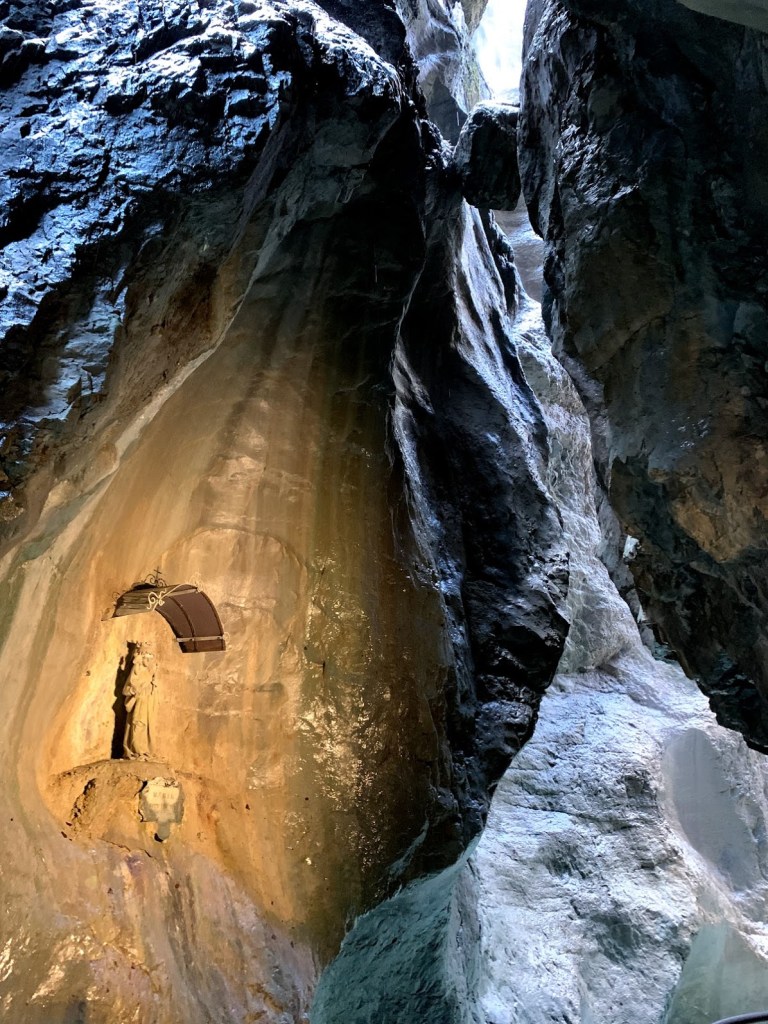
Halfway through the gorge was a lovely statue of the Madonna and ChildCan you see the water sprite? She’s swimming up the waterfall.
The other end of the gorge
Partnachklamm Gorge: 18 April 2019
That is Robert standing on the path.
It was nice to warm up
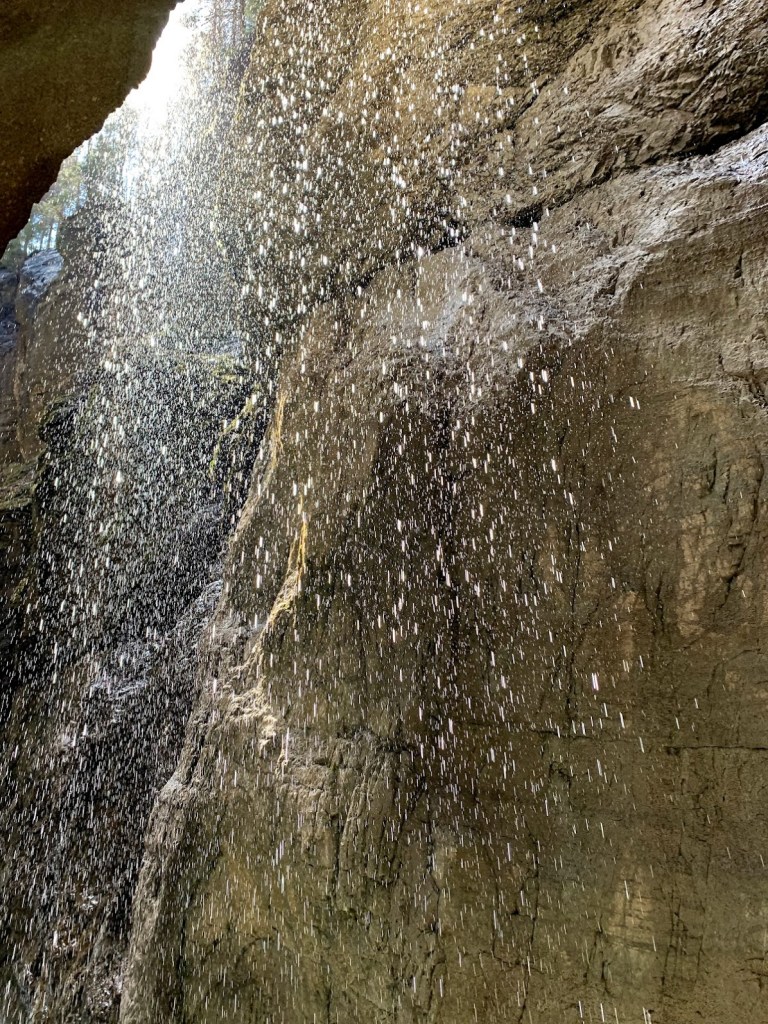
in the sunshine as we walked back to the car. Often water would drop on you
from the rocks above and it was considerably cooler in the gorge. Needless to
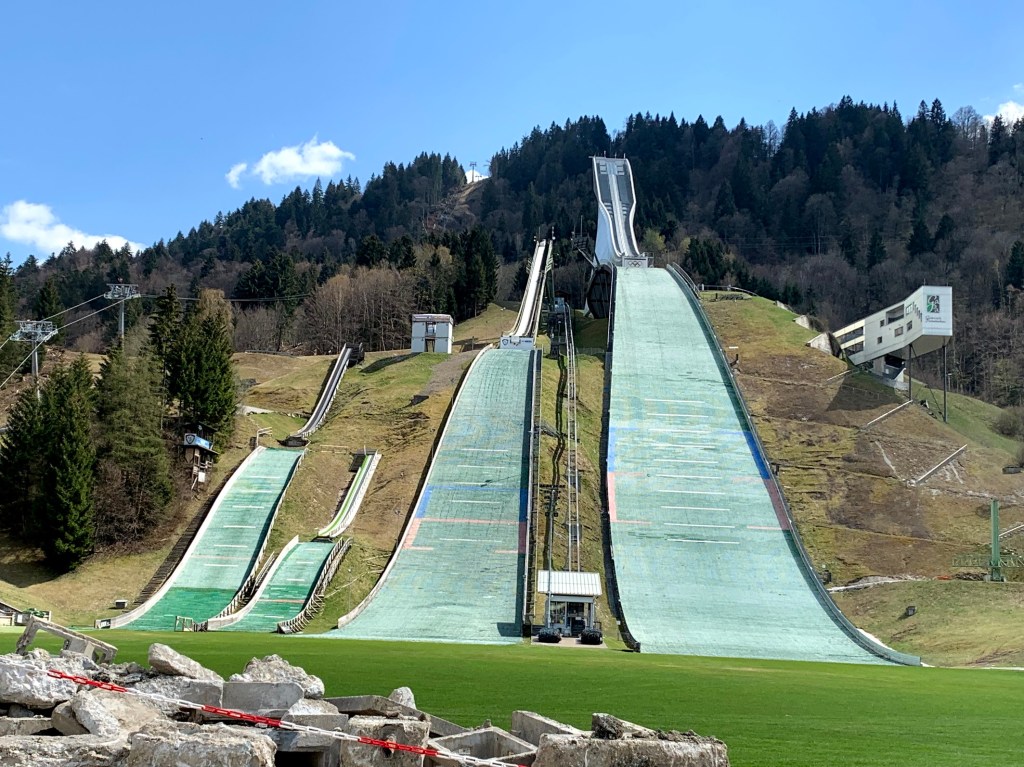
say we had worked up quite an appetite and so we ate at the Olympiahaus
Restaurant by the carpark. This restaurant sits at the bottom of the 1936
Olympic ski jumps. Interestingly this is where Adolf Hitler opened the 1936
Munich Olympic Games!
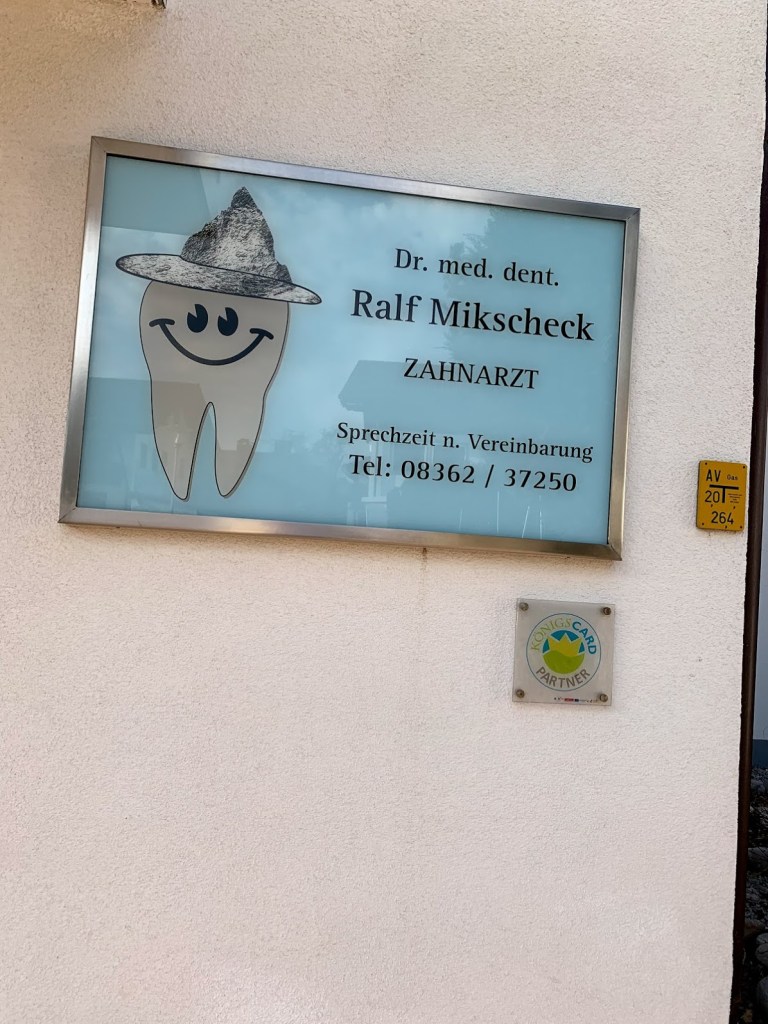
Olympic Ski Jumps from the 1936 Munich GamesThere was a dentist’s (Zahnarzt) office on the bottom floor of the three story apartment building we stayed at in Hopfen am See. At first glance we thought his name was Dr. Milkshake!
On our way back to the
apartment we stopped off in Oberammergau again and finished a little last
minute shopping in the Bavarian Alps.

 Camellia's Travel Blog