Fröhliche Wanderern

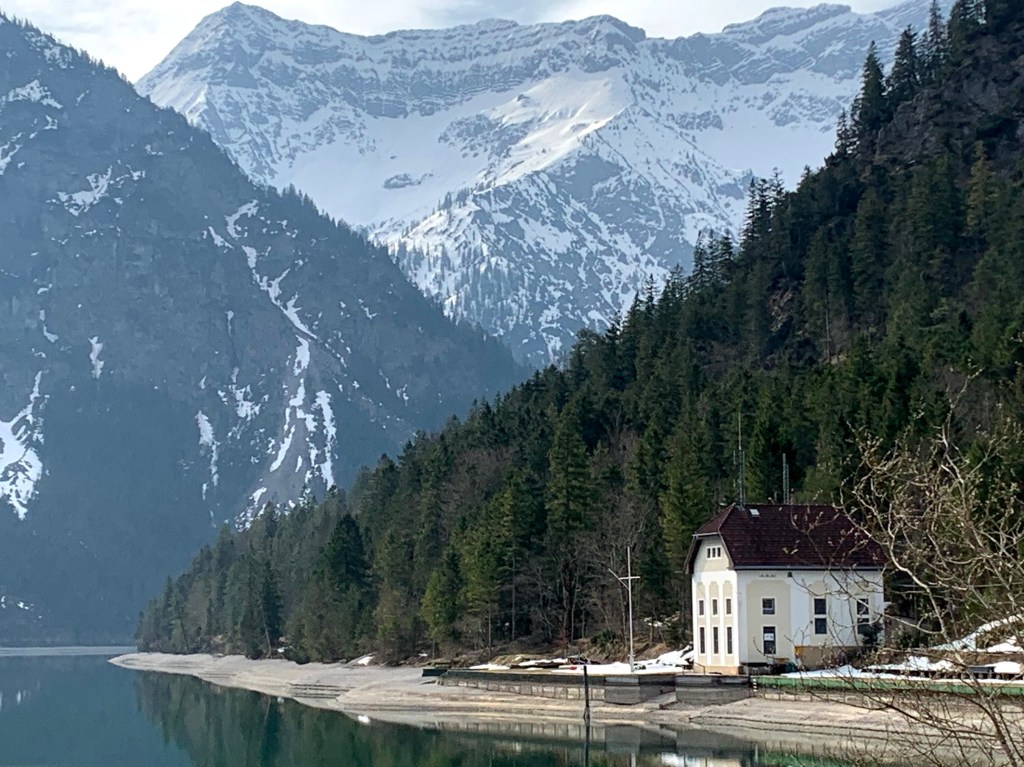
Wednesday the 17 of April was a beautiful spring day in the Bavarian Alps. We drove towards my favorite of King Ludwig II’s castles, Schloss Linderhof. It is nestled deep in the mountains and not visited as frequently by tourists like Schloss Neuschwanstein. Instead of taking the direct route to the castle, we chose instead to drive along the winding back roads. This path took us through stunning valleys with crystal clear lakes nestled amongst the towering mountains. The waters of the mountain stream running beside the road were a lovely mineral green color, but clear. The stream often opened up into crystal mountain lakes that reflected perfectly the pristine snow capped mountains.
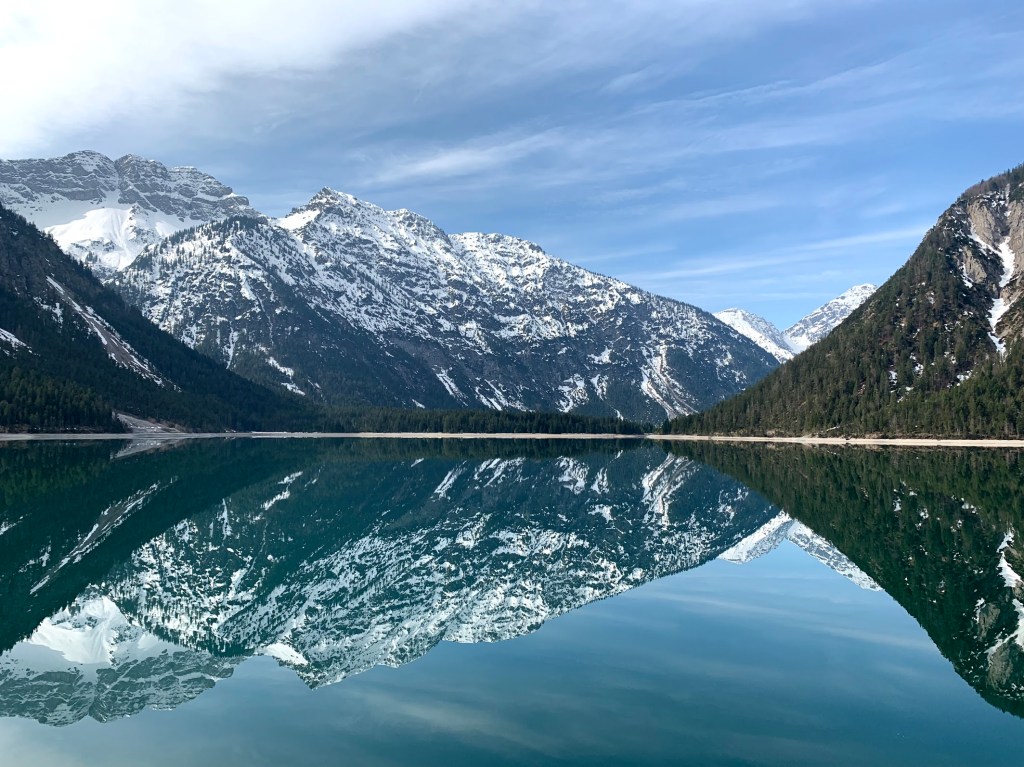
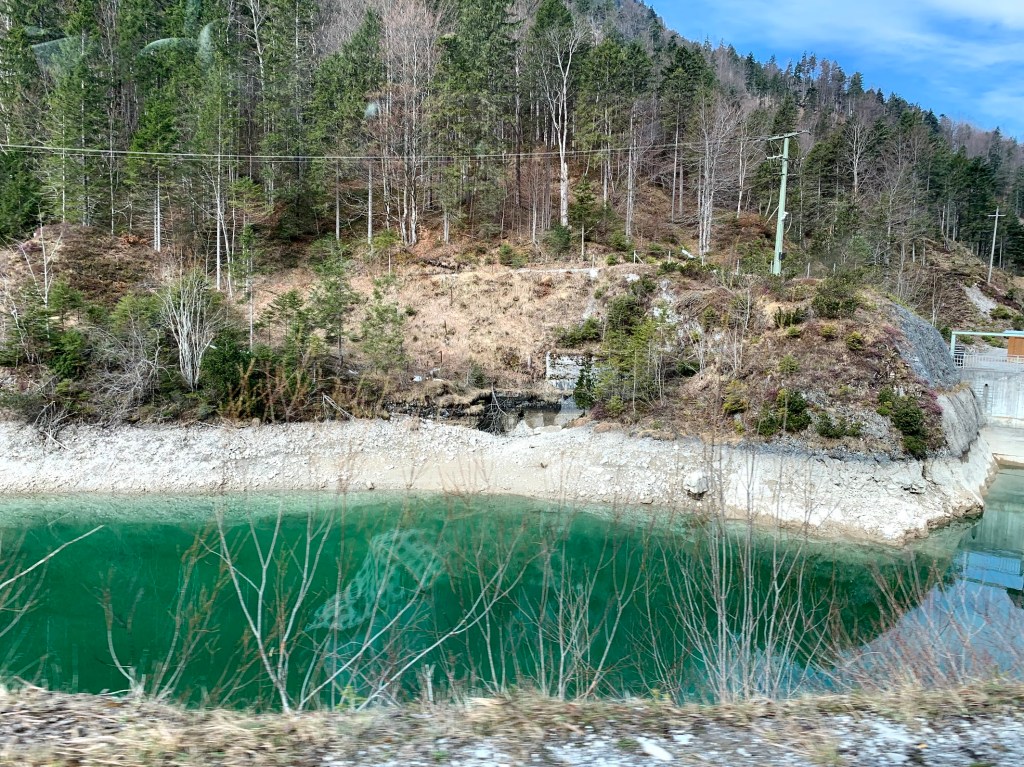
God’s marvelous creation!

Sometimes the road had a small pull off where we would stop to take in the majesty of the mountains… truly one of God’s greatest ideas when he created the earth! At one place we were able to get close to the lake and skip rocks as well as cross the road and go up a hill a wee bit to get a better view! The air was clean and crisp, yet the sunshine gentle and warm on our skin.
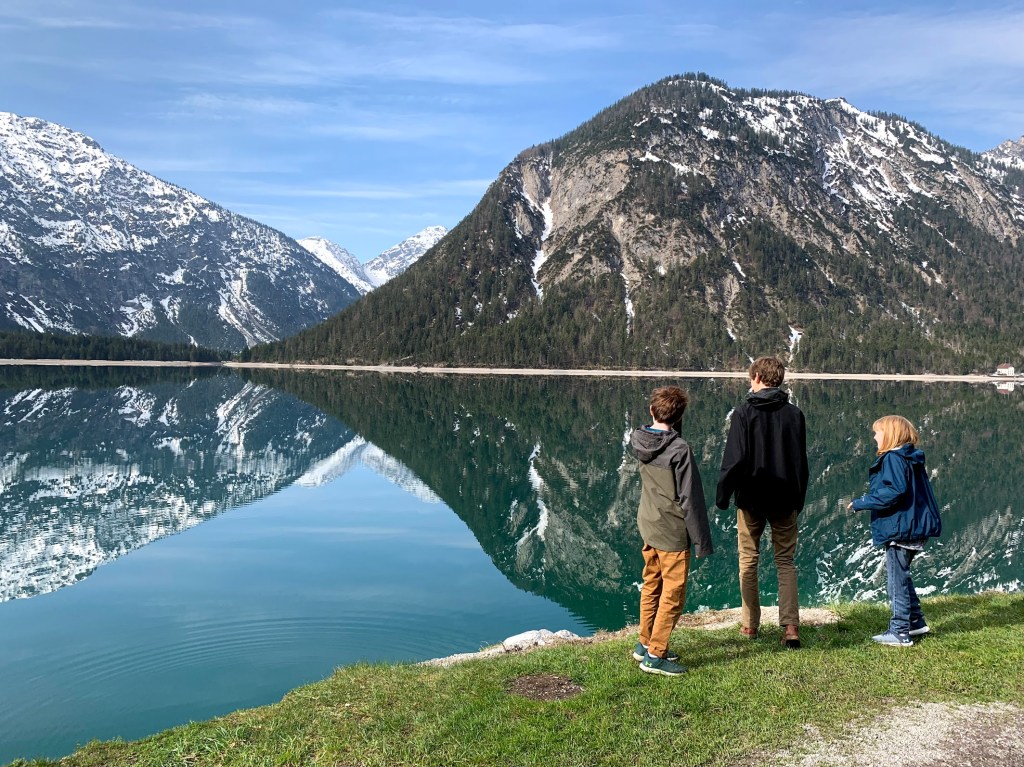
Skipping rocks
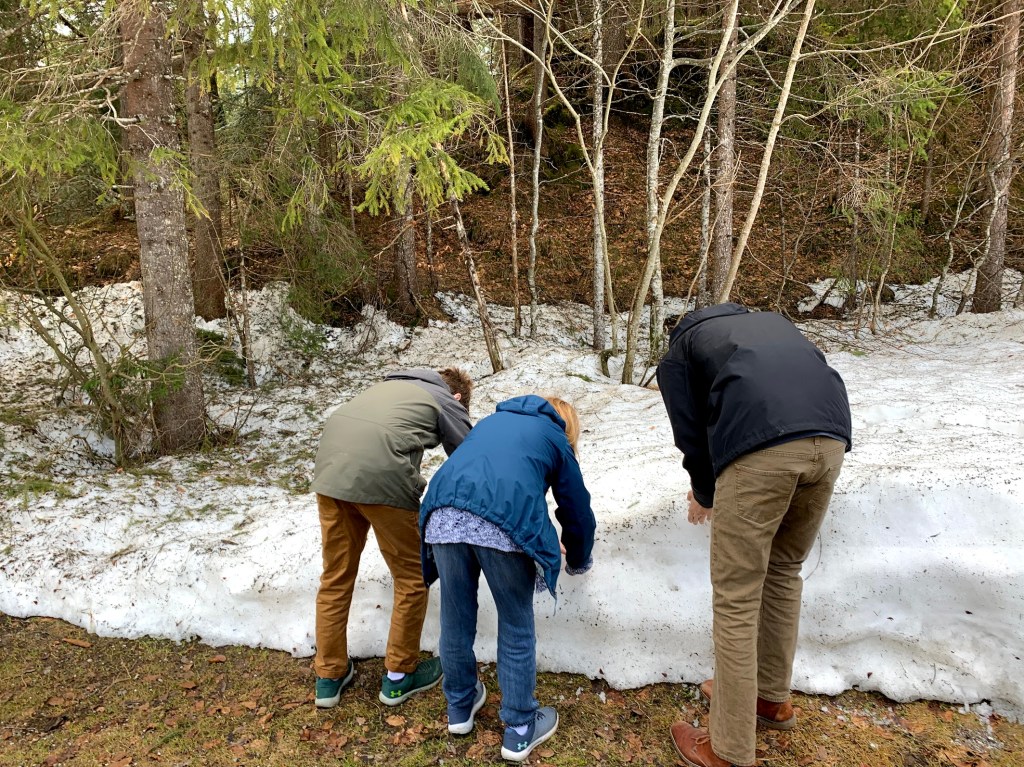
My Michigander children needed a snow fix!

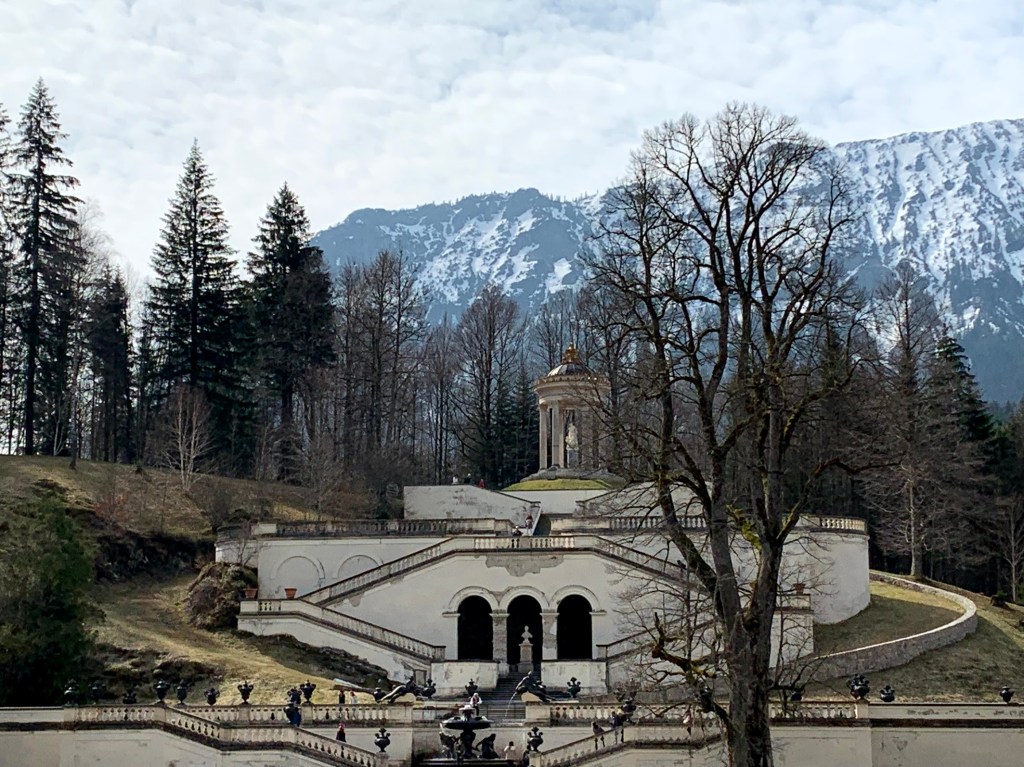
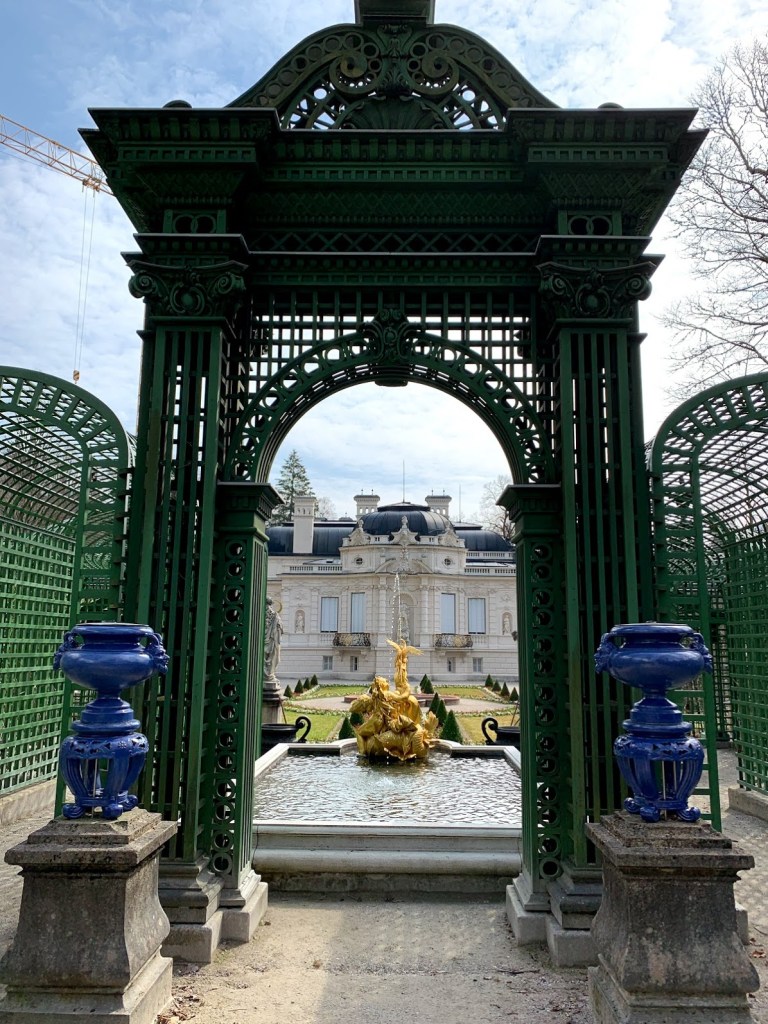
Eventually the winding road opened up to a larger valley with low rolling hills and the mountains surrounding it on all sides. Here we saw our first glimpse of Schloss Linderhof. The castle was built in French Baroque fashion. Ludwig II was a fan of the French Sun King, Louis XIV. The white marble palace sparkled in the sunshine. Linderhof is small and only contains 8 royal rooms and small servants quarters, but it’s extensive gardens and small “themed” pavilions are what make Linderof my favorite castle.
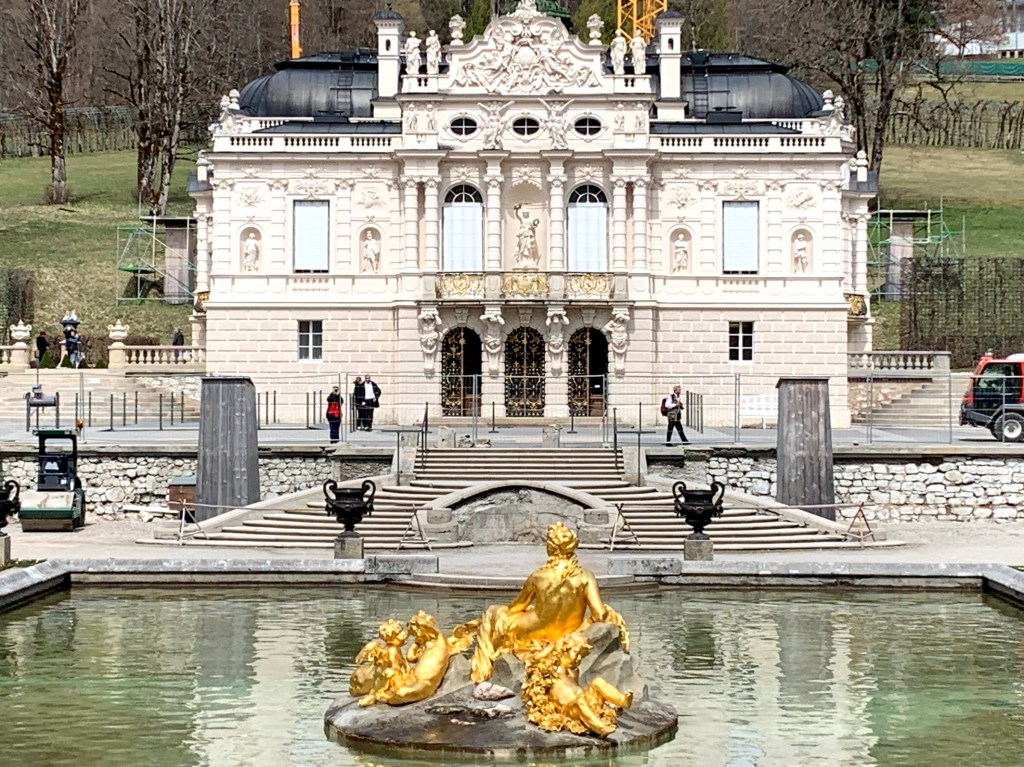
Schloss Linderhof:
King Ludwig II primarily lived here the last 8 years of his life.
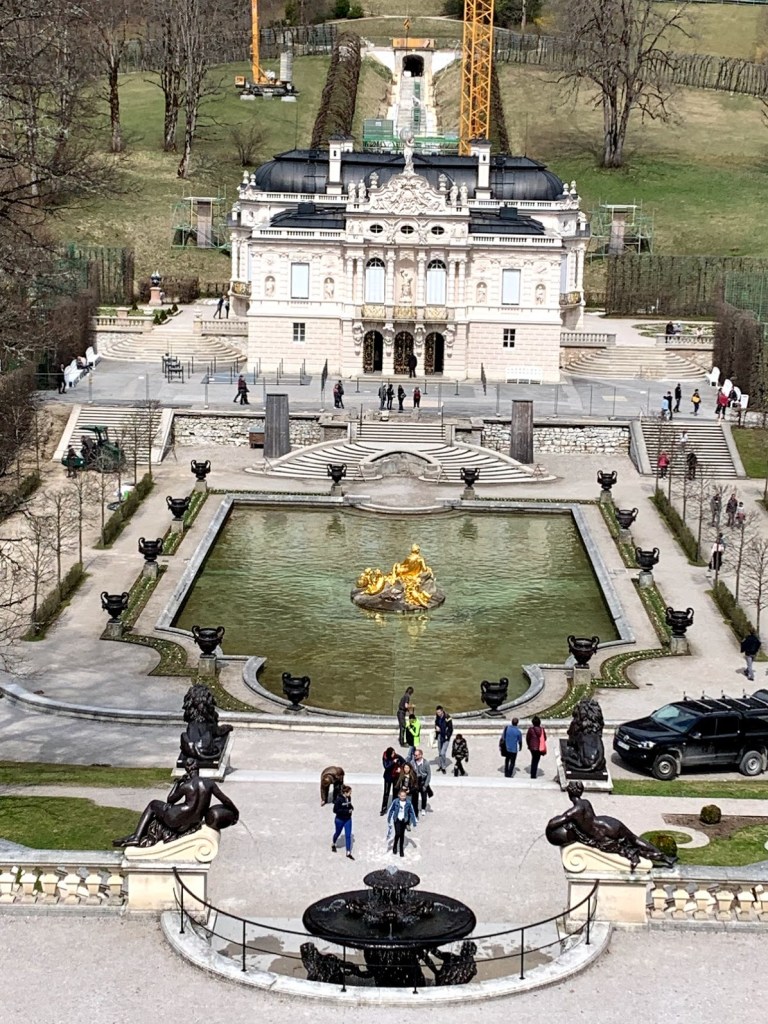
View from the top of the hill
Schloss Linderhof Hill Gardens
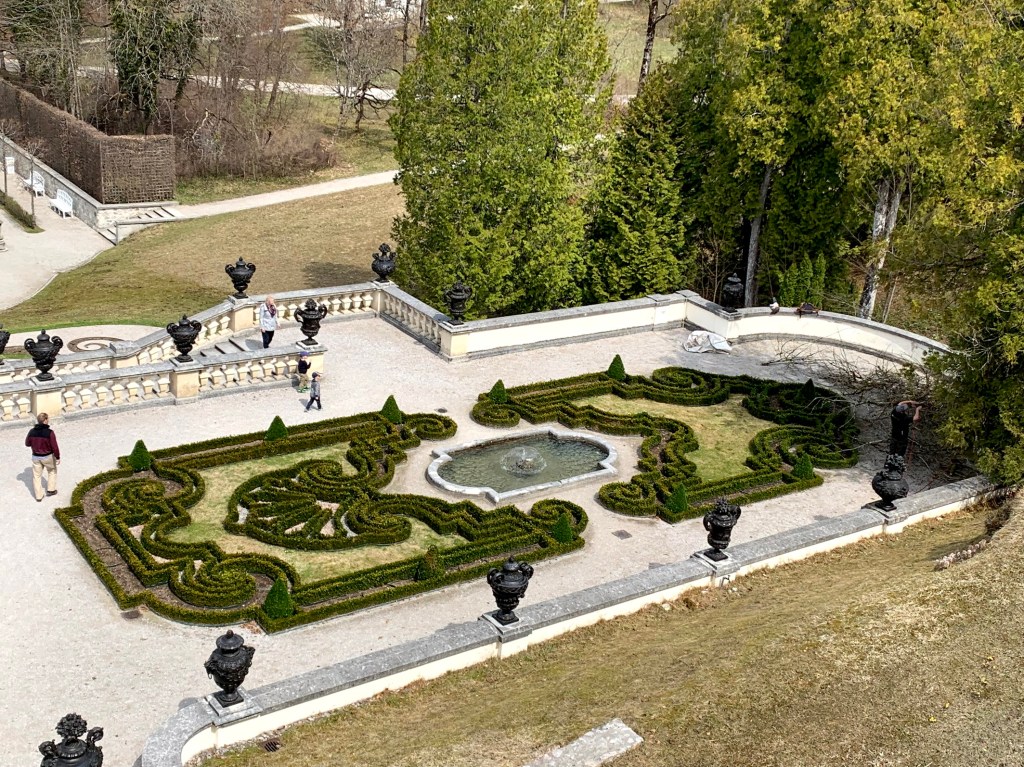
Formal Garden

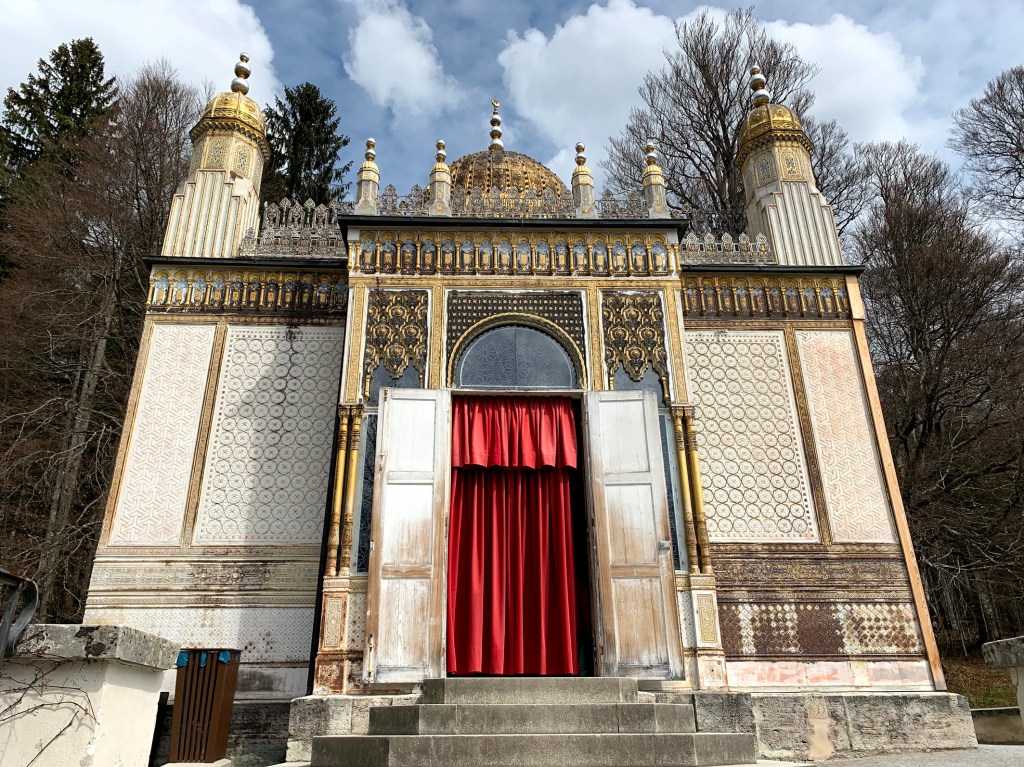
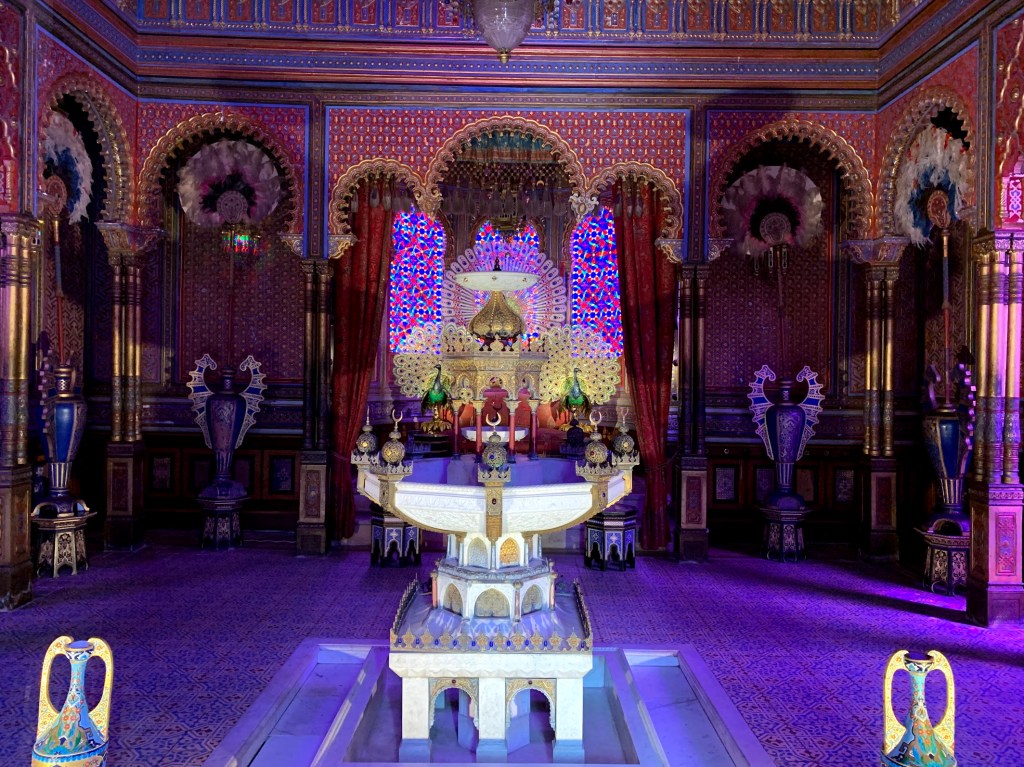
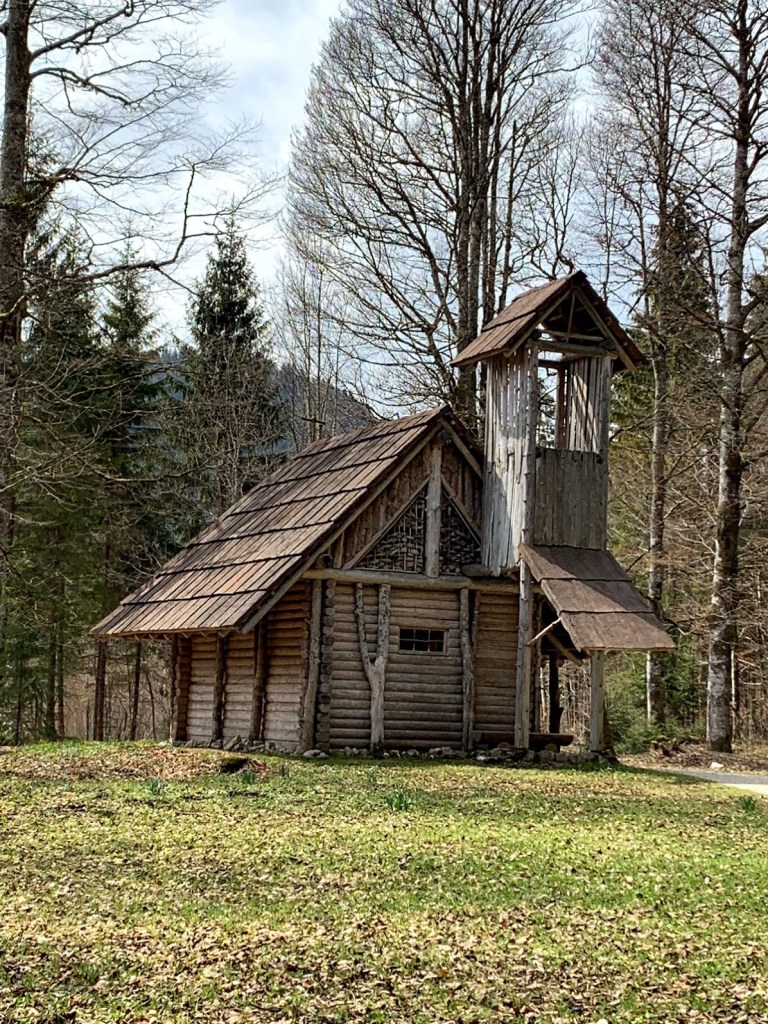
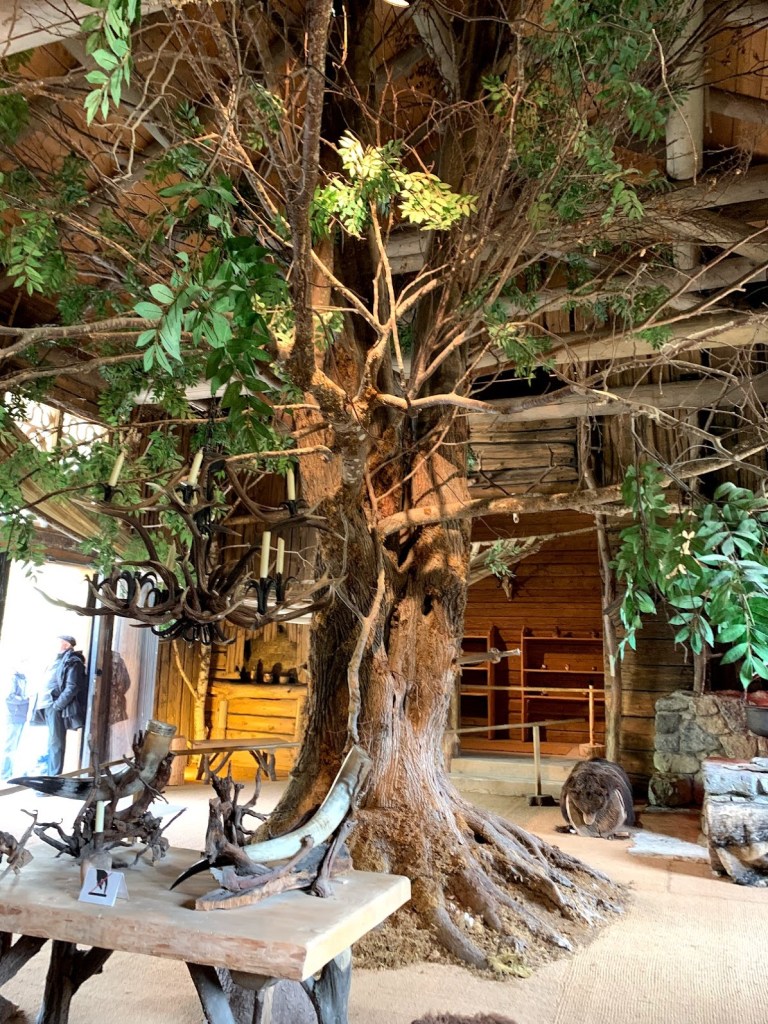
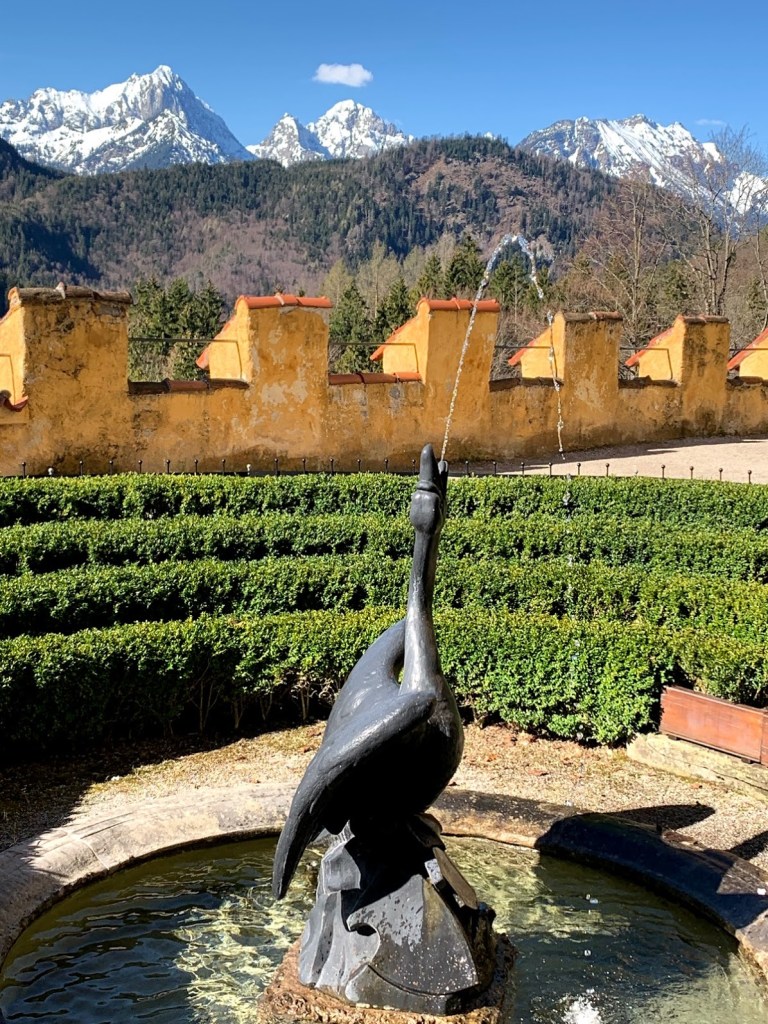
Unfortunately I was unable to take photos inside of Linderhof’s opulent golden trimmed, blue velvet rooms. However the gardens were just beginning to bloom and offered many opportunities for a photographer! We were” Fröhliche Wanderern” (happy wanderers) as we meandered through the quiet woods, over rolling hills, and stopped to enjoy King Ludwig’s various private getaways! These included a Moroccan Kiosk, Religious Hermit’s Hut, and Hunter’s Lodge.
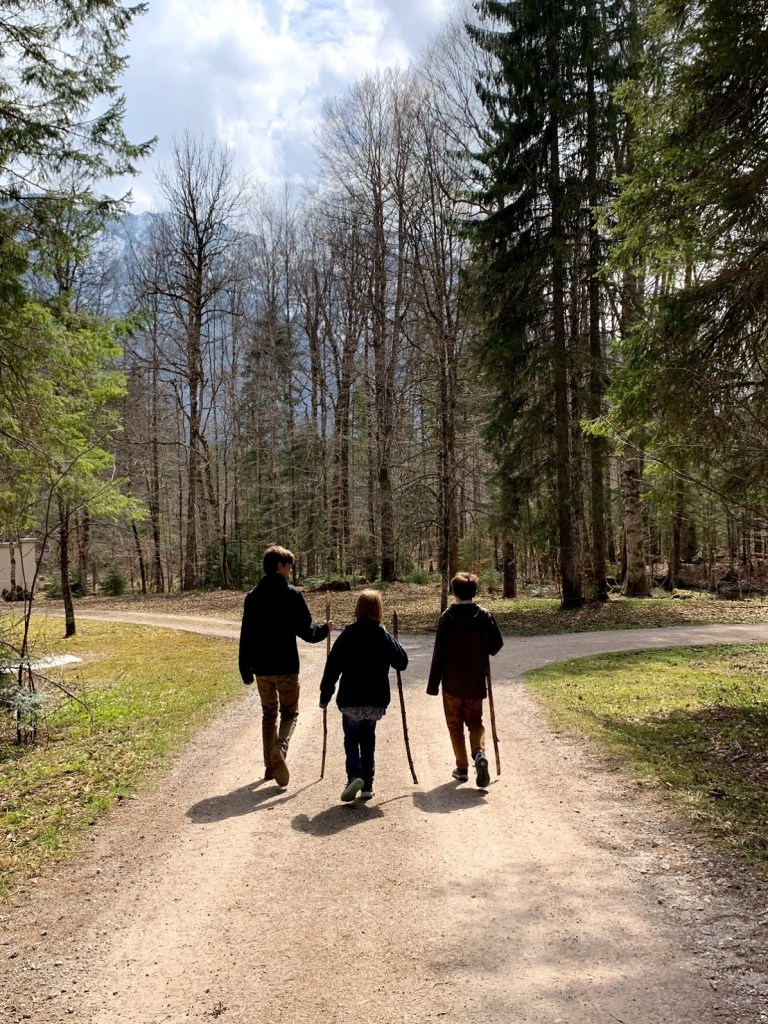
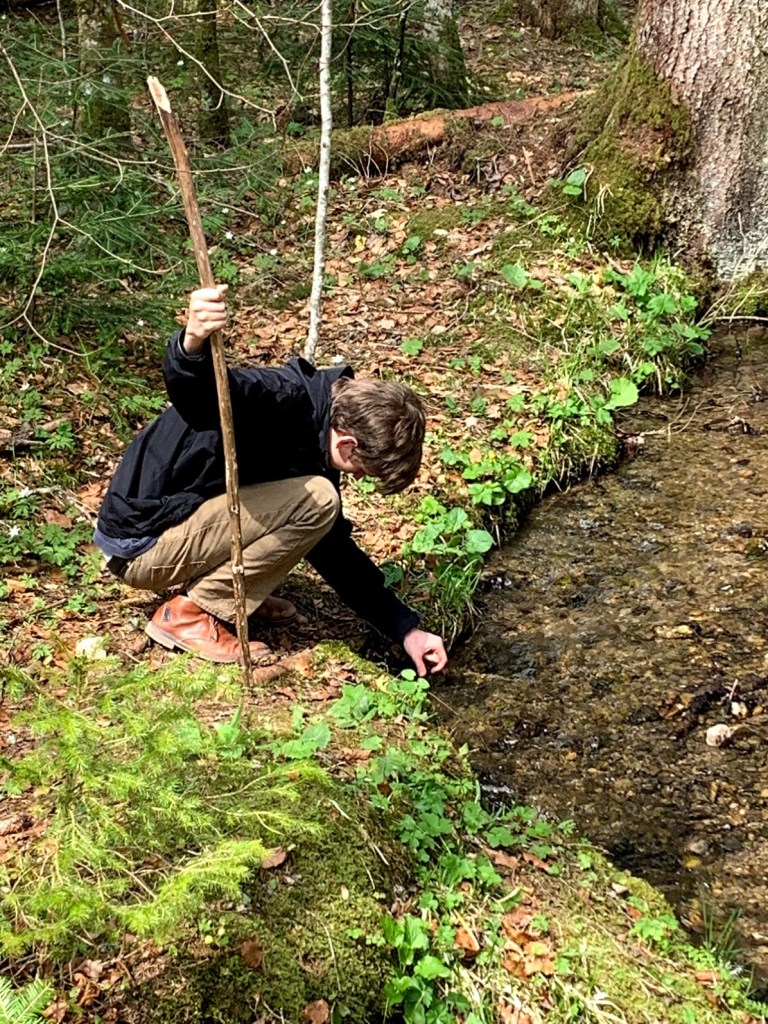
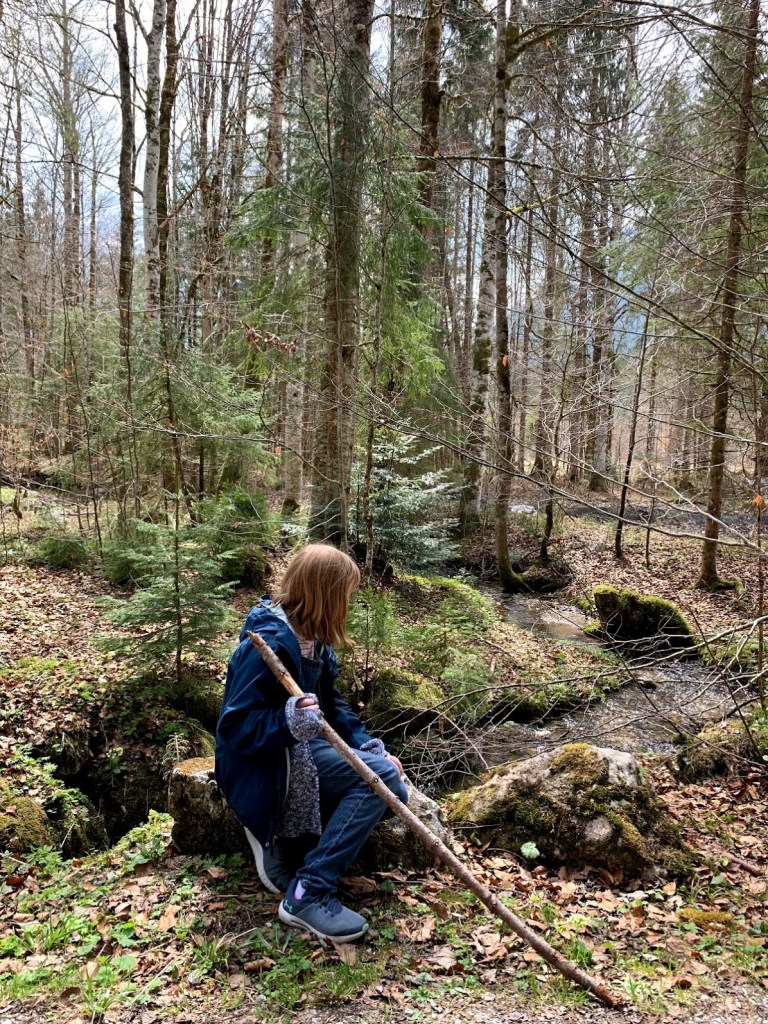
The kids each found a long stick in the woods along the paths to use as hiking sticks. My musical children found it entertaining to whack the hiking sticks in rhythm as they walked along taking in the fresh mountain air. Sometimes we would stop at various little streamlets, rest our feet, and enjoy the sound of the babbling brooks.
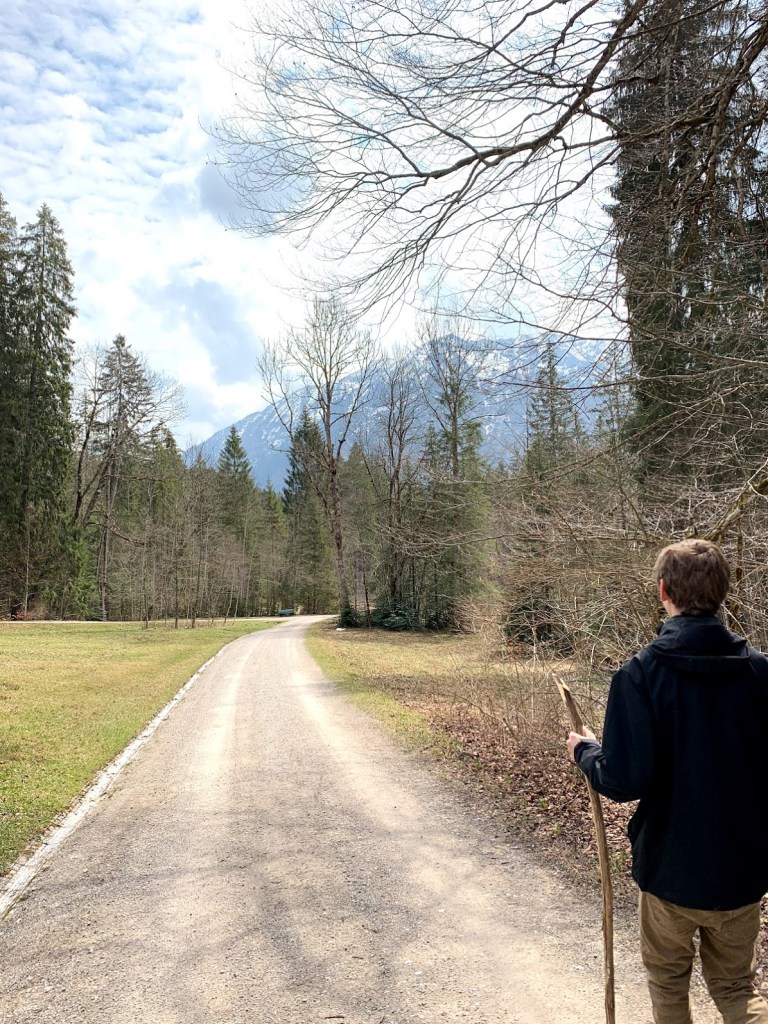
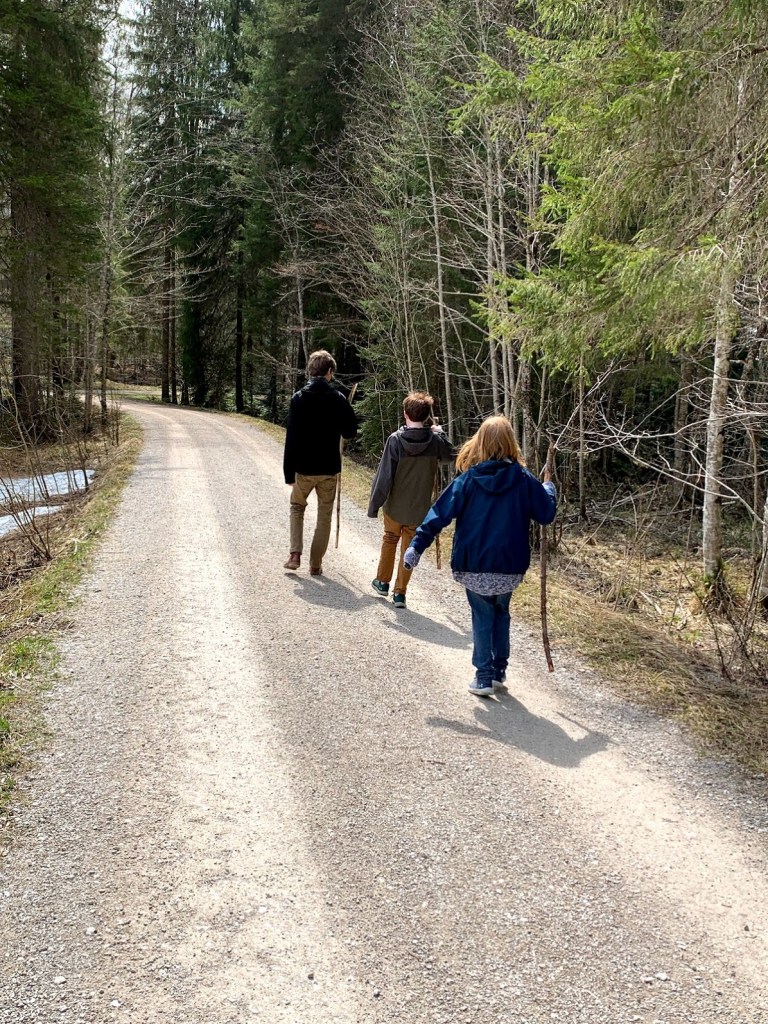
Exploring the grounds of Schloss Linderhof
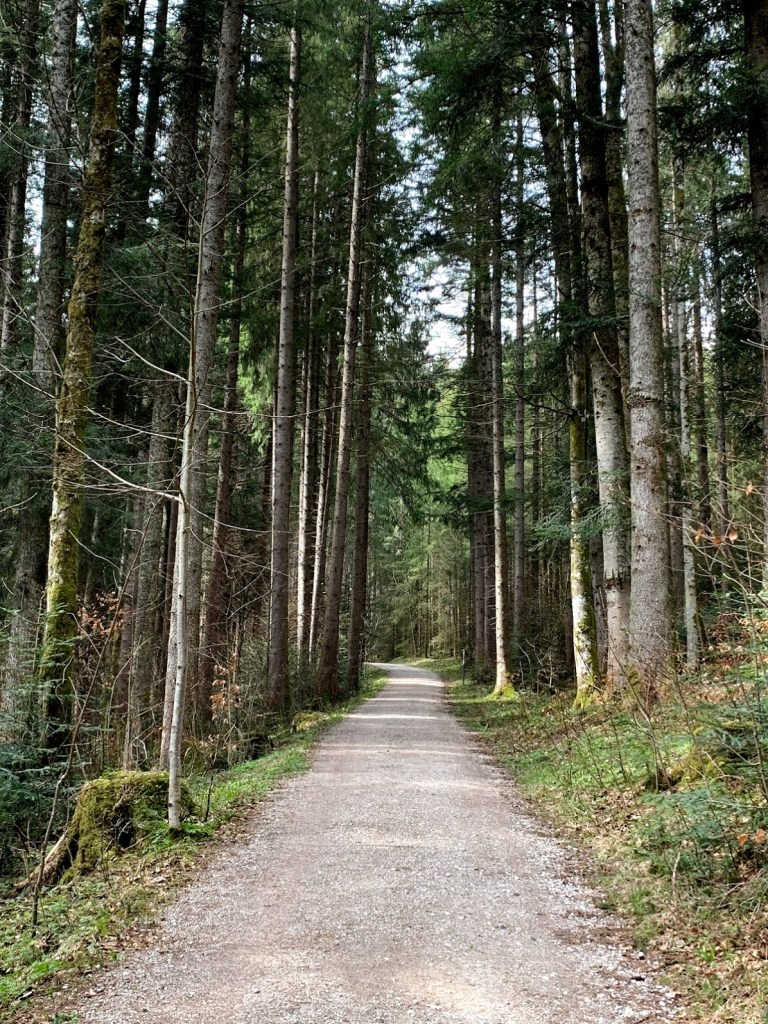
Quiet wooded path

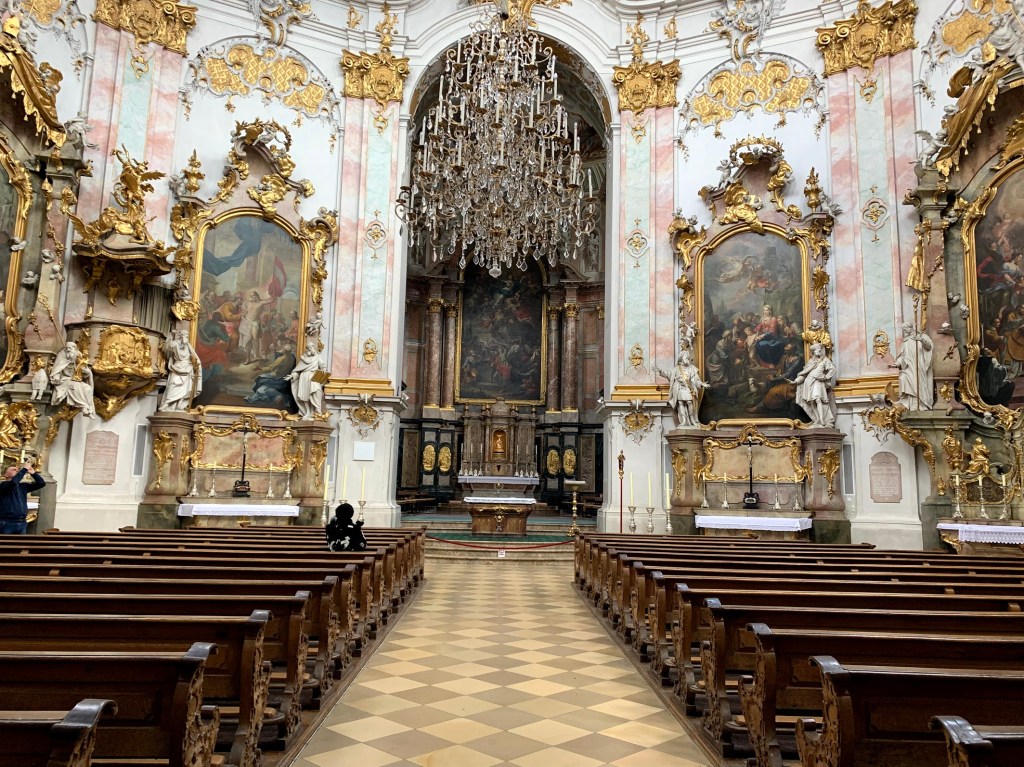
It was mid afternoon before we pried ourselves away from the magic of Schloss Linderhof and drove to Ettal Abbey. Ettal is still a working Abbey maintained by about 60 brothers. They make liqueurs distilled from local herbs, run a boy’s school, and a little family hotel. The Abbey was founded in the 13th century and the current church building and cloister were built in the 17th century. The inside of the church building was a beautiful representation of baroque architecture. The liqueurs were delicious too!
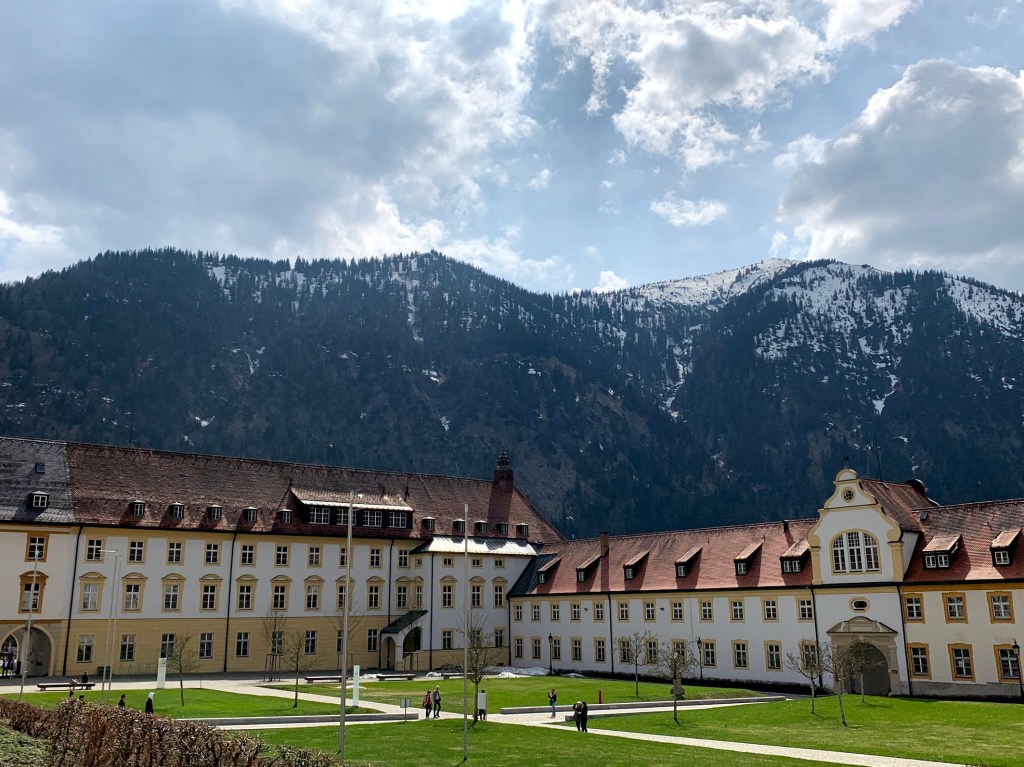
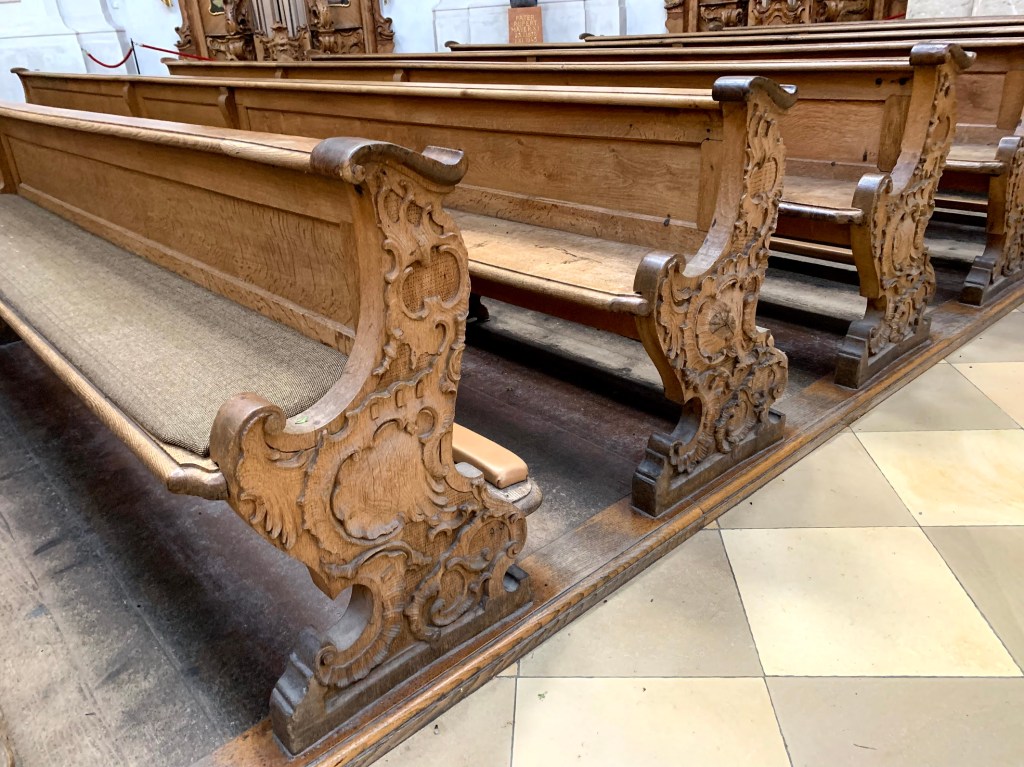
Ettal Abbey in Ettal, Germany

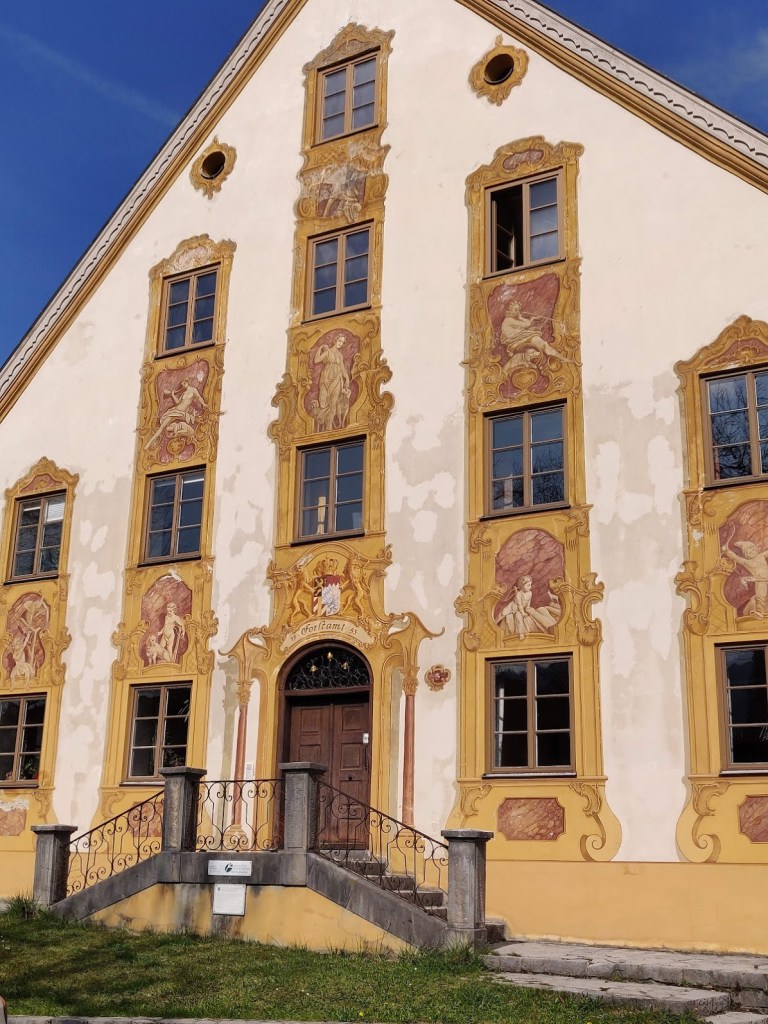
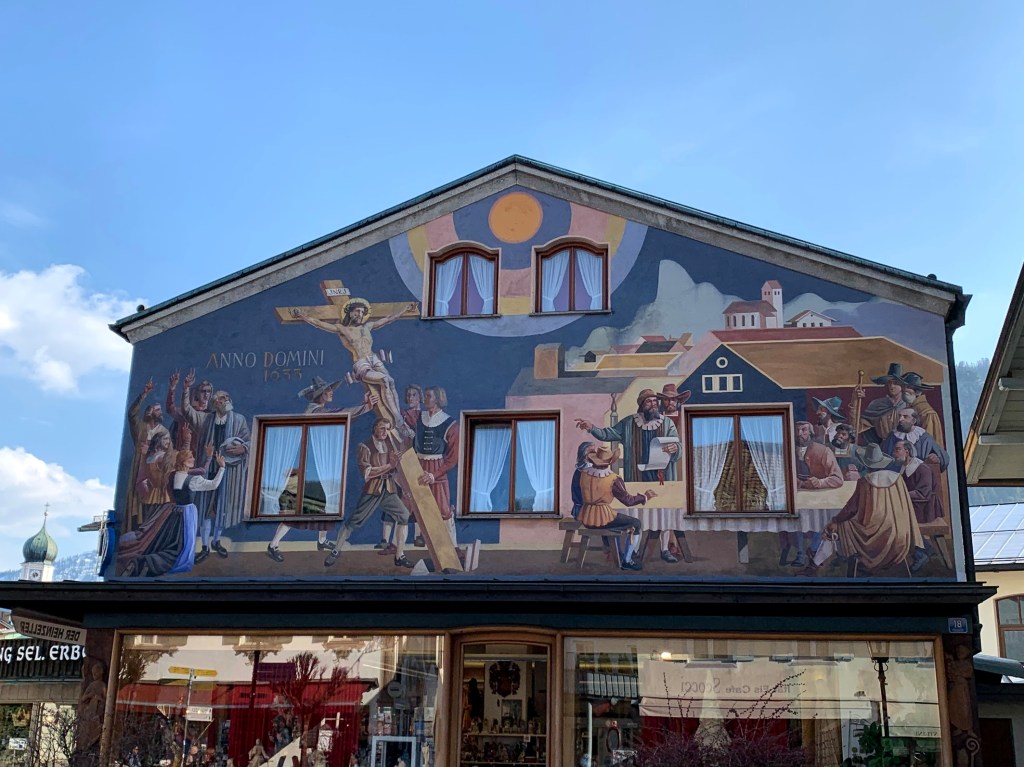
Just down the road from Ettal Abbey is the charming town of Oberammergau. This little village is known for it’s 15th through 17th century frescos on the sides of homes and businesses. Many woodworking artists live in Oberammergau and surrounding villages. We found several shops with hand carved statues ranging in size from 1 inch to 8 ft. Most of the carvings were religious in nature, but some were of everyday townspeople and animals as well. We even found a coo coo clock that is different to the one we already have at home. This clock is larger and has the classic little coo coo bird to tell the time. It also has two rams butting heads and a turning water wheel as a traditional tune plays. The tune is Der Fröhliche Wanderer (the Happy Wanderer).
Back at our apartment we sat down and had a hearty supper of breads, meats, cheeses, veggies, and fruits purchased at the local market.
Sleeping Beauty’s Castle

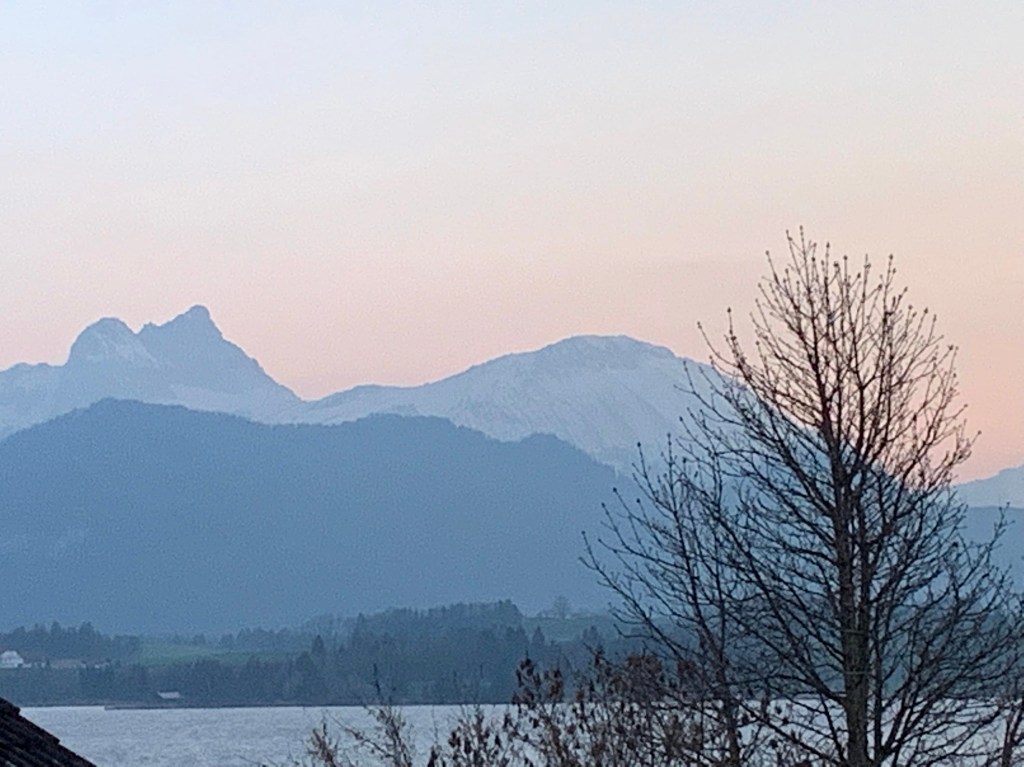
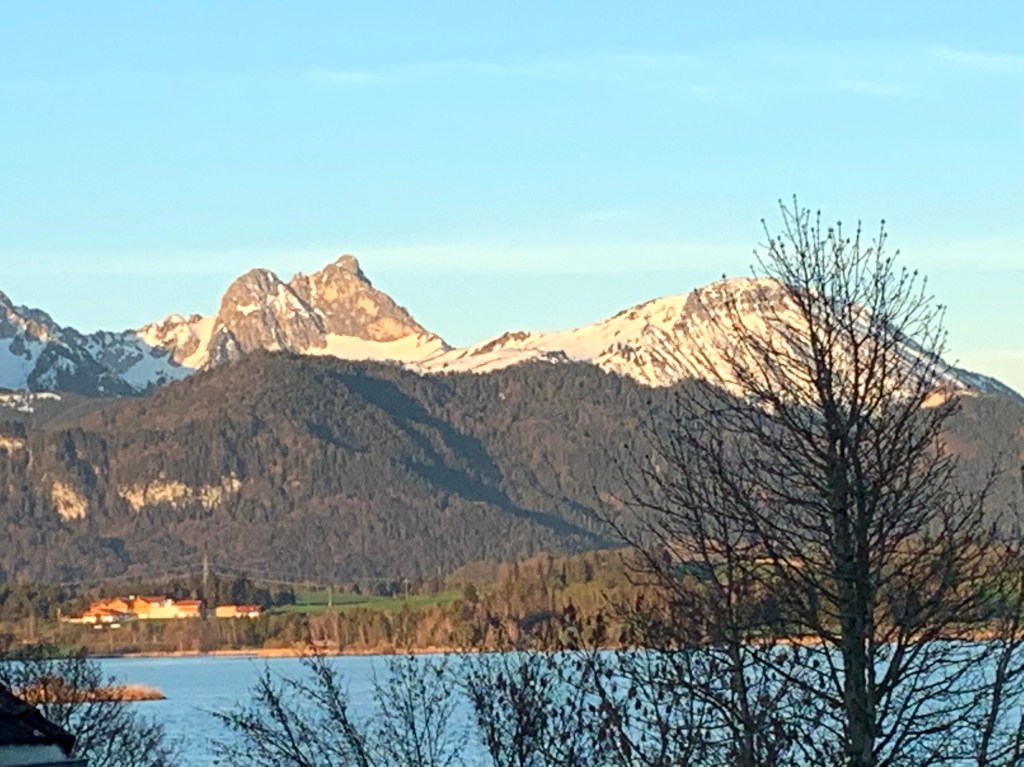
The morning sun kissed the Bavarian Alps as we looked out the window of our rental apartment in Hopfen am See, Germany. The night before we drove from Ulm to the quaint little resort village at the foot of the Alps. The charming apartment overlooked the Hopfensee and the mighty Alps beyond.

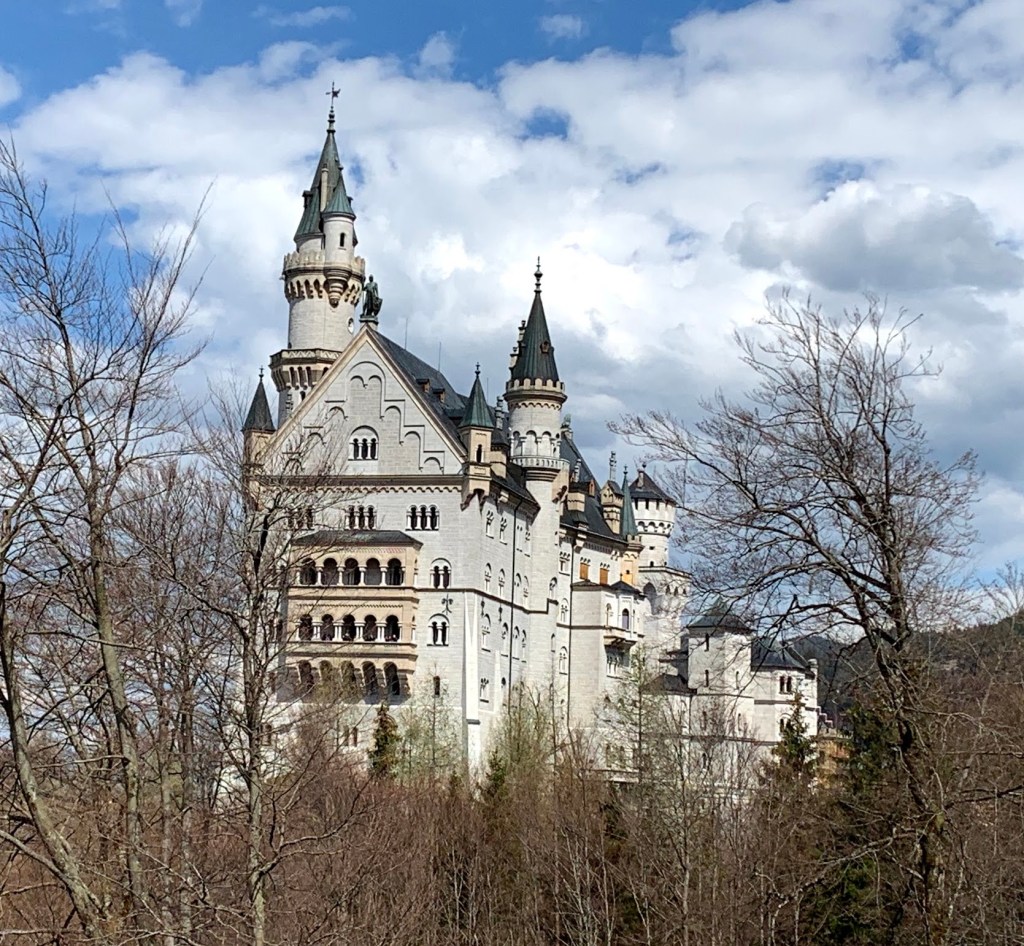
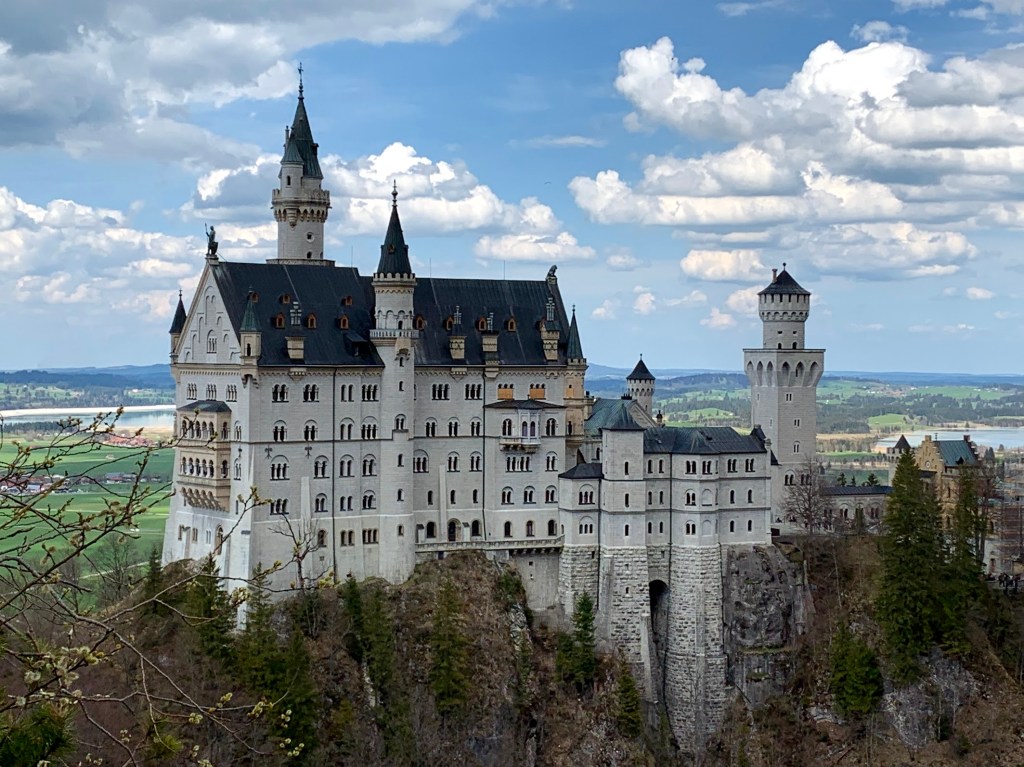
A hearty breakfast eaten and we drove 25 minutes into the Alps and to the site of the most famous castle in the world, Schloss Neuschwanstein. This iconic Romantic Period castle was built between 1869-1882 by King Ludwig II of Bavaria. The castle pays homage to his favorite composer, Richard Wagener, and it contains several murals and rooms decorated to honor the composer’s various operas. These include Tristan und Isolde, Parsifal, Siegfried, and Tannhäuser. Walt Disney was inspired by the architecture of Neuschwanstein and used the castle as a model for Sleeping Beauty’s Castle in Disneyland.

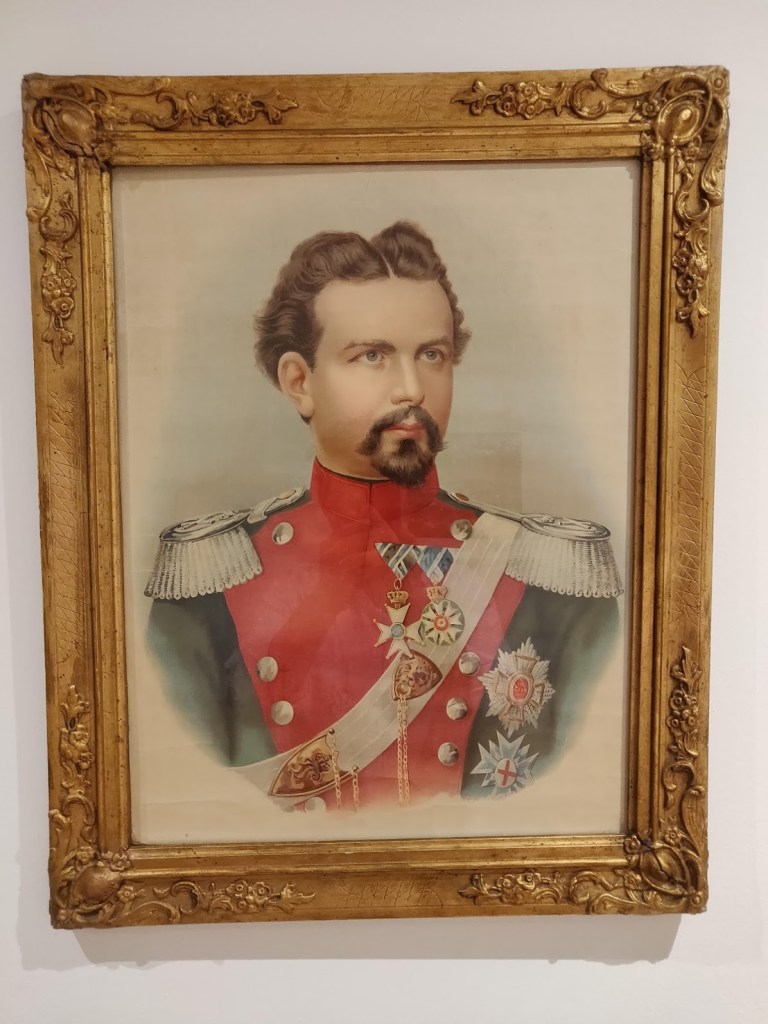
This portrait of King Ludwig II of Bavaria was in our apartment.

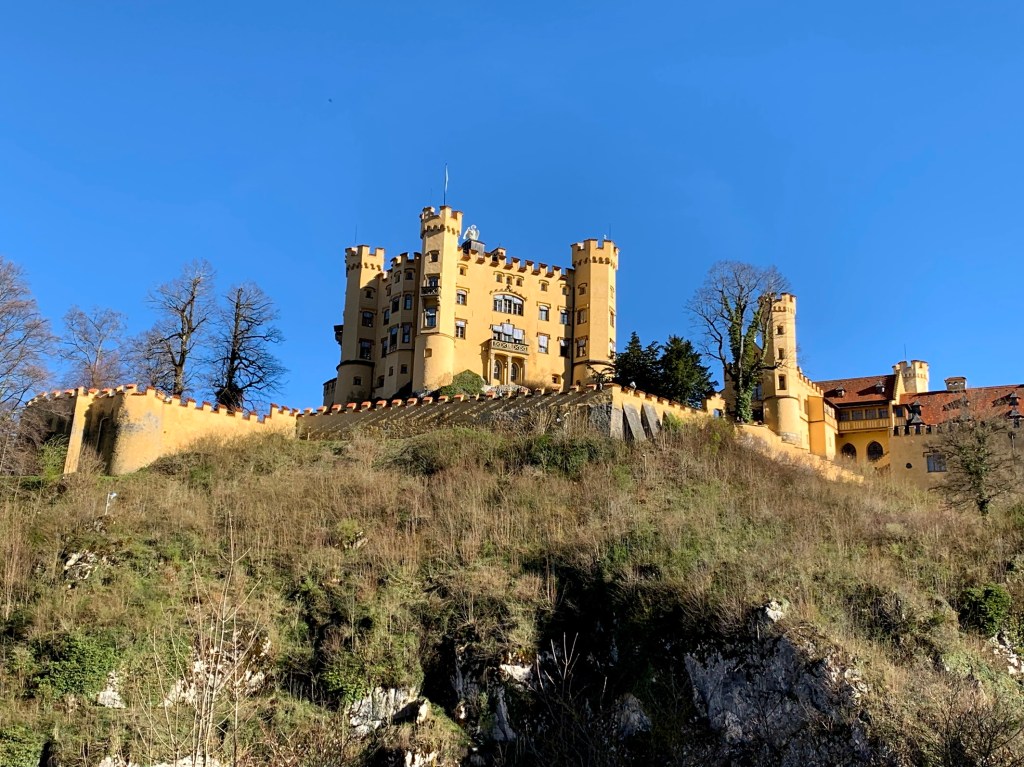
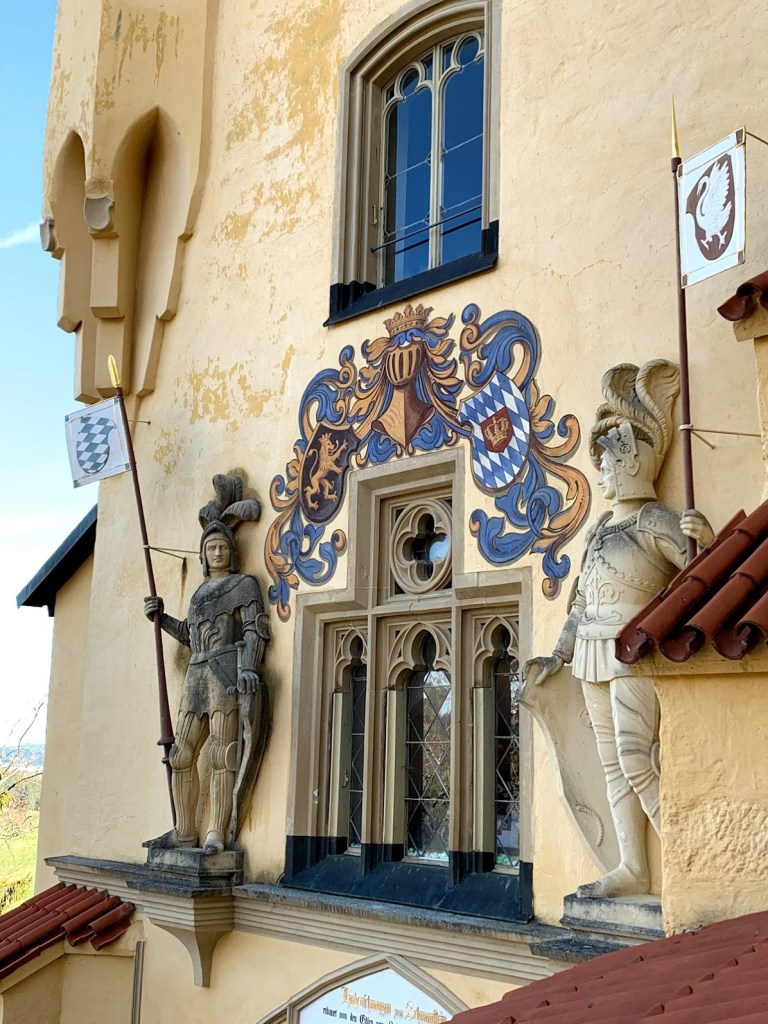
However, before visiting this iconic castle we toured the other lesser-known Scholss Hohenschwangau. Set across the valley from Neuschwanstein, Hohen schwangau is the castle where Ludwig grew up. It’s interior contains magnificent murals and architecture devoted to the romantic ideals of the Middle Ages. His father Maximillian II of Bavaria was also a daydreamer and romantic at heart.

Schloss Hohenschwangau
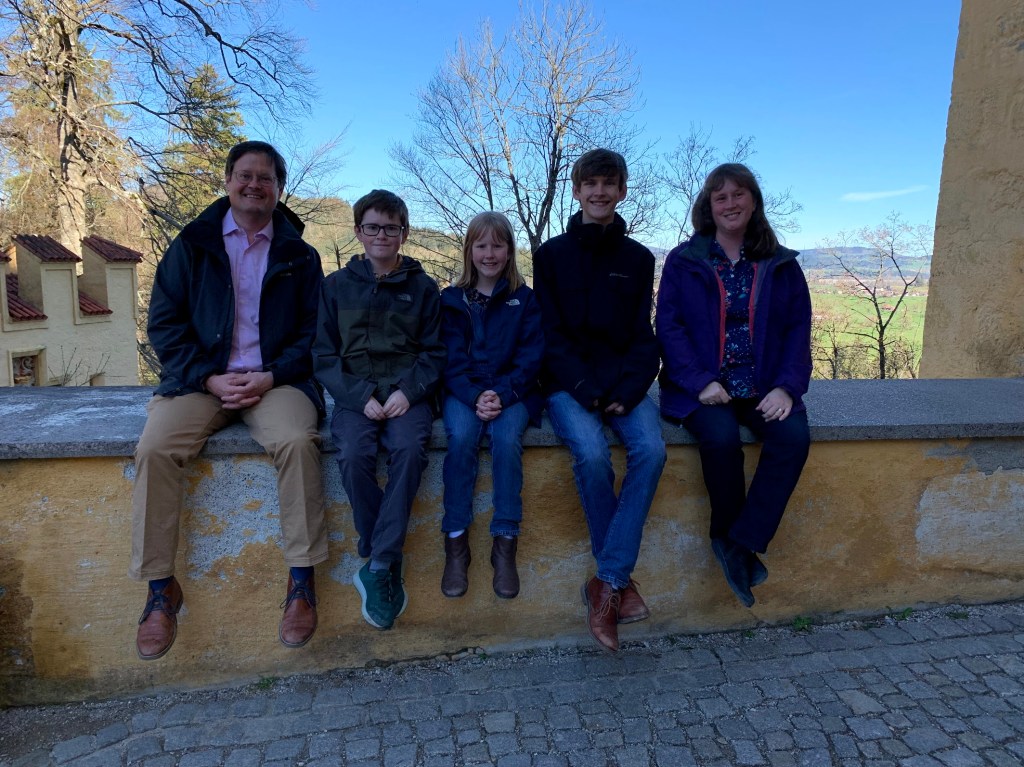
We met a lady from Pennsylvania who offered to take our family photo. We are sitting on the walls of Schloss Hohenschwangau.

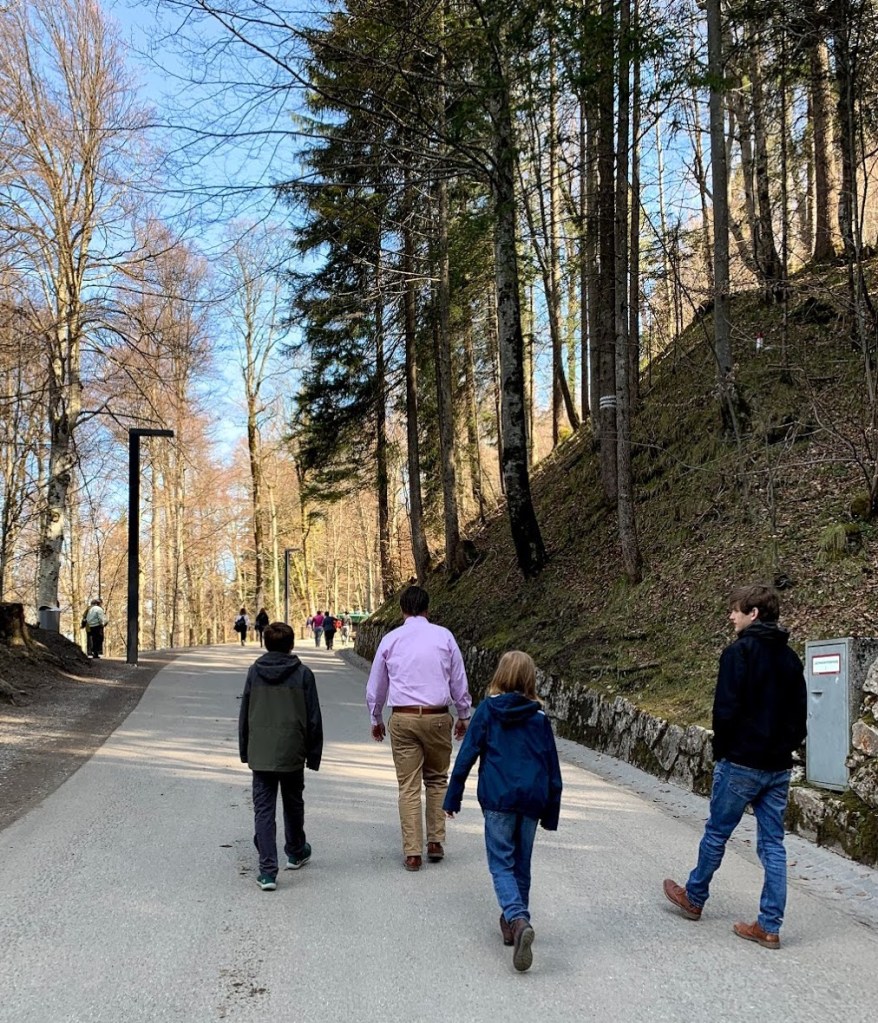
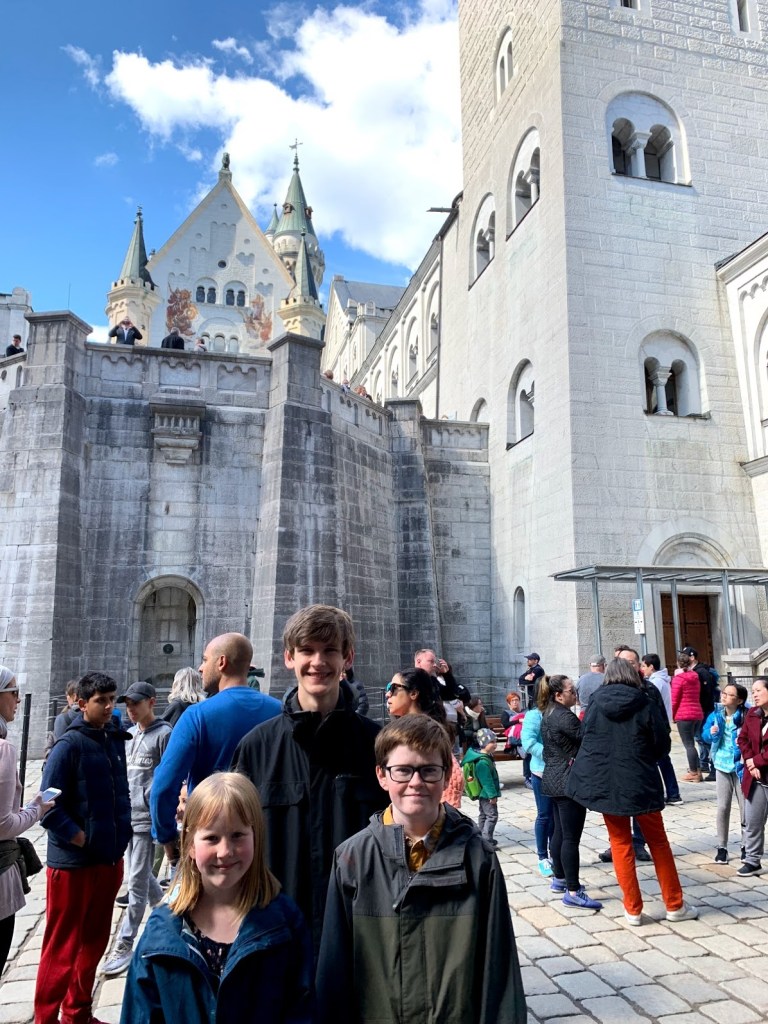
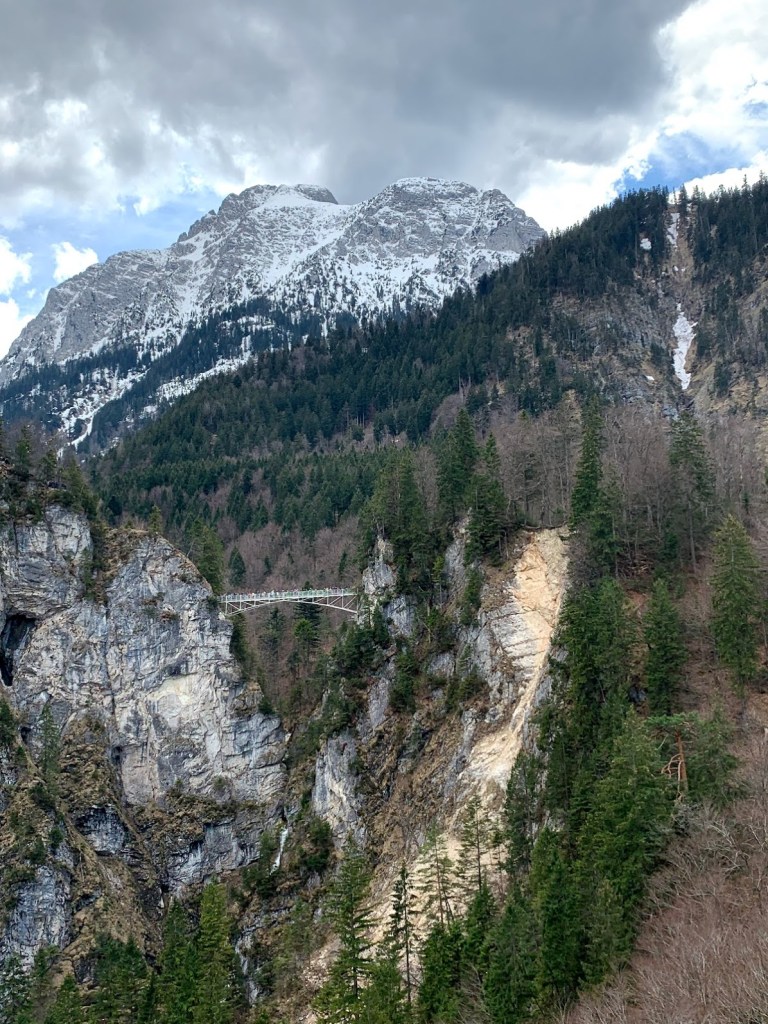
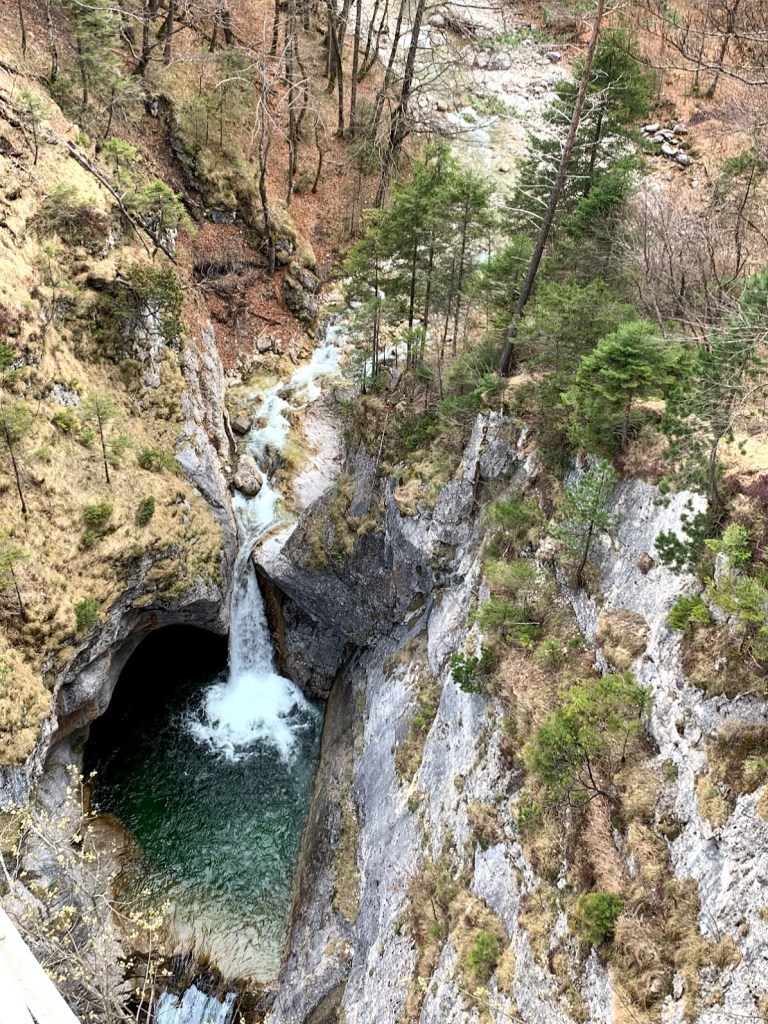
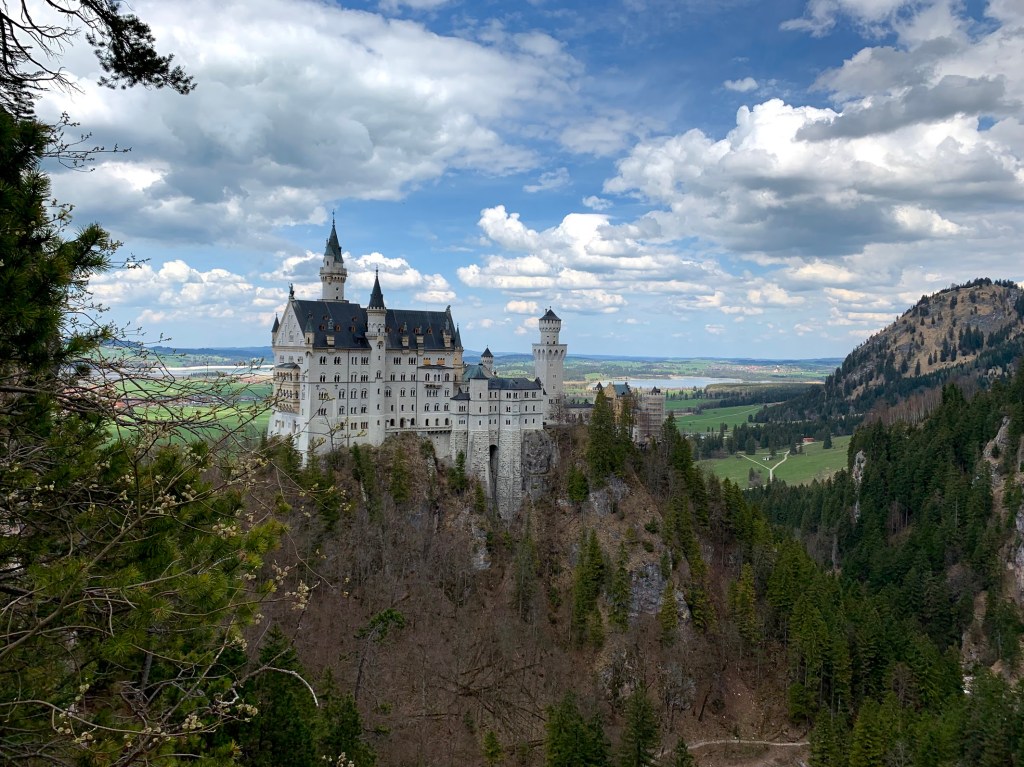
I have visited both of these charming castles twice before and it was wonderful to get to share the experience and delicate beauty of the castles with my children. Sadly there were a lot of people, especially at Neuschwanstein, but the 30 minute walk up the path to the castle was lovely. Another walk uphill took us to the Marianbrucke, a metal bridge that expands over a gorge with two waterfalls and allows for breathtaking views of Schloss Neuschwanstein!

Schloss Newuschwanstein:
It means Castle New Swan Rock in english. King Ludwig II used private funds to build this castle.
View from the front of the castle

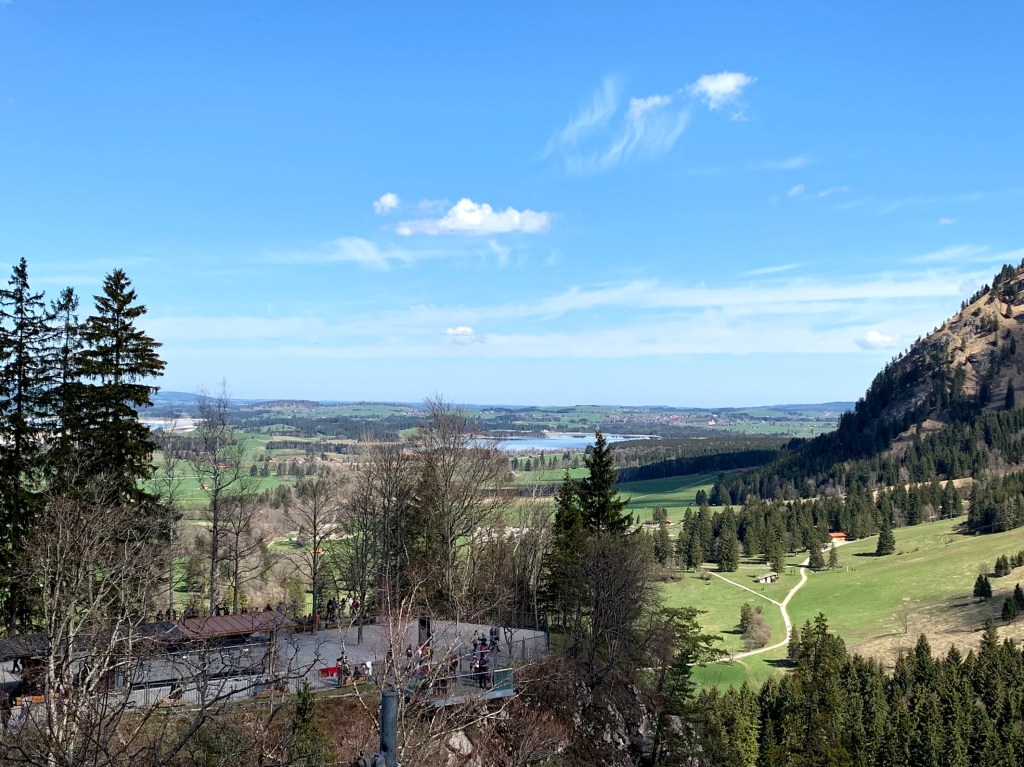
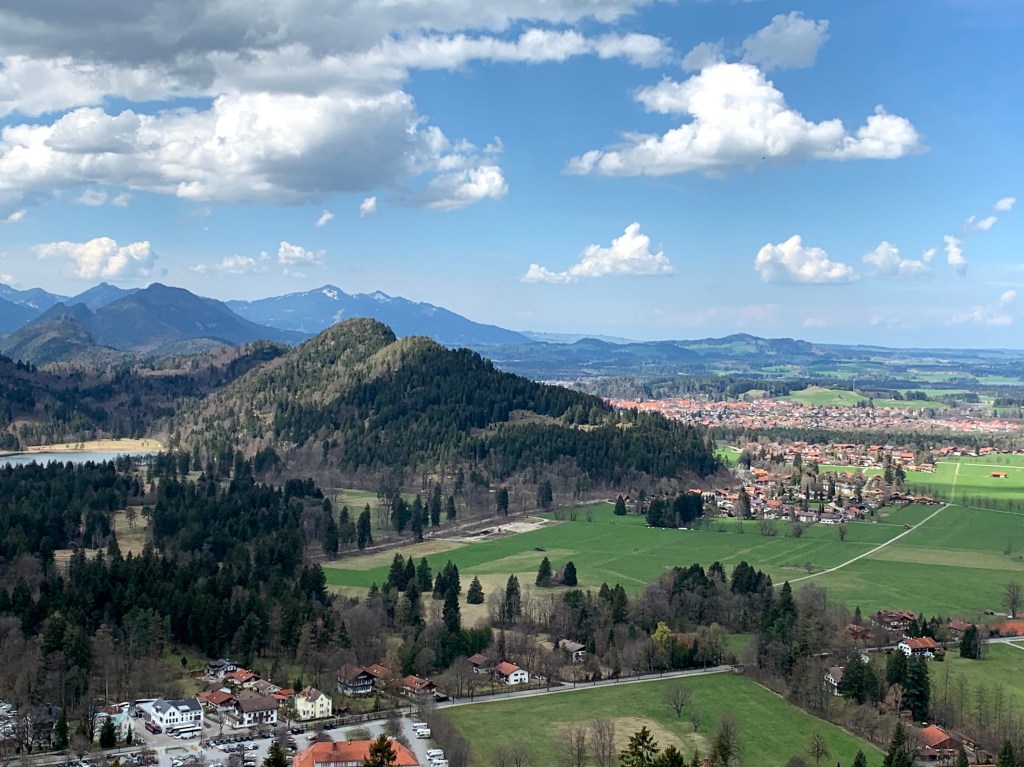
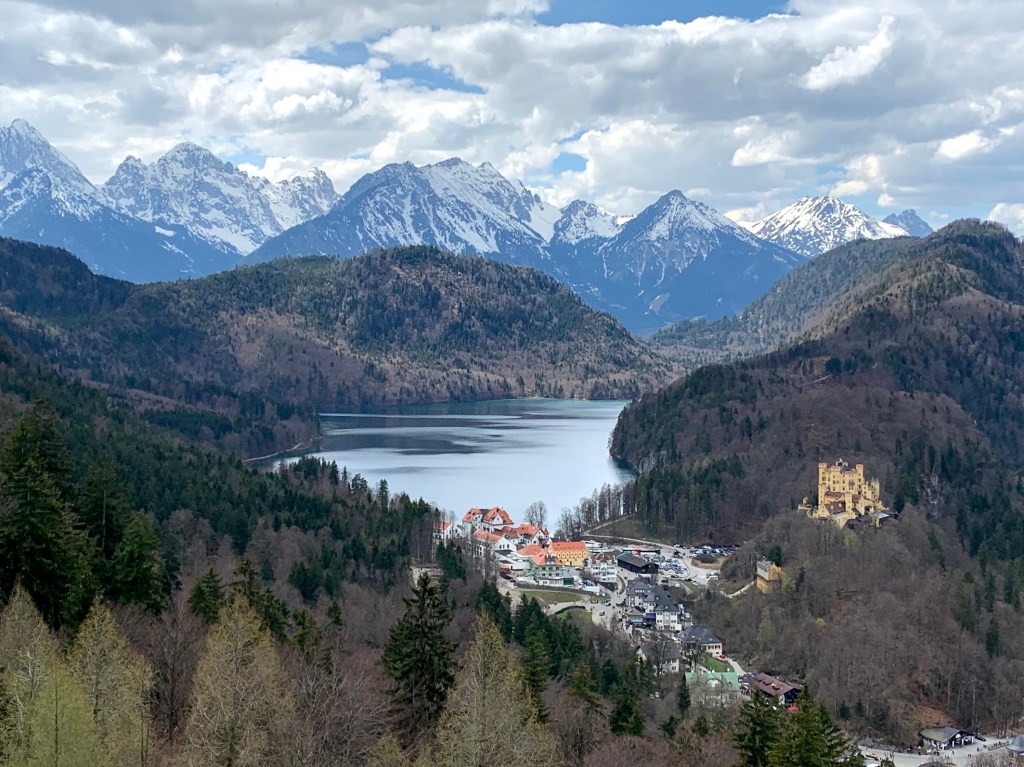
Truthfully words cannot capture the beauty of these castles and the surrounding mountains and lakes, so I’m just going to post several photos. Unfortunately I couldn’t take photos inside the castles.

View from the back balcony of Neuschwanstein: That is the town of Füssen in the distance.
Another view from the back balcony looking over the lake. That is Schloss Hohenschwangau in the right of the photo.
Marianbrucke: This view was to the left of the back balcony.
Amazing view of Schloss Neuschwanstein from the Marianbrucke!
Close up: The back balcony can clearly be seen on the left.

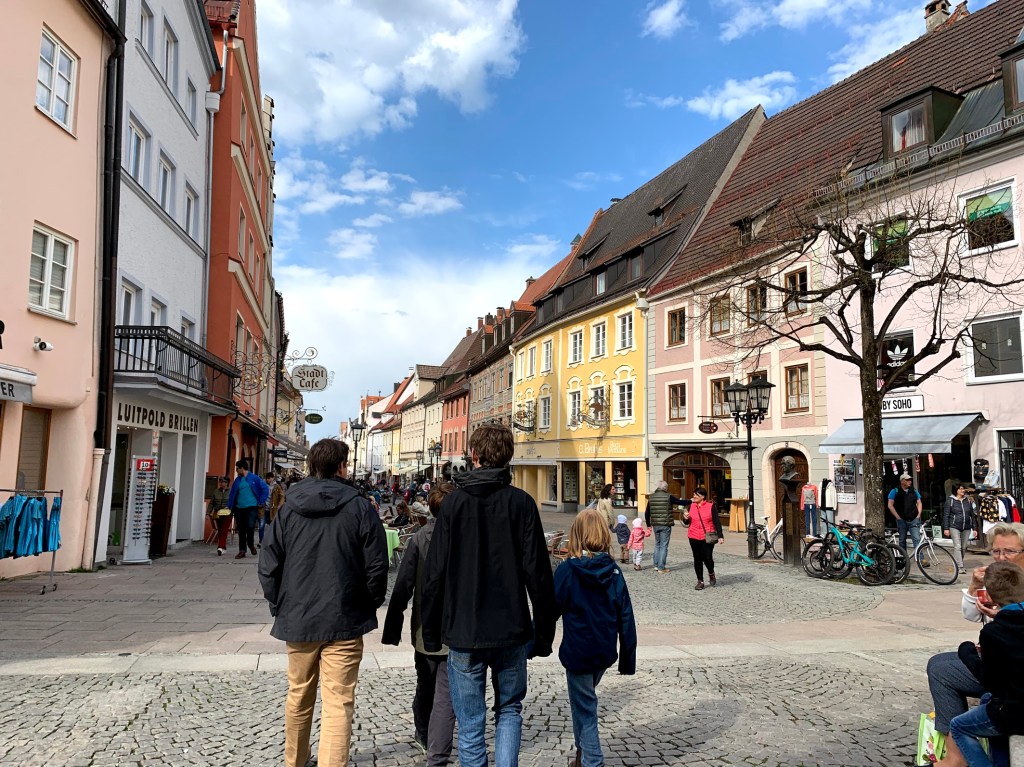
We spent the evening in the town of Füssen near the castles. It was a charming village and we enjoyed walking around in the shops and ate a traditional Bavarian supper!

1,2,3…766,767,768!

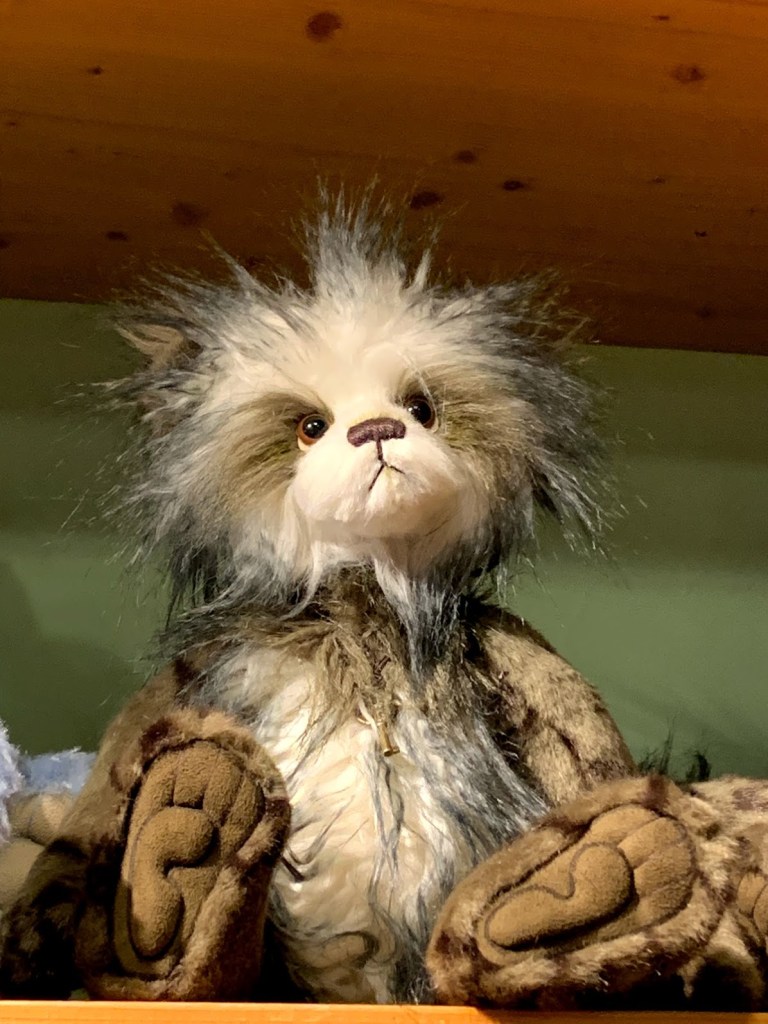
The morning of 15 April we went shopping in all the quaint little shops we had seen the evening before in Rothenburg ob der Tauber. We found several lovely handmade items to bring home with us. However our favorite shop was the toystore. It seems specialized plush toys are popular in the Rothenburg area, especially plush bears. Faywen and I first say “Wolfgang” on the shelf and fell in love with this rather odd-looking toy bear. Next we showed Seamus, then Liam, and finally Robert who swooped the bear from the dark shadows of the top shelf and said, “He’s the new family bear and needs a home!” The poor little thing is rather scraggly looking, but he has such a sweet and loving face!

Our new family member:
The family chose to name him Wolfgang.
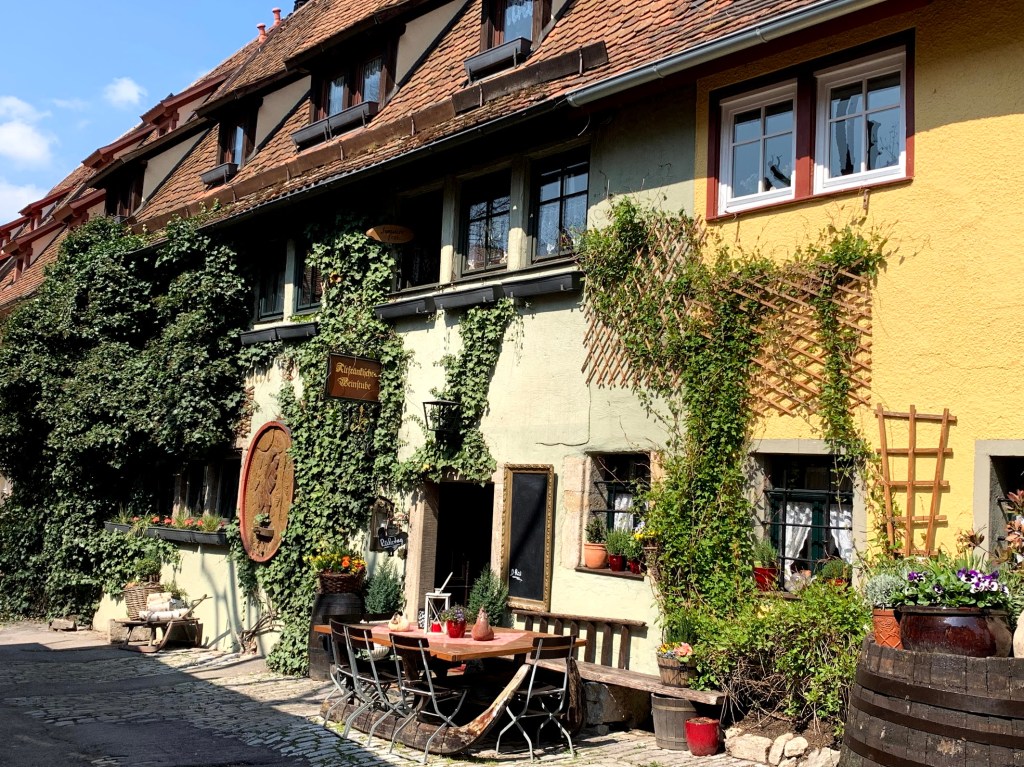
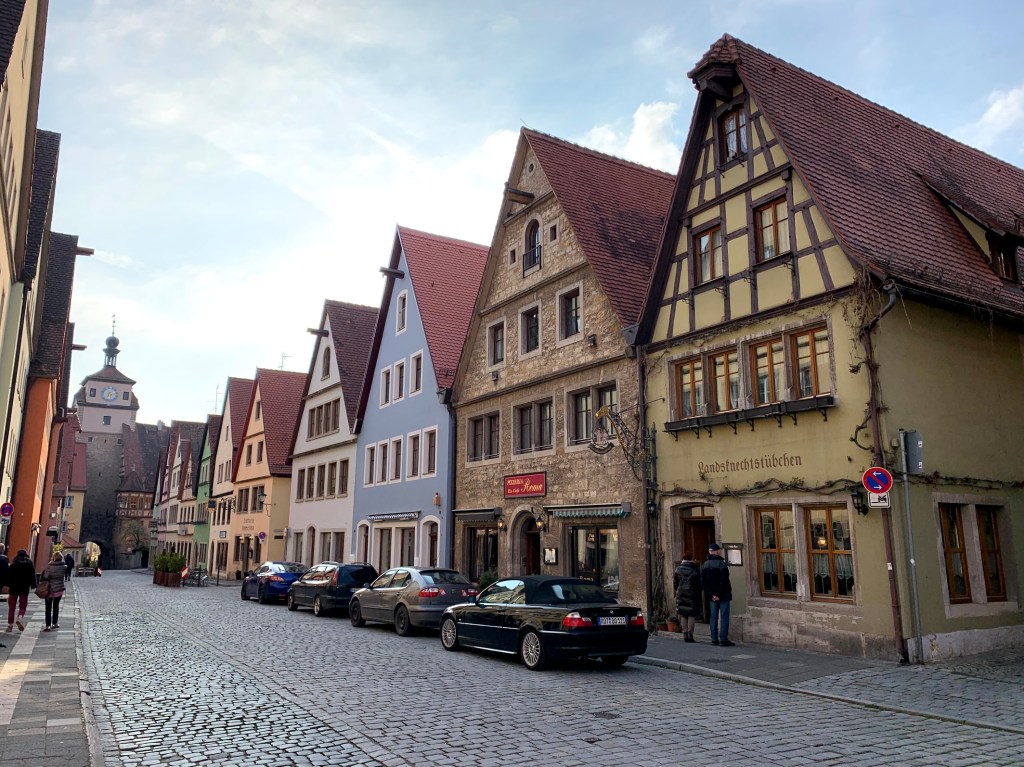
Pretty house in Rothenburg ob der Tauber

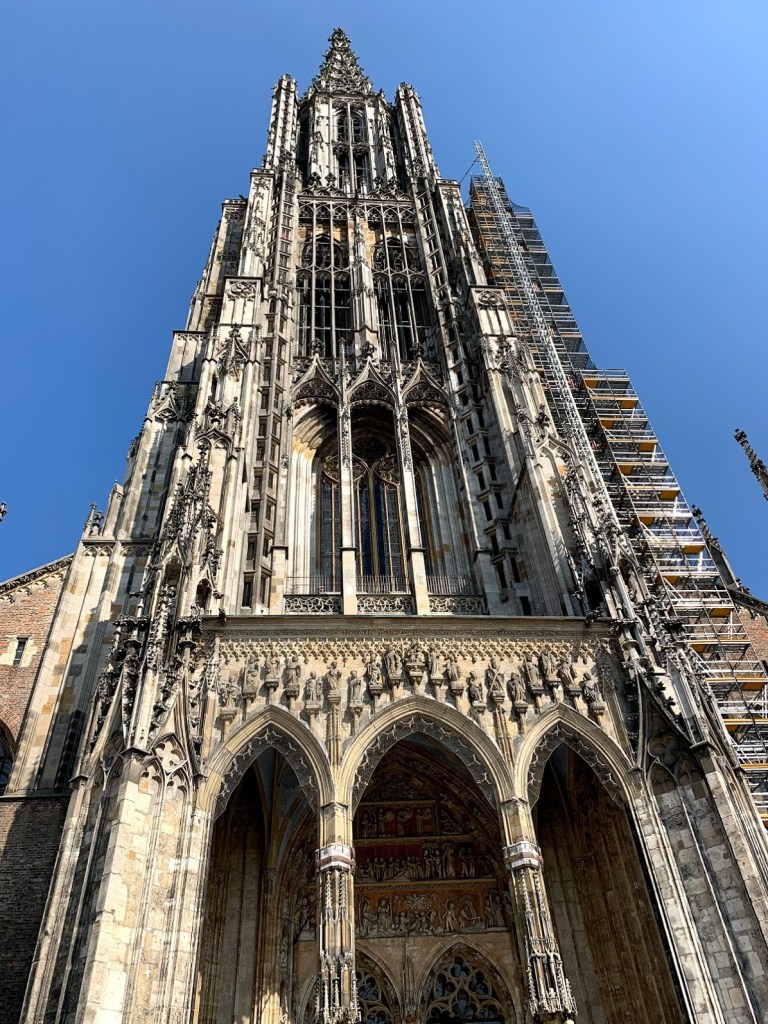
We grabbed some of those Sneeball desserts Faywen saw the night before and headed to the car to drive an hour south to Ulm, Germany. Ulm is the birthplace of Albert Einstein. It is also where Johannes Kepler lived for a bit, but it’s mostly known as the home of the world’s tallest church!

Ulm Minster in Ulm, Germany
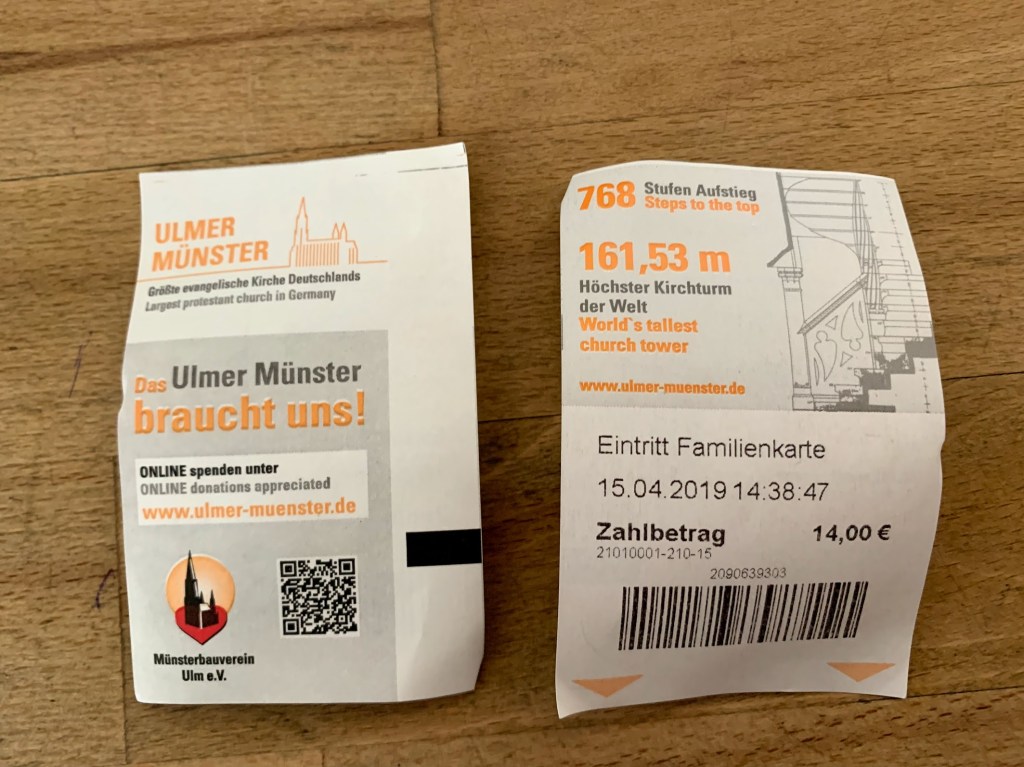
This was our family ticket to climb the tower. The funds go to support the church’s missions.

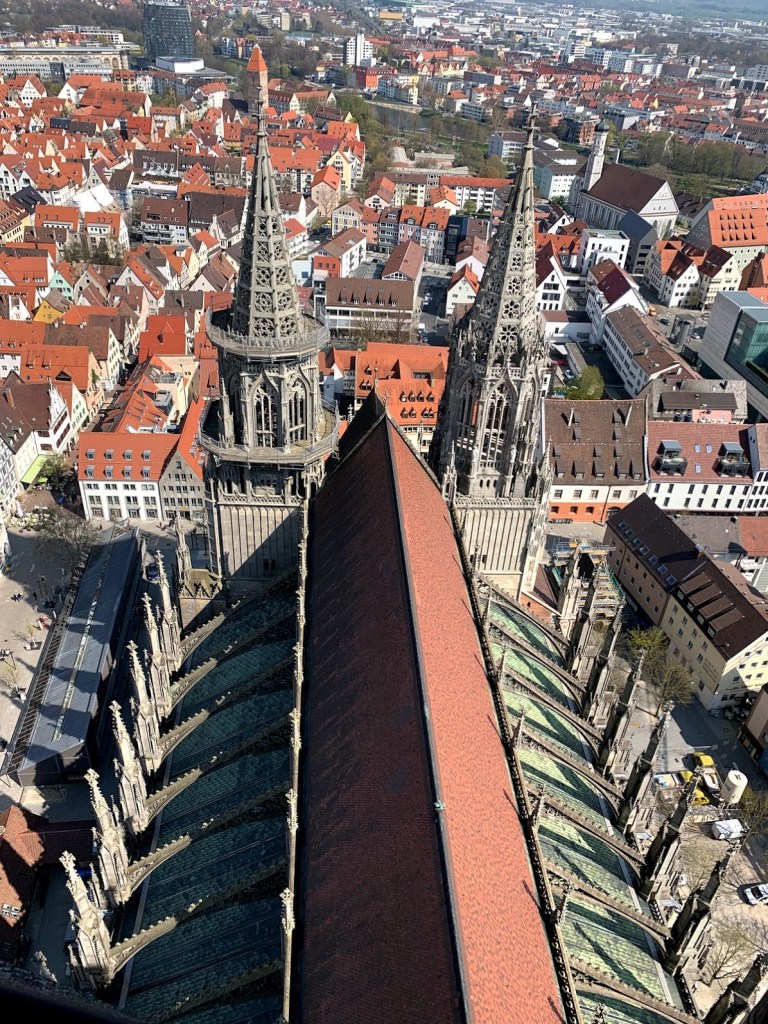
Ulmer Münster’s (Ulm Minster) spire reaches 161.5 meters (530ft.) tall. The main church building was begun in the mid 14th century and the spire was completed in the 19th century. The parish was originally Roman Catholic, but only loosely. The people of Ulm decided to build a church and Ulm Minster never had a Bishop. In 1530 the parishioners decided it was time to join an official religious group and chose the new Lutheran Protestant Church. It is still Lutheran today.

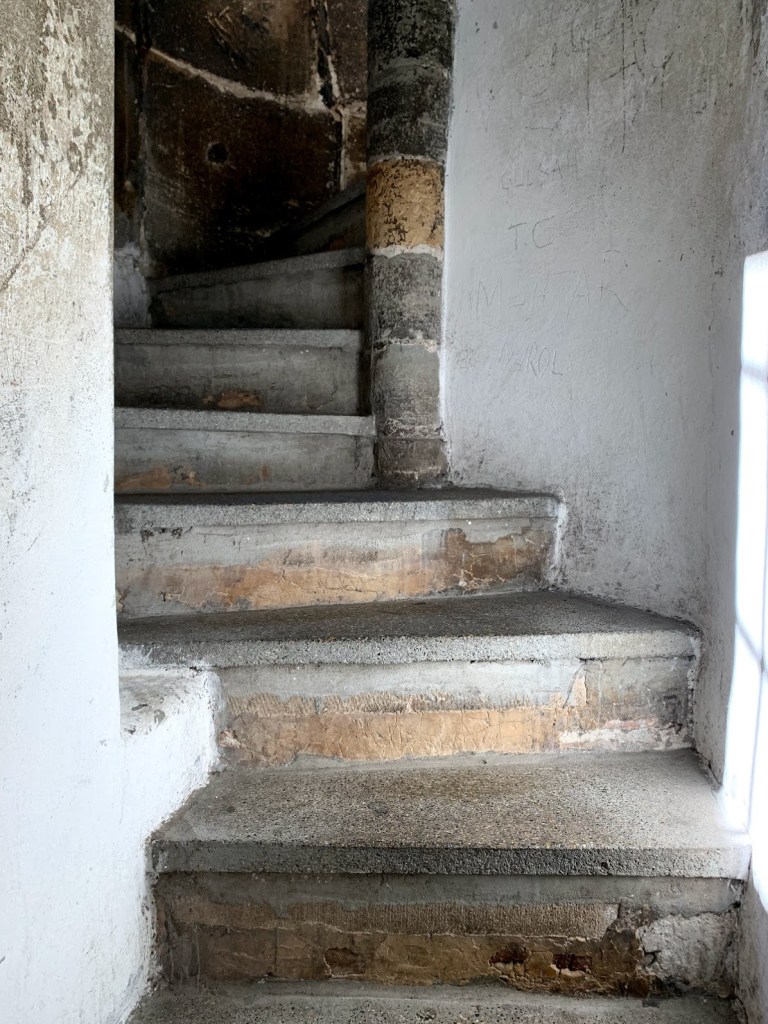
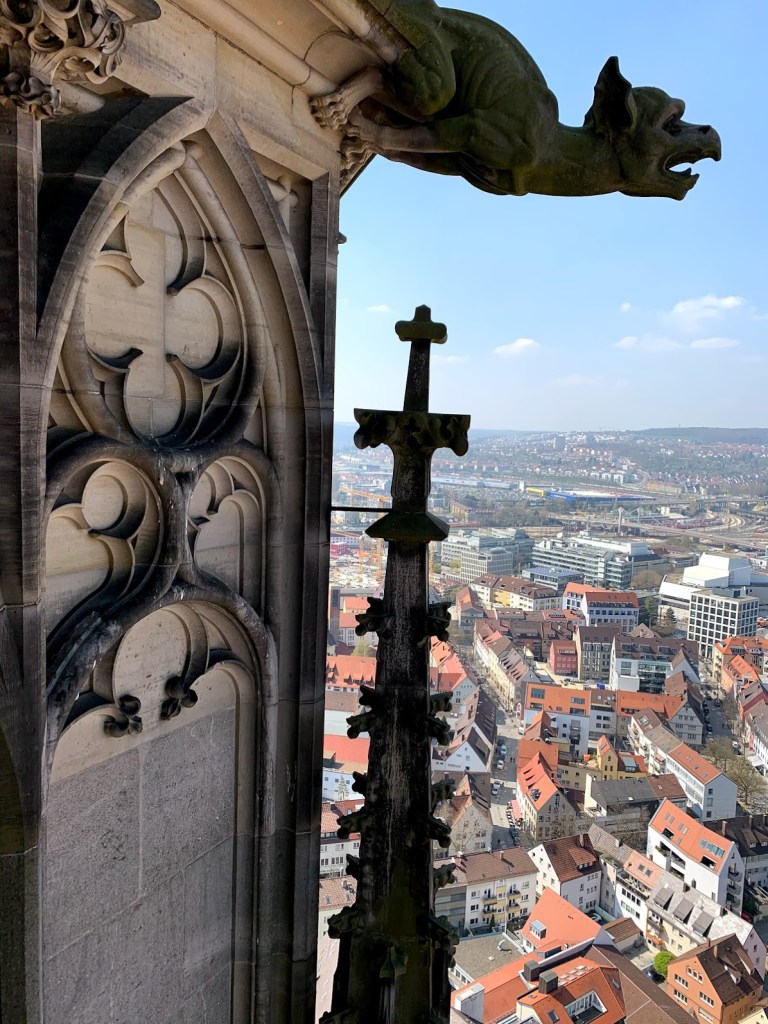
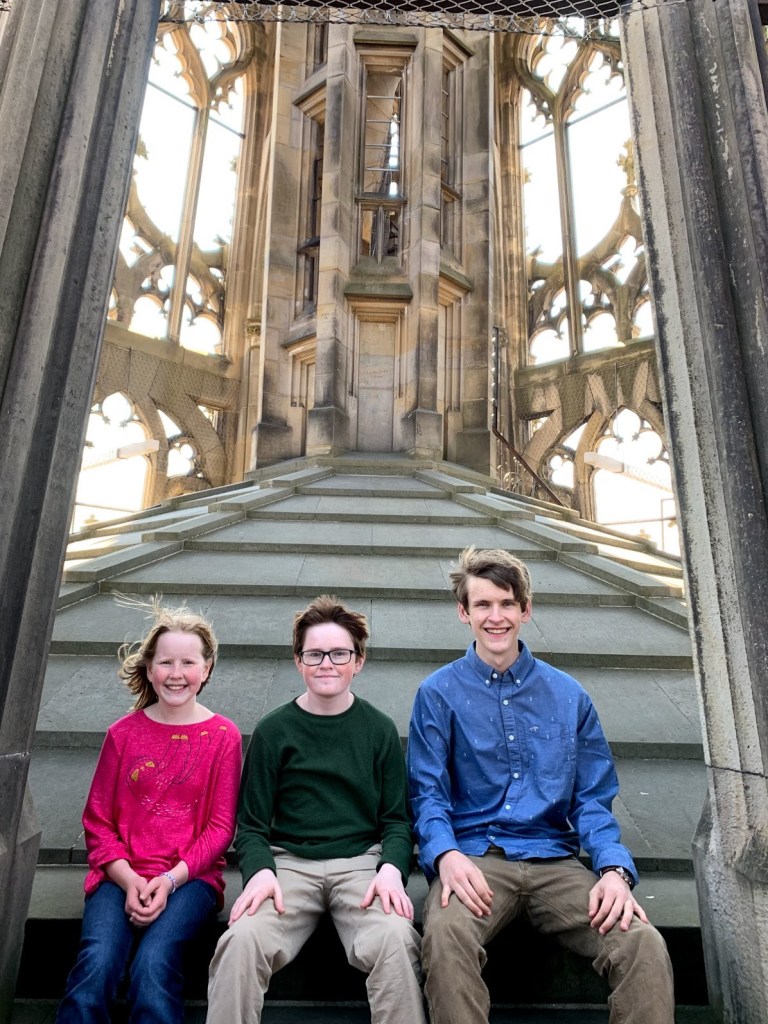
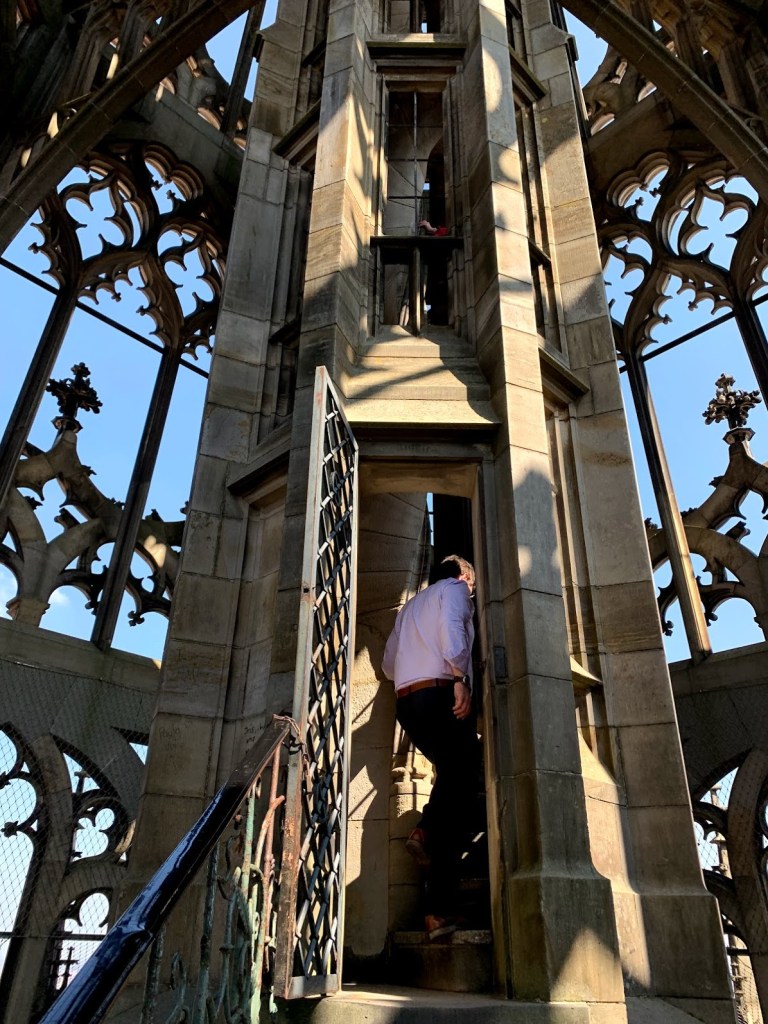
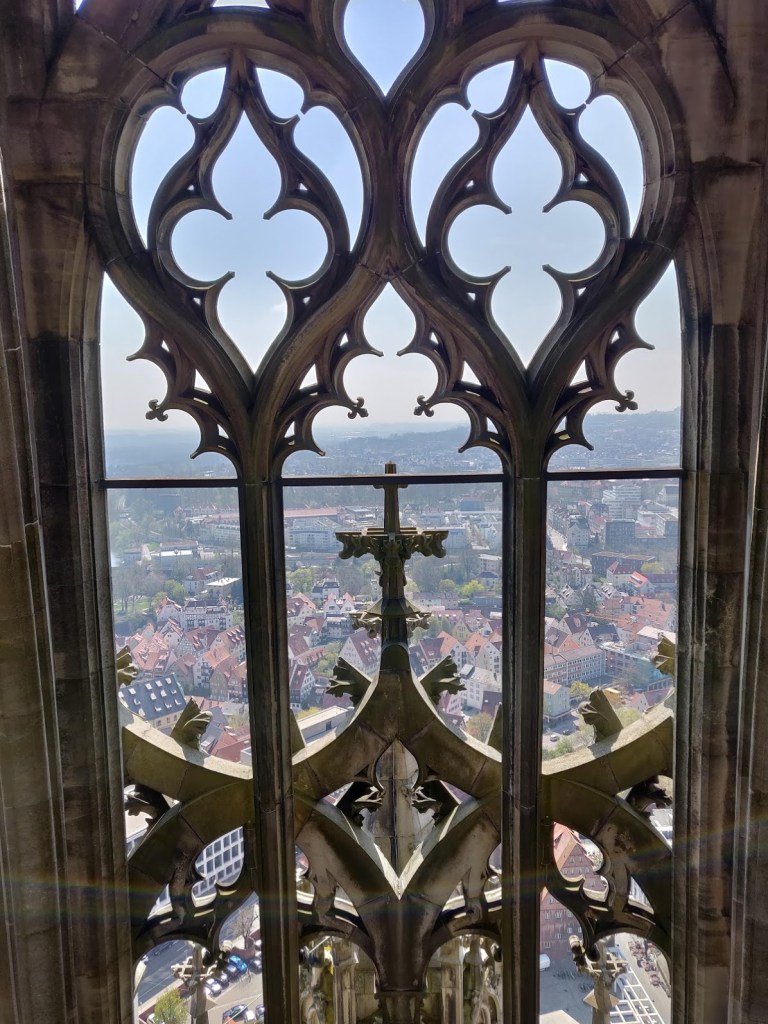
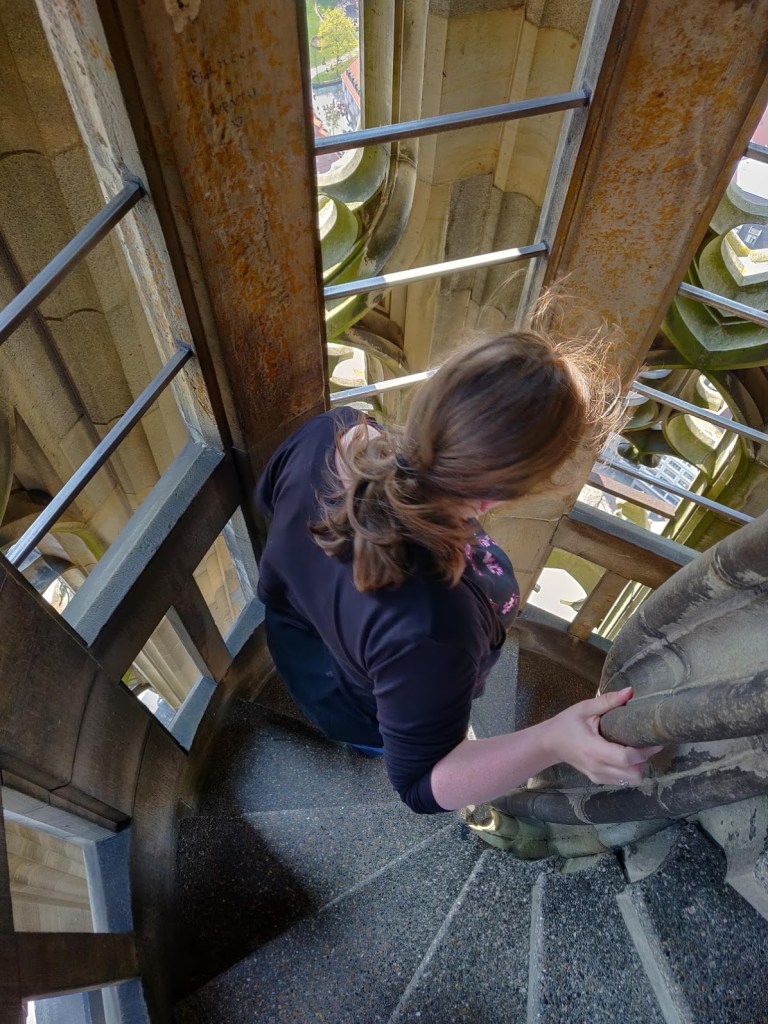
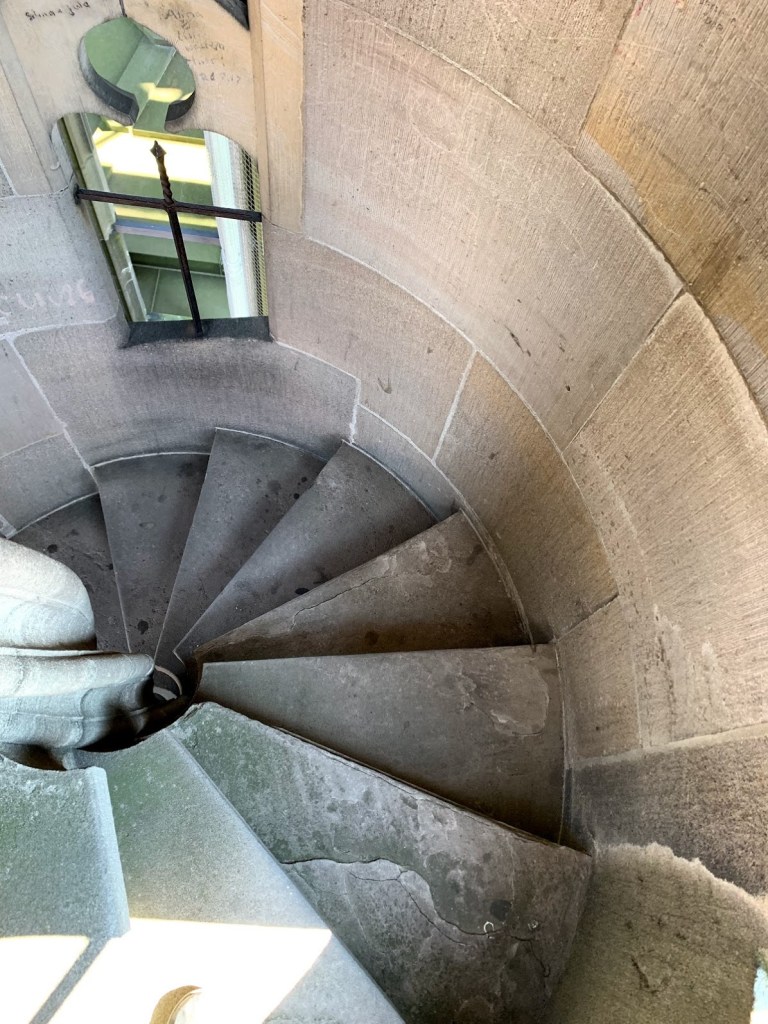
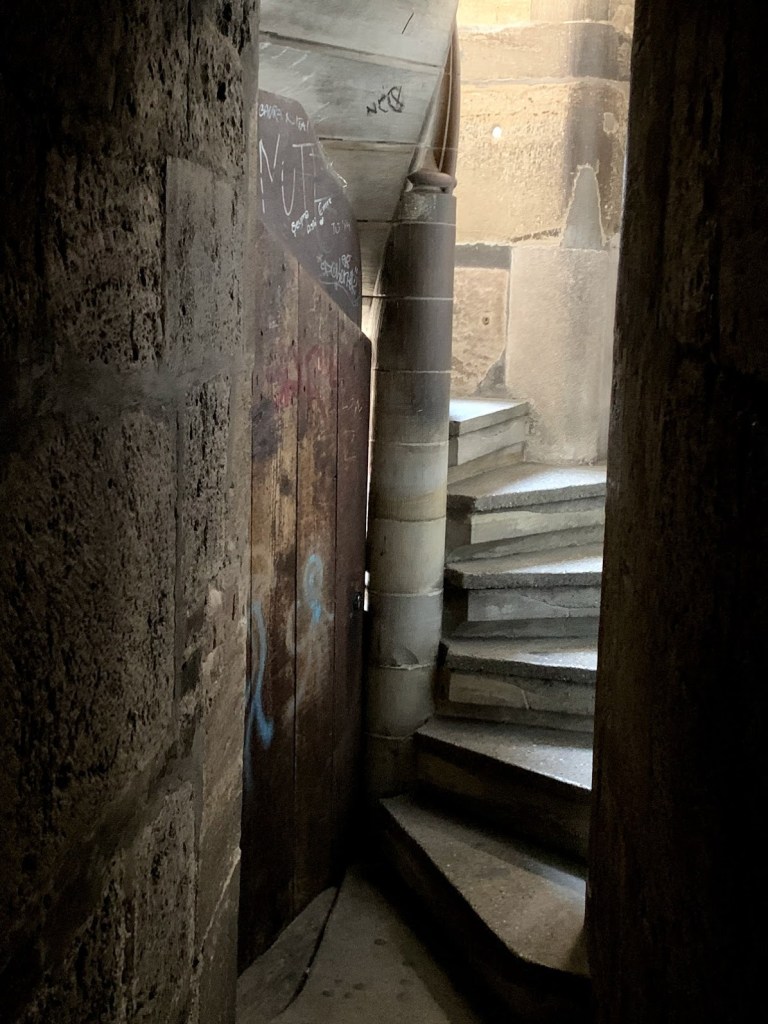
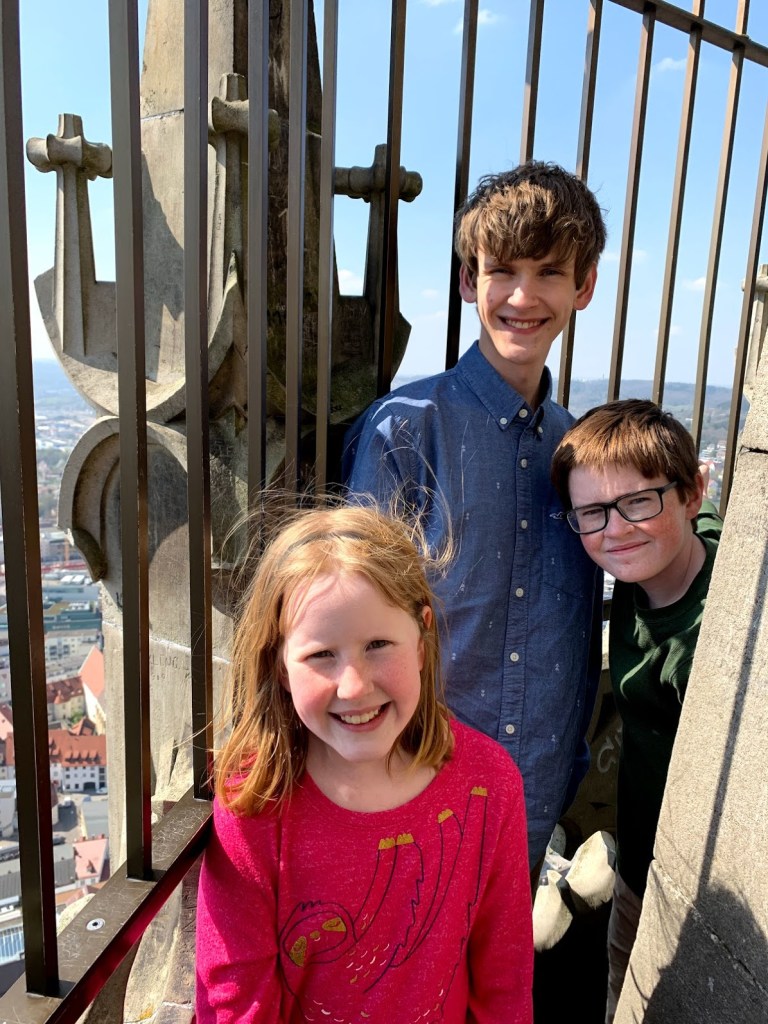
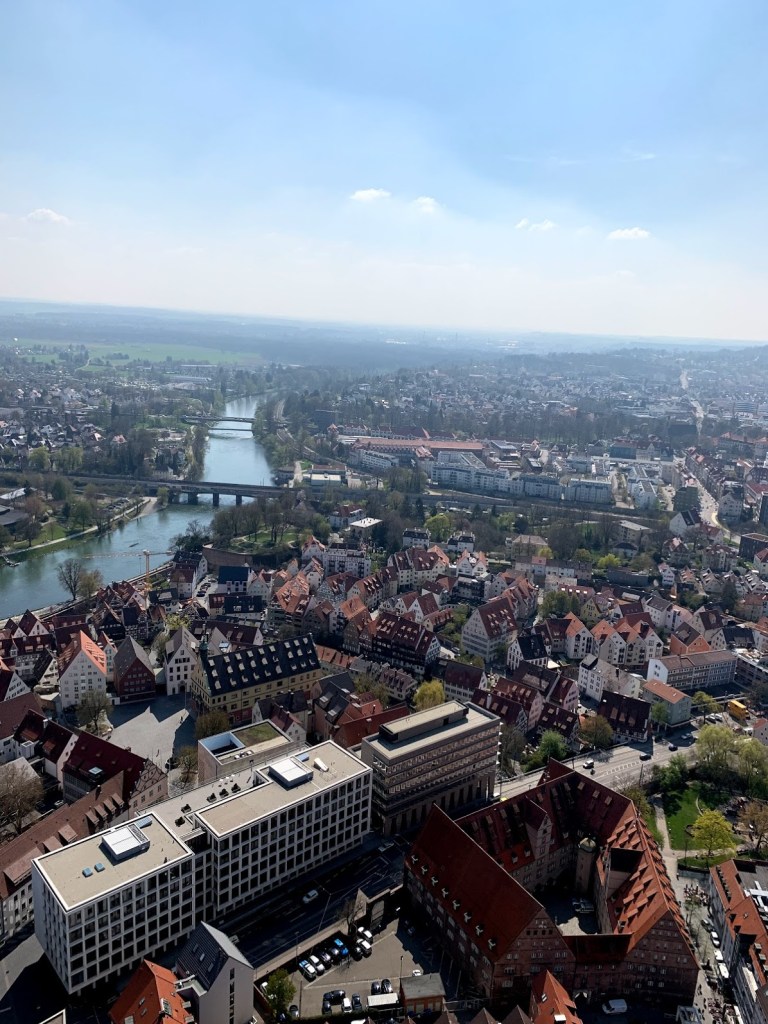
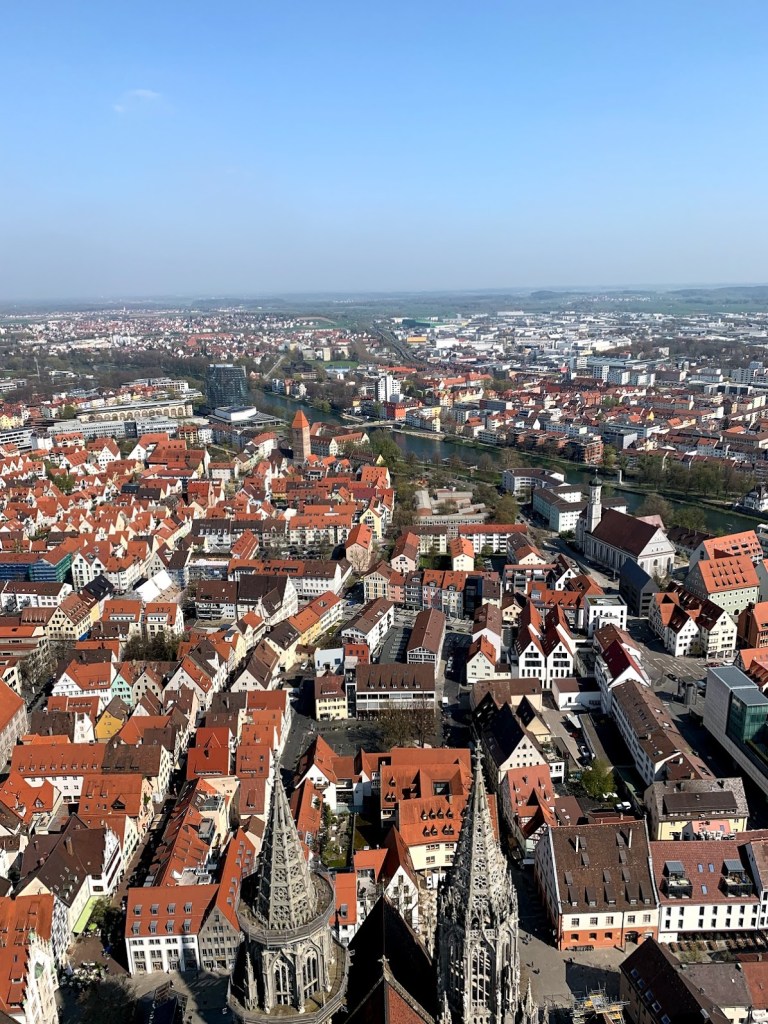
If you’ve been following my blogs then you know our family is just a wee bit OBSESSED with climbing church towers!!! So now we can say we’ve climbed the world’s tallest church spire! The 768 steps take you within 12 meters (60ft.) of the top! I won’t lie, it was pretty grueling, but well worth the climb. From the top you could see for miles across the red roofs of Ulm out into the farmland.

View of the church’s rooftop from about 1/3 of the way up
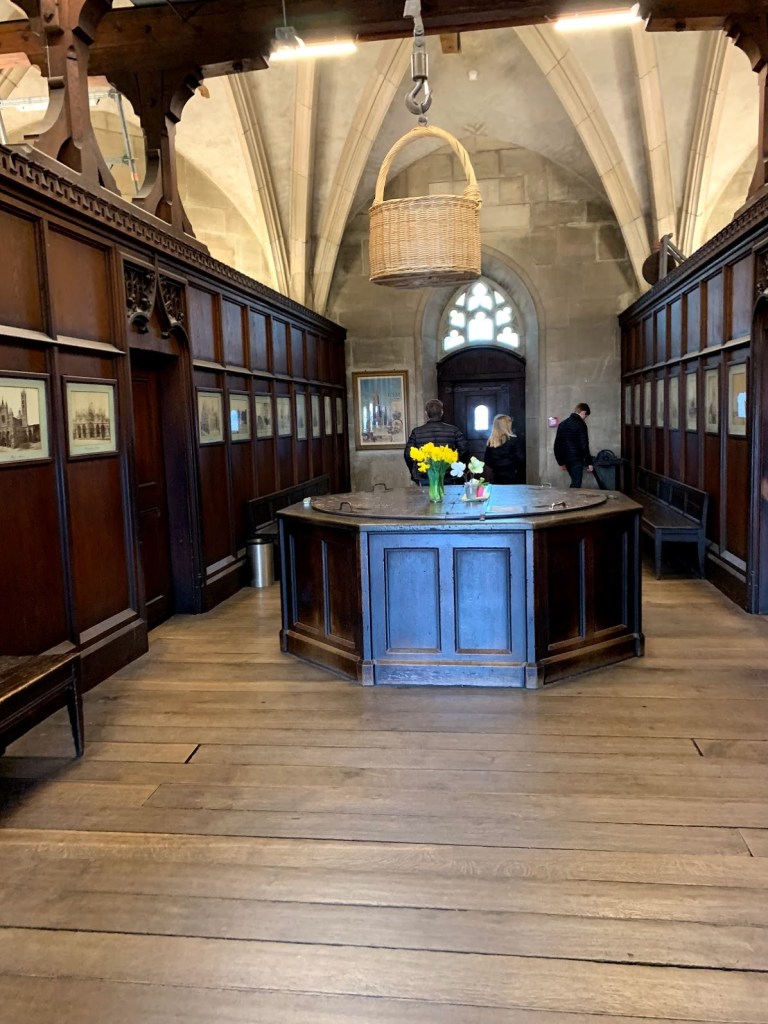
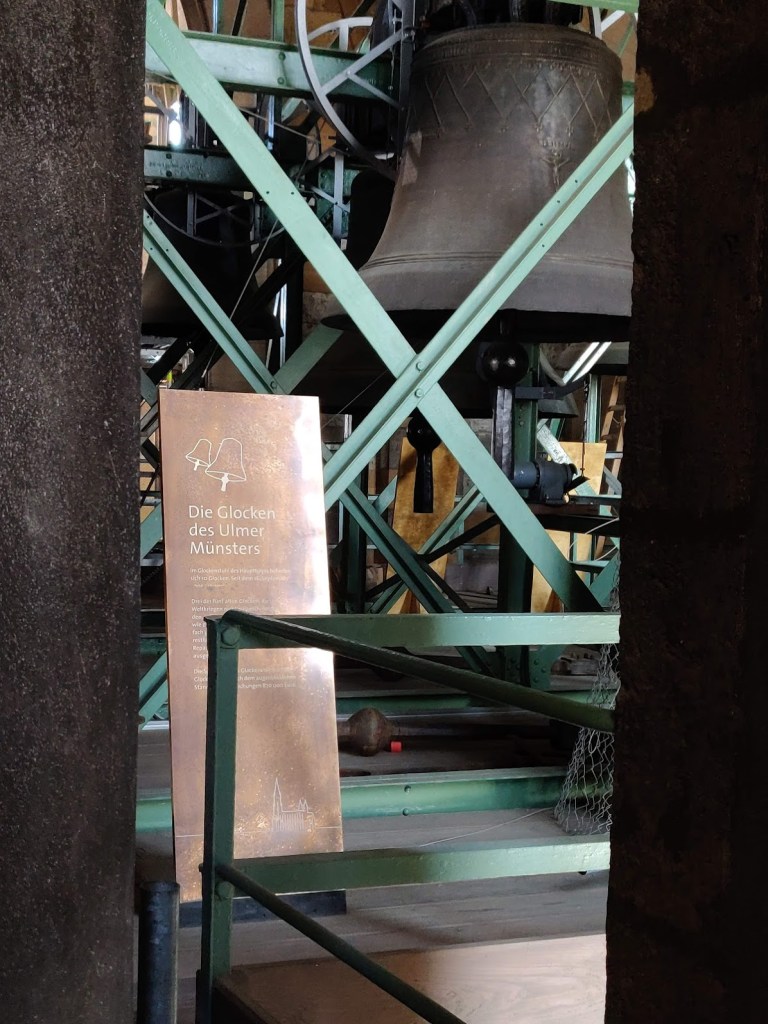
The bell tower was a little over 1/2 of the way up and sat between the two towers.

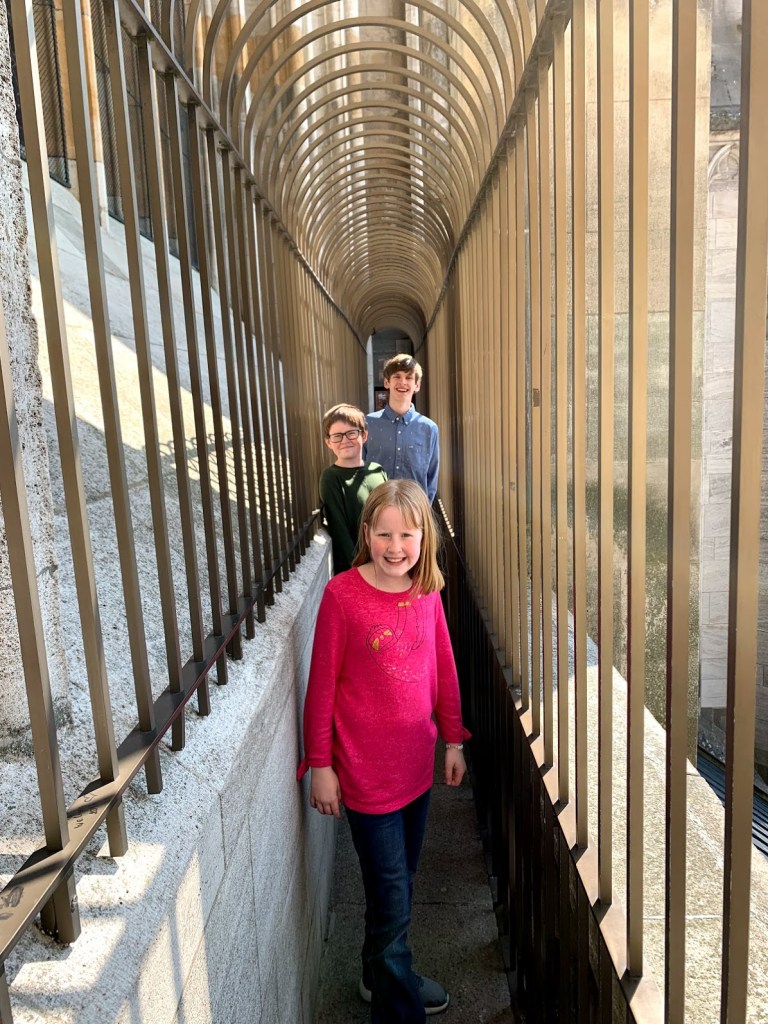
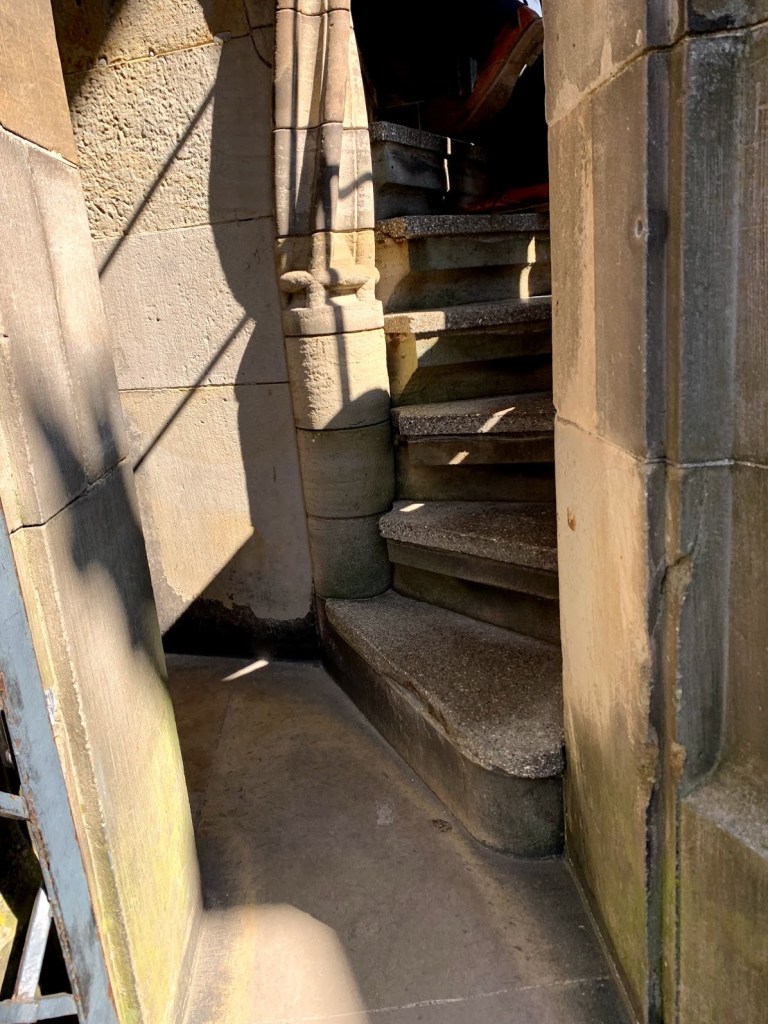
The wind whipped as we ascending the last 200 or so steps in the open spire itself. The stairs were very narrow, but well lit, since the spire was open and carved with ornate geometric and gothic arches. The top platform around the spire was only about 3 feet wide, but you felt safe with the metal fencing. While ascending the main tower the church bells rang the hour. They were below us and I just happened to be video recording our ascent. It was magnificent hearing the bells chime below us!

We made it!!! The breeze felt wonderful after climbing 768 steps!
View of Ulm, Germany and the Danube River
Red roofs of the old town from the top of the spire

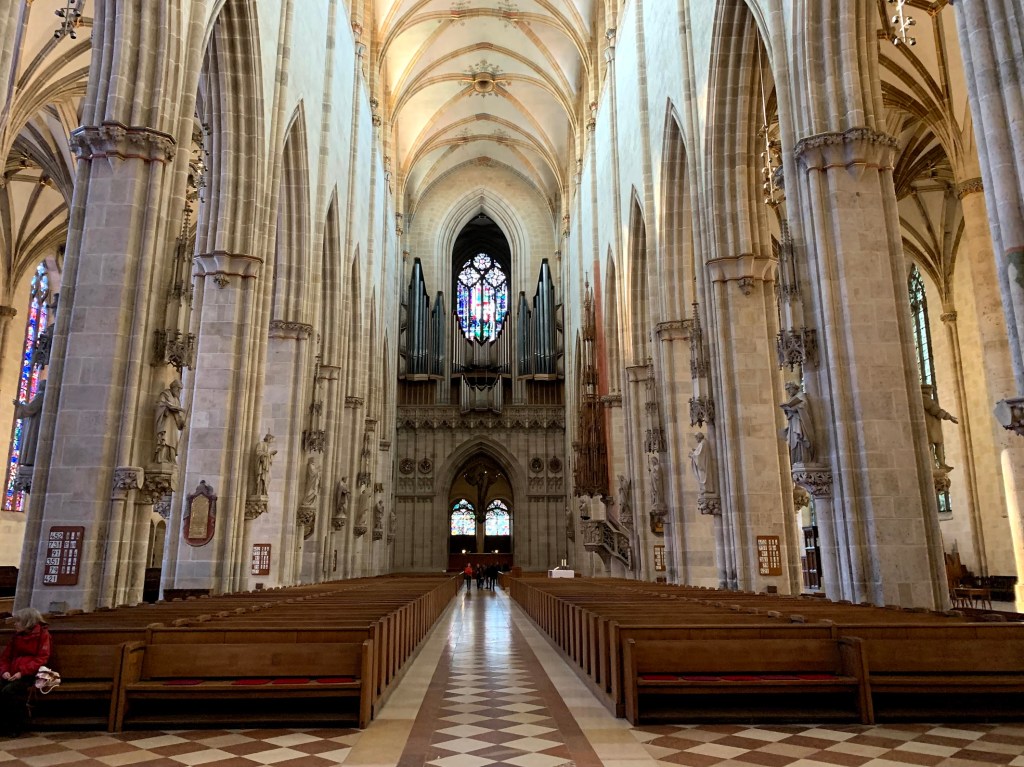
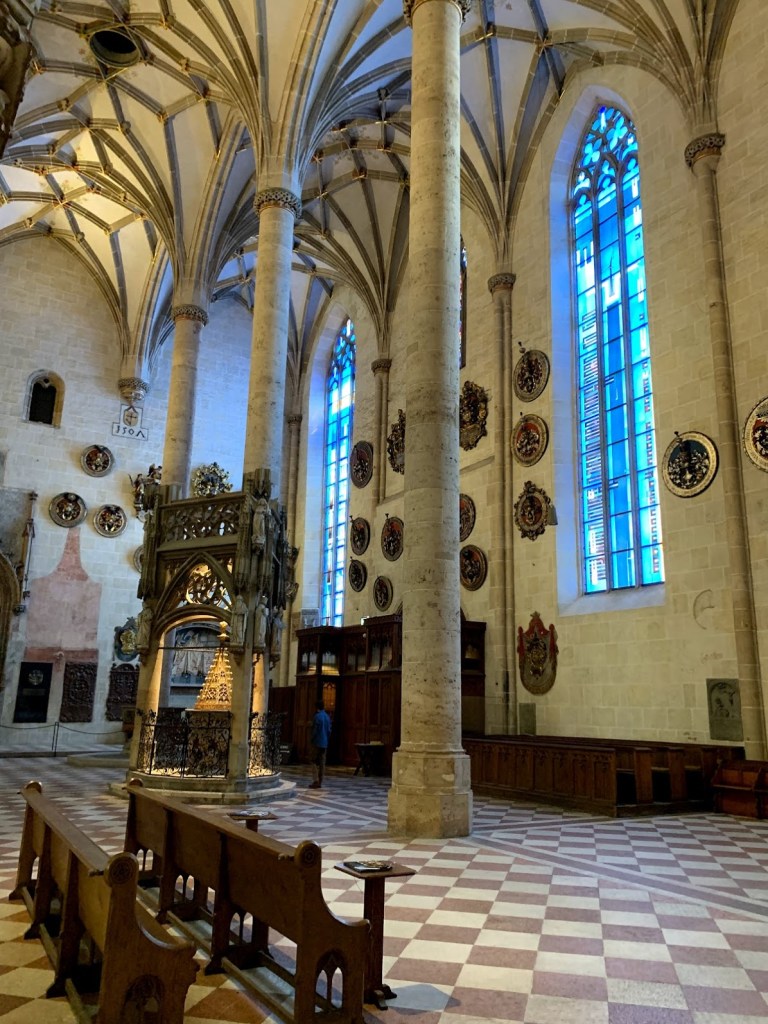
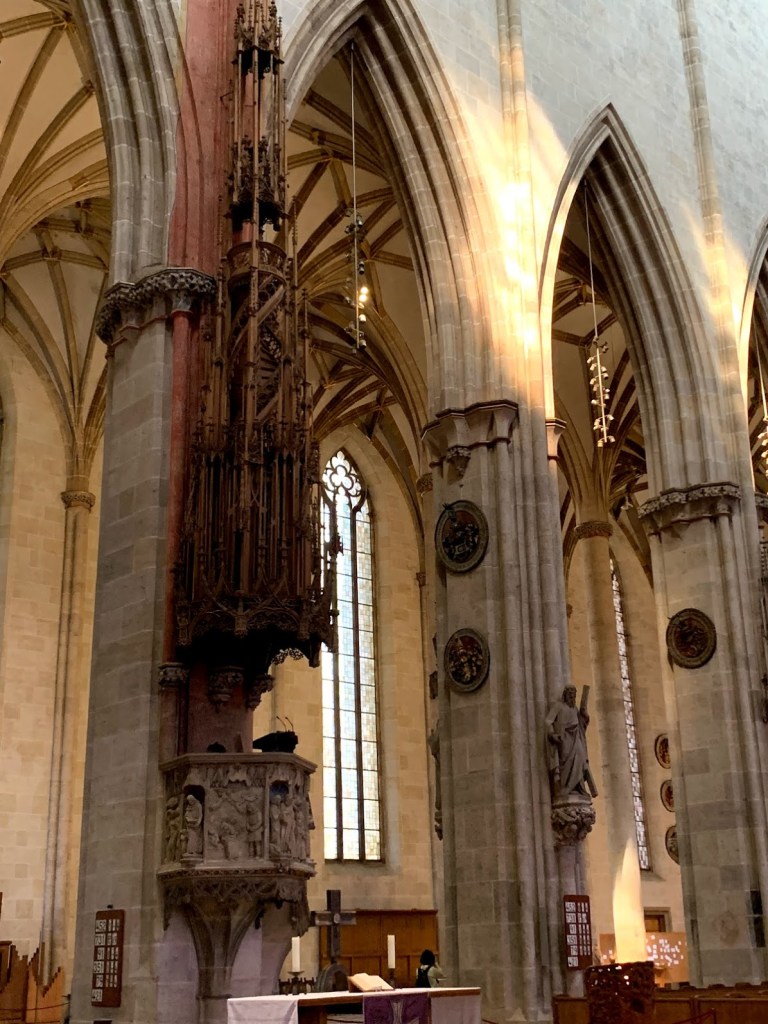
Ulm Minster was just as beautiful on the inside. There were many original stain glass windows, but also several new mid-century windows. We discovered that these were installed soon after WWII. The Allies spared Ulm Minster when they bombed the city in the spring of 1945, but the shockwaves blew out several of the old church windows. As a war memorial, the parishioners chose a local artist to make the new stain glass windows.

Looking down the aisle from the front of Ulm Minster
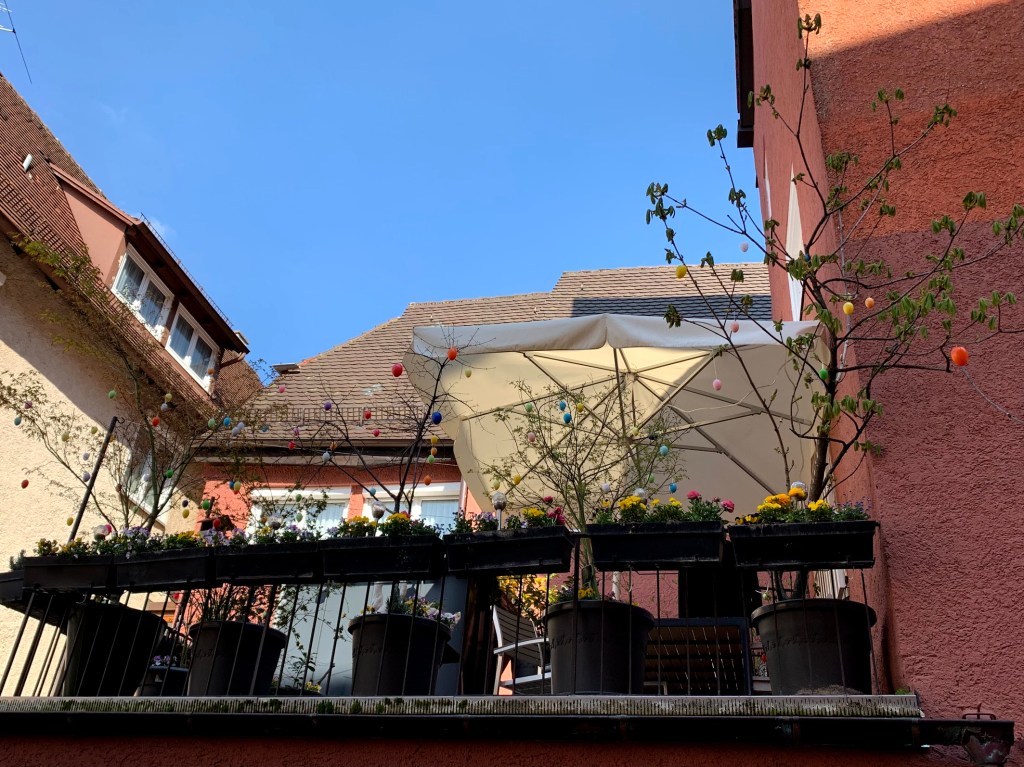
Easter trees in a neighborhood garden
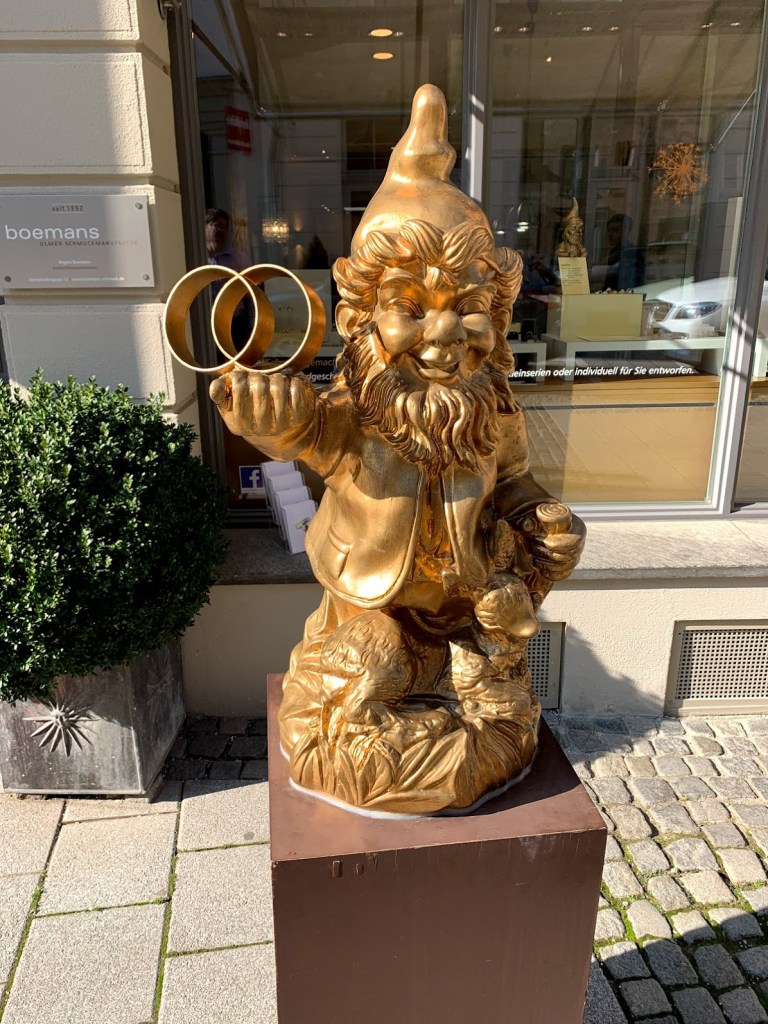
I loved this quirky golden gnome outside a jewelry shop.

Now we can say that we’ve climbed the world’s tallest church!

Arbeit Macht Frei

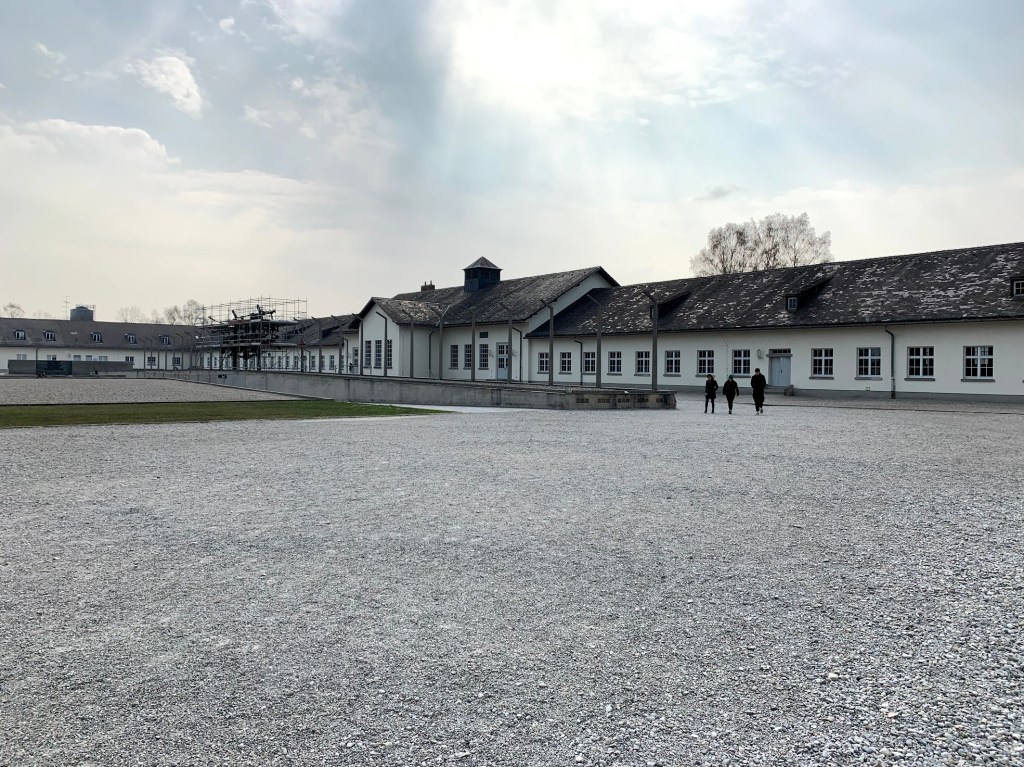
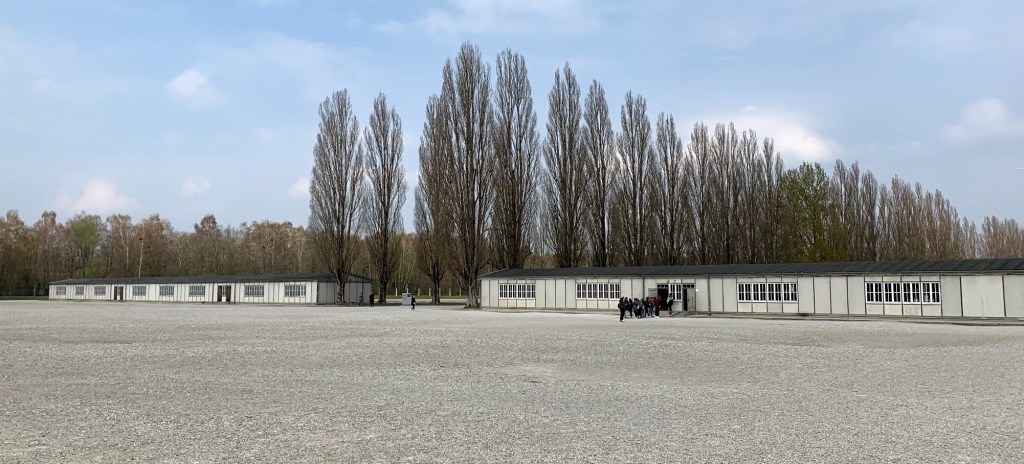
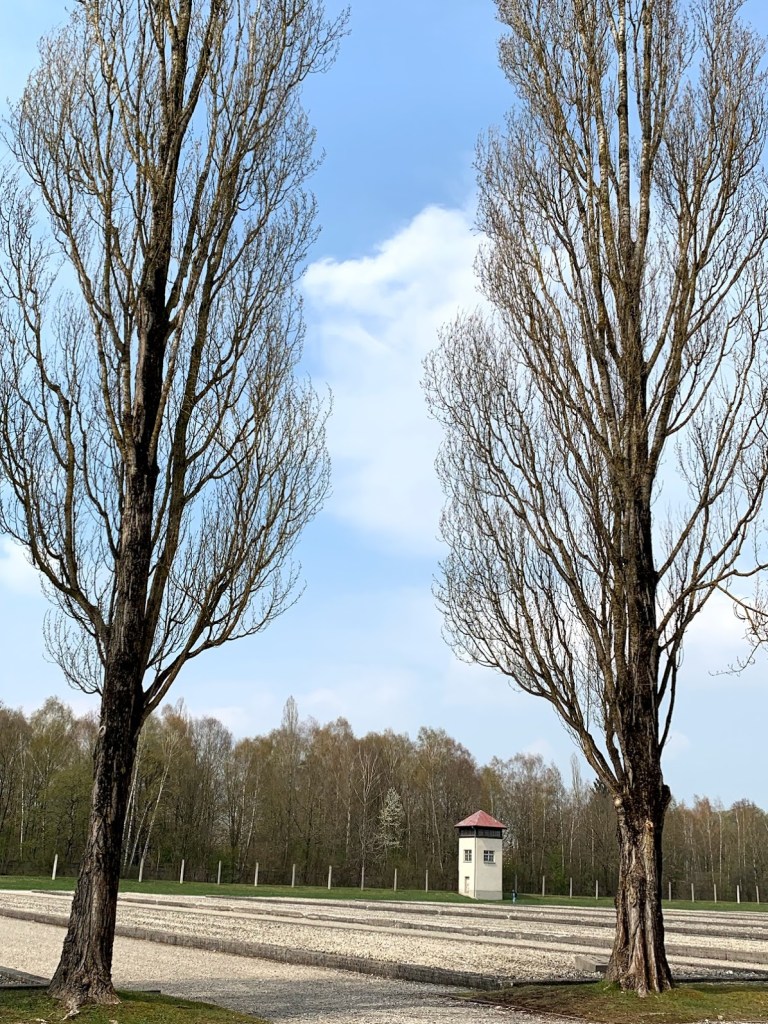
Today’s blog starts on a more somber note. On 14 April we visited the Dachau Concentration Camp Memorial in Dachau, Germany. Located about 20 minutes NW of Munich, Dachau was the first Concentration Camp built by the Nazi Party in 1933. It was a male prison work camp primarily for political and business opponents to the Nazi ideals. There were ethnic prisoners as well starting in the 1940’s, however most of the prisoners were Catholic/Protestant, rather than Jewish. Many of the campers were part of the ethnically despised Gypsy race.

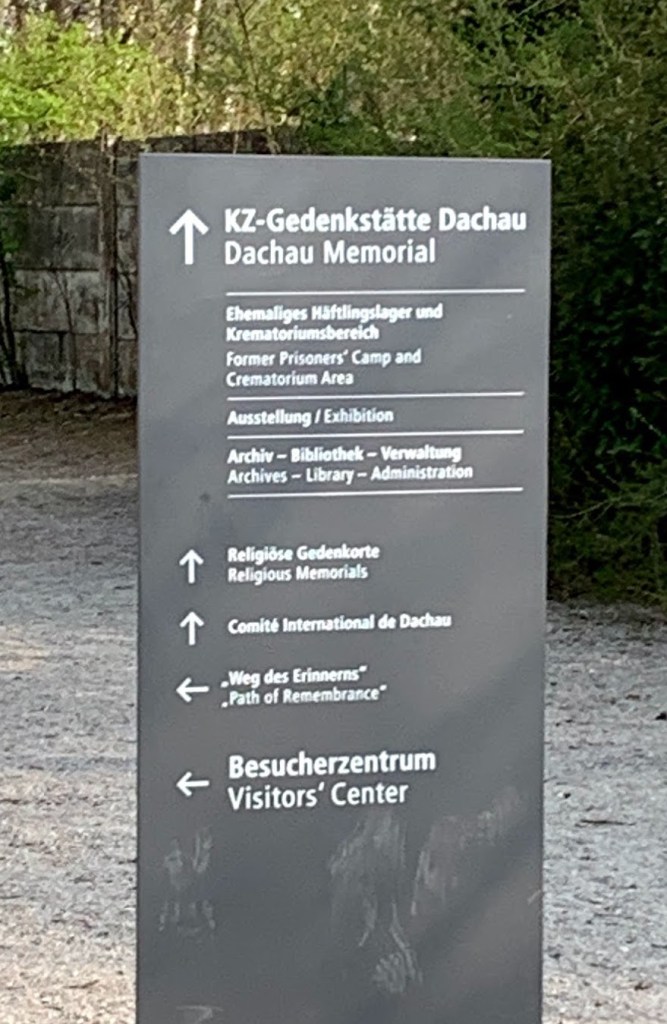
Memorial Grounds Sign
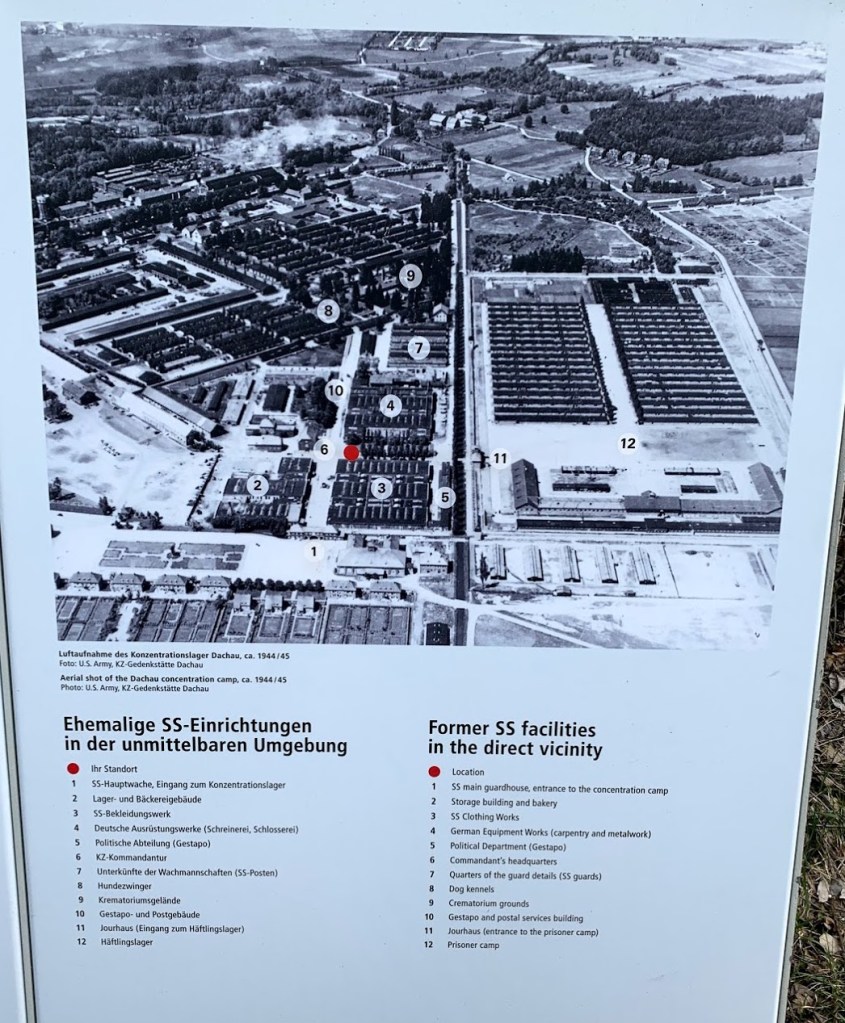
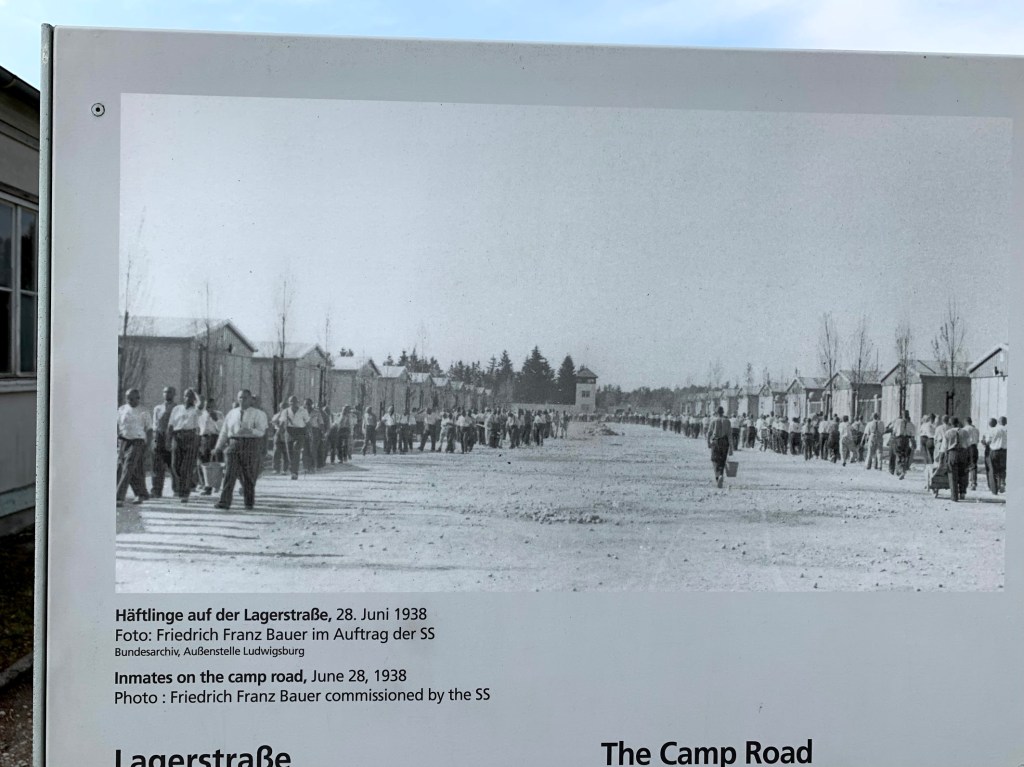
Original photo of the camp

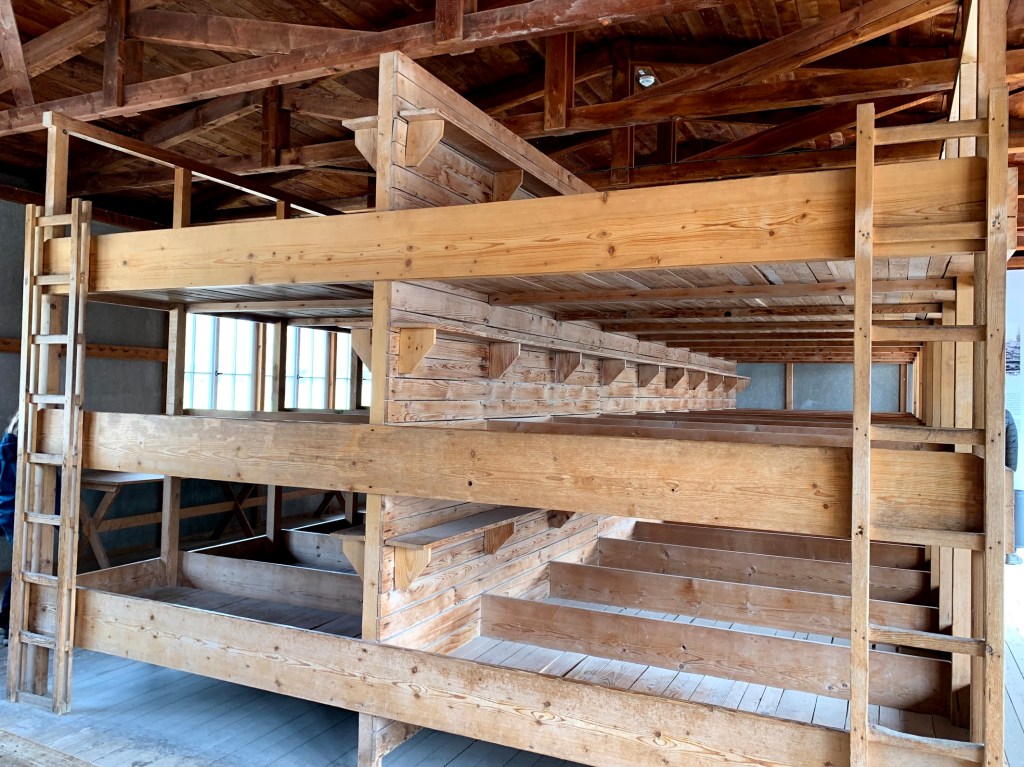
 The prisoners built the camp facilities themselves by working 16 hour-long days under the direction of the SS. It was the hardest labor camp in the area and many men died of exhaustion. Though there was a small gas chamber it was never used. Interestingly some prisoners were released after serving time there, but their spirits were broken by means of physical and emotional torture.

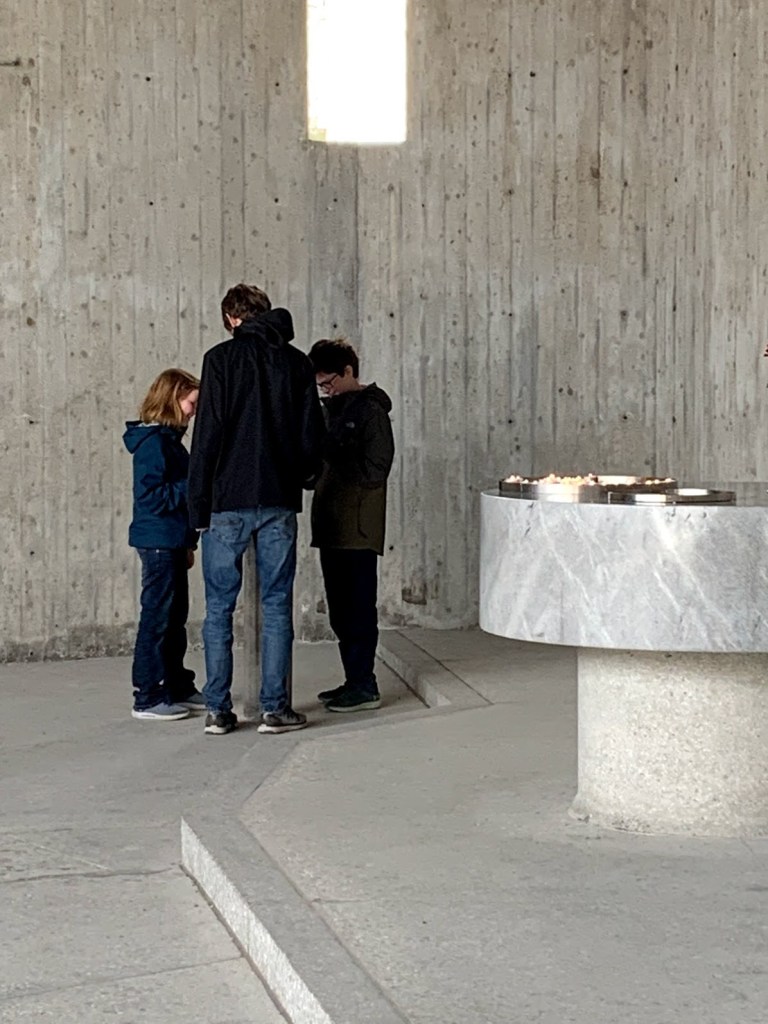
I visited the camp 26 years ago and it is a place I’ve always wanted to take my children. It changed my life and perspective, especially regarding the cruelty of human nature. I believe it did the same for Robert and the kids. The facility and museum is in much nicer condition now. The various presentations and the Catholic, Protestant, and Jewish memorial buildings are a humble reminder that cruelty happens across all ethnic and religious groups. There were prisoners from as far away as Greece and Russia in the camp.

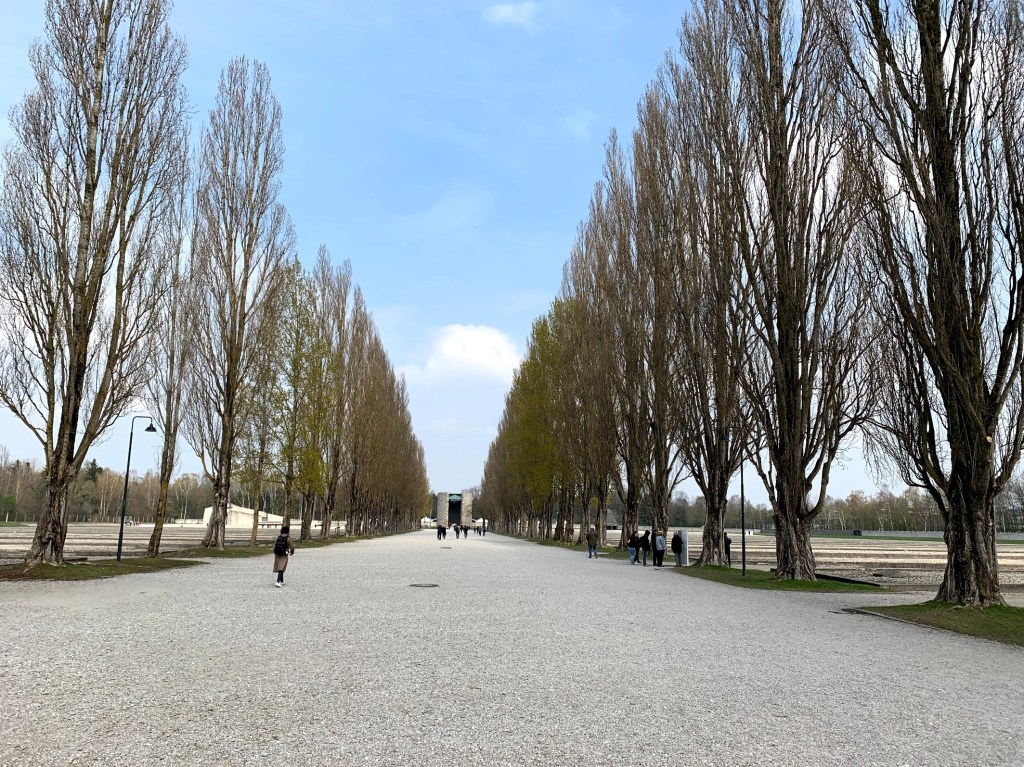
It was a cool day, and as you walked through the museum, roll call courtyard, and bunkhouses your blood was chilled and your heart humbled. May all who suffered in any concentration camp always be remembered!

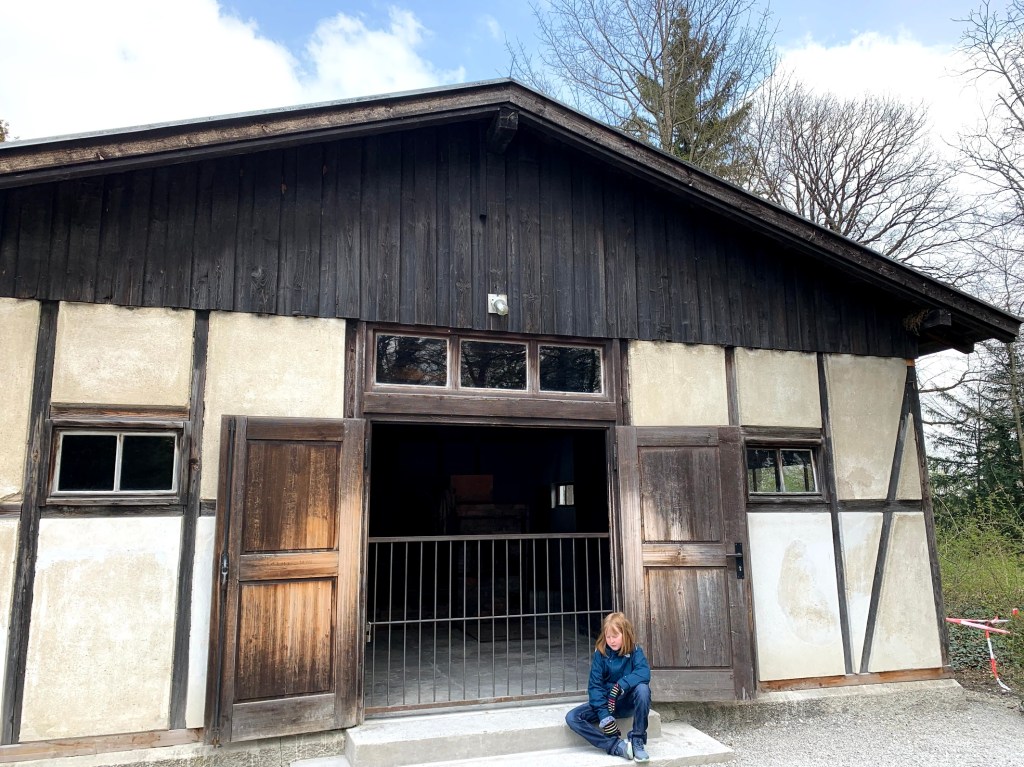
This is my favorite photo. Faywen was sitting reflecting on everything we had seen at Dachau. She is sitting in front of the old crematorium building. She was so lost in thought she didn’t realize I even took this photo.

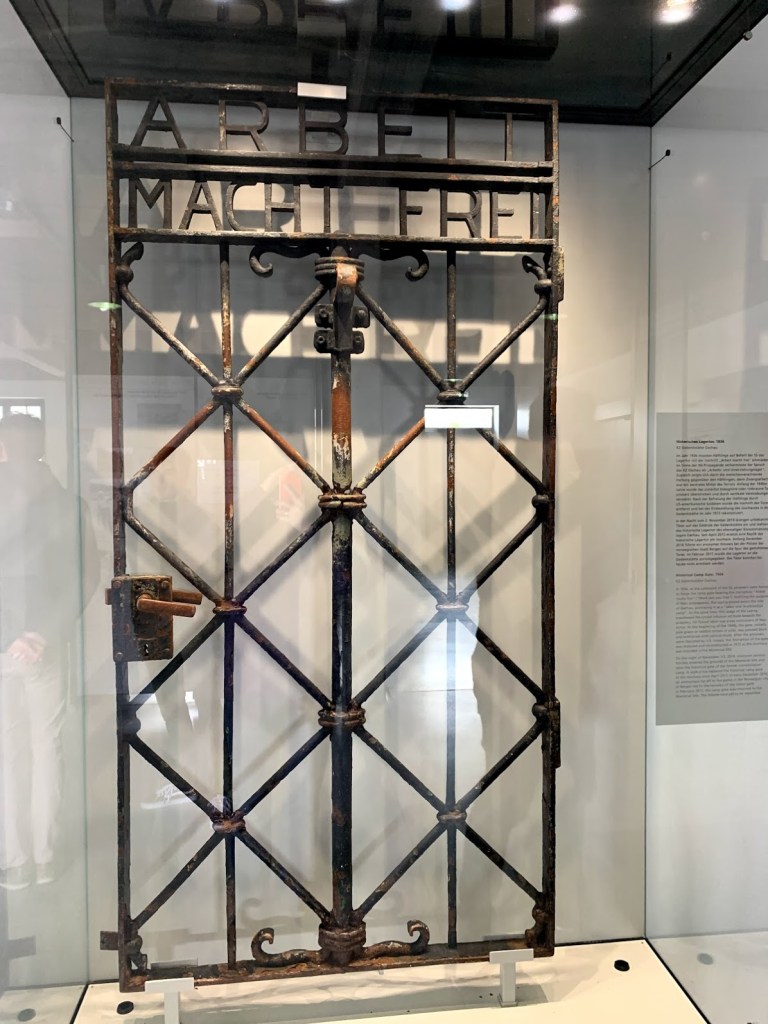
The gate to the Dachau Concentration Camp simply read “Arbeit Macht Frei” or “Work Makes You Free”.

The original gate
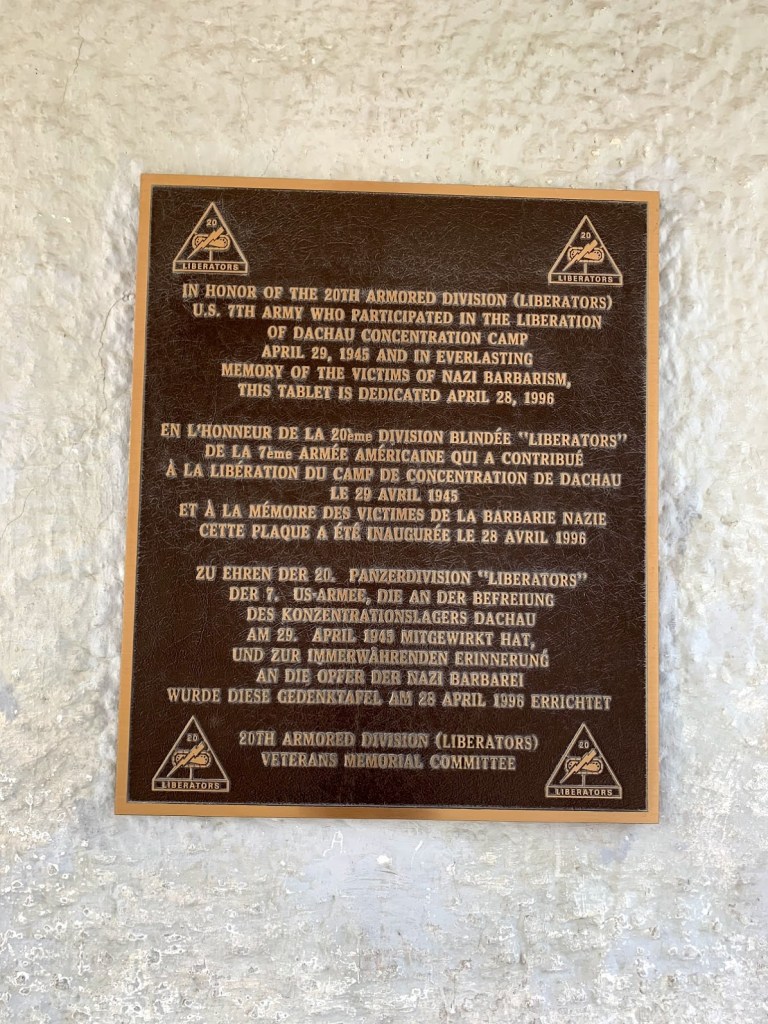
This is the Liberation Plaque That was on the wall just inside the gate.

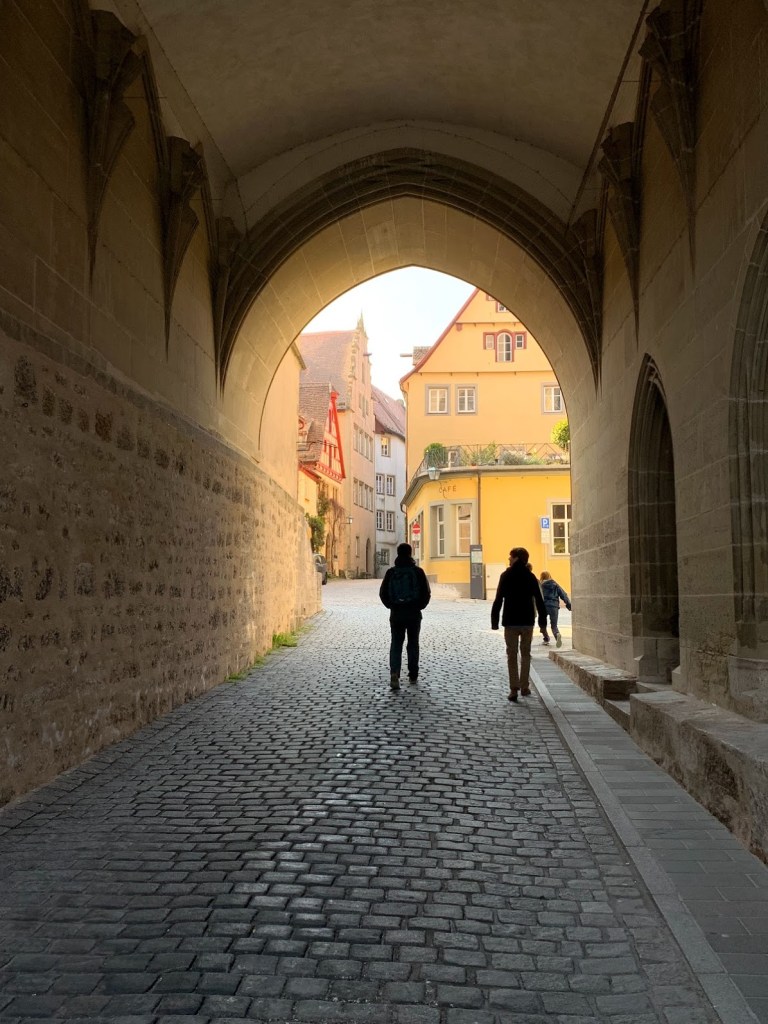
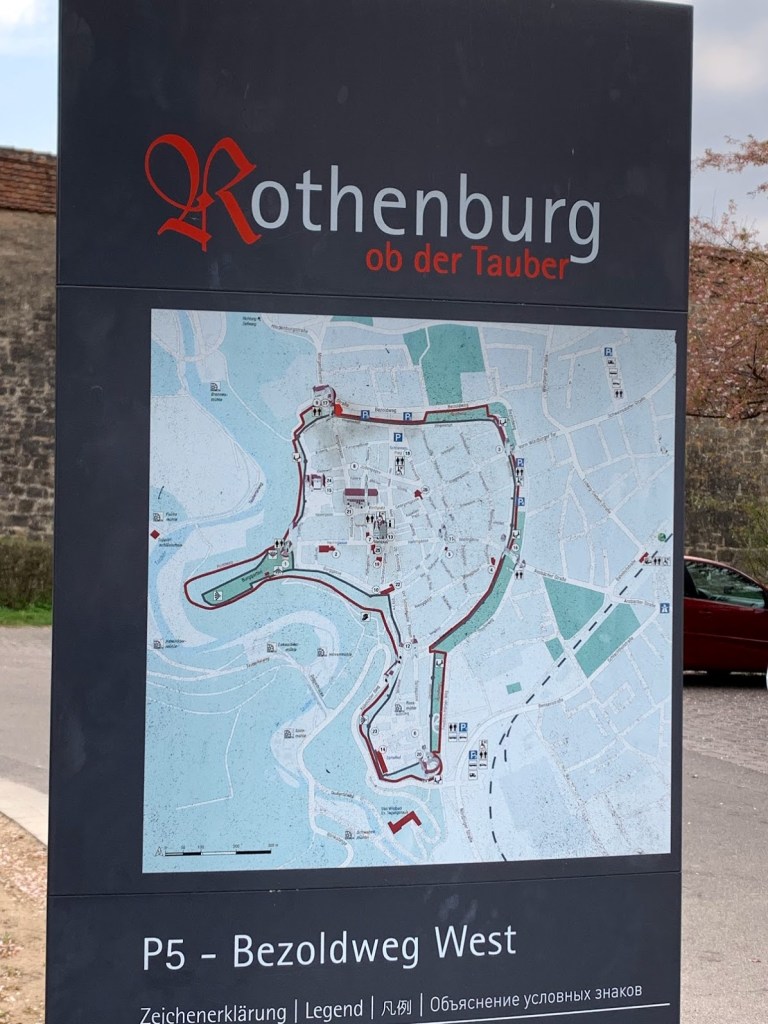
In the afternoon sunshine we drove 2 hours to Rothenburg ob der Tauber, a quaint medieval village on the Tauber River. I’ve been to this amazing little village a couple of times and one can’t help but feel in awe of the beauty of the place. It was completely different than Dachau.

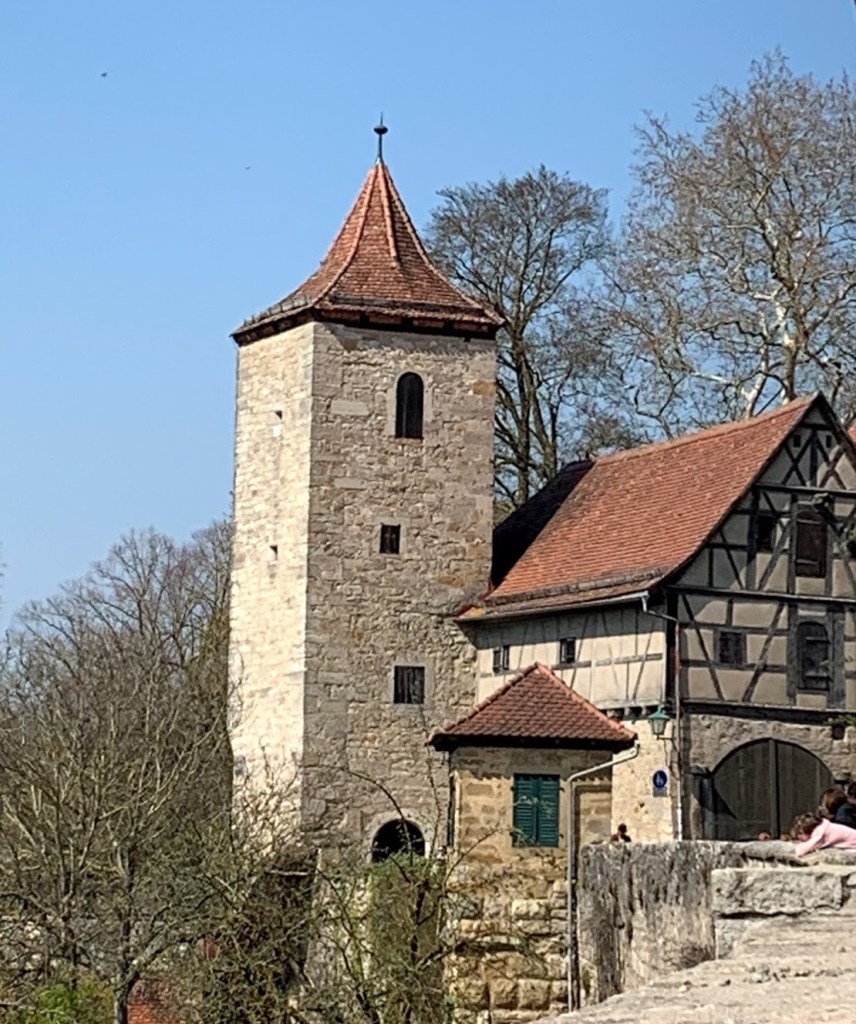
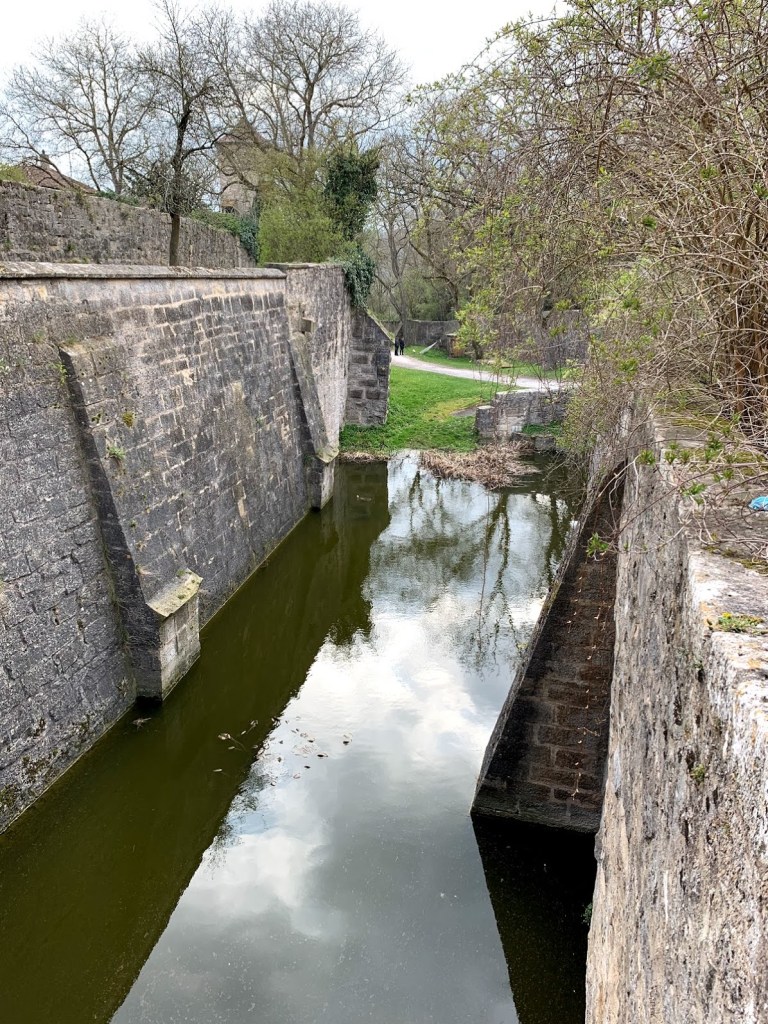
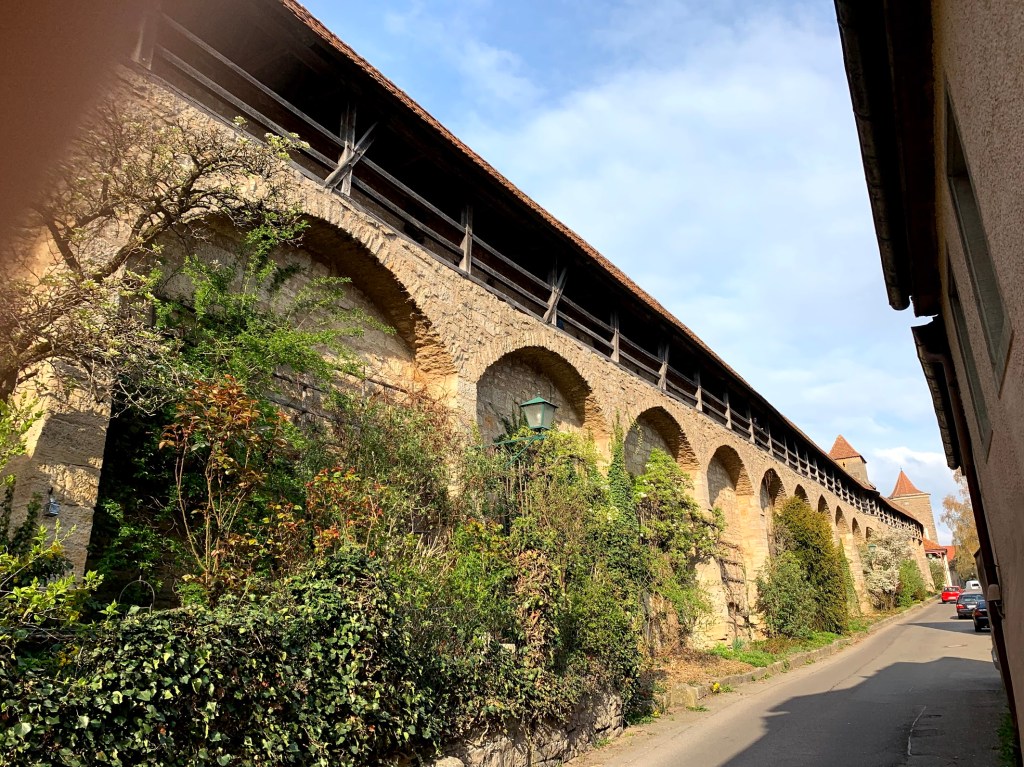
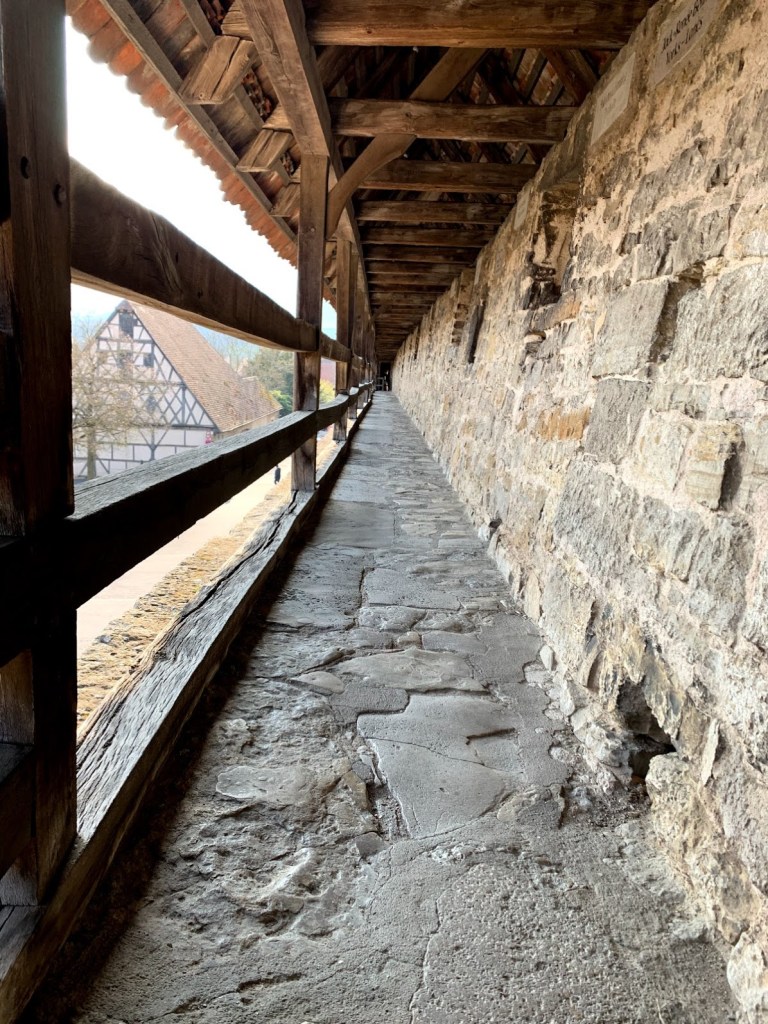
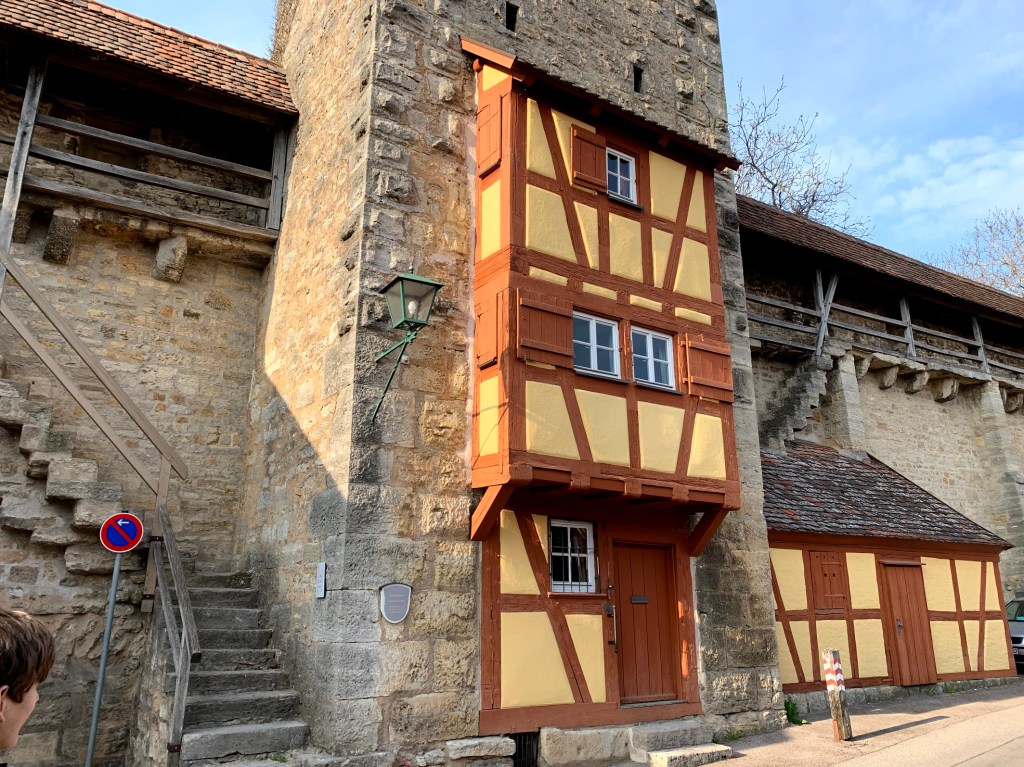
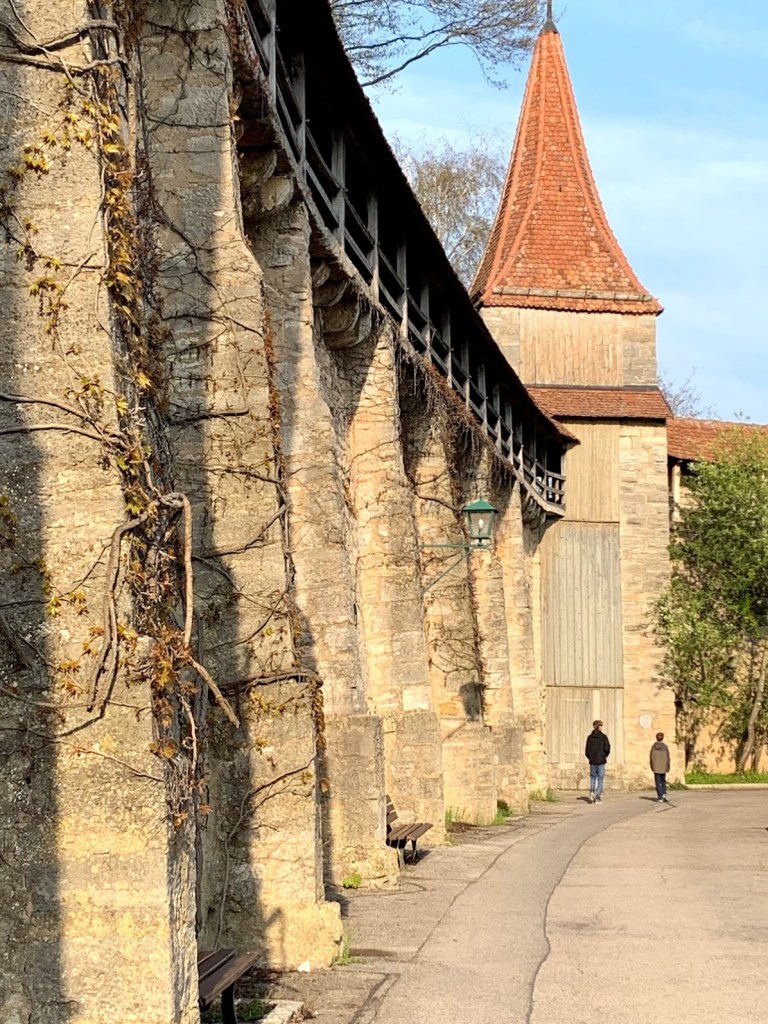
The village dates back to the 11th century and is one of a few villages that is completely surrounded by the original 13th century medieval wall and gates. You can even walk the entire wall ramparts and look down into the medieval streets of the village. All the homes were built between the 13th and 17th centuries. There are absolutely no modern structures within the walls of the village.

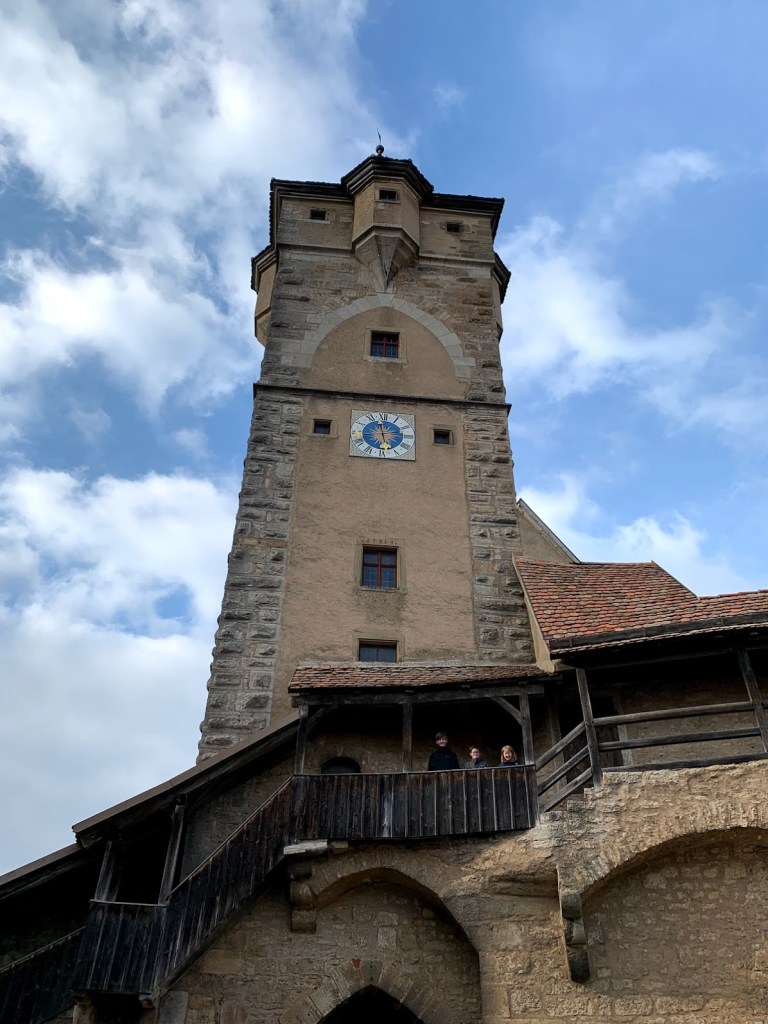
The kids had fun climbing up the towers and walking on the walls!

The kids really enjoyed walking along the walls and exploring the towers. Since it was a Sunday, the village was very quiet. We were the only people up on the walls. It was truly magical! We also explored the village streets admiring the homes and their gardens. On the main high street a few restaurants were open and we found a charming little café to eat dinner. The waitress was very friendly and enjoyed practicing her English as much as we practiced our German!
Section of newer wall from the 15th century
On the wall
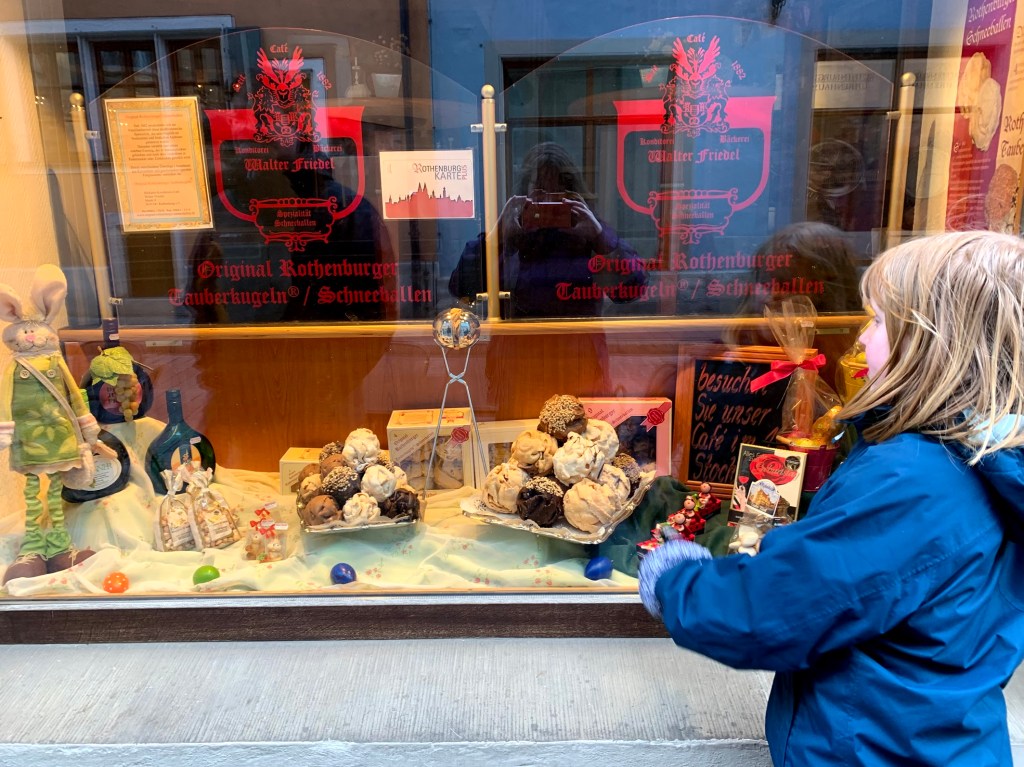
Window shopping: The next day we went shopping and everyone loved these delicious Sneeballs!
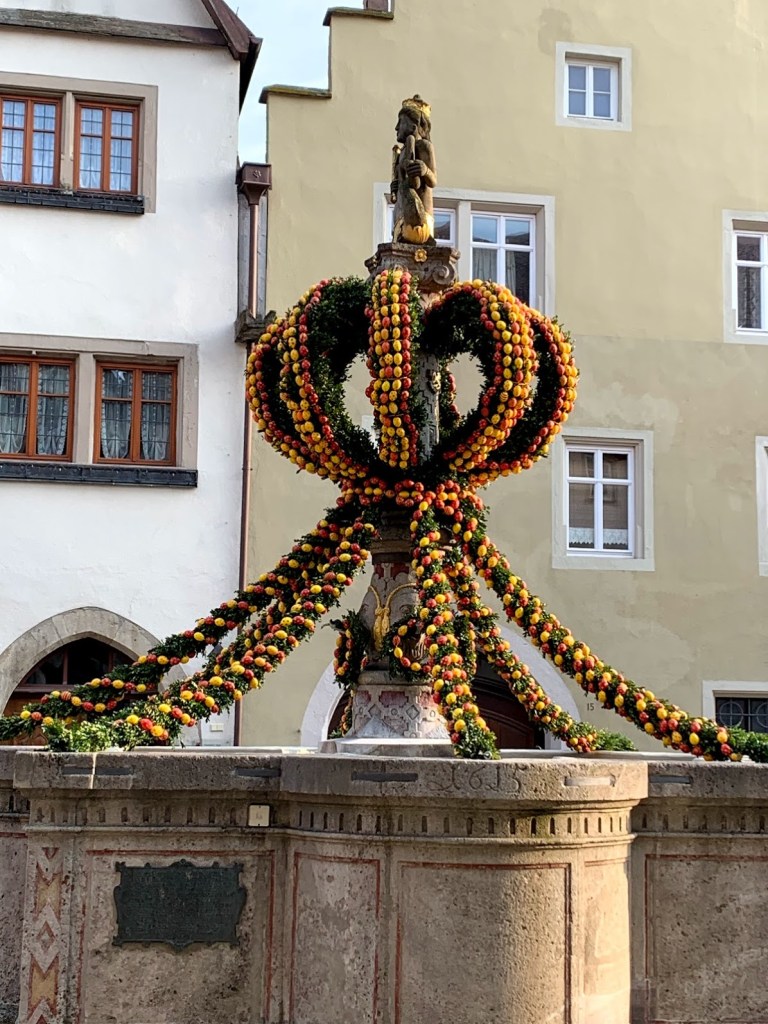
16th century fountain covered in real decorated Easter eggs: Each egg had been blown out and hand painted!

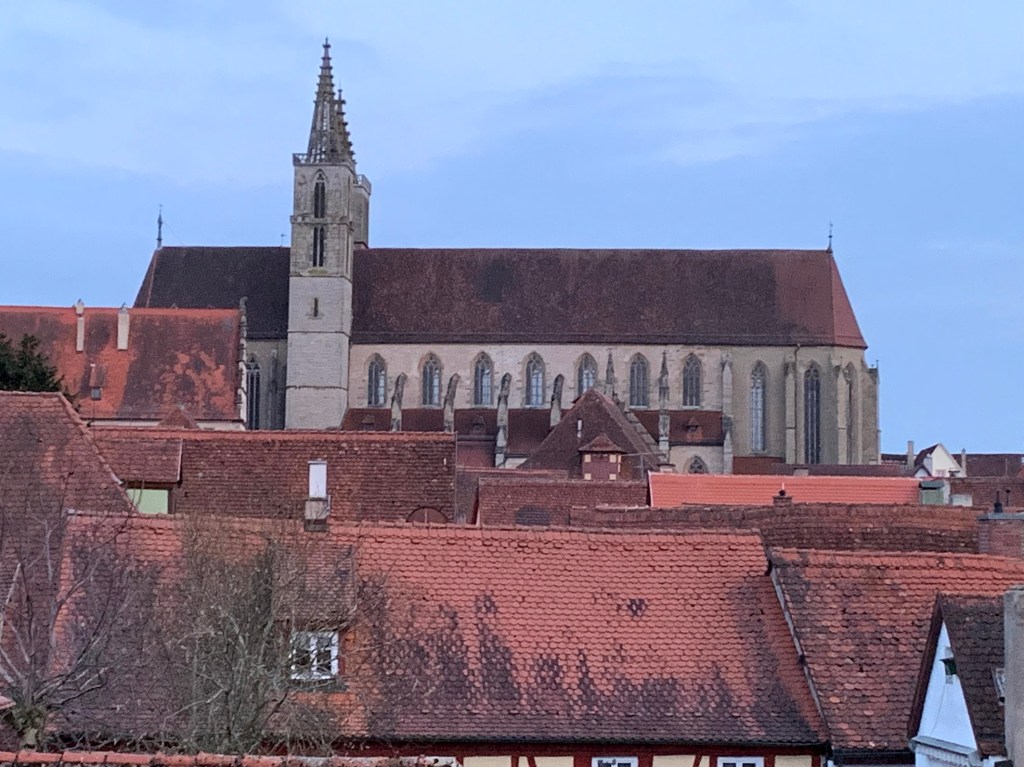
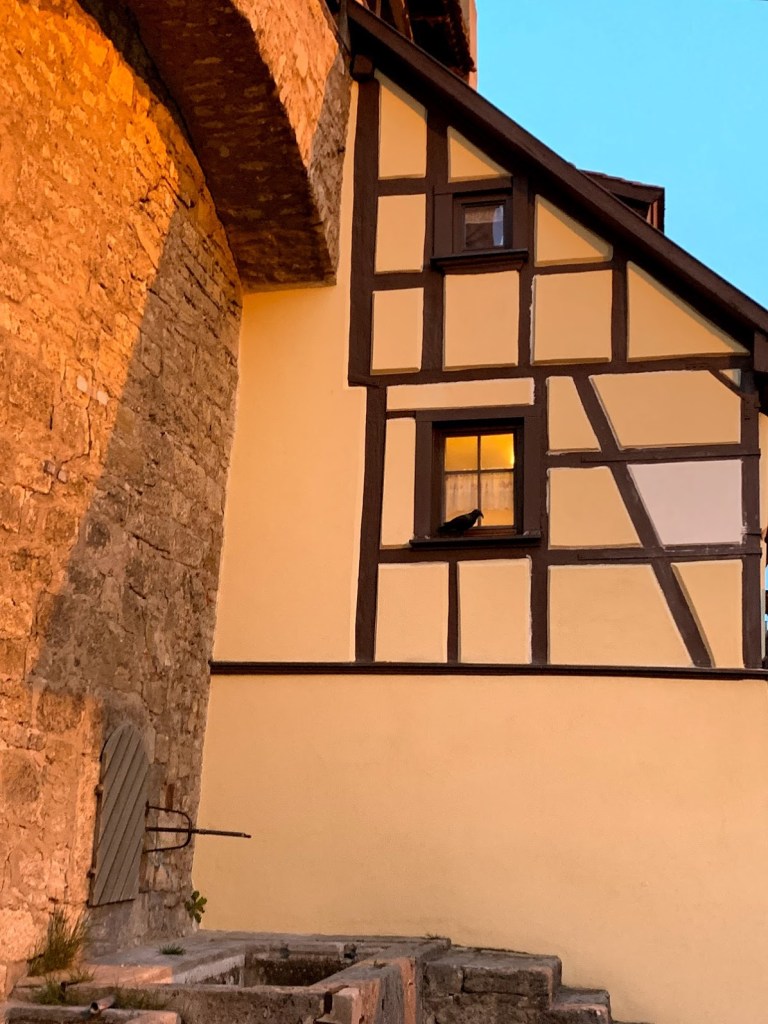
After a hearty supper we once again took to the walls and enjoyed listening to the church bells of St. Jakob ring the hour as the sun cast it’s brilliant orange glow over the rooftops of the old village. The stones and wood of the walls were bathed in a warm light… evening sunlight those walls have witnessed for 700 years!
St. Jakob’s as seen from the wall
Prost!

I know it’s been a couple of weeks since my last post, but that is because we decided to travel around central Europe for two weeks during Robert and the kids’ Easter Holidays. Graz is located within a few hours of several countries. We chose to head west into the Bavarian Alps in southern Germany, the little country of Liechtenstein, into German speaking Switzerland, and finally across northern Italy.
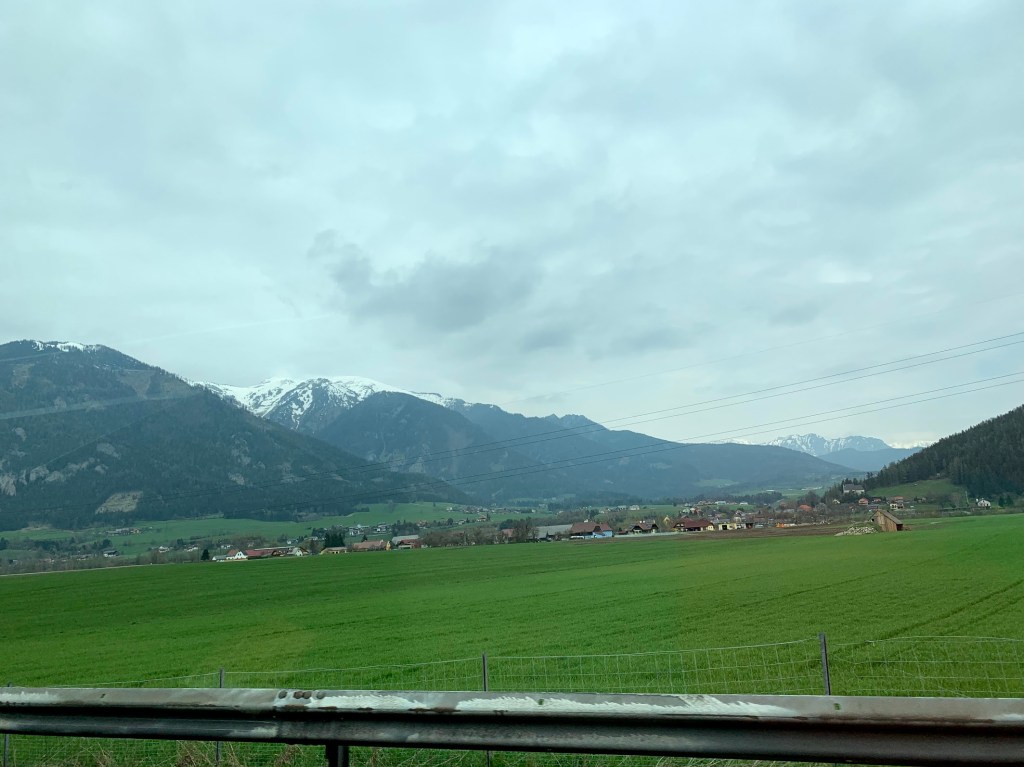
This photo was taken about 50km west of Graz
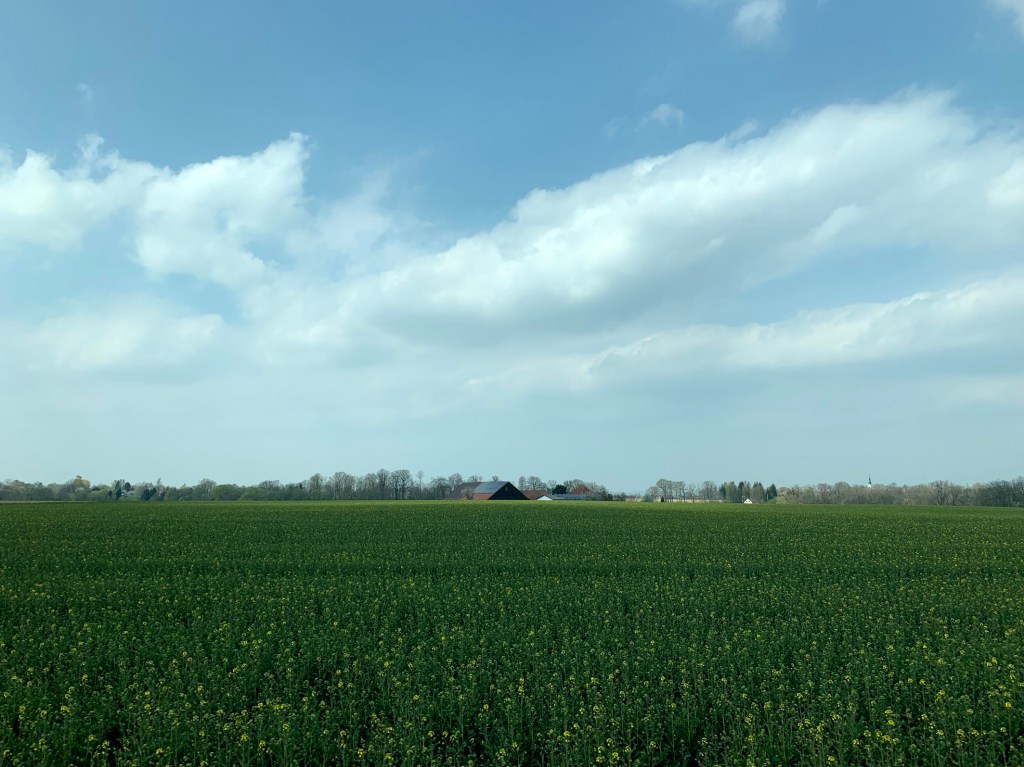
As we approached the Austrian/German border the mountains disappeared for a bit and opened up into lovely farmland

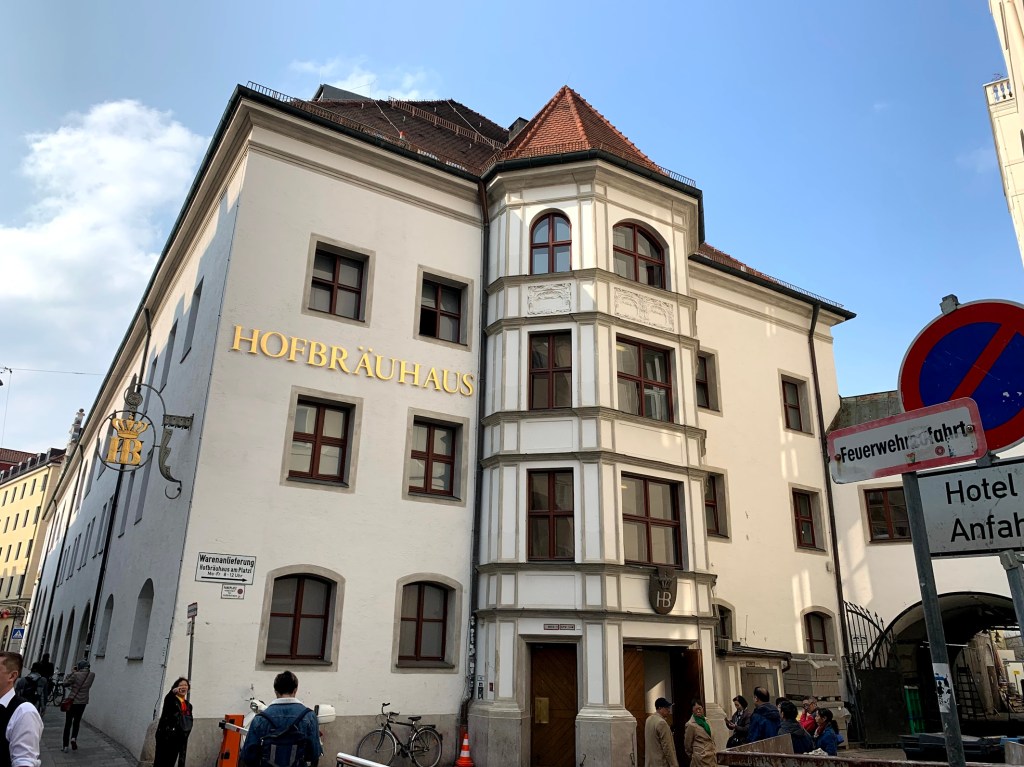
We left Saturday morning the 13 of April and drove about 4 hours to Munich (München) Germany. I’ve been to Munich a couple of times and it was fun showing the kids around the old city centre. We arrived around 4pm and decided to have an early supper at the Hofbräuhaus.

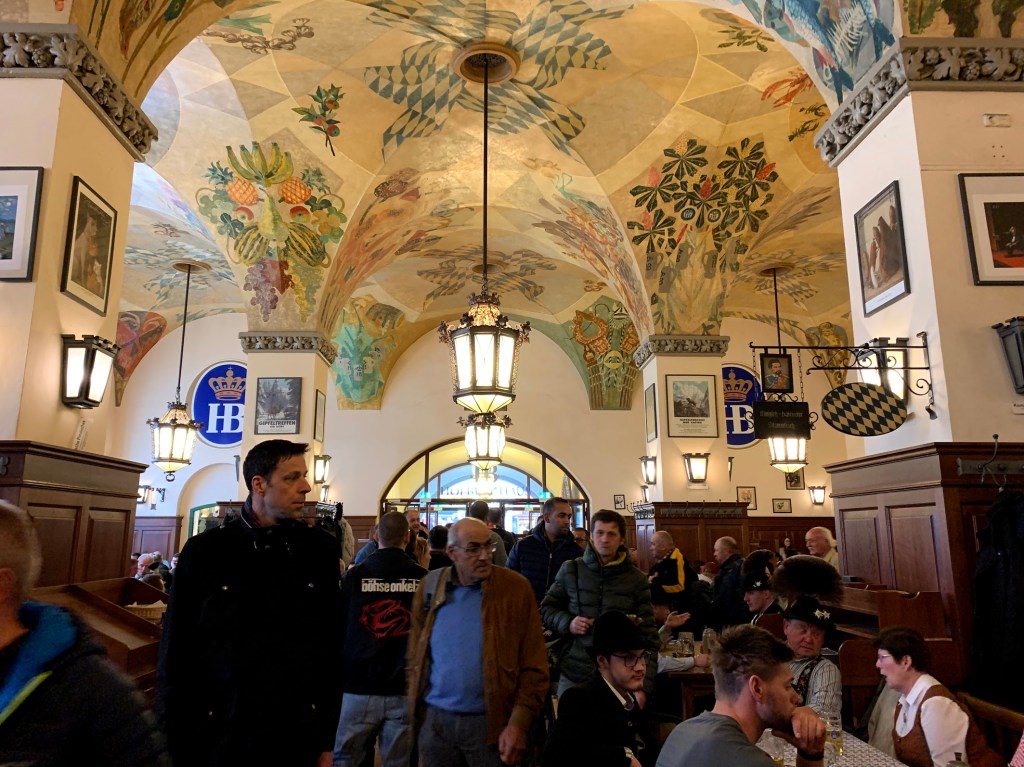
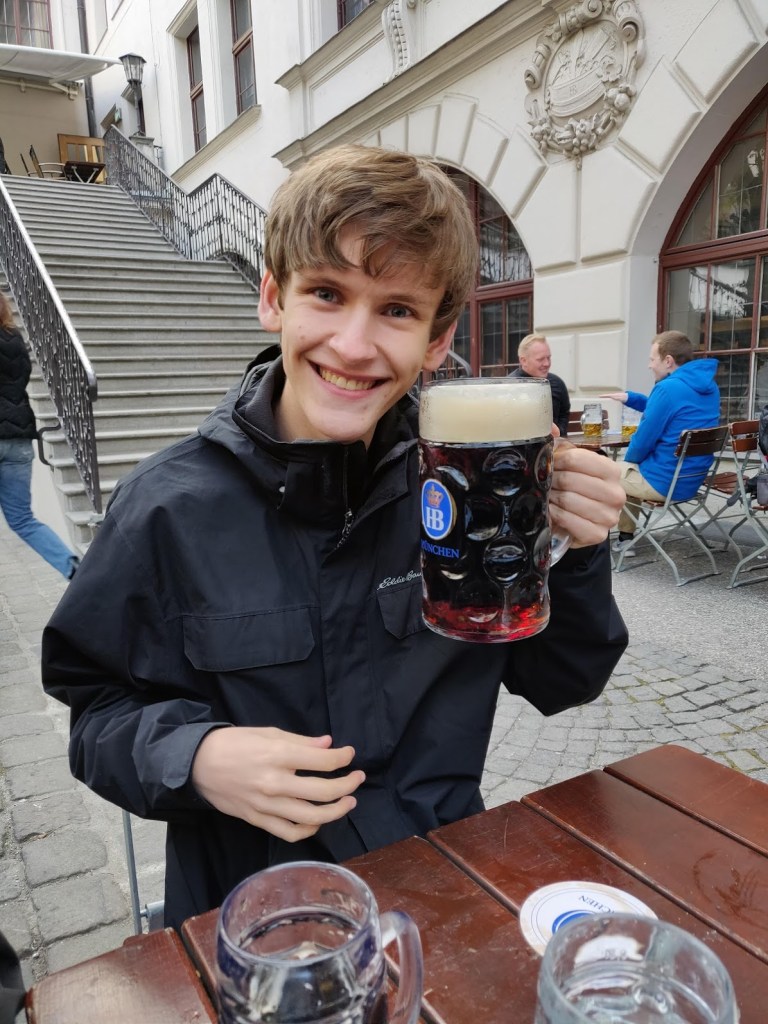
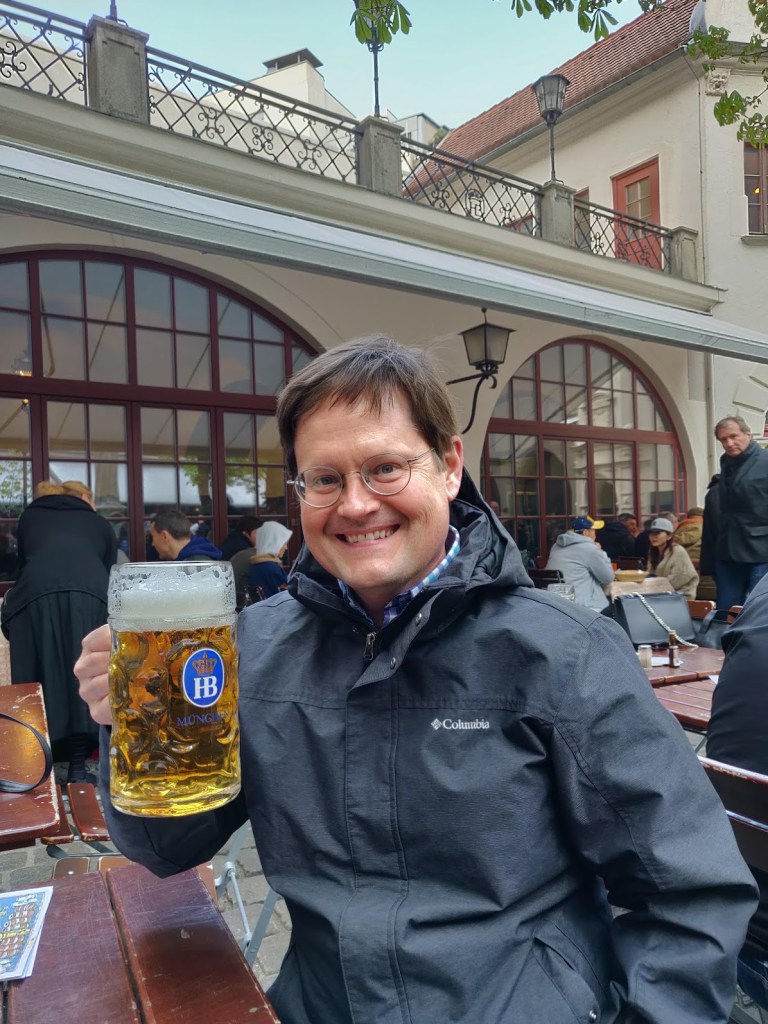
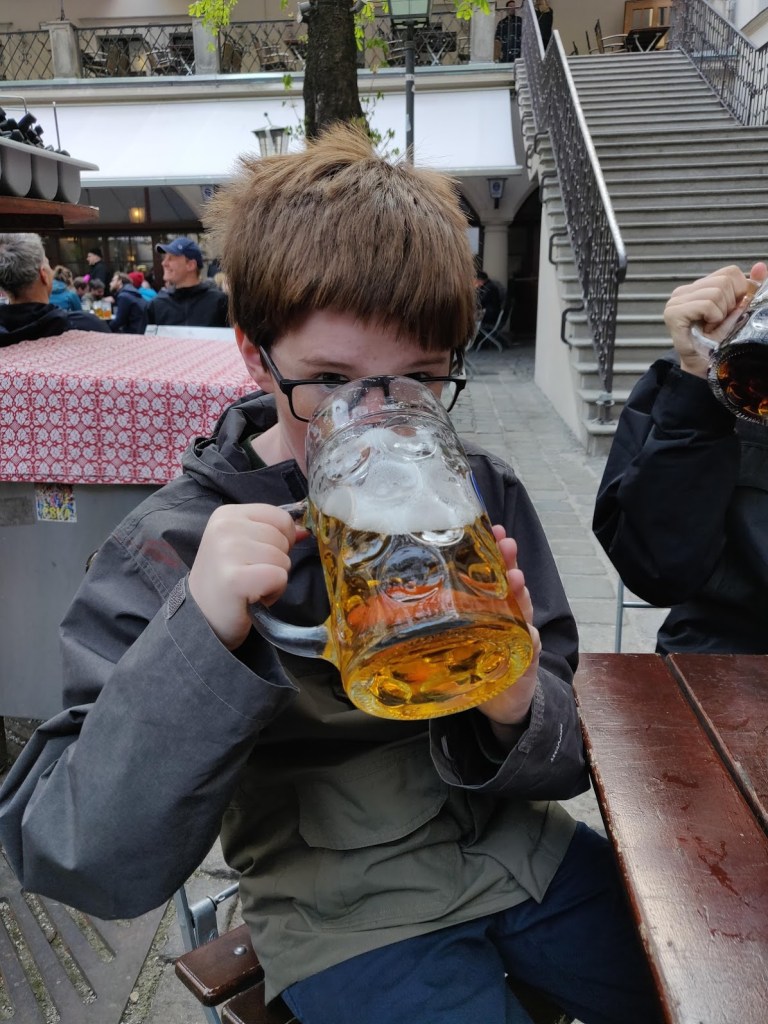
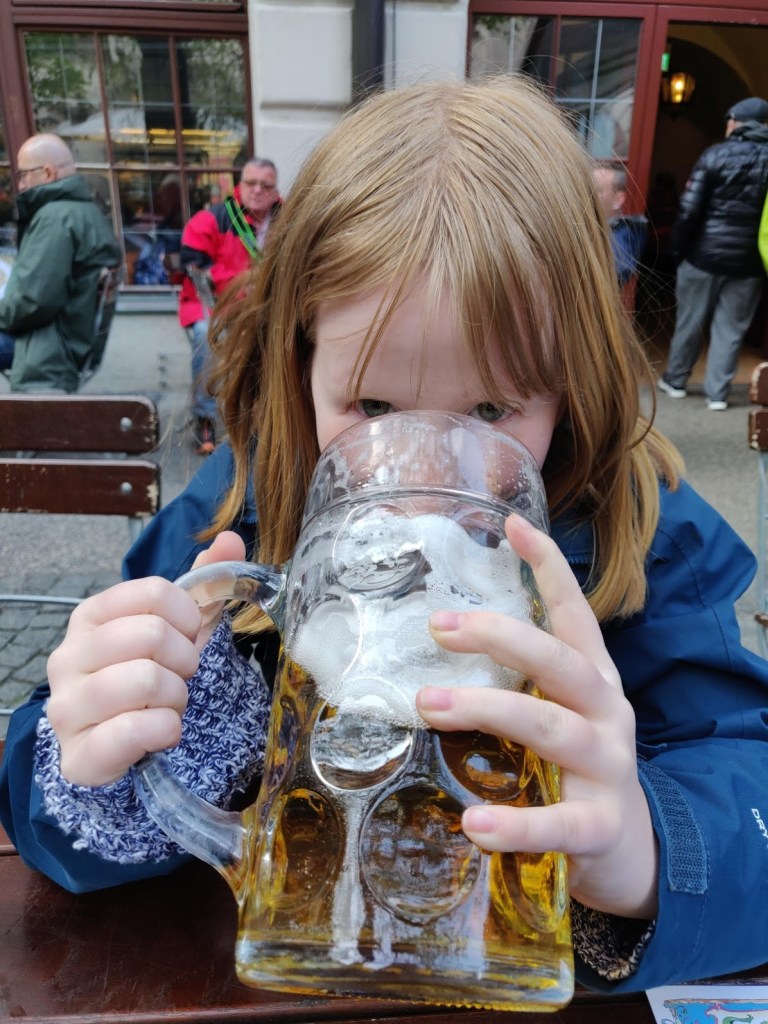
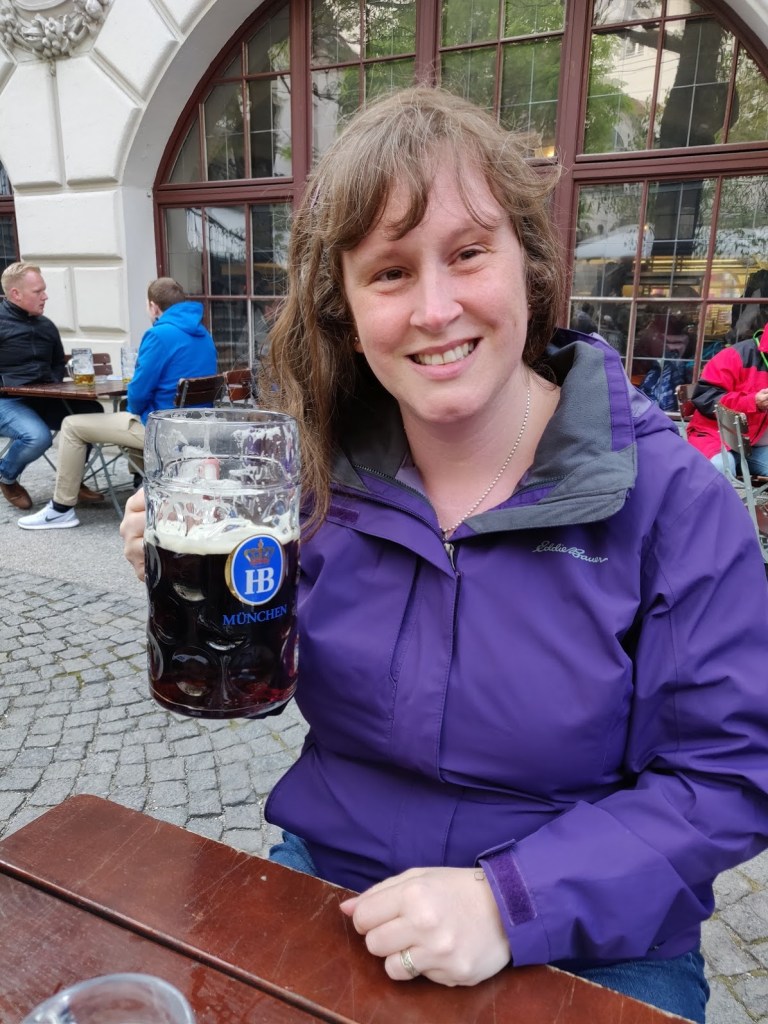
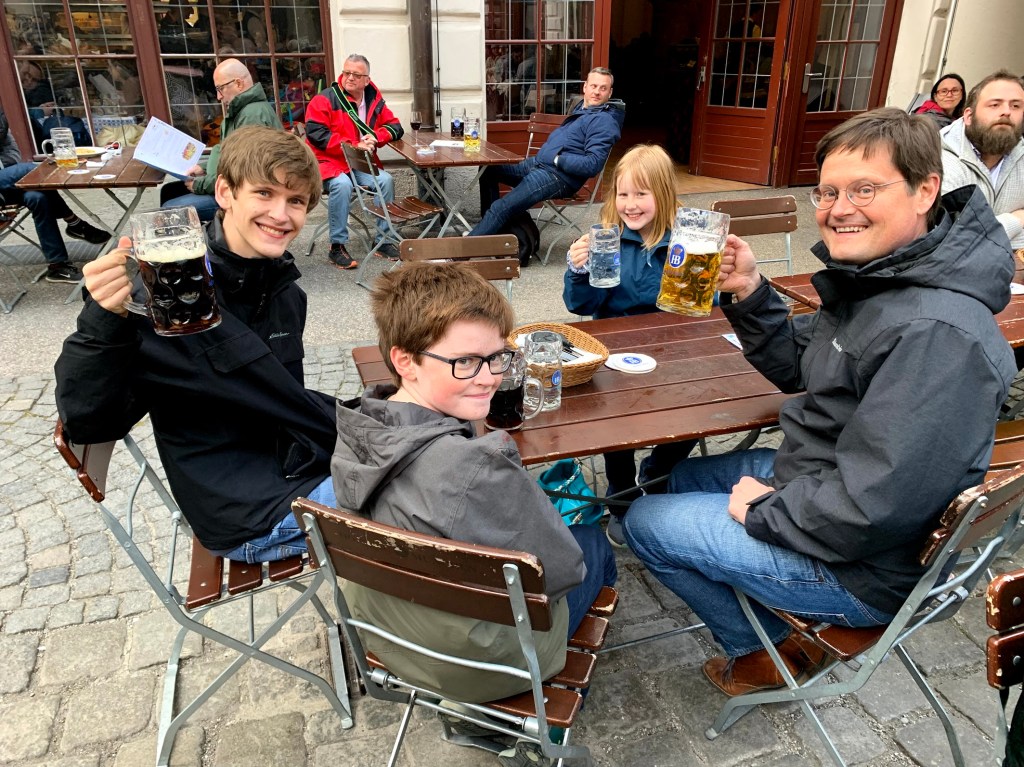
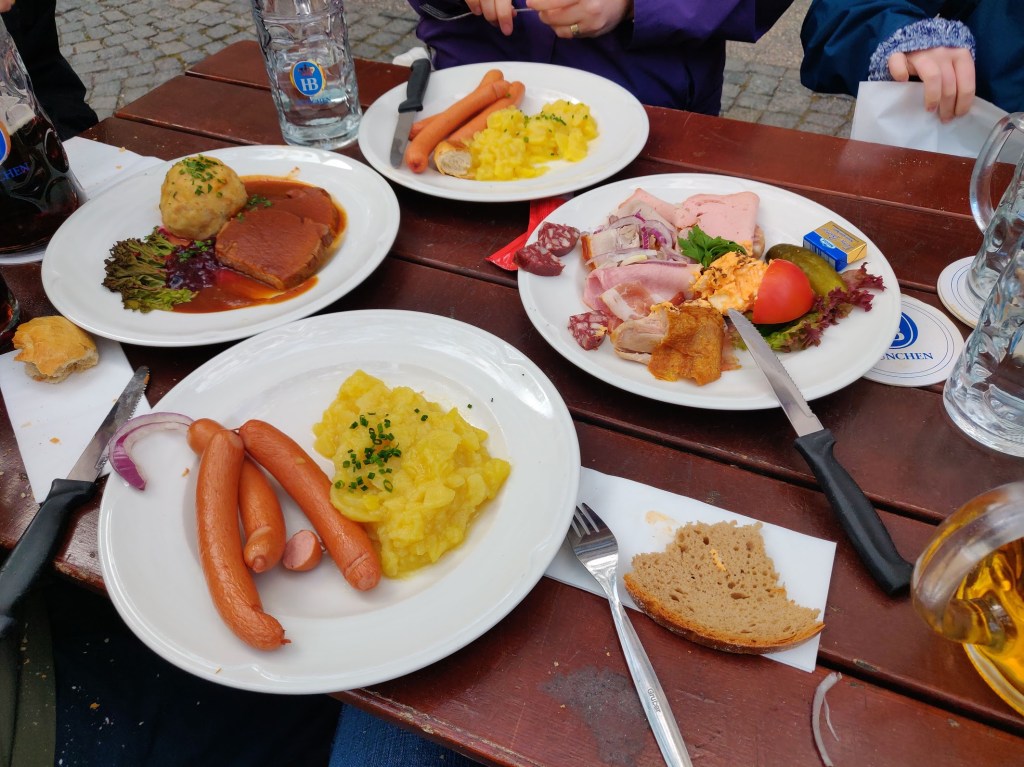
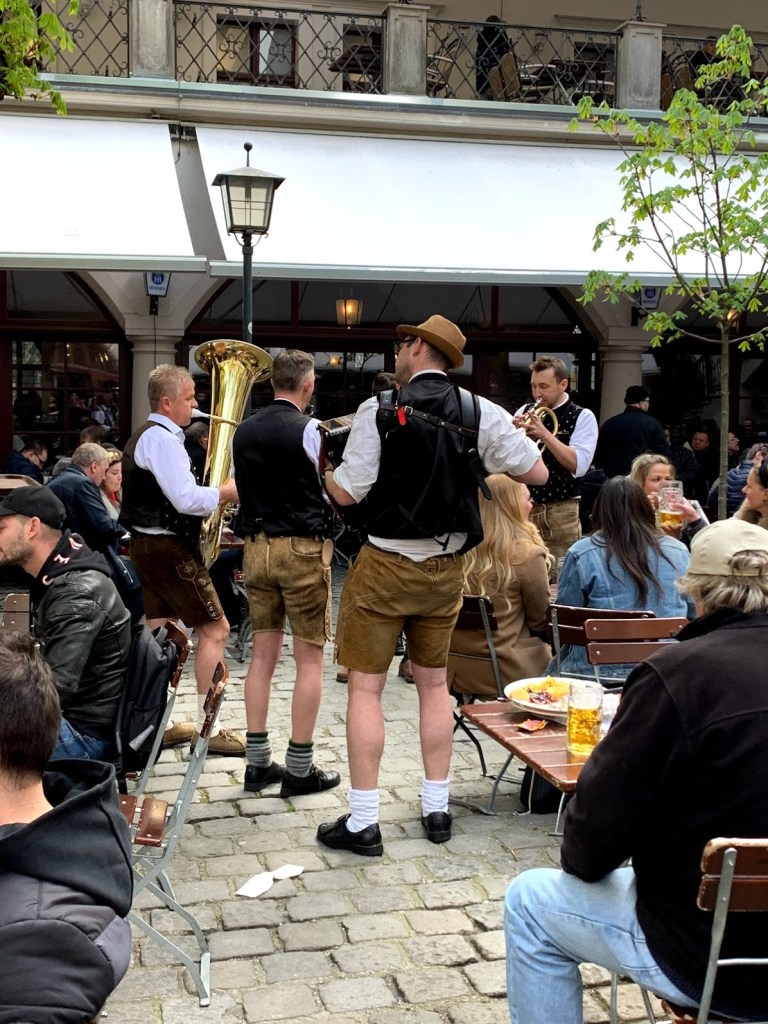
The Hofbräuhaus is the largest beer hall in Germany and was built in 1589. It traditionally serves it’s own brews, but you can find other beers there. The place was busy even at 4:00, but we found a table out in the biergarten. It was a bit chilly, but spirits were high, the traditional band was playing, and the food and beer was delicious! There is actually no legal drinking age in Bavaria, so even Seamus and Faywen could’ve ordered beer if they wanted. However, we opted to share a couple of the giant liter sized glasses! Robert ordered the traditional Hofbräuhaus and Liam ordered the dark Hofbräuhaus. Our waitress brought us plates of wursts, cheeses, and brotchen rolls to appease our hunger.

Sitting in the Biergarten at the Hofbräuhaus!
Are you drooling yet?
The band rotated indoors and outdoors

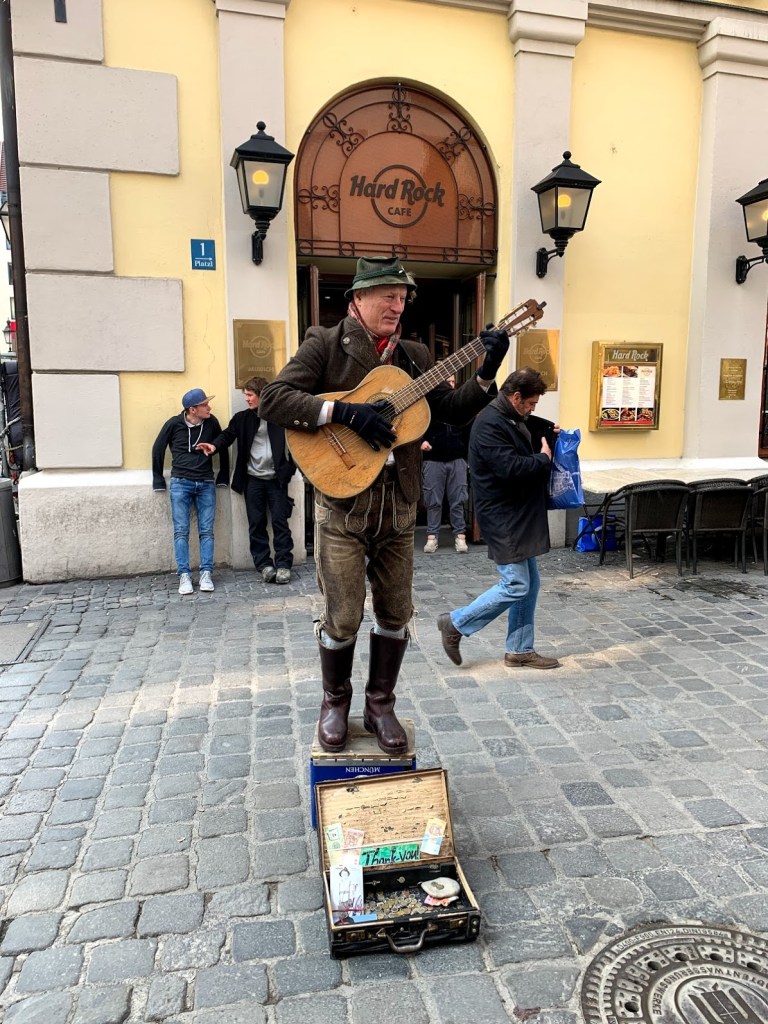
After a hearty meal we walked around the old streets and quaint shops of Munich. The city was alive with visitors and locals alike!  We had loads of fun listening to the various street musicians, which ranged from a guy playing “Country Roads” on his guitar to another fellow who was dressed from head to toe in Bavarian Trachten (traditional lederhosen etc) singing folk songs boisterously!

Bavarian Street Musician:
Faywen gave him a tip and he gave her a postcard!

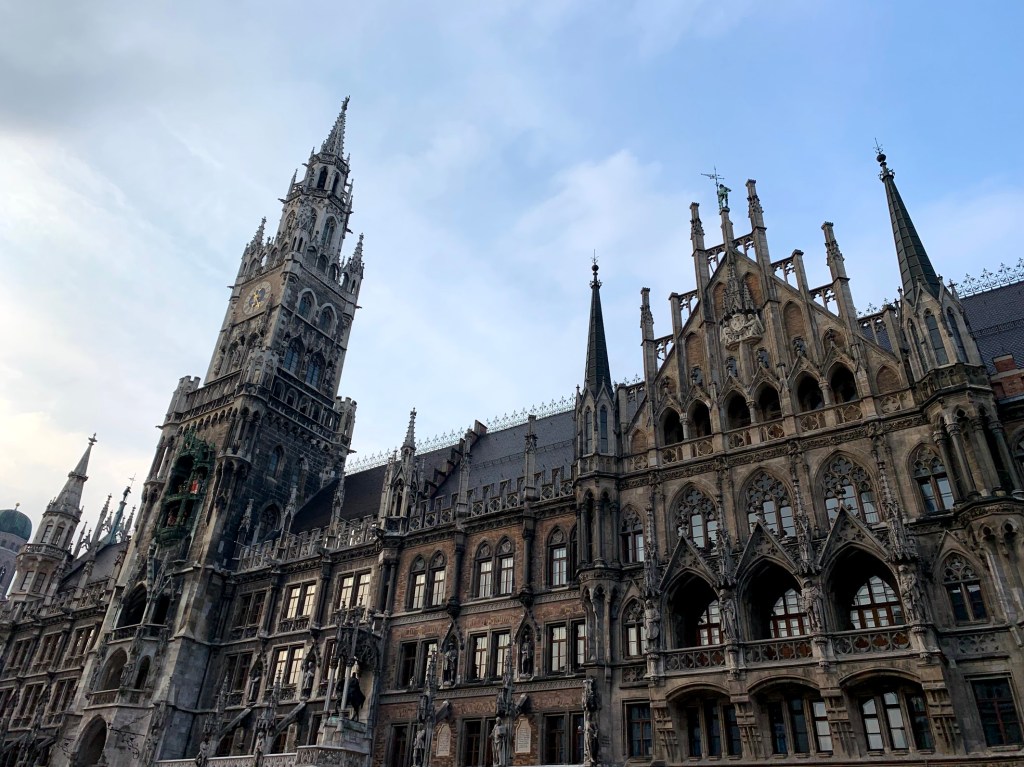
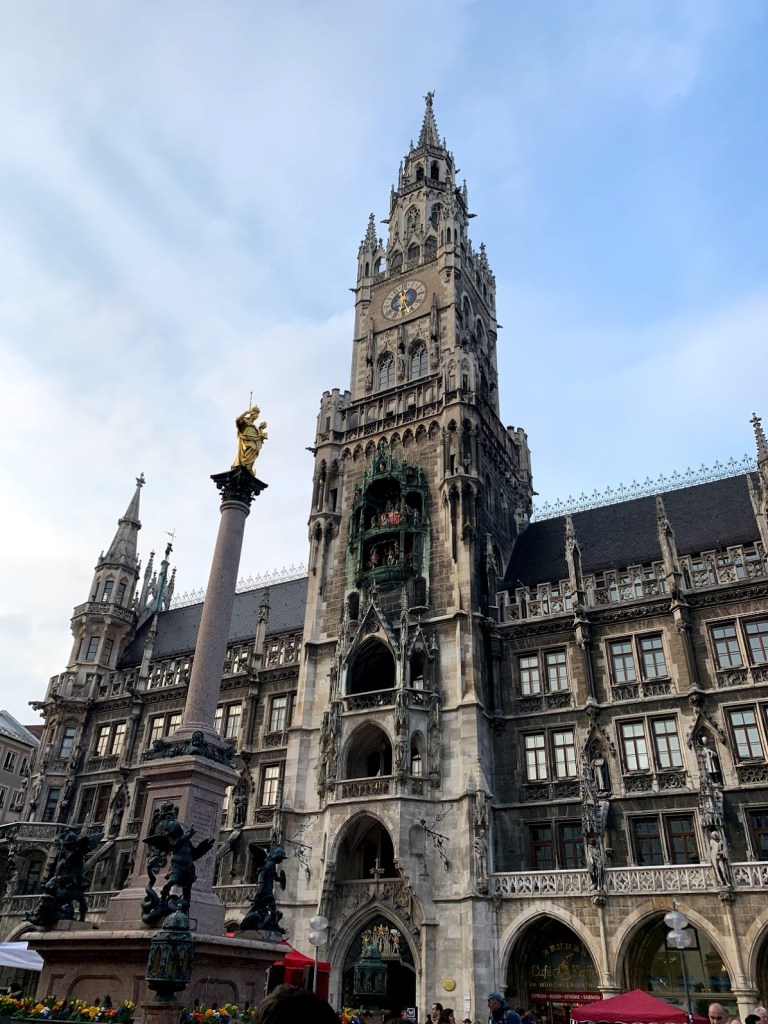
We ended our time downtown by walking over to the lovely Marienplatz, home of the famous Neo-gothic Neues Rathaus of Munich. It was built in 1867 to help house newer government departments that couldn’t fit into the old Rathaus from the 1470’s. In 1907 an amazing 2 tiered glockenspiel with life sized figures was added to the Rathaus. It has 40+ bells that ring various tunes. Each level depicts a story. The top depicts the 1500’s wedding of Duke Wilhelm V. The bottom tier reminds the citizens of Munich about the Great Plague and that they should dance for joy to ward off any future plagues!

Neues Rathaus in Munich
Glockenspiel Tower

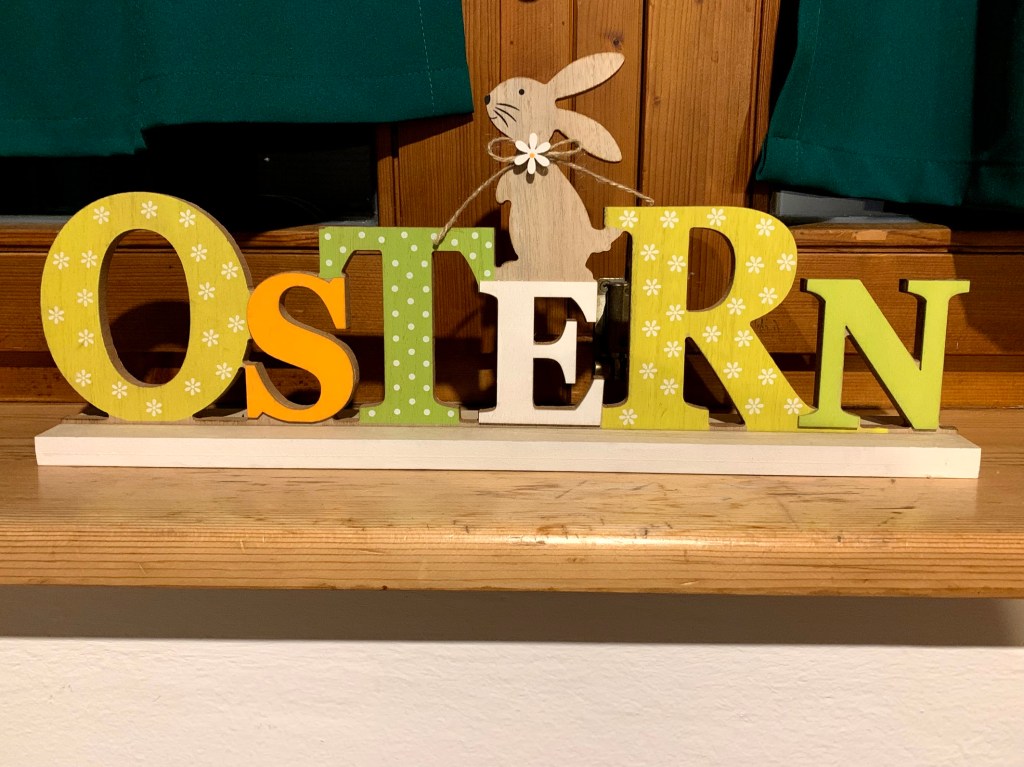
Osterdekorationen

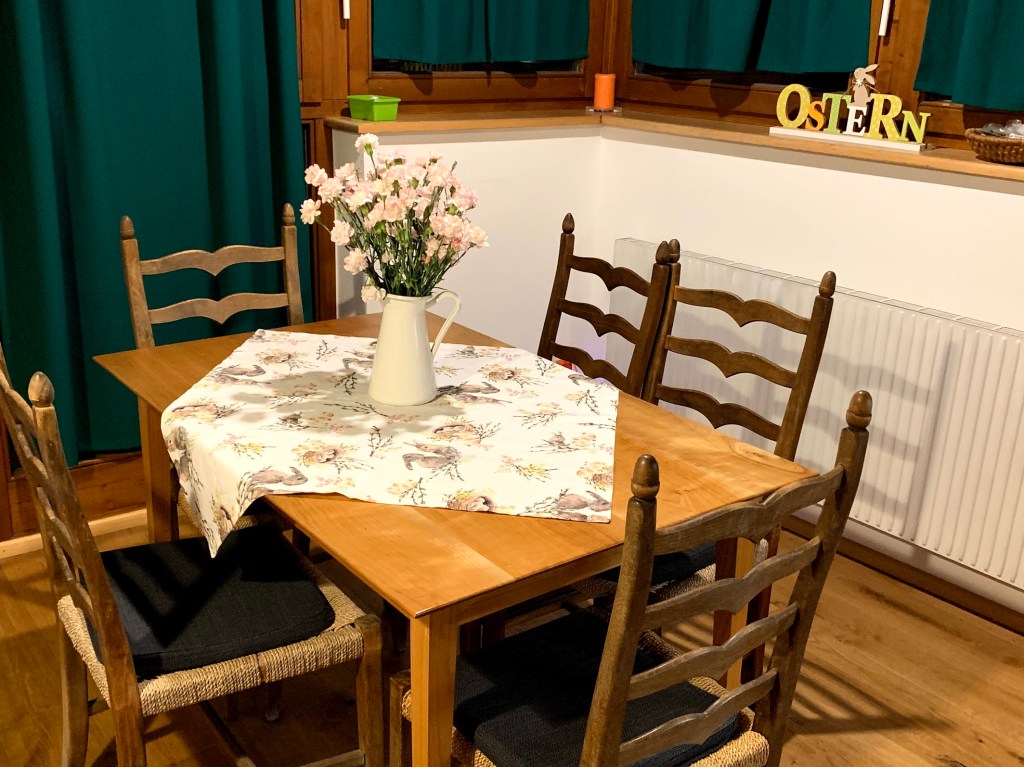
Hand painted wooden Ostern sign
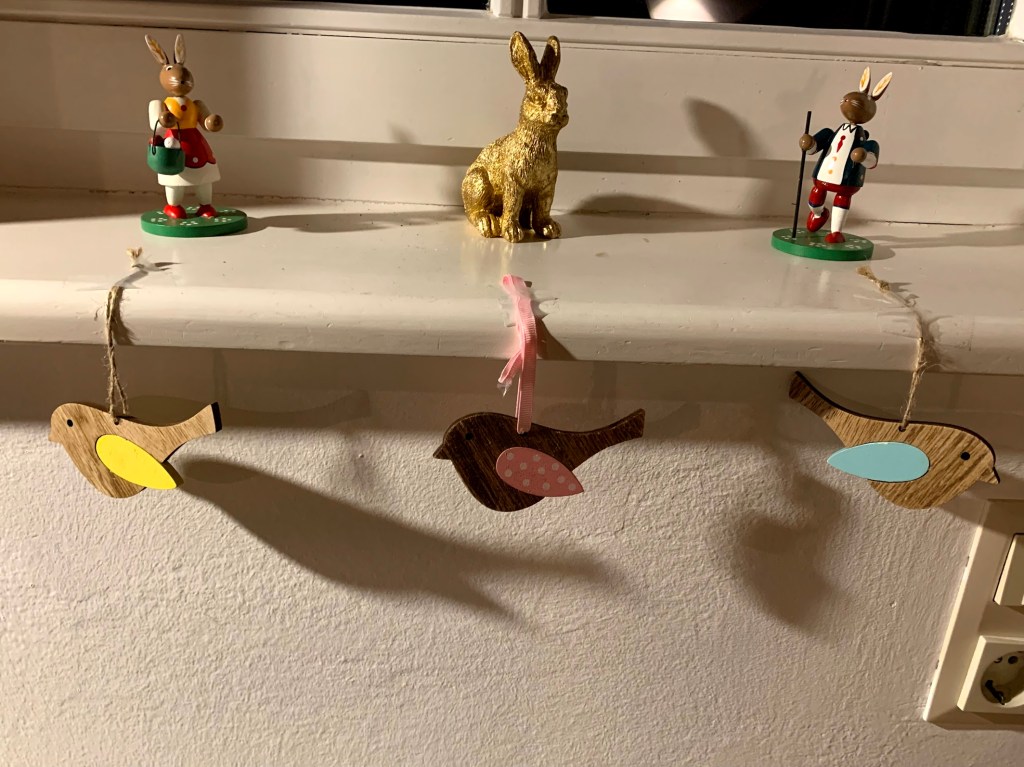
Our own little wooden ornaments and golden glittery bunny!

Many of the secular Easter traditions we celebrate in America came over with the immigrants from Germany, Switzerland, and Austria. It’s been fun walking around the shops in Graz and seeing all the wonderful Easter decorations (Osterdekorationen). The Austrians really like wooden decorations as well as brightly colored glittery bunnies (Hasen) and eggs (Eier). Sheep (Shafe), hens (Hühner) and birds (Vögel) are very popular animals too.

Pretty tablecloth I found with bunnies, chicks, birds nests with eggs, and pussy willows.
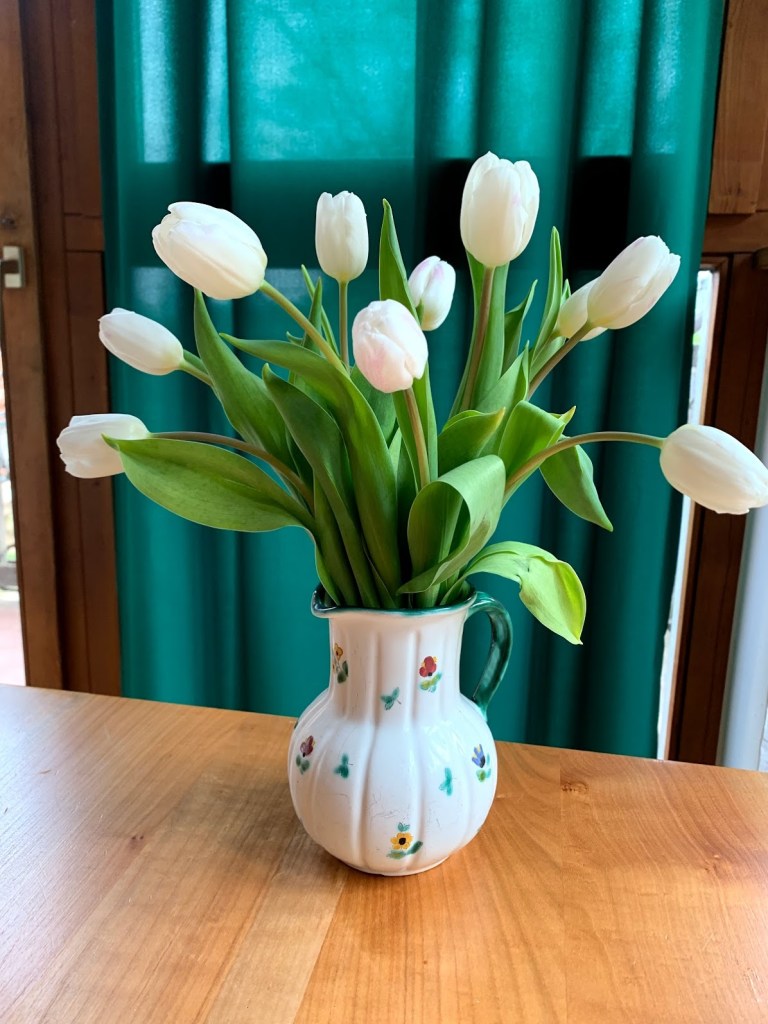
These are lovely white tulips I have on the table currently. Tulips, carnations, and pussy willows are very popular this time of year.

Springtime in Graz

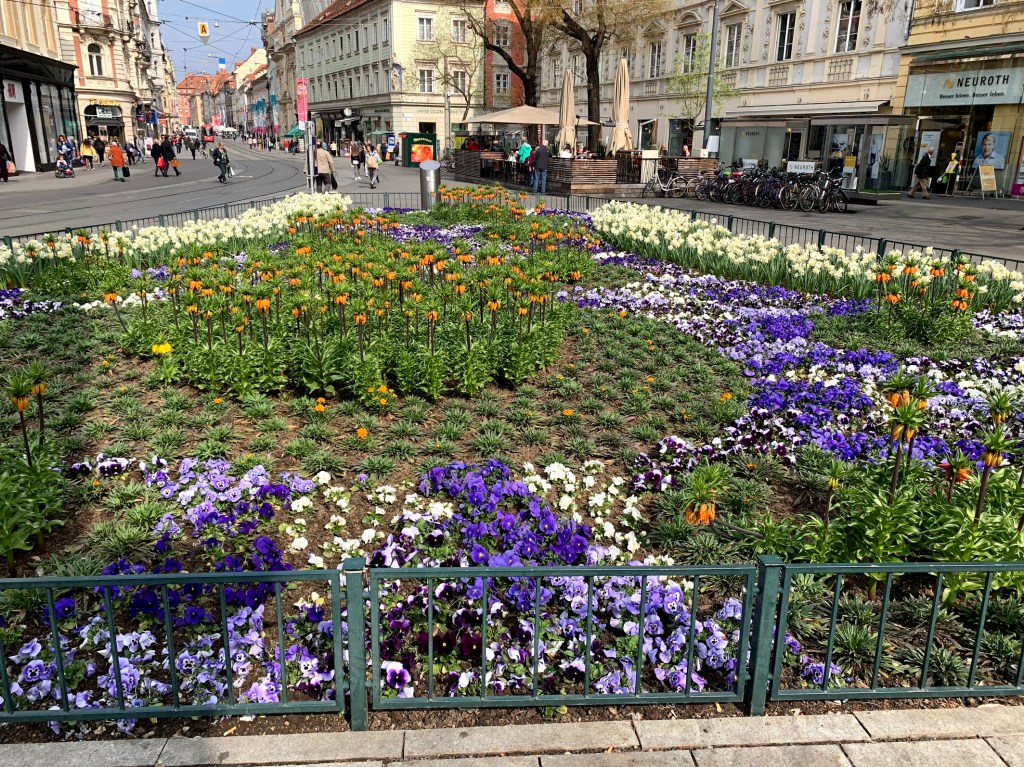
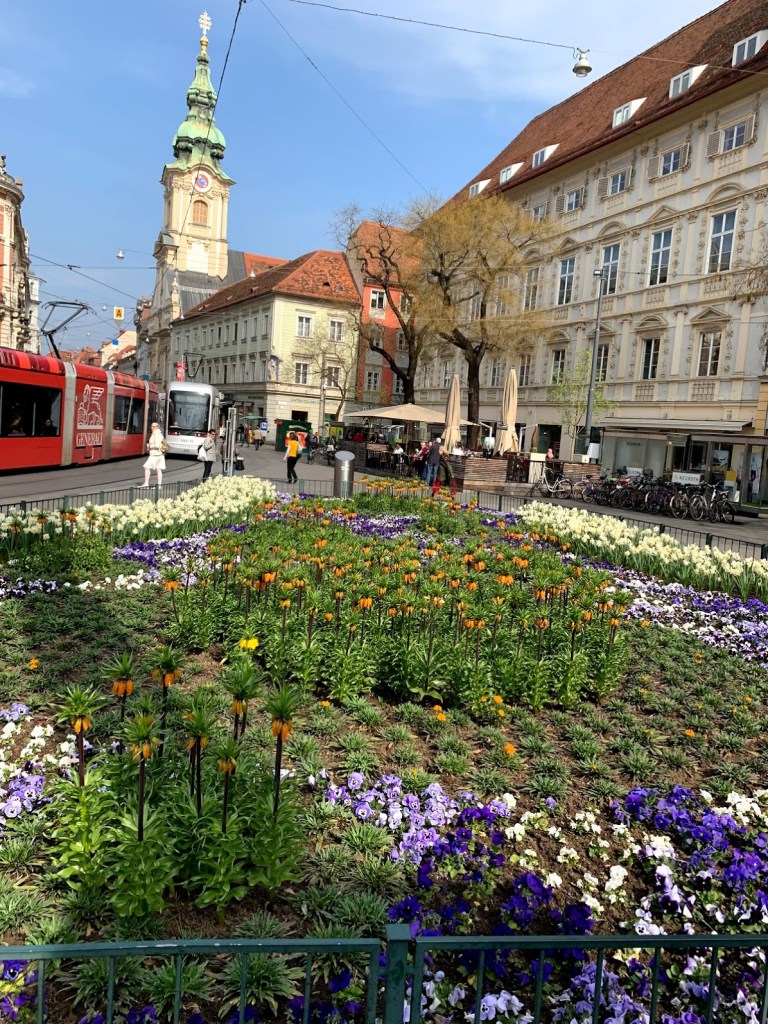
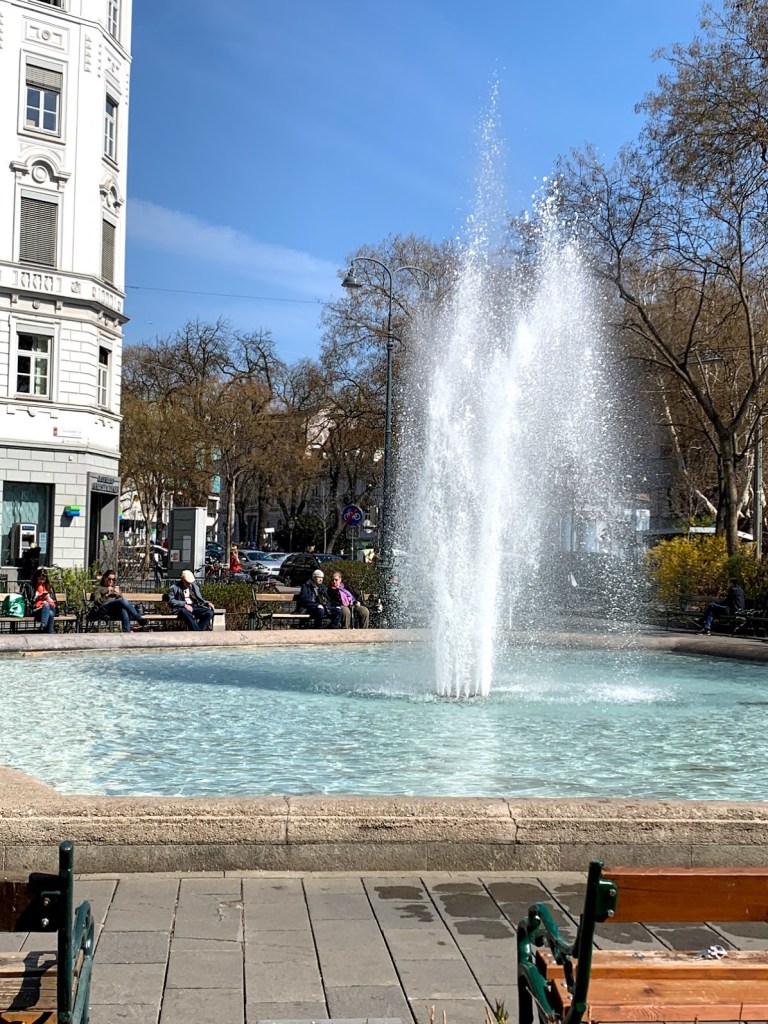
Spring has sprung here in Graz. As I walked around central Graz the other day I took a few photos of the blooming flowers near Jakominiplatz, the other big square in central Graz. The flowerbeds were full of color and the fountain was splendid.

Looking down the main road from Jakominiplatz to Hauptplatz

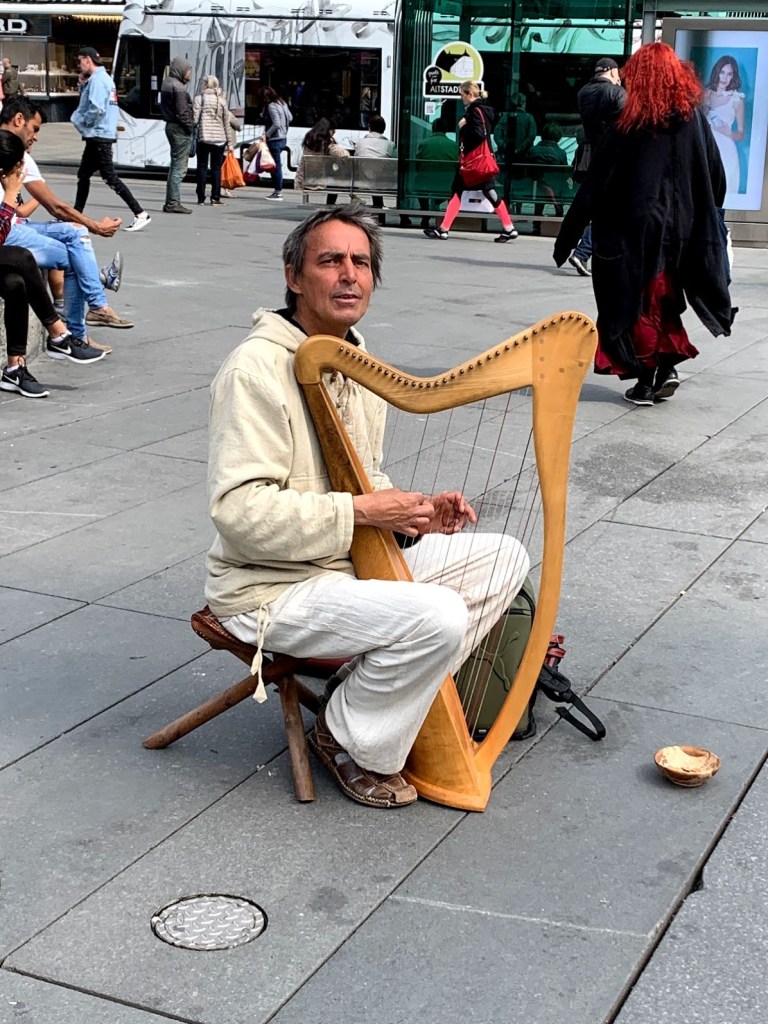
During my ramblings I met a street musician named Rudy, who plays Briton Harp. It was nice getting to talk with a fellow harpist and he even asked me to sing along to a couple of Irish tunes he knew. We received compliments after performing “In the Sally Gardens” together.

Rudy, the harper:
He was playing in the Hauptplatz.

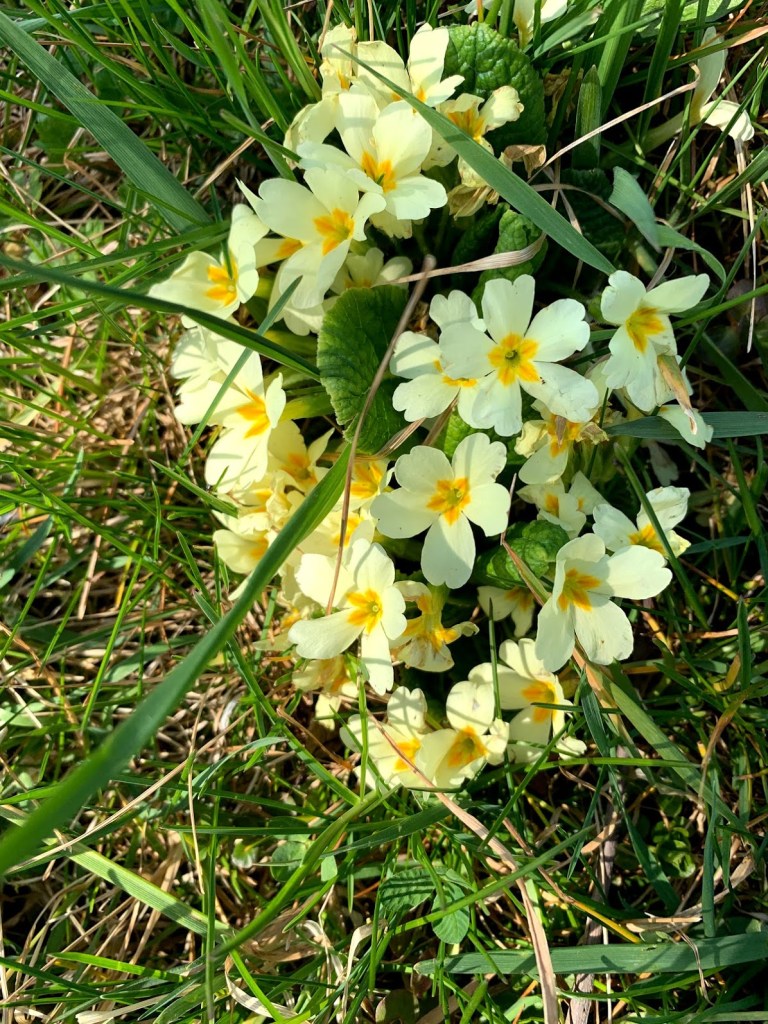
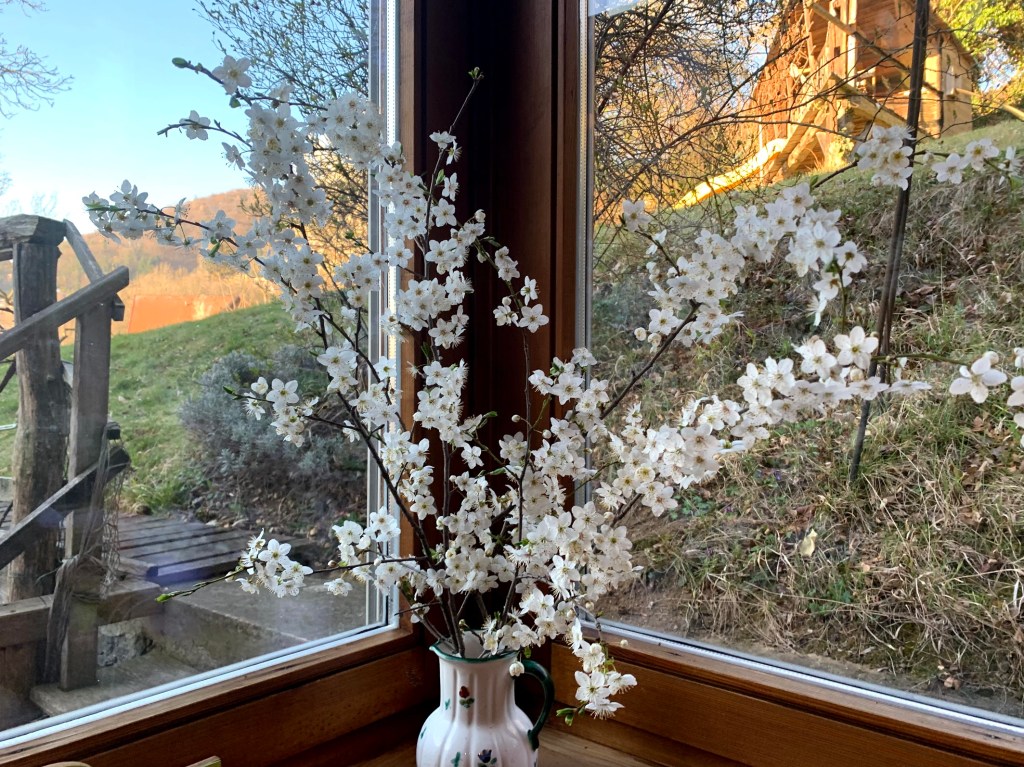
Our own yard was also blooming with little yellow flowers all over the ground. All the trees are full of white and pink blossoms. There are a lot of yellow plum and cherry trees in the area. Ms. Elizabeth, our host Johannes’ mother, was cutting branches off the yellow plum tree and she offered me a few to decorate our home. The little white flowers of the yellow plum smelled sweet!

Lovely little yellow flowers that are all over the yard.
White blossoms from the yellow plum tree

FH Joanneum

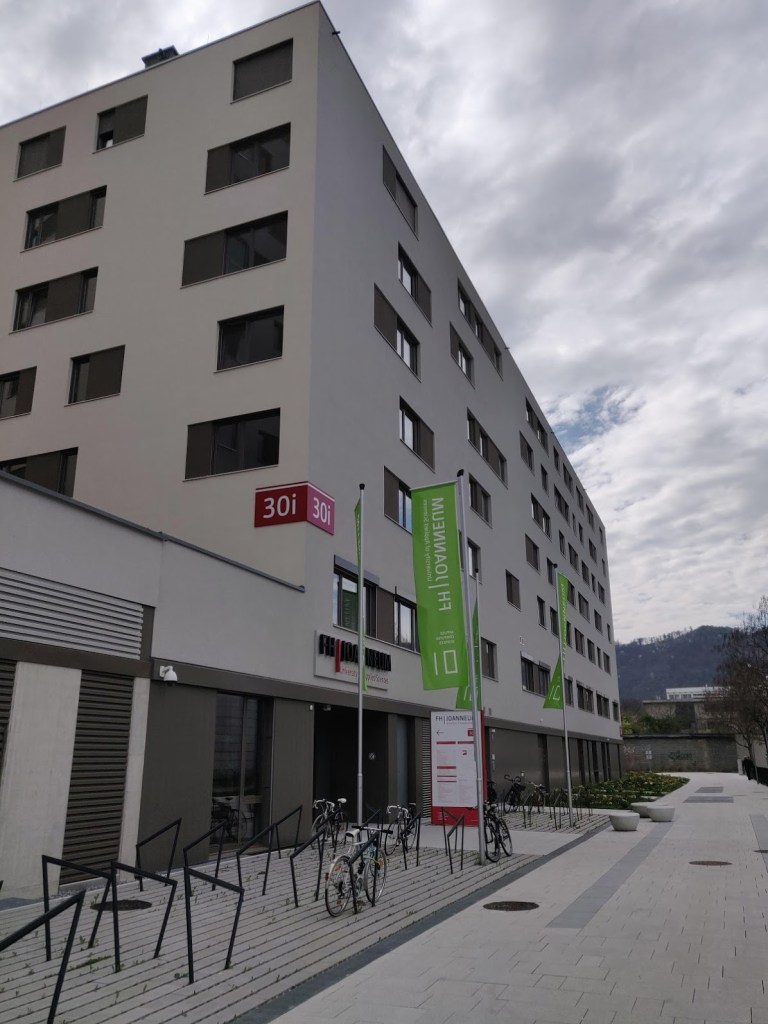
Another Sunday brought us another afternoon adventure in Graz! This time we headed out after home church to go and get ice cream followed by exploring Dad’s office and the FH Joanneum campus. We discovered that there is a Louis Gelato by the campus. This one is much closer to us than the shop downtown.

With our tummies full of yummy gelato, we walked down the street to the FH Joannuem/University of Applied Sciences campus. It’s not a big place, but it was fun to explore. There are only about 5,000 students enrolled in the school.

Robert’s office building
7 April 2019
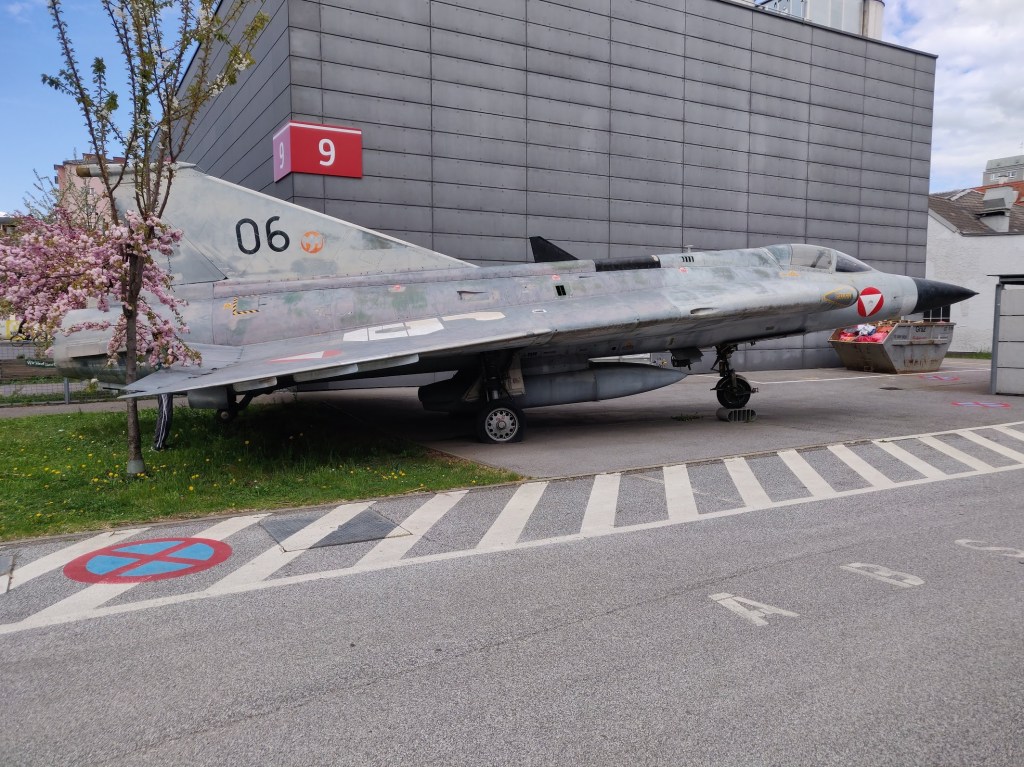
Fighter jet shell:
FH Joanneum has a small engineering department dedicated to flight.
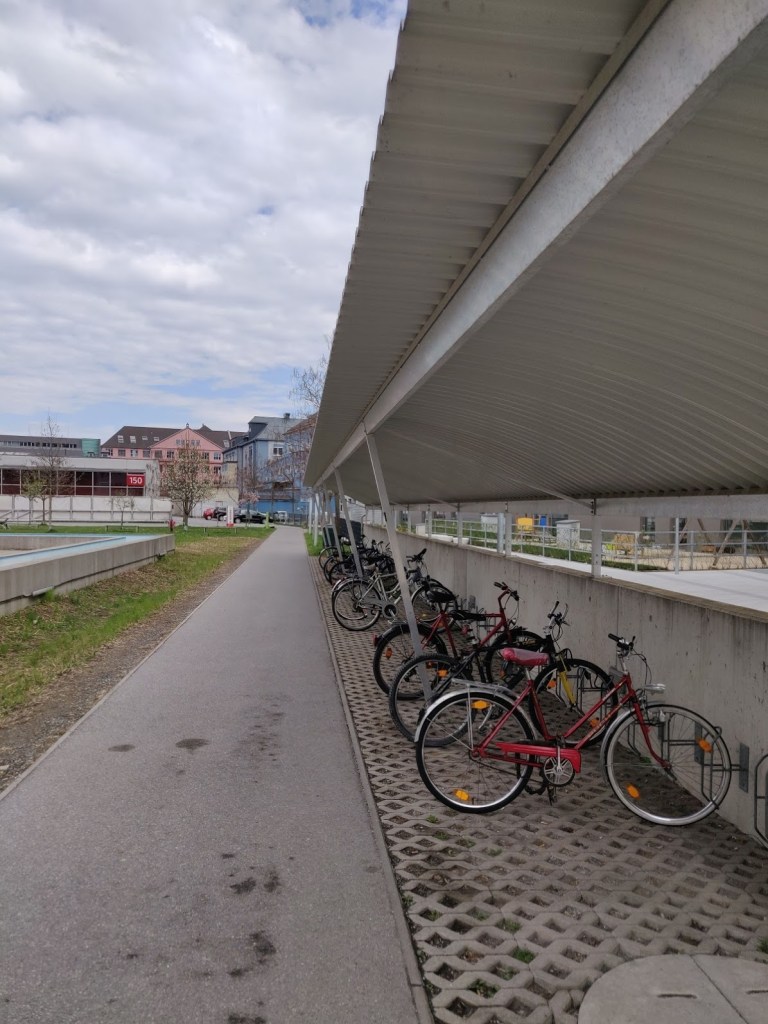
Student bicycle garage
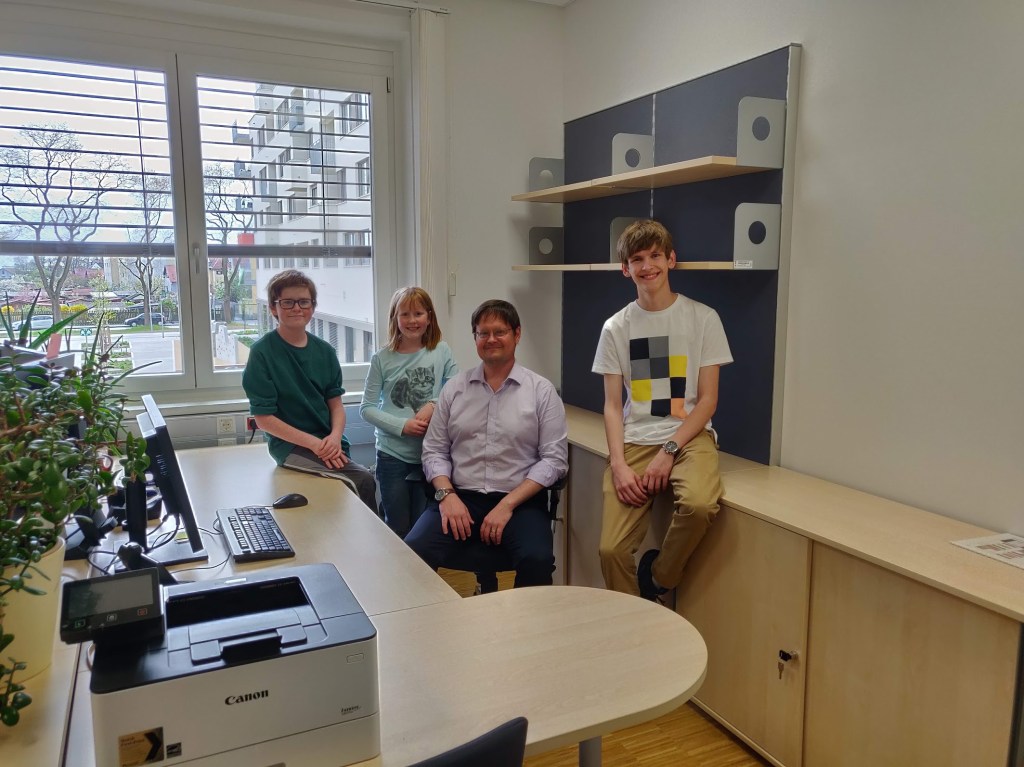
In Dad’s office:
Robert shares his office with another colleague. You can just see Karen’s desk. It has the plant on it.

The kids all had fun checking out Dad’s office. Once they had thoroughly opened every drawer and ridden the rolling chair up and down the hallway a few times, we headed outside to check out the playground the kids saw from the office window.

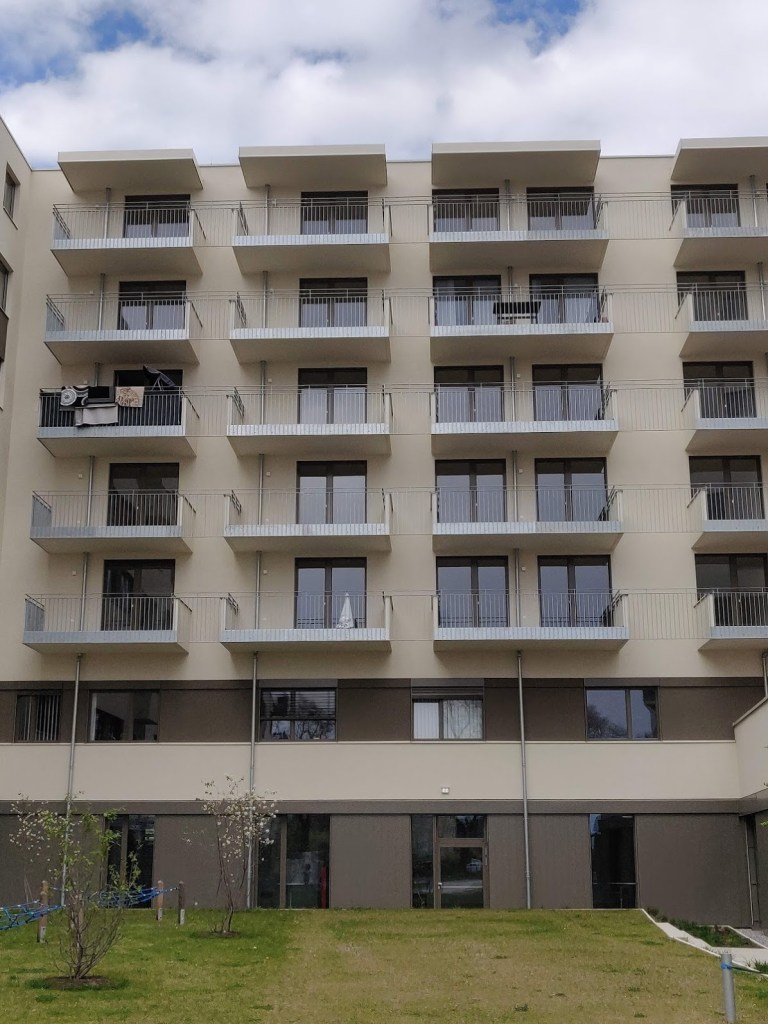
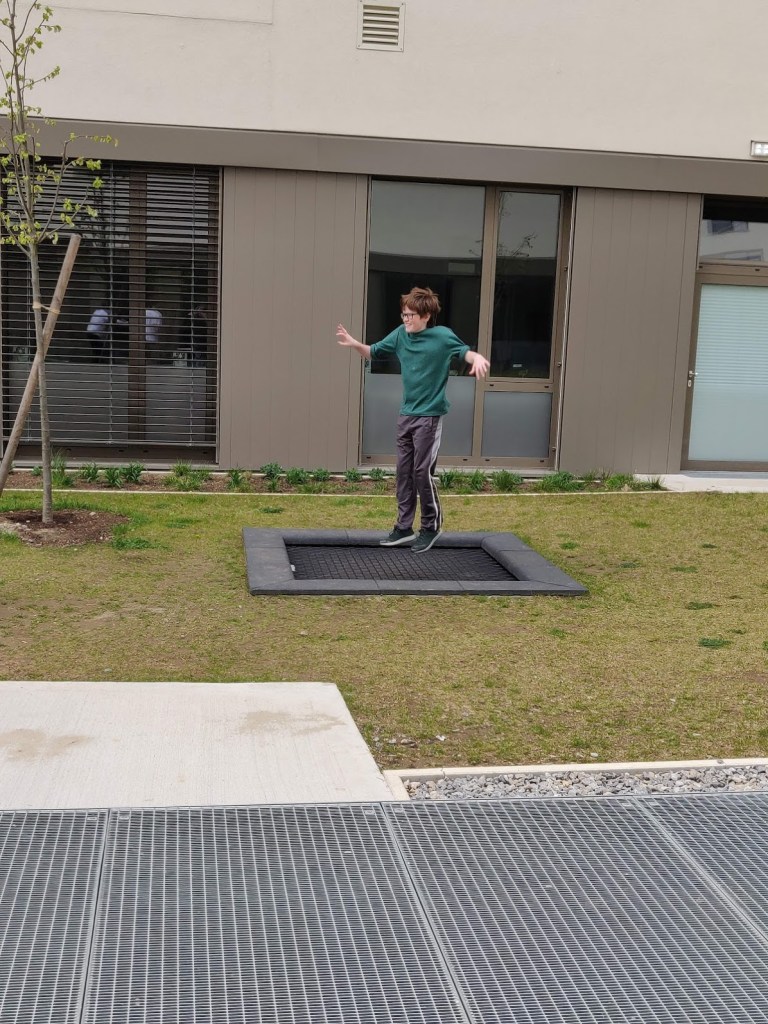
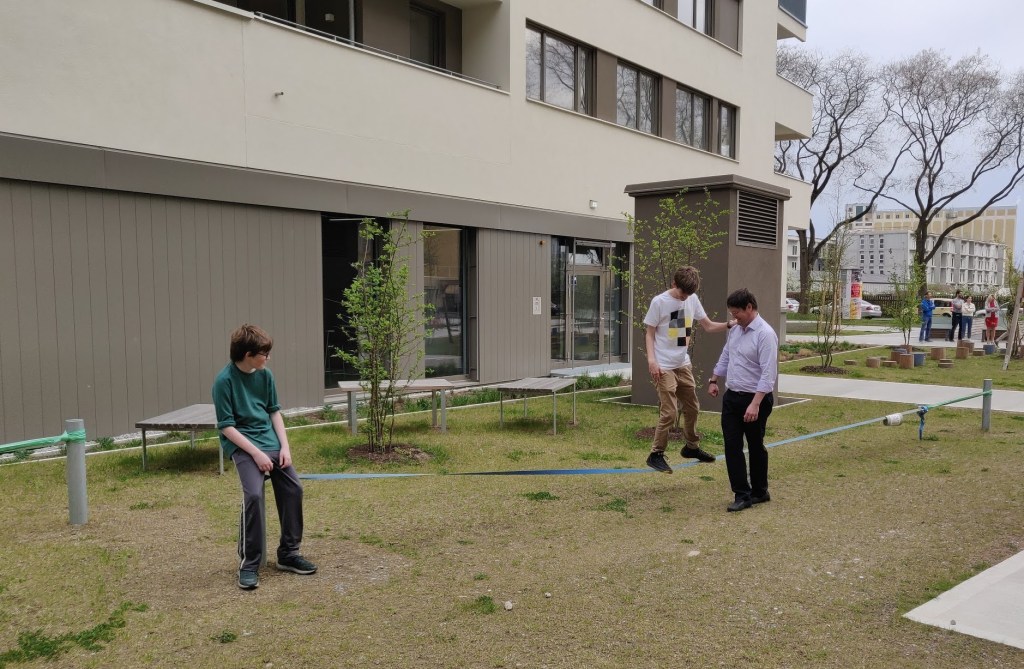
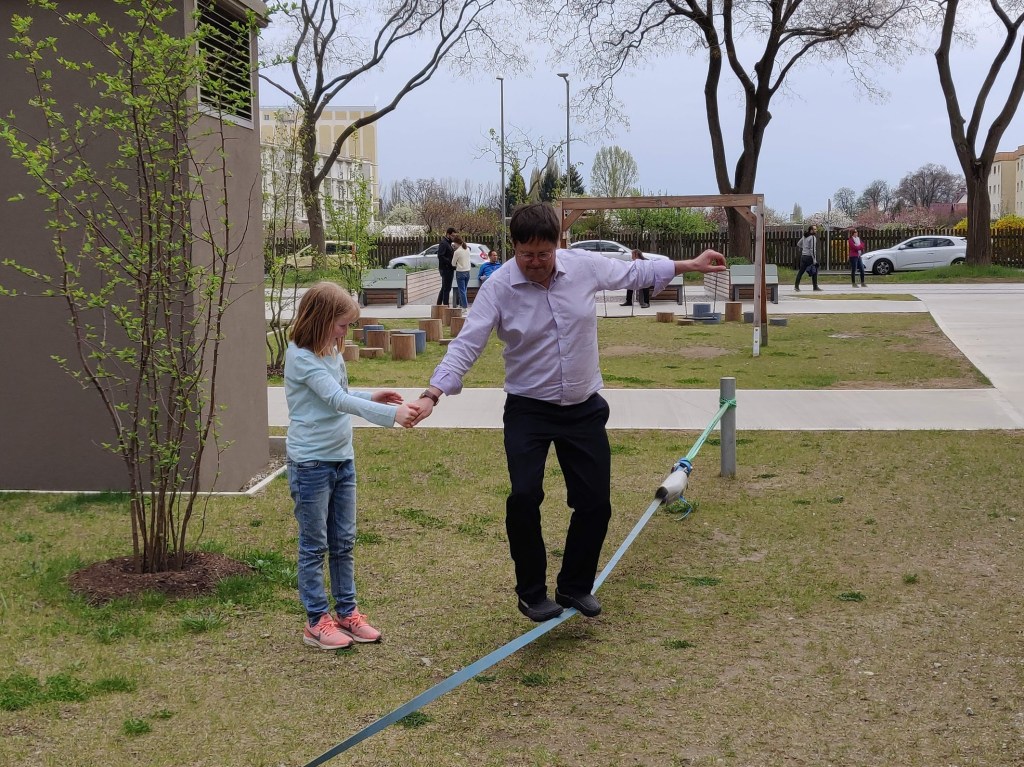
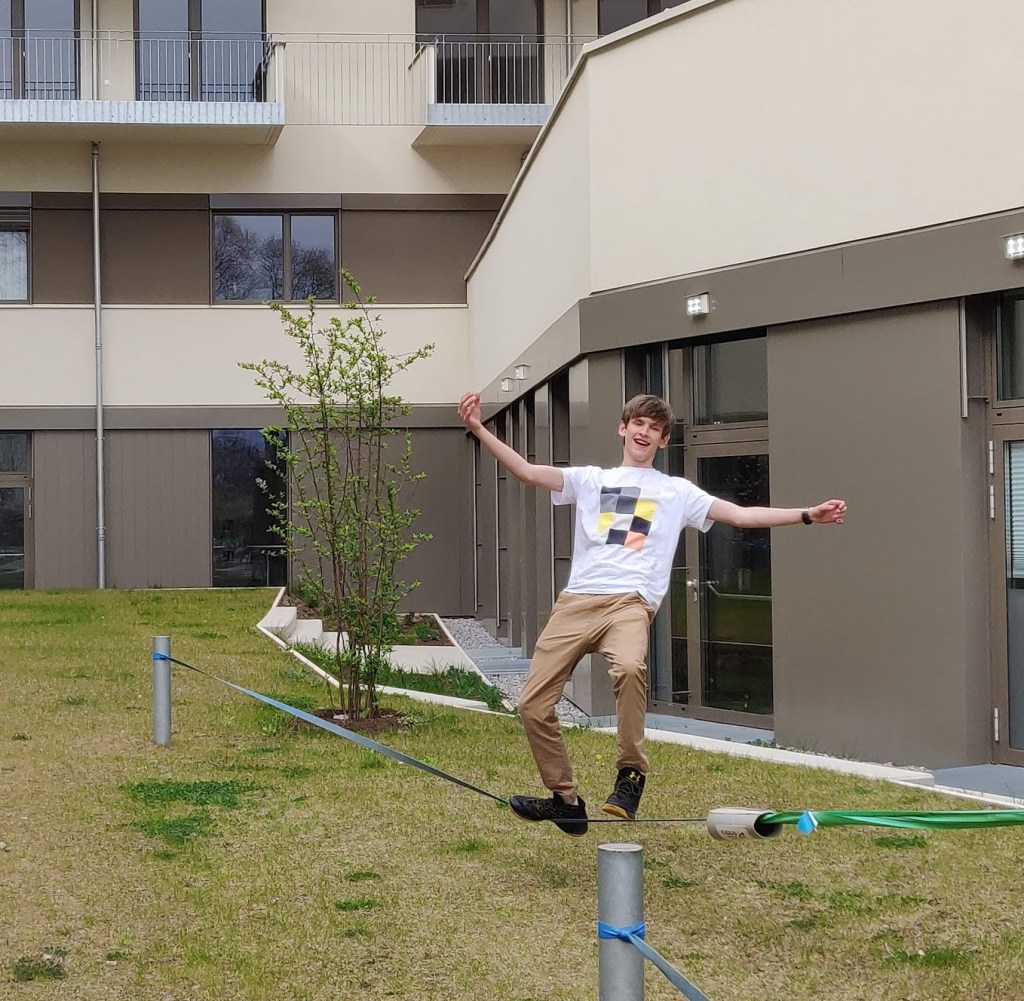
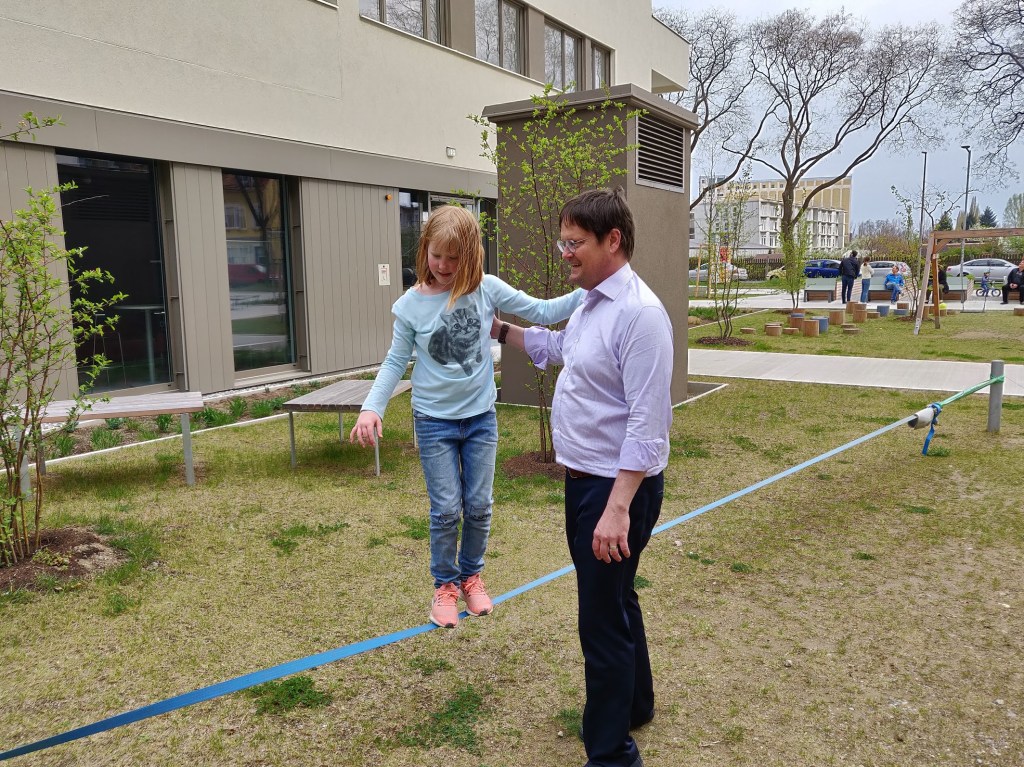
Nestled between high-rise apartments and the campus office building was a little playground that could be enjoyed by children and adult students alike. The family’s favorite playground equipment was a kind of tightrope made of thick plastic rubber band like material. It was fun trying to balance on the plastic band! Seamus and Faywen also enjoyed bouncing on the in ground trampoline.

This is one of two crazy rubber band tightropes!

TICKS

Creepy crawly ticks are a major problem in Central Europe! Everyone told us we needed to get the FSME tick shot to protect us from encephalitis. It seems that over half the ticks in the area carry this potentially deadly disease. After doing our own research we decided it would be best to adhere to the advice of our new friends and colleagues and get the shot.

The kids were excused from classes so we could go down to the Health Department and have the first shot. We will return in four weeks for the booster shot. My German came in handy as we navigated the required forms and clinic staff!

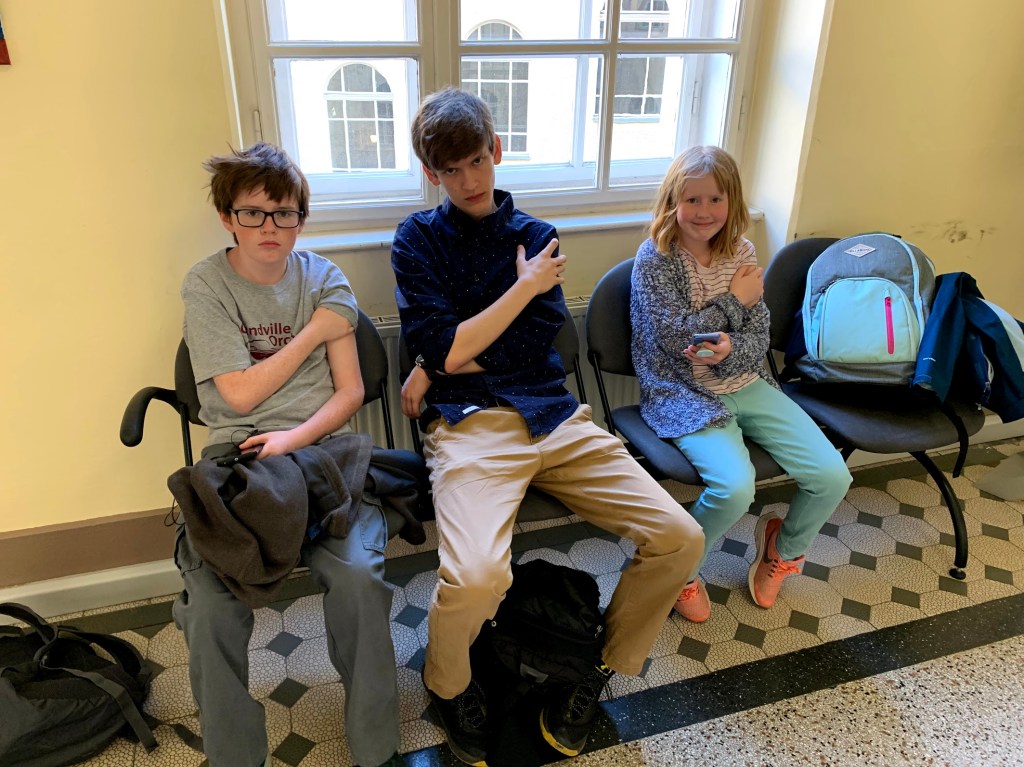
After getting the shot we all had to hold our arms for 5 minutes to stop any bleeding. I guess Austrian clinics don’t stock Band-Aids. We then were required to sit for 20 minutes in case of an allergic reaction. Happy to say everyone was fine and now we are protected in case of a tick bite!

After the FSME tick shot:
It’s a highly recommended shot for those living in Central Europe.
I love the boys’ faces in the photo!