All the kids hugged Turah goodbye as they headed off to
school. “I love you, big hugs, and a few misty tears” were felt and said by everyone.
Over breakfast Robert and I had a nice chat with Turah and reflected on the
past two weeks.
Around lunchtime we escorted her to the airport. It was rather hard to say goodbye! We all hugged tightly for a long time. We prayed together and then watched her go through security. On the other side of security she waved goodbye one last time!
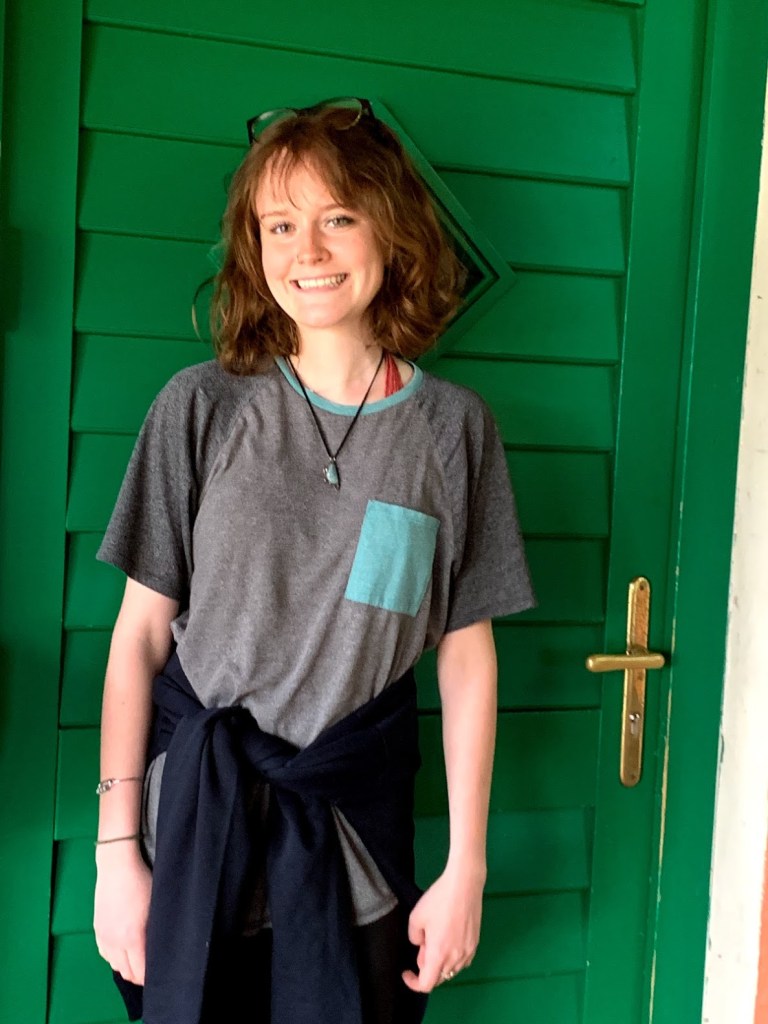
Our front door in Michigan is green and so is the one in Graz. I’ve always taken the children’s photos in front of a green door. I thought it wonderful that Turah posed as we were leaving in order for me to take a photo of her in front of our Austrian green door!
We came back into town and went for lunch at a local place
Seamus and his friend Nathanial told us about. Burgerista
is in Jakominiplatz and it’s the only place in town where you can get free
refills on drinks! Yes, free refills don’t exist in Europe anywhere, well
except in the UK. Seamus and Faywen met me in the Hauptplatz after school let
out and we went shoe shopping. We ran into Liam on the tram. The tram and bus
system is excellent in Graz and often the kids will ride to places by themselves.
Often Robert and I or random siblings will run into each other on the trams
coming from various locations throughout town! I think we will all miss the
wonderful Graz public transportation system once we return to the States!
Robert had a special dinner with his colleagues up at the
Schlossberg Restaurant. It’s a very high-end restaurant. The meal was purchased
by the University and so the 4 professors drank 3 bottles of expensive wine and
had full course meals! The Chair of the department insisted! Robert didn’t get
home until almost midnight. I’m glad he is getting along with his new
colleagues.
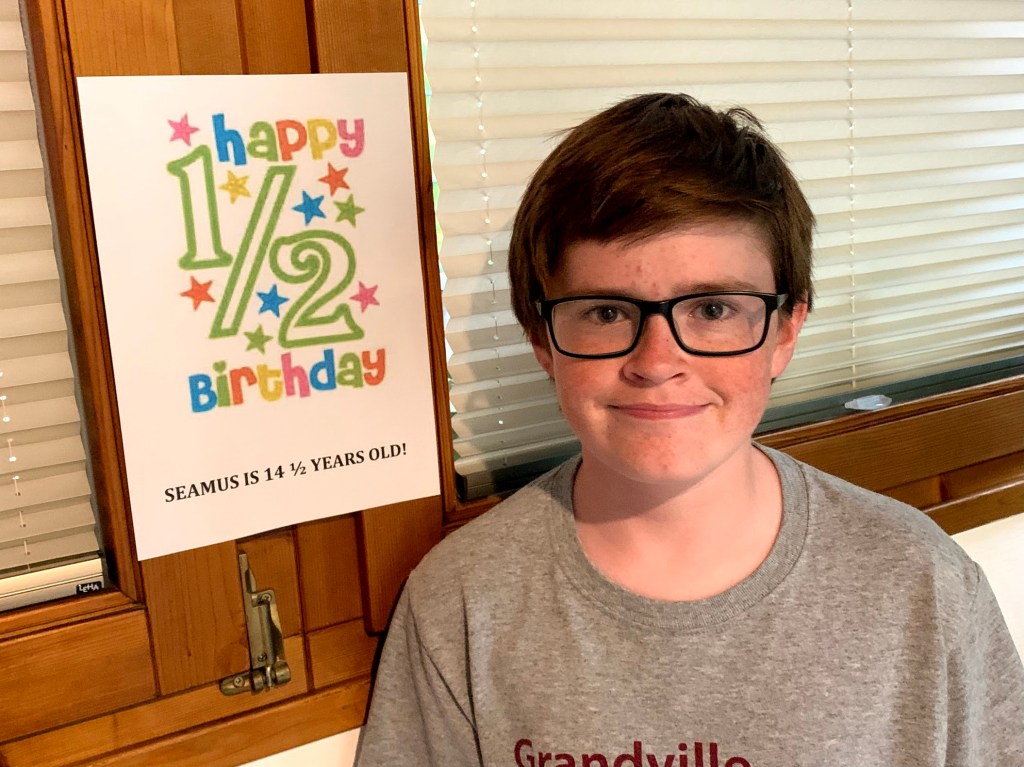
Even though Seamus’ half birthday wasn’t officially until
June 6th we decided to celebrate a day early while Turah was still
visiting us. She and I went out for a last luncheon at a charming outdoor café called
El Pasador. We both ordered Tuna Teriyaki.
It was another lovely day to eat outside.
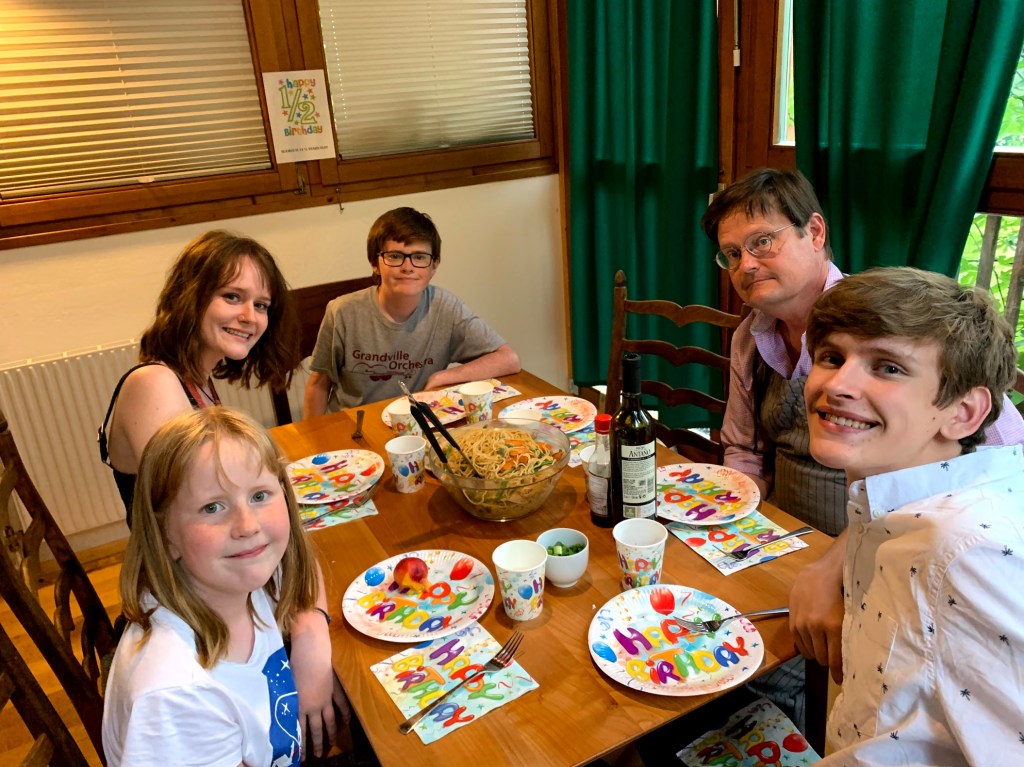
We decorated the house with signs celebrating Seamus’ half
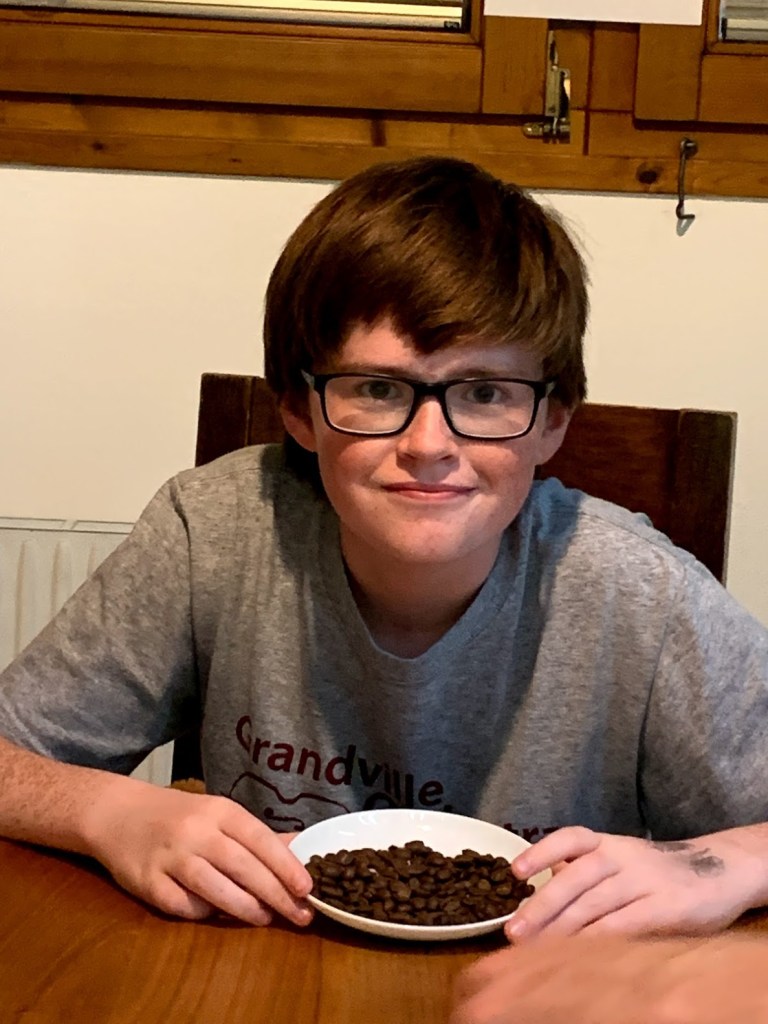
birthday. For dinner Dad made lomein noodles for Seamus and he had raw coffee
beans and Austrian like Twinkies for his half birthday treat. Keeping in the
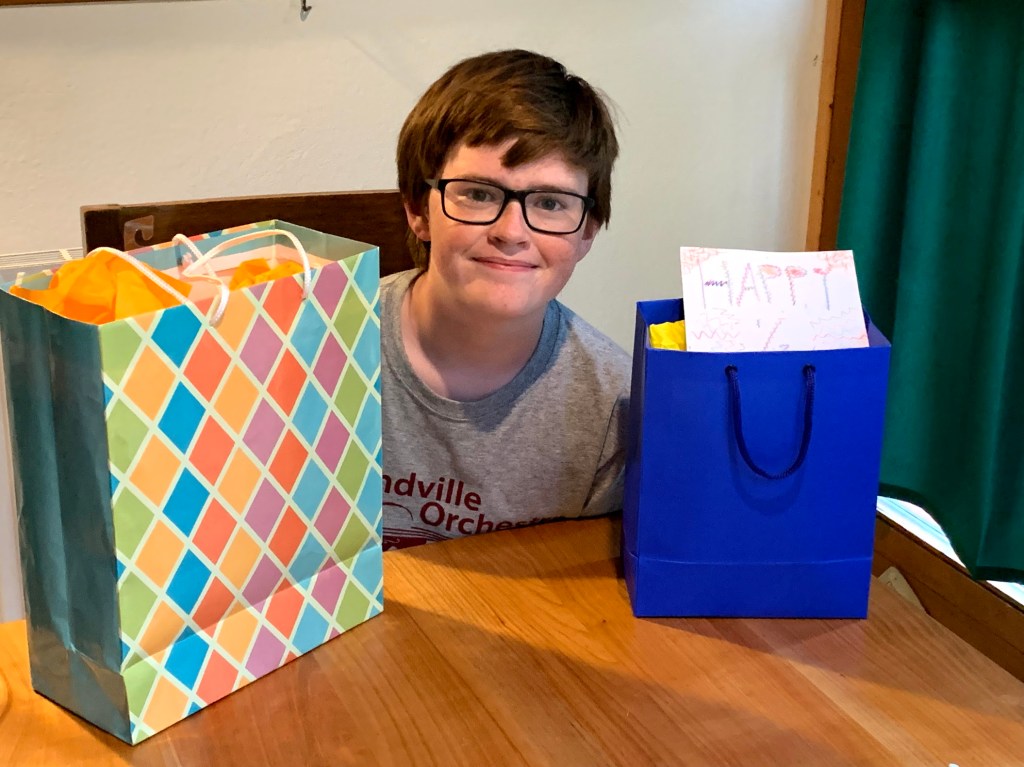
half birthday absurdity, his siblings creatively presented him with unique
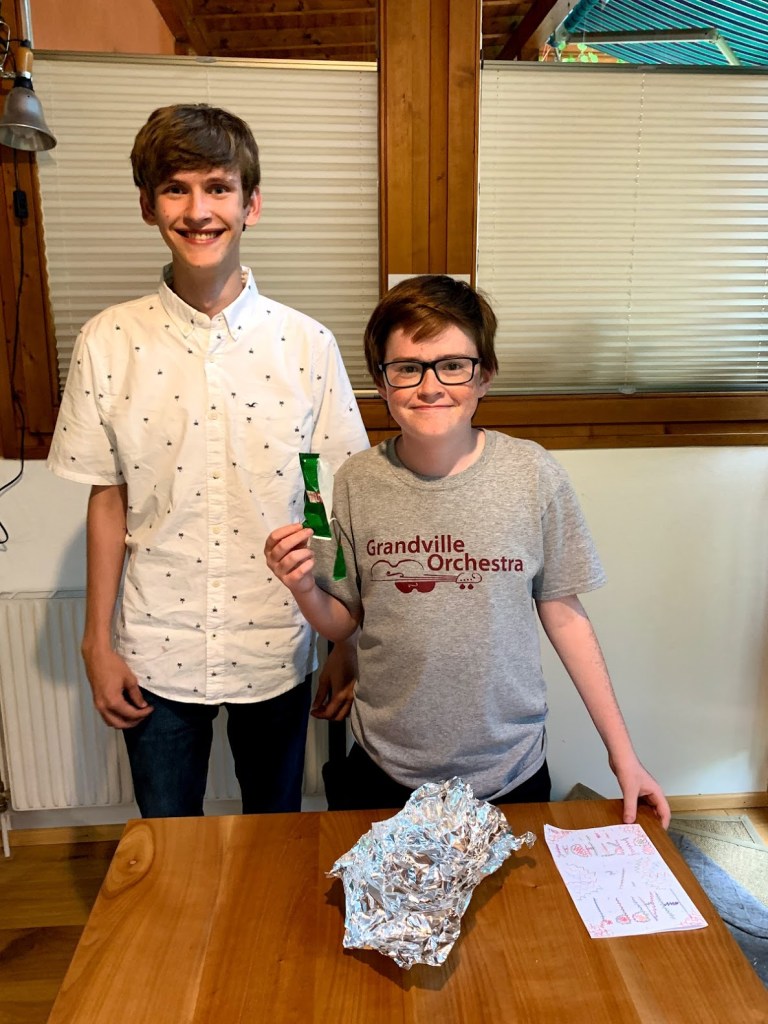
gifts. Liam gave Seamus an empty granola
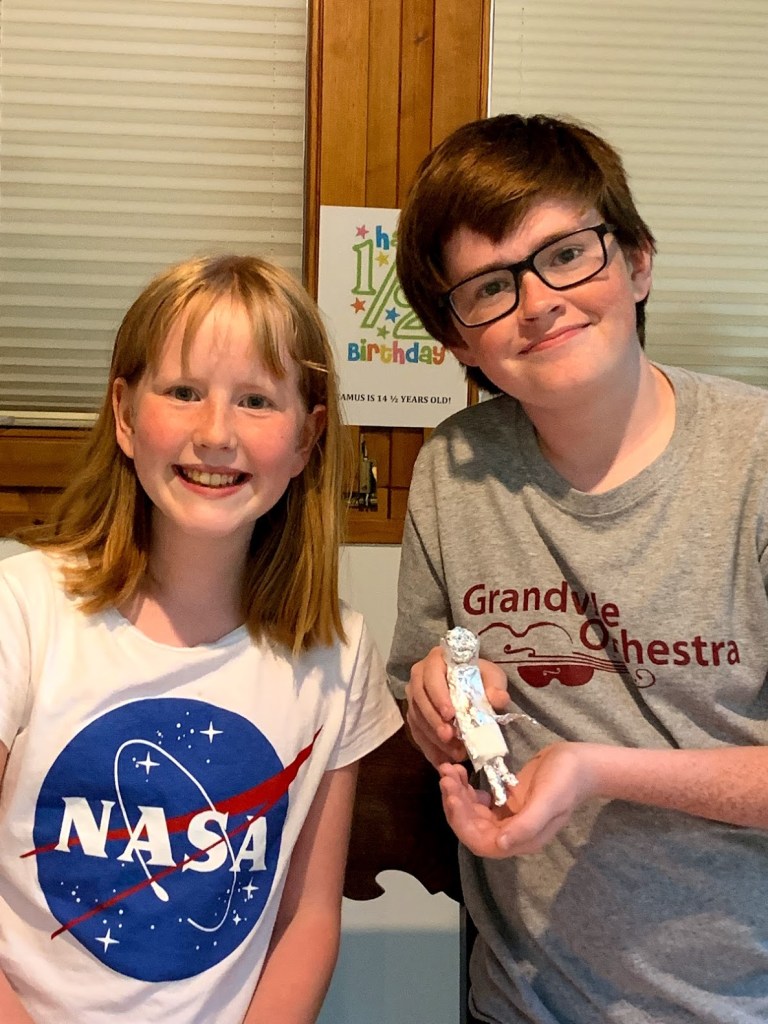
wrapper. Faywen made an aluminum foil “likeness” of Seamus, but Turah’s gift
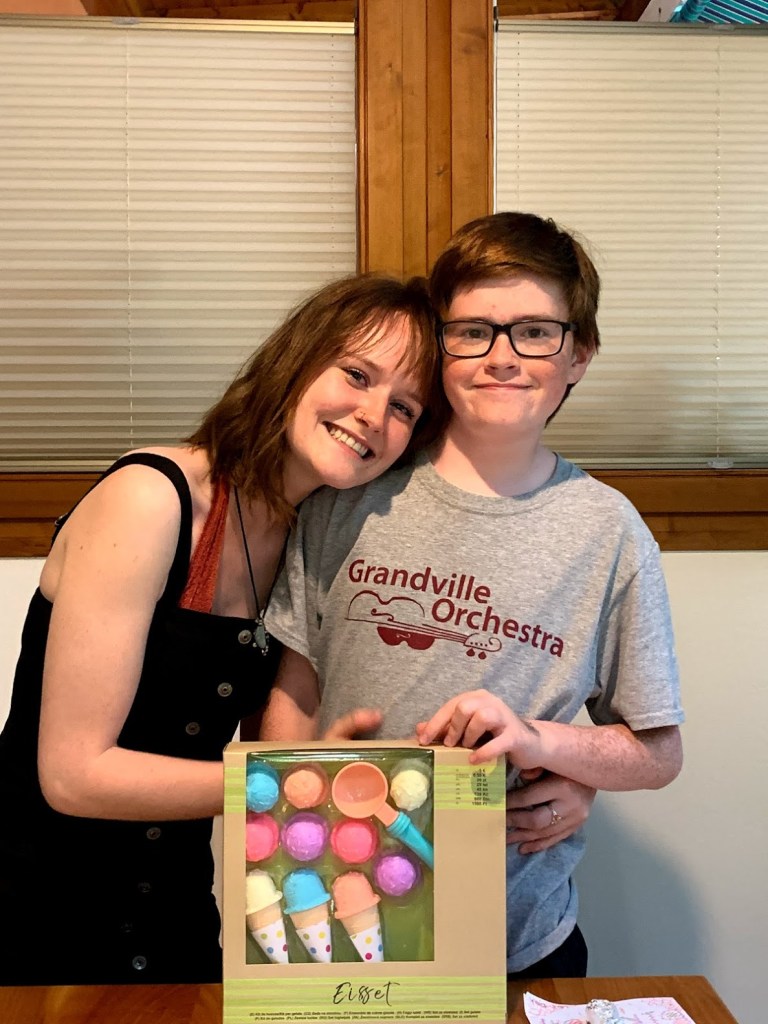
made us all laugh till our sides hurt! As a joke she had found him a cheap toddler’s
play ice cream set, because he was always asking for ice cream on our trip! He did
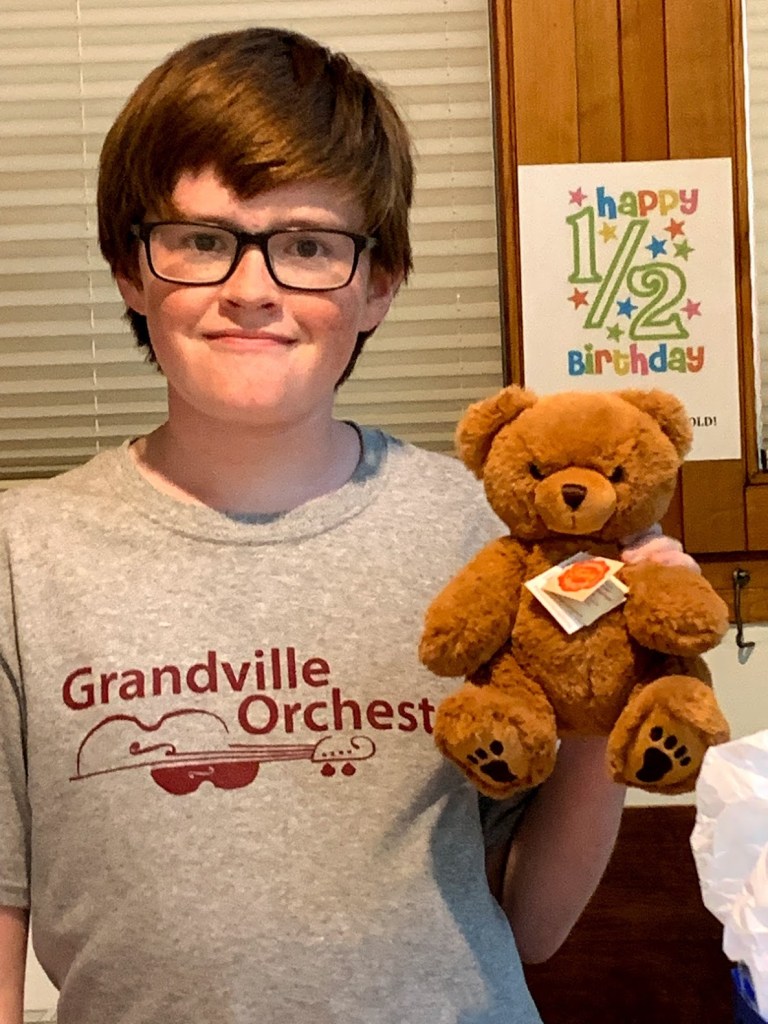
get one serious gift from me, a Hermann Teddy plush brown bear. He’s my Pookey
Bear! Hermann Teddy is a well-known German plush toy maker. I had already given
the other kids their special “animals” so it was Seamus’ turn.
Happy Half Birthday Seamus!Seamus loves lomein noodlesTime for half presents! We also sang half of the “Happy Birthday Song”!
Thanks Liam!
Thanks Faywen!
Thanks Turah!
German Pookey Bear
Seamus loves raw coffee beans
Despite the light evening rain Turah and Liam walked up the hill
behind our house so she could see the lovely view of Graz and valley from our
mountainside. Today was truly a wonderful family day!
Once again Turah and I spent the day out while everyone was
at school and work. Today we went downtown, but strolled along the Mur River
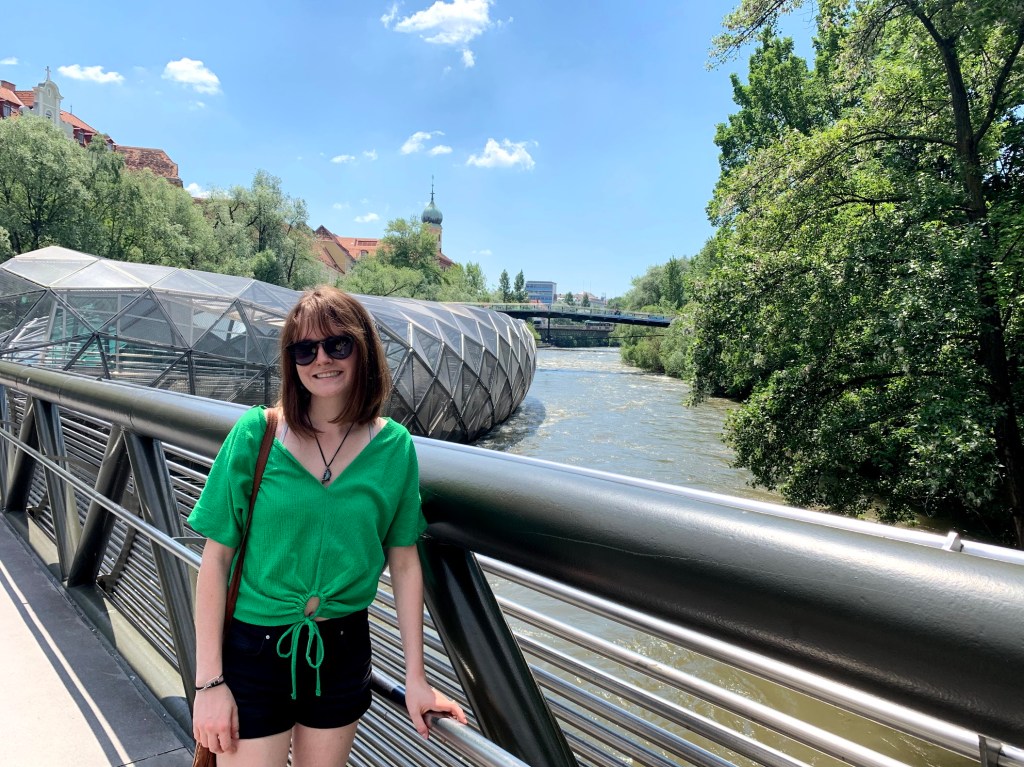
instead of staying in the Hautplatz. I took her to the artsy Murinsel Bridge in
the centre of the river. It looks like a sparkling silver seashell floating in
the river.
Murinsel on the Mur RIver
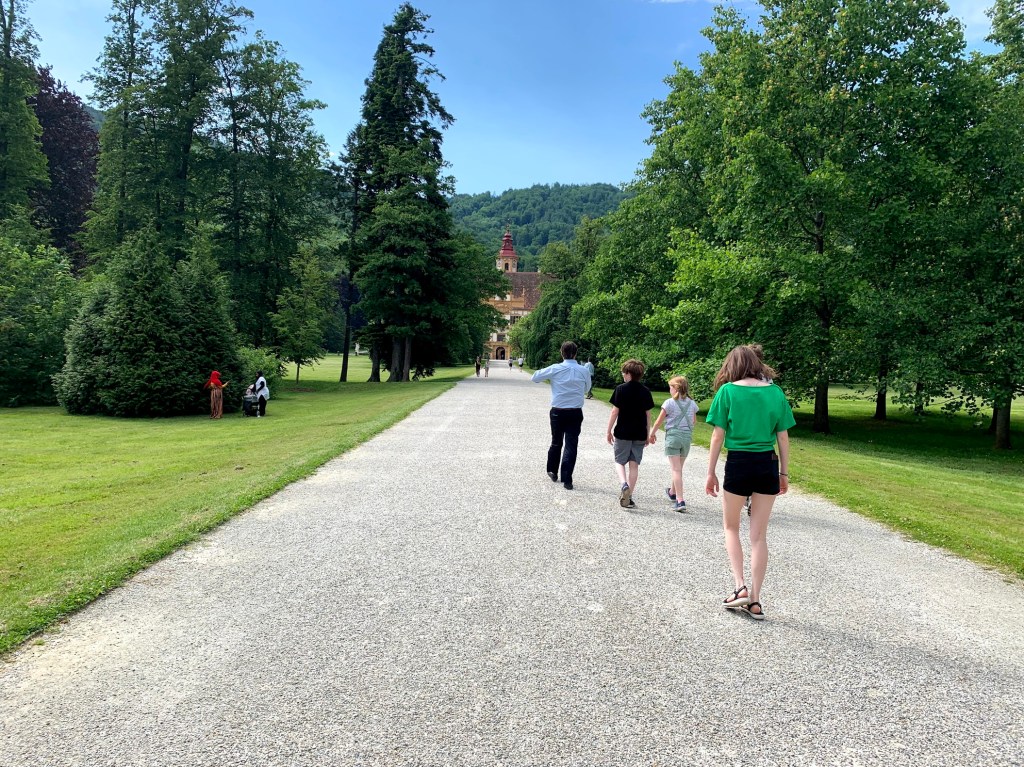
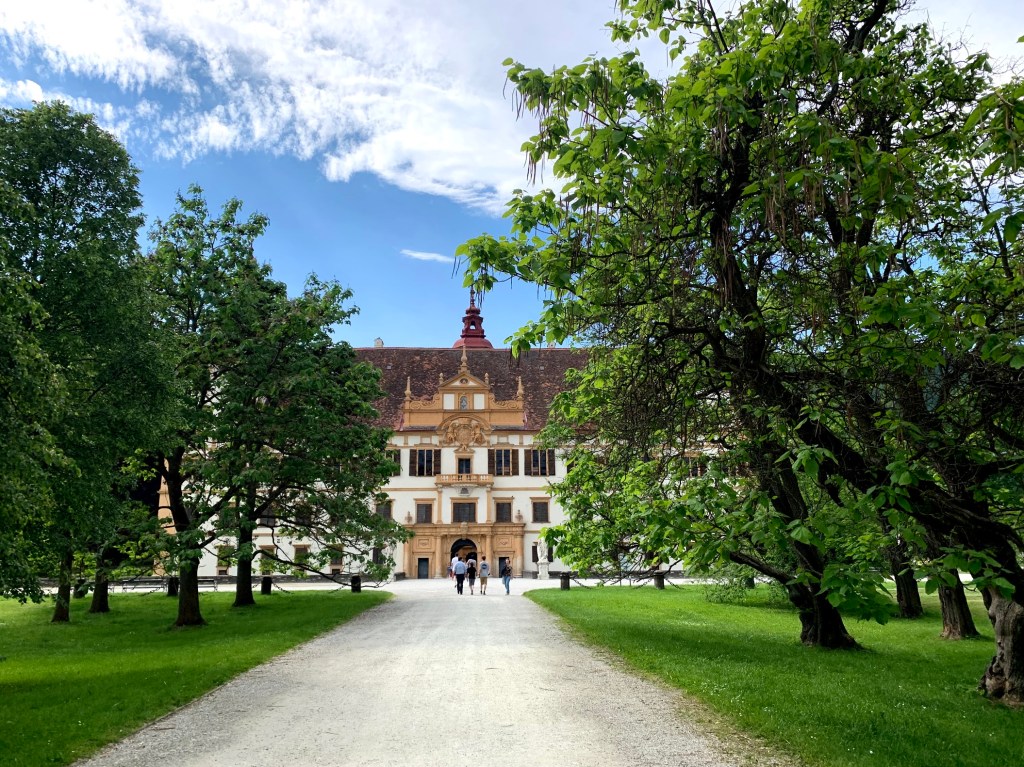
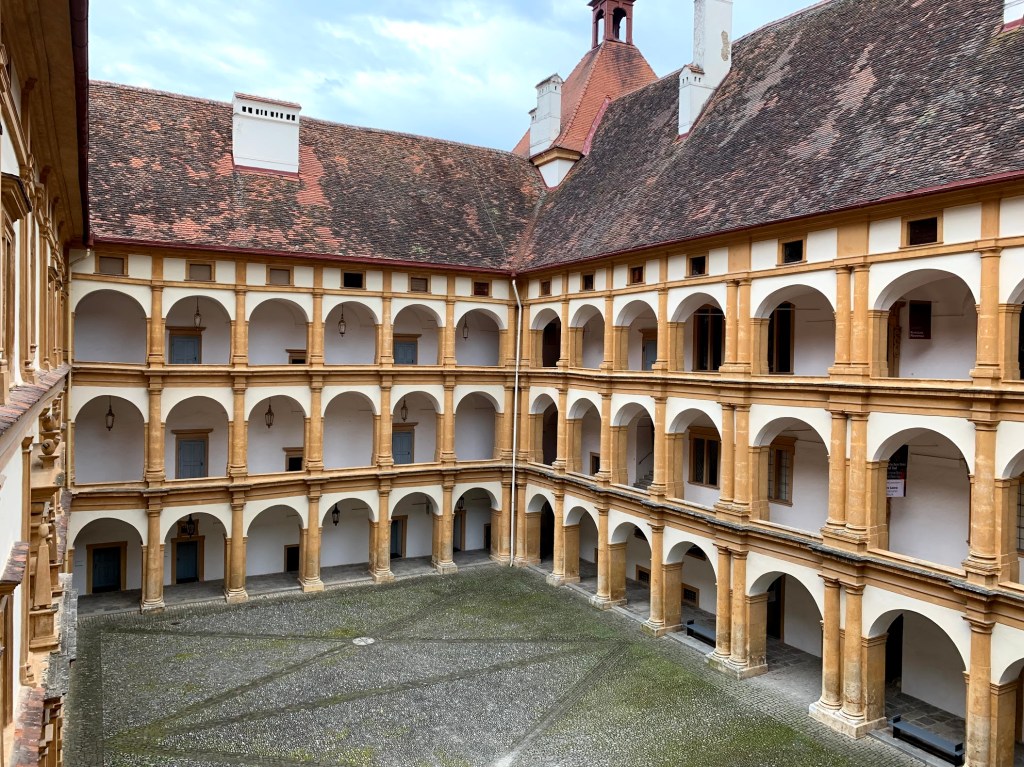
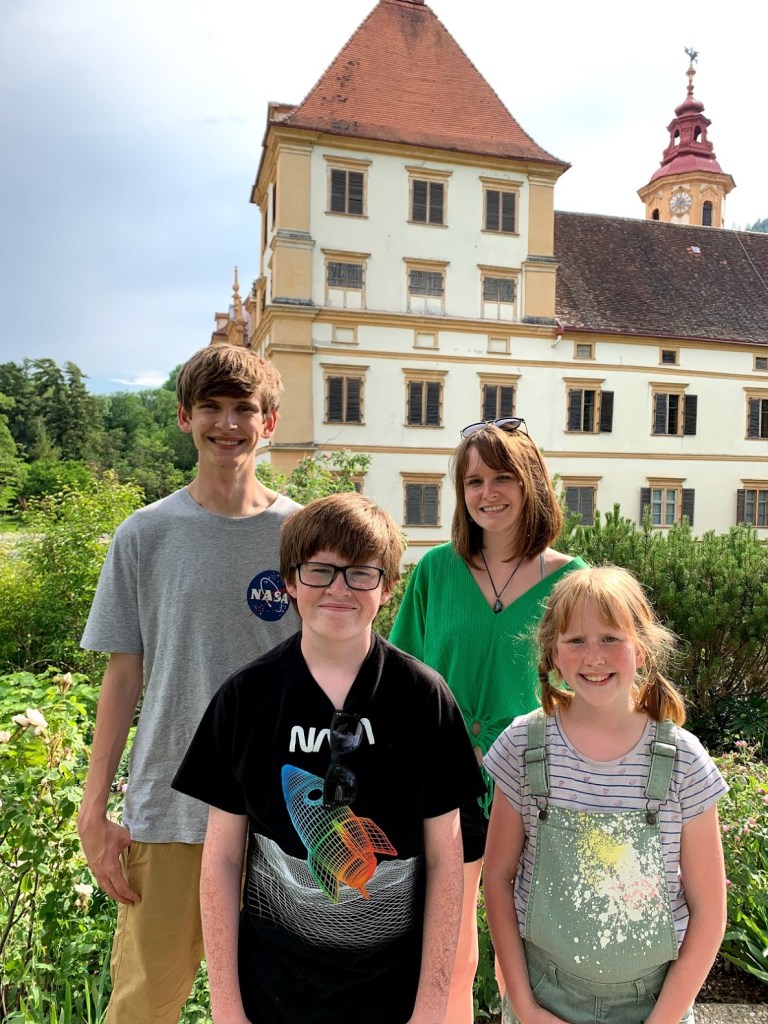
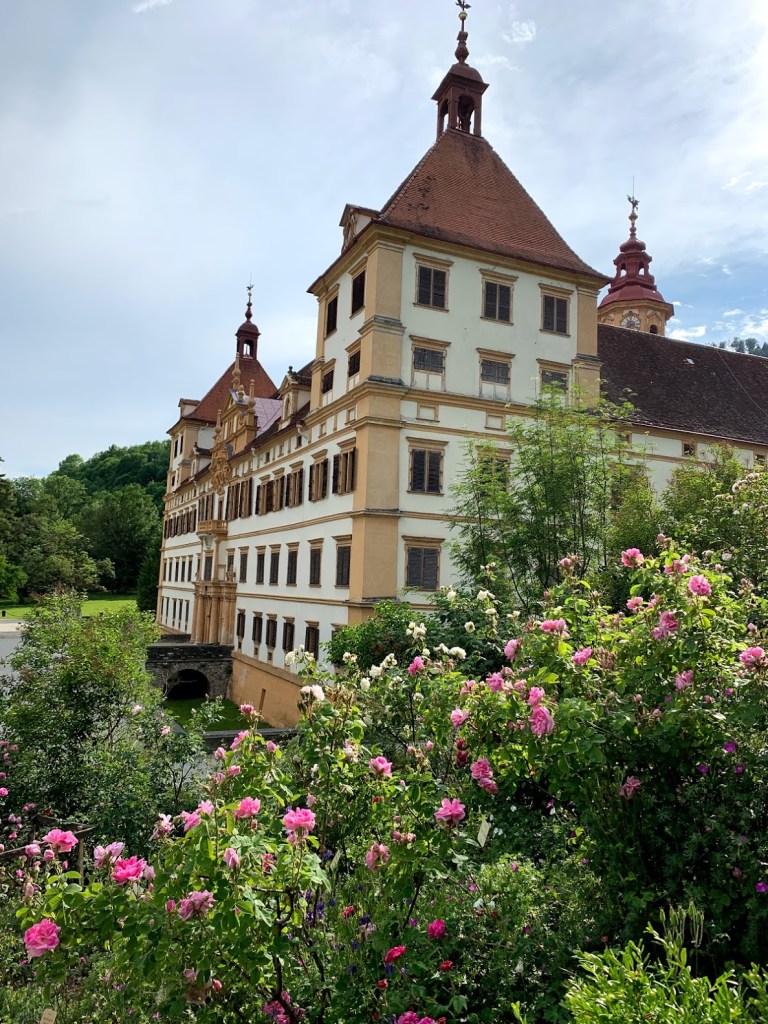
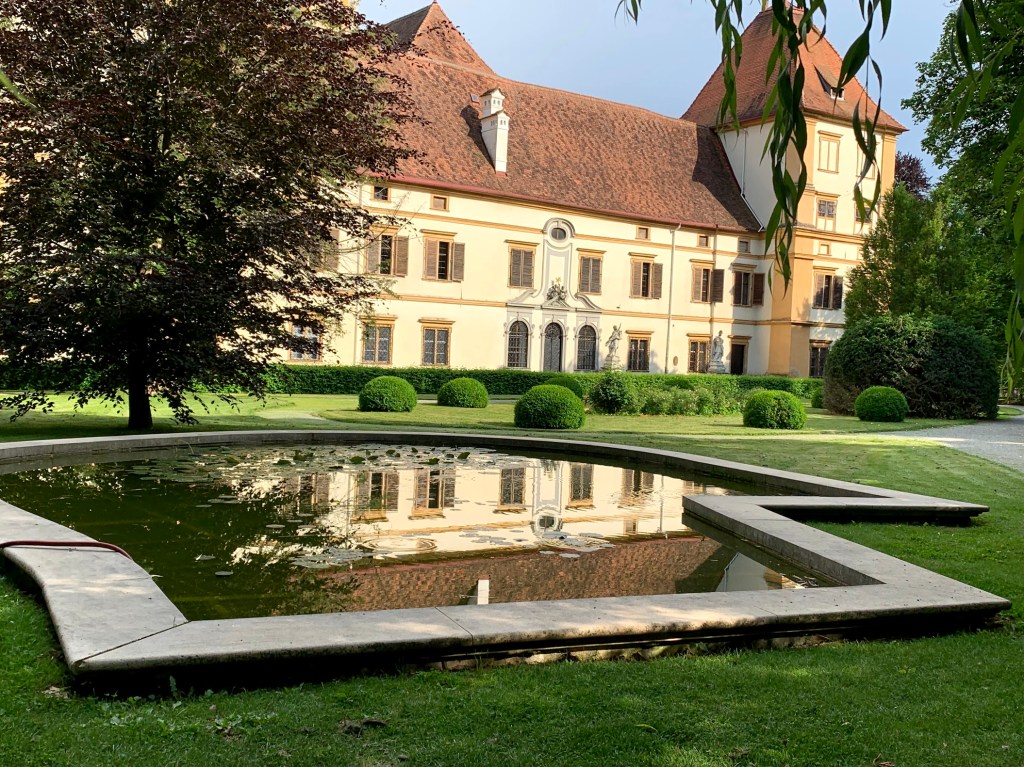
Later that afternoon the whole family went to visit the UNESCO World Heritage Site, Schloss Eggenberg. This is the palace that is nearby to us. It shares a property line with the kids’ school. Since it was the last tour of the day there was only one other person on the tour with us. We practically had the beautiful gardens to ourselves as well. The Baroque Palace has a theme that is based on seasons, months, years, days, and minutes. Every aspect of the home was in balance with one of these themes. I personally love d the grand reception ballroom with it’s crystal chandeliers and black and while marble floors.
Long path up to the Palace
Schloss Eggenberg
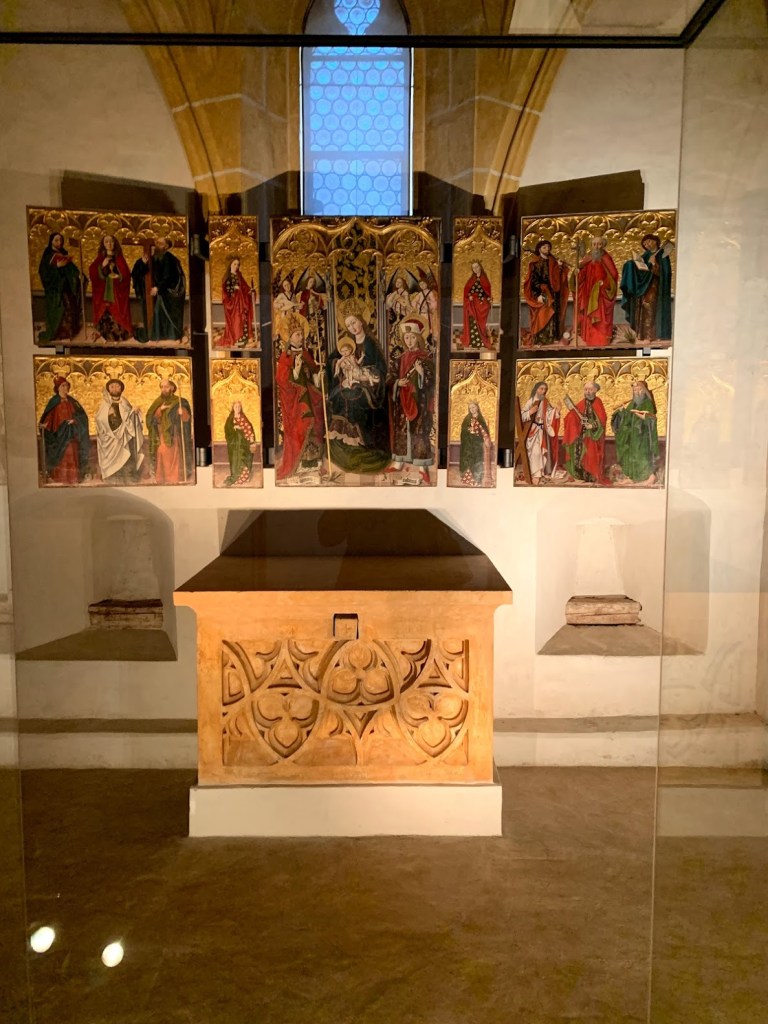
Inside the main Palace courtyardWe weren’t allowed to photograph inside the main palace, but the 14th century gothic chapel was open to the public.The Eggenberg family made their fortune by being silver coin minters for the Hapsburg Royal familyThe gardens were in full bloomA reflecting pool at the back of the Palace
After the tour we strolled through the gardens and had fun
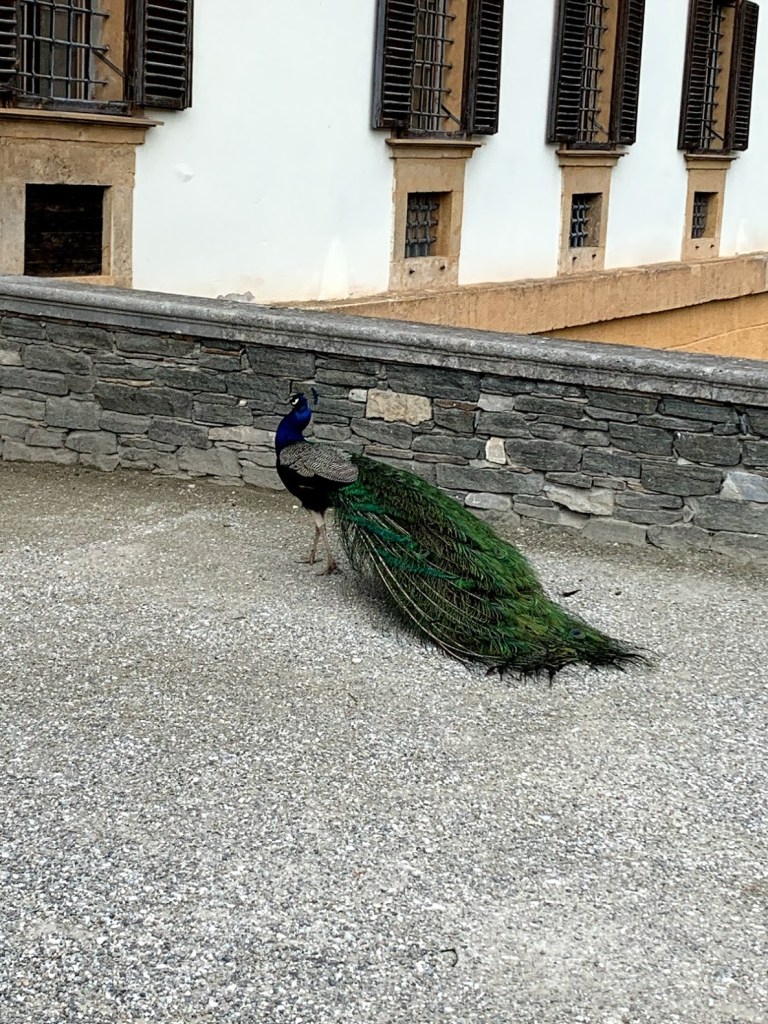
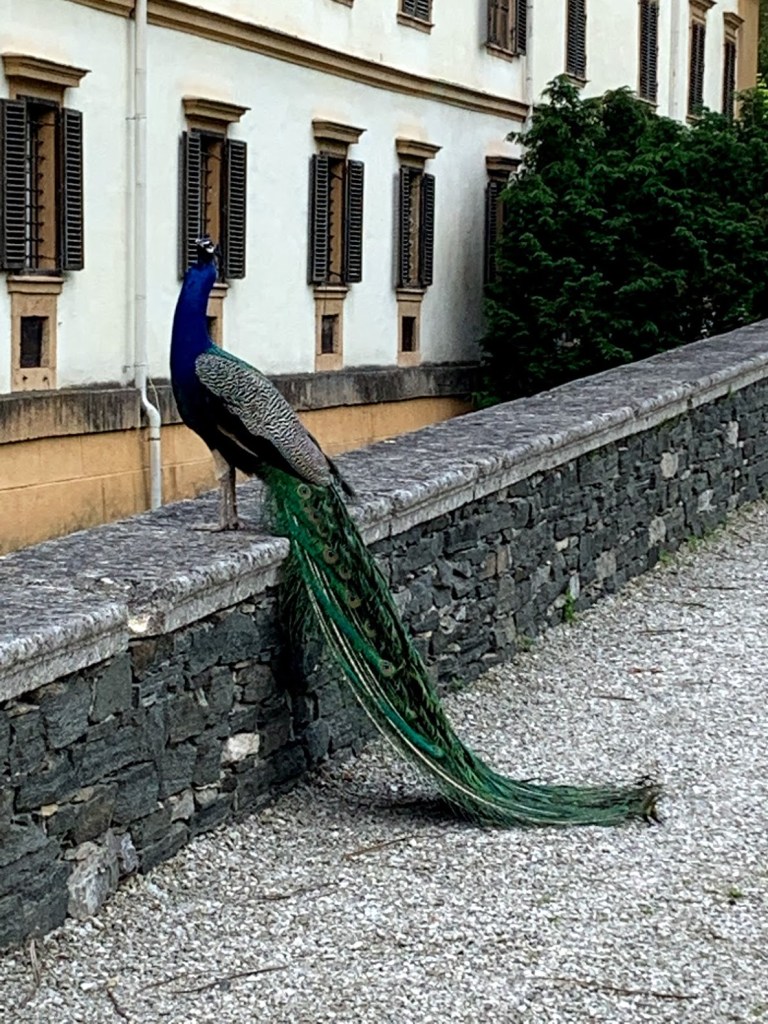
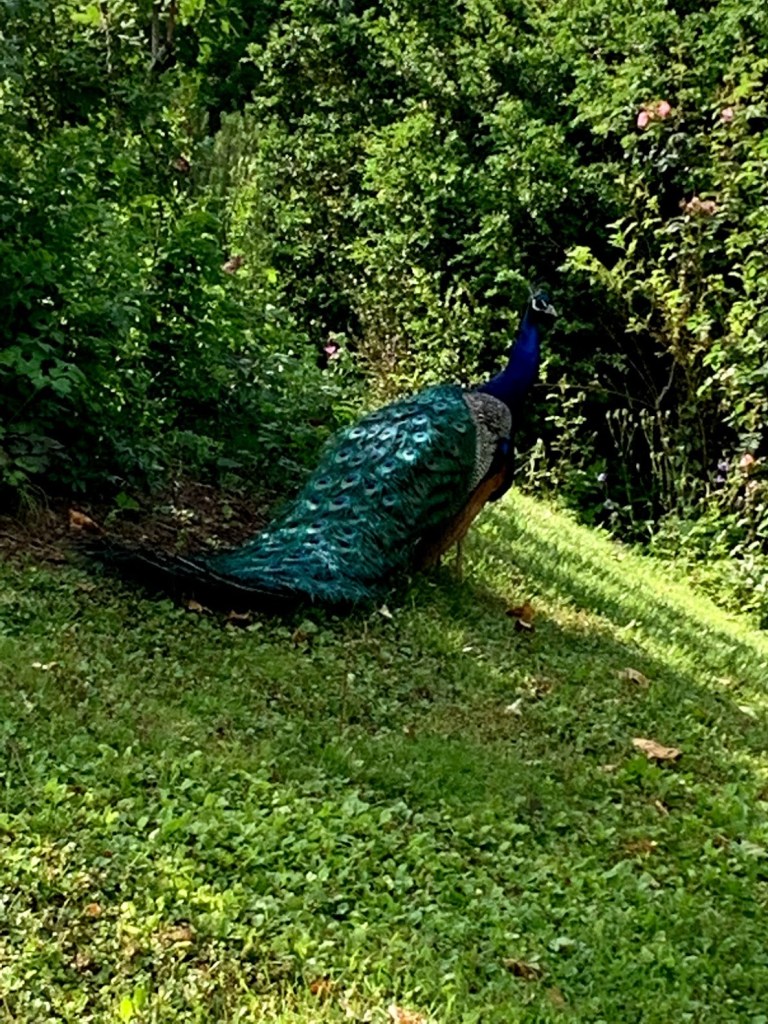
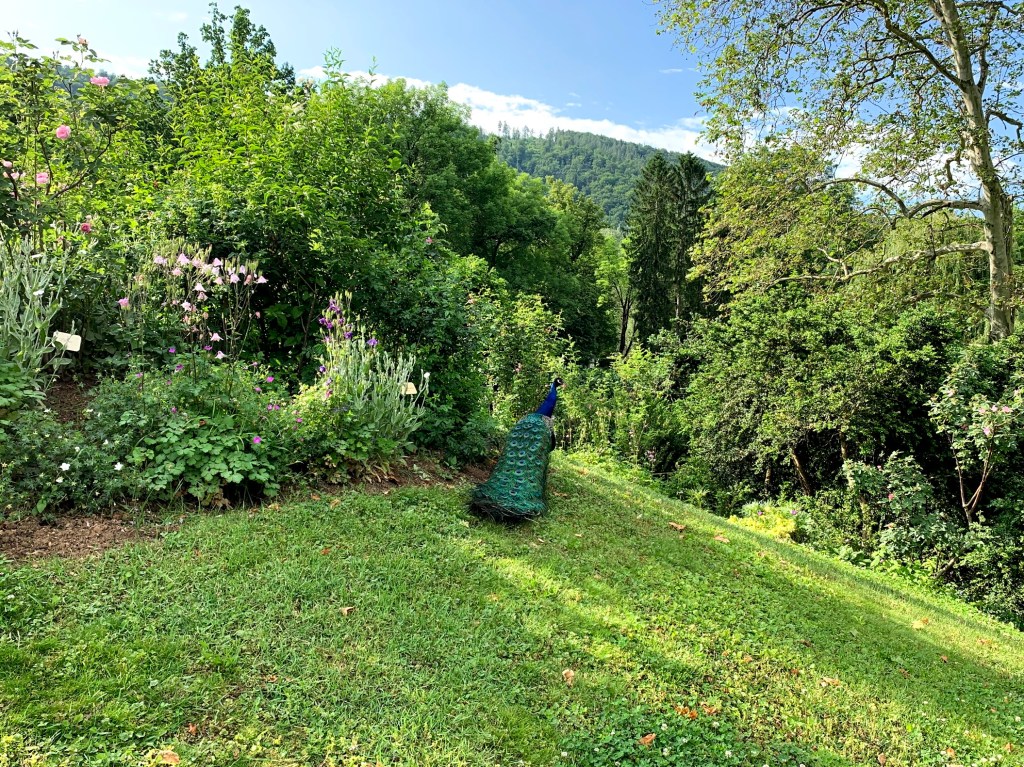
watching the peacocks. These are the same peacocks I’ve written about before. These
majestic birds hop the fence that is shard by GIBS, the kids’ school. The
peacocks know that the schoolchildren eat lunch and have snacks outside in the courtyard
and drop yummy tidbits for the birds to eat!
Hanging out by the front door
Watch post from the side garden wall
Shady cool grass
Walking in the spiral garden
The Peacocks really do own the Palace gardens. They are kinda naughty and think they own the nearby local park, adjoining private home gardens, and of course the entire GIBS schoolyard. They even come up and stare at the kids through the classroom windows!
Rudolf’s is a family run restaurant right outside the Palace
gates and we all enjoyed a nice dinner out on the patio. After dinner we walked
through the Schloss Eggenberg neighborhood and admired all the pretty 19th
century homes before catching the tram back home.
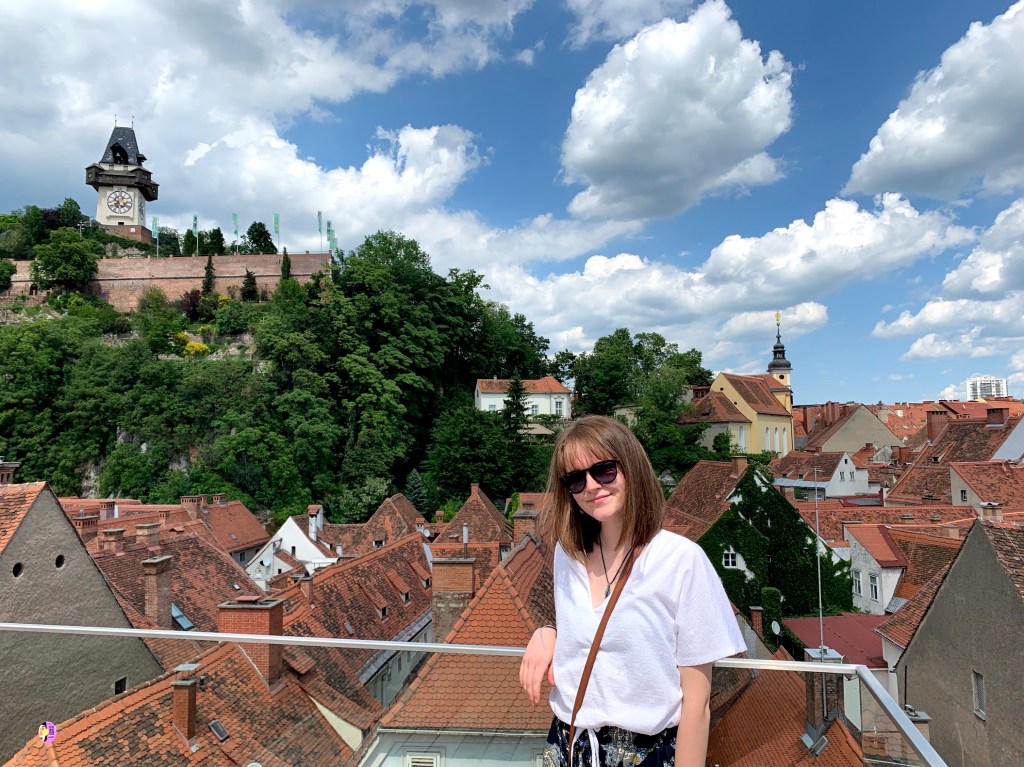
While Turah’s siblings were at school she and I went downtown
to do some shopping. We stopped to have lunch on the rooftop of K&O
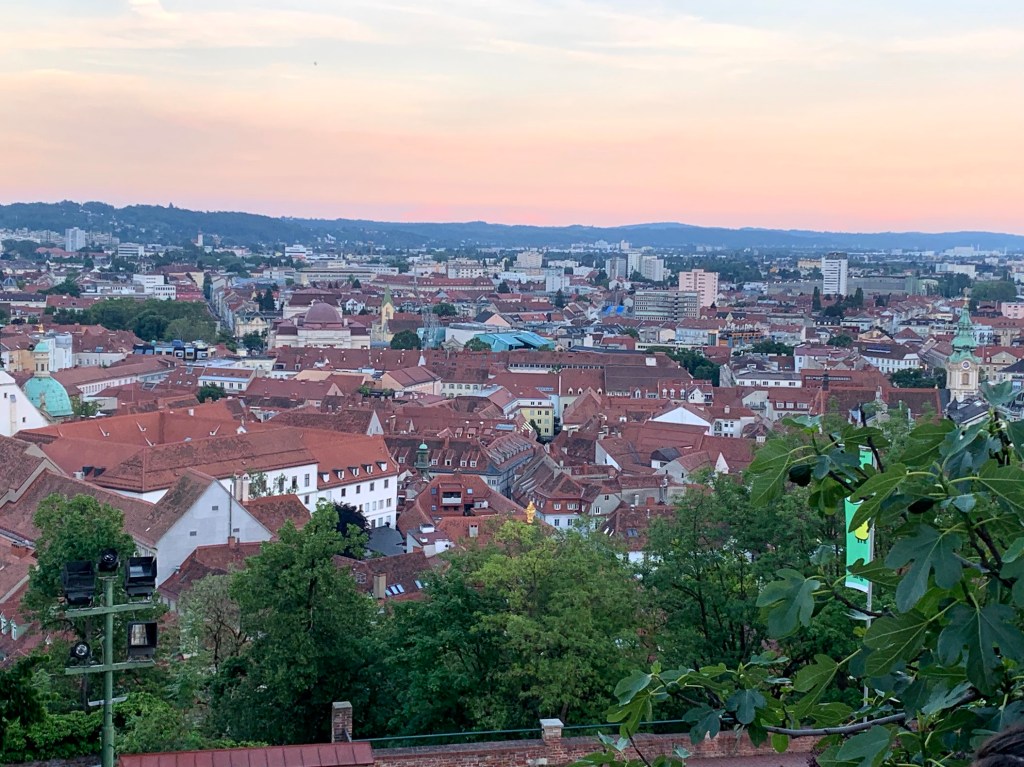
Department Store in downtown Graz. It was sunny and we had a nice view of the Schlossberg
Uhrturm (clock tower) and the red tiled roofs of Graz. Turah enjoyed eating a
traditional Flammkuchen, which is a kind of flatbread with savory food
toppings.
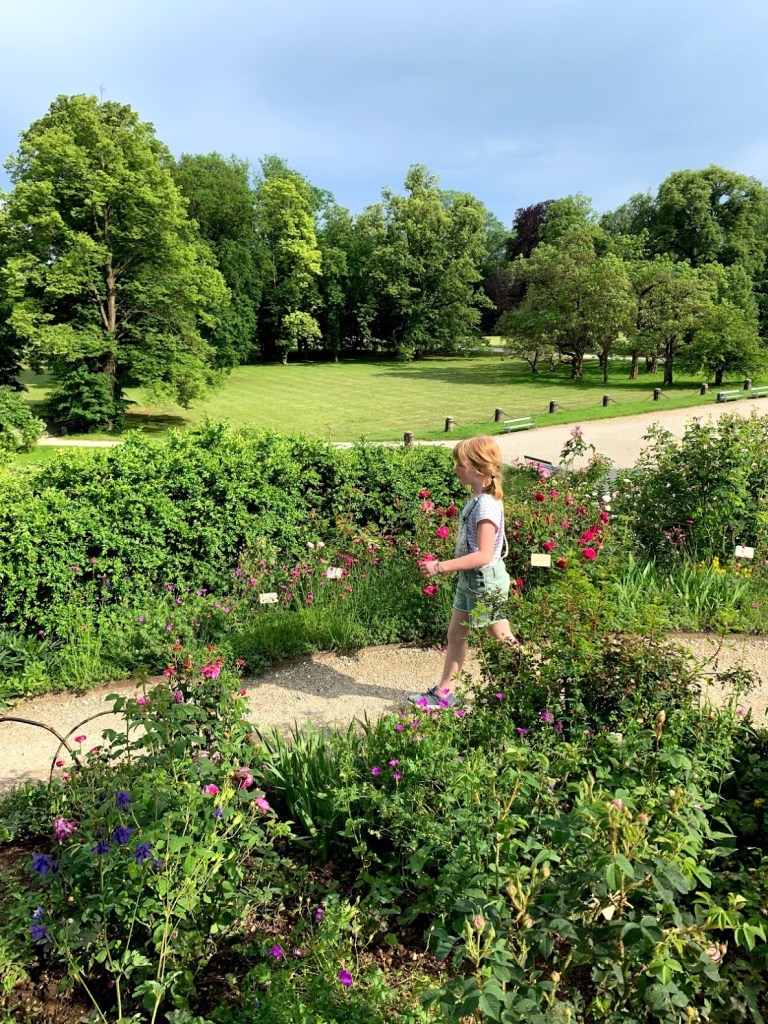
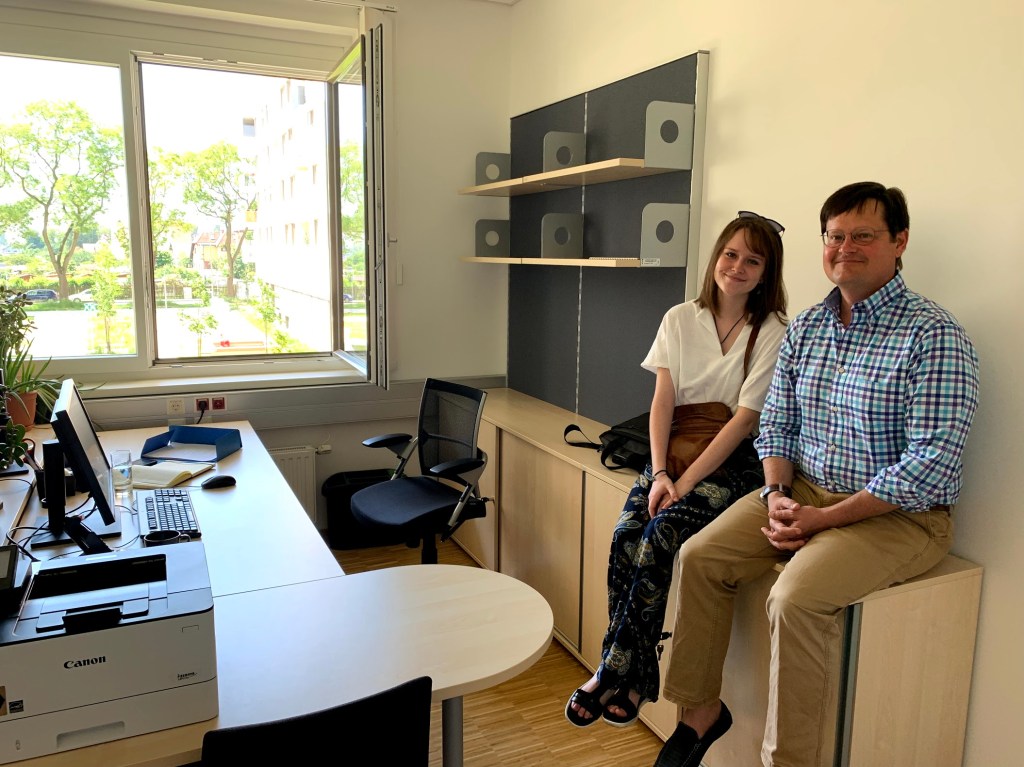
I took this lovely photo of Turah in front of the hedge row that runs along the hill we have to climb to get to our house. She’s wearing new Boho pants we purchased the day after she arrived. I have a solid navy pair myself. They are very comfy!We stopped by Dad’s office at FH Joanneum University before going shoppingRooftop view from K&O Department Store in Downtown Graz, Austria
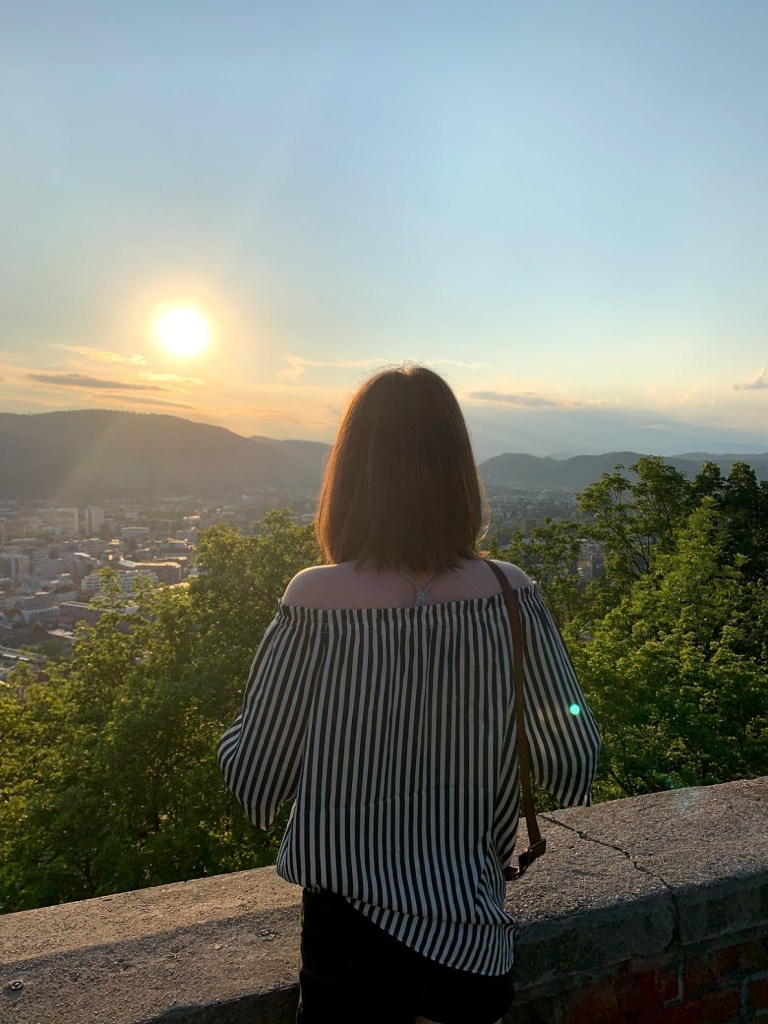
In the evening we headed back downtown to eat at Faywen’s
favorite restaurant, Gyradiko. It serves incredible Greek food! Nearby was the
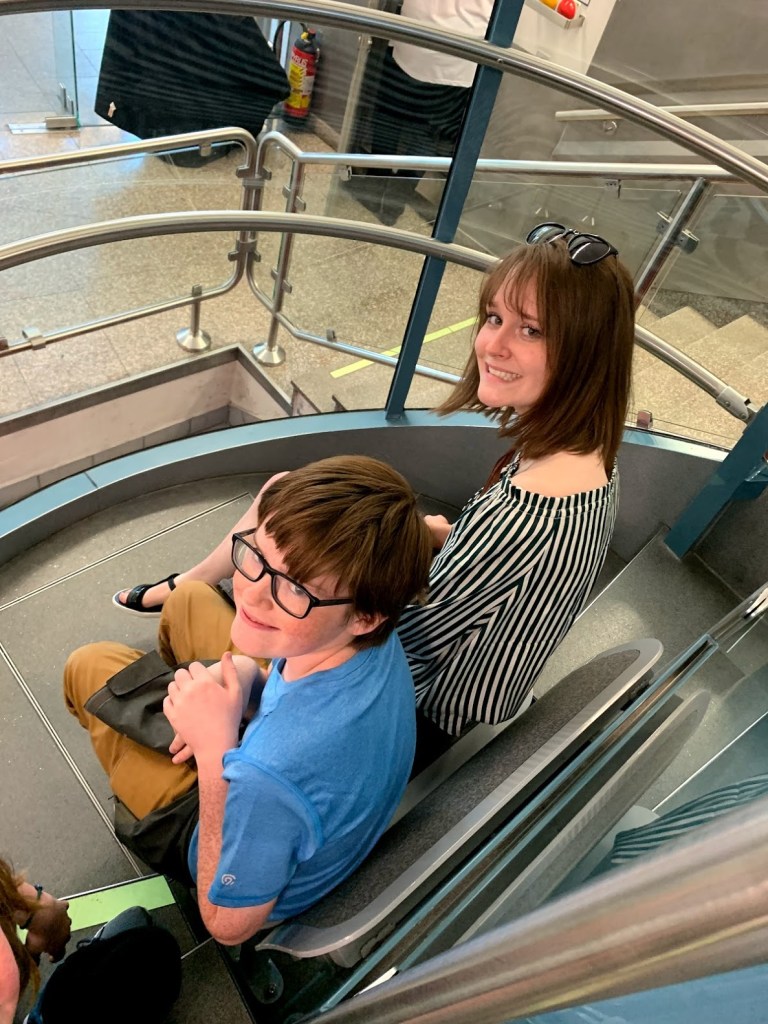
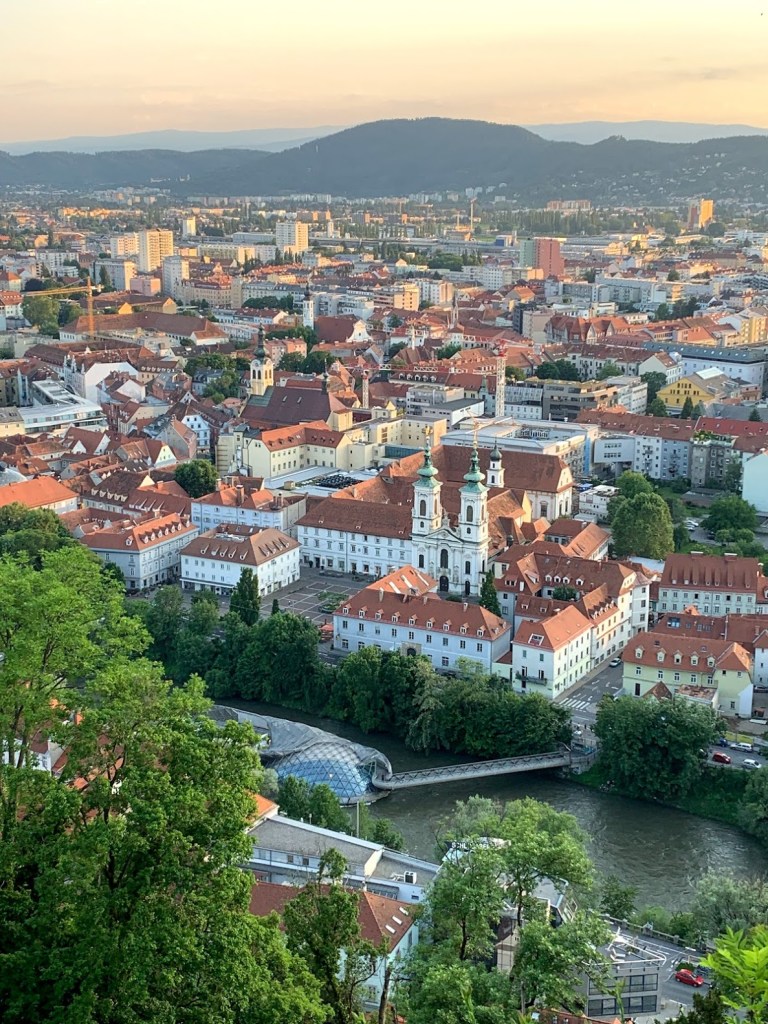
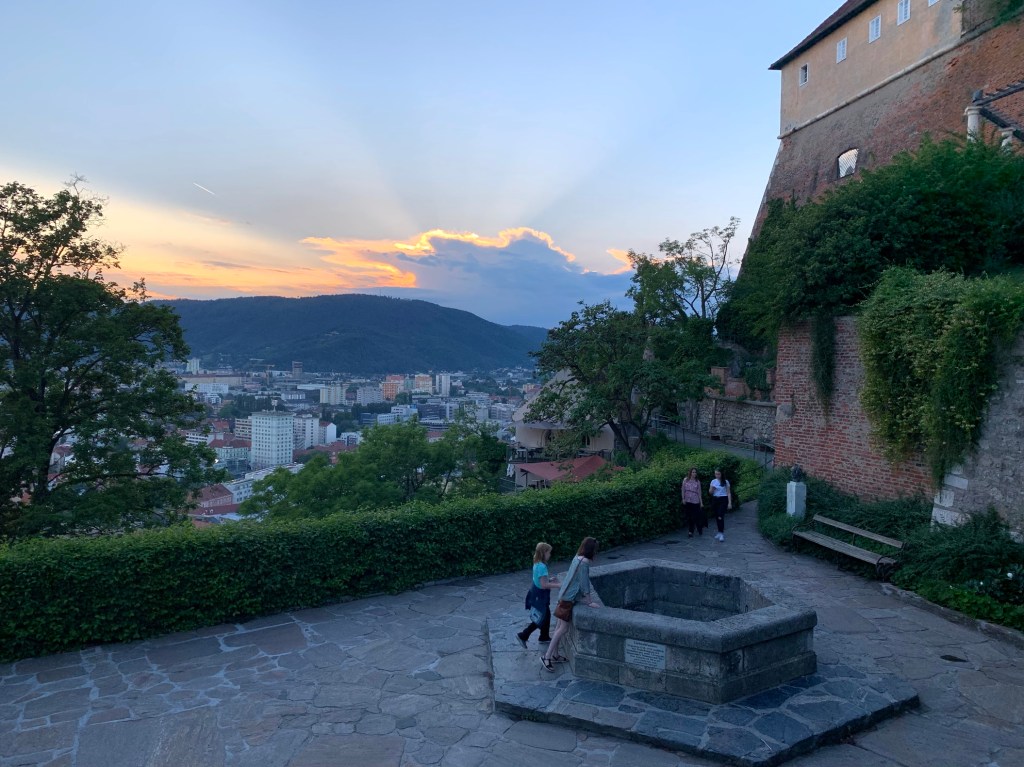
funicular, which took us up the Schlossberg. It was a beautiful evening to ride
up the funicular and walk around. The city was alive down below with voices,
plates tinkling, and glasses toasting. The sunset over Graz was a beautiful
purple-pink.
On the Funicular
Turah wearing one of her new outfits we bought that morning
View of Graz and the Mur River 3 June 2019Graz at SunsetTurah and Faywen looking down the old Fortress well
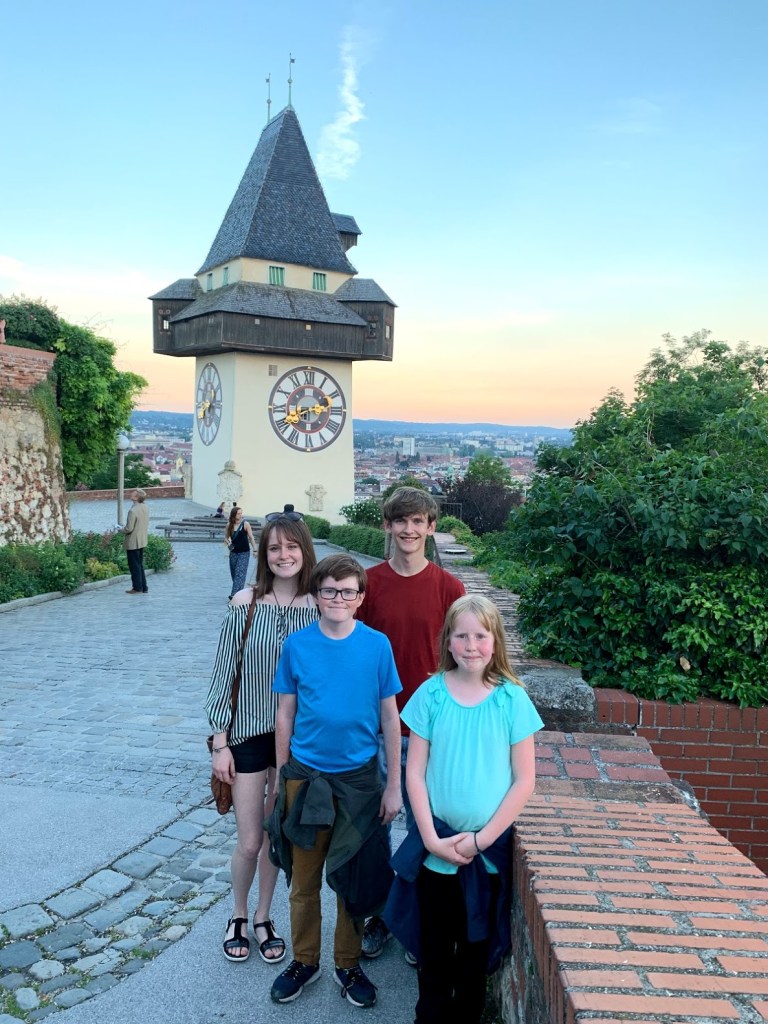
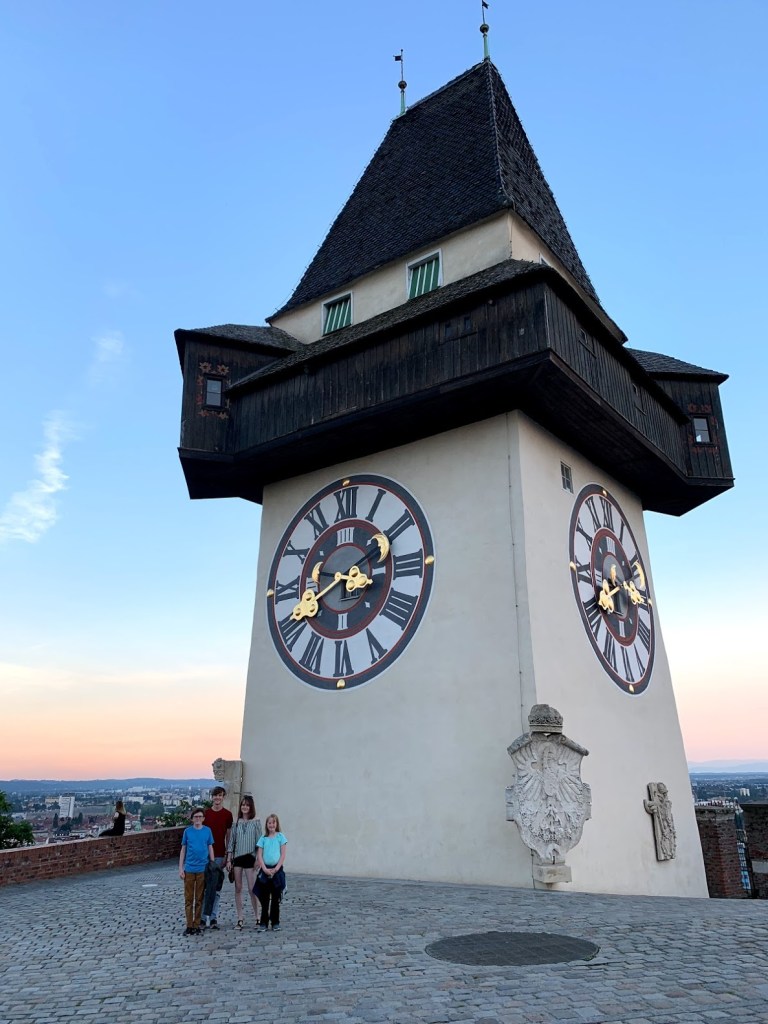
The Uhrturm is the symbol of Graz
Robert, Faywen, and I came home while Liam took Turah for a
Pint of Guinness at his favorite Irish Pub, O’Caroline’s, Graz actually has
four Irish pubs! In Austrian the legally drinking age for beer and wine is 16
and hard liquor is 18, however you cannot get your license to drive until you
are 18 years old. Turah was pleasantly surprised to see how independent,
confident, and friendly Liam was. She noted that the pub staff knows him and was
excited to meet his big sister. Some of the staff were Austrian and the owners
are Irish. I’m glad she had an opportunity to spend time with her little brother.
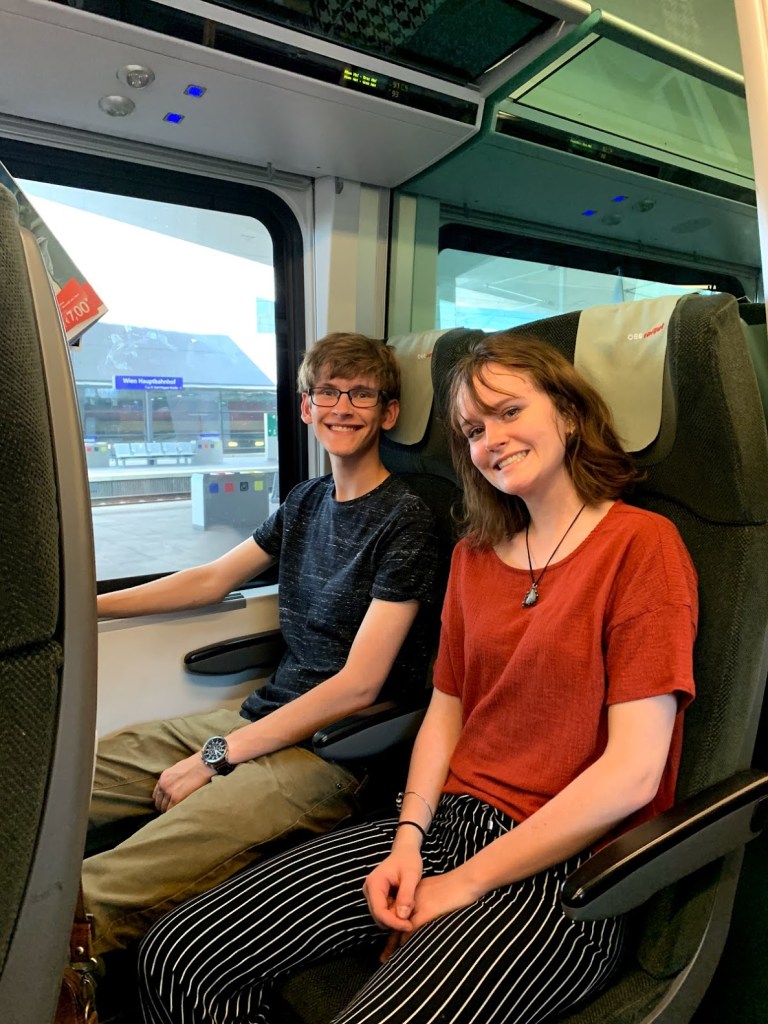
This is just a quick little entry about Turah’s first long
European train ride. We arrived at the Vienna Hauptbahnhof just before noon.
Turah enjoyed her first long distance train ride through the Austrian
countryside. It takes about 2 ½ hours by train from Vienna to Graz. Once back
in Graz we purchased groceries and went home. The rest of the afternoon was
spent relaxing and unpacking.
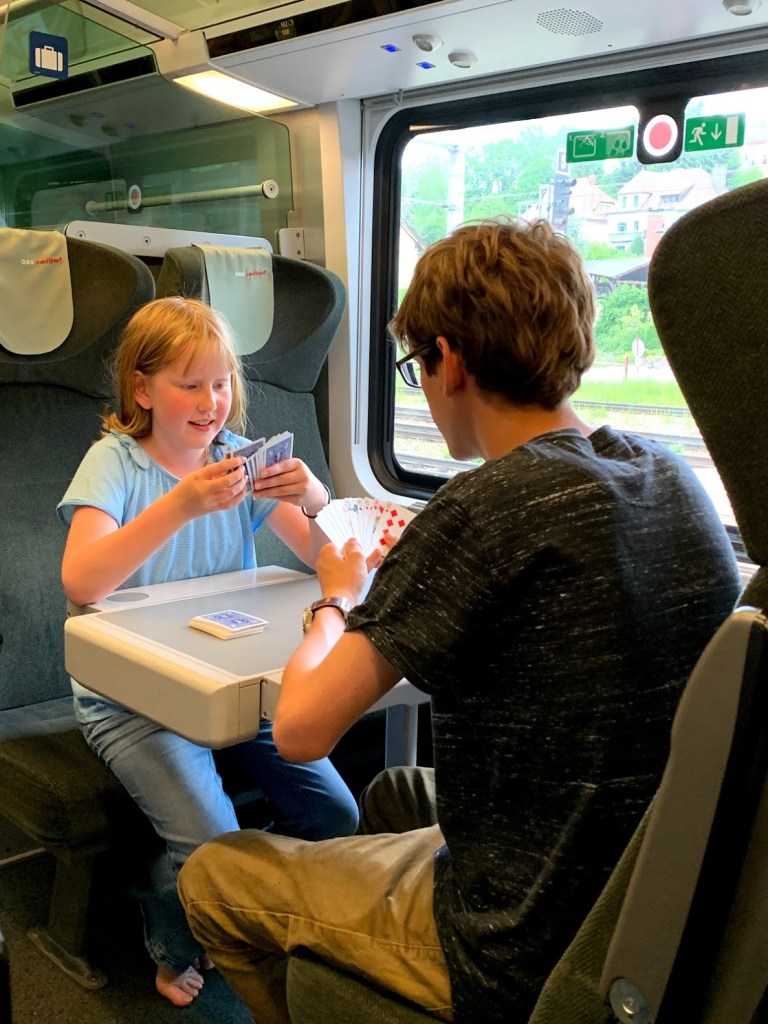
Our train car had a lot of free seats so Faywen and Liam found a spot to play cards!
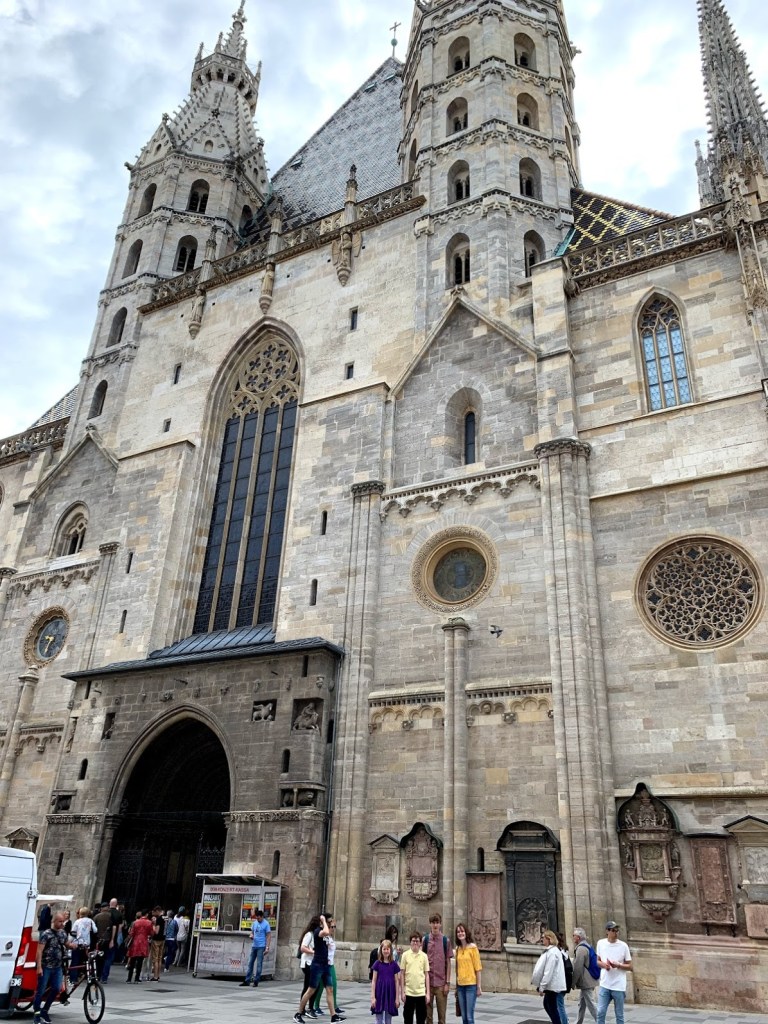
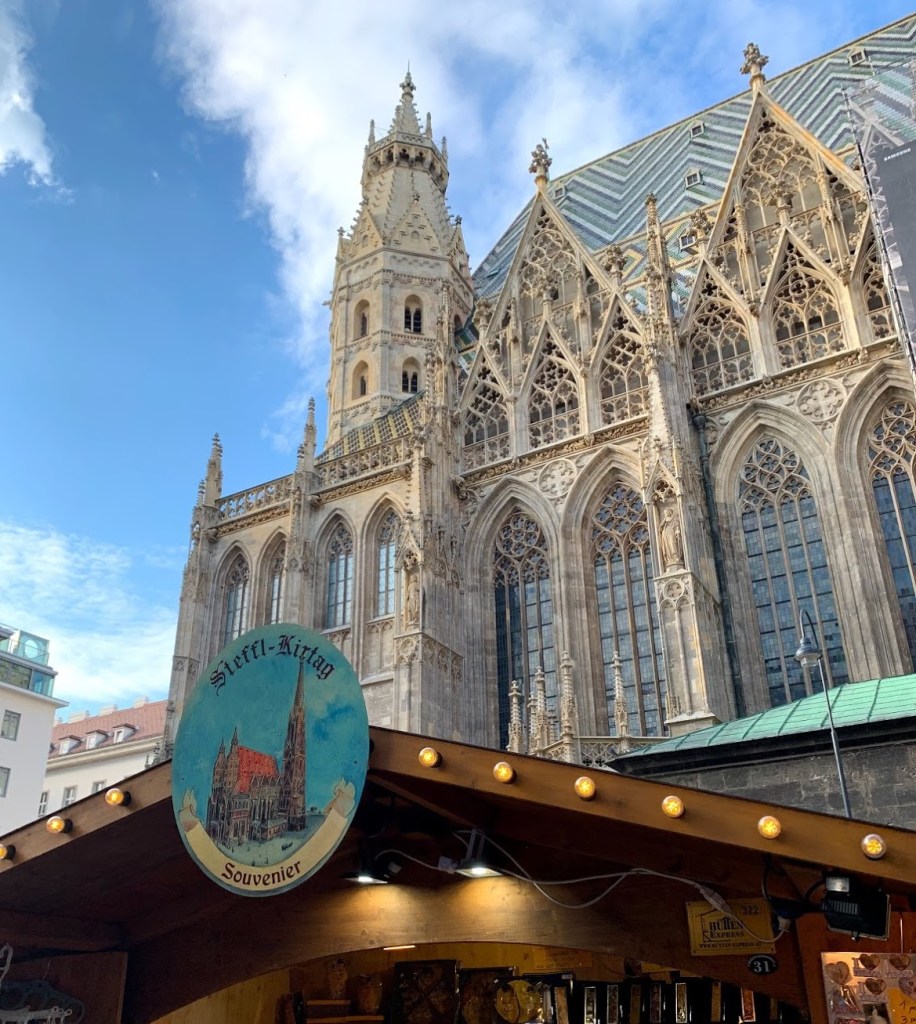
St. Stephen’s Cathedral is the heart of Vienna. It was
important that Turah also got to see this magnificent gothic church. Since the rest of us had seen the church back
in March, Liam volunteered to take Turah on the guided Catacomb tour and into the
center part of the sanctuary. It was
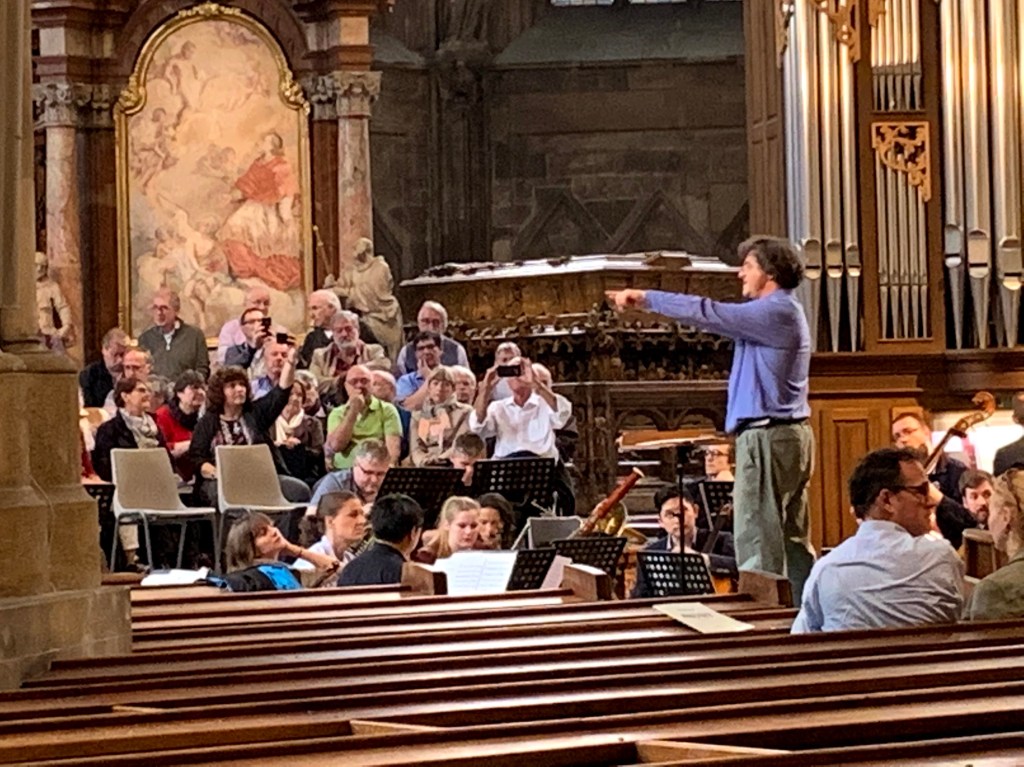
lovely to see the main sanctuary again and also hear the choir practice for Mass.
The rest of us went shopping in the main square while Liam and Turah took the
tours. She enjoyed the tours and special time with her brother.
St. Stephen’s Cathedral
Music rehearsal
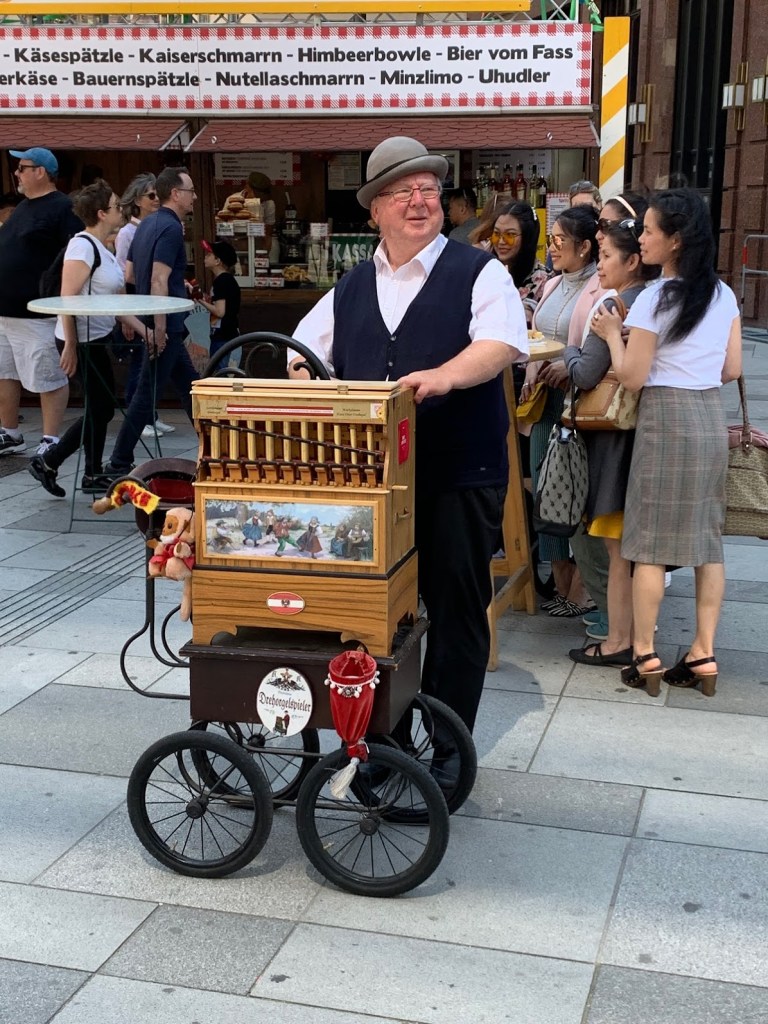
A traditional organ grinder was playing in St. Stephen’s Platz
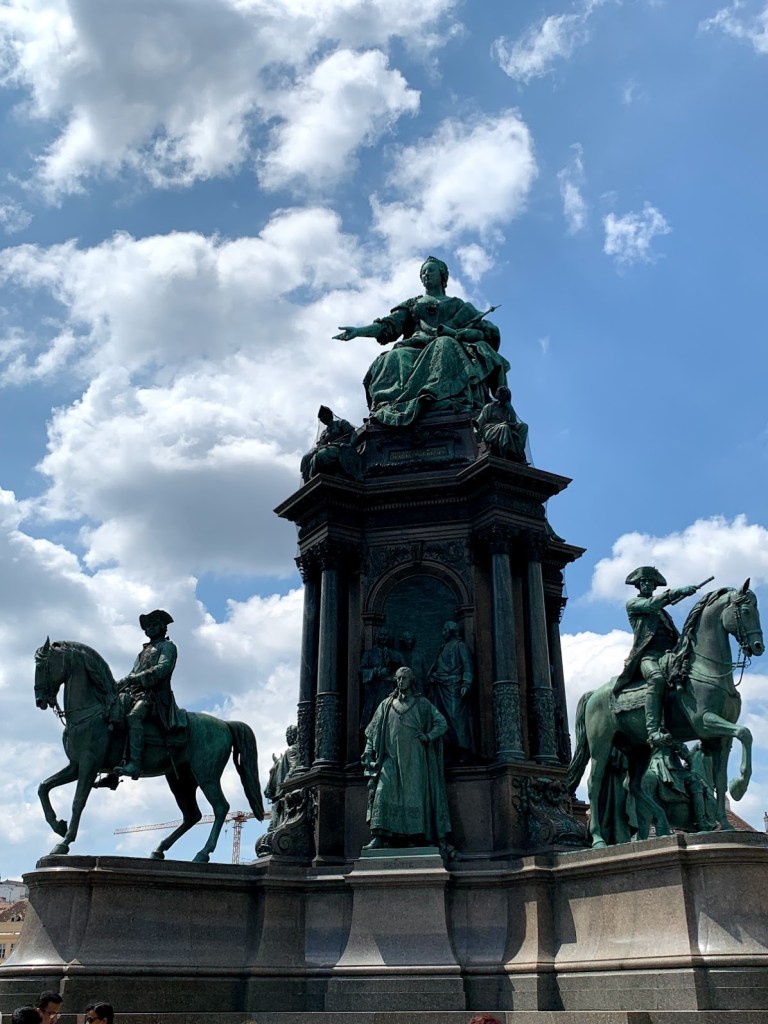
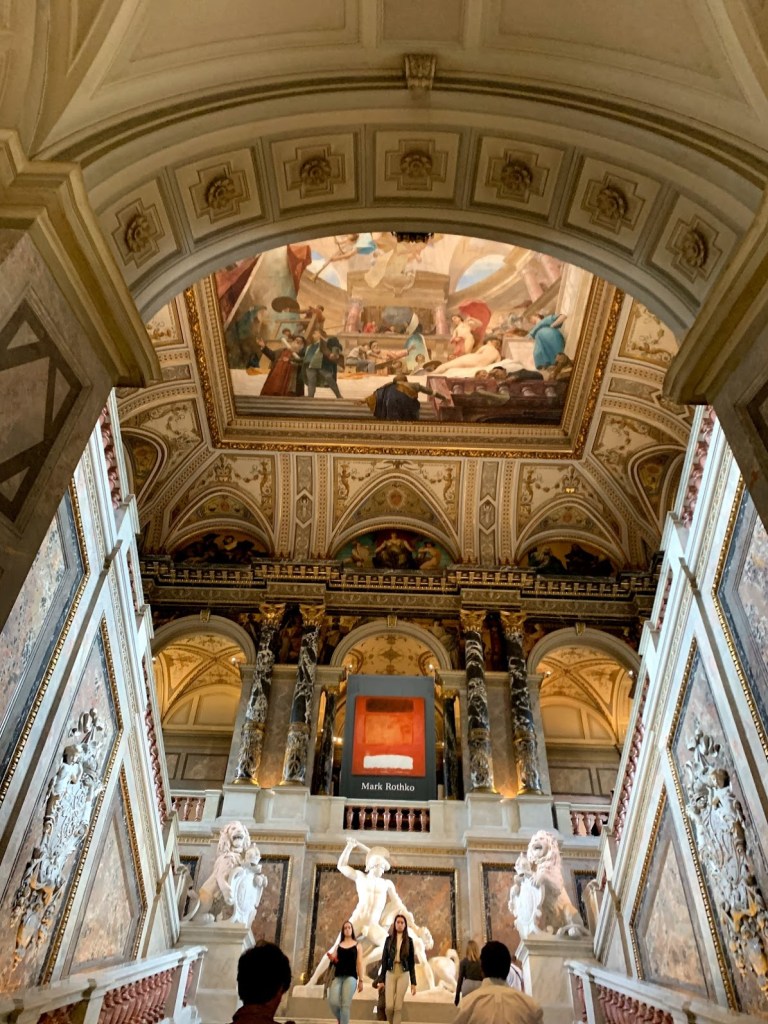
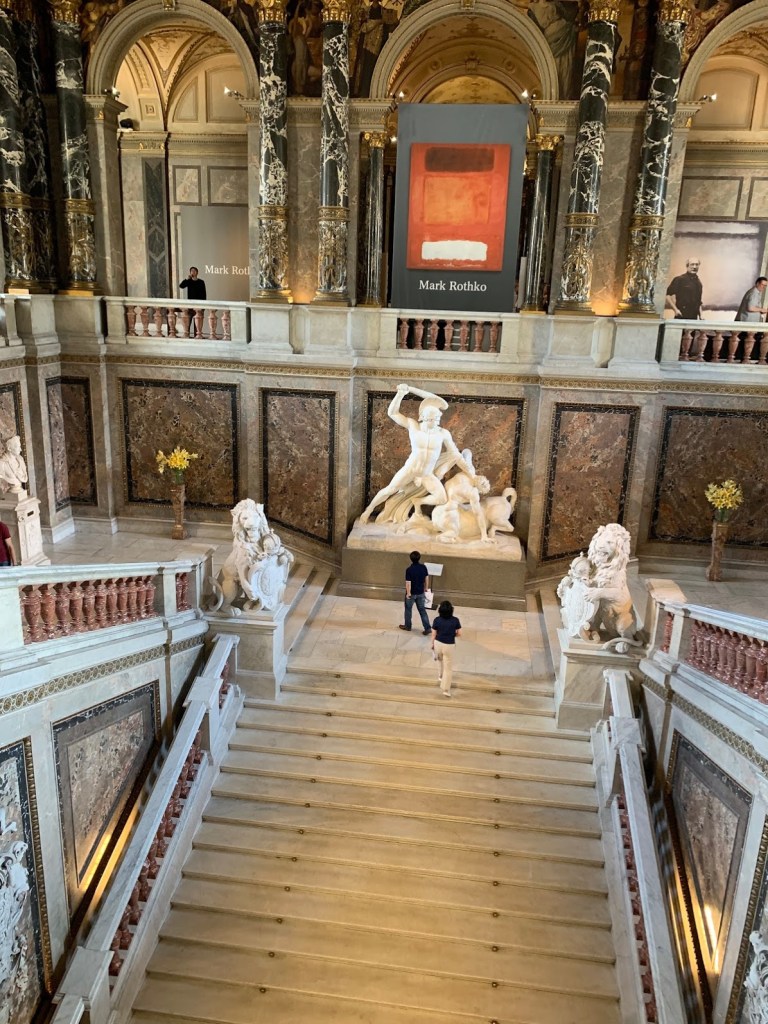
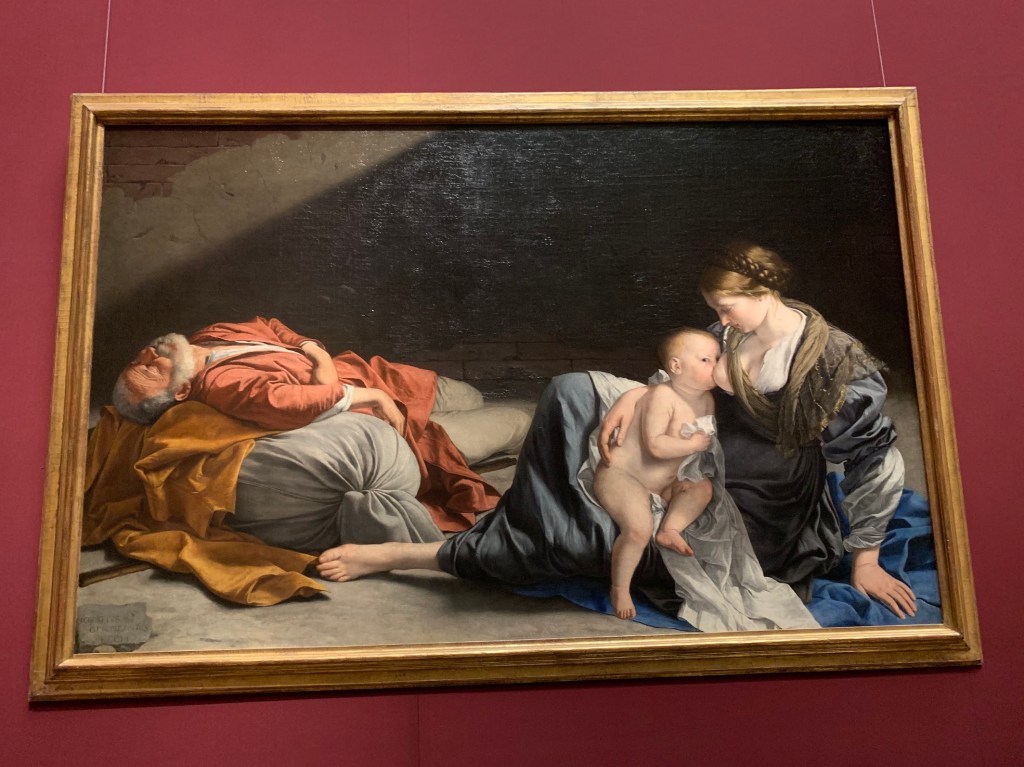
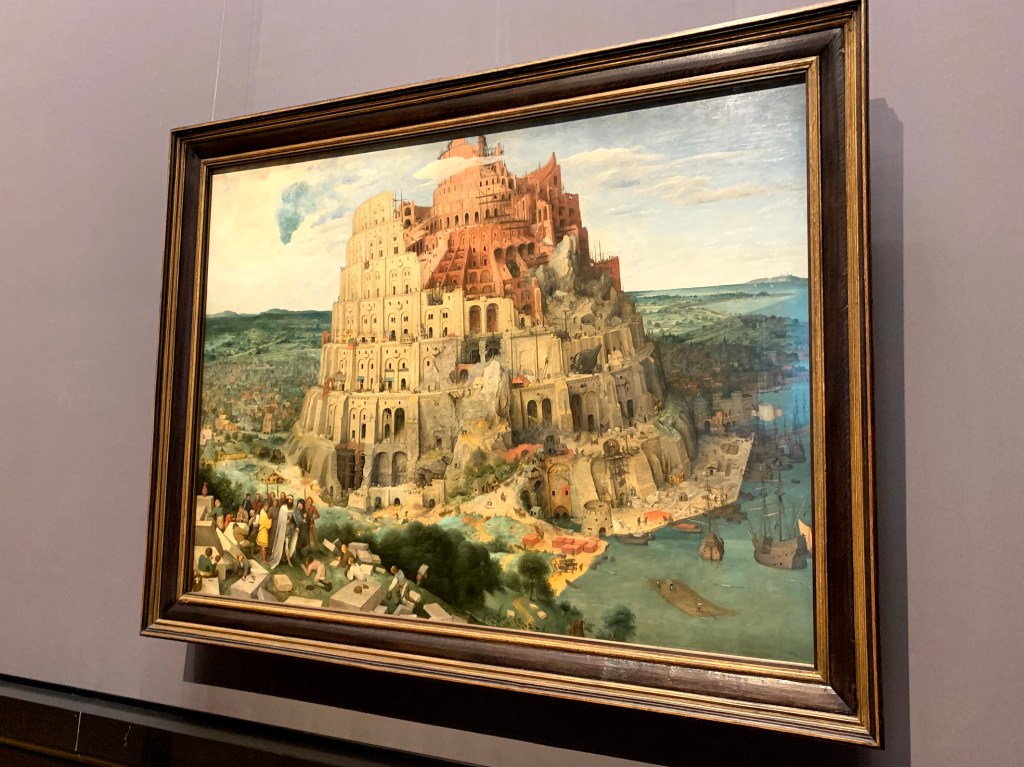
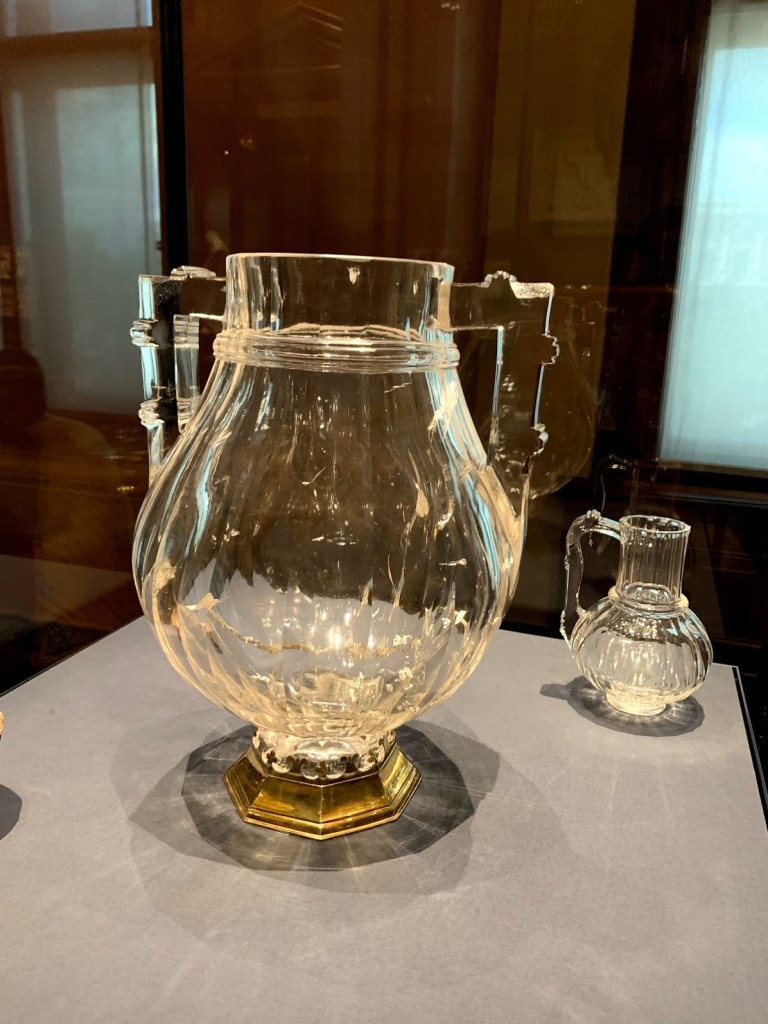
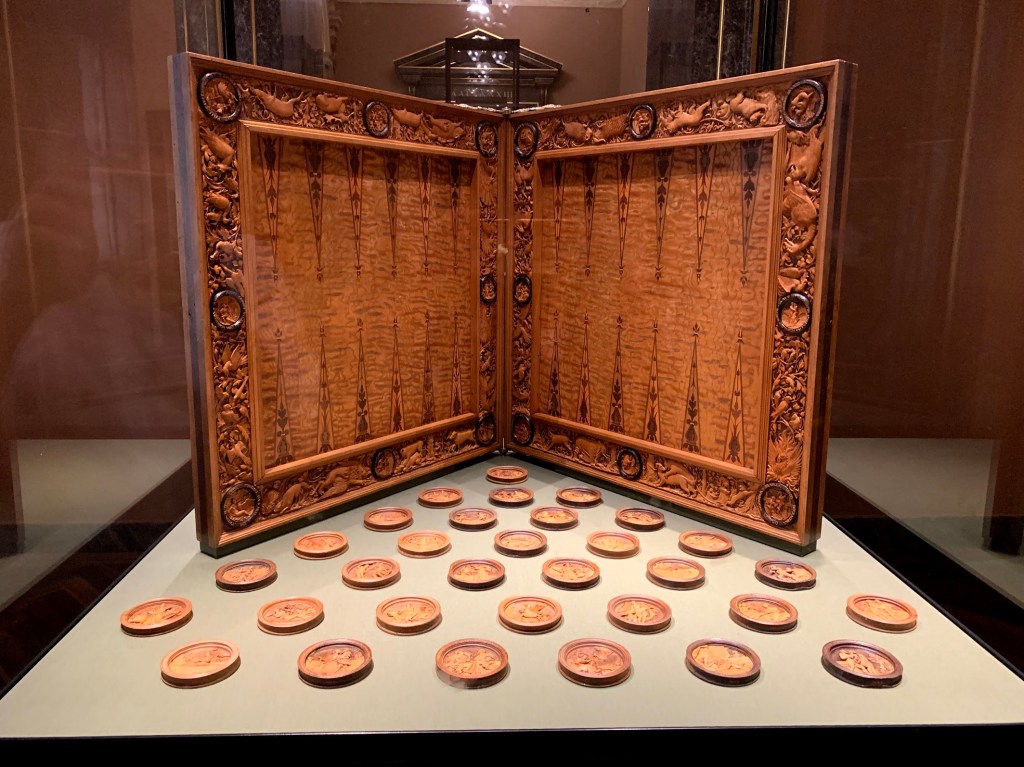
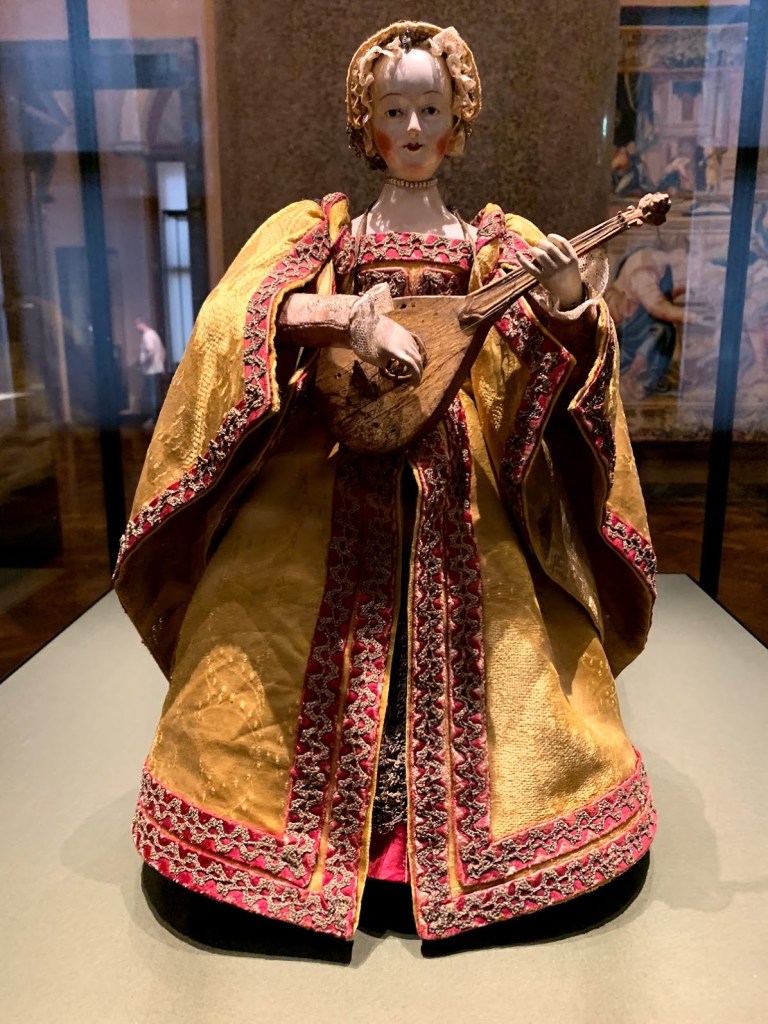
We hopped onto the subway towards the Hofburg Palace and Museum Quarter. Our first stop in this district was the National Art Museum. The museum contained masterpieces by Van Dyke, Rueben, Dürer, Holbein, and Raphael. My favorite was a portrait of “Rest on the Flight to Egypt”. Not only did we see great works of art, but also there was an exhibit with artifacts found in and around Vienna within and the last 2,000 years. I liked the solid 2,000 yr old crystal pitcher, the backgammon board from the 1400’s, and the 16th century musical doll.
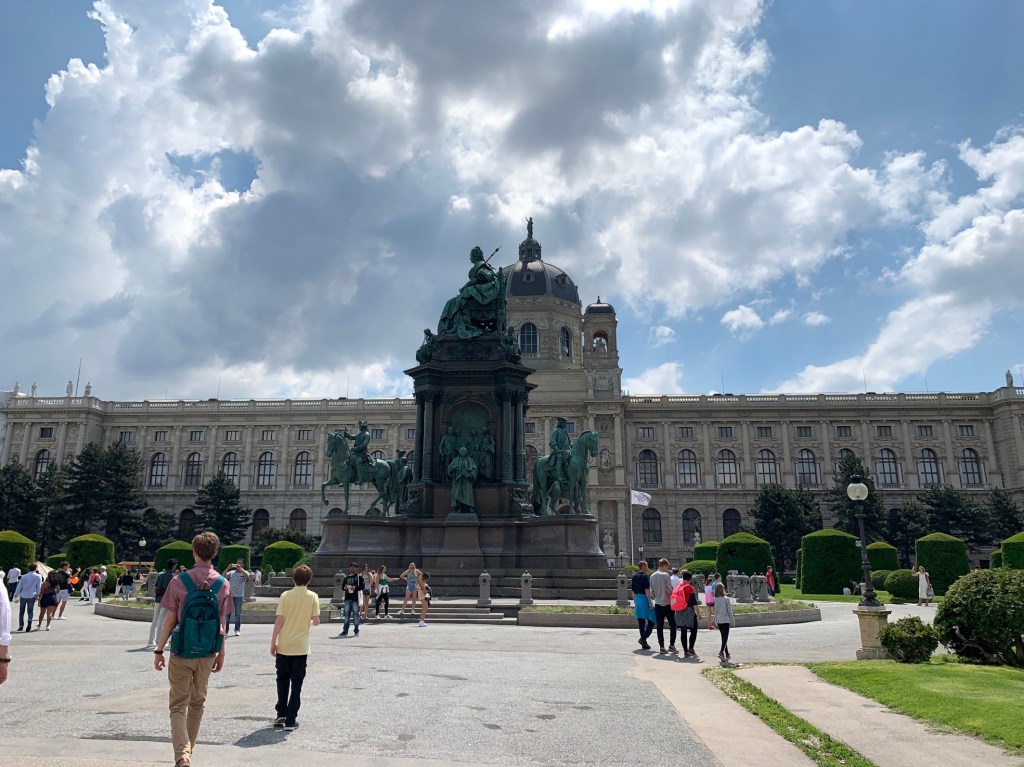
National Art MuseumStatue of Holy Roman Empress Maria Theresia: She was well loved by her people.
Looking up the art museum staircase
Looking down on the same staircase
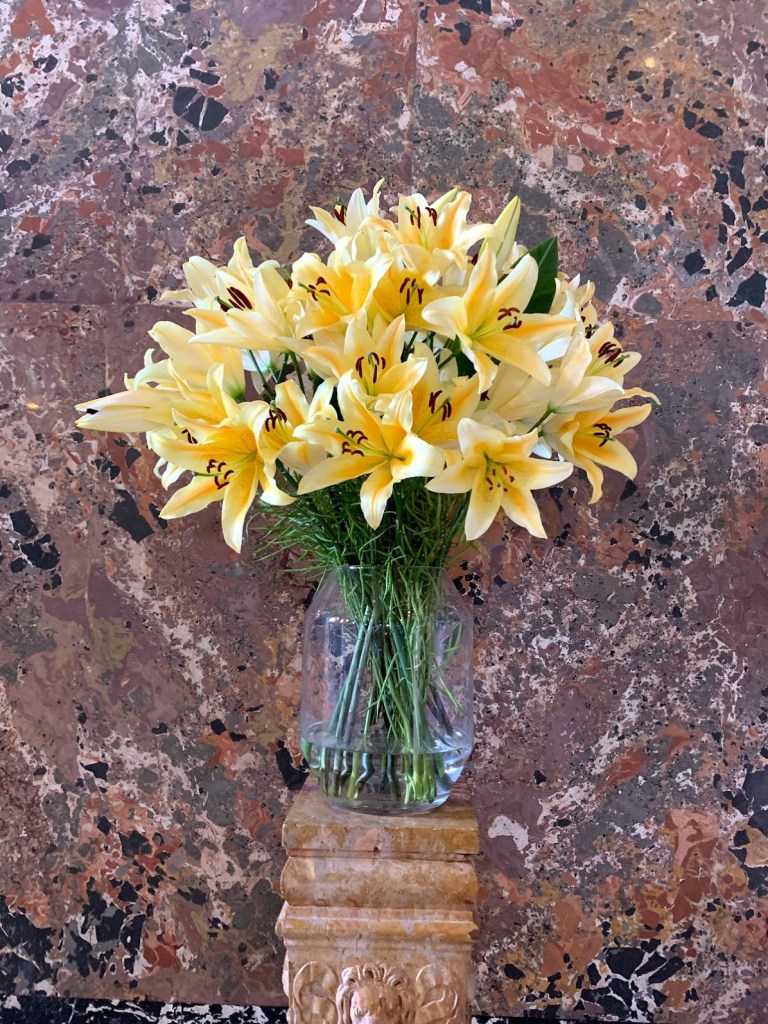
I thought these lilies were art in and of themselves. The arrangement was stunning against the marble wall!“Rest on the Flight to Egypt” by Orazio Gentileschi This portrait shows the human side of the holy family with Joseph napping and Mary breastfeeding Jesus.“Tower of Babel” by Pieter Bruegel the Elder
2,000 yr. old crystal
Backgammon
Doll
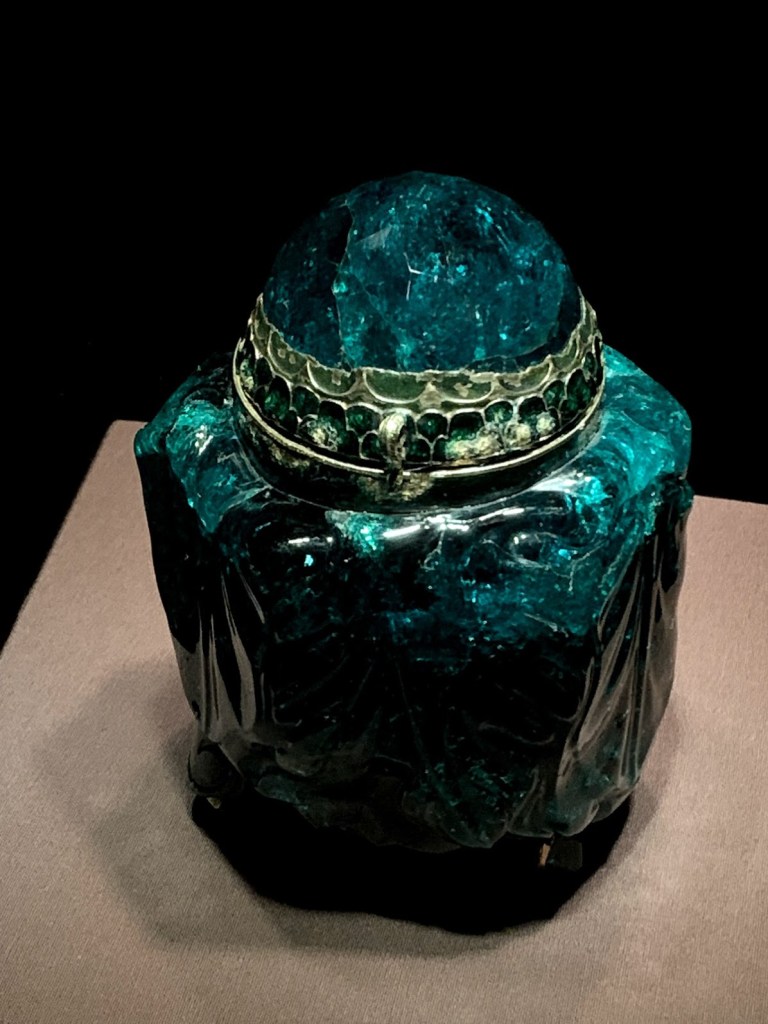
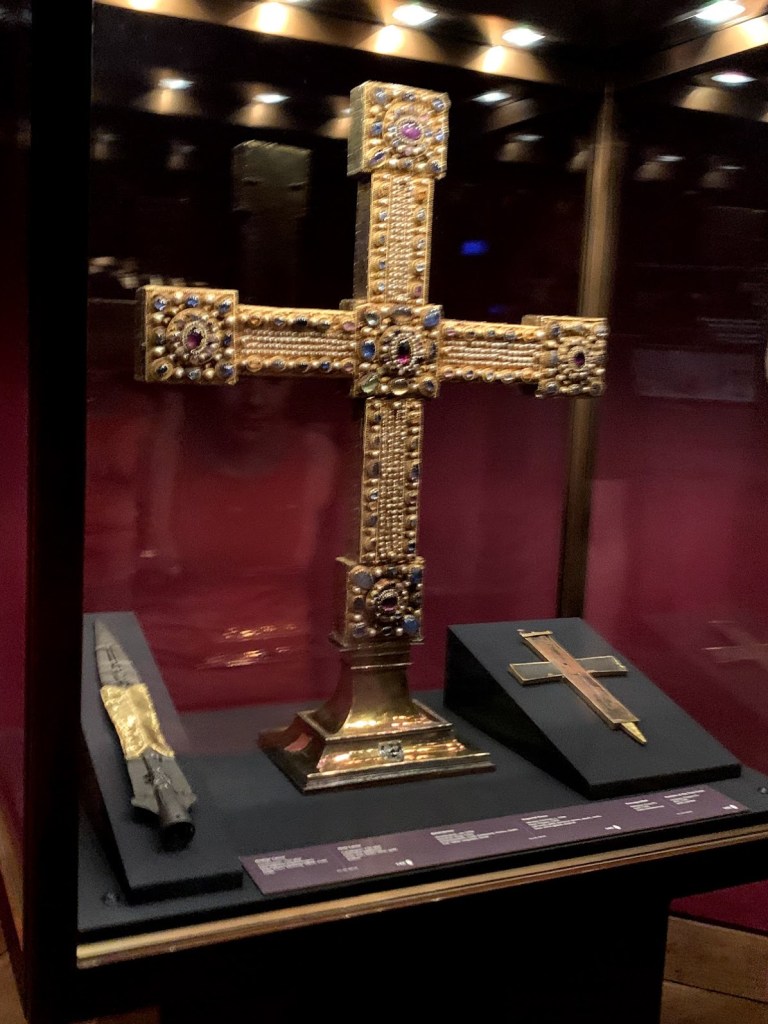
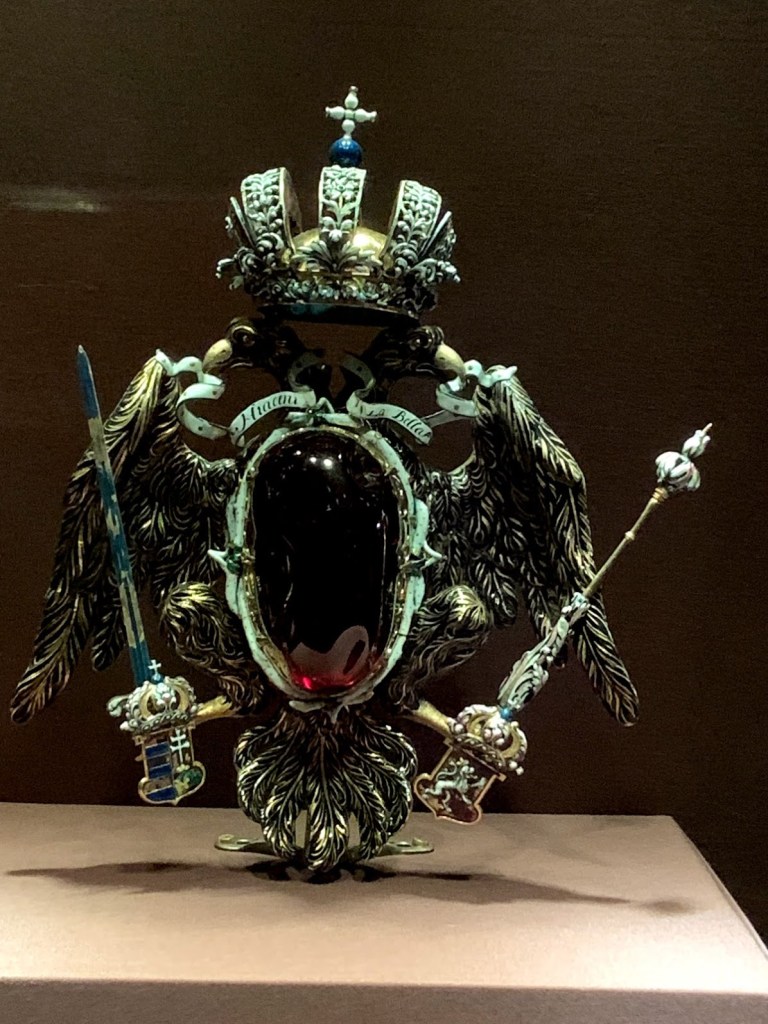
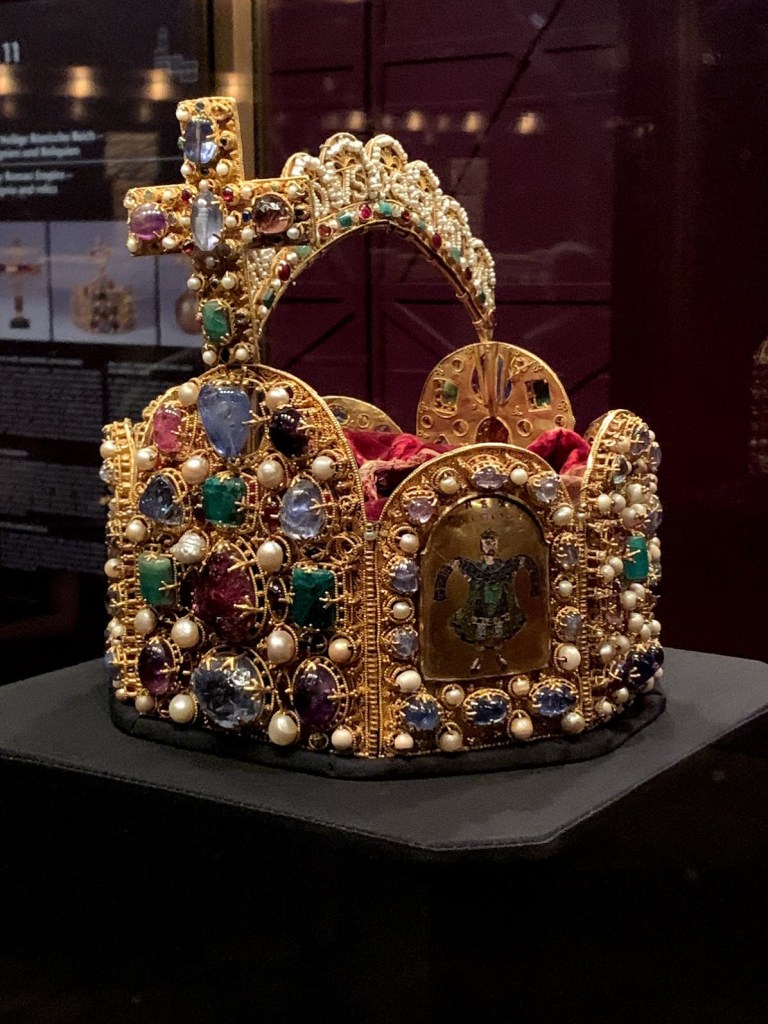
The National Treasury was next on our list. The jewelry, robes, and tapestries of the Hapsburg Empire were visually stunning. The largest single emerald in the world is there. It’s roughly 2600 carats. It was made into an unction vessel. Supposedly the museum has the crown and sword used at the coronation of the first Christian Emperor Charlemagne. Holy relics were also present with supposed splinters from the Cross, fabric shards of the burial linen, and the spear that pierced Christ’s side were on display. These items have never been authenticated, but stand in good favor purely on historical tradition. The treasury was full of richly embroidered herald and clerical robes and stunning jewelry pieces, including a magnificent opal set with flanking Hapsburg Eagles.
The whole container is one emerald
Holy Relics of Christ
Hapsburg Opal
Crown of Charlemagne
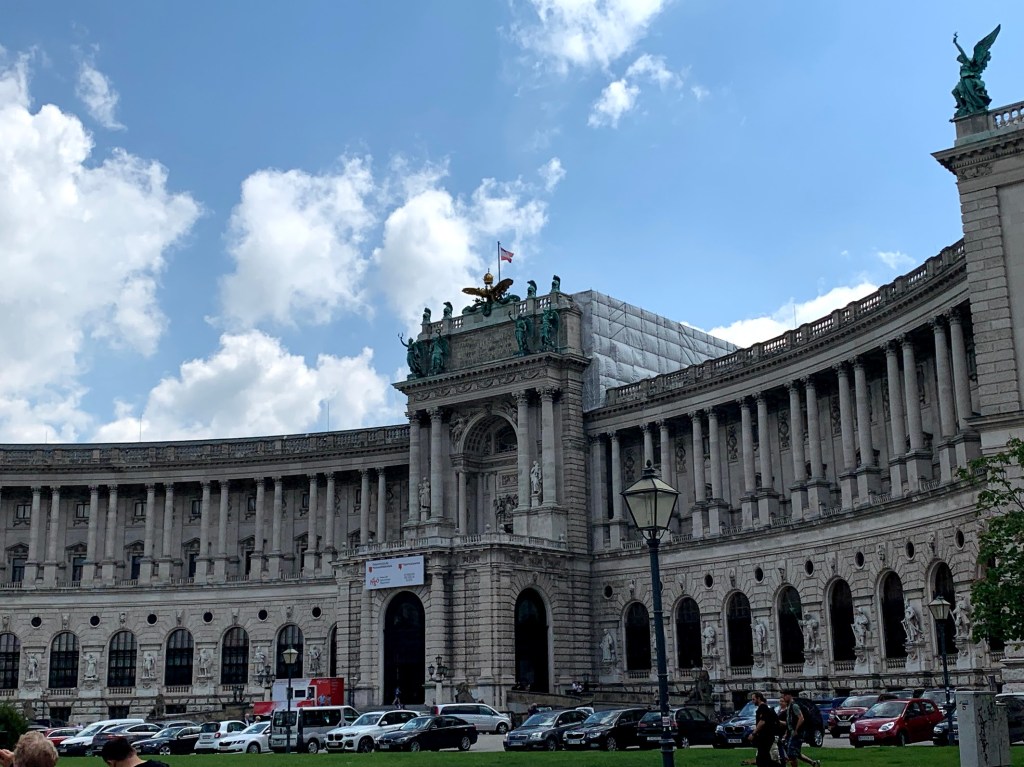
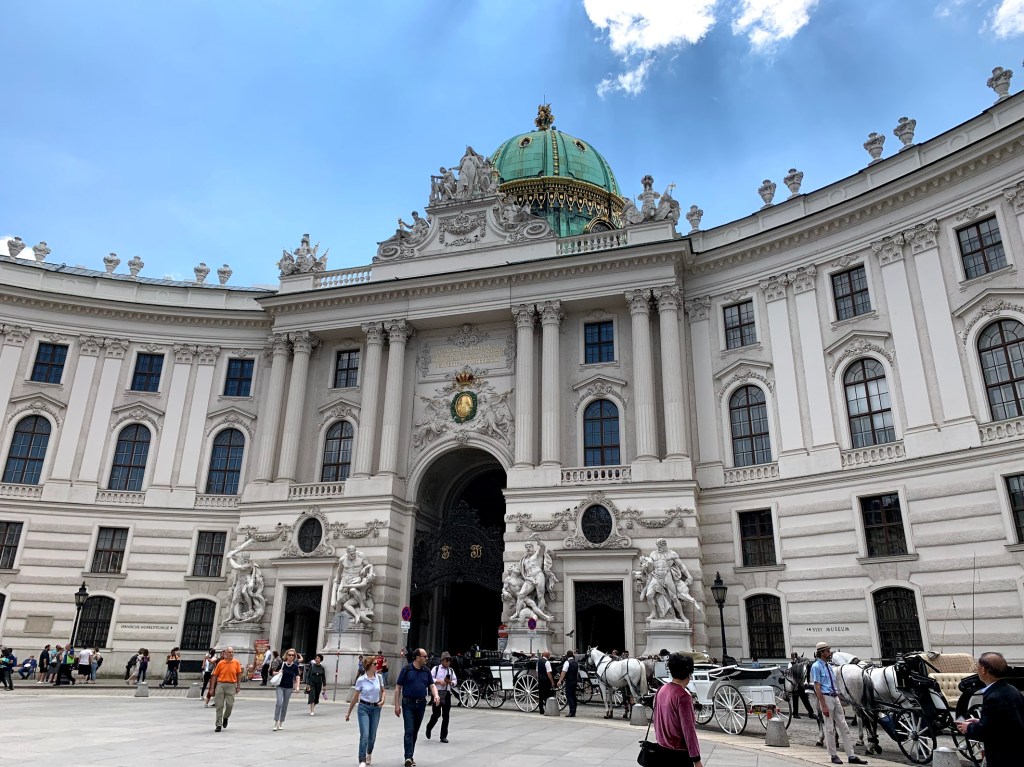
From the National Treasury we walked through the various
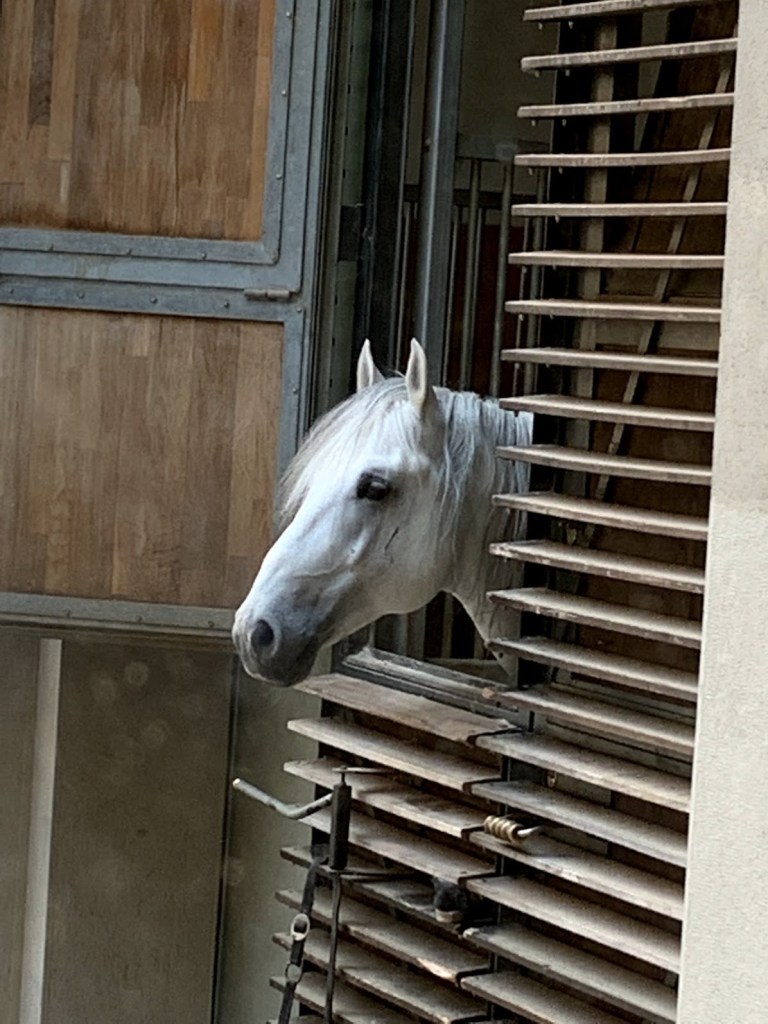
courtyards of Hofburg Palace. In these courtyards were iconic sites like the
church where the Vienna Boys Choir sings every Sunday and the Lipizzaner Horse
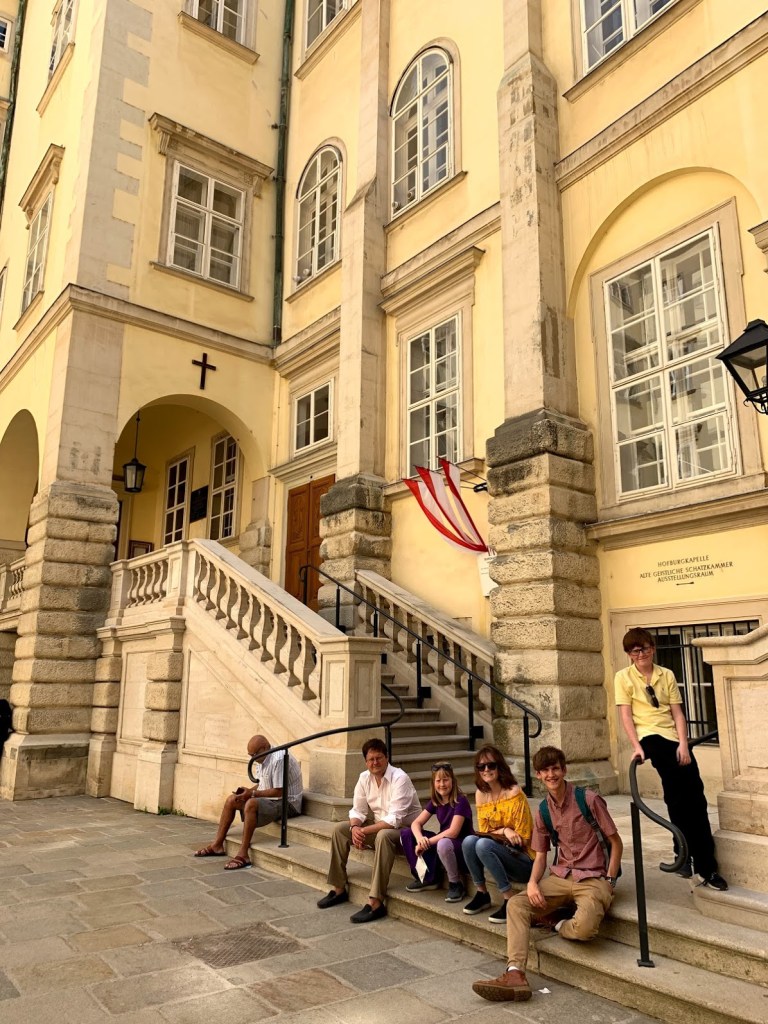
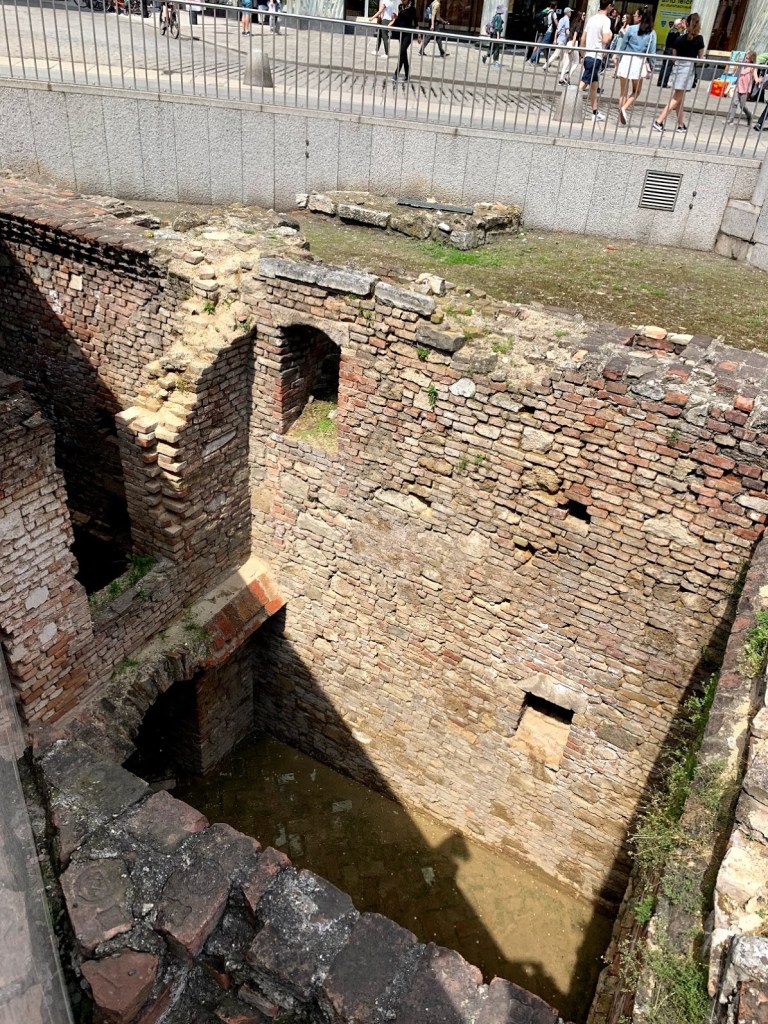
Stables, which are the homes of the horses used in the Spanish Riding School. As we left the Palace grounds we took a moment
to admire the small Roman ruins excavated right outside the majestic portico
where guests were received at Hofburg Palace.
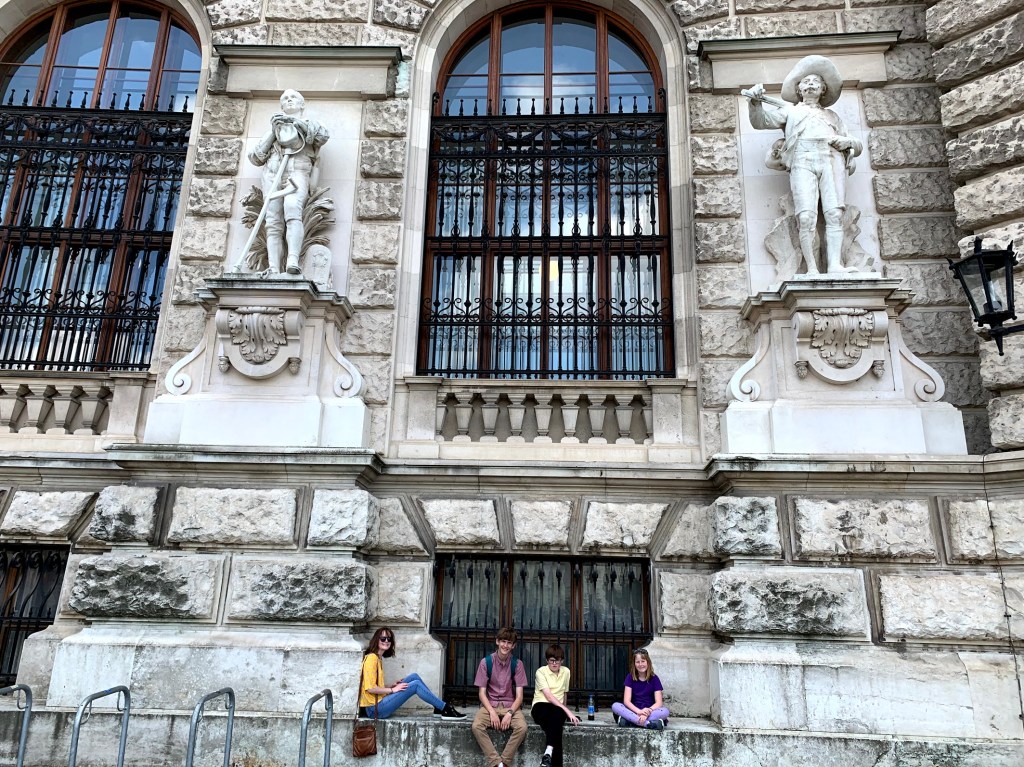
Hofburg Palace in Vienna 1 June 2019Backdoor portico of Hofburg PalaceTaking a rest at the Palace
Church where the Vienna Boy’s Choir sings
Beautiful Lipizzaner Horse
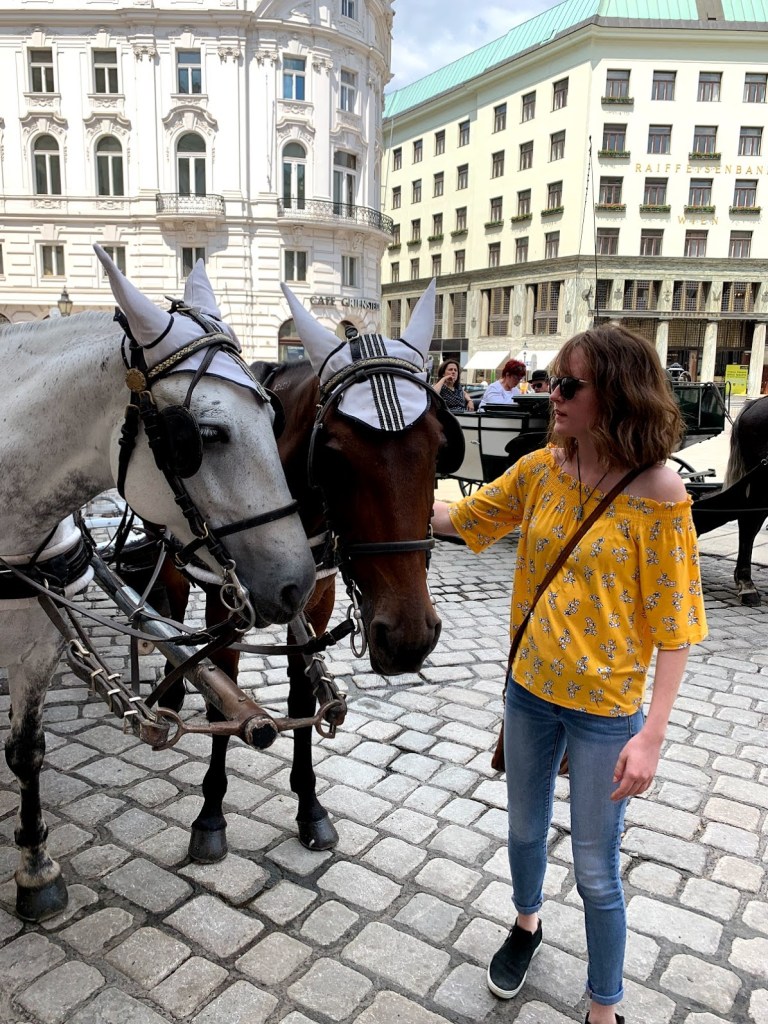
Turah befriended a pair of carriage horses outside the palace.
Roman Ruins
A few blocks from the palace brought us to the Abbey of the
Scots market. I purchased a handmade shopping basket in the style commonly used
in Austria. Nearby an open pedestrian walk was alive with people enjoying open-air
cafés and shops. There was even a brass band playing in the square!
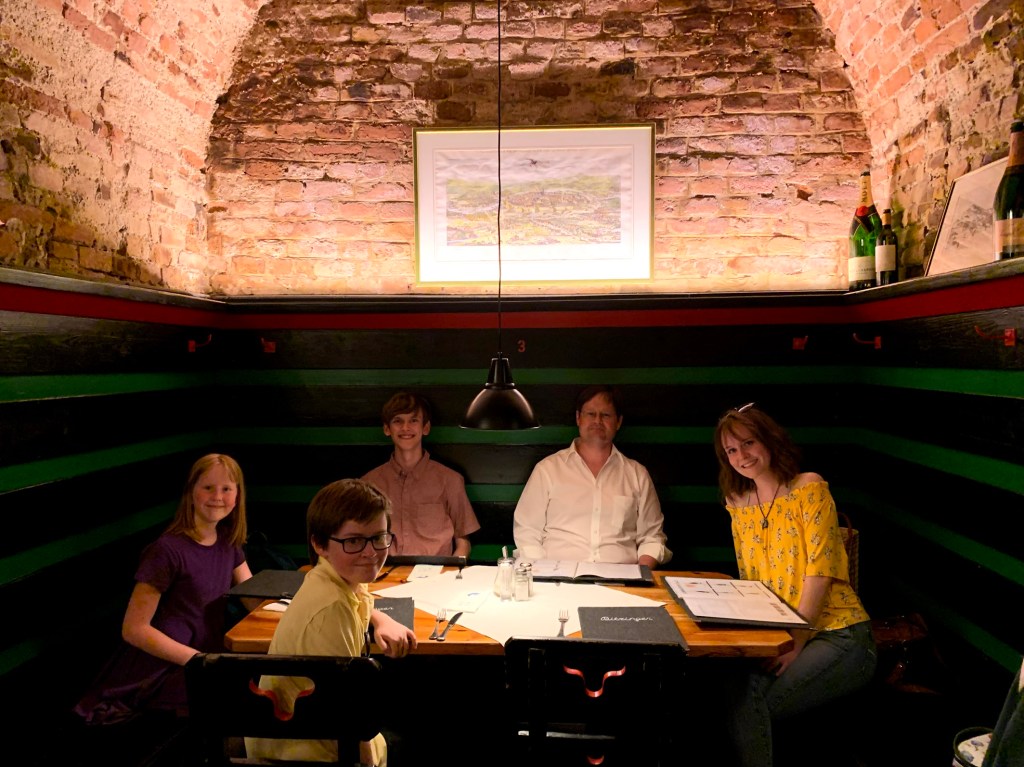
At 6:00 we arrived at our favorite restaurant in Vienna, the
Augustiner Keller. Built in the 13th century it is charming and
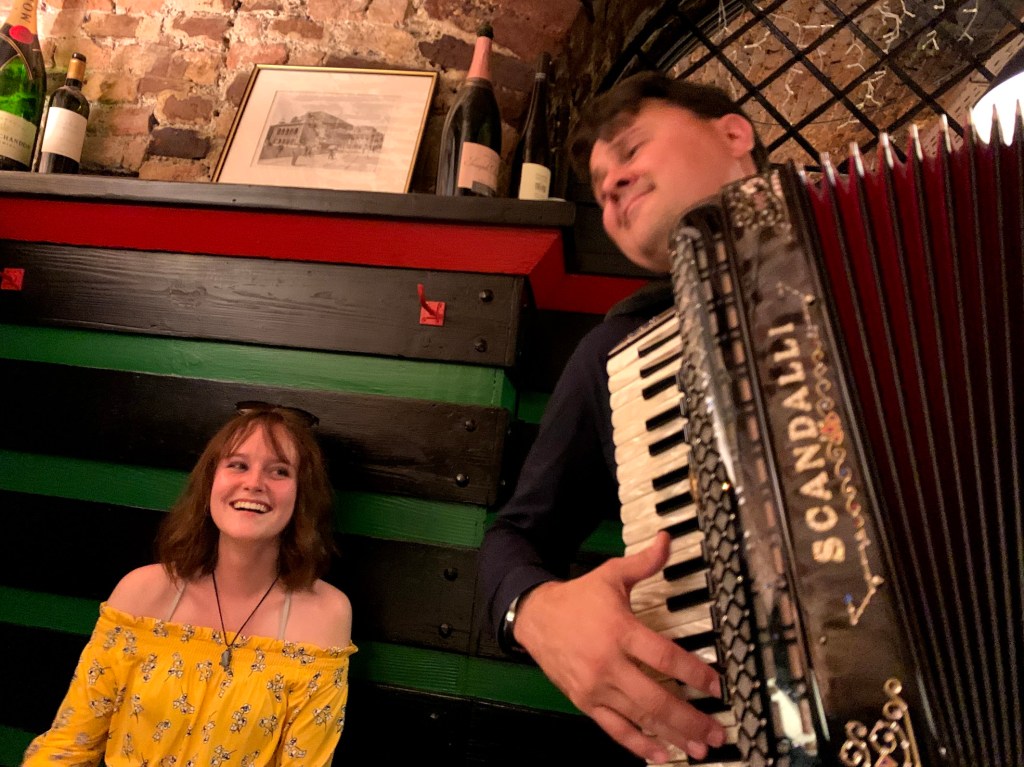
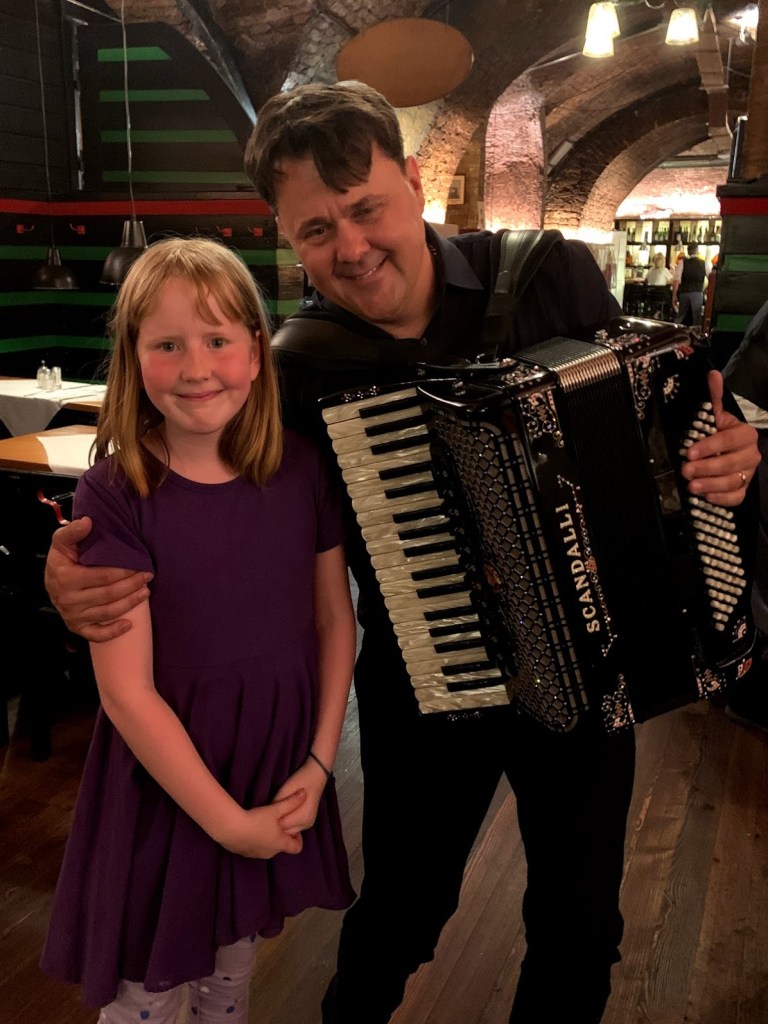
serves traditional Viennese food. Our accordion friend, Mr. Peter, was there
and he remembered us from two months ago and immediately was singing duets with
Faywen and the family. He tried wooing Turah with French love songs, played
Sinatra while Robert and Liam sang, and even got Seamus to clap along to a
traditional Slovakian folk tune. But Faywen loves Mr. Peter the most, and they
sang several “Sound of Music” selections. He’s always been impressed with her
singing voice and musicality! He is a Professor of Accordion at the Vienna
School of Music, but is originally from Slovakia.
Augustiner Keller
Ooo la la!
Mr. Peter and Faywen: Several of the tables around us had fun listening to our family sing and interact with Mr. Peter. He’s actually a dad of two kids about Seamus and Faywen’s age and you can tell he loves it when the kids get involved in the music. It was so nice to see him again!
In order to walk off dinner we headed toward the Stadtpark.
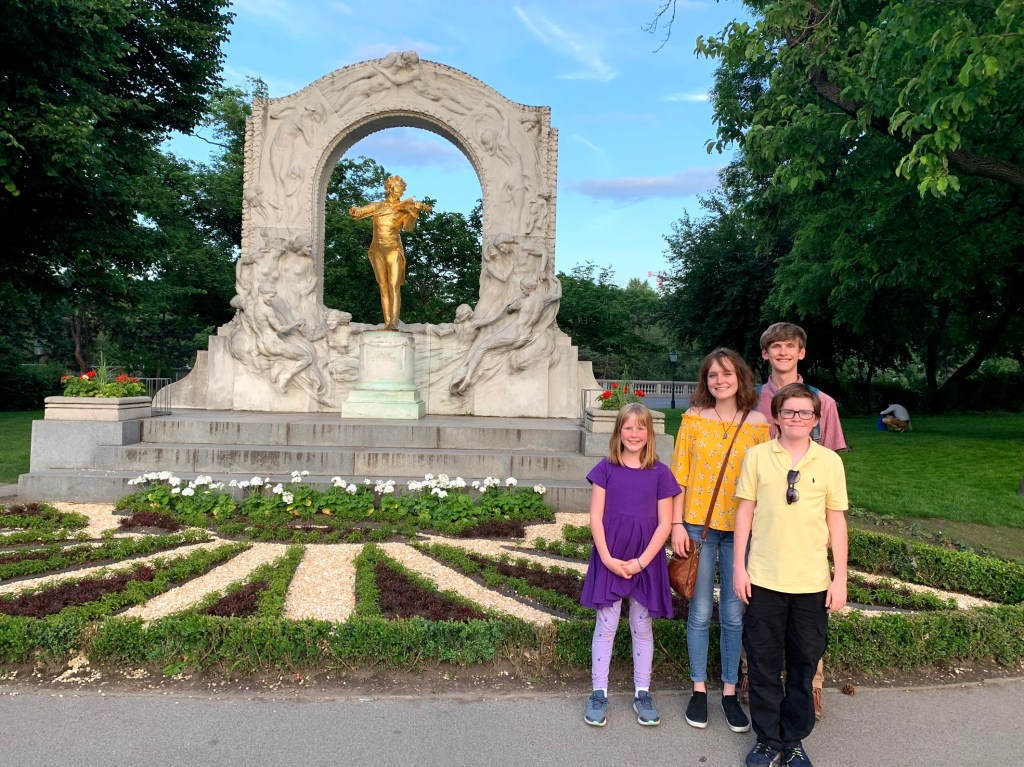
The kids wanted to show Turah the “golden statue of the six nippled man” a.k.a.
the statue of Johann Strauss Sr. in a six buttoned waistcoat! We crossed the
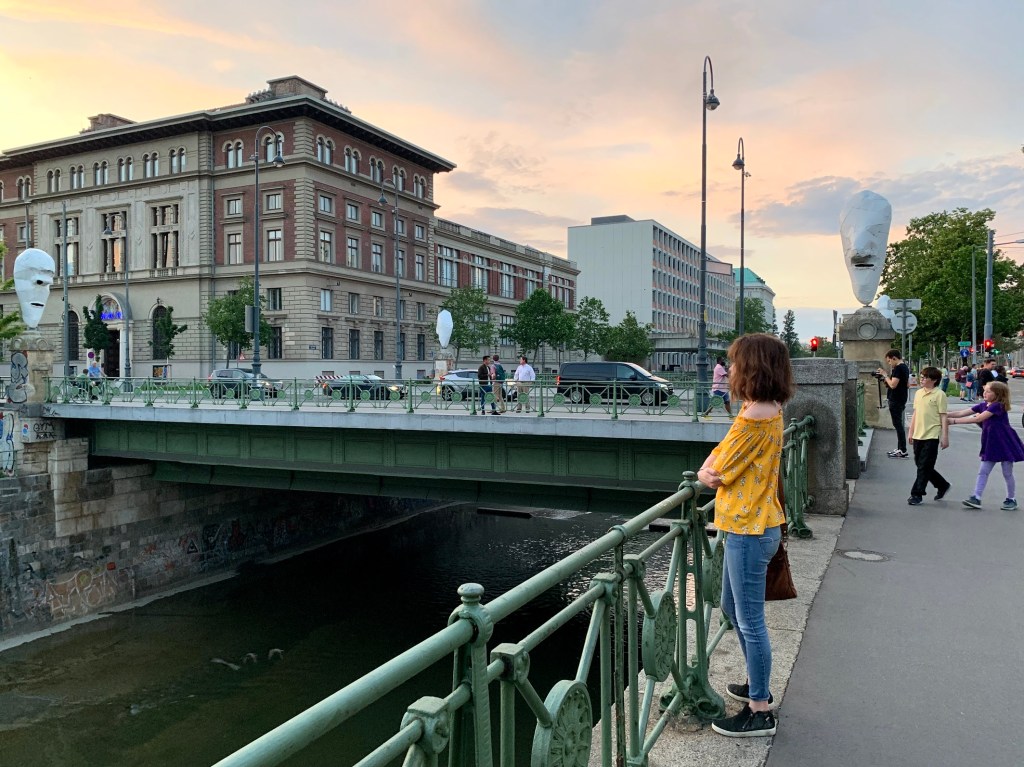
Nose Statue Bridge over the stinky canal and the kids enjoyed playing on
Viennese “danger” playground equipment. As the sun set the buildings cast a
creamy glow on old Vienna!
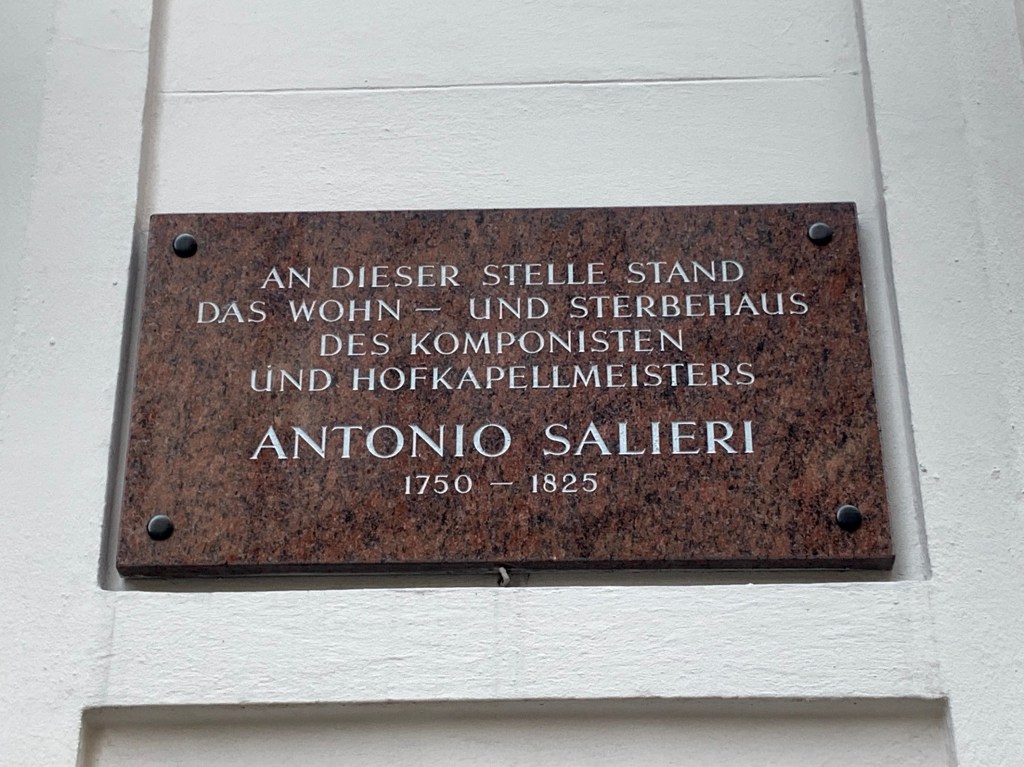
We stumbled across this sign designating Salieri’s birth spot. He was a contemporary of Mozart and the Hapsburg Court Composer.
Admiring the Nose Bridge
Huzzah for the Six Nippled Man and all his wonderful music too! Johann Strauss is the famous “Waltz King of Vienna”!
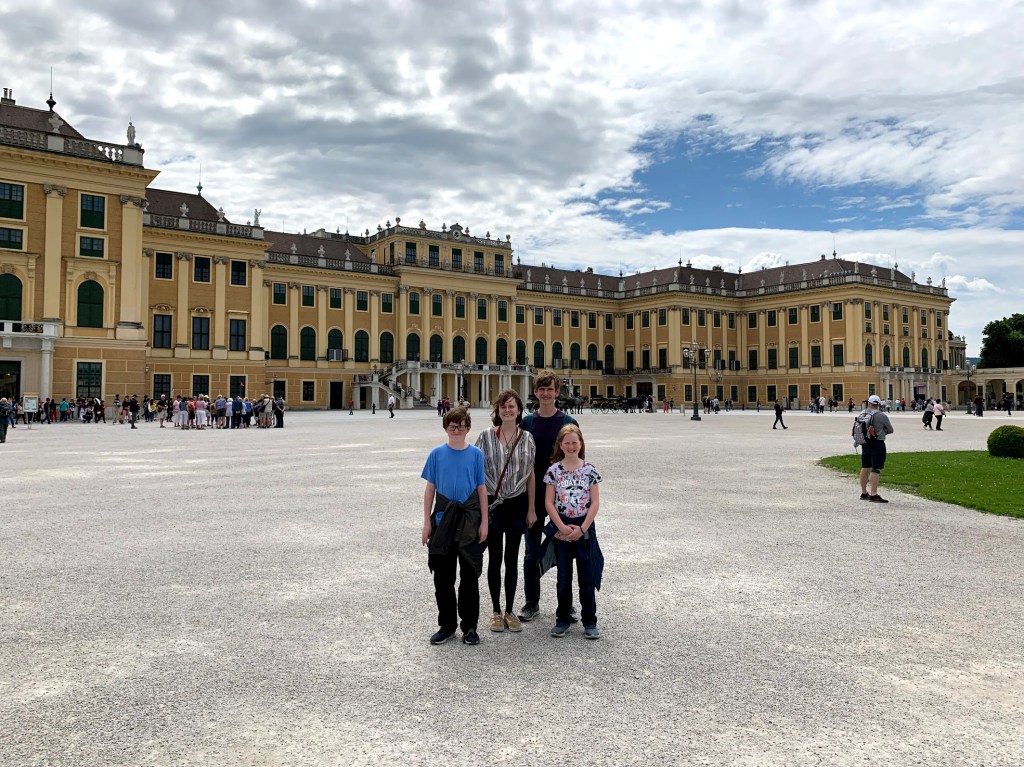
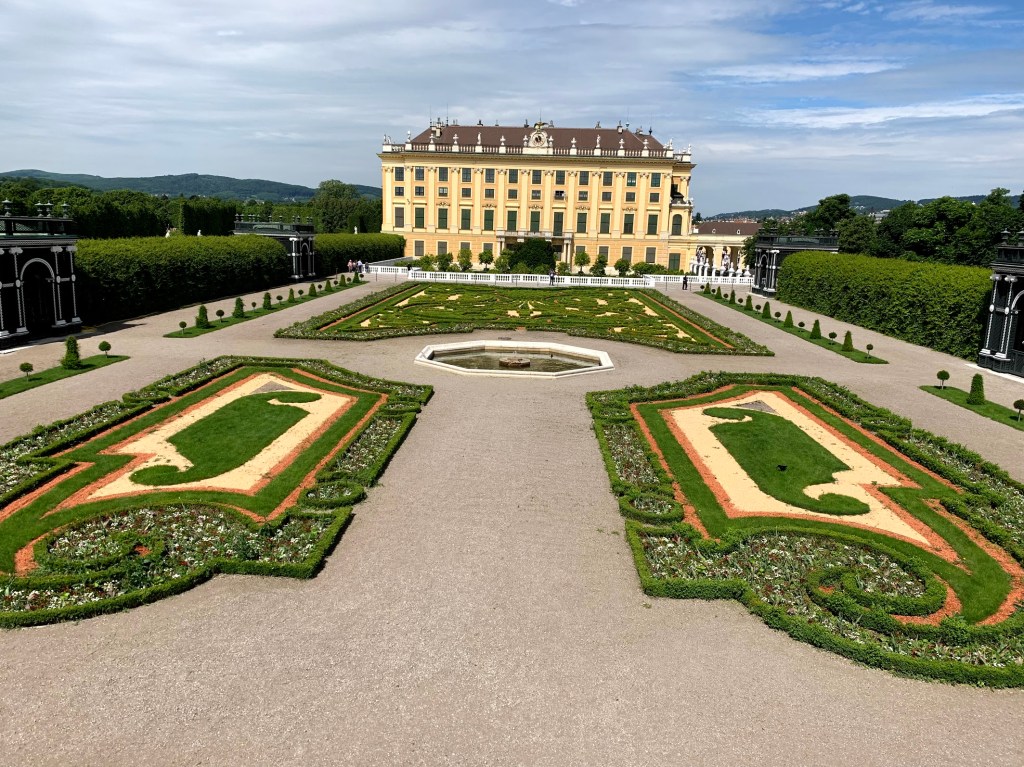
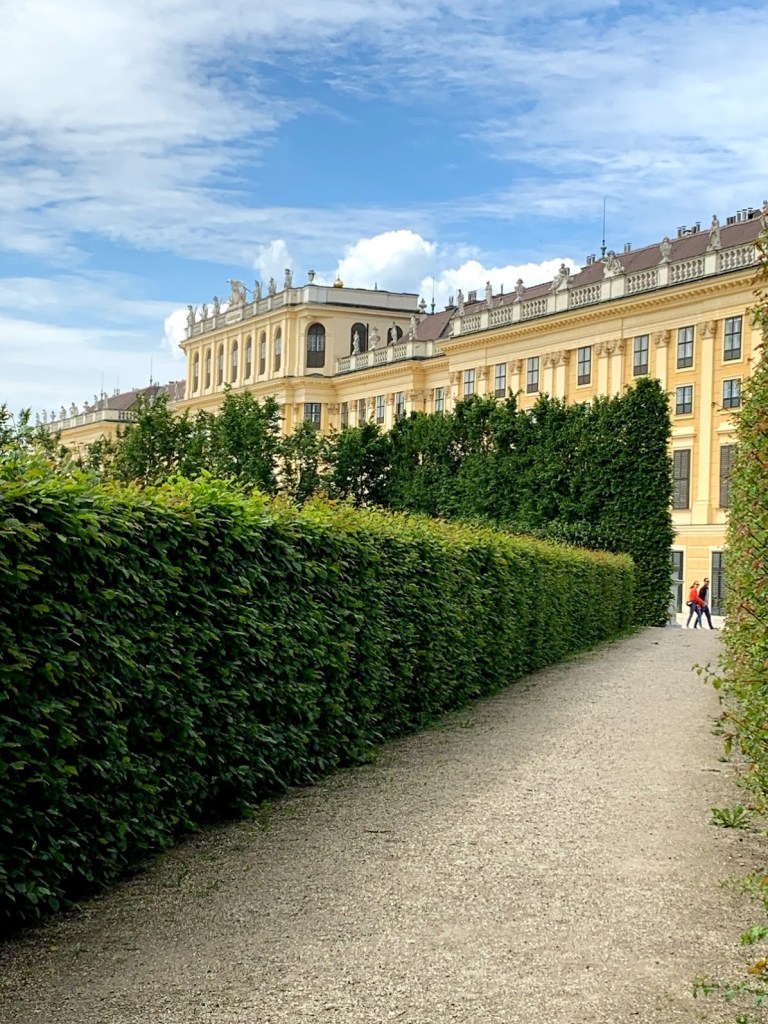
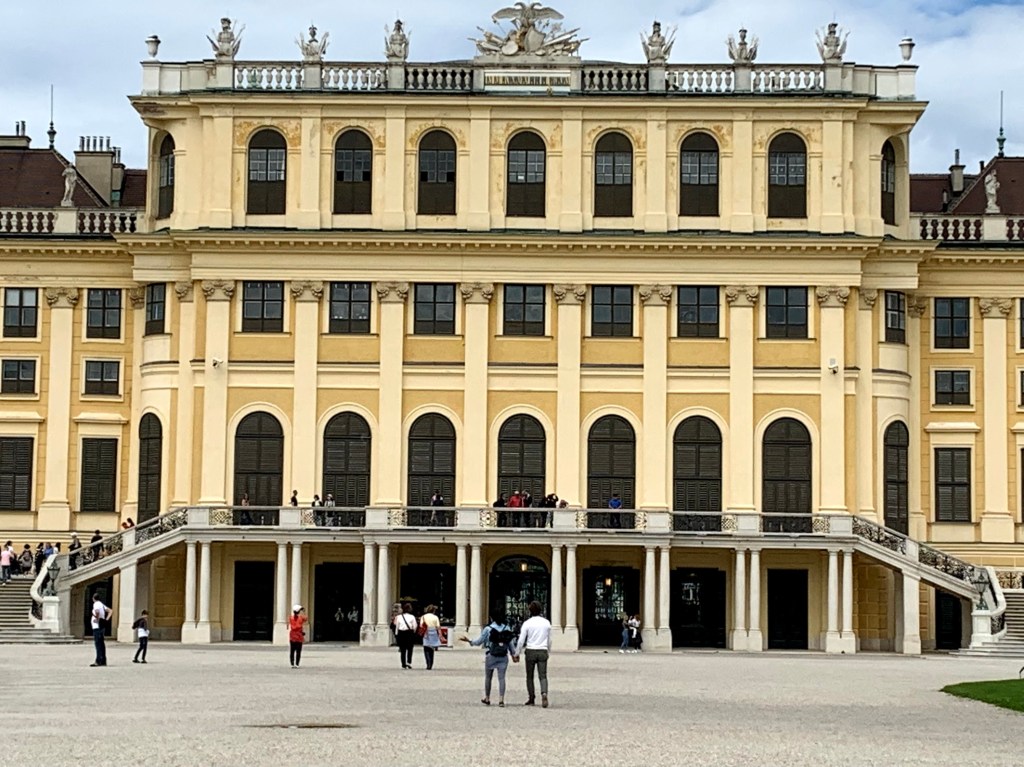
We woke up early because we had entry tickets to Schönbrunn Palace
at 9:15 to see the Royal Apartments and Imperial Grand Rooms. Schönbrunn was
the summer palace of the Hapsburgs, the reigning royal family of the
Austro-Hungarian Empire. Built in the 17-18th century the stunning
Ricoco yellow palace and its formal gardens was a visual feast. The reign of
two different monarchs were depicted in the royal rooms; the mid 18th
century reign of Empress Maria Theresia and the last great Hapsburg rulers of
the late 19th century King Franz Josef and his wife Elizabeth (Sisi).
Franz Josef actually reigned 68 years and died in 1916 during WWI. He was the
longest ruling Hapsburg king in the dynasty’s 600+ year history. His nephew
Karl, the last official Hapsburg king, was forced to absolve the monarchy in
1918.
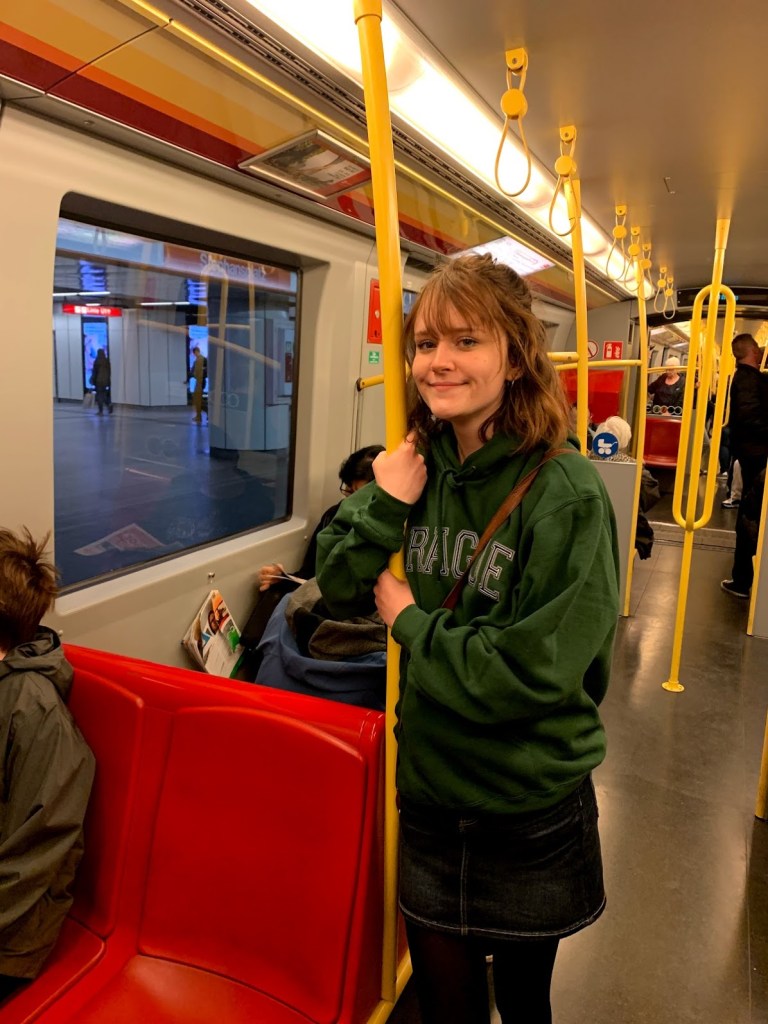
Turah’s first subway ride was in Vienna!31 May 2019 Schonbrünn Palace in Vienna, Austria
After viewing the ornate royal apartments and staterooms we entered
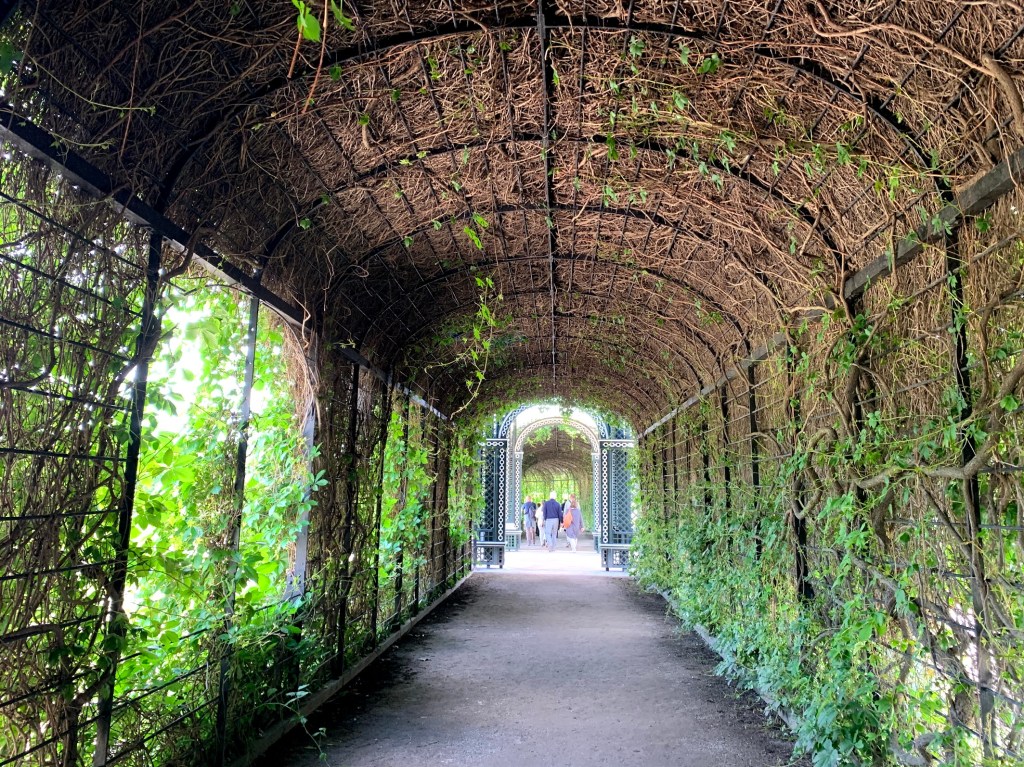
the Privy Garden and strolled along the vine covered arbor paths. Climbing a
set of stairs we found ourselves looking onto a magnificent view of the gardens
and side of the palace.
Arbor Path
Privy Gardens
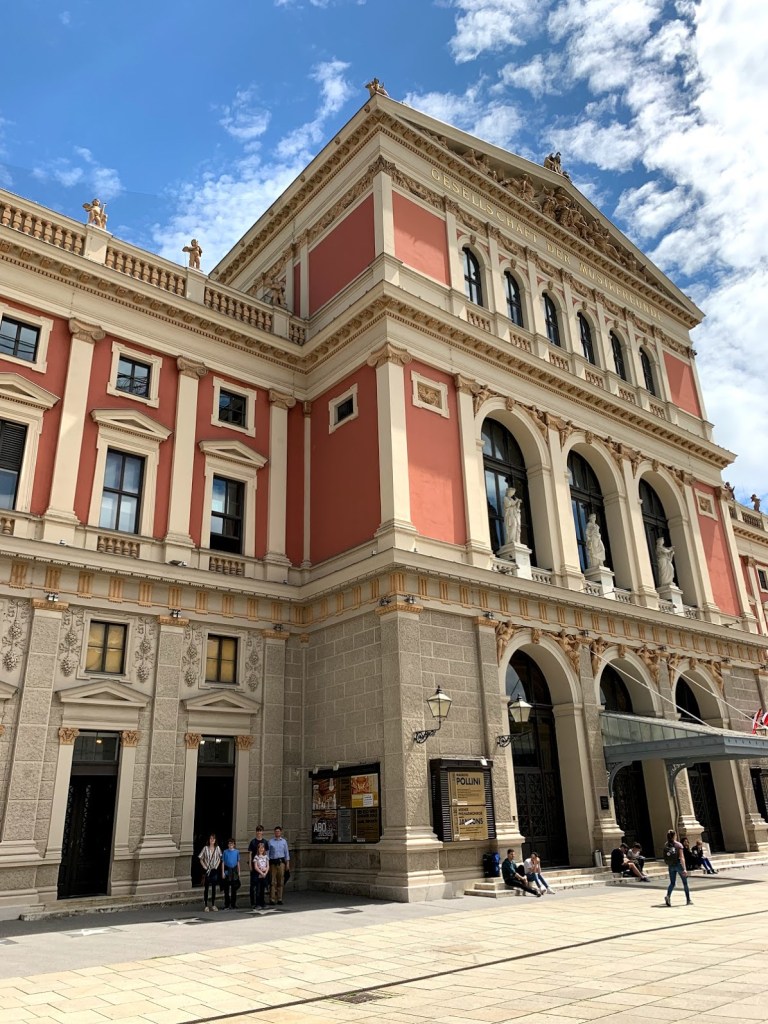
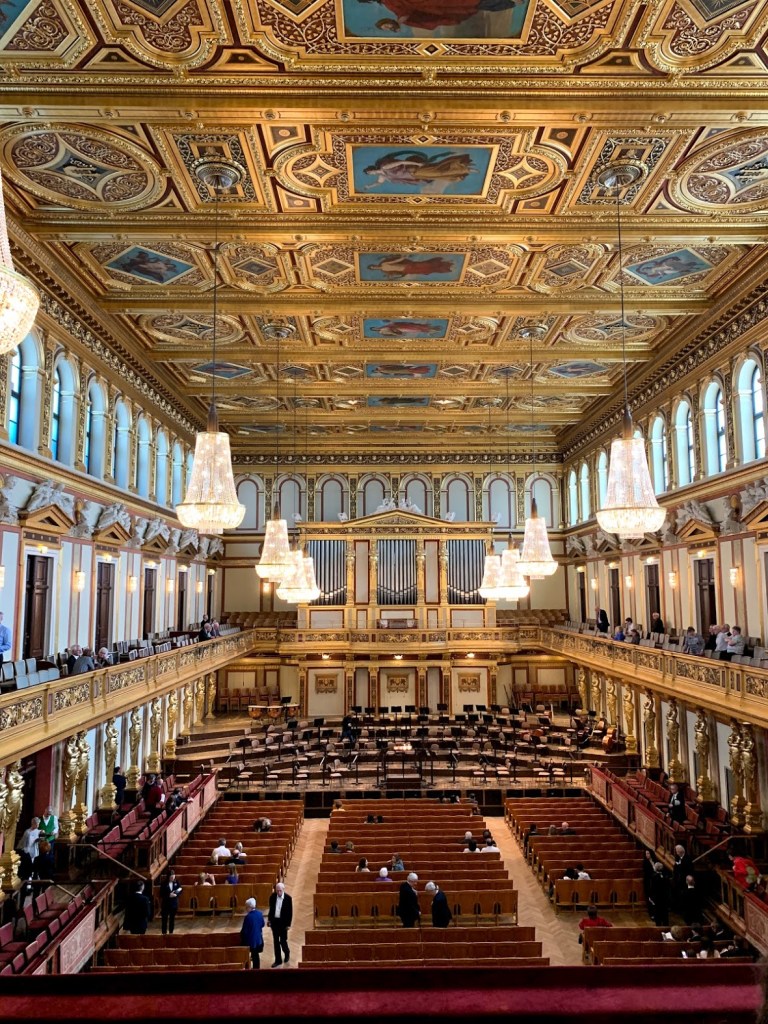
At 11:00 we had lunch at the palace café and then temporarily left Schonbrünn Palace. It was a lovely spring day so we didn’t mind having to travel 20 minutes back to the innerstadt in order to make our 1:00 tour at the Vienna Musikverein. This famous music hall has personal significance for our family. Every year we have gathered on New Years Day and watched “The Vienna Philharmonic: New Years Day Concert”. This annual concert, of Strauss Famous music and other famous Austrian composers, is held in the Golden Hall of the Musikverein.
Two months ago we attended a concert at the Musikverein, but
the tour really helped us understand in depth the history and architecture of the
building. Our guide was informative and he told us not only about the famous
Golden Hall, but also the Brahm’s Chamber Music Hall and the Rehearsal Rooms,
which are 30 meters under the Platz (square) in front of the Musikverein. I was
particularly impressed with the four full size rehearsal spaces. Upon exiting the Musikverein we could hear and
see a public demonstration against a political party currently under
investigation in the Austrian Parliament. It was interesting to witness, a few
blocks away, the people’s voices in action.
The Musikverein in Vienna
This photo is from March when we attended the concert. They didn’t allow photos during the tour.
Political demonstration
Within 20 minutes we were back at Schonbrünn Palace to
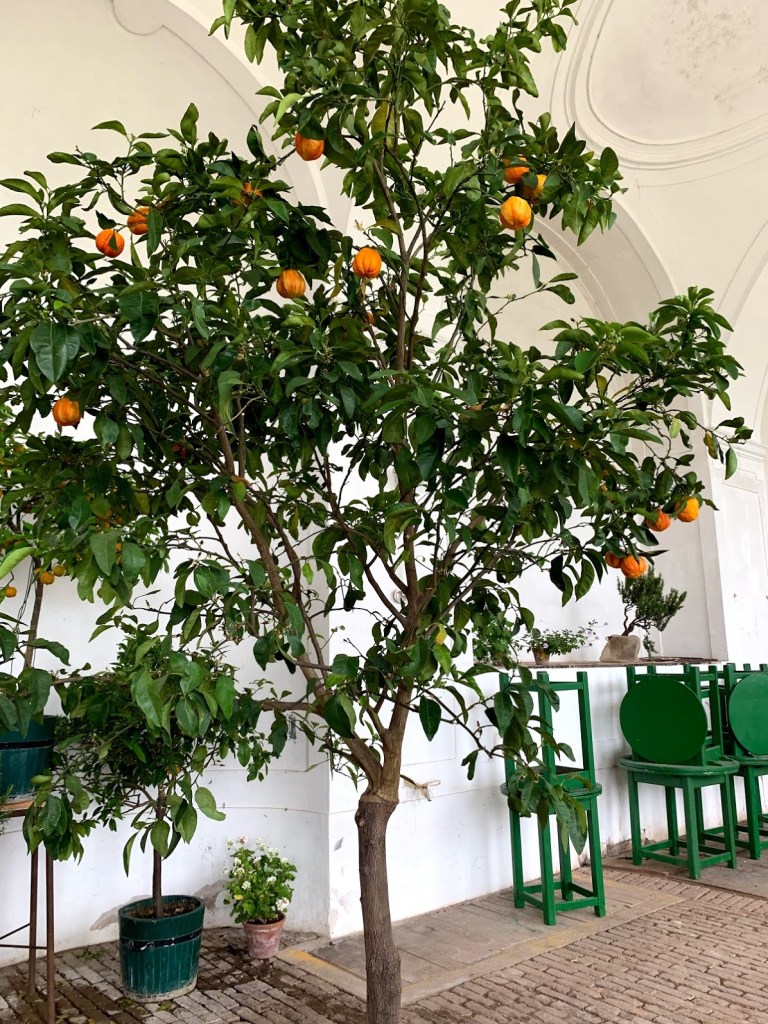
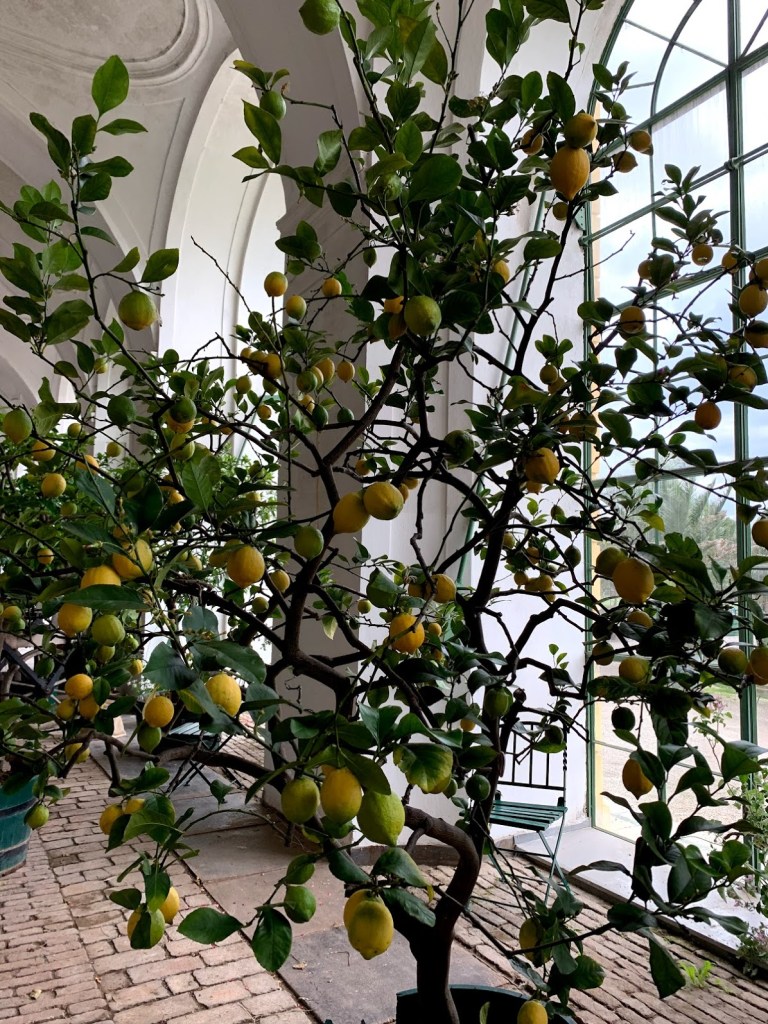
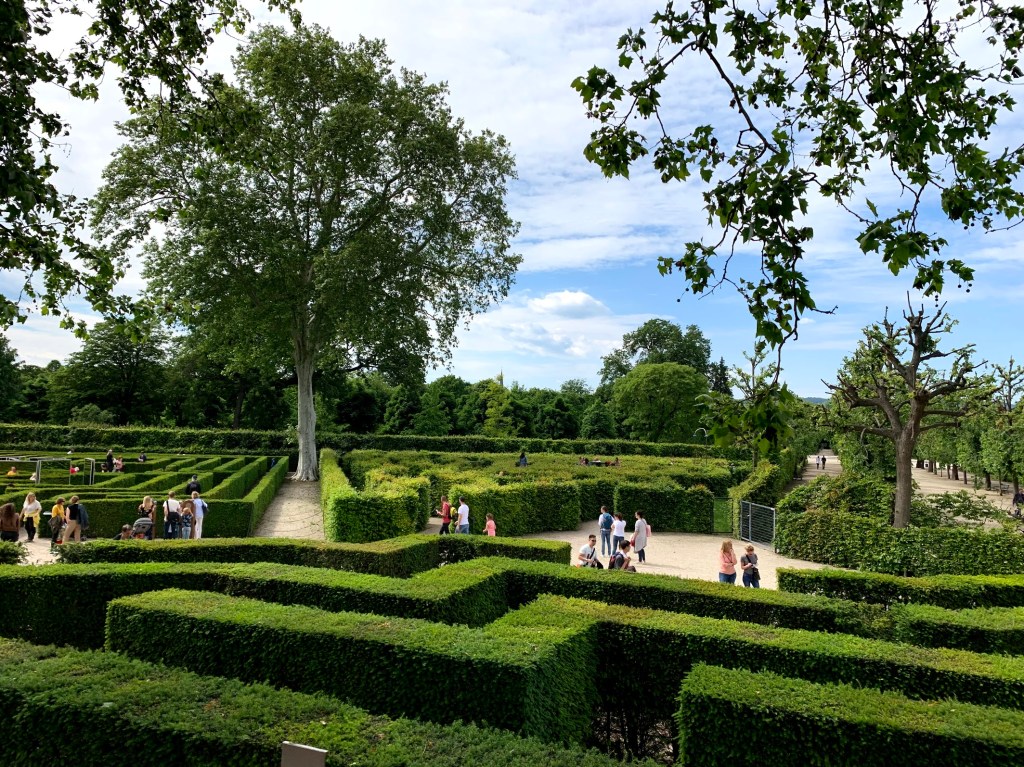
continue the extensive garden tours. We saw the Orangery (which had palm trees
and lemon trees), the fun maze gardens, and finally the hike uphill to the
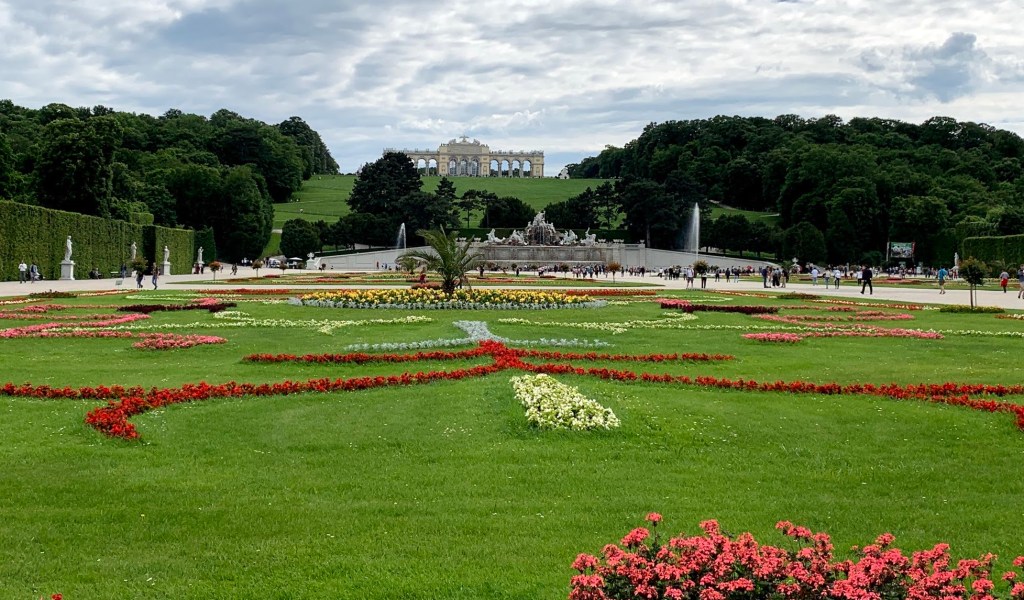
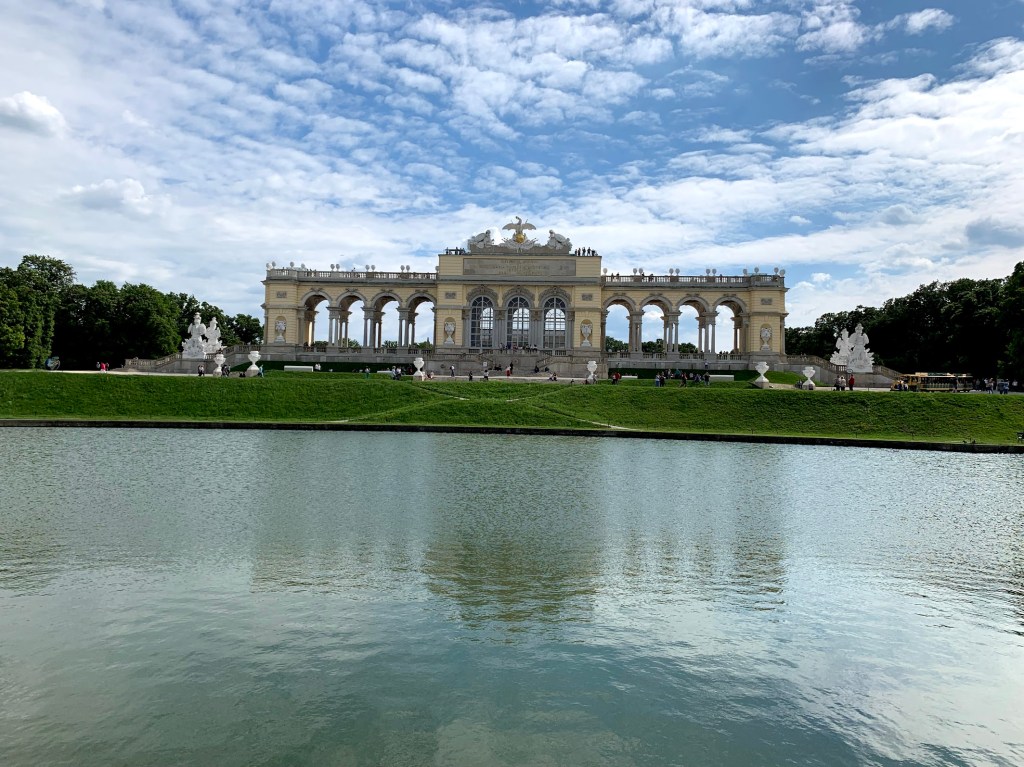
“Gloriette”. This Grecian double colonnade sits atop one of the highest points
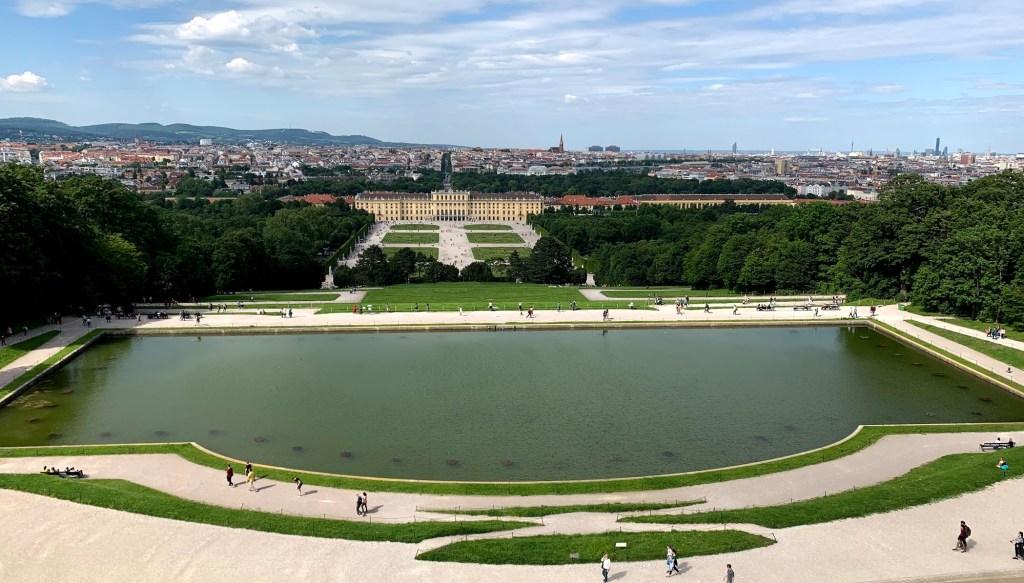
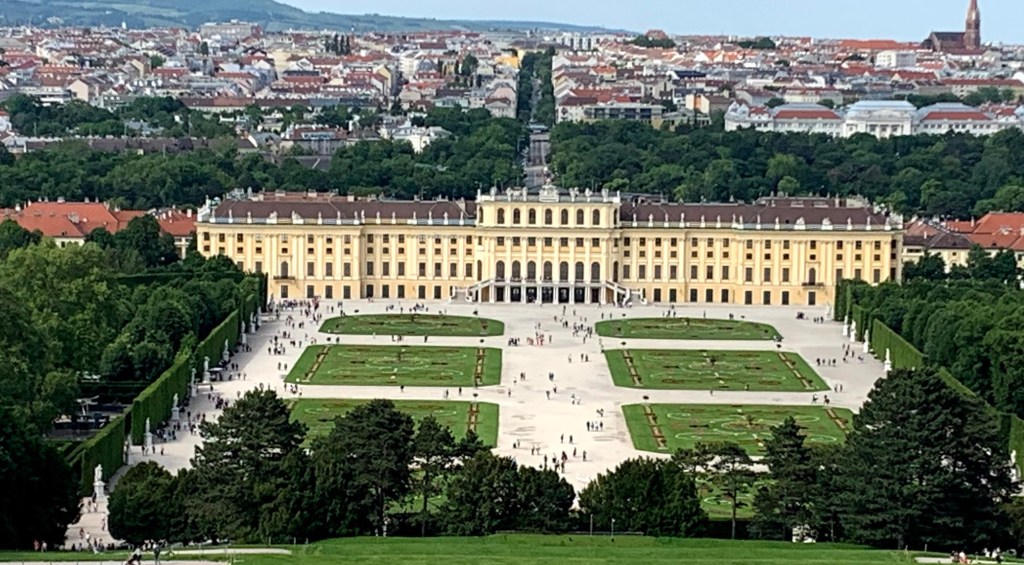
in Vienna. The views of the Palace,
gardens, and entire city of Vienna were phenomenal! The sun was shining and the
cool breeze made it very pleasant to be on the hillside! Back down the hill we
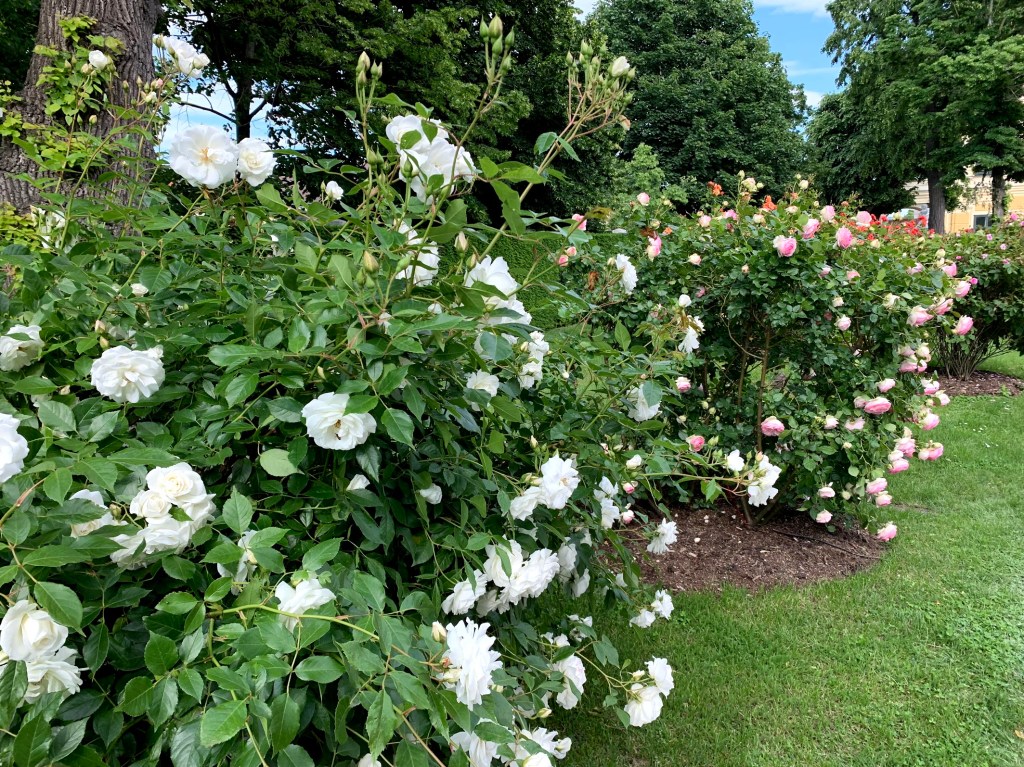
strolled through the fragrant rose gardens. There was a little café tucked
behind the roses where we had a refreshing drink and afternoon snack.
Oranges
Lemons
Beautiful sculpted trees
A secret hedge row
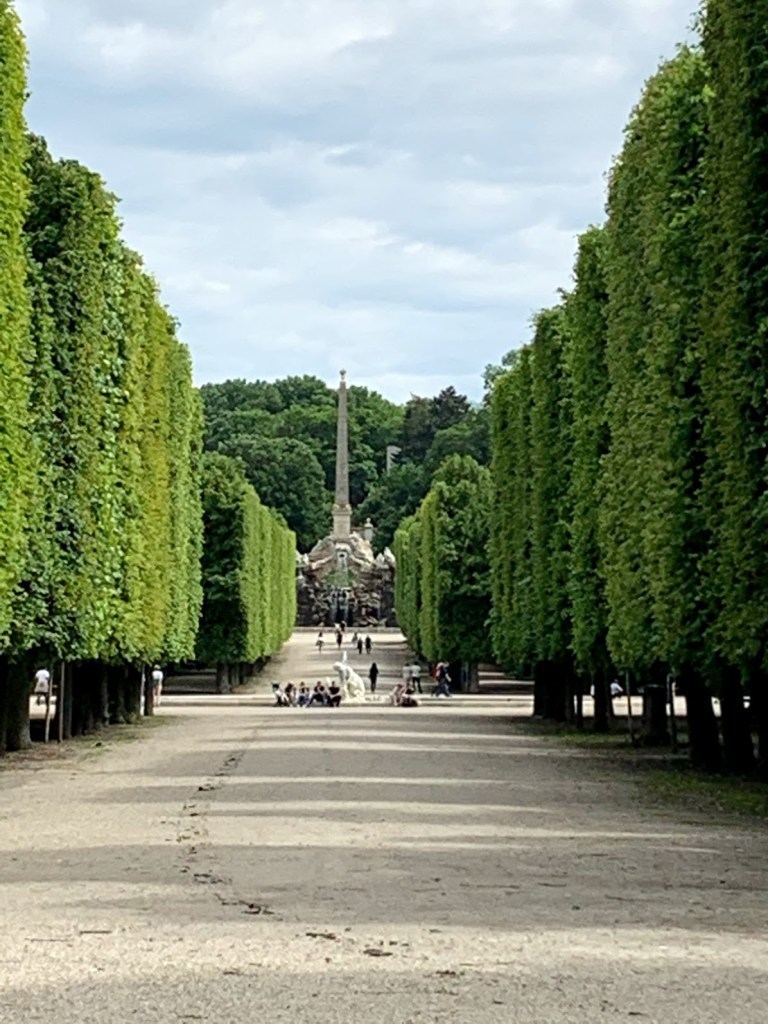
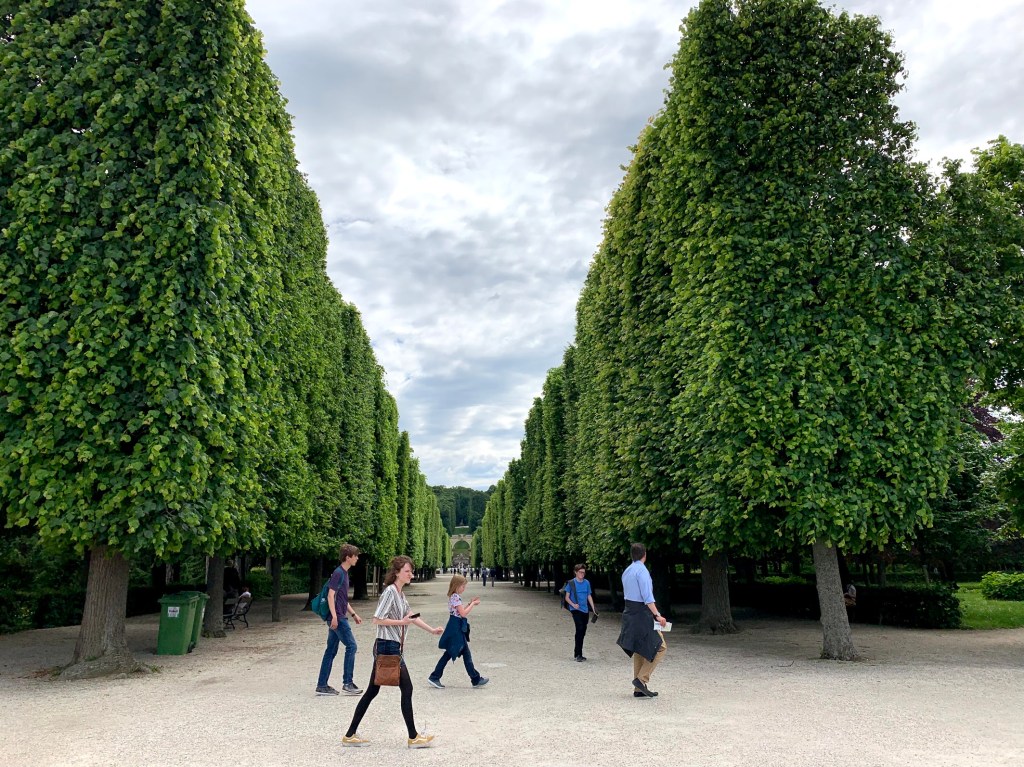
There were several tree lined avenues within the Palace grounds
Maze Gardens
Back of the Palace
Formal Gardens and GlorietteThe GlorietteI took this photo after climbing to the top of the GlorietteClose up of Schonbrünn Palace as seen from the GlorietteRose Garden
That evening we took Turah to our favorite Italian chain
restaurant, Vapiano’s. We’ve eaten at several Vapiano’s throughout Europe. After
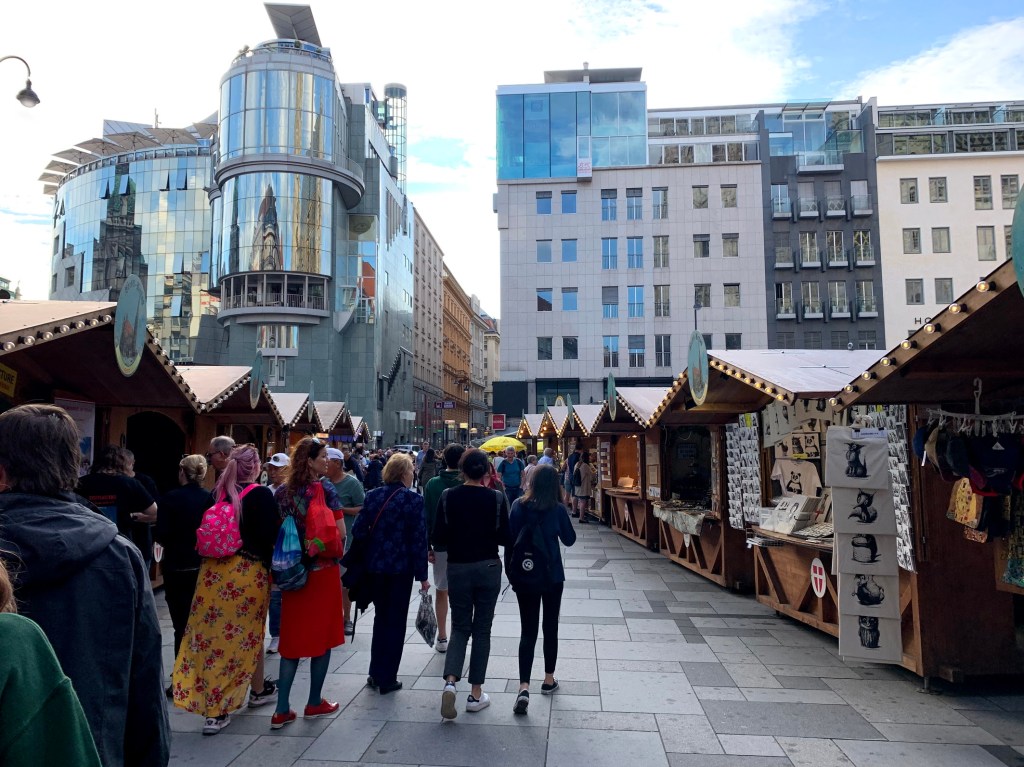
supper we meandered around in the St. Stephen’s Platz Market. All of the
vendors were selling local foods and crafts. We purchased Austrian honey and
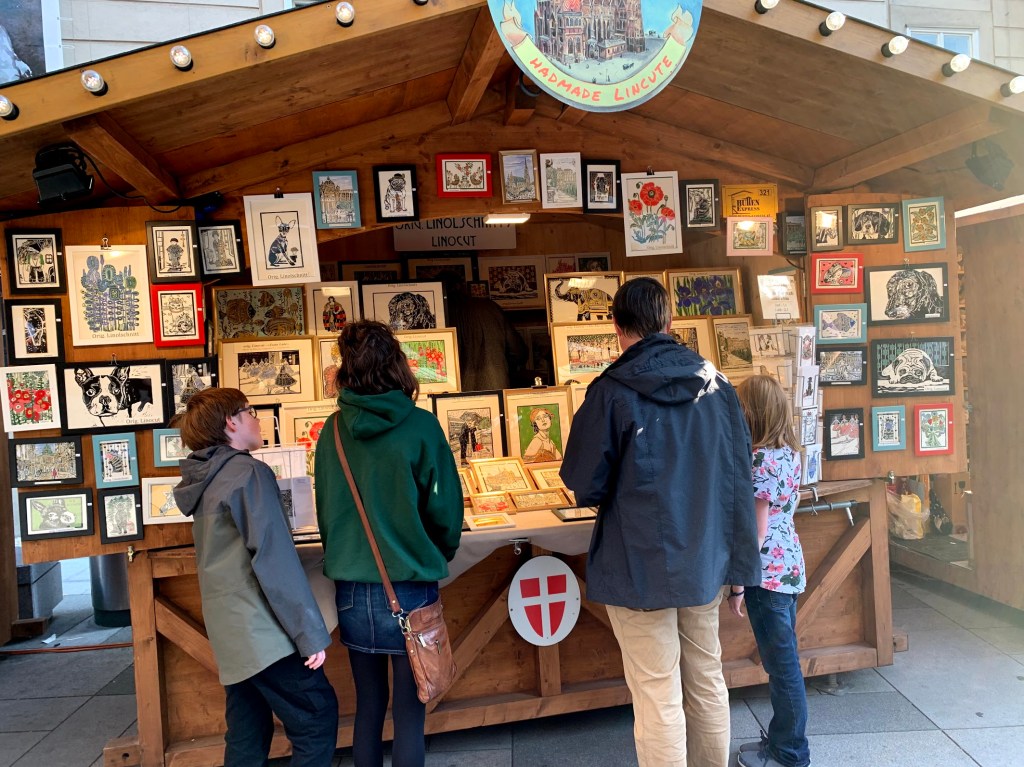
cheese. Our favorite stall belonged to Mikal, who was originally from Russia
but had immigrated to Austria when he was a teenager. He was an artist and his
art medium was ink linocuts. Turah chose two art pieces, one for herself and
one for a friend. We also purchased two lovely linocuts, one of cats and the
other of St. Stpehen’s, the Cathedral which majestically rose in front of Mikal’s
art stall… as it has done for hundreds of years overlooking other market
vendors.
St. Stephen’s Platz Market
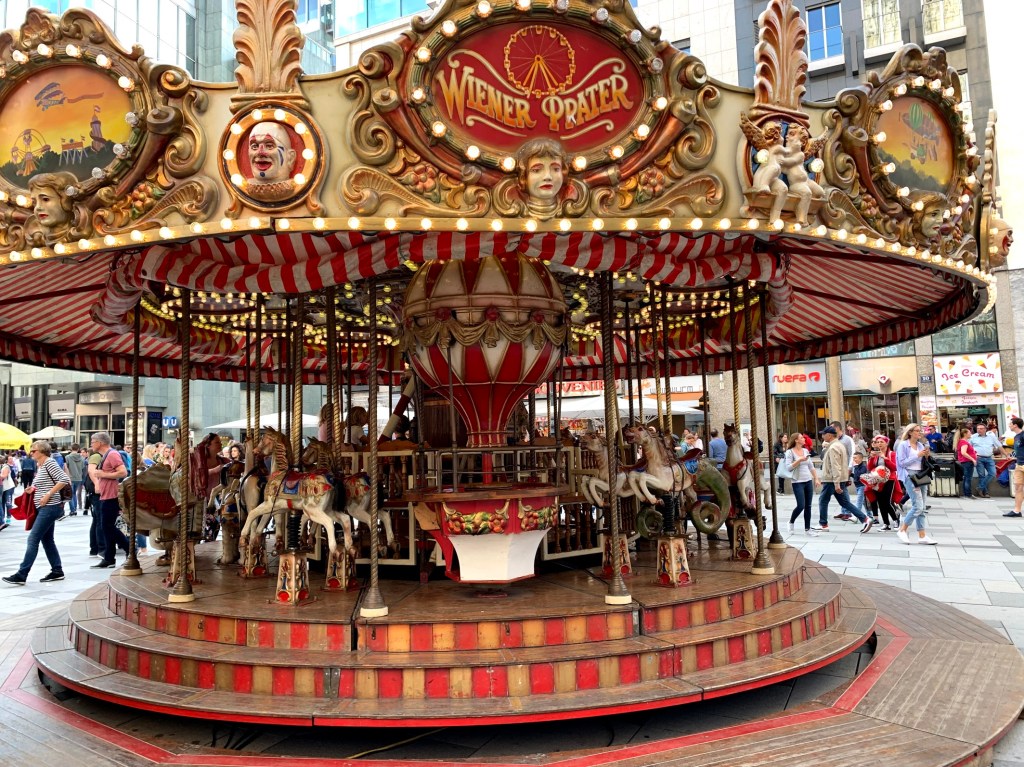
Old Merry Go Round
This photo was snapped just seconds before Mikal turned around to help usI took this photo of St. Stephen’s Cathedral standing in front of Mikal’s booth.
We checked out of our apartment and bid Prague goodbye! After
being delayed on the highway for 30 minutes and Google warning us of future
backups. Robert plotted another course for us to take to Vienna. It was better
to drive through the charming villages and farmland of the Czech countryside.
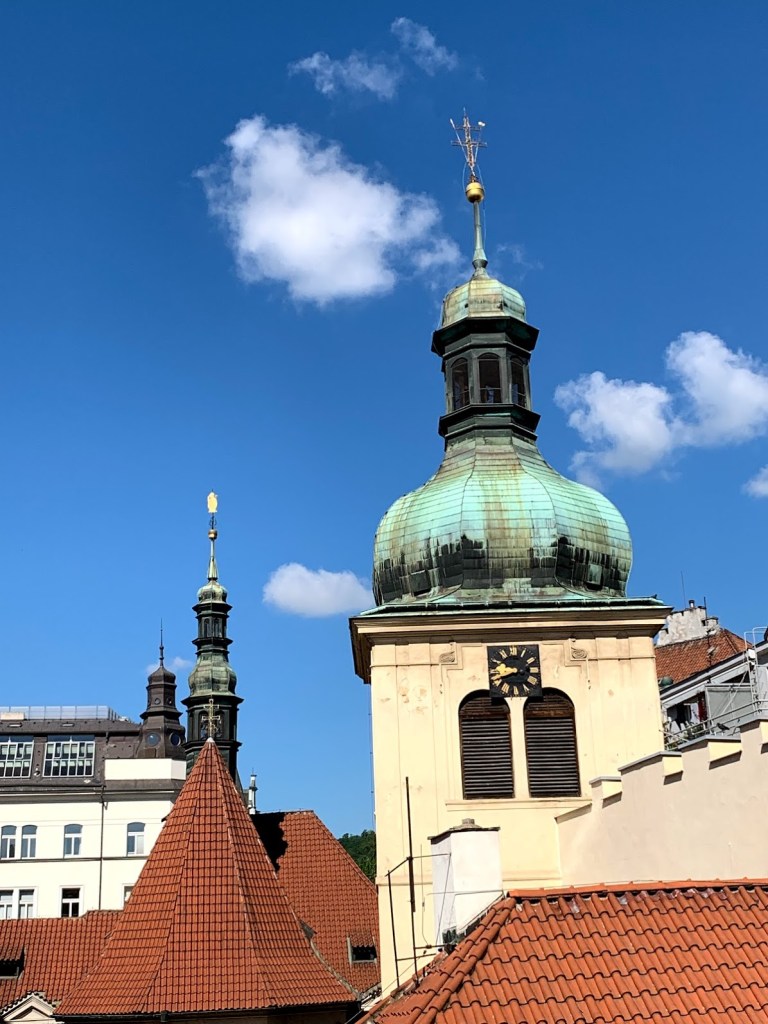
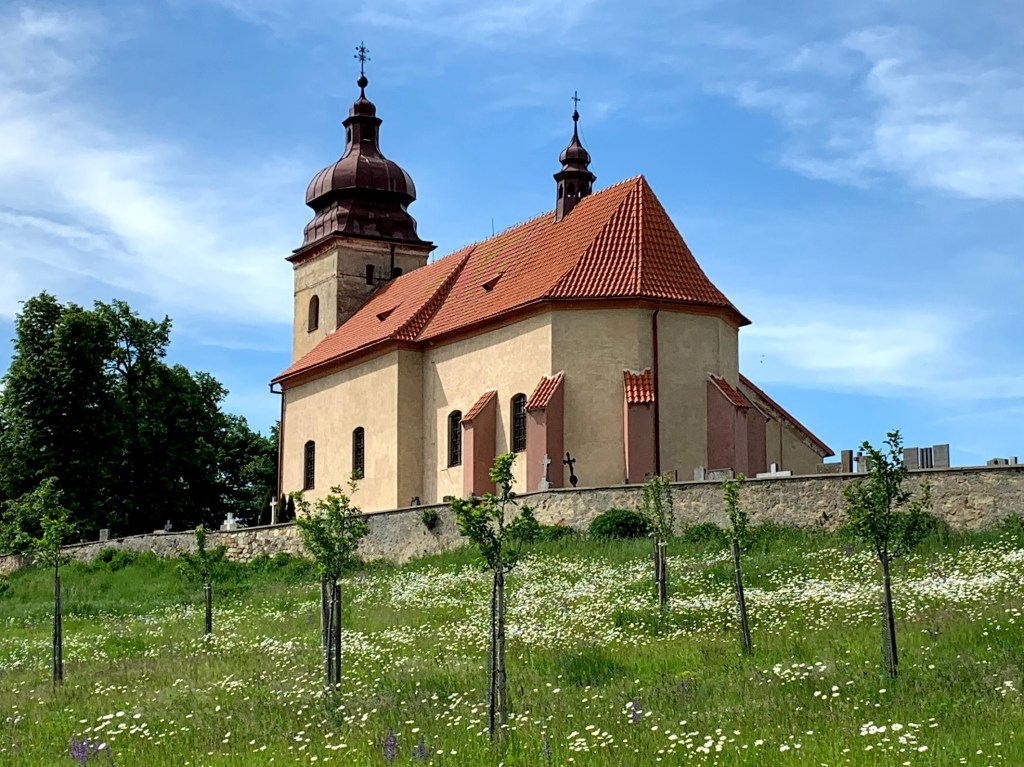
Church spire against the blue sky: The sun came out the morning we left!
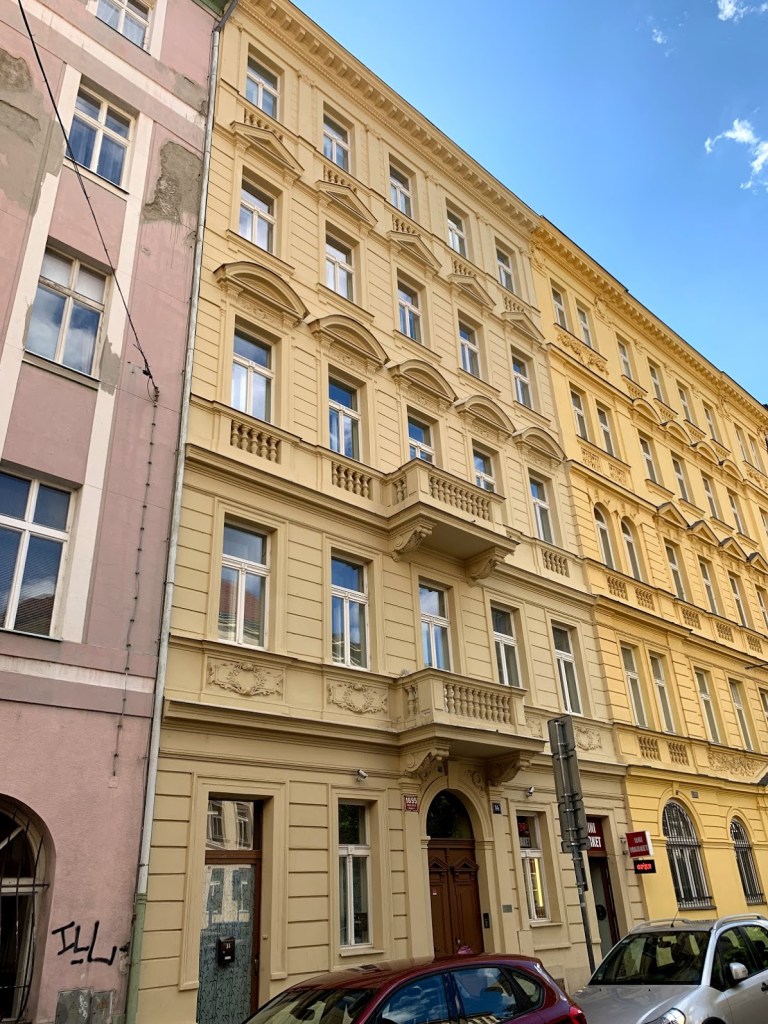
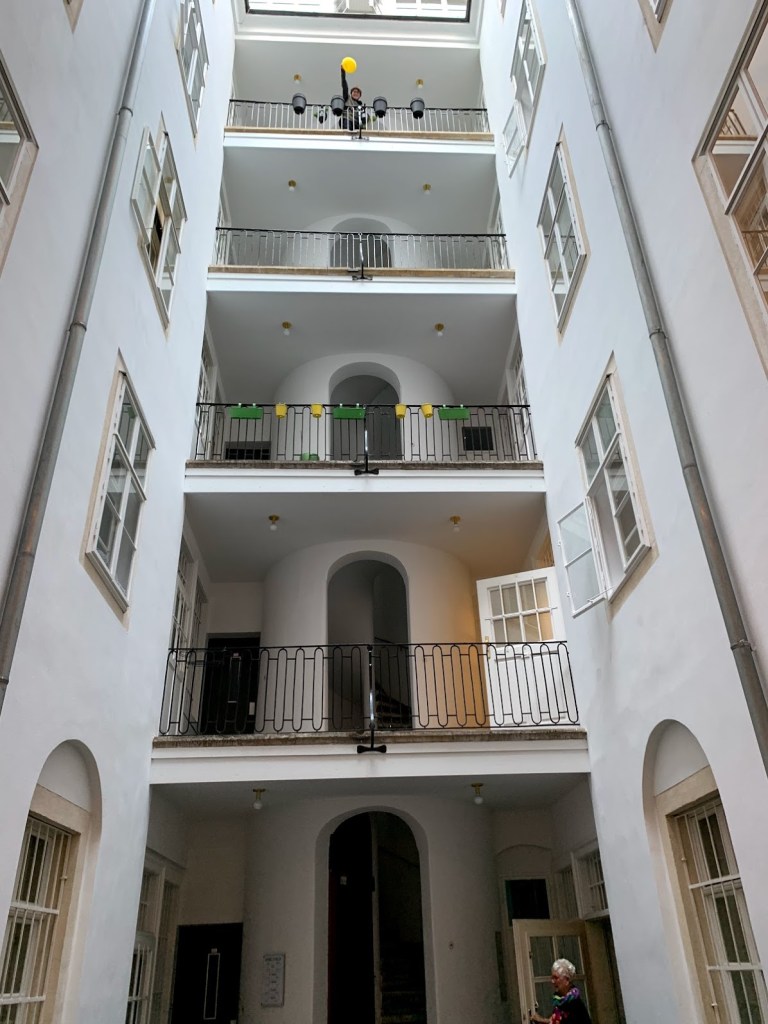
Our apartment in Prague: The balcony on top was ours.
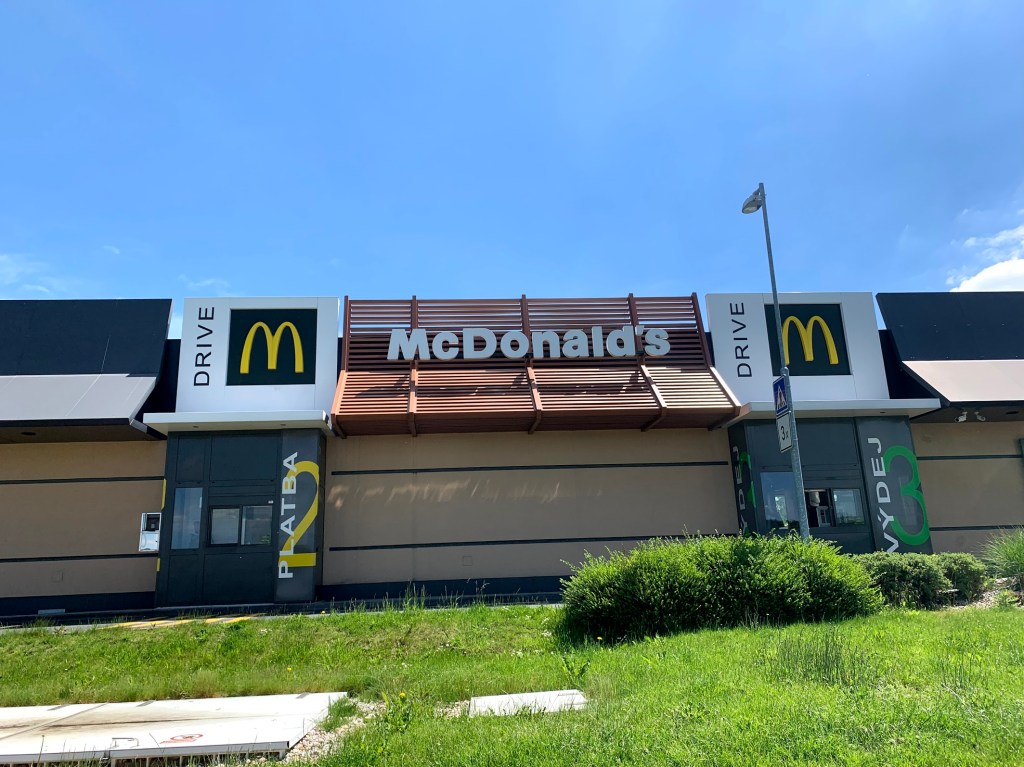
One last view of PragueAfter being stuck in traffic we got off the highway and ate launch at a McDonalds! They had some unusual sandwiches and even spring rolls. It was all yummy.
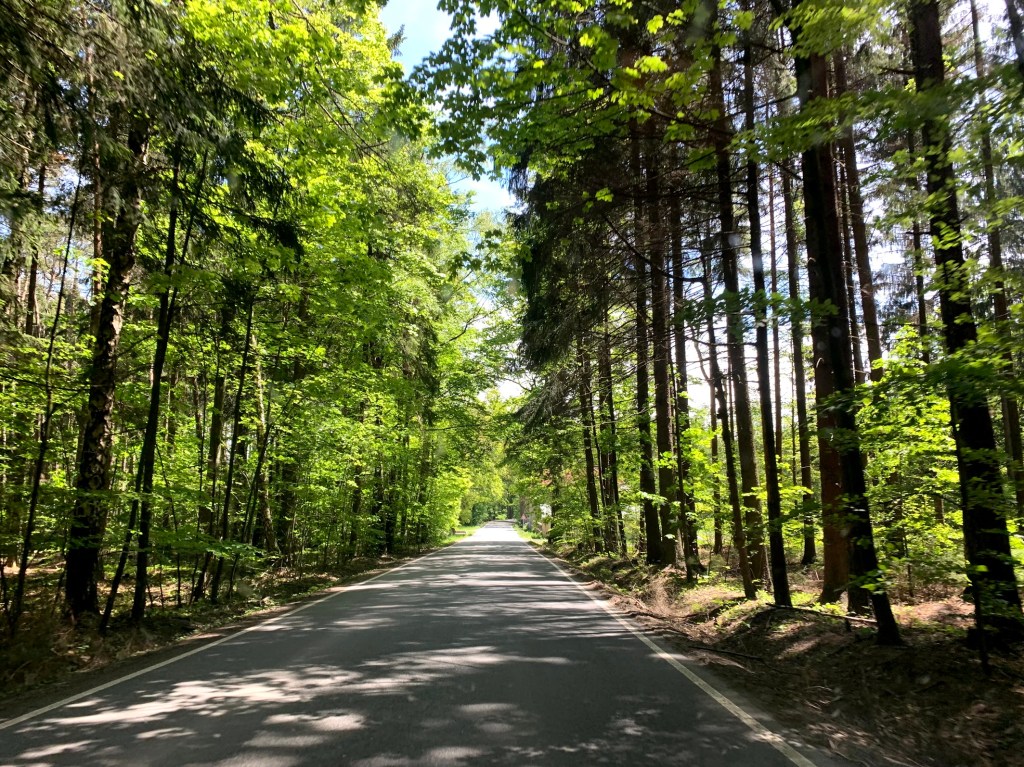
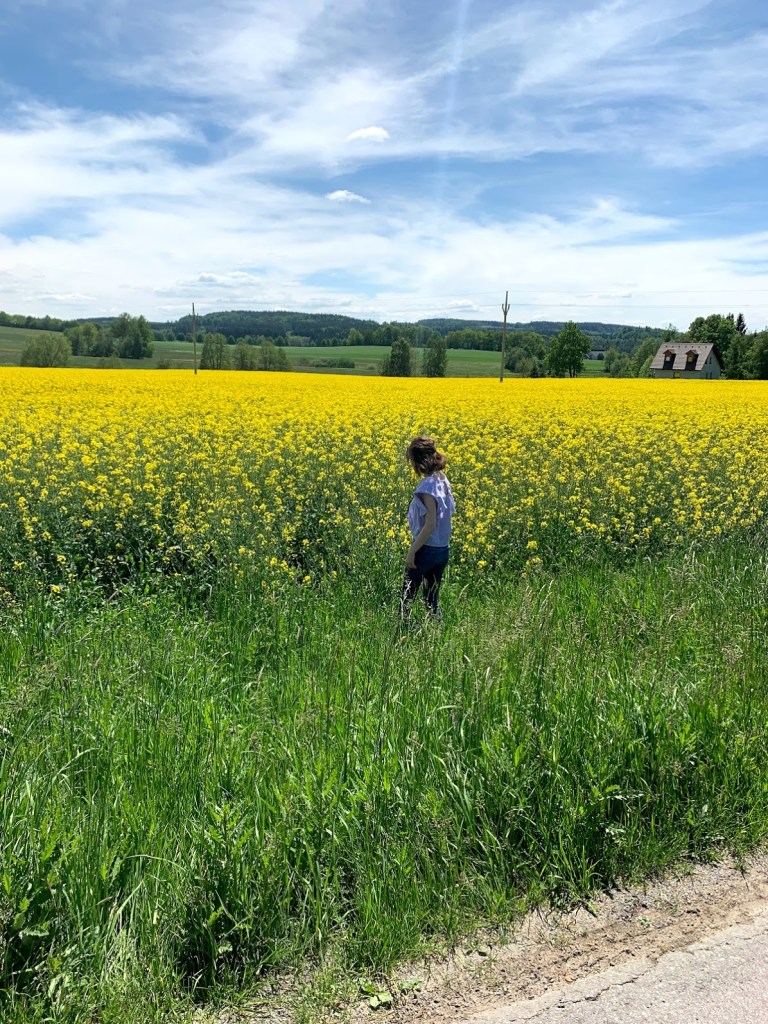
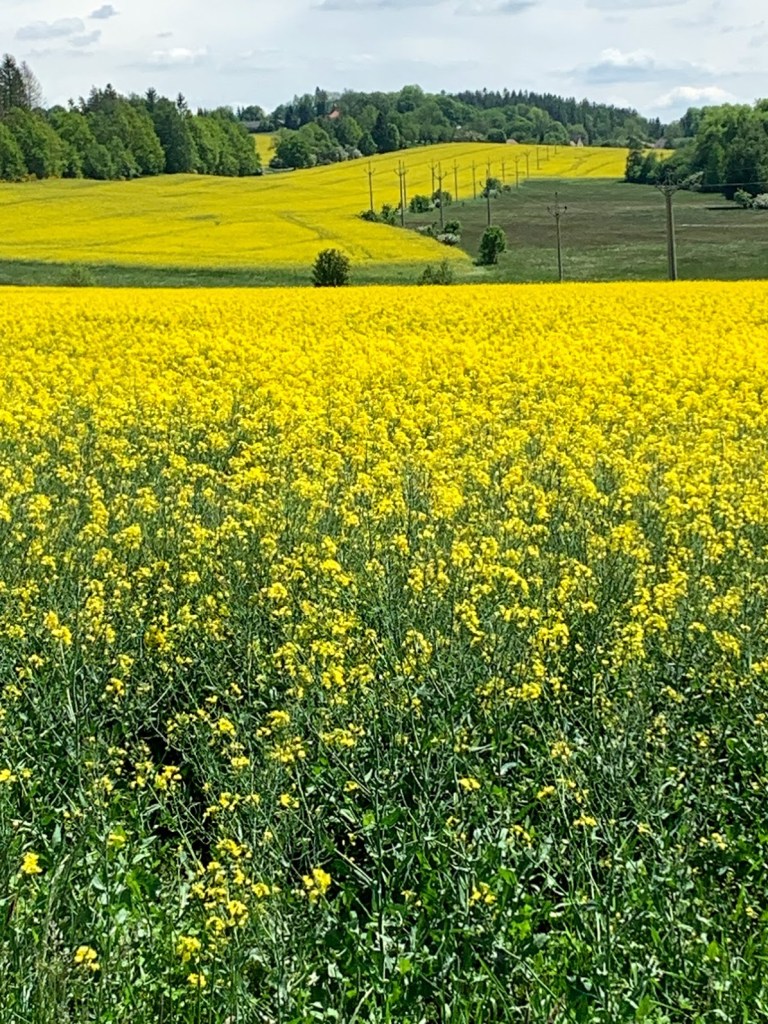
I’m glad we were forced off the highway because the Czech
countryside was breathtaking. Our eyes were treated to rolling green hills,
colorful little villages, and fields of yellow flowers offset by large sections
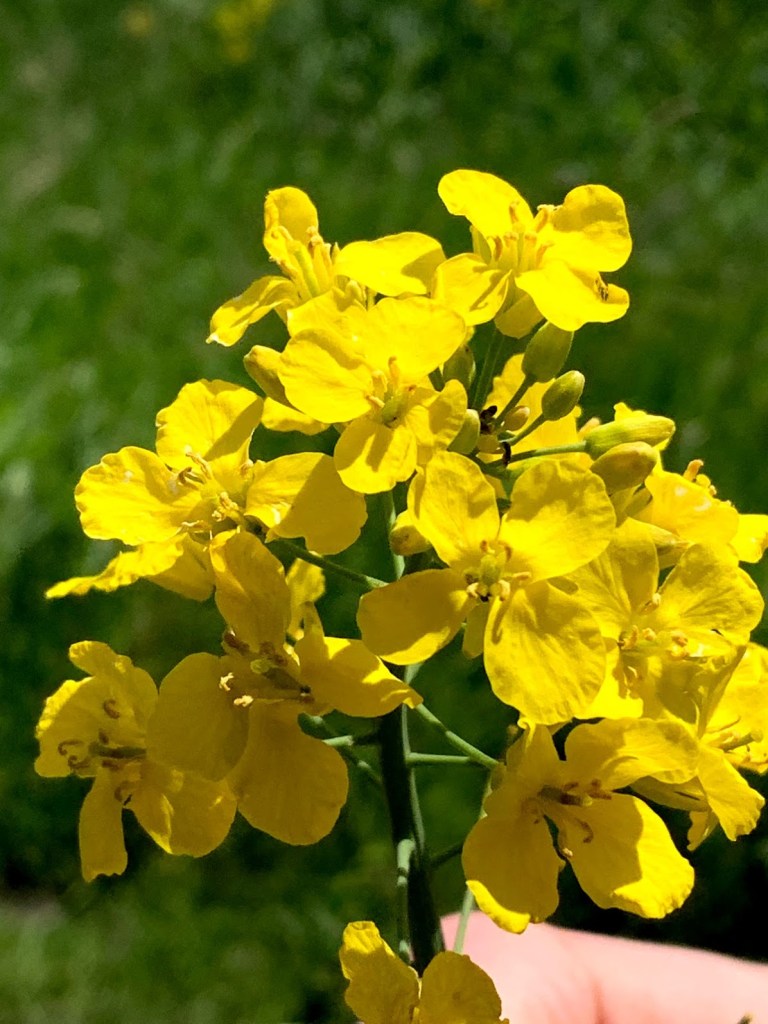
of woodland. Curious as to what the yellow flowers were we stopped and took a
photo. I later discovered the flower is the rapeseed plant used to make canola
oil.
Drive through the woods
Turah picking a yellow flower
Rapeseed flower
Golden fields
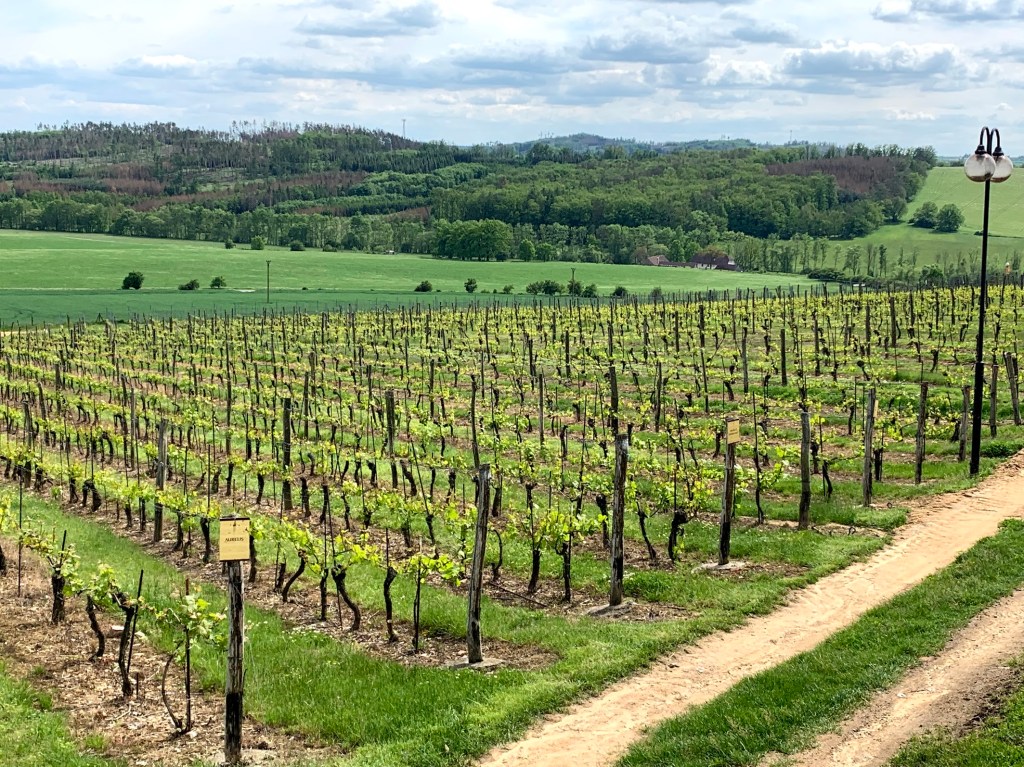
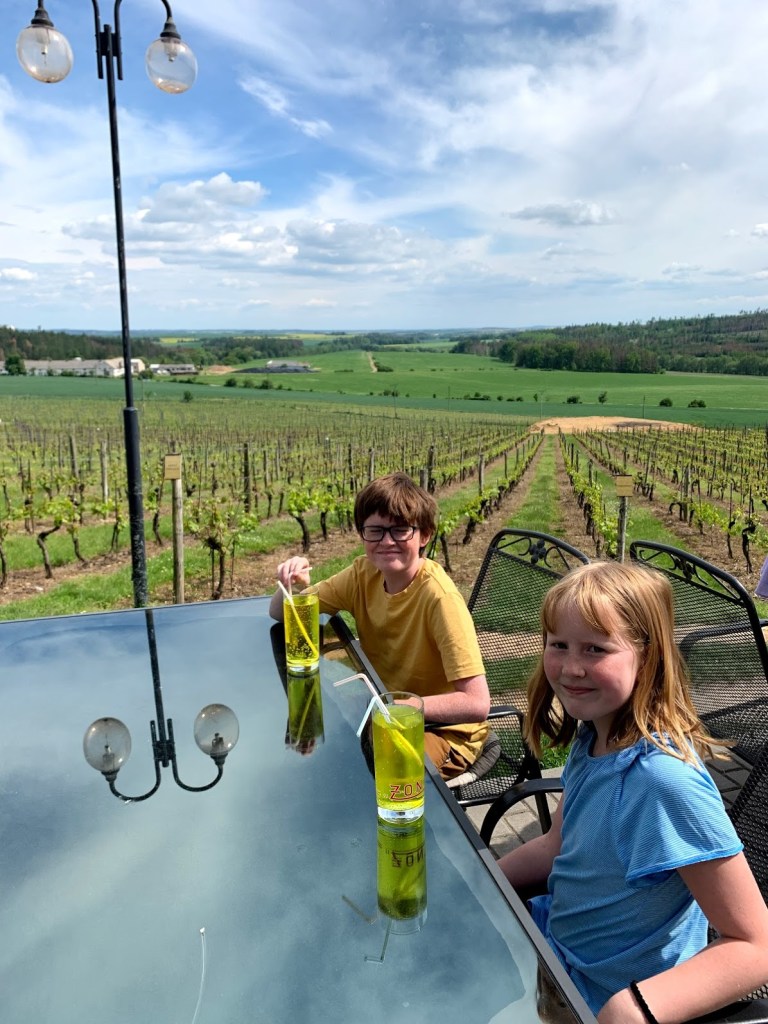
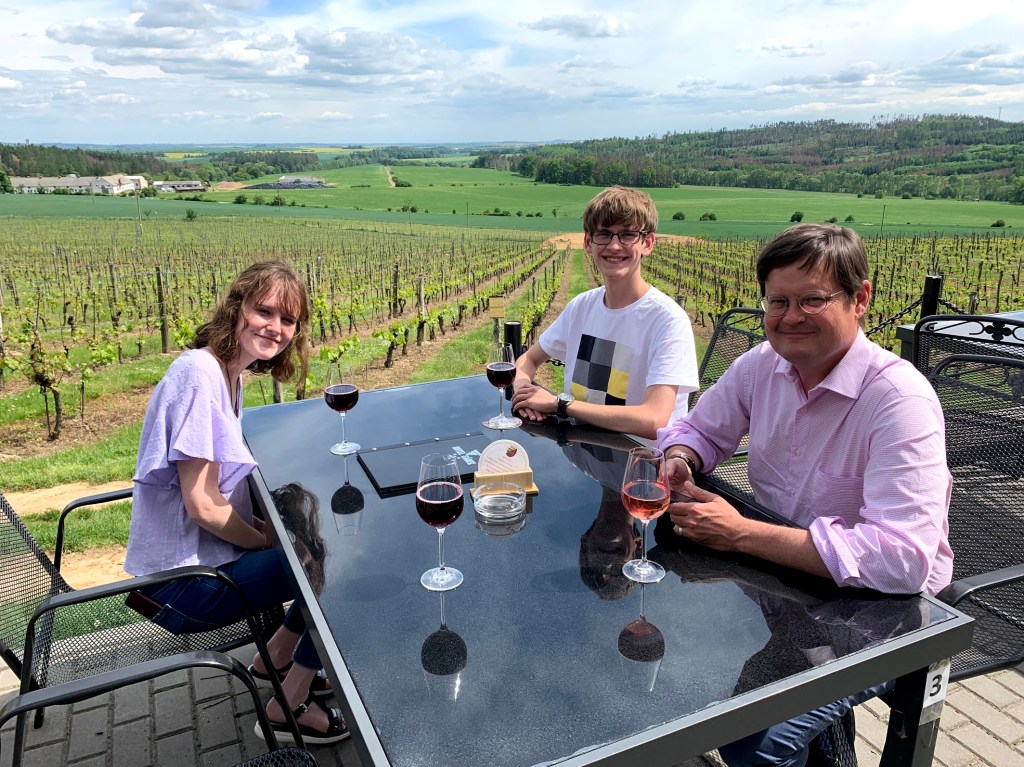
Near the Czech/Austrian border we stopped at a local vineyard
to have a glass of Czech wine. We sat in the sunshine sipping wine grown in the
vineyards beside us on the hillside. Saduk vineyards and hotel was a small family
operated affair and the staff was very friendly.
Saduk Vineyards 30 May 2019Homemade lemonadeAh the life! Sipping wine straight from the vineyard!Just south of the vineyard was this lovely little country church
Once in Vienna, Robert dropped us off at our apartment and
then turned in the rental car. Our apartment was little, but right in the heart
of Innerstadt Vienna. Because we had
been to Vienna before, Liam knew his way around town. He decided to show Turah
around by taking her out to find a local grocery and buy food for breakfast. Turah
commented how surreal it is listening to her siblings communicate in German!
Our apartment was on the second floor. It’s the one with the door open. The apartments all opened onto a little courtyard, which had a door that accessed the main street outside.
Cloudy, but not rainy we headed over the river via tram to
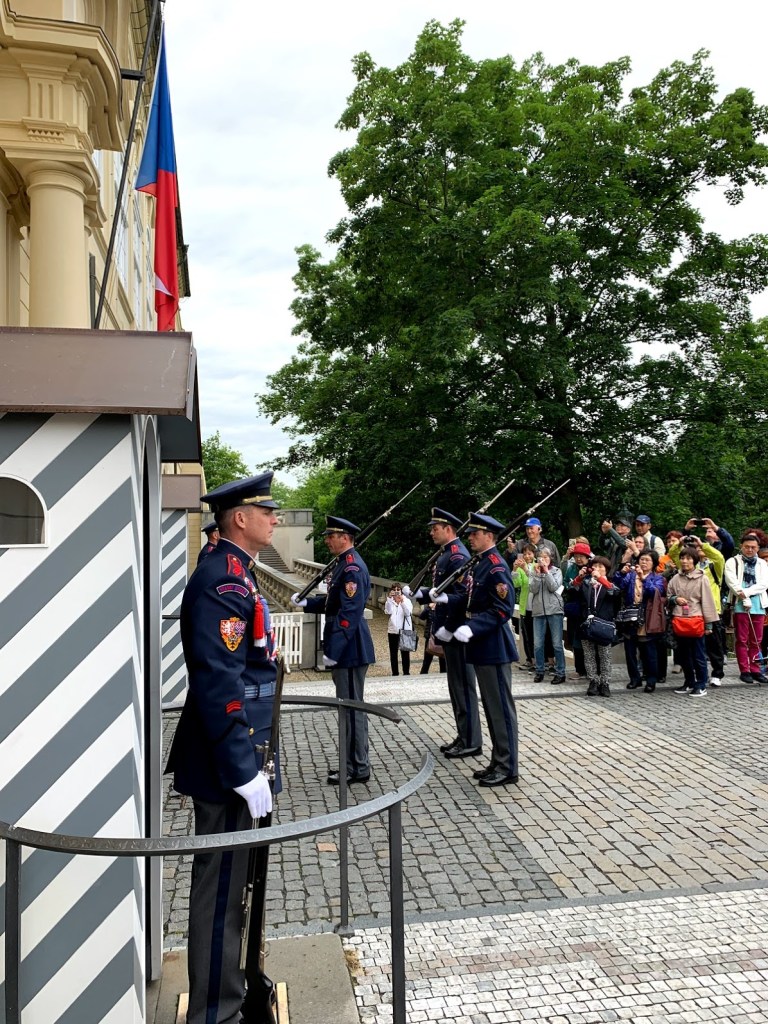
Prague Castle. We arrived just in time to see the Changing of the Guard. After
the 10-minute ceremony we entered the castle complex and went straight to St.
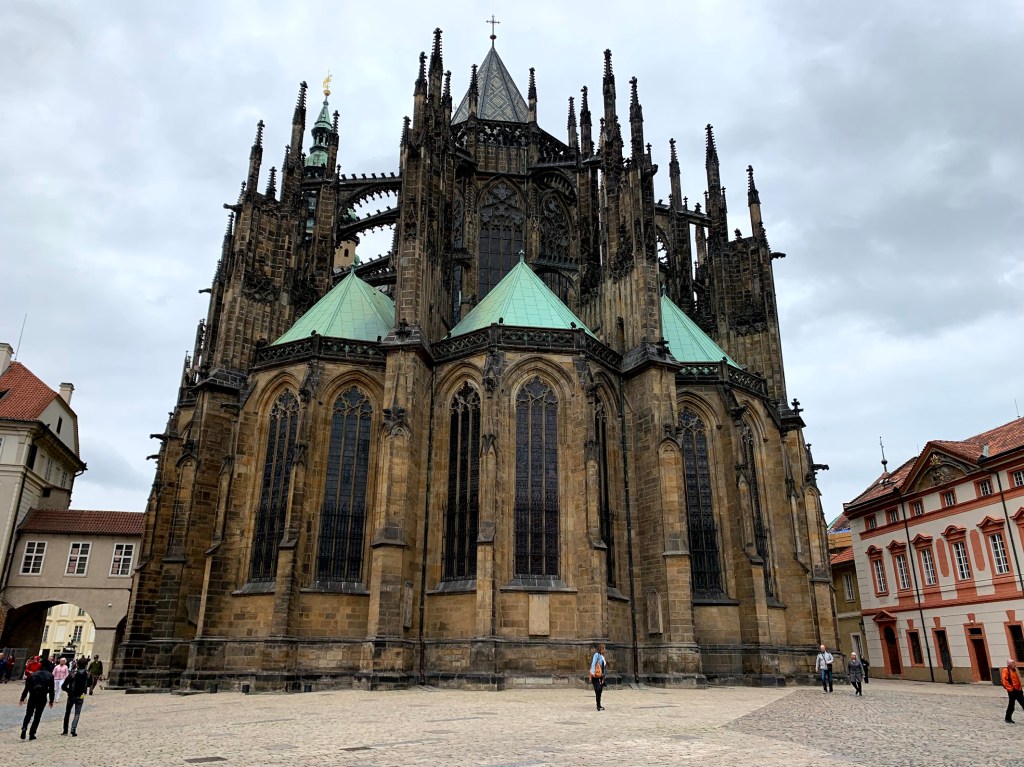
Vitus, the 14th century gothic church that lies right in the centre
of the castle. St. Vitus can be seen even from across the river with it’s dark
stone and towering 15th century spires. Inside are the tombs of St.
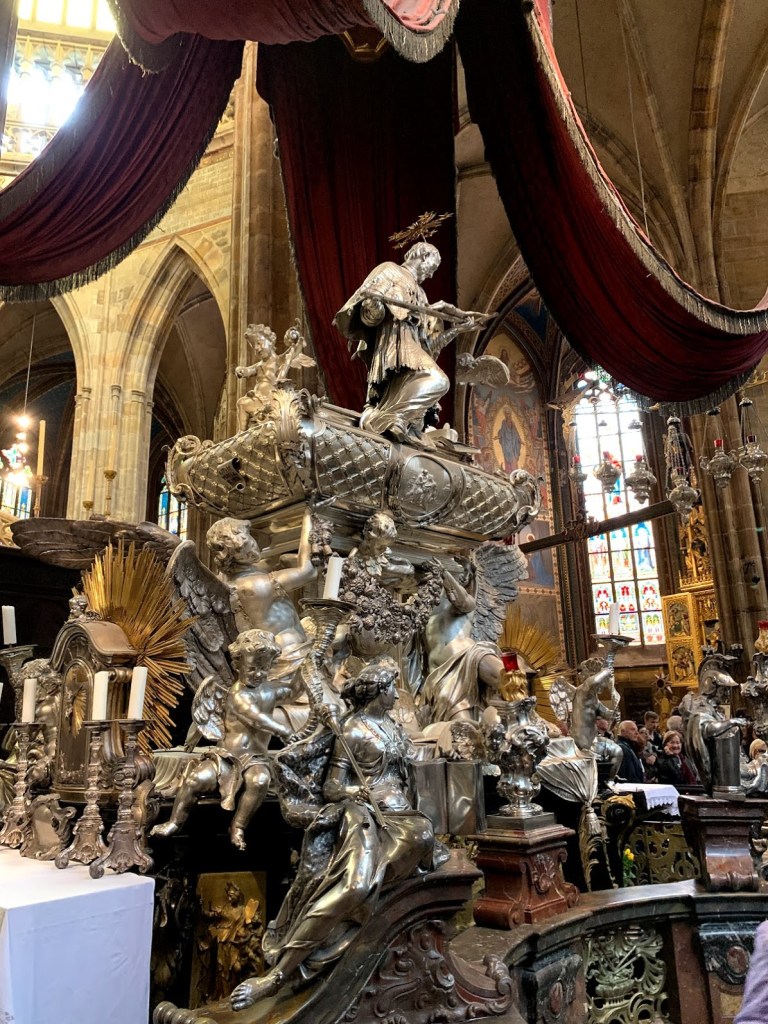
Vitus and St. Wenceslas. St. Vitus’ tomb was quite impressive with the phenomenal
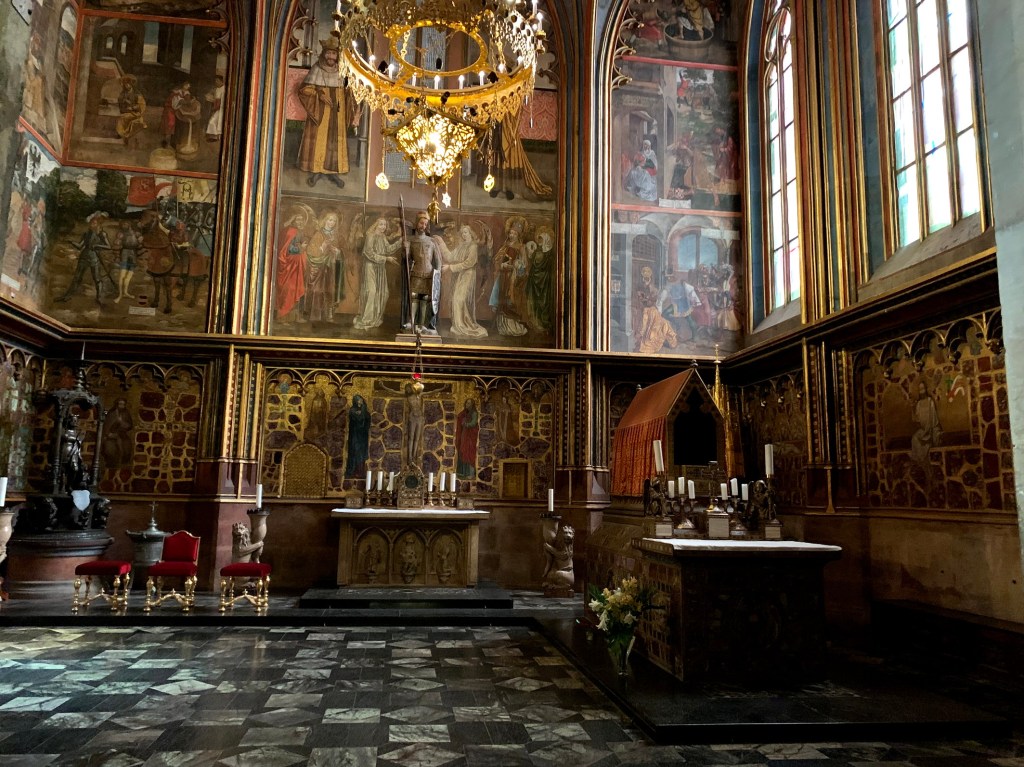
ornate silverwork tomb lying behind the High Altar. St. Wenceslas, who we know
from the Christmas Carol “Good King Wenceslas
Looked Down on the Feast of Stephen” is the patron Saint of Prague. He was
also a beloved King of the Bohemian people ruling in the early 10th
century. He had an entire chapel for his burial.
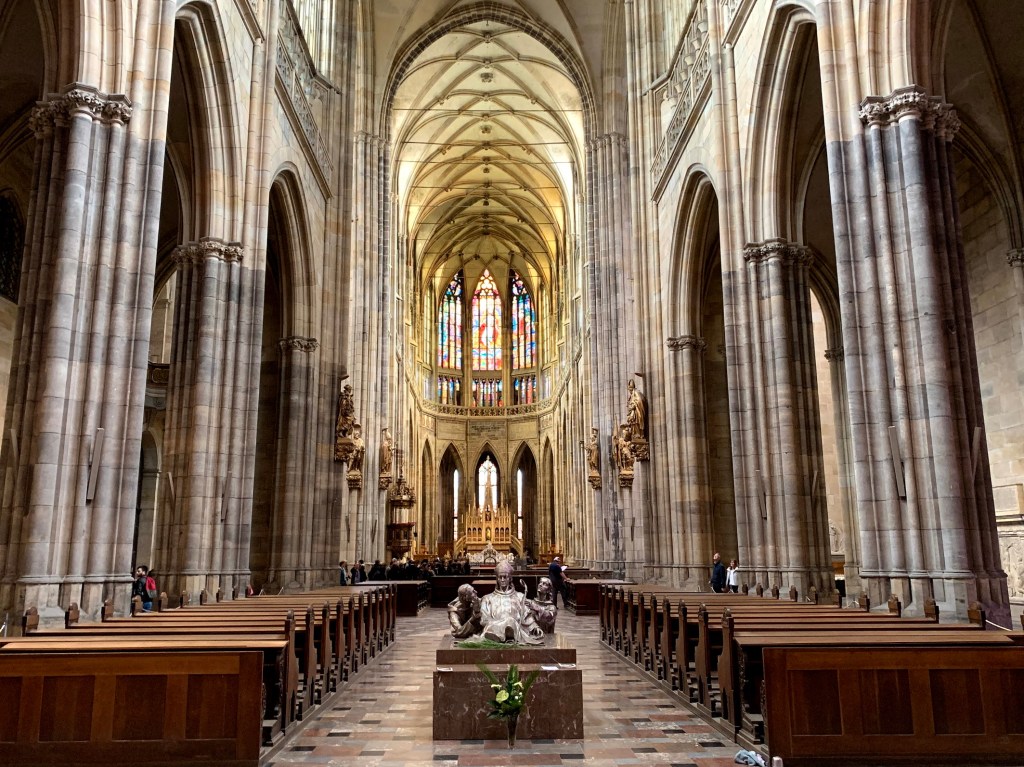
Changing of the Guard: Though there is no more royal family the guard is kept to watch over the Castle and the President.Inside St. Vitus in PragueBackside of St. Vitus Church
Tomb of St. Vitus
Chapel and tomb of St. Wenceslas
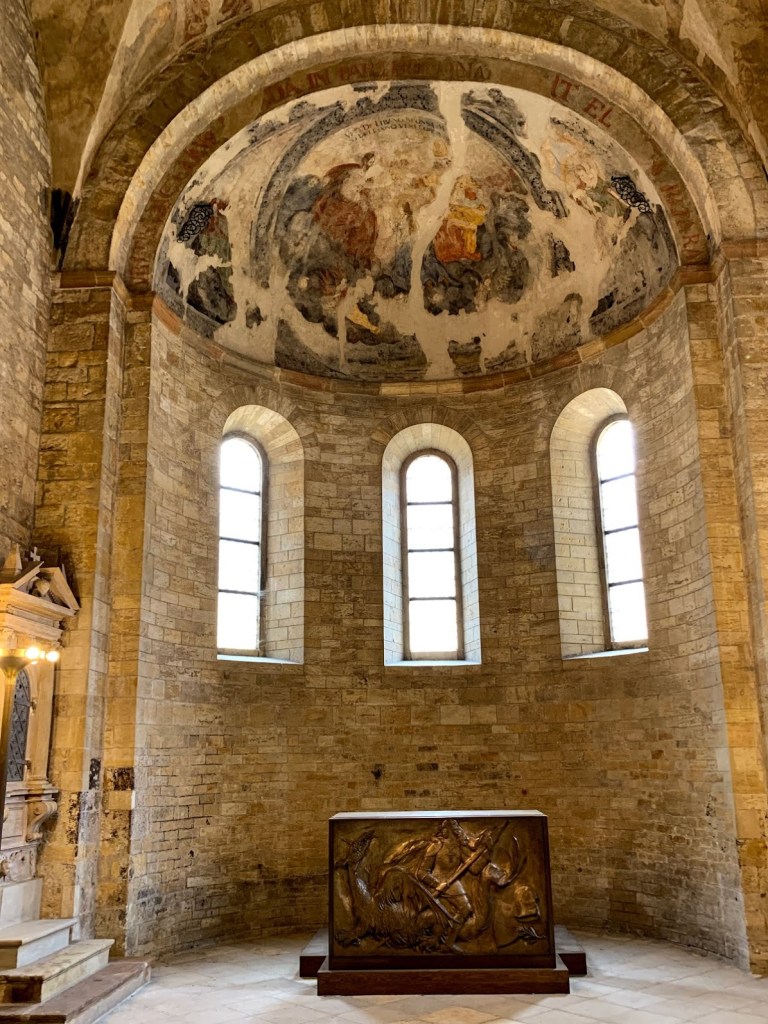
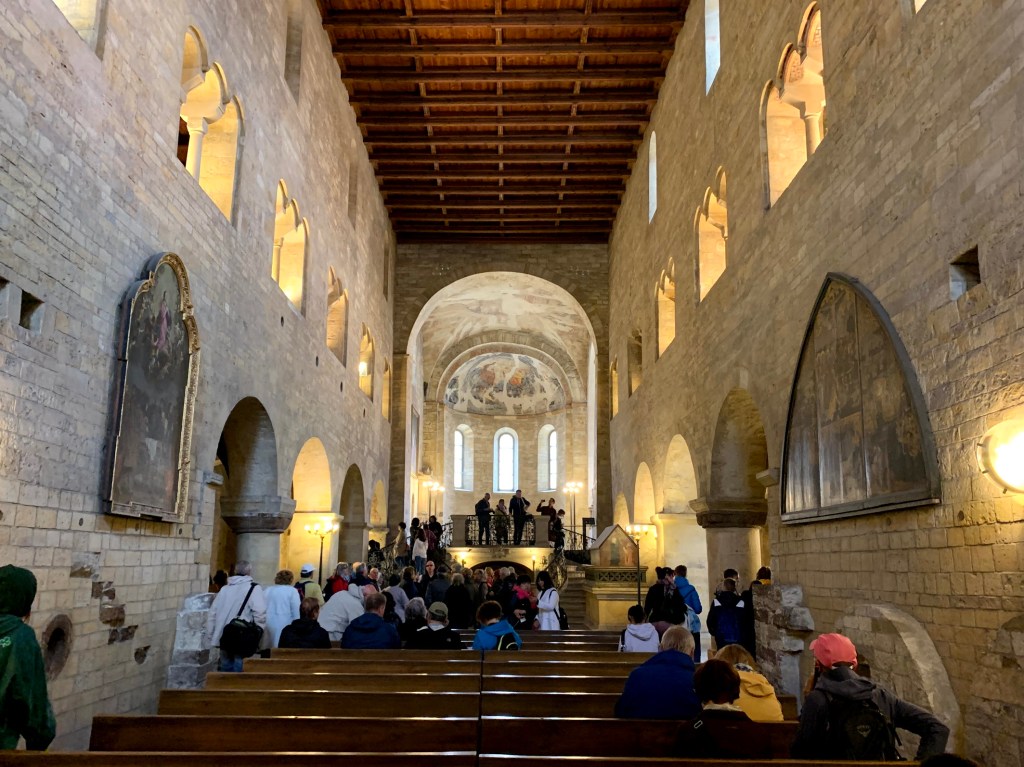
A few steps from St. Vitus was the Basilica of St. George
which was smaller and built in the year 972. The inside of St. George’s was much simpler,
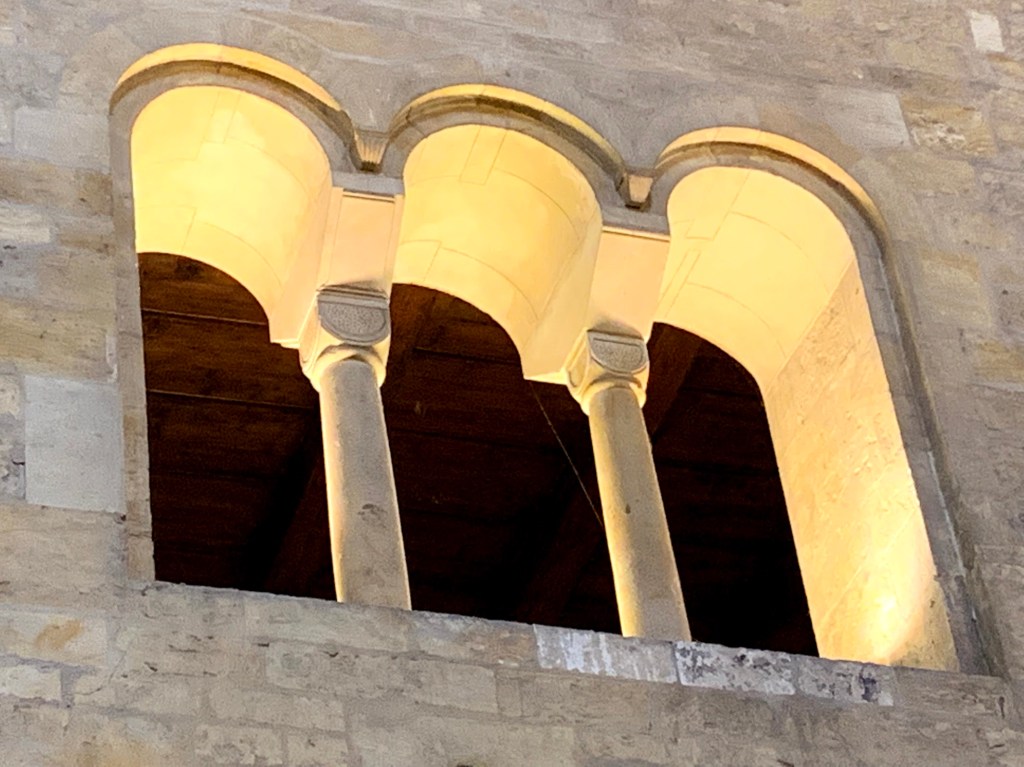
but elegant. The frescos were faded on the walls and yet the light played with
the eyes as you looked up at the vaulted stone alcoves along the second floor.
High Altar from the 10th century
Basilica of St. George
Lighted alcoves
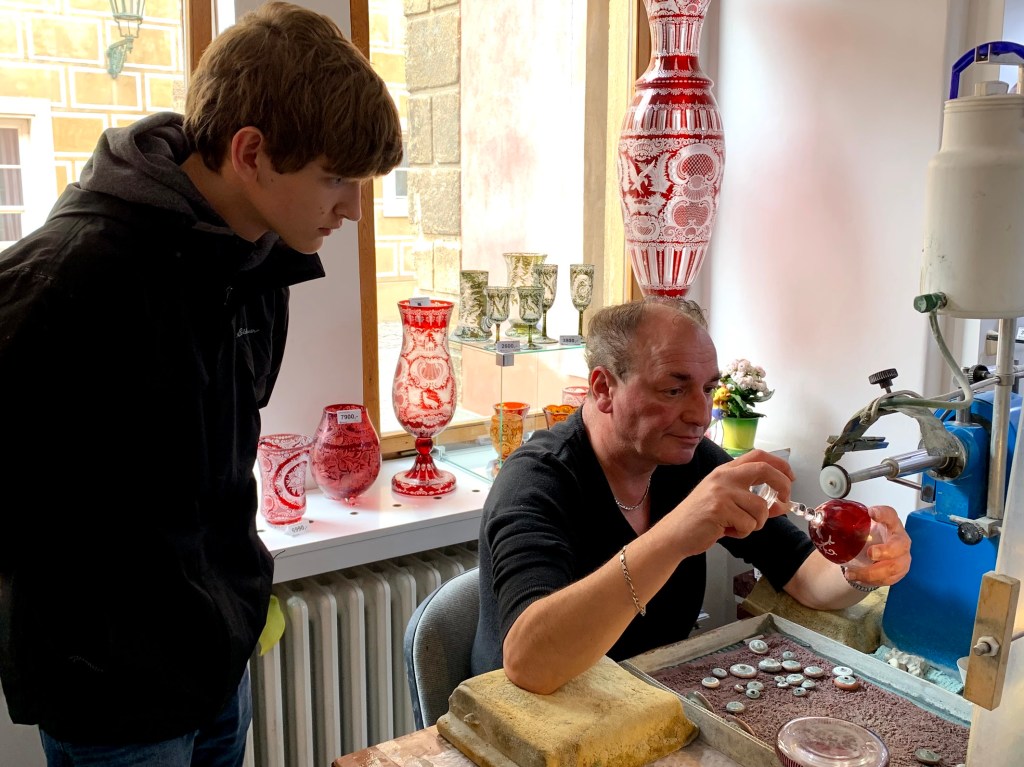
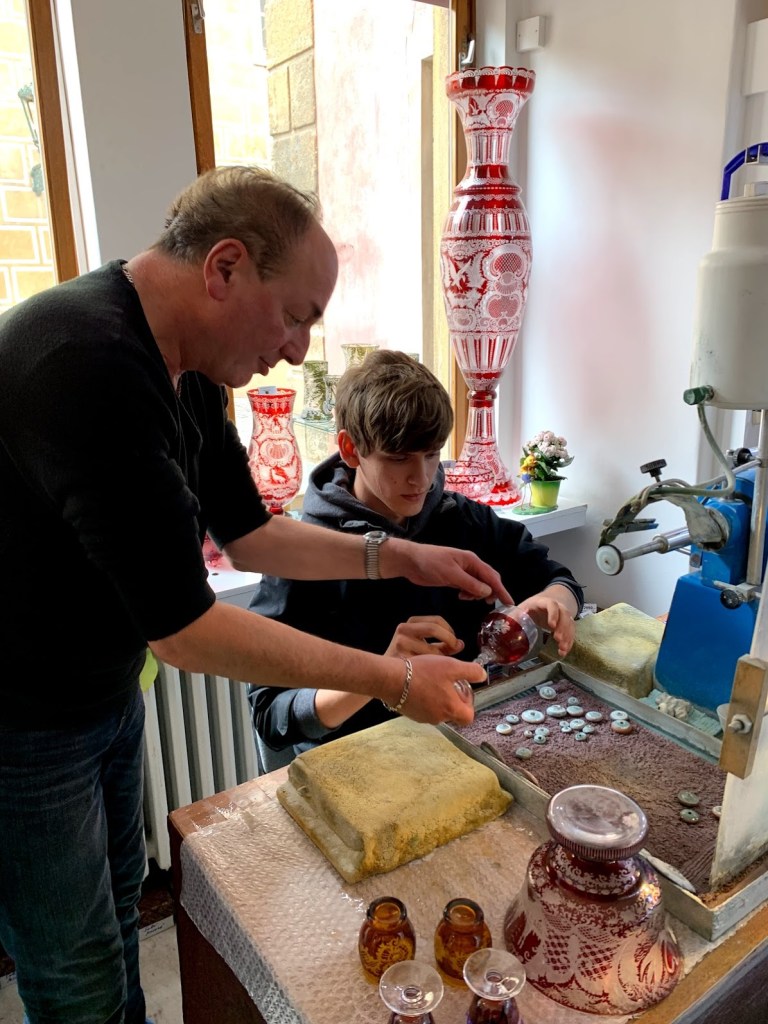
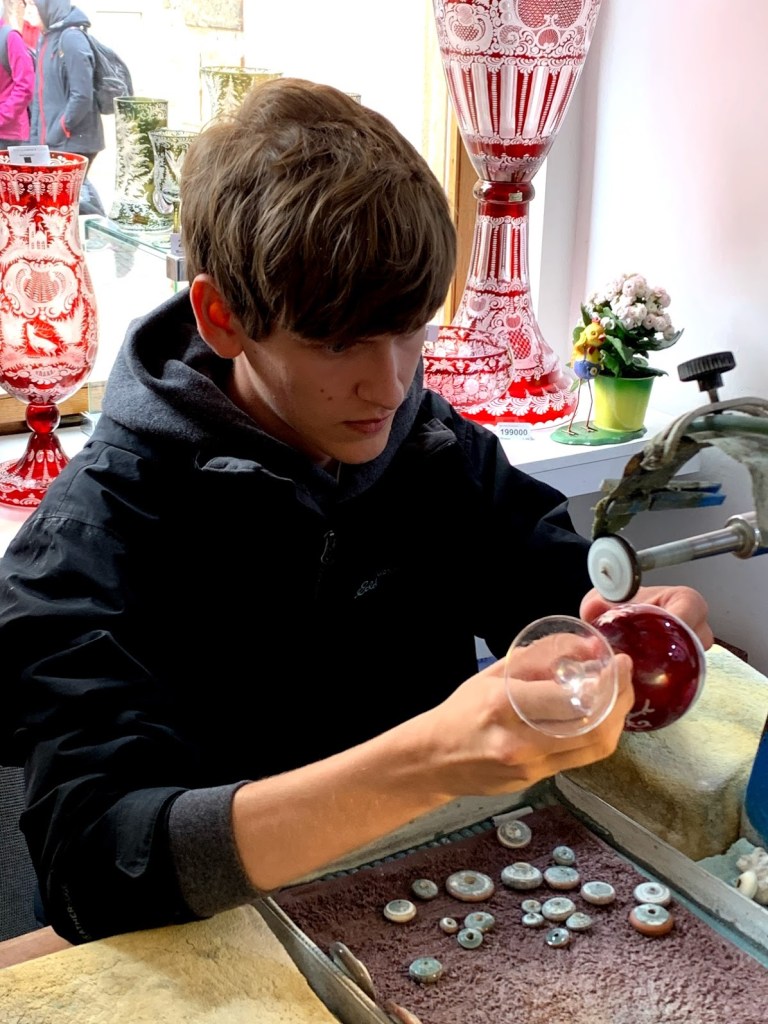
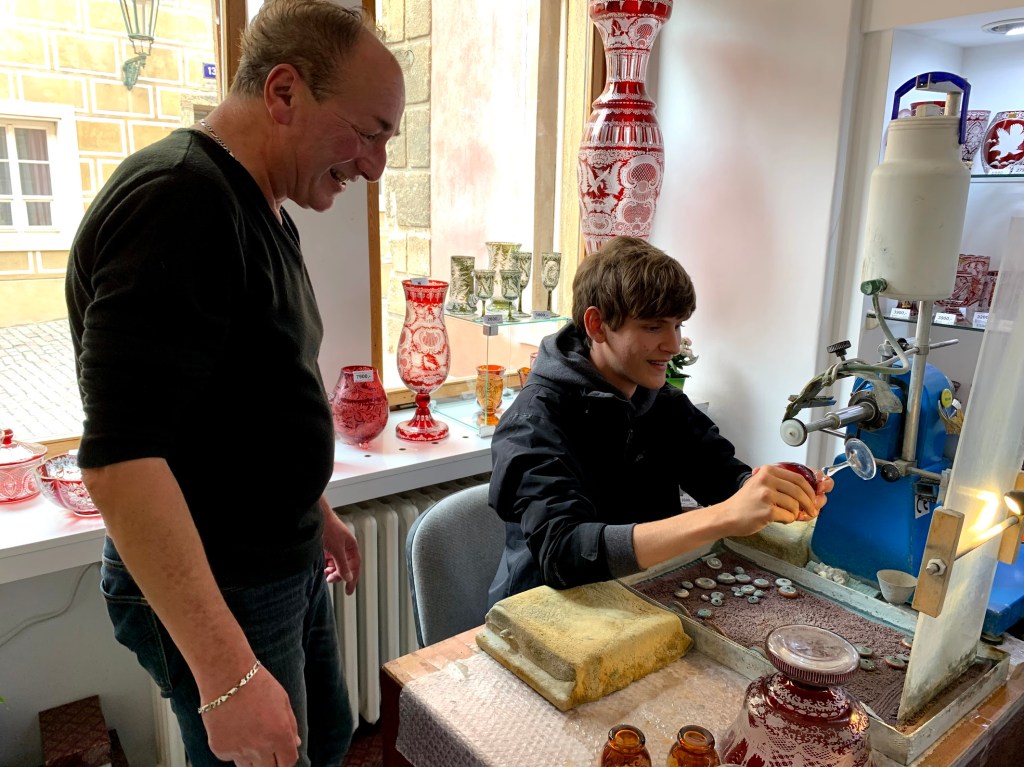
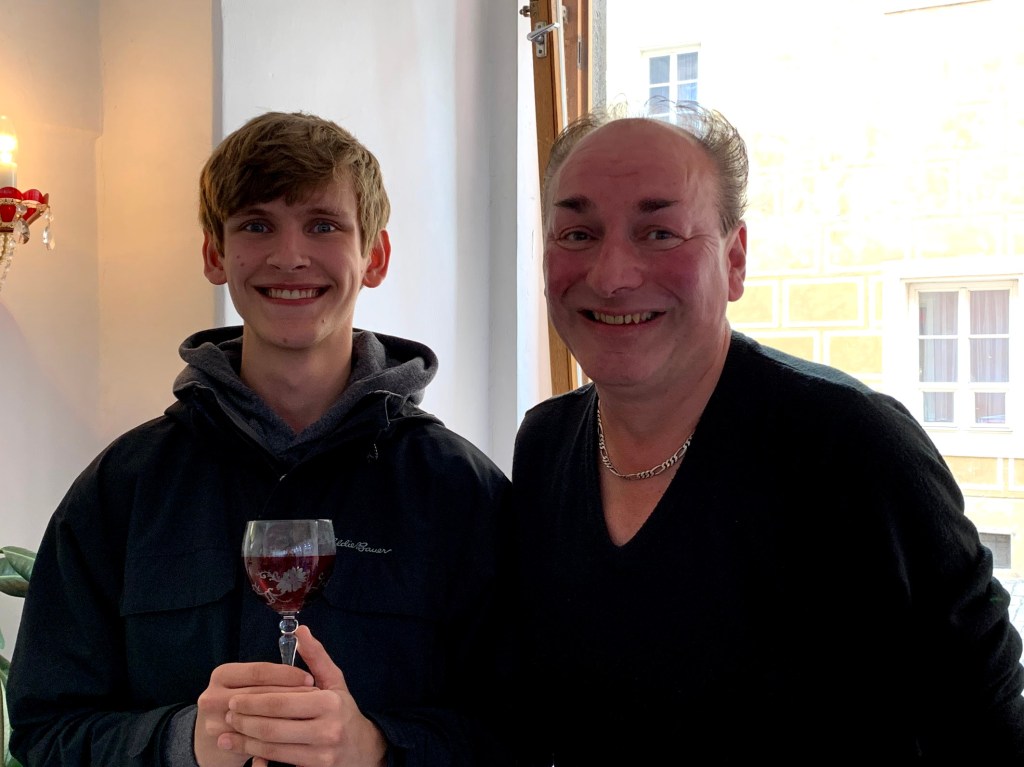
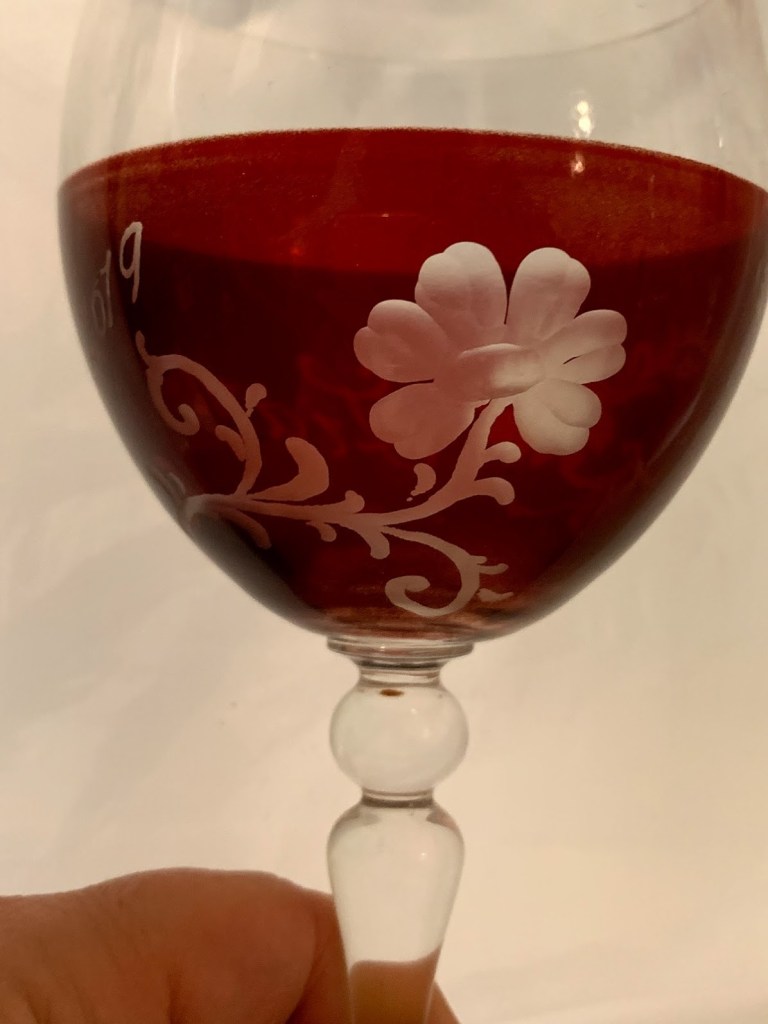
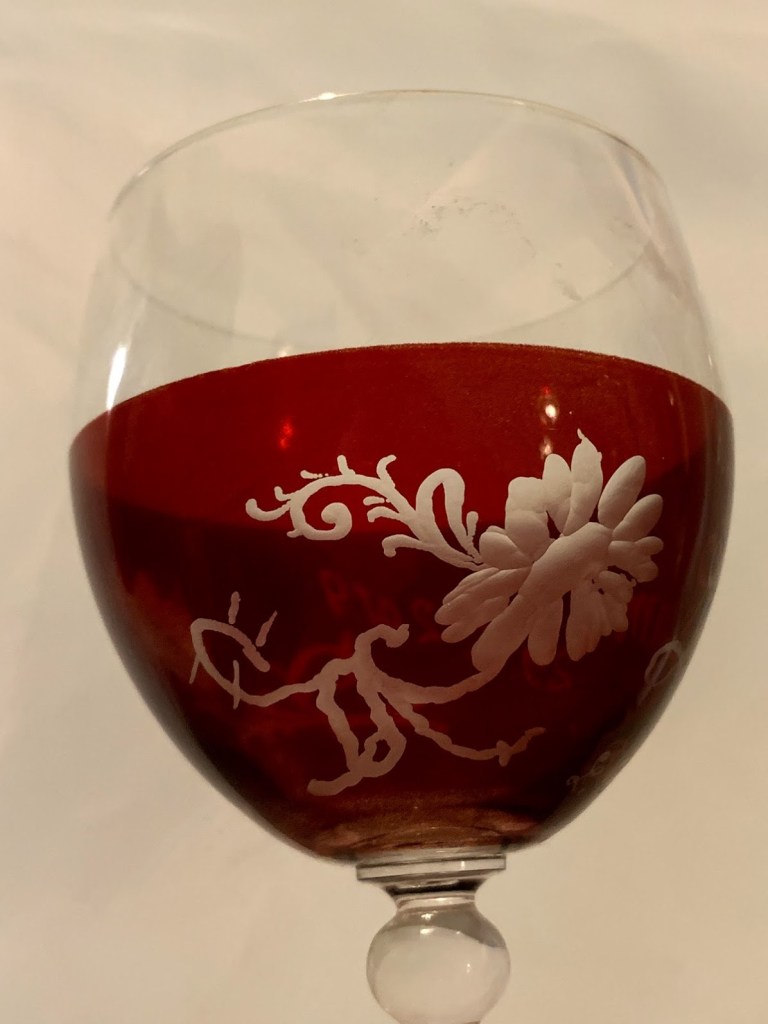
We meandered through the palace streets and soon found ourselves in the Egermann Glass Shop. Egermann is one of the oldest Czech Bohemian Crystal producers. The etched glasses and porcelain pieces were stunning. While we shopped Liam intently watched the master glass etcher, Mr. Bobela. After 20 minutes or so or. Bobela invited Liam to try and etch on a wine glass he had been working on. We found out later from a clerk, that this was a rare occurrence and that Liam was the youngest person ever to be taught by the 30+ year master! Mr. Bobela showed Laiam how to use the etching wheel and lathe. He carefully instructed Liam on how to etch a flower. Liam used the freshly etched flower on the other side of the glass as a guide. It took Liam about 20 minutes to make the flower and vine. Mr. Bobela was very impressed with Liam’s “natural talent” and said that Liam had “an eye” for the detailed work. Mr. Bobela etched his name and Liam’s name slightly bigger along with the date, into the red crystal wine glass. The red color comes from triple firing the crystal mixed with gold. Mr. Bobela gave Liam the wine glass for free as a gift. Both Master and apprentice grinned ear to ear as I took their photo with the finished glass! Liam is very interested in glass and crystal etching after having this opportunity of a lifetime to be taught by a master of this ancient craft. It is truly and experience he will remember his entire life!
Liam watched Mr. Bobela intently for quite some time and would occasionally ask him questions in German. It was their common language. When Liam didn’t quite understand, I’d translate between them. Mr. Bobela was impressed with Liam’s interest in glass etching and that he could speak simple German. Of course he was even more impressed, when Liam addressed him with a few Czech phrases!
A few pointers
At the etching wheel
I love this photo of the two of them smiling. Mr. Bobela spoke only a few words of English and simple German. This entire lesson was communicated through basic German and a lot of hand gestures!Pleased Master and Proud Apprentice! 29 May 2019
Mr. Bobela’s flower and vine
Liam’s flower and vine
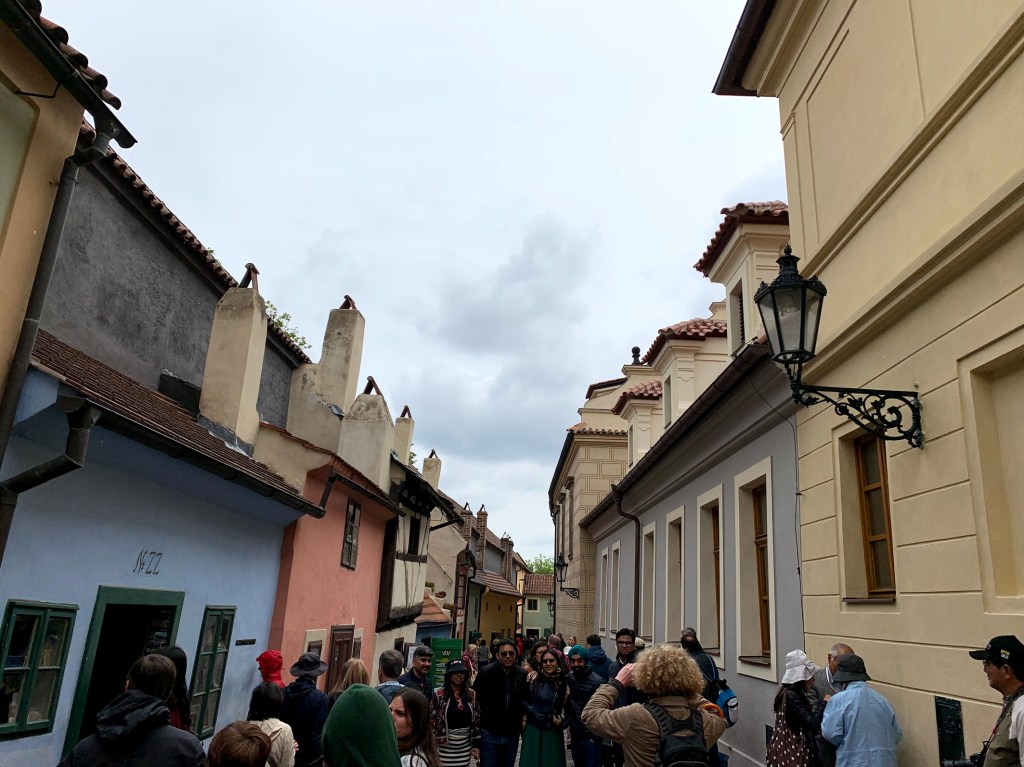
Our next stop was the Golden Lane. The homes in this
“workers” area of the castle were set up to represent trades from the 15-17th
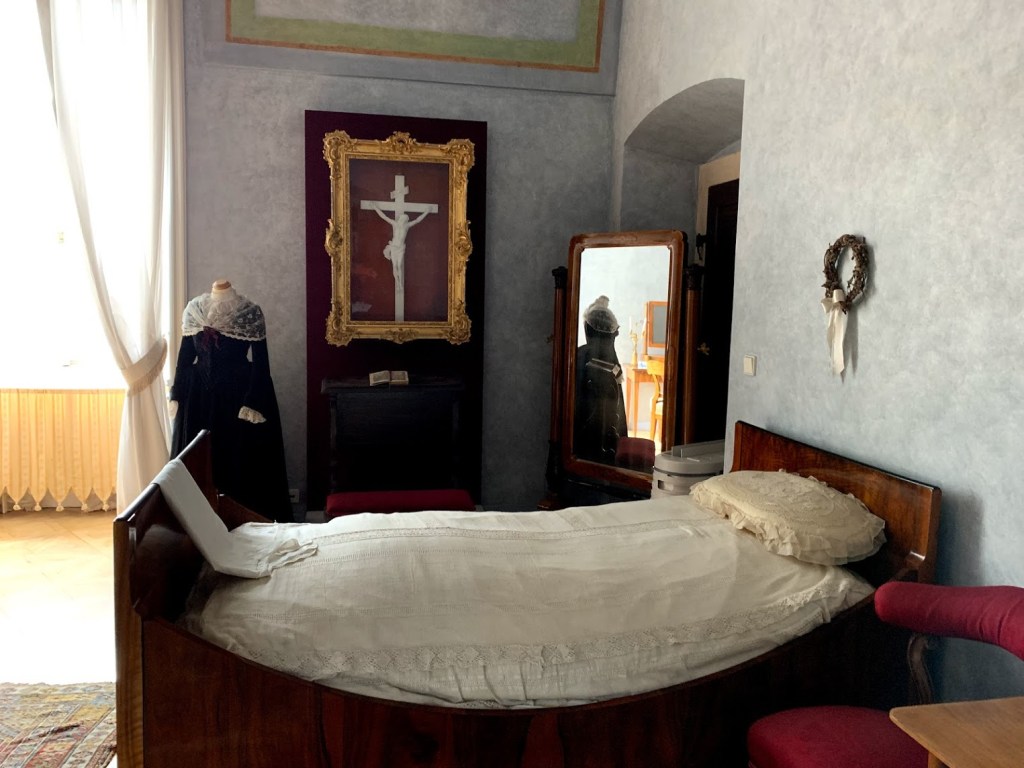
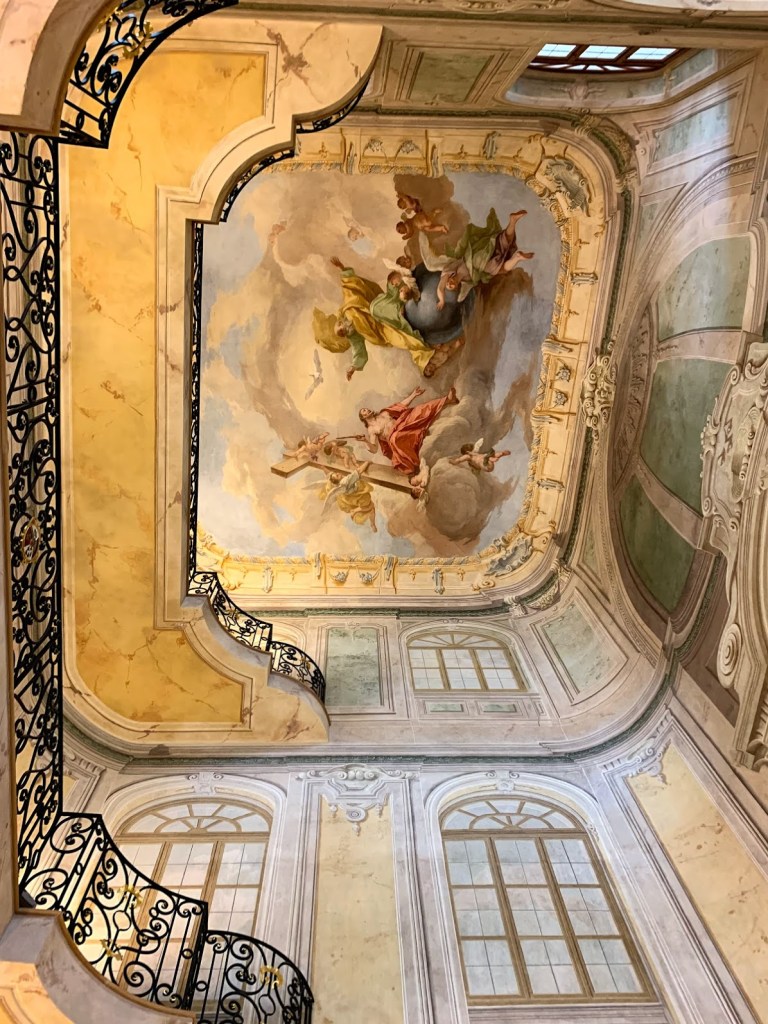
centuries. We also toured a few apartments in the Rosenburg Palace of the 18th
century. We left Prague Castle after lunch and caught the tram to The Church of
the Holy Infant.
Golden Lane
Palace bedroom
Roof in the stairwell of Rosenburg Palace
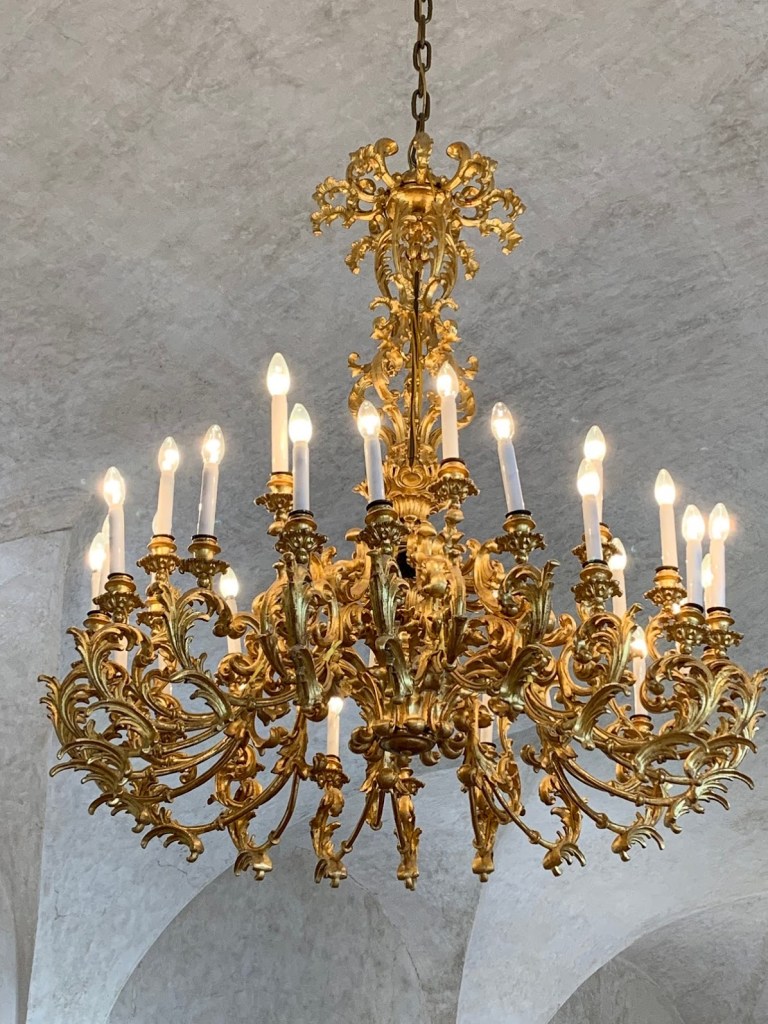
Golden chandelier
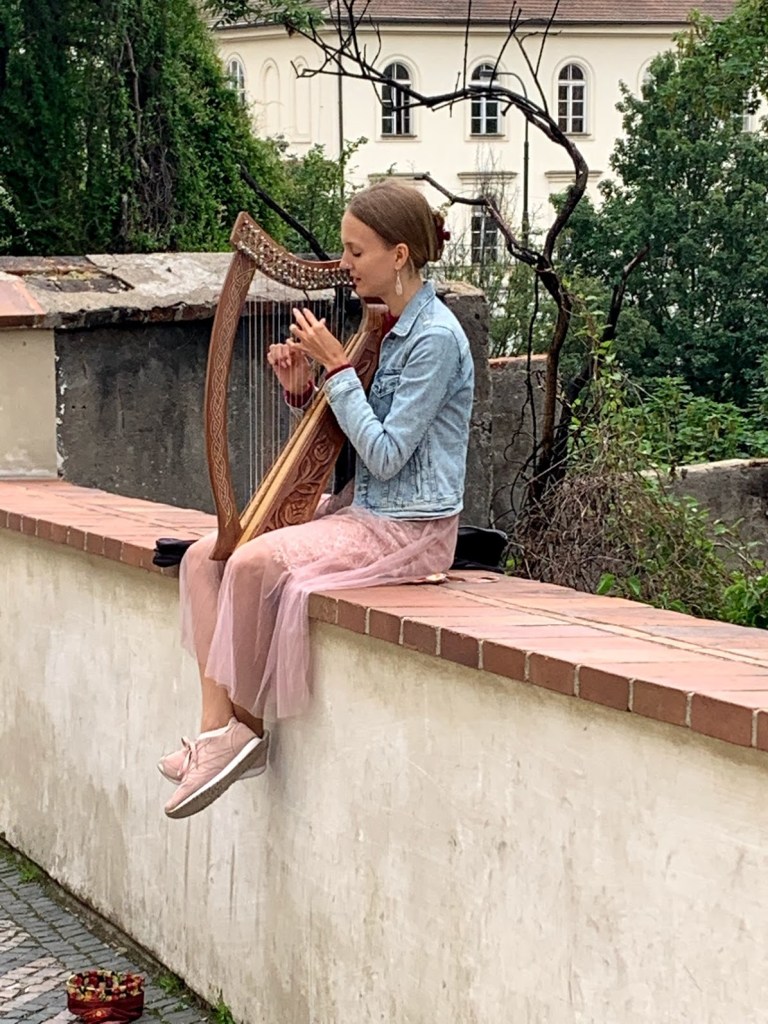
Street harpist
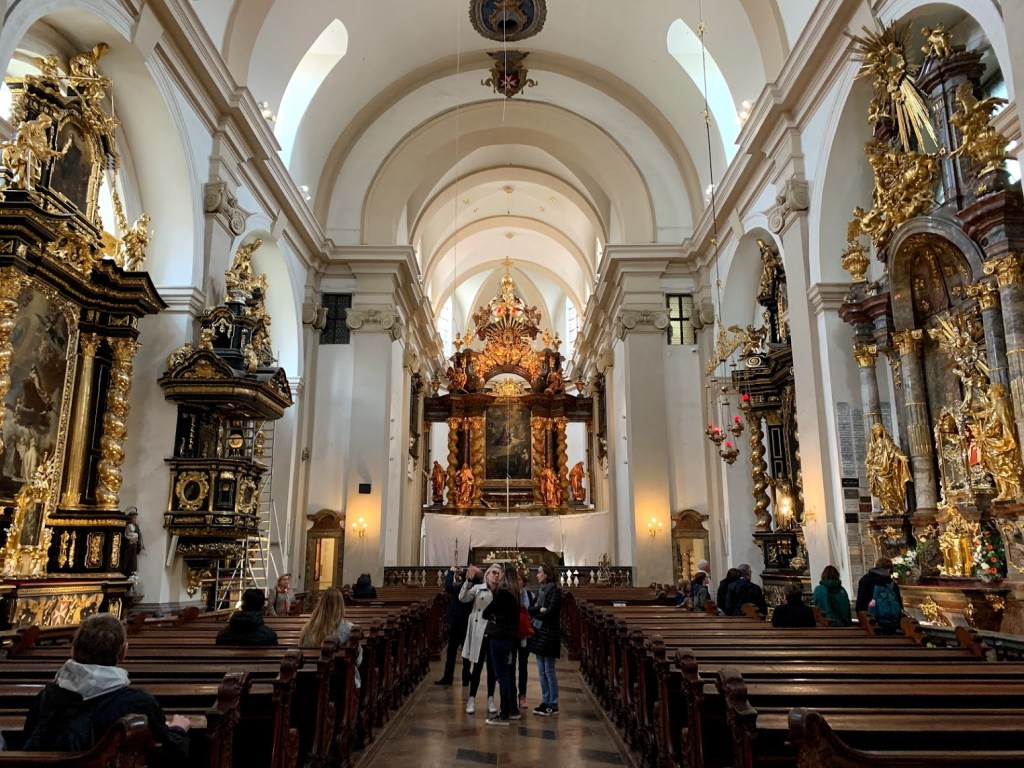
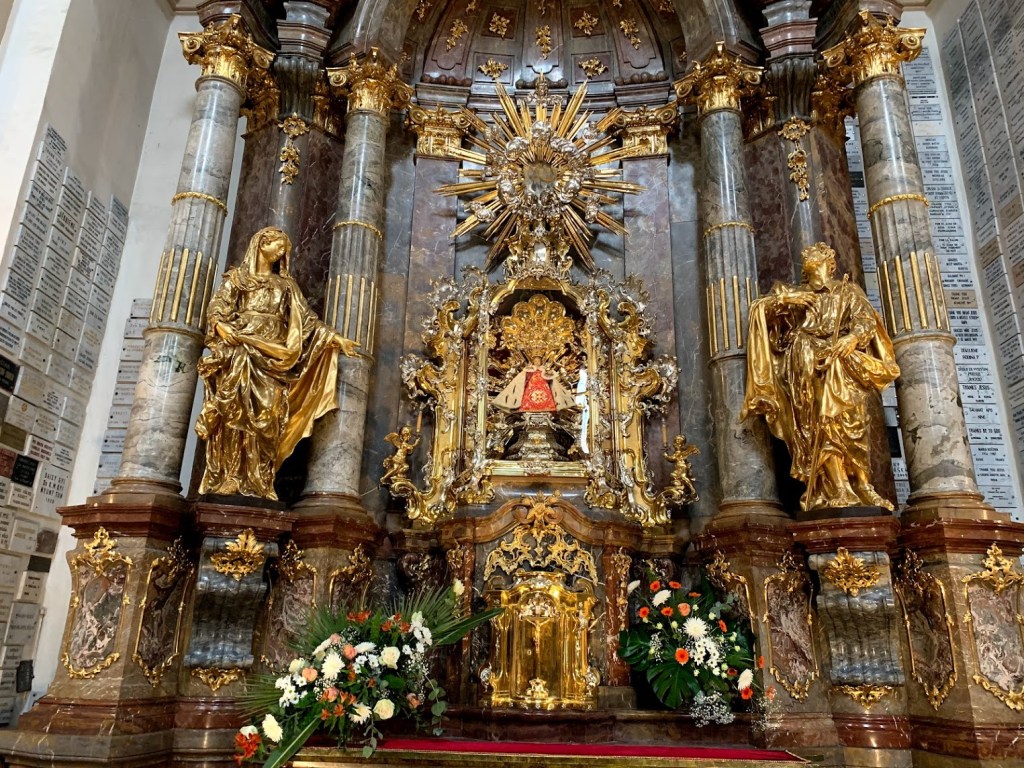
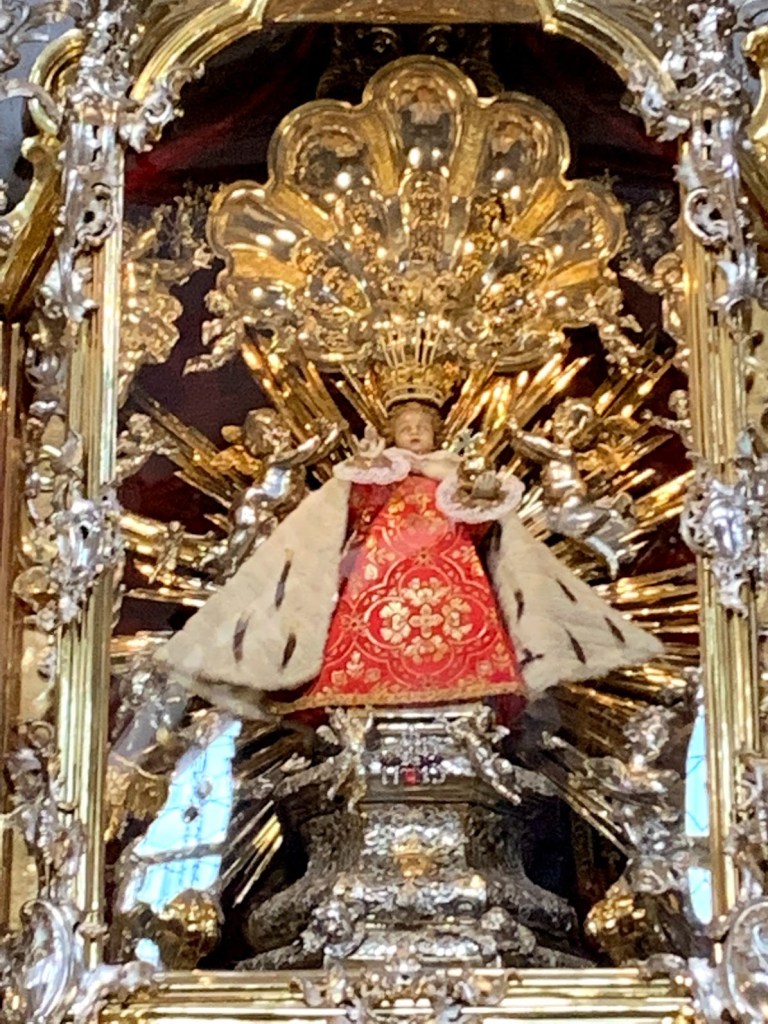
Inside the church resides a carved statue of the baby Jesus from the 1500’s. He is inside a golden shrine and owns more that 300+ magnificent robes and clothes. The Carmelite Sisters in the nearby convent are in charge of maintaining the statue and changing his robes regularly. He is one of the symbols of Prague.The Mana Strala district around the church is full of quaint backstreets and beautiful buildings.
Church of the Holy Infant
Shrine of the Holy Infant
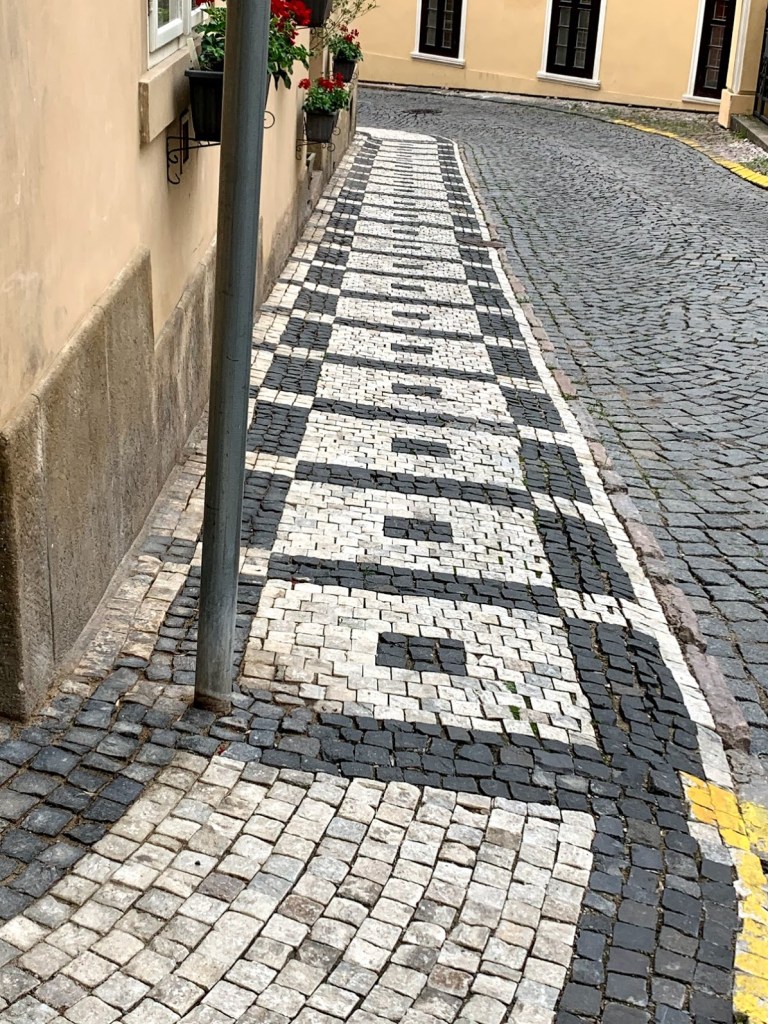
Sweet Baby JesusAll of the sidewalks in Prague looked like this. The mosaic cobblestone was in excellent condition.
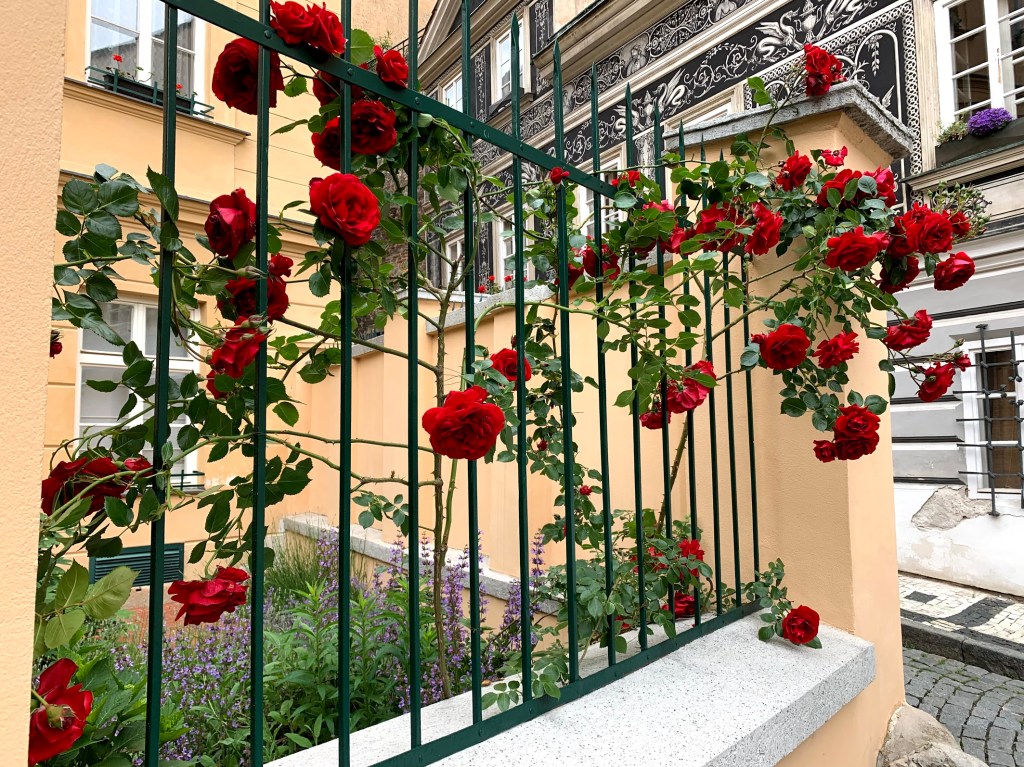
Romantic roses
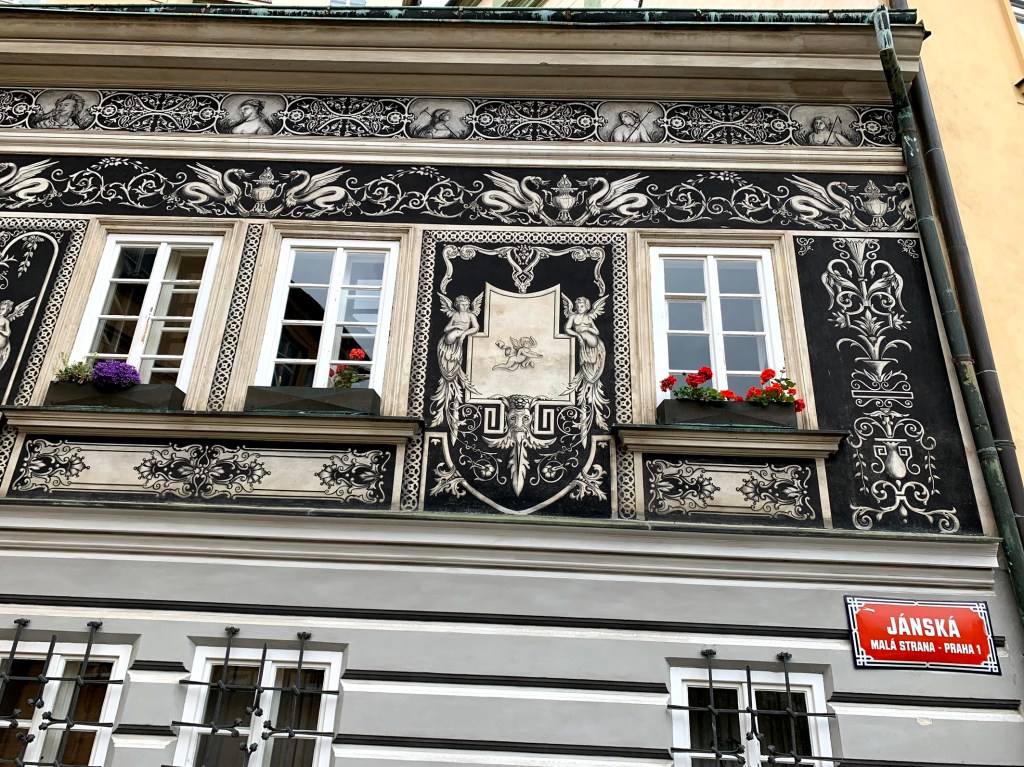
Beautiful painted building
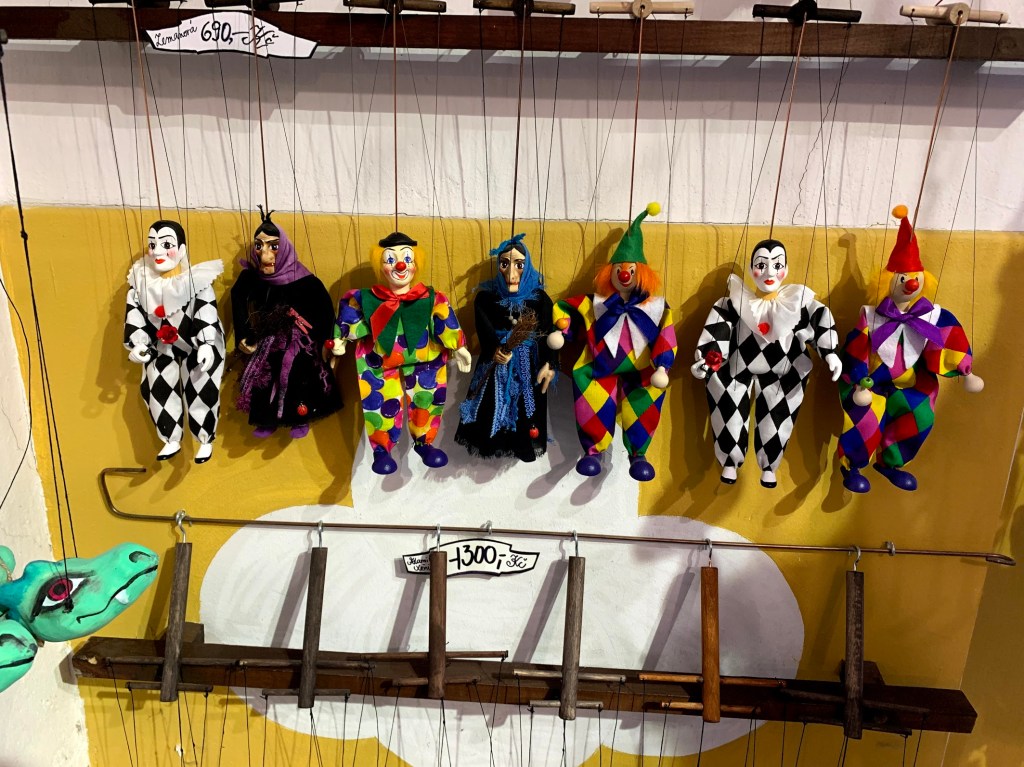
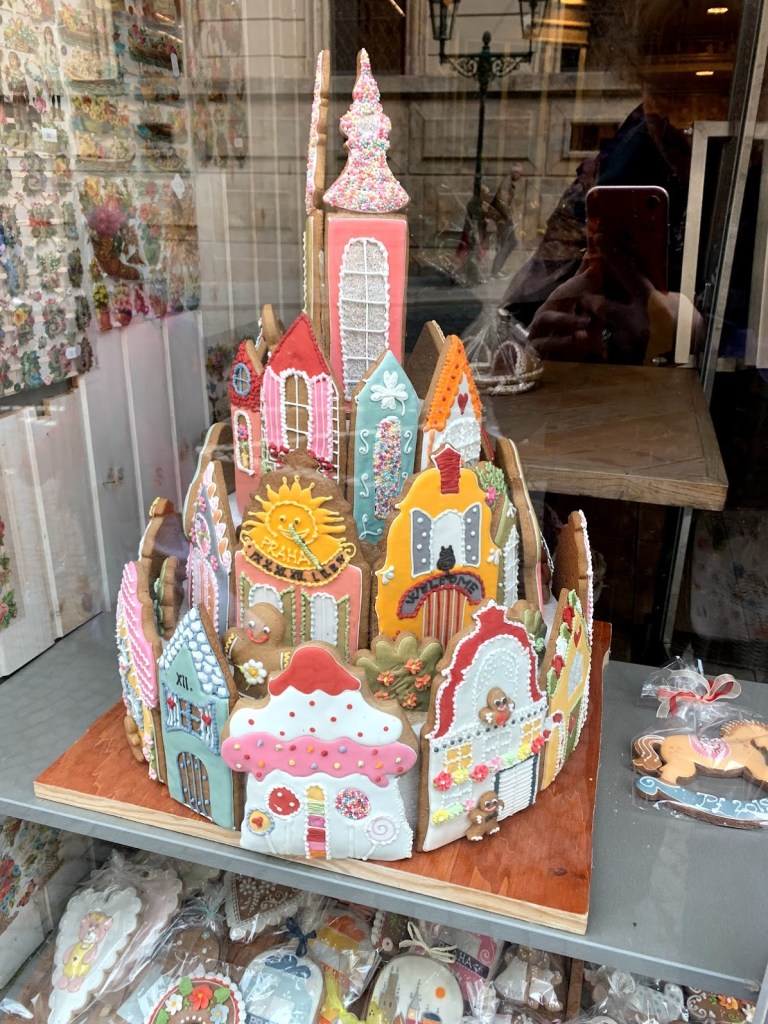
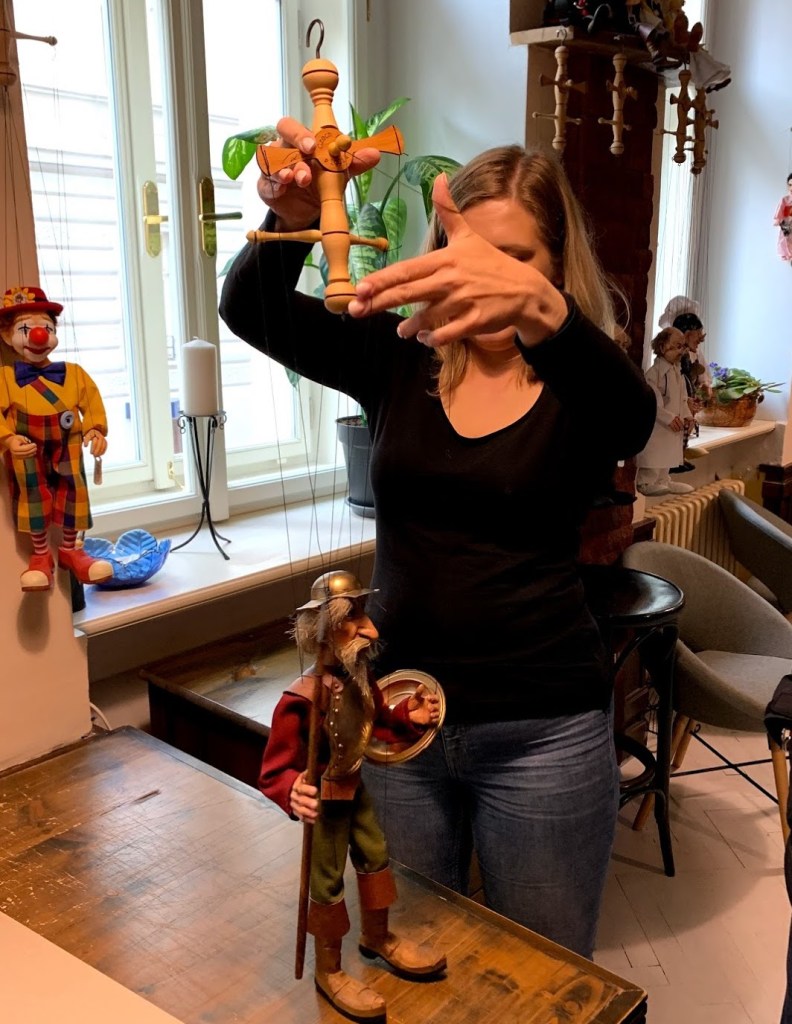
As we walked through the streets of the Mana Strala District we came across this little marionette shop. This is what nightmares are made of! I’m terrified of clowns!Mmmm delicious gingerbread!
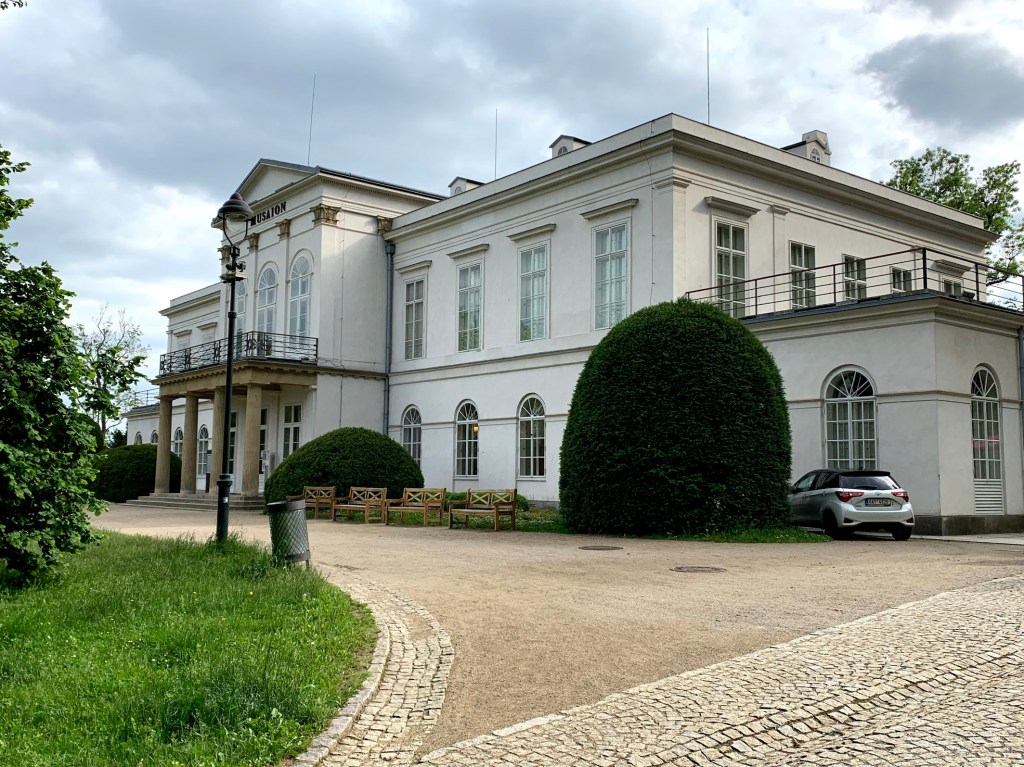
A quick tram ride and a lovely walk through the park brought
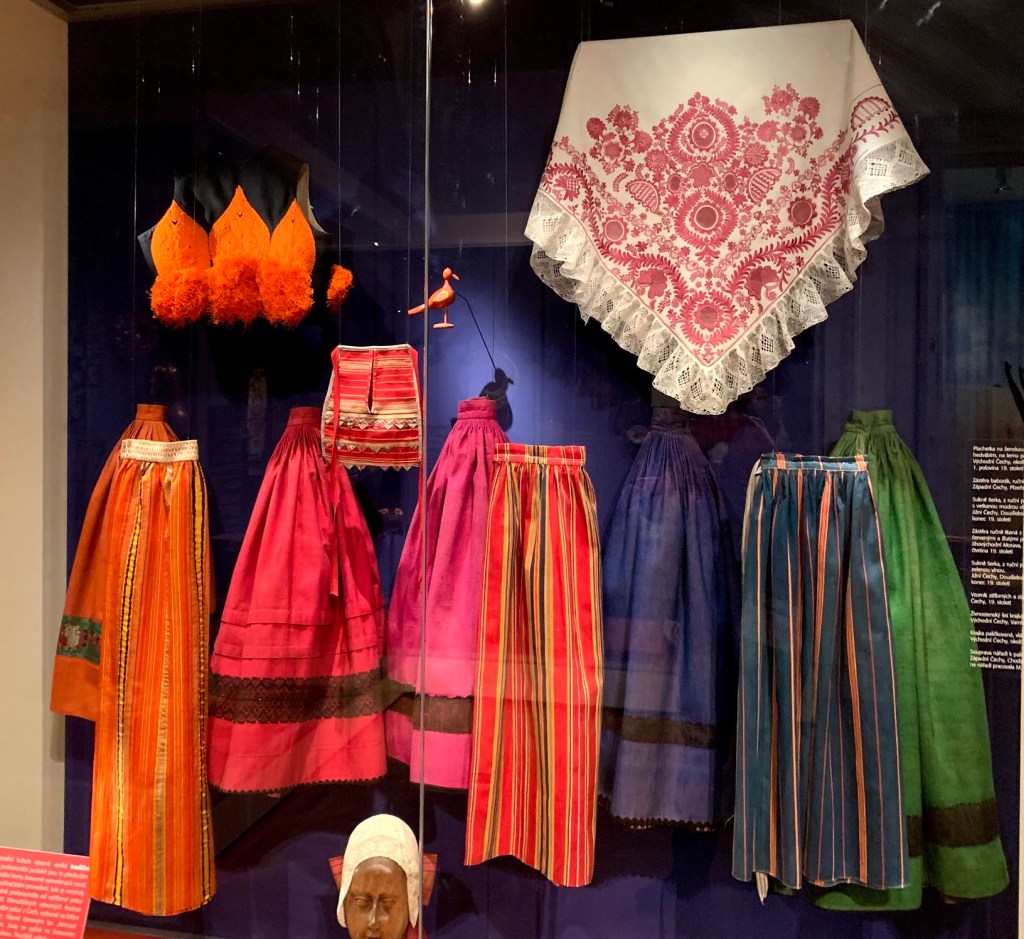
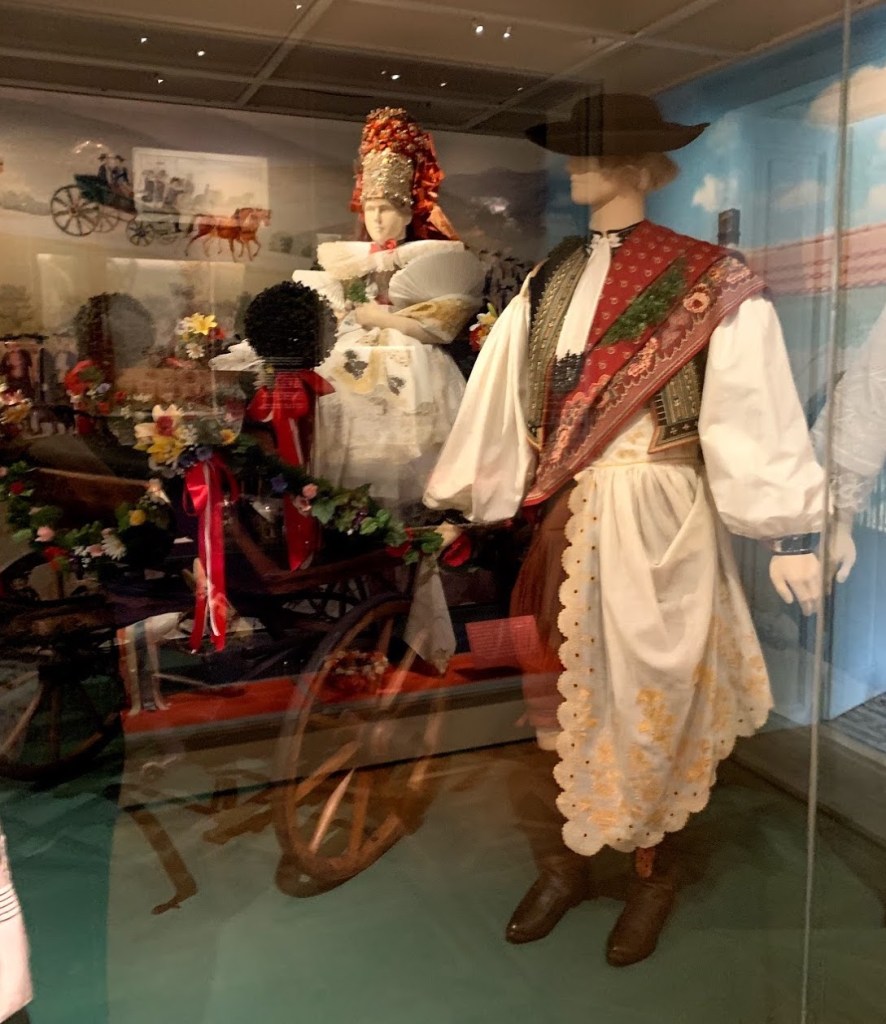
us to the Czech Folk Arts Museum. Everyone enjoyed learning about local traditions
and admiring the beautiful folk clothes and artifacts. The people of the Czech
Republic are originally Bohemians. Many of the Western Bohemian clothing trends
were inspired by the original patterns and colors of this region.
Czech Folk Museum
You can see the inspiration for western “Bohemian” clothes
Traditional Czech wedding outfits
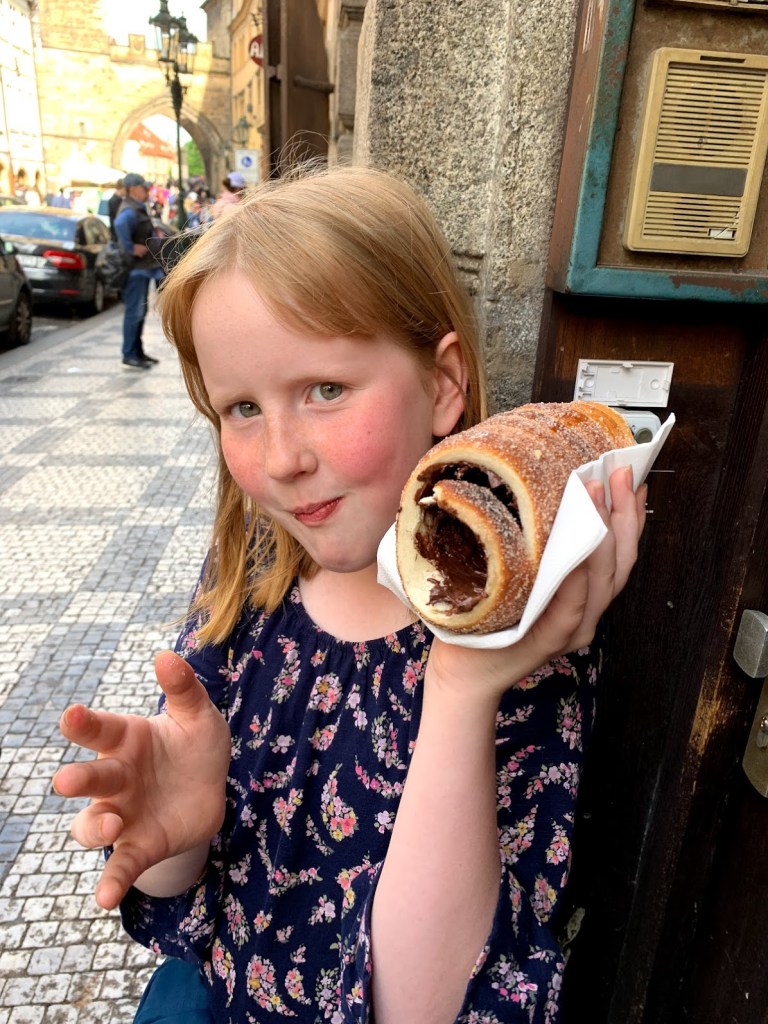
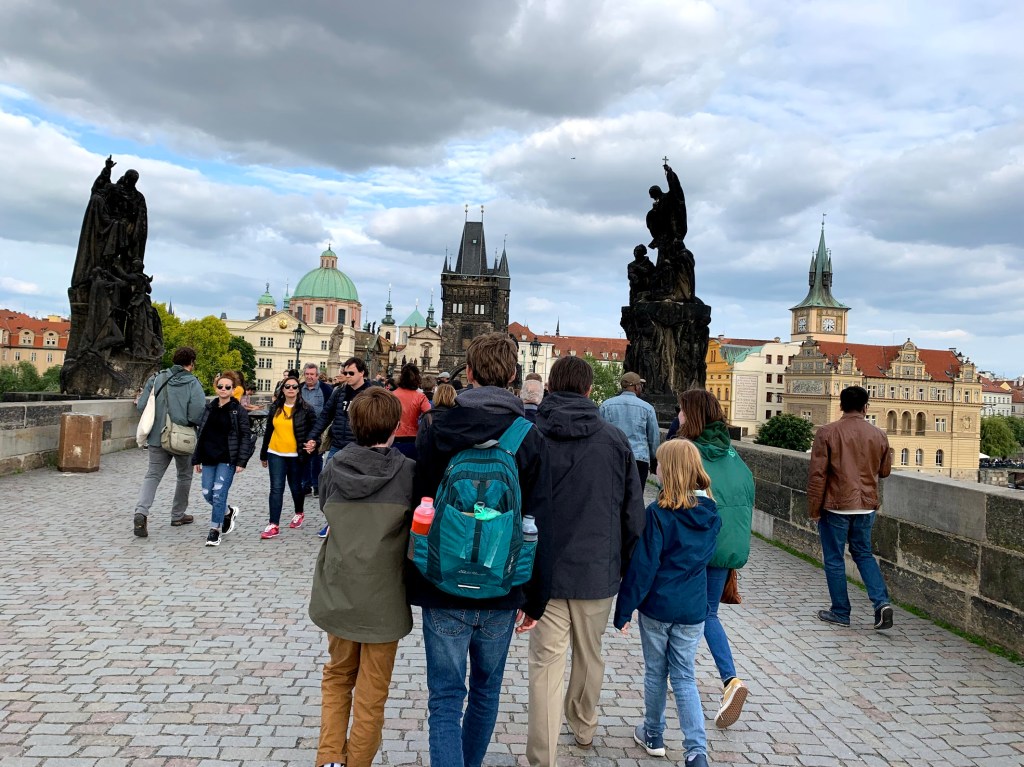
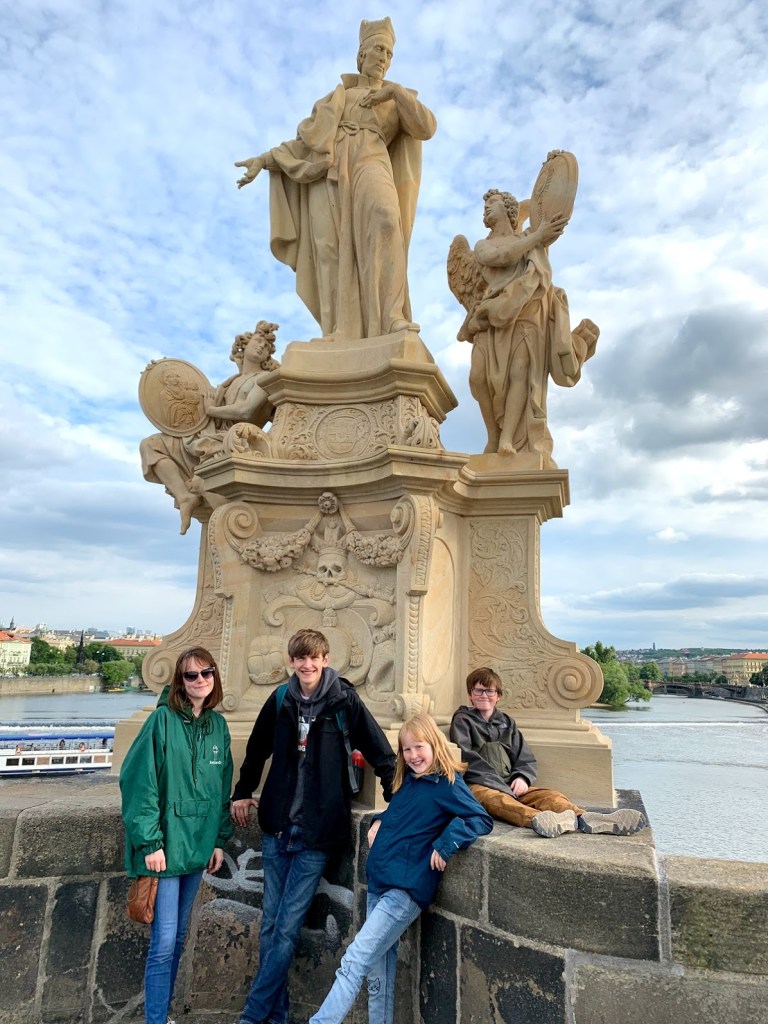
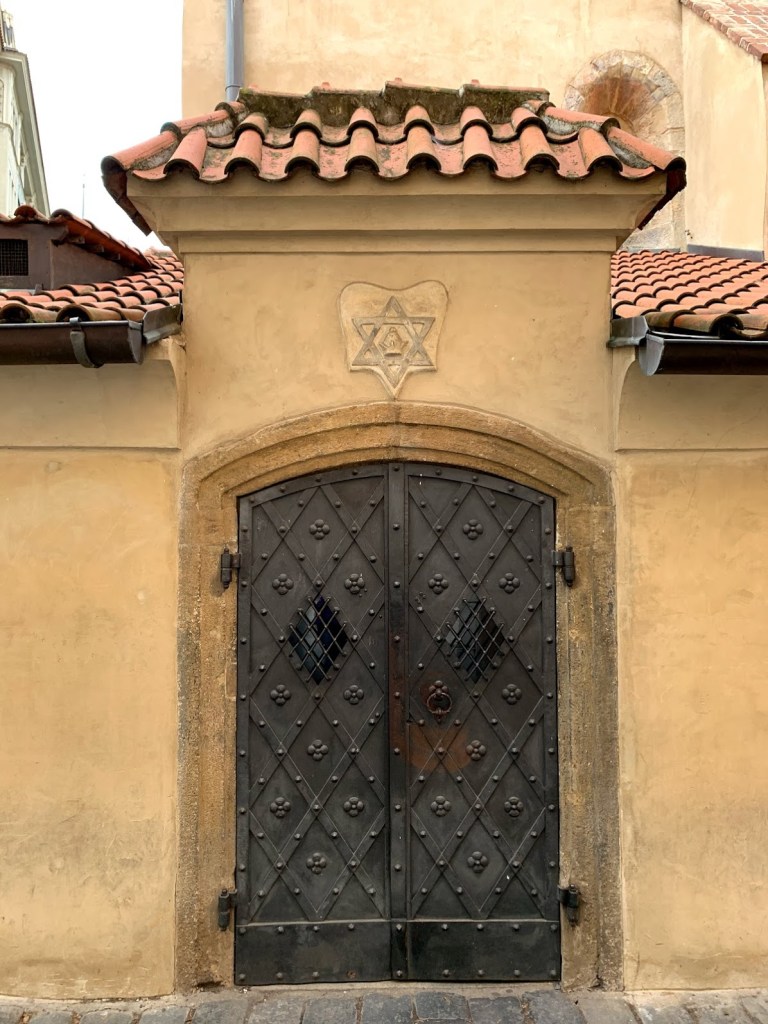
We made our way to St. Charles Bridge. Right before crossing this iconic 15th century bridge we ate a traditional Czech dessert…a coiled cinnamon pastry with chocolate or ice cream inside. We crossed the bridge admiring all the street artists and musicians and made our way over to the old Jewish Ghetto and walked by a Synagogue from the 14th century. Unfortunately it was closed, but the neighborhood was lovely.
The delicious Czech dessert: It was called a chimney cake in English.
Walking on the St. Charles Bridge
The center of the St Charles Bridge
14th century Synagogue
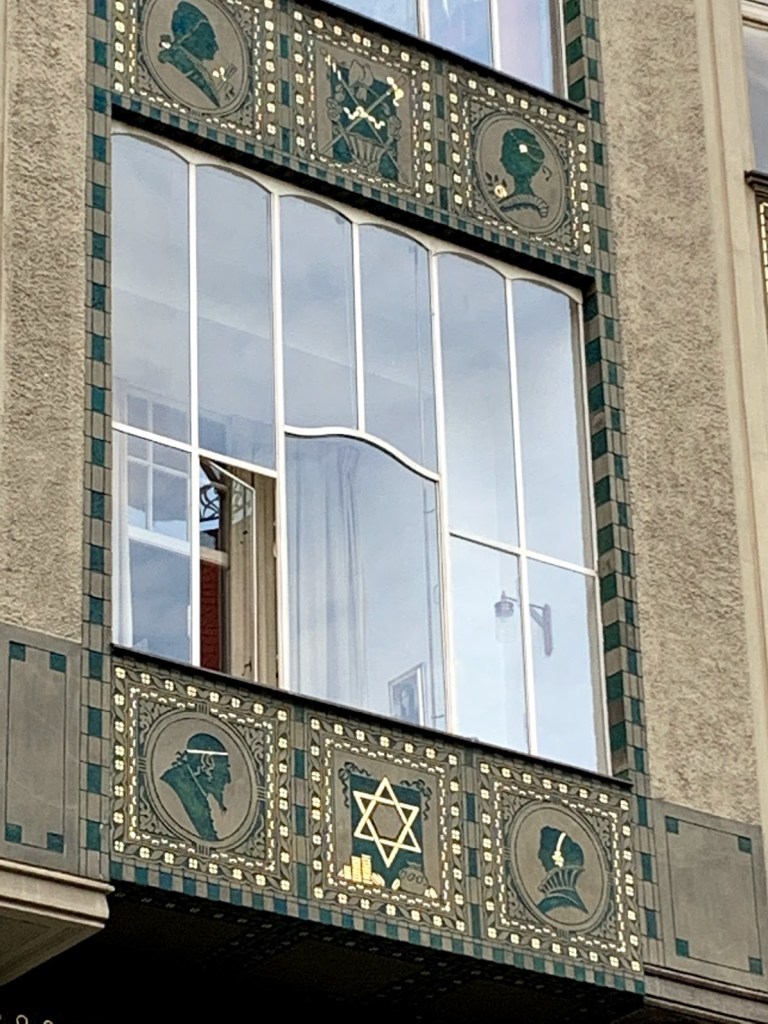
Jewish decorations on an old house
A short stroll brought us back to the main Old Town Square
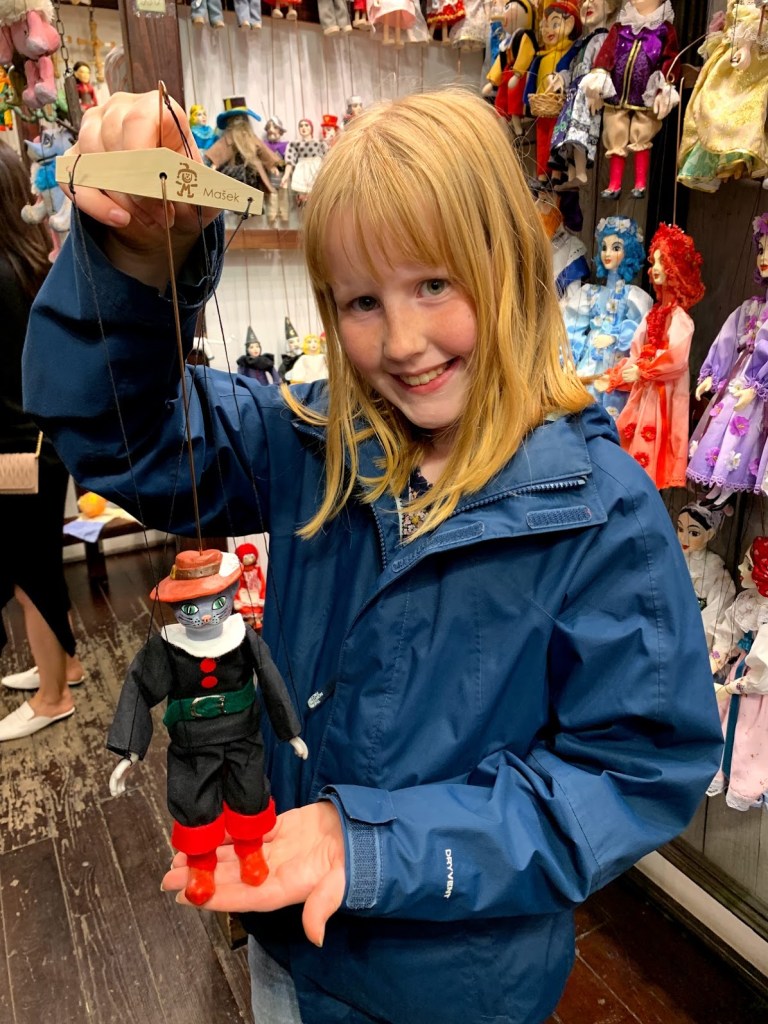
and a large marionette shop. Faywen got a cute little Puss n’ Boots marionette and
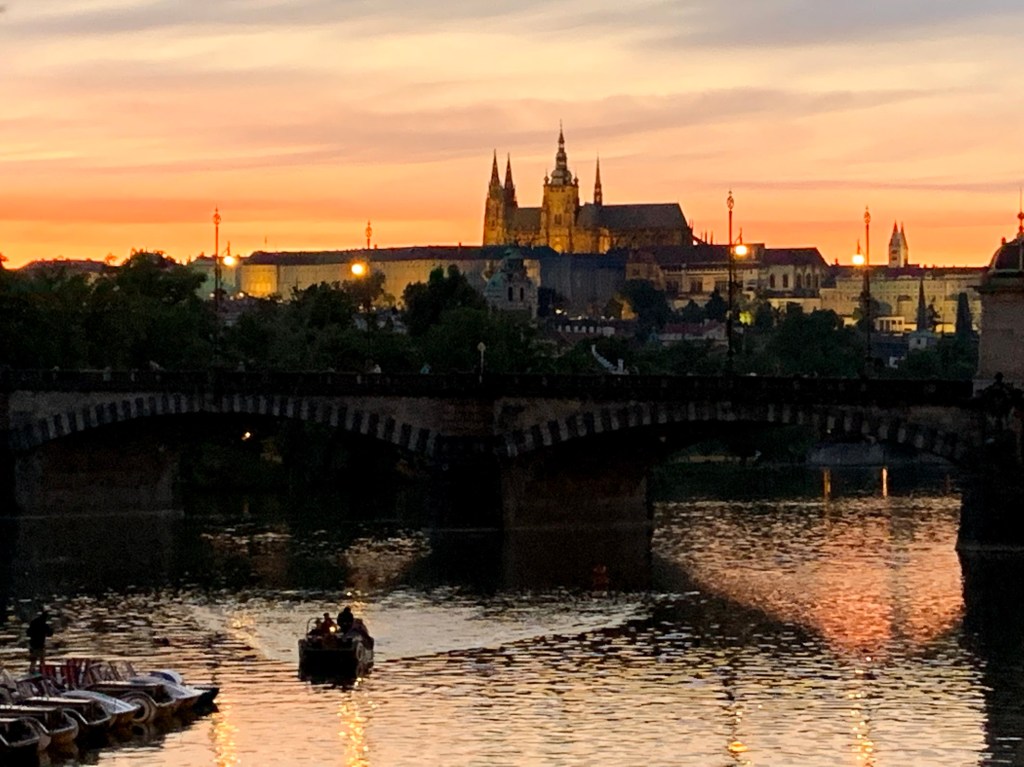
we picked up a couple of souvenirs for family there too. After dinner we walked
back to our apartment as the sunset cast hues of pink and orange over the silhouette
of St. Vitus and the Prague skyline.
Faywen with her new Puss n’ Boots marionetteSunset over the Vltava River and St. Vitus in Prague, Czech Republic
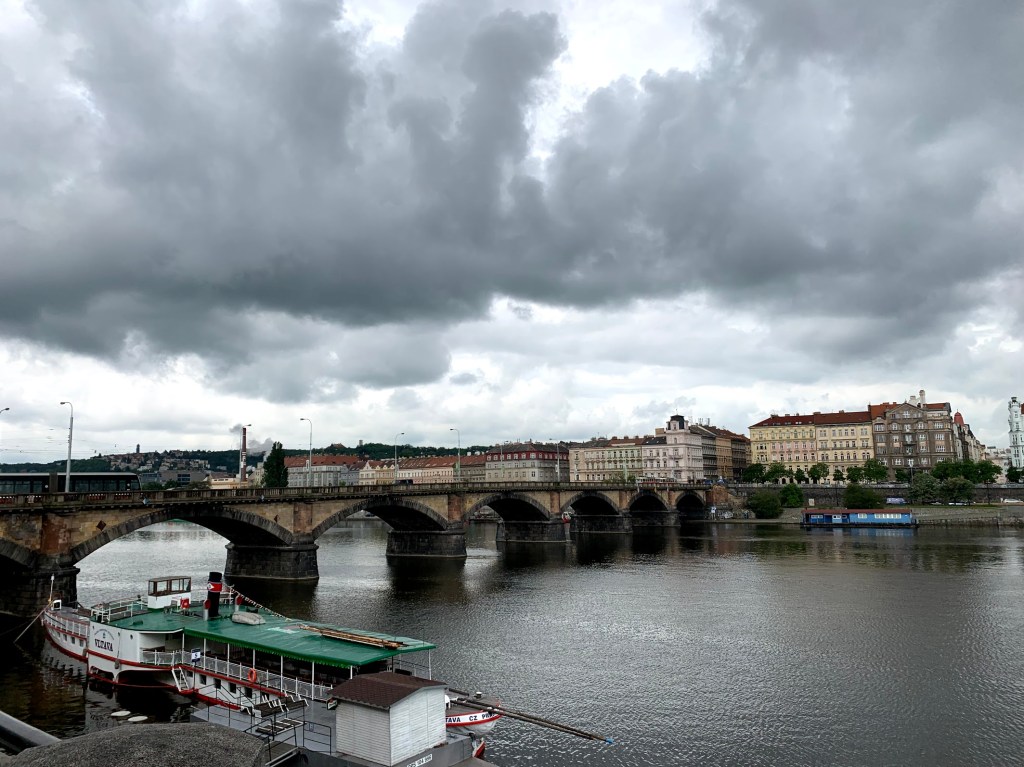
“Gray skies are gonna clear up”…or at least that’s what we
hoped as we steeped out and walked down to the Vltava River walk. Unfortunately
it would rain off and on until late afternoon, but it didn’t dampen our
spirits.
Vltava River in Prague, Czech Republic
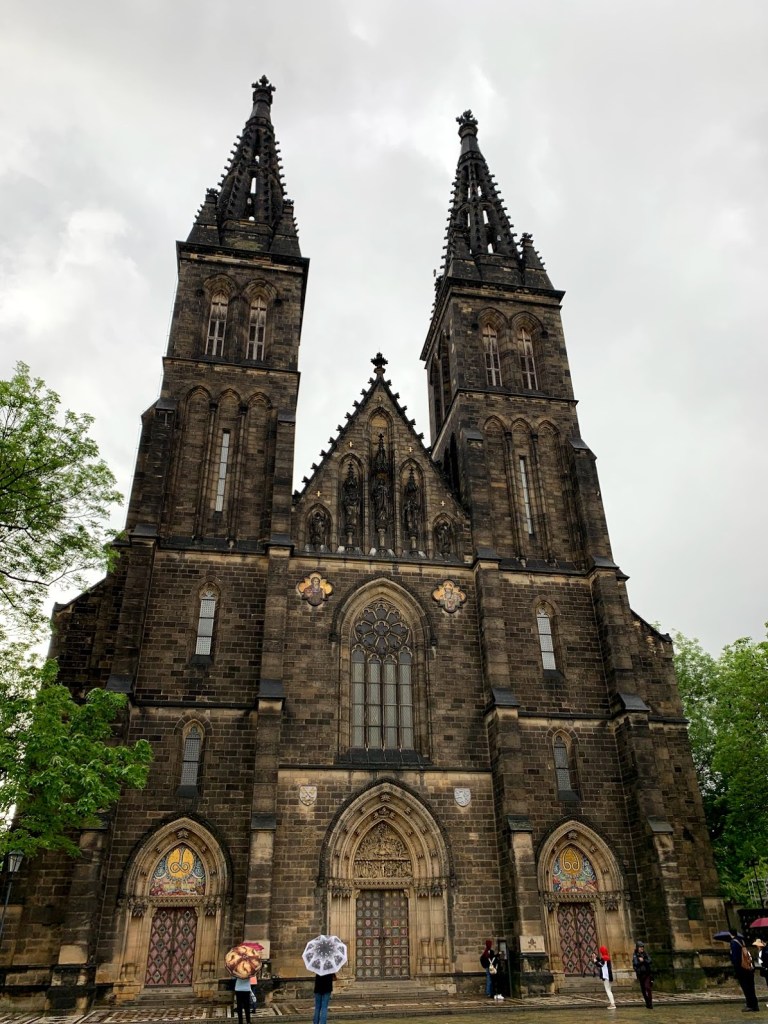
The rain held off as we walked the river’s edge watching all
of the boats travel up and down. We soon found ourselves at the foot of a hill,
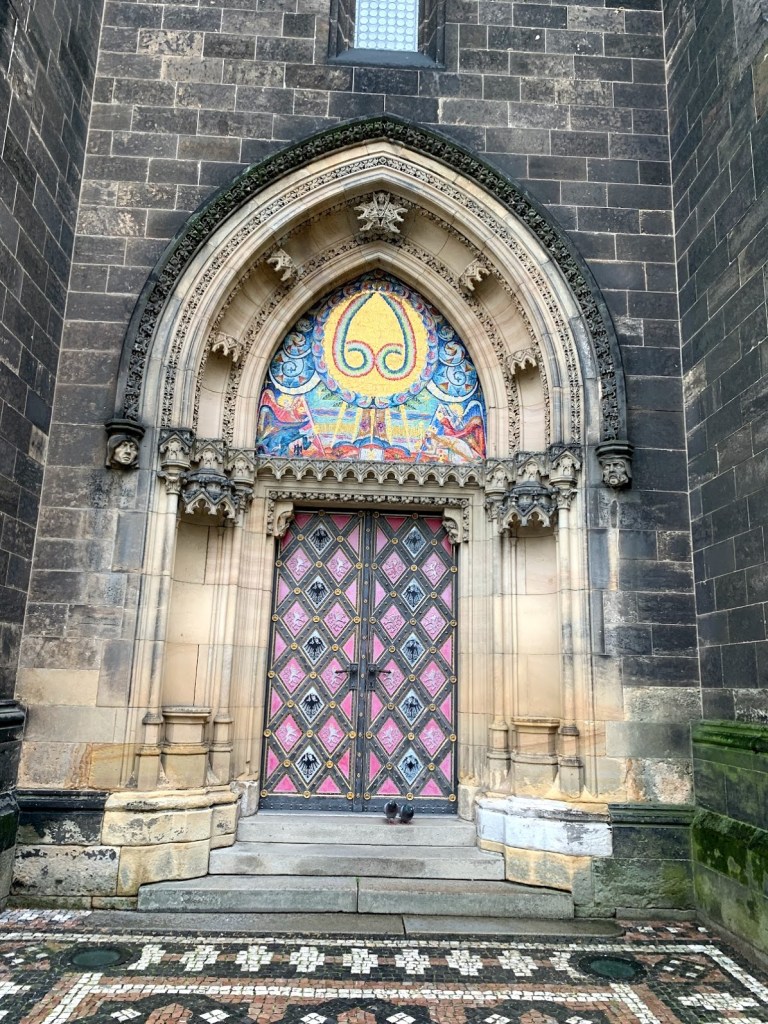
which we climbed to reach St. Peter and Paul’s Church. The façade was a dark brown
and black color accented with bright Byzantine like mosaics making it one of
the most unique church buildings I’ve ever seen. Just to the right of the front
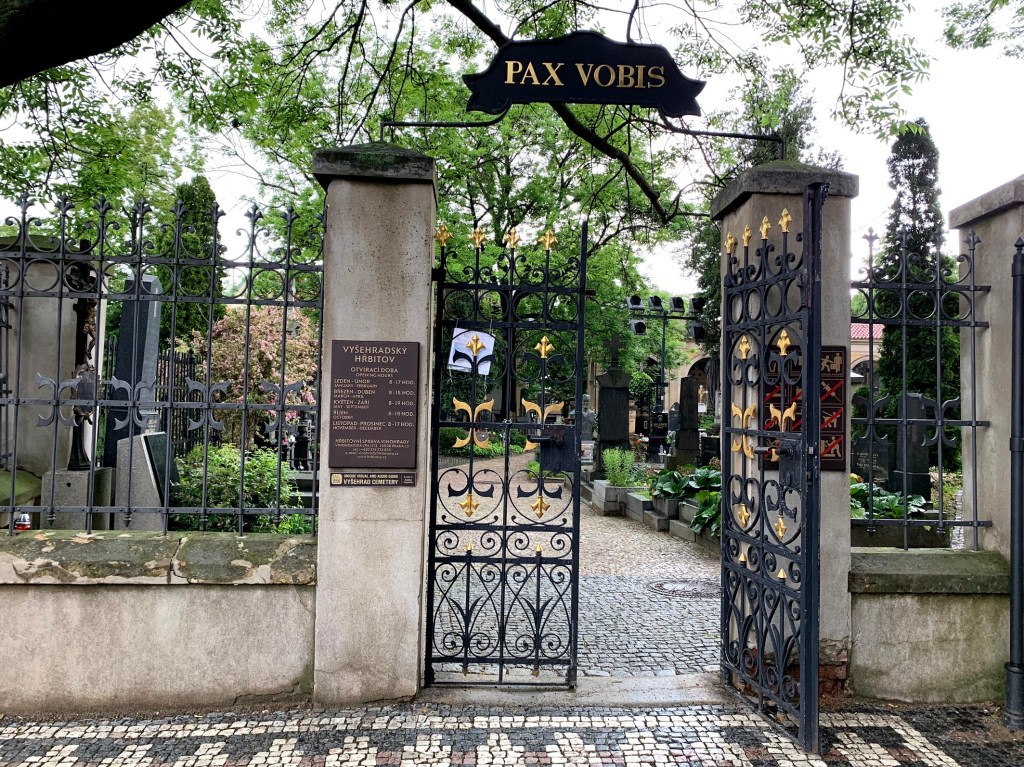
doors was an elaborate wrought iron gate, which led into a beautiful old
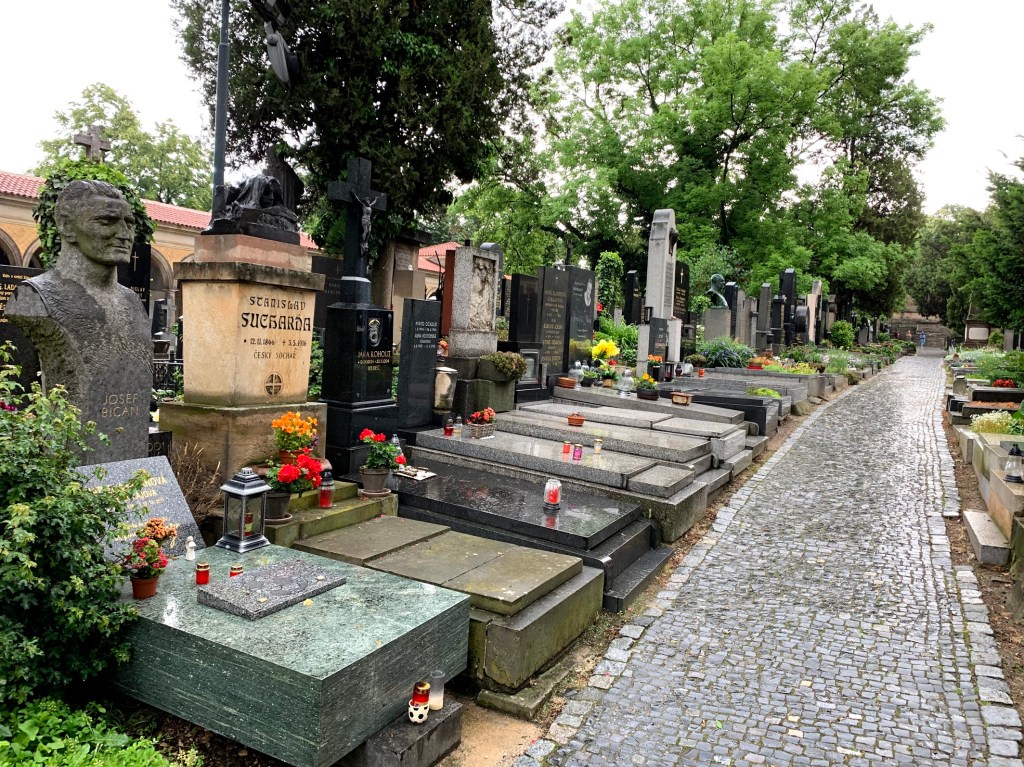
graveyard. Three sides of the graveyard consisted of gated family graves. We were
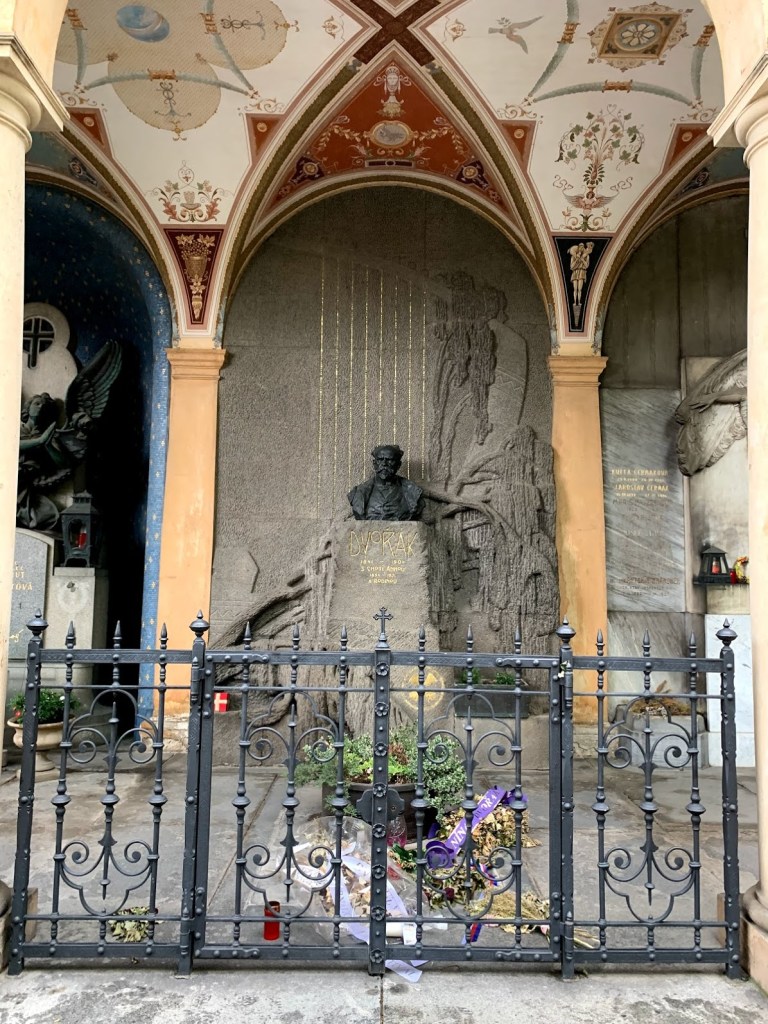
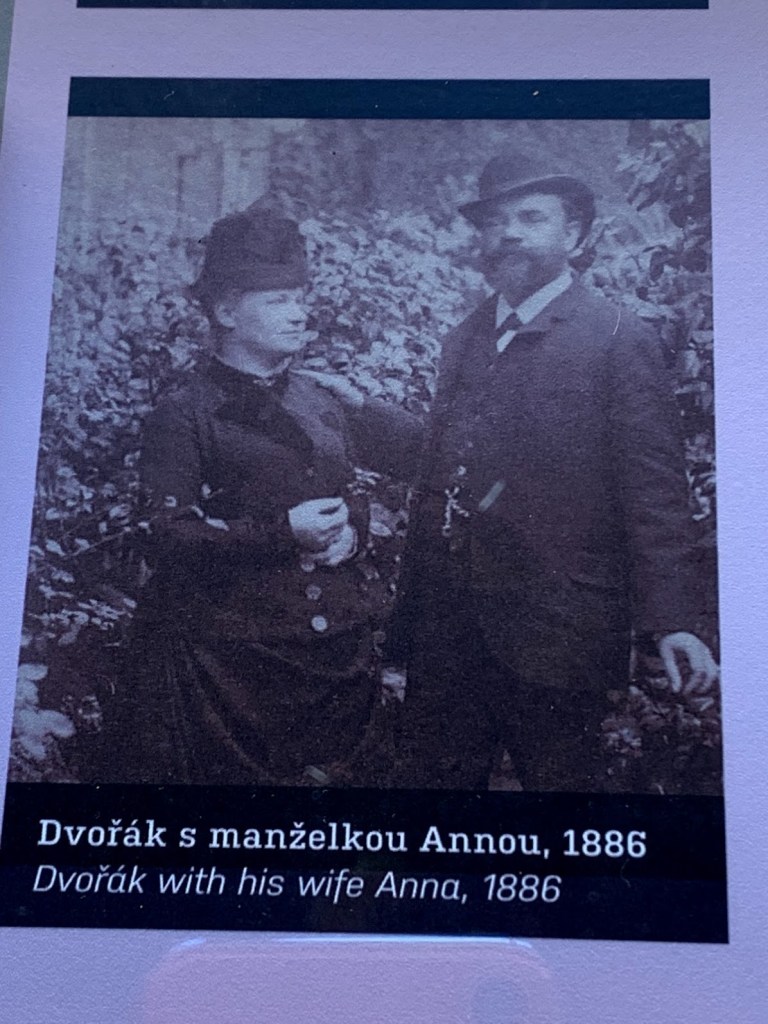
looking for one in particular, that of Antonin Dvorak and his wife, Anna. Dvorak
was a celebrated Czech composer who also spent time in America. Many of his
most famous orchestral works are based on Slavic and American folk songs
including the “Going Home” movement from the New World Symphony and his
Hungarian Dances.
St. Peter and Paul Church
Colorful Door
Graveyard gate
Beautiful graves
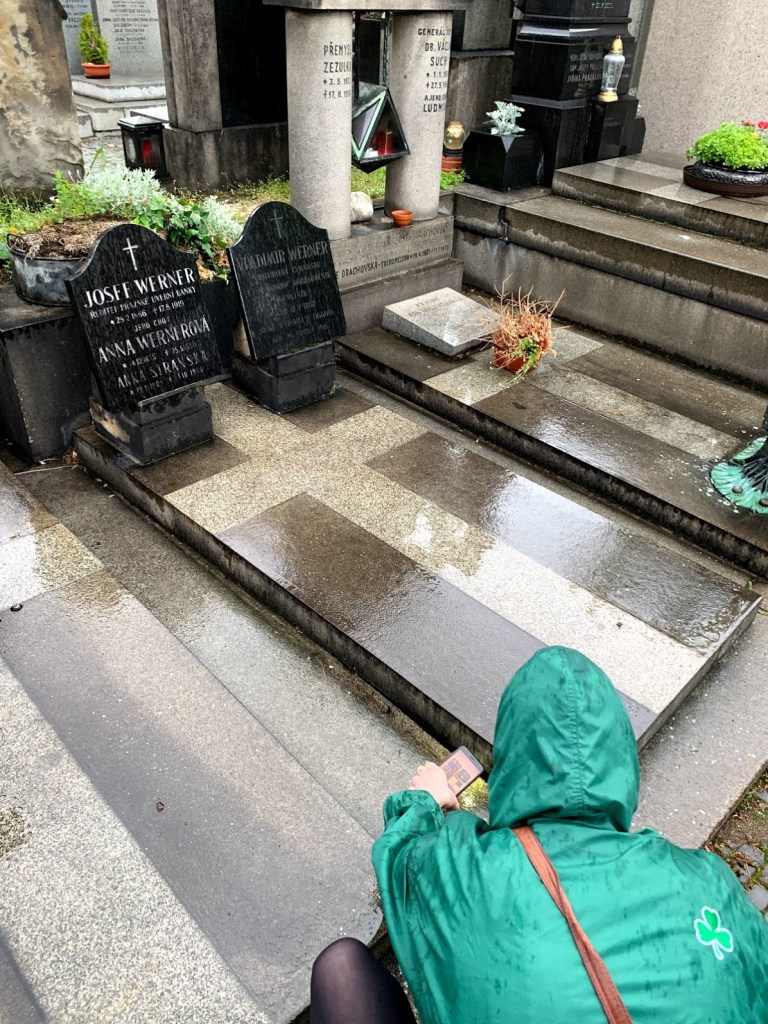
The grave of composer Antonin Dvorak and his wife Annou (Anne)Turah found that one of the graves was slightly askew and used her phone light to look inside.We joked that the vampire had barely made it back before sunrise and didn’t quite close his coffin quick enough!
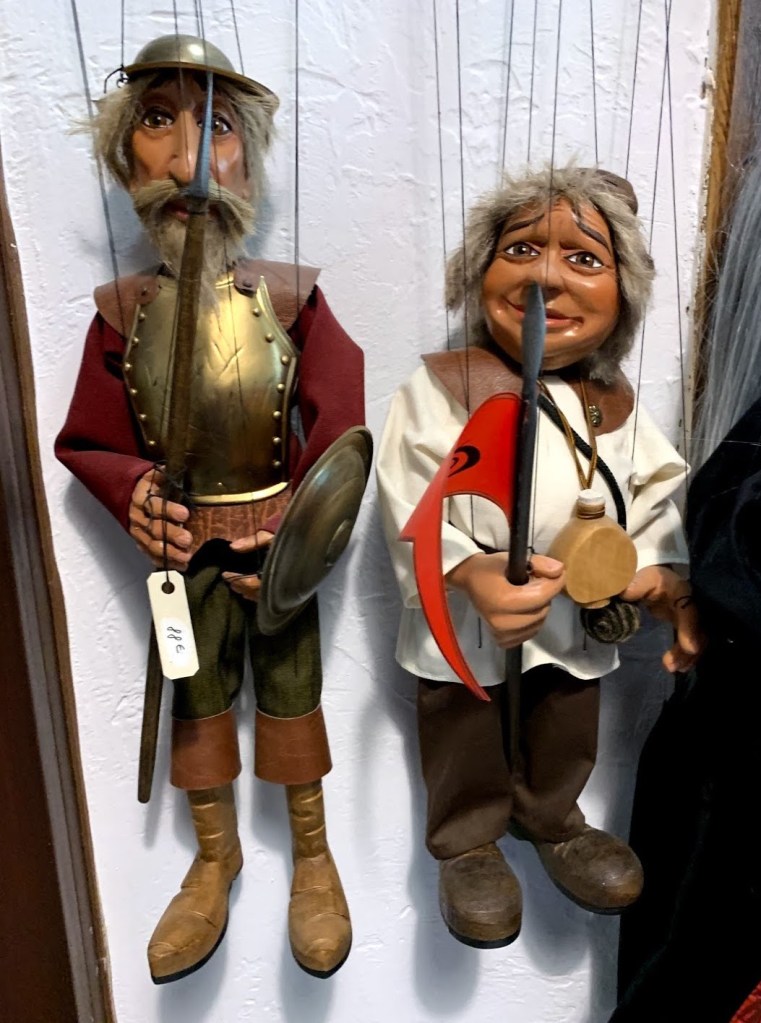
Prague is known for it’s marionette makers: Don Quixote and Sancho Panza came home with us!
Seamus in particular has taken a fancy to the marionettes.
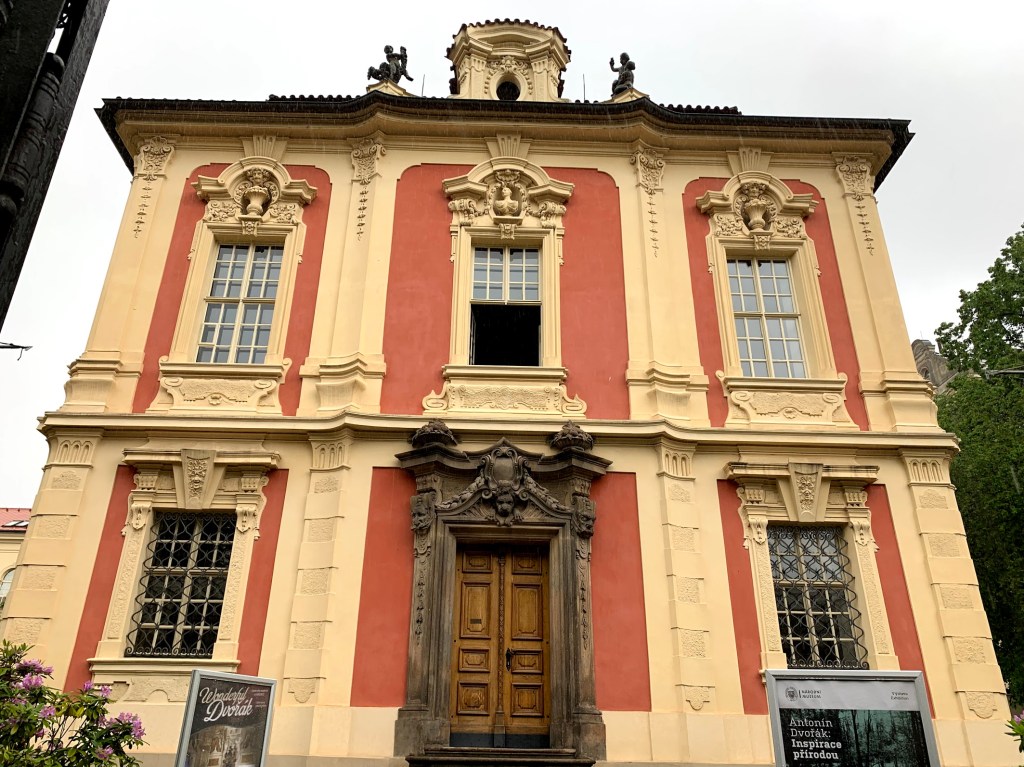
Liam and I both love Dvorak’s music and so when we left the
graveyard we walked about 10 minutes to the Dvorak Museum located in one of his
homes in Prague. The museum was well organized and it displayed many of his
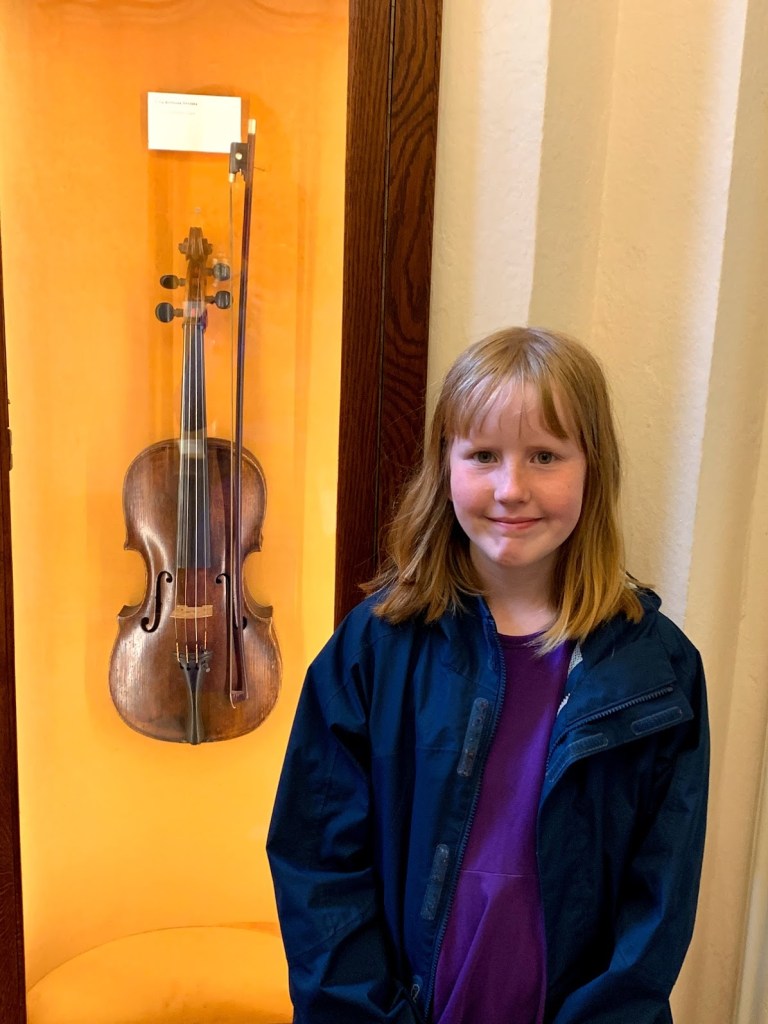
music compositions and personal items. Faywen loved the fact that Dvorak played
the viola!
Dvorak Museum
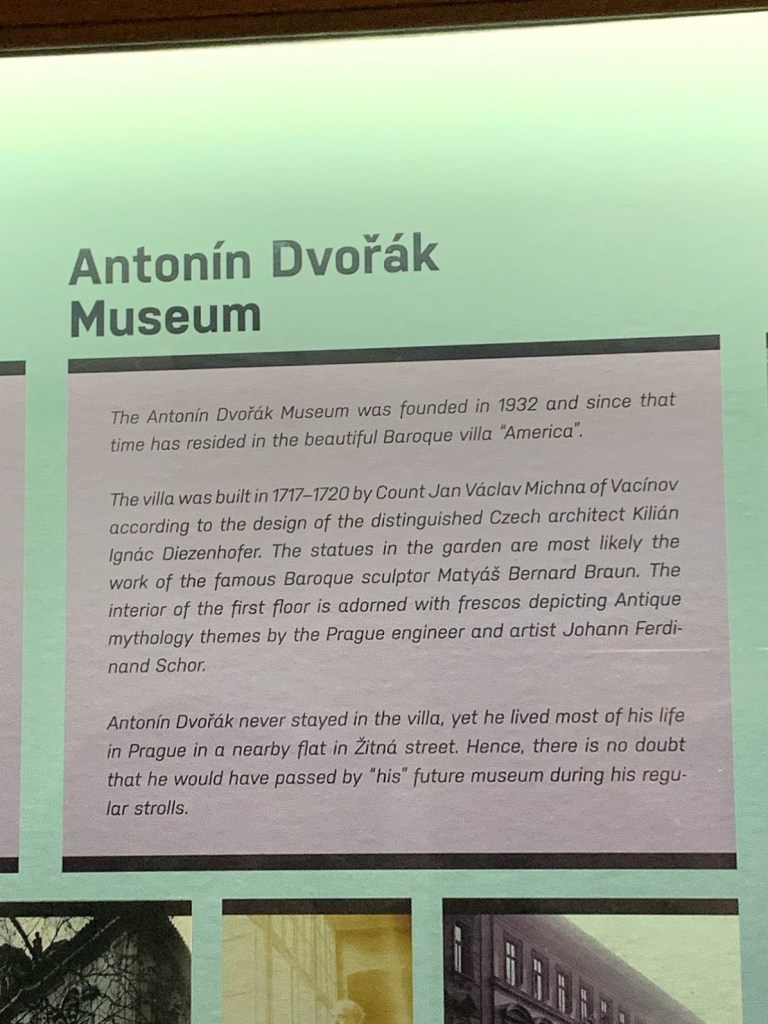
Info about the museum
He was very devoted to his wife and children. They had a long and happy marriage.
Faywen with Dvorak’s viola
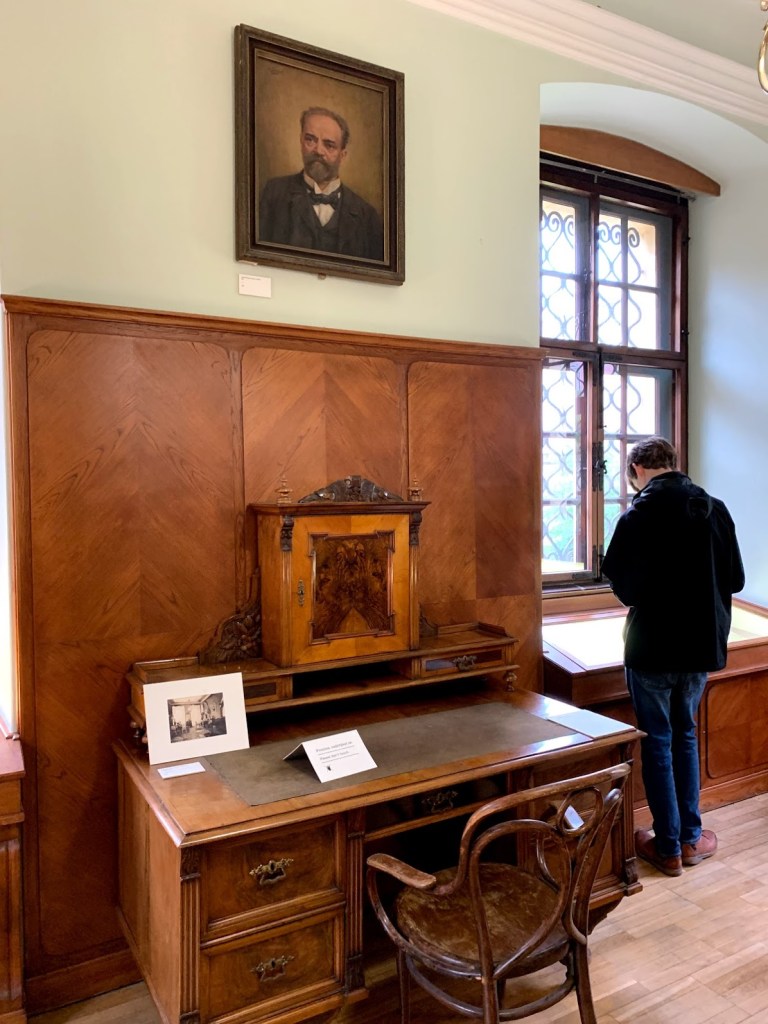
Liam reading about Dvorak’s desk where he composed many of his famous works.
The skies opened while we were in the museum and the rain
continued as we walked along the streets. We popped into a little mall and
purchased 3 more umbrellas. It was lunchtime and we were near our apartment so
we went home to dry off and eat.
The rain lessened a bit so we headed out once again this
time towards Wenceslas Square, the Prague Opera House, and eventually into the
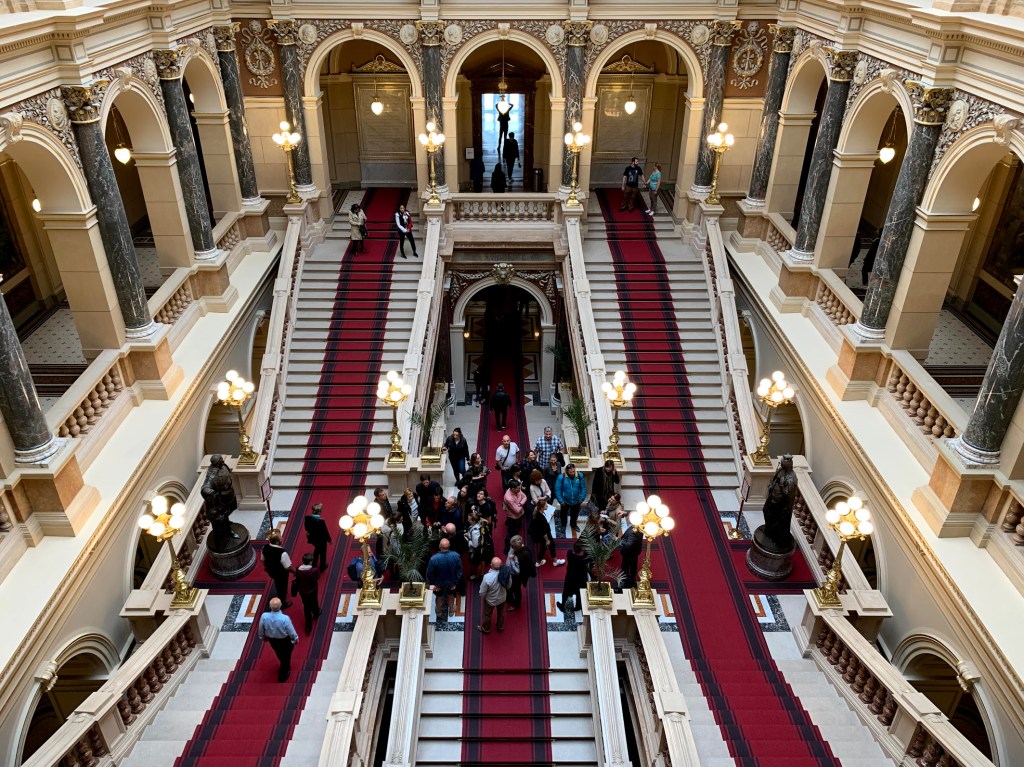
Czech National Museum. The quadruple
marble staircase was a feast for the eyes! The 20th century Czechoslovakia
exhibit was very interesting. Robert and I particularly found the old Soviet
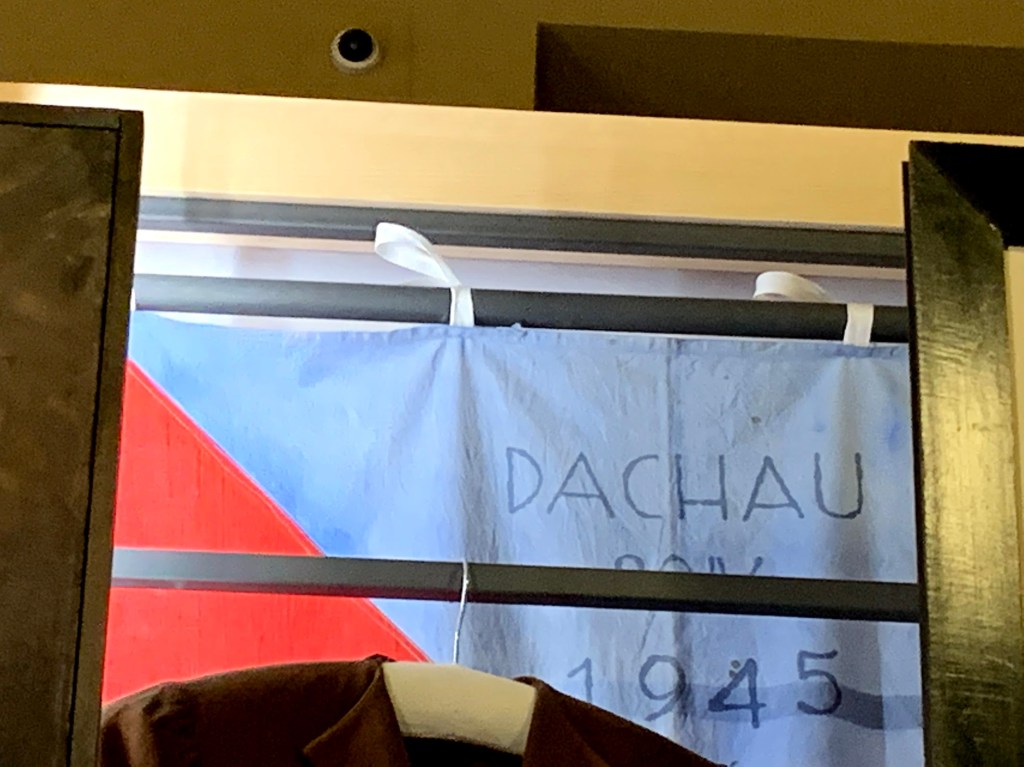
propaganda and photos from the 1970’s-80’s memorable. We found a Czech flag
made by prisoners at the Dachau Concentration Camp. It had been placed on the shoulders
of the first US soldier to enter the camp on liberation day. We had read about
this story while at Dachau last month.
Amazing marble staircases in the Czech National Museum
Flag
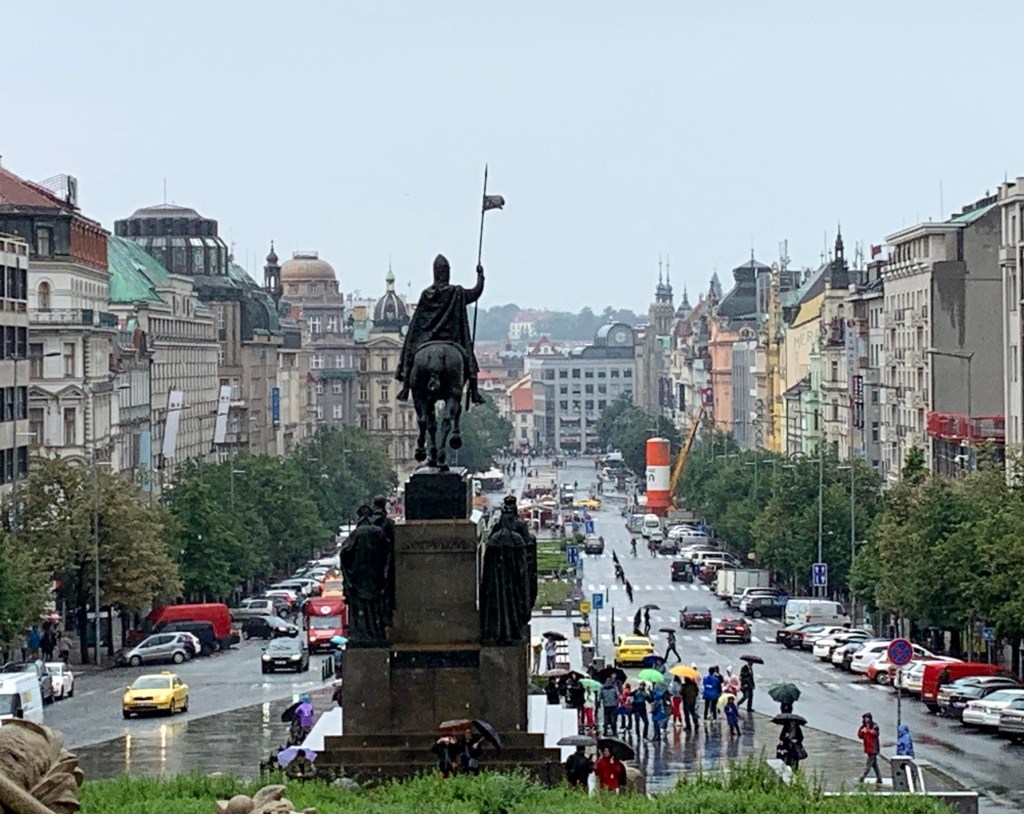
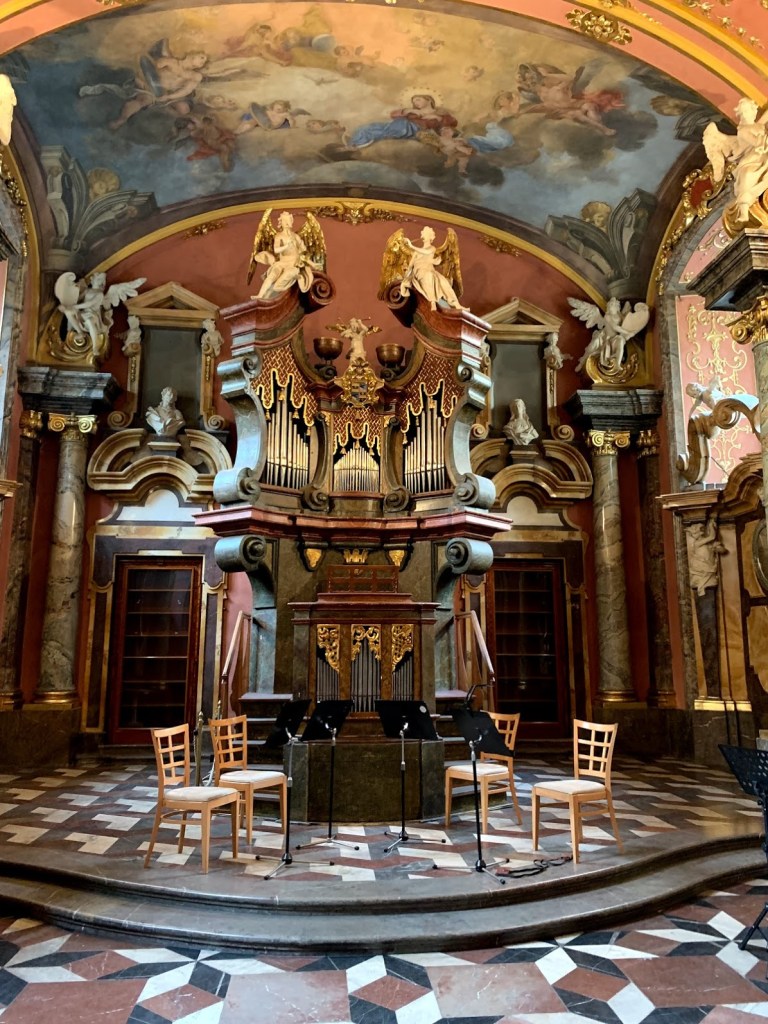
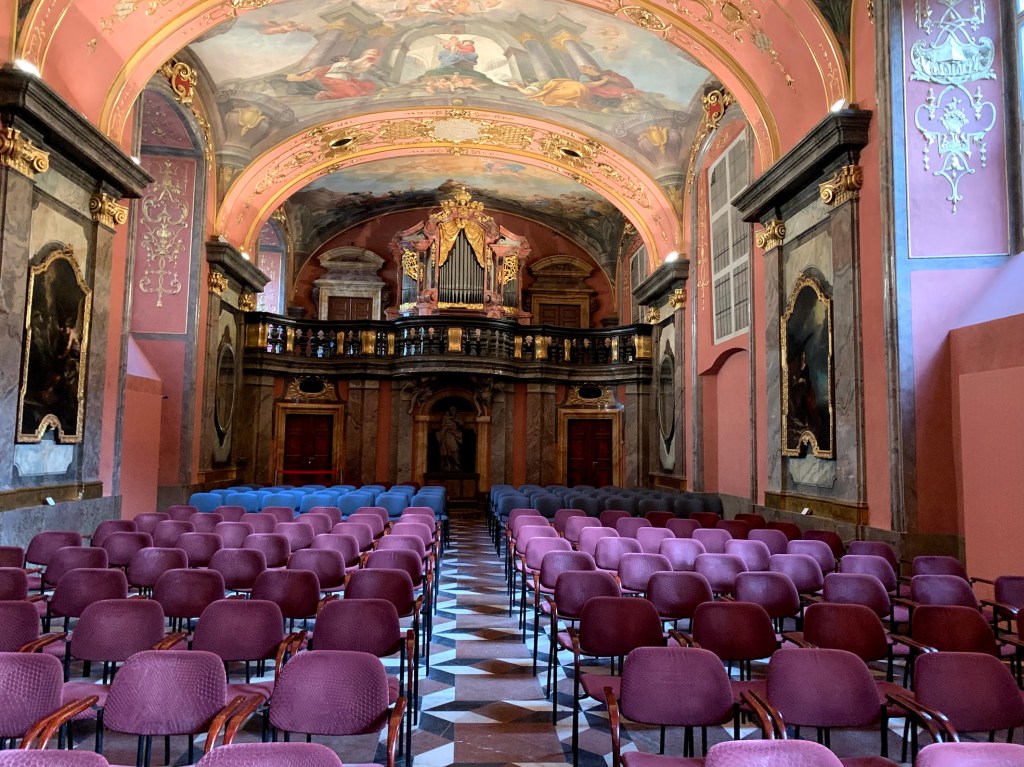
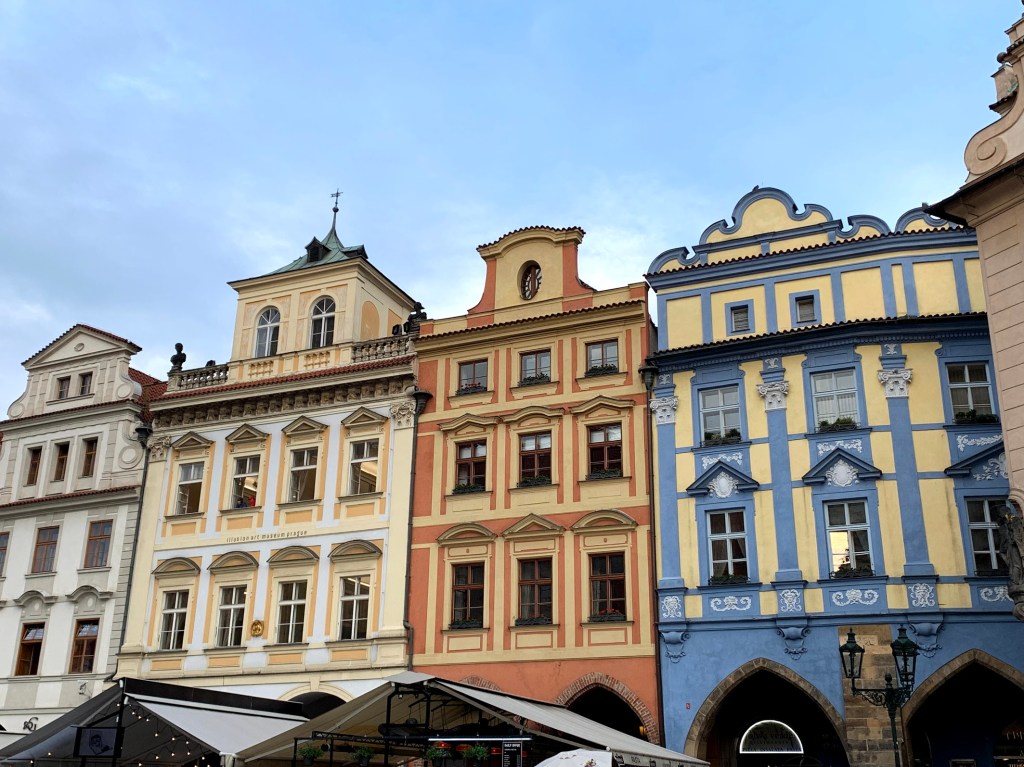
In front of the museum was the Wenceslas square and the main shopping thoroughfare for Prague. It reminded me a lot of O’Connell Street in Dublin. A few blocks and we were once again in the heart of Old Town Prague. The architecture of the 17-18th century painted buildings made the Old Town Square look like it had popped out of a European storybook! In one of these buildings we attended a musical concert. Members of the Dvorak Symphony Orchestra gave the concert. The quintet played Bizet, 3 Dvorak selections, Smetana, and the entire “Seasons” by Vivaldi.
Wenceslas Square: This photo was taken from the steps of the Czech National MuseumInside the Marble Hall: This ornate 17th century hall is only open to the public for concerts. Mozart held concerts in this hall!The Marble Hall is known for it’s decor and two organs, one in the back and the front of the hall.Storybook buildings in Old Town Prague
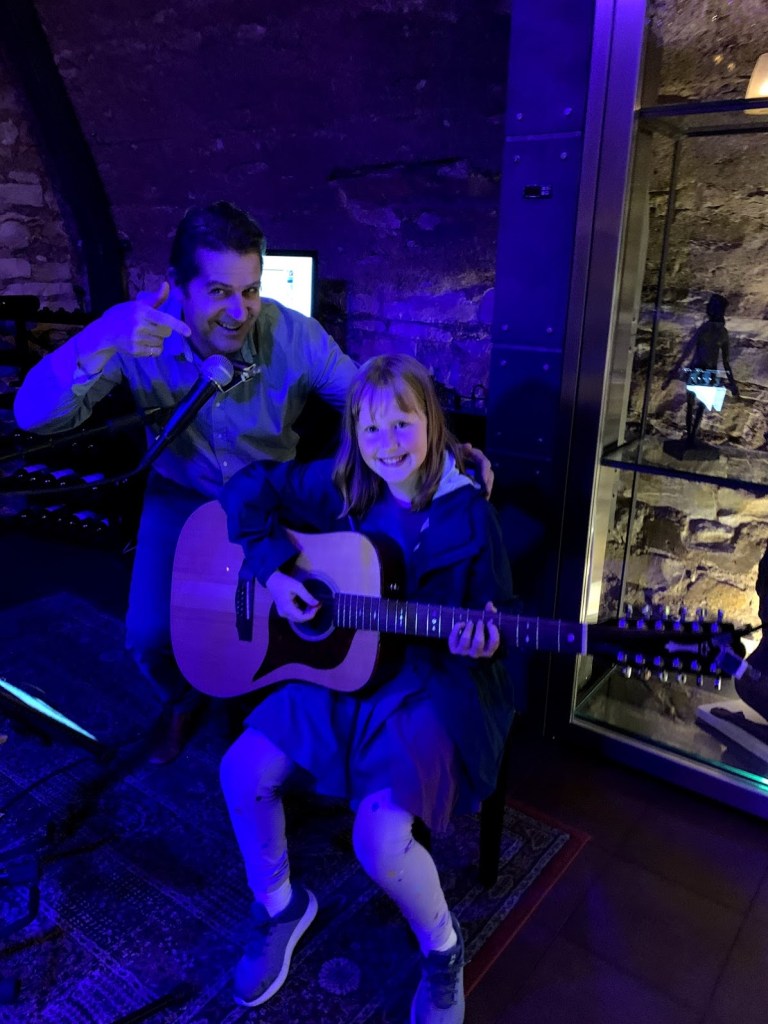
We ate dinner in an old 12th century cellar. The White Horse had delicious food and live
music. Right at the end of our meal, Faywen went over and asked the musician to
play “Country Roads”. He put in a pre-recorded track and everyone in the
restaurant sang along. It was entertaining to be singing this song in an
ancient cellar turned fancy restaurant in Prague! We’ve discovered that the song
is very popular throughout Europe. Faywen and I went over to say thank you and
give him a tip. Ariminio was very kind and also visually impaired. We
immediately bonded once Faywen mentioned I was legally blind. He has tunnel
vision and makes his living as a musician. I took a cute photo of Faywen holding
Mr. Ariminio’s guitar.
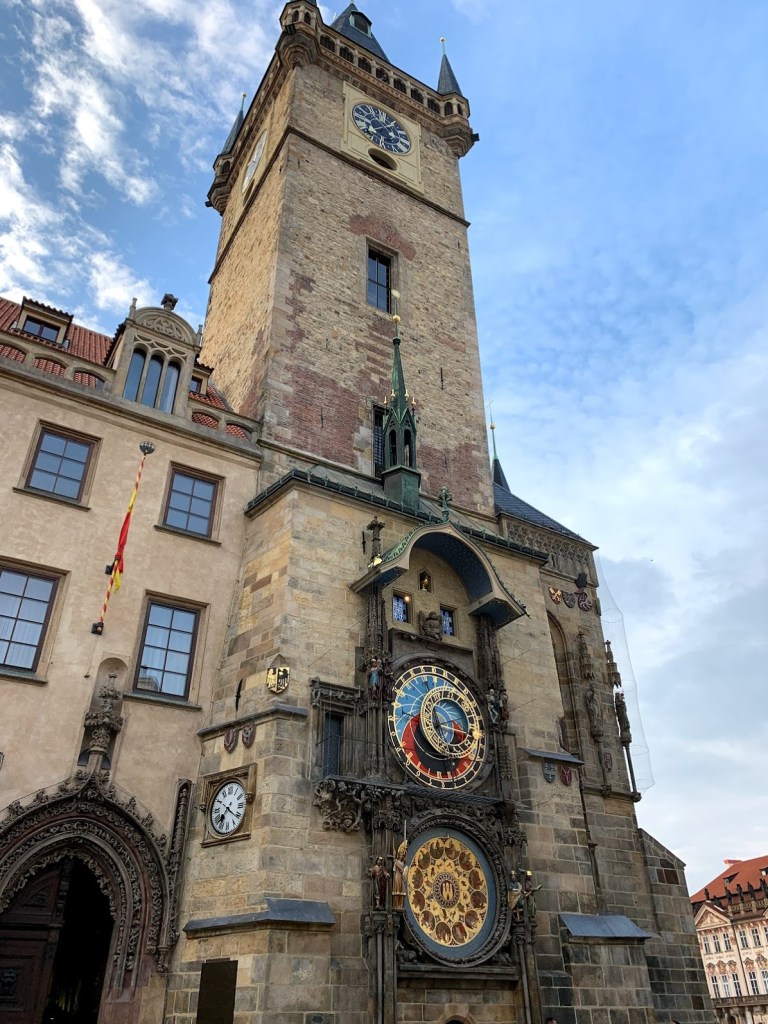
Just after we left the restaurant the 16th
century Astronomical Clock chimed. It is the oldest clock of it’s kind still in
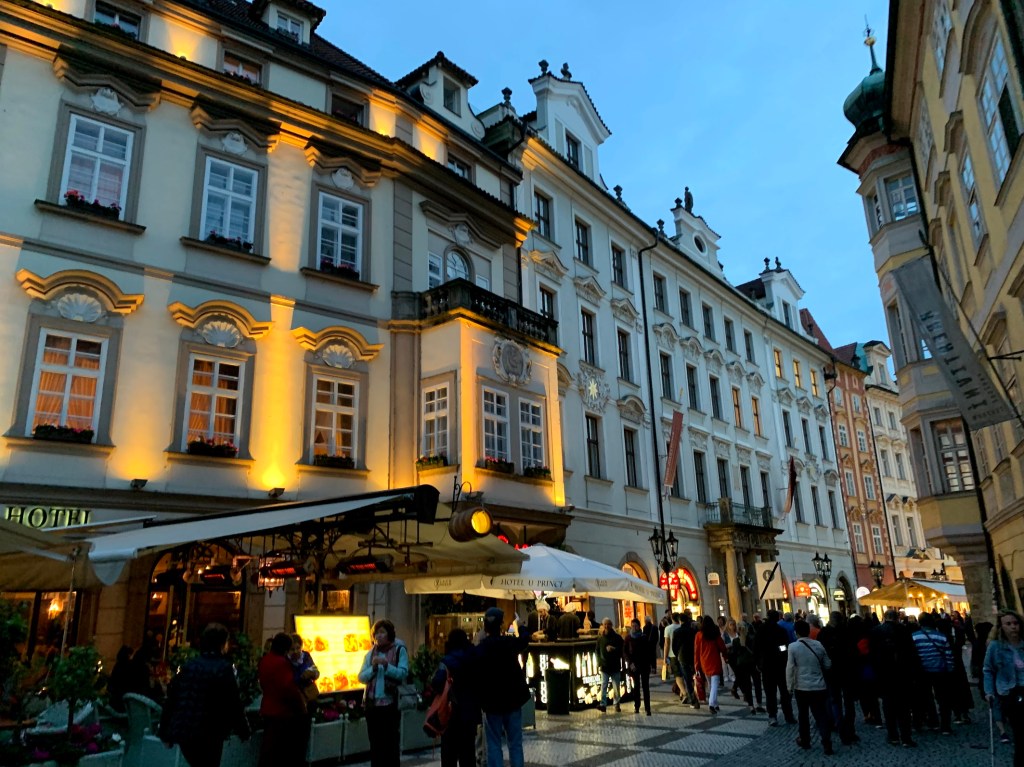
operation. It chimed 21 times for the 21st hour of the day. We
walked home as dusk settled in and the lights turned on in the
Mr. Ariminio and FaywenAstronomical ClockCentral Prague at dusk


 Camellia's Travel Blog