All the World’s a Stage…

Stratford upon Avon is truly one of the oldest towns in England. Many of the town’s central buildings are at least 400+ years old! We walked from our B&B into the town centre. This is where the birthplace of William Shakespeare is located. Faywen was the most excited of us all! She LOVES Shakespeare and today was a very momentous occasion for her.
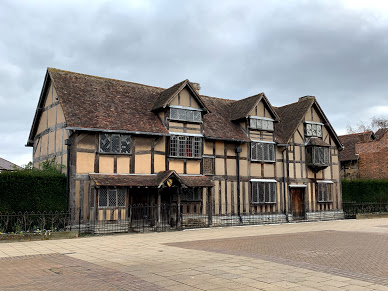
Birthplace of William Shakespeare
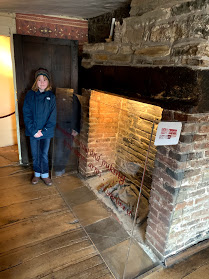
It was common practice for women to give birth in their private bedrooms in front of the fire. This was most likely the spot where Shakespeare was born!

His birthplace isn’t much to look at, but it is of great importance in the world of English literature. William Shakespeare was born on 23 April 1564 and died the same date in 1616. He was the third child and eldest son of a wealthy glove maker John Shakespeare and his wife Mary Arden Shakespeare. William married Anne Hathaway in 1582.They had three children Susanna, and twins Hammet and Judith. Hammet died at age 11, but the two daughters lived into adulthood and married. He had 4 grandchildren, but only one lived to be an adult, Elizabeth. Sadly she had no children and the only descendants of the Shakespeare’s are through William’s sister.
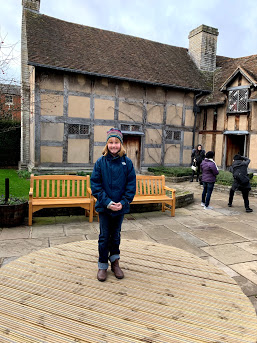
There were three actors at the Birth-house quoting Shakespeare’s plays: Faywen presented the speech “All the World’s a stage…” from As You Like It to visitors. The actors were quite impressed with her ability to memorize Shakespeare at such a young age.
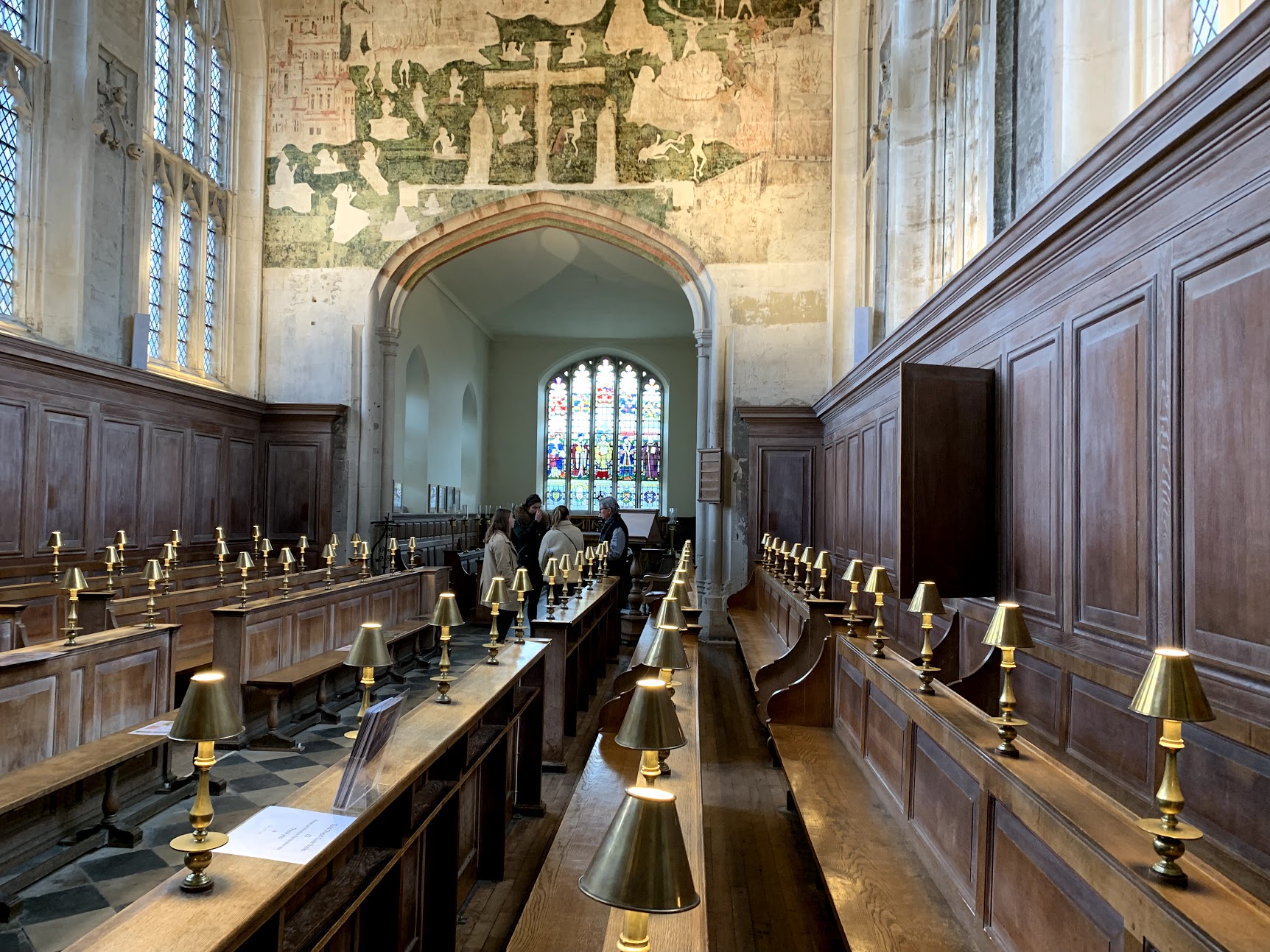
Guild Chapel: front section built in 1483, back section built in 1246

He attended the Guild Chapel Boys School for free from age 7-14. It was primarily a Latin school where pupils attended 5 ½ days a week for 11 hours a day with only a 2 hour lunch. It wasn’t all hard learning. They did enjoy having theatrical groups perform and often the students put on plays for the community. This is the first theatrical influence on William and would serve to make a lasting impression on him for the rest of his life.
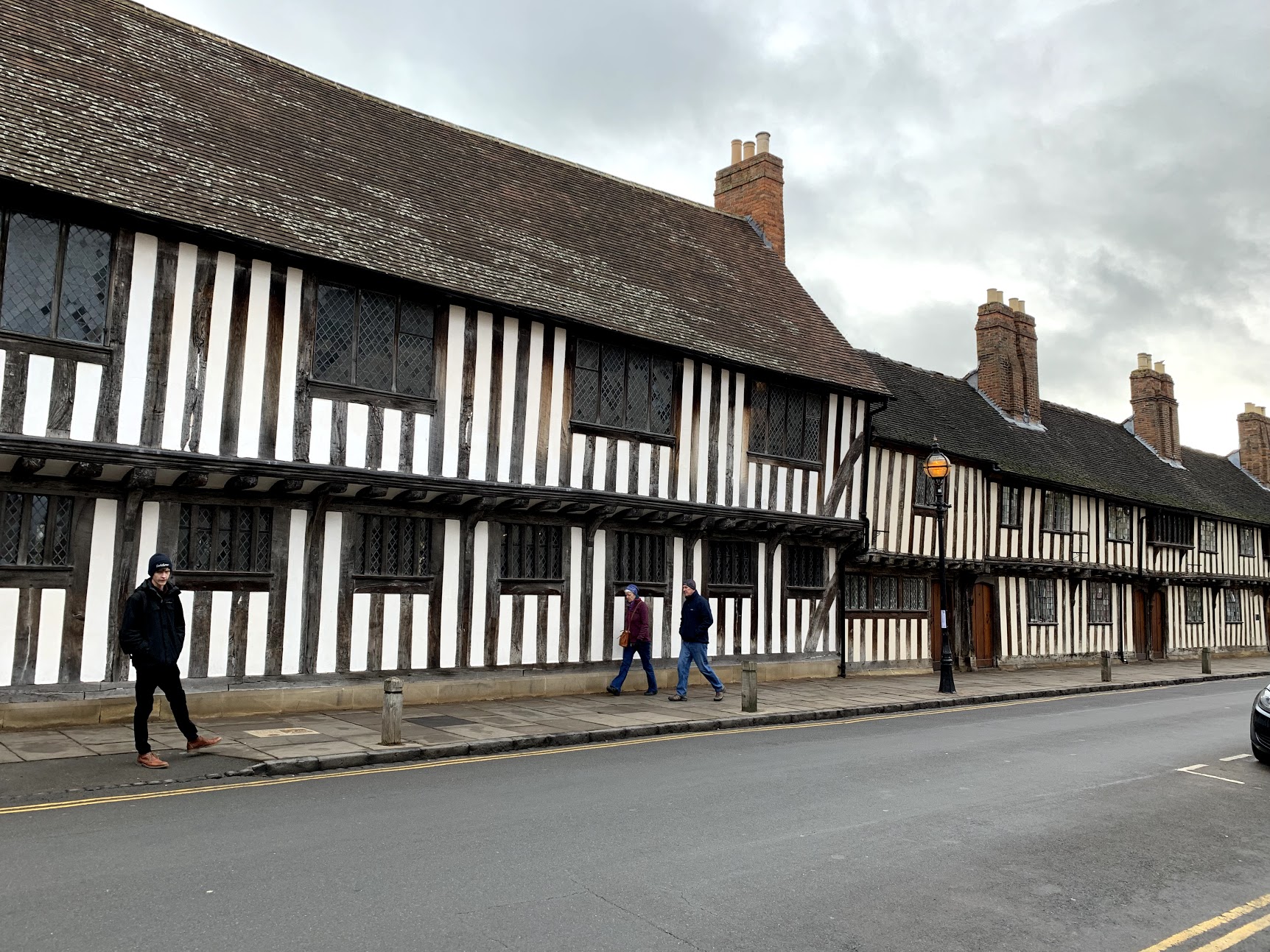
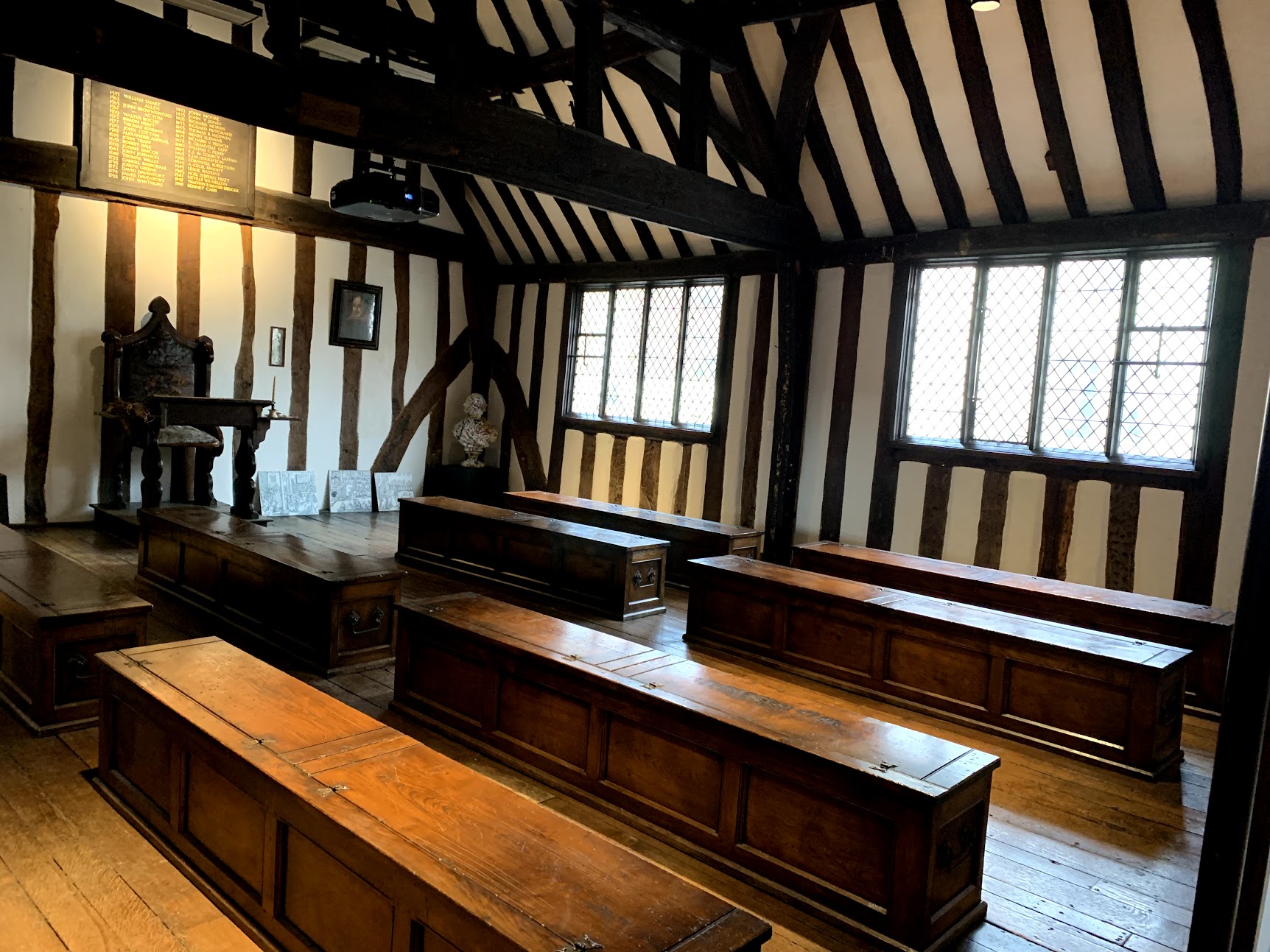
Guild Hall and Boys School
Shakespeare’s old classroom in the Guild Hall Boys School

He lived in his parent’s house with Anne until become financially stable. It was in 1597 he purchased, a few blocks down the street, a well-known manner house owned by the Clopton family. It was called New House. Anne and his two daughters lived most of their lives in New House. Shakespeare traveled to London quite a lot in order to oversee play productions, He wanted a nice place for his wife and children to reside while he was gone. Shakespeare is said to have loved New House and probably wrote most of his plays in his small office. Sadly, the home no longer exists having been torn down in the early 1700’s. A memorial garden is there today.

Shakespeare was well versed in the Scriptures as well as in leather working, especially glove making since it was his father’s profession. He references the Scriptures and glove making repeatedly in many of his plays. He also believed in the sanctity of marriage, which is evident in his plays too.
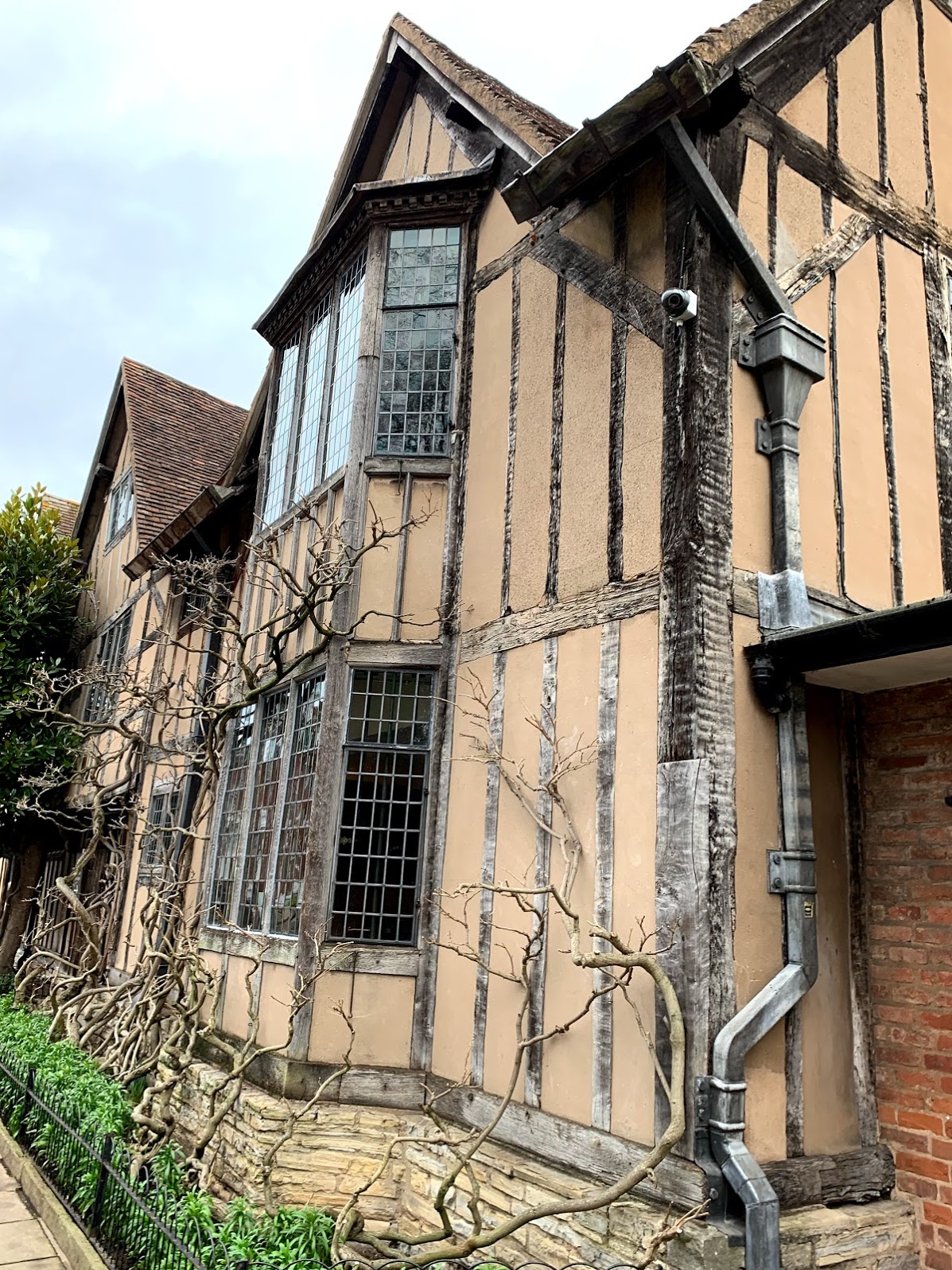
Hall House

Susanna married Physician John Hall, whom Shakespeare approved of and grew to value as a son. Many of the estates, manuscripts, and artifacts we have today are because of Susanna and John Hall. Hall House was purchased for the newlyweds by William and they lived there for several years. John practiced medicine from the home. However all the medicine in the world couldn’t help his father-in-law. Shakespeare died of the New Fever (Typhus) in 1616.
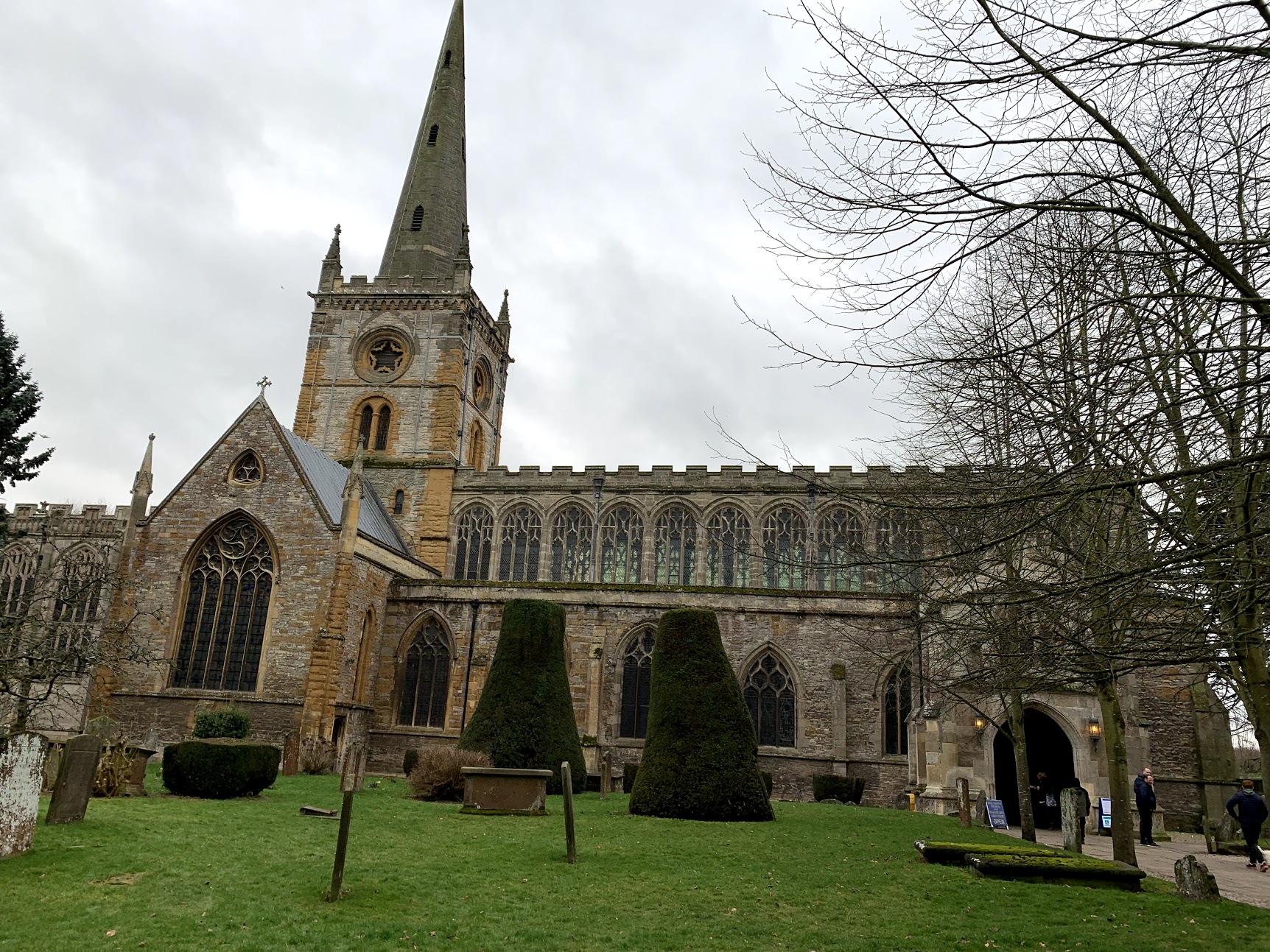
Holy Trinity Church

He left the world a treasure trove of plays and poems, of which many phrases have become part of the English speaking world: Break the ice, All’s well that ends well, It’s Greek to me, Brave new world, Jealousy is a green-eyed monster, Melted into thin air and Not slept one wink…to name a few. He wrote 37 plays, 154 sonnets, and 4 narrative poems.
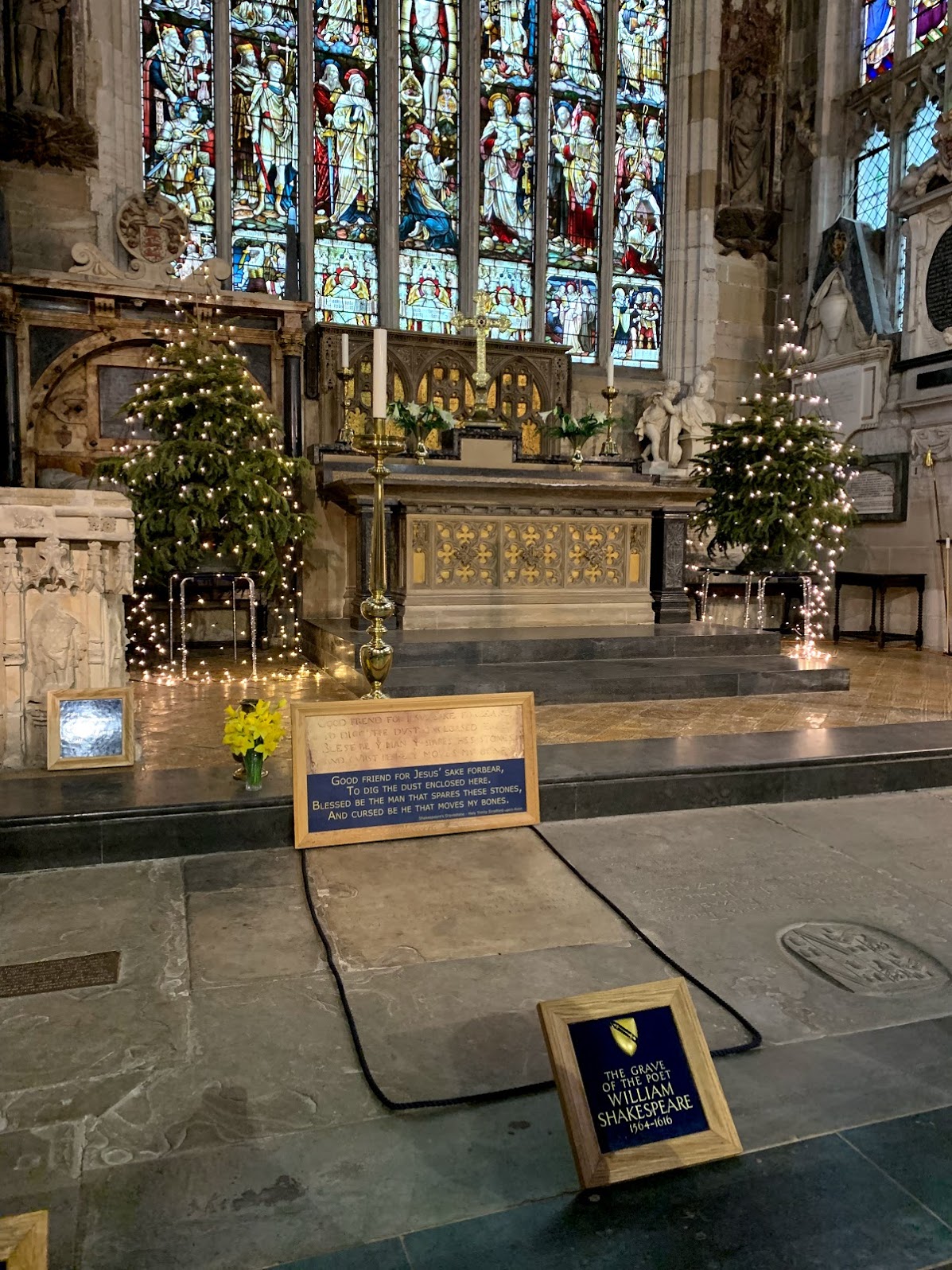
Grave of William Shakespeare in Holy Trinity Church, Stratford-upon-Avon, England

We finished our Shakespeare pilgrimage at Holy Trinity Church where he is buried along with his wife Anne. They are buried in front of the Altar. After his death his wife and daughters had a statue made to sit in the church. It is said to be the closest in resemblance to what William Shakespeare really looked like in life.
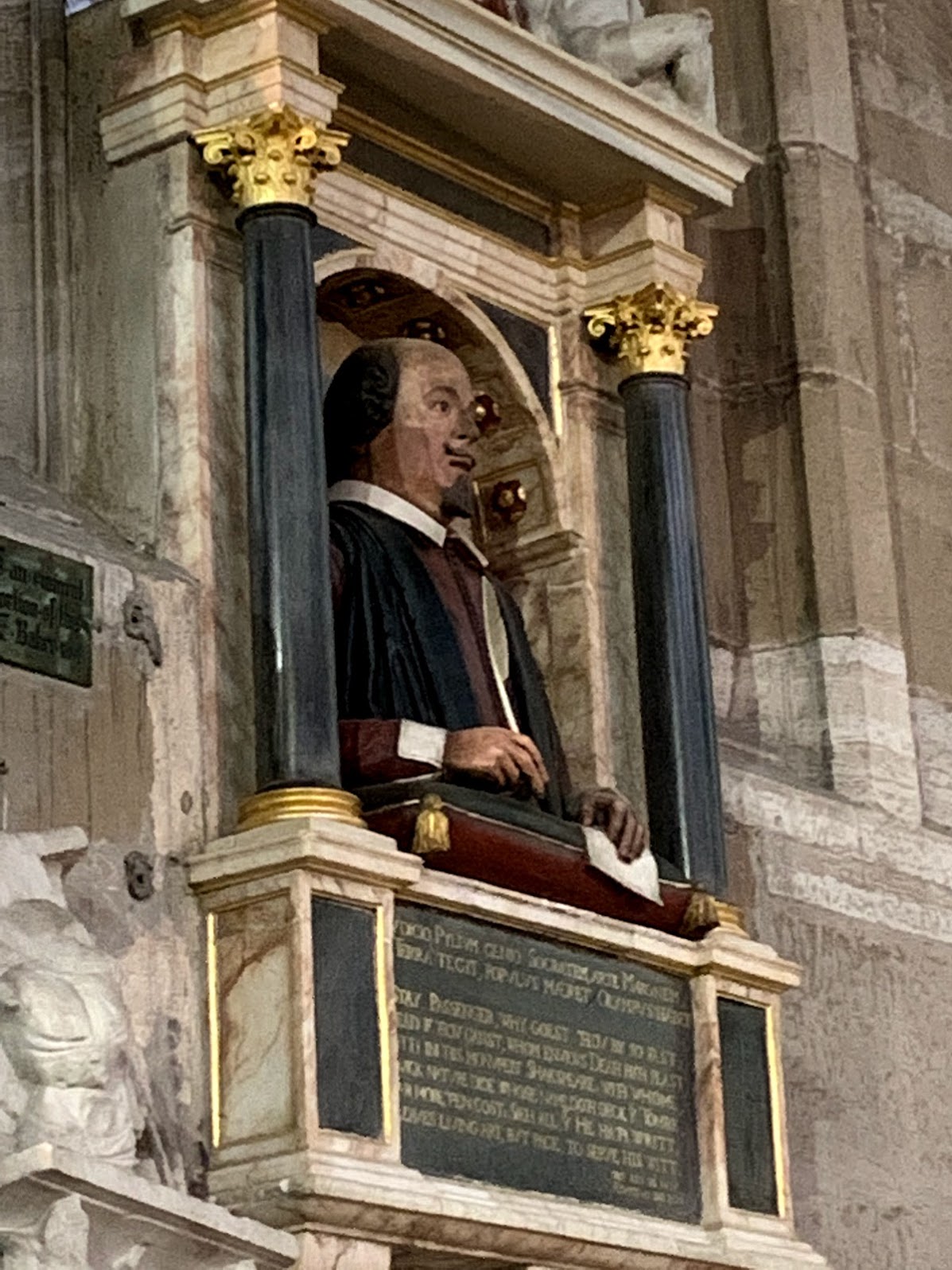
statue in Holy Trinity Church
Waiting for our tea and cakes to be served: We are sitting in a local Stratford-upon-Avon tearoom built in 1610.

Living Literature

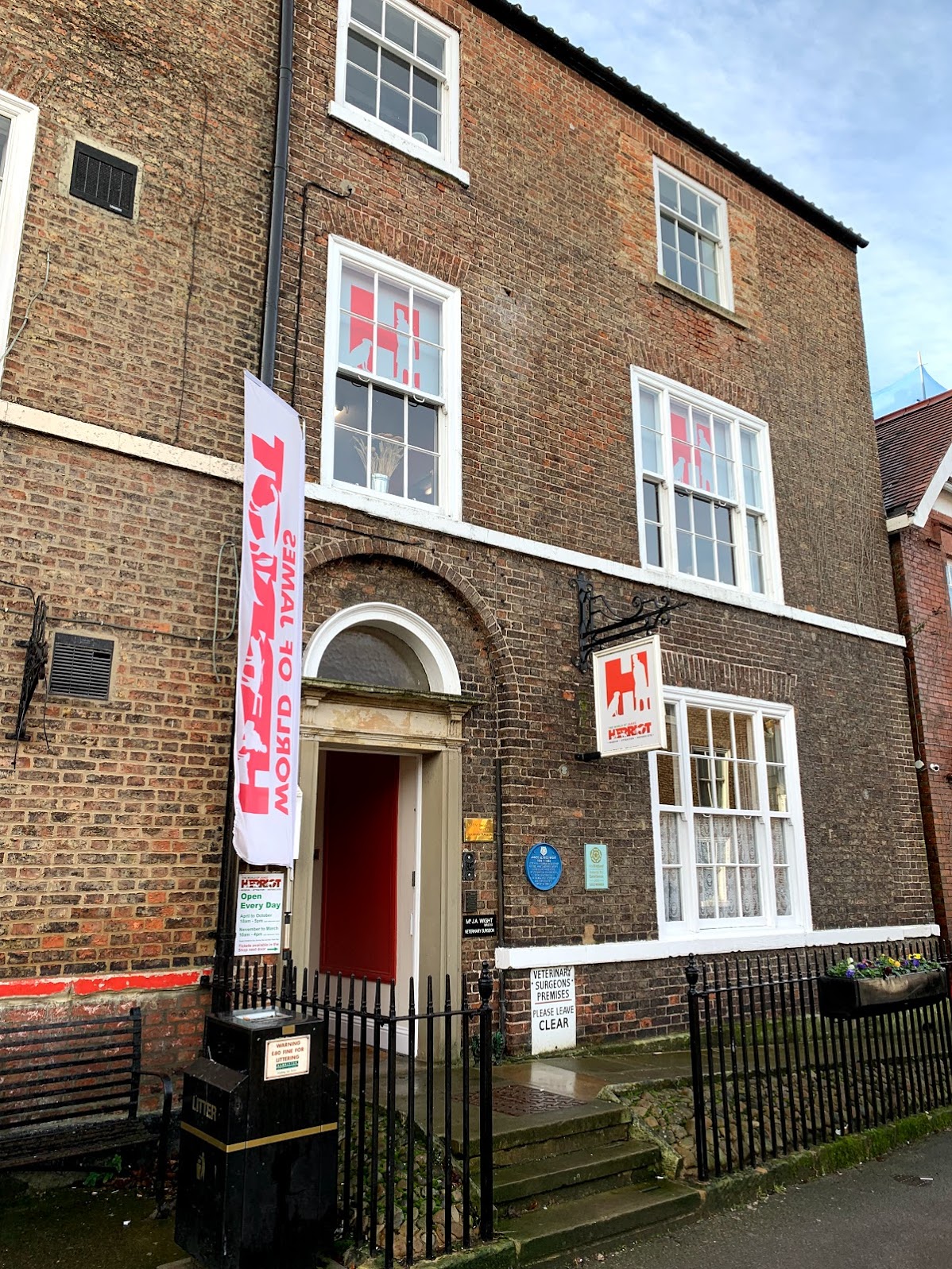
The sun shone brightly through the windows of the 1840’s Yorkshire brick cottage as we said goodbye to your hosts Kay and Andrew at the Oower House B&B. Driving a bit north again we came to the village of Thirsk. Why you might ask would we go to such an obscure little Yorkshire village? Well, perhaps the following book title might help solve the mystery: All Creatures Great and Small. Thirsk is the real Darrowby mentioned in the famous books by James Herriot. Actually Herriot is the pen name for the real veterinary surgeon Alfred Wight.

Kirkgate House, Thirsk, Yorkshire
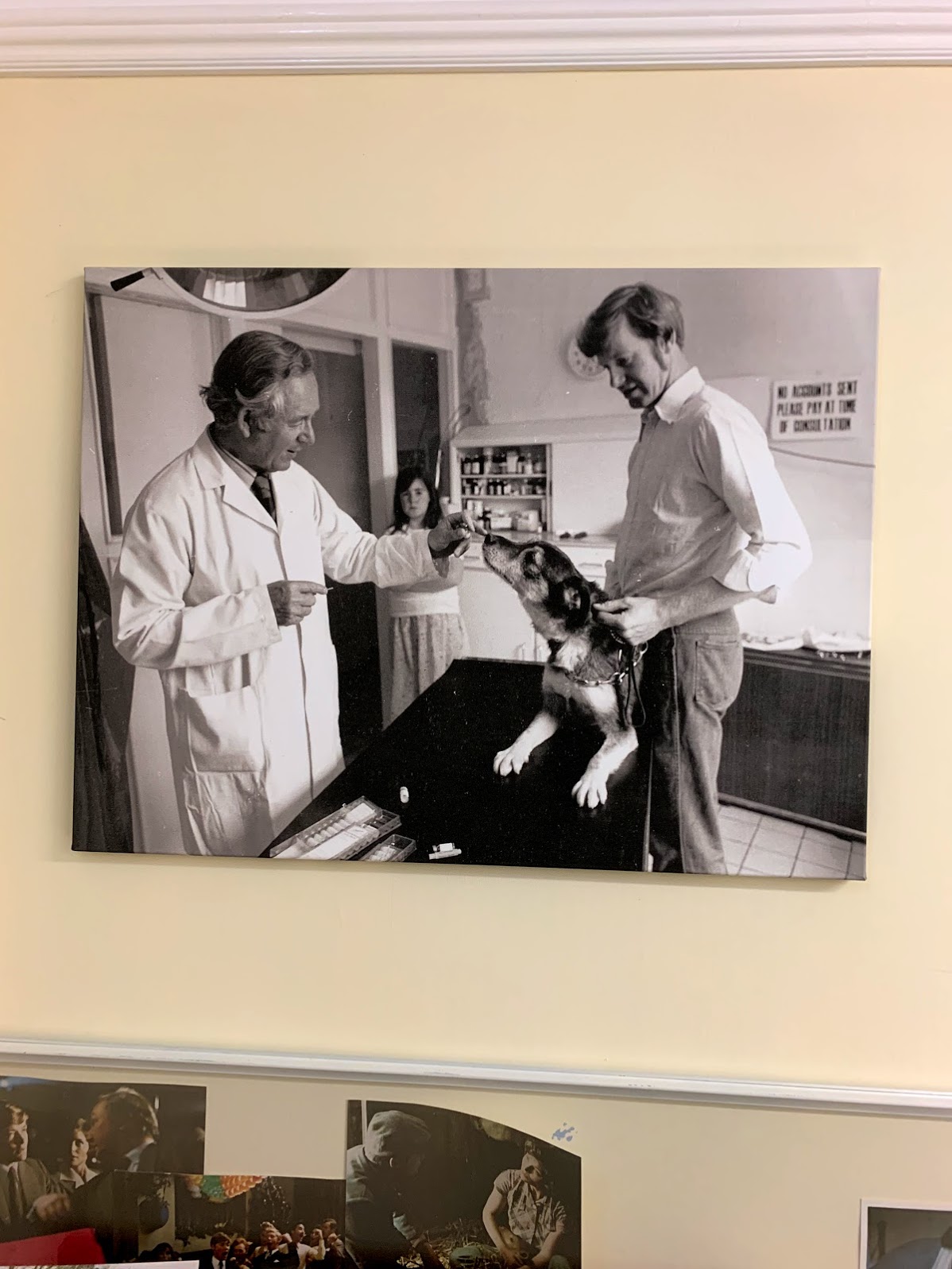
Rare photo of Alfred Wight in his veterinary surgery

Wight was born in 1916, studied animal veterinary medicine in Edinburgh, and settled in practice with Donald Sinclair (Siegfried Farnon in the books) in Thirsk in the late 1930’s. Wight married a local girl Joan (Helen in the books) and had two children. It wasn’t until he was in his 50’s that Joan suggested to Alfred that he should write down stories about veterinary life in the rural Yorkshire Dales. His first book was a success. Since then Wight has written several more books and children’s books. Though a millionaire, Wight remained a humble rural vet until his retirement. The local farmers in the Yorkshire Dales continued to value Wight’s abilities to understand them and their way of life.
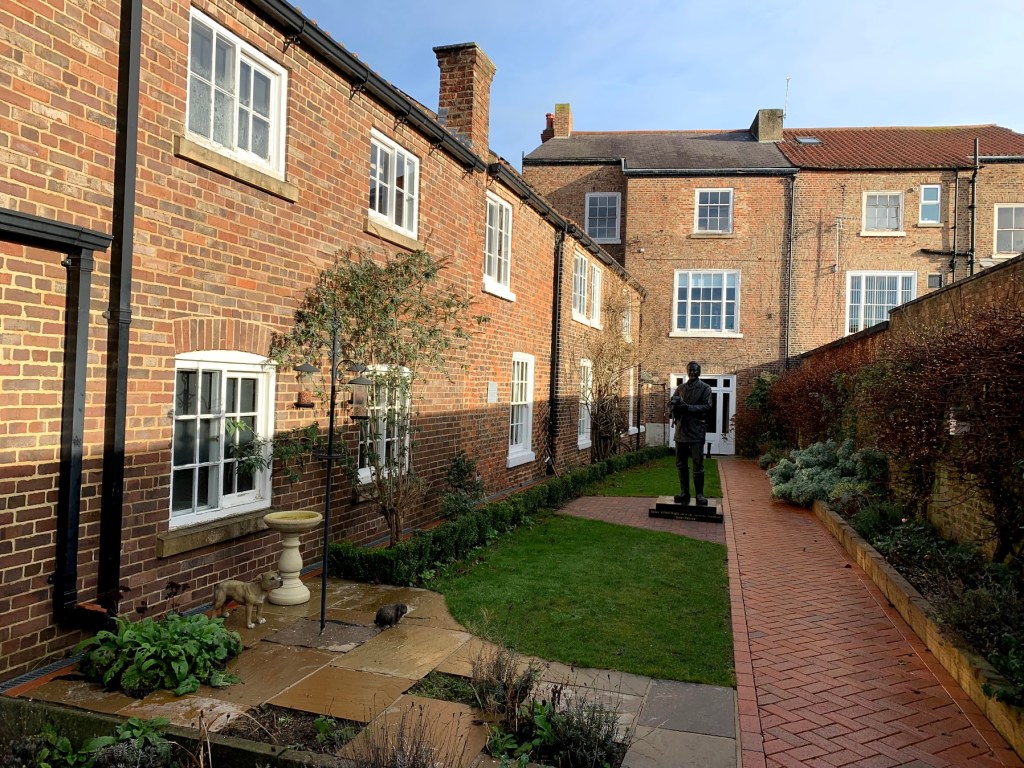
Gardens at Kirkgate House

For those who love the books, the characters of Siegfried Farnon and his younger brother Tristan Farnon are based directly on Donald and Brian Sinclair. Donald owned the veterinary surgery in Thirsk and had posted in the newspaper an advertisement for an assistant. Brian also became a vet and the three men remained lifelong friends.

Robert has read the first book in the series, but for me in particular it was lovely to see Kirkgate House (Skeldale House in the books) come alive! I have read all of Herriot’s (Wight’s) books and the All Creatures Great and Small series remains my favorite literary works. I even have seen all of the BBC television shows based on the books. They were filmed back in the late 1980’s to early 1990’s.

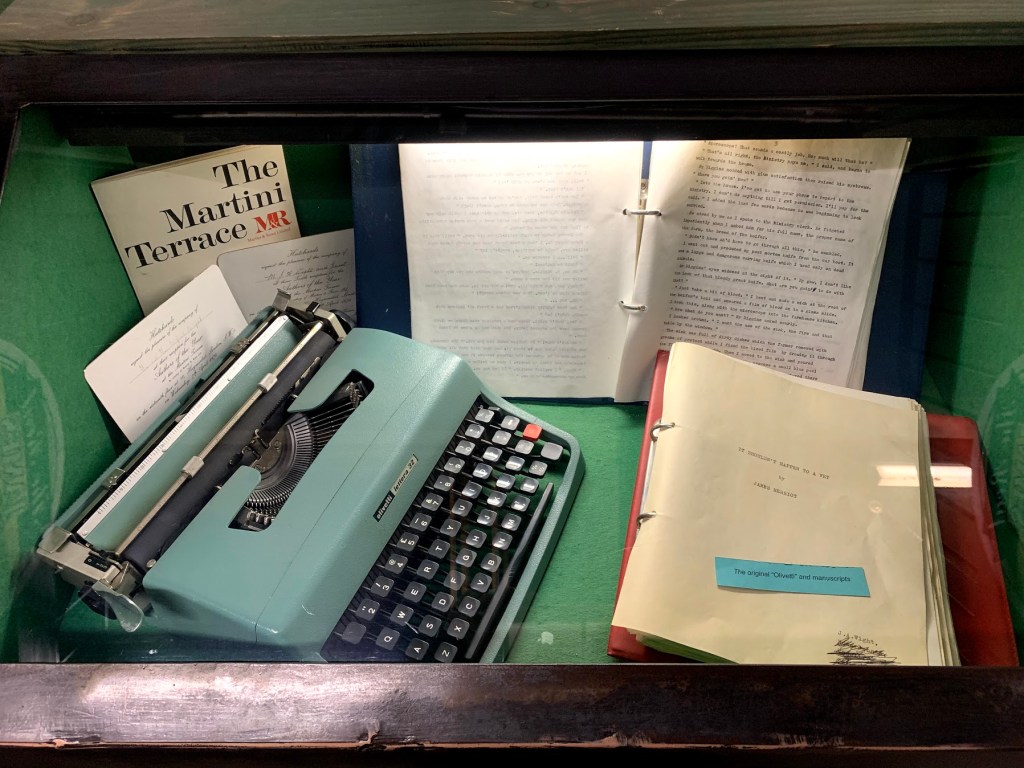
Alfred Wight’s (pen name James Herriot) typewriter

The home not only featured items from Alfred, Donald, and Brian’s time there, but also was a museum about rural veterinary techniques and developments over the past century up until modern times. It was fascinating learning about the development of veterinary studies and practice.
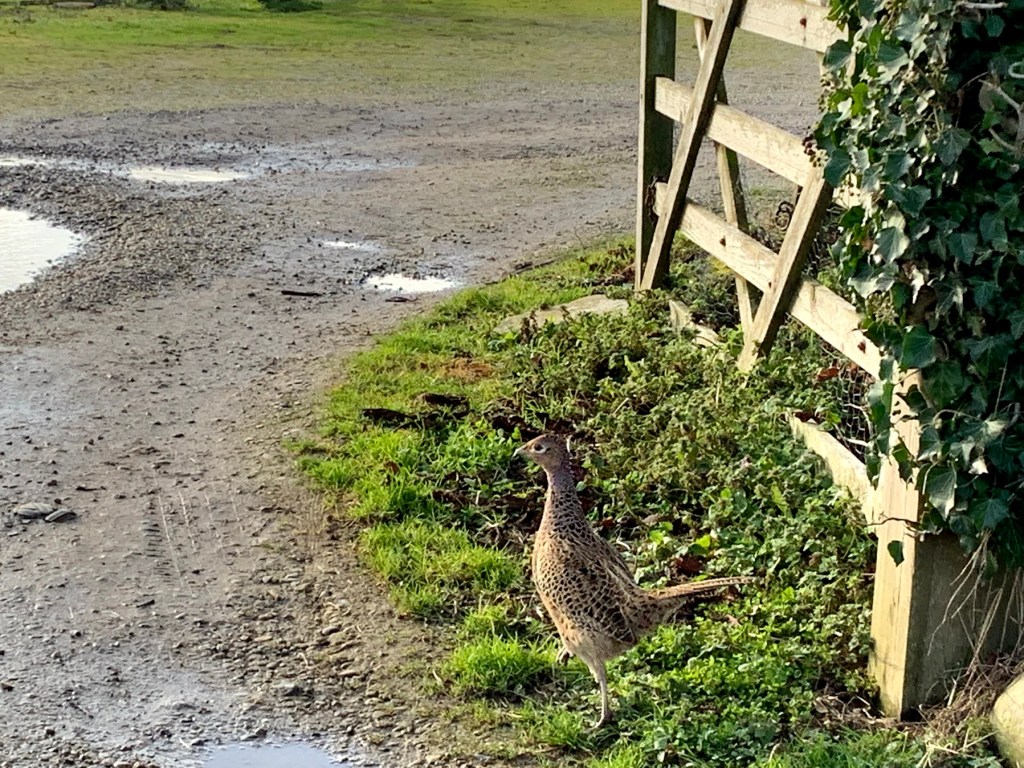
Spotted this female pheasant by a farm gate
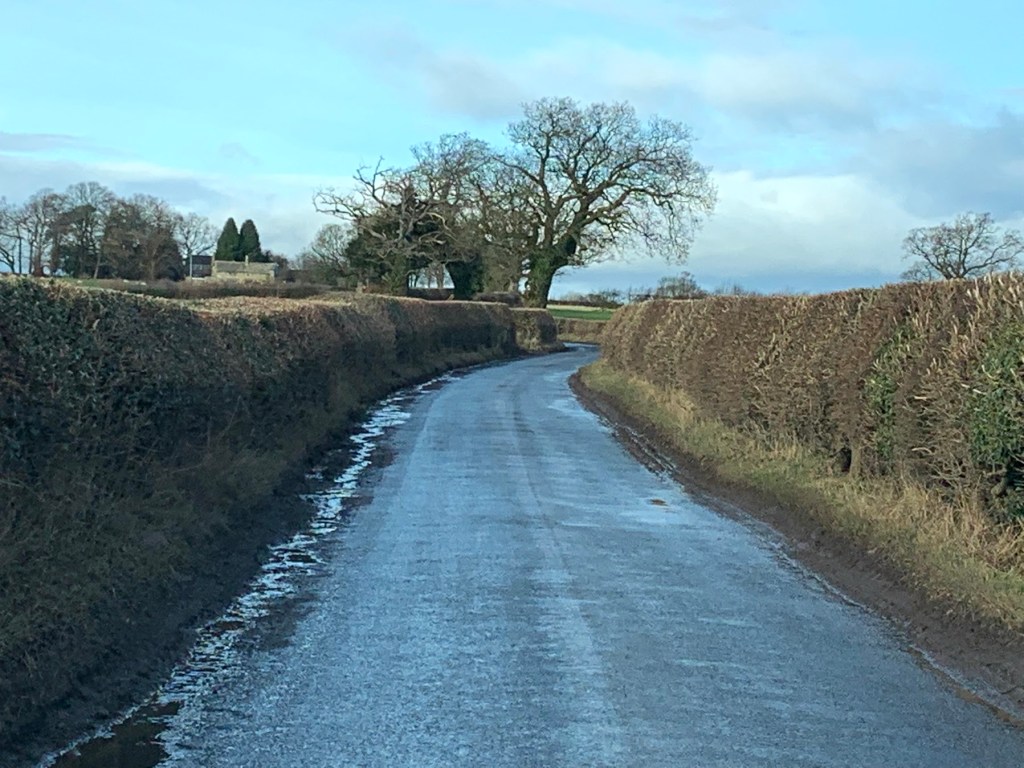
Rural road edged with classic hedges in the Yorkshire Dales

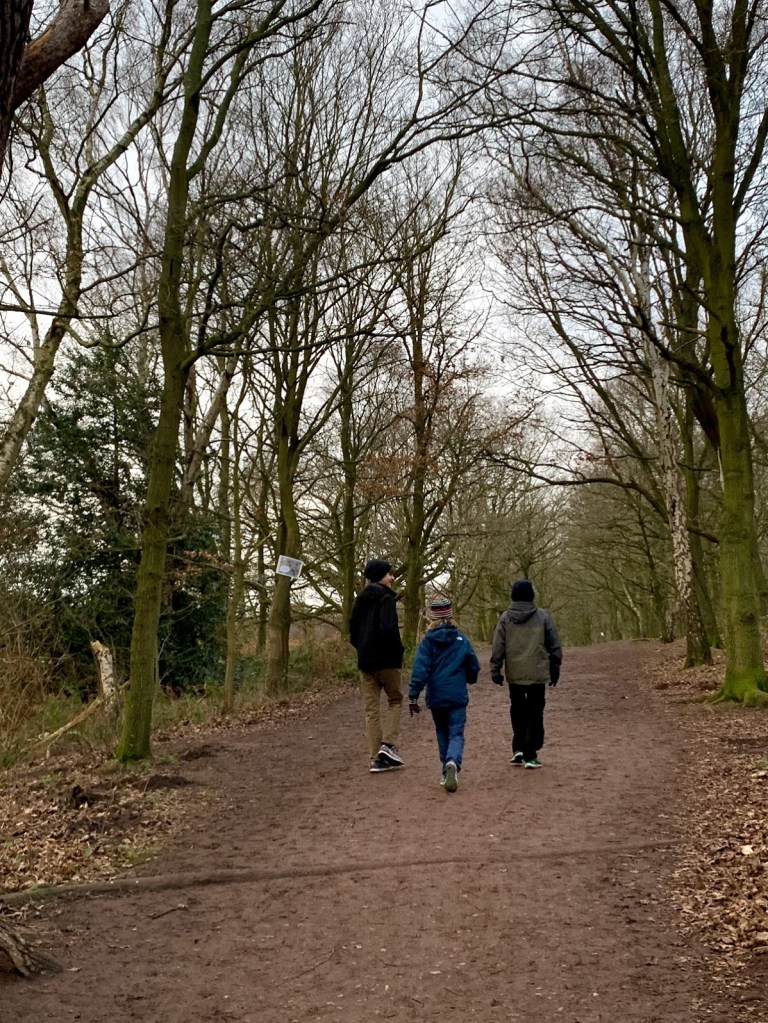
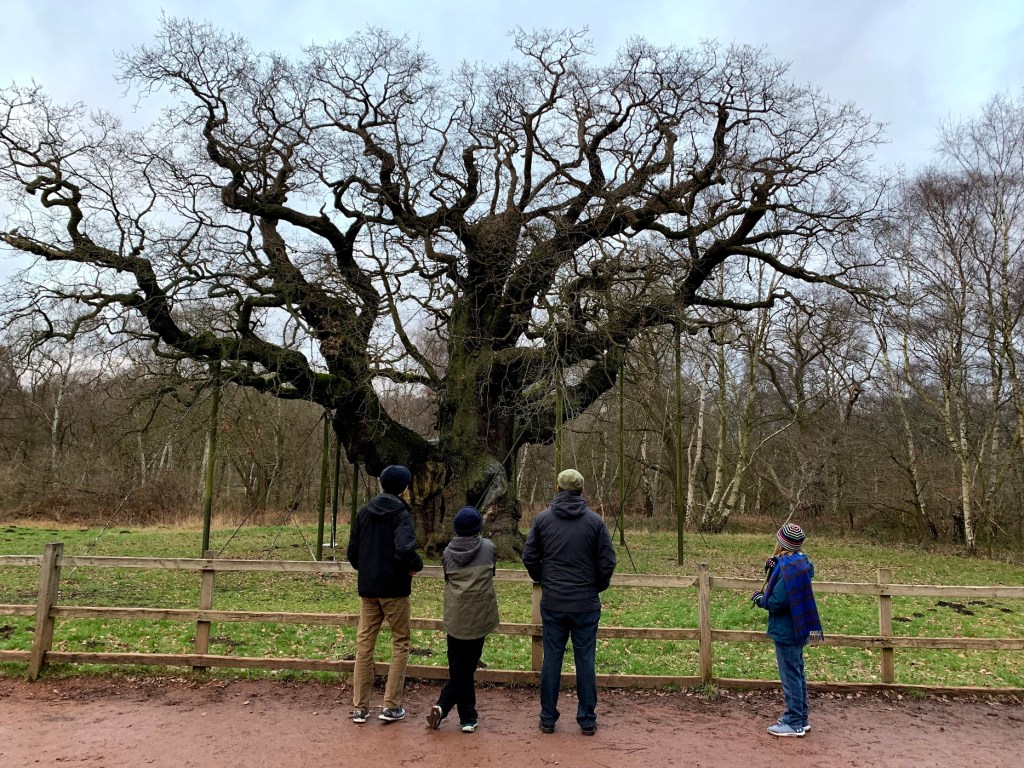
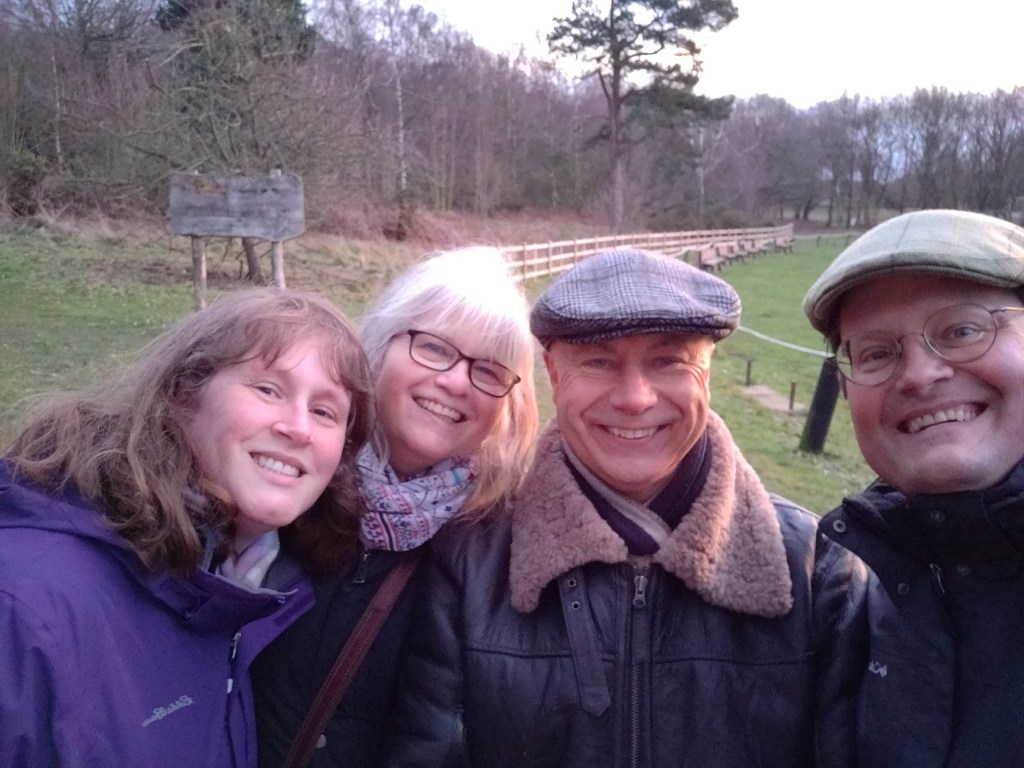
After a nice drive through the winding hedge rowed roads of the Yorkshire Dales we headed south and found ourselves in another legendary literary spot…Sherwood Forest! Just east of Mansfield, England is the town of Edwinstowe, home to the Sherwood Forest Nature Preserve. We grabbed a hiking trail map and took off on the 1.5 mile long hike to the Major Oak, an 800 yr. old oak tree said to be the spot where Robin of Locksley (Robin Hood) gathered with his Merry Men. The kids had a grand time hiking with large sticks they found on the ground. We met a lovely older couple at the Major Oak, Gloria and David Bowdler. Their daughter, Jemma, was the head forester for the centre. The Bowdlers were very friendly and we all enjoyed chatting as we continued the hike through Sherwood Forest. Mrs. Bowdler was quite impressed with our children and complimented them on their interest in nature, literature, and overall manners. She also loved seeing photos of our front porch and swing. She loves the American ideal of the “Southern wooden porch and swing”!
Sherwood Forest
Major Oak: 800 yr. old oak in Sherwood Forest

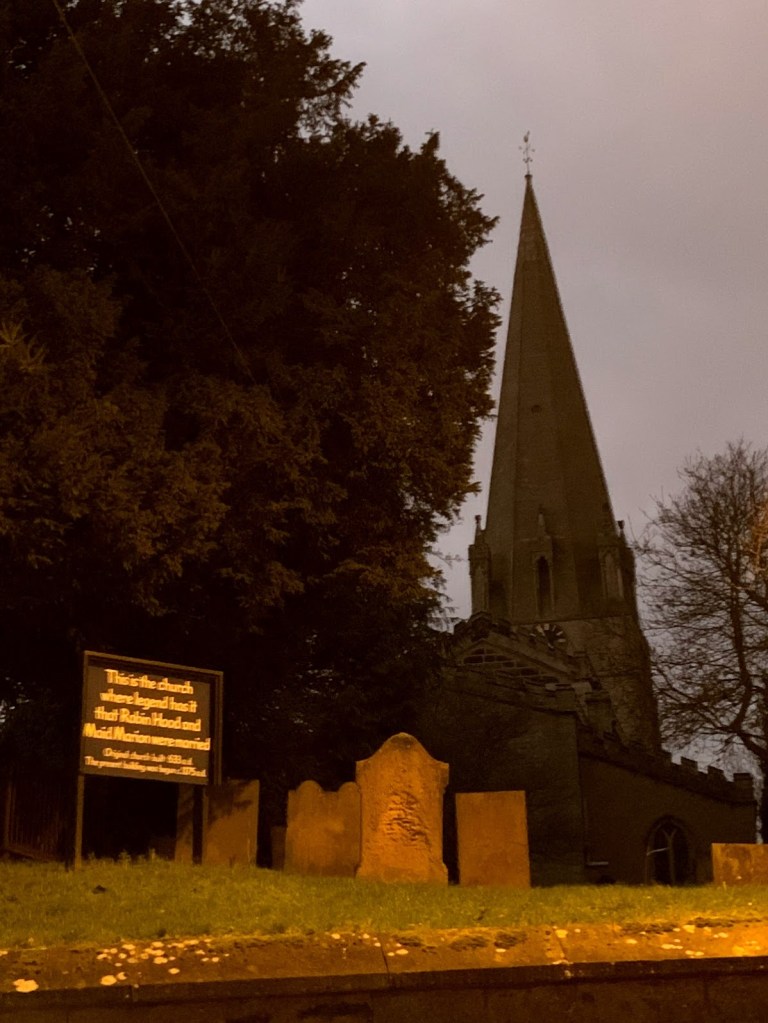
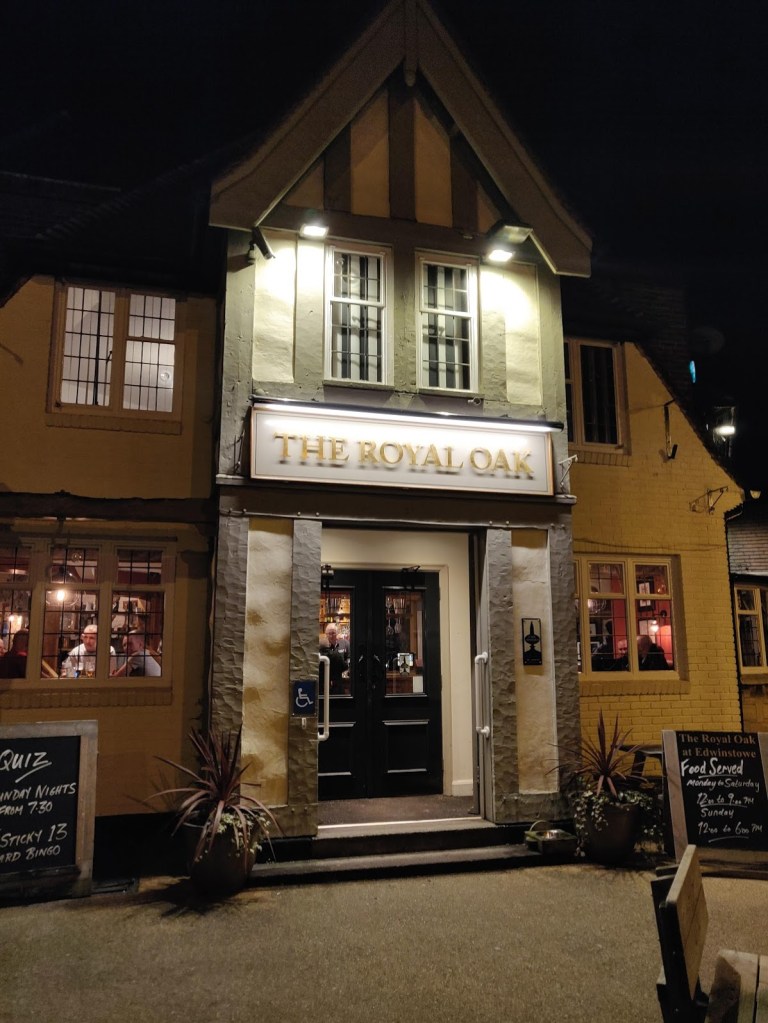
Once back to the centre we said our goodbyes with hugs and walked about a quarter mile into town and had dinner at an authentic English Pub called “The Royal Oak”. As we walked down the street up on the hill was a sign stating that legend held that Robin Hood and Maid Marion got married at the old St. Mary’s Church sitting on the hilltop.

David and Gloria Bowdler with us at the Sherwood Forest Nature Preserve
St. Mary’s Church where according to legend Robin Hood and Maid Marion go married.
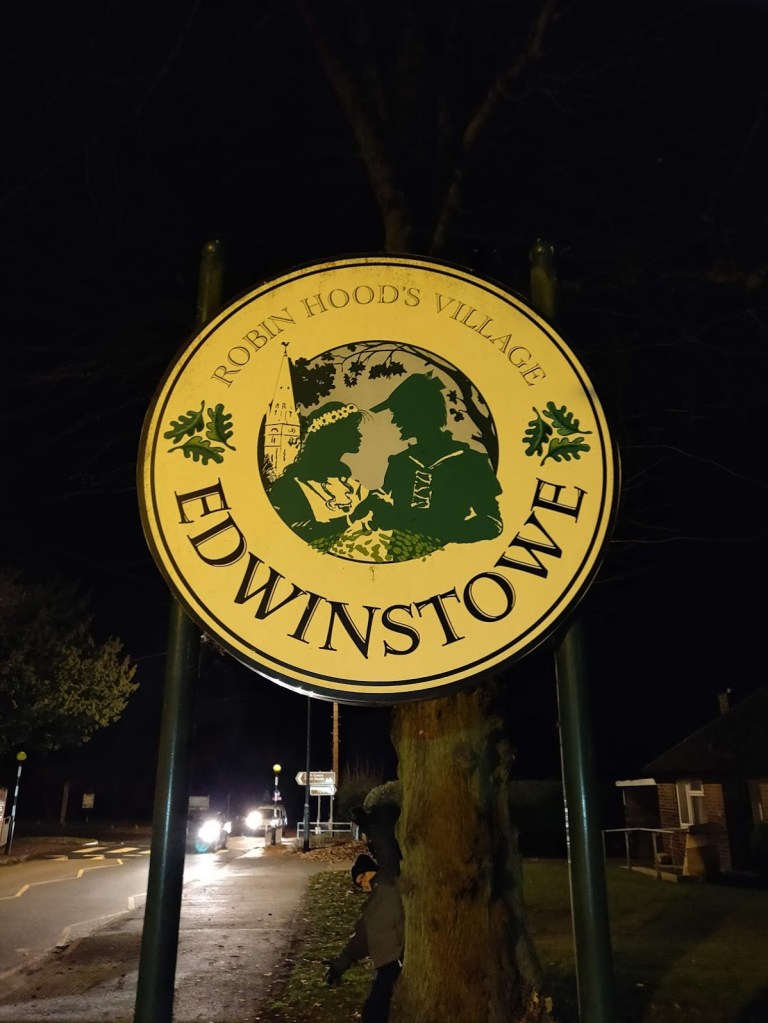
Edwinstowe, England

As the sun set we drove another 2 hours south and checked into the Hathaways B&B in Stratford-upon-Avon.

Kings of Rail and Land

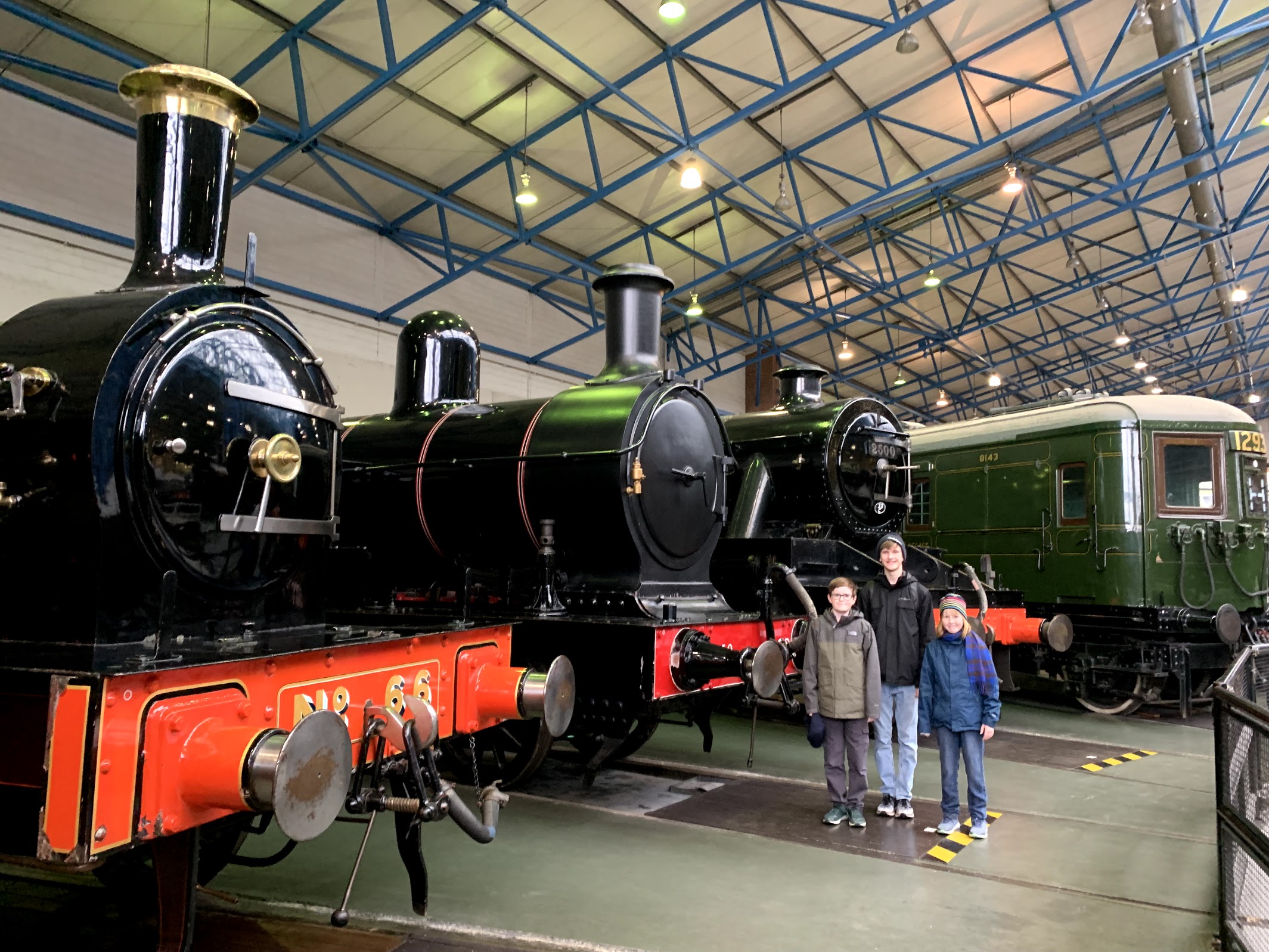
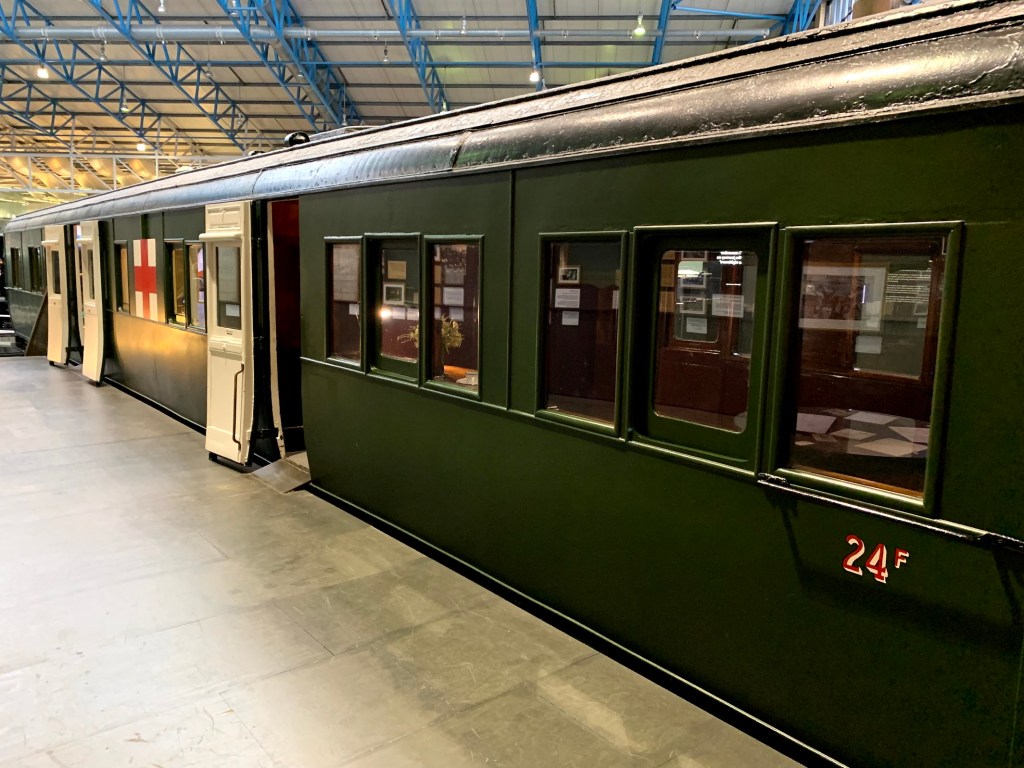
Our host Ms. Kay mentioned that we might want to take the bus into the city center. We drove to a local carpark and boarded the bus for a minimal fee. In about 15 minutes or so we got off at the National Railway Museum located in York proper. The museum was very interesting and contained a lot of examples of trains used throughout Britain’s history. There was a very old Rocket Train from 1846 all the way through a sample of the current Eurostar that passes through the Chunnel everyday. There was the Chunnel Funnel train, which was used to haul all the debris out of the underground tunnel. The famous Flying Scotsman, which ran direct from London to Edinburgh for decades, royal train cars, old steam locomotives, and my favorite was a wonderful display about the WWI hospital trains. Seamus, in particular, was very happy with the time we spent at the museum. He loves trains!

National Railway Museum in York
WWI Hospital Train
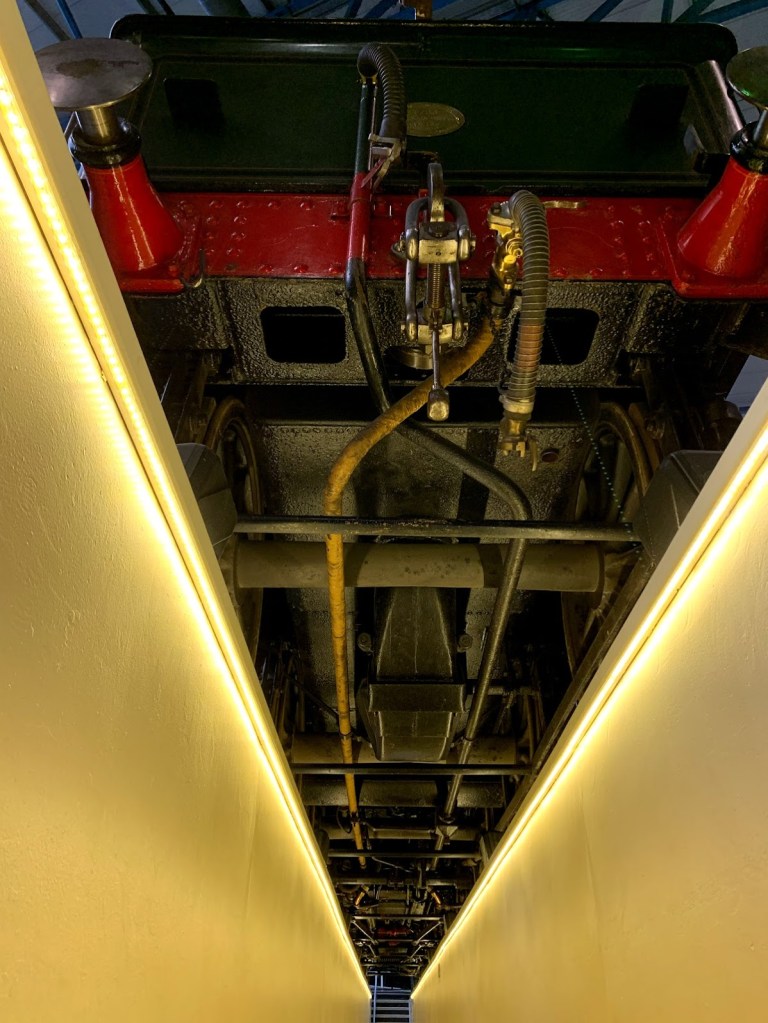
Underside of a train

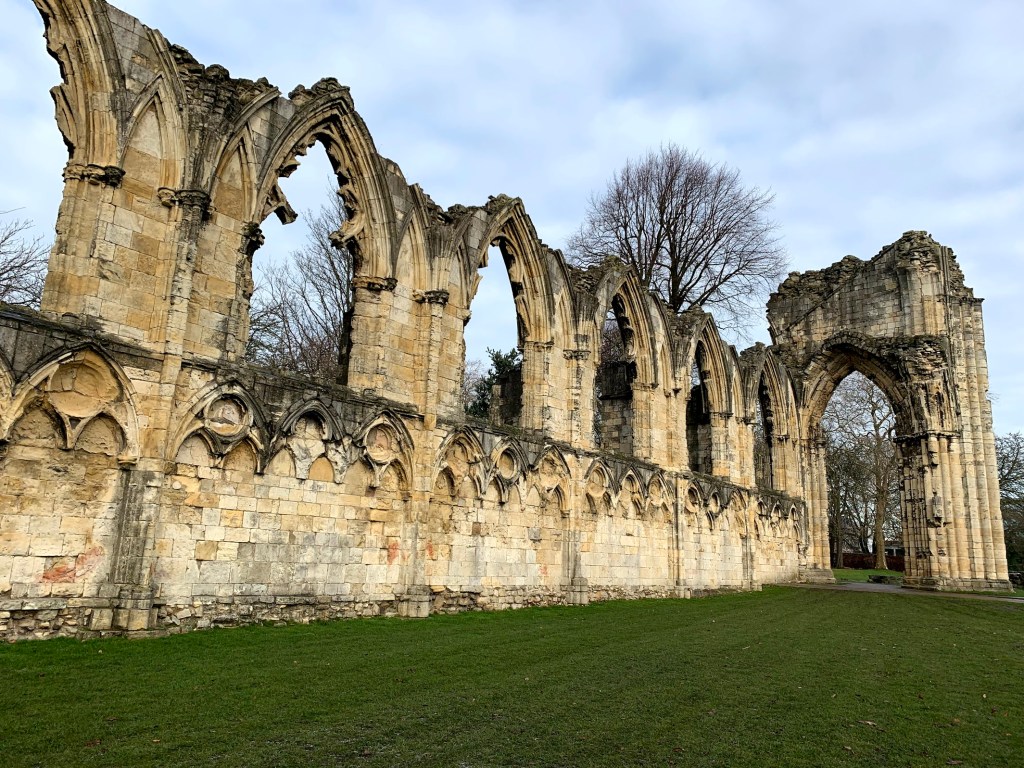
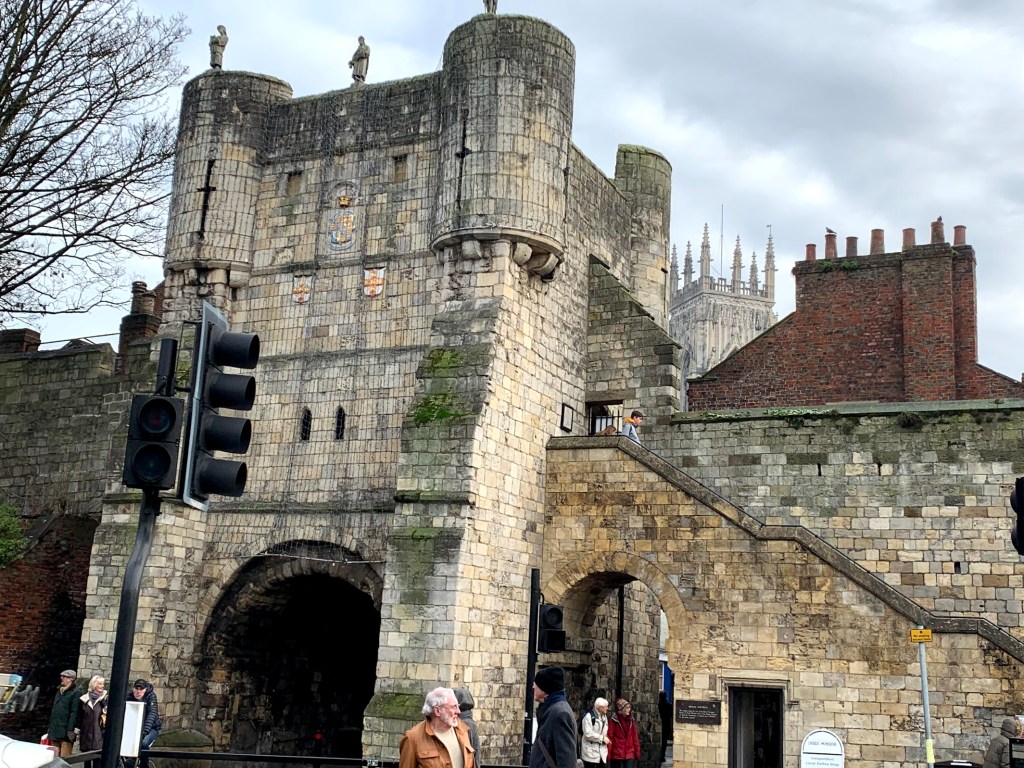
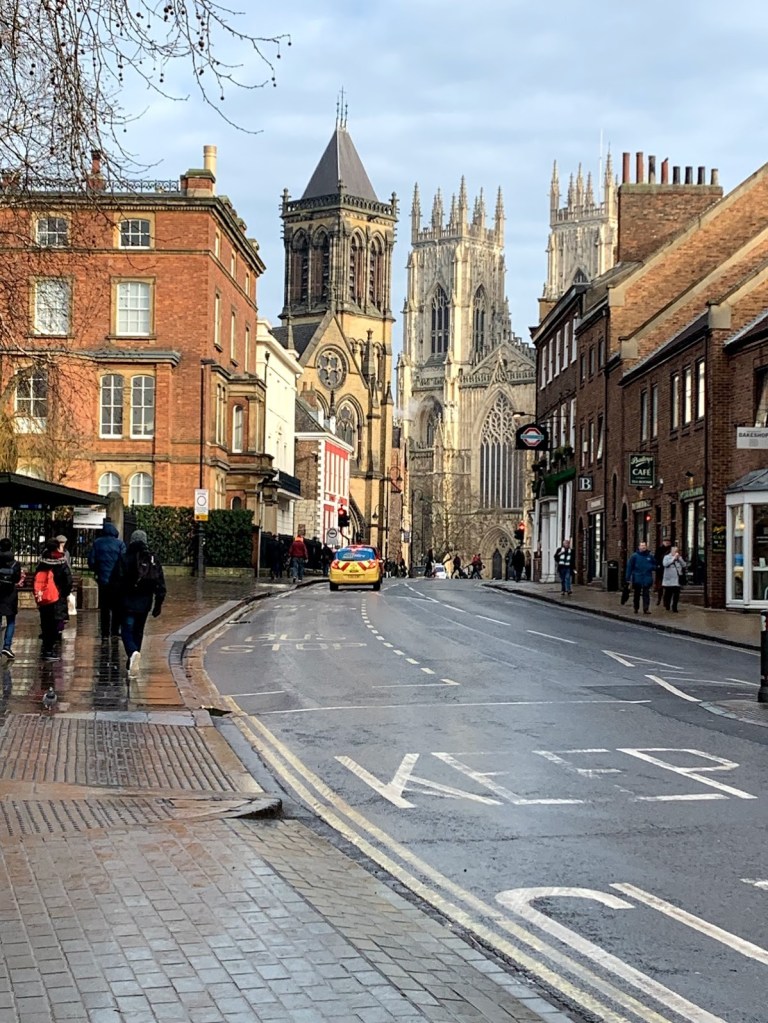
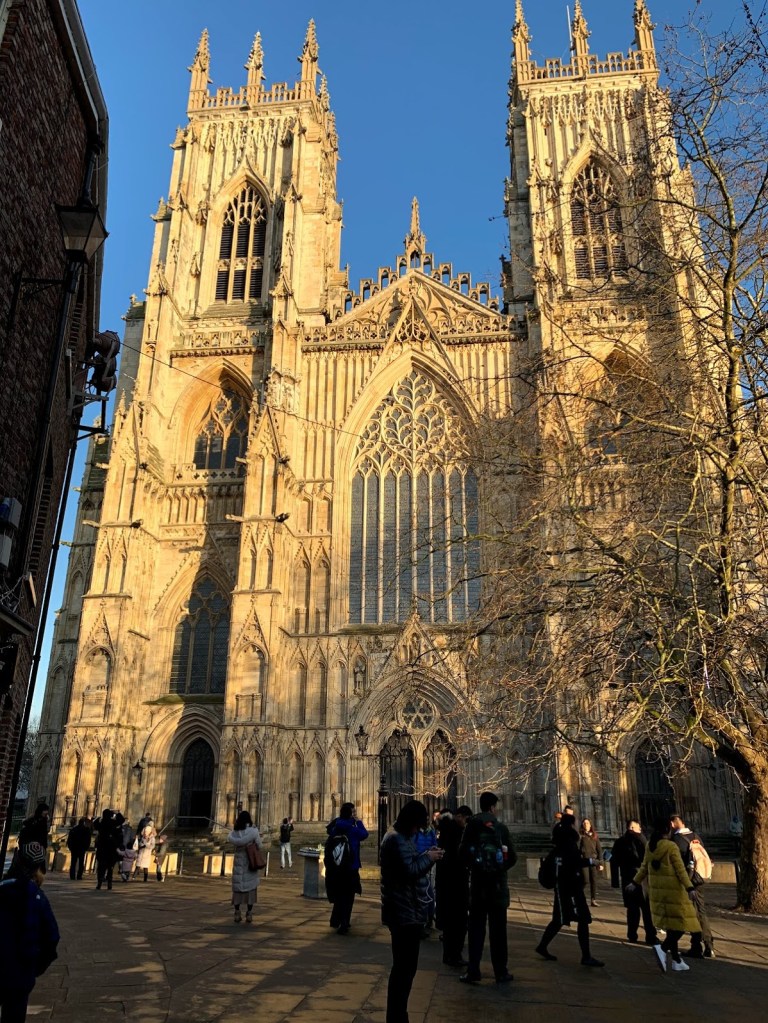
We left around noon and walked about 10 minutes into central York. We passed by the York Museum, Memorial Gardens, crossed the River Oose and then explored St. Mary’s Abbey ruins and the old walls of York. We finally arrived at the impressive front doors and awe-inspiring towers of York Minster. York is the ancient seat of English Kings. There has been a church on this site since the 7th cent. Before that the Romans had one of the largest garrisons stationed here in York. Many of the garrison’s main ruins are found in the undercroft of the Minster. The famous Roman Emperor Constantine was in York when his father died and he was made Emperor. Constantine was the first Christian Holy Roman Emperor.

Ruins of St.Mary’s Abbey ca. 11th cent.
Roman Tower: This tower which is part of the York City walls stand on top of the ruins of the old Roman tower.
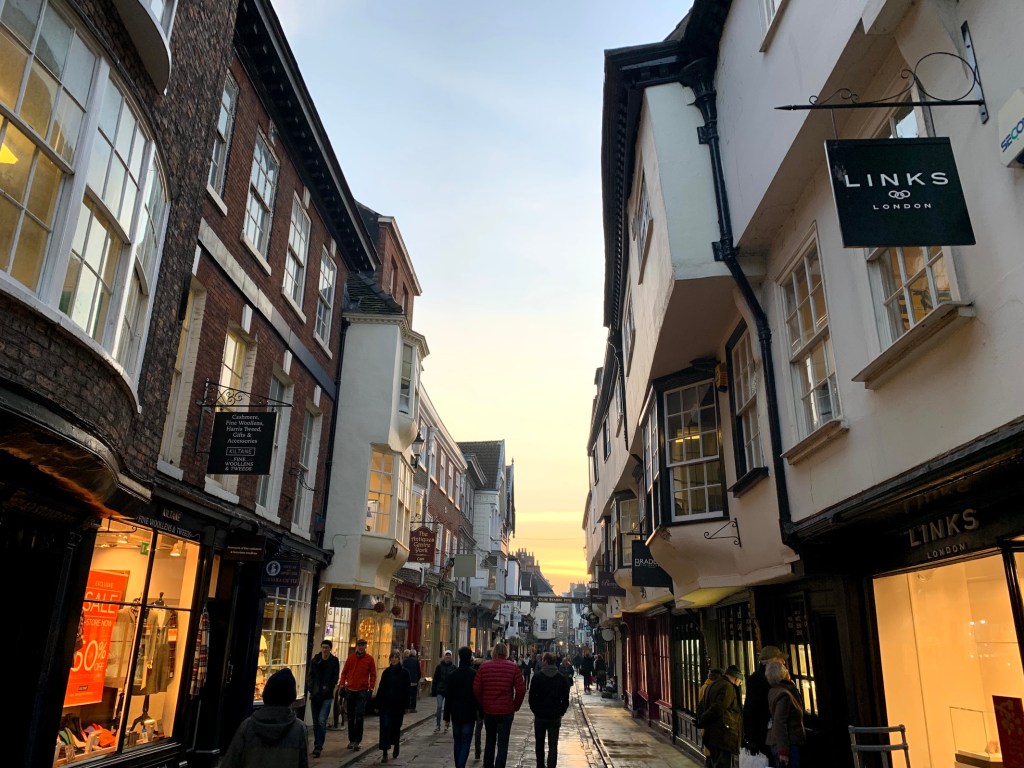
Streets of York
York Minster

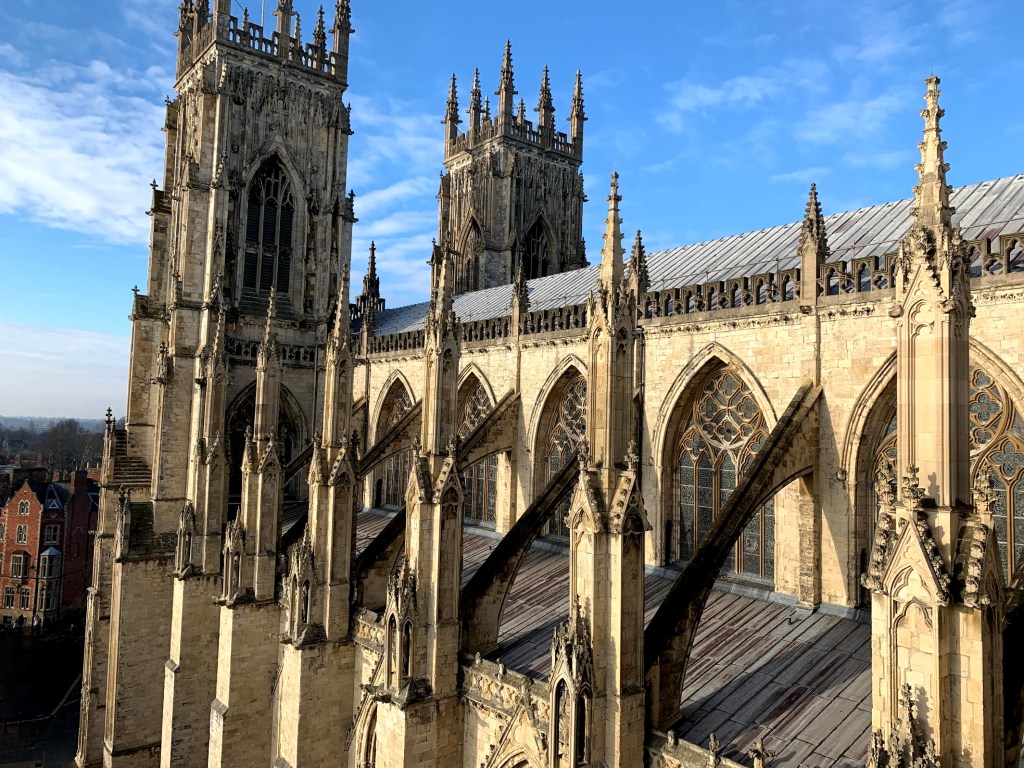
Over 14 yrs. ago, when I was pregnant with Seamus, Robert and I attended Mass at York Minster and got to sit in the choir up near the High Altar. It was great getting to show the kids where we sat all those years ago. Everyone enjoyed seeing the Chapter Room where all the Bishops of the Anglican Church meet, seeing the 12th cent., tomb of Saint William of York, and our best adventure was climbing to the top of the Central Tower. Yes, we climbed up 275 small stone spiral stairs to the topmost roof of the Minster. It was worth the climb! The city views were impressive! It was definitely much easier going down than up and we felt we all earned a nice cup of Yorkshire Tea, cakes, and scones with clotted cream and jam.

Flying Buttresses: I took this photo about half way up to the Central Tower roof. We are walking along a narrow platform on the roof of the South Transept.
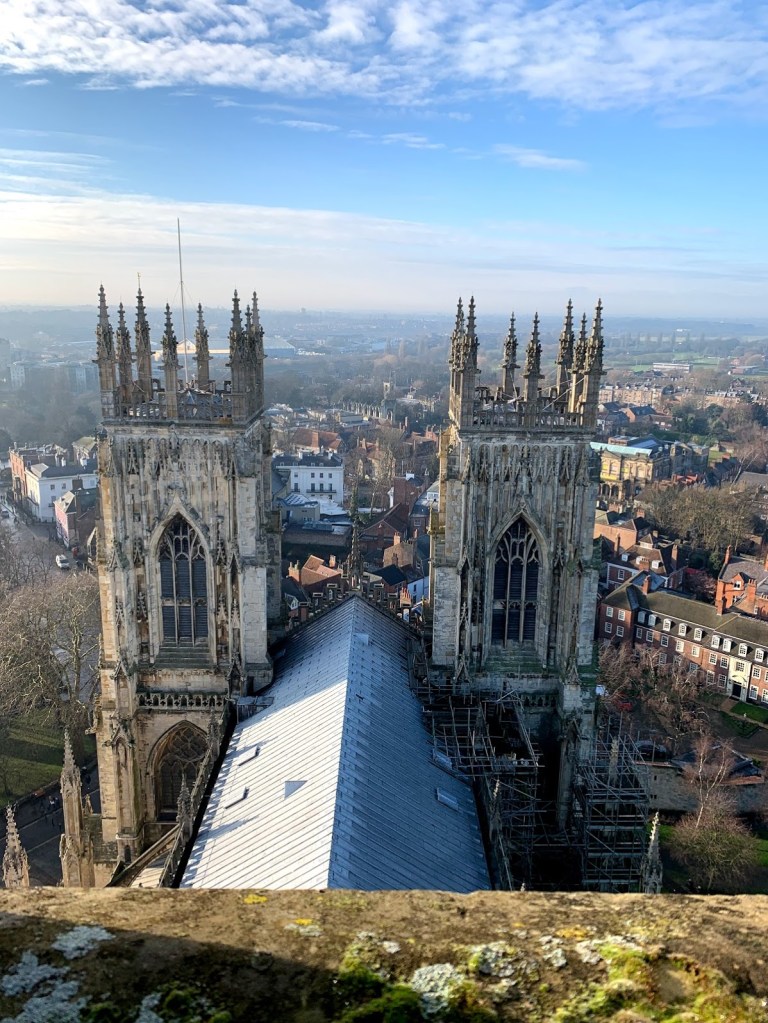
The two Front Towers as seen from the taller Central Tower
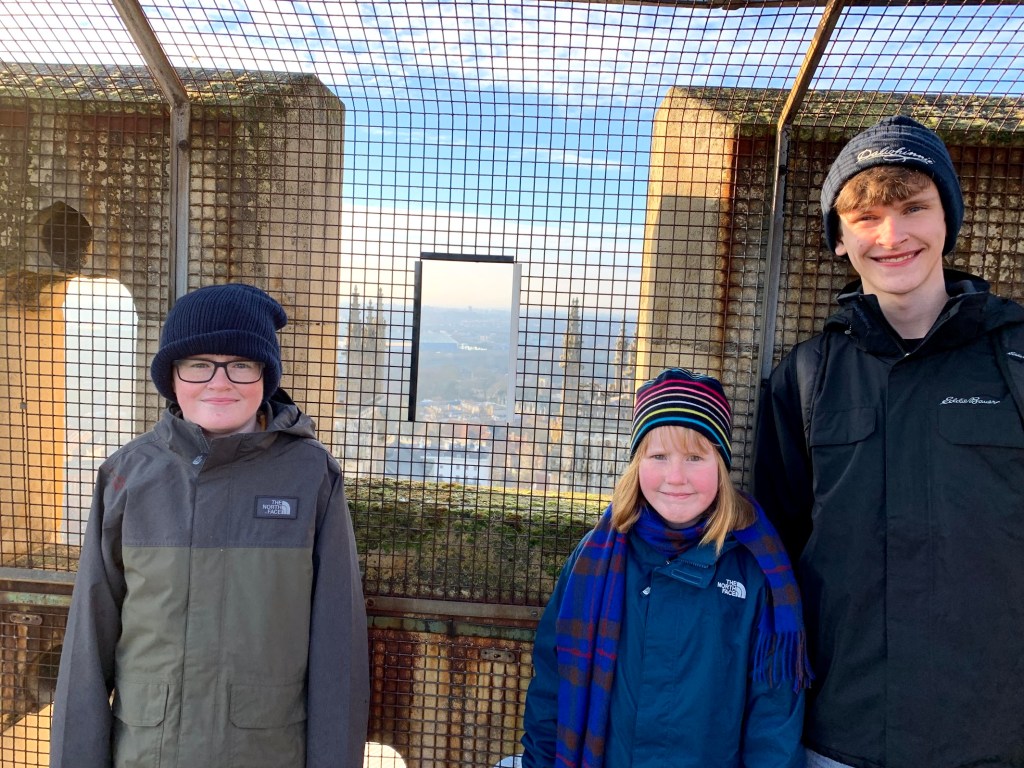
Standing on top of York Minster: You can just see the tops of the two front towers behind the kids.
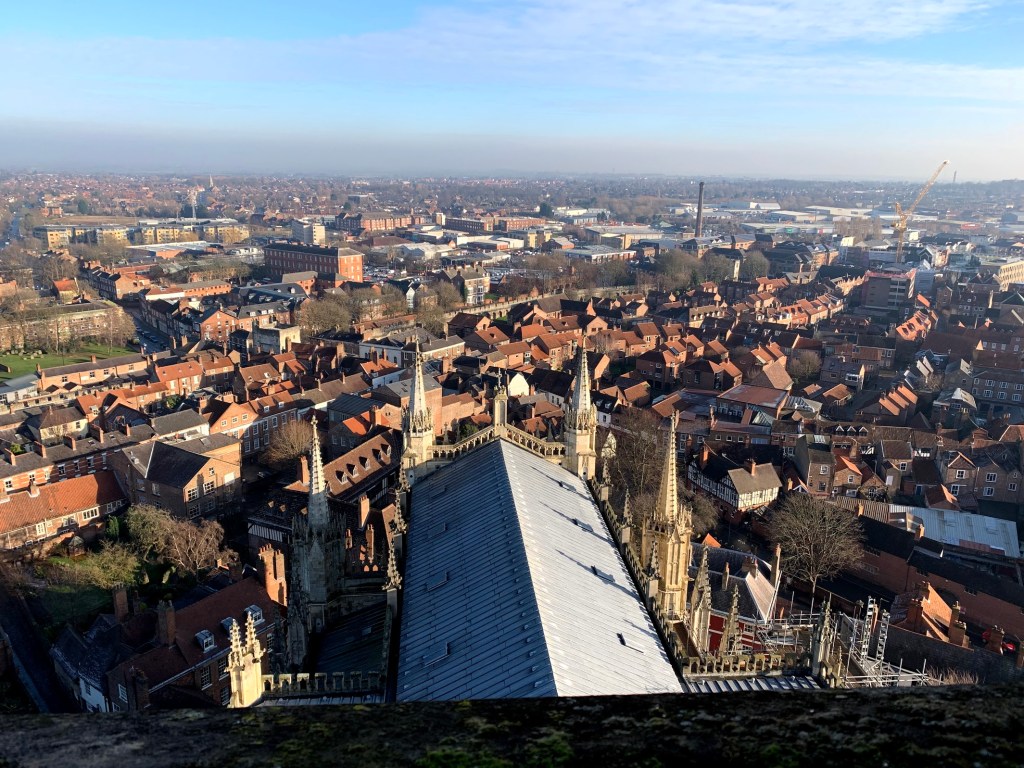
View of York from the Central Tower
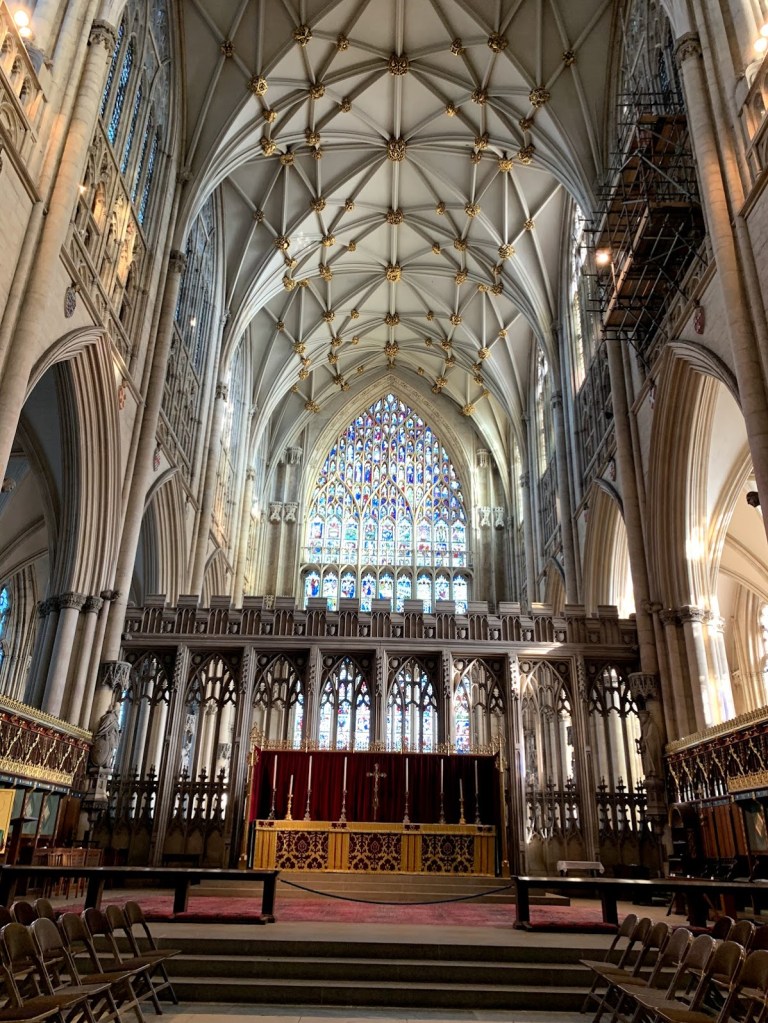
High Altar of York Minster as seen from the choir
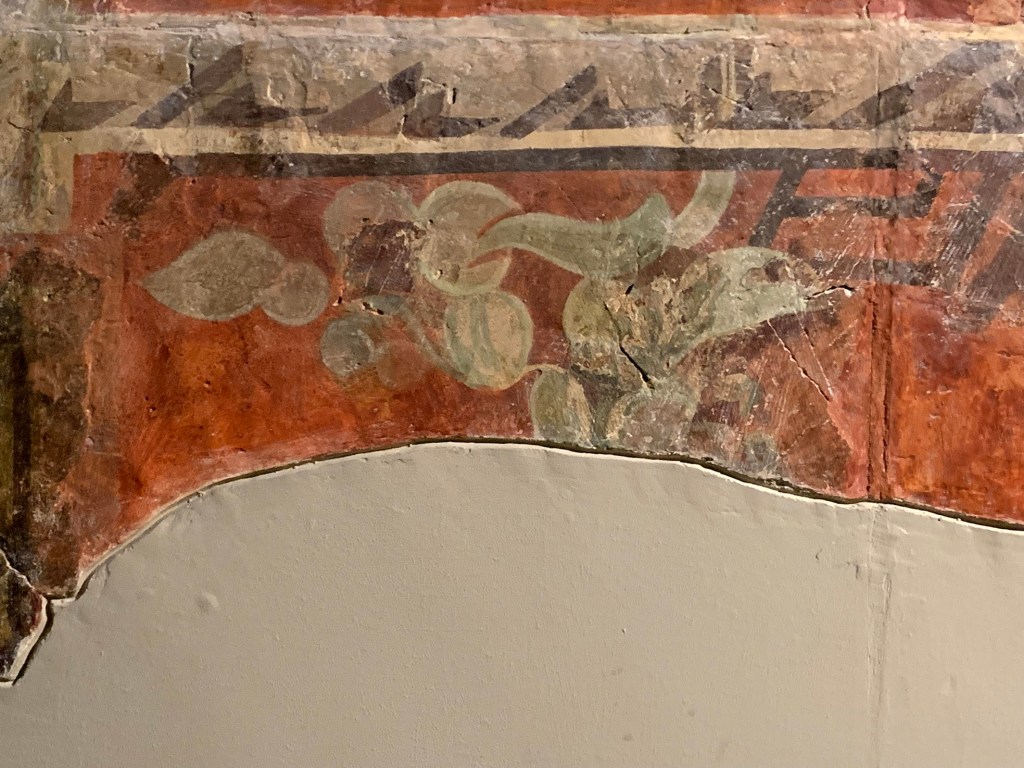
4th cent. Roman Fresco
Medieval streets of York

The rest of the day was spent meandering in and out of the old cobblestone streets and all the quaint little shops. There are 23 cat statues in the old town above doors or in windows. They are called the Cats of York.

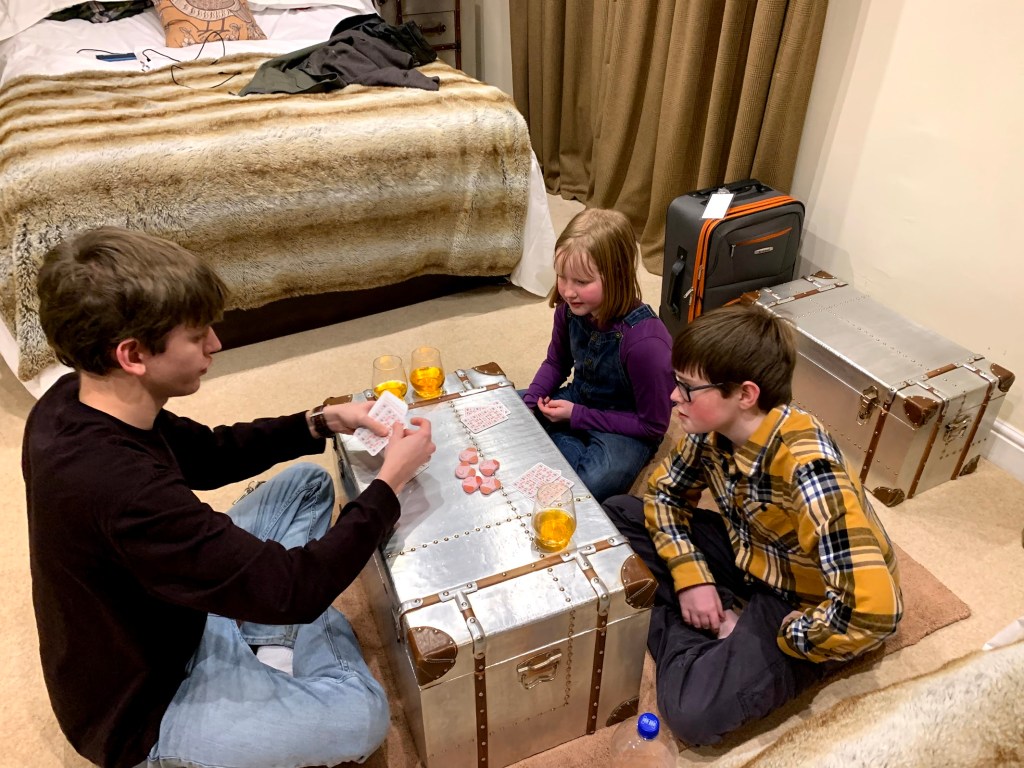
We found a few as we walked around. Once back in Easingwold we had a nice dinner at the New Inn across the street from our B&B. After dinner the kids decided to play Go Pig (Fish) with the new “Trains of Britain” deck of cards we got at the museum. The drank Irn Bru, UK’s favorite soft drink, and whoever won the round got to eat a beloved Percy Pig Gummy candy!

Percy Pigs and Irn Bru


To the Bard!

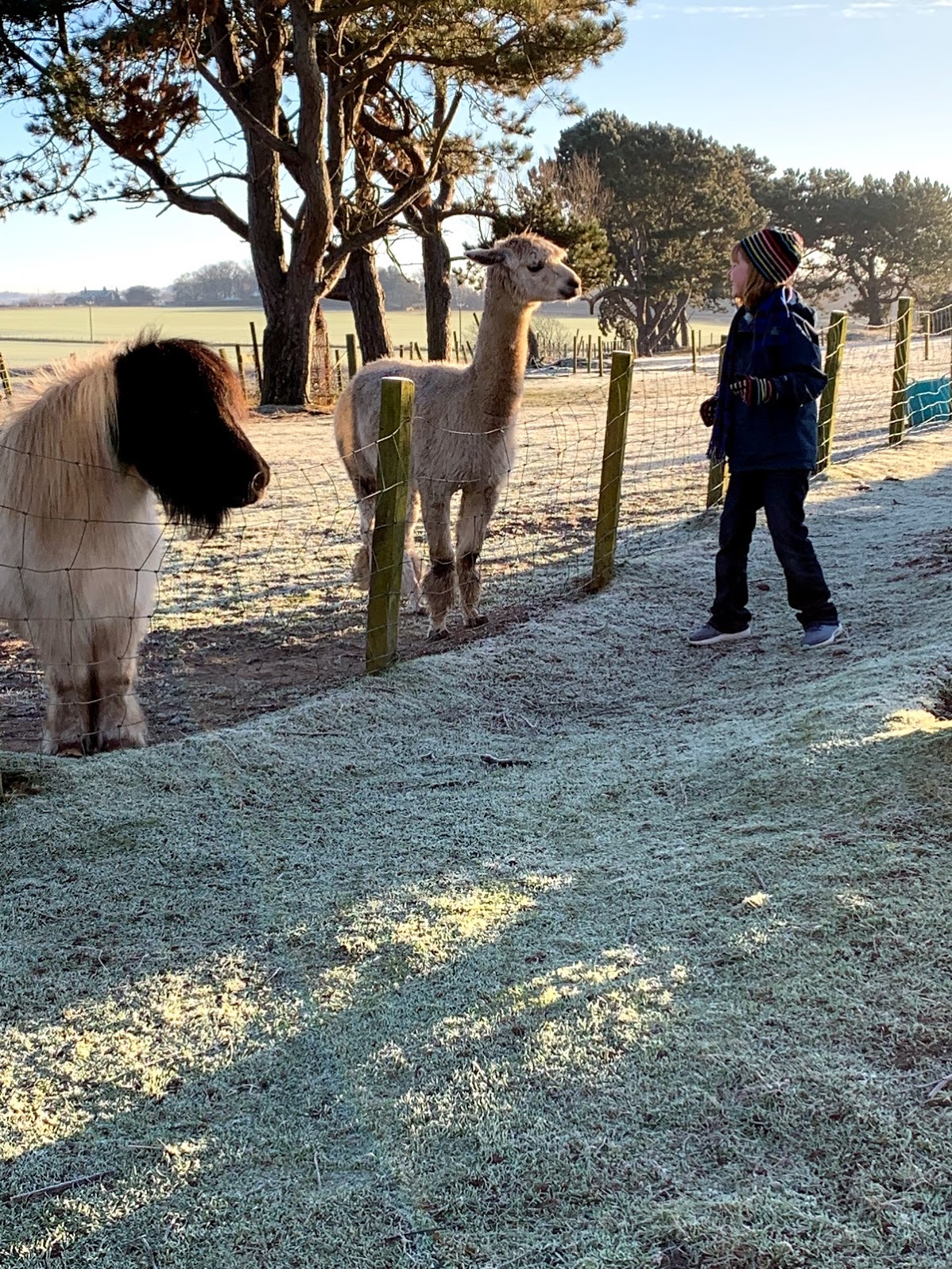
Faywen with Duke the Alpaca and Muppet the Shetland Pony

It was hard to say goodbye to Tosh the kitty, but we did so after a lovely breakfast at Sandhill House B&B. Faywen also got to feed their alpaca, Duke, an apple after breakfast! The sky was a brilliant blue and the sun shown on the crisp morning frost as we drove the 20 miles south to Alloway, Ayrshire. Alloway is the birthplace of the world famous poet Robert Burns. For those who may not know Burns, I bet you know at least one of his poetic songs…Auld Lang Syne! You can thank the Bard of Scotland for you New Years Eve tradition! He was born there on 25 January 1759 in a small farmer’s cottage. As young as 6 yrs. old he showed ability to write. He had a private tutor, Mr. Murdoch, who instilled a love of language and literature into the gifted lad. Robert Burns is one of the most influential poets in the world. In fact, President Abraham Lincoln could quote Burns and carried a small book of his verses along with a Bible in his pocket at all times.

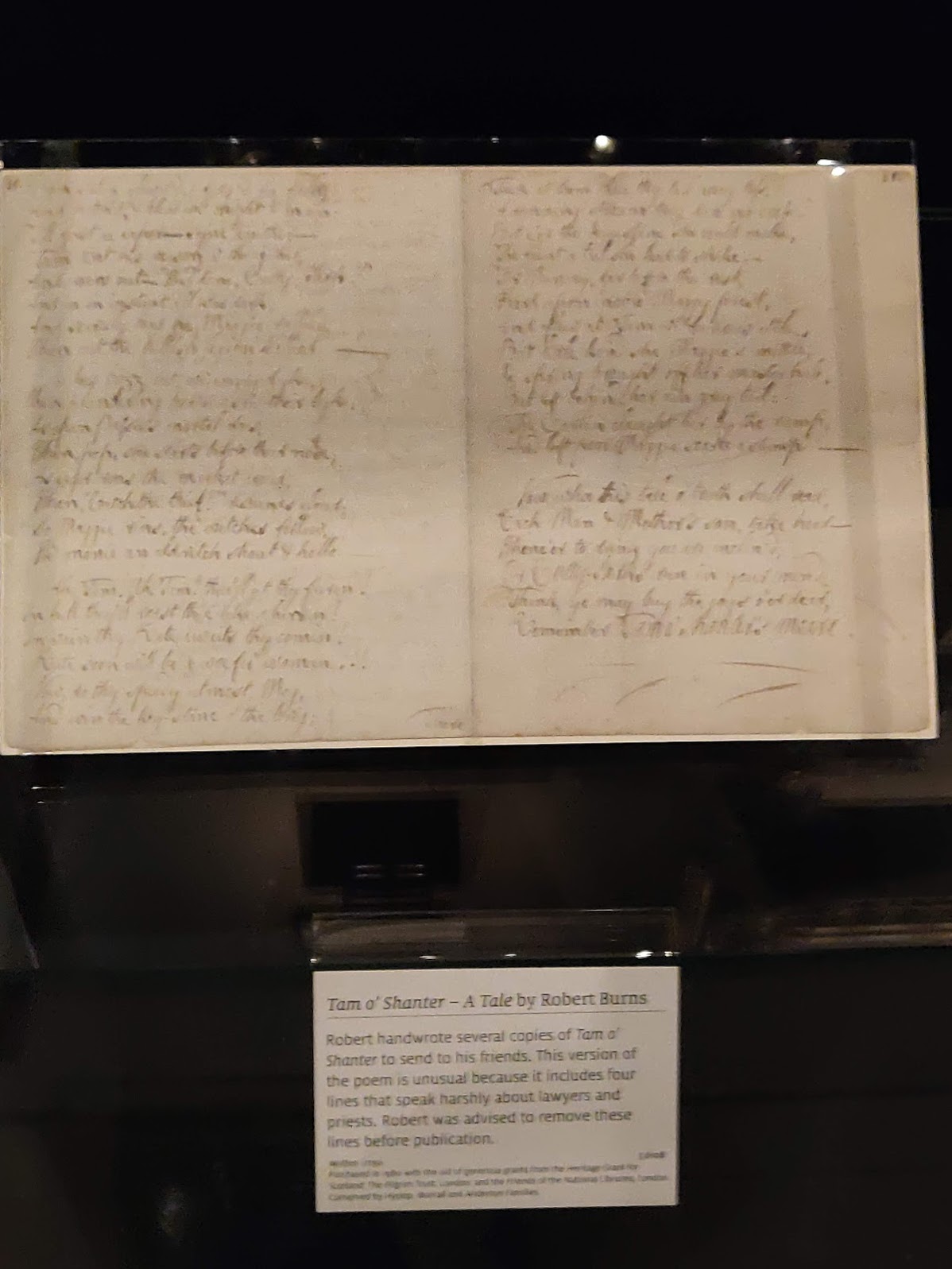
Burns’ original manuscript for Tam O’Shanter

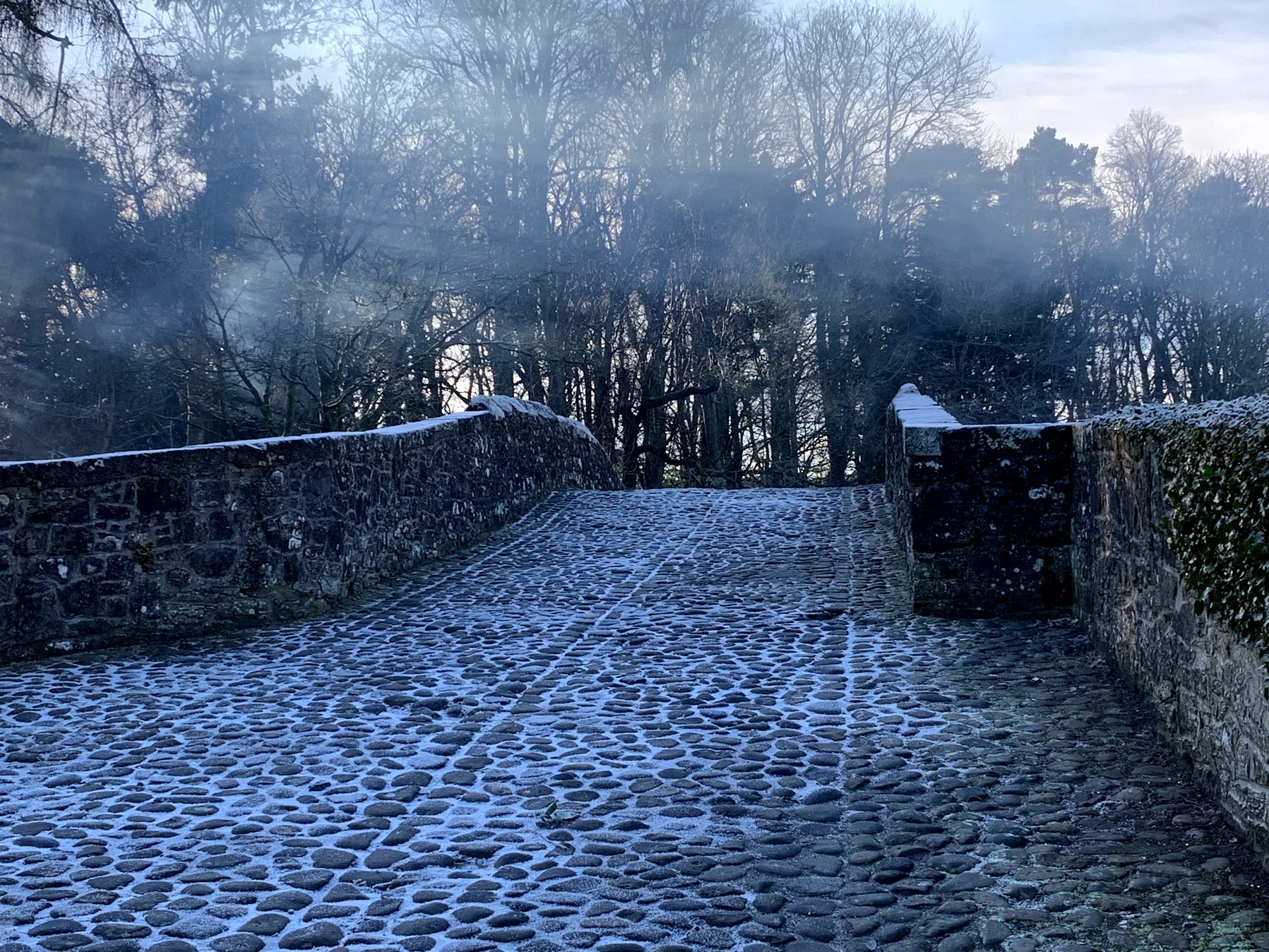
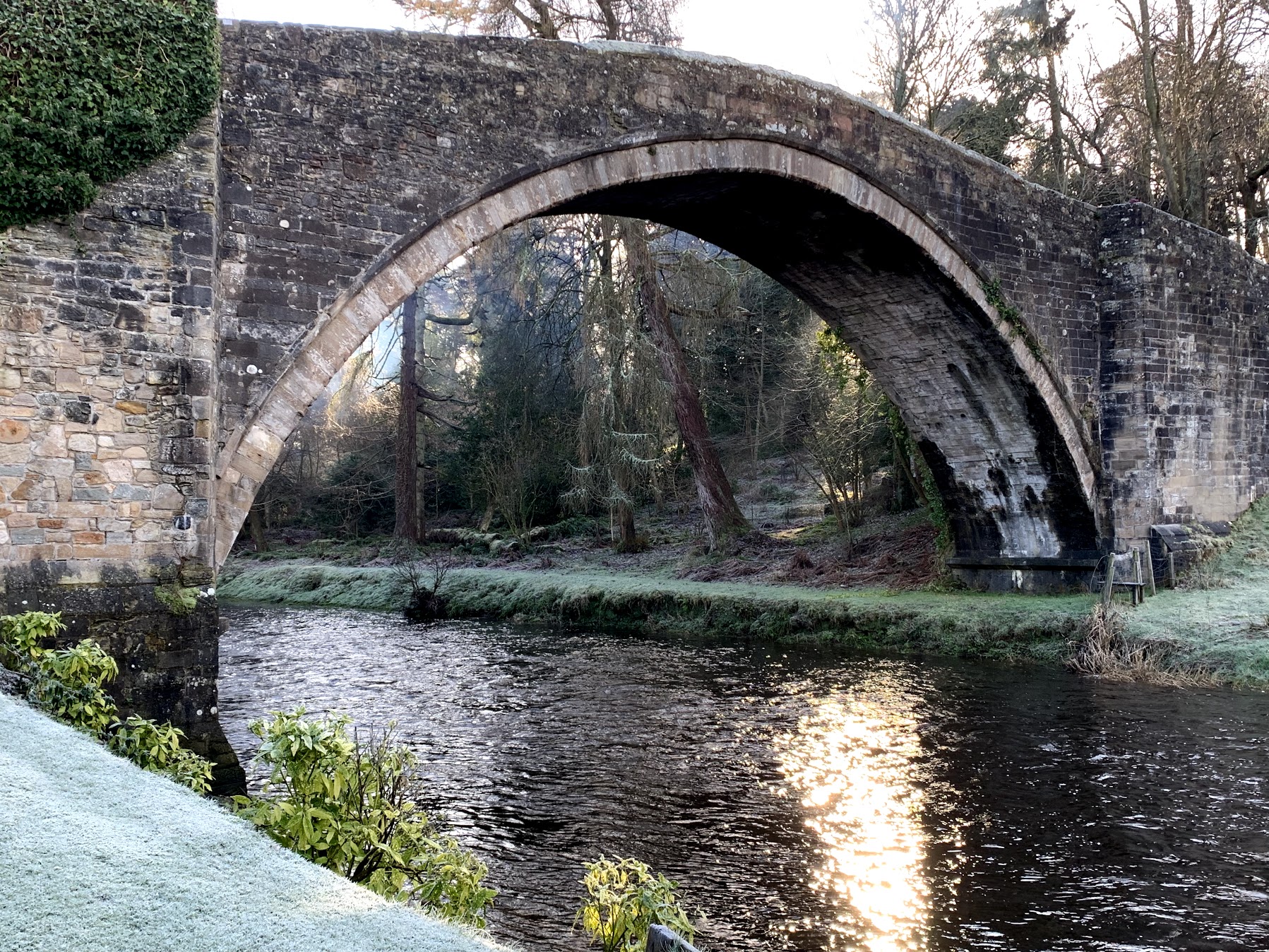
We went into the Burns museum, which had artifacts from his family, correspondents, love interests, and his own personal items as well. It was a treat to see some of Burns’ original manuscripts, letters, and first edition publications. We left the museum and headed through the monument gardens to view a large Victorian Monument erected in his honor, then down a path and onto the Brig O’ Doon. This 18th century stone bridge over the River Doon was made famous in Burns’ narrative poem Tam O’Shanter. In the poem, a drunk farmer named Tam meanders late one night down into the haunted Old Alloway Kirk graveyard where he sees a bunch of warlocks and witches dancing. He makes noises and the witch’s chase after Tam swiftly riding his horse Meg. He just crests the Brig O’ Doon when a witch grabs Meg’s tail and pulls in out! Witches cannot cross water and Tam makes it over the Brig just in the nick of time! The Brig was a bit icy, but we managed to cross it and then walk down the scenic river walk. There was a bit of fog illuminated by the sun over the old Brig.

Top of the Brig O’ Doon
Brig O’ Doon

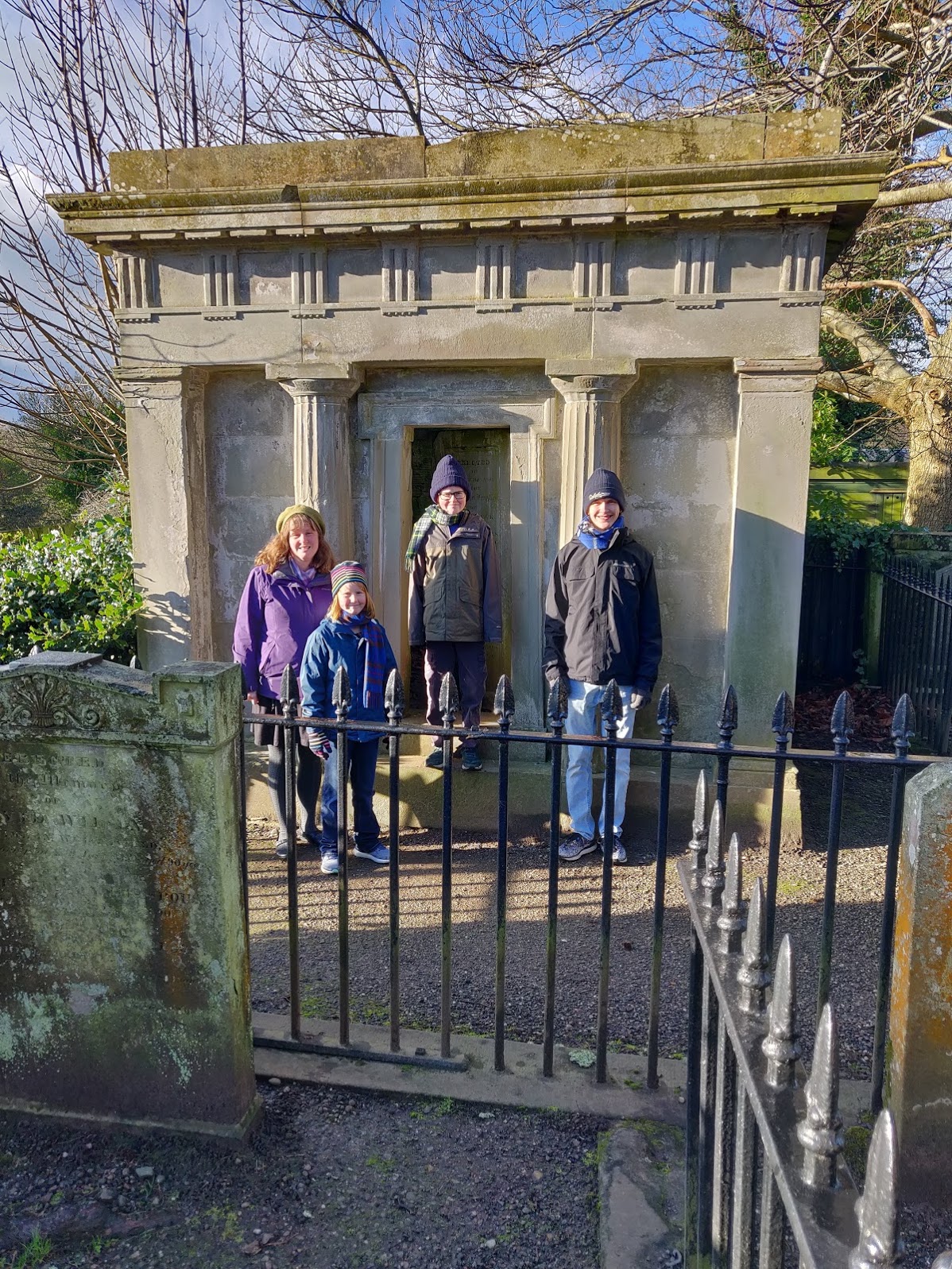
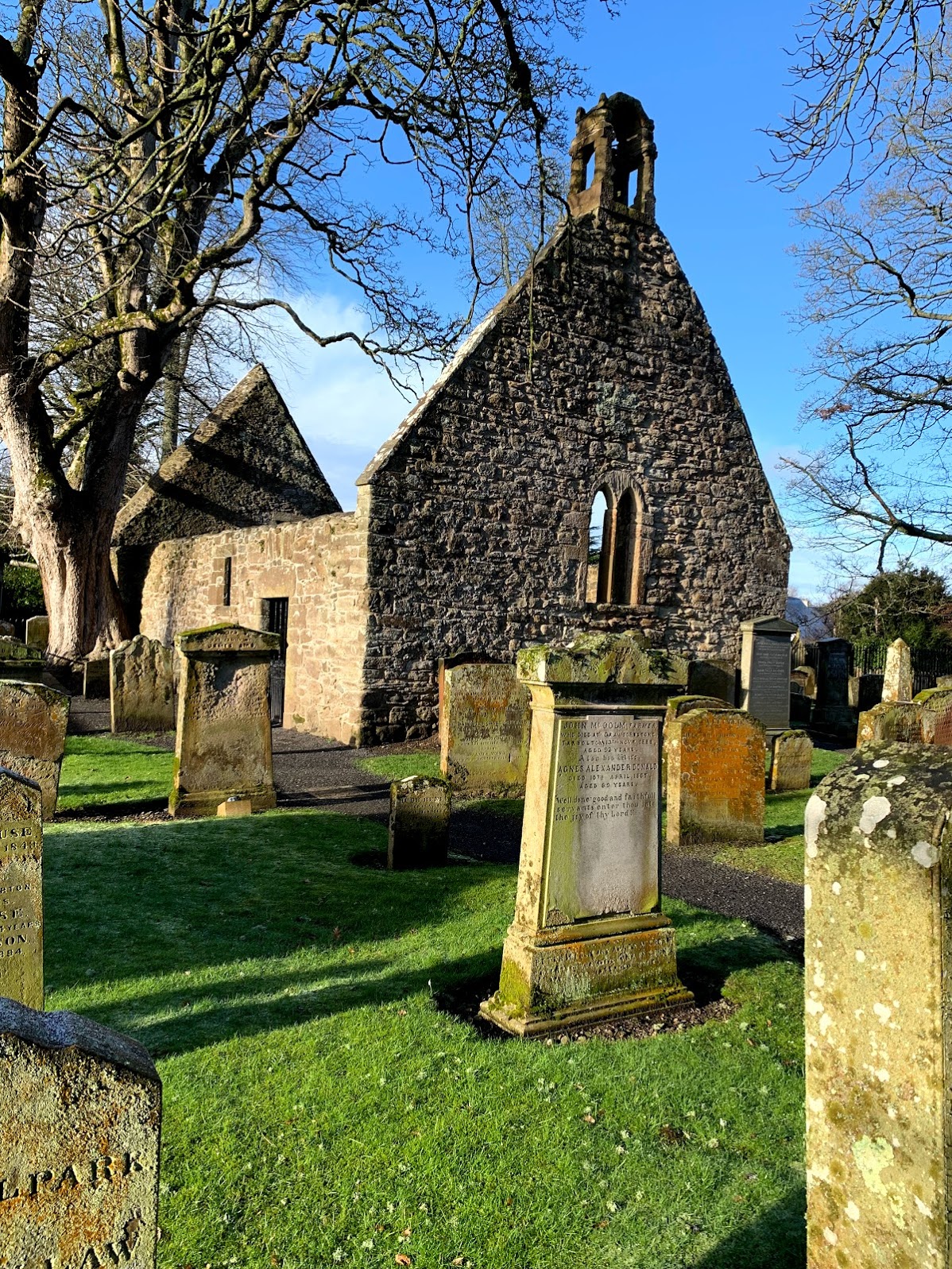
Crossing the street and walking a block or so we found ourselves in the Old Alloway Kirk graveyard. The sun shown brilliantly and shadows danced on the old gravestones giving the old cemetery an otherworldly feel. We were the only people on the grounds and the kids dared each other to step inside an open mausoleum. No one would do it except me. I opened the door stepped inside crossed myself and walked in further. The roof had collapsed and the 10ft. x 10ft. mausoleum opened to the blue sky above. I guess the kids were impressed by their mother’s bravery and followed me inside, crossing themselves as they stepped over the threshold. As we peered into the old Kirk itself you could see the moss covered altar stone. I told the kids on the way out that they had just walked around in what is considered the most haunted graveyard in all of Scotland!

Old Alloway Kirk and graveyard
Mausoleum in the Old Alloway Kirk Graveyard

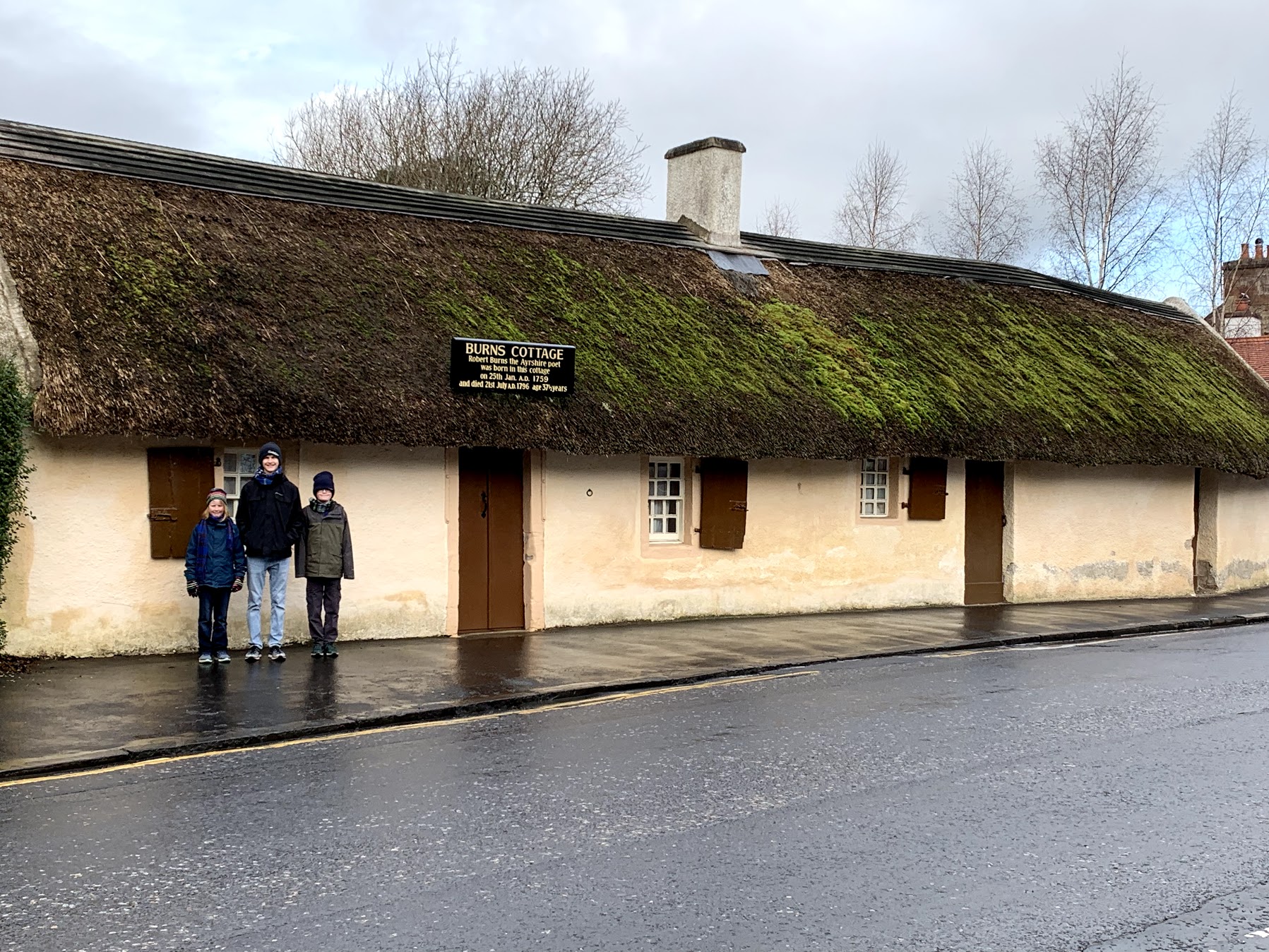
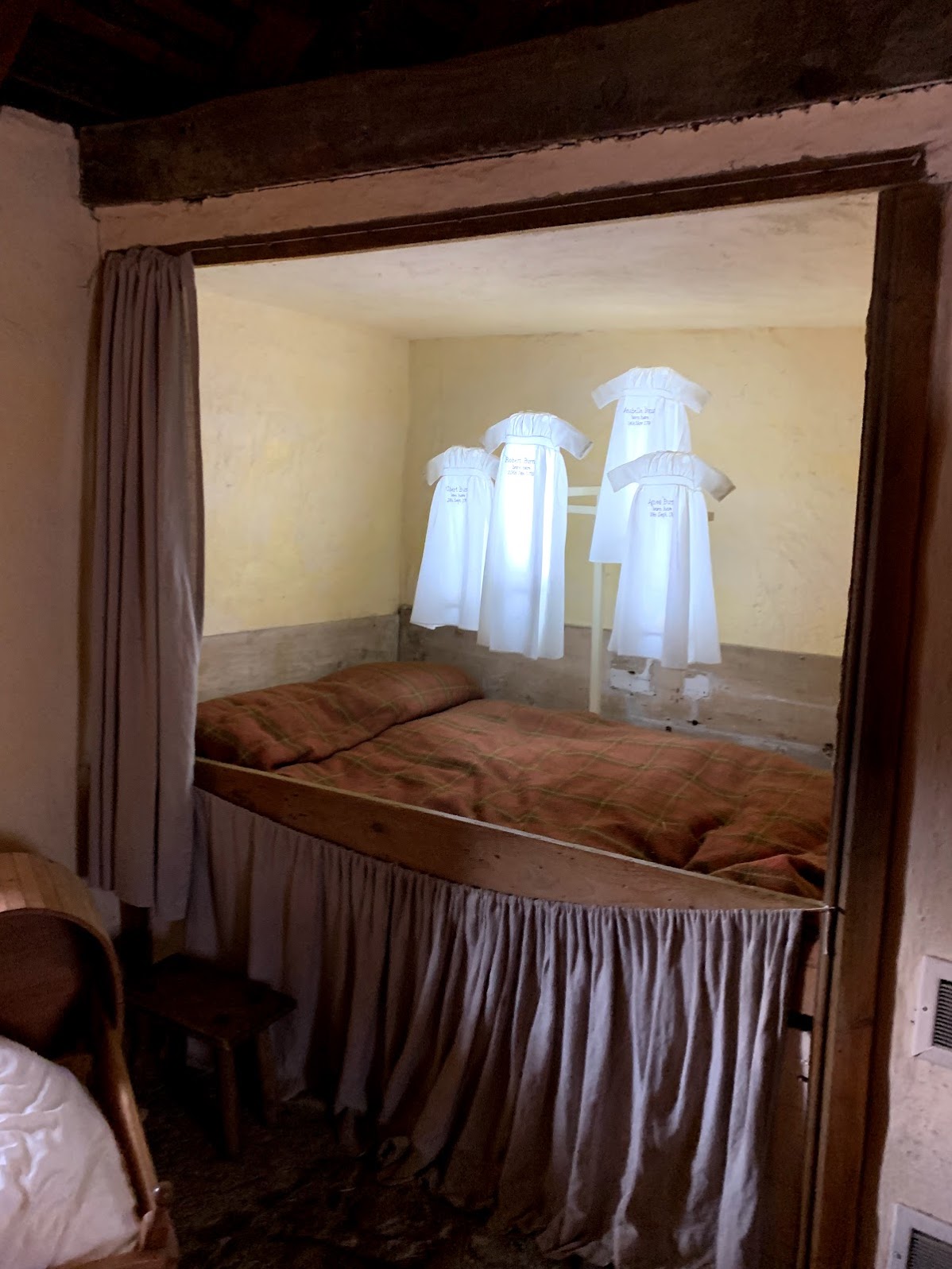
Our final stop on the Alloway Robert Burns tour was the cottage in which he was born. I’ve been there twice before, but it’s always humbling to see the two-room stone cottage with attached stables. The kids enjoyed seeing the bed where he was born and his first report card from age 6yrs. old. After walking round the town we crossed the street from the cottage and had a tea and various cakes and scones at the Poet’s Corner, a tiny teashop. The owner was a lovely lady from the area. Once warmed up with hot beverages we headed back to the car and drove through the rolling hills of the Lowlands driving towards Gretna Green. The fog set in about 20 miles north of Gretna Green.

Burns Cottage Alloway, Ayrshire, Scotland
The bed where Robert Burns and three of his younger siblings were born. There names and birthdates are on the baby gowns.
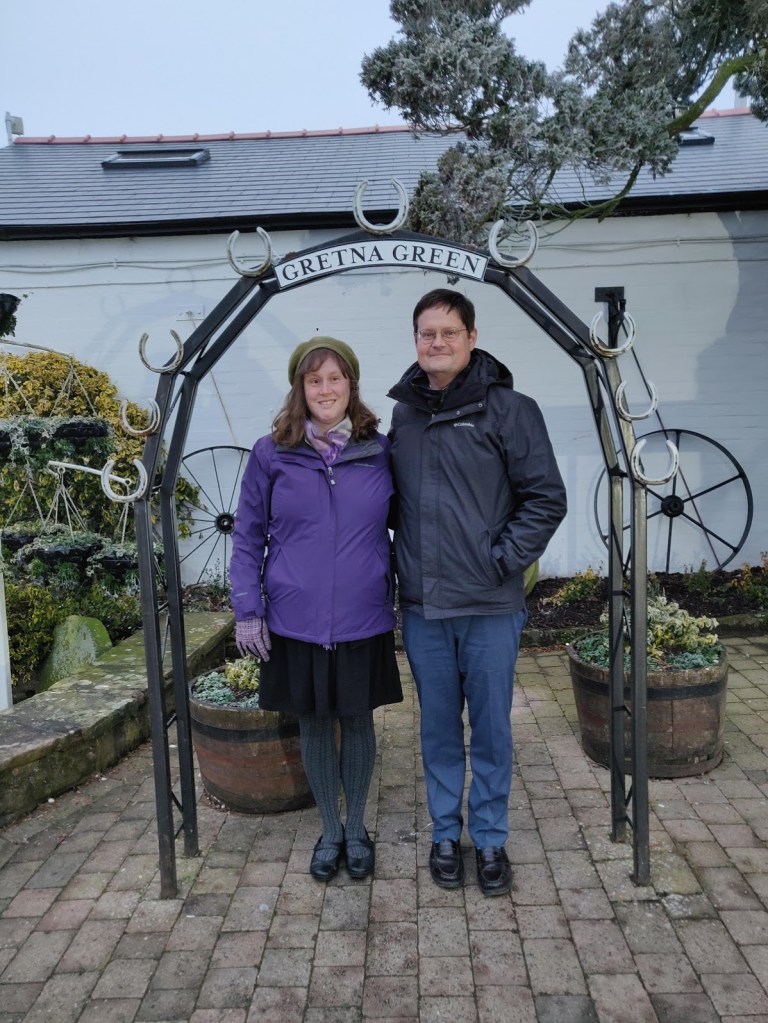
A horseshoe made by the blacksmith is traditionally given as a good luck token to the newlyweds

Gretna Green is a little town right on the border between Scotland and England. Starting in 1754 young couples who wished to marry, but couldn’t due to various reasons would hop over the border and wed. Scotland had much more lax marriage laws than England. Today Gretna Green is still a destination for lovebirds or those wishing to renew their vows. By Scottish lay a blacksmith can marry folks. The marriage is considered binding, if a document is signed by the couple and witnesses.

Late in the evening we arrived in Easingwold, Yorkshire, England and the Oower House B&B.

Ruined Castle and Snowy Mountains

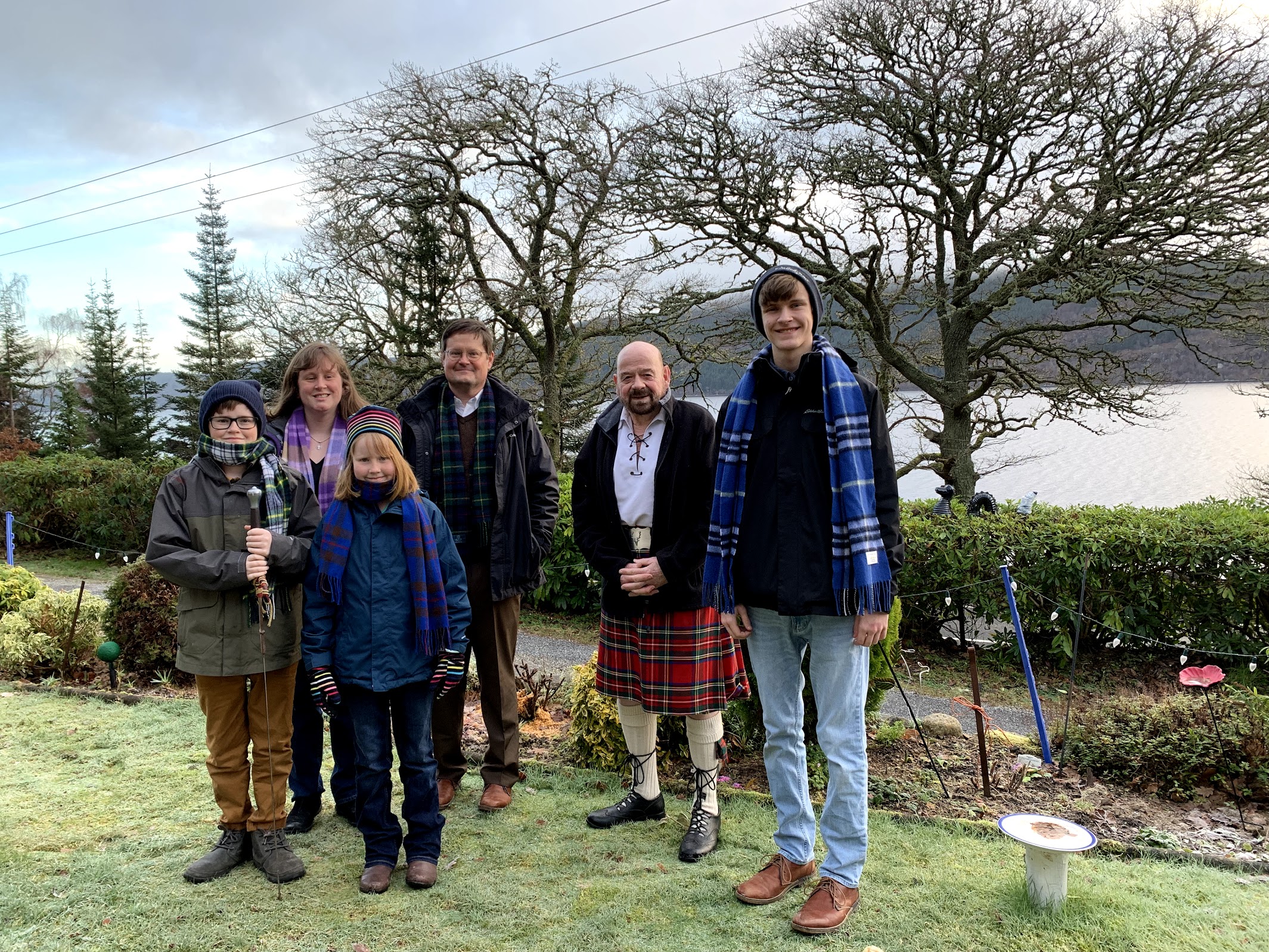
It was hard saying goodbye to the McIntosh’s after another warm hearty Scottish breakfast, but we did. May took a lovely photo of us with Duncan standing in their front yard overlooking Loch Ness. A final note about their home…for those who know the famous picture of “Nessie” (the Loch Ness Monster) from 1922, it was taken within about 100ft. from their property!

Photo with Duncan McIntosh

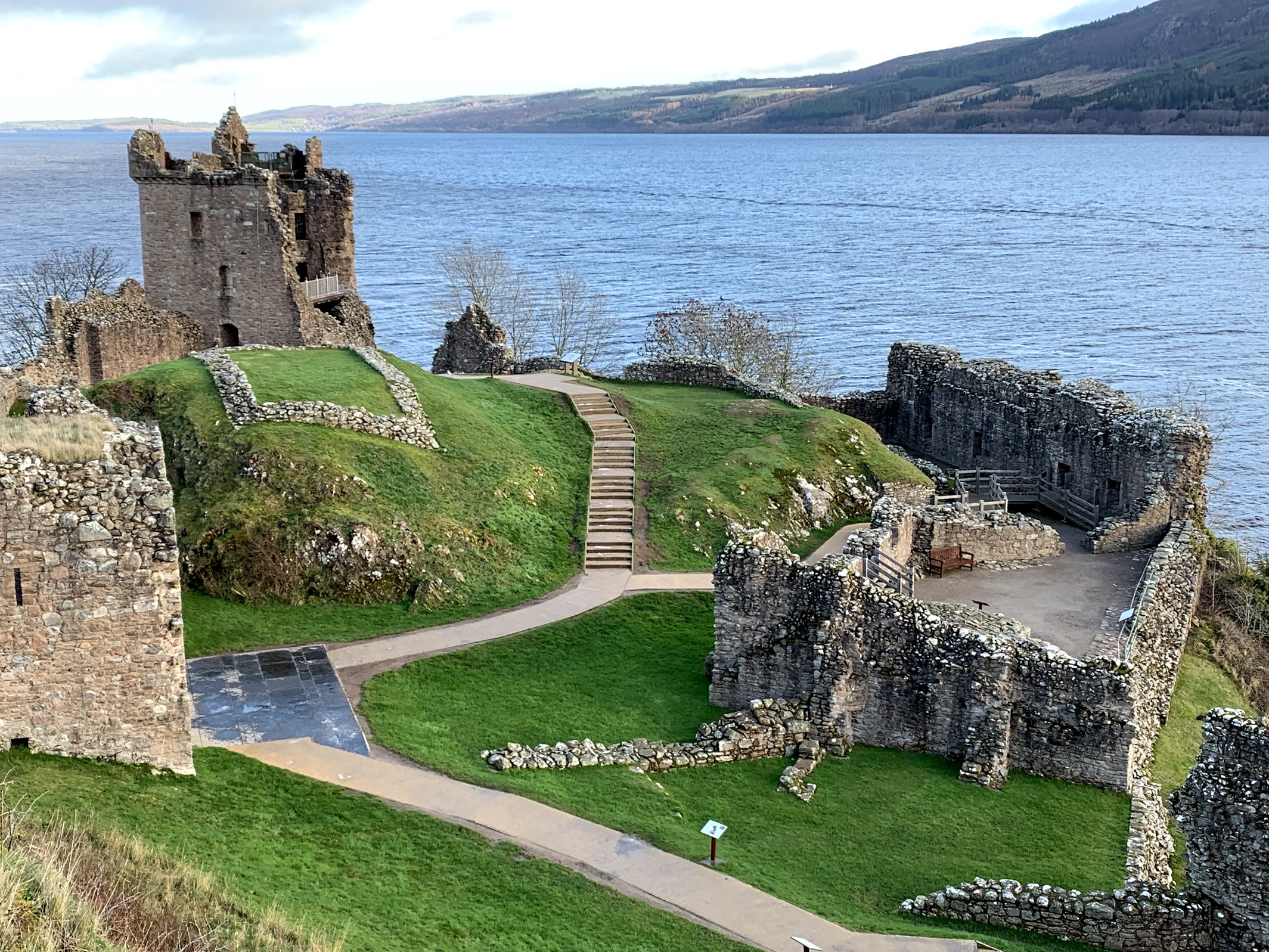
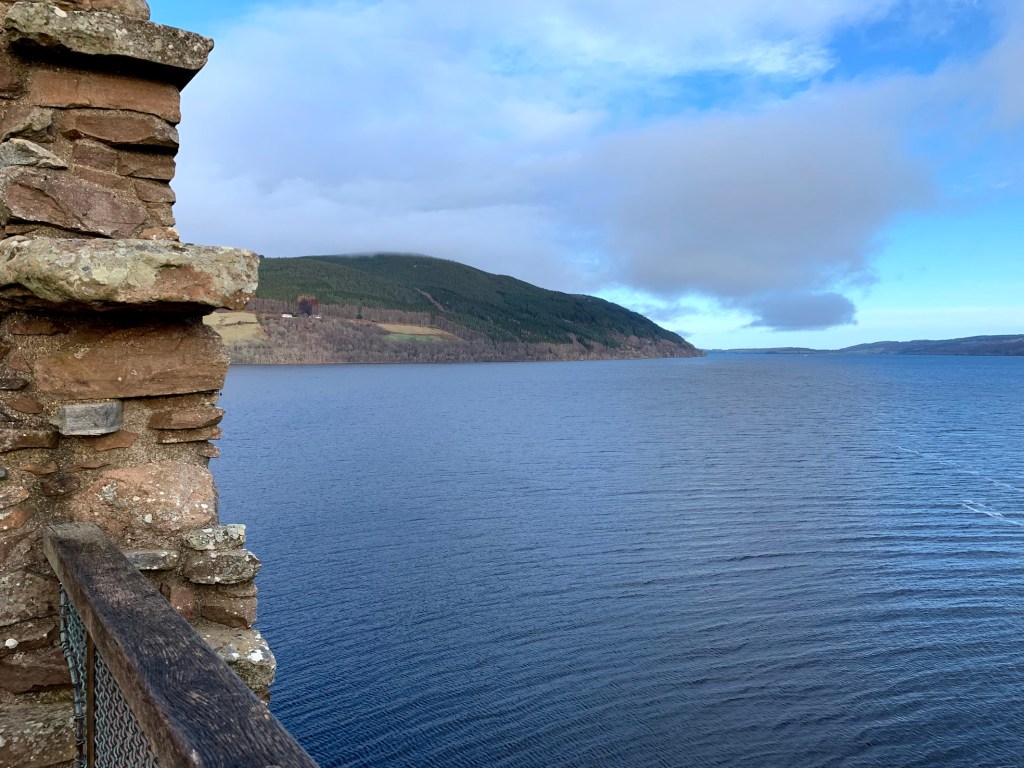
After a few tears and big warm hugs we started down the road toward Castle Urquhart, which was about 15 miles from the B&B. Urquhart is the largest castle ruins in the Highlands. There has been a fort on the rocky perch overlooking Loch Ness since around 300AD.  St. Columba visited the Pictish Lord of Urquhart in 570AD preaching Christianity. The Lord and his family were converted. The castle went through several reconstructions over the next 1100 yrs. It reached its height of power between 13th-17th centuries. Lord Grant, Chief of Clan Grant, was given ownership in the mid 1500’s. In 1689 the current Grants were loyalists to the Crown and did not want to join in the first Jacobite uprising of 1689. Knowing they couldn’t hold the castle, the Chief decided to blow up the tower and gate before the Jacobites arrived. He set his own castle on fire to keep it from being used as a stronghold by his enemy! It has lain in ruins ever since. The sun came out while we were there and you could see for miles up and down the Loch. Alas no Loch Ness Monster spotting!

Urquhart Castle
View of Loch Ness from the main tower at Urquhart Castle
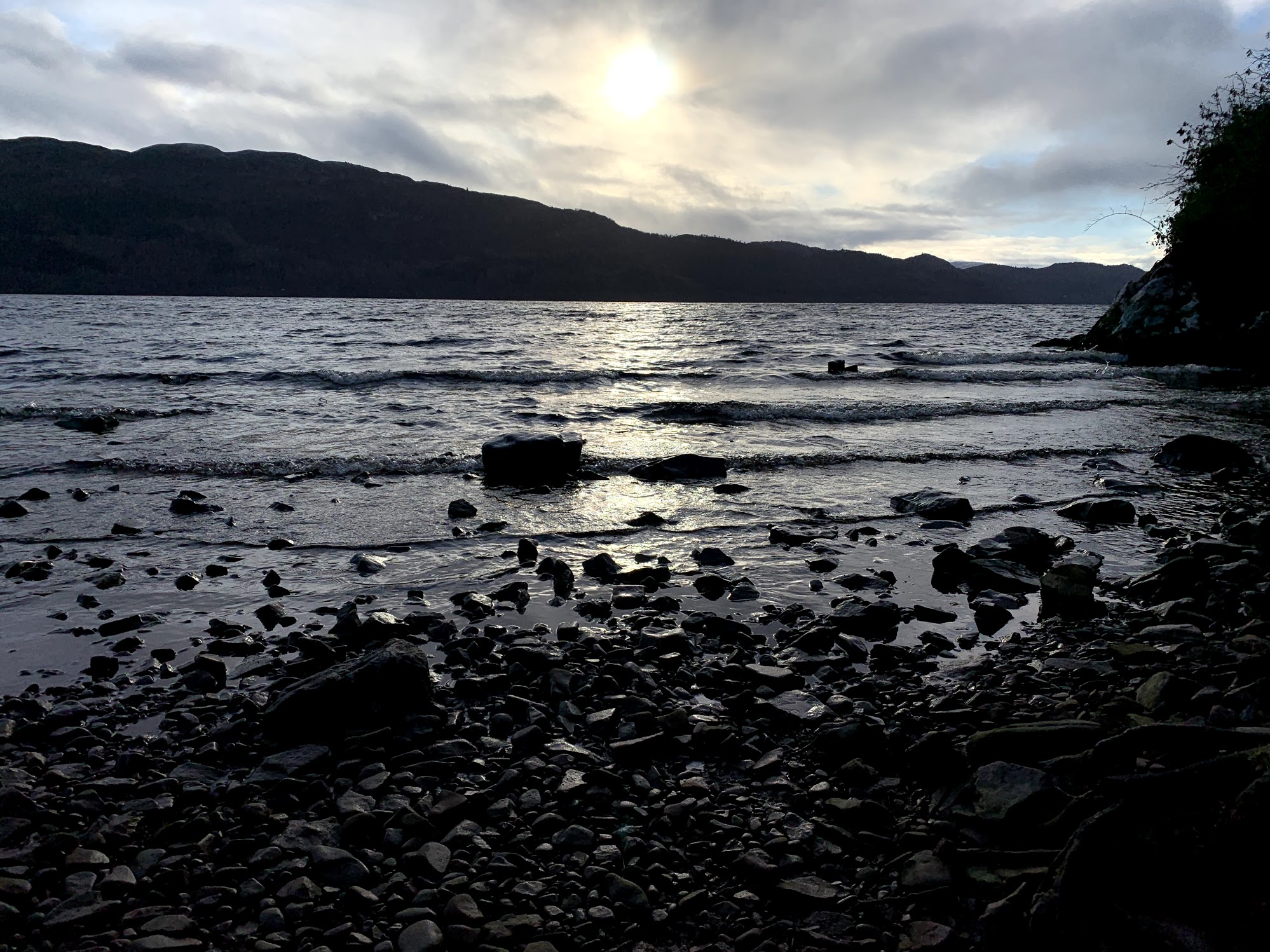
Loch Ness
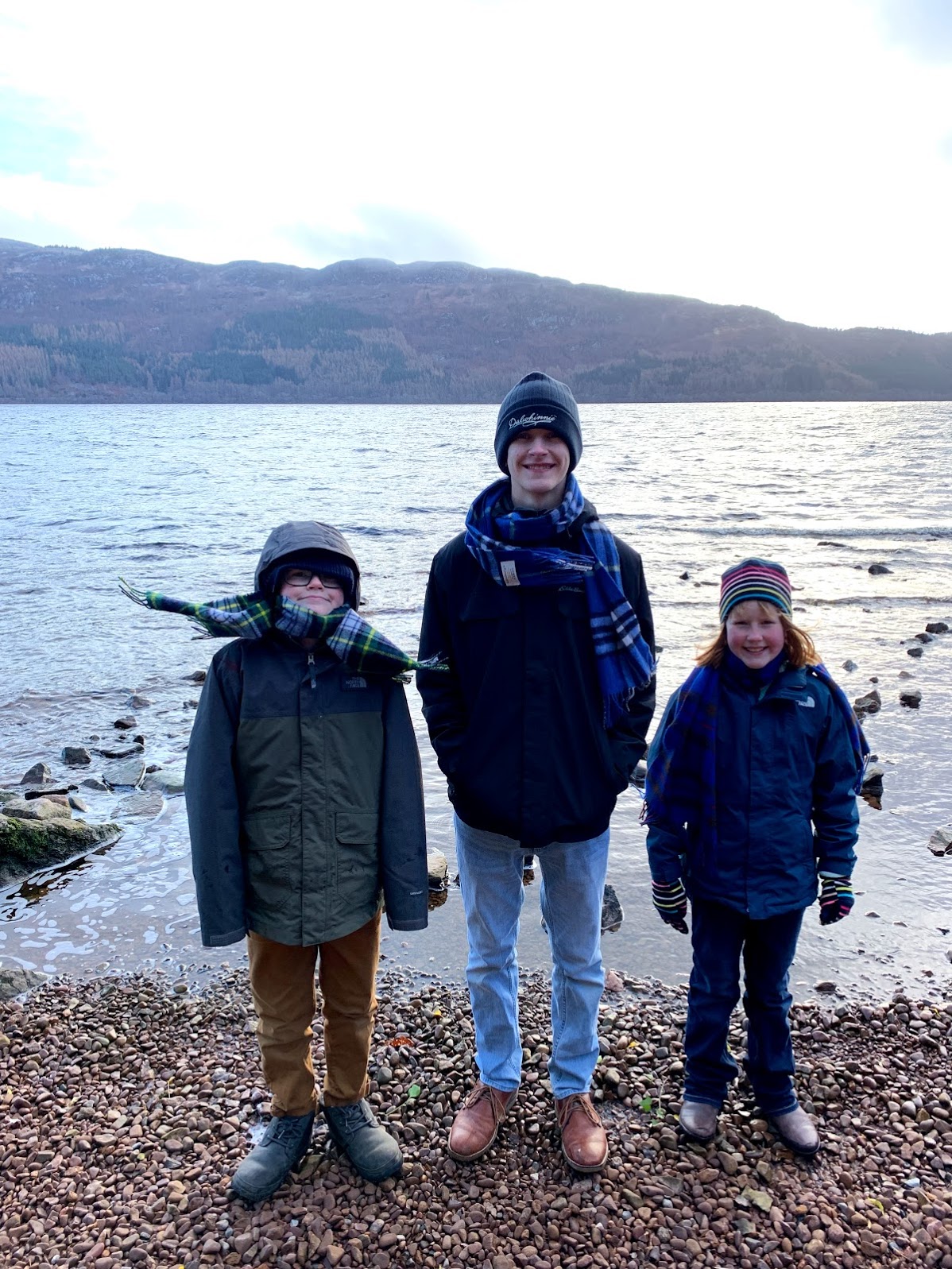
Kids standing on the shore of Loch Ness at Castle Urquhart

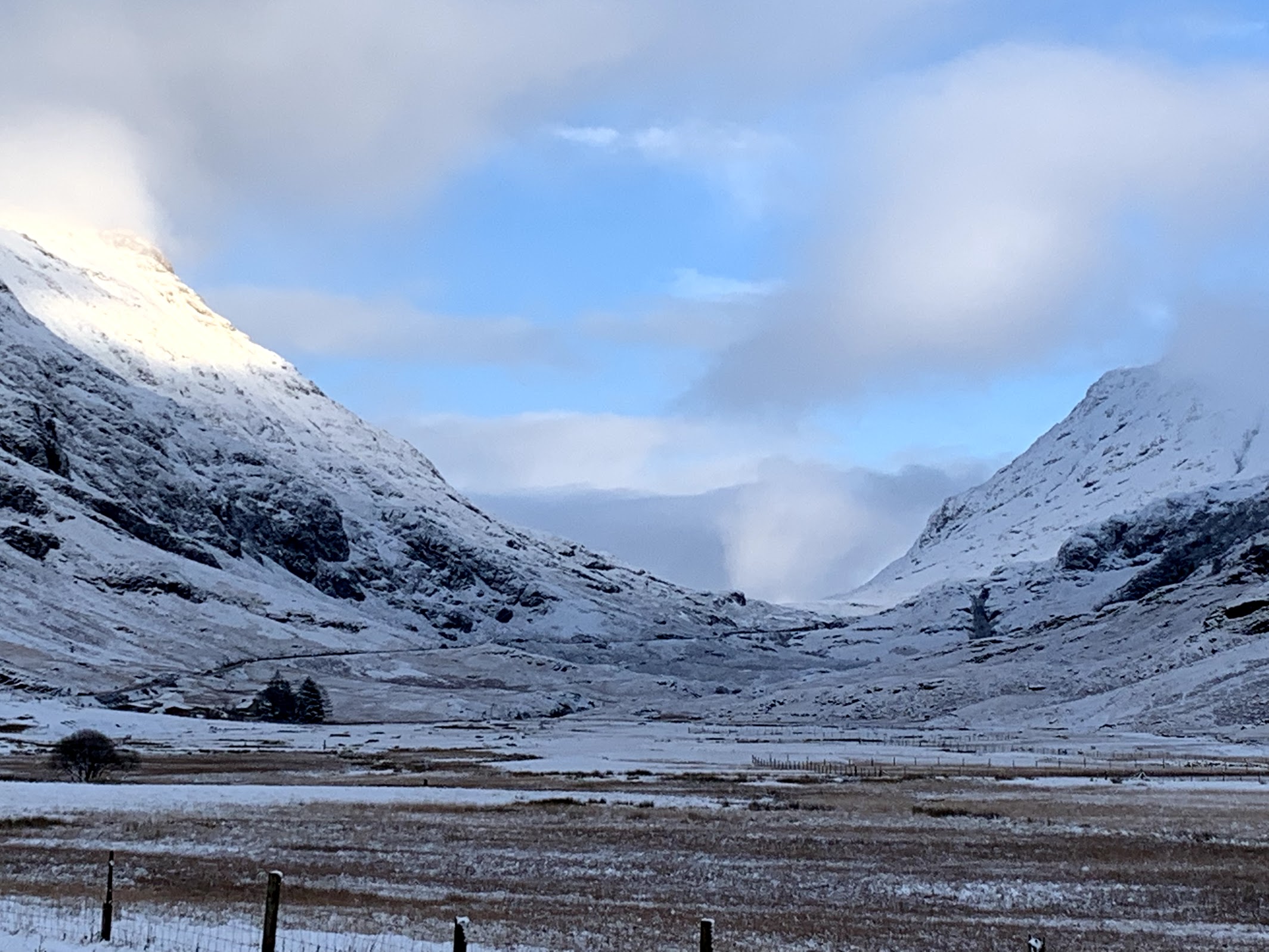
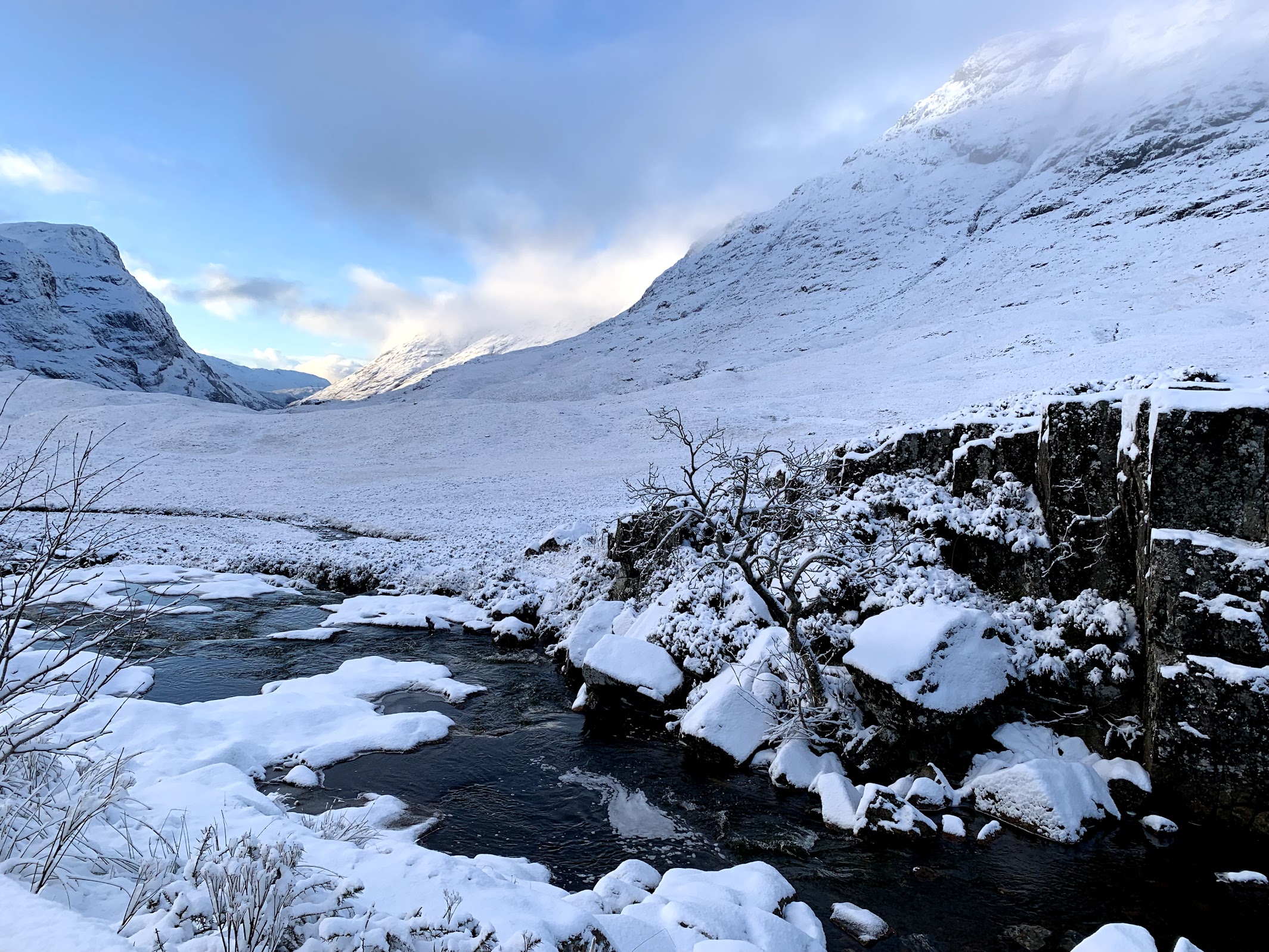
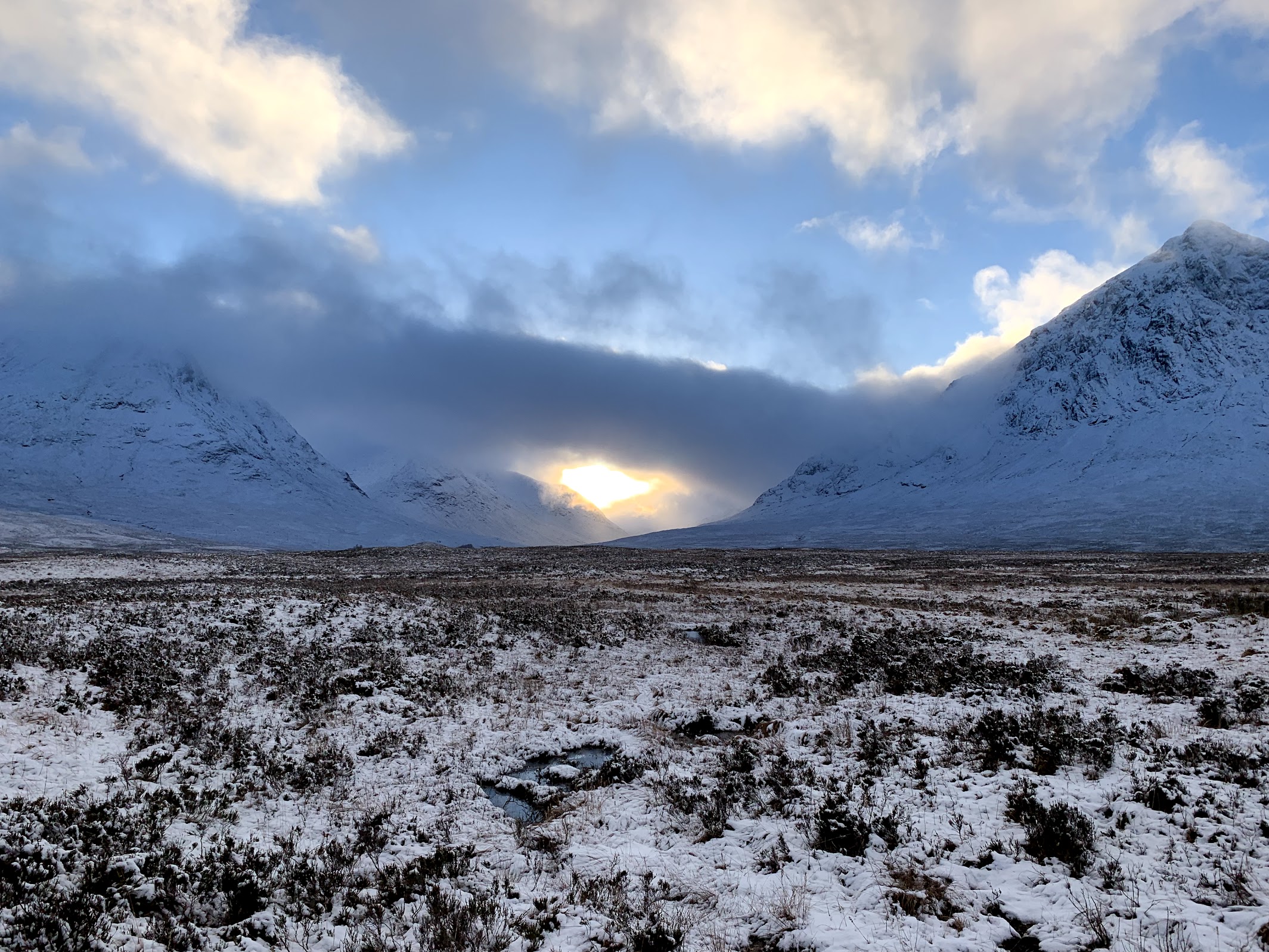
Once again we warmed up with tea and coffee and then drove south down the A82. This is the main road through this section of the Highlands. The windy two-lane road took us through quaint villages, pass sparkling lochs, and majestic snow covered mountains. After an hour we were in Glen Coe. Words cannot truly capture the beauty of this picturesque Glen (valley in English). The mountains tower over the narrow River Coe, which flows gently through the snow covered glen floor.  The mountainsides shimmered as the intense late afternoon sunlight streamed down the peaks. There were very few cars on the road and at every turnoff another grand view met our eyes.

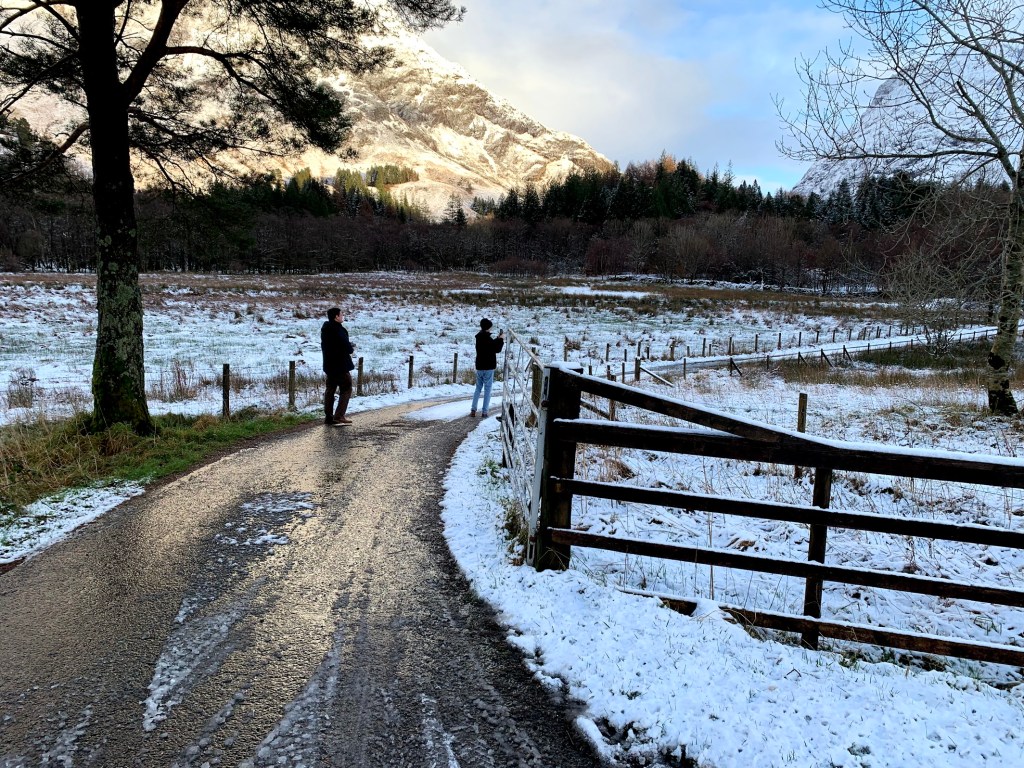
Took a little walk just outside the town of Glencoe at the mouth of the Glen itself
Glencoe
River Coe in the glen

The Glen is known also for a horrific massacre that took place on 13 February 1692 when the Chief of the MacDonald’s failed to make it in time to a signing of allegiance to King William III. In return the king decided to make an example of disloyalty and ordered a troop of Campbell’s from Fort William to go down and befriend the MacDonald’s. Two days later the Campbell’s slaughtered the 38 men, burned their homes, and 40 women and children were left to freeze to death in the winter snows. It is said that if you listen carefully you can hear the moaning cries of the women and children on the winds that blow through the glen. As I stood looking down the glen and listening to the little river Coe run gently a chill ran up my spine. I looked over at Liam and he back at me. He too felt an otherworldly presence within the grandeur of Glencoe.

Where Glencoe opens out onto Rannoch Moor
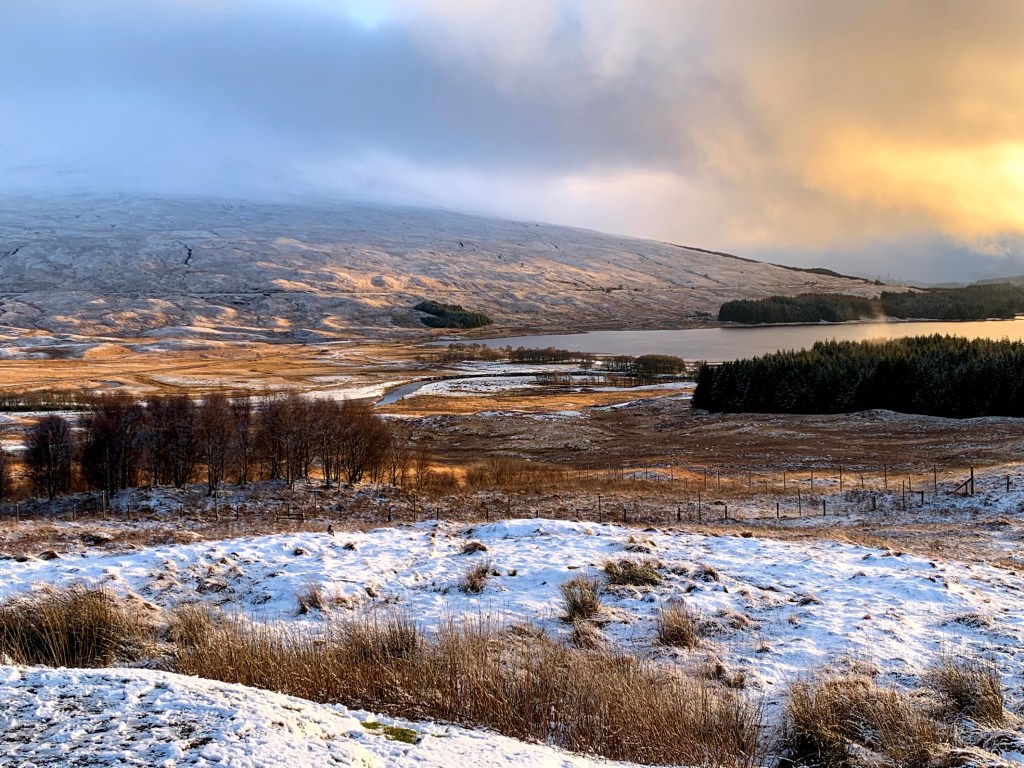
Sun-kissed edge of Rannoch Moor and the distant Highland mountains:
I don’t know which Loch that is on the right side of the photo.
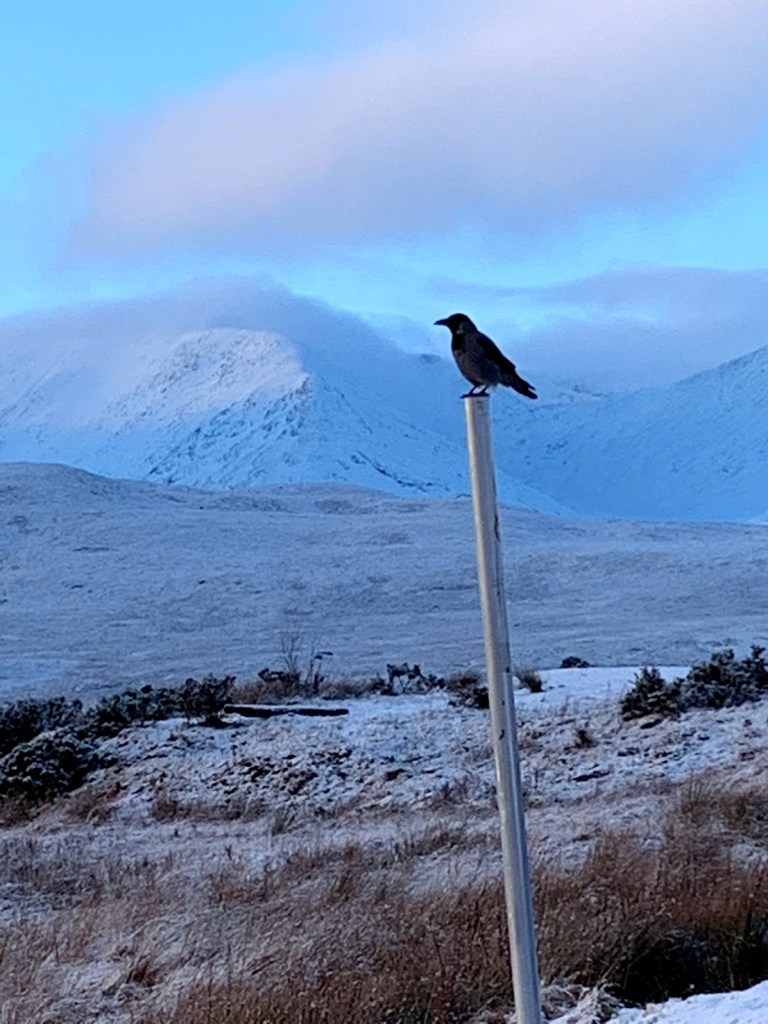
This photo was taken at the same spot as the “sun-kissed” photo above. I turned around and the crow was sitting on the pole. The mountains behind the crow are part of Glencoe.
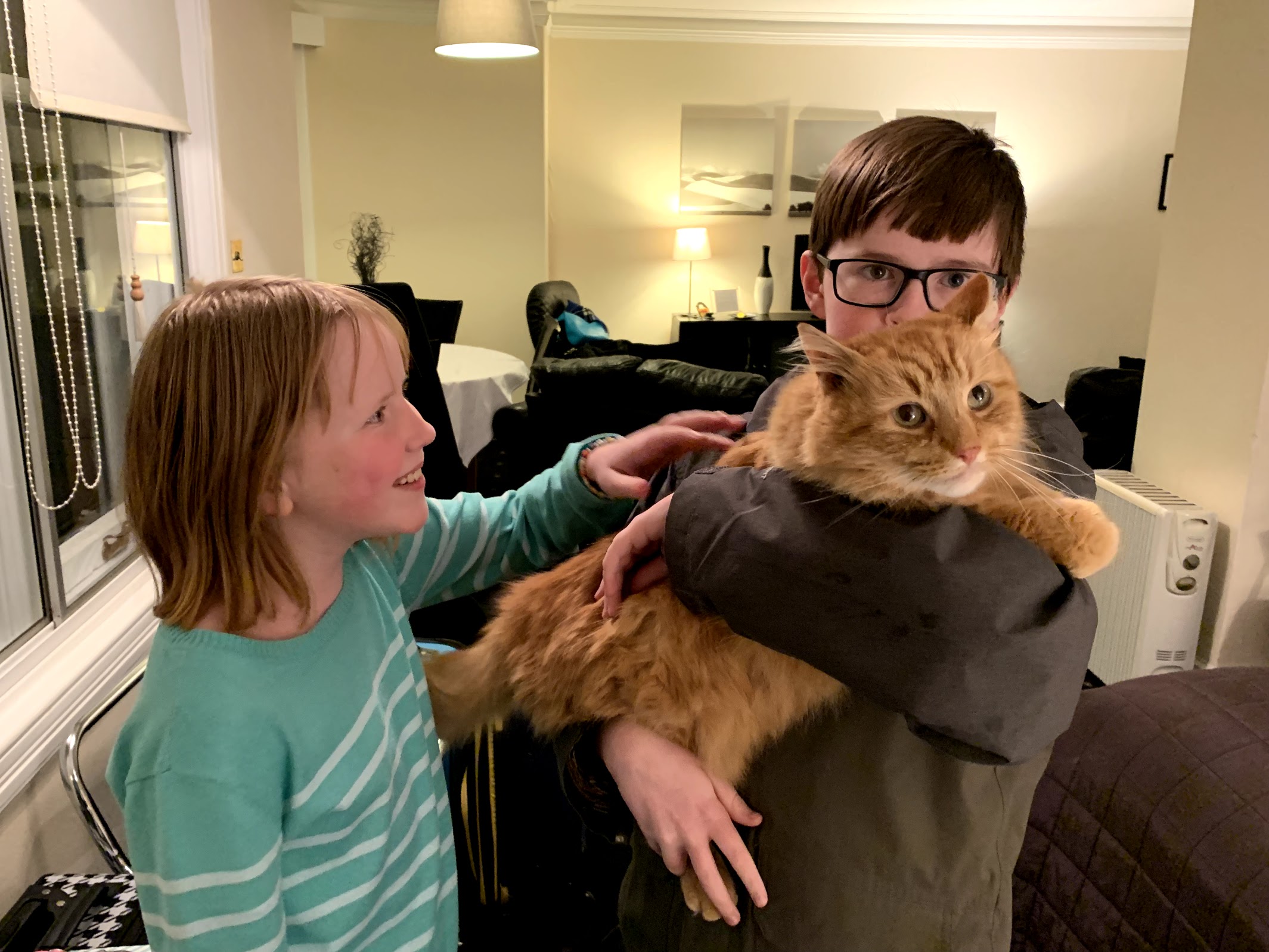
Seamus, Faywen, and Tosh

Our day ended driving further south out of the Highlands, through Glasgow, and down to Troon, a lowland town along the western coast in Ayrshire. Our host Mr. Peter had a sweet orange tabby named Tosh who received a lot of love and petting from us!

In Memoriam

The McIntosh’s fixed us a hearty Scottish breakfast of bacon (ham), egg, toast, black pudding, tea, coffee, juice, and sausages. We needed the fuel for our adventure today, which was primarily outside.

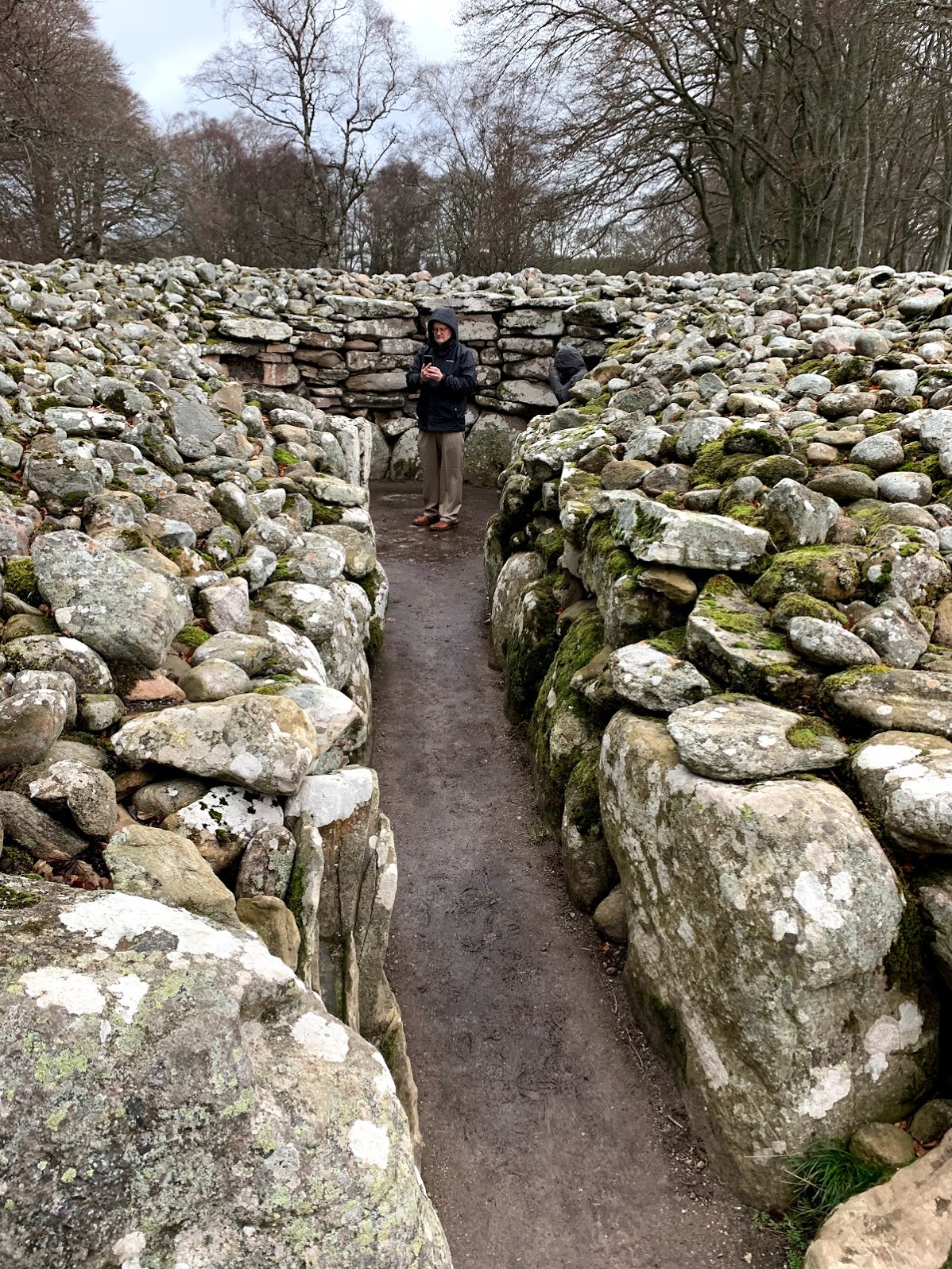
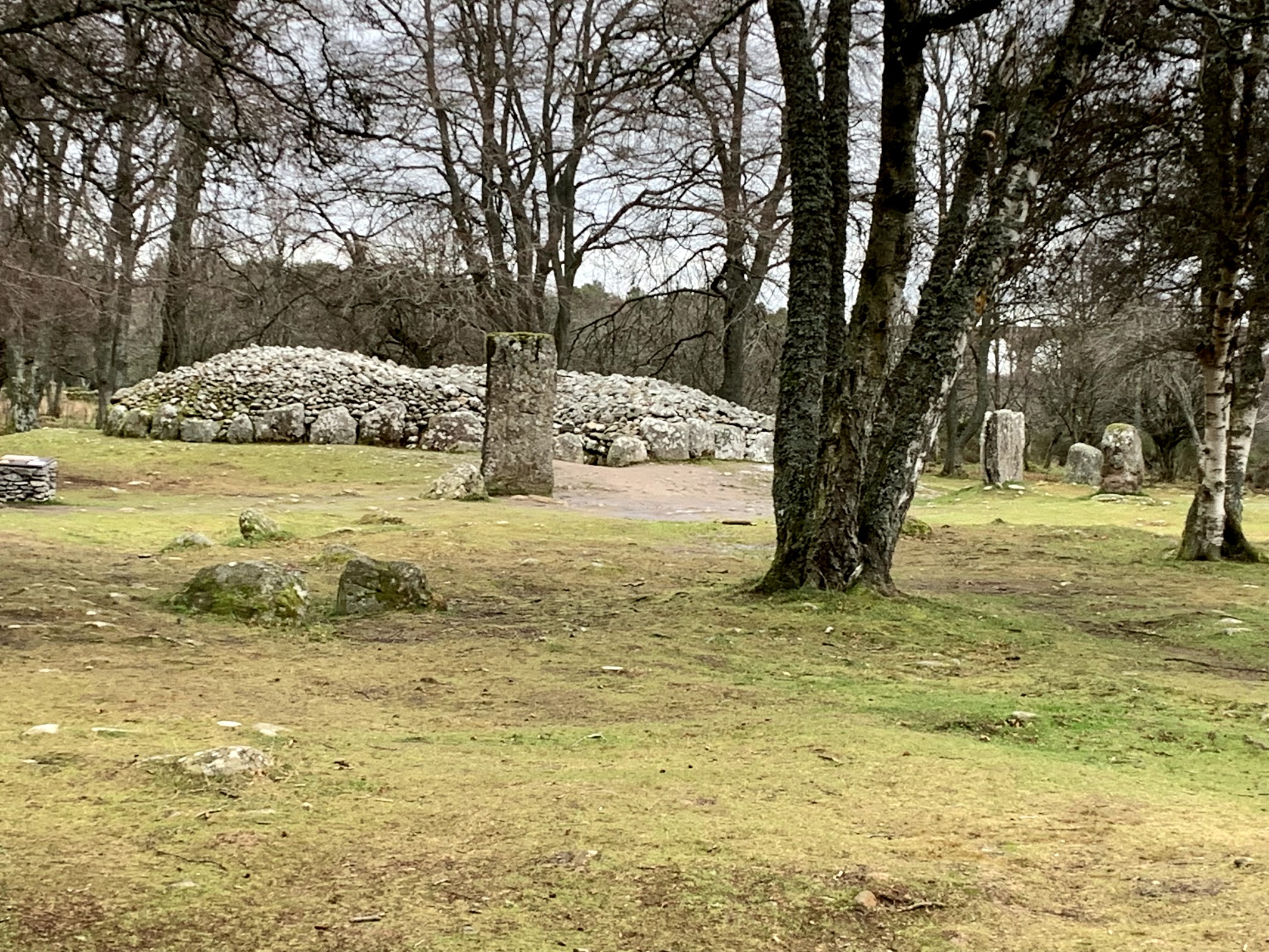
Driving north about 45 minutes we stopped off first at the Clava Cairns, an ancient 4000 yr. old burial site. These stone ruins were originally beehive shaped and covered with dirt. They were used to bury the important members of the community. The narrow passageways lead to an inner round chamber that is illuminated as the sun rises on the winter solstice. There are also perfect stone circles surrounding the cairns. We had the place to ourselves. The cairns sit in a small valley settled along a little rivulet. The wind whipped through the valley filling our lungs with an invigorating smell of damp stone and moss.

Robert inside one of the two larger cairns
The larger cairn with standing stone circle

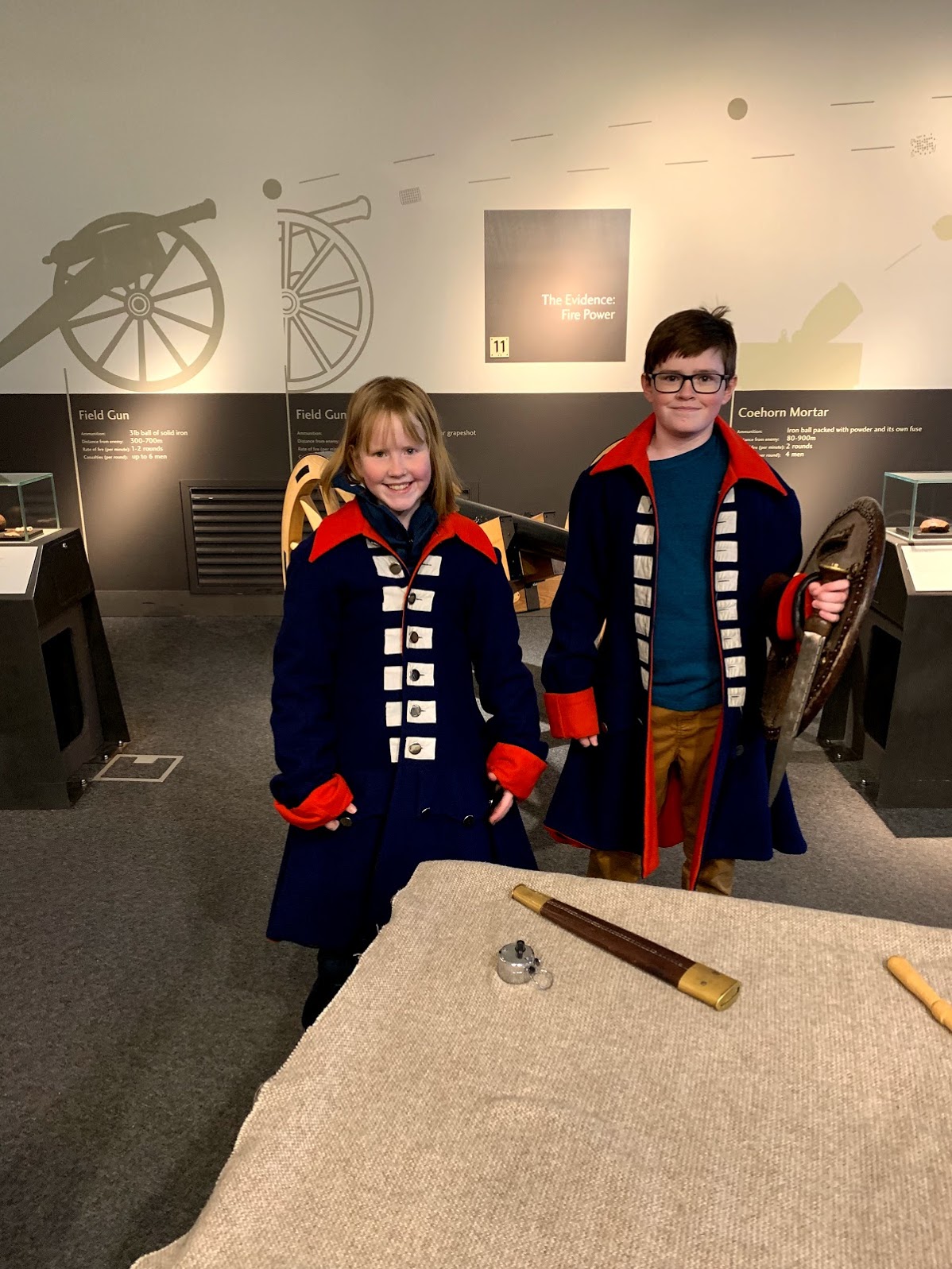
A few miles up the road was the famous Culloden Battlefield, site of the last battle fought on British soil. The battle took place on 16 April 1746. The two opposing sides consisted of Government troops led by the Duke of Cumberland (second son of King George II) and Prince Charles Edward Stuart (Bonnie Prince Charlie) leader of the Jacobites. Both princes had a claim to the British throne, however King George was Protestant and Prince Charles was Catholic. Charles attempted to regain the Crown, but failed in the end. The Jacobites were crushed in battle loosing about 1500 men to the 300 Government troops. There is a misconception that the battle was fought between the Scots and the English. The Jacobites had English and French among their ranks and the Government had the Scottish Argyles and some Scots lowlanders as well. 

Faywen and Seamus in Jacobite uniforms
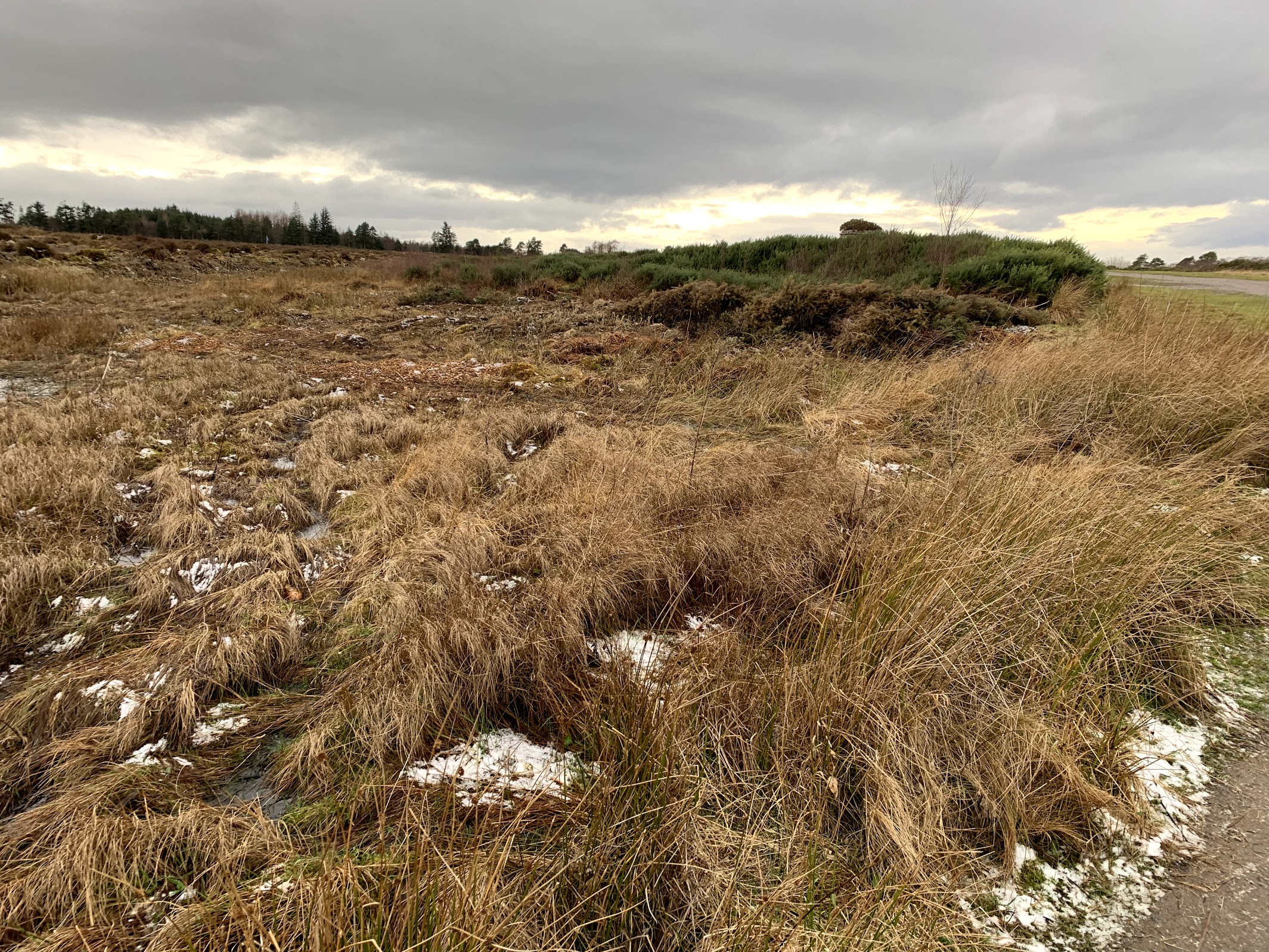
A small section of Culloden Battlefield: This is the terrain the men fought on during the battle.
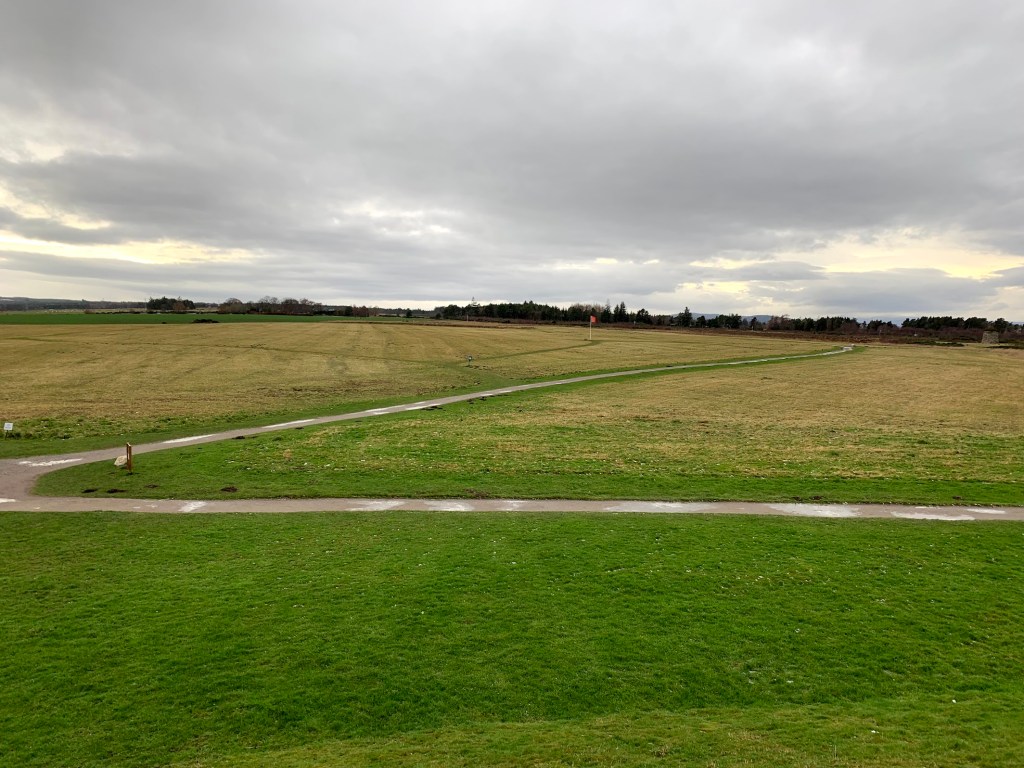
A section of Culloden Battlefield as seen from the Government ranks

The battlefield museum had a lovely audio tour, interactive displays, and a surround sound theatre depicting the battle in just a few short minutes. As we walked around silence and reverence commanded the battlefield. The wind blew fiercely across the bracken nettles and boggy grasses of Culloden Moor. There were large stones marking the mass graves of the various Highland Clans on the Jacobite side as well as stones inscribed with the Government troop dead. A moving memorial to the brave soldiers on both sides of the conflict. After the battle no mercy was shown to the Jacobites and the Government passed the Act of Proscription making the wearing of tartan, speaking of Gaelic, and establishment of clans outlawed. The Act was in affect for several decades until it’s repeal in 1782.

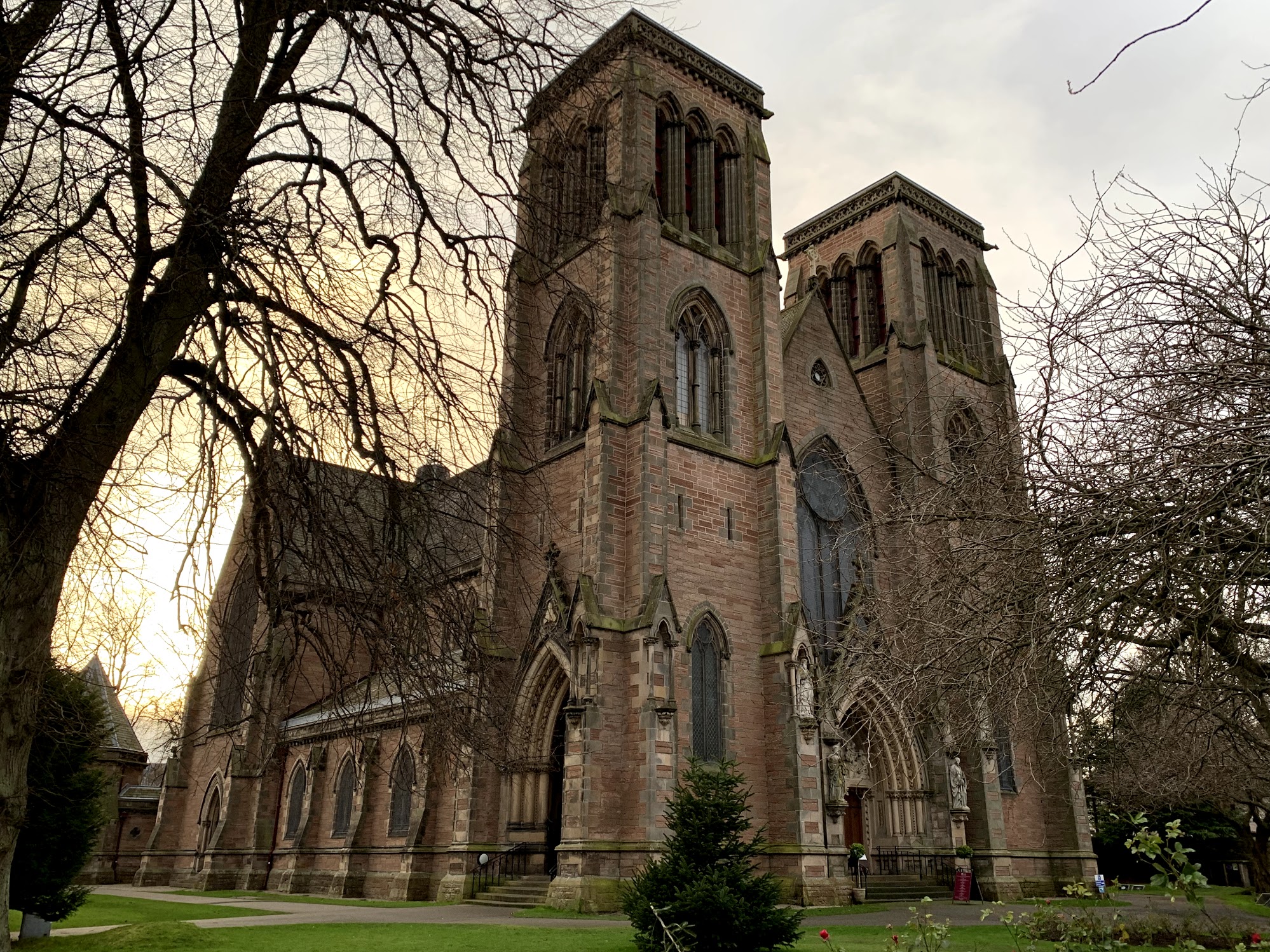
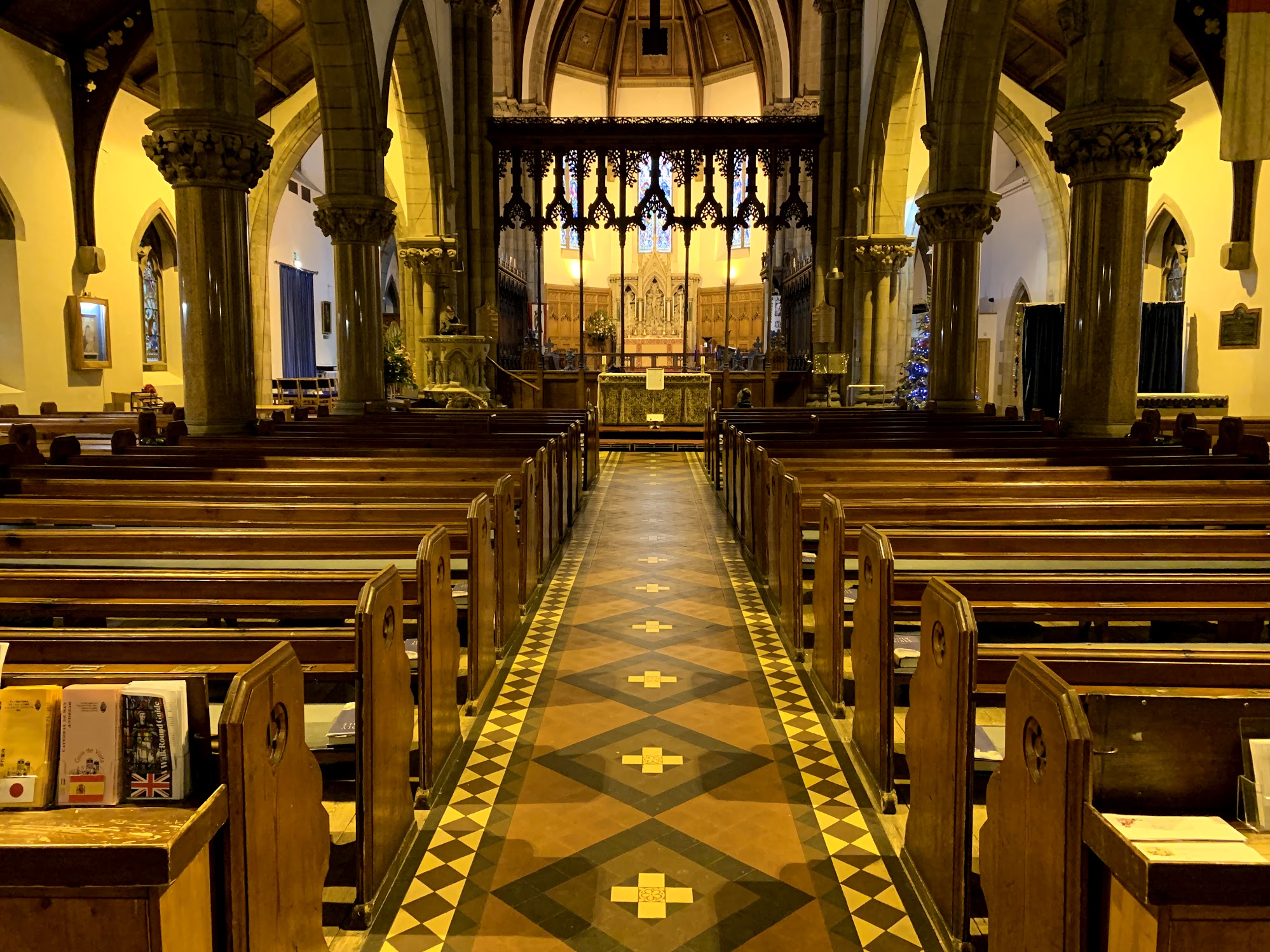
We warmed up with a nice soup and tea at the café and then headed into Inverness. We parked down at the river by Inverness Cathedral and went inside the lovely old church building. They had complimentary pamphlets with walking tours of the city centre. The boys purchased new sporrans to wear with their kilts in one of the quaint shops in the town square.  A Clerk at Culloden told the kids to try “Percy Pig” gummy candies at Mark and Spencers Department Store. Let’s just say “Percy Pigs” are now the family’s new favorite candy.

Inverness Cathedral
Seamus read us Genesis Ch. 1 from the pulpit inside Inverness Cathedral
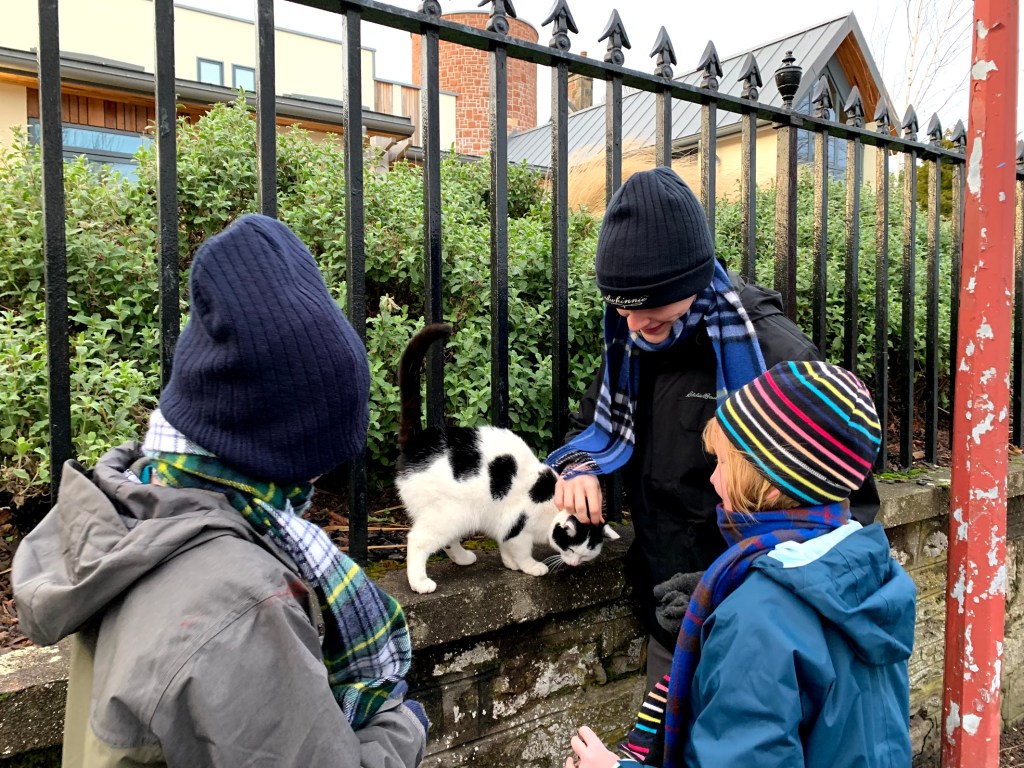
Even Scottish cats are friendly!
We made a friend while walking along the riverbank in Inverness.

On the way back to our B&B we had a lovely dinner at the Loch Ness Inn in Drumnadrochit. Finally we ended up yet again in the kitchen with Mr. McIntosh drinking whisky and listening to his stories. My favorite was the Legend of the Balancing Rock. Behind his property up the mountainside is an old geological wonder… a stone perfectly balanced on its end. Legend says that the stone will stay in its place for anyone walking by, but a MacDonald. If someone of that name dares walk by the stone it will fall and crush them only to roll back onto its end awaiting another MacDonald to come by and meet his fate!

Water and Whisky

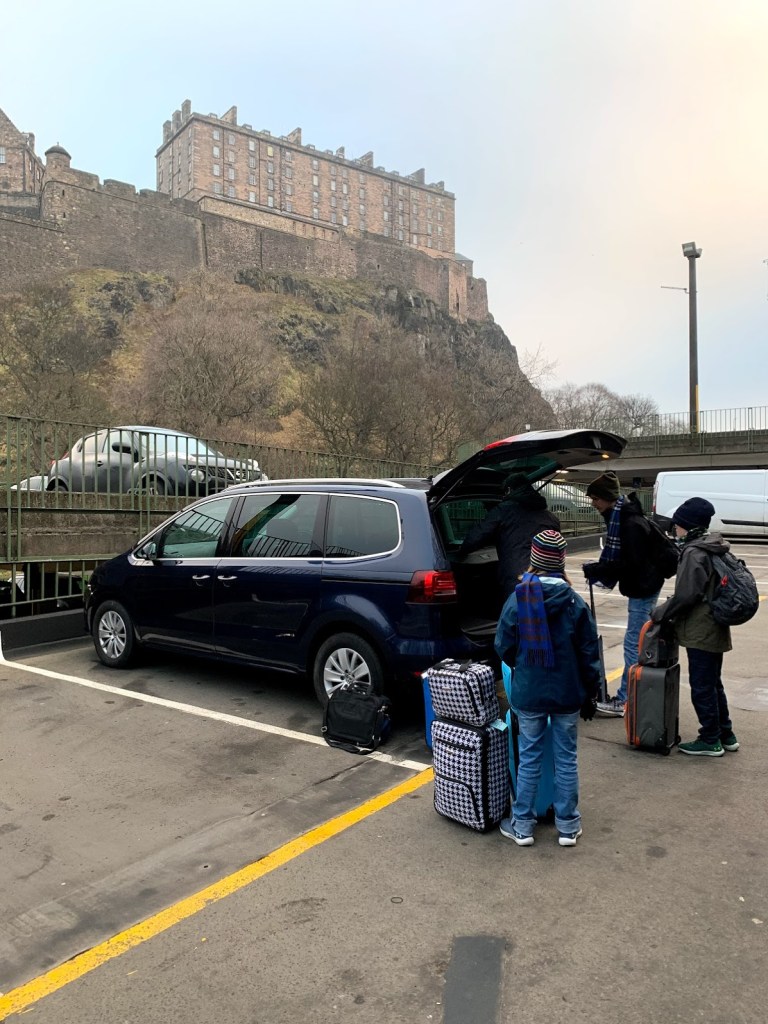
This morning we checked out of our hotel in Edinburgh and loaded up in the rental car, a lovely VW Sharan minivan. It isn’t too big, but had just the right amount of space for all of us. All loaded up we drove out of the city and across the Firth Bridge.

We had a scenic view of Edinburgh Castle as we loaded up our rental car.

We headed north to our first stop, Loch Levan. Known for its “wee” castle on an island only accessible by a summer boat and as a bird sanctuary. It’s ideal setting didn’t disappoint! We entered the visitor’s centre and were greeted by Mr. Davids, a retiree and  volunteer. He was very knowledgeable about birds and was able to show us through a couple of viewing telescopes a stunning group of yellow and black beaked swans. This breed isn’t very common in the area and can only be seen briefly this time of year as they migrate south from Sweden.

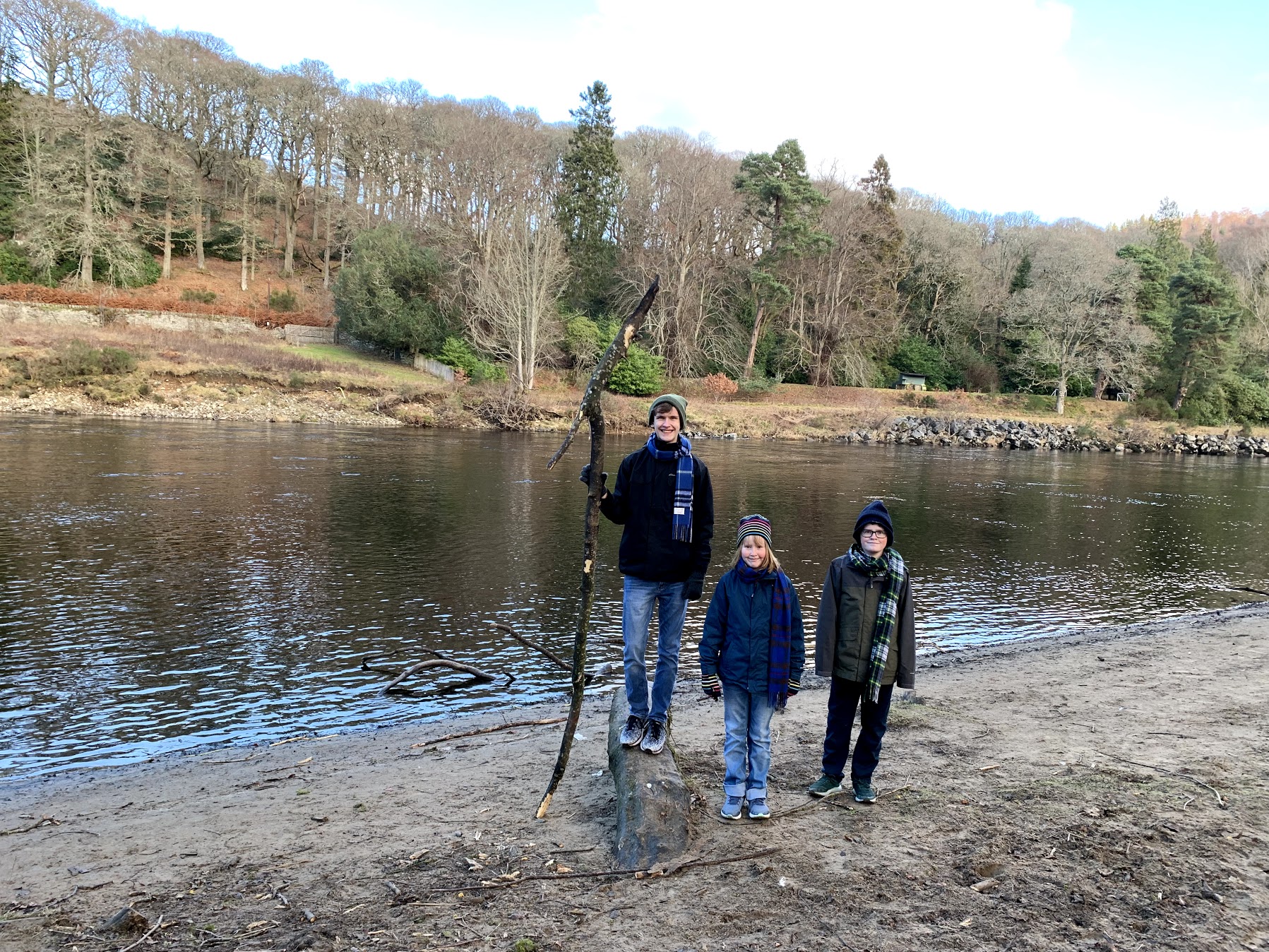
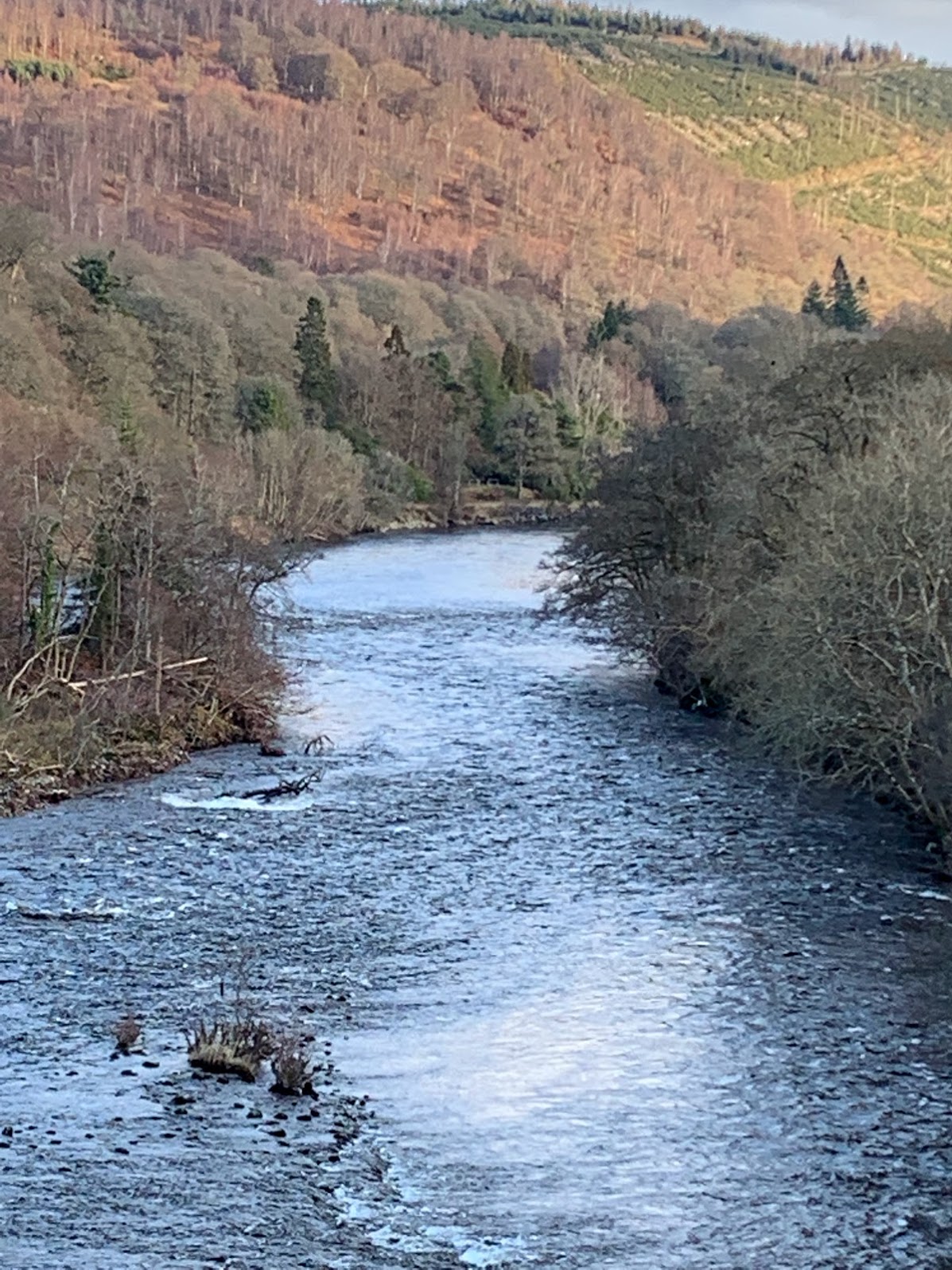
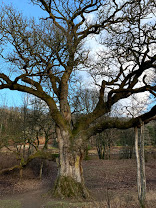
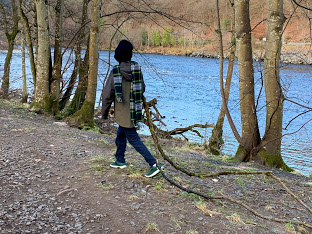
Next we drove about an hour north passing through the large city of Perth and stopped in the quaint midlands town of Dunkeld. The scenic village is situated along the River Tay. This was a favorite spot for Beatrix Potter. She was inspired by the local wildlife for some of her stories. The adjacent town is named Birnam which some may recall is quoted in Shakespeare’s MacBeth. The famous Birnam Woods reside in the area. However, only one mighty oak remains from the 700 yr. old portion of the forest. It is now considered a national treasure and is located about 100ft from the riverbank. We parked in town, crossed the river, and then walked down the riverbank on a little dirt path to the tree. Afterwards the kids enjoyed playing with massive sticks they found along the riverbank, which had a gentle incline. We also skipped rocks into the river.

Along the River Tay near Dunkeld
View of the River Tay from the town bridge
The Birnam Oak
Seamus and his Tay River stick!

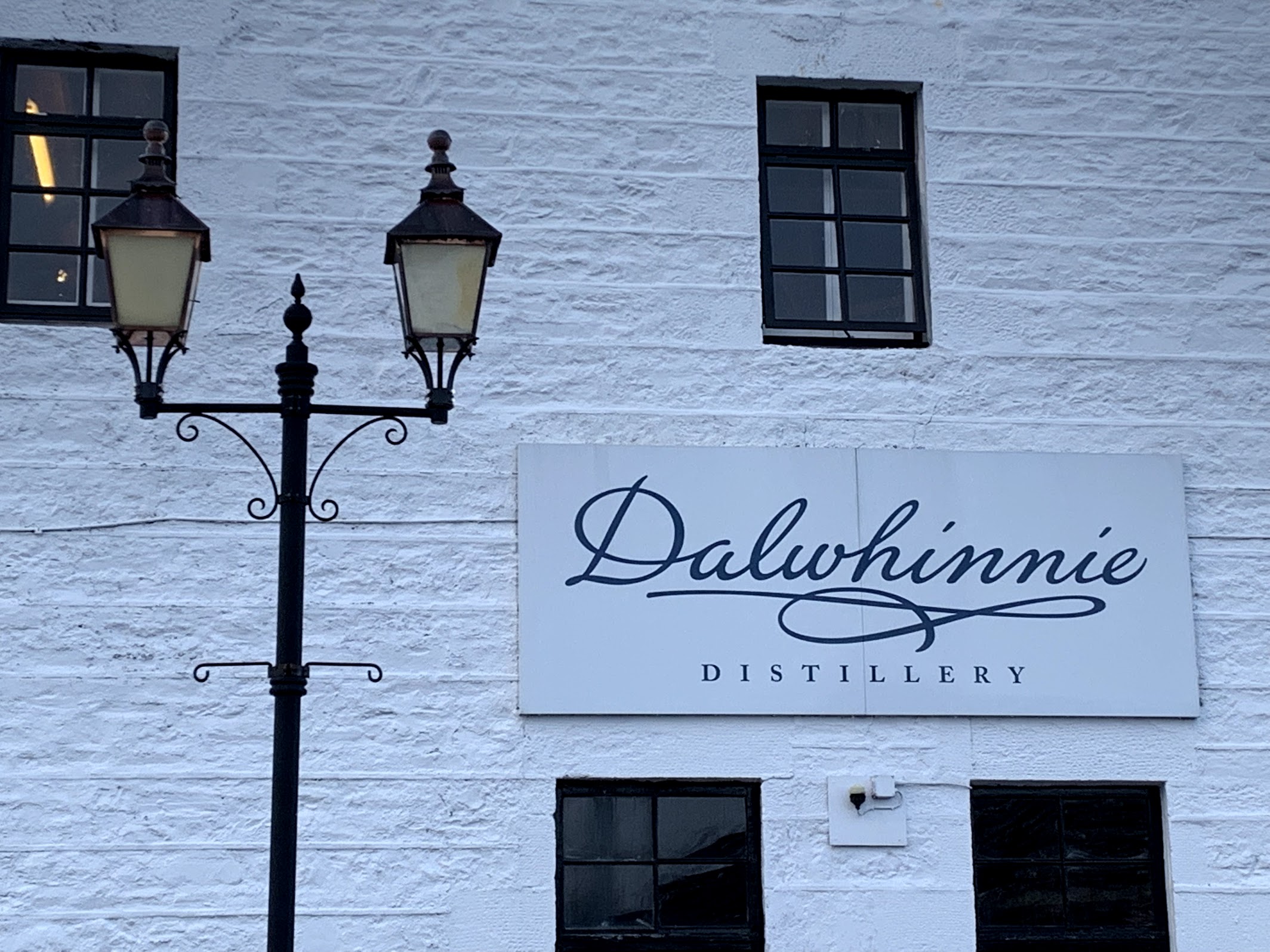
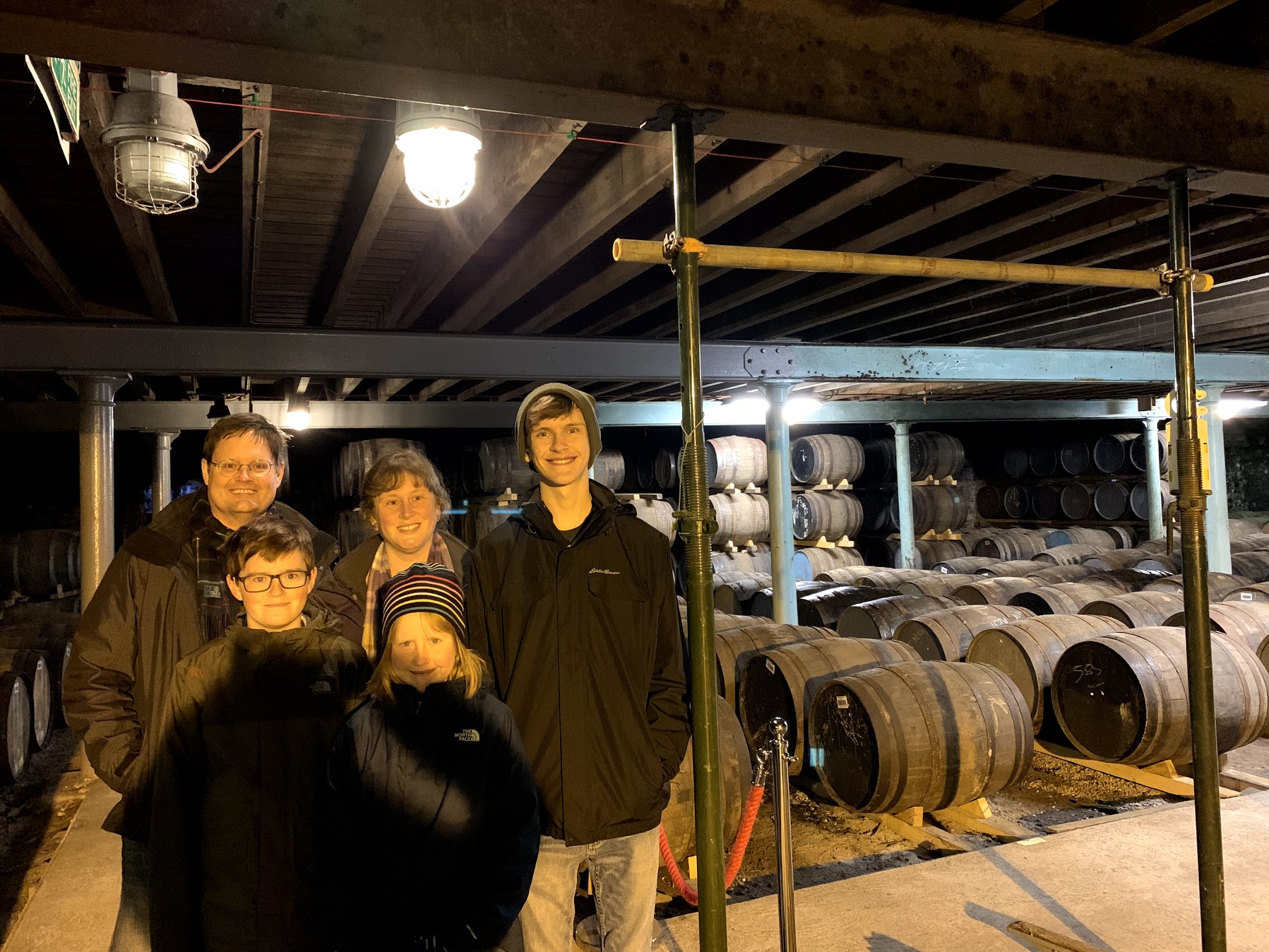
A quick bite to eat (I particularly enjoyed my plate of local salmon, scrambled eggs, and toast) and we headed north again passing through the famous Pass of Killiekrankie and officially into the Highlands! The next stop was at Dalwhinnie Distillery, Scotland’s highest elevated distillery at 1164ft.  Dalwhinnie means “gathering place” and the early farmers would meet at the crossroads and drive their cattle to market in Pitlochry and towns further south. Over the centuries a little village sprung up there and then a distillery in 1898. The Distillery was offering free tours for the winter so after a nice “tea” we took the last tour at 4:00pm. Mr. Peter was very informative and the kids asked some really good questions. We were in a small group of 16. The Distillery itself is rather small with only one Wash and one Spirits Still, however they make enough Single Malt Whisky to ship worldwide. Liam is interested in organic chemistry and in particular brewing or distilling. Our kids enjoy the science and process in making beer, whisky, and wine. We actually vent our own wine at home. After the tour the adults were treated to a tasting of the 15 yr. old and their latest 3 yr. old. Single Malt must stay casked and be made in Scotland to be considered a Scotch Whisky. They gave the kids chocolate and fruit water.

This Distillery is the the highest above sea level in Scotland.
A lovely Australian lady offered to take a family photo inside the Cask Room at Dalwhinnie’s Distillery

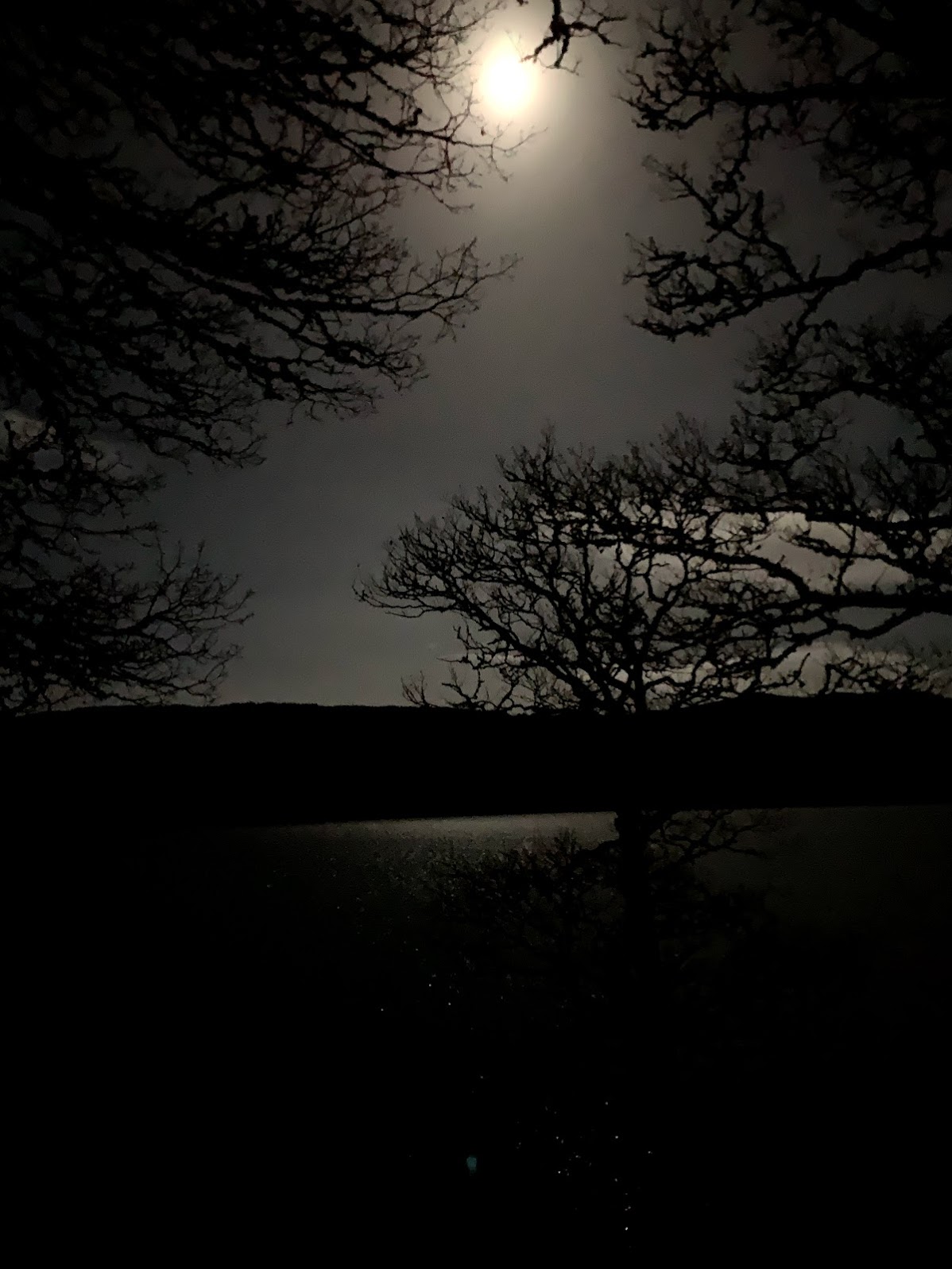
When we exited the distillery just as the sun had set and the moon risen to about 2 o’clock in the sky. It was a brilliant full, white, moon with just a wee halo. The shadows and silhouettes of the wispy clouds, and snow-covered mountains gave an air of ethereal beauty! I’ve truly never experienced anything so pure and mystical. One could see where the stories of the ancient Highlanders came from as we drove through the magical moonlit landscape!

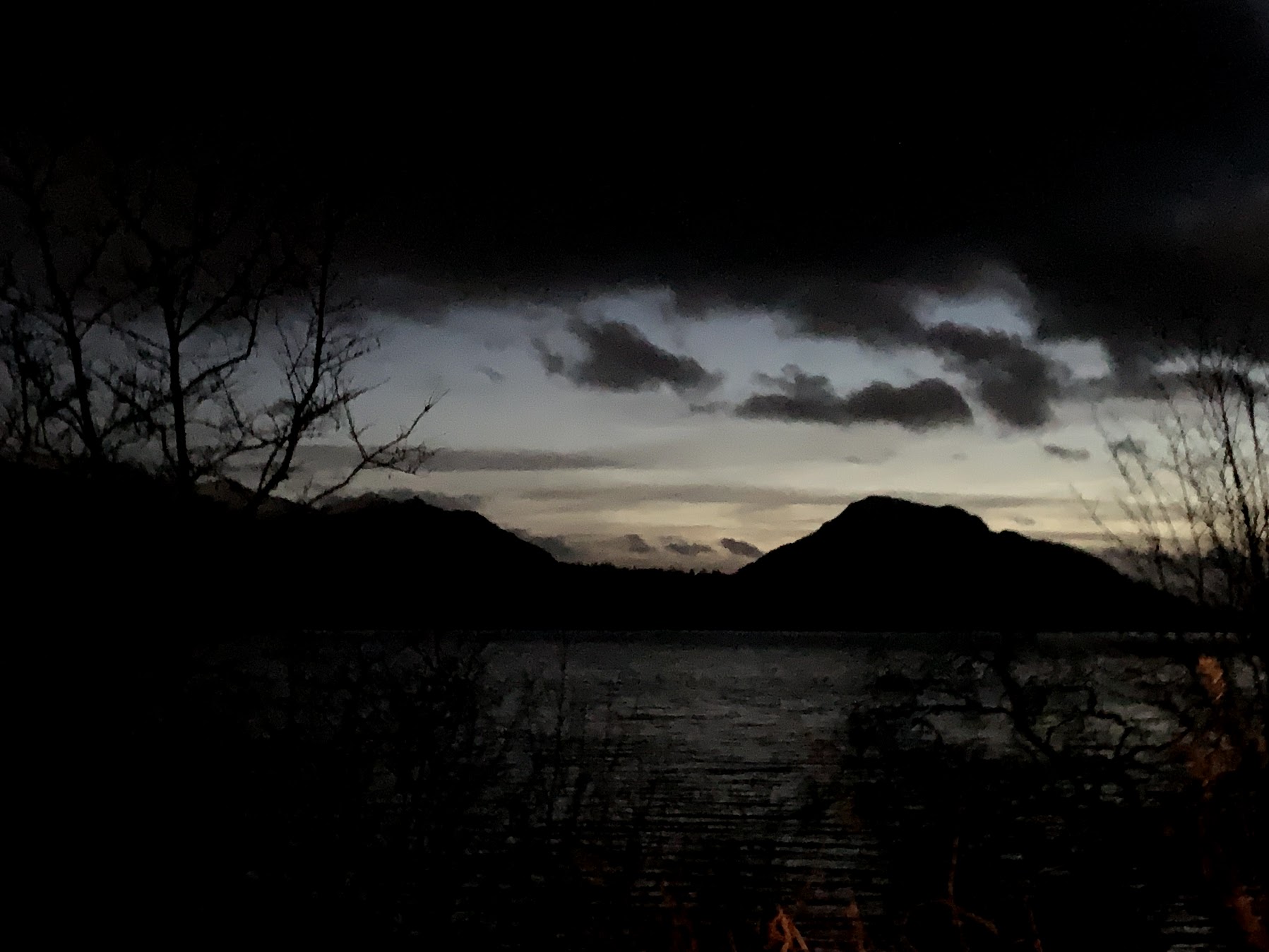
Loch Laggan in the moonlight

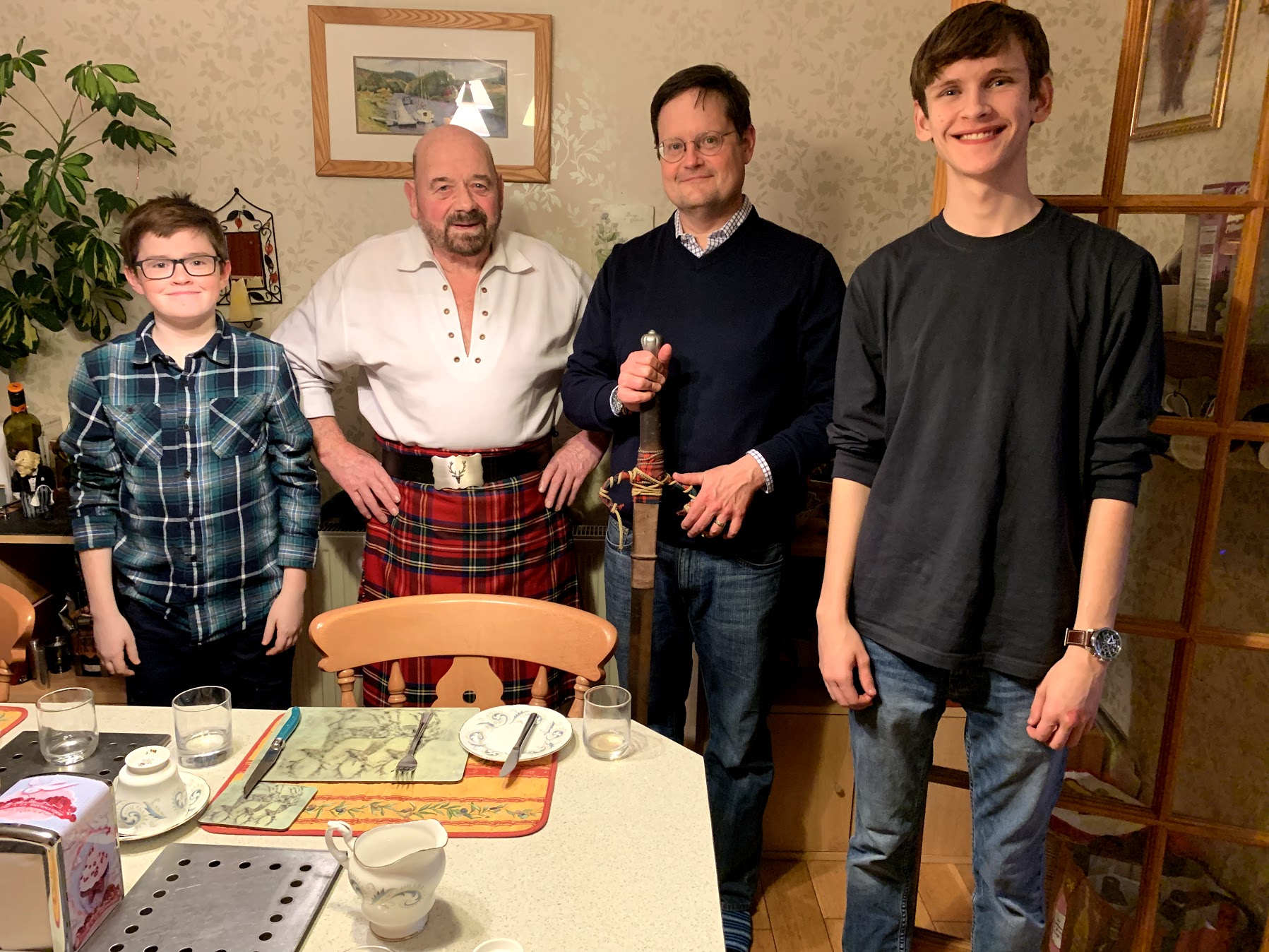
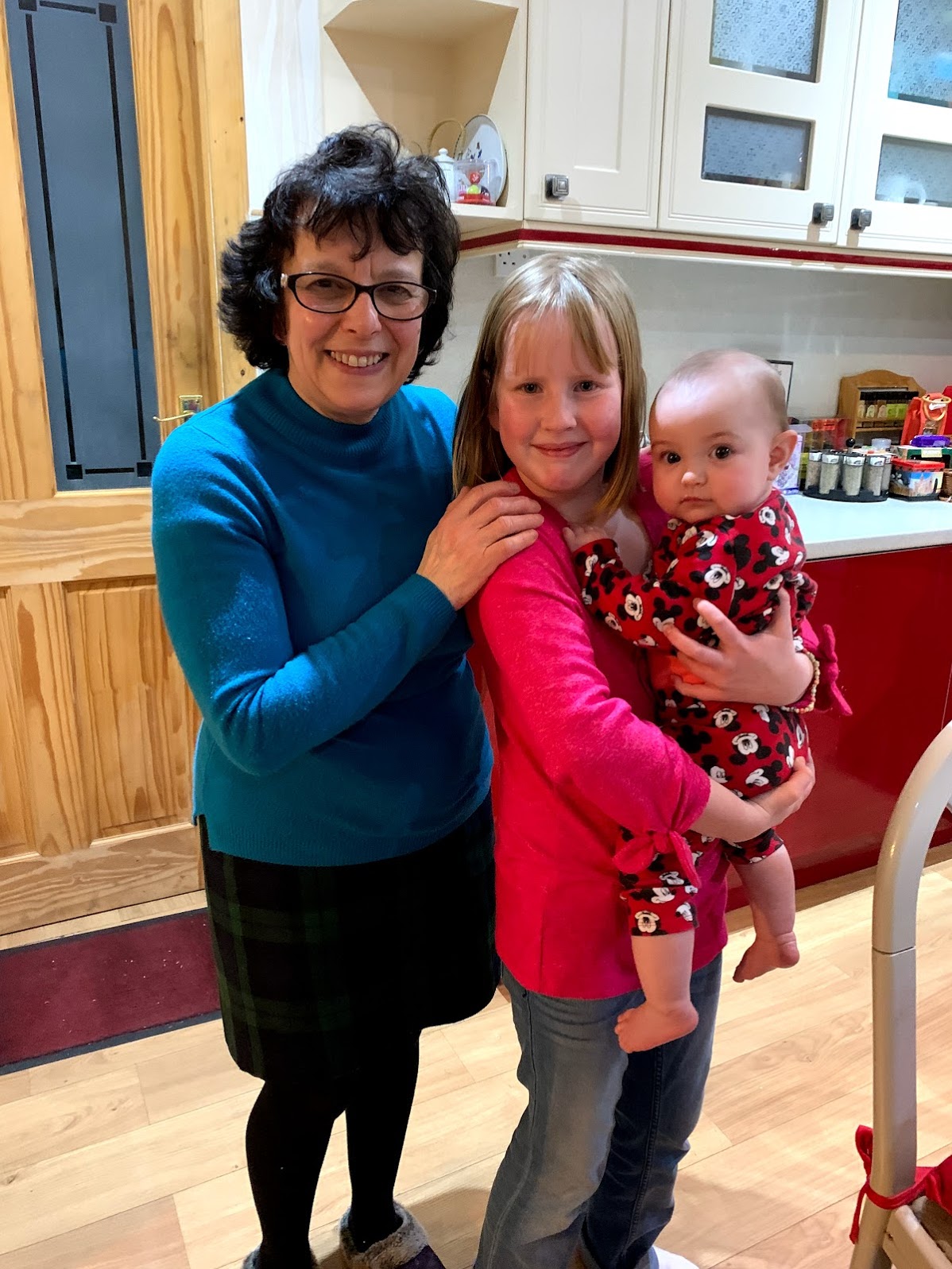
After 90 minutes of driving and stopping for gorgeous nighttime photographs of moonlit lochs, we arrived at Briar Banks, our bed and breakfast on Loch Ness. Outside the home of May and Duncan McIntosh I took a beautiful photograph of Loch Ness in the mysterious moonlight! Mr. McIntosh greeted us in his kilt, showed the boys his homemade Claymore Sword, and then offered us a dram of whisky. We said thank you, but could we have a bit of supper first. Mrs. McIntosh directed us to the Loch Inn Pub. Upon our return the whisky was poured, and yes we even let the kids have a taste like we do at home, and the stories flowed! Their daughter and granddaughter were visiting, so Faywen had great fun playing with 9 month old Maya! Mr. McIntosh spun stories about his own encounter with the Loch Ness Monster, and how he used to deliver milk as a teenager to Balmoral Castle. A few times the Queen Mum sat in the garden and gave him tea and egg and toast! After a lovely 2 hour visit we headed off to bed with a warm glow of whisky and genuine Highland hospitality!

View from our B&B of Loch Ness in the moonlight
Are those fairy or willow-wisps lights in the bottom of the photo?
Hanging out with Mr. Duncan McIntosh
Mrs. McIntosh and her granddaughter Maya with Faywen

Day 2 Edinburgh

This morning we had a light breakfast in our room and talked about the plans for the day. Robert snuck away for about an hour early on in order to go and fetch our car. The rental place is closed on Sundays so we had to pick up the car today. He parked it in a nearby lot and we headed out on foot to explore the lower half of the Royal Mile. This road runs from Edinburgh Castle down to Holyrood Palace and is a mile long. It also divides the “old town” (buildings before ca.1750) from the “new town”(buildings after ca.1750). We walked up Princes St. half way before taking Coburn St. up the hill to the middle of The Royal Mile. Once up the hill, we headed west until reaching the Mossman/Knox House.

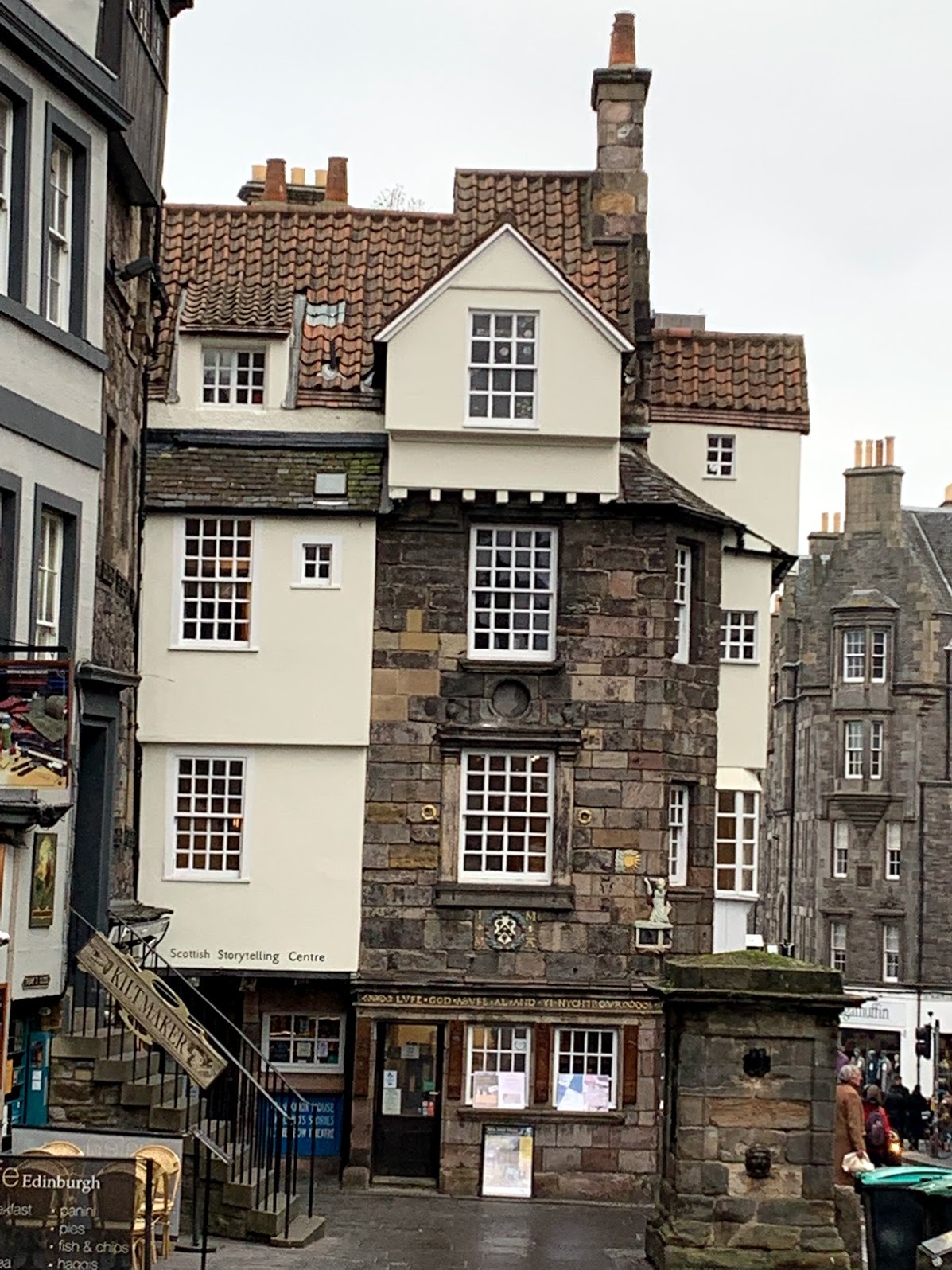
James Mossman was the goldsmith to Mary Queen of Scots. He and his company actually helped to fashion the Crown Jewels of Scotland. He was also a devout Catholic. During the time of the Protestant Reformation John Knox supposedly took over the house which was built in the late 1400’s. The first floor contained several trade shops and the subsequent three floors were the residences. Knox was said to have resided on the top floor and supposedly wrote his History of the Reformation in Scotland from his small study. Mossman was accused of “treason” by the Protestant rebels and hung because he continued to make jewels and coins of the deposed Catholic Queen Mary of Scots.

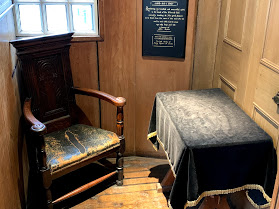
Private study of John Knox

The house is the oldest and only surviving specimen of late medieval and early renaissance architecture in the city. The old floors slanted, remnants of the painted ceilings could still be seen, and the wood carved panels were stunning. Liam in particular had to mind his head through every doorway due to the low lintels. It was a lovely place to spend an hour. We then had a nice little luncheon in the cafe next door.

Home of John Knox and James Mossman

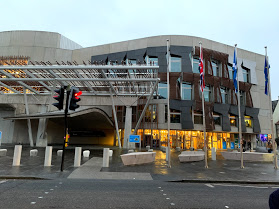
After lunch we headed down The Royal Mile passing by old stone buildings, a primary school, and then to the new Scottish Parliament Building. Scotland reconvened it’s own Parliament in 1999. It had not been allowed to gather since the Act of Union in 1707, which combined Scotland and England. The unique modern design of the buildings stood out in contrast to the old brownish-gray stone building surrounding Parliament. However, it had a nice ergonomic design and seemed to fit in organically into the space.

Scottish Parliament

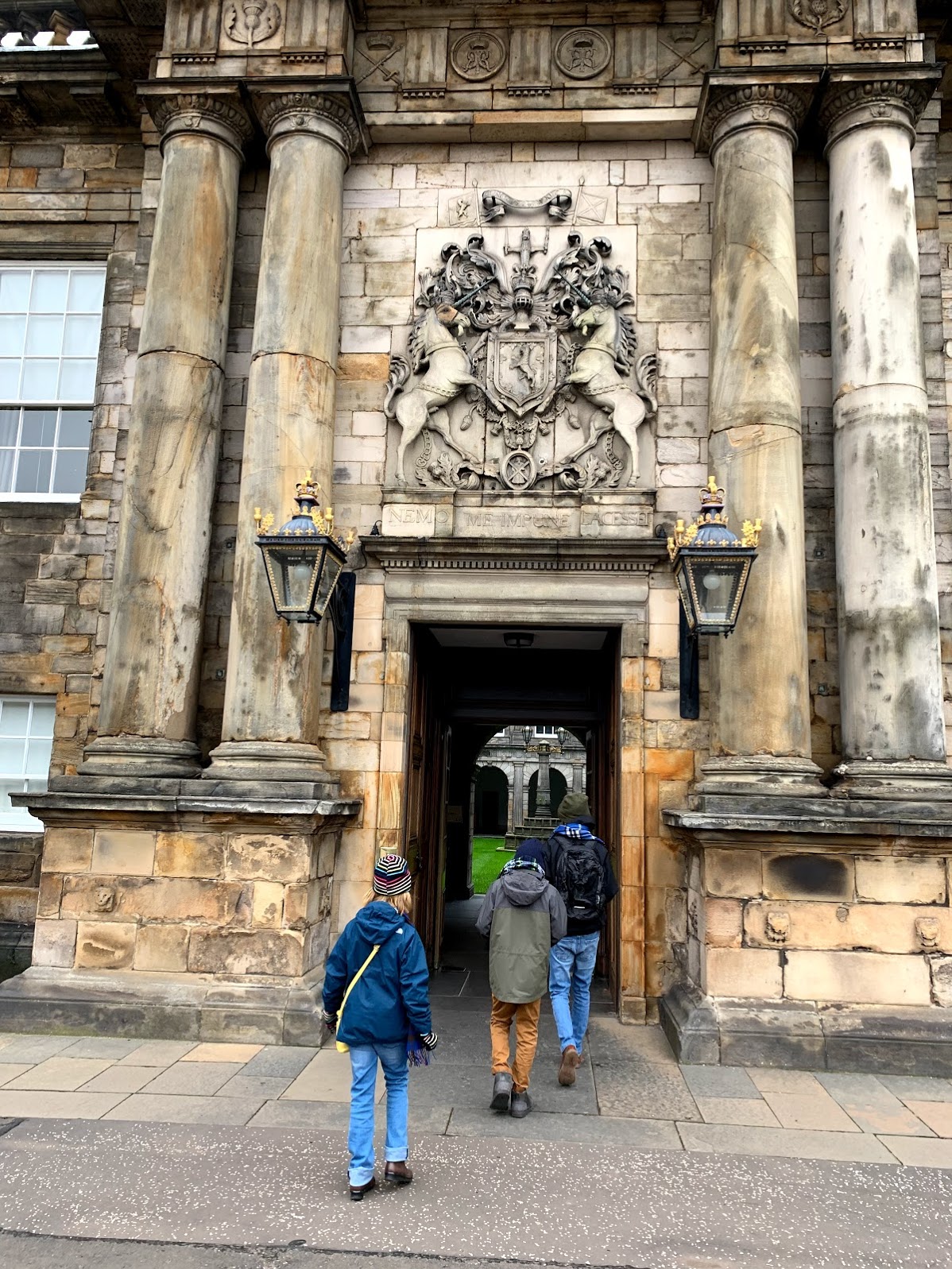
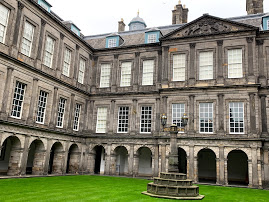
Across the street we entered the Holyrood Palace and Abbey grounds. The staff were lovely and fitted us with very nice audio tour gear that was informative and easy to use. Unfortunately, indoor photography was not allowed. The archway led into a grand four-sided courtyard. Once we entered the palace a stunning blue carpeted staircase with luscious old 17th cent. tapestries hung on the walls. We ascended the stairs and visited many rooms on the first floor which included the state dinning room, royal throne room, private ante-chambers, bedrooms, and the grand gallery. The gallery was decorated with rich red carpet, a white plastered carved ceiling, and 96 portraits of the supposed line of kings and queens of Scotland. The portraits were commissioned by King Charles II to show his divine lineage to the throne. If you looked closely you could see that the artist painted every person with King Charles’ nose, thus confirming the “lineage” visually to visitors!

Walking into the courtyard of Holyrood Palace
The inner courtyard of the Holyrood Palace

An ante-chamber just off the gallery housed artifacts owned by the famous Bonnie Prince Charlie, or Charles Edward Stewart, who tried to reclaim the crown during the Jacobite uprisings of 1745-46. The uprising ultimately failed, but Bonnie Prince Charlie has since been immortalized in song and Scottish legend. He spent only 6 weeks in his ancestral palace at Holyrood. A winding narrow staircase led us into the oldest part of the palace and the private chambers of Mary Queen of Scots. A grisly murder took place in her ante-chamber when her husband Lord Darnley believed Mary to be unfaithful with a courtier. Darnley secretly had the man killed and his ghost is said to haunt the chamber. It was amazing to see artifacts belonging to the famous 16th cent. queen. Including her own embroidery, jewels, and private Bible.

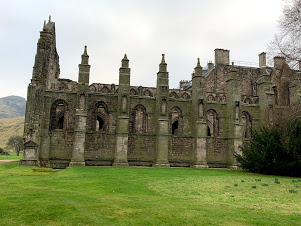
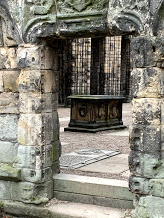
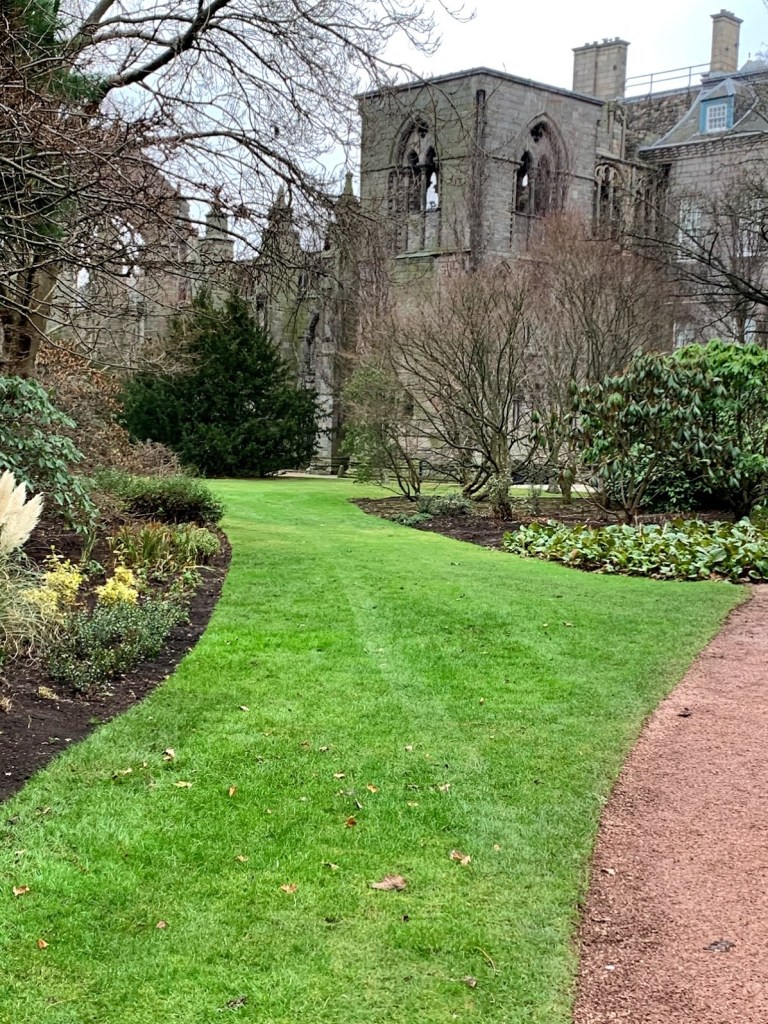
We left the inside of the palace and meandered over to the ruins of the Abbey adjacent to the palace. The stunning ruins were the sight where several kings of Scotland were crowned and weddings held. It fell into disrepair in the 1700’s. The old monastic building footprints and stunning gardens ended our tour. I even saw a few roses still blooming amongst the velvety green grass. All of the gardens are set against the Pentland Hills and the famous Arthur’s Seat, an ancient site said to have been one of King Arthur’s favorites.

Holyrood Abbey
Looking into the Abbey at the high altar

The Queen and Royal Family still use Holyrood as a private residence. They come to the palace in the month of July and hold state dinners, visitors, and the Duke of Edinburgh’s Awards are presented in the gardens every year to outstanding school children.

View of Holyrood Gardens, Abbey, and a bit of the Palace

The Queen’s Gallery was next door and had a lovely display of artwork and artifacts collected by Charles II, the last Scottish Stewart king. I was really impressed that the gallery offered a booklet in large print of all the signs next to the artwork. I was also able to get up really close to examine the priceless pieces of art!

We started our trek up the Royal Mile and had a nice dinner at a local Italian restaurant. The city was alive with locals going out on a Saturday night!

Day 1 Edinburgh, Scotland

Ahhh! Everyone was refreshed after a good night’s sleep! We headed down to our first full Scottish breakfast, which consisted of black pudding, bangers (sausages), beans, eggs, bacon (ham), and all kinds of yummy breads. Oh and a wonderful “cuppa” (cup of tea). We told the kids to fill up because they needed the energy to explore the castle and city.

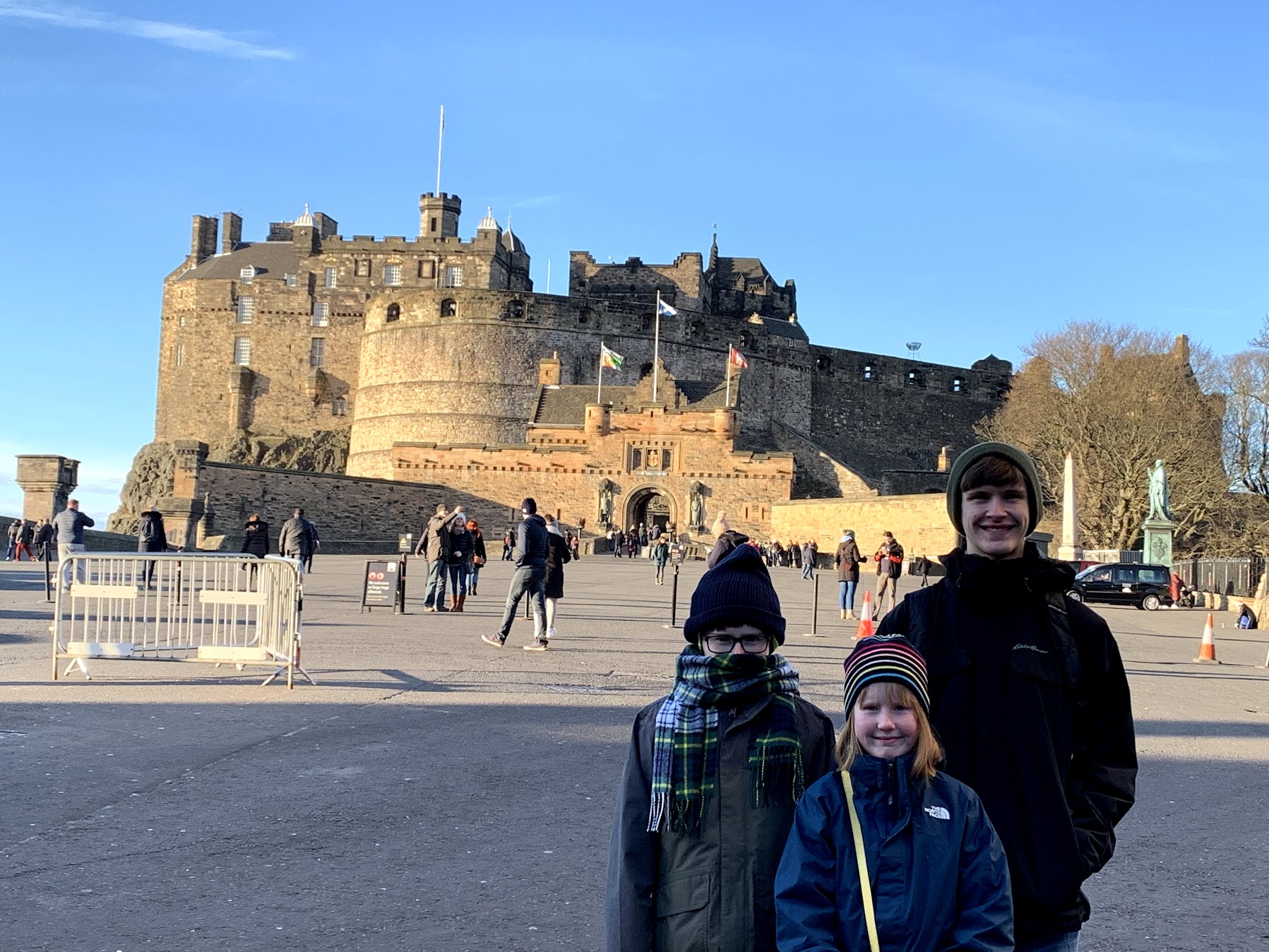
Edinburgh Castle

Bundled up and ready to head out into the city we were greeted with the crisp morning air! It was actually a bit warmer in Edinburgh than it was in St. Louis and even Grand Rapids. The temp was about 5C or 41F. We climbed up the steep hill from Princes Street to the Royal Mile and then rounded the corner to the entrance of Edinburgh Castle. This fortress has had a presence in the city since around 1000AD. Once inside we were treated with a lovely 30 minute basic informational tour by Gabby and then spent the rest of the day meandering in and out of all the interesting castle buildings. In total we spent about 5 1/2 hours in the castle. Robert and I have visited the castle before, but there were many new exhibits and it was lovely seeing it in sunshine! Yes the sun was shining in Scotland in January!

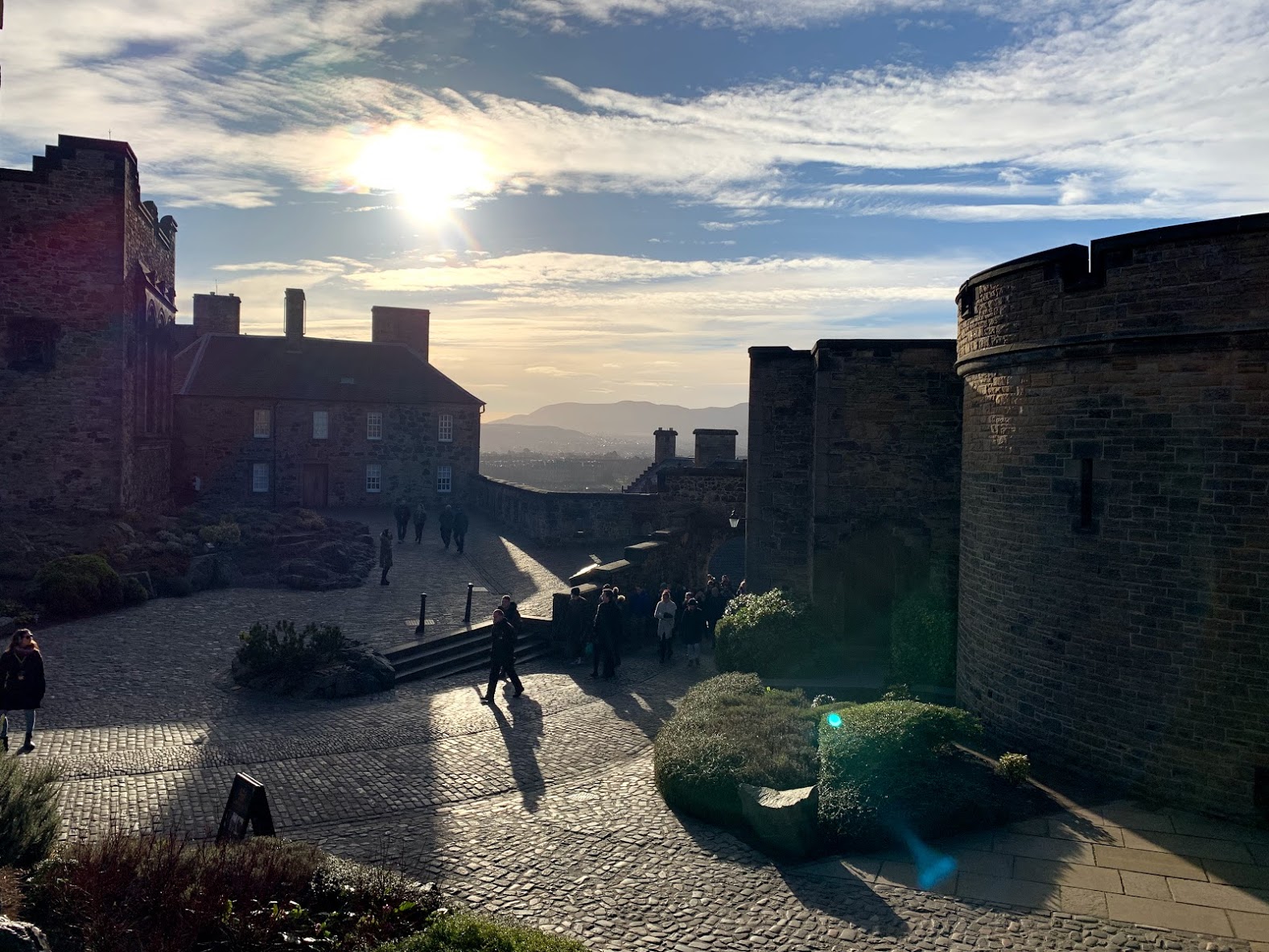
Silhouette of the inside of the castle

Some of the family’s favorite sites included, the cannon row, royal chamber apartments, the Scottish Crown Jewels, prisons, and the Scottish Military Museum. However, I think we all agreed that a late light lunch of Scottish broth, brown bread, and warm tea did the trick in warming us up!

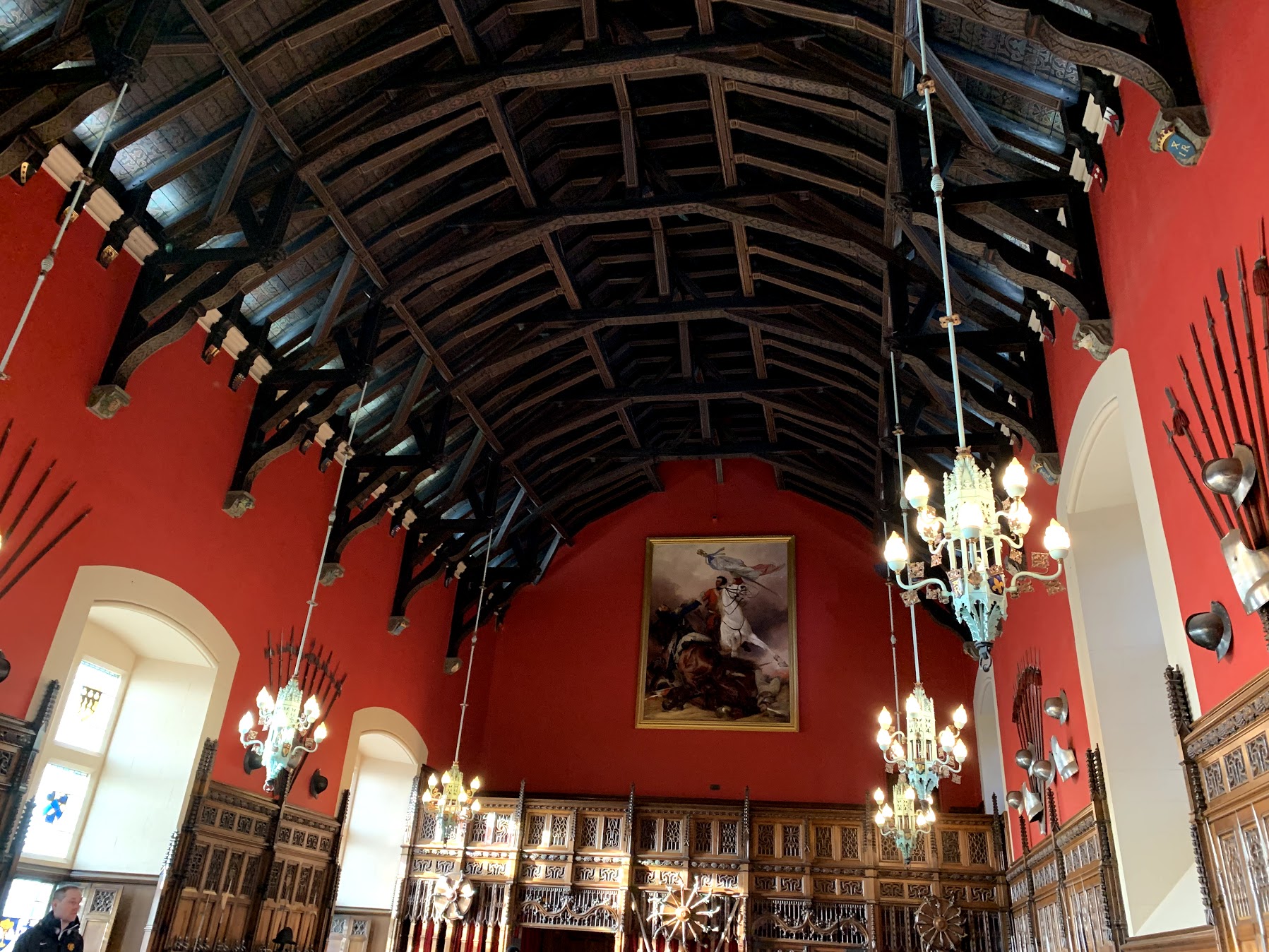
Great Hall in the Royal Chambers

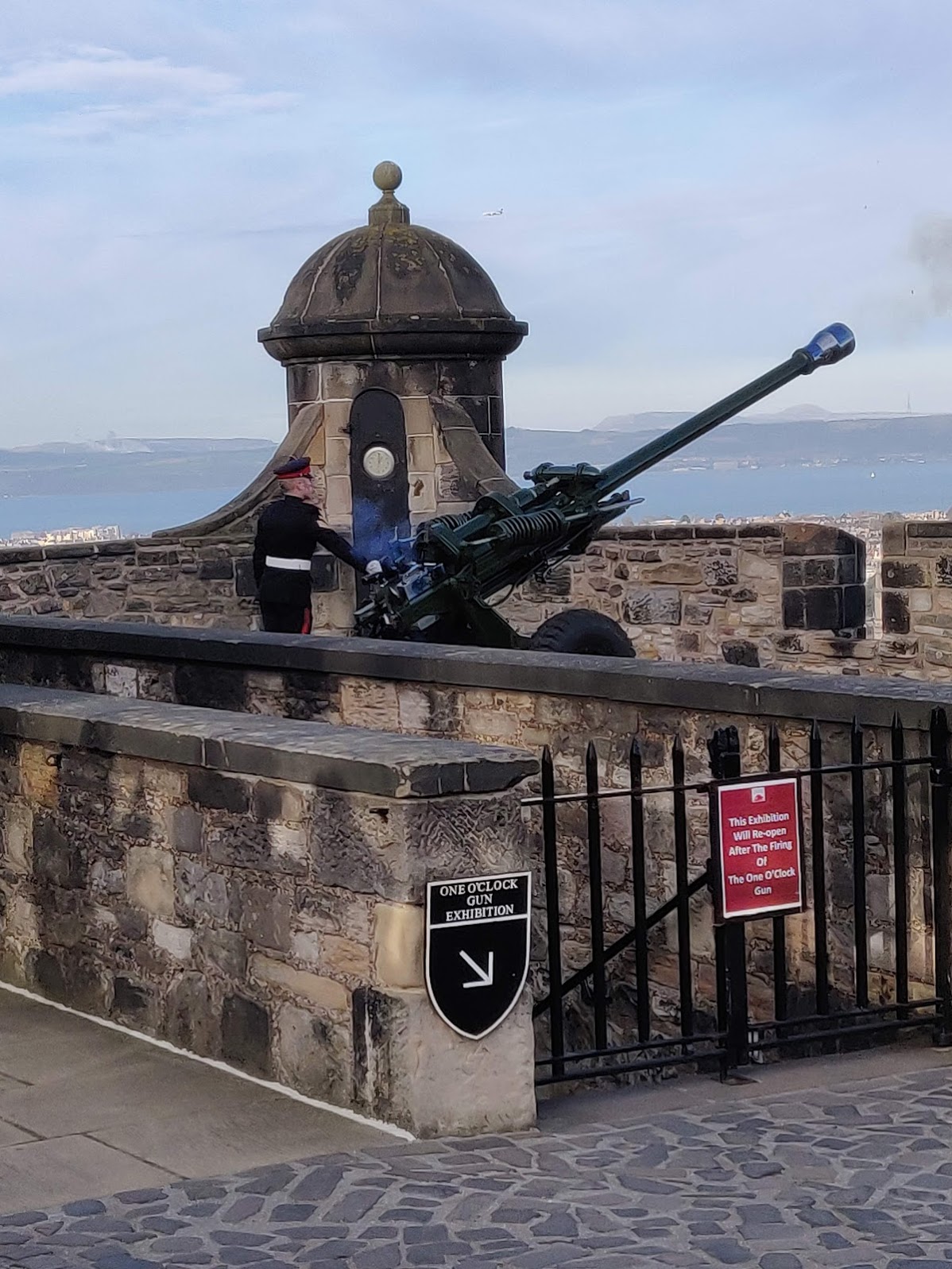
The crown jewels were impressive, but seeing the one o’clock artillery gun firing was amazing! In Edinburgh for centuries a tower near the castle had a large ball at the top. Everyday at 1:00pm it was dropped to let everyone know the exact time and to set their watches and clocks. However, it’s often foggy in the city. So it was decided in 1818 that a cannon would be shot at the same time. It could be heard all over the city and even down in the Firth of Forth where the boat docks are located. The gun is shot and ball dropped every day except Sundays, Christmas, and Good Friday. Why not these days? Well, because you should be in Church on those days and not looking at your watch!

Firing the one o’clock gun

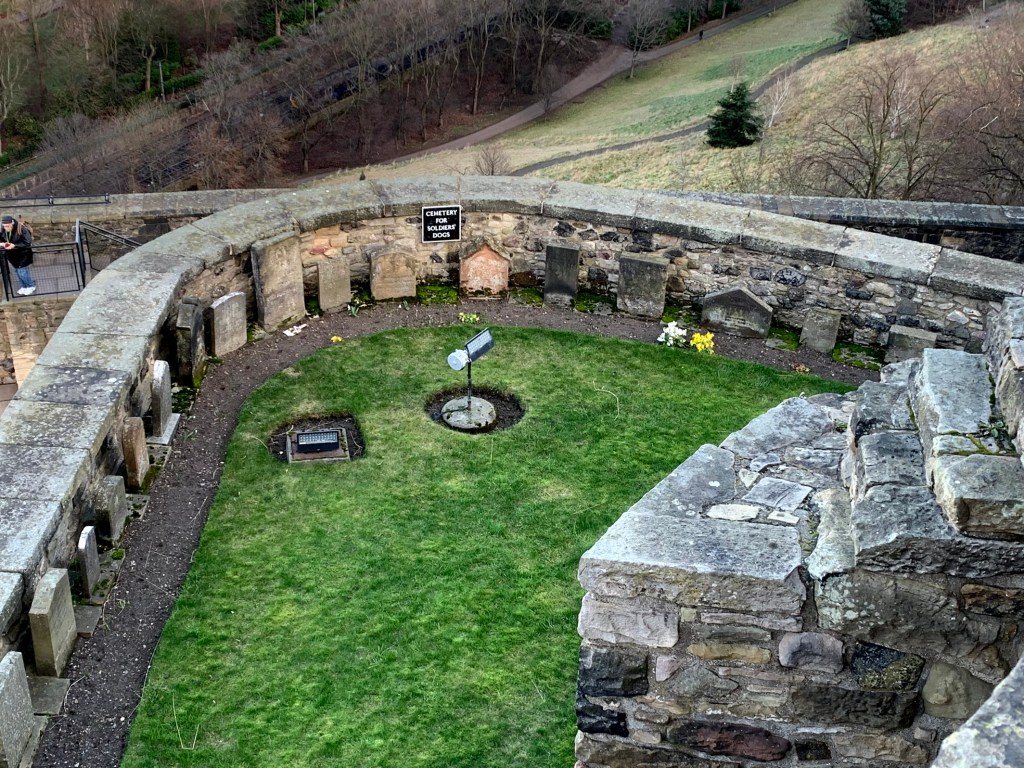
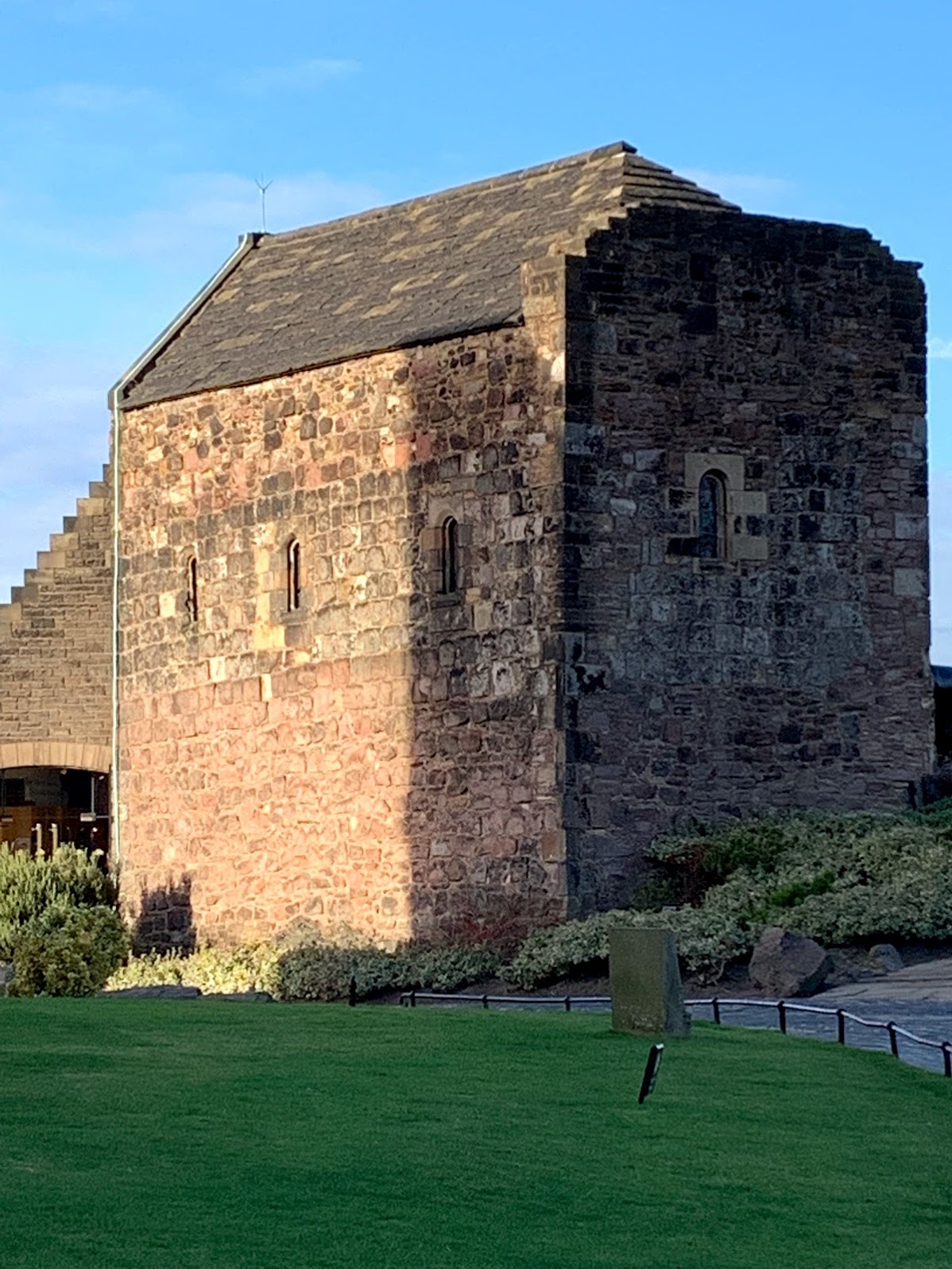
My personal favorite spots in the castle were the dog cemetery, where loyal military dogs of distinction are buried and then St. Margaret’s Chapel. This Chapel is the oldest building in the castle. It dates from around 1190AD and was commissioned by Queen Margaret of Scotland. She was the first canonized Saint of Scotland. She is still treated with high respect amongst the Scots and the chapel is used for small weddings and baptisms.

Dog cemetery in the castle
St. Margaret’s Chapel in the sunlight
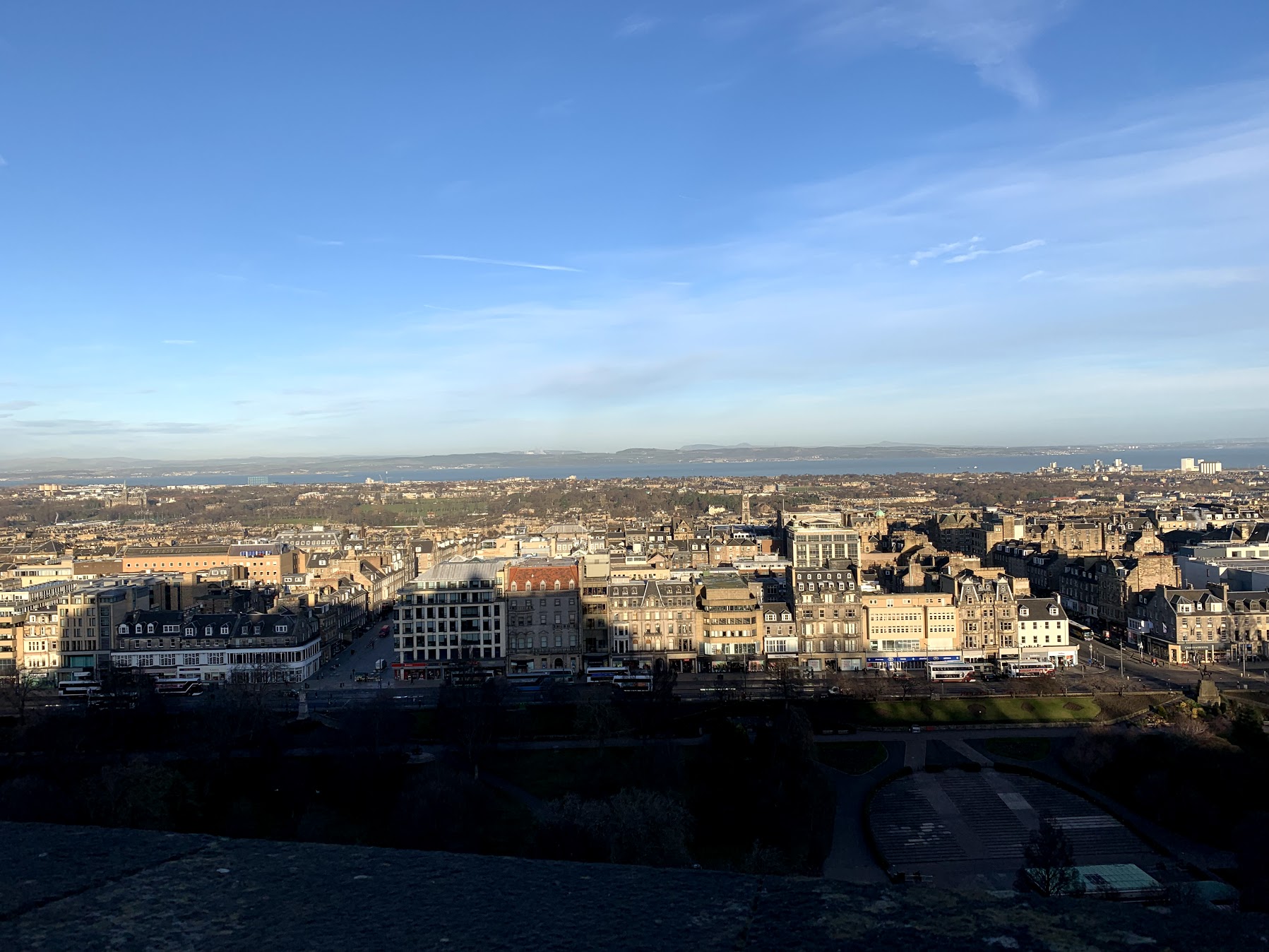
View of New Town Edinburgh
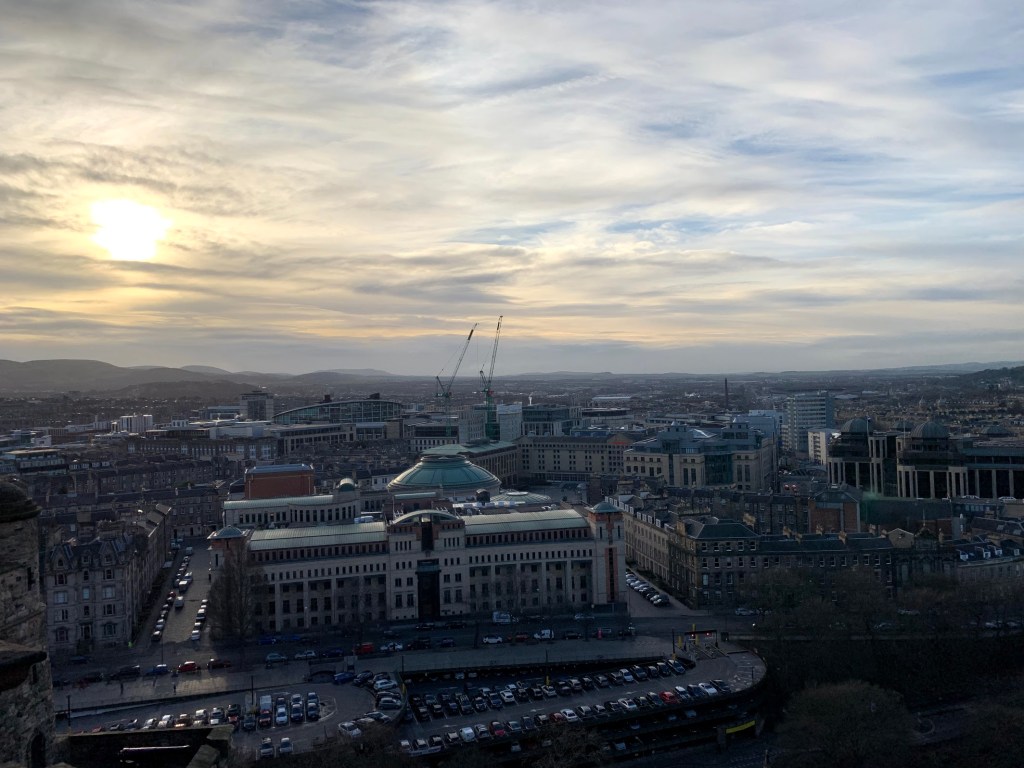
Even though it was 2:00 in the afternoon the sun was low in the sky over Edinburgh, but at least the sun was shining!

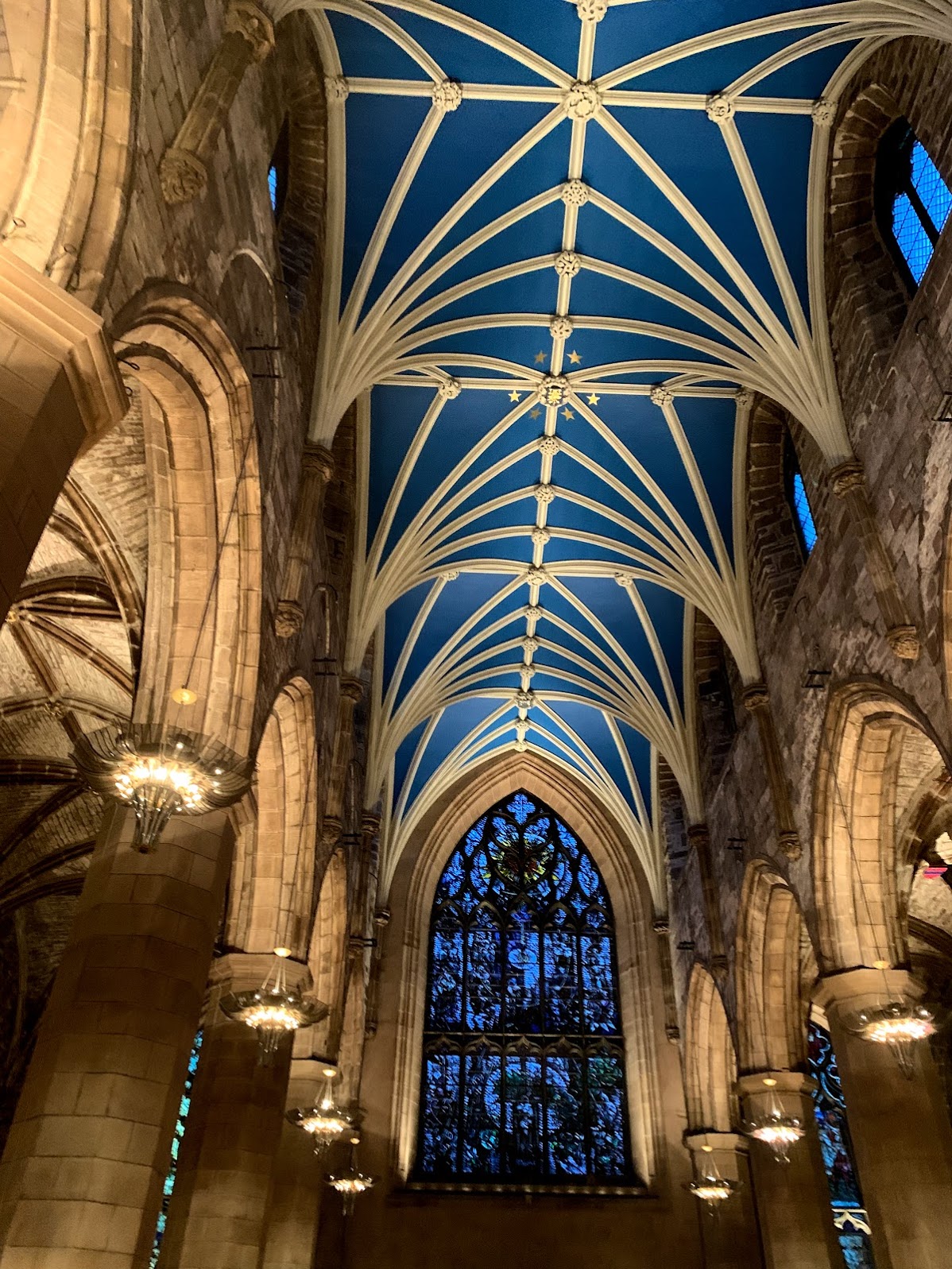
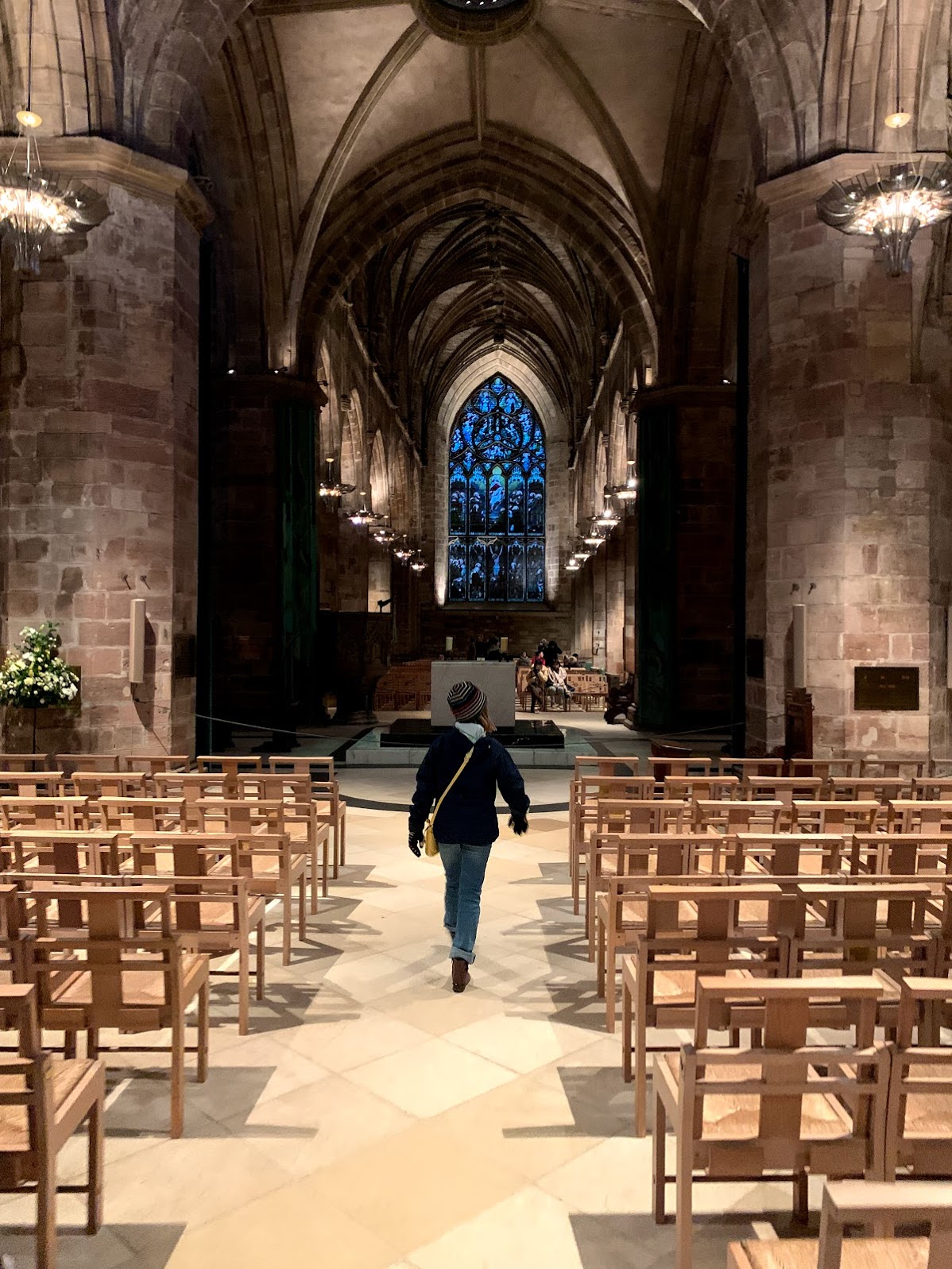
We left the castle and headed down the royal mile. We all purchased nice warm scarves at various shops because it was getting chilly as the sun set. About three blocks from the castle we came upon the famous St. Giles Church. Originally Catholic it now is a Protestant church and a landmark within Edinburgh’s “old town”. The inside was beautiful and I loved how the arched ceiling vaults were painted to look like the sky.

St. Giles Cathedral, Edinburgh

We finished exploring and found a lovely little “traditional” restaurant called Cafe 1780 where we shared haggis and fish and chips. The cafe had low beamed ceilings with white-washed walls and was partially lit by candles.

Faywen walking in the aisle towards the altar at St. Giles

Up Up and Away

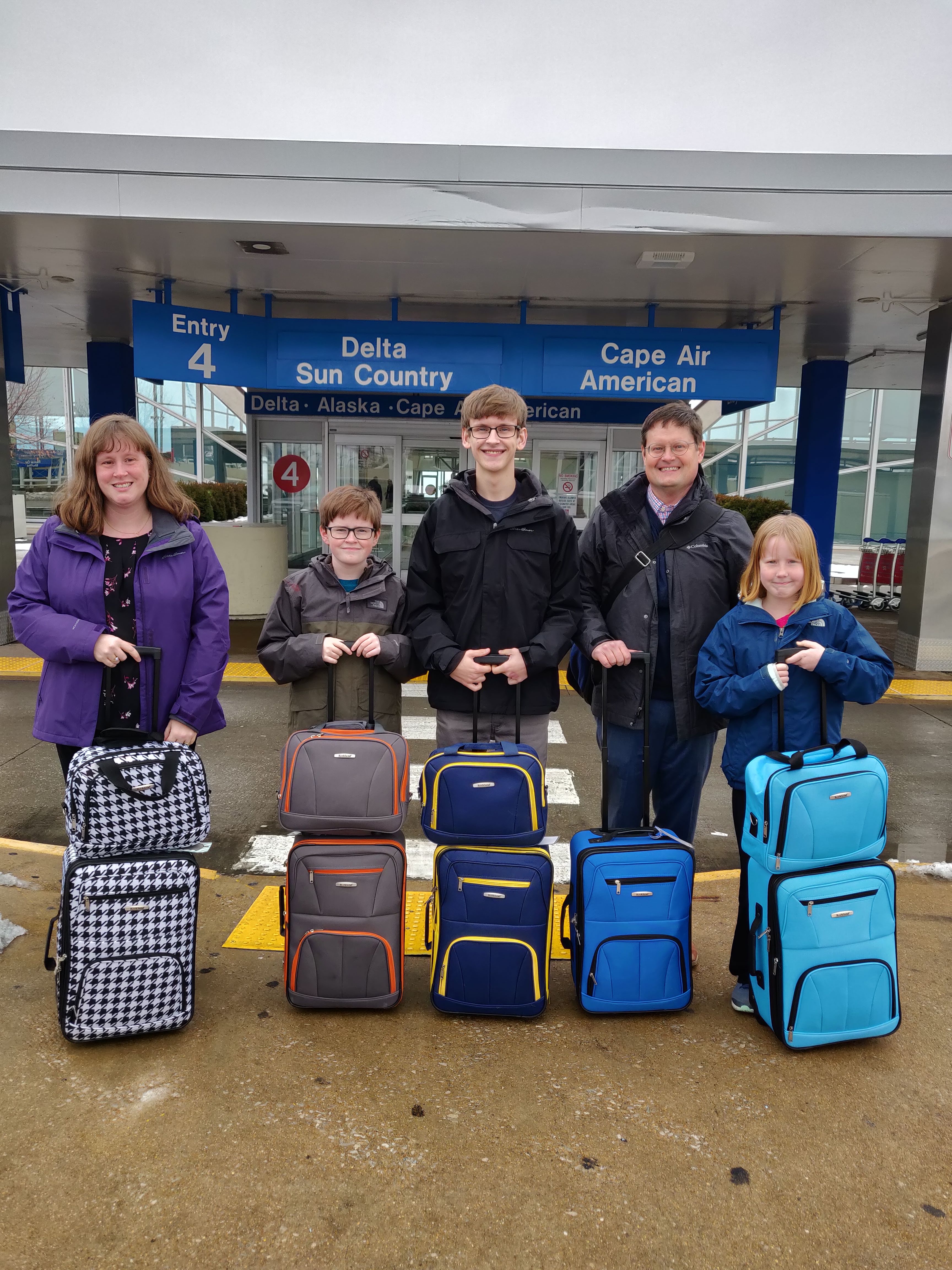
We said our farewells to family and our three kitty cats, Merlin, Beefuzz, and Tigerlily. Then around 11:00am CST on Wednesday, January 16th, my sister-in-law Laura dropped us off at the St. Louis, MO International Airport.

St. Louis International Airport

Once inside the airport we cleared security rather quickly and headed to our gate. That is when the “fun” began. 30 minutes before boarding an announcement came through that our flight was cancelled due to a cracked windshield. The next flight to Detroit would be in 7 hours! This would not bode well for us, since our international flight was leaving Detroit for Paris in 6 hours! We waited in line, but eventually were able to be rerouted to Minneapolis, then onto Amsterdam, and finally Edinburgh arriving only 6 hours later than originally scheduled. While in line to be rerouted, a sweet little elderly German woman asked if anyone spoke German. I stepped forward and offered to help Ms. Ursula. She was very appreciative! Another German gentleman named Aachen came forward a few minutes later to help out too!

At 5:35pm CST we were in the air. Faywen was a bit nervous seeing as how it was her first time in a plane…Seamus too! The flight went smoothly and we landed in Minneapolis, MN. After a 2 hour layover and a yummy airport snack we boarded a KLM plane to Amsterdam departing at 9:35pm CST. The crew were very kind and even gave Seamus and Faywen “kid pouches” full of games and toys. The beautiful B787 is one of the newest “Dreamliner” planes made by Boeing. The flight wasn’t full and the boys had an extra seat to sprawl out in and sleep. Faywen sat between Robert and I. We all enjoyed the personal screens in the seat back in front of us. Each had it’s own earplug jack, games, movies, and TV shoes to choose from. You could even track the planes progress over the ocean! The breakfast was delicious too!

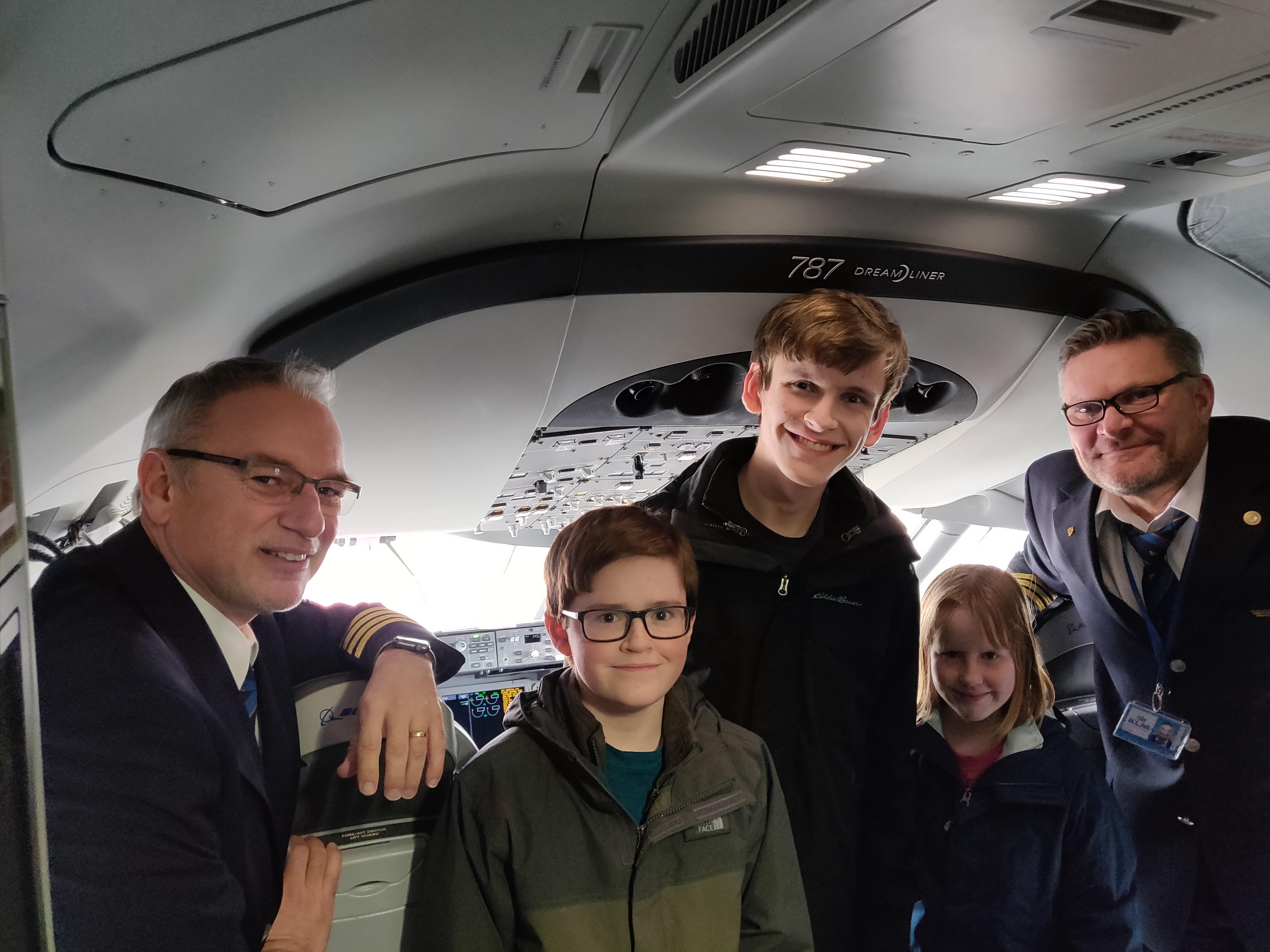
As we descended Faywen got a wee bit air sick and threw up just minutes before we landed, but she did so on the blanket in her lap. The crew helped clean up and after we landed she felt better. Seamus, Liam, and Faywen were the only kids, besides one baby, who were on the flight. The crew asked if the kids would like to meet the pilots and see the cockpit after we landed. Of course they jumped at the opportunity and Captain Hans and Captian Fritz were enthralled with our children’s knowledge of flight and the questions they asked. The kids were in the cockpit for over 10 minutes with the pilots. We officially landed in Europe at 11:51am CET.

In the KLM B787 Cockpit
Capt. Hans and Capt. Fritz

We spent three hours at Schiphol Airport in Amsterdam. It is one of my favorite airports. It was nice being back there after several years. We explored the airport and made our way to our final gate and flight. We boarded our flight to Edinburgh. Liam and I sat next to a lovely lady named Melanie from Stirling. We arrived at our final destination at 4:20pm GMT. The kids once again got to briefly meet the pilots! We cleared customs rather easily and then boarded an Airlink bus. It was fun viewing the city from the second story of the bus! We got off at the Princes Street stop, walked two blocks, and then checked in at the Premier Inn.

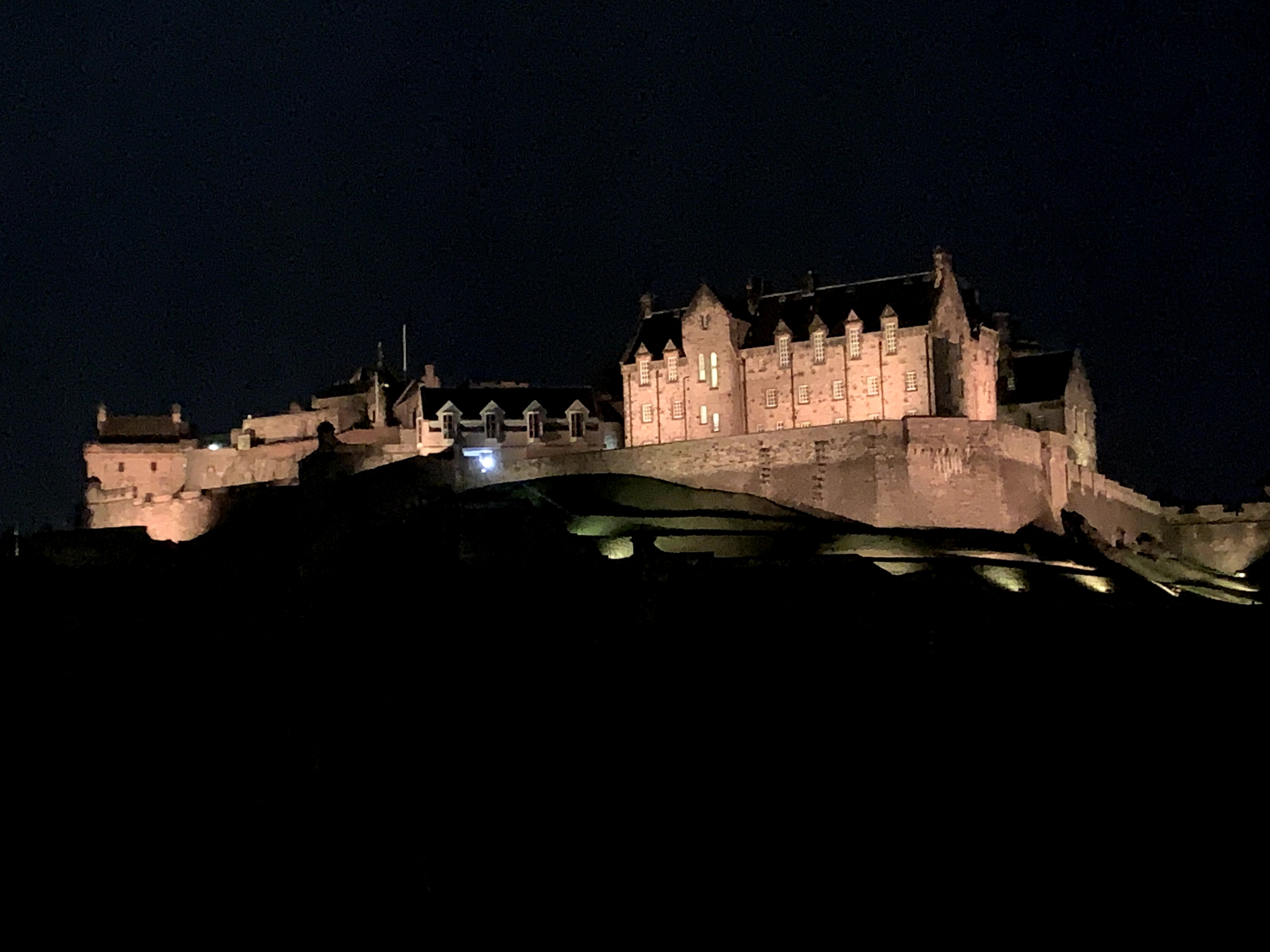
We have two rooms, one for us and one for the kids across the hallway. The kids’ room has a stunning view of Edinburgh Castle. It was beautifully lit against the darkening sky. After a quick trip down the street to Boots, a local “Walgreens”, to purchase our hygiene products we headed out to dinner. Ironically we ended up at Burger King. We never eat fast food at home, but Robert and I know that Burger King is VERY popular in Britain and we thought to ourselves “hey at least once we should eat there!” Everyone crashed after taking nice warm baths and slept soundly!

View of Edinburgh Castle from the kids’ room